Could coronavirus derail the decades-long shift to value-based care?

As the coronavirus sickens tens of thousands of Americans while pressuring the bottom lines of medical providers, analysts worry the pandemic could also hit pause on the decades-long march toward value-based care, as hospitals and doctors look to recoup revenue in the short-term instead of putting more dollars at risk.

Massive health systems and independent physician offices alike are diverting funds to shore up resources like personal protective equipment, ventilators and staff to prepare for an expected influx of COVID-19 patients or to cope with those already there. Expenses are skyrocketing as providers halt non-essential visits including lucrative elective procedures like joint replacements, winnowing down a major source of revenue.​

Clinicians in value-based payment arrangements face higher levels of financial risk than their fee-for-service counterparts. Money spent preparing for the coronavirus and treating COVID-19 patients will be a sunk cost and they could be dinged financially again at the end of the year when their spending and performance is evaluated.

Already, the coronavirus is leading providers to think about exiting the models.

survey published this week of more than 220 accountable care organizations nationwide found almost 60% are likely to drop out of their risk-based model to avoid financial losses. Some 77% are “very concerned” about the coronavirus’ impact on their 2020 performance.

“The value-based movement is at a critical juncture,” wrote National Association of ACOs CEO Clif Gaus in a letter to CMS Administrator Seema Verma last month.

Fee-for-service still dominates — roughly 40% of healthcare payments made in 2018 were under fee-for-service, according to the Health Care Payment Learning & Action Network (LAN) — but it’s been on the downswing. One in three healthcare payments currently flows through some sort of alternative payment model, and that has been projected to grow.

Among the four main types of value-based arrangements — shared risk, global capitation, bundled care and shared savings —​ most require an upfront financial commitment. And providers are unlikely to put more capital at risk given the current economic situation, analysts told Healthcare Dive, instead focusing on making up the losses they sustained during the outbreak by ramping up capacity.

Doctor’s offices and hospitals will reschedule delayed procedures and even operate on weekends to recapture as much revenue as possible before they’re likely to consider taking on more risk.

“Even if you’re not in the hotspots, you are preparing right now. This puts on hold a lot of the initiatives that have been on the value-based side of things,” Jefferies senior healthcare analyst Brian Tanquilut told Healthcare Dive. “I don’t think the value-based discussion goes away, but I think it will take a recovery of the hospital system before it can go there.”

Pleas for loss waivers

The National Association of ACOs told CMS in mid-March that ACOs in Medicare’s flagship ACO program the Shared Savings Program, along with other shared risk models like the Next Generation ACO model and the upcoming Direct Contracting initiative, could face losses beyond their control because of the pandemic.

CMS did pause some reporting requirements for value-based initiatives late last month. The agency pushed back the deadline for groups participating in the Medicare ACO program, Merit-based Incentive Payment System and the Hospital Readmissions Reduction Program to report quality data, or waived reporting entirely for the fourth quarter of 2019. The relaxation was framed as a way to help value-based organizations free up time and resources amid the pandemic.

But provider groups including NAACOS and the American Hospital Association have lobbied aggressively for the Trump administration to forgive all ACO losses for 2020. CMS is reviewing their request.

But all normal rules have gone out the window, experts say, and it’s almost impossible to move the needle toward value in the future when providers are facing a tsunami of patients now.

“This is not about managing a population. This is about doing everything you can to keep these people alive,” Dean Ungar, vice president of Moody’s Investors Service, told Healthcare Dive. “Coronavirus is really a five-alarm fire. But if your building’s on fire, that doesn’t really tell you how to maintain your business in normal circumstances.”

Silver lining?

Some, however, are more optimistic that the unique financial challenges brought on by the pandemic highlight the problems with the traditional fee-for-service model and could even nudge providers toward value-based arrangements down the line.

“If all of your revenue is based on patients walking in the door, when they can’t walk in the door anymore, you’re kind of up the creek without a paddle,” Dan Bowles, SVP of growth and network operations at accountable care organization Aledade told Healthcare Dive. “You need to find a way to create non-visit-based revenue.”

Some hope the pandemic could help the value-based movement in the long term as practices look for ways to uncouple revenue from patient volume. And, as medical costs continue to rise, accounting for 19% of the country’s GDP, any pause in the shift to value-based care due to the coronavirus is likely to be a short detour, not a complete derailment.

“Maybe some providers are going to see it in a different light when their business kind of dries up — see that there’s a benefit to it,” Ungar said. “Ultimately, it’s a trend of where things are going, but it’s a big ship and it’s moving slowly.”

And value-based care arrangements were built predominantly for the populations being hit hardest by the coronavirus: those with serious underlying medical conditions like chronic lung disease or severe obesity.

If those vulnerable patients were being treated in value-based arrangements, it’s possible more COVID-19 cases could have been caught earlier before they became life-threatening, Moody’s analyst Stefan Kahandaliyanage told Healthcare Dive. That could renew industry’s focus on managing the health of those most at-risk from novel infectious diseases in the future.

“Costs are very high and there’s been a pandemic,” Kahandaliyanage said. “Let’s get more healthy before the next pandemic comes.”

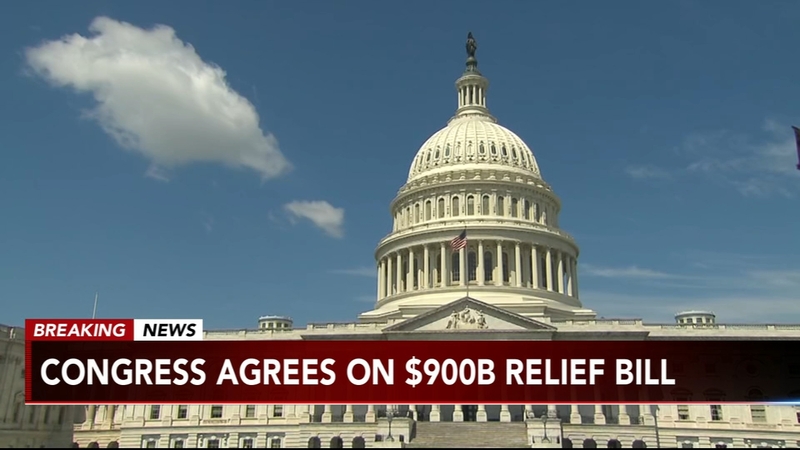
Congress agrees on $900B COVID-19 relief package, $1.4 trillion funding deal: 7 things to know

Mixed reaction as Congress seals agreement on $900 billion COVID relief  bill - 6abc Philadelphia

Congressional leaders have reached an agreement on a $900 billion COVID-19 relief package and $1.4 trillion government funding deal with several healthcare provisions, according to Senate Majority Leader Mitch McConnell, R-Ky., and Minority Leader Chuck Schumer, D-N.Y.

Here are seven things to know about the relief aid and funding deal:

1. Congressional leaders have yet to release text of the COVID-19 legislation, but have shared a few key details on the measure, according to CNBC. Becker’s breaks down the information that has been released thus far. 

2. The COVID-19 package includes $20 billion for the purchase of vaccines, about $9 billion for vaccine distribution and about $22 billion to help states with testing, tracing and other COVID-19 mitigation programs, according to Politico.

3. Lawmakers are also expected to include a provision changing how providers can use their relief grants. In particular, the bill is expected to allow hospitals to calculate lost revenue by comparing budgeted revenue for 2020. Hospitals have said this tweak will allow them to keep more funding. 

4. The agreement also allocates $284 billion for a new round of Paycheck Protection Program loans

5. The COVID-19 relief bill also provides $600 stimulus checks to Americans earning up to $75,000 per year and $600 for their children, according to NBC. It also provides a supplemental $300 per week in unemployment benefits.

6. The year-end spending bill includes a measure to ban surprise billing. Under the measure, hospitals and physicians would be banned from charging patients out-of-network costs their insurers would not cover. Instead, patients would only be required to pay their in-network cost-sharing amount when they see an out-of-network provider, according to The Hill. The agreement gives insurers 30 days to negotiate a payment on the outstanding bill. After that period, they can enter into arbitration to gain higher reimbursement. 

7. Lawmakers plan to pass the relief bill and federal spending bill Dec. 21

No Easy Fixes for Drug Supply Chain Problems

Better leadership is needed on both ends of the chain, expert says.

The U.S. drug supply chain works well in the middle, but the beginning and end leave much room for improvement, according to Stephen Schondelmeyer, PharmD, PhD, of the University of Minnesota in Minneapolis.

“When a manufacturer imports a drug into the U.S. and sells it to wholesalers and then it goes to group purchasing organizations and through hospital institutional systems, that system works very well,” Schondelmeyer said last week at a public workshop of the National Academies of Science, Engineering, and Medicine’s Committee on Security of Medical Product Supply Chain. “But where problems occur is when the API [active pharmaceutical ingredient] is not being produced or is not available, or is not shipped to the finished dose manufacturer to make enough.” With the current “just in time” manufacturing system, “inventories may only last a month” before supplies dry up, he said.

Leadership on this issue “is certainly needed at the top, but also needed at the end,” said Schondelmeyer, who is co-principal investigator of the Resilient Drug Supply Project at the university’s Center for Infectious Disease Research and Policy.

For example, he said, “I routinely meet with groups of pharmacy directors at major hospital systems. I have heard stories from pharmacy directors … who have said they had remdesivir allocated by their state; it showed up in their hospital’s lab. Nobody in the lab knew what it was or why it arrived, and it sat there for several days before they figured out this was a drug and pharmacy should be managing this You can run a marathon, but if you don’t finish the last 200 yards, you don’t finish the marathon, and that’s what happened with remdesivir.”

“We need to be predicting not only demand changes but what things can create a supply disruption, because a lot of shortages we have are from supply disruption,” Schondelmeyer said. In the COVID-19 era, this could include unexpected political moves such as export bans — such as those recently put in place in India and the United Kingdom — which could mean that “we could find whole categories of drugs not available in the U.S., and we don’t have the capacity to replace that supply, in the short run at least,” he said.

Pharmaceuticals are a very unique market, he added. “We established a pharmaceutical market based on monopolies when drugs first come on the market, via intellectual property, and even later on, when you’re down to two or three generics they function like an oligopoly. We have a marketplace that has extreme asymmetries of information, where people selling a drug know a lot more than people buying the drug. We have to establish an infrastructure to understand the pharmaceutical market and the flow of products so we can correct the market when it’s not working.”

“Our current system of fixing drug shortages is a ‘fail and fix’ system,” he said. The list of shortages “is a list of products that have already failed. I think we should have a system that has supply chain maps that identify critical stages — even pre-API — that can suggest where we might have a failure, and do something before the failure occurs. I suggest we move from ‘fail and fix’ to ‘predict and prevent.'”

Schondelmeyer said he and his colleagues are trying to build such supply chain maps, “but really the government should be doing that … I don’t fault the FDA; the FDA may or may not be the right place to do that.” But more agencies and other players need to be involved because “no one player in the market can solve this problem alone.”

Schondelmeyer displayed percentages of various drug types that were in shortage. Among 156 “critical acute care drugs” — those that must be used within hours or days of an illness’s onset to avoid serious outcomes or death — the FDA found 25.6% were in shortage, while the American Society of Hospital Pharmacists (ASHP) found that 41.7% of them were in shortage, “and this was even before COVID-19,” he said. Among a list of 40 “critical COVID-19 drugs,” the FDA has listed 45% of them as being in shortage, while the ASHP rated 75% as being in shortage. “Most were in short supply even before COVID-19 hit,” he added. “These are alarming levels of shortage and they have persisted.”

Many people suggest that the supply chain problem can be solved by moving manufacturing for particular drug products from overseas to a U.S. plant, but that doesn’t quite solve the problem, said Schondelmeyer. “If we manufactured our entire supply of drugs in the U.S., it doesn’t solve the problem if you put all the manufacturing in one facility and it gets wiped out by a hurricane,” he said, recalling what happened when a hurricane hit Puerto Rico, the home of several medical product manufacturers. “Hospitals were scrambling to get things like normal saline. So simply bringing production back to the U.S. but concentrating it in one place doesn’t solve the problem — it just moves the problem.”

Khatereh Calleja, president and CEO of the Healthcare Supply Chain Association, agreed. “We’ve got to focus on this very issue of geographic diversity,” Calleja said. “Otherwise we’re creating a risk when we create that concentration.”

When people are discussing the supply chain, having a common language among institutions is also important, said Chris Liu, director of enterprise services for the state of Washington, “In hospitals, ‘conservation’ of PPE [personal protective equipment] means something different at every hospital you go to,” he said.

Another thing that needs to be taken on is the vulnerability of drug precursors, said James Lawler, director of international programs and innovation at the University of Nebraska’s Global Center for Health Security. “It’s one thing if the plant that makes the final small-molecule antibiotic … is in the U.S., but if all the precursor chemicals they require to synthesize that product come from overseas, you haven’t necessarily fixed your supply chain vulnerability.”

Hospitals continue to crack under the surge

https://s.yimg.com/ny/api/res/1.2/WOZOpgmZDY6rdw4hdu62fw--/YXBwaWQ9aGlnaGxhbmRlcjt3PTcwNTtoPTQwMi43NTMwOTkxNzM1NTM3/https://s.yimg.com/os/creatr-uploaded-images/2020-12/b78fb490-3664-11eb-bf97-2dd2b05a8603

Hospitals across the country are reaching their breaking point on ICU and bed capacity as COVID surges, forcing many health systems to begin diverting patients from emergency rooms and ration care, Axios’ Orion Rummler reports.

What’s happening:

  • New Mexico Gov. Lujan Grisham (D) plans to allow hospitals to ration care depending on how likely a patient is to survive, the Washington Post reports. Grisham required residents to wear masks and re-enacted strict mitigation efforts.
  • Georgia: Major hospitals, including Grady Memorial and Emory University, have had to turn away patients brought in ambulances, the Atlanta-Journal Constitution reports.
  • South Dakota: The Monument Health Rapid City Hospital and Sanford USD Medical Center — some of the biggest in the state — say they have no more ICU beds, the Mitchell Republic reports.
  • Colorado: More than a third of hospitals across the state said in a survey they expect staffing shortages this week, Colorado Public Radio reports.

Context: White House coronavirus task force coordinator Deborah Birx noted on Sunday’s “Meet the Press” that U.S. hospitals are usually anywhere from 80 to 90% full in the fall and winter — and “when you add 10, 15, 20% COVID-19 patients on top of that, that’s what puts them at the breaking point.”

Biden chooses Xavier Becerra to lead HHS

National

President-elect Joe Biden has chosen California Attorney General Xavier Becerra to be the secretary of the Department of Health and Human Services, the Biden transition team announced this morning and the New York Times first reported last night.

Why it matters: If confirmed, Becerra would be the first Latino to lead the department. He’s also been at the forefront of health care legal battles, most prominently over the future of the Affordable Care Act.

  • Becerra has led the effort by a group of 20 states and the District of Columbia in defending the ACA against a GOP lawsuit aiming to strike down the law. The case was argued in front of the Supreme Court last month.
  • Biden plans to announce several other top health care advisors, people familiar with the rollout told NYT.

Between the lines: Whoever leads HHS will immediately be in charge of addressing what will likely still be an out-of-control pandemic, including the government’s efforts to distribute coronavirus vaccines.

  • The virus has disproportionately affected people of color, and Becerra’s selection follows increasing pressure on Biden from the Latino community and the Congressional Hispanic Caucus to diversity his cabinet, per NYT.
  • On the other hand, Becerra has little experience managing a large bureaucracy or in public health, per Politico.

The big picture: If a global pandemic and the future of the ACA weren’t enough, the HHS secretary could end up in charge of executing most of Biden’s health agenda, particularly if the Senate remains in Republican hands.

  • Becerra’s legal background could prove useful in enacting a lawsuit-proof regulatory agenda.

BonusBiden has selected Rochelle Walensky, chief of infectious diseases at Massachusetts General Hospital and a professor at Harvard Medical School, to lead the Centers for Disease Control and Prevention, Politico reported last night.

About 523,000 people select healthcare plans in the fourth week of open enrollment

https://www.healthcarefinancenews.com/news/about-523000-people-select-healthcare-plans-fourth-week-open-enrollment

More than 818,000 people select healthcare plans in first week of open  enrollment | Healthcare Finance News

That brings the total number of enrollees to 2.9 million, a slight jump over last year but with more days to sign up over 2019.

During the fourth week of the 2020 open enrollment period, from November 22-28, 523,020 people selected plans using the HealthCare.gov platform.

That brings the total number of enrollees to 2,903,547 after the first four weeks of open enrollment. That’s an increase of 523,020 people from last year, which saw 2,380,527 consumers sign up for plans after the first four weeks.

It’s important to note, however, that in 2020 there were more days in this four-week period than last year, since the Centers for Medicare and Medicaid Services measures enrollment Sunday through Saturday. Nov. 1 was on a Sunday this year and on a Friday in 2019, so the first week of 2019 had only three days, while the first week this year measured a full seven.

The numbers are a dip from the third week of open enrollment, during which 758,421 signed up for coverage. 

The HealthCare.gov platform is used by the federally facilitated exchange and some state-based exchanges. Notably, New Jersey and Pennsylvania transitioned to their own platforms for 2021, and due to this they’re absent from HealthCare.gov for 2021 coverage. Those two states accounted for 578,251 plan selections last year, 7% of all plan selections. These enrollees’ selections will not appear in CMS’ figures until it announces the state-based marketplace plan selections.

Open enrollment lasts six weeks and ends on December 14. Those who sign up within that time frame will see their coverage begin January 1, 2021.

WHAT’S THE IMPACT

This is the fourth snapshot of open enrollment figures by CMS during this sign-up period.

Of those selecting plans, 138,183 were new consumers, while 384,837 were renewing coverage. This brings the total number of new consumers to 659,455 since the beginning of open enrollment, while the tally for those renewing coverage now stands at 2,244,092. More than 4,386,530 consumers have been on the applications submitted to date.

A consumer is considered to be a new consumer if they did not have 2020 exchange coverage through Dec. 31 of this year and had a 2021 plan selection. They’re considered a renewing consumer if they have 2020 exchange coverage through Dec. 31 and actively select either the same plan or a new plan for 2021.

The numbers represent those who have submitted an application and selected a plan, net of any cancellations from a consumer, or cancellations from an insurer. The weekly metric represents the net change in the number of uncanceled plan sections over a given period.

Plan selections will not include those consumers who are automatically re-enrolled into a plan. To have their coverage effectuated, consumers generally need to pay their first month’s health plan premium. CMS did not report the number of effectuated enrollments.

In all, there were 1,749,555 HealthCare.gov users recorded during the fourth week, and 57,502 of the Spanish-speaking equivalent, CuidadoDeSalud.gov, bringing the four-week totals to 9,582,790 and 317,487, respectively.

To date, Florida tops in the number of plan selections over the first four weeks with 871,361 sign-ups, followed by Texas (471,849) and Georgia (198,090).

THE LARGER TREND

President-elect Joe Biden has said he is favorable to strengthening and expanding the Affordable Care Act, and favors a government-run public option to run parallel with private offerings.

But prior to Biden’s inauguration on Jan. 20, 2021, CMS may release a final rule based on a proposed rule it released late on Thanksgiving Eve to allow states to implement Section 1332 waivers to waive certain ACA requirements. This allows states to decentralize enrollment through insurers and web brokers. Opponents have said this will expose consumers to junk plans. 

Georgia has already been approved for such a waiver.

According to a recent report from the Kaiser Family Foundation, insurer participation in the ACA marketplace in 2021 is seeing a third straight year of growth as several insurers are entering the market or expanding their service area.

For 2021, 30 insurers are entering the individual market, and an additional 61 are expanding their service area within states.

Surging Virus Exposes California’s Weak Spot: A Lack of Hospital Beds and Staff

Surging Virus Exposes California's Weak Spot: A Lack of Hospital Beds and  Staff - The New York Times

Many of the state’s hospitals have maintained lower numbers of beds in part to limit the length of patient stays and lower costs. But that approach is now being tested.

For all its size and economic might, California has long had few hospital beds relative to its population, a shortfall that state officials now say may prove catastrophic.

California is experiencing its largest surge in coronavirus cases with an average of nearly 15,000 new cases a day, an increase of 50 percent from the previous record over the summer.

So even though the state has some of the country’s most restrictive measures to prevent the spread of the virus, an influx of people with severe cases of Covid-19 may force overwhelmed hospitals to turn patients away by Christmas, Gov. Gavin Newsom warned this week.

A dearth of hospital beds has been a worldwide problem throughout the pandemic, but California, with a population of 40 million, has a particularly acute shortage. The wealthiest state in the wealthiest country has 1.8 hospital beds per 1,000 people, a level that exceeds only two states, Washington and Oregon, according to 2018 data compiled by the Kaiser Family Foundation. California has one-third the number of beds per capita as Poland.

Many hospitals in California have maintained lower numbers of beds in part to limit the length of patient stays and lower costs. But that approach is now being tested.

In addition to beds, a shortage of nursing staff will make handling the surge of virus cases “extraordinarily difficult for us in California,” said Carmela Coyle, the head of the California Hospital Association, which represents 400 hospitals across the state.

“This pandemic is a story of shortage, whether it is shortages of personal protective equipment, shortages of testing supplies, shortages of the trained staff needed to deal with these patients,” Ms. Coyle said. “It’s what has made this pandemic unique and different from other disasters.”

Also unlike other catastrophes, California will not be able to rely on other states for assistance. Mutual aid has been a cornerstone in its planning for disasters, requesting, for example, thousands of firefighters from neighboring states to help in dousing the mega-fires of recent years.

But with so many parts of the country struggling with the coronavirus at the same time, there are few traveling nurses available or nearby hospital beds to spare.

“You have to think of this as a natural disaster, like an earthquake — there’s a lot of need for hospitalization,” said Dr. George Rutherford, a professor of epidemiology at the University of California, San Francisco. “But the difference here is that it’s happening across the country. We can’t send people to Reno, Phoenix or Tucson. We’re stuck.”

The state government says it has 11 surge facilities, or alternative setups, including mothballed medical buildings and at least one sports arena, ready if hospitals become overloaded.

Beyond California, hospitals have been scrambling in recent weeks to handle a new rush of patients, particularly in parts of the Sun Belt and New England that had largely avoided coronavirus spikes in the spring and summer. The country is likely to hit a record 100,000 hospitalizations this week.CALIFORNIA TODAY: The news and stories that matter to Californians (and anyone else interested in the state).Sign Up

As hospitals exceed or get close to exceeding their capacity for coronavirus patients, state and local officials have been opening hospitals in parking lots or unoccupied buildings.

In Rhode Island, where infections have rapidly increased in recent weeks, a field hospital opened on Monday in the state’s second-largest city, Cranston. At a cost of $8 million, a former call center for Citizens Bank was converted into a 335-bed field hospital. In New Mexico, a vacant medical center in Albuquerque was being used for recovering coronavirus patients. “We are seeing the worst rates that we’ve seen since the pandemic hit,” Mayor Tim Keller said in a recent interview.

Nancy Foster, the American Hospital Association’s vice president for quality and patient safety policy, said hospital systems that are busy during the pandemic have not yet fully examined how they could have been better prepared. But she said the lack of hospital beds in many states reflected pre-Covid times.

“In an era when you’re focused on reducing the cost of health care, having excess capacity — that you’re heating and lighting and cleaning and all of that stuff — is just antithetical to your efforts to be as lean as possible, to be as cost-efficient as possible,” Ms. Foster said. “So we’re going to have some critical thinking around what’s that right balance between keeping costs low and being prepared in case a disaster happens.”

The number of hospital beds in California has declined over time partly because of a trend toward more outpatient care, said Kristof Stremikis, an expert on the state’s hospital system at the California Health Care Foundation. But more acute than the shortage of beds, Mr. Stremikis says, are staffing shortages, especially in regions with high concentrations of Black, Latino and Native American patients.

“The system is blinking red when it comes to the work force,” Mr. Stremikis said. “It’s nurses, doctors, allied health professionals — we don’t have enough of many different types of clinicians in California and they’re not in the right places. It’s a huge issue.”

Mr. Newsom has said California would draw from a registry of retired or nonpracticing health care workers and deploy them to hospitals.

But Ms. Coyle, the head of the California Hospital Association, says she does not think volunteers can bridge the gap.

“We are down to a very, very small fraction who are willing to serve,” she said. “Those volunteers were not trained at a level to be as helpful in a hospital setting.”

At the county level, health officers are counting down the days until their hospitals are full. On Sunday, California became the first state to record more than 100,000 cases in a week, according to a New York Times database. The state government estimates that about 12 percent of cases end up in a hospital.

Dr. Sara Cody, the chief health officer for Santa Clara County, which includes a large slice of Silicon Valley, projects that hospitals in the county will reach capacity by mid-December.

“This is the most difficult phase of the pandemic so far,” Dr. Cody said. “Everyone is tired.”

She is expecting a spike in cases from Thanksgiving gatherings, which could accelerate the timeline, she said.

Few states have been as aggressive in combating the pandemic as California, which now has a stockpile of a half-billion face masks. Los Angeles last week announced a ban on gatherings with other households. In Santa Clara County, hotels are now only reserved for essential travel and a ban on contact sports is forcing the San Francisco 49ers to play home games in Arizona.

“We have done everything that we can do as local leaders and health officials,” said Dr. Cody, who led the effort in March to put in place the country’s first shelter-in-place order. “We have worked as hard as we can work. We have tried everything that we know how to do. But without bold action at the state or federal level we are not going to be able to slow this down. We are not an island.”

Across California a weary populace wondered about the effectiveness of the state’s measures.

In Los Angeles, local officials were under fire after hundreds of tests scheduled for Tuesday at Union Station were canceled because of a film shoot, a remake of the 1990s romantic comedy “She’s All That.” People who had scheduled tests were informed of the cancellation on Monday afternoon, and it was not until after midnight that Mayor Eric Garcetti announced the tests were back on.

The filming was still taking place on Tuesday morning as Wendy Ambriz swabbed her mouth at the station’s testing kiosk.

Ms. Ambriz did not think the county’s restriction of outdoor dining, which went into effect last week, was necessary, noting that kitchen staffs are fastidious about cleanliness. But she did not blame government officials for the coronavirus spiraling out of control in Southern California.

“People don’t really follow directions,” she said.

That assessment appears to hold true for some of the state’s officials.

Sheila Kuehl, who sits on the county board of supervisors, was spotted at an Italian restaurant in Santa Monica hours after publicly calling outdoor dining “a most dangerous situation” and voting to ban it. In a statement on Monday, Ms. Kuehl’s office noted that the ban had not yet gone into effect when the dinner occurred. Her meal recalled another moment of apparent hypocrisy, a meal attended by Mr. Newsom and a gaggle of lobbyists at the luxurious French Laundry restaurant in Napa Valley just as the governor was advising residents to avoid meeting with large groups.

Outside the Broad Street Oyster Company in Malibu last week, picnic tables were cordoned off and the restaurant was not seating customers. But that did not stop people from eating there — they just ducked under the tape.