COVID-19 deaths pass peak from delta surge

https://click1.email.thehill.com/ViewMessage.do;jsessionid=69623F0C51A9AD108D92583CE78B74C7

Welcome to Wednesday’s Overnight Health Care, where we’re following the latest moves on policy and news affecting your health. Subscribe here: thehill.com/newsletter-signup

Masks come to the Super Bowl: Fans attending the big game next month will be given KN95 masks.  

Despite omicron being less severe on average, the sheer number of cases has driven deaths past the peak from last year’s delta surge.  

The average number of U.S. COVID-19 deaths this week surpassed the height of the delta surge earlier this fall and is at its highest point since last winter, when the nation was coming out of the peak winter surge. 

The seven-day average of deaths hit 2,166 on Monday, according to the latest data from the Centers for Disease Control and Prevention (CDC). Average daily deaths in mid-September before the omicron variant was discovered peaked at around 1,900. 

While increasing evidence shows omicron may be less likely to cause death or serious illness than delta, the sheer infectiousness and the speed at which it spreads has overwhelmed hospitals, primarily with people who have not been vaccinated. 

The U.S. saw the highest numbers of deaths in the pandemic just over a year ago, before vaccines were widely available, when the daily average reached 3,400. The last time the U.S. topped 2,000 deaths was last February, as the country was slowly coming down from the January peak. 

Caution urged: Infections are falling in states that were hardest hit earlier, as well as broadly across the nation. Hospitalizations are also falling, but deaths are a lagging indicator and are still increasing. CDC Director Rochelle Walsenky said deaths have increased about 21 percent over the past week. 

The fact that the omicron variant tends to cause less severe disease on average also helped avoid an even greater crisis that would have occurred if it was as severe as the delta variant.  

A year of fewer, but larger, health system deals 

https://mailchi.mp/d57e5f7ea9f1/the-weekly-gist-january-21-2022?e=d1e747d2d8

Overall health sector M&A activity bounced back in 2021 across nearly every subsector except one: hospitals, which saw a significant decrease in deal volume. Drawing on data from Kaufman Hall, the graphic above shows the scale of the most recent wave of health system consolidation, driven by last year’s eight “mega-mergers” between entities with over $1B in annual revenue each. 

While the total number of hospital transactions decreased, the average seller size increased, with the total valuation of all hospital M&A activity nearly tripling from 2020 to 2021. With a dwindling number of independent hospitals left, health systems are pursuing larger combinations with their peers, to achieve greater scale and maintain economic “relevance.”

But as systems who have struggled to complete such mergers can attest, getting a larger deal across the finish line isn’t easy. The path to hospital consolidation now hinges on navigating complex organizational structures and issues of cultural compatibility, in addition to simply identifying “synergies” and avoiding antitrust pitfalls.

New Jersey requires boosters for healthcare staff

New Jersey requires COVID-19 vaccine for health care workers, ending test  option - 6abc Philadelphia

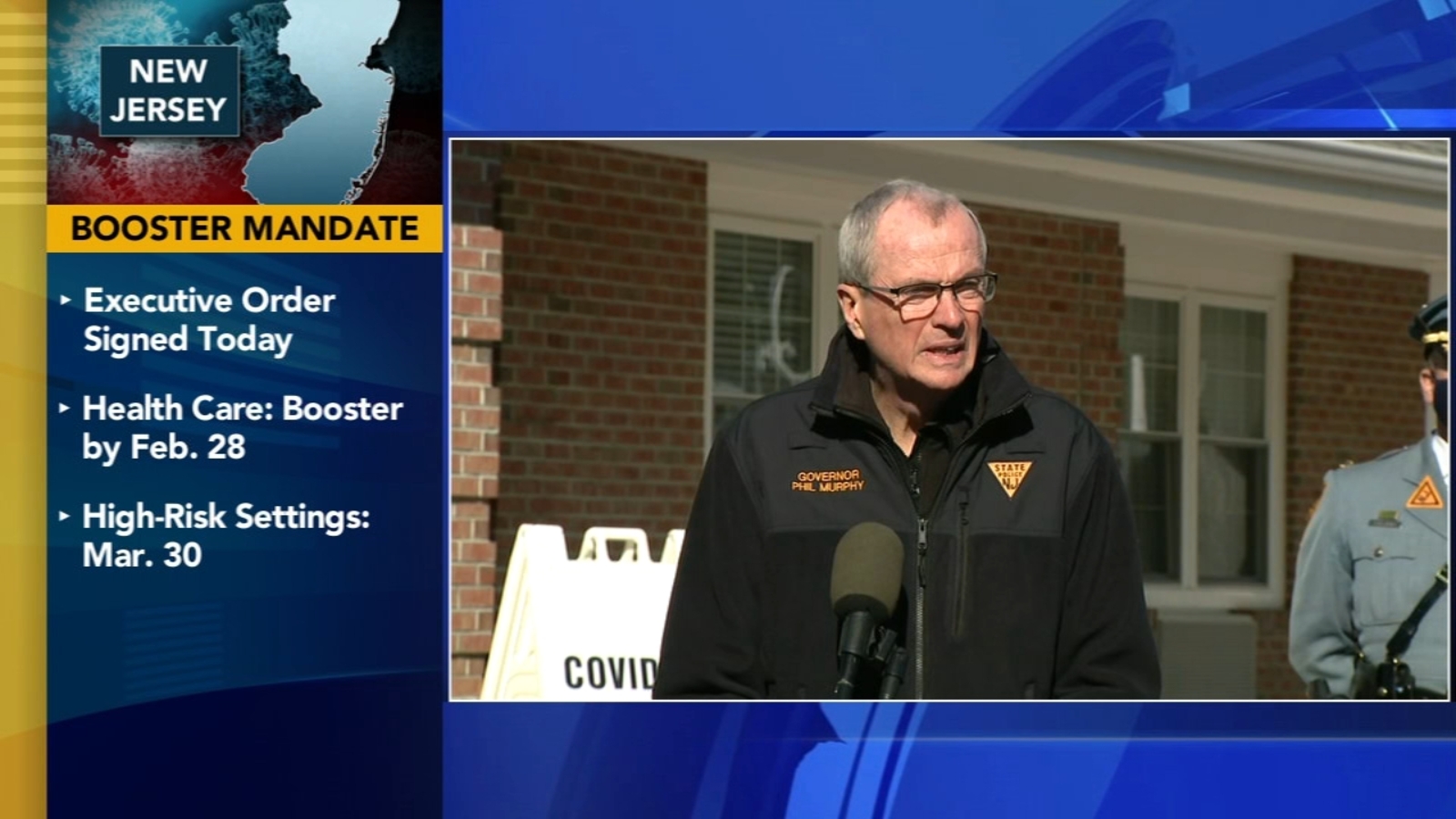
Workers in New Jersey healthcare facilities and high-risk congregate settings like hospitals and nursing homes will be required to be up to date with their COVID-19 vaccinations, including a booster, Gov. Phil Murphy announced Jan. 19.

Mr. Murphy said there would no longer be an option to opt out of vaccination through testing, except for the purposes of providing an accommodation for people exempt from vaccination.

New Jersey healthcare facilities’ covered workers subject to the CMS vaccination mandate for healthcare settings were already required to ensure covered employees received at least one vaccine by Jan. 27 and completed their primary vaccine series by Feb. 28. Mr. Murphy said the state is now requiring proof that these workers are up to date with their vaccination by Feb. 28, which also includes any booster shots for which they are eligible. Noncompliant workers risk losing their jobs.

Workers at covered healthcare settings not subject to the CMS mandate and covered high-risk congregate settings like prisons and jails have until Feb. 16 to receive their first dose of the primary vaccine series and must submit proof that they are up to date with their vaccination by March 30. Mr. Murphy said workers who become newly eligible for a booster after the two deadlines must submit proof of their booster shot within three weeks of becoming eligible. 

“With the highly transmissible omicron variant spreading across the country and New Jersey, it is essential that we do everything we can to protect our most vulnerable populations,” Mr. Murphy said in a news release. “With immunity waning approximately five months after a primary COVID-19 vaccination, receiving a booster dose is necessary to protect yourself and those around you. It is critically important that we slow the spread throughout our healthcare and congregate settings in order to protect our vulnerable populations and the staff that care for them.”

The rule in New Jersey, which was issued through an executive order, comes after New York and California also announced booster requirements for healthcare staff. 

Surgery delays: A pandemic effect patients, care teams dread

Surgery delays: A pandemic effect patients, care teams dread

Omicron and staffing constraints pushed hospitals and health systems to once again suspend nonurgent, elective procedures — a move that hurts patients and their care teams.

Physicians told The Washington Post that notifying patients of their surgeries being postponed is one of the most difficult things they do during the pandemic, and the idea of prolonging patients’ suffering is anguishing. In interviews, a patient rated the pain he felt from a ruptured cervical disk — for which his surgery has been indefinitely postponed at Mercy Health-St. Rita’s Medical Center in Lima, Ohio — as a 12 out of 10. 

In addition to extended pain, pushed back surgeries leave more time for disease advancement. Certain cancers can advance to later stages in four to eight weeks, for instance. Even procedures considered low acuity, such as joint replacements or bariatric cases, will have material implications from delays through reduced activity, mobility and quality of life for patients. Delays in surgery have also been shown to result in higher rates of surgical site infections.

“I’d say it’s a bona fide mess right now,” Kenneth Kaufman, chair and founding partner of Kaufman Hall, told The Washington Post. “We seem to be back to square one. Omicron has significantly compounded staffing shortages in a very profound way.”

Hospitals hit pause on surgeries over the last several weeks as growing COVID-19 inpatient volumes were compounded by omicron sidelining healthcare professionals infected with the virus. Vaccinated healthcare professionals experienced mild breakthrough cases that temporarily took them out of the workforce. 

Cleveland Clinic has extended its postponement of elective surgeries four times over the past month as thousands of employees were sidelined from COVID-19 infection. Hospitals in New YorkChicagoSt. LouisWashington and Virginia are among those that have either moved back surgeries or complied with government officials’ requests to do so in January.   

Healthcare professionals have taken issue with the industry term “elective,” which does not describe the acuity of the medical condition or necessity of the procedure. Rather, the use of “elective” distinguishes these surgeries that are scheduled in advance from emergency surgeries, such as trauma cases. 

University of Utah Hospital in Salt Lake City postponed about 20 percent of its surgeries when at least 500 clinical and nonclinical employees were out sick or isolating from COVID-19 at the start of the month. 

“Around Christmastime and the week after Christmas, we didn’t have to reschedule any operations for a period of three weeks, until January 1. Then the wheels came off,” Robert E. Glasgow, MD, interim chair of the hospital’s surgery department, told The Washington Post

On Jan. 14, the physicians at the hospital learned they could accommodate six additional surgery cases Jan. 18, leaving them in a mad dash to identify priority patients and determine who could present for surgery with less than four days’ notice. 

“How can we find six cases that are most in need and are most able to come?” said Dr. Glasgow said.

South Carolina hospital offers employees up to $10K for homebuyer assistance

Beaufort News, Weather, Safety, Sports | NewsBreak Beaufort, SC

Beaufort (S.C.) Memorial Hospital has created a homebuyer assistance program to help staff purchase a home or refinance mortgages, with up to $10,000 in assistance.

To be eligible for the program, employees must be full time, have worked at the hospital for at least six months, attend a homebuyer education workshop and meet household income requirements, among other criteria, according to a Jan. 10 news release from the hospital.

Additionally, properties must be within a 15-mile radius of a designated Beaufort Memorial campus, be the buyer’s primary residence and have monthly mortgage payments of no more than 33 percent of monthly income.

Recipients can use the funds for down payments and closing costs, the release said.

The hospital is partnering with development financial institution CommunityWorks for the program.

“We know that homeownership provides stability, security and a means to building financial health and wealth for future generations,” Beaufort Memorial President and CEO Russell Baxley said. “We also recognize that a major obstacle can be coming up with the money needed for a down payment or closing costs. This assistance program will help our employees bridge that financial gap.”

MedPAC declines to recommend to Congress additional pay bumps for doctors, hospitals

Medicare spending costs money

A top Medicare advisory board did not recommend any new payment hikes for acute care hospitals or doctors for 2023, stating that targeted relief funding has helped blunt the impact of the COVID-19 pandemic.

The Medicare Payment Advisory Commission (MedPAC), which makes recommendations to Congress and the federal government on Medicare issues, voted on the payment changes to Congress during its Thursday meeting. The panel decided against recommending any pay hikes.

The commission unanimously voted to update 2023 rates for acute care hospitals by the amounts determined under current law. The Centers for Medicare & Medicaid Services will publish its update to the current law payment rates this summer.

MedPAC estimated that the rates will increase 2% and that there would be 3.1% growth in hospital wages and benefits, but these “may be higher or lower by the time this is finalized,” said MedPAC staff member Alison Binkowski.

She added there will be another estimated 0.5% increase in inpatient rates.

MedPAC decided not to recommend any pay rates beyond current law after looking at the financial picture for hospitals and found the indicators of payment adequacy are generally positive.

Hospitals maintained strong access to capital thanks to substantial federal support, including targeted federal relief funds to rural hospitals which raised their all-payer total margin to a near-record total high,” Binkowski said.

She added fewer hospitals closed, and facilities continued to have positive marginal Medicare profits.

It was also difficult to interpret changes in quality that traditionally would determine whether a payment boost would be needed.

“For example, mortality rates increased in 2020, but this reflects the tragic effects of the pandemic on the elderly rather than a change in the quality of care provided to Medicare beneficiaries or the adequacy of Medicare payments,” Binkowski said.

Even though commission members agreed with the recommendation for hospitals, they were concerned whether it was enough to help facilities meet drastic increases in labor expenses.

“With labor, it is more than just a salary increase these hospitals are seeing,” said commission member Brian DeBusk.

He noted that hospitals haven’t just seen an increase in rates for contract or temporary nurses, but in nursing education as well.

MedPAC also recommended no changes to the statutory payment update for dialysis facilities and shouldn’t give a payment update to ambulatory surgery centers (ASCs) due to confidence in payment adequacy for the facilities.

“Despite the public health emergency, the number of ASCs increased by 2% in 2020,” said MedPAC staff member Daniel Zabinski. “The growth that we saw in the number of ASCs also suggests access to capital remains adequate.”

Physician fee schedule recommendation

The commission decided to take a similar estimate with the physician fee schedule, calling for any update to be tied to current law, which is estimated to have no change in spending.

Medicare payments to clinicians declined by $9 billion in 2020 but were offset thanks to congressional relief funds. Physicians also got a 4% bump to payments through 2022 compared to prior law.

The temporary rate hike is expected to go away at the start of 2023, but physician groups are likely to lobby Congress to keep the pay bump intact.

Physician groups already blasted the recommendation from MedPAC.

Anders Gilberg, senior vice president of government affairs for the Medical Group Management Association, tweeted that the recommendation was out of touch, especially after new reports of inflation.

“Hard to conceive of a more misguided recommendation to Congress at a time when practices face massive staffing shortages and skyrocketing expenses,” he tweeted.

20 hospitals, health systems that provide the most ‘unnecessary’ care: Johns Hopkins

Johns Hopkins study names health systems that provide the most 'unnecessary'  care | Modern Healthcare

Health systems that employed fewer primary care physicians, have higher bed counts or are investor owned were more likely to provide more unnecessary or low-value care, a study published Jan. 14 in JAMA found.

For the study, researchers from Baltimore-based Johns Hopkins University analyzed Medicare claims data at 3,745 hospitals for 17 low-value services. The low-value services were previously identified as unnecessary and included services such as pap smears for women older than 65, an abdominal CT scan with and without contrast and spinal fusions for back pain, according to the study.  

The researchers then rated the hospitals using an overuse index, which was based on the Medicare claims for the low-value healthcare services. Health systems rated at least 1.5 standard deviations or more above the average in the overuse index were considered over-users of low-value services.

Below is a breakdown of the 20 hospitals that provided the most unnecessary care based on the overuse index.

1. St. Dominic Health Services (Jackson, Miss.)

2. USMD Health System (Irving, Texas)

3. Community Medical Centers (Clovis, Calif.)

4. Care New England Health System (Providence, R.I.)

5. East Alabama Medical Center (Opelika)

6. Pocono Health System (East Stroudsburg, Pa.)

7. University Health Care System (Augusta, Ga.)

8. Deaconess Health System (Evansville, Ind.)

9. Congregation of the Sisters of St Joseph of Peace (Englewood Cliffs, N.J.)

10. Iredell Health System (Statesville, N.C.)

11. Sacred Heart HealthCare System (Allentown, Pa.)

12. Southeast Health (Dothan, Ala.)

13. Chesapeake (Va.) Regional Medical Center

14. Butler (Pa.) Health System

15. CarolinaEast Health System (New Bern, N.C.)

16. Ohio Valley Health Services and Education Corp. (Wheeling, W.Va.)

17. Slidell (La.) Memorial Hospital

18. Lakeland (Fla.) Regional Health System

19. North Kansas City (Mo.) Hospital

20. Temple University Health System (Philadelphia)

Read more here

Too Many Kids are Uninsured or Underinsured in the US

Too Many Kids are Uninsured in the US - YouTube

Access to healthcare in childhood has long term effects on health outcomes, but many children in the US are either uninsured or underinsured, meaning they often don’t have access to the care they need. Why is that and what can we do about it?

Looking ahead to a year of belt-tightening

Looking ahead to a year of belt-tightening

https://mailchi.mp/92a96980a92f/the-weekly-gist-january-14-2022?e=d1e747d2d8

We’ve been having “year ahead” discussions with our health system members over the past few weeks, although it’s been difficult for some to carve out time for planning in the midst of the Omicron surge.

One common theme is that, from a financial perspective, 2022 is expected to be a more difficult year. For many systems, despite the trying COVID situation, the past two years have been financial record-setters. In 2020, systems benefited from a massive infusion of COVID relief funding from the government, and in 2021, they continued to enjoy enhanced reimbursement due to COVID, plus had a resurgence of volume as patients sought care that was previously postponed.

2022 looks to be a more “normal” year—meaning a return to the financial pressures of pre-pandemic times. Those include mounting price compression from payers, an accelerating shift of care from inpatient to outpatient settings, and increasing competition for patients from disruptors and others. At the same time, patient acuity will continue to rise, with patients presenting sicker and with more comorbidities. The cost of caring for those patients will escalate, as the workforce shortage drives labor costs higher and supply chain woes persist.

We’d anticipate a year or more of belt-tightening among many health systems, as they adjust to the post-pandemic environment.

Healthcare workers are hospitals’ greatest concern

https://mailchi.mp/92a96980a92f/the-weekly-gist-january-14-2022?e=d1e747d2d8

As COVID hospitalizations surge to new highs, healthcare workers have become the rate-limiting factor for most hospitals’ ability to deliver care. Using self-reported data collected by the Department of Health and Human Services, the graphic above shows that hospital staffing concerns reached an all-time high this month, with nearly one in three hospitals reporting a critical shortage. (Anecdotal evidence from our conversations with hospital leaders suggests that the actual number in crisis may be even higher, with every system we’ve spoken to in the past month reporting severe staffing challenges.)

During previous surges, COVID hospitalizations and reported staffing shortages have ebbed and flowed together. However, staffing challenges and case numbers became decoupled during the Delta surge, as the percentage of hospitals reporting staffing shortages did not go down as the Delta wave subsided.
 
With a growing number of nurses and other staff choosing early retirement or looking for jobs in other sectors, health systems are navigating the Omicron spike with a smaller pool of workers. And now the high transmissibility of the Omicron variant is forcing healthcare workers to quarantine in droves.

As shown on the map, this is playing out both in highly vaccinated states like Vermont and California, and less-vaccinated places like West Virginia and Wyoming. That’s leading some state health officials and health systems to allow COVID-positive staff who are asymptomatic or experiencing mild symptoms to continue working—a policy which is being sharply criticized by nurses

While the end of the Omicron surge should bring some relief, longer-term staffing challenges will surely remain for most health systems.