Relying on one nonprofit to relieve the debts owed to another

https://mailchi.mp/bade80e9bbb7/the-weekly-gist-june-18-2021?e=d1e747d2d8

American Hospital Association stays mum on debt collection practices |  BenefitsPRO
Ballad Health, a not-for-profit health system operating in Virginia and Tennessee, announced this week that it had reached an agreement with RIP Medical Debt, a charity that uses donations to relieve debt created by healthcare bills, to pay off $287M of outstanding debt owed by its patients.

According to a report in the Wall Street Journal, the purchase will eliminate the debt of 82,000 low-income patients, many of whom qualified for Ballad’s charity care program but did not take advantage of it. The terms of the purchase were not disclosed, but RIP Medical Debt, which says it has relieved over $4.5B in medical debt nationally, typically pays between one and 1.25 percent of the owed amount for recent debt, and as little as 0.03 percent for older debt. That’s similar to what typical debt-purchasing businesses pay. But unlike those businesses, however, RIP Medical Debt says its debt eradication service has no tax consequences for recipients, effectively wiping away large sums that patients might have owed for years.

Since its creation as the result of a 2018 merger, Ballad has faced a mandate to increase the financial aid it provides to low-income patients, but has still come under criticism for aggressive collection practices, including the use of lawsuits against patients who owe the system. The deal with RIP Medical Debt is intended to reduce the amount of debt outstanding—as Ballad CEO Alan Levine told the Journal, “We’re wiping the slate clean.”

As a recent analysis by Axios and Johns Hopkins University showed, most nonprofit hospital systems have tried to reduce aggressive collections in recent years, with just 10 hospitals accounting for 97 percent of court actions against patients between 2018 and 2020. While it’s shocking to hear of a private charity having to step in to relieve patients of crippling medical debt in our nation’s $3.6T healthcare industry, absent larger structural solutions to the broken reimbursement system, it’s at least heartening to know that such services are available. But it’s a Band-Aid solution—more radical treatment remains undelivered.

Michigan systems announce intent to merge

https://mailchi.mp/bade80e9bbb7/the-weekly-gist-june-18-2021?e=d1e747d2d8

Spectrum Health & Beaumont Health to Merge, Creating New Health System for  Michigan | Moody on the Market

On Thursday, Grand Rapids-based Spectrum Health and Southfield-based Beaumont Health signed a letter of intent to merge, in a combination that would create a 22-hospital, $12B company that would become Michigan’s largest health system.

Spectrum CEO Tina Freese Decker will lead the combined company, while Beaumont CEO John Fox will assist with the merger, then depart. The proposed deal would not only create a system spanning much of Michigan, but would also allow for the expansion of Spectrum’s health plan, Priority Health, which accounted for more than $5B of the system’s $8B in revenue, into the Detroit market.

This is the third proposed merger since 2019 for Beaumont, which saw its planned combinations with Ohio-based Summa Health fall apart early in the pandemic; the system’s planned merger with Illinois-based Advocate-Aurora Health was called off in 2020 amid pushback from the system’s medical staff. Both deals fell apart due to challenges in communication and cultural compatibility—which will likely also be the greatest potential stumbling blocks for a Spectrum-Beaumont partnership.

The recently abandoned combination between NC-based Cone Health and VA-based Sentara Healthcare also appears to have fallen apart due to cultural challenges, as have many other recent health system deals. Yet despite a string of cautionary tales, health system mergers continue apace—a sign of the pressure industry players are under to seek scale in order to contend with the growing ranks of disruptive (and well-funded) competitors.

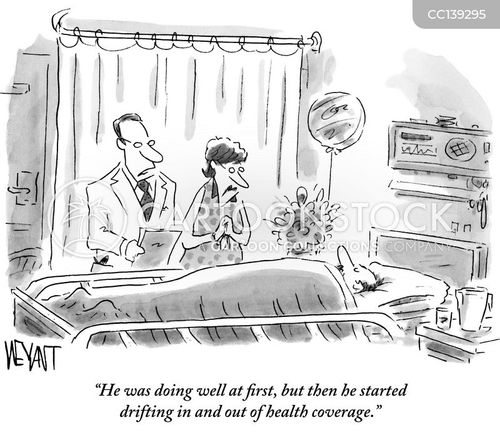
Cartoon – Drifting In & Out of Health Coverage

Health Insurance Cartoons and Comics - funny pictures from CartoonStock

Health systems facing an uphill battle for MA lives

https://mailchi.mp/66ebbc365116/the-weekly-gist-june-11-2021?e=d1e747d2d8

Fighting an Uphill Battle? - Zeteo 3:16

A number of the regional health systems we work with have either launched or are planning to launch their own Medicare Advantage (MA) plans. The good news is the breathless enthusiasm among hospitals for getting into the insurance business that followed the advent of risk-based contracting has been tempered in recent years.

Early strategies, circa 2012-15, involved health systems rushing into the commercial group and individual markets, only to run up against fierce competition from incumbent Blues plans, and an employer sales channel characterized by complicated relationships with insurance brokers. 

Slowly, a lightbulb has gone off among system strategists that MA is where the focus should be, given demographic and enrollment trends, and the fact that MA plans can be profitable with a smaller number of lives than commercial plans. It’s also a space that rewards investments in care management, as MA enrollees tend to be “sticky”, remaining with one plan for several years, which gives population health interventions a chance to reap benefits.

But as systems “skate to where the puck is going” with Medicare risk, they’re confronting a new challenge: slow growth. Selling a Medicare insurance plan is a “kitchen-table sale”, involving individual consumer purchase decisions, rather than a “wholesale sale” to a group market purchaser. That means that consumer marketing matters more—and the large national carriers are able to deploy huge advertising budgets to drive seniors toward their offerings. 

Regional systems are often outmatched in this battle for MA lives, and we’re beginning to hear real frustration with the slow pace of growth among provider systems that have invested here. Patience will pay off, but so will scale, most likely—the bigger the system, the bigger the investment in marketing can be. (Although even large, national health systems are still dwarfed by the likes of UnitedHealthcare, CVS Health, and Humana.)

Look for the pursuit of MA lives to further accelerate the trend toward consolidation among regional health systems.

Healthcare M&A heats up in first quarter

https://mailchi.mp/66ebbc365116/the-weekly-gist-june-11-2021?e=d1e747d2d8

Judging from the level of deal activity across healthcare in the first quarter of this year, post-pandemic euphoria is truly taking hold. After a substantial, COVID-related dip across most of last year, healthcare M&A began to accelerate in the fourth quarter of 2020, and hit a new high in the first quarter of 2021—up 19 percent. While all sectors saw an uptick in deal flow, the level of activity was particularly high among physician groups, as well as in the behavioral health and “e-health” spaces.

Although hospital deal activity waned somewhat in the first quarter, the average value of deals increased: the average seller size by revenue was $676M, around 70 percent above historical year-end averages. This reflects a shift from bolt-on acquisitions by health systems looking to add isolated assets, to larger health systems seeking to combine their portfolios. Private equity continues to fuel a large portion of deal activity, especially in the behavioral health and physician group space, contributing to an 87 percent surge in the physician sector

We’d expect this flurry of M&A activity to persist—especially among physician groups and hospitals—as organizations seek financial security after a turbulent year, and as larger players look to scale their market presence and diversify revenue streams. 

In first federal ruling on vaccine mandates, judge sides with Houston hospital, dismissing claims from staff resisters

https://www.yahoo.com/news/federal-judge-sides-houston-hospitals-020713664.html

178 staffers at Houston Methodist hospital suspended for not complying with  COVID-19 vaccine mandate - ABC News

In the first federal ruling on vaccine mandates, a Houston judge Saturday dismissed a lawsuit by hospital employees who declined the COVID-19 shot – a decision that could have a ripple effect across the nation.

The case involved Houston Methodist, which was the first hospital system in the country to require that all its employees get vaccinated. U.S. District Judge Lynn N. Hughes said federal law does not prevent employers from issuing that mandate.

After months of warnings, Houston Methodist had put more than 170 of its 26,000 employees on unpaid suspension Monday. They were told they would be fired it they weren’t vaccinated by June 21.

The hospital already had made it clear it means what it says: It fired the director of corporate risk – Bob Nevens – and another manager in April when they did not meet the earlier deadline for bosses.

In recent weeks, a few other major hospitals have followed Houston Methodist’s lead, including the University of Pennsylvania, University of Louisville, New York Presbyterian and several major hospitals in the Washington, D.C. area.

Houston Methodist’s CEO Marc Boom predicts more hospitals soon will join the effort. Many hospitals and employers were waiting for legal clarification before acting.

“We can now put this behind us and continue our focus on unparalleled safety, quality, service and innovation,” Boom said after the ruling. “Our employees and physicians made their decisions for our patients, who are always at the center of everything we do.”

The lawsuit was filed by 117 workers led by Jennifer Bridges, a nurse at Houston Methodist’s Baytown hospital who declined the vaccine because she considers it experimental and dangerous. The judge disagreed, writing: “This claim is false, and it is also irrelevant.”

Learning of the dismissal from USA TODAY, Bridges vowed not to give up. She has initiated a change.org petition that as of Saturday had drawn more than 9,000 signatures and a GoFundMe to pay for the lawsuit that has raised $130,000.

“This doesn’t surprise me,” she said. “Methodist is a very large company and they are pretty well protected in a lot of areas. We knew this was going to be a huge fight and we are prepared to fight it.”

The lawsuit claimed that federal law prohibits employees from being required to get vaccinated without full U.S. Food and Drug Administration approval of the vaccines. Currently, the FDA has authorized the Moderna, Pfizer and Johnson & Johnson vaccines under a special provision for emergencies.

The judge dismissed this argument as well, saying that law does not apply to private employers. He also dismissed an argument that anyone who gets the vaccine is effectively a human subject in an experimental trial.

“The hospital’s employees are not participants in a human trial,” he wrote. “They are licensed doctors, nurses, medical technician, and staff members. The hospital has not applied to test the COVID-19 vaccines on its employees.”

The lawsuit originally was filed in Texas state court but was moved to federal court at Houston Methodist’s request. The federal judge ruled Saturday that Texas state law only protects workers from being fired if they are forced to commit a crime.

Cartoon – Back into the Recovery Room

Recovery Room Cartoons and Comics - funny pictures from CartoonStock

Sutter Health to lay off 400 workers

Sutter Health fined again over not notifying nurses about COVID-19 exposure

As part of a financial restructuring plan, Sacramento, Calif.-based Sutter Health will issue another round of layoffs this year, according to the Sacramento Business Journal.  

The health system said it plans to lay off 400 more employees. These newly announced layoffs are in addition to 277 information technology jobs that were cut April 2. 

Sutter said most of the new layoffs affect employees in administrative positions in benefits, human resources, data services and accounting. The layoff notice said many of these employees were working remotely or in the field. 

Sutter told the Business Journal that it’s working to evaluate every aspect of its business model.

“Moving forward, we will continue to work to minimize staff reductions and their impact on our dedicated employees as we look for ways to eliminate variation, streamline resources and more efficiently manage our indirect costs,” Sutter told the Business Journal.

Sutter ended 2020 with a $321 million operating loss, including $800M in funding from the Coronavirus, Aid, Relief and Economic Security Act. Without the funding, Sutter’s operating loss would have been $1.1 billion. As a result, Sutter initiated a sweeping review of its finances in March 2021. 

Sutter Health also gave voluntary severance packages to 800 workers in 2020.