Two hospital systems in Washington state, CHI Franciscan and Virginia Mason Health System, have signed a definitive agreement to combine through a joint operating company that would be a subsidiary of Chicago-based CommonSpirit Health.
The two organizations inked the agreement Dec. 21 and made it public Dec. 23. The parties signed a letter of intent to explore a combination in July.
The combination would create a nine-hospital system. Two of the hospitals would be from Seattle-based Virginia Mason and seven would come from Tacoma, Wash.-based CHI Franciscan, which is part of CommonSpirit Health.
News of the planned merger prompted Virginia Mason’s 256-bed hospital in Yakima, Wash., to part ways with the health system before it combined with CHI Franciscan. The board of Virginia Mason Memorial said it wants to become an “independent, local healthcare system” instead of joining a larger system.
The two health systems said they expect the transaction to be finalized around Jan. 1, 2021, pending regulatory approval.
In late November, Cliff Willmeng’s wife handed him a sealed envelope at their Minneapolis home “with some trepidation,” he recalled. He looked at the sender printed on the front: “Minnesota Board of Nursing.” Willmeng, a registered nurse, openedtheletter and read that the board was investigating his conduct as a nurse at United Hospital in St. Paul, from which he’d been fired in May. Clearly his license was at stake.
Willmeng was disappointed, but not surprised. He believes the review is due to his standing up for his own safety and that of other nurses, and for filing a lawsuit and union grievance against United’s parent company, Allina Health, after his termination.
He also thinks the investigation, like his firing, has been orchestrated to scare other healthcare workers away from reporting safety violations and concerns as the pandemic rages, and to make an example out of the former union steward.
The investigation is being led by a former Allina executive: “It feels meant to intimidate me,” he said.
Taking a Stand for Safety
Willmeng is a 13-year nursing veteran, husband, and father, who began working at United in October 2019.
When the pandemic hit late last winter, managers instructed nurses to use and reuse their own scrubs rather than hospital-issued scrubs. They were asked to launder their scrubs themselves at home.
Willmeng and others worried about bringing the virus home and pressed for the hospital scrubs. These scrubs were available, he said, and healthcare workers were permitted to wear hospital gear at Abbott Northwestern, another Allina hospital in Minneapolis.
In addition, while United managers told staff their laundering co-op could not keep up with demand for all the scrubs, the co-op denied that assertion, said Brittany Livaccari, RN, an ER nurse and union steward at United.
Willmeng addressed his concerns with management, filed state OSHA complaints, and enlisted the Minnesota Nurses Association (MNA). “He was taking action 100% to protect himself and to protect his patients,” Livaccari said.
But management did not change its policy, which was devised before the pandemic, and pointed to early-pandemic CDC and Minnesota Department of Health (MDH) guidelines — even when Willmeng shared emerging reports suggesting the policy was jeopardizing safety.
“It did feel like a pissing match,” Livaccari said. “We didn’t feel like we were being protected. … We weren’t being valued.”
Managers repeatedly wrote up Willmeng and colleagues who wore the hospital scrubs despite the policy. “It definitely felt like an intimidation tactic — ‘You’re going to do this, you’re going to follow these policies,'” Livaccari said. “A lot of staff chose to stop wearing those scrubs because they needed their job, they have families to pay for, they were afraid.”
Willmeng continued to wear the hospital scrubs. “I had to decide whether that policy was most important, or the safety of my workplace and public health and my family,” he said.
On May 8, the hospital terminated Willmeng. He said its stated cause was violating hospital policies regarding uniform code and a respectful workplace.
Two weeks later, the local nurses’ union held a rally that drew hundreds of supporters for Willmeng and blasted the hospital’s scrub policy.
‘I’m Not a Bad Nurse’
In June, Willmeng sued Allina for whistleblower retaliation and wrongful termination. The case is scheduled to be heard next August.
His union grievance is set to be arbitrated in January. He maintains his firing was not for “just cause” because United’s uniform code policy violated standard nursing practices.
Willmeng has been running the website WeDoTheWork, which describes itself as “worker-run journalism.” It’s an independent but union-affiliated publication that “unflinchingly tells our side of the story, and takes the fight to management.”
He’s been publicizing his case on that website. In his Twitter account he notes, “I believe in the working class, democratically run economy, socialism, and revolution.”
Willmeng is applying for jobs, but despite his experience, a national nursing shortage, and reports of severe understaffing as hospitalizations surge again, Willmeng has not even been interviewed by any of the roughly 20 medical centers he has applied to.
He thinks he is being blackballed. “I’m not a bad nurse,” he said.
The board letter cited these concerns: “On April 16, 2020, you received a written warning for not following the uniform policy,” reads one item, citing a report shared with the board. “On May 5, 2020, you were issued a final written warning for repeatedly violating policy. … On May 8, 2020, you were terminated from employment based on violating hospital policies, behavioral expectations, code of conduct, and not following the directions of your manager.” The letter asks Willmeng to respond to eight questions.
“This looks like it was taken right out of my HR file,” he said. The board will not reveal who reported him, citing confidentiality policies. But he is certain — given the detail in the letter — that it was Allina/United management.
The nursing board cannot comment on Willmeng’s review to protect confidentiality, said executive director Shirley Brekken, MS, RN. The board receives about 1,200 complaints annually and first determines whether a complaint would merit disciplinary action if true. If so, it launches a review.
Allina declined to answer questions via a spokesperson, citing the lawsuit. “We cannot appropriately retain employees who willfully and repeatedly choose to violate hospital policies,” according to an emailed statement. Throughout the pandemic Allina has been following CDC and MDH guidelines, “which do not consider hospital issued scrubs as PPE [personal protective equipment].”
“In the early days of the pandemic, our local and national supply chain was extremely stressed,” the statement continues. “Our practices are aligned with other local and national hospitals … and have enabled us to allocate the appropriate supplies for daily patient care and ongoing care for COVID-19 patients.”
But United healthcare workers still lack hospital scrubs and enough N95 masks, Livaccari said, and the hospital is severely understaffed as the patient load increases. “We hear, ‘It’s a pandemic. You have to do more with less,'” she said. “It’s a really bad situation.”
Retaliation and Intimidation
Some think Willmeng’s review was initiated primarily to retaliate against him, not to protect public health and safety.
“Hospitals, they want a docile workforce, they want a workforce they can control,” said John Kauchick, RN, a retired 37-year nursing veteran who advocates for workplace rights. They do so “by fear and intimidation,” he added. “A nurse’s number one fear is to be turned in to a board of nursing for anything.”
“If you’re a whistleblower and you speak truth to power, that will get you a disciplinary hearing even more so than if there is patient harm.”
The letter was drafted more than six months after Willmeng was fired, and after he filed the lawsuit and union grievance. Just before he received the letter, he was elected to the MNA board. The timing strikes Willmeng and Kauchick as significant.
“If you think there’s been a violation, you are supposed to report that in a much shorter time period,” Kauchick said. Kauchick thinks Allina filed the complaint as leverage, to persuade Willmeng to drop the grievance and lawsuit.
But Livaccari noted the process can take up to six months, and that every firing is supposed to be reported to the board.
Like Kauchick, she takes umbrage with the review’s leader: Stephanie Cook, MSN, RN, a board nursing practice specialist who spent 24 years as a director with Allina. She was a member of multiple Allina committees, including its ethics committee, according to reports. She was with Allina as recently as 2018. Brekken confirmed her employment with Allina, noting that it’s “a very large system.”
Regardless, that’s a conflict of interest, Kauchick and Livaccari said, arguing that Cook should not be part of the review. “It’s just so blatantly obvious. How are you going to look at this with an unbiased lens when you worked for the organization that says Cliff was in the wrong?” Livaccari said. “It’s so inappropriate.”
This is not uncommon, Kauchick said, noting state nursing board reviews are “really just designed to get rid of whistleblowers. It’s like a buddy system. They hire higher-ups from big hospital systems. It’s just incestuous.”
Brekken was aware of Cook’s background before a colleague assigned this review to Cook, she said, noting the board vets staff for personal involvement in cases. Brekken “might consider” removing Cook from the review given her connection to Allina, she said, but added: “Many individuals on our staff may have worked for a particular health system throughout their career.”
The board could throw out the complaint or take action. Such actions typically range from a reprimand to revoking a nurse’s license, Brekken said. A staff member and board member together will review the report and Willmeng’s response, but she said the board itself makes final decisions.
Willmeng is also focused on the grievance, which asks Allina to provide full back pay and reinstate him.
“I would not feel comfortable; I’d feel very anxious” going back, he said. “But I’m an ER nurse. I belong in the ER…. It’s important for a frontline healthcare worker to demonstrate that when they stand up and speak truthfully and assertively about working conditions and patient safety, that they can’t just be triangulated.”
His salary — about twice his current unemployment benefits — is also a draw, he acknowledged.
Meanwhile, he continues applying for other jobs. His life insurance cost doubled and his family switched to his wife’s lesser health insurance plan, he said. A fourth-grade teacher with a local public school system, her salary is the primary support for themselves and their two children.
Willmeng also just hired an attorney at $250 an hour to help him respond to the board letter. “It’s not something I take lightly,” he said. “There’s cause for real concern. That’s my nursing license, that’s everything.“
Hospital executives in California are sounding alarms on their inpatient capacity as COVID-19 hospitalizations surge in the state, according to ABC News.
As of Dec. 23, California is among the eight states where the virus is spreading quickest. On Dec. 22, the state saw one of its biggest jumps in one-day COVID-19 hospitalizations, with an additional 653 patients admitted to hospitals.
Officials from Oakland-based Kaiser Permanente, San Francisco-based Dignity Health and Sacramento-based Sutter Health said during a Dec. 22 news conference that they are facing capacity issues. In some cases, COVID-19 patients are being treated in hallways, gift shops and conference rooms.
Greg Adams, the chairman and CEO of Kaiser Permanente, said during the conference, “We simply will not be able to keep up if the COVID surge continues to increase. We’re at or near capacity everywhere.”
Many hospital officials said Thanksgiving gatherings contributed to the surge. The executives urged Californians to not gather for Christmas and New Year’s.
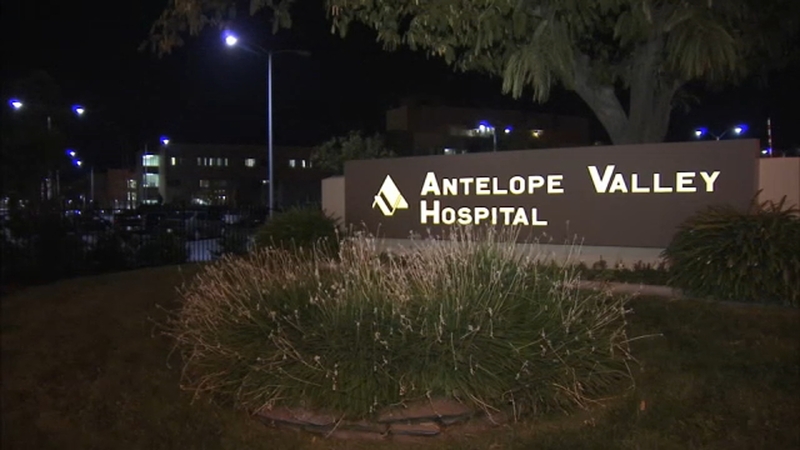
A patient accused of fatally beating his roomate at Antelope Valley Hospital in Lancaster, Calif., has been arrested and charged with murder, elder abuse and a hate crime enhancement, according to the Los Angeles County Sherrif’s Department.
The victim, an 82-year-old man, was being treated for COVID-19 and sharing a room with the suspect, identified as 37-year-old Jesse Martinez. The victim, whose name has not been released, began to pray in his hospital room on Dec 17. That act upset Mr. Martinez, who allegedly struck the victim with an oxygen tank. The man died of his injuries Dec. 18, police said.
Mr. Martinez is being held at the Twin Tower Correctional Facility in Los Angeles, and his bond is set at $1 million. He’s scheduled to appear in court Dec. 28.
Police said the investigation into the incident is ongoing, and the motive is not immediately clear.
Hospital margins and revenues continued to fall in November, while expenses remained above 2019 levels, according to Kaufman Hall’s December Flash report, which examines metrics from the previous month.
The median hospital operating margin in November was 2.5 percent year to date with funding from the Coronavirus Aid, Relief and Economic Security Act. Without the funds, the median hospital operating margin narrowed to -1.1 percent.
Skyrocketing COVID-19 cases are already stretching hospitals’ capacity, and Kaufman Hall expects the situation to worsen in coming months as holiday gatherings and colder weather push case counts up even further.
There were several hospital mergers that, at some point in their lifetime, were called off in the past year.
Below are seven hospital mergers called off since December 2019, beginning with the most recent:
1. Sanford, Intermountain halt merger talks Sanford Health indefinitely suspended discussions in early December about a planned merger with Salt Lake City-based Intermountain Health because of the abrupt exit of Sanford’s longtime president and CEO, Kelby Krabbenhoft. Sanford and Intermountain announced in October they had signed a letter of intent to merge, with completion of the deal expected in 2021. The combination would create a $15 billion, 70-hospital system. In its statement issued Dec. 4, Sanford said it will pause current merger and acquisition activity while it addresses other organizational needs.
2. Advocate Aurora, Beaumont cancel merger Advocate Aurora Health, which has dual headquarters in Milwaukee and Downers Grove, Ill., and Southfield, Mich.-based Beaumont Health called off their merger plan Oct. 2, about five months after signing a letter of intent to combine. The proposed merger faced criticism from some Beaumont physicians, nurses and donors. In August, the Beaumont board of trustees confirmed it would delay a vote on the planned merger. The trustees decided to postpone the vote after seeing the results of a survey, completed by 1,500 of the system’s 5,000 physicians, that revealed a lack of confidence in Beaumont’s leadership and concerns about its proposed merger with Advocate Aurora. The merger of Beaumont and Advocate Aurora would have created a $17 billion system with 36 hospitals.
3. California hospital ends merger talks with Dignity Health County officials overseeing Ventura (Calif.) County Medical Center ended merger talks with San Francisco-based Dignity Health in July after leaders from both parties deemed an affiliation too risky. County Health Care Agency Director Bill Foley said Dignity officials considered it a risk to take on public hospitals, while county managers were concerned they would give up control but still face risk for buildings and finances. County officials were also concerned VCMC would lose its designation as a public hospital under either a lease or a contract with Dignity, which would put roughly $150 million in annual funding at risk.
4. Beaumont, Summa Health cancel $6.1B merger plan Southfield, Mich.-based Beaumont Health called off a proposed merger with Akron, Ohio-based Summa Health in late May. They ended talks about five months after signing a definitive agreement, under which Summa Health would have become a subsidiary of Beaumont. The proposed deal, which had already received all necessary regulatory approvals, would have created a nonprofit system with 12 hospitals and $6.1 billion in annual revenue.
5. 4 Chicago hospitals call off $1.1B merger plan Chicago-based Advocate Trinity Hospital, Mercy Hospital and Medical Center, South Shore Hospital and St. Bernard Hospital signed a letter of intent in January to combine into a single health system and build at least one new hospital and several community health centers. The hospitals called off the deal in late May after government funding for the $1.1 billion plan fell through.
6. Geisinger, AtlantiCare sever merger Danville, Pa.-based Geisinger and Atlantic City, N.J.-based AtlantiCare severed their merger in March, about five years after the two systems combined. The separation of the two organizations is expected to take up to 18 months, the two organizations said in March.
7. Wisconsin health systems call off merger La Crosse, Wis.-based Gundersen Health System and Marshfield (Wis.) Clinic Health System abandoned plans in December 2019 to merge into a 13-hospital rural healthcare network. The two systems said they “mutually decided to remain independent” after several months of productive and collaborative discussions.
UMass Memorial Health Care and the Harrington HealthCare System have filed paperwork for regulatory approval for their plans for Harrington to become part of the UMass Memorial system.
Worcester-based UMass Memorial said Tuesday the two hospital systems filed the first in a series of required filings with state regulatory agencies for their proposed marriage. The review process, to include Massachusetts Health Policy Commission and Attorney General’s Office, is expected to take up to four months.
UMass Memorial and Harrington first said in January they intended on Harrington being folded into the much larger UMass Memorial system, which is the largest employer in Central Massachusetts. Harrington, whose main hospital is in Southbridge, has remained one of a small and shrinking number of independent hospitals in the state.
The two systems already collaborate through a system allowing Harrington care providers to consult remotely with UMass Memorial specialists in caring for critically ill patients. Harrington will also be brought into UMass Memorial’s electronic patient records system as part of the planned integration.
UMass Memorial has committed to operating Harrington’s hospital campuses in Southbridge and Webster as acute-care hospitals for at least five years. Upon regulatory approval, Harrington will join UMass Memorial’s Medical Center in Worcester, Marlborough Hospital and Clinton Hospital.
Two people were injured in a shooting at a medical facility near PeaceHealth Southwest Medical Center in Vancouver on Tuesday afternoon.
Both were immediately taken to the nearby PeaceHealth emergency room for treatment, according to a hospital spokesperson.
The victims’ conditions and identities were not released. But there is no longer any danger to the public, said PeaceHealth spokesperson Randy Querin.
Police were called to the shooting just before 1 p.m. at 505 NE 87th Ave. Security officers put the nearby PeaceHealth campus into modified lockdown, with most entrances closed.
“I heard shots,” said Gaye Lynn Cook who was in the building for an eye appointment. “We were told to go down the hall and hide in the rooms.”
Just after 2:30 p.m., Querin said, “The situation is now safely contained, and both the 505 building and PeaceHealth Southwest Medical Center are all clear, no longer in lockdown.”
Querin said facilities inside the 505 Building include a vision center, oncology clinic, maternal fetal medicine, family medicine and a sleep disorders clinic.
The company’s surgery centers far outnumber its hospital portfolio, and its ambulatory earnings will account for nearly half of overall earnings next year.
Tenet Health got its start as a major hospital operator in the U.S. and can trace its hospital business roots as far back as 1969. But it may be time to think of the Dallas-based company as an ambulatory surgery center operator, first, and a hospital chain, second.
Following its latest acquisition, Tenet’s ASC footprint will be nearly five times larger by the number of facilities than its hospital portfolio, and its ambulatory earnings will account for nearly half of the company’s overall earnings next year, executives recently said. That’s a significant leap from about six years ago when ambulatory represented just 4% of the company’s earnings.
“From a stock perspective, I think they’re going to get more credit now for that ownership of the surgery center business than ever just because of the size contribution,” Brian Tanquilut, an analyst with Jefferies, said.
Still he noted they will likely retain their image as a hospital provider first given that half its business (and earnings) are subject to the dynamics of the hospital space.
Tenet will now operate up to 310 ASCs in 33 states following its $1.1 billion cash deal to buy up to 45 centers from SurgCenter Development.
Tenet has billed its purchase from SurgCenter Development as a transformative deal, crowning itself the leading musculoskeletal surgical platform.
SurgCenter Development is one of the larger ASC operators in the country. The Towson, Maryland-based firm has developed more than 200 centers since the company was officially established in 2002. SCD’s business model calls for its physician partners to maintain majority ownership while SCD provides consulting and capital.
In fact, Tenet will pull ahead of the pack and will operate the most ASCs compared to its competitors, according to various public data.
Amsurg, an ASC operator under private equity-owned Envision, controls more than 250 surgery centers, according to its website, followed by Optum’s 230 centers under its Surgical Care Affiliates brand.
Owner
Number of ASCs (fully or partially owned)
Tenet Health
310
Amsurg (Envision)
250
Surgical Care Affiliates (Optum)
230
SurgCenter Development
122
HCA
121
Surgery Partners
111
Total Medicare-certified ASCs in U.S.
5,700
Still, those large players only control a sliver of the overall market. There are more than 5,700 Medicare-certified ASCs operating in the U.S., according to MedPac’s latest March report.
The market is so fragmented because, historically, a handful of doctors could come together and open up a small surgery center with a few operating rooms, Todd Johnson, a partner at Bain and Company, said. Johnson noted there are not that many deals like this out there, which is why it’s significant that Tenet was able to gobble up 45 centers in one swoop.
“We’re a long way from this being a market where any individual operator’s got 30% of market share. There’s just so many of these out there,” Johnson said.
What’s so attractive?
Regulatory and reimbursement changes and patient preference continues to fuel certain procedure migration away from hospitals.
“For payers, typically, the surgery rates are 30 to 40% less than the same procedure that’s done in a hospital outpatient department. So, payers certainly value the economic value proposition of ASCs,” Johnson said.
Just recently, regulators cleared the way for more procedures to be done in ASCs. CMS is eliminating the list of procedures that must be performed in a hospital, drawing ire from the hospital lobby. The inpatient-only list will be completely phased out by 2024, creating even more growth potential for surgery centers. Come Jan. 1, total hip replacements will be covered if performed in an ASC, a huge win for ASC operators.
It’s why hospital operators like Tenet have been keen to expand their surgery center footprint. The centers attract relatively healthy patients for quick procedures — eating into hospitals’ revenue and margin.
“This further move only solidifies the fact that they are trying to diversify their revenue streams, and, frankly move into a more attractive economic profile of procedure types — not trauma and COVID but rather scheduled surgeries they can run in and out like a factory but with really good clinical outcomes,” Johnson said.
To this point, Tenet leaders said the new SurgCenter Development centers generate higher margins and have minimal debt.
Patients also tend to prefer ASCs, Johnson said. Plus, as a lower cost option it can be persuasive for patients, especially those with high-deductible health plans.
Long-term strategy
Tenet has continued to bet on the shift from inpatient to outpatient services following its purchase of USPI in 2015.
The purchase set Tenet up to be a serious competitor in the space, establishing a portfolio of 244 surgery centers when the deal was announced. It illustrated Tenet’s intent to build a broader portfolio.
At the same time, it has whittled down its hospital portfolio, divesting in markets where it isn’t the No. 1 or No. 2 player as it seeks to hone its most competitive segments and markets.
Just last year, it announced plans to largely exit the Memphis, Tennessee, market with the sale of a number of assets including two hospitals, urgent care centers and the associated physician practices.
In 2018, Tenet shed all of its operations in the U.K. and eight hospitals across the U.S.
That long-term strategy was made clearer last week when Tenet announced its sale of its urgent care business to FastMed. By selling off its 87 CareSpot and MedPost centers, Tenet said it will allow the company to further focus on its surgery center business.
Tenet has been keen to tout its position of musculosketel procedures — a high growth area compared to other procedure types such as gastroenterology. A 2019 report from Bain and Company expects that orthopaedic and spine procedure volumes will increase the fastest over the next few years.
With the SCD centers in the mix, CEO Ron Rittenmeyer said, “this transaction ensures Tenet will essentially double down and further deepen our concentration in these high growth areas of the future.”
It turns out it’s not just the kids who aren’t getting snow days this year. This week, we spoke with an executive at a health system hit hard by Wednesday’s Nor’easter, and asked how the system was faring with the expected 18 inches of snowfall. He replied that the medical group was as busy as usual.
With all the work this spring to expand telemedicine capabilities, clinic staff were able to reach out to patients the day before the storm, and proactively convert a majority of scheduled in-person clinic visits to telemedicine. “Normally we would’ve been closed, and most appointments rescheduled for weeks down the road,” he told us. Instead, they were able to keep most of those visits in their scheduled time slot.
“Now that we have a systemwide process for telemedicine, I don’t think we’ll have a reason for the clinic to take a snow day again.” It’s a clear win-win for the system and patients: patient care seamlessly goes on. It’s easy to see the many use cases for the ability to toggle between in-person and virtual visits. A parent is stuck at home with a sick kid, and can’t make her endocrinologist appointment? Moved to virtual! A patient has an unexpected business trip taking him out of town? Don’t cancel, let’s do that follow-up visit via telemedicine.
We’ve been worried about the slowdown in progress made on telemedicine as patients switched back to in-person visits across the summer and fall. The ability to continue patient care during a record-breaking snowstorm is a perfect illustration of why it’s critical not to “backslide” with virtual care: meeting patients where they are, regardless of circumstances, is an essential part of building long-term loyalty and care continuity.






 HENRY KOTULA