A former worker at Maury Regional Medical Center in Columbia, Tenn., was charged with stealing nearly $800,000 worth of medical supplies from the hospital and selling them online for his personal benefit, Williamson Source reported.
Former system coordinator Tommy John Riker allegedly stole $798,265 worth of supplies from the hospital between 2017 and 2019. He worked in the hospital’s supply chain department and was responsible for purchasing and managing items in the hospital’s inventory control system.
His job allowed him to steal items from the hospital’s inventory and manipulate the inventory to make it seem the supplies were given to staff, according to investigators from Tennessee’s Comptroller’s Office, the Williamson Source reported.
The stolen supplies include needles, wound dressings and surgical dressings, according to the comptroller’s report.
Mr. Riker was indicted on one count of theft over $250,000 and 54 counts of money-laundering.
Trinity Health Michigan is raising its minimum wage to $15 per hour for hospital and medical group employees, the organization announced in an Oct. 19 news release.
The wage increase will affect 2,100 full- and part-time employees at Norton Shores-based Mercy Health and Canton-based Saint Joseph Mercy Health System, and their medical groups, IHA, St. Joe’s Medical Group and Mercy Health Physician Partners.
Employees affected by the wage increase include non-union environmental services workers, medical assistants, patient companions, food and retail services and transporters.
Trinity Health Michigan officials said an additional 6,000 employees making between $15 to $19 an hour will also “have their wage adjusted in order to maintain meaningful distinctions in pay.” They said the additional wage increases are to improve pay for a large number of employees, and help retain and attract talented workers.
“Our dedicated and compassionate employees are at the heart of what makes our health ministry remarkable,” Rob Casalou, president and CEO of Trinity Health Michigan, said in a statement. “As we continue to face the COVID pandemic and work together to address economic challenges, we want to recognize our employees whose commitment and talent have enabled us to care for our communities during this challenging time. These investments in our people are part of an overall philosophy to offer equitable and market-competitive pay and benefits for our staff, as together we build a strong future.”
Trinity Health Michigan officials said eligible employees are still slated to receive their annual wage increases for 2020-2021, and no increases are planned in medical health plan premium contributions for employees for 2021. Additionally, they said the base minimum of the employer’s core contributions will climb from $1,200 to $1,400 for calendar year 2021.
Mercy Health and Saint Joseph Mercy Health System are part of Livonia, Mich.-based Trinity Health’s Michigan region. Mercy Health serves the Grand Rapids, Muskegon, Shelby and the Lakeshore communities, and Saint Joseph Mercy Health System has hospitals in Ann Arbor, Chelsea, Howell, Livonia and Pontiac, according to Trinity Health’s website.
Here are nine hospitals and health systems with strong operational metrics and solid financial positions, according to reports from Fitch Ratings, Moody’s Investors Service and S&P Global Ratings.
1. St. Louis-based Ascension has an “AA+” rating and stable outlook with Fitch. The system has a strong financial profile and a significant presence in several key markets, Fitch said. The credit rating agency expects Ascension will continue to produce healthy operating margins.
2. Phoenix-based Banner Health has an “AA-” rating and stable outlook with Fitch and S&P. Banner’s financial profile is strong, even taking into consideration the market volatility that occurred in the first quarter of this year, Fitch said. The credit rating agency expects the system to continue to improve operating margins and to generate cash flow sufficient to sustain strong key financial metrics.
3. Cincinnati-based Bon Secours Mercy Health has an “AA-” rating and stable outlook with Fitch. The health system has a good payer mix, a leading position in several of its markets and adequate margins to support its growth, Fitch said. The credit rating agency expects the system to maintain strong operating profitability.
4. Children’s Hospital of Philadelphia has an “Aa2” rating and stable outlook with Moody’s and an “AA” rating and stable outlook with S&P. The hospital has a strong market position and healthy liquidity, Moody’s said. The credit rating agency expects CHOP’s market position and brand equity will support its recovery from disruption caused by COVID-19.
5. Milwaukee-based Children’s Wisconsin has an “Aa3” rating and stable outlook with Moody’s and an “AA” rating and stable outlook with S&P. The health system has strong cash flow margins, Moody’s said. The credit rating agency expects the health system’s financial performance to remain solid, given its commanding market presence and demand for services.
6. Philadelphia-based Main Line Health has an “AA” rating and stable outlook with Fitch. The credit rating agency expects the system’s operations to recover after the COVID-19 pandemic and for it to resume its track record of strong operating cash flow margins.
7. Midland-based MidMichigan Health has an “AA-” rating and stable outlook with Fitch. The system has generated healthy operational levels through fiscal year 2020, and Fitch expects it to continue generating strong cash flow.
8. Columbus, Ohio-based Nationwide Children’s Hospital has an “Aa2” rating and stable outlook with Moody’s. The system has a strong market position in pediatric services in Columbus and the broad central Ohio region, and its advanced research capabilities will support volume recovery from disruption caused by COVID-19, Moody’s said. The credit rating agency expects Nationwide Children’s margins to remain strong and for cost management initiatives and volume recovery to drive improvements.
9. Chicago-based Northwestern Memorial HealthCare has an “Aa2” rating and stable outlook with Moody’s. The health system had strong pre-COVID margins and liquidity, Moody’s said. The credit rating agency expects the system to maintain strong operating cash flow margins.
The financial challenges caused by the COVID-19 pandemic have forced hundreds of hospitals across the nation to furlough, lay off or reduce pay for workers, and others have had to scale back services or close.
Lower patient volumes, canceled elective procedures and higher expenses tied to the pandemic have created a cash crunch for hospitals. U.S. hospitals are estimated to lose more than $323 billion this year, according to a report from the American Hospital Association. The total includes $120.5 billion in financial losses the AHA predicts hospitals will see from July to December.
Hospitals are taking a number of steps to offset financial damage. Executives, clinicians and other staff are taking pay cuts, capital projects are being put on hold, and some employees are losing their jobs. More than 260 hospitals and health systems furloughed workers this year and dozens others have implemented layoffs.
Below are eight hospitals and health systems that announced layoffs since Sept. 1, most of which were attributed to financial strain caused by the pandemic.
1. Citing a need to offset financial losses, Minneapolis-based M Health Fairview said it plans to downsize its hospital and clinic operations. As a result of the changes, 900 employees, about 3 percent of its 34,000-person workforce, will be laid off.
2. Lake Charles (La.) Memorial Health System laid off 205 workers, or about 8 percent of its workforce, as a result of damage sustained from Hurricane Laura. The health system laid off employees at Moss Memorial Health Clinic and the Archer Institute, two facilities in Lake Charles that sustained damage from the hurricane.
3. Burlington, Mass.-based Wellforce laid off 232 employees as a result of operating losses linked to the COVID-19 pandemic. The health system, comprised of Tufts Medical Center, Lowell General Hospital and MelroseWakefield Healthcare, experienced a drastic drop in patient volume earlier this year due to the suspension of outpatient visits and elective surgeries. In the nine months ended June 30, the health system reported a $32.2 million operating loss.
4. Baptist Health Floyd in New Albany, Ind., part of Louisville, Ky.-based Baptist Health, eliminated 36 positions. The hospital said the cuts, which primarily affected administrative and nonclinical roles, are due to restructuring that is “necessary to meet financial challenges compounded by COVID-19.”
5. Cincinnati-based UC Health laid off about 100 employees. The job cuts affected both clinical and non-clinical staff. A spokesperson for the health system said no physicians were laid off.
6. Mercy Iowa City (Iowa) announced in September that it will lay off 29 employees to address financial strain tied to the COVID-19 pandemic.
7. Springfield, Ill.-based Memorial Health System laid off 143 employees, or about 1.5 percent of the five-hospital system’s workforce. The health system cited financial pressures tied to the pandemic as the reason for the layoffs.
8. Watertown, N.Y.-based Samaritan Health announced Sept. 8 that it laid off 51 employees and will make other cost-cutting moves to offset financial stress tied to the COVID-19 pandemic.
Some rural hospitals that were already struggling are now in serious financial trouble due to the coronavirus.
The suspension of elective surgery and non-urgent care in most states led to an abrupt drop in patient volumes and hospital revenue. That loss, combined with the cost of preparing for COVID-19 protections for patients and employees, has forced rural hospitals into deeper distress. It’s especially important in these challenging circumstances to keep a close eye on key metrics that gauge a hospital’s financial health. By monitoring indicators, creating transparency and responding swiftly to warning signals of financial distress, hospitals can stave off bankruptcy or closure and establish a new path toward long-term sustainability.
A Shared Responsibility
Signs that a hospital is headed for, or already in, financial distress include obvious indicators such as declining revenues or a dip in patient volume. Although some distress signals seem loud and clear, problems persist at many hospitals due to lack of communication and financial assessment across the enterprise. Too often, it’s left to the CFO to monitor overall financial health by measuring against budgets and recent trends. However, a regular review of key metrics should be a shared responsibility for the entire healthcare leadership team.
Five Data Points to Review
Hospitals may need to adjust key targets to bring them in line with what’s realistically achievable while the pandemic persists, particularly when it comes to productivity, PPE costs and net revenue metrics. Think wisely and as a team about how to reassess targets. The following data points should be monitored regularly.
Aggregate volume and provider utilization trends. This data can offer a big-picture perspective to leaders and managers across departments.
Operating ratios, including expenses as a percentage of net operating revenue. Make sure costs such as labor, supplies and purchased services remain in check.
Labor costs relative to patient volume. Measure productivity in each department against department specific staffing targets as well as the overall FTE per adjusted occupied bed target for the hospital as a whole.
Patient revenue indicators. These include bad debt percentage and net to gross percentage by payer class. Are there shifts in payer mix that need to be addressed?
Liquidity ratios. These include net days in patient accounts receivable and cash collections as a percentage of net revenue. What steps can be taken to improve cash flow?
Information Gathering
Hospital leadership should conduct a monthly review of the key measures listed above. In addition, procedures should be put in place by the hospital’s finance department, with input from department managers, to produce accurate monthly stats and financial performance metrics to facilitate these periodic reviews. Annually, take a closer look at these financial indicators, as these will form the basis of strategic planning.
Federal Funding
The COVID-19 crisis reinforces the need for financial diligence and discipline. Rural hospitals received federal funding to help them during the crisis, and this created another layer of data to monitor. Whether in the form of a CARES Act grant, a PPP loan or some other type of funding, these outlays must be closely controlled, properly managed and restricted in use so the hospital does not run out of cash. In certain cases, the federal government will require hospitals to document the use of funds. For example, for CARES Act stimulus payments, hospitals must provide attestation (quarterly beginning in July) that funds are used for COVID-related costs and COVID-related loss of revenue. In any case, CHC recommends that hospitals set up a tracking system to account for these funds. Download a financial dashboard to help.
Connect the Dots
Regular reviews of financial indicators can identify operational best practices, support strategic planning efforts, create accountability, and, if necessary, redirect financial sustainability efforts. The COVID-19 crisis accelerates the timeline during which financial improvements must be made.
The most critical element of this entire process is answering, “Why?” This means finding the root causes for financial difficulties. Another critical element is clear communication of expectations and goals across hospital leadership in order to accomplish desired changes. The team, armed with data and clear objectives, can then get to the root of any problems.
Registered nurses at Hartford HealthCare’s Backus Hospital in Norwich, Conn., are launching a two-day strike Oct. 13 over alleged unfair labor practices, according to the union that represents them.
Backus Federation of Nurses, AFT Local 5149, which represents approximately 415 registered nurses at Backus Hospital and its partner medical facilities, and the hospital have been negotiating since June to resolve contract issues around patient care, workplace safety, and recruitment and retention, according to the union.
AFT Local says members want a fair contract that protects workers and patients, provides better access to personal protective equipment and allows the hospital to retain skilled registered nurses. However, the union contends the hospital has failed to bargain for a fair contract.
“We’d rather be at the bedside caring for our patients and hope a mutual resolution can be reached; but we cannot allow unfair labor practices to stand,” union President Sherri Dayton, RN, said in a statement shared earlier this month with Becker’s Hospital Review. “That’s why we marched on Hartford HealthCare’s executives to announce that we’re on strike if a settlement is not reached by Oct. 13.”
Nurses authorized a strike in September over these issues and issued a strike notice on Oct. 9.
Backus Hospital President Donna Handley, BSN, RN, said in a statement that the hospital has tried to avoid a strike and, over 23 bargaining sessions and using federal mediators, has continually addressed issues such as personal protective equipment, staffing and additional accommodations for breastfeeding.
The hospital’s offer includes wage increases for registered nurses amounting to 12.5 percent over three years, additional paid time off for 82 percent of registered nurses, and a 2 percent reduction to the cost of healthcare premiums.
Ms. Handley said the hospital has also offered to retain daily overtime for registered nurses and provided staff with additional paid time off during the pandemic and other support.
“In all of these and other ways, Backus Hospital has shown that we respect our nurses, we are prepared to find common ground, and we want to reach agreement on a fair contract,” she said. “The union, unfortunately, is prepared to strike, causing an unprecedented degree of disruption during an unprecedented health crisis.”
She said Backus Hospital will remain open during the strike and programs and services will remain accessible to community members.
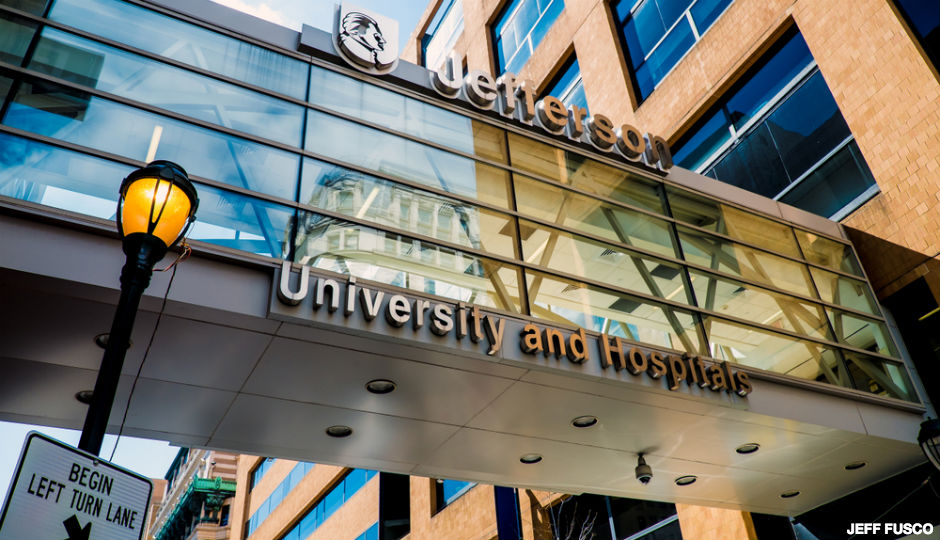
Philadelphia-based Jefferson Health is taking steps to reduce costs to help offset losses tied to the COVID-19 pandemic.
The 14-hospital system plans to eliminate between 500 and 600 positions through attrition and will cut pay for its “most senior executives,” according to the Philadelphia Business Journal.
Jefferson Health is making cuts after reporting a net loss of $298.7 million in the fiscal year ended June 30. The system posted a loss after receiving $320 million in grants made available under the Coronavirus Aid, Relief and Economic Security Act to help cover lost revenue and expenses linked to the pandemic, according to The Philadelphia Inquirer.
“As one of the health systems in the United States with the largest amount of Covid patients during the surge, and one of the lowest employee infectivity rates, we took a ‘no expense is too much to protect our employees’ approach with PPE and other measures that drove up short-term expenses,” Stephen Klasko, MD, president of Thomas Jefferson University and CEO of Jefferson Health, told the Philadelphia Business Journal.
Dr. Klasko said patient volumes are beginning to rebound, and the health system is ahead of budget for fiscal year 2021.
“We made a conscious decision, as the region’s second-largest employer, to do no furloughs and only very few pre-planned layoffs during the pandemic surge,” Dr. Klasko told the Philadelphia Business Journal. “Due to our financial stewardship and growth over the past five years, our balance sheet was very stable and remains very stable despite the pandemic tsunami.”
In addition to cutting unfilled positions and reducing executive pay, the health system is taking a few other steps to achieve savings, including a pay freeze and a one-year suspension of employer contributions to employee retirements plans beginning Jan. 1.
While it sometimes seems like the coronavirus has been with us forever, it’s worth remembering that there are still parts of the country that are only now experiencing their first big spike in cases—that’s the nature of a “patchwork” pandemic working its way across a vast country.
One of our health system members in the Midwest, with whom we recently spent time, is in just this situation: they’re seeing their highest inpatient COVID census to date, just this month. As they shared with us, there are advantages and drawbacks to being a “late follower” on the epidemic curve. The good news is that they’re ready.
Back in March, like most systems, they stood up an “incident command center”, and began preparing for a wave of COVID patients, designating a floor of the hospital as a “hot zone”, creating negative pressure rooms, cross-training staff, developing treatment protocols, stockpiling protective equipment, and securing a pipeline of critical therapeutics and testing supplies. There was a moderate but manageable number of cases across the late spring and summer, but never to an extent that stressed the system.
Eventually, recognizing that they couldn’t ask their doctors, nurses, and administrators to stay on high alert indefinitely, they “stood down” to a more normal operational tempo, only to watch with dismay as the surrounding community seemingly forgot about the virus, and lessened precautions (masking, distancing, and so forth), wanting life to return to “normal”. And now, the post-Labor Day, post-return-to-school spike has arrived.
The challenge now is getting everyone, inside and outside the system, to stop talking about COVID in the past tense, as though they’ve already “gotten through it.”The preparations they’ve made are paying off now. Hospital operations continue to run smoothly even with a high COVID census, but the workforce is exhausted, and citizens aren’t stepping outside to bang gratefully on pots every night anymore.
Asking the team to return to war footing is no easy task, given the fatigue of the past seven months. A question looms: what is the trigger to restart “incident command”? As cases begin to increase again in some of the original COVID hot spots—New York, New England, the Pacific Northwest—healthcare leaders there will need to learn from the experiences of their colleagues in the newly-hit Midwest, about how to take an already virus-weary clinical workforce back onto the battlefield.
Charlotte, N.C.-based Atrium Health and Winston-Salem, N.C.-based Wake Forest Baptist Health have completed their merger, creating a 42-hospital system with more than 70,000 employees.
With the transaction complete, Wake Forest Baptist Health and Wake Forest School of Medicine will become the “academic core” of Atrium Health. The health system said it plans to build a second campus of the school of medicine in Charlotte.
“As the healthcare field goes through the most transformative period in our lifetime, in addition to a new medical school, our vision is to build a ‘Silicon Valley’ for healthcare innovation spanning from Winston-Salem to Charlotte,” Atrium President and CEO Eugene A. Woods said in a news release. “We are creating a nationally-leading environment for clinicians, scientists, investors and visionaries to collaborate on breakthrough technologies and cures. Everything we do will be focused on life changing care, for all, in urban and rural communities alike. And we will create jobs that provide inclusive opportunities to enhance the economic vitality of our entire region.”
Atrium cited an independent economic analysis that showed the direct and indirect annual employment impact of the combined system exceeds 180,000 jobs.
“The impact of the strategic combination will be far-reaching, elevating North Carolina as a clear destination of choice to receive medical care for people all across the nation,” said Julie Ann Freischlag, MD, CEO of Wake Forest Baptist Health and dean of Wake Forest School of Medicine. “Through our combined, nationally recognized clinical centers of excellence in multiple specialties, we will be able to expand our research in signature areas, such as cancer, cardiovascular, regenerative medicine and aging, and target bringing research breakthroughs to the community in less than half the time of the national average.”
Mr. Woods will serve as president and CEO of the combined system, and Dr. Freischlag was appointed chief academic officer for Atrium Health in addition to her current positions.
A 16-member board of directors appointed by the Charlotte Mecklenburg Hospital Authority and Wake Forest University Baptist Medical Center will govern the new nonprofit enterprise.
Trinity Health saw revenue decline in fiscal year 2020, and the Livonia, Mich.-based health system ended the period with a loss, according to recently released financial documents.
Trinity Health saw revenue decline 2.4 percent year over year to $18.8 billion in the 12 months ended June 30. The health system attributed the drop in revenue to the COVID-19 pandemic and the divestiture of Camden, N.J.-based Lourdes Health System in June 2019.
The 92-hospital system’s expenses were down 1.4 percent year over year in fiscal 2020. Trinity Health took several steps to reduce operating and capital spending in response to the pandemic, including implementing furloughs and reducing salaries for executives.
Trinity Health reported an operating loss of $344.7 million for fiscal 2020, compared to operating income of $106.8 million a year earlier.
After factoring in investments and other nonoperating items, Trinity Health posted a net loss of $75.5 million in fiscal 2020, down from net income of $786 million in fiscal 2019. Lower nonoperating gains in the most recent fiscal year were primarily driven by the pandemic’s effect on global investment market conditions, the health system said.










 HENRY KOTULA