Doctors Fear Bringing Coronavirus Home: ‘I Am Sort of a Pariah in My Family’

Image result for Doctors Fear Bringing Coronavirus Home: ‘I Am Sort of a Pariah in My Family’

One doctor dreamed he was surrounded by coughing patients. “Most physicians have never seen this level of angst and anxiety in their careers,” a veteran emergency room doctor said.

SEATTLE — After her shifts in the emergency room, one doctor in Utah strips naked on her porch and runs straight to a shower, trying not to contaminate her home. In Oregon, an emergency physician talks of how he was recently bent over a drunk teenager, stapling a head wound, when he realized with a sudden chill that the patient had a fever and a cough. A doctor in Washington State woke up one night not long ago with nightmares of being surrounded by coughing patients.

“Most physicians have never seen this level of angst and anxiety in their careers,” said Dr. Stephen Anderson, a 35-year veteran of emergency rooms in a suburb south of Seattle. “I am sort of a pariah in my family. I am dipping myself into the swamp every day.”

As the coronavirus expands around the country, doctors and nurses working in emergency rooms are suddenly wary of everyone walking in the door with a cough, forced to make quick, harrowing decisions to help save not only their patients’ lives, but their own.

The stress only grew on Sunday, when the American College of Emergency Physicians revealed that two emergency medicine doctors, in New Jersey and Washington State, were hospitalized in critical condition as a result of the coronavirus. Though the virus is spreading in the community and there was no way of ascertaining whether they were exposed at work or somewhere else, the two cases prompted urgent new questions among doctors about how many precautions are enough.

“Now that we see front-line providers that are on ventilators, it is really driving it home,” Dr. Anderson said.

Doctors, nurses and other staff members in a variety of hospital departments face new uncertainty. In intensive care units, for example, health care providers must have extended exposure to people who have contracted the virus. But they know in advance of the risk they face.

In emergency departments, the danger comes from the unknown.

Patients arrive with symptoms but no diagnosis, and staff members must sometimes tend to urgent needs, such as gaping wounds, before they have time to screen a patient for Covid-19, the disease caused by the virus. At times, the protocols they must follow are changing every few hours.

“Many of us have trained for disasters, like Ebola and hurricanes,” said Dr. Adam Brown, the president of emergency medicine for Envision Healthcare, the largest provider of contract physicians to emergency rooms. “This is different because of the scale and scope of the disease.”

Add to that the shortage of protective gear and delays in testing, and health care workers fear they are flying blind.

Though the numbers are still low, Envision, which employs 11,000 emergency clinicians across the United States, has five times as many doctors under quarantine as it did a week ago, Dr. Brown said.

Several providers spoke on the condition of anonymity because their employers have told them not to talk to the news media.

The personal strain is cascading as the virus reaches new parts of the country. “Everybody feels the stress, but everybody is pulling together,” said Dr. K. Kay Moody, an emergency room doctor in Olympia, Wash., who runs a Facebook group with 22,000 emergency physicians. “That is what is keeping us OK.”

A few doctors said they were talking about bunking up in Airbnbs to create “dirty doc” living quarters to avoid endangering their children when they go home. Some are showing their partners where to find their passwords and insurance, should they end up in intensive care. Dr. Moody said she knew of at least one doctor whose former spouse was threatening to take their children away if the doctor went to work.

Many emergency physicians work as contractors, not hospital staff, so they will not necessarily be paid if they are quarantined. “As it stands, that is one of the most anxiety-provoking things,” Dr. Moody said, “on top of fear for your life.”

Nurses face similar challenges, though with less pay and support. An emergency nurse in Milwaukee said she bought her own goggles after hearing that protective gear was running low. A nurse at a rural hospital near Lake Tahoe in California said that the hospital was providing physicians with shower facilities as well as clean scrubs to wear, but that nurses had to wash their work clothes at home. She said that the physicians she worked with lobbied the hospital to provide clean scrubs for the nurses, but that the hospital concluded it would cost too much.

One doctor, who spoke on condition that the identity of the veterans hospital where she worked was not revealed, said the protocols have not kept up with the changing reality on the ground. When determining if a patient should get a separate room, she said, the emergency department still asks patients if they have been to high-risk countries, like China and Italy, even though community transmission of the virus has been well established.

Doctors have begun building plans for how they will ration supplies when there are more patients than their hospitals can handle. Emergency room doctors have experience sitting families down to advise discontinuing care because it would be futile. But in the United States, they are not used to making such calls based on resources alone.

Some said they were looking to Italy, where doctors on the front line have sometimes had to ration care in favor of younger patients, or those without other complicating conditions, who are more likely to benefit from it.

“If we get it all at once, we don’t have the resources, we don’t have the ventilators,” said Dr. William Jaquis, chair of the American College of Emergency Physicians.

Last week, Italian media reported that Bergamo, a city northeast of Milan, saw roughly 50 doctors test positive for the virus. In the region of Puglia in the south, local media reported that 76 employees had been quarantined after being exposed to patients who contracted Covid-19.

After the coronavirus broke out at a nursing facility near Seattle, Dr. Anderson sat with the leaders of his hospital, MultiCare Auburn Medical Center, to talk about how urgently they should prepare. Their hospital is ringed by nursing homes and other care facilities, and he rattled off those most at risk for fatal cases of the virus: males over 60, and those with cardiac and pulmonary problems. “I literally stopped what I was saying and realized that that was me,” he said.

He said his hospital was down to a two-day supply of surgical masks — he wears one per shift. “Those are supposed to be disposable,” he said. Now he must carefully remove and clean the mask each time he takes it off and on. “That may sound just like a nuisance, but when you’re potentially touching something that has the virus that could kill you on it, and you’re doing it 25 times a shift, it’s kind of nerve-racking,” he said.

His wife has moved to their mountain cabin, and they have given up on their retirement cruise in Europe. “I haven’t slept for longer than three hours in the past two weeks,” he said.

In the early hours of Monday morning, he could not sleep. More than 200 emails had come into his inbox since he went to bed, including news that three other health care providers had been admitted to a hospital overnight, he said.

But he plans to be at his next shift nonetheless.

“I have been doing this for 35 years,” he said, “and I’m not going to stop now.”


I’m a Doctor in Italy. We Have Never Seen Anything Like This.

Image result for I’m a Doctor in Italy. We Have Never Seen Anything Like This.

My country’s health care system may soon collapse.

MILAN — None of us have ever experienced a tragedy like it.

We know how to respond to road accidents, train derailments, even earthquakes. But a virus that has killed so many, which gets worse with each passing day and for which a cure — or even containment — seems distant? No.

We always think of calamity as something that will happen far from us, to others far away, in another part of the world. It’s a kind of superstition. But not this time. This time it happened here, to us — to our loved ones, our neighbors, our colleagues.

I’m an anesthesiologist at the Policlinico San Donato here in Milan, which is part of the Lombardy region, the heart of the Italian coronavirus outbreak. On Feb. 21, the day on which the first case was recorded, our hospital, which specializes in cardiac surgery, offered to help with the care of patients with Covid-19. Along with other hospitals, we created a task force of intensive care doctors to be sent to hospitals in the “red zone.”

All planned surgeries were postponed. Intensive care beds were given over to the treatment of coronavirus patients. Within 24 hours, the hospital created new intensive care places by converting operating theaters and anesthetic rooms. And 40 more beds were dedicated to patients suspected or proven to have the virus, though not in a serious condition.

But the increases in cases are astounding. As of Tuesday, nationwide, there were 31,506 cases, of which 2,941 recovered and 2,503 died. Lombardy, the region most affected, has 16,220 cases, with 1,640 dead, 879 in intensive care — 56 more than the day before — and 2,485 clinically cured. With these numbers, the country’s health care system may soon collapse.

The patients who arrive remain for many days, straining medical resources. Already across northern Italy — in Lombardy, Veneto, Emilia-Romagna and Marche — health care systems are under enormous stress. Medical workers are exhausted. As the virus spreads, other regions will soon find themselves in the same situation.

Fortunately, Lombardy and the national government adopted aggressive containment measures 10 days ago. By the end of this week — after 15 days, the incubation period of the infection — we will see whether such measures have been effective. Only then might we see a slowing down in the spread of the virus.

It cannot come too soon. There has been speculation that doctors may be forced to decide whom to treat, leaving some without immediate care. That’s not my experience: All patients at my hospital have received the treatment they require. But that may not last. If the number of patients infected does not start to drop, our resources won’t stretch to cover them. At that point, triaging patients — to give priority to those with more chances of survival — may become standard practice.

My colleagues, at the Policlinico and throughout the country, are showing a great spirit of sacrifice. We know how much we are needed right now; that gives us strength to withstand fatigue and stress. How long such resistance will last, I cannot say. Some colleagues have tested positive for the coronavirus, and a few have needed intensive care. For us all, the dangers are great.

As an anesthesiologist devoted to surgical emergencies, I haven’t had many direct dealings with coronavirus patients. But there was one. An elderly man in a fragile condition, he was set to have tumor removed. The surgery proceeded as normal: I put him to sleep, and he awoke four hours later, without pain.

That was in mid-February. A week later, the telltale symptoms began to show: a high fever, a cough. Before long, pneumonia. Now he’s in intensive care, intubated and in a critical condition. He is one of many who have become a number without a name, one of those that represent the worsening of the situation.

I hope the beginning of the end of this outbreak will be soon. But we will know that it’s coming only if and when the infections begin to decline.

The population’s calm response to the restrictive rules imposed by the government, the experience gained in the management of critically ill patients and the rumors of new treatments for the infection are grounds for hope. Perhaps the containment measures will work, and the news at the end of the week will be good.

But for now, we are in the thick of tragedy.


Experts agree that Trump’s coronavirus response was poor, but the US was ill-prepared in the first place

https://theconversation.com/experts-agree-that-trumps-coronavirus-response-was-poor-but-the-us-was-ill-prepared-in-the-first-place-133674?utm_medium=email&utm_campaign=Latest%20from%20The%20Conversation%20for%20March%2017%202020%20-%201565314971&utm_content=Latest%20from%20The%20Conversation%20for%20March%2017%202020%20-%201565314971+Version+A+CID_6ce2ffeb273f535ccdcb368c4649a7ee&utm_source=campaign_monitor_us&utm_term=Experts%20agree%20that%20Trumps%20coronavirus%20response%20was%20poor%20but%20the%20US%20was%20ill-prepared%20in%20the%20first%20place

As the coronavirus pandemic exerts a tighter grip on the nation, critics of the Trump administration have repeatedly highlighted the administration’s changes to the nation’s pandemic response team in 2018 as a major contributor to the current crisis. This combines with a hiring freeze at the Centers for Disease Control and Prevention, leaving hundreds of positions unfilled. The administration also has repeatedly sought to reduce CDC funding by billions of dollars. Experts agree that the slow and uncoordinated response has been inadequate and has likely failed to mitigate the coming widespread outbreak in the U.S.

As a health policy expert, I agree with this assessment. However, it is also important to acknowledge that we have underfunded our public health system for decades, perpetuated a poorly working health care system and failed to bring our social safety nets in line with other developed nations. As a result, I expect significant repercussions for the country, much of which will disproportionately fall on those who can least afford it.

Decades of underfunding

Spending on public health has historically proven to be one of humanity’s best investments. Indeed, some of the largest increases in life expectancy have come as the direct result of public health interventions, such as sanitation improvements and vaccinations.

Even today, return on investments for public health spending is substantial and tends to significantly outweigh many medical interventions. For example, one study found that every US$10 per person spent by local health departments reduces infectious disease morbidity by 7.4%.

However, despite their importance to national well-being, public health expenditures have been neglected at all levels. Since 2008, for example, local health departments have lost more than 55,000 staff. By 2016, only about 133,000 full-time equivalent staff remained. State funding for public health was lower in 2016-2017 than in 2008-2009. And the CDC’s prevention and public health budget has been flat and significantly underfunded for years. Overall, of the more than $3.5 trillion the U.S. spends annually on health care, a meager 2.5% goes to public health.

Not surprisingly, the nation has experienced a number of outbreaks of easily preventable diseases. Currently, we are in the middle of significant outbreaks of hepatitis A (more than 31,000 cases), syphilis (more than 35,000 cases), gonorrhea (more than 580,000 cases) and chlamydia (more than 1,750,000 cases). Our failure to contain known diseases bodes ill for our ability to rein in the emerging coronavirus pandemic.

Failures of health care systems

Yet while we have underinvested in public health, we have been spending massive and growing amounts of money on our medical care system. Indeed, we are spending more than any other country for a system that is significantly underperforming.

To make things worse, it is also highly inequitable. Yet, the system is highly profitable for all players involved. And to maximize income, both for- and nonprofits have consistently pushed for greater privatization and the elimination of competitors.

As a result, thousands of public and private hospitals deemed “inefficient” because of unfilled beds have closed. This eliminated a significant cushion in the system to buffer spikes in demand.

At any given time, this decrease in capacity does not pose much of a problem for the nation. Yet in the middle of a global pandemic, communities will face significant challenges without this surge capacity. If the outbreak mirrors anything close to what we have seen in other countries, “there could be almost six seriously ill patients for every existing hospital bed.” A worst-case scenario from the same study puts the number at 17 to 1. To make things worse, there will likely be a particular shortage of unoccupied intensive care beds.

Of course, the lack of overall hospitals beds is not the most pressing issue. Hospitals also lack the levels of staffing and supplies needed to cope with a mass influx of patients. However, the lack of ventilators might prove the most daunting challenge.

Limits of the overall social safety net

While the U.S. spends trillions of dollars each year on medical care, our social safety net has increasingly come under strain. Even after the Affordable Care Actalmost 30 million Americans do not have health insurance coverage. Many others are struggling with high out-of-pocket payments.

To make things worse, spending on social programs, outside of those protecting the elderly, has been shrinking, and is significantly smaller than in other developed nations. Moreover, public assistance is highly uneven and differs significantly from state to state.

And of course, the U.S. heavily relies on private entities, mostly employers, to offer benefits taken for granted in other developed countries, including paid sick leave and child care. This arrangement leaves 1 in 4 American workers without paid sick leave, resulting in highly inequitable coverage. As a result, many low-income families struggle to make ends meet even when times are good.

Can the US adapt?

I believe that the limitations of the U.S. public health response and a potentially overwhelmed medical care system are likely going to be exacerbated by the blatant limitations of the U.S. welfare state. However, after weathering the current storm, I expect us to go back to business as usual relatively quickly. After all, that’s what happened after every previous pandemic, such as H1N1 in 2009 or even the 1918 flu epidemic.

The problems are in the incentive structure for elected officials. I expect that policymakers will remain hesitant to invest in public health, let alone revamp our safety net. While the costs are high, particularly for the latter, there are no buildings to be named, and no quick victories to be had. The few advocates for greater investments lack resources compared to the trillion-dollar interests from the medical sector.

Yet, if altruism is not enough, we should keep reminding policymakers that outbreaks of communicable diseases pose tremendous challenges for local health care systems and communities. They also create remarkable societal costs. The coronavirus serves as a stark reminder.


The problems with our coronavirus testing are worse than you think

https://www.axios.com/coronavirus-outbreak-testing-delays-60a25ce6-f08d-438f-b294-358e0c300d95.html?utm_source=newsletter&utm_medium=email&utm_campaign=newsletter_axiosvitals&stream=top

Image result for The problems with our coronavirus testing are worse than you think

If the coronavirus outbreak in the U.S. gets really bad — if it stretches on longer than we anticipated, if huge numbers of people get sick, if the disruptions to daily life become even more severe — early flaws in the testing process will bear a lot of the blame.

The big picture: You probably know that there were some early problems with testing, and that they’re getting better — which they are. But those early failures will help define the entire scope of this pandemic, and there’s not much we can do now to reverse the damage.

Why it matters: Because we haven’t been doing enough testing, we don’t actually know how many people in the U.S. have coronavirus. We know the official count is too low, and that the number of confirmed cases is likely to explode in the coming weeks as testing improves.

  • But that’s not the only problem. The lack of testing hasn’t just left us in the dark about how bad the situation is; it has also made that situation worse.

By the numbers: Independent researchers estimate that the U.S. has completed about 20,000 coronavirus tests as of Friday.

  • By contrast, South Korea — a success story in controlling the coronavirus — has performed an estimated 250,000 tests.
  • As bad as that discrepancy is, it’s even worse when you consider that the U.S. population is more than six times bigger than South Korea’s (327 million vs. 51 million).

Widespread, accurate testing has been a key component of other countries’ success in bringing their outbreaks under control.

  • When we can quickly and accurately diagnose one patient, we can immediately pinpoint who that person is most likely to have infected, then quarantine those people and test the ones who start to show symptoms, and repeat that process on down the line.
  • We can spot clusters of new cases, so that the public health system can react quickly and focus its resources.

But the U.S. has not been able to do those things on the scale we’d need. And so, experts say, the virus has probably been spreading undetected for weeks.

  • More people than we know about are infected, which means more people than we know about are spreading the virus, which likely means way more people than we know about are infected.

“Our response is much, much worse than almost any other country that’s been affected,” Ashish Jha, a public health expert and the director of Harvard’s Global Health Institute, told NPR last week.

  • “Without testing, you have no idea how extensive the infection is. You can’t isolate people. You can’t do anything,” he said.

Between the lines: This makes other interventions, including individual “social distancing” and the cancellation of big events, even more important.

  • “We have to shut schools, events and everything down, because that’s the only tool available to us until we get testing back up. It’s been stunning to me how bad the federal response has been,” Jha told NPR.

What’s next: Testing capacity in the U.S. is improving quickly. Nationwide, we now have the ability to test about 26,000 people per day, according to former Food and Drug Administration Commissioner Scott Gottlieb.

  • He expects that capacity to “rise substantially” this week.
  • As more people can get tested, we’ll be able to get a handle on how many cases there actually are, and to start focusing attention and resources appropriately.

How we got here: The testing shortfall has been a multi-phase failure.

  • For reasons that remain unknown, the U.S. did not rely on the World Health Organization’s coronavirus test in the earliest days of the outbreak. Instead, the Centers for Disease Control and Prevention set out to make its own.
  • But the CDC’s test didn’t always work. Manufacturing had to be relocated following a possible contamination. And it has taken time to come up with a new one.
  • Regulatory red tape slowed down academic labs that wanted to jump in and develop their own tests, and capacity among private-sector labs is still ramping up.

In the early days, testing was focused narrowly on people who had traveled to China. And that was probably the best way to triage limited resources, but it was never going to be sufficient.

  • China and the U.S. are so thoroughly connected to the rest of the world that cases were always going to spread from China to multiple countries, and so people travelers from multiple countries could bring it into the U.S. From there, people in the U.S. started spreading it themselves.

The bottom line: Yes, the testing capacity is about to catch up. When it does, we will see a tidal wave of new confirmed cases. The fact that we needed to catch up made that tidal wave bigger — made the outbreak worse. And that won’t be undone by more tests now.


Pandemic Provides Defining Moment for Government Leaders

https://www.governing.com/now/Pandemic-Provides-Defining-Moment-for-Government-Leaders.html?utm_term=READ%20MORE&utm_campaign=Pandemic%20Provides%20Defining%20Moment%20for%20Government%20Leaders&utm_content=email&utm_source=Act-On+Software&utm_medium=email

Image result for crisis leadership

Governors and mayors don’t run for office with the intention of managing emergencies. But when a crisis strikes, they become the public face of government response and need to be ready to communicate accurately and calmly.

Mike DeWine didn’t pull any punches.

At a news conference on Thursday, the Ohio governor announced he was ordering that K-12 schools shut down until April 3 and banning most gatherings of 100 people or more. Ohio had only five confirmed coronavirus cases at that point, but DeWine’s health director Amy Acton, standing by the governor’s side, said they suspected that well over 100,000 state residents were already infected — a number expected to double every five days.

DeWine made it clear that his state, like others, faces massive challenges. In response, he offered resolve but not sugar-coated optimism. “This is temporary. We will get back to normal in Ohio. It won’t happen overnight,” DeWine said. “We must treat this like what it is, and that is a crisis.”

Around the country, other governors and mayors have been offering similar messages. Many are out in front, holding news conferences on a daily basis. Maryland Gov. Larry Hogan announced Thursday that he was putting his lieutenant governor in charge of most state operations so he could devote his full attention to the coronavirus crisis. Michigan Gov. Gretchen Whitmer held a news conference just before midnight on Thursday to announce a statewide school closure.

“Crises and disasters are what separates legislators from executives,” says Jared Leopold, a former communications director for the Democratic Governors Association. “For those executives who face a major disaster, crisis management becomes their defining legacy, whether they like it or not. Nothing else matters.”

Executives become the public face of the government’s response. Whether it’s natural disasters, mass shootings or a pandemic, their role is not only to share information, but to convey the sense that someone is in charge and has a plan that will see the city, state or nation through the worst of times. “That’s what the governor has to do in this situation,” says Bob Taft, a former Ohio governor.

“He’s been very visible, very prompt and as much ahead of the curve as possible in terms of taking decisive action,” Taft says of DeWine. “He’s also putting out good information and he’s obviously listening to the public health experts and the knowledgeable staff on his team.”

There are plenty of examples of politicians winning either acclaim or scorn for their handling of emergency situations. Sen. Joe Manchin’s enduring popularity in West Virginia — he’s the only Democrat still capable of winning statewide election in that increasingly red state — is rooted in his handling of the Sago Mine explosion as governor back in 2006. A year earlier, Mississippi Gov. Haley Barbour won applause for his handling of Hurricane Katrina, while Louisiana Gov. Kathleen Blanco was widely criticized and decided not to run for re-election.

“Do it right, and you’ll be remembered as a leader for decades,” Leopold says. “Do it wrong, and you’ll be voted out of office.”

No One Signs Up for This

Politicians campaign on issues such as taxes and education. No one pledges to provide stalwart leadership if and when there’s a crisis. It doesn’t seem relevant until it happens. But, once elected, they end up being judged by how they respond to the worst challenges.

“People watch very carefully what leaders do during these situations,” says Jay Nixon, who coped with a deadly tornado in Joplin and the Ferguson shooting, along with other challenges, during his tenure as Missouri governor.

Leaders need a plan, Nixon says. It may change daily or even hourly, but having a plan gives them, their teams and the public some sense of where they’re going. They also need to convey information in a reassuring and convincing way. “You have to have a clear source of information that’s not only accurate, but one that people trust,” Nixon says. “Leaders need to remain calm and normal.”

When new governors are elected, they’re often warned by sitting governors they’ll likely need to respond to disaster in some form or other. Taft, who was in office during the 2001 terrorist attacks, said that event opened up governors’ eyes to all manner of contingencies.

“Of course, all governors expect to have to weather emergencies,” he says. “That was something new and different — like today, a whole new set of threats.”

Governors are well-equipped to respond. There’s a whole structured apparatus, whether it’s called an emergency operations center or something else, that offers them plans, a command structure and communications tools to deal with unexpected tragedies.

If you’re a governor, you’re likely to be faced with a flood or a tornado or some other event with devastating consequences you must respond to. No matter their other priorities, they’re always ready to go on an emergency footing.

“To me, governors and states are always well-prepared, because in effect they’re always training for it,” says Scott Pattison, former executive director of the National Governors Association. “Whatever one says about a particular governor, they know that’s the expected role and they step right into it and rise to the occasion.”

The All-Dominant Issue

When executives aren’t seen as responding swiftly and competently, it can imperil both their re-election chances and their broader agendas. It’s a well-established part of political folklore that mayors lose their jobs when cities don’t dig out promptly following snowstorms. “We’ve probably spent as much time on snow as we have on the budget,” Massachusetts Gov. Charlie Baker said not long after taking office in 2015.

Andy Beshear was sworn in as Kentucky’s governor four months ago. Lately, he has been holding daily news conferences to provide updates on caseloads and policy changes. In recent days, he has called for schools to close for two weeks, for church services to be held virtually and for the state’s 200 senior centers to shut down in-person activities. “Let me say once again: We’re going to get through this,” he said on Friday.

People are not looking for uplift, but rather find confidence in knowing that there’s someone in charge offering a serious, smart response, says George C. Edwards III, a political scientist at Texas A&M University. “You get credibility from two things — one, from recognizing the problem as it is, and two, from acting,” he says.

One of Winston Churchill’s most famous wartime speeches begins, “The news from France is very bad.” When asked about the death toll on Sept. 11, 2001, Rudy Giuliani, then New York City’s mayor, said, “The number of casualties will be more than any of us can bear, ultimately.”

“People want reassurance and so (politicians) give it,” Edwards says. “They want to know it’s going to work out. At the same time, what’s critical is credibility, showing you have a firm handle on the crisis.”

No More Rallying Around the Leader

“During crises, people turn to the government for leadership, including what actions to take and how to return to stability,” according to a 2018 communication study. “Leaders are responsible for and expected to minimize the impact of crises, enhance crisis management capacity and coordinate crisis management efforts.”

In Kentucky, Beshear has won praise, so far, for sharing information personally and presenting the advice and counsel offered by public health and safety experts. “Party’s aside (he’s not mine) Beshear has done an excellent job with all this,” Samuel Keathley, a resident of Martin, Ky., tweeted on Thursday. “He’s never seemed panicked; he’s also never made it seem like nothing. He sounds and acts like a leader.”

The 2001 terrorist attacks offer one of the most dramatic examples of a politician winning acclaim for response to a crisis. Within 10 days, President George W. Bush’s approval ratings had jumped from 51 percent to 90 percent, according to Gallup.

“Presidents must take charge of crises right away,” says Matthew Eshbaugh-Soha, who chairs the political science department at the University of North Texas. “If presidents do well, the American people will respond with support.”

That hasn’t happened for President Trump. For weeks, Trump has sought to downplay the crisis, offering optimistic assessments that contradict warnings from federal public health officials. His speech from the Oval Office on Wednesday was hastily written and included a number of factual errors regarding policy positions that had to be quickly walked back by the administration.

“He’s not telling the truth and he is not trusted in that sense,” says Nixon, the former Missouri governor. “He doesn’t have a plan and he seems to be in a completely reactive mode.”

In general, Trump’s style is combative. His presidency has been disruptive, not designed to offer calming reassurance. His supporters have loved him for it, but there are more Americans, as measured by polls, that went into the coronavirus period already distrusting him.

“Trump has a very dedicated base who are absolutely steadfast, but he’s got an even larger opposition coalition that is equally steadfast,” says Edwards, the Texas A&M presidential scholar. “If you already hate him, you’re much less likely to be reassured.”

At the same time, the news media also has a problem when it comes to trust. That’s something predating Trump, but which he has encouraged with his frequent complaints about “fake news.” On Thursday, Megyn Kelly, a former news anchor and correspondent for NBC and Fox News, tweeted that while she didn’t believe Trump was a credible source, “we can’t trust the media to tell us the truth without inflaming it to hurt Trump.”

On Thursday, the city of Murfreesboro, Tenn., posted a statement on its website advising residents not to turn to media outlets for coronavirus information: “Unfortunately, today’s media know that negative or overtly controversial stories receive more attention and thereby generate traffic to their publications, broadcasts and websites.”

That assertion has since been deleted, but it spoke to the polarization that continues even in a country beset by crisis.

According to an ABC News/Ipsos poll released Friday, 47 percent of Democrats are “very concerned” about catching coronavirus, while only 15 percent of Republicans share that level of concern. Just 17 percent of Democrats say they are not concerned about being infected, compared with 44 percent of Republicans.

As the virus spreads and more businesses and activities shut down, public opinion will necessarily shift. No one can say how this will play out. No one can predict the ultimate costs in terms of health and mortality.

“It may take an event of this magnitude to shake people on both sides of the political equation,” Nixon says. “This may be that moment where, as a country, both Democrats and Republicans realized that there are some things that should be analyzed separately from political partisanship.”


Seattle Coronavirus Care: Short in Staff, Supplies and Space

https://www.governing.com/now/Seattle-Coronavirus-Care-Short-in-Staff-Supplies-and-Space.html?utm_term=READ%20MORE&utm_campaign=Pandemic%20Provides%20Defining%20Moment%20for%20Government%20Leaders&utm_content=email&utm_source=Act-On+Software&utm_medium=email

Image result for Seattle Coronavirus Care: Short in Staff, Supplies and Space

At ground zero of America’s coronavirus outbreak, Seattle is overwhelmed by patients needing care. Social distancing and persistent hand washing is no longer enough. “The next step is to start thinking about alternate care systems.”

Amid the first signs that the novel coronavirus was spreading in the Seattle area, a senior officer at the University of Washington Medical Center sent an urgent note to staffers.

“We are currently exceptionally full and are experiencing some challenges with staffing,” Tom Staiger, UW Medical Center’s medical director, wrote on Feb. 29. He asked hospital staff to “expedite appropriate discharges asap,” reflecting the need for more beds.

That same day, health officials announced King County’s — and the nation’s — first death from the coronavirus. Now as cases of virus-stricken patients suffering from COVID-19 multiply, government and hospital officials are facing the real-life consequences of shortcomings they’ve documented on paper for years.

Medical supplies have run low. Administrators are searching for ways to expand hospital bed capacity. Health care workers are being asked to work extra shifts as their peers self-isolate.

And researchers this week made stark predictions for COVID-19’s impact on King and Snohomish counties, estimating 400 deaths and some 25,000 infections by April 7 without social-distancing measures.

“If you start doing that math in your head, based on every person who was infected infecting two other people, you can see every week you have a doubling in the number of new cases,” state health oficer Dr. Kathy Lofy said.

Hand-washing, staying home from work and other measures were no longer enough to sufficiently slow the virus, Lofy said.

Hospital administrators are rapidly changing protocols as the outbreak stresses the system, while frontline health care workers are beginning to feel the effects of disruptions to daily life. UW Medicine on Thursday told employees it would begin postponing elective procedures, beginning March 16.

“We’ve seen what has happened in other countries where they’ve had really rapid spread. The health care system has become overwhelmed,” Lofy said. “We want to do everything we can to prevent that from happening here.”

“We’re Always Full”

King and Snohomish counties offer some 4,900 staffed hospital beds, of which about 940 are used for critical care, according to the researchers — with the Institute for Disease Modeling, the Bill & Melinda Gates Foundation and the Fred Hutchinson Cancer Research Center — who modeled the outbreak’s potential growth. “… This capacity may quickly be filled,” they wrote.

Some of Seattle’s largest hospitals were already near capacity before the outbreak. Harborview Medical Center in downtown Seattle operated at 95 percent of its capacity in 2019, based on its licensed 413 beds and the days of patient care it reported to the Department of Health.

Of 81 hospitals that reported data for all of 2019, excluding psychiatric hospitals, the median hospital operated at 50 percent of its licensed capacity, according to a Seattle Times analysis. Many hospitals staff fewer beds than the maximum their license allows for, so the actual occupancy rate is likely higher.

Katharine Liang, a psychiatry resident physician who works rotations for Seattle-area hospitals, said requests for UW Medicine staffers to discharge patients in a timely fashion are not uncommon as administrators seek extra beds.

“The safety net hospitals, we’re always full,” Liang said, referring to medical centers that care for patients without insurance or means to pay.

Susan Gregg, a spokeswoman for UW Medicine, which operates UW Medical Center, Harborview Medical Center, Valley Medical Center and Northwest Hospital, said that each hospital had a surge-capacity plan being adapted for the outbreak.

“Our daily planning sessions monitor our available beds, supply usage and human resources,” Gregg said in a statement.

While Washington state has a robust system for detecting and monitoring infectious diseases, it has struggled to build the capacity to respond to emergencies like the coronavirus outbreak, according to a review of public data and interviews.

On a per-person basis, the state lags most others in nurses and hospital rooms designed to isolate patients with infectious, airborne diseases, according to a nationwide index of health-security measures.

The U.S. Centers for Disease Control and Prevention launched this initiative — called the National Health Security Preparedness Index — in 2013 to comprehensively evaluate the nation’s readiness for public health emergencies.

The state’s greatest strength, according to the index, is in its ability to detect public-health threats and contain them — scoring 8.5 points out of a possible 10, above the national average.

“It’s a leading state now in terms of how testing capabilities are playing out” for COVID-19, said Glen Mays, a professor at the Colorado School of Public Health who directs the index work.

With the scope of the outbreak becoming clear, the focus is turning to an area that is the state’s weakest on the index: providing access to medical care during emergencies.

When it comes to nurses per 100,000 people, Washington state ranked near the bottom — 46th among states and the District of Columbia — in 2018. It ranked 43rd nationally in the number of hospital isolation rooms — commonly referred to as “negative pressure” rooms, which draw in air to prevent an airborne disease from spreading — per 100,000 people and in neighboring states.

“It’s an area of concern,” Mays said of the state’s health care delivery capacity.

This vulnerability is well known to state policymakers. John Wiesman, Washington state’s health secretary, serves on the national advisory committee of the index and has championed its use as a tool for improvement, Mays said. He recalled Washington seeking lessons from other states that have been more successful and building a “medical reserve corps,” another area where the state has lagged.

The state scored 2.5 points for managing volunteers in an emergency in 2013. In 2018, it had improved to just 2.6.

Health Workers Strained

Less than a week after diagnosed cases of COVID-19 grew rapidly in the Seattle area, administrators at several area hospitals had to hunt for additional medical supplies and called for rationing. They also established fast-shifting isolation policies for sick or potentially exposed staffers.

“Hospitals are being very vigilant. If you have the slightest signs of illness, don’t come to work,” said Alexander Adami, a UW Medicine resident, on Monday.

On March 6, UW Medicine directed employees who tested positive for COVID-19, the illness caused by coronavirus, to remain isolated at home for a minimum of seven days after symptoms developed, according to internal UW documents. Hospital workers told workers with symptoms who hadn’t been tested to remain isolated until they were three days without symptoms. Those who tested negative, or had influenza, could return after 24 hours.

Quarantines for sick workers means others must backfill.

“Programs are having to pull residents in other blocks in other hospitals and other clinics to fill gaps,” Adami said. “There simply aren’t enough people.”

School closures further complicate staffing.

Liang, the resident physician who works rotations for several area hospitals, said she had been pulled into an expanded backup pool on short notice to cover shifts.

Liang is the mother of a 1-year-old. On Wednesday, her family’s day care closed, as it typically does when Seattle schools close. Gov. Jay Inslee has ordered all schools in King, Pierce and Snohomish counties to close until late April.

“I’m not really sure what we’re going to do going forward,” Liang said. “My demands at home are increasing, and now, at the same time because of the same problem, my demands at the hospital are increasing as well.”

Adami, a second-year internal medicine resident, said residents were used to taxing hours, and demands had not been much more excessive than usual, but he remained concerned for the future.

“I would be worried about: We eventually get to the point where there are so many health care workers who become sick we have to accept things like saying, All right: Do you have a fever? No? Take a mask and keep working, because there are people to care for,” he said.

One sign of demand: Some hospitals are asking workers at greater risk of COVID-19 to continue in their roles, even after public health officials encouraged people in these at-risk groups among the broader public to stay home.

Staff over the age of 60 “should continue to work per their regular schedules,” a UW Medicine policy statement said. People who are pregnant, immunocompromised or over 60 and with underlying health conditions were “invited to talk to their team leader or manager about any concerns,” noting that hospital workers’ personal protective equipment would minimize exposure risks.

A registered nurse at Swedish First Hill who is over 60 and who has a history of cardiac issues said she told a manager last week of her concern about working with potential or confirmed COVID-19 patients.

She said a manager adjusted her schedule for an initial shift, but couldn’t guarantee that she would be excused from caring for these patients.

Hours later, the nurse said she suffered a cardiac event and was later admitted to another hospital with a stress-induced cardiomyopathy. The nurse did not want to be named for fear of reprisal by Swedish.

“I’m afraid for my life to work in there,” the nurse said. “I don’t think we’re being adequately protected.”

The nurse is now on medical leave.

In a statement, Swedish said it could not comment on an individual caregiver’s specific circumstances, but that employees at a higher risk are able to request reassignment and if it can not be accommodated, they can take a leave of absence.

“Providing a safe environment for our caregivers and patients is always our top priority, but especially during the current COVID-19 outbreak,” according to the statement.

Anne Piazza, senior director of strategic initiatives for the the Washington State Nurses Association said she had heard from a “flood” of nurses with similar concerns.

Additionally, “we are seeing increased demand for nurse staffing and that we do have reports of nurses being required to work mandatory overtime.”

Wuhan was Overwhelmed

China might provide an example of what could happen to the U.S. hospital system if the pace of transmission escalates, according to unpublished work from researchers with Johns Hopkins University, Harvard University and other institutions.

In Wuhan, the people seeking care for COVID-19 symptoms quickly outpaced local hospitals’ ability to keep up, the researchers found. Even after the city went on lockdown in late January, the number of people needing care continued to rise.

Between Jan. 10 and the end of February, physicians served an average of 637 intensive-care unit patients and more than 3,450 patients in serious condition each day.

But by the epidemic’s peak, nearly 20,000 people were hospitalized on any given day. In response, two new hospitals were built to exclusively serve COVID-19 patients; in all, officials dedicated more than 26,000 beds at 48 hospitals for people with the virus. An additional 13,000 beds at quarantine centers were set aside for patients with mild symptoms.

The researchers analyzed what might happen if a Wuhan-like outbreak happened here.

“Our critical-care resources would be overwhelmed,” said Caitlin Rivers, an epidemiologist at Johns Hopkins Center for Health Security who helped lead the study.

“The lesson here, though, is we have an opportunity to learn from their experience and to intervene before it gets to that point.”

Preparing For The Worst

Hospital administrators are stretching to make the most of their staff, avoid burnout and find space for patients flooding into hospitals.

As of Thursday afternoon, there hadn’t been an unusual uptick in hospitals asking emergency responders to divert patients elsewhere, according to Beth Zborowski, a spokeswoman for the Washington State Hospital Association.

Zborowski said administrators are getting creative to deal with shortages of supplies, staff and space, such as potentially hiring temporary workers.

The state is trying to reduce regulations to help scale up staffing.

The state health department’s Nursing Commission said last Friday it would give “top priority” to reviewing applications for temporary practice permits for nurses to help during the COVID-19 crisis.

After the governor’s emergency proclamation, the Department of Health also said it was allowing volunteer out-of-state health practitioners who are licensed elsewhere to practice without a Washington license.

All the doctors with UW Medicine have been trained, or are being trained on how to care for patients via telemedicine. The number of people using the service has increased tenfold since public health officials urged patients to not visit emergency rooms or visit clinics for minor issues, said Dr. John Scott, director of digital health at UW Medicine.

Some hospitals are creating wards for COVID-19 patients. EvergreenHealth, in Kirkland, converted its 8th floor for the use of these patients.

King County officials last week purchased a motel, which could allow patients to recover outside a clinical setting and free up beds.

“These are places for people to recover and convalesce who are not at grave medical risk, and therefore do not need to be in a hospital,” said Alex Fryer, spokesperson for King County Executive Dow Constantine.

Supply problems are ongoing, even after the federal government fulfilled a first shipment that included tens of thousands of N95 respirator masks, surgical masks and disposable gowns from a federal stockpile.

Piazza said the nursing association continues to receive reports that members at area hospitals are being asked to reuse or share personal protective equipment, wear only one mask a shift or conserve masks for use exclusively with COVID-19 confirmed patients.

“We need to address the safety of frontline caregivers,” Piazza said.

State officials placed a second order for supplies last weekend.

Casey Katims, director of federal affairs for Inslee, said three trucks of medical supplies from the federal stockpile arrived Thursday morning, including 129,380 N-95 respirators; 308,206 surgical masks; 58,688 face shields; 47,850 surgical gowns; and 170,376 glove pairs.

If the measures taken now aren’t enough, state officials have contingency plans they’ve been working on “for a while now,” said Lofy, the state health officer.

“The next step is to start thinking about alternate care systems or alternate care facilities. These are facilities that could potentially be used outside the clinic or the health care system walls.”


Too much for the health care system to handle

https://www.axios.com/newsletters/axios-future-trends-0eb404e7-34a3-40ac-af56-8fefba59535c.html?utm_source=newsletter&utm_medium=email&utm_campaign=newsletter_axiosfuturetrends&stream=top

Illustration of a giant virus cell crushing a crumbling red cross.

A severe coronavirus could easily overwhelm the U.S. health care system, Axios health care editor Sam Baker writes.

Most pandemics put health care workers at particular risk, both to become infected and then to spread the infection.

  • Experts were sounding the alarm even before the first U.S. cases about limited supplies of masks and protective equipment.
  • If health care workers do get sick in large numbers, staffing shortages would make it all the harder to care for new patients.

Experts fear a shortage of ventilators and intensive-care beds, if the outbreak becomes severe.

  • The U.S. has roughly 46,500 beds designated for ICU use, but even in a moderate scenario, it’s projected that 200,000 people could need ICU treatment, according to a report from Johns Hopkins.
  • Yes, but: Many younger, healthier patients will likely be able to recover at home, leaving hospital capacity dedicated mainly to seniors and people with other health complications.

What we’re watching: The coronavirus also seems likely to expose structural gaps in the health care system.

  • Insurers have promised to make coronavirus testing available for free, and a handful of hospital systems have imposed temporary freezes in billing patients for coronavirus treatments.
  • But relying on individual acts of corporate benevolence won’t provide any blanket assurance that care will be affordable, especially to the poor or uninsured — and if people don’t get care because they’re afraid of the cost, rightly or not, that risks further spreading the infection.

Go deeper: Listen to Sam and Dan examine the health care issue.


What you need to know about the Coronavirus

https://www.axios.com/newsletters/axios-future-trends-0eb404e7-34a3-40ac-af56-8fefba59535c.html?utm_source=newsletter&utm_medium=email&utm_campaign=newsletter_axiosfuturetrends&stream=top

Image result for confirmed U.S. cases of COVID-19

There’s a lot of confusion and misinformation swirling around the virus, so here are quick just-the-facts answers to your most urgent concerns, based on current knowledge: 

Q: What are the symptoms I should watch for?

  • Fever (88%) and dry cough (68%) are two of the most common symptoms, followed by fatigue, thick mucus coughed from lungs, shortness of breath, muscle and joint pain, sore throat, headache and chills.

Q. If I have those symptoms, should I go to my doctor or the hospital?

  • Right now, the CDC recommends you distance yourselves from others, including your family and your pets. If you can, designate a separate bedroom and bathroom for yourself.
  • Call your provider and tell them you suspect COVID-19. Remind them of any travel and if you are over 60 or have underlying conditions like diabetes or a heart condition.
  • Don’t share dishes/glasses with anyone; wash hands often; clean surfaces frequently. Stay hydrated.
  • The CDC does not recommended you go to the hospital unless you have shortness of breath, persistent chest pain, new confusion or strong lethargy, or a bluish tint to lips or face.
  • CDC’s hotline number for questions: 800-CDC-INFO (800-232-4636).

Q: Why is there a shortage of tests in the U.S.? When will we get them?

  • The CDC’s initial test for the virus was faulty. And, for reasons that remain unknown, the U.S. opted not to rely on the World Health Organization’s test while the CDC developed a new one. Red tape slowed down academic labs that wanted to quickly develop their own.
  • With both academic and commercial labs now pitching in, testing is becoming more widely available. But we’re still playing catch-up, and the virus has likely been spreading undetected in the meantime.

Q: What’s known about children and COVID-19?

  • Children, fortunately, rarely seem to experience severe complications from the coronavirus, but it’s not known whether children with underlying conditions may be at higher risk for severe illness.
  • It’s unclear what about children’s immune systems is protecting them.

Q: What stage is the outbreak in the U.S.?

  • The virus has now been confirmed in 49 states plus Washington, D.C., and Puerto Rico. However, due to the lack of testing, the level of infection in the U.S. beyond the currently confirmed 2,508 cases is unknown.
  • Scientists believe the number of infections doubles roughly every five to six days.
  • Some think the U.S. and the rest of Europe could follow Italy’s exponential trajectory arc, but this will depend on how effective school closings and event stoppages are at flattening the trajectory curve of the outbreak.


The pandemic shaping the future

https://www.axios.com/newsletters/axios-future-trends-0eb404e7-34a3-40ac-af56-8fefba59535c.html?utm_source=newsletter&utm_medium=email&utm_campaign=newsletter_axiosfuturetrends&stream=top

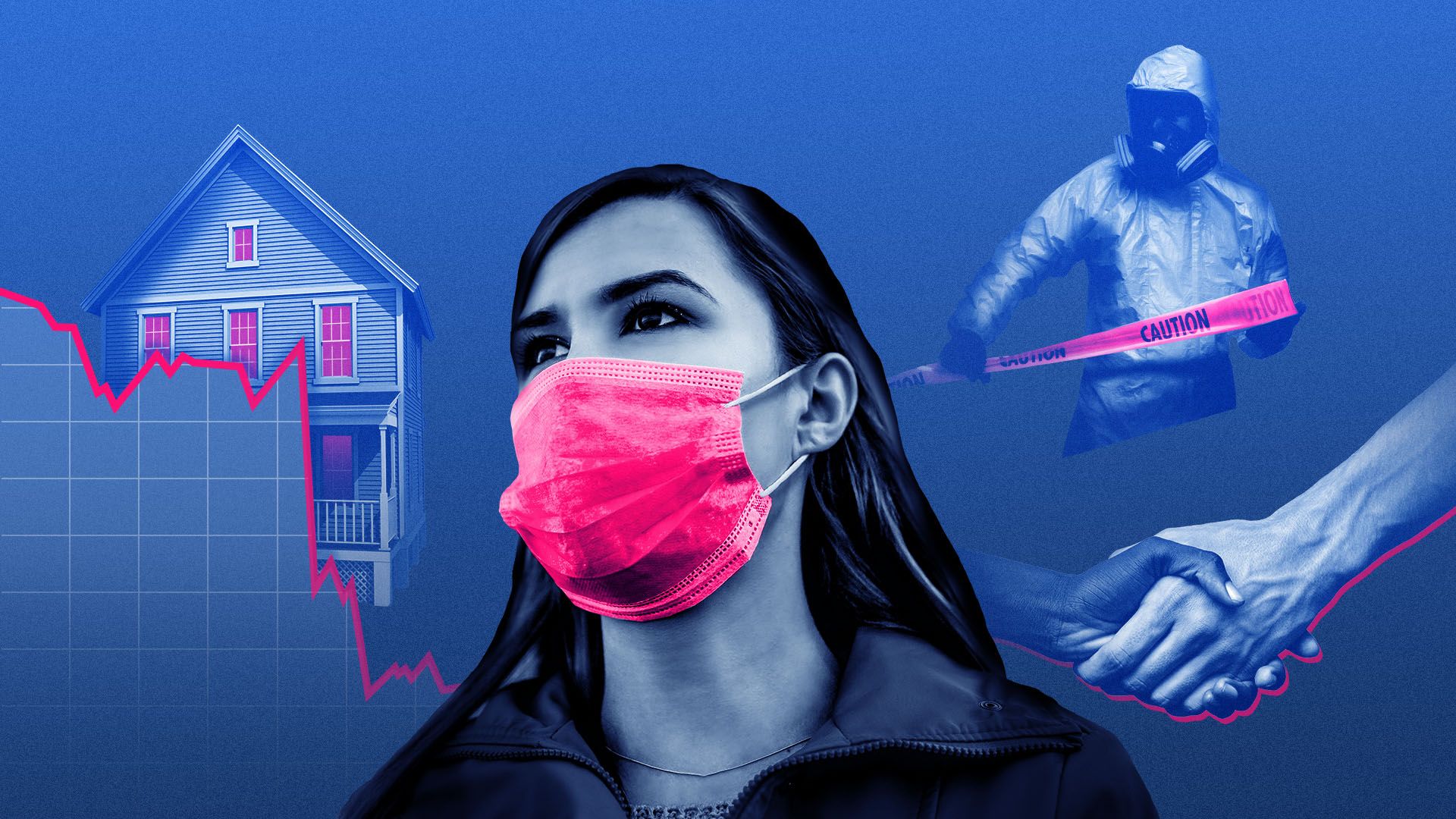
Illustration of a woman in a medical mask surrounded by a falling trend line, a house, a person in a hazmat suit with caution tape, and two hands shaking

The world that emerges from the coronavirus pandemic will be fundamentally different, Axios Future correspondent Bryan Walsh writes.

  • Why it matters: This crisis may prove to be as significant as the 2008 financial meltdown or even 9/11.
  • So the choices that businesses and governments are making now will have enormous social and economic ramifications.

The intrigue: U.S. health and government officials are facing the epidemiological equivalent of the “fog of war,” worsened by a massive American failure to act on weeks of warnings as the virus spread in China.

  • The Trump administration declared a national emergency yesterday, seven weeks after the first U.S. case was announced by the Centers for Disease Control and Prevention.
  • By failing to rapidly scale up testing, U.S. officials have added an additional — and partly unnecessary — layer of uncertainty about how to respond.
  • Harvard epidemiologist Michael Mina calls it “the most daunting virus that we’ve contended with in half a century or more.”

Flashback: As recently as the 1918 influenza pandemic, scientists lacked the ability to rapidly respond to an infectious disease outbreak.

  • Today, scientists can sequence a virus in days, develop rapid tests that can determine infection before obvious symptoms, and use complex mathematical models to predict future spread.

What we’ll find out in coming days:

  • The actual fatality rate of the virus.
  • How contagious it is, and the precise role that children — who seem outwardly unaffected by the disease — may play in transmission.
  • If the outbreak will naturally slow down when the weather warms, as tends to happen with influenza.

What’s next: For now, distance becomes the first line of defense. Schools and companies are shifting online — with potential consequences.

  • If companies are able to function relatively well with a largely remote workforce, expect lower levels of business travel.
  • After decades of emphasizing the efficiency of supply chains — which often meant complex international linkages and just-in-time inventories — businesses will look to build resilient supply chains.

The bottom line: The mobility — of people, capital and products — that we’ve taken for granted may not outlast the virus.


Pelosi, Trump strike deal on coronavirus response package

Pelosi, Trump strike deal on coronavirus response package

Image result for coronavirus response deal

Speaker Nancy Pelosi (D-Calif.) and President Trump have struck a deal on a multibillion-dollar stimulus package aimed at assisting millions of Americans directly hurt by the coronavirus outbreak.

Pelosi announced the deal on Friday evening after days of roller-coaster negotiations that put the outcome in doubt, as the nation’s leaders raced to ease public anxiety and stabilize volatile markets. Trump said on Twitter that he looked forward to signing the legislation.

“I have directed the Secretary of the Treasury and the Secretary of Labor to issue regulations that will provide flexibility so that in no way will Small Businesses be hurt. I encourage all Republicans and Democrats to come together and VOTE YES!” Trump wrote in a series of tweets.

Just hours before the deal was announced, Trump said in a Rose Garden address that he wasn’t on board, suggesting a bipartisan deal was out of reach even as the number of cases in the U.S. approached 2,000.

And even after Pelosi’s announcement, there was widespread confusion across the Capitol about whether Trump had endorsed the package. Several GOP lawmakers said no agreement had been secured, and even House Majority Leader Steny Hoyer (D-Md.) suggested Friday evening that the talks were still in flux.

Yet Treasury Secretary Steven Mnuchin, who has been leading the negotiations with Pelosi, seemed to put the confusion to rest just before 8 p.m. when he told Fox Business that there was, in fact, a deal.

“We have an agreement that reflects what the president talked about in his speech the other night. He’s very focused on making sure that we can deal with the coronavirus,” he said.

The frantic, eleventh-hour talks that brought the sides together highlight the urgency facing leaders from both parties to take aggressive actions to contain the fast-moving virus, for reasons of both public health and national morale.

“As Members of Congress, we have a solemn and urgent responsibility to take strong, serious action to confront and control this crisis and to put Families First and stimulate the economy,” Pelosi wrote in a letter to Democratic members announcing the deal.

The deadly pandemic has roiled the stock market, upended small businesses and large industries alike, and cancelled major sporting and political events around the country. Millions of Americans could lose income — or their jobs entirely — due to mass public closures, work-from-home orders and the economic downturn sure to follow.

The agreement announced Friday aims to ease some of the economic stress by providing financial assistance to those most directly affected by the crisis, including unemployment and paid leave benefits. Perhaps more importantly, the deal aims to calm some of the public trepidation and market turmoil of recent weeks by demonstrating that Washington policymakers can put aside partisan differences and unite quickly behind an emergency response befitting — at least in rhetoric — the severity of the crisis.

On Friday, Pelosi and Mnuchin spoke no fewer than 13 times by phone as they neared an agreement, aides said.

To get there, they had to iron out a small handful of stubborn wrinkles that threatened to sink the entire package — disagreements that were finally resolved late Friday evening.

Republicans, for instance, had insisted on the inclusion of language, known as the Hyde Amendment, explicitly barring the use of federal funds for abortions. Democrats conceded and threw it in.

Republicans also balked at Democrats’ initial paid leave provision, which would have required employers to provide the benefit not only for the coronavirus, but for all future public health emergencies. The final compromise bill removed the permanent language, limiting the benefit to the current outbreak.

In addition, Republicans were concerned about the effects of the paid-leave expansion on small businesses. The final bill provides subsidies to businesses with 500 employees or fewer, Mnuchin said.

“Obviously, we expect the bigger corporations to pick up these costs,” he told Fox.

The deal comes on the heels of an initial $8.3 billion package, signed by Trump last week, that focused largely on the most immediate health concerns surrounding the crisis, including a  boost in the nation’s efforts to locate victims, treat them and stop the spread of the deadly epidemic.

The second round of relief focuses more squarely on mitigating the economic fallout of the coronavirus, giving priority to those most directly affected by the outbreak.

House lawmakers are now set to vote on the bipartisan package late Friday night, before heading home for a 10-day break. The Senate has canceled its recess plans for next week and will take up the House-passed measure then.

The fast-moving events reflect the heightened urgency facing lawmakers as they try to assess the scope of the coronavirus and contain its economic fallout around the country and the world.

Early in the week, House leaders signaled they would pass a Democratic bill on Thursday and then leave town for their pre-scheduled 10-day recess, pushing the bipartisan negotiations to the week of March 23.

But leaders sped up their timeline for talks amid a chaotic 48-hour stretch that saw broad changes in American society.

Trump put sharp restrictions on travel from parts of Europe. The NBA and NHL suspended their seasons. The NCAA nixed March Madness. Disneyland shuttered its doors. Officials closed the U.S. Capitol to the public after a Hill staffer tested positive. One of America’s most beloved actors, Tom Hanks, and his wife Rita Wilson, announced they had tested positive for the virus. And the Dow Jones Industrial Average plunged roughly 15 percent over the course of two days, including Thursday’s 2,300-point drop, which marked its worst day in more than 30 years.

Also on Thursday, lawmakers in both chambers had been briefed behind closed doors by public health experts and other administration officials leading the coronavirus response. Many lawmakers emerged from those meetings exasperated that, weeks after the first case was diagnosed in the U.S., test kits have been slow to be analyzed and the number of cases remains anyone’s guess.

“There’s too many basic numbers that they don’t have,” said a frustrated Rep. Pramila Jayapal (D-Wash.), who represents much of hard-hit Seattle. “Lab capacity. It doesn’t matter how many kits are out there; if you don’t have the lab capacity to process those tests, then it means nothing.”

The crush of calamities put pressure on leaders of both chambers to roll up their sleeves and secure an agreement, prodded by vulnerable lawmakers wary of facing voters in their districts without doing so first.

While House and Senate Republicans had objected to the Democrats’ initial bill, Trump’s support for the revised package is likely to convince many Republicans in both chambers to get on board.

Central to the package are provisions to provide paid sick leave for affected workers; bolster unemployment insurance for those who lose their jobs as a result of the crisis; expand federal food aid for low-income families and children; and ensure free coronavirus testing.

Pelosi said Friday that it’s the last provision that’s the most crucial.

“We can only defeat this outbreak if we have an accurate determination of its scale and scope, so that we can pursue the precise, science-based response that is necessary,” she said.