The pandemic didn’t come out of nowhere. The U.S. ignored the warnings.

https://www.washingtonpost.com/opinions/global-opinions/the-pandemic-didnt-come-out-of-nowhere-the-us-ignored-the-warnings/2020/04/21/3bf37566-7db3-11ea-a3ee-13e1ae0a3571_story.html?utm_campaign=wp_opinions&utm_medium=email&utm_source=newsletter&wpis

The pandemic didn't come out of nowhere. The U.S. ignored the ...

“CAME OUT of nowhere,” President Trump said March 6 of the coronavirus pandemic. “I just think this is something . . . that you can never really think is going to happen.” A few weeks later, he added, “I would view it as something that just surprised the whole world.” Mr. Trump also said, “Nobody knew there would be a pandemic or epidemic of this proportion.”

Of course, no one can pinpoint the exact moment that lightning will strike. But a global pandemic? Experts have predicted it, warned about the preparedness gaps and urged action. Again and again and again.

Just look at 2019. In January, the U.S. intelligence community issued its annual global threat assessment. It declared, “We assess that the United States and the world will remain vulnerable to the next flu pandemic or large-scale outbreak of a contagious disease that could lead to massive rates of death and disability, severely affect the world economy, strain international resources, and increase calls on the United States for support. . . . The growing proximity of humans and animals has increased the risk of disease transmission. The number of outbreaks has increased in part because pathogens originally found in animals have spread to human populations.”

In September, the Johns Hopkins Center for Health Security issued a report titled “Preparedness for a High-Impact Respiratory Pathogen Pandemic.” The report found that if such a pathogen emerged, “it would likely have significant public health, economic, social, and political consequences. . . . The combined possibilities of short incubation periods and asymptomatic spread can result in very small windows for interrupting transmission, making such an outbreak difficult to contain.” The report pointed to “large national and international readiness gaps.”

In October, the Nuclear Threat Initiative, working with the Johns Hopkins center and the Economist Intelligence Unit, published its latest Global Health Security Index, examining open-source information about the state of health security across 195 nations, and scoring them. The report warned, “No country is fully prepared for epidemics or pandemics, and every country has important gaps to address.” The report found that “Fewer than 5 percent of countries scored in the highest tier for their ability to rapidly respond to and mitigate the spread of an epidemic.”

In November, the Center for Strategic and International Studies published a study by its Commission on Strengthening America’s Health Security. It warned, “The American people are far from safe. To the contrary, the United States remains woefully ill-prepared to respond to global health security threats. This kind of vulnerability should not be acceptable to anyone. At the extreme, it is a matter of life and death. . . . Outbreaks proliferate that can spread swiftly across the globe and become pandemics, disrupting supply chains, trade, transport, and ultimately entire societies and economies.” The report recommended: “Restore health security leadership at the White House National Security Council.”

Came out of nowhere? Not even close. The question that must be addressed in future postmortems is why all this expertise and warning was ignored.


U.S. coronavirus updates

https://www.axios.com/coronavirus-west-virginia-first-case-ac32ce6d-5523-4310-a219-7d1d1dcb6b44.html

Coronavirus outbreak is level of public pain we haven't seen in ...


The pandemic is a long way from over, and its impact on our daily lives, information ecosystem, politics, cities and health care will last even longer.

The big picture: The novel coronavirus has infected more than 939,000 people and killed over 54,000 in the U.S., Johns Hopkins data shows. More than 105,000 Americans have recovered from the virus as of Sunday.

Lockdown measures: Demonstrators gathered in Florida, Texas and Louisiana Saturday to protest stay-at-home orders designed to protect against the spread of COVID-19, following a week of similar rallies across the U.S.

  • 16 states have released formal reopening plans, Vice President Mike Pence said at Thursday’s White House briefing. Several Southern states including South Carolina have already begun reopening their economies.
  • Alaska, Oklahoma and Georgia reopened some non-essential businesses Friday. President Trump said Wednesday he “strongly” disagrees with Georgia Gov. Brian Kemp on the move.
  • California’s stay-at-home orders and business restrictions will remain in place, Gov. Gavin Newsom made clear at a Wednesday news briefing. But some local authorities reopened beaches in Southern California Saturday.
  • New York recorded its third-straight day of fewer coronavirus deaths Friday. Still, Gov. Andrew Cuomo said he’s not willing to reopen the state, citing CDC guidance that states need two weeks of flat or declining numbers.

Catch up quick: Deborah Birx said Sunday that it “bothers” her that the news cycle is still focused on Trump’s comments about disinfectants possibly treating coronavirus, arguing that “we’re missing the bigger pieces” about how Americans can defeat the virus.

  • Anthony Fauci said Saturday the U.S. is testing roughly 1.5 million to 2 million people a week. “We probably should get up to twice that as we get into the next several weeks, and I think we will,” he said.
  • The number of sailors aboard the USS Kidd to test positive for the coronavirus has risen from 18 Friday to 33, the U.S. Navy said Saturday. It’s the second major COVID-19 outbreak on a U.S. naval vessel, after the USS Theodore Roosevelt, where a total of 833 crew members tested positive, per the Navy’s latest statement.
  • The first person known to have the coronavirus when they died was killed by a heart attack “due to COVID-19 infection” on Feb. 6, autopsy results obtained by the San Francisco Chronicle on Saturday show.
  • Some young coronavirus patients are having severe strokes.
  • Trump tweeted Saturday that White House press conferences are “not worth the time & effort.” As first reported by Axios, Trump plans to pare back his coronavirus briefings.
  • The South is at risk of being devastated by the coronavirus, as states tend to have at-risk populations and weak health care systems.
  • New York Gov. Andrew Cuomo said Friday Trump was right to criticize the World Health Organization’s handling of the global outbreak.
  • Trump signed legislation Friday for $484 billion in more aid to small businesses and hospitals.
  • The House voted along party lines on Thursday to establish a select committee to oversee the federal government’s response to the crisis.
  • Unemployment: Another 4.4 million Americans filed last week. More than 26 million jobless filings have been made in five weeks due to the pandemic.


U.S. with 1/3 of Confirmed Coronavirus Cases with Less Than 2% of Population Tested

https://coronavirus.jhu.edu/map.html

Coronavirus outbreak affecting some Durham high school students ...

By the numbers: The coronavirus has infected over 2.9 million people and killed over 200,000, Johns Hopkins data shows. More than 829,000 people have recovered from COVID-19. The U.S. has reported the most cases in the world (more than 940,000 from 5.1 million tests), followed by Spain (over 223,000).


“I’ll take my chances with breast cancer”

https://mailchi.mp/0d4b1a52108c/the-weekly-gist-april-24-2020?e=d1e747d2d8

Local Health Officials Prepared for Coronavirus - Social Security ...

It’s entirely understandable that consumers would be reticent to visit in-person care settings right now. Given that doctors’ offices and urgent care facilities are where sick people congregate, a patient might well assume their chances of contracting COVID-19 would be higher there than in almost any other public space. But a story we heard this week from a health system chief strategy officer (CSO) reveals just how frightened patients may be to return.

Last week the system began to reach out to patients who had positive screening mammograms in February, before elective procedures and tests were cancelled, and who now needed to return for more detailed diagnostic images. A full 75 percent of these patients were unwilling to schedule a diagnostic mammogram within the next month, with one patient even saying, “I’ll take my chances with breast cancer over COVID!”.

Women with a concerning mammogram finding are typically among the most motivated patients in seeking follow-up care. If a majority of them are unwilling to pursue in-person follow-up, the same will likely be true of scores of patients with other possible cancers, heart disease, and other serious conditions. As fear delays needed care, patients are likely to end up much sicker, with more advanced disease, when they do return. With rigorous attention to symptom and temperature screening, visiting a doctor’s office should be less risky than going to the grocery store—but providers will have to publicly communicate the steps they are taking to keep patients safe before many will be willing to come in the door.


Learning from the largest US study of coronavirus patients

https://mailchi.mp/0d4b1a52108c/the-weekly-gist-april-24-2020?e=d1e747d2d8

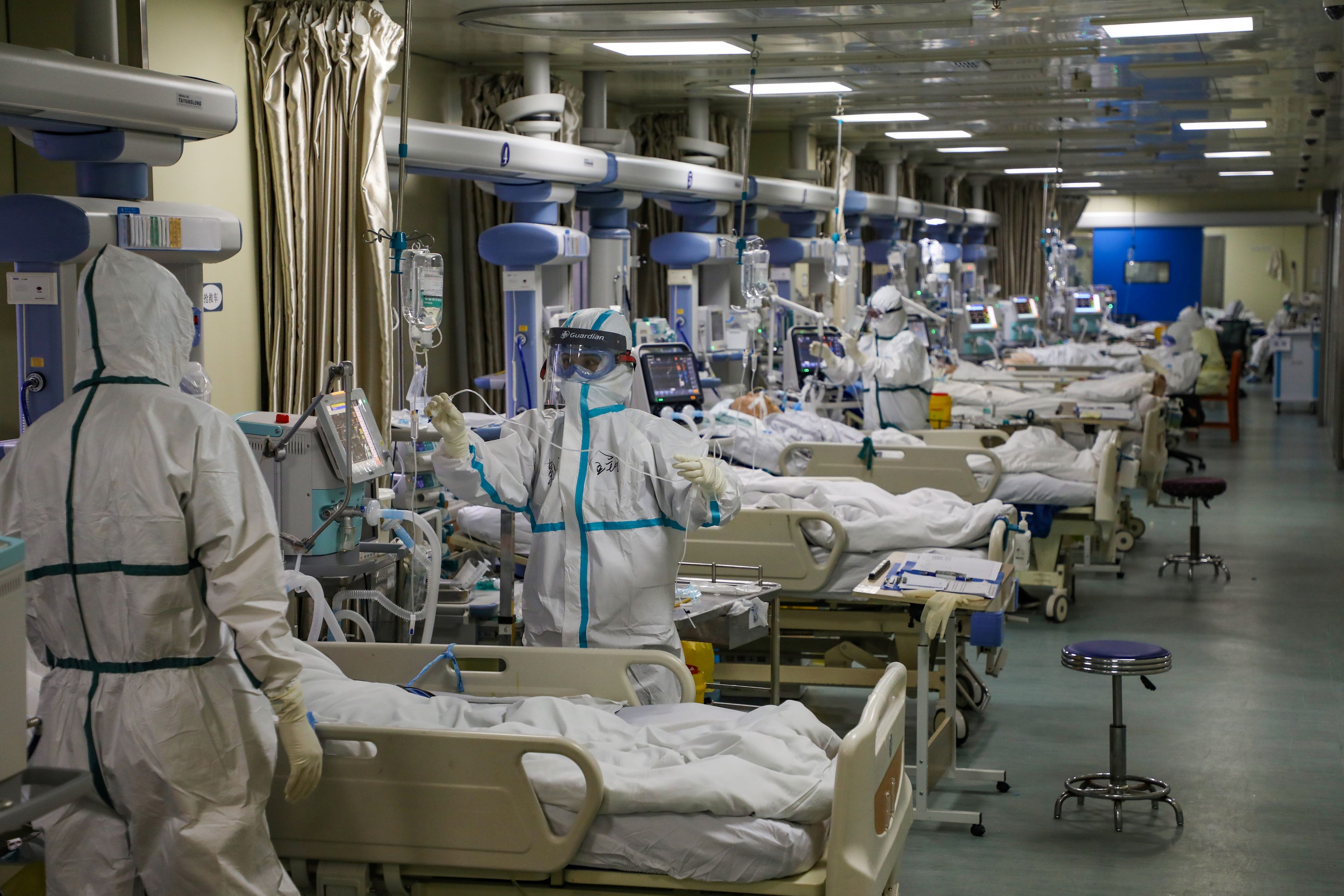
ICU patients with coronavirus and pneumonia treated in Wuhan ...

study published this week in JAMA provides a look at the largest series of COVID-19 hospitalized patients studied to date in the US, reporting that almost all patients treated had at least one underlying condition. Physicians from Northwell Health evaluated the outcomes, comorbidities and clinical course of 5,700 confirmed coronavirus patients hospitalized between March 1st and April 4th across the New York City area. Hospitalized patients, 60 percent of whom were men, had a high burden of chronic disease.

Similar to other reports, older patients, and those with a higher chronic disease burden (especially diabetes) were both more likely to require mechanical ventilation, and more likely to die. Only nine of the 436 patients under age 50 who had no significant cormorbidities (as measured by the Charlson Comorbidity Index) had died. One number received the most press coverage: as reported in the abstract, 88 percent of patients who received mechanical ventilation died. Digging into the details of the series, this may end up being an overestimation, as the statistic is based on a subset of 320 ventilated patients who either died or were discharged by April 4th. At that time, 831 patients remained in the hospital on ventilators, with outcomes still to be determined. Ultimately, the mortality rate of full cohort of ventilated patients could fall nearer to the 50-60 percent range seen in other studies.

Regardless, the rich dataset of the Northwell report adds to the body of evidence that severe COVID-19 infections and deaths involve several organ systems. This Science article provides a thorough (and comprehensible to the non-clinician) review of how the virus invades the body. While the lungs remain “ground zero” for infection, critically ill patients may experience serious kidney, cardiac, or even nervous system involvement. A host of chronic diseases predispose patients for worse outcomes—yet doctors remain puzzled that they aren’t seeing “a huge number of asthmatics” in ICUs. Patients are presenting with dangerously low oxygen levels but less distress than expected, likely because they are able to still “blow off” carbon dioxide, limiting the body’s ability to sense the seriousness of their condition.

Many dying patients are overwhelmed by a “cytokine storm”—an overreaction of the immune system that compounds organ failure. And new evidence suggests that large numbers of critically ill patients may experience abnormal blood clotting, contributing to the high mortality rates of the disease. The more doctors and scientists learn about coronavirus, the more complex the disease process seems—leaving doctors with work to do to understand, manage, and treat the tens of thousands of these seriously ill patients.


Young and middle-aged people, barely sick with covid-19, are dying from strokes

https://www.washingtonpost.com/health/2020/04/24/strokes-coronavirus-young-patients/?fbclid=IwAR0yPJ-Baf7Rk780ldh07roTJepyT6EVN0A2b9mh9JdmEgc4mAcy1eDVBxA&utm_campaign=wp_main&utm_medium=social&utm_source=facebook

Young people with coronavirus are dying from strokes - The ...

Doctors sound alarm about patients in their 30s and 40s left debilitated or dead. Some didn’t even know they were infected.

Thomas Oxley wasn’t even on call the day he received the page to come to Mount Sinai Beth Israel Hospital in Manhattan. There weren’t enough doctors to treat all the emergency stroke patients, and he was needed in the operating room.

The patient’s chart appeared unremarkable at first glance. He took no medications and had no history of chronic conditions. He had been feeling fine, hanging out at home during the lockdown like the rest of the country, when suddenly, he had trouble talking and moving the right side of his body. Imaging showed a large blockage on the left side of his head.

Oxley gasped when he got to the patient’s age and covid-19 status: 44, positive.

The man was among several recent stroke patients in their 30s to 40s who were all infected with the coronavirus. The median age for that type of severe stroke is 74.

As Oxley, an interventional neurologist, began the procedure to remove the clot, he observed something he had never seen before. On the monitors, the brain typically shows up as a tangle of black squiggles — “like a can of spaghetti,” he said — that provide a map of blood vessels. A clot shows up as a blank spot. As he used a needlelike device to pull out the clot, he saw new clots forming in real-time around it.

“This is crazy,” he remembers telling his boss.

Stroke surge

Reports of strokes in the young and middle-aged — not just at Mount Sinai, but also in many other hospitals in communities hit hard by the novel coronavirus — are the latest twist in our evolving understanding of its connected disease, covid-19. Even as the virus has infected nearly 2.8 million people worldwide and killed about 195,000 as of Friday, its biological mechanisms continue to elude top scientific minds. Once thought to be a pathogen that primarily attacks the lungs, it has turned out to be a much more formidable foe — impacting nearly every major organ system in the body.

Until recently, there was little hard data on strokes and covid-19.

There was one report out of Wuhan, China, that showed that some hospitalized patients had experienced strokes, with many being seriously ill and elderly. But the linkage was considered more of “a clinical hunch by a lot of really smart people,” said Sherry H-Y Chou, a University of Pittsburgh Medical Center neurologist and critical care doctor.

Now for the first time, three large U.S. medical centers are preparing to publish data on the stroke phenomenon. The numbers are small, only a few dozen per location, but they provide new insights into what the virus does to our bodies.

A stroke, which is a sudden interruption the blood supply, is a complex problem with numerous causes and presentations. It can be caused by heart problems, clogged arteries due to cholesterol, even substance abuse. Mini-strokes often don’t cause permanent damage and can resolve on their own within 24 hours. But bigger ones can be catastrophic.

The analyses suggest coronavirus patients are mostly experiencing the deadliest type of stroke. Known as large vessel occlusions, or LVOs, they can obliterate large parts of the brain responsible for movement, speech and decision-making in one blow because they are in the main blood-supplying arteries.

Many researchers suspect strokes in covid-19 patients may be a direct consequence of blood problems that are producing clots all over some people’s bodies.

Clots that form on vessel walls fly upward. One that started in the calves might migrate to the lungs, causing a blockage called a pulmonary embolism that arrests breathing — a known cause of death in covid-19 patients. Clots in or near the heart might lead to a heart attack, another common cause of death. Anything above that would probably go to the brain, leading to a stroke.

Robert Stevens, a critical care doctor at Johns Hopkins Hospital in Baltimore, called strokes “one of the most dramatic manifestations” of the blood-clotting issues. “We’ve also taken care of patients in their 30s with stroke and covid, and this was extremely surprising,” he said.

Many doctors expressed worry that as the New York City Fire Department was picking up four times as many people who died at home as normal during the peak of infection that some of the dead had suffered sudden strokes. The truth may never be known because few autopsies were conducted.

Chou said one question is whether the clotting is because of a direct attack on the blood vessels, or a “a friendly-fire problem” caused by the patient’s immune response.

“In your body’s attempt to fight off the virus, does the immune response end up hurting your brain?” she asked. Chou is hoping to answer such questions through a review of strokes and other neurological complications in thousands of covid-19 patients treated at 68 medical centers in 17 countries.

Thomas Jefferson University Hospitals, which operates 14 medical centers in Philadelphia, and NYU Langone Health in New York City, found that 12 of their patients treated for large blood blockages in their brains during a three-week period had the virus. Forty percent were under 50, and they had few or no risk factors. Their paper is under review by a medical journal, said Pascal Jabbour, a neurosurgeon at Thomas Jefferson.

Jabbour and his co-author Eytan Raz, an assistant professor of neuroradiology at NYU Langone, said that strokes in covid-19 patients challenge conventional thinking. “We are used to thinking of 60 as a young patient when it comes to large vessel occlusions,” Raz said of the deadliest strokes. “We have never seen so many in their 50s, 40s and late 30s.”

Raz wondered whether they are seeing more young patients because they are more resistant than the elderly to the respiratory distress caused by covid-19: “So they survive the lung side, and in time develop other issues.”

Jabbour said many cases he has treated have unusual characteristics. Brain clots usually appear in the arteries, which carry blood away from the heart. But in covid-19 patients, he is also seeing them in the veins, which carry blood in the opposite direction and are trickier to treat. Some patients are also developing more than one large clot in their heads, which is highly unusual.

“We’ll be treating a blood vessel and it will go fine, but then the patient will have a major stroke” because of a clot in another part of the brain, he said.

The 33-year-old

At Mount Sinai, the largest medical system in New York City, physician-researcher J Mocco said the number of patients coming in with large blood blockages in their brains doubled during the three weeks of the covid-19 surge to more than 32, even as the number of other emergencies fell. More than half of were covid-19 positive.

It isn’t just the number of patients that was unusual. The first wave of the pandemic has hit the elderly and those with heart disease, diabetes, obesity or other preexisting conditions disproportionately. The covid-19 patients treated for stroke at Mount Sinai were younger and mostly without risk factors.

On average, the covid-19 stroke patients were 15 years younger than stroke patients without the virus.

“These are people among the least likely statistically to have a stroke,” Mocco said.

Mocco, who has spent his career studying strokes and how to treat them, said he was “completely shocked” by the analysis. He noted the link between covid-19 and stroke “is one of the clearest and most profound correlations I’ve come across.”

“This is much too powerful of a signal to be chance or happenstance,” he said.

In a letter to be published in the New England Journal of Medicine next week, the Mount Sinai team details five case studies of young patients who had strokes at home from March 23 to April 7. They make for difficult reading: The victims’ ages are 33, 37, 39, 44 and 49, and they were all home when they began to experience sudden symptoms, including slurred speech, confusion, drooping on one side of the face and a dead feeling in one arm.

One died, two are still hospitalized, one was released to rehabilitation, and one was released home to the care of his brother. Only one of the five, a 33-year-old woman, is able to speak.

Oxley, the interventional neurologist, said one striking aspect of the cases is how long many waited before seeking emergency care.

The 33-year-old woman was previously healthy but had a cough and headache for about a week. Over the course of 28 hours, she noticed her speech was slurred and that she was going numb and weak on her left side but, the researchers wrote, “delayed seeking emergency care due to fear of the covid-19 outbreak.”

It turned out she was already infected.

By the time she arrived at the hospital, a CT scan showed she had two clots in her brain and patchy “ground glass” in her lungs — the opacity in CT scans that is a hallmark of covid-19 infection. She was given two different types of therapy to try to break up the clots and by Day 10, she was well enough to be discharged.

Oxley said the most important thing for people to understand is that large strokes are very treatable. Doctors are often able to reopen blocked blood vessels through techniques such as pulling out clots or inserting stents. But it has to be done quickly, ideally within six hours, but no longer than 24 hours: “The message we are trying to get out is if you have symptoms of stroke, you need to call the ambulance urgently. ”

As for the 44-year-old man Oxley was treating, doctors were able to remove the large clot that day in late March, but the patient is still struggling. As of this week, a little over a month after he arrived in the emergency room, he is still hospitalized.


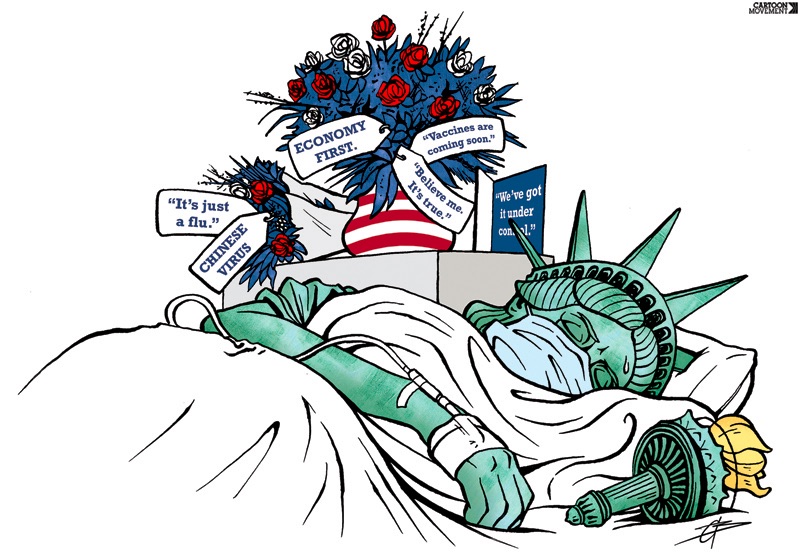
Cartoon – State of the Union

iroon.com: Cartoons


Cartoon – Coronavirus Prevention Today

College Signals Concern over Coronavirus Outbreak Cooks Adresses ...

70% Of Americans Want Officials To Prioritize Public Health Over Restarting Economy

https://www.forbes.com/sites/arielshapiro/2020/04/23/70-of-americans-want-officials-to-prioritize-public-health-over-restarting-economy-trump-kemp/?utm_source=newsletter&utm_medium=email&utm_campaign=news&utm_campaign=news&cdlcid=#74a9d5ce68d3

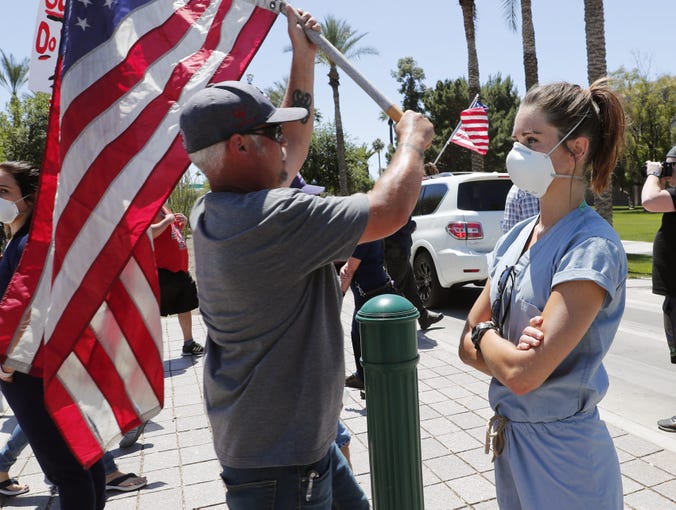
The ICU nurse who stood masked and silent at the rally to open Arizona

A wide majority of Americans are not ready to resume public life, according to a poll released Thursday by CBS News and YouGov, as governors in Georgia, Tennessee and South Carolina plan to allow stay-at-home orders to expire next week.

KEY FACTS

Only 30% of people surveyed said the government’s priority should be restarting the economy; 70% said the focus should be on slowing the virus through social distancing measures.

The polling shows a partisan divide—while 91% of Democrats and 69% of Independents favor focusing on public health, 52% of Republicans say the economy should take precedence.

29% of those polled said they would feel comfortable eating at a restaurant; Georgia Governor Brian Kemp will allow certain businesses, including restaurants, to open on April 27, 2020.

A minority of respondents said they would be comfortable going to work right now (44%) and even fewer said they would attend a large entertainment or sports event (13%), but the social isolation is taking its toll—54% said they would be willing to visit their friends.

KEY BACKGROUND

Protests against stay-at-home orders have cropped up around the country in states like California and Michigan, initially with President Donald Trump’s support. Although the movement is vocal, its support is limited. Less than a quarter of the poll’s respondents said they support the protests, and only 7% think that Trump should encourage them. The president is starting to change his tune, criticizing Georgia Governor Kemp’s plan to reopen businesses at the White House briefing on Wednesday.

WHAT TO WATCH FOR

Florida Governor Ron DeSantis said he is coordinating with neighboring governors on how to proceed, but has not yet announced whether he will extend the state’s stay-at-home order or let it expire. Florida has had more than 28,000 cases of COVID-19, more than any other southern state. A Quinnipiac poll released Wednesday shows that Florida residents’ opinions on reopening the economy reflect those of the country: Only 22% said that the state should loosen social distancing rules at the end of the month. As a first step, DeSantis allowed localities to reopen their beaches last week, and some, notably those in Jacksonville, were crowded.