Failure of Fiduciary Duty?

https://www.axios.com/newsletters/axios-vitals-0460cccc-499e-4609-80e6-745311cef1ad.html?utm_source=newsletter&utm_medium=email&utm_campaign=newsletter_axiosvitals&stream=top

Featured image

Sen. Bernie Sanders still may eke out a win in Iowa, and is the consensus front-runner in New Hampshire.

  • But most venture capitalists investing in America’s health care industry — the primary target of Bernie’s ire — have shoved their heads so deep in the sand that they’ve found water, Axios’ Dan Primack writes.

Why it matters: At some point, it could become a failure of fiduciary duty.

Health care accounts for over 20% of all U.S. venture activity.

  • A majority of that is in biotech/pharma, which last year saw 866 deals raise around $16.6 billion.
  • Investors view many of those deals as binary: Either the drug doesn’t work, resulting in a total write-off, or it does work and the financial sky’s the limit. Strike out or grand slam.
  • Sanders pledges to limit the upside, either by limiting drug prices under the current system or (if he gets Medicare for All) by establishing a single, centralized buyer.

Few health care VCs Dan spoke with are working on a Plan B in the event of their risk/reward models being made obsolete. Three main reasons:

  1. They don’t believe Sanders will win.
  2. Even if he does win, they don’t believe Sanders will get Medicare for All.
  3. If Sanders wins and implements his full plan, then it’s such a revolutionary shift that there’s not much health care VCs can do to counter it.

The bottom line: For now, health care venture’s strategy is see no Bernie, hear no Bernie. We’ll see how long that’s viable.


The health care debate we ought to be having

https://www.axios.com/what-matters-2020-health-care-costs-7139f124-d4f7-44a1-afc2-6d653ceec77d.html

Image result for The health care debate we ought to be having

Americans worry a lot about how to get and pay for good health care, but the 2020 presidential candidates are barely talking about what’s at the root of these problems: Almost every incentive in the U.S. health care system is broken.

Why it matters: President Trump and most of the Democratic field are minimizing the hard conversations with voters about why health care eats up so much of each paycheck and what it would really take to change things.

  • Instead, the public debate focuses on ideas like how best to cover the uninsured and the relative virtue of health care “choice.”

The U.S. spent $3.6 trillion on health care last year, and almost every part of the system is pushing its costs up, not down.


Hospitals collect the biggest piece of the health care pie, at about $1 trillion per year.

  • Their incentive is to fill beds — to send as many bills as possible, for as much as possible.
  • Big hospital systems are buying up smaller ones, as well as physician practices, to reduce competition and charge higher prices.
  • And hospitals have resisted efforts to shift toward a system that pays for quality, rather than volume.


Drug companies, meanwhile, are the most profitable part of the health care industry.

  • Small biotech companies usually shoulder the risk of developing new drugs.
  • Big Pharma companies then buy those products, market them aggressively and develop a fortress of patents to keep competition at bay as long as possible.


The money bonanza is enticing some nontraditional players into the health care world.


Insurers do want to keep costs down — but many of their methods are deeply unpopular.

  • Making us pay more out of pocket and putting tighter restrictions on which doctors we can see create real and immediate headaches for patients.
  • That makes insurers the most convenient punching bag for politicians.


The frustrating reality: Democrats’ plans are engaging in the debate about possible solutions more than the candidates themselves.

  • It’s a tacit acknowledgment of two realities: That controlling the cost of care is imperative, and that talking about taking money away from doctors and hospitals is a big political risk.


What they’re saying: The top 2020 Democrats have actually released “insanely aggressive” cost control ideas, says Larry Levitt, executive vice president at the Kaiser Family Foundation. “But they don’t talk about that a lot.”

  • Medicare for All, the plan endorsed by Sens. Bernie Sanders and Elizabeth Warren, would sharply reduce spending on doctors and hospitals by eliminating private insurance and paying rates closer to Medicare’s. Estimates range from about $380 billion to nearly $600 billion in savings each year.
  • Joe Biden and Pete Buttigieg have proposed an optional Medicare-like insurance plan, which anyone could buy into. It would pay providers less than private insurance, with the hopes of putting competitive pressure on private plans’ rates.
  • The savings there would be smaller than Medicare for All’s, but those plans are still significantly more ambitious than the Affordable Care Act or most of the proposals that came before it.


Yes, but: The health care industry has blanketed Iowa with ads, and is prepared to spend millions more, to defend the very profitable status quo.

  • The argument is simple: Reframe the big-picture debate about costs as a threat to your doctor or your hospital. It’s an easy playbook that both parties, and the industry, know well. And it usually works.


The bottom line: “Voters want their health care costs reduced, but that doesn’t mean they would necessarily support what it would take to make that happen,” Levitt said.


Health Care in 2019: Year in Review

https://www.commonwealthfund.org/blog/2019/health-care-2019-year-review

Health care was front and center for policymakers and the American public in 2019. An appeals court delivered a decision on the Affordable Care Act’s (ACA’s) individual mandate. In the Democratic primaries, almost all the presidential candidates talked about health reform — some seeking to build on the ACA, others proposing to radically transform the health system. While the ACA remains the law of the land, the current administration continues to take executive actions that erode coverage and other gains. In Congress, we witnessed much legislative activity around surprise bills and drug costs. Meanwhile, far from Washington, D.C., the tech giants in Silicon Valley are crashing the health care party with promised digital transformations. If you missed any of these big developments, here’s a short overview.


1. A decision from appeals court on the future of the ACA: On December 18, an appeals court struck down the ACA’s individual mandate in Texas v. United States, a suit brought by Texas and 17 other states. The court did not rule on the constitutionality of the ACA in its entirety, but sent it back to a lower court. Last December, that court ruled the ACA unconstitutional based on Congress repealing the financial penalty associated with the mandate. The case will be appealed to the U.S. Supreme Court, but the timing of the SCOTUS ruling is uncertain, leaving the future of the ACA hanging in the balance once again.


2. Democratic candidates propose health reform options: From a set of incremental improvements to the ACA to a single-payer plan like Medicare for All, every Democratic candidate who is serious about running for president has something to say about health care. Although these plans vary widely, they all expand the number of Americans with health insurance, and some manage to reduce health spending at the same time.


3. Rise in uninsured: Gains in coverage under the ACA appear to be stalling. In 2018, an estimated 30.4 million people were uninsured, up from a low of 28.6 million in 2016, according to a recent Commonwealth Fund survey. Nearly half of uninsured adults may have been eligible for subsidized insurance through ACA marketplaces or their state’s expanded Medicaid programs.


4. Changes to Medicaid: States continue to look for ways to alter their Medicaid programs, some seeking to impose requirements for people to work or participate in other qualifying activities to receive coverage. In Arkansas, the only state to implement work requirements, more than 17,000 people lost their Medicaid coverage in just three months. A federal judge has halted the program in Arkansas. Other states are still applying for waivers; none are currently implementing work requirements.


5. Public charge rule: The administration’s public charge rule, which deems legal immigrants who are not yet citizens as “public charges” if they receive government assistance, is discouraging some legal immigrants from using public services like Medicaid. The rule impacts not only immigrants, but their children or other family members who may be citizens. DHS estimated that 77,000 could lose Medicaid or choose not to enroll. The public charge rule may be contributing to a dramatic recent increase in the number of uninsured children in the U.S.


6. Open enrollment numbers: As of the seventh week of open enrollment, 8.3 million people bought health insurance for 2020 on HealthCare.gov, the federal marketplace. Taking into account that Nevada transitioned to a state-based exchange, and Maine and Virginia expanded Medicaid, this is roughly equivalent to 2019 enrollment. In spite of the Trump administration’s support of alternative health plans, like short-term plans with limited coverage, more new people signed up for coverage in 2020 than in the previous year. As we await final numbers — which will be released in March — it is also worth noting that enrollment was extended until December 18 because consumers experienced issues on the website. In addition, state-based marketplaces have not yet reported; many have longer enrollment periods than the federal marketplace.


7. Outrage over surprise bills: Public outrage swelled this year over unexpected medical bills, which may occur when a patient is treated by an out-of-network provider at an in-network facility. These bills can run into tens of thousands of dollars, causing crippling financial problems. Congress is searching for a bipartisan solution but negotiations have been complicated by fierce lobbying from stakeholders, including private equity companies. These firms have bought up undersupplied specialty physician practices and come to rely on surprise bills to swell their revenues.


8. Employer health care coverage becomes more expensive: Roughly half the U.S. population gets health coverage through their employers. While employers and employees share the cost of this coverage, the average annual growth in the combined cost of employees’ contributions to premiums and their deductibles outpaced growth in U.S. median income between 2008 and 2018 in every state. This is because employers are passing along a larger proportion to employees, which means that people are incurring higher out-of-pocket expenses. Sluggish wage growth has also exacerbated the problem.


9. Tech companies continue inroads into health care: We are at the dawn of a new era in which technology companies may become critical players in the health care system. The management and use of health data to add value to common health care services is a prime example. Recently, Ascension, a huge national health system, reached an agreement with Google to store clinical data on 50 million patients in the tech giant’s cloud. But the devil is in the details, and tech companies and their provider clients are finding themselves enmeshed in a fierce debate over privacy, ownership, and control of health data.


10. House passes drug-cost legislation: For the first time, the U.S. House of Representatives passed comprehensive drug-cost-control legislation, H.R. 3. Reflecting the public’s distress over high drug prices, the legislation would require that the government negotiate the price of up to 250 prescription drugs in Medicare, limit drug manufacturers’ ability to annually hike prices in Medicare, and place the first-ever cap on out-of-pocket drug costs for Medicare beneficiaries. This development is historic but unlikely to result in immediate change. Its prospects in the Republican–controlled Senate are dim.


The world of private equity — 15 key observations

https://www.beckershospitalreview.com/hospital-transactions-and-valuation/the-world-of-private-equity-15-key-observations.html?origin=CFOE&utm_source=CFOE&utm_medium=email

Image result for the world of private equity

Private equity funds have significantly grown in number, size and significance in the last 20 years.

Recent high-profile acquisitions include a stake in the Manchester City soccer team and the purchase by Ithaca Holdings, backed by private equity firms, of Taylor Swift’s recording catalog. Along with private equity’s growth, it has also become an area of political focus, sure to be a talking point during the next presidential election. Following are 15 key observations on the current state of private equity.


1. Private equity raises money from investors and invests that capital in different types of companies. The most common investment is a leveraged buyout, whereby a fund buys a majority stake in a company, attempts to improve it, and then sell the company for a profit. Private equity funds also invest in distressed assets, real estate, other funds and venture capital. Private equity funds raised approximately $700 billion in 2018. This broadly goes into several different categories. This amount raised is slightly less than in 2017.


2. Private equity as an asset class has matured greatly. Increasingly, to have broad equity exposure, investors must also have exposure to private companies. Along with diversification, private equity has historically (but see points below) offered the potential for returns that beat the public markets. Private equity investment continues to increase, with investments in around 8,000 + private companies. By contrast, the US public markets are shrinking. According to the New York Times, in the mid-1990s, there were more than 8,000 publicly traded companies, and by 2016, there were only 3,627.


3. As private equity funds have grown to be a larger part of the equity market, their returns have regressed closer and closer to the public markets. The largest funds are closer in returns to the public markets. According to a recent Wall Street Journal report, private-equity funds of $10 billion or more posted 14.4 percent five-year annualized returns net of fees as of the end of September 2018, barely edging past the 14.1 percent return for the S&P 500. See “Wall Street Journal “Private Equity Funds are Raising Bigger and Bigger Funds. They Don’t Often Deliver.”


4. Private equity have generally outperformed the public markets during periods of volatility. In 2018, where there was political and economic uncertainty, the average private equity fund appreciated 8.2 percent while public market indexes had double-digit declines. See, “10 Predictions for Private Equity for 2019” by Antoine Drean. However, the statistic may be misleading as private equity can choose not to exit investments in more challenging markets. Also, there is a large variety of returns in different private equity funds.


5. The spread of returns from high returns to very low returns among private equity funds is very large. See McKinsey “Return Dispersion is much Greater in Private Equity than in Public Markets.” This means it’s become increasingly difficult to find the right private equity fund to invest with. It also means that successful funds can outperform the median by a significant degree. However, it is hard to consistently be a successful fund.


6. The 5 biggest private equity funds are largely considered to be the following – The Carlye Group, Kohlberg Kravis Roberts (KKR), The Blackstone Group, Apollo Global Management and TPG. Each has more than $100 billion in assets under management. The CEO, Chairman and Co-Founder of the Blackstone Group recent authored “What it Takes– Lessons in the Pursuit of Excellence”. This book provides a good primer on private equity.


7. Private equity mega funds, those funds with $5 billion or more in pooled capital, take up a larger and larger part of the investment area. 19 mega funds were raised in 2018. These 19 funds reflected 20 percent of all private equity fundraising. See McKinsey and Co “Private Markets Come of Age.” The 2019 Preqin Global Private Equity and Venture Capital Report discusses the growing concentration of capital amongst a relatively small number of funds. It reported at the end of 2018, that 62 percent of the total capital raised was committed to the 50 largest funds.


8. According to Pitchbook, private equity fundraising in the US hit an all-time high in 2019. Pitchbook reports that as of the beginning of November 2019, US buyout funds raised north of $246 billion. According to a Fitch Ratings report, Private equity is sitting with approximately $2.1 trillion globally to invest. See “Private equity fundraising in the US hits all-time high” by Eliza Haverstock. This amount of “dry powder” is at an all-time high. See “This is the Biggest Year Ever for Private Equity Funding. Where are the Deals?” Dallas Business Journal.

9. Investors, economists and politicians are signaling the likelihood of a recession in the near future. With a huge amount of money to deploy, funds are developing strategies to deal with an economic downturn. This may mean less new deals and a focus on margins of existing investments.


10. Private debt funds have grown greatly and raised more than $100 billion a year for the last 4 years. According to Preqin, there are now 417 private debt funds in the market. The market for investing in private debt funds seems to be slowing some in 2019 with less on track to be raised than the last four years. See, e.g., Institutional Investor, “Investors are backing off from private debt”. Here, the article headlines that investors are backing off from the once booming asset class. Oct 10, 2019. The largest private debt funds are often closely connected to the largest private equity funds. These include GSO Capital Partners which is related to Blackstone, KKR, Ares Management, OakTree Capital Management and Goldman Sachs via its Goldman Sachs Merchant Banking Division. Pitchbook reports the following firms as leading the private debt market: Antares Management, Ares, Barings, TwinBrook Capital Partners, The Carlye Group, Midcap Financial, NXT Capital, BMO Financial Group, Madison Capital Funding, and Citizens Bank. See also Bloomberg, December 18, 2019, “Apollo and Blackstone are Stealing Wall Street’s Loans Business.” The movement to these behemoth funds also having large direct debt financing funds will have a big impact on the business of other traditional lenders and financing sources.


11. According to SPG Global, multiples for PE funded deals are averaging close to 11.5 times EBITDA. They attribute this to the sinking cost of debt, a mountain of private equity dry powder, and larger equity investments. The leverage on deals is overall close to 5.5 times EBIDTA. The multiples differ dramatically based on the size of the deal, the growth trajectory of the company, the assessment of risk of the company, and several other factors.


12. As private equity funds grow larger and have more capital to deploy, there are less club deals. According to McKinsey, “in 2007, 27 percent of megadeals included more than one large global GP. By 2018, that number was 4 percent. Club deals were associated with several notable investment catastrophes and largescale bankruptcies.” However, co-investments, where investors invest alongside a private equity fund, often without paying some of the usual fees, are continuing to increase. These deals are becoming increasingly competitive and provide an opportunity to reduce the exposure of investing in a single company.


13. Increasingly the largest private equity funds have grown their own operations teams and have more operating partners and executives than they used to. For example, Blackstone is reported to have more than 2,400 employees. Carlye has close to 1,600 employees. KKR has 1,300 employees. Funds are also investing in analytics and other technology to manage the fund and platform companies.


14. Funds are diversifying their fundraising and investment strategies in interesting ways. On the investment side, some of the largest funds are starting to raise funds from retail investors. On the investment side, there are now funds like Dyal Capital which has raised $9 billion to invest in other private equity funds.


15. The total volume of dollars going into private equity related deals is growing. However, the total number of deals transacted has been fairly flat the last few years. The average dollar volume per deal is increasing. According to Bain, the number of individual transactions in 2018 decreased by 13 percent, to 2,936 worldwide — but total buyout value jumped 10 percent to $582 billion (including add-on deals). See Bain, Global Private Equity Report 2019. A related trend is private equity funds selling their stakes in companies to other private equity funds in secondary transactions. This is different from years past where the normal exit was to a strategic buyer or to the public markets – this secondary market is anticipated to continue to grow. Increasingly the volume of deals done is driven by add on or bolt on transactions added to platforms.


4 Chicago hospitals in talks to combine

https://www.chicagobusiness.com/health-care/big-hospital-combo-works

South Shore Hospital

Crain’s has learned that at least four hospitals—Advocate Trinity Hospital, Mercy Hospital & Medical Center, South Shore Hospital and St. Bernard Hospital—are in talks with the state to create a single system.

Plans are afoot to consolidate financially struggling hospitals that serve Chicago’s poorest residents on the South Side.

Crain’s has learned that at least four hospitals—Advocate Trinity Hospital, Mercy Hospital & Medical Center, South Shore Hospital and St. Bernard Hospital—are in talks with the state to create a single system with one leadership team that includes some combination of inpatient, outpatient and emergency care, as well as skilled nursing. Separately, a private health care consultancy has agreed to buy recently shuttered MetroSouth Medical Center as the first step in a hoped-for combination with other so-called safety-net hospitals.

Both proposals aim to bolster the precarious finances of hospitals that treat large numbers of uninsured and low-income patients on Medicaid. Consolidation could enable the institutions to generate economies of scale, improve bargaining power with insurers, eliminate redundant expenses and cut back duplicative or underutilized capabilities. Bringing the hospitals together also could lead to the centralization of certain services, forcing some patients to seek care farther from home.

Talks are at an early stage and may not lead to a transaction. But all the hospitals are under pressure to transform as inpatient volumes fall and expenses rise. A combination could help the hospitals adapt. Some might become ambulatory centers, professional buildings or skilled nursing facilities. Services like orthopedics and obstetrics could be centralized at certain locations to improve care and save money on surgical equipment, space and staff. It’s unclear whether some facilities would close in the process.

“While we are always talking with our health care colleagues about how we can best work together to address challenges and meet the evolving needs of our patients and neighbors, we haven’t made any decisions,” a representative for Advocate Aurora Health said in an emailed statement. “Our commitment to caring for our communities and transforming health and wellness for our patients remains strong. Our decisions have always, and will always, be guided by what’s in the best interest of our patients and the communities we are so privileged to serve.”

“As a Catholic health ministry supporting the underserved in Chicago, Mercy Hospital & Medical Center is always working with community partners to find cost-effective ways to provide vital services to our patients, but we have nothing to announce at this time,” a hospital representative for Mercy—which is owned by Catholic giant Trinity Health—said in an emailed statement.

South Shore and St. Bernard did not respond to requests for comment.

All four hospitals are operating in the red, with 2018 net losses ranging from $1.3 million at South Shore to $68.3 million at Mercy, according to data compiled by Modern Healthcare Metrics. The hospitals treat a large number of patients on Medicaid, which pays less than Medicare and commercial insurance. Meanwhile, they’re getting less money from various federal and state programs intended to offset the cost of treating patients who can’t pay for care.

St. Bernard CEO Charles Holland Jr. told Crain’s in July that without additional government funding, “we’re going to have to make some difficult decisions. . . .We just cannot continue to go on the way we are.”

Joining forces would enable the hospitals to pool the money they get from various state and federal programs to fund costly transformative initiatives.

The state-led initiative is being driven by the Illinois Department of Healthcare & Family Services, which oversees Medicaid.

“HFS has been and is routinely approached by numerous providers with a variety of ideas seeking to transform to better meet the needs of their communities,” the department said in an emailed statement. “Our department is currently in talks with multiple groups and would provide guidance to any group of providers that came to us with ideas for health care transformation to meet the needs of the community. HFS will also be monitoring closely and engaging directly with community leaders and members to ensure any changes result in expanded care that meets the needs of the communities these hospitals serve.”

Driving a separate, private initiative is Third Horizon Strategies, which has agreed to buy MetroSouth in Blue Island from Brentwood, Tenn.-based Quorum Health for a dollar.

Third Horizon CEO David Smith said he filed articles of incorporation Monday to create an entity called South Side Health, funded by private investors, and—he hopes—government dollars intended for hospital transformation.

“As we build out South Side Health, if other hospitals are successful (in coming together), it will be important to integrate into one system,” Smith said. “At the end of the day, there needs to be one integrated system on the South Side that acts as a financially self-sustaining utility whose sole function is to improve the health that community.”


Buyer of 4 California hospitals misses closing deadline

https://www.beckershospitalreview.com/hospital-transactions-and-valuation/buyer-of-4-california-hospitals-misses-closing-deadline.html?origin=cfoe&utm_source=cfoe

Image result for Buyer of 4 California hospitals misses closing deadline

Corona Calif.-based KPC Group missed the court-appointed deadline to purchase four hospitals from El Segundo, Calif.-based Verity Health, which entered Chapter 11 bankruptcy in August 2018.

KPC Group bid $610 million in January to purchase the four hospitals from Verity. Three months later, U.S. Bankruptcy Judge Ernest M. Robles approved the asset purchase agreement for KPC’s Strategic Global Management to acquire the hospitals. In late November, the judge ordered SGM to close the deal by Dec. 5.

After SGM failed to complete the purchase by the court-appointed deadline, Verity asked the court to issue an order requiring SGM’s principals to testify as to why the deal did not close and whether SGM has the financial ability to close the sale. Verity also asked the court to issue an order finding SGM in breach of the asset purchase agreement and allowing it to keep SGM’s $30 million deposit and proceed with other plans to sell the hospitals.

On Dec. 9, the court denied Verity’s request to force SGM’s executives to appear and testify in court.

“By failing to close, SGM risks the loss of its $30 million good-faith deposit as well as the possibility of damages for breach of contract in an amount of up to $60 million,” Judge Robles wrote in a Dec. 9 court filing. “Being compelled to offer testimony will not motivate SGM to close where the threat of the loss of up to $90 million has failed to accomplish that end.”

The judge assured Verity that it would have the chance to litigate the issues of whether SGM breached the asset purchase agreement and whether it’s entitled to keep the good-faith deposit.

Though neither party has terminated the sale process, the judge said Verity can “explore options for the alternative disposition of the hospitals” without violating the asset purchase agreement.

The next bankruptcy court hearing is slated for Dec. 30.


Memphis hospital CEOs discuss policies on debt collection after patient lawsuits draw scrutiny

https://www.commercialappeal.com/story/news/2019/12/05/medical-debt-memphis-hospital-patients-sued/2611018001/
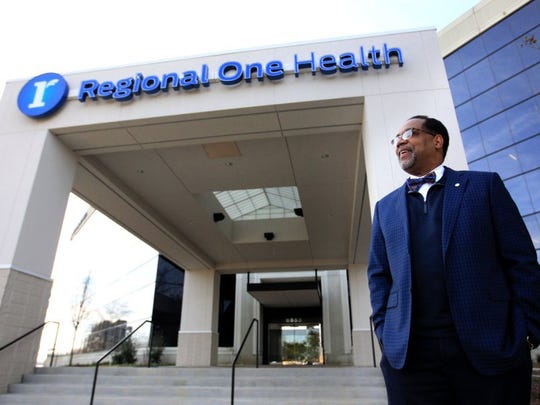
Dr. Reginald Coopwood, CEO of Regional One Health, on Feb. 5, 2016.

Representing more than half of the hospitals in Shelby County, the CEOs of four local health care organizations convened at the University of Memphis Tuesday for a panel on “successfully leading change” in the industry.

The gathering took place amid a growing conversation on medical debt — the cause of more than 58 percent of bankruptcies in the United States, according to the American Journal of Public Health. 

Communities across the countries have recently seen individuals and faith-based organizations launch fundraising initiatives to erase millions in medical expenses as part of a burgeoning movement to buy medical debt for the sole purpose of erasing it.

Memphis has also been at the fore of the conversation in recent months, with a pair of investigations by MLK50 and ProPublica revealing an aggressive system of suing patients involving wage garnishments, interest charges and court fees.

That reporting has since prompted a wave of debt reduction and forgiveness for thousands who were being sued by Methodist Le Bonheur Healthcare and Southeastern Emergency Physicians, a private equity-owned firm that staffs Baptist Memorial Health Care’s four local emergency rooms.

‘We have to be a profitable business’

At the Tuesday panel, organized by the professional association Mid-South Health Care Executives, the discussion touched on workplace harassment, the impending automation of health care jobs, and diversity.

The CEOs of Methodist Le Bonheur and Baptist Memorial also addressed medical debt as did their fellow panelists.

Dr. Reginald Coopwood, CEO of Regional One Health, the county hospital, said his organization was compelled to reassess its policies as a result of the recent scrutiny surrounding debt collection, though he defended the practice of suing patients in general.

“We send people through processes of collection,” Coopwood said of the public hospital.

“We have a great passion to deliver great care to whoever walks into our door. The flip side of that is … if everybody cannot pay their bills, we can’t buy $100 million record systems and we can’t buy technology that the community as a whole wants,” Coopwood said. “So we have policies to collect whatever is collectible from individuals.”

“That’s what a business needs to do,” he said.

According to General Sessions Court data, analyzed by MLK50 and ProPublica and shared with The Commercial Appeal, those hospitals and a physicians staffing firm, sued more than 2,500 patients in the first six months of the year, between January 1 and June 30:

  • Baptist Memorial Hospital, 486 lawsuits
  • Methodist Le Bonheur, 622 lawsuits
  • Regional One Health, 161 lawsuits
  • Southeastern Emergency Physicians, 1,292 lawsuits

“At the end of the day, we’re businesses, and in order to stay in business, we have to be able — in order to take care of those that are uninsured — we have to be a profitable business,” Coopwood said.

Sally Deitch, CEO of St. Francis Hospitals in Memphis, said the amount of charity care hospitals give back to communities is rarely seen, and, meanwhile, “most of these hospitals are living under their margins of actually being able to say ‘We are financially solid and stable and ready to make investments in new technology.'”

In a Memphis Business Journal review of nonprofit tax filings, Coopwood, Methodist Le Bonheur CEO Michael Ugwueke and Baptist Memorial Health Care CEO Jason Little are listed among the five highest paid nonprofit executives in the metro area, earning between $874,493 and $1,300,954 in 2018. Deitch was appointed to her position in October, after the Memphis Business Journal’s compensation review.

‘No one is perfect’

In the Methodist Le Bonheur system, MLK50 and ProPublica’s investigation found the nonprofit hospital’s practice of taking patients to court, through its in-house collection agency, had entrapped some of its own workers in a cycle of wage garnishments, interest and debt — while they were being paid less than a living wage.

Ugwueke, president of Methodist Le Bonheur’s hospitals in Shelby County, said his organization has gone “above and beyond the issues that were raised.”

The hospital, which is affiliated with the United Methodist Church, announced in July it would cease suing its employees and would raise the hospital network’s minimum wage to $15 an hour.

Methodist Le Bonheur also said it would institute a revamped financial assistance policy to ensure no one making less than 250 percent of federal poverty guidelines would be sued for debt collection in the future. For the approximately 6,500 patients who were in the process of being sued, the hospital also committed to forgiving or reducing their debts.

“As part of our process, we have made additional changes and accommodations,” Ugwueke said. “No one is perfect. I don’t think it’s anyone’s intention to do anything to harm patients.”

He added that he thinks other institutions have a role to play in serving the needs of low-income and poor communities.

“Memphis is a very challenging community. Health care organizations are not going to be the only ones solving the problems,” he said.

Deitch said no one seeking emergency care would ever be turned away from any hospital. Beyond that, she said she considered hospitals to be participants in helping their communities but not a deciding factor.

“When you start to think through the cost to the system and the burden to the system — at a certain point, it can’t all be the responsibility of a hospital,” she said.

Charity care

Little said he  thinks hospitals should address problems with affordability.

“We still need change in health care because it’s expensive. … Seventy-five percent of Americans are living paycheck to paycheck,” Little said, “and nobody sets money aside and plans to need a transplant. So that’s a challenge for all Americans and all Memphians.”

“And it’s a challenge that I’m really bullish on my colleagues up here continuing to address,” Little said, “because I think we’ve gotten really good at caring for our communities, particularly those in the greatest of need.”

For every dollar spent on expenses, Little said, Baptist Memorial spends 21 cents of it on charity care.

But that financial assistance hasn’t always been accessible to emergency-room patients, MLK50 and ProPublica reported in an investigation into Southeastern Emergency Physicians. The staffing firm contracts with doctors to treat emergency room patients in four of Baptist’s five hospitals in the region.

Southeastern filed nearly 1,300 lawsuits in the first half of 2019, according to MLK50 and ProPublica’s analysis of General Sessions Court data — more lawsuits than Regional One, Baptist Memorial and Methodist Le Bonheur combined.

But by the end of the year, in response to the MLK50 and ProPublica investigation, the firm’s parent company, TeamHealth, said it promote financial assistance program participation and would no longer pursue its active lawsuits — or sue any patients again.


Physician staffing firm suing patients

https://www.axios.com/newsletters/axios-vitals-bd00103b-e940-45bb-ad9a-a4576971fc39.html?utm_source=newsletter&utm_medium=email&utm_campaign=newsletter_axiosvitals&stream=top

Image result for team health billing lawsuits

An emergency room staffing firm owned by TeamHealth has filed thousands of lawsuits against patients in Memphis in the last few years, ProPublica and MLK50 report.

This is a collision of two storylines: the aggressive billing practices of private equity-backed health care companies, and providers’ decision to take patients to court to collect their medical debts.

  • Media reports have, until now, mostly focused on hospitals’ lawsuits, but ProPublica and MLK50’s reporting suggest the practice could be more widespread.

Between the lines: TeamHealth has already been in hot water for its role in surprise billing.

  • Emergency room physicians send patients surprise medical bills more often than other specialties, especially physicians employed by TeamHealth.
  • These doctors then have leverage to obtain higher in-network payment rates, making the practice lucrative.
  • The group is also one of the main funders of the dark-money group that has run millions in ads against what was Congress’ leading solution to surprise medical bills.
  • The company was acquired by the Blackstone Group in 2017.

By the numbers: The Memphis subsidiary Southeastern Emergency Physicians has filed more than 4,800 lawsuits against patients in Shelby County General Sessions Court since 2017, per ProPublica and MLK50.

  • TeamHealth said last week, after receiving questions from reporters, that it will no longer sue patients and won’t pursue the lawsuits it’s already filed.


Prospect Medical Holdings can’t consider $50M acquisition offer

https://www.beckershospitalreview.com/hospital-transactions-and-valuation/prospect-medical-holdings-can-t-consider-50m-acquisition-offer.html

Image result for Prospect Medical Holdings

Los Angeles-based Prospect Medical Holdings says it cannot consider a $50 million acquisition offer from Ontario, Calif.-based Prime Healthcare Services because it has already entered into another deal, according to the Journal Inquirer.

Prospect Medical Holdings is owned by certain funds of private equity firm Leonard Green & Partners and members of the company’s management team. In October, Prospect said its shareholders reached an agreement to purchase Leonard Green & Partners’ outstanding shares of the company, according to the report.

Leonard Green & Partners is considering selling its majority stake in Prospect for roughly $12 million, and Prime said it would pay $50 million for the company, according to an offer letter from Prime President and CEO Prem Reddy, MD, obtained by the Journal Inquirer

In a Nov. 24 statement to the Journal Inquirer, Prospect said it cannot consider Prime’s offer or other proposals because it signed a “binding agreement” with Leonard Green & Partners “several months ago.” Prospect said it is required to close the transaction, which is expected to take three to six months to complete, according to the report.

Access the full Journal Inquirer article here.


1,250 healthcare deals have been announced, completed this year

https://www.beckershospitalreview.com/hospital-transactions-and-valuation/1-250-healthcare-deals-have-been-announced-completed-this-year.html?origin=cfoe&utm_source=cfoe

Related image

The healthcare industry saw 1,250 deals announced or completed through October of this year, according to Bloomberg Law. 

The healthcare deal volume in 2019 is significantly higher than the same period last year, which had 900 deals announced or closed.

Merger and acquisition activity for long-term care, physician services, health IT and pharmaceutical companies are on pace to exceed the deal volume hit in 2018.

Walgreens is one company that is driving deal activity in the healthcare sector. The retail pharmacy giant recently announced it would close 157 in-store healthcare clinics it operated by the end of the year.

TriHealth announced it would buy seven of the Walgreens clinics in the Cincinnati area, and the deal is likely to be replicated elsewhere, Gary Herschman, a member of law firm Epstein Becker Green, told Bloomberg Law. 

However, the hospital and health system sector will likely end 2019 with fewer deals than in 2018, according to the report.

There were only 12 transactions in the hospital and health system sector in October, according to Nicholas Davis, a senior analyst at healthcare consultancy ECG Management Partners.