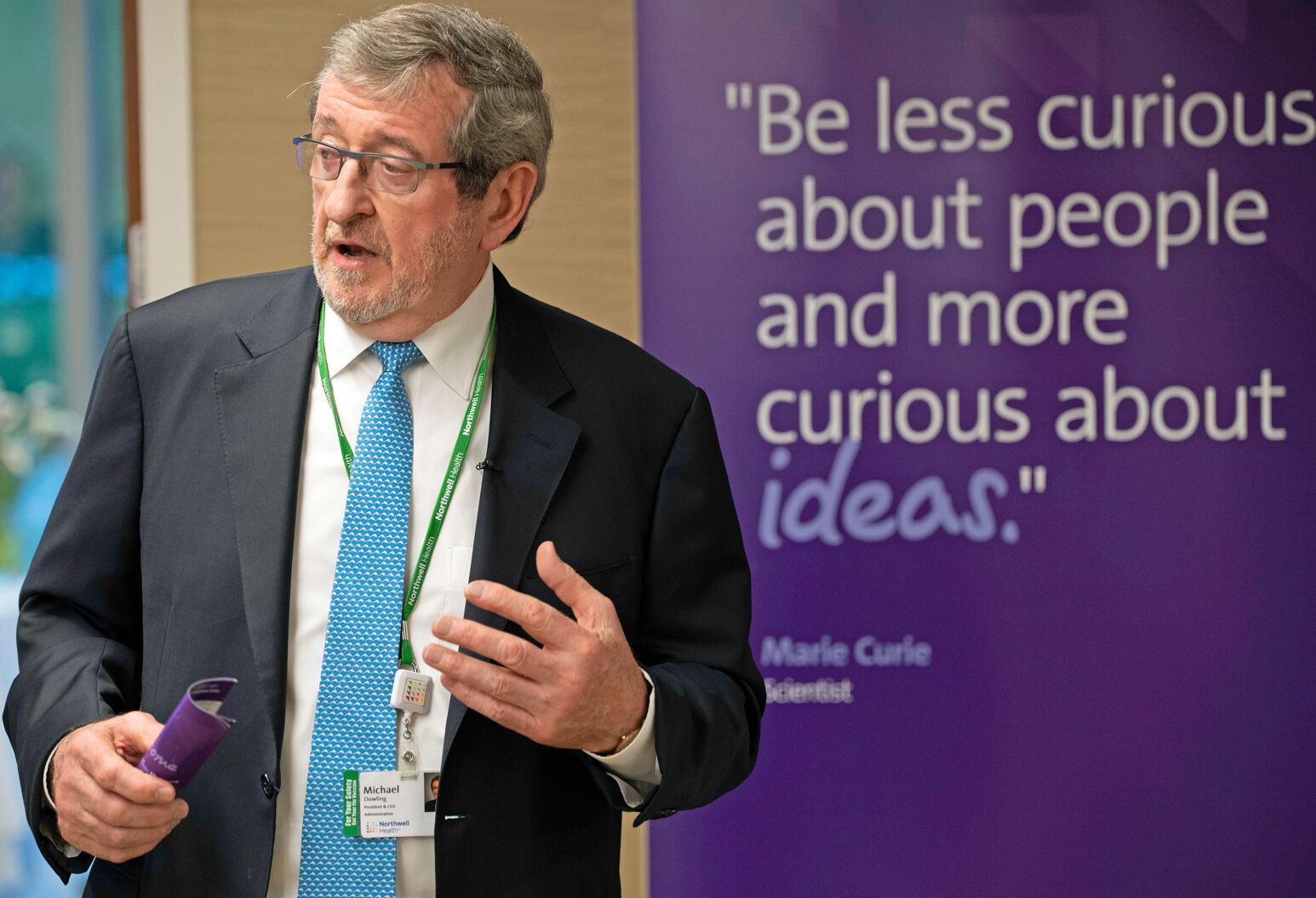
Michael Dowling: No one said it would be easy

Five suggestions for technology companies, venture capitalists | Northwell  Health

Hardly one month into 2021, the pressing priorities facing healthcare leaders are abundantly clear. 

First, we will be living in a world preoccupied by COVID-19 and vaccination for many months to come. Remember: this is a marathon, not a sprint. And the stark reality is that the vaccination rollout will continue well into the summer, if not longer, while at the same time we continue to care for hundreds of thousands of Americans sickened by the virus. Despite the challenges we face now and in the coming months in treating the disease and vaccinating a U.S. population of 330 million, none of us should doubt that we will prevail. Despite the federal government’s missteps over the past year in managing and responding to this unprecedented public health crisis, historians will recognize the critical role of the nation’s healthcare community in enabling us to conquer this once-in-a-generation pandemic.

While there has been an overwhelming public demand for the vaccine during the past couple of weeks, there remains some skepticism within the communities we serve, including some of the most-vulnerable populations, so healthcare leaders will find themselves spending time and energy communicating the safety and efficacy of vaccines to those who may be hesitant. This is a good thing. It is our responsibility to share facts, further public education and influence public policy. COVID-19 has enhanced public trust in healthcare professionals, and we can maintain that trust if we keep our focus on the right things — namely, how we improve the health of our communities.

And as healthcare leaders diligently balance this work, we also have a great opportunity to reimagine what our hospitals and health systems can be as we emerge from the most trying year of our professional lifetimes. How do you want your hospital or system organized? What kind of structural changes are needed to achieve the desired results? What do you really want to focus on? Amid the pressing priorities and urgent decision-making needed to survive, it is easy to overlook the great reimagination period in front of us. The key is to forget what we were like before COVID-19 and reflect upon what we want to be after.

These changes won’t occur overnight. We’ll need patience, but here are my thoughts on five key questions we need to answer to get the right results.

1. How do you enhance productivity and become more efficient? Throughout 2021, most systems will be in recovery mode from COVID’s financial bruises. Hospitals saw double-digit declines in inpatient and outpatient volumes in 2020, and total losses for hospitals and health systems nationwide were estimated to total at least $323 billion. While federal relief offset some of our losses, most of us still took a major financial hit. As we move forward, we must reorganize to operate as efficiently as possible. Does reorganization sound daunting? If so, remember the amount of reorganization we mustered to work effectively in the early days of the pandemic. When faced with no alternative, healthcare moved heaven and earth to fulfill its mission. Crises bring with them great clarity. It’s up to leaders to keep that clarity as this tragic, exhausting and frustrating crisis gradually fades.

2. How do you accelerate digital care? COVID-19 changed our relationship with technology, personally and professionally. Look at what we accomplished and how connected we remain. We were reminded of how high-quality healthcare can go unhindered by distance, commutes and travel constraints with the right technology and telehealth programs in place. Health system leaders must decide how much of their business can be accommodated through virtual care so their organizations can best offer convenience while increasing access. Oftentimes, these conversations don’t get far before confronting doubts about reimbursement. Remember, policy change must happen before reimbursement catches up. If you wait for reimbursement before implementing progressive telehealth initiatives, you’ll fall behind. 

3. How will your organization confront healthcare inequities? In 2020, I pledged that Northwell would redouble its efforts and remain a leader in diversity and inclusion. I am taking this commitment further this year and, with the strength of our diverse workforce, will address healthcare inequities in our surrounding communities head-on. This requires new partnerships, operational changes and renewed commitments from our workforce. We need to look upstream and strengthen our reach into communities that have disparate access to healthcare, education and resources. We must push harder to transcend language barriers, and we need our physicians and medical professionals of color reinforcing key healthcare messages to the diverse communities we serve. COVID-19’s devastating effect on communities of color laid bare long-standing healthcare inequalities. They are no longer an ugly backdrop of American healthcare, but the central plot point that we can change. If more equitable healthcare is not a top priority, you may want to reconsider your mission. We need leaders whose vision, commitment and courage match this moment and the unmistakable challenge in front of us. 

4. How will you accommodate the growing portion of your workforce that will be remote? Ten to 15 percent of Northwell’s workforce will continue to work remotely this year. In the past, some managers may have correlated remote work and teams with a decline in productivity. The past year defied that assumption. Leaders now face decisions about what groups can function remotely, what groups must return on-site, and how those who continue to work from afar are overseen and managed. These decisions will affect your organizations’ culture, communications, real estate strategy and more. 

5. How do you vigorously hold onto your cultural values amid all of this change? This will remain a test through 2021 and beyond. Culture is the personality of your organization. Like many health systems and hospitals, much of Northwell’s culture of connectedness, awareness, respect and empathy was built through face-to-face interaction and relationships where we continually reinforced the organization’s mission, vision and values. With so many employees now working remotely, how can we continue to bring out the best in all of our people? We will work to answer that question every day. The work you put in to restore, strengthen and revitalize your culture this year will go a long way toward cementing how your employees, patients and community come to see your organization for years to come. Don’t underestimate the power of these seemingly simple decisions.

While we’ve been through hell and back over the past year, I’m convinced that the healthcare community can continue to strengthen the public trust and admiration we’ve built during this pandemic. However, as we slowly round the corner on COVID-19, our future success will hinge on what we as healthcare organizations do now to confront the questions above and others head-on. It won’t be quick or easy and progress will be a jagged line. Let’s resist the temptation to return to what healthcare was and instead work toward building what healthcare can be. After the crisis of a lifetime, here’s our opportunity of a lifetime. We can all be part of it. 
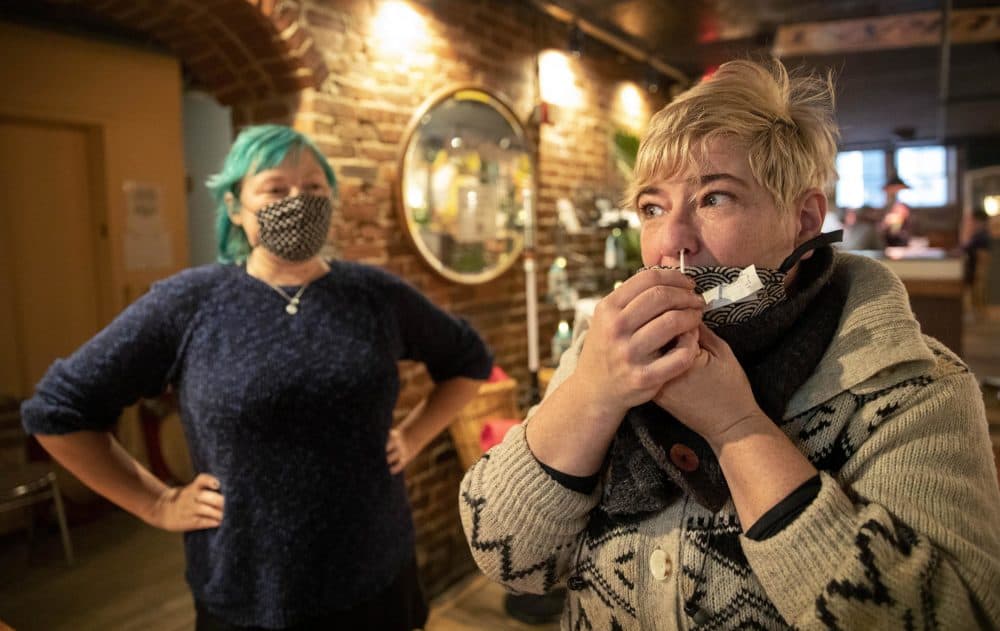
Today’s Special At Grendel’s Den In Harvard Square: A Coronavirus Test For Your Server

Grendel's owner Kari Kuelzer swabs her nose for a pooled coronavirus test for the restaurant's staff.  (Robin Lubbock/WBUR)

In the old days, pre-pandemic, the line in the brick-walled basement bar of Grendel’s Den would have consisted of young customers waiting to have their ID cards checked.

These days, says owner Kari Kuelzer, it’s made up of staff members getting checked for the coronavirus.

On a recent pre-opening early afternoon, a half dozen staffers assembled amid the twinkling lights and unoccupied tables, and Kuelzer handed out testing swabs.

“This is our test kit,” she explained, opening a clear plastic bag. “It’s a vial and then 10 swabs. They self-swab. And then it goes in the vial. And off I go to Kendall Square.”

Grendel’s Den, a classic Harvard Square hangout for more than 50 years, has just become the site of a coronavirus experiment: Twice a week, the restaurant will gather nose samples from up to 10 staffers, combine them and take them for processing to the company CIC Health a couple of miles away in Kendall Square.

Kari Kuelzer, owner of Grendel’s Den, drops her nasal swab into the pooled container for coronavirus testing.

Combining the samples is known as pooled testing — an increasingly popular way for employers, schools and others on limited budgets to keep an eye out for coronavirus infections. If the pool comes back negative, everyone’s good. If it’s positive, each person needs an individual test.

Kuelzer has been pushing the city of Cambridge and the broader restaurant community to get more testing,” to help us essentially achieve the sort of workplace safety that they achieved at Harvard University over the course of the fall,” she says.

Frequent testing helped Harvard and many other universities keep coronavirus rates low.

“If there’s people in our community in the university setting and at large institutions that are receiving that level of protection, there has to be a way to extend it to people who are not in that bubble of privilege, of being part of a major university,” Kuelzer says.

Until recently, she says, there wasn’t an affordable way to get her staff tested, and she had to ask them to do it on their own. In November, an outbreak hit seven staff members, and Grendel’s closed.

It recently reopened, and she found that testing had evolved to the point that she could get the staff pooled testing, twice a week, for $150 each time.

CIC Health already offers individual tests, and pooled testing to big institutions like schools, says chief marketing officer Rodrigo Martinez.

“And the other piece that is missing is exactly how do you offer pooled testing to a small company, restaurant, organization, team, nonprofit, whatever it is, in a way that they can actually access it?” he says. “And this is exactly the service that we’re piloting in beta.”

By “beta,” Martinez means that the Grendel’s Den arrangement is basically a field test to see how it goes and iron out kinks, and CIC Health isn’t marketing it broadly yet. But the market could be large.

“In theory, every small business that wants testing might be in need and desire of being able to do pooled testing,” he says.

The market could also be temporary. At Grendel’s, Kari Kuelzer says she sees the pooled testing as only a stopgap until the staff can get vaccinated.

It’s a stopgap that patrons can help support if they choose, in a brand new type of tipping: They can buy their server a coronavirus test for $15.

“If you want to help this waitress or that bartender who you care about because they make your day good stay safe, you can buy them a test,” Kuelzer says.

Overall, she says, it’s so far so good for the Grendel’s Den testing experiment. The result from the first round of testing came back last week in less than 24 hours — and it was negative for the coronavirus.

Deborah Birx says Trump received a “parallel set of data” on the coronavirus

https://www.washingtonpost.com/politics/2021/01/25/health-202-hospitals-drag-feet-new-regulations-disclose-costs-medical-services/

The former White House coronavirus response coordinator told CBS News’s “Face The Nation” that she saw Trump presenting graphs about the coronavirus that she did not help make. Someone inside or outside of the administration, she said, “was creating a parallel set of data and graphics that were shown to the president.”

Birx also said that there were people in the White House who believed the coronavirus was a hoax and that she was one of only two people in the White House who routinely wore masks.

Birx was often caught between criticism from Trump, who at one point called her “pathetic” on Twitter when she contradicted his more optimistic predictions for the virus, and critics in the scientific community who thought she did not do enough to combat false information about the virus from TrumpThe Post’s Meryl Kornfield reports.

“Colleagues of mine that I’d known for decades — decades — in that one experience, because I was in the White House, decided that I had become this political person, even though they had known me forever,” she told CBS. “I had to ask myself every morning, ‘Is there something that I think I can do that would be helpful in responding to this pandemic?’ And it’s something I asked myself every night.”

Anthony Fauci, director of the National Institute of Allergy and Infectious Diseases, told the New York Times that Trump repeatedly tried to minimize the severity of the virus and would often chide him for not being positive enough in his statements about the virus. 

Fauci also described facing death threats as he was increasingly vilified by the president’s supporters. “One day I got a letter in the mail, I opened it up and a puff of powder came all over my face and my chest,” he said. The powder turned out to be benign.

Fauci: Lack of facts ‘likely did’ cost lives in coronavirus fight

Fauci: Lack of facts 'likely did' cost lives in coronavirus fight | TheHill

Anthony Fauci on Friday said that a lack of facts “likely did” cost lives over the last year in the nation’s efforts to fight the coronavirus pandemic.

In an appearance on CNN, the nation’s leading infectious diseases expert was directly asked whether a “lack of candor or facts” contributed to the number of lives lost during the coronavirus pandemic over the past year.

“You know it very likely did,” Fauci said. “You know I don’t want that … to be a sound bite, but I think if you just look at that, you can see that when you’re starting to go down paths that are not based on any science at all, that is not helpful at all, and particularly when you’re in a situation of almost being in a crisis with the number of cases and hospitalizations and deaths that we have.”

“When you start talking about things that make no sense medically and no sense scientifically, that clearly is not helpful,” he continued.

President Biden on Thursday unveiled a new national coronavirus strategy that is, in part, aimed at “restoring trust in the American people.”

When asked why that was important, Fauci recognized that the past year of dealing with the pandemic had been filled with divisiveness.

“There’s no secret. We’ve had a lot of divisiveness, we’ve had facts that were very, very clear that were questioned. People were not trusting what health officials were saying, there was great divisiveness, masks became a political issue,” Fauci said.

“So what the president was saying right from the get-go was, ‘Let’s reset this. Let everybody get on the same page, trust each other, let the science speak.’”

Fauci, who was thrust into the national spotlight last year as part of former President Trump‘s coronavirus task force, often found himself at odds with the former president. Trump frequently downplayed the severity of the virus and clashed publicly with Fauci.

Speaking during a White House press briefing on Thursday, Fauci said it was “liberating” to be working in the Biden administration.

There have been more than 24,600,000 coronavirus infections in the U.S. since the pandemic began, according to a count from Johns Hopkins University. More than 410,000 people have died.

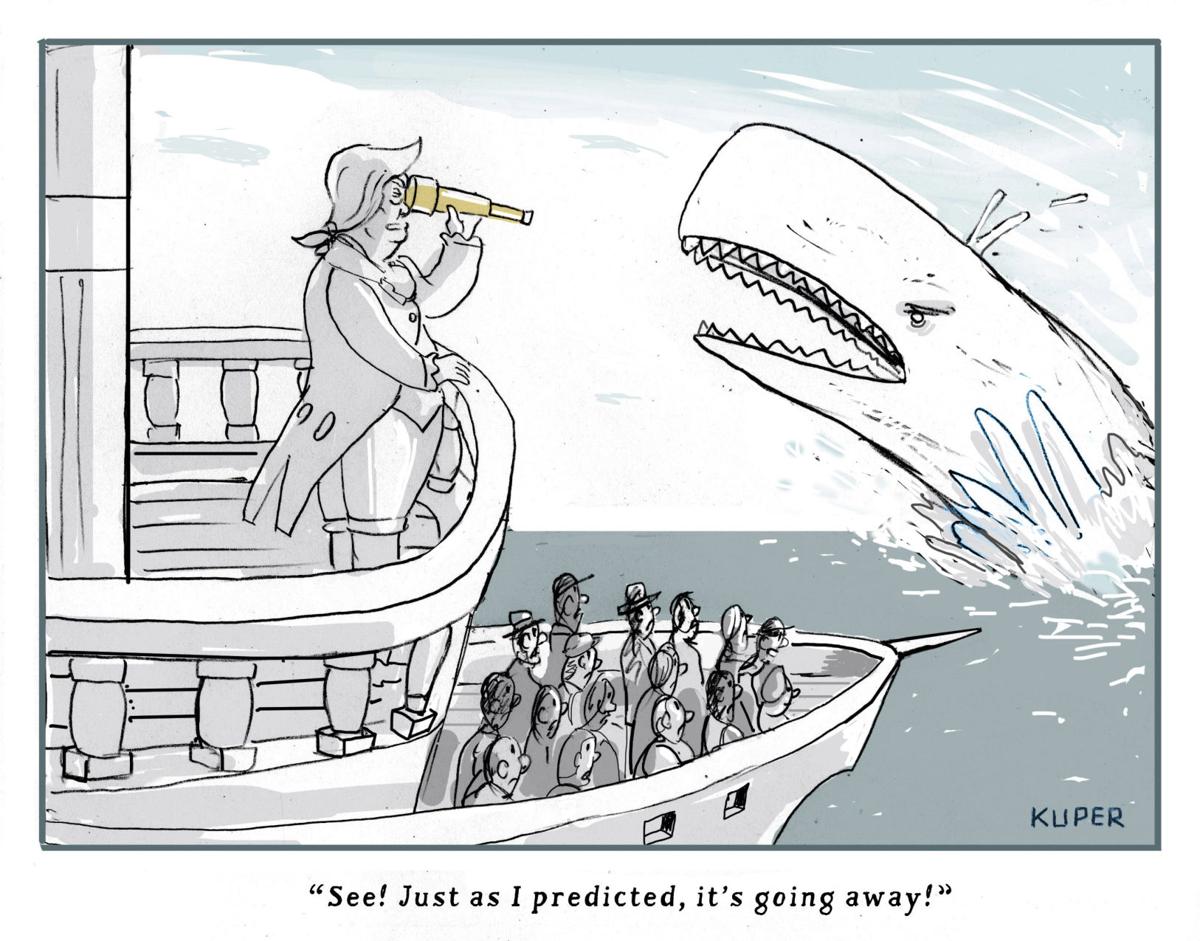
Cartoon – History Repeating Itself (Covid-19)

Editorial Cartoon: COVID-19 returns | Opinion | dailyastorian.com

Cartoon – Coronavirus Death Toll

Coronavirus cartoons: Trump's ratings jump amid big job losses

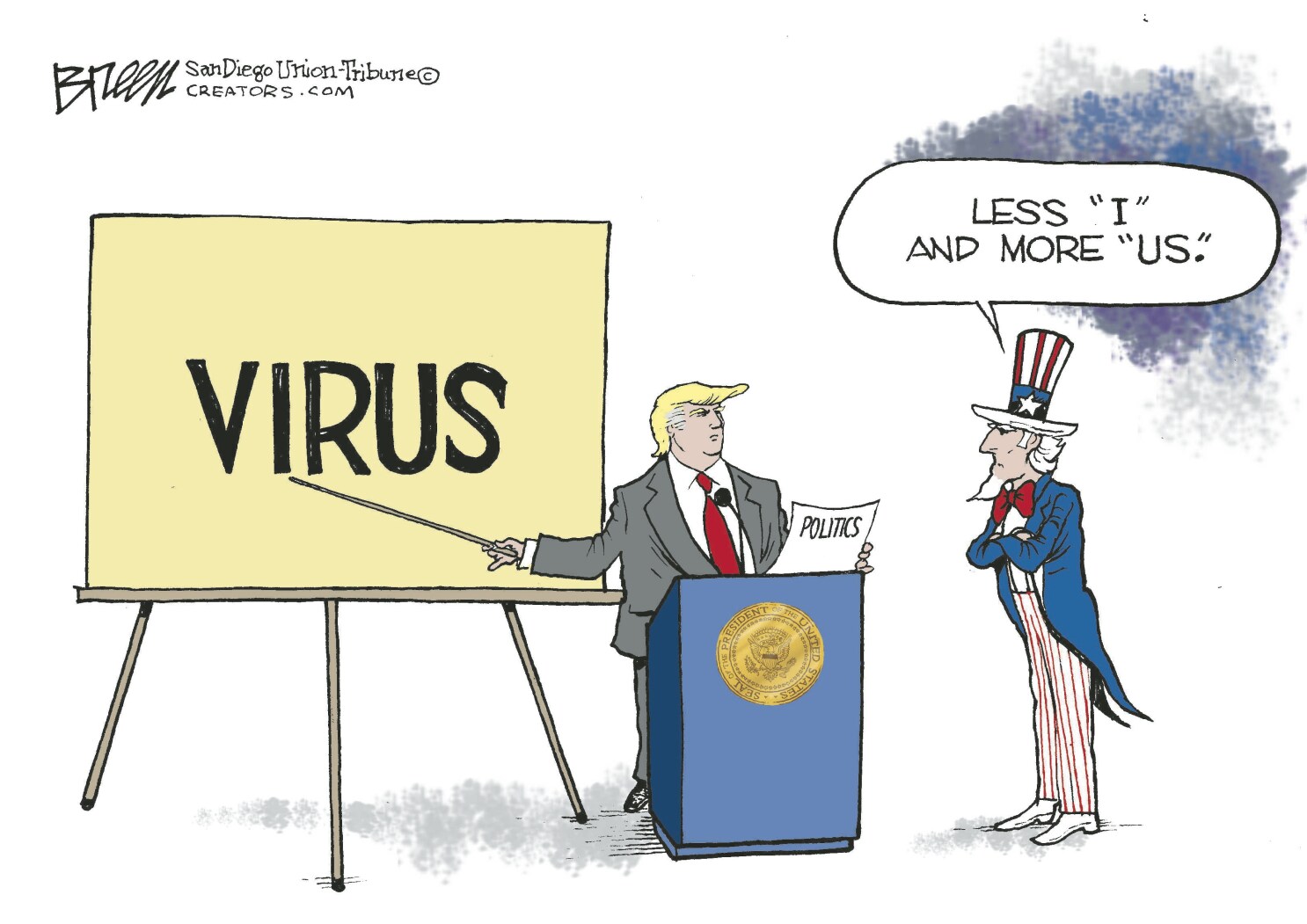
Cartoon – Less “I” and more “US.”

Trump's coronavirus press conference less than inspiring - The San Diego  Union-Tribune

Early evidence on disparities in vaccine acceptance

https://mailchi.mp/128c649c0cb4/the-weekly-gist-january-22-2021?e=d1e747d2d8

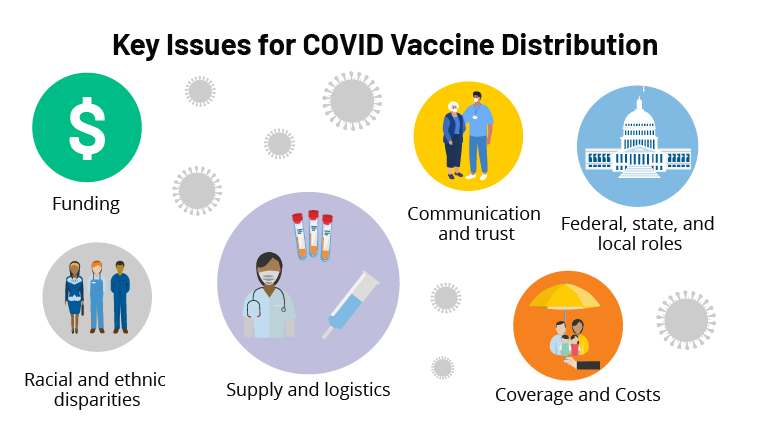
Distributing a COVID-19 Vaccine Across the U.S. – A Look at Key Issues –  Issue Brief – 9563 | KFF

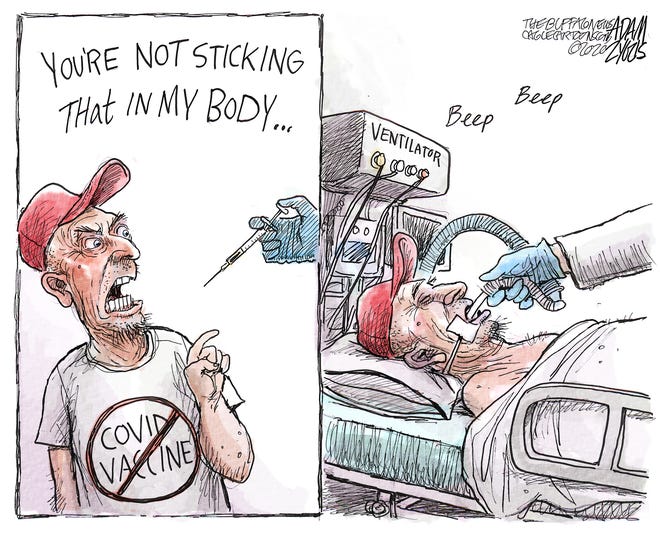
Although only 17 states are currently reporting data on the racial and ethnic breakdown of vaccine recipients, the early data indicate that there are significant disparities in who is getting vaccinated, with the share of Black and Latino people among vaccinees lower than their share of the total population in those states.

Alarmingly, in our recent conversations with health system executives, those same disparities seem to be present among healthcare workers employed by hospitals and health systems. Anecdotally, across a half-dozen health systems we’ve spoken with in the past week, most report that they’ve had about 70 percent of their workers agree to get the first dose of the COVID-19 vaccine.

However, that number looks significantly different when broken down by race and ethnicity: on average, the uptake rate among White, Asian, and Pacific Islander workers has been closer to 90-95 percent, while among Black and Latino workers, it’s been closer to 30-40 percent. Bear in mind these are employees of health systems—in many cases they’re frontline caregivers—and given their work environments you might expect them to be less hesitant to get the vaccine.

That 30-40 percent uptake rate is very worrisome, in two ways: caregivers outside of hospital settings, especially home care and nursing home workers, likely include a larger number of workers hesitant to get vaccinated. And in the general population, among whom health literacy is presumably much lower than among healthcare workers, it’s precisely those populations who are at highest risk of COVID infection, hospitalization, and death. (A further complication: health systems made it easy for their employees to get the shot. With vaccines for the general population still scarce, at-risk populations will inevitably have the most difficult time getting signed up, even if they want the vaccine.)

If health systems are the canary in the coal mine for vaccine hesitancy rateswe’re in for a tough challenge in getting the most vulnerable populations vaccinated in the months to come.

Are manly men showing a little too much…nose?

https://mailchi.mp/128c649c0cb4/the-weekly-gist-january-22-2021?e=d1e747d2d8

Image tagged in chin diaper - Imgflip

If you, like us, wanted to reach into your television this week, tap former President Bill Clinton on the shoulder and remind him to pull up his mask while attending the inauguration, a piece by New York Times science writer James Gorman says you weren’t alone, posing the question: “Is mask-slipping the new manspreading?

Just as every man on a plane or bus does not “manspread” into the middle seat, not every man’s mask slips off his nose. But whether you’re watching the inauguration or milling around the grocery store, it does seem that men are far more likely than women to be found with their mask dangling at their chins. Gorman notes it’s unlikely that the shape of men’s noses or their need for more air flow account for the mask-slipping.

And, examples seem to abound across the political spectrum (see also Chief Justice John Roberts at the inauguration), so it’s not a Republican or Democratic thing. It’s a man thing. Also in this category: the dude on every airline flight we’ve taken in the past year, often outfitted in a Titleist cap and Greg Norman polo, who sports a neck gaiter plucked from his ski bag instead of a real mask (despite the large body of highly publicized evidence noting the gaiters’ inferior performance).

His demeanor says, I am paying lip service to this mask rule, but I don’t like it. Now I will pull down my gaiter and slowly nurse this whiskey and soda until we land.” Perhaps men are less afraid of catching COVID, or, as some surveys suggest, ignoring mask rules is seen as a sign of machismo. But regardless of the motivation, fellas, we need you to wear your masks. And pull them up over your nose.

There’s nothing manly about a chin diaper.