Congress Could Force Patients in Rural America To Make Dire Medical Care Choices

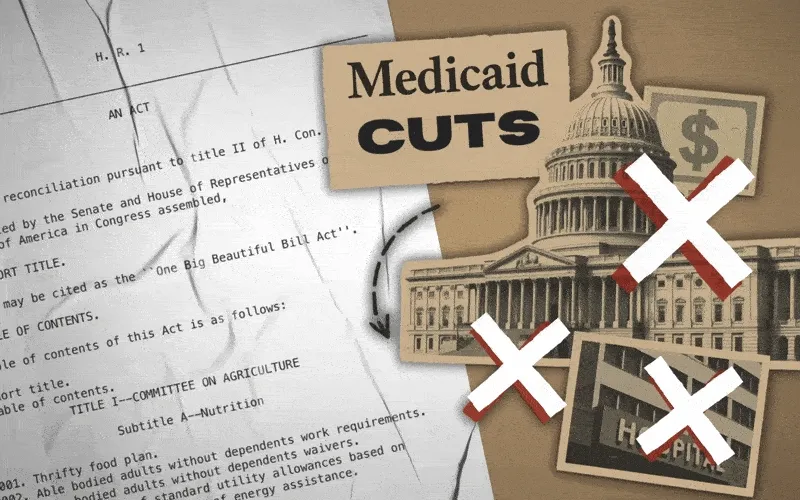
New Medicaid funding rules proposed by Congress this week would halt efforts at the state level to better fund rural hospitals and deliver services to the most vulnerable populations in those areas. You can be certain that the administrators and staff of those hospitals, as well as leaders of the communities they serve, are watching closely to see if the cuts are enacted. 

Lawmakers at the federal level are trying to make deeper cuts to Medicaid spending in an effort to lower the amount of deficit spending that would be created by President Trump’s spending plan. Trump has dubbed the plan his “big beautiful bill.” 

Feds Would Strip Rural Hospitals of Lifeline Funds

Republican members of the Senate Finance Committee this week released their version of the bill that would drain funding for rural hospitals, which rely heavily on Medicaid funds to treat patients. It’s estimated that 25 to 40 percent of services provided by such hospitals are funded by Medicaid.

The federal government and states share the up-front medical costs for Medicaid patients. The federal government then reimburses states up to 50 percent of their Medicaid spending every year.

Many states fund their portion of the cost by taxing entities that provide those services to Medicaid patients.

The latest proposal in Congress would not only restrict how many patients could receive benefits, but it would also stop states from implementing those provider tax programs to help fund Medicaid services provided to residents.

At the federal level, the thinking is that if states keep taxing providers to fund Medicaid services, then the federal government will have to keep reimbursing states a portion of those costs. 

The downside to that is many experts, along with several Republicans in Congress, namely Sens. Susan Collins of Maine, Lisa Murkowski of Alaska and Josh Hawley of Missouri, have predicted it will decimate rural hospitals.

West Virginia Republican Sen. Jim Justice went a step further, saying that the plan to limit states’ use of provider taxes will “really hurt a lot of folks.” Despite that statement, Justice said he is OK with the freeze.

State Lawmakers Sound the Alarm

There are 39 states with at least three or more provider taxes used to help fund Medicaid services. Alaska is the only state with no such tax.

Some states, such as Ohio, have set up a new rural hospital fund using provider taxes to help rural hospitals deliver Medicaid services to patients.

Ohio Governor Mike DeWine and the Republican-led state legislature set up a pilot program called the Rural Ohio Hospital Tax Pilot Program. The measure would allow counties to levy a tax on their local hospitals that would then be used to fund Medicaid services.

DeWine said the pilot program would help ease the financial stress rural hospitals face in Ohio. The plan contained in Ohio House Bill 96 has the blessing of the Ohio Hospital Association.

That state fund reportedly would be neutered by the federal proposal. Ohio has at least three different provider taxes.  

A group of Republican state lawmakers recently sent a letter to their federal counterparts pleading with them to remove the bill language because it would “torpedo” plans to keep rural hospitals functioning.

The American Hospital Association, a 130-year-old trade group of more than 5,000 hospitals and health care providers, this month released the impact on rural hospitals if this plan went into effect.

 More than $50 billion would be lost by 2034, and more than 1.8 million rural Americans would lose health benefits.

Kentucky residents would be impacted the most, with 143,000 losing benefits, followed by 135,000 Californians. More than 86,000 Ohioans would lose Medicaid coverage under the plan by 2034, making it the third most impacted state.

To blunt the effects of the cuts, Collins reportedly is proposing the establishment of a $100 billion relief fund that could provide financial support to affected providers, rural hospitals in particular. Whether that or a similar but smaller fund will wind up in the final draft of the legislation apparently will be decided this weekend. Meanwhile, the Senate parliamentarian has ruled against many of the provisions of the Senate version of the bill, including the Finance Committee’s provider tax framework, which puts the whole thing in flux.

Senate leaders say they plan a long series of votes on amendments of the bill on Sunday. The “vote-arama” likely will go on throughout Sunday night and into Monday. If the Senate does pass its version of the bill, it will have to go back to the House. Lawmakers are under a self-imposed deadline to get the legislation to Trump by the July 4 holiday.

Federal Medicaid cuts imperil rural hospitals and residents

https://www.ruralhealth.us/blogs/2025/06/federal-medicaid-cuts-imperil-rural-hospitals-and-residents-new-report-finds

Medicaid serves as a vital source of health insurance coverage for Americans living in rural areas, including children, parents, seniors, individuals with disabilities, and pregnant women. Congressional lawmakers are currently considering more than $800 billion in cuts to the Medicaid program, which would reduce Medicaid funding and terminate coverage for vulnerable Americans.

The proposed changes would also result in a significant reduction in Medicaid reimbursement that could result in rural hospital closures.

The National Rural Health Association recently partnered with experts from Manatt Health to shed light on the potential impacts of those cuts on rural residents and the hospitals that care for them over the next decade.

The report, Estimated Impact on Medicaid Enrollment and Hospital Expenditures in Rural Communities, provides insight into the impact on rural America at a critical moment in the Congressional debate over the future of the reconciliation package.

NRHA held a press conference on June 24 that can be accessed with passcode MBTZf4$H. NRHA chief policy officer Carrie Cochran-McClain discussed the findings with Manatt Health partner and former deputy administrator at CMS Cindy Mann and the real world implications of the details of this report with three NRHA member hospital and health system leaders

Report findings provide insight into the impact on rural America at a critical moment in the Congressional debate over the future of the reconciliation package.

The report shows the significant impact from coverage losses that rural communities will face given:

  • Medicaid plays an outsized role in rural America, covering a larger share of children and adults in rural communities than in urban ones.
  • Nearly half of all children and one in five adults in small towns and rural areas rely on Medicaid or CHIP for their health insurance.
  • Medicaid covers nearly one-quarter of women of childbearing age and finances half of all births in these communities.

According to Manatt’s estimatesrural hospitals will lose 21 cents out of every dollar they receive in Medicaid funding due to the One Big Beautiful Bill Act. Total cuts in Medicaid reimbursement for rural hospitals—including both federal and state funds—over the ten-year period outlined in the bill would reach almost $70 billion for hospitals in rural areas. 

Reductions in Medicaid funding of this magnitude would likely accelerate rural hospital closures and reduce access to care for rural residents, exacerbating economic hardship in communities where hospitals are major employers.

As a key insurer in rural communities, Medicaid provides a financial lifeline for rural health care providers — including hospitals, rural health clinics, community health centers, and nursing homes—that are already facing significant financial distress. These cuts may lead to more hospitals and other rural facility closures, and for those rural hospitals that remain open, lead to the elimination or curtailment of critical services, such as obstetrics.

“Medicaid is a substantial source of federal funds in rural communities across the country. The proposed changes to Medicaid will result in significant coverage losses, reduce access to care for rural patients, and threaten the viability of rural facilities,” said Alan Morgan, CEO of the National Rural Health Association.

“It’s very clear that Medicaid cuts will result in rural hospital closures resulting in loss of access to care for those living in rural America.”

A media briefing will be held on Tuesday, June 24, from noon to 1:00 PM EST to provide more information about the analysis. This event will feature representatives from NRHA, Manatt Health, and rural hospital leaders across the country. Questions may be submitted in advance, as well as during the press conference. To register for and join the media briefing, click on the Zoom link here.

Please reach out to NRHA’s Advocacy Team with any questions.

About the National Rural Health Association

NRHA is a non-profit membership organization that provides leadership on rural health issues with tens of thousands of members nationwide. Our membership includes nearly every component of rural America’s health care, including rural community hospitals, critical access hospitals, doctors, nurses, and patients. We work to improve rural America’s health needs through government advocacy, communications, education, and research. Learn more about the association at RuralHealth.US.

About Manatt Health

Manatt Health is a leading professional services firm specializing in health policy, health care transformation, and Medicaid redesign. Their modeling draws upon publicly available state data including Medicaid financial management report data from the Centers for Medicare and Medicaid Services, enrollment and expenditure data from the Medicaid Budget and Expenditure System, and data from the Medicaid and CHIP Payment and Access Commission. The Manatt Health Model is tailored specifically to rural health and has been reviewed in consultation with states and other key stakeholders.

New Tax Will Help Washington Residents Pay for Long-Term Care

Image result for long term care insurance

In other healthcare news from the Evergreen State, Gov. Inslee also signed a law this week that will provide a new long-term care benefit for state residents starting in 2025. In the furthest-reaching legislation of its type nationally, the new Washington law puts in place a payroll tax of 0.58 percent starting in 2022, and creates a year-long, $100/day allowance for state residents that can be used to pay for nursing home fees, at-home caregivers, and other long-term care needs.

Family members who are full-time caregivers can also receive compensation. Like other states, Washington spends a growing portion of its state budget on paying for long-term care for aging residents, putting a heavy burden on the finances of its Medicaid program that’s expected to worsen as the Baby Boom generation ages. In addition to nursing and caregiver services, the new benefit can also be used for in-home meals, housing repairs, and other services that impact health status.

As with its “public option” plan, Washington has taken the lead on another healthcare coverage issue that will eventually need to be addressed nationwide: the fact that seniors are entering retirement entirely unprepared for the amount they’ll need to spend on long-term care.

Medicaid currently pays for two-thirds of nursing home care and 60 percent of all long-term care costs, and no state is currently prepared for the amount of spending that will be required over the next 25 years. Almost no one buys long-term care insurance, which is unaffordable for most. Any serious attempt to expand coverage over the next few years must take on this critical issue.


Healthcare Triage News: Infants and the Medicaid Expansion

Healthcare Triage News: Infants and the Medicaid Expansion

Image result for Healthcare Triage News: Infants and the Medicaid Expansion

What can we do about infant mortality and disparities in health care? This week we take a look at a recent study in JAMA that may have an answer.


The CBO analyzed what it would take to shift to a single-payer system. Here are 5 takeaways

https://www.fiercehealthcare.com/payer/5-takeaways-from-cbo-s-analysis-a-single-payer-system?mkt_tok=eyJpIjoiTURRNU5HTmpZbU5tT1RFeiIsInQiOiJLcVdxN0dKUU5iaEdMTGtaMG9xbFdtdEgxdXJBbndhTUNyMWN6UTZzbGJhTHFkS3Z4eTRBZkFGNUxcLzlyZUxvMHpOUDRDbmptdGE4aHVoMk4wS1NTYUlWMFVPMmFxNEEzTkJcL1RDODhYa3psN0VkNFhFdTVqYjlDSHltaTdPMUFxIn0%3D&mrkid=959610

Image result for congressional budget office

As chatter about “Medicare-for-All” ideas heats up—at least among the field of Democratic presidential hopefuls—the Congressional Budget Office decided to offer its own take.

Well, sort of.

Wednesday, the CBO issued a report that dove into the key considerations policymakers might want to think about before they overhaul the U.S. healthcare into a single-payer system. Putting it mildly, they said, the endeavor would be a “major undertaking.”

They don’t actually offer up specific cost estimates on any of the Medicare-for-All bills floating around, though other researchers put Bernie Sanders’ Medicare-for-All plan at between $32.6 trillion and $38.8 trillion over the first decade.

But the CBO analysts did weigh in on a slew of different approaches to financing, coverage, enrollment and reimbursement that could be built into a single-payer plan.

“Establishing a single-payer system would be a major undertaking that would involve substantial changes in the sources and extent of coverage, provider payment rates and financing methods of healthcare in the United States,” the CBO said.

So what exactly did the CBO have to say about what it would take to create a single-payer system? Here are some key takeaways:

1. There could be a role for private insurance—or not

There has been plenty of heated debate around Medicare for All focused on the role that existing private coverage could—or could not—play in that system. Most insured Americans are enrolled in a private plan today, including about one-third of Medicare beneficiaries.

If they’re allowed, commercial plans could play one of three roles in a single-payer system, according to the report: as supplemental coverage, as an alternative plan or to offer “enhanced” services to members in the government plan. 

Allowing private insurers to offer substitutive plans is unlikely, because they could potentially offer broader provider networks or more generous benefits, which would draw people into them. A solution to this issue could be mandating that providers treat a minimum number of patients who are enrolled in a single-payer plan.

Private payers could also offer coverage for care that is traditionally outside of the purview of government programs, such as dental care, vision care and hearing care.

Supplemental plans like these are offered in the existing Medicare program, and several countries with single-payer systems allow this additional coverage.

For example, in England, private plans offer “enhancements” to members of the government plan, including shorter wait times and access to alternative therapies, But members of these plans must pay for it in addition to tax contributions to the country’s National Health Service. 

2. Other government programs could stick around

In addition to Medicare and Medicaid, the federal government operates several health programs targeting individual populations: the Veterans Affairs health system, TRICARE and Indian Health Services.

A single-payer system could be designed in a way that also maintains these individualized programs, the CBO said. Canada does this today, where its provinces operate the national system while it offers specific programs outside that for indigenous people, veterans, federal police officers and others.

There could also be a continuing role for Medicaid, according to the report. 

“Those public programs were created to serve populations with special needs,” the CBO said. “Under a single-payer system, some components of those programs could continue to operate separately and provide benefits for services not covered by the single-payer health plan.”

On the flip side, though, a single-payer plan could choose to fold members of those programs into the broader, national program as well, the office said. 

3. A simplified system could also mean simplified tech

Taiwan’s government-run health system has a robust technology system that can monitor patients’ use of services and healthcare costs in near real-time, according to the report.  

Residents are issued a National Health Insurance card that can store key information about them, including personal identifiers, recent visits for care, what prescriptions they use and any chronic conditions they may have.  Providers also submit daily data updates to a government databank on service use, which is used to closely monitor utilization and cost. Other technology platforms in Taiwan can track prescription drug use and patients’ medical histories.

However, getting to a streamlined system like this in the U.S. would be bumpy, the CBO said. It would face many of the same challenges the health system is already up against today, such as straddling many federal and state agencies and addressing the needs of both rural and urban providers.

But the payoffs could be significant, according to the report. 

“A standardized IT system could help a single-payer system coordinate patient care by implementing portable electronic medical records and reducing duplicated services,” the agency wrote. 

4. How to structure payments to providers? Likely global budgets

Most existing single-payer systems use a global budget to pay providers, and may also apply in tandem other payment approaches such as capitation or bundled payments according to the report.

How these global budgets operate varies between countries. Canada’s hospitals operate under such a model, while Taiwan sets a national healthcare budget and then issues fee-for-service payments to individual providers. England also uses a national global budget.

Global budgets are rare in the U.S., though Maryland hospitals operate under an all-payer system. These models put more of the financial risk on providers to keep costs within the budget constraints. 

Many international single-payer systems pay based on volume, but the CBO said value-based contracting could be built into any of these payment arrangements.

5. Premiums and cost-sharing are still in play, especially depending on tax structures

A government-run health system would, by its nature, need to be funded by tax dollars, but some countries with a single-payer system do charge premiums or other cost-sharing to offset some of those expenditures.

Canada and England operate on general tax revenues, while Taiwan and Denmark include other types of financing. Danes pay a dedicated, income tax to back the health system, while the Taiwanese have a payroll-based premium. 

The type of tax considered would have different implications on financing, according to the CBO. A progressive tax rate, for instance, would impose higher levies on people with higher incomes, while a consumption tax, such as one added to cigarettes, would affect people more evenly.

Policymakers will also have to weigh when to impose new taxes, shifting the economic burden between generations. 

The CBO did not offer any cost estimates in terms of the amount the federal government would need to raise in taxes to fund a single-payer program.


CMS opening up options for states to better manage dual-eligible patients

CMS opening up options for states to better manage dual-eligible patients

Image result for medicare dual eligible

According to data from CMS, while dual-eligible patients make up only 15 percent of Medicaid enrollees, they are responsible for 33 percent of the program’s expenditures.

The Centers for Medicare & Medicaid Services is looking to partner with states to determine better models to treat the 12 million dual-eligible Medicaid and Medicare beneficiaries in the country.

CMS and states spend more than $300 billion annually on this patient population, many of whom suffer from multiple chronic conditions made more difficult to treat by social and economic barriers.

The cost for dual-eligible population is outsized when compared to its size. According to data from CMS, while dual-eligible patients make up only 15 percent of Medicaid enrollees, they are responsible for 33 percent of the program’s expenditures.

“Less than 10 percent of dually eligible individuals are enrolled in any form of care that integrates Medicare and Medicaid services, and instead have to navigate disconnected delivery and payment systems,” CMS Administrator Seema Verma said in a statement.

“This lack of coordination can lead to fragmented care for individuals, misaligned incentives for payers and providers, and administrative inefficiencies and programmatic burdens for all.”

The goal from the agency is to promote new models which can better integrate Medicare and Medicaid services and create a more seamless experience for both beneficiaries and providers working across the two programs.

One major goal is to allow states to share in savings and benefits gained from investment in better care for the dual-eligible population.

In a letter addressed to state Medicaid leaders, Verma laid out a few potential payment approaches to address the issue of dual eligible patients, including a capitated payment model which would provide the full array of Medicare and Medicaid services with a set dollar reimbursement amount.

Nine states are currently piloting the model, which creates a three-way contract between the state, CMS and Medicare-Medicaid Plans. So far, CMS said state savings for states have averaged 4.4 percent in these test markets.

Through the experiments, Verma said the agency has been able to foster a competitive marketplace with multiple offerings that incentivizes health plans to invest in services that address the patient population.

CMS said it is currently open to extending the initial state pilots and expanding the geographic scope of the capitated programs.

For states that administer dual-eligible patients on a fee-for-service basis, Verma laid out a merged managed care model that would allow states to share in Medicare savings for metrics like reducing hospital readmissions.

Washington and Colorado are currently testing out the model. In one instance, providers in Washington are using Medicaid health homes to deliver high-intensity care to high-risk beneficiaries and sharing in the cost savings.

CMS said preliminary data from Washington’s program has been positive, with gross savings for Medicare Part A and Part B of 11 percent over three years. This has resulted in $36 million in performance payments to the state.

The letter from CMS also opens up the opportunity to potentially partner on state-specific models developed internally meant to better serve dual eligible patients and reduce Medicare and Medicaid expenditures.

CMS has made payment delivery reform a key initiative, with the ultimate goal of moving towards a outcomes-based payment system and reducing expenditures as Medicare faces an uncertain future.

A few recent initiatives include the launch of the agency’s Primary Cares Model, as well as the recent expansion of supplementary benefits for Medicare Advantage beneficiaries meant to tackle social determinants of health.


Red states’ Medicaid gamble: Paying more to cover fewer people

https://www.axios.com/republicans-medicaid-affordable-care-act-expensive-d7057a8e-0a55-4f0d-906e-e42aa3f00ba9.html?utm_source=newsletter&utm_medium=email&utm_campaign=newsletter_axiosvitals&stream=top

Illustration of a price tag hanging from an IV stand

Red states are getting creative as they look for new ways to limit the growth of Medicaid. But in the process those states are taking legal, political and practical risks that could ultimately leave them paying far more, to cover far fewer people.

Why it matters: Medicaid and the Children’s Health Insurance Program cover more than 72 million Americans, thanks in part to the Affordable Care Act’s Medicaid expansion. Rolling back the program is a high priority for the Trump administration, and it needs states’ help to get there.

The big picture: The Centers for Medicare & Medicaid Services, under the leadership of Administrator Seema Verma, has made clear that it wants to say “yes” to new limits on Medicaid eligibility, and has invited states to ask for those limits.

  • But CMS hasn’t actually said “yes” yet to some of the most significant limits states have asked for.
  • In the meantime, states are left either with vague ambitions they’re not sure how to implement, or with risky plans that put their own budgets on the line.

What we’re watching: State-level Republicans are waiting for CMS to resolve two related issues: how much federal funding their versions of Medicaid can receive, and the extent to which they’re able to cap enrollment in the program.

  • “These issues are going to continue to be intertwined,” said Joan Alker, the executive director of Georgetown University’s Center for Children and Families.

Verma has reportedly told state officials that she wants to use her regulatory power to convert Medicaid funding into a system of block grants — which would be an enormous rightward shift and probably a big cut in total funding.

  • CMS probably cannot do that on its own, experts said, but it could achieve something similar by approving caps on either enrollment or spending.

Where it stands: GOP lawmakers in a handful of states are looking to Utah, which has bet big on Verma’s authority, for signals about what’s possible.

  • Utah voters approved the full ACA expansion last year, but the state legislature overruled them to pass a more limited version.
  • By foregoing the full expansion, Utah passed up enhanced federal funding. It’s still asking for that extra money — a request CMS has never previously approved.
  • Utah will also ask CMS to impose a per-person cap on Medicaid spending — a steep cut that was part of congressional Republicans’ failed repeal-and-replace bill, and which may strain CMS’ legal authority.
  • If Utah doesn’t get those two requests, its backup plan is simply to adopt the full expansion.

What’s next: Utah is not the only red state leaning into Verma’s agenda, but it’s further out on a limb than any other.

  • Idaho, like Utah, overruled its voters to pass a narrower Medicaid bill. But it preserved an option for people to buy into the ACA’s expansion.
  • Alaska Gov. Mike Dunleavy has said he wants to take Verma up on her offer of block grants; so have legislators in Tennessee and Georgia. But in the absence of any detail about what that means, or what CMS will approve, that’s all pretty vague right now.

If CMS does move forward on any of this, it could face the same threat of lawsuits that have stymied its first big Medicaid overhaul — work requirements.

  • Those rules are on ice in two states because a judge said they contravene Medicaid’s statutory structure and goals. The same argument could await a partial expansion or tough spending caps.

“There’s a clear agenda here to get a handful of states to take up these waivers, which fundamentally undermine the central tenets of the Medicaid program — which [are] that it is a guarantee of coverage, and a guarantee of federal funding,” Alker said.


COMMUNITY HEALTH CENTERS MORE FINANCIALLY STABLE UNDER MEDICAID EXPANSION

https://www.healthleadersmedia.com/finance/community-health-centers-more-financially-stable-under-medicaid-expansion?source=EHLM8&effort=B&utm_source=HealthLeaders&utm_medium=email&utm_campaign=MeritWelcomeB&emailid=&utm_source=silverpop&utm_medium=email&utm_campaign=Warming-Merit-Finance-040319%20(1)&spMailingID=15443417&spUserID=Mzc4MjM1NTY0ODgyS0&spJobID=1620654151&spReportId=MTYyMDY1NDE1MQS2

Facilities are faring better in states that expanded Medicaid, according to a new Commonwealth Fund report.


KEY TAKEAWAYS

A year after facing a federal funding cliff, CHCs in expansion states are thriving. 

CHCs provide care to 27 million patients each year, according to the Health Resources and Services Administration.

The financial stability of CHCs, which serve medically vulnerable communities, is a benefit for health systems.

Community health centers (CHC) operating in states that expanded Medicaid under the ACA are 28% more likely to report improvements to their financial stability, according to a Commonwealth Fund report released Thursday morning.

CHCs in Medicaid expansion states reported were more likely to report improvements in their ability to provide affordable care to patients, 76%, than their counterparts in non-expansion states, 52%.

More than 60% of CHCs in expansion states reported improved ability to fund service or site expansions and upgrades for facilities, while only 46% of CHCs in non-expansion states said the same.

These facilities reported higher levels of unfilled job openings for mental health professional and social workers, while also implying a greater openness to operating under a value-based payment model.

The success and viability of CHCs are essential for larger health systems, according to Melinda K. Abrams, M.S., vice president and director of the Commonwealth Fund’s Health Care Delivery System Reform program, adding that CHCs act as a strong foundation for providing primary care to medically vulnerable populations in rural communities.

Abrams said that by making sure patients are insured and receiving care up front, rather than delaying treatment and exacerbating their condition, they are less likely to end up in a hospital emergency room and contribute to a rise in uncompensated care for hospitals.

She also told HealthLeaders that populations with higher enrollment rates make it easier for CHCs to innovate, invest in technology, hire new staff, train existing the workforce, and adopt new models of care.

“[Medicaid expansion] makes it a lot easier to provide high-quality comprehensive care when [a CHC’s] patients have health insurance,” Abrams said. “In this particular instance, it’s a lot easier to innovate and have financial stability when you have more paying patients, which means that it is easier if you are [a CHC] in a state that has expanded Medicaid.”

The Commonwealth Fund report provides a welcome note of positivity for CHCs, which serve vulnerable populations primarily composed by the uninsured, but have faced funding challenges in the past.

During the budget battles that produced multiple government shutdowns throughout the early portion of 2018, advocates wondered anxiously whether Congress would provide long term funding to the nearly 1,400 CHCs operating at nearly 12,000 service delivery sites across the country.

According to the Health Resources and Services Administration, CHCs provide care to more than 27 million patients annually.

The Community Health Center Fund (CHCF), created in 2010 as a result of the ACA, is the largest source of comprehensive primary care for medically underserved communities, according to the Kaiser Family Foundation.

However, Abrams said that Medicaid expansion has also been a beneficial tool for CHCs, as they have begun to see more insured patients while also benefiting from Medicaid reimbursements, even though they are low compared to other reimbursement rates.

CHCs in states that expanded Medicaid have been able to grow the services that are offered while assisting in the ongoing fight against the opioid epidemic, according to the Commonwealth Fund report.

Abrams said that one downside to the growing success of CHCs have been the unfilled positions, mostly for mental health providers, that are falling behind rising demand levels, though she added that this finding is not surprising.

“I think it’s in part because the supply of the workforce is lagging a little bit behind the demand,” Abrams said. “There’s no reason to think that over time that this gap wouldn’t be closed. But we did find that as a challenge, that [CHCs] have a lot of positions open [yet] they’re hiring. A number of these CHCs are in economically depressed areas, so the good news is that there are some jobs available.”

CHCs are much more likely to participate in value-based payment models as a result of Medicaid expansion, with Abrams explaining that changes in payments and delivery models are common during insurance expansions.

She sees the continued progress made on the value-based front by CHCs as a way to “promote better healthcare and save money” over time.


Ex-Florida hospital director gets prison time for role in $1B fraud scheme

https://www.beckershospitalreview.com/legal-regulatory-issues/ex-florida-hospital-director-gets-prison-time-for-role-in-1b-fraud-scheme.html

Image result for hawaii five o book him danno

The former director of outreach programs at Larkin Community Hospital in South Miami, Fla., was sentenced to 15 months in prison April 3 for her role in a $1 billion healthcare fraud scheme.

Four things to know:

1. The judge handed down the sentence just over two months after Odette Barcha pleaded guilty to conspiring to defraud the federal government and paying and receiving healthcare kickbacks.

2. Ms. Barcha was one of three defendants charged in an indictment unsealed in July 2016. She allegedly had physicians at Larkin Community Hospital discharge patients to skilled nursing homes and other facilities owned by Philip Esformes, who allegedly paid kickbacks for those admissions.

3. Prosecutors allege Mr. Esformes, who operated a network of more than 30 skilled nursing homes and assisted living facilities in Florida, admitted Medicare and Medicaid beneficiaries to the facilities even if they did not qualify for skilled nursing home care or for placement in an assisted living facility. Once admitted, the patients received medically unnecessary care that was billed to Medicare and Medicaid.

4. The seven-week trial of Mr. Esformes wrapped up March 29, according to the Miami Herald. On April 5, a federal jury found Mr. Esformes guilty of various counts, including paying and receiving kickbacks, bribery, money laundering and obstruction of justice, according to Law360


Obamacare fight obscures America’s real health care crisis: Money

https://www.politico.com/story/2019/04/03/obamacare-health-care-crisis-1314382

Image result for obscure glass

The ceaseless battle over the 2010 law has made it difficult to address the high cost of American health care.

The Obamacare wars have ignored what really drives American anxiety about health care: Medical costs are decimating family budgets and turning the U.S. health system into a runaway $3.7 trillion behemoth.

Poll after poll shows that cost is the number one issue in health care for American voters, but to a large extent, both parties are still mired in partisan battles over other aspects of Obamacare – most notably how to protect people with pre-existing conditions and how to make insurance more affordable, particularly for people who buy coverage on their own.

That leaves American health care consumers with high premiums, big deductibles and skyrocketing out-of-pocket costs for drugs and other services. Neither party has a long-term solution — and the renewed fight over Obamacare that burst out over the past 10 days has made compromise even more elusive.

Democrats want to improve the 2010 health law, with more subsidies that shift costs to the taxpayer. Republicans are creating lower-cost alternatives to Obamacare, which means shifting costs to older and sicker people.

Neither approach gets at the underlying problem — reducing costs for both ordinary people and the health care burden on the overall U.S. economy.

Senate HELP Committee chair Lamar Alexander, the retiring Tennessee Republican with a reputation for deal-making, has reached out to think tanks and health care professionals in an attempt to refocus the debate, saying the interminable fights about the Affordable Care Act have “put the spotlight in the wrong place.”

“The hard truth is that we will never get the cost of health insurance down until we get the cost of health care down,” Alexander wrote, soliciting advice for a comprehensive effort on costs he wants to start by summer.

But given the partisanship around health care — and the fact there have been so many similar outreaches over the years for ideas, white papers and commissions — it’s hard to detect momentum. Truly figuring how to fix anything as vast, complex and politically charged as health care is difficult. Any serious effort will create winners and losers, some of whom are well-protected by powerful K Street lobbies.

And the health care spending conversation itself gets muddled. People’s actual health care bills aren’t always top of mind in Washington.

“Congress is looking at federal budgets. Experts are looking at national health spending and the GDP and value. And the American people look at their own out-of-pocket health care costs and the impact it has on family budgets,” said Drew Altman, the president and CEO of the Kaiser Family Foundation, which extensively tracks public attitudes on health.

But Congress tends to tinker around the edges — and feud over Obamacare.

“We’re doing nothing. Nothing. We’re heading toward the waterfall,” said former CBO director Doug Elmendorf, now the dean of the Harvard Kennedy School, who sees the political warfare over the ACA as a “lost decade,” given the high stakes for the nation’s economic health.

The solutions championed by the experts — a mix of pricing policies, addressing America’s changing demographics, delivering care more efficiently, creating the right incentives for people to use the right care and the smarter use of high-cost new technologies — are different than what the public would prescribe. The most recent POLITICO-Harvard T.H. Chan School of Public Health poll found the public basically wants lower prices, but not a lot of changes to how — or how much — they consume health care, other than spending more on prevention.

Lawmakers are looking at how to start chipping away at high drug prices, or fix “surprise” medical bills that hit insured people who end up with an out-of-network doctor even when they’re at an in-network hospital. Neither effort is insignificant, and both are bipartisan. While those steps would help lower Americans’ medical bills, health economists say they won’t do enough to reverse the overall spending trajectory.

Drug costs and surprise bills, which patients have to pay directly, “have been a way the public glimpses true health care costs,” said Melinda Buntin, chair of the Department of Health Policy at Vanderbilt University School of Medicine. “That information about how high these bills and these charges can be has raised awareness of health care costs — but it has people focused only on that part of the solution.”

And given that President Donald Trump has put Obamacare back in the headlines, the health law will keep sucking up an outsized share of Washington’s oxygen until and quite likely beyond the 2020 elections.

Just in the last week, the Justice Department urged the courts to throw out Obamacare entirely, two courts separately tossed key administration policies on Medicaid and small business health plans, and Trump himself declared he wants the GOP to be the “party of health care.” Facing renewed political pressure over the party’s missing Obamacare replacement plan, Trump last week promised Republicans would devise a grand plan to fix it. He backtracked days later and said it would be part of his second-term agenda.

Democrats say Trump’s ongoing assaults on the ACA makes it harder to address the big picture questions of cost, value and quality. “That’s unfortunately our state of play right now,” said Rep. Raul Ruiz (D-Calif.). “Basic health care needs are being attacked and threatened to be taken away, so we have to defend that.”

The ACA isn’t exactly popular; more than half the country now has a favorable view of it, but it’s still divisive. But for Republicans and Democrats alike, the new POLITICO-Harvard poll found the focus was squarely on health care prices — the cost of drugs, insurance, hospitals and doctors, in that order.

The Republicans’ big ideas have been to encourage less expensive health insurance plans, which are cheaper because they don’t include the comprehensive benefits under Obamacare. That may or may not be a good idea for the young and healthy, but it undoubtedly shifts the costs to the older and sicker. The GOP has also supported spending hundreds of millions less each year on Medicaid, which serves low-income people — but if the federal government pays less, state governments, hospitals and families will pay more.

Last week, courts blocked rules in two states that required many Medicaid enrollees to work in order to keep their health benefits, and also nixed Trump’s expansion of association health plans, which let trade groups and businesses offer coverage that doesn’t include all the benefits required under the ACA.

House Democrats last week introduced a package of bills that would boost subsidies in the Obamacare markets and extend that financial assistance to more middle-class people. The legislation would also help states stabilize their insurance markets — something that the Trump administration has also helped some states do through programs backstopping health insurers’ large costs.

These ideas may also bring down some people’s out-of-pocket costs, which indirectly lets taxpayers pick up the tab. These steps aren’t meaningless — more people would be covered and stronger Obamacare markets would stabilize premiums — but they aren’t an overall fix.

The progressive wing of the Democratic party backs “Medicare for All,” a brand new health care system that would cover everyone for free, including long-term care for elderly or disabled people. Backers say that the administrative simplicity, fairness, and elimination of the private for-profit insurance industry would pay for much of it.

The idea has moved rapidly from pipe dream to mainstream, but big questions remain even among some sympathetic Democrats about financing and some of the economic assumptions, including about how much of a role private insurance plays in Medicare today, and how much Medicare puts some of its costs onto other payers. Already a political stretch, the idea would face a lot more economic vetting, too.

The experts, as well as a smattering of politicians, define the health cost crisis more broadly: what the country spends. Health care inflation has moderated in recent years; backers of the Affordable Care Act say the law has contributed to that. But health spending is still growing faster than the overall economy. CMS actuaries said this winter that if current trends continue, national health expenditures would approach nearly $6 trillion by 2027 — and health care’s share of GDP would go from 17.9 percent in 2017 to 19.4 percent by 2027. There aren’t a lot of health economists who’d call that sustainable.

And ironically, the big fixes favored by the health policy experts — the ones that Alexander is collecting but most politicians are ignoring — might address many of the problems that keep aggravating U.S. politics. If there were rational prices that reflected the actual value of care provided for specific episodes of illness and treatment, instead of the fragmented system that largely pays for each service provided to patients, then no medical bill would be a surprise, noted Mark McClellan, who was both FDA and CMS chief under the President George W. Bush and now runs the Duke-Margolis Center for Health Policy.

“But taking those steps take time and will be challenging,” McClellan noted. “And they’ll be resisted by a lot of entrenched forces.”