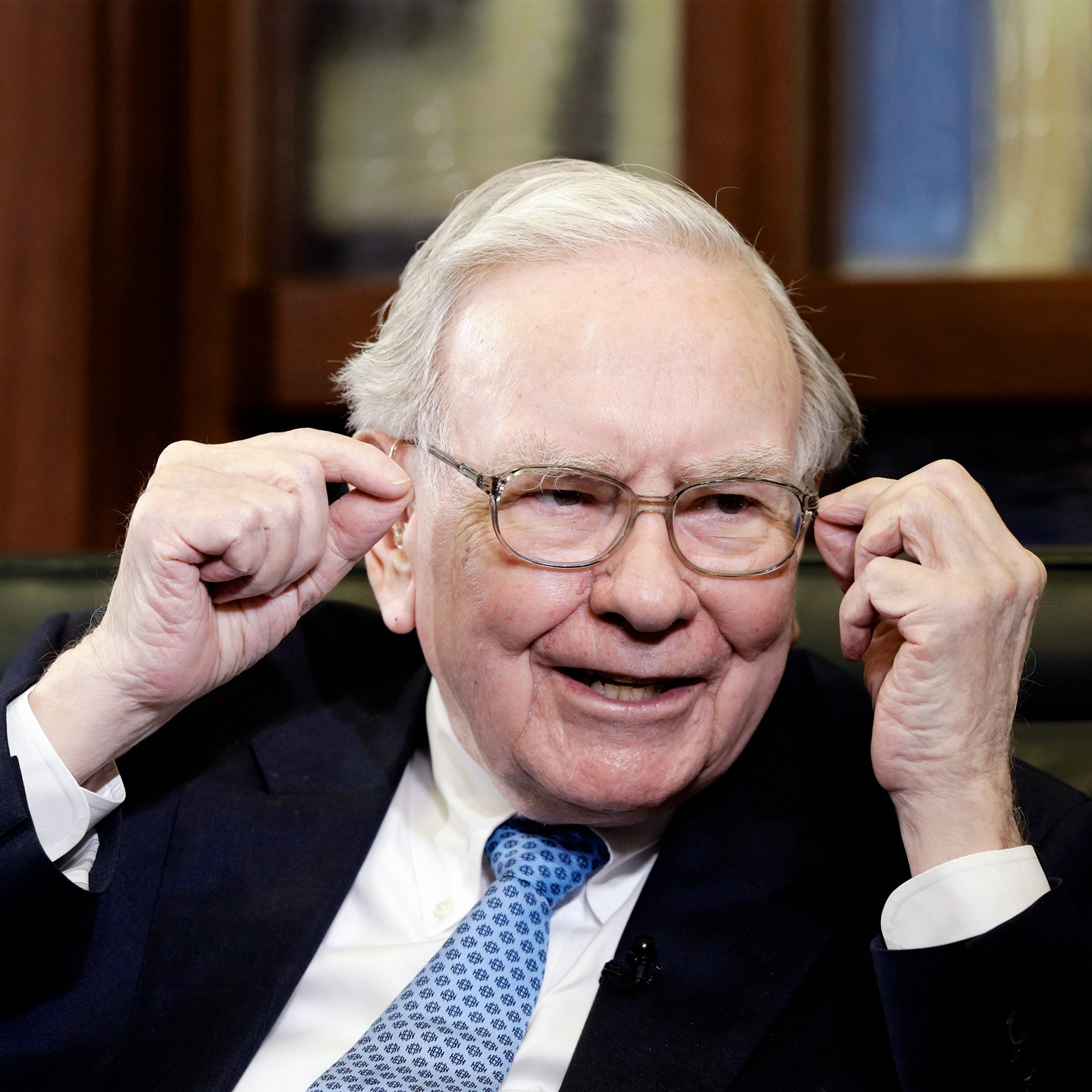
Warren Buffett: An appreciation

https://www.mckinsey.com/business-functions/strategy-and-corporate-finance/our-insights/warren-buffett-an-appreciation?cid=other-eml-alt-mip-mck&hlkid=500c2a923cdd4ff19d66acac00e2a9fa&hctky=9502524&hdpid=e758f2ed-7de7-4263-9faa-7daf7b3bdaa7

Celebrating Warren Buffett on his 90th birthday | McKinsey

As Warren Buffett turns 90, the story of one of America’s most influential and wealthy business leaders is a study in the logic and discipline of understanding future value.

Patience, caution, and consistency. In volatile times such as these, it may be difficult for executives to keep those attributes in mind when making decisions. But there are immense advantages to doing so. For proof, just look at the steady genius of now-nonagenarian Warren Buffett. The legendary investor and Berkshire Hathaway founder and CEO has earned millions of dollars for investors over several decades (exhibit). But very few of Buffett’s investment decisions have been reactionary; instead, his choices and communications have been—and remain—grounded in logic and value.

Buffett learned his craft from “the father of value investing,” Columbia University professor and British economist Benjamin Graham. Perhaps as a result, Buffett typically doesn’t invest in opportunities in which he can’t reasonably estimate future value—there are no social-media companies, for instance, or cryptocurrency ventures in his portfolio. Instead, he banks on businesses that have steady cash flows and will generate high returns and low risk. And he lets those businesses stick to their knitting. Ever since Buffett bought See’s Candy Shops in 1972, for instance, the company has generated an ROI of more than 160 percent per year —and not because of significant changes to operations, target customer base, or product mix. The company didn’t stop doing what it did well just so it could grow faster. Instead, it sends excess cash flows back to the parent company for reinvestment—which points to a lesson for many listed companies: it’s OK to grow in line with your product markets if you aren’t confident that you can redeploy the cash flows you’re generating any better than your investor can.

As Peter Kunhardt, director of the HBO documentary Becoming Warren Buffett, said in a 2017 interview, Buffett understands that “you don’t have to trade things all the time; you can sit on things, too. You don’t have to make many decisions in life to make a lot of money.” And Buffett’s theory (roughly paraphrased) that the quality of a company’s senior leadership can signal whether the business would be a good investment or not has been proved time and time again. “See how [managers] treat themselves versus how they treat the shareholders .…The poor managers also turn out to be the ones that really don’t think that much about the shareholders. The two often go hand in hand,” Buffett explains.

Every few years or so, critics will poke holes in Buffett’s approach to investing. It’s outdated, they say, not proactive enough in a world in which digital business and economic uncertainty reign. For instance, during the 2008 credit crisis, pundits suggested that his portfolio moves were mistimed, he held on to some assets for far too long, and he released others too early, not getting enough in return. And it’s true that Buffett has made some mistakes; his decision making is not infallible. His approach to technology investments works for him, but that doesn’t mean other investors shouldn’t seize opportunities to back digital tools, platforms, and start-ups—particularly now that the COVID-19 pandemic has accelerated global companies’ digital transformations.

Still, many of Buffett’s theories continue to win the day. A good number of the so-called inadvisable deals he pursued in the wake of the 2008 downturn ended paying off in the longer term. And press reports suggest that Berkshire Hathaway’s profits are rebounding in the midst of the current economic downturn prompted by the global pandemic.

At age 90, Buffett is still waging campaigns—for instance, speaking out against eliminating the estate tax and against the release of quarterly earnings guidance. Of the latter, he has said that it promotes an unhealthy focus on short-term profits at the expense of long-term performance.

“Clear communication of a company’s strategic goals—along with metrics that can be evaluated over time—will always be critical to shareholders. But this information … should be provided on a timeline deemed appropriate for the needs of each specific company and its investors, whether annual or otherwise,” he and Jamie Dimon wrote in the Wall Street Journal.

Yes, volatile times call for quick responses and fast action. But as Warren Buffett has shown, there are also significant advantages to keeping the long term in mind, as well. Specifically, there is value in consistency, caution, and patience and in simply trusting the math—in good times and bad.


Battle over COVID-19 school openings goes to the courts

Battle over COVID-19 school openings goes to the courts

Nearly 800 COVID-19 lawsuits have been filed, according to law firm's  tracker

Teachers unions are waging court fights across the country aimed at unwinding what they say are unsafe and politically motivated timetables for reopening schools that risk exposing personnel to the coronavirus pandemic.

State officials eager to ramp up brick-and-mortar operations are facing lawsuits from Florida to Texas to Iowa over reopening plans as well as access to the COVID-19 infection data needed to monitor the rate of spread within school communities. 

At the same time, lawsuits are flying from the opposition direction: Parents in several states, including New York, Massachusetts and Oregon, dissatisfied with web-based teaching alternatives, are suing to force state officials to reopen physical schools sooner as courts are increasingly called upon to referee the fight over education in the age of coronavirus.

“A legal storm is brewing as safety and social distancing requirements for a physical return to school begin to take shape around the country,” Maria Ferguson, executive director of the Center on Education Policy at George Washington University, wrote on the education website The 74.

As millions of students prepare for the first day of school — whether in-person, remote or a hybrid of the two — the fight over the reopening physical school buildings is likely to intensify.

The debate over in-person K-12 instruction planning is inseparably tied to the issues of child care needs and parents’ ability to return to the workforce to help revive the struggling economy, all of which is playing out against the backdrop of a fast-approaching November election in a country that has seen nearly 6 million cases and more than 181,000 deaths from COVID-19.

Perhaps the highest-profile legal battle is taking place in the courts of Florida, where Republican Gov. Ron DeSantis signed off last month on an emergency order over school reopenings.

Under the order, most Florida school districts would be required to hold in-person classes five days a week by the end of August or risk losing funding. President Trump, who counts DeSantis as a close ally, has also threatened to cut off federal funding for schools if they do not resume in-person learning this fall.

The Florida policy prompted a lawsuit from the Florida Education Association (FEA), a statewide teachers union, and several other plaintiffs in favor of a more cautious return to in-person teaching.

“Public schools are not designed for COVID safety, and indeed, the government has recognized that they are high-contact environments,” said Kendall Coffey, the lead plaintiff’s attorney in the Florida case, who likened prematurely opened schools to “disease factories” and called the Florida policy “financial bullying.”

There are any number of issues, in terms of hallway sizes, the flow of students in and out of classrooms, ventilation, even how many students go into the bathroom,” he told The Hill. “There are many elements that are virtually impossible to guarantee when you’re dealing with children in large amounts.”

On Aug. 24, a Florida judge ruled in favor of the union and temporarily halted the statewide order. In his decision, Judge Charles Dodson struck down the order’s unconstitutional provisions and blasted DeSantis for having “essentially ignored” the state’s constitutional requirement that schools be operated safely.

“The districts have no meaningful alternative,” wrote Dodson, of Leon County. “If an individual school district chooses safety, that is, delaying the start of schools until it individually determines it is safe to do so for its county, it risks losing state funding, even though every student is being taught.”

A Florida appeals court agreed to temporarily halt Judge Dodson’s order from taking effect while DeSantis appeals.

The state contends that the benefit of in-person instruction outweighs the health risks associated with reopening brick-and-mortar schools. Some Florida school officials have also declined to disclose incidents of positive COVID-19 cases to school communities, citing the need for patient privacy. 

Attorneys for Florida have also argued in hearings that courts should not substitute their judgment for that of policymakers who have balanced all the equities and decided a prompt in-person reopening is the best policy.

Randi Weingarten, president of the American Federation of Teachers (AFT), one of the largest teachers unions in the country, said Florida has its priorities backward.

“What their arguments show is that they don’t care about human life,” Weingarten told The Hill.

According to Weingarten, internal AFT polling in June showed that about 3 in 4 teachers said they would be comfortable returning to the classroom if guidelines from the Centers for Disease Control and Prevention (CDC) were implemented in schools.

But she predicts that attitudes among teachers have shifted dramatically in past months as the Trump administration has failed to adequately manage the virus to ensure schools can be reopened safely.

“We’re polling right now,” she said. “And my hunch is that just like the public polls, it’s totally flipped.”

The AFT is backing lawsuits in Florida, New Mexico and Texas. Before schools can reopen safely — for what Weingarten calls “the biggest move indoors that the nation has done since March” — the group says local positivity rates should be below 3 percent and schools should have visibility into daily transmission rates. 

The union is also pushing for protocols that involve testing, contact tracing and isolation and implement best practices from the CDC for things such as ventilation, cleaning, physical distancing, mask-wearing and other safeguards.

As teachers unions make their case in court, parents in at least five states have filed lawsuits of their own to accelerate school reopenings.

A nonprofit litigation group called the Center for American Liberty, co-founded by lawyer and GOP official Harmeet Dhillon, is backing one such suit in California. Democratic Gov. Gavin Newsom’s restrictions on in-person school openings in the Golden State will affect an estimated 80 percent of K-12 students.

“The effects of this ham-handed policy are as predictable as they are tragic,” the lawsuit filed in a federal court in California states. “Hundreds of thousands of students will essentially drop out of school, whether because they lack the technological resources to engage with ‘online learning’ or because their parents cannot assist them.”

The litigation raises concerns about everything from school closures exacerbating the achievement gap and disproportionately harming special needs students and those without convenient internet access to challenges over the constitutional validity of government health orders.

Weingarten, of AFT, said it’s important to remember that despite seemingly irreconcilable differences over the policy details, all parties want to see schools reopen as soon as it’s safe to do so.

“None of us believes that remote is a substitute,” she said. “It’s a supplement.”


Cartoon – State of the Union on Health Insurance

Medical Billing Blog | MBR | Health Plan

Cartoon – Modern Health Policy

MSSNYeNews: October 18, 2019 - Foul Turns FairMSSNYeNews Surprise Medical  Bills -

Cartoon – Problem with U.S. Healthcare

Cartoon – Problem with U.S. Healthcare | HENRY KOTULA

Cartoon – Acme Health Services

Cartoon – Acme Health Services | HENRY KOTULA

Cartoon – Modern Healthcare

Out Of Pocket Cartoons and Comics - funny pictures from CartoonStock


Cartoon – Employees’s Carrying the Load

The Cost of Employer Insurance Is a Growing Burden for Middle-Income Families ← Health Over Profit

Cartoon – Out of Pocket Experience

Out Of Pocket Cartoons and Comics - funny pictures from CartoonStock

Convalescent Plasma: The Unanswered Questions

https://www.medpagetoday.com/infectiousdisease/covid19/88264?xid=fb_o&trw=no&fbclid=IwAR0F6xiRAQ7ngBz4pNozJ2VqWm0-UJqGdlQojfOeyXbPJjbAeYtGL8jbAiw

“The data don’t show anything useful”

Problems with the government’s rationale for authorizing use of convalescent plasma in COVID-19 patients go far beyond the dustup over the purported 35% survival benefit cited by top officials on Sunday, numerous researchers say.

That figure quickly came under fire, leading to an apology from Commissioner Stephen Hahn, MD — but that’s not the only criticism leveled at the FDA’s analysis of the available data.

Much of it came from the Mayo Clinic and FDA expanded access program (EAP), at this point published only as a preprint manuscript. Although a large number of patients were included, the study was observational only, with no untreated control group. That makes the findings merely hypothesis-generating, and can’t offer any firm conclusions.

That’s fine for issuing an emergency use authorization (EUA), but not so much for making claims about survival benefit, independent researchers said.

“It’s not even a question of overstating,” Adam Gaffney, MD, MPH, a critical care doctor and health policy researcher at Harvard Medical School, told MedPage Today. “You can’t state much at all when you don’t have a randomized controlled trial.”

“People have made a big deal of Hahn referring to relative versus absolute risk reduction, but I think that’s less of a big deal,” Gaffney said. “The biggest problem is that the data they are citing … is not randomized. That’s the source of all the problems.”

Hahn took heat for saying that a “35% improvement in survival is a pretty substantial clinical benefit” further explaining that of “100 people who are sick with COVID-19, 35 would have been saved because of the administration of plasma.”

Critics rapidly took to Twitter, stating that the interpretation was incorrect. Hahn was referring to relative risk reduction, not absolute risk reduction. Thus, calculating the number of lives saved — which isn’t something experts recommend doing based on observational data in the first place — would have translated to somewhere more in the ballpark of 5 out of 100.

Moreover, the “risk reduction” came from a comparison of patients treated with high-titer plasma versus those receiving lower-titer preparations. The study offered no basis for concluding how many patients may have been “saved” relative to standard care.

And the 35% reduction in that analysis was for 7-day mortality; the relative reduction at 30 days was only 23%.

Hahn’s recital of the 35% figure “was just PART of the error,” tweeted Vinay Prasad, MD, MPH, of the University of California San Francisco. “The entire comparison is flawed. It is not a suitable control. The data don’t show anything useful.”

“The much broader problem here is the lack of commitment to performing large, national randomized controlled trials,” Gaffney said. “We could have done it for convalescent plasma. Instead, we did the EAP. I understand why people wanted it, but now we don’t know [if convalescent plasma works]. We have a question mark instead of a period.”

Undermining Trust in FDA?

Critics have charged that serious mistakes like Hahn’s misstatement could undermine FDA’s credibility, especially as it faces challenging decisions about potentially approving a vaccine this fall.

“This is playing out in the context of a hyper-politicized moment,” Gaffney said. “It behooves everyone to be extremely cautious in speaking about these things to avoid the appearance of politicization.”

On CBS This Morning on Tuesday, Hahn addressed concerns about politicization by offering reassurance to the “American people that this decision was made based upon sound science and data.”

In response to questions about the timing of the EUA announcement — it came just a day after President Donald Trump tweeted allegations that the “deep state” was holding back access to COVID-19 treatments with Hahn’s Twitter handle cited, and a day before the Republican National Convention got underway — Hahn said the agency had been working on the application for 3 or 4 weeks and was waiting on additional validation data, which were received at the end of last week and over the weekend.

“We’re going to continue to get data and as we’ve done with any other authorization, we will update that decision as new data come,” Hahn said on the news program. His agency initially issued an EUA for hydroxychloroquine, for instance, but later revoked it when the negative randomized trial data became available.

Lack of Access to FDA’s Data Review

Whether the public will ever see the full convalescent plasma data underlying the EUA is another matter. The “Clinical Memorandum” issued as the evidence behind the FDA’s decision glossed over the statistical analysis conducted by the agency; in particular, it made no mention of the 35% relative reduction in deaths.

Another problem with that is the 35% figure’s source isn’t fully clear. Although the EAP preprint manuscript is the most obvious source, Gaffney noted that HHS Secretary Alex Azar said it referred to a subgroup of patients under age 80 who were not on a ventilator. That is not found in the publicly available data. He also pointed to a tweet by FDA spokesperson Emily Miller that contains an agency slide showing a 37% reduction in mortality for non-intubated patients age 80 or under treated within 72 hours who got high-titer convalescent plasma, compared with low-titer product. Neither of those figures is reflected in the EAP manuscript.

The FDA did not return a request by MedPage Today for the full summary of data reviewed by FDA and any independent statistical analysis done by the agency.

Shmuel Shoham, MD, of Johns Hopkins University in Baltimore, said during a press briefing organized by the Infectious Diseases Society of America that “enormous amounts of data have been generated” from the EAP, in which more than 70,000 patients have been treated.

“Some data have been reported in articles and at meetings, but that’s only part of what the FDA — this is their program — has access to,” he said. “The stuff in the public domain is only a fraction of the data they have collected.”

Shoham is on the scientific advisory board of the EAP and is involved in two convalescent plasma clinical trials at Johns Hopkins.

Gaffney said Mayo researchers and FDA reviewers have noted that physicians were blinded to the dose of antibody given in plasma infusions, which he described as a “pseudo-randomization effect. We could use that to make more causal inferences about the effectiveness of antibody titers.”

However, he said there were some significant differences between those who received high-titer versus low-titer antibody, including differences in P-to-F ratio (a measure of inhaled oxygen to blood oxygen) and in those with five or more severe risk factors, suggesting the low-titer group was sicker to begin with than the high-titer group.

Also, patients in the EAP received a variety of other treatments: about half got steroids and 40% were given remdesivir.

“This is why we do randomized controlled trials,” Gaffney said. “Without them it’s very difficult to ensure that the effect you see is the result of the drug, and not the result of patient characteristics.”

Is an Answer Forthcoming?

Several randomized controlled trials of convalescent plasma are underway in the U.S., but the big concern is that wider access to convalescent plasma will limit enrollment. Will clinicians recommend that their patients enroll in a trial in which they might receive placebo? Will patients agree?

For the Hopkins studies, the prevention trial has enrolled 25 people out of a goal of 500, and its outpatient trial has enrolled 50 people of its 600-patient goal.

Liise-anne Pirofski, MD, of Montefiore Medical Center in New York, started a study at the end of April, looking to enroll 300 people. She said the team enrolled the first 150 people quickly, but “then the pandemic began to wane in New York.” With subsequent funding from the NIH, the trial has managed to enroll 190 patients, and has now expanded to four additional sites: New York University, Yale, the University of Miami, and the University of Texas Houston.

Clifton Callaway, MD, PhD, of the University of Pittsburgh Medical Center and lead investigator on the C3PO trial looking at outpatient convalescent plasma, said he hopes the EUA doesn’t discourage participation.

“To the contrary, I believe it should reassure persons considering participation that the FDA feels that convalescent plasma is safe and potentially useful and that the FDA specifically comments: ‘Current data suggest the largest clinical benefit is associated with high-titer units of CCP administered early in the course of disease.’ Giving high-titer convalescent plasma earlier (before you are sick enough to be in the hospital) is exactly what C3PO is testing.”

In addition to determining whether earlier or prophylactic treatment works, Shoham said other unanswered questions include identifying whether other components in plasma are useful therapies and whether low-titer plasma can work at all.

“What everyone agrees on is that the gaps in knowledge that exist can best be addressed by high-quality randomized controlled trials,” he said.

Pirofski said the science and data should be the focus, “rather than the decision and what drove the decision…. I don’t think anyone knows what drove that decision other than the people in that room. Hopefully they know.”