The United States on Friday surpassed 300,000 daily coronavirus cases, the second alarming record this week. The number, which roughly equates to the population of St. Louis, Pittsburgh or Cincinnati, comes about two months after the country reported 100,000 coronavirus cases a day for the first time, and one day after more than 4,000 people died from the virus, also a record.
The United States has reported 21.8 million infections and 367,458 deaths.
Wednesday’s storming of the U.S. Capitol did not just overshadow one of the deadliest days of the coronavirus pandemic — it could have contributed to the crisis as a textbook potential superspreader, health experts warn.
Thousands of Trump supporters dismissive of the virus’s threat packed together with few face coverings — shouting, jostling and forcing their way indoors to halt certification of the election results, many converging from out of town at the president’s urging. Police rushed members of Congress to crowded quarters where legislators say some of their colleagues refused to wear masks as well.
“This was in so many ways an extraordinarily dangerous event yesterday, not only from the security aspects but from the public health aspects, and there will be a fair amount of disease that comes from it,” said Eric Toner, senior scholar at the John Hopkins Center for Health Security.
Experts said that resulting infections will be near-impossible to track, with massive crowds fanning out around the country and few rioters detained and identified. They also wondered if even a significant number of cases would register in a nation overwhelmed by the coronavirus. As Americans shared their shock and anger at the Capitol breach Thursday, the United States reported more than 132,000 people hospitalized with the virus, and more than 4,000 deaths from covid-19, the disease caused by the coronavirus — making it the highest single-day tally yet.
“It is a very real possibility that this will lead to a major outbreak but one that we may or may not be able to recognize,” Toner said. “All the cases to likely derive from this event will likely be lost in the huge number of cases we have in the country right now.”
Trump devotees who flocked to the capital this week said they were unconcerned by the virus, belittling common precautions known to slow its spread and echoing the president’s dismissive attitude toward rising case counts. Trump had encouraged them to gather in defiance of his election loss: “Big protest in D.C. on January 6th,” he tweeted last month. “Be there, will be wild!”
Mike Hebert, 73, drove two days from Kansas to participate. Marching toward the Capitol on Wednesday with an American flag, he said he did not feel the need to wear a face covering.
“I am as scared of the virus as I am of a butterfly,” said Hebert, adding that he is a veteran who was shot twice in Vietnam.
Sisters Courtney and Haley Stone left New York at 11 p.m. to make it to the Capitol by morning so they could quietly counterprotest, draped in Biden gear. “Do you want a mask? I have one,” Haley, 22, asked a Trump supporter, only to be rebuffed.
“Oh, you believe in the mask hoax?” the woman replied.
Health experts predicted Wednesday’s events will contribute to an ongoing case surge in the greater Washington region. The average number of daily new infections in Virginia, Maryland and the District of Columbia reached a record high Thursday, and current covid-19 hospitalizations in the District have risen 19 percent in the past week.
They also noted differences with other large gatherings such as Black Lives Matter protests. Fewer people wore masks during the Capitol protests and riot, they said, and crowds were indoors.
“If you wanted to organize an event to maximize the spread of covid it would be difficult to find one better than the one we witnessed yesterday,” said Jonathan Fielding, a professor at the schools of Public Health and Medicine at UCLA.
“You have the drivers of spreading at a time when we are bearing the heaviest burden of this terrible virus and terrible pandemic,” he said.
Calling in to CBS News Wednesday, Rep. Susan Wild (D-Pa.) described her evacuation to a “crowded” undisclosed location with 300 to 400 other people.
“It’s what I would call a covid superspreader event,” she said. “About half the people in the room are not wearing masks, even though they’ve been offered surgical masks. They’ve refused to wear them.”
She did not identify the lawmakers forgoing face coverings beyond saying they were Republicans, including some freshmen. The Committee on House Administration says it is a “critical necessity” to mask up while indoors at the Capitol, and D.C. has a strict mask mandate.
“It’s certainly exactly the kind of situation that we’ve been told by the medical doctors not to be in,” Wild said.
“We weren’t even allowed to get together with our families for Thanksgiving and Christmas,” she said, “and now we’re in a room with people who are flaunting the rules.”
At least one member of Congress has tested positive since the mob spurred an hours-long lockdown. Newly elected Rep. Jacob LaTurner (R-Kan.) tested positive for the coronavirus late Wednesday evening, according to a statement posted on his Twitter account. It said he is not experiencing symptoms.
“LaTurner is following the advice of the House physician and CDC guidelines and, therefore, does not plan to return to the House floor for votes until he is cleared to do so,” the statement said.
Luke Letlow, a 41-year-old congressman-elect from Louisiana, died of covid-19 last month.
Any infections among members of Congress and their staff will be far easier to contact-trace than those among rioters, said Angela Rasmussen, an affiliate at the Center for Global Health Science and Security at Georgetown University.
“It certainly would have been easier if they were detained by Capitol police and identified, but testing suspects may be something to consider as law enforcement begins to identify them,” Rasmussen said in an email.
She noted that some may try to evade identification and criminal charges, and said she is deeply concerned for the households and communities they might expose.
“I think really rigorous contact tracing of people who are not identified as being present on Capitol grounds will not be possible,” she said.
People with COVID-19 who don’t exhibit symptoms may transmit 59 percent of all virus cases, according to a model developed by CDC researchers and published Jan. 7 in JAMA Network Open.
Since many factors influence COVID-19 spread, researchers developed a mathematical approach to assess several scenarios, varying the infectious period and proportion of transmission for those who never display symptoms according to published best estimates.
In the baseline model, 59 percent of all transmission came from asymptomatic transmission. That includes 35 percent of new cases from people who infect others before they show symptoms and 24 percent from people who never develop symptoms at all. Under a broad range of values for each of these assumptions, at least 50 percent of new COVID-19 infections were estimated to have originated from exposure to asymptomatic individuals.
The more contagious variant first identified in the U.K. and since found in six states underscores the importance of the model findings, said Jay Butler, MD, CDC deputy director for infectious diseases and a co-author of the study.
“Controlling the COVID-19 pandemic really is going to require controlling the silent pandemic of transmission from persons without symptoms,” Dr. Butler told The Washington Post. “The community mitigation tools that we have need to be utilized broadly to be able to slow the spread of SARS-CoV-2 from all infected persons, at least until we have those vaccines widely available.”
Whether vaccines stop transmission is still uncertain and was not a scenario addressed in the model.
North Dakota has administered the highest percentage of COVID-19 vaccines it has received, according to the CDC’s COVID-19 vaccine distribution and administration data tracker.
The CDC’s data tracker compiles data from healthcare facilities and public health authorities. It updates daily to report the total number of COVID-19 vaccines that have been distributed to each state and the total number each state has administered.
As of 9 a.m. ET Jan. 7, a total of 21,419,800 vaccine doses have been distributed in the U.S. and 5,919,418 have been administered, or 27.64 percent. That means about 1.8 percent of the U.S. population has been vaccinated.
Below are the states ranked by the percentage of COVID-19 vaccines they’ve administered of those that have been distributed to them.
North Dakota Doses distributed to state: 43,950 Doses administered: 27,289 Percentage of distributed vaccines that have been administered: 62.09
West Virginia Doses distributed to state: 126,275 Doses administered: 74,016 Percentage of distributed vaccines that have been administered: 58.61
South Dakota Doses distributed to state: 59,900 Doses administered: 33,389 Percentage of distributed vaccines that have been administered: 55.74
New Hampshire Doses distributed to state: 77,075 Doses administered: 37,369 Percentage of distributed vaccines that have been administered: 48.48
Connecticut Doses distributed to state: 219,125 Doses administered: 100,889 Percentage of distributed vaccines that have been administered: 46.04
Nebraska Doses distributed to state: 132,800 Doses administered: 53,548 Percentage of distributed vaccines that have been administered: 40.32
Montana Doses distributed to state: 69,025 Doses administered: 27,693 Percentage of distributed vaccines that have been administered: 40.12
Tennessee Doses distributed to state: 454,800 Doses administered: 179,811 Percentage of distributed vaccines that have been administered: 39.54
Iowa Doses distributed to state: 191,675 Doses administered: 74,224 Percentage of distributed vaccines that have been administered: 38.72
Kentucky Doses distributed to state: 244,350 Doses administered: 94,443 Percentage of distributed vaccines that have been administered: 38.65
Vermont Doses distributed to state: 48,550 Doses administered: 18,740 Percentage of distributed vaccines that have been administered: 38.6
Maine Doses distributed to state: 96,475 Doses administered: 37,128 Percentage of distributed vaccines that have been administered: 38.48
Rhode Island Doses distributed to state: 72,175 Doses administered: 27,696 Percentage of distributed vaccines that have been administered: 38.37
New Mexico Doses distributed to state: 133,125 Doses administered: 48,306 Percentage of distributed vaccines that have been administered: 36.29
Colorado Doses distributed to state: 361,375 Doses administered: 130,445 Percentage of distributed vaccines that have been administered: 36.1
Utah Doses distributed to state: 191,075 Doses administered: 62,662 Percentage of distributed vaccines that have been administered: 34.8
Oklahoma Doses distributed to state: 264,000 Doses administered: 85,978 Percentage of distributed vaccines that have been administered: 32.57
Texas Doses distributed to state: 1,676,925 Doses administered: 545,658 Percentage of distributed vaccines that have been administered: 32.54
New York Doses distributed to state: 1,134,800 Doses administered: 353,788 Percentage of distributed vaccines that have been administered: 31.18
Massachusetts Doses distributed to state: 449,025 Doses administered: 137,858 Percentage of distributed vaccines that have been administered: 30.7
Ohio Doses distributed to state: 576,250 Doses administered: 175,681 Percentage of distributed vaccines that have been administered: 30.49
Indiana Doses distributed to state: 409,625 Doses administered: 123,835 Percentage of distributed vaccines that have been administered: 30.23
Florida Doses distributed to state: 1,355,775 Doses administered: 402,802 Percentage of distributed vaccines that have been administered: 29.71
Illinois Doses distributed to state: 737,125 Doses administered: 213,045 Percentage of distributed vaccines that have been administered: 28.9
Missouri Doses distributed to state: 401,050 Doses administered: 113,369 Percentage of distributed vaccines that have been administered: 28.27
New Jersey Doses distributed to state: 572,250 Doses administered: 155,458 Percentage of distributed vaccines that have been administered: 27.17
Maryland Doses distributed to state: 371,425 Doses administered: 100,049 Percentage of distributed vaccines that have been administered: 26.94
Delaware Doses distributed to state: 64,375 Doses administered: 16,677 Percentage of distributed vaccines that have been administered: 25.91
Hawaii Doses distributed to state: 95,200 Doses administered: 24,558 Percentage of distributed vaccines that have been administered: 25.80
South Carolina Doses distributed to state: 225,850 Doses administered: 58,044 Percentage of distributed vaccines that have been administered: 25.7
Minnesota Doses distributed to state: 378,425 Doses administered: 97,098 Percentage of distributed vaccines that have been administered: 25.66
Pennsylvania Doses distributed to state: 789,250 Doses administered: 202,498 Percentage of distributed vaccines that have been administered: 25.66
Wisconsin Doses distributed to state: 322,775 Doses administered: 82,170 Percentage of distributed vaccines that have been administered: 25.46
Alaska Doses distributed to state: 87,325 Doses administered: 21,830 Percentage of distributed vaccines that have been administered: 25
Virginia Doses distributed to state: 556,625 Doses administered: 136,924 Percentage of distributed vaccines that have been administered: 24.60
Oregon Doses distributed to state: 262,100 Doses administered: 61,672 Percentage of distributed vaccines that have been administered: 23.53
Washington Doses distributed to state: 518,550 Doses administered: 121,354 Percentage of distributed vaccines that have been administered: 23.40
Wyoming Doses distributed to state: 40,400 Doses administered: 9,324 Percentage of distributed vaccines that have been administered: 23.08
California Doses distributed to state: 2,314,350 Doses administered: 528,173 Percentage of distributed vaccines that have been administered: 22.82
Idaho Doses distributed to state: 104,925 Doses administered: 22,822 Percentage of distributed vaccines that have been administered: 21.75
Louisiana Doses distributed to state: 298,825 Doses administered: 64,664 Percentage of distributed vaccines that have been administered: 21.64
North Carolina Doses distributed to state: 647,450 Doses administered: 139,474 Percentage of distributed vaccines that have been administered: 21.54
Nevada Doses distributed to state: 187,375 Doses administered: 39,761 Percentage of distributed vaccines that have been administered: 21.22
Michigan Doses distributed to state: 662,450 Doses administered: 137,887 Percentage of distributed vaccines that have been administered: 20.81
Alabama Doses distributed to state: 245,100 Doses administered: 48,888 Percentage of distributed vaccines that have been administered: 19.95
Arizona Doses distributed to state: 453,275 Doses administered: 88,266 Percentage of distributed vaccines that have been administered: 19.47
Arkansas Doses distributed to state: 212,700 Doses administered: 40,899 Percentage of distributed vaccines that have been administered: 19.23
Kansas Doses distributed to state: 191,225 Doses administered: 36,538 Percentage of distributed vaccines that have been administered: 19.11
Mississippi Doses distributed to state: 159,625 Doses administered: 28,356 Percentage of distributed vaccines that have been administered: 17.76
Georgia Doses distributed to state: 619,250 Doses administered: 103,793 Percentage of distributed vaccines that have been administered: 16.76
President-elect Joseph R. Biden Jr. plans to release nearly all available coronavirus vaccine doses “to ensure the Americans who need it most get it as soon as possible,” the Biden transition team said Friday, a move that represents a sharp break from the Trump administration’s practice of holding back some of the vaccine.
The announcement coincided with a letter from eight Democratic governors — including Andrew M. Cuomo of New York and Gretchen Whitmer of Michigan, both of whom have clashed with President Trump — imploring the current administration to release all available doses to the states as soon as possible.
“The failure to distribute these doses to states who request them is unconscionable and unacceptable,” the governors wrote in the letter, which was obtained by The New York Times and sent Friday to the secretary of health, Alex M. Azar II, and Gen. Gustave F. Perna, who is in charge of vaccine distribution. “We demand that the federal government begin distributing these reserved doses to states immediately,” the letter said.
Because both of the vaccines with emergency approval require two doses, the Trump administration has been holding back roughly half of its supply to ensure those already vaccinated receive the booster dose. The vaccine rollout has been troubled from the start.
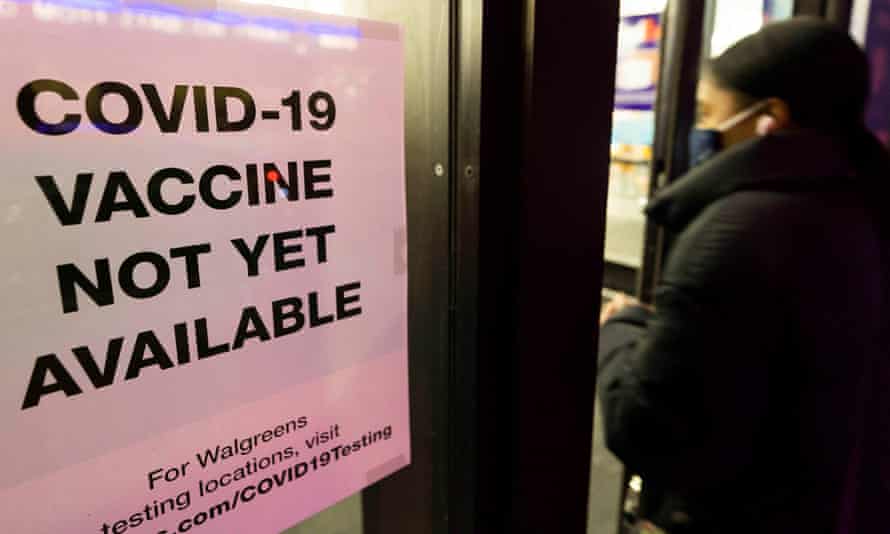
As of Thursday, the Trump administration had shipped more than 21 million vaccine doses, and millions more were already in the federal government’s hands. Yet only 5.9 million people had received a dose. State and local public health officials, already overwhelmed with rising infections, have been struggling to administer the vaccine to hospital workers and at-risk older Americans while most people remain in the dark about when they might be protected. Mr. Biden has promised that 100 million doses of the vaccine would be administered by his first 100th day in office.
Releasing the vast majority of the vaccine doses raises the risk that second doses would not be administered on time. Officials from the Food and Drug Administration — experts whose advice Mr. Biden has pledged to follow — have spoken out strongly against changing the dosing schedule, calling such a move “premature and not rooted solidly in the available evidence.”
A transition official, speaking anonymously to provide insight into the president-elect’s thinking, said would use the Defense Production Act, if needed, to ensure that enough doses are available.
However, the official also noted that the Biden team has “faith in our manufacturers that they can produce enough vaccines to ensure people can get their second dose in a timely manner, while also getting more people their first dose.”
A spokesman for Operation Warp Speed, the Trump administration’s vaccine initiative, released a statement sharply criticizing Mr. Biden’s approach.
“If President-elect Biden is calling for the distribution of vaccines knowing that there would not be a second dose available, that decision is without science or data and is contrary to the FDA’s approved label,” said the spokesman, Michael Pratt. “If President-elect Biden is suggesting that the maximum number of doses should be made available, consistent with ensuring that a second dose of vaccine will be there when the patient shows up, then that is already happening.”
A spokesman for the transition team, T.J. Ducklo, said Mr. Biden “believes we must accelerate distribution of the vaccine while continuing to ensure the Americans who need it most get it as soon as possible.”
“He supports releasing available doses immediately, and believes the government should stop holding back vaccine supply so we can get more shots in Americans’ arms now,” Mr. Ducklo said. “He will share additional details next week on how his Administration will begin releasing available doses when he assumes office on January 20th.”
Dr. Leana Wen, an emergency physician and public health expert at the George Washington University School of Public Health, said she was surprised and concerned about the new strategy, which seemed to offer a solution incongruous with the biggest problems in the vaccine rollout. Distribution has sputtered in large part because of a lack of administering capacity and several logistical hurdles, rather than a severe shortage of doses.
“This is not the problem we’re trying to solve right now,” Dr. Wen said.
For such a plan to work, Dr. Wen added, the Biden administration will need to be confident in both improved distribution tactics and sufficient vaccine production, “so all who receive the first dose of the vaccine will receive the second in a timely manner.”
Should a high number of delayed second doses occur — ostensibly shirking the regimens laid out in clinical trials — “it runs the risk of substantially eroding public trust in vaccines,” Dr. Wen said. The recommended timeframe for administering the second dose for the Pfizer-BioNTech vaccine is 21 days later, and for the Moderna vaccine, 28 days.
Mr. Biden’s announcement came amid growing pressure to step up the slow pace of mass vaccinations.
Speaking at a news briefing on Friday, Dr. Stephen Hahn, the F.D.A. commissioner, urged states that have utilized only a small part of their supply to begin vaccinating lower-priority groups, while still observing government guidelines.
“We think that will go a long way toward using these vaccines appropriately and getting them into the arms of individuals,” he said.
Mr. Biden also formally announced nearly two dozen members of his National Security Council staff on Friday, including a senior official for global health threats whose office was downgraded before the coronavirus pandemic.
Among the 21 appointees is Elizabeth Cameron, who will be the council’s senior director for global health security and biodefense, the job she held until John R. Bolton, Mr. Trump’s then-national security adviser, eliminated the office in May 2018, reassigning its responsibilities elsewhere within the N.S.C. Ms. Cameron has argued publicly that the move “contributed to the federal government’s sluggish domestic response” to the pandemic, and Mr. Biden vowed as a candidate to restore the office.