Hackensack Meridian Health, Maimonides Medical Center pilot sensor-embedded clothes to remotely monitor COVID-19 patients

https://www.beckershospitalreview.com/digital-transformation/hackensack-meridian-health-maimonides-medical-center-pilot-sensor-embedded-clothes-to-remotely-monitor-covid-19-patients.html?utm_medium=email

Transforming Congestive Heart Failure Management with cloth-based ...

Hackensack (N.J.) Meridian Health and New York City-based Maimonides Medical Center are partnering with remote monitoring platform Nanowear to pilot cloth-based wearable tech that monitors coronavirus patients.

Nanowear’s undergarment wearable comprises nanosensors, which detect physiological and biomarker changes that indicate when a patient’s condition is worsening and the hospitals need to further intervene. When a patient wears the garment, physicians can remotely capture and assess vitals including real-time ECH, systolic and diastolic blood pressure, temperature trends, respiration and lung volume.

The garment can collect 120 million data points per patient per day across cardiac, pulmonary and circulatory biomarker data, which is then transmitted to clinical staff.

“Nanowear’s SimpleSENSE is giving us an exponential amount of relevant data metrics about the heart and lungs from an all-in-one product that should ultimately enable us to triage lower risk patients and stratify high risk patients,” said Sameer Jamal, MD, principal investigator of the collaboration and cardiologist at Hackensack Meridian Health, according to the July 22 news release.


Cartoon – Covid Morale Booster

Employee morale

COVID care as a model for care redesign

https://mailchi.mp/9075526b5806/the-weekly-gist-july-24-2020?e=d1e747d2d8

We got an update from the chief medical information officer of one of our member systems about their ongoing progress in expanding telemedicine. Their rate of virtual visits peaked in late April, accounting for over half of all physician encounters. But like most systems, they’ve seen telemedicine visits drop to less than 20 percent of all appointments as physician offices have reopened.

In thinking about how the system will move telemedicine forward, she said, “We’re trying to be intentional and really design a top-notch consumer experience, with quality as the foundation.” They are going specialty-by-specialty, condition-by-condition, to redesign care pathways to optimally blend virtual and in-person care. It’s daunting, but she believes COVID-19 provided a model for how to do this quickly and effectively.

In just a few weeks, many systems stood up COVID management programs in the following way: algorithm-driven, online symptom triage triggers a virtual visit with a doctor. Testing is conducted at new, dedicated locations, to keep doctors’ offices as COVID-free as possible. Patients with concerning symptoms are monitored at home with pulse oximetry and regular check-ins; the same resources are used to ensure discharged patients are recovering well.

It’s the perfect example of how to design a safe, consumer-centered care pathway, using the whole of a health system’s resources. Now the challenge facing doctors and hospitals is: can this process be scaled across the hundreds of conditions that could benefit from a blend of virtual and traditional care?  


“We’ve jumped past burnout to anger”

https://mailchi.mp/9075526b5806/the-weekly-gist-july-24-2020?e=d1e747d2d8

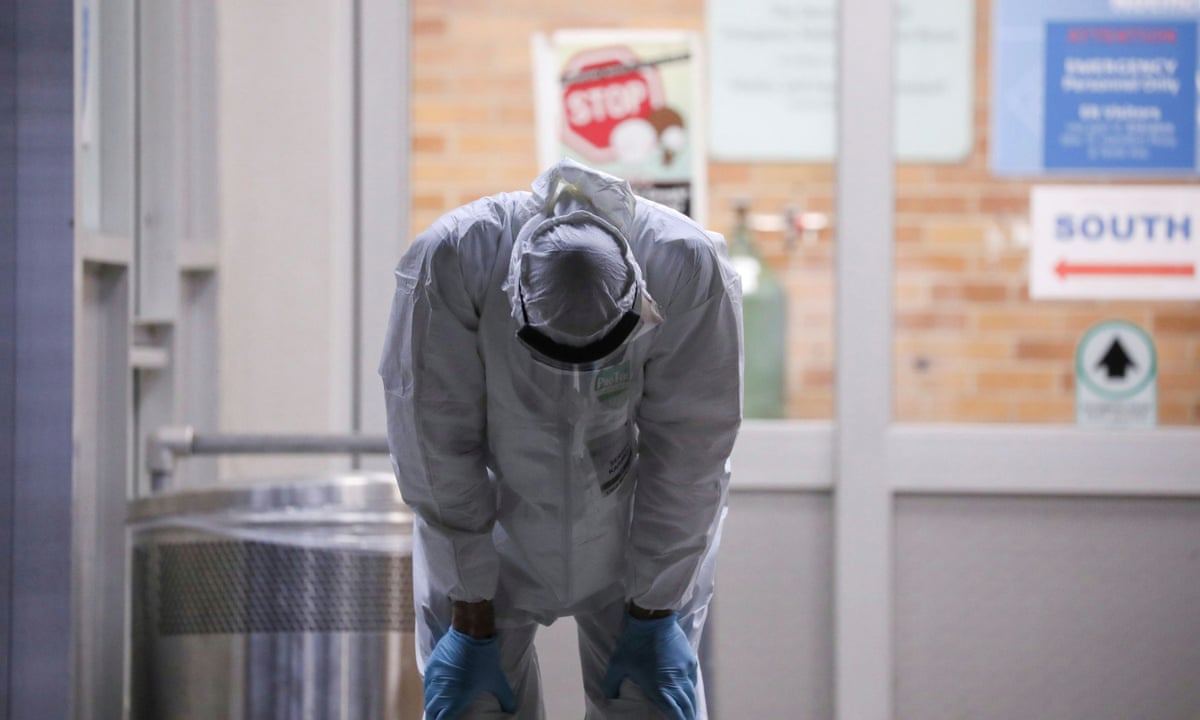
What coronavirus is doing to stressed US health workers – and why ...

Last week we wrote about an observation from some physician leaders that, paradoxically, physician burnout seemed to have waned a bit during the COVID crisis. They felt that, as clinicians rallied to provide care for patients during the pandemic, many found new purpose in the work, despite great challenges. Bureaucratic hurdles yielded to the need to make critical decisions quickly, as did regulatory barriers to telemedicine.

The piece sparked a number of doctors, most from regions now experiencing surges, to share their alternative viewpoints with us.

One employed physician wrote that, across specialties, he and his colleagues are angry. They don’t feel protected, either financially, or even for their own physical safety.

A nurse practitioner working long shifts in an emergency department overloaded with COVID patients wrote, “In April, I would have never believed that we would be scrounging for PPE at the end of July. How could this happen?” And a nephrologist redeployed to a COVID ICU shared: “With the surge in New York, it felt like the entire country was behind their doctors and nurses. I drive home past restaurants and stores filled with people refusing to wear masks. It’s so demoralizing.”

Several expressed that their employers, both health systems and payers, are “counting on our goodwill that we’ll just keep showing up.” But once the crisis passes, there may be “drastic and irrational physician revolts. Someone should be watching for it.”

These comments reveal a marked difference in physician sentiment in different parts of the country, based both on the severity of the pandemic, and the nature of the local response.  Regardless, we’d agree that the clinical workforce, both doctors and nurses, is working through a period of unprecedented stress, and for some, emotional trauma. Ensuring their stability and safety must be a top priority for every health system and medical group.


Increasing unemployment alters national payer mix

https://mailchi.mp/9075526b5806/the-weekly-gist-july-24-2020?e=d1e747d2d8


One in every five workers is now collecting unemployment benefits as the country struggles to get the COVID-19 outbreak under control. A recent Families USA study estimates a quarter of the 21.9M workers that were furloughed or laid off between February and May lost their health insurance. And the payer mix will continue to change as the pandemic wears on.

The graphic below highlights a study from consultancy Oliver Wyman, looking at the impact of rising unemployment (at 15, 20 and 30 percent) on insurance coverage. With each five to ten percent rise in unemployment, the commercially insured population decreases by three to five percentThose who lose employer-sponsored insurance either remain uninsured, buy coverage on the Obamacare marketplaces, or qualify for Medicaid.

Surprisingly, Washington State and California are reporting little to no enrollment growth in Medicaid programs thus far. Experts point to lack of outreach and consumer awareness as key contributors to the slow growth—but Medicaid enrollment will likely begin to rise quickly in coming months as temporary furloughs convert to more permanent layoffs.

The right side of the graphic spotlights the growing number of uninsured individuals in those states with the highest uninsured rates. The previous record for the largest increase in uninsured adults was between 2008 and 2009, when nearly 4M lost coverage. The current pandemic-driven increase has crushed that record by 39 percent.

On average, states are seeing uninsured populations increase by two percent, with some as high as five percent. And the two states with the highest uninsured rates, Florida and Texas, are also dealing with the largest surge in COVID-19 cases and deaths. The ranks of the uninsured will continue to climb as states reimpose shutdowns, government assistance ends, and layoffs grow.