https://www.vox.com/future-perfect/2020/3/31/21199874/coronavirus-spanish-flu-social-distancing
/cdn.vox-cdn.com/uploads/chorus_image/image/66580807/2660331.jpg.0.jpg)
A study of the 1918 Spanish flu pandemic finds that cities with stricter social distancing reaped economic benefits.
For much of the past month, some commentators have defended the effort to promote social distancing, including the near-shutdown of huge swaths of America’s economy, as the lesser of two evils: Yes, asking or forcing people to remain in their homes for as much of the day as possible will slow economic activity, the argument goes. But it’s worth it for the public health benefits of slowing the coronavirus’s spread.
This argument has, naturally, led to a backlash, explained here by my colleague Ezra Klein. Critics — including the president — have argued that the cure is worse than the disease, and mass death from coronavirus is a price we need to be willing to pay to keep the American economy from cratering.
Both these viewpoints obscure an important possibility: The social distancing regime may well be optimal not just from a public health point of view, but from an economic perspective as well.
Economists Sergio Correia, Stephan Luck, and Emil Verner released a working paper (not yet peer-reviewed) last week that makes this argument extremely persuasively. The three analyzed the 1918-1919 flu pandemic in the United States, as the closest (though still not identical) analogue to the current crisis. They compare cities in 1918-’19 that adopted quarantining and social isolation policies earlier to ones that adopted them later.
Their conclusion? “We find that cities that intervened earlier and more aggressively do not perform worse and, if anything, grow faster after the pandemic is over.”
The researchers refer to such social distancing policies as NPIs, or “non-pharmaceutical interventions,” essentially public health interventions not achieved through medication, like quarantines and school and business closures. The key to the paper is their observation that, in theory, NPIs can both decrease economic activity directly, by keeping people in certain jobs from going to work, and increase it indirectly, because it prevents large-scale deaths that would also have a negative impact on the economy.
“While NPIs lower economic activity, they can solve coordination problems associated with fighting disease transmission and mitigate the pandemic-related economic disruption,” they write. In other words, social distancing measures that save lives can also, in the end, soften the economic disruption of a pandemic.
The data here comes from a 2007 paper in the Journal of the American Medical Association, where a group of researchers chronicled what specific policies were put in place between September 8, 1918, and February 22, 1919, by 43 different cities. The most common NPI the JAMA researchers identified was a combination of school closures and bans on public gatherings; 34 of the 43 cities adopted this rule, for an average of four weeks.
Other cities eschewed these policies in favor of mandatory isolation and quarantine procedures: “Typically, individuals diagnosed with influenza were isolated in hospitals or makeshift facilities, while those suspected to have contact with an ill person (but who were not yet ill themselves) were quarantined in their homes with an official placard declaring that location to be under quarantine,” the JAMA authors write, detailing New York City’s approach.
Another 15 cities did both isolation/quarantines and school closures/public gathering bans.
The 2007 paper found a strong association between the number and duration of NPIs and pandemic deaths, with more and longer-lasting NPIs associated with a smaller death toll. Correia, Luck, and Verner, in their new paper, replicate this finding.
But they take it a step further. They study the impact of changes in mortality due to the 1918 pandemic on economic outcomes.
“The increase in mortality from the 1918 pandemic relative to 1917 mortality levels (416 per 100,000) implies a 23 percent fall in manufacturing employment, 1.5 percentage point reduction in manufacturing employment to population, and an 18 percent fall in output,” they conclude. In other words, a big outbreak spelled economic disaster for affected cities.
Then they combined this analysis with an analysis of the effects of NPI policies. They find that the introduction of social distancing policies is associated with more positive outcomes in terms of manufacturing employment and output. Cities with faster introductions of these policies (one standard deviation faster, to be technical) had 4 percent higher employment after the pandemic had passed; ones with longer durations had 6 percent higher employment after the disaster.
The takeaway is clear: These policies not only led to better health outcomes, they in turn led to better economic outcomes. Pandemics are very bad for the economy, and stopping them is good for the economy.
A few notes of caution
It’s important to always approach this kind of study with a degree of skepticism. The 1918 pandemic was not a planned experiment, so researchers’ ability to determine the degree to which the pandemic, or the policies adopted in response to it, affected economic outcomes is always going to be somewhat limited.
The researchers acknowledge that their biggest limitation is the non-randomness of policy adoption by cities. Presumably cities with strict responses to the pandemic were different from cities with laxer responses in ways that went beyond this one incident. Maybe the stricter cities had better public health infrastructure to begin with, for instance, which could exaggerate the estimated effect of social distancing interventions.
The authors argue that because the second and most fatal wave of the 1918 pandemic spread mostly from east to west, geographically, these kinds of dynamics weren’t at play. “Given the timing of the influenza wave, cities that were affected later appeared to have implemented NPIs sooner as they were able to learn from cities that were affected in the early stages of the pandemic,” they note.
The best explanation of differences in policies, then, is how far a city is from the East Coast of the US. They control for a big factor that might affect Western states more (the boom and bust of the agricultural industry as World War I drew to a close) and find few other observable differences between Western cities with strong policies and Eastern policies with weak ones. But the notion that these cities are comparable is a key part of the paper’s research design, and one worth digging into as the paper goes through peer review and revisions.
The economy isn’t everything
The message that there isn’t a trade-off between saving lives and saving the economy is reassuring. If there were such a trade-off, the debate over coronavirus response would be in the realm of pure values: How much money should we be willing to forsake to save a human life? That’s a thorny choice, and finding that we don’t actually have to make it — as this paper suggests — is comforting.
It’s worth emphasizing, though, that if we did have to make that choice, it would still be an easy decision. The lives saved would be worth more.
In another recent white paper, UChicago’s Michael Greenstone and Vishan Nigam estimate the social value of social distancing policies, relative to a baseline where we endure an untrammeled pandemic. To simulate the two scenarios, they rely on the influential Imperial College London model of the coronavirus pandemic — a paper that found that an uncontrolled spread of coronavirus would kill 2.2 million Americans.
Then they throw in an oft-used tool of cost-benefit economic analysis: the value of a statistical life (VSL). Popularized by Vanderbilt economist Kip Viscusi, VSL involves putting a dollar value on a human life by estimating the implicit value that people in a given society place on continuing to live based on their willingness to pay for services that reduce their risk of dying.
Usually, this involves a “revealed preferences” approach. A 2018 paper by Viscusi, for example, used, among other data sources, Bureau of Labor Statistics Census of Fatal Occupational Injuries to measure how much more, in practice, US workers demand to be paid to take jobs that carry a higher risk of death.
Greenstone and Nigam allow VSL to vary with age — understandably, older people are less willing to pay to reduce their odds of death than younger people — but set the average VSL for an American age 18 and over to $11.5 million.
Based on the Imperial College projection that social distancing would save about 1.76 million lives over the next six months, Greenstone and Nigam estimate that the economic value of the policy is $7.9 trillion, larger than the entire US federal budget and greater than a third of GDP. The value is about $60,000 per US household. Even if the Imperial College model is off by 60 percent and the no-social-distancing scenario is less deadly than anticipated, the aggregate benefits are still $3.6 trillion. And this is likely an underestimate that ignores other costs of a large-scale outbreak to society; it focuses solely on mortality benefits.
VSL is sometimes attacked from the left as craven, a reductio ad absurdum of economistic reasoning trampling over everything, including the value of human life itself. But coronavirus helps illustrate how VSL can work in the opposite direction. Human life is so valuable in these terms that social distancing would have to force a 33 percent drop in US GDP before you could start to plausibly argue that the cure is worse than the disease.
That social distancing likely won’t cause a reduction in GDP relative to a scenario where there’s a multimillion-person death toll, as indicated by the 1918 flu paper, makes the case for distancing policies that much stronger.





 HENRY KOTULA
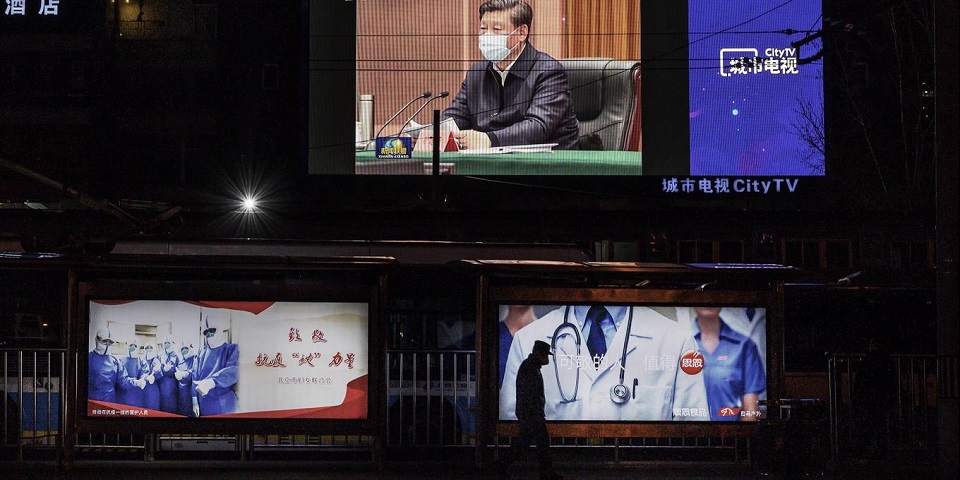
LONDON – As the COVID-19 crisis roars on, so have debates about China’s role in it. Based on what is known, it is clear that some Chinese officials made a major error in late December and early January, when they tried to prevent disclosures of the coronavirus outbreak in Wuhan, even silencing health-care workers who tried to sound the alarm. China’s leaders will have to live with these mistakes, even if they succeed in resolving the crisis and adopting adequate measures to prevent a future outbreak.
What is less clear is why other countries think it is in their interest to keep referring to China’s initial errors, rather than working toward solutions. For many governments, naming and shaming China appears to be a ploy to divert attention from their own lack of preparedness. Equally concerning is the growing criticism of the World Health Organization, not least by US President Donald Trump, who has attacked the organization for supposedly failing to hold the Chinese government to account. At a time when the top global priority should be to organize a comprehensive coordinated response to the dual health and economic crises unleashed by the coronavirus, this blame game is not just unhelpful but dangerous.
Globally and at the country level, we desperately need to do everything possible to accelerate the development of a safe and effective vaccine, while in the meantime stepping up collective efforts to deploy the diagnostic and therapeutic tools necessary to keep the health crisis under control. Given that there is no other global health organization with the capacity to confront the pandemic, the WHO will remain at the center of the response, whether certain political leaders like it or not.
Having dealt with the WHO to a modest degree during my time as chairman of the UK’s independent Review on Antimicrobial Resistance (AMR), I can say that it is similar to most large, bureaucratic international organizations. Like the International Monetary Fund, the World Bank, and the United Nations, it is not especially dynamic or inclined to think outside the box. But rather than sniping at these organizations from the sidelines, we should be working to improve them. In the current crisis, we should be doing everything we can to help both the WHO and the IMF to play an effective, leading role in the global response.
As I have argued before, the IMF should expand the scope of its annual Article IV assessments to include national public-health systems, given that these are critical determinants in a country’s ability to prevent or at least manage a crisis like the one we are now experiencing. I have even raised this idea with IMF officials themselves, only to be told that such reporting falls outside their remit because they lack the relevant expertise.
That answer was not good enough then, and it definitely isn’t good enough now. If the IMF lacks the expertise to assess public-health systems, it should acquire it. As the COVID-19 crisis makes abundantly clear, there is no useful distinction to be made between health and finance. The two policy domains are deeply interconnected, and should be treated as such.
In thinking about an international response to today’s health and economic emergency, the obvious analogy is to the 2008 global financial crisis. Everyone knows that crisis started with an unsustainable US housing bubble, which had been fed by foreign savings, owing to the lack of domestic savings in the United States. When the bubble finally burst, many other countries sustained more harm than the US did, just as the COVID-19 pandemic has hit some countries much harder than it hit China.
And yet, not many countries around the world sought to single out the US for presiding over a massively destructive housing bubble, even though the scars from that previous crisis are still visible. On the contrary, many welcomed the US economy’s return to sustained growth in recent years, because a strong US economy benefits the rest of the world.2
So, rather than applying a double standard and fixating on China’s undoubtedly large errors, we would do better to consider what China can teach us. Specifically, we should be focused on better understanding the technologies and diagnostic techniques that China used to keep its (apparent) death toll so low compared to other countries, and to restart parts of its economy within weeks of the height of the outbreak.
And, for our own sakes, we also should be considering what policies China could adopt to put itself back on a path toward 6% annual growth, because the Chinese economy inevitably will play a significant role in the global recovery. If China’s post-pandemic growth model makes good on its leaders’ efforts in recent years to boost domestic consumption and imports from the rest of the world, we will all be better off.