Facing intense criticism from hospital executives and emergency physicians, the nation’s largest health insurer, UnitedHealthcare (UHC), delayed the implementation of a controversial policy aimed at reducing what it considers to be unnecessary use of emergency services by its enrollees.
The policy, which would have gone into effect next month, would have denied payment for visits to hospital emergency departments for reasons deemed to be “non-emergent” after retrospective review. Similar to a policy implemented by insurer Anthem several years ago, which led to litigation and Congressional scrutiny, the UHC measure would have exposed patients to potentially large financial obligations if they “incorrectly” visited a hospital ED.
Critics pointed to longstanding statutory protections intended to shield patients from this kind of financial gatekeeping: the so-called “prudent layperson standard” came into effect in the 1980s following the rise of managed care, and requires insurance companies to provide coverage for emergency services based on symptoms, not final diagnosis. UHC now says it will hold off on implementing the change until after the COVID-19 national health emergency has ended, and will use the time to educate consumers and providers about the policy.
Like many critics, we’re gobsmacked by the poor timing of United’s policy change—emergency visits are still down more than 20 percent from pre-pandemic levels, and concerns still abound that consumers are foregoing care for potentially life-threatening conditions because they’re worried about coronavirus exposure. Perhaps UHC is trying to “lock in” reduced ED utilization for the post-pandemic era, or perhaps they never intended to enforce the policy, hoping that the mere threat of financial liability might discourage consumers from visiting hospital emergency rooms.
While we share the view that consumers need better education about how and when to seek care, combined with more robust options for appropriate care, this kind of draconian policy on the part of UnitedHealthcare just underscores why many simply don’t trust profit-driven insurance companies to safeguard their health.
The nation’s largest commercial insurer is taking a closer look at whether visits to the emergency room by some of its members are necessary. Starting July 1, UnitedHealthcare will evaluate ER claims using a number of factors to determine if the visit was truly an emergency for its fully insured commercial members across many states, according to a provider bulletin.
If UnitedHealthcare finds the visit was a non-emergency, the visit will be “subject to no coverage or limited coverage,” the provider alert states.
However, a statement provided to Healthcare Dive said the insurer will reimburse for non-emergency care according to the member’s benefit plan. In other words, the amount paid by UnitedHealthcare may be less if deemed a non-emergency.
Dive Insight:
Patients seeking out the pricey ER setting for minor illnesses that could have been treated elsewhere has been a perennial issue for the healthcare industry.Misuse of the nation’s emergency departments for minor ailments costs the nation’s healthcare system $32 billion a year, according to a previous report from UnitedHealth Group, the parent firm of UnitedHealthcare.
Providers worry such policies will lead to a chilling effect, causing patients to hesitate even in a true emergency such as a heart attack or stroke. Some of those concerns about the effects on patients were aired on Twitter this week after the provider bulletin became public.
UnitedHealthcare’s policy contains exclusions, including observation stays, visits by children under the age of two and admissions from the ER. It’s not clear precisely how many patients will be impacted but UnitedHealthcare had a total of 26.2 million commercial members at the end of 2020.
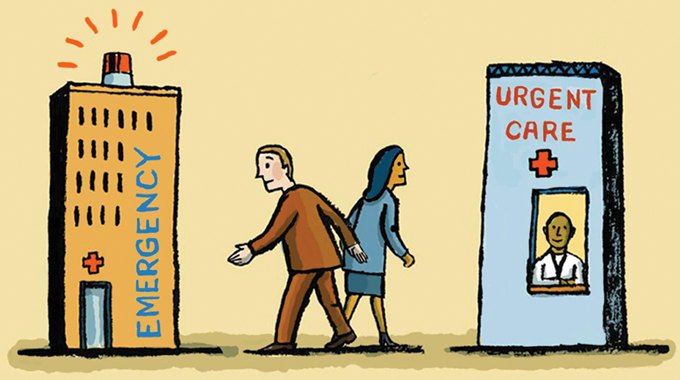
The insurer said this is an attempt to ensure healthcare is more affordable. To curb costs, they want patients to seek out treatment in a more “appropriate setting” like an urgent care facility.
Other major insurers have enacted similar policies in the past and faced pushback from the public and providers.
Anthem in recent years has also enacted policies that put patients on the hook for the ER bill if they sought care that didn’t warrant a trip to the ER. The policy also attracted scrutinyfrom then Senator Claire McCaskill, a Missouri Democrat, who requested Anthem turn over internal documents over the policy and the Blues player ultimately scaled back some of its policies amid pushback from doctors and others.
Providers have argued these policies collide with federal law that require emergency rooms to treat any patient that shows up, regardless of their ability to pay.
UnitedHealthcare does have a process in place for those to contest a visit that was deemed a non-emergency.
As we shared recently, post-pandemic healthcare volume is not returning evenly. While outpatient volume is rebounding quickly, other settings remain sluggish, especially the emergency department. We partnered with healthcare data analytics company Stratasan to take a closer look at ED volume decline. As shown in the graphic above, nationally, ED visits were down 27 percent in 2020, compared to 2019. ED-only volume (cases that started and ended in the ED) took a large hit across last year, down nearly a third from 2019. We expect that a portion of this ED-only volume will never fully recover to pre-COVID levels, with patient demand permanently shifting to lower-acuity care settings, including virtual, and some patients avoiding care altogether for minor ailments as they learn to “live with” problems like back pain.
ED-to-observation volume saw the greatest decline in 2020, likely as a result both of patients avoiding the ED, and presenting in the ED sicker, meeting the criteria for inpatient admission. However,ED-to-inpatient volume, which fell only seven percent in 2020, has been returning. In the second half of 2020, the ED-to-inpatient admission rate was 20 to 30 percent higher than the pre-COVID baseline. Across all three categories of ED volume, pediatrics saw steeper declines compared to adult cases. While some further ED volume rebound is anticipated, health systems should expect that fewer, but sicker, patients will be the new normal for hospital emergency departments.
Fewer low-acuity patients utilizing high-cost emergency care is good news from a public health perspective, but health systems must bolster other access channels like urgent care and telemedicine to ensure patients have convenient access for emergent care needs.
Though consumers say they’re increasingly confident in returning to healthcare settings, hospital volume is not returning with the same momentum across the board. Using the most recent data from analytics firm Strata Decision Technology, covering the first quarter of this year, the graphic above shows that observation, inpatient, and emergency department volumes all remain below pre-COVID levels.
Consumers are still most wary about returning to the emergency department, with volume down nearly 20 percent across the past year. Meanwhile, hospital outpatient visits rebounded quickly, and have been growing steadily month over month, finishing March 2021 at 36 percent above the 2019 level.
Meanwhile, a recent report from the Commonwealth Fund shows that no ambulatory specialty fully made up for the COVID volume hit by the end of last year. But some areas, including rheumatology, urology, and adult primary care, have bounced back faster than others.
With continued success in rolling out vaccines and reducing COVID cases, we’d expect a continued recovery of most hospital visit volume. It may be, however, that some areas, such as the emergency department, will never fully recover to pre-COVID levels. To the extent those visits are now being replaced by more appropriate telemedicine and urgent care utilization, that’s welcome news.
But the continued lag of inpatient admissions indicates that some of the loss of emergency volume is more worrisome—warranting continued efforts on the part of providers to reassure patients it’s safe to use healthcare services. Stay tuned as our team continues to dig into this data.
Although urgent care centers deter some lower-acuity patients from a costly emergency department visit, they are not associated with a drop in total healthcare spending, according to a study published in Health Affairsin April.
For the study, researchers used insurance claims and enrollment data from 2008 to 2019 from a managed care plan to understand if the presence of an urgent care center substantially decreased lower-acuity ED visits.
The authors found that the entry of an urgent care center into a ZIP code deterred lower-acuity ED visits, but the effect was small.
The study found that the reduction of just one lower-acuity ED visit was associated with 37 additional urgent care visits. In other words, the number of urgent care visits per enrollee required to reduce one ER visit is 37.
The study authors found that the prevention of each $1,646 lower-acuity ED visit was offset by an increase of $6,237 in urgent care center costs.
As a result, the study authors said that despite ED visits costing more per visit, the use of urgent care centers increased net overall spending on lower-acuity care.
“This study documents for the first time that urgent care centers are associated with increased overall costs for lower-acuity visits across the ED and urgent care settings,” the study authors concluded.
Even as surgery and office visit volume rebounds, hospitals across the country continue to report that emergency department volume remains persistently depressed, down 10 to 20 percent compared to before the pandemic. The shift is even more drastic in pediatrics, with some pediatric hospitals and programs reporting that emergency care volume is seeing double the rate of decline.
Pediatric volume has been hit with a “double whammy”: with many schools and day cares still closed, contagious illnesses have plummeted. Fewer kids in youth sports means fewer injuries. And unlike adult hospitals, pediatric facilities haven’t filled their beds with COVID patients.“Of all our services, pediatric hospitalists have taken the greatest hit,” one children’s hospital physician leader shared. “Their service is usually full this time of the year with flu and RSV [respiratory syncytial virus]. But with kids not interacting with each other, general pediatric admissions have cratered.” Empty EDs have led some pediatric hospitals to shutter adjacent urgent care clinics: “It doesn’t make sense to operate an empty ED and an empty after-hours clinic”.
For patients, however, this can bring unexpected financial consequences, as they’ll now get an ED bill for services they would formerly have received in urgent care. But while pediatric hospitals have taken a greater volume hit, they’re also likely to see a faster rebound. Once kids are back to school and sports, the usual illnesses and injuries will likely return, and we’d guess parents won’t hesitate to seek care.
Patient volumes were uneven in 2020, and a new report shows volumes will likely remain below pre-pandemic levels in 2021. This indicates challenges for hospitals looking to stabilize their finances — but there are some key strategies that can help.
Though hospital finances recovered to some extent by the end of 2020, the industry is not out of the woods yet. However, with strategic investments, especially in outpatient care and technology, hospitals and health systems can help buoy their finances in this challenging time, industry observers said.
Patient volumes have fluctuated wildly after the Covid-19 pandemic hit as Covid-19 patients flocked to hospitals and those needing or seeking elective surgery and other care staying away. Not surprisingly, this has had a significant impact on health systems’ financial health.
But outpatient settings and digital solutions offer some revenue-generating opportunities for hospitals.
“A number of the major players and some of the bigger regional systems in the country now are in a place where they get more of their revenue from the outpatient side as opposed to the inpatient side,” said Dr. Sanjay Saxena, global healthcare leader, Payers, Providers, Health Care Systems & Services and managing director at Boston Consulting Group, in a phone interview.
In fact, outpatient care was the only healthcare setting that saw an increase in patient volumes in 2020. Though emergency department visits and inpatient volumes were down from July to December last year compared to the same period in 2019, outpatient volumes actually increased by 5%, according to a report by consumer credit reporting agency TransUnion.
Healthcare providers that have well-established and expansive outpatient and ambulatory care businesses will be able to weather patient volume trends better in 2021 than those who do not, said Saxena.
Take HCA Healthcare, for example. The Nashville, Tennessee-based healthcare giant’s revenues jumped to $14.2 billion in the fourth quarter of last year, up from $13.5 billion in the same period in 2019. HCA’s ability to move care outside of the inpatient setting to the ambulatory environment really helped their financial performance, said Saxena.
On the other hand, smaller and more rural hospitals, which depend heavily on ED and inpatient care, may face a challenging year, he added.
Another key investment for hospitals will be in digital solutions to help them manage the ups and downs of patient volume.
“Resilience as a broad topic for provider executives is absolutely top of mind,” said Gurpreet Singh, health services leader at PriceWaterhouseCoopers, in a phone interview. “And resiliency can be achieved in a number of different ways. One way is [figuring out] — can you predict demand a little bit better?”
Patient demand forecasting solutions will be popular, with 74% of health executives recently surveyed by PwC’s Health Research Institute saying their organizations would invest more in predictive modeling in 2021.
Further, hospitals will see savings in some unexpected places. For example, with an increasingly remote and mobile healthcare workforce, hospitals may see cost savings on real estate and facility leases, said Singh.
They can use these savings to invest further in telehealth and at-home care programs to expand care outside of the four walls of the hospital, he added.
The industry has to come to terms with changes brought on by the Covid-19 pandemic, including the shifts in care delivery and patient preferences.
“Some of these things are structurally significant changes,” said Saxena. “Organizations ignore these things…at their peril. Some leading organizations and systems will find a way to embrace [these changes] and leapfrog others in the market coming out of 2021.”
As record numbers of coronavirus cases overwhelm hospitals across the United States, there is something strikingly different from the surge that inundated cities in the spring: No one is clamoring for ventilators.
The sophisticated breathing machines, used to sustain the most critically ill patients, are far more plentiful than they were eight months ago, when New York, New Jersey and other hard-hit states were desperate to obtain more of the devices, and hospitals were reviewing triage protocols for rationing care. Now, many hot spots face a different problem: They have enough ventilators, but not nearly enough respiratory therapists, pulmonologists and critical care doctors who have the training to operate the machines and provide round-the-clock care for patients who cannot breathe on their own.
Since the spring, American medical device makers have radically ramped up the country’s ventilator capacity by producing more than 200,000 critical care ventilators, with 155,000 of them going to the Strategic National Stockpile. At the same time, doctors have figured out other ways to deliver oxygen to some patients struggling to breathe — including using inexpensive sleep apnea machines or simple nasal cannulas that force air into the lungs through plastic tubes.
But with new cases approaching 200,000 per day and a flood of patients straining hospitals across the country, public health experts warn that the ample supply of available ventilators may not be enough to save many critically ill patients.
“We’re now at a dangerous precipice,” said Dr. Lewis Kaplan, president of the Society of Critical Care Medicine. Ventilators, he said, are exceptionally complex machines that require expertise and constant monitoring for the weeks or even months that patients are tethered to them. The explosion of cases in rural parts of Idaho, Ohio, South Dakota and other states has prompted local hospitals that lack such experts on staff to send patients to cities and regional medical centers, but those intensive care beds are quickly filling up.
Public health experts have long warned about a shortage of critical care doctors, known as intensivists, a specialty that generally requires an additional two years of medical training. There are 37,400 intensivists in the United States, according to the American Hospital Association, but nearly half of the country’s acute care hospitals do not have any on staff, and many of those hospitals are in rural areas increasingly overwhelmed by the coronavirus.
“We can’t manufacture doctors and nurses in the same way we can manufacture ventilators,” said Dr. Eric Toner, an emergency room doctor and senior scholar at the Johns Hopkins Center for Health Security. “And you can’t teach someone overnight the right settings and buttons to push on a ventilator for patients who have a disease they’ve never seen before. The most realistic thing we can do in the short run is to reduce the impact on hospitals, and that means wearing masks and avoiding crowded spaces so we can flatten the curve of new infections.”
Medical association message boards in states like Iowa, Oklahoma and North Dakota are awash in desperate calls for intensivists and respiratory therapists willing to temporarily relocate and help out. When New York City and hospitals in the Northeast issued a similar call for help this past spring, specialists from the South and the Midwest rushed there. But because cases are now surging nationwide, hospital officials say that most of their pleas for help are going unanswered.
Dr. Thomas E. Dobbs, the top health official in Mississippi, said that more than half the state’s 1,048 ventilators were still available, but that he was more concerned with having enough staff members to take care of the sickest patients.
“If we want to make sure that someone who’s hospitalized in the I.C.U. with the coronavirus has the best chance to get well, they need to have highly trained personnel, and that cannot be flexed up rapidly,” he said in a news briefing on Tuesday.
Dr. Matthew Trump, a critical care specialist at UnityPoint Health in Des Moines, said that the health chain’s 21 hospitals had an adequate supply of ventilators for now, but that out-of-state staff reinforcements might be unlikely to materialize as colleagues fall ill and the hospital’s I.C.U. beds reach capacity.
“People here are exhausted and burned out from the past few months,” he said. “I’m really concerned.”
The domestic boom in ventilator production has been a rare bright spot in the country’s pandemic response, which has been marred by shortages of personal protective equipment, haphazard testing efforts and President Trump’s mixed messaging on the importance of masks, social distancing and other measures that can dent the spread of new infections.
Although the White House has sought to take credit for the increase in new ventilators, medical device executives say the accelerated production was largely a market-driven response turbocharged by the national sense of crisis. Mr. Trump invoked the wartime Defense Production Act in late March, but federal health officials have relied on government contracts rather than their authority under the act to compel companies to increase the production of ventilators.
Scott Whitaker, president of AdvaMed, a trade association that represents many of the country’s ventilator manufacturers, said the grave situation had prompted a “historic mobilization” by the industry. “We’re confident that our companies are well positioned to mobilize as needed to meet demand,” he said in an email.
Public health officials in Minnesota, Mississippi, Utah and other states with some of the highest per capita rates of infection and hospitalization have said they are comfortable with the number of ventilators currently in their hospitals and their stockpiles.
Mr. Whitaker said AdvaMed’s member companies were making roughly 700 ventilators a week before the pandemic; by the summer, weekly output had reached 10,000. The juggernaut was in part fueled by unconventional partnerships between ventilator companies and auto giants like Ford and General Motors.
Chris Brooks, chief strategy officer at Ventec Life Systems, which collaborated with G.M. to fill a $490 million contract for the Department of Health and Human Services, said the shared sense of urgency enabled both companies to overcome a thicket of supply-chain and logistical challenges to produce 30,000 ventilators over four months at an idled car parts plant in Indiana. Before the pandemic, Ventec’s average monthly output was 100 to 200 machines.
“When you’re focused with one team and one mission, you get things done in hours that would otherwise take months,” he said. “You just find a way to push through any and all obstacles.”
Despite an overall increase in the number of ventilators, some researchers say many of the new machines may be inadequate for the current crisis. Dr. Richard Branson, an expert on mechanical ventilation at the University of Cincinnati College of Medicine and an author of a recent study in the journal Chest, said that half of the new devices acquired by the Strategic National Stockpile were not sophisticated enough for Covid-19 patients in severe respiratory distress. He also expressed concern about the long-term viability of machines that require frequent maintenance.
“These devices were not built to be stockpiled,” he said.
The Department of Health and Human Services, which has acknowledged the limitations of its newly acquired ventilators, said the stockpile — nine times as large as it was in March — was well suited for most respiratory pandemics. “These stockpiled devices can be used as a short-term, stopgap buffer when the immediate commercial supply is not sufficient or available,” the agency said in a statement.
Projecting how many people will end up requiring mechanical breathing assistance is an inexact science, and many early assumptions about how the coronavirus affects respiratory function have evolved.
During the chaotic days of March and April, emergency room doctors were quick to intubate patients with dangerously low oxygen levels. They subsequently discovered other ways to improve outcomes, including placing patients on their stomachs, a protocol known as proning that helps improve lung function. The doctors also learned to embrace the use of pressurized oxygen delivered through the nose, or via BiPAP and CPAP machines, portable devices that force oxygen into a patient’s airways.
Many health care providers initially hesitated to use such interventions for fear the pressurized air would aerosolize the virus and endanger health care workers. The risks, it turned out, could be mitigated through the use of respirator masks and other personal protective gear, said Dr. Greg Martin, the chief of pulmonary and critical care at Grady Health Systems in Atlanta.
“The familiarity of taking care of so many Covid patients, combined with good data, has just made everything we do 100 times easier,” he said.
Some of the earliest data about the perils of intubating coronavirus patients turned out to be incomplete and misleading. Dr. Susan Wilcox, a critical care specialist at Massachusetts General Hospital, said many providers were spooked by data that suggested an 80 percent mortality rate among ventilated coronavirus patients, but the actual death rate turned out to be much lower. The mortality rate at her hospital, she said, was about 25 to 30 percent.
“Some people were saying that we should intubate almost immediately because we were worried patients would crash and have untoward consequences if we waited,” she said. “But we’ve learned to just go back to the principles of good critical care.”
Survival rates have increased significantly at many hospitals, a shift brought about by the introduction of therapeutics like dexamethasone, a powerful steroid that Mr. Trump took when he was hospitalized with the coronavirus. The changing demographics of the pandemic — a growing proportion of younger patients with fewer health risks — have also played a role in the improving survival rates.
Dr. Nikhil Jagan, a critical care pulmonologist at CHI Health, a hospital chain that serves Iowa, Kansas and Nebraska, said many of the coronavirus patients who were arriving at his emergency room now were less sick than the patients he treated in the spring.
“There’s a lot more awareness about the symptoms of Covid-19,” he said. “The first go-around, when people came in, they were very sick right off the bat and in respiratory distress or at the point of respiratory failure and had to be intubated.”
But the promising new treatments and enhanced knowledge can go only so far should the current surge in cases continue unabated. The country passed 250,000 deaths from the coronavirus last week, a reminder that many critically ill patients do not survive. The daily death toll has been rising steadily and is approaching 2,000.
“Ventilators are important in critical care but they don’t save people’s lives,” said Dr. Branson of the University of Cincinnati. “They just keep people alive while the people caring for them can figure out what’s wrong and fix the problem. And at the moment, we just don’t have enough of those people.”
For now, he said there was only one way out the crisis: “It’s not that hard,” he said. “Wear a mask.”
We’re hearing from health systems across the country that physician office, surgery and diagnostic volumes have mostly returned to pre-pandemic levels. Consumers appear to feel comfortable coming back to scheduled appointments as long as social distancing and capacity can be managed. But they’re more reticent to return to “unscheduled” care settings that may involve a long wait, like urgent care clinics and emergency departments, where visits have stabilized at 75 to 85 percent of pre-pandemic levels.
The latter in particular has proved concerning to hospitals leaders, who have begun to ask, what if ED volumes never fully come back? (Around 15 percent of ED visits convert to inpatient stays, on average, making the ED an important source of downstream revenue for hospitals.) We spoke recently with a health system COO who realistically thinks that 10 percent of the volume could be gone for good, and recognizes that “from a public health perspective, that’s probably a good thing”, given that lower-acuity, non-emergent patients account for a portion of the “lost” volume.
But concerns about patients delaying much-needed care persist—amplifying the need for alternate channels, both virtual and in-person, for patients to access care and quickly connect to more intensive services if needed. Hospital leaders would be wise to prepare for a “90 percent future”, and adjust revenue models and cost structures to be less dependent on admissions and procedures that come through the emergency department.





 HENRY KOTULA