Congress returns from its July 4 break today and its focus will be on the President: will he resign or tough it out through the election in 120 days. But not everyone is paying attention to this DC drama.
In fact, most are disgusted with the performance of the political system and looking for something better. Per Gallup, trust and confidence in the U.S. Congress is at an all-time low.
The same is true of the healthcare system:
69% think it’s fundamentally flawed and in need of systemic change vs. 7% who think otherwise (Keckley Poll). And 60% think it puts its profits above all else, laying the blame at all its major players—hospitals, insurers, physician, drug companies and their army of advisors and suppliers.
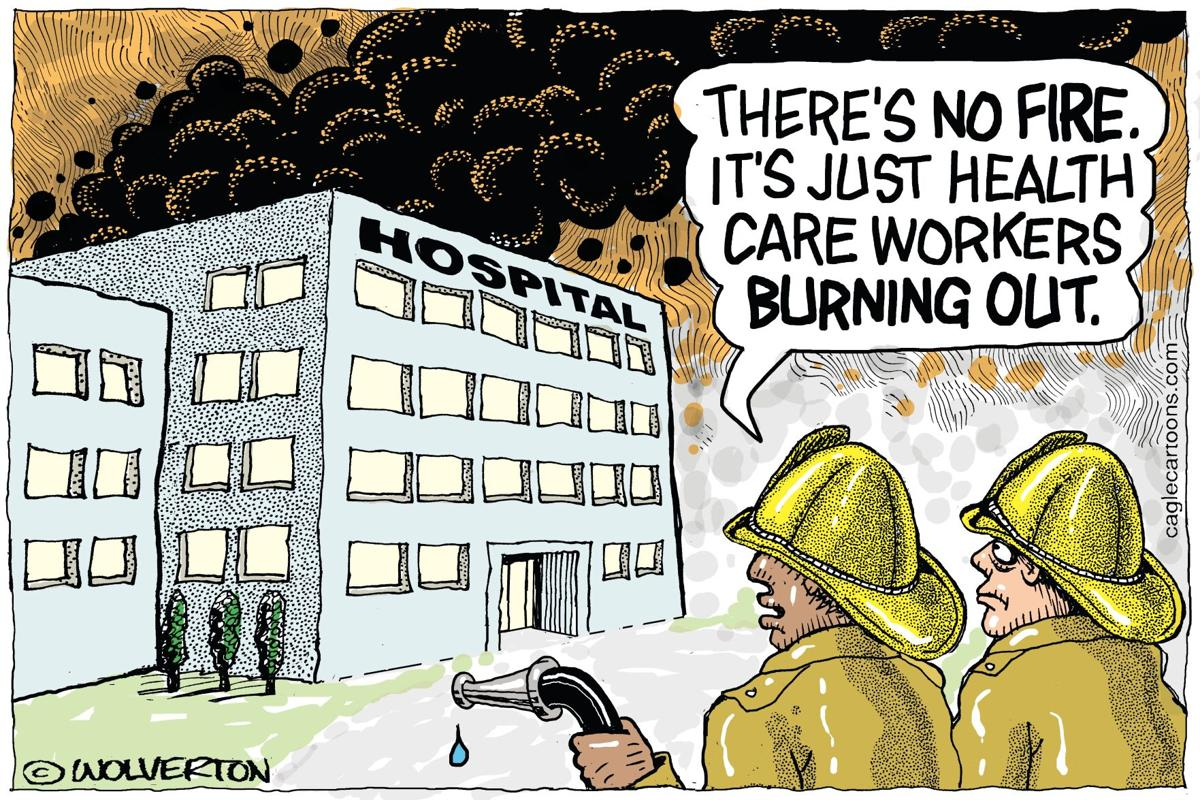
These feelings are strongly shared by its workforce, especially the caregivers and support personnel who service patient in hospital, clinic and long-term care facilities. Their ranks are growing, but their morale is sinking.
Career satisfaction among clinical professionals (nurses, physicians, dentists, counselors) is at all time low and burnout is at an all-time high.
Last Friday, the Bureau of Labor issued its June 2024 Jobs report. To no one’s surprise, job growth was steady (+206,000 for the month) –slightly ahead of its 3-month average (177,000) despite a stubborn inflation rate that’s hovered around 3.3% for 15 months. Healthcare providers accounted for 49,000 of those jobs–the biggest non-government industry employer.
But buried in the detail is a troubling finding: for hospital employment (NAICS 6221.3): productivity was up 5.9%, unit labor costs for the month were down 1.1% and hourly wages grew 4.8%–higher than other healthcare sectors.
For the 4.7 million rank and file directly employed in U.S. hospitals, these productivity gains are interpreted as harder work for less pay. Their wages have not kept pace with their performance improvements while executive pay seems unbridled.
Next weekend, the American Hospital Association will host its annual Leadership Summit in San Diego: 8 themes are its focus:
Building a More Flexible and Sustainable Workforce is among them. That’s appropriate and it’s urgent.
An optimistic view is that emergent technologies and AI will de-lever hospitals from their unmanageable labor cost spiral. Chief Human Resource Officers doubt it. Energizing and incentivizing technology-enabled self-care, expanding scope of practice opportunities for mid-level professionals and moving services out of hospitals are acknowledged keys, but guilds that protect licensing and professional training push back.
By contrast, the application of artificial intelligence to routine administrative tasks is more promising: reducing indirect costs (overhead) that accounts for a third of total spending is the biggest near-term opportunity and a welcome focus to payers and consumers.
Thus, most organizations advance workforce changes cautiously. That’s the first problem.
The second problem is this:
lack of a national healthcare workforce modernization strategy to secure, prepare and equip the health system to effectively perform. Section V of the Affordable Care Act (March 2010) authorized a national workforce commission to modernize the caregiver workforce. Due to funding, it was never implemented. It’s needed today more than ever. The roles of incentives, technologies, AI, data and clinical performance measurement were not considered in the workforce’ ACA charter: Today, they’re vital.
Transformational changes in how the healthcare workforce is composed, evaluated and funded needs fresh thinking and boldness. It must include input from new players and disavow sacred cows. It includes each organization’s stewardship and a national spotlight on modernization.
It’s easier to talk about healthcare’s workforce issues but It’s harder to fix them. That’s why incrementalism is the rule and transformational change just noise.
PS: In doing research for this report, I found wide variance in definitions and counts for the workforce. It may be as high as 24 million, and that does not include millions of unpaid caregivers. All the more reason to urgently address its modernization.
Hospitals saw operating margins continue to erode in October, declining 12% from September under the weight of rising labor costs, according to a national median of more than 900 health systems calculated by Kaufman Hall. It was the second consecutive monthly drop and comes as facilities are preparing for the fast-spreading omicron variant of the coronavirus.
Although expenses remained highly elevated, patient days and average length of stay fell for the first time in months in October, likely reflecting lower hospitalization rates as the pressure of treating large numbers of COVID cases began to ease, Kaufman Hall said in its latest report.
At the same time, operating room minutes rose 6.8% from September, pointing to renewed patient interest in elective procedures.
Dive Insight:
Doctors and nurses have barely caught a breath from the most recent surge in inpatient volumes driven by the delta variant. Now, hospitals face the possibility of a fresh wave of cases led by omicron.
“Performance could continue to suffer in the coming months as hospitals face sustained labor increases and the uncertainties of the emerging omicron variant,” according to the Kaufman Hall report.
The new variant has not been detected in the U.S. as of Wednesday morning, but Canada is amongthe 20 countries that have confirmed cases.
Scientists are scrambling to understand the characteristics of the omicron variant. Anthony Fauci, director of the National Institute of Allergy and Infectious Diseases, told a White House press briefing Tuesday that omicron’s mutation profile points to “increased transmissibility and immune evasion.” But it is too soon to tell whether omicron will cause more severe disease than other COVID-19 variants, or how well current vaccines and treatments work against it, Fauci said.
Moderna CEO Stéphane Bancel told the Financial Times he thought existing vaccines would be less effective against omicron than earlier variants. Moderna, Pfizer, Johnson & Johnson and other manufacturers are already working to adapt their vaccines to combat the new threat, first reported by South African scientists on Nov. 24.
Regeneron also said its COVID-19 antibody drug, the top-selling treatment in the U.S., might be less effective against omicron. The company said it is now conducting tests to determine how the variant affects its drug.
The median hospital operating margin, not including federal Coronavirus Aid, Relief, and Economic Security Act funding, was down 31.5% in October, compared to pre-pandemic levels in the same month of 2019, according to Kaufman Hall’s snapshot. Hospitals in the West, South and Midwest that were hardest hit by the delta variant saw year-over-year margin declines.
Total labor expenses rose nearly 3% from September to October, 12.6% compared to October 2020 and 14.8% compared to October 2019, Kaufman Hall said. Full-time equivalents per adjusted occupied bed decreased 4.5% versus 2020 and 4% versus 2019, suggesting higher salaries due to nationwide labor shortages, rather than increased staffing levels, are driving up labor expenses.
Total non-labor expenses, however, decreased 1% in October from September for supplies, drugs and purchased services, following months of increases.
“Broader economic trends such as U.S. labor shortages are adding to the extreme pressures of the pandemic. Hospitals face greater uncertainties in the coming months as a result, as COVID-19 cases and hospitalizations appear to once again be on the upswing before many have even had a chance to recover from the last surge,” Erik Swanson, a senior vice president of data and analytics at Kaufman Hall said.
Clinical labor costs are up by an average of 8% per patient day, translating to $17 million in additional annual labor expenses.
As the delta variant pushes COVID-19 caseloads to all-time highs, hospitals and health systems across the country are paying $24 billion more per year for qualified clinical labor than they did pre-pandemic, according to a new PINC AI analysis from Premier.
Clinical labor costs are up by an average of 8% per patient day when compared to a pre-pandemic baseline period in 2019. For the average 500-bed facility, this translates to $17 million in additional annual labor expenses since the beginning of the public health emergency.
The data also shows that overtime hours are up 52% as of September. At the same time, the use of agency and temporary labor is up 132% for full-time and 131% for part-time workers. The use of contingency labor – positions created to complete a temporary project or work function – is up nearly 126%.
Overtime and the use of agency staff are the most expensive labor choices for hospitals – usually adding 50% or more to a typical employee’s hourly rate, Premier found.
And hospital workers aren’t just putting in more hours – they’re also working harder. The analysis shows that productivity, measured in worked hours per unit of departmental volume, increased by an average of 7% to 14% year-over-year across the intensive care, nursing and emergency department units, highlighting the significance of the increases in cost-per-hour.
Another complicating factor is that hospital employees are more exposed to COVID-19 than many other workers, with quarantines and recoveries requiring the use of sick time. The data shows that use of sick time, particularly among full-time employees (FTEs) in the intensive care unit, is up 50% for full-time clinical staff and more than 60% for part-time employees when compared with the pre-pandemic baseline.
WHAT’S THE IMPACT
The combined stressors of working more hours while under the constant threat of coronavirus exposure are pushing many hospital workers to the breaking point. In fact, the data shows clinical staff turnover is reaching record highs in key departments like emergency, ICU and nursing.
Since the start of the pandemic, the annual rate of turnover across these departments has increased from 18% to 30%. This means nearly one-third of all employees in these departments are now turning over each year, which is almost double the rate from two years ago.
This is a number that could increase as new vaccination mandates take effect. Already, one Midwestern system reported a loss of 125 employees who chose not to be vaccinated, while a New York facility reported another 90 resignations. Overall, staffing agencies are predicting up to a 5% resignation rate once vaccine mandates kick in.
While a minority of the overall workforce, losses of even a few employees during times of extreme stress can have a ripple effect on hospital operations and costs.
THE LARGER TREND
According to the American Hospital Association, hospitals nationwide will lose an estimated $54 billion in net income over the course of the year, even taking into account the $176 billion in federal CARES Act funding from last year. Added staffing costs were not addressed as part of CARES and are further eating into hospital finances.
As a result, some are now predicting that more than half of all hospitals will have negative margins by the end of 2021 – a trend that could be dire for some community hospitals.
Prior to the pandemic, about one quarter of hospitals had negative margins, the Kaufman Hall data showed. At the beginning of 2021, after almost a year of COVID-19, half of hospitals had negative margins.
Meanwhile, the most potentially disruptive forces facing hospitals and health systems in the next three years are provider burnout, disengagement and the resulting shortages among healthcare professionals, according to a March survey of 551 healthcare executives.
Nearly three in five U.S. health care workers are optimistic about where the industry is headed, according to a new poll released today by Morning Consult.
Why it matters: Amid increasing concerns about burnout in health care and workforce shortages, the poll of more than 900 workers between Sept. 2–8 shows there is still a lot of optimism about the health care profession even as workers deal with stressful working conditions.
A common theme among the responses was the message that “working in healthcare is hard and it’s something that should only be done if you are completely committed to it.”
Responses ranged from one worker who said “it’s a great career,” to another who said young people should avoid the field “unless you have a death wish.”
The poll also found men were more likely than women to be optimistic about the future of the health care industry.
40% of primary care clinicians worry that the field won’t exist in five years as many in the healthcare workforce experience burnout and plan to leave the field.
Clinician burnout, lay-offs, and other healthcare workforce challenges coming out of the COVID-19 pandemic are creating issues for primary care, according to a new survey.
About 40 percent of over 700 primary care clinicians recently surveyed by the Larry A. Green Center, Primary Care Collaborative (PCC), and 3rd Conversation worry that primary care won’t exist in five years’ time. Meanwhile, about a fifth say they expect to leave primary care within the next three years.
“Primary care is the front door to the healthcare system for most Americans, and the door is coming off its hinges,” Christine Bechtel, co-founder of 3rd Conversation, a community of patients and clinicians, said in a press release. “The fact that 40 [percent] of clinicians are worried about the future of primary care is of deep concern, and it’s time for new public policies that value primary care for the common good that it is.”
The threat to primary care comes as practices ramp up vaccination efforts. The survey found that more than half of respondents (52 percent) report receiving enough or more than enough vaccines for their patients, and 31 percent are partnering with local organizations or government to prioritize people for vaccination.
Stress levels at primary care practices are also decreasing compared to the height of the pandemic, according to survey results. However, over one in three, or 36 percent, of respondents say they are experiencing hardships, such as feeling constantly lethargic, having trouble finding joy in anything, and/or struggling to maintain clear thinking.
Clinician fatigue could spell trouble for the primary care workforce and the field itself, researchers indicated.
“The administration has now recognized the key role primary care is able to play in reaching vaccination goals,” Rebecca Etz, PhD, co-director of The Larry A. Green Center, said in the release. “While the pressure is now on primary care to convert the most vaccine-hesitant, little has been done to support primary care to date. Policymakers need to bear witness to the quiet heroism of primary care – a workforce that suffered five times more COVID-related deaths than any other medical discipline.”
Many primary care clinicians are hoping the federal government steps in to change policy and bolster primary care and the healthcare workforce. The government can start with how primary care is paid, respondents agreed.
About 46 percent of clinicians responding to the survey said policy should change how primary care is financed so that the field is not in direct competition with specialty care. The same percentage of clinicians also said policy to change how primary care is paid by shifting reimbursement from fee-for-service.
Over half of clinicians (56 percent) also agreed that policy should protect primary care as a common good and make it available to all regardless of ability to pay.
Alternative payment models helped providers during the COVID-19 pandemic, research from healthcare improvement company Premier, Inc. showed. Their study found that organizations in alternative payment models were more likely to leverage care management, remote patient monitoring, and population health data during the pandemic compared to organizations that relied on fee-for-service revenue.
“Many of the practices, especially in primary care, have been extremely cash strapped and have been struggling for many years,” Sanjay Doddamani, MD, toldRevCycleIntelligence last year.
“This has been a big moment for us to act in accelerating our performance-based incentive payments to our primary care doctors. We moved up our schedule of payments so that they could at least have some continued flow of funds,” added the chief physician executive and COO at Southwestern Health Resources, a clinically integrated network based in Texas.
Value-based contracting could be the key to primary care’s existence in the future, that is, if practices get on board with alternative payment models. A majority of respondents to the latest Value-Based Care Assessment from Insights said over 75 percent of their organization’s revenue is from fee-for-service contracts. This was especially true for respondents working in physician practices, of which 64 percent relied almost entirely on fee-for-service payments.
Health system executives continue to tell us that the top issue now keeping them up at night is workforce engagement.
Exhausted from the COVID experience, facing renewed cost pressures, and in the midst of a once-in-a-generation rethink of work-life balance among employees, health systems are having increasing difficulty filling vacant positions, and holding on to key staff—particularly clinical talent. One flashpoint that has emerged recently, according to leaders we work with, is the growing divide between those working a “hybrid” schedule—part at home, part in the office—and those who must show up in person for work because of their roles. Largely this split has administrative staff on one side and clinical workers on the other, leading doctors, nurses, and other clinicians to complain that they have to come into work (and have throughout the pandemic), while their administrative colleagues can continue to “Zoom in”. There’s growing resentment among those who don’t have the flexibility to take a kid to baseball practice at 3 o’clock, or let the cable guy in at noon without scheduling time off, making the sense of burnout and malaise even more intense. Add to that the resurgence in COVID admissions in some markets, and the “help wanted” situation in the broader economy, and the health system workforce crisis looks worse and worse. Beyond raising wages, which is likely inevitable for most organizations, there is a need to rethink job design and work patterns, to allow a tired, frustrated, and—thanks to the in-person/WFH divide—envious workforce the chance to recover from an incredibly difficult year.
A topic that’s come up in almost every discussion we’ve had with health system executive teams and boards recently is workforce strategy. Beyond the immediate political debate about whether temporary unemployment benefits are exacerbating a shortage of workers, there’s a growing recognition that the healthcare workforce is approaching something that looks like a “perfect storm”.
The workforce is mentally and physically exhausted from the pandemic, which has taken a toll both professionally and personally. Many workers are rethinking their work-life balance equations in the wake of a difficult year, during which working conditions and family responsibilities shifted dramatically. That, along with broader economic inflation, is driving demands for higher wages and a more robust set of benefits.
Meanwhile, many health systems are shifting into cost-cutting mode, due to COVID-related shifts in demand patterns and continued downward pressure on reimbursement rates, forcing a renewed focus on workforce productivity.
These combined forces threaten to create a negative spiral, which could lead to even worse shortages and deteriorating workplace engagement. It’s striking how quickly the “hero” narrative has shifted to a “crisis” narrative, and we agree completely with one health system board member who told us recently that workforce strategy is now the number one issue on his agenda.
No easy answers here, but we’ll continue to report on innovative approaches to addressing these difficult challenges.
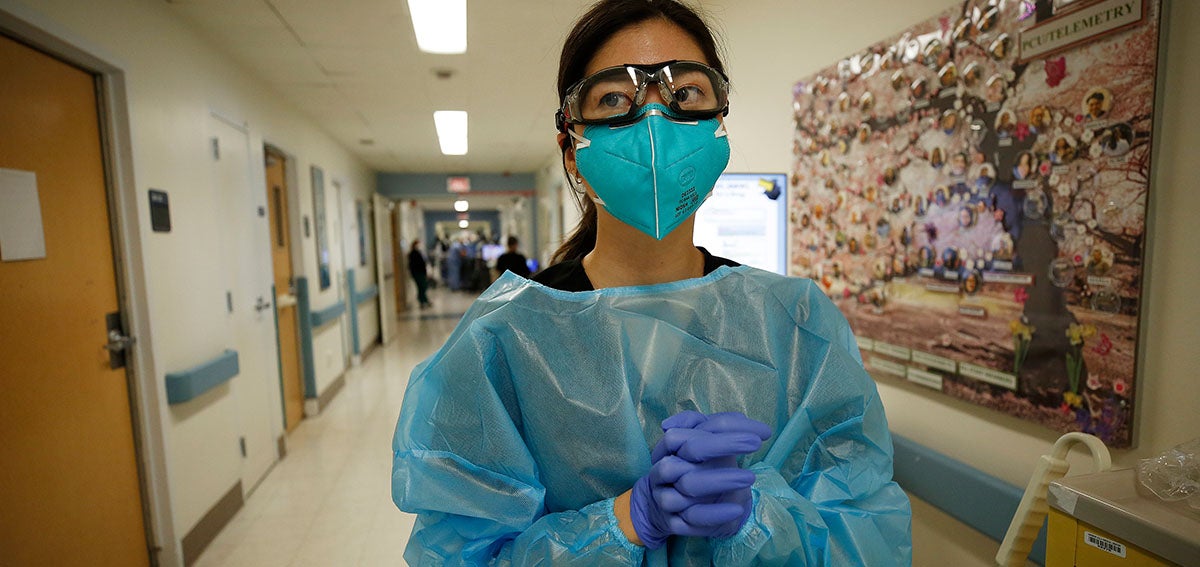
Dr. Christine Choi, 32, a medical resident at Harbor-UCLA Medical Center in Torrance, prepares to enter an isolation area for COVID-19 inpatients. Health care providers must face daily patient death and suffering.
Soon after the COVID-19 pandemic began last spring, Christine Choi, DO, a second-year medical resident at Harbor-UCLA Medical Center, volunteered to enter COVID-19 patient rooms. Since then, she has worked countless nights in the intensive care unit in full protective gear, often tasked with giving the sickest patients and their families the grim choice between intubation or near-certain death.
“I’m offering this guy two terrible options, and that’s how I feel about work: I can’t fix this for you and it sucks, and I’m sorry that the choices I’m giving you are both terrible,” Choi told the Los Angeles Times’ Soumya Karlamangla about one patient encounter.
While Choi exhibits an “almost startlingly positive attitude” in her work, it’s no match for the psychological burdens placed on her shoulders by the global pandemic, Karlamangla wrote. When an older female COVID-19 patient died in the hospital recently, her husband — in the same hospital with the same diagnosis — soon began struggling to breathe. Sensing that he had little time left, Choi held a mobile phone at his bedside so that each of his children could come on screen to tell him they loved him. “I was just bawling in my [personal protective equipment],” Choi said. “The sound of the family members crying — I probably will never forget that,” she said.
It was not the first time the young doctor helped family members say goodbye to a loved one, and it would not be the last. Health care providers like Choi have had to work through unimaginable tragedies and unprecedented circumstances because of COVID-19, with little time to dedicate to their own mental health or well-being.
It has been nearly a year since the US reported what was believed at the time to be its first coronavirus death in Washington State. Since then, the pandemic death toll has mushroomed to nearly 500,000 nationwide, including 49,000 Californians. These numbers are shocking, and yet they do not capture the immeasurable emotional weight that falls on the health care providers with the most intimate view of COVID-19’s deadly progression.“The horror of the pandemic has unfolded largely outside public view and inside hospitals, piling a disproportionate share of the trauma on the people whose work takes them inside their walls,” Karlamangla wrote.
Experts are deeply concerned about the psychological and physical burdens that providers must bear, and the fact that there is still no end in sight. “At least with a natural disaster, it happens, people get scattered all over the place, property gets damaged or flooded, but then we begin to rebuild,” Lawrence Palinkas, PhD, MA, a medical anthropologist at USC, told Karlamangla. “We’re not there yet, and we don’t know when that will actually occur.”
Sixty-eight percent of providers said they feel emotionally drained from their work, 59% feel burned out, 57% feel overworked, and 50% feel frustrated. The poll asked providers who say they feel burned out what contributes most to that viewpoint. One doctor from the Central Valley wrote:
“Short staffed due to people out with COVID. I’m seeing three times as many patients, with no time to chart or catch up. Little appreciation or contact from my bosses. I have never had an N95 [mask]. The emotional toll this pandemic is taking. Being sick myself and spreading it to my wife and young kids. Still not fully recovered but needing to be at work due to physician shortages. Lack of professional growth, and a sense of lack of appreciation at work and feeling overworked. The sadness of the COVID-related deaths and the stories that go along with the disease. That’s a lot of stuff to unpack.”
The pandemic has been especially challenging for female health providers, who compose 77% of health care workers with direct patient contact. “The pandemic exacerbated gender inequities in formal and informal work, and in the distribution of home responsibilities, and increased the risk of unemployment and domestic violence,” an international group of experts wrote in the Lancet. “While trying to fulfill their professional responsibilities, women had to meet their families’ needs, including childcare, home schooling, care for older people, and home care.”
For one female doctor from the Bay Area who responded to the CHCF survey, the extra burdens of the pandemic have been unrelenting: “Having to work more, lack of safe, affordable, available childcare while I’m working. As a single mother, working 15 hours straight, then having to care for my daughter when I get home. Just exhausted with no days off. So many Zoom meetings all day long. Miss my family and friends.”
It is unclear how the pandemic will affect the health care workforce in the long term. For now, the damage “can be measured in part by a surge of early retirements and the desperation of community hospitals struggling to hire enough workers to keep their emergency rooms running,” Andrew Jacobs reported in the New York Times.
One of the early retirements Jacobs cited was Sheetal Khedkar Rao, MD, a 42-year-old internist in suburban Chicago. Last October, she decided to stop practicing medicineafter “the emotional burden and moral injury became too much to bear,” she said. Two of the main factors driving her decision were a 30% pay cut to compensate for the decline in revenue from primary care visits and the need to spend more time at home after her two preteen children switched to remote learning.
“Everyone says doctors are heroes and they put us on a pedestal, but we also have kids and aging parents to worry about,” Rao said.
Working Through Unremitting Sickness and Death
In addition to the psychological burden, health care providers must cope with a harsh physical toll. People of color account for most COVID-19 cases and deaths among health care workers, according to a KFF issue brief. Some studies show that health care workers of color “are more likely to report reuse of or inadequate access to [personal protective equipment] and to work in clinical settings with greater exposure to patients with COVID-19.”
“Lost on the Frontline,” a collaboration of Kaiser Health News and the Guardian, has counted more than 3,400 deaths among US health care workers from COVID-19. Eighty-six percent of the workers who died were under age 60, and nurses accounted for roughly one-third of the deaths.
“Lost on the Frontline” provides the most comprehensive picture available of health care worker deaths, because the US still lacks a uniform system to collect COVID-19 morbidity and mortality data among health care workers. A year into the project, the federal government has decided to take action. Officials at the US Department of Health and Human Services cited the project when asking the National Academies of Sciences, Engineering, and Medicine for a rapid expert consultation to understand the causes of deaths among health care workers during the pandemic.
The National Academies’ report, published December 10, recommends the “adoption and use of a uniform national framework for collecting, recording, and reporting mortality and morbidity data” along with the development of national reporting standards for a core set of morbidity impacts, including mental well-being and psychological effects related to working through public health crises. Some health care experts said the data gathering could be modeled on the federal government’s World Trade Center Health Program, which provides no-cost medical monitoring and treatment for workers who responded to the 9/11 terrorist attacks 20 years ago.
“We have a great obligation to people who put their lives on the line for the nation,” Victor J. Dzau, MD, president of the National Academy of Medicine, told Jacobs.










 HENRY KOTULA