Admininstration believes Coronavirus is “under control”

https://www.axios.com/newsletters/axios-vitals-65b6b9b9-ee8e-4b89-9688-c43c0146c4d6.html?utm_source=newsletter&utm_medium=email&utm_campaign=newsletter_axiosvitals&stream=top

Daily confirmed COVID-19 cases, rolling 3-day average - Our World ...

President Trump said in an interview with “Axios on HBO” that he thinks the coronavirus is as well-controlled in the U.S. as it can be, despite dramatic surges in new infections over the course of the summer and more than 150,000 American deaths.

  • “They are dying, that’s true. And you have — it is what it is. But that doesn’t mean we aren’t doing everything we can. It’s under control as much as you can control it. This is a horrible plague,” he told Axios’ Jonathan Swan.

Reality check: The U.S. is averaging roughly 65,000 new cases and 1,000 deaths per day, Axios’ Sam Baker writes. The virus has already killed nearly 150,000 Americans, and it spread largely unchecked through almost the entire country throughout June and July.

The big picture: In the interview, which took place last Tuesday, Trump returned to familiar themes and areas where the U.S. really has made significant progress. He cited the dramatic increase in ventilator production, the ramp-up in testing and treatment that has reduced the overall fatality rate from the virus.

  • Yes, but: He painted a far rosier picture of the pandemic than most data would support.

On testing, Trump said, “You know there are those that say you can test too much” — a view that no experts have advocated.

  • The U.S. is experiencing long turnaround times for coronavirus testing, as Trump acknowledged, because of the high demand for testing. But that is largely a function of the country’s high caseload and the number of people at risk of infection.

He also returned to his mantra that “because we’ve done more tests, we have more cases.”

  • The cases the U.S. has, we would have had with or without testing. We know we have them because of testing, but the massive outbreak here would be a massive outbreak whether we chose to know about it (through testing) or ignore it by not testing.


The Mask Slackers of 1918

As the influenza pandemic swept across the United States in 1918 and 1919, masks took a role in political and cultural wars.

The masks were called muzzles, germ shields and dirt traps. They gave people a “pig-like snout.” Some people snipped holes in their masks to smoke cigars. Others fastened them to dogs in mockery. Bandits used them to rob banks.

More than a century ago, as the 1918 influenza pandemic raged in the United States, masks of gauze and cheesecloth became the facial front lines in the battle against the virus. But as they have now, the masks also stoked political division. Then, as now, medical authorities urged the wearing of masks to help slow the spread of disease. And then, as now, some people resisted.

In 1918 and 1919, as bars, saloons, restaurants, theaters and schools were closed, masks became a scapegoat, a symbol of government overreach, inspiring protests, petitions and defiant bare-face gatherings. All the while, thousands of Americans were dying in a deadly pandemic.

The first infections were identified in March, at an Army base in Kansas, where 100 soldiers were infected. Within a week, the number of flu cases grew fivefold, and soon the disease was taking hold across the country, prompting some cities to impose quarantines and mask orders to contain it.

By the fall of 1918, seven cities — San Francisco, Seattle, Oakland, Sacramento, Denver, Indianapolis and Pasadena, Calif. — had put in effect mandatory face mask laws, said Dr. Howard Markel, a historian of epidemics and the author of “Quarantine!

Organized resistance to mask wearing was not common, Dr. Markel said, but it was present. “There were flare-ups, there were scuffles and there were occasional groups, like the Anti-Mask League,” he said, “but that is the exception rather than the rule.”

At the forefront of the safety measures was San Francisco, where a man returning from a trip to Chicago apparently carried the virus home, according to archives about the pandemic at the University of Michigan.

By the end of October, there were more than 60,000 cases statewide, with 7,000 of them in San Francisco. It soon became known as the “masked city.”

“The Mask Ordinance,” signed by Mayor James Rolph on Oct. 22, made San Francisco the first American city to require face coverings, which had to be four layers thick.

Resisters complained about appearance, comfort and freedom, even after the flu killed an estimated 195,000 Americans in October alone.

Alma Whitaker, writing in The Los Angeles Times on Oct. 22, 1918, reviewed masks’ impact on society and celebrity, saying famous people shunned them because it was “so horrid” to go unrecognized.

“The big restaurants are the funniest sights, with all the waiters and diners masked, the latter just raising their screen to pop in a mouthful of food,” she wrote.

When Ms. Whitaker herself declined to wear one, she was “forcibly taken” to the Red Cross as a “slacker,” and ordered to make one and put it on.

The San Francisco Chronicle said the simplest type of mask was of folded gauze affixed with elastic or tape. The police went for gauze masks, which resembled an unflattering “nine ordinary slabs of ravioli arranged in a square.”

There was room for creativity. Some of the coverings were “fearsome looking machines” that lent a “pig-like aspect” to the wearer’s face.

The penalty for violators was $5 to $10, or 10 days’ imprisonment.

On Nov. 9, 1,000 people were arrested, The San Francisco Chronicle reported. City prisons swelled to standing room only; police shifts and court sessions were added to help manage.

“Where is your mask?” Judge Mathew Brady asked offenders at the Hall of Justice, where sessions dragged into night. Some gave fake names, said they just wanted to light a cigar or that they hated following laws.

Jail terms of 8 hours to 10 days were given out. Those who could not pay $5 were jailed for 48 hours.

On Oct. 28, a blacksmith named James Wisser stood on Powell and Market streets in front of a drugstore, urging a crowd to dispose of their masks, which he described as “bunk.”

A health inspector, Henry D. Miller, led him to the drugstore to buy a mask.

At the door, Mr. Wisser struck Mr. Miller with a sack of silver dollars and knocked him to the ground, The San Francisco Chronicle reported. While being “pummeled,” Mr. Miller, 62, fired four times with a revolver. Passers-by “scurried for cover,” The Associated Press said.

Mr. Wisser was injured, as were two bystanders. He was charged with disturbing the peace, resisting an officer and assault. The inspector was charged with assault with a deadly weapon.

That was the headline for a report published in The Los Angeles Times when city officials met in November to decide whether to require residents to wear “germ scarers” or “flu-scarers.”

Public feedback was invited. Some supported masks so theaters, churches and schools could operate. Opponents said masks were “mere dirt and dust traps and do more harm than good.”

“I have seen some persons wearing their masks for a while hanging about their necks, and then apply them to their faces, forgetting that they might have picked up germs while dangling about their clothes,” Dr. E.W. Fleming said in a Los Angeles Times report.

An ear, nose and throat specialist, Dr. John J. Kyle, said: “I saw a woman in a restaurant today with a mask on. She was in ordinary street clothes, and every now and then she raised her hand to her face and fussed with the mask.”

Suffragists fighting for the right to vote made a gesture that rejected covering their mouths at a time when their voices were crucial.

At the annual convention of the Illinois Equal Suffrage Association, in October 1918, they set chairs four feet apart, closed doors to the public and limited attendance to 100 delegates, the Chicago Daily Tribune reported.

But the women “showed their scorn” for masks, it said. It’s unclear why.

Allison K. Lange, an associate history professor at Wentworth Institute of Technology, said one reason could have been that they wanted to keep a highly visible profile.

“Suffragists wanted to make sure their leaders were familiar political figures,” Dr. Lange said.

San Francisco’s mask ordinance expired after four weeks at noon on Nov. 21. The city celebrated, and church bells tolled.

A “delinquent” bent on blowing his nose tore his mask off so quickly that it “nearly ruptured his ear,” The San Francisco Chronicle reported. He and others stomped on their masks in the street. As a police officer watched, it dawned on him that “his vigil over the masks was done.”

Waiters, barkeeps and others bared their faces. Drinks were on the house. Ice cream shops handed out treats. The sidewalks were strewn with gauze, the “relics of a torturous month,” The Chronicle said.

The spread had been halted. But a second wave was on the horizon.

By December, the San Francisco Board of Supervisors was again proposing a mask requirement, meeting with testy opposition.

Around the end of the year, a bomb was defused outside the office of San Francisco’s chief health officer, Dr. William C. Hassler. “Things were violent and aggressive, but it was because people were losing money,” said Brian Dolan, a medical historian at the University of California, San Francisco. “It wasn’t about a constitutional issue; it was a money issue.”

By the end of 1918, the death toll from influenza had reached at least 244,681, mostly in the last four months, according to government statistics.

In January, Pasadena’s city commission passed a mask ordinance. The police grudgingly enforced it, cracking down on cigar smokers and passengers in cars. Sixty people were arrested on the first day, The Los Angeles Times reported on Jan. 22, in an article titled “Pasadena Snorts Under Masks.”

“It is the most unpopular law ever placed on the Pasadena records,” W.S. McIntyre, the chief of police, told the paper. “We are cursed from all sides.”

Some mocked the rule by stretching gauze across car vents or dog snouts. Cigar vendors said they lost customers, though enterprising aficionados cut a hole in the cloth. (They were still arrested.) Barbers lost shaving business. Merchants complained traffic dropped as more people stayed home.

Petitions were circulated at cigar stands. Arrests rose, even of the powerful. Ernest May, the president of Security National Bank of Pasadena, and five “prominent” guests were rounded up at the Maryland Hotel one Sunday.

They had masks on, but not covering their faces.

As the contagion moved into its second year, so did the skepticism.

On Dec. 17, 1918, the San Francisco Board of Supervisors reinstituted the mask ordinance after deaths started to climb, a trend that spilled over into the new year with 1,800 flu cases and 101 deaths reported there in the first five days of January.

That board’s decision led to the creation of the Anti-Mask League, a sign that resistance to masks was resurfacing as cities tried to reimpose orders to wear them when infections returned.

The league was led by a woman, E.J. Harrington, a lawyer, social activist and political opponent of the mayor. About a half-dozen other women filled its top ranks. Eight men also joined, some of them representing unions, along with two members of the board of supervisors who had voted against masks.

“The masks turned into a political symbol,” Dr. Dolan said.

On Jan. 25, the league held its first organizational meeting, open to the public at the Dreamland Rink, where they united behind demands for the repeal of the mask ordinance and for the resignations of the mayor and health officials.

Their objections included lack of scientific evidence that masks worked and the idea that forcing people to wear the coverings was unconstitutional.

On Jan. 27, the league protested at a Board of Supervisors meeting, but the mayor held his ground. There were hisses and cries of “freedom and liberty,” Dr. Dolan wrote in his paper on the epidemic.

Repeal came a few days later on Feb. 1, when Mayor Rolph cited a downturn in infections.

But a third wave of flu rolled in late that year. The final death toll reached an estimated 675,000 nationwide, or 30 for every 1,000 people in San Francisco, making it one of the worst-hit cities in America.

Dr. Dolan said the story of the Anti-Mask League, which has drawn renewed interest now in 2020, demonstrates the disconnect between individual choice and universal compliance.

That sentiment echoes through the century from the voice of a San Francisco railway worker named Frank Cocciniglia.

Arrested on Kearny Street in January, Mr. Cocciniglia told the judge that he “was not disposed to do anything not in harmony with his feelings,” according to a Los Angeles Times report.

He was sentenced to five days in jail.

“That suits me,” Mr. Cocciniglia said as he left the stand. “I won’t have to wear a mask there.”


State of the Union: by Paul Field

Image may contain: text that says 'Whoever Paul Field is he hit the nail on the head. Field PM own opinion, but you post Everyone entitled silly "Welcome Socialism... You Socialism. the wealthiest, geographically advantaged, productive people. about This failure our, "Booming economy," modest challenges. tis the market dissonance stores, farmers/producers and crisis about corporations needing emergency bailout longest history ending interest with being unable equipped provide healthcare, time post profits. crisis response depending antiquated systems nobody remembers operate. But all, politicization the for the benefit of education, science, natural lifestyles, lifestyles, charity, compassion, virtually else for brief gain gutted our society.'

Graph of the Day: Daily Confirmed Covid-19 Cases (Rolling 3-day average)

Daily confirmed COVID-19 cases, rolling 3-day average - Our World ...

‘I’m fighting a war against COVID-19 and a war against stupidity,’ says CMO of Houston hospital

https://www.beckershospitalreview.com/hospital-physician-relationships/i-m-fighting-a-war-against-covid-19-and-a-war-against-stupidity-says-cmo-of-houston-hospital.html?utm_medium=email


After two hours of sleep a night for four months and seeing a member of his team contract the virus, Joseph Varon, MD, is growing exasperated.

“I’m pretty much fighting two wars: A war against COVID and a war against stupidity,” Dr. Varon, MD, CMO and chief of critical care at United Memorial Medical Center in Houston, told NBC News. “And the problem is the first one, I have some hope about winning. But the second one is becoming more and more difficult.”

Dr. Varon noted that whether it’s information backed by science or common sense, people throughout the U.S. are not listening. “The thing that annoys me the most is that we keep on doing our best to save all these people, and then you get another batch of people that are doing exactly the opposite of what you’re telling them to do.”

In an interview with NPR, Dr. Varon said he has woken up at dawn every day for the past four months and has headed to the hospital. There, he spends six to 12 hours on rounds before seeing new admissions. He then returns home to sleep two hours, at most.

He said his staff is physically and emotionally drained. 

UMMC nurse Christina Mathers spoke with NBC News from a hospital bed in the segment, noting that she had recently tested positive for COVID-19 after not feeling well during one of her shifts. “All the fighting, all the screaming, all the finger pointing — enough is enough,” Ms. Mathers told NBC. “People just need to listen to us. We’re not going to lie. Why would we lie?” 

Ms. Mathers has worked every other day since April 29, according to The Atlantic, which created a photo essay of Dr. Varon and the UMMC team at work.


Coronavirus update: July marked the worst month on record for new infections. In excess of 1,000 died per day which represents greater than 50% of those who died during the entire Vietnam War (this in just 1 month).

https://www.washingtonpost.com/nation/2020/08/01/coronavirus-covid-updates/?utm_campaign=wp_main&utm_medium=social&utm_source=facebook&fbclid=IwAR0xbw4thPtgPhENJTwT4SvP12mXTKepV237WVnLp6dCu-hav0FqYt1p1qs

U.S. Hits Another Record for New Coronavirus Cases - The New York ...

The United States saw a devastating surge in coronavirus infections during July, with more than 1.9 million new cases in total reported — by far the most tallied in a single month and a grim sign that the country had lost its grip on the pandemic.

The month’s infection total reported by states was more than double that of June and represents about 42 percent of the 4.5 million cases the country has logged since the outbreak started, according to tracking by The Washington Post. Nationwide, testing has steadily increased — in July, it rose from about 600,000 to 820,000 tests per day — but soaring positivity rates and hospitalizations made clear that virus transmission was accelerating.

Coronavirus-related deaths also rose after declining during April and May: The country saw 25,259 fatalities in July, up more than 3,700 from the previous month, according to The Post’s data. Health experts predicted daily deaths would continue to trend upward in August, trailing spikes in infections by a few weeks. To date, more than 150,000 people in the United States have died of covid-19, the disease the novel coronavirus causes.

Here are some significant developments:

  • Over the past week, 24 states surpassed a case increase of more than 100 cases per 100,000 people — a metric the White House and Deborah Birx, the coronavirus response coordinator, have defined as “red zone” states, where the spread of the virus is serious enough to warrant stricter public health precautions.
  • The United States tallied 1,315 coronavirus deaths Friday, the fifth day in a row the country has reached a four-digit death toll, according to data analysis by The Post.
  • Anthony S. Fauci, the country’s leading expert on infectious diseases, told Congress on Friday that a “diversity of response” from states had hampered efforts to bring down the number of new infections. In contrast, he said, many European nations went into near-total lockdowns.
  • Students can return to college safely if they are tested for the coronavirus every two days, according to a JAMA study by researchers from the Yale School of Public Health, Harvard Medical School and Massachusetts General Hospital.

Amid the rise in infections and deaths, the country’s virus response remains fractured and halting. Officials at all levels of government spent July sparring over whether to roll back reopening plans and institute mask mandates and other public health requirements recommended by leading health experts.

The pandemic has also had a harsh impact on the economy, with the nation’s gross domestic product shrinking at an annual rate of 32.9 percent in the second quarter. At midnight Friday, tens of millions of American workers lost $600 weekly unemployment payments after congressional leaders failed to reach an agreement on how to extend the benefit, which has helped keep many households afloat the past four months.


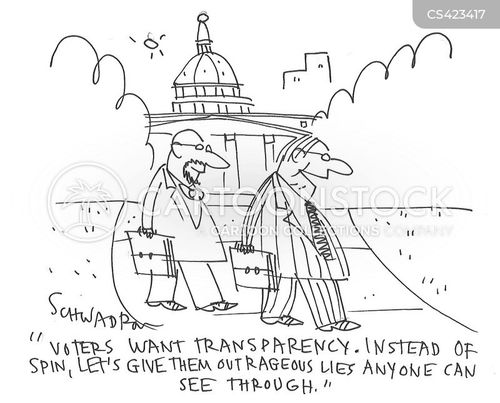
Cartoon – Importance of Transparency

Government Transparency Cartoons and Comics - funny pictures from ...

Fed chief: New surge in cases is beginning to weigh on the economy

https://www.washingtonpost.com/business/2020/07/29/powell-fed-economy/?utm_campaign=wp_main&utm_medium=social&utm_source=facebook&fbclid=IwAR2CvBwHTLxHdQVT0I2uItlkVA9TMiJQpxdEyT2wucJ-3r1J3isD2U8y6Ic

US Central Bank Chief Says Surge In Coronavirus (COVID-19) Cases ...

The Federal Reserve is keeping interest rates unchanged at close to zero, but the Fed is also extending programs to buy Treasuries and mortgage-backed securities.

The head of the Federal Reserve said Wednesday that rising numbers of coronavirus cases since mid-June are beginning to weigh on the economy, reinforcing that the fate of the recovery depends on containing the pandemic.

“On balance, it looks like the data are pointing to a slowing in the pace of the recovery,” Federal Reserve Chair Jerome H. Powell said during a news conference on Wednesday. “I want to stress it’s too early to say both how large that is and how sustained it will be.”

Job gains from May and June came “sooner and stronger” than expected, Powell said. But those encouraging signs were closely followed by a surge in coronavirus cases nationwide. Powell said that at the same time people’s lives depend on containing the public health crisis, it is also important to “deal with the economic ramifications.”

Powell said some measures of consumer spending, based on debit card and credit card use, have moved down since late June. Powell also mentioned recent labor market indicators that are pointing to slower job growth, especially for smaller businesses. Hotel occupancy rates have flattened out, Powell said, while Americans are not going to restaurants, gas stations and beauty salons as much as they had been earlier in the summer.

Powell said the upcoming jobs reports and other surveys will help flesh out the Fed’s economic outlook, cautioning that he did not “want to get ahead of where the data are on this.” But as he has for months, Powell again emphasized that the economy’s recovery depends on the country’s ability to stop the virus from spreading.

“The path of the economy is going to depend, to a very high extent, on the course of the virus and on the measures we take to keep it in check,” Powell said. “The two things are not in conflict. Social distancing measures and a fast reopening of the economy actually go together. They’re not in competition with each other.”

As expected, the Fed’s policymaking board decided to keep interest rates, which are already near zero, unchanged as it concluded two days of policy meetings this week. Markets responded optimistically to the news, with the Dow Jones industrial average ending up 160 points at Wednesday’s close.

The Federal Reserve signaled in its statement on Wednesday that the Fed would continue to use “its full range of tools” to steer the economy out of recession, even as the virus significantly shapes the future of the economy.

“The ongoing public health crisis will weigh heavily on economic activity, employment, and inflation in the near term, and poses considerable risks to the economic outlook over the medium term,” the Fed’s top panel of policymakers said in a statement at the conclusion of two days of meetings.

After sharp declines, economic activity and employment “have picked up somewhat in recent months,” the Fed said. Economists have been closely watching July indicators, which could help explain whether the recovery from earlier this summer is beginning to fizzle as some states and cities reimpose restrictions on businesses to combat rising coronavirus cases.

“Overall financial conditions have improved in recent months, in part reflecting policy measures to support the economy and the flow of credit to U.S. households and businesses,” the Fed statement read.

To support the flow of credit to households and businesses, the Fed said it would increase its holdings of Treasury securities and agency residential and commercial mortgage-backed securities at least at the current pace over the coming months. The Fed has said its support of the markets should remain in place to help safeguard the broader financial system during the pandemic.

At his news conference, Powell said the Fed was committed to keeping its lending facilities and other emergency measures in place not only during the shutdown and reopening, but also through the “long tail where a large number of people are struggling to get back to work.”

“We’re in this until we’re well through it,” Powell said.

Powell’s news conference comes as Congress clashes over another stimulus bill and an extension for enhanced unemployment benefits. On Tuesday, President Trump brushed off the new $1 trillion Senate GOP coronavirus legislation as “sort of semi-irrelevant.”

Powell has repeatedly said that the Fed cannot heal the economy alone and that more help will be needed from Congress to ease the pain for millions of Americans. On Wednesday, Powell said funding from the Cares Act has been key to keeping people in their homes and jobs. He praised the Paycheck Protection Program, for example, for getting money directly to businesses that couldn’t necessarily have been saved through a Fed lending program.

“Lending is a particular tool, and we’re using it very aggressively, but fiscal policy is essential here,” Powell said. “As I’ve said, more will be needed from all of us, and I see Congress is negotiating now over a new package, and I think that’s a good thing.”

Powell has stopped short of telling lawmakers exactly what they should do, or how urgently they should act, saying it isn’t his role to tell other parts of government how to do their jobs. But on Wednesday, Powell pushed the success of Congress’s earlier programs as reason for lawmakers to act again, said Skanda Amarnath, research director of Employ America, a policy group that advocates for full employment and higher wages.

Amarnath said Powell’s framing could give some cover to Republican lawmakers who are less convinced more help is needed, or who dispute the connection between the virus and the recovery.

“[Powell] is trying to reiterate that you can’t think of this as ‘either or,’ ” Amarnath said, adding that when it comes to tackling the pandemic and the economy, “you’re going to have to tackle one to tackle the other.”

For months, Powell has insisted that the virus will dictate an economic turnaround, which he says can’t happen until Americans feel safe going about their daily routines. Since the Fed’s last meeting in June, rising case counts have forced states to reimpose restrictions on business activity. Minutes from the Fed’s June meeting showed officials were worried the United States could enter a much worse recession later this year if the pandemic is not contained.

At this week’s Fed meeting, Fed leaders were expected to discuss other policy tools, such as forward guidance and asset purchases, without necessarily coming away with any firm conclusions. Economists are also awaiting the release of the Fed’s long-term monetary policy review, which could change the way the Fed approaches its inflation target.


3 Months Of Hell: U.S. Economy Drops 32.9% In Worst GDP Report Ever

https://www.npr.org/sections/coronavirus-live-updates/2020/07/30/896714437/3-months-of-hell-u-s-economys-worst-quarter-ever?utm_campaign=storyshare&utm_source=facebook.com&utm_medium=social&fbclid=IwAR1L_YW1uYovd5bpjtU6xV7HI_DgGsYPgmdEs3fz0RbOn8XukrKhafRsljE

Economy Shrank At 32.9% Rate In 2nd Quarter

Percent change from the preceding period, seasonally adjusted annual rate

3 Months Of Hell: U.S. Economy Drops 32.9% In Worst GDP Report ...

The coronavirus pandemic triggered the sharpest economic contraction in modern American history, the Commerce Department reported Thursday.

Gross domestic product — the broadest measure of economic activity — shrank at an annual rate of 32.9% in the second quarter as restaurants and retailers closed their doors in a desperate effort to slow the spread of the virus, which has killed more than 150,000 people in the U.S.

The economic shock in April, May and June was more than three times as sharp as the previous record — 10% in 1958 — and nearly four times the worst quarter during the Great Recession.

“Horrific,” said Nariman Behravesh, chief economist at IHS Markit. “We’ve never seen anything quite like it.”

Another 1.43 million people filed for state unemployment last week, an increase of 12,000, the Labor Department reported Thursday. It was the second week in a row of increased unemployment filings and shows that the economic picture continues to remain grim.

GDP swings are typically reported at an annual rate — as if they were to continue for a full year — which can be misleading in a volatile period like this. The overall economy in the second quarter was 9.5% smaller than during the same period a year ago.

After a sharp drop in March and April, economic activity began to rebound in May and June, although that recovery remains halting and could be jeopardized by a new surge of infections.

“As soon as the virus started to take off again in key states like Texas, California, Arizona, Florida, it’s fading very rapidly,” Behravesh said.

Restaurant owner Cameron Mitchell likens the pandemic to a hurricane. What appeared to be a business rebound in June turned out to be merely the eye of the storm, and he’s now being buffeted by gale-force winds again.

“Our associates are more scared to work today and guests are more afraid to go out, so sales have dropped,” Mitchell said.

Business at his restaurants in Florida had nearly recovered to pre-pandemic levels in June but has since fallen sharply.

Other industries have enjoyed a more durable recovery, though few are back to where they were in February.

Dentists’ offices are ordinarily one of the more stable parts of the economy, but they closed for all but emergency services during much of the spring. Dental hygienist Alexis Bailey was out of work for 10 weeks before her office in Lansing, Mich., reopened at the end of May.

At first, she was reluctant to go back to work while the virus was still circulating.

“I was terrified,” Bailey said. “I was not happy to be back. But I have a job to do and I like to do it and I want to help people. We talk about how essential we are, so that’s what we’ve had to do.”

Within an hour of returning to work, Bailey said, she began to feel comfortable, particularly with the additional protective gear and other safety precautions her office has adopted.

“I tell my patients all the time I wouldn’t be here if I didn’t feel safe,” she said.

Nationwide, dental offices added more than a quarter-million jobs in May and another 190,000 in June. And there has been no shortage of patients.

She thought no one would want to come. “But we’re booked,” Bailey said. “People miss getting their teeth cleaned. They want to catch up. Every time they come in, they say, ‘This has been nice to get out of the house and feel safe and talk to somebody.’ ”

Factory production has also begun to rebound, along with construction. But airlines and amusement parks are still struggling.

“It’s very much a sort of two-tiered economy right now,” Behravesh said.

The unemployment rate approached 15% in April, and in June it was still higher — at 11.1% — than during any previous postwar recession.

While the drop in GDP was largely driven by a decline in consumer spending, the economic fallout was cushioned somewhat by an unprecedented level of federal relief.

Wages and salaries fell sharply in April, but that was more than offset by the $1,200 relief payments that the government sent to most adults and by supplemental unemployment benefits of $600 per week.

Those government payments helped prevent an even steeper drop in consumer spending — the lifeblood of the U.S. economy — and allowed struggling families to buy groceries and pay rent.

Federal Reserve Chair Jerome Powell said Wednesday that the money “has been well spent. It has kept people in their homes. It has kept businesses in business. So that’s all a good thing.”

Those extra unemployment benefits are expiring this week, though. With coronavirus infections still threatening the recovery, additional federal support is likely to be necessary.

“Until we get the virus under control, we’re going to need more help,” Behravesh said. “Our view is that we’re not going to get to the pre-pandemic levels of economic activity until some time in 2022.”

Restaurant owner Mitchell says his business lost $700,000 in June alone. He predicts a wave of restaurant bankruptcies unless the federal government provides more relief.

“No one is looking for a handout here,” he said. “We’re looking to survive.”

He’s watching news of vaccine trials closely in hopes that eventually diners will feel comfortable eating out again in large numbers.

“I don’t think it’s the next couple of weeks,” he said. “But I tell our team, ‘Every day that goes by, it’s one day closer to the end of this thing.’ ”


In-Person, Mask-Free Classes: Some Schools About To Resume Despite Coronavirus Resurgence

https://www.forbes.com/sites/danielcassady/2020/07/28/in-person-mask-free-classes-some-schools-about-to-resume-despite-coronavirus-resurgence/#52f69637511d

In-Person, Mask-Free Classes: Some Schools About To Resume Despite ...

TOPLINE

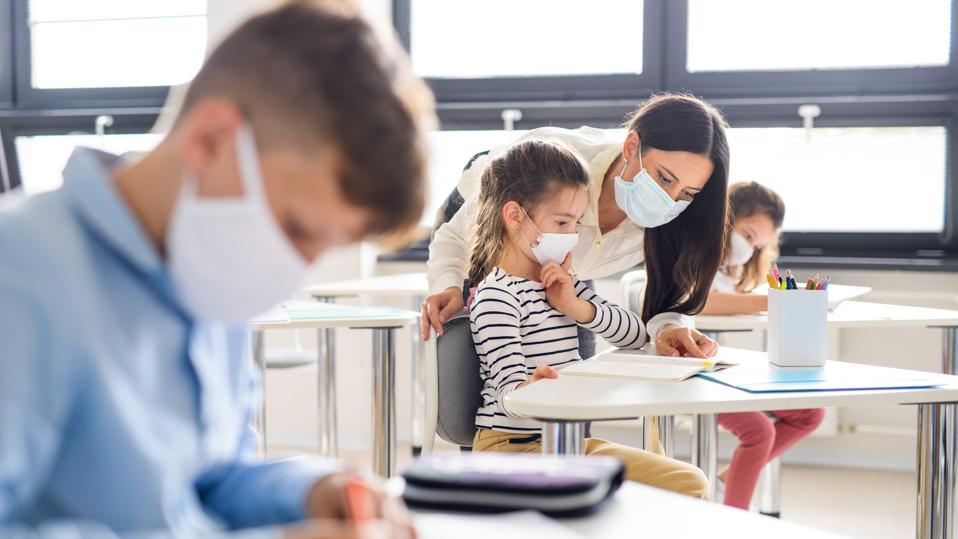
As coronavirus infection rates continue to spike across the nation, some school districts—including Jefferson City Schools in Jefferson, Georgia—have decided to trudge forward with reopening plans and offer face-to-face classes without requiring face masks.


KEY FACTS

Jefferson City Schools plans to begin face-to-face classes on Friday, one of the earliest starting dates in the country, according to a report from the New York Times.

School officials in Jefferson said they would strongly encourage students or teachers to wear face masks, but wouldn’t require them to do so.

The debate over face masks has proven divisive among the town’s residents, 80% of whom voted for Trump in 2016, with high school students creating petitions both for and against mandatory face masks.

Jackson county, of which Jefferson is the county seat, has seen 162 new Covid-19 cases in the past 7 days while Georgia as a whole, a recent hotspot for the virus, has seen over 170,000 cases and more that 3,500 deaths.

At least 14 other school districts have chosen to open for full, in-person classes between July 27 and August 7, according to Ed Week, each with different rules regarding face masks.

At least 14 other school districts have chosen to open for full, in-person classes between July 27 and August 7, according to Ed Week, each with different rules regarding face masks.

KEY BACKGROUND

There has been a debate about when and how schools should reopen almost since the coronavirus pandemic began. Last week President Trump, who has been adamant that schools reopen in the fall, reversed course saying that schools in coronavirus hotspots should delay reopening, but that doing so would prevent them from receiving billions in federal aid. The CDC has also backed reopening schools as of last week, saying in a statement “Reopening schools creates opportunity to invest in the education, well-being, and future of one of America’s greatest assets — our children — while taking every precaution to protect students, teachers, staff and all their families.” Some school districts are operating more judiciously, halting reopenings until the coronavirus outbreaks subside, or relying on virtual lessons and hybrid classes.