What you need to know about the COVID-19 vaccine

https://www.gatesnotes.com/Health/What-you-need-to-know-about-the-COVID-19-vaccine?WT.mc_id=20200430164943_COVID-19-vaccine_BG-FB&WT.tsrc=BGFB&linkId=87665504&fbclid=IwAR0SsBGe1GTcy-fOIXz86kImkScsdCGlRVgmDcPOgXMcaU7kdO39SyNpRSs

What you need to know about the COVID-19 vaccine | Bill Gates

Humankind has never had a more urgent task than creating broad immunity for coronavirus.

One of the questions I get asked the most these days is when the world will be able to go back to the way things were in December before the coronavirus pandemic. My answer is always the same: when we have an almost perfect drug to treat COVID-19, or when almost every person on the planet has been vaccinated against coronavirus.

The former is unlikely to happen anytime soon. We’d need a miracle treatment that was at least 95 percent effective to stop the outbreak. Most of the drug candidates right now are nowhere near that powerful. They could save a lot of lives, but they aren’t enough to get us back to normal.

Which leaves us with a vaccine.

Humankind has never had a more urgent task than creating broad immunity for coronavirus. Realistically, if we’re going to return to normal, we need to develop a safe, effective vaccine. We need to make billions of doses, we need to get them out to every part of the world, and we need all of this happen as quickly as possible.

That sounds daunting, because it is. Our foundation is the biggest funder of vaccines in the world, and this effort dwarfs anything we’ve ever worked on before. It’s going to require a global cooperative effort like the world has never seen. But I know it’ll get done. There’s simply no alternative.

Here’s what you need to know about the race to create a COVID-19 vaccine.

The world is creating this vaccine on a historically fast timeline.

Dr. Anthony Fauci has said he thinks it’ll take around eighteen months to develop a coronavirus vaccine. I agree with him, though it could be as little as 9 months or as long as two years.

Although eighteen months might sound like a long time, this would be the fastest scientists have created a new vaccine. Development usually takes around five years. Once you pick a disease to target, you have to create the vaccine and test it on animals. Then you begin testing for safety and efficacy in humans.

Safety and efficacy are the two most important goals for every vaccineSafety is exactly what it sounds like: is the vaccine safe to give to people? Some minor side effects (like a mild fever or injection site pain) can be acceptable, but you don’t want to inoculate people with something that makes them sick.

Efficacy measures how well the vaccine protects you from getting sick. Although you’d ideally want a vaccine to have 100 percent efficacy, many don’t. For example, this year’s flu vaccine is around 45 percent effective.

To test for safety and efficacy, every vaccine goes through three phases of trials:

  • Phase one is the safety trial. A small group of healthy volunteers gets the vaccine candidate. You try out different dosages to create the strongest immune response at the lowest effective dose without serious side effects.
  • Once you’ve settled on a formula, you move onto phase two, which tells you how well the vaccine works in the people who are intended to get it. This time, hundreds of people get the vaccine. This cohort should include people of different ages and health statuses.
  • Then, in phase three, you give it to thousands of people. This is usually the longest phase, because it occurs in what’s called “natural disease conditions.” You introduce it to a large group of people who are likely already at the risk of infection by the target pathogen, and then wait and see if the vaccine reduces how many people get sick.

After the vaccine passes all three trial phases, you start building the factories to manufacture it, and it gets submitted to the WHO and various government agencies for approval.

This process works well for most vaccines, but the normal development timeline isn’t good enough right now. Every day we can cut from this process will make a huge difference to the world in terms of saving lives and reducing trillions of dollars in economic damage.

So, to speed up the process, vaccine developers are compressing the timeline. This graphic shows how:

In the traditional process, the steps are sequential to address key questions and unknowns. This can help mitigate financial risk, since creating a new vaccine is expensive. Many candidates fail, which is why companies wait to invest in the next step until they know the previous step was successful.

For COVID-19, financing development is not an issue. Governments and other organizations (including our foundation and an amazing alliance called the Coalition for Epidemic Preparedness Innovations) have made it clear they will support whatever it takes to find a vaccine. So, scientists are able to save time by doing several of the development steps at once. For example, the private sector, governments, and our foundation are going to start identifying facilities to manufacture different potential vaccines. If some of those facilities end up going unused, that’s okay. It’s a small price to pay for getting ahead on production.

Fortunately, compressing the trial timeline isn’t the only way to take a process that usually takes five years and get it done in 18 months. Another way we’re going to do that is by testing lots of different approaches at the same time.

There are dozens of candidates in the pipeline.

As of April 9, there are 115 different COVID-19 vaccine candidates in the development pipeline. I think that eight to ten of those look particularly promising. (Our foundation is going to keep an eye on all the others to see if we missed any that have some positive characteristics, though.)

The most promising candidates take a variety of approaches to protecting the body against COVID-19. To understand what exactly that means, it’s helpful to remember how the human immune system works.

When a disease pathogen gets into your system, your immune system responds by producing antibodies. These antibodies attach themselves to substances called antigens on the surface of the microbe, which sends a signal to your body to attack. Your immune system keeps a record of every microbe it has ever defeated, so that it can quickly recognize and destroy invaders before they make you ill.

Vaccines circumvent this whole process by teaching your body how to defeat a pathogen without ever getting sick. The two most common types—and the ones you’re probably most familiar with—are inactivated and live vaccines. Inactivated vaccines contain pathogens that have been killed. Live vaccines, on the other hand, are made of living pathogens that have been weakened (or “attenuated”). They’re highly effective but more prone to side effects than their inactivated counterparts.

Inactivated and live vaccines are what we consider “traditional” approaches. There are a number of COVID-19 vaccine candidates of both types, and for good reason: they’re well-established. We know how to test and manufacture them.

The downside is that they’re time-consuming to make. There’s a ton of material in each dose of a vaccine. Most of that material is biological, which means you have to grow it. That takes time, unfortunately.

That’s why I’m particularly excited by two new approaches that some of the candidates are taking: RNA and DNA vaccines. If one of these new approaches pans out, we’ll likely be able to get vaccines out to the whole world much faster. (For the sake of simplicity, I’m only going to explain RNA vaccines. DNA vaccines are similar, just with a different type of genetic material and method of administration.)

Our foundation—both through our own funding and through CEPI—has been supporting the development of an RNA vaccine platform for nearly a decade. We were planning to use it to make vaccines for diseases that affect the poor like malaria, but now it’s looking like one of the most promising options for COVID. The first candidate to start human trials was an RNA vaccine created by a company called Moderna.

Here’s how an RNA vaccine works: rather than injecting a pathogen’s antigen into your body, you instead give the body the genetic code needed to produce that antigen itself. When the antigens appear on the outside of your cells, your immune system attacks them—and learns how to defeat future intruders in the process. You essentially turn your body into its own vaccine manufacturing unit.

Because RNA vaccines let your body do most of the work, they don’t require much material. That makes them much faster to manufacture. There’s a catch, though: we don’t know for sure yet if RNA is a viable platform for vaccines. Since COVID would be the first RNA vaccine out of the gate, we have to prove both that the platform itself works and that it creates immunity. It’s a bit like building your computer system and your first piece of software at the same time.

Even if an RNA vaccine continues to show promise, we still must continue pursuing the other options. We don’t know yet what the COVID-19 vaccine will look like. Until we do, we have to go full steam ahead on as many approaches as possible.

It might not be a perfect vaccine yet—and that’s okay.

The smallpox vaccine is the only vaccine that’s wiped an entire disease off the face of the earth, but it’s also pretty brutal to receive. It left a scar on the arm of anyone who got it. One out of every three people had side effects bad enough to keep them home from school or work. A small—but not insignificant—number developed more serious reactions.

The smallpox vaccine was far from perfect, but it got the job done. The COVID-19 vaccine might be similar.

If we were designing the perfect vaccine, we’d want it to be completely safe and 100 percent effective. It should be a single dose that gives you lifelong protection, and it should be easy to store and transport. I hope the COVID-19 vaccine has all of those qualities, but given the timeline we’re on, it may not.

The two priorities, as I mentioned earlier, are safety and efficacy. Since we might not have time to do multi-year studies, we will have to conduct robust phase 1 safety trials and make sure we have good real-world evidence that the vaccine is completely safe to use.

We have a bit more wiggle room with efficacy. I suspect a vaccine that is at least 70 percent effective will be enough to stop the outbreak. A 60 percent effective vaccine is useable, but we might still see some localized outbreaks. Anything under 60 percent is unlikely to create enough herd immunity to stop the virus.

The big challenge will be making sure the vaccine works well in older people. The older you are, the less effective vaccines are. Your immune system—like the rest of your body—ages and is slower to recognize and attack invaders. That’s a big issue for a COVID-19 vaccine, since older people are the most vulnerable. We need to make sure they’re protected.

The shingles vaccine—which is also targeted to older people—combats this by amping up the strength of the vaccine. It’s possible we do something similar for COVID, although it might come with more side effects. Health authorities could also ask people over a certain age to get an additional dose.

Beyond safety and efficacy, there are a couple other factors to consider:

  • How many doses will it be? A vaccine you only get once is easier and quicker to deliver. But we may need a multi-dose vaccine to get enough efficacy.
  • How long does it last? Ideally, the vaccine will give you long-lasting protection. But we might end up with one that only stops you from getting sick for a couple months (like the seasonal flu vaccine, which protects you for about six months). If that happens, the short-term vaccine might be used while we work on a more durable one.
  • How do you store it? Many common vaccines are kept at 4 degrees C. That’s around the temperature of your average refrigerator, so storage and transportation is easy. But RNA vaccines need to be stored at much colder temperature—as low as -80 degrees C—which will make reaching certain parts of the world more difficult.

My hope is that the vaccine we have 18 months from now is as close to “perfect” as possible. Even if it isn’t, we will continue working to improve it. After that happens, I suspect the COVID-19 vaccine will become part of the routine newborn immunization schedule.

Once we have a vaccine, though, we still have huge problems to solve. That’s because…

We need to manufacture and distribute at least 7 billion doses of the vaccine.

In order to stop the pandemic, we need to make the vaccine available to almost every person on the planet. We’ve never delivered something to every corner of the world before. And, as I mentioned earlier, vaccines are particularly difficult to make and store.

There’s a lot we can’t figure out about manufacturing and distributing the vaccine until we know what exactly we’re working with. For example, will we be able to use existing vaccine factories to make the COVID-19 vaccine?

What we can do now is build different kinds of vaccine factories to prepare. Each vaccine type requires a different kind of factory. We need to be ready with facilities that can make each type, so that we can start manufacturing the final vaccine (or vaccines) as soon as we can. This will cost billions of dollars. Governments need to quickly find a mechanism for making the funding for this available. Our foundation is currently working with CEPI, the WHO, and governments to figure out the financing.

Part of those discussions center on who will get the vaccine when. The reality is that not everyone will be able to get the vaccine at the same time. It’ll take months—or even years—to create 7 billion doses (or possibly 14 billion, if it’s a multi-dose vaccine), and we should start distributing them as soon as the first batch is ready to go.

Most people agree that health workers should get the vaccine first. But who gets it next? Older people? Teachers? Workers in essential jobs?

I think that low-income countries should be some of the first to receive it, because people will be at a much higher risk of dying in those places. COVID-19 will spread much quicker in poor countries because measures like physical distancing are harder to enact. More people have poor underlying health that makes them more vulnerable to complications, and weak health systems will make it harder for them to receive the care they need. Getting the vaccine out in low-income countries could save millions of lives. The good news is we already have an organization with expertise about how to do this in Gavi, the Vaccine Alliance.

With most vaccines, manufacturers sign a deal with the country where their factories are located, so that country gets first crack at the vaccines. It’s unclear if that’s what will happen here. I hope we find a way to get it out on an equitable basis to the whole world. The WHO and national health authorities will need to develop a distribution plan once we have a better understanding of what we’re working with.

Eventually, though, we’re going to scale this thing up so that the vaccine is available to everyone. And then, we’ll be able to get back to normal—and to hopefully make decisions that prevent us from being in this situation ever again.

It might be a bit hard to see right now, but there is a light at the end of the tunnel. We’re doing the right things to get a vaccine as quickly as possible. In the meantime, I urge you to continue following the guidelines set by your local authorities. Our ability to get through this outbreak will depend on everyone doing their part to keep each other safe.
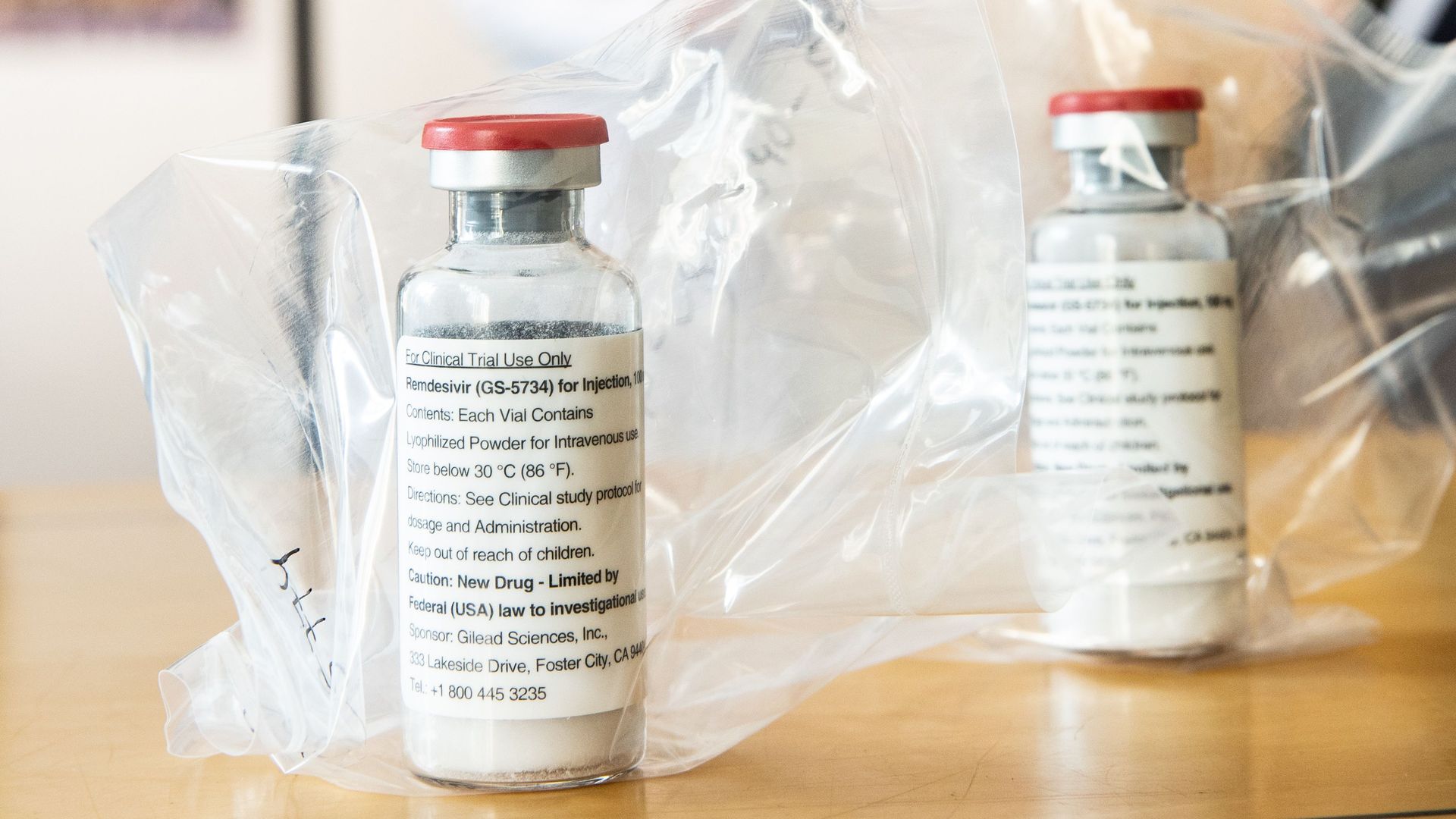


Why Gilead’s coronavirus drug is not a “silver bullet”

https://www.axios.com/newsletters/axios-vitals-d589549c-1967-44b1-af0b-528fb345c48b.html?utm_source=newsletter&utm_medium=email&utm_campaign=newsletter_axiosvitals&stream=top

Why Gilead's coronavirus drug is not a "silver bullet" - Axios

If you feel like you’re suffering whiplash from the new, conflicting study data on Gilead Sciences’ experimental coronavirus drug, remdesivir, you’re not alone.

The big picture: Remdesivir could provide some help and lay the groundwork for more research, but this drug on its own does not appear to be any kind of “cure” for the novel coronavirus, Axios’ Bob Herman reports.

What’s happening: Remdesivir helped coronavirus patients get out of the hospital modestly quicker, based on early reads of an important and rigorously designed trial run by the National Institutes of Health,

  • That could be encouraging for those who get sick.

Yes, but: Analysts and experts were cautious about drawing too many conclusions without the full data from NIH — especially considering the primary outcome was changed mid-trial, and a separate randomized trial concluded remdesivir does little, if anything, to combat the virus.

  • “Remdesivir is a real drug for COVID … but again, not a silver bullet,” Umer Raffat, a pharmaceutical analyst at Evercore ISI, wrote to investors on Wednesday.
  • And because the drug has limited efficacy and likely works best before the infection gets too serious, “its availability is not going to move the needle on social distancing relaxation,” tweeted Peter Bach, a physician and drug researcher at Memorial Sloan Kettering.

The bottom line: This near-constant back-and-forth over remdesivir reinforces how strong the science and data need to be for any treatment, or for the world’s best hope: a vaccine.


Gilead says critical study of Covid-19 drug shows patients are responding to treatment

Critical study of Gilead’s Covid-19 drug shows patients are responding to treatment, NIH says

Gilead: Critical study of Covid-19 drug shows patients respond to ...

A government-run study of Gilead’s remdesivir, perhaps the most closely watched experimental drug to treat the novel coronavirus, showed that the medicine is effective against Covid-19, the disease caused by the virus.

Gilead made the announcement in a statement Wednesday, stating: “We understand that the trial has met its primary endpoint.” The company said that the National Institute of Allergy and Infectious Diseases, which is conducting the study, will provide data at an upcoming briefing.

The finding — although difficult to fully characterize without any data for the study — would represent the first treatment shown to improve outcomes in patients infected with the virus that put the global economy in a standstill and killed at least 218,000 people worldwide.

Over the past few weeks, there have been conflicting reports about the potential benefit of remdesivir, a drug that was previously tried in Ebola. As previously reported by STAT, an early peek at Gilead’s study in severe Covid-19 patients, based on data from a trial at a Chicago hospital, suggested patients were doing better than expected on remdesivir. Days later, a summary of results from a study in China showed that patients on the drug did not improve more than those in a control group.

Full results from the China study were also released Wednesday.

But the NIAID study, which was not expected to be released so soon, was by far the most important and rigorously designed test of remdesivir in Covid-19. The study compared remdesivir to placebo in 800 patients, with neither patients nor physicians knowing who got the drug instead of a placebo, meaning that unconscious biases will not affect the conclusions.

The main goal of the study is the time until patients improve, with different measures of improvement depending on how sick they were to begin with. While the result means that the drug helps patients improve faster, it is not possible to say how dramatic those improvements are.

Scott Gottlieb, the former commissioner of the Food and Drug Administration, said he expected there was enough evidence for the agency to issue an “emergency use authorization” for remdesivir.

“Remdesivir isn’t a home run but looks active and can be part of a toolbox of drugs and diagnostics that substantially lower our risk heading into the fall,” he said.

The FDA previously issued an emergency authorization for the malaria drug hydroxychloroquine to treat Covid-19, even though at least some studies suggesting the medicine was not effective. “If hydroxychloroquine met [the emergency] standard, then remdesivir would have seemed to cross that line a while ago, especially in the setting of treating critically ill patients,” Gottlieb said.

Remdesivir, which must be given intravenously, is likely to remain a treatment for patients who are hospitalized. But it is also likely that it will be most effective in patients who have been infected more recently, said Nahid Bhadelia, medical director of the special pathogens unit at Boston Medical Center.

“We know that with most antiviral medications the earlier you give it the better it is.” said Bhadelia, who had experience giving remdesivir as an experimental treatment for Ebola in Africa, where results are less encouraging. That means that better diagnostic testing will be essential to identifying patients who could benefit. “What will be important is that we find people on the outpatient side,” Bhadelia said. “Again, testing becomes important, we want to have them come to the hospital as soon as possible. “

Gilead also released results Wednesday from its own study of remdesivir in patients with severe Covid-19. This study showed similar rates of clinical improvement in patients treated with a five-day and 10-day course of remdesivir, the company said.

“Unlike traditional drug development, we are attempting to evaluate an investigational agent alongside an evolving global pandemic. Multiple concurrent studies are helping inform whether remdesivir is a safe and effective treatment for COVID-19 and how to best utilize the drug,” said Merdad Parsey, MD, PhD, Chief Medical Officer, Gilead Sciences, in a prepared statement.

Gilead said that its own study in severe patients showed that it may be possible to treat patients with a five-day treatment of remdesivir, not the 10-day course that was used in the NIAID trial.

The company’s study is enrolling approximately 6,000 participants from 152 different clinical trial sites all over the world. The data disclosed Thursday are from 397 patients, with a statistical comparison of patient improvement between the two remdesivir treatment arms — the five-day and 10-day treatment course. Improvement was measured using a seven-point numerical scale that encompasses death (at worst) and discharge from hospital (best outcome), with various degrees of supplemental oxygen and intubation in between.

The study design means that by itself it doesn’t reveal much about how well remdesivir is working, because there is no group of patients who were not treated with the drug. The conclusion is that the two durations of treatment are basically the same.

Peter Bach, the director of the Center for Health Policy and Outcomes at Memorial Sloan Kettering Medical Center, said he is eager to see the data from the NIAID study but renewed his criticism of Gilead’s severe study for lacking a control group of untreated patients. That would have allowed researchers to make important conclusions about how the drug works that are just not possible now, he said.

“They’ve squandered an unbelievable opportunity,” Bach said. “It’s not going to tell us what to do with 80-year-olds with multiple comorbidities compared to 30-year-olds who are otherwise healthy. We’re still going to be foundering around in the dark, or at least in a dim room, when we could have learned more.”

In the study, the median time to clinical improvement was 10 days in the five-day treatment group and 11 days in the 10-day treatment group. More than half of the patients in both groups were discharged from the hospital by day 14. At day 14, 64.5% of the patients in the five-day group and 53.8% of the patients in the 10-day group achieved clinical recovery.

Patients in the trial generally lived, though this may be because their illness was not that severe to begin with. For most of the study, patients already on ventilators were not enrolled.

Eight percent of the patients treated with five days of remdesivir died, compared to 11% of the patients treated for 10 days. Outside of Italy, where 77 patients were treated, the overall mortality rate across the entire study was 7%, Gilead said. Those mortality rates are lower than those seen in other studies, which have been in the teens and twenties.

Only 5% of patients in the five-day group and 10% in the 10-day group had side effects that led to a discontinuation. The most common bad effects — and it’s impossible to tell which were from the drug — were nausea and acute respiratory failure. High liver enzymes occurred in 7.3 percent of patients, with 3 percent of patients discontinuing the drug due to elevated liver tests.

A full evaluation of the results will have to wait until complete data are available.

In the China study, also published Wednesday in The Lancet, investigators found that remdesivir “did not significantly improve the time to clinical improvement, mortality, or time to clearance of virus in patients with serious COVID-19 compared with placebo.”

There was a 23% improvement in time to clinical improvement for remdesivir compared to placebo, but the difference was not statistically significant. At the median, remdesivir-treated patients improved in 20 days compared to 23 days for placebo patients. At one month, 14% of the remdesivir patients had died compared to 13% of the placebo-treated patients.

The China study enrolled patients with more severe Covid-19 than the study conducted by NIAID. The China study was also stopped early because of difficulties enrolling patients as the pandemic waned in China.


US hits grim milestone: 50,000 coronavirus deaths

US hits grim milestone: 50,000 coronavirus deaths

US hits grim milestone: 50,000 coronavirus deaths | TheHill

More than 50,000 people in the United States have died of the COVID-19 disease, a grim milestone in a global pandemic that shows few signs of slowing even as pressure mounts to reopen parts of the U.S. economy.

The death toll is 16 times greater than the number of Americans who died in the 9/11 terrorist attacks and about one-and-a-half times larger than the number of U.S. soldiers who died in the Korean War. At the current pace, the number of coronavirus deaths is likely to surpass the number of Americans who died in the Vietnam War by the middle of next week.

The true number of deaths is likely higher than official figures. Coroners in California this week reclassified the death of a woman in Santa Clara on Feb. 6 as a coronavirus victim, the first known death from the disease in the United States and one that occurred three weeks before what had previously been thought to be the first known death.

About 900,000 people in the United States have tested positive for the virus that causes the disease, according to the most recent figures. That number has doubled in the past two weeks, climbing by 25,000 or more cases per day.

The richest nation in the world now accounts for about one-third of the planet’s 2.7 million cases.

The number of U.S. deaths has increased at a rate of about 2,000 per day in recent weeks as scientists race to understand the new pathogen and health systems in hard-hit areas like New York, Boston, New Orleans and Detroit struggle under the strain placed on hospitals and frontline health care workers.

More than a quarter of a million New Yorkers have tested positive for the virus, as have more than 100,000 residents of New Jersey. There are at least 35,000 cases in California, Illinois, Massachusetts, Michigan and Pennsylvania, and at least 20,000 cases in Connecticut, Florida, Georgia, Louisiana and Texas.

Though the virus was first detected in China, where the authoritarian government locked down entire cities in January, the United States is now home to the largest number of known cases in the world. The number of cases on American soil is nearly four times as high as the second-worst hit country, Spain, and higher than the total case counts in Spain, Italy, France, Germany and the United Kingdom combined, according to data compiled by Johns Hopkins University.

America’s disastrously slow response has stumbled over a number of hurdles other countries cleared easily. President Trump and his administration routinely claimed the virus was under control — he claimed the coronavirus would have “a very good ending for us” on Jan. 30, the same day the World Health Organization declared the virus a public health emergency of international concern.

Scientists now believe the virus began circulating in the United States in early to mid-January, a period when the country had little capacity to test its residents. An early test created by the Centers for Disease Control and Prevention and sent to public health laboratories across the country turned out to have a fatal flaw, setting back crucial testing capacity that could have uncovered the extent of the virus’s spread even as other countries deployed their own tests.

Companies that could have filled that backlog were also slow to develop their own diagnostic tests, and several ran into roadblocks at the Food and Drug Administration, which did not move to approve tests on an emergency basis until late February.

The United States only seemed to begin to take the threat of the outbreak seriously in early March. Almost two weeks later, the first state — California — announced stay-at-home orders.

As a consequence, the slow response has meant the United States has not bent its case curve downward as fast as other nations. The hardest-hit European nations have all seen daily case and death counts bending downward; the United States has, at best, reached a daunting plateau. And though countries like Italy, Spain and France have suffered more deaths per capita, their trajectories are down, while figures in the United States trend up.

There is still no known medicinal treatment for those suffering from COVID-19. And while dozens of laboratories across the globe race to develop a vaccine, experts warn that a finished product will not be available on a mass scale for more than a year — a schedule that would mark the fastest such development in human history. Until those vaccines are ready and widely available, the virus will remain in control.

Left leaderless at the federal level, state governments responded to the mounting crisis in their own ways. A bipartisan roster of governors in New York, California, Washington, Massachusetts, Maryland, Ohio and elsewhere have won praise for quick, decisive action and informative briefings that stand in stark contrast to Trump’s daily appearances at White House press conferences.

California Gov. Gavin Newsom‘s (D) order was followed by most other states, though eight states have yet to require residents to avoid nonessential activities. Even as some states took unprecedented steps to lock down their economies, banning residents from beaches and public parks and shuttering non-essential businesses, others were slow to act.

There is now mounting evidence that dozens of coronavirus cases are tied to an April election in Wisconsin, and to packed beaches during Spring Break in Florida the previous month. At least one man who attended what was dubbed a coronavirus party in Kentucky came down with the disease. Several pastors who defied recommendations against holding church services have died.

Now, as a few hundred protesters in several states demand a reopened economy, some governors are beginning to loosen restrictions. Georgia Gov. Brian Kemp (R) will allow some businesses to begin opening on Friday, even as the number of COVID-19 cases jumped to 21,883 on Thursday. Nearly 900 Georgians, about 4 percent of confirmed cases, have died.

Some nonessential businesses will begin opening in the coming days in Alaska, Indiana, Tennessee and Texas. Beaches have reopened in parts of Florida and South Carolina, even as public health officials have warned of the consequences of reopening too quickly.

“We have to proceed in a very careful, measured way,” Anthony Fauci, head of the National Institute of Allergy and Infectious Diseases, said at a White House press briefing Wednesday. “The one way not to reopen the economy is to have a rebound that we can’t take care of.”

But there remain signs of strain even within the highest ranks of government. Fauci contradicted Trump’s claim Wednesday that the virus would not return in the fall.

“We will have coronavirus in the fall. I am convinced of that because of the degree of transmissibility that it has, the global nature,” Fauci said.

Fauci did not appear at the White House briefing Thursday, when Trump said he did not agree with the nation’s leading infectious disease expert that the country’s testing capacity had risen to the level required to stamp out the virus.

“No, I don’t agree with him on that. No, I think we’re doing a great job in testing. I don’t agree. If he said that, I don’t agree with him,” Trump said.


Melinda Gates: This is not a once-in-a-century pandemic.

https://www.businessinsider.com/melinda-gates-coronavirus-interview-vaccine-timeline-2020-4?linkId=87026774

Melinda Gates

‘We will absolutely have more of these.’ The billionaire philanthropist predicts a timeline for going back to normal.

  • Business Insider spoke with Melinda Gates about COVID-19, the prospect and timeline of making an effective vaccine, and how the world will be permanently changed by the coronavirus.
  • Gates said it would likely take about 18 months for a vaccine to become widely available, and that it should first go to healthcare workers to help them keep others safe.
  • She said this pandemic was not a once-in-a-century situation, like the Spanish flu. Because the world is now a global community, we’re likely to see other pandemics in our lifetimes, Gates said.
  • Even after things get back to normal, “our psyches are going to permanently changed … I hope we change to realize that we’re a global community.”

Melinda Gates is the cochair of the Bill & Melinda Gates Foundation, which has donated more than $45 billion to tackle some of the world’s toughest problems, including vaccination research and combating pandemics, from coronavirus to Ebola.

Gates and her husband have long been concerned about a pandemic and have warned that we need to be more prepared at a global level.

In a wide-ranging interview with Gates on Thursday afternoon, she gave her thoughts on the coronavirus pandemic, the inequality of it all, and how the world can go back to semi-normal. The highlights:

  • The world needs a vaccine delivered at mass scale to go back to “normal.” A realistic timeline is about 18 months, the same time it took to create an Ebola vaccine.
  • It is possible we won’t be able to find an effective vaccine for coronavirus, although Gates thinks that is highly unlikely.
  • The idea of herd immunity solving coronavirus is far-fetched. Gates said that would require more than half the population to get coronavirus (which isn’t anywhere close to happening) and a lot of death along the way.
  • To effectively roll out a vaccine, Gates believes you need to first give it to health workers, then to high-risk groups, then distribute it equitably to different countries and communities. The vaccine also has to cost very little with a fund to cover it for everyone. What the US is doing right now, pitting states against each other for supplies and allowing wealthy individuals to access tests first, would be disastrous for a vaccine rollout.
  • To prepare for the second wave of coronavirus this fall, or even a next pandemic, we need mass testing from the get-go, voluntary data sharing from people so that we can trace who has been tested and where they have been, and vaccine stockpiles so that you can distribute those as soon as you see signs of an outbreak.
  • Gates said there would “absolutely” be more pandemics in our lifetime. Coronavirus is not a once-in-a-century occurrence like the Spanish flu.
  • If you want to help vulnerable, poor communities survive coronavirus, Gates recommends giving to the WHO COVID Solidarity FundUnited Way, or America’s Food Fund.

We need a vaccine to be widely distributed before the world will start to feel normal again. Gates says we won’t get that for at least 18 months.

Alyson Shontell: How is it going in the Gates household?

Melinda Gates: Like all other families, it’s been a complete change of life for all of us. But we are also incredibly privileged, and we know that, and our kids know that. But yes, life has changed drastically. The kids are studying online. Bill and I are doing all of our meetings via video teleconference. I’m a terrible cook, so I’m heating things up a lot more, and everybody’s trying to pitch in to do what needs to get done in terms of things around the house.

And the other thing I would just say is every night, we’ve had this tradition for a long time of saying grace before meals. And what that looks like is that we all go around and say something we’re thankful for. Pretty much every night what comes up from the kids and us is we’re thankful for our health and for the fact that we’re not going hungry and the fact that we can still do our work and the kids can still learn. It’s kind of amazing.

Shontell: We heard Dr. Fauci say earlier this week that things probably won’t return to normal until we have a vaccine. What do you think is a realistic timeline for a wide distribution of a vaccine? Is anything faster than 18 months really safe?

Gates: I think it’s likely 18 months. Just from everything we know from working with our partners for many, many years on vaccines, you have to test the compounds. Then, you have to go into preclinical trials, then full-scale trials. And even though I’m sure the FDA will fast-track some of these vaccine trials like they did with Ebola, still by the time you get it through the trials safety- and efficacy-wise, then you have to manufacture the vaccine and manufacture at scale. I think it really is 18 months.

The good news that I’m seeing on that front, though, is so many scientists are coming forward, and I’m seeing CEOs come forward and say, “I have this platform we can use.” Pharmaceutical companies are coming together already to say, “How do we build up the manufacturing capacity so it’s there when we get a vaccine and we can basically just run it through the manufacturing process?” I’m seeing lots of good things come forward, but it’s a process that needs to run its full course, because you don’t want to put something in someone’s body that is harmful.

Shontell: Right. It seems like, in addition to creating something we’ve never had before, you do really have to do these human tests in a way that’s safe so that you’re not creating a vaccine that maybe cures coronavirus but gives you something else.

Gates: I’d add also that we need to know who it’s safe to give the vaccine to and in what dosages. We know COVID-19 is affecting people who are particularly vulnerable health-wise if they have diabetes, or a heart condition, or they have asthma. You have to make sure that, safety-wise, you’re not giving somebody a vaccine that’s going to affect their heart. So yeah, there are lots of issues there that have to be tested.

It’s possible we won’t be able to create a coronavirus vaccine, although Gates thinks that’s highly unlikely. Also, herd immunity is not the solution.

Shontell: If at the end of this 18-month period, or however long it is, we do feel like we’ve got a vaccine, what do you think that vaccine will actually look like? Is it possible that we actually won’t be able to create a vaccine at all? Could that be one scenario?

Gates: Well, it’s possible. We have to look at how far science has come even in the last five years. And the number of compounds we have, there’s something like 14,000 compounds that we, with our partners alone, have. And there are many, many, many others testing compounds that we’re looking at to see, “Is this promising?” Could that one be promising? And we have high throughput screening now of compounds. I really think we’re going to find a vaccine.

We found a vaccine for Ebola, right? And we did that in about an 18-month time frame, and that was hard. When I see the scientific community all coming together the way they are around the globe and sharing data and sharing information, we’re going to get a vaccine.

Shontell: OK, so you’d say that it’s a high likelihood.

Gates: High likelihood.

Shontell: That’s very, very good to know.

Gates: The other thing to think about is, in the meantime, there’s another whole strand of work going on, which is the therapeutics accelerator. Through the accelerator, we’re trying to find medicines so that if you get COVID-19, hopefully we can boost your immune system or tamp down the effect of the disease on you. So again, hopefully, we’ll come up with some medicines that will also help so people don’t get as sick as they’re getting and landing in the ICU, which is what’s truly tragic.

Shontell: Is there anything to this idea of herd immunity? Could we be closer than we think on that, or is that far-fetched thinking?

Gates: That’s still very far-fetched today. You don’t get herd immunity until you have a huge percent of your population that has had the disease. We know that from all the diseases in the past that humans have had. So no, we’re still a long way from herd immunity. And you can’t count on that because a lot of people are going to die in the meantime if you let the experiment run and you just let the disease run its course in communities. Sure, we could get herd immunity and we will get so much death. That’s why it’s so important to remind people the only tools we have today are physical distancing, handwashing, and wearing masks in public. We have to go with what we know works.

How to distribute a coronavirus vaccine to the masses: 1. Make it cheap and buy it for everyone. 2. Give it to healthcare workers. 3. Give it to the highest-risk people. 4. Come up with an equitable way for everyone else to get it (the US is screwing that up right now).

Shontell: Once we have a vaccine, what do you think is the best way to distribute it to the masses? Who should get it first? How would we do it on such a big scale?

Gates: We have to make sure that the vaccine is very low priced and that there’s a fund for buying it for everyone, whether you’re in a low-, middle-, or a high-income country. And that’s doable. We’ve done that with the Vaccine Alliance that exists today. That’s been in existence since 1990, so we know how to do that piece.

But we also have to distribute very carefully. The very first people that need to get this vaccine are healthcare workers, because if you can keep them safe, they can help keep others safe. Then you need to distribute it to the people who are the very most vulnerable. That is, they have underlying health conditions, some of the ones that we’ve talked about before. And from there, you then make it distributed completely equitably across society.

And even the United States is going to have to really work at that. COVID-19 is exposing all the inequities we have in our healthcare system. And so we need to look at, OK, does Mississippi get this vaccine at the same time California gets it and New York gets it? We can’t do this game that we’re playing right now where you have 50 different states competing for resources for masks and PPE, that makes zero sense. You need a national strategy that will equitably distribute this vaccine and we first look at the vulnerable populations.

Shontell: To touch on that point, as you mentioned, there are so many inequalities coming to light with this pandemic, from who has been able to get initial testing on to how it’s affecting different genders in different ways, to more African Americans in the US dying of this than other races. When you think about it, social distancing, stocking up on food, and handwashing are all privileges that some of the poorest communities don’t have.

You’ve done a lot of work on equality efforts, and you’ve said it’s the best way to fix everything in society is to level the playing field. How do we start leveling the playing field so the next time it’s better for everybody? How do we help the people who are in the poorest, most vulnerable communities right now?

Gates: We have to start by remembering that COVID-19 anywhere is COVID-19 everywhere. And if we keep that front and center in our minds, then we will start to think really deeply about these most vulnerable populations.

The thing that keeps me up at night — because I’ve traveled to Africa so many times and been in so many townships and slums — is if you are a person living in those conditions, you can’t begin to handwashing or social distance. In those situations, we need to start with food. People need to be able to feed themselves. And then if they feel like they have COVID symptoms, then they don’t have to go out of the house looking for food.

When I think forward about how we would do this, right now, we have to focus on the pandemic today right in front of us. We have to take the tools we have and try and distribute them as equitably as we possibly can. That means a national response that is thought out and strategic. So you start there.

When you plan for the future, you start to plan it out the way we did for other diseases that came into the world. You would create a vaccine stockpile. We’ve actually been quite involved with that for cholera, which we don’t get much in the United States anymore, but you get in a lot of places in the developing world or in refugee camps. And when there’s a stockpile of vaccine, then when you see an outbreak or a vulnerable population get it, it’s already basically paid for and you ship the vaccines out.

We have to have not a national stockpile of vaccines but an international stockpile of vaccines for something like COVID. We can predict some of these types of disease outbreaks; we just haven’t been planning it. We plan for things like an earthquake or a fire. We need to plan for disease. We are a global community. People travel. We’ve just learned that New York mostly got infected from people coming back from Europe. We have to plan for these things as a global community in the future.

How to be ready for the 2nd wave to hit this fall: Are you ready to give up your personal data and get tracked?

Shontell: Clearly, we were caught flat-footed and unprepared here in the US especially. There’s talk of a second wave of coronavirus potentially hitting in the fall. What are the things we need to do to plan for it? What has to be done by the end of the summer to put us all in a much better shape for it? And then I’m curious what we need to have in place to prevent something like this moving forward, if that’s even possible.

Gates: In terms of what we need to do to prepare ourselves this fall, first of all, all the way through this, we need to listen to the medical experts and the science experts. They know what’s real. We need to do the disease modeling to see where the outbreaks are going. We need to plan resources appropriately and share them in the United States with all the states in an equitable way.

And then we need to do massive testing. We have to have testing at wide scale so that you can get a test and you can know if you’re positive. And if you’re positive, then you self-isolate. Unless you get further disease, you then get telemedicine. You figure out if you need to go to the health system. And you have different tiers of the health system, places people can go for oxygen versus people who go to the ICU.

We can do that, kind of. You can do that triage of people if you have a test. To be frank, we also need to be able to share all that testing data so that eventually the US would be a place like South Korea, where I can literally prove on my phone “I took a test this morning — I’m COVID-free” or “Guess what? I had COVID before and I tested for antibodies in my system. I can be out in society working maybe now.” You could literally have a code on your phone that says, “Tested this morning” or “See? I have a COVID antibody.”

And so we can start to see who can be in society versus who needs to self-isolate. But without testing and contact tracing and some way of being able to prove to one another we’re safe, you can’t plan for a full eventual reopening of society. We need to do get that up and running at scale at a national level.

Preparing for the next epidemic is a whole different conversation. You’d have tests available from the get-go. You would have fought through the civil-liberties issues of people sharing their health information willingly or not willingly. Am I willing to share my health data so that you know if I got it?

Early on, people with COVID had symptoms we didn’t know to track. If we had known that from the get-go because they were able to share their information into a national database voluntarily, we would have known to tell people, “Look for these symptoms. Self-isolate just in case you have it.” We have to be able to start thinking through those types of systems as a country so that we’re prepared for whatever comes next.

Whose job is it to solve a pandemic, the elite’s or the government’s?

Shontell: Yes to all of that. Edelman put out on their annual Trust Barometer in January. They found that trust in media is really low right now. Trust in the government is really low too. But trust in business leaders is the highest group, and people seem to put the most faith in business leaders to solve some of society’s biggest problems.

You and Bill have done a tremendous amount with the foundation. You’re seeing Mark Zuckerberg giving a ton of money toward this. Sheryl Sandberg is doing the same. Jack Dorsey just pledged a big chunk of net worth to help fight COVID. Lots of people are stepping up. Bezos as well.

Is it the responsibility of business leaders to do this versus the government? Is this something we should come to expect? How do you kind of view the responsibility of the people who are in positions of the most privilege as we tackle something as wide-scale is this?

Gates: What I’m seeing is people stepping up. I sometimes wish people could see the number of emails we’re receiving daily at the foundation, not just Bill and me, but our scientists and our head of global health. We’re seeing CEOs come forward. We’re seeing philanthropists come forward. We’re seeing people who have knowledge and data saying, “Should we look at this? What should we do?” I am seeing the best of humanity come out right now in some of these leaders who are stepping forward and doing the right thing.

“Is this the responsibility of business?” was your question. It’s the responsibility of all of us. Business won’t be able to solve this. There’s no way business or philanthropy can solve this alone. It takes the government. It’s government who puts out huge amounts of money into our healthcare system to take care of everybody, to take care of the most vulnerable. It’s philanthropy and business and nonprofits coming together with government to have a national response. That is the only way we’re going to be able to care for all Americans.

But what I see is amazing scientists like Dr. Fauci stepping up and giving all the right messages. Those are the people we should be listening to, and I am seeing so many people come together behind the scenes to try and do the right thing. While the vulnerable is what keeps me up at night, one of the things that keeps me encouraged when I wake up in the morning is seeing so many people doing the right thing.

This is not just a once-in-a-century pandemic. ‘We are absolutely going to have more of these.’

Shontell: Is this a once-in-a-century pandemic like the Spanish flu, or do we need to expect to face more pandemics like this moving forward?

Gates: This is not a once-in-a-century pandemic. We are absolutely going to have more of these. This thing is highly infectious, COVID-19. But it is not nearly as infectious as measles. And we dealt with measles in the world. We know how to deal with measles. We’re going to see more, so we need to plan for them. And we haven’t planned for them as a global community.

Shontell: Why do you think we’ll see more pandemics?

Gates: We’ll see more because of all kinds of reasons, but mainly because we’re a global community and we travel and we spread disease.

Alyson: To end on a positive note, we are going to get through this, right? It will be hard, but we will get through this. I’m curious from your estimation: What timeline are we looking at for life to feel normal again? Or are we in a new normal, and are there things that we should expect to be permanently changed?

No one really knows when things will feel normal again. But be prepared for some permanent changes, including to your psyche.

Gates: I definitely think there are going to be things that are permanently changed. Our psyches are going to be permanently changed. We are learning some things about how to do more meetings online. We’re learning how to take care of each other online. People are reaching out to the elderly in their homes and doing video calls and sending emails or dropping a meal off. What’s going to change is our psyche, and I hope we change to realize that we’re a global community.

To the question of when does society reopen in what we think of as our normal form, nobody really knows the answer to that. It really is when we get a vaccine at scale.

Will we get, over time, probably some partial reopenings of society where you can do certain smaller group things or be out walking with one friend or two friends? I think we will start to see some partial reopenings.

We have to follow the data, though, of how is that working in Wuhan right now? How did it work in South Korea? How does it work in Germany? The places that are kind of ahead of us on both their response and when they got the disease? And then, we’ll start to be able to see, OK, where can we open up pockets of society over time? For right now, we need to be physically distant from one another.

Shontell: If the average person wants to give to help a vulnerable person or community, what’s the best way to do that other than social distancing? Is there some cause to give to or something that’s most helpful?

Gates: Yes. You could go globally. You could go to the WHO COVID Solidarity Fund. Locally, you could go to United Way. America’s Food Fund is another place you can go. I would give also to local domestic-violence organizations. We see domestic violence on the rise for many, many people, particularly women. Any of those would be amazing places to go and to give, even if you only give $10 — $10 or $100, it all makes a difference.

Shontell: I’m leaving this conversation very hopeful. Thank you for all efforts you and Bill and the foundation are doing in helping fight this. You were early to realizing the problems of pandemics, and we are grateful that you’re on it.

Gates: Thanks, Alyson. Be safe. Be well.


Not jumping to conclusions on coronavirus treatment

https://mailchi.mp/39947afa50d2/the-weekly-gist-april-17-2020?e=d1e747d2d8

A Closer Look At Remdesivir, An Experimental Coronavirus Drug ...

Early reports of hastened recoveries among patients taking the antiviral drug remdesivir sent manufacturer Gilead Sciences’ stock soaring over 8 percent this morning, and contributing to an overall uptick in the market. The gains came after a scoop by healthcare news site STAT, which obtained a copy of an internal webinar from University of Chicago Medicine, where an infectious disease specialist discussed positive results from their early experience with remdesivir. The system recruited 125 patients into Gilead’s Phase 3 clinical trials for the drug; 113 patients had severe disease. The presenting physician reported rapid reductions in fever and improvements in respiratory symptoms, noting that just two patients had died, and most of the participating patients had already been discharged—on average after just six days, suggesting a long course of drug treatment may not be necessary.

The STAT leak comes on the heels of a NEJM article late last week, which reported clinical improvement of over two-thirds in COVID-19 patients who received remdesivir. Critics were quick to point out  numerous flaws in the study, including lack of a control group, cherry-picking of patients, and the deep involvement of the manufacturer in study design, many of which also apply to the University of Chicago report.

In the thick of the pandemic, doctors and patients’ families are understandably motivated to get very sick patients access to any treatment that may help—but the resulting frenzy following the publication of early results may make it even harder to get good data to understand what works, and what doesn’t.

In the words of one expert, “Fast trials are generally not very interpretable, interpretable trials are generally not fast”. In the search for a “COVID-19 cure”, it’s highly unlikely that any single drug will provide a cure for the viral illness, and the only way we’ll know if a treatment is truly working is to wait for the results of randomized, controlled trials—despite how frustrating it is to muster the patience to do so.


Researchers stop COVID-19 drug trial after 11 patients die

https://bigthink.com/coronavirus/covid-treatment-deaths

COVID-19 chloroquine trial cut short after 11 patients die - Big Think

  • Scientists around the world are currently experimenting with chloroquine and hydroxychloroquine as potential treatments for COVID-19.
  • Despite some early reports suggesting that these antimalarial drugs may help prevent and treat the disease, there’s still no solid evidence showing that they’re a safe and effective treatment.
  • The recent trial in Brazil suggests that high doses of chloroquine are toxic and should be avoided.

A small clinical trial in Brazil suggests that one potential treatment for COVID-19 comes with life-threatening side effects.

As the world searches for effective COVID-19 treatments, some nations have authorized doctors to give patients antimalarial drugs as part of experimental clinical trials. These trials show some indication that the drugs, chloroquine and the closely related hydroxychloroquine, may be effective at treating and preventing COVID-19.

Early reports from China and France, for example, suggested that the drugs may help improve patients’ conditions. But health experts have cautioned against overhyping the results, flagging methodological issues in the research like not including a control group or having a small sample size. To date, there’s no solid evidence showing that these drugs effectively treat COVID-19 or block coronaviruses from infecting cells.

What is clear, based on previous research and the new trial in Brazil, is that these drugs can cause serious side effects, particularly among those with heart conditions.

“The antimalarial medication hydroxychloroquine and the antibiotic azithromycin are currently gaining attention as potential treatments for COVID-19, and each have potential serious implications for people with existing cardiovascular disease,” the American Health Association notes in a statement.

“Complications include severe electrical irregularities in the heart such as arrythmia (irregular heartbeat), polymorphic ventricular tachycardia (including Torsade de Pointes) and long QT syndrome, and increased risk of sudden death.”

In the recent Brazil trial, researchers gave chloroquine to 81 COVID-19 patients in a hospital in Manaus. The study involved two groups: One received a high dose of 12 grams of chloroquine over 10 days, the second group received 2.7 grams over five days. Both groups also received the antibiotic azithromycin, which poses its own heart risks.

By the sixth day of the trial, 11 patients had died, and the researchers decided to stop giving the drug to the high-dose group.

“Preliminary findings suggest that the higher chloroquine dosage (10-day regimen) should not be recommended for COVID-19 treatment because of its potential safety hazards. Such results forced us to prematurely halt patient recruitment to this arm,” the team wrote in a preprint paper.

The high-dose group had an especially high risk of suffering heart arrhythmias, a finding also observed in a separate trial on hydroxychloroquine conducted in a hospital in France, which cut the trial short.

“To me, this study conveys one useful piece of information, which is that chloroquine causes a dose-dependent increase in an abnormality in the ECG that could predispose people to sudden cardiac death,” Dr. David Juurlink, an internist and the head of the division of clinical pharmacology at the University of Toronto, told The New York Times.

Still, it’s possible that some combination of chloroquine, hydroxychloroquine and azithromycin may be effective at preventing and treating COVID-19. The researchers behind the Brazil trial said more research is “urgently needed,” but warned doctors against using high dosages.

“We therefore strongly recommend that this dosage is no longer used anywhere for the treatment of severe COVID-19, especially because in the real world older patients using cardiotoxic drugs should be the rule.”

One major problem in searching for COVID-19 treatments is that it’s currently difficult to conduct clinical trials in a normal and methodologically sound manner. Despite increasing demand for drugs like chloroquine, many health experts are warning that more research is needed to understand their effects and risks.

“The urgency of COVID-19 must not diminish the scientific rigor with which we approach COVID-19 treatment,” Robert A. Harrington, M.D., FAHA, president of the American Heart Association said in a recent statement. “While these medications may work against COVID-19 individually or in combination, we recommend caution with these medications for patients with existing cardiovascular disease.”


We can’t just flip the switch on the coronavirus

https://www.axios.com/coronavirus-slow-recovery-econony-deaths-27e8d258-754e-4883-bebe-a2e95564e3b6.html

The end of the coronavirus lockdown won't be like flipping a ...

It feels like some big, terrible switch got flipped when the coronavirus upended our lives — so it’s natural to want to simply flip it back. But that is not how the return to normalcy will go.

The big picture: Even as the number of illnesses and deaths in the U.S. start to fall, and we start to think about leaving the house again, the way forward will likely be slow and uneven. This may feel like it all happened suddenly, but it won’t end that way.

What’s next: Nationally, the number of coronavirus deaths in the U.S. is projected to hit its peak within the next few days. But many big cities will see their own peaks significantly later — for them, the worst is yet to come.

  • The White House is eyeing May 1 as the time to begin gradually reopening the economy. But that also will not be a single nationwide undertaking, and it will be a halting process even in the places where it can start to happen soon.
  • “In principle it sounds very nice, and everyone wants to return to normalcy. I think in reality it has to be incredibly carefully managed,” said Claire Standley, an infectious-disease expert at Georgetown University.

The future will come in waves — waves of recovery, waves of more bad news, and waves of returning to some semblance of normal life.

  • “It’s going to be a gradual evolution back to something that approximates our normal lives,” former Food and Drug Administration Commissioner Scott Gottlieb said.

What the post-lockdown world will look like:

  • Some types of businesses will likely be able to open before others, and only at partial capacity.
  • Stores may continue to only allow a certain number of customers through the door at once, or restaurants may be able to reopen but with far fewer tables available at once.
  • Some workplaces will likely bring employees back into the office only a few days a week and will stagger shifts to segregate groups of workers from each other, so that one new infection won’t get the whole company sick.
  • Large gatherings may need to stay on ice.

And there will be more waves of infection, even in areas that have passed their peaks.

  • “Everything doesn’t just go down to zero” once a city or region gets through its initial crush of cases, said Janet Baseman, a professor of epidemiology at the University of Washington.
  • This is happening now in Singapore, which controlled its initial outbreak more effectively than almost any other country in the world but is now seeing the daily number of new cases climb back up.

This is all but inevitable in the U.S., too, especially as travel begins to pick back up. Some places may need to shut down again, or at least tighten back up, if these new flare-ups are bad enough.

  • Part of the reason to lock down schools, businesses and workplaces is to prevent an outbreak from overwhelming the local health care system. If new cases start to pile up too quickly, leaders may need to pump the brakes.
  • “If you go back to normal too fast, then cases start to go up quickly, and then we end up back where we started,” Baseman said.
  • The good news, though, is that hospitals should have far more supplies by the fall, thanks to the coming surge in manufacturing for items like masks and ventilators.

What we’re watching: We’ll still need a lot more diagnostic testing to make this process work. Public health officials need to be able to identify people who might be spreading the virus before they begin to feel sick, and then identify the people they may have infected.

  • Most of the U.S. does not seem prepared for that undertaking, at least on any significant scale.
  • Another kind of test — serology tests, which identify people who have already had the virus and may be immune to it — will also help. We can’t test everyone, but identifying potential immunity could be important in knowing who can safely return to work in high-risk fields like health care.

The real turning point won’t come until there’s a proven, widely available treatment or, even better, a widely available vaccine.

  • A vaccine is still about a year away, even at a breakneck pace and if everything goes right. A treatment isn’t likely to be available until the fall, at the earliest.
  • In the meantime, all we can do is try to manage a slow recovery, using a less aggressive version of the same tools that are in place today.

The bottom line: “I’m not going back to Disneyland, I’m not going to take a cruise again, until we have a very aggressive testing system or we have very effective therapeutics or a vaccine,” Gottlieb said.


Inside the epic White House fight over hydroxychloroquine

https://www.axios.com/coronavirus-hydroxychloroquine-white-house-01306286-0bbc-4042-9bfe-890413c6220d.html

Huge fight breaks out among White House coronavirus task force ...

The White House coronavirus task force had its biggest fight yet on Saturday, pitting economic adviser Peter Navarro against infectious disease expert Anthony Fauci. At issue: How enthusiastically should the White House tout the prospects of an antimalarial drug to fight COVID-19?

Behind the scenes: This drama erupted into an epic Situation Room showdown. Trump’s coronavirus task force gathered in the White House Situation Room on Saturday at about 1:30pm, according to four sources familiar with the conversation. Vice President Mike Pence sat at the head of the table.

  • Numerous government officials were at the table, including Fauci, coronavirus response coordinator Deborah Birx, Jared Kushner, acting Homeland Security Secretary Chad Wolf, and Commissioner of Food and Drugs Stephen Hahn.
  • Behind them sat staff, including Peter Navarro, tapped by Trump to compel private companies to meet the government’s coronavirus needs under the Defense Production Act.

Toward the end of the meeting, Hahn began a discussion of the malaria drug hydroxychloroquine, which Trump believes could be a “game-changer” against the coronavirus.

  • Hahn gave an update about the drug and what he was seeing in different trials and real-world results.
  • Then Navarro got up. He brought over a stack of folders and dropped them on the table. People started passing them around.
  • “And the first words out of his mouth are that the studies that he’s seen, I believe they’re mostly overseas, show ‘clear therapeutic efficacy,'” said a source familiar with the conversation. “Those are the exact words out of his mouth.”

Navarro’s comments set off a heated exchange about how the Trump administration and the president ought to talk about the malaria drug, which Fauci and other public health officials stress is unproven to combat COVID-19.

  • Fauci pushed back against Navarro, saying that there was only anecdotal evidence that hydroxychloroquine works against the coronavirus.
  • Researchers have said studies out of France and China are inadequate because they did not include control groups.
  • Fauci and others have said much more data is needed to prove that hydroxychloroquine is effective against the coronavirus.
  • As part of his role, Navarro has been trying to source hydroxychloroquine from around the world. He’s also been trying to ensure that there are enough domestic production capabilities inside the U.S.

Fauci’s mention of anecdotal evidence “just set Peter off,” said one of the sources. Navarro pointed to the pile of folders on the desk, which included printouts of studies on hydroxychloroquine from around the world.

  • Navarro said to Fauci, “That’s science, not anecdote,” said another of the sources.

Navarro started raising his voice, and at one point accused Fauci of objecting to Trump’s travel restrictions, saying, “You were the one who early on objected to the travel restrictions with China,” saying that travel restrictions don’t work. (Navarro was one of the earliest to push the China travel ban.)

  • Fauci looked confused, according to a source in the room. After Trump imposed the travel restrictions, Fauci has publicly praised the president’s restriction on travel from China.
  • Pence was trying to moderate the heated discussion. “It was pretty clear that everyone was just trying to get Peter to sit down and stop being so confrontational,” said one of the sources.
  • Eventually, Kushner turned to Navarro and said, “Peter, take yes for an answer,” because most everyone agreed, by that time, it was important to surge the supply of the drug to hot zones.
  • The principals agreed that the administration’s public stance should be that the decision to use the drug is between doctors and patients.
  • Trump ended up announcing at his press conference that he had 29 million doses of hydroxychloroquine in the Strategic National Stockpile.

Between the lines: “There has never been a confrontation in the task force meetings like the one yesterday,” said a source familiar with the argument. “People speak up and there’s robust debate, but there’s never been a confrontation. Yesterday was the first confrontation.”

  • In response to a request for comment on Axios’ reporting, Katie Miller, a spokesperson for the vice president, said: “We don’t comment on meetings in the Situation Room.”

The bottom line: The way to discuss the drug’s potential has become a fraught issue within the Trump administration.

  • Most members of the task force support a cautious approach to discussing the drug until it’s proven.
  • Navarro, on the other hand, is convinced based on his reading that the drug works against the coronavirus and speaks about it enthusiastically.
  • Some of Trump’s favorite TV hosts, including Fox’s Sean Hannity, and friends including Rudy Giuliani, have also been touting the malaria drug for the coronavirus. Trump has made no secret who he sides with.
  • “What do you have to lose? Take it,” the president said in a White House briefing on Saturday. “I really think they should take it. But it’s their choice. And it’s their doctor’s choice or the doctors in the hospital. But hydroxychloroquine. Try it, if you’d like.”


BIG PHARMA PREPARES TO PROFIT FROM THE CORONAVIRUS

Big Pharma Prepares to Profit From the Coronavirus

Image result for BIG PHARMA PREPARES TO PROFIT FROM THE CORONAVIRUS

AS THE NEW CORONAVIRUS spreads illness, death, and catastrophe around the world, virtually no economic sector has been spared from harm. Yet amid the mayhem from the global pandemic, one industry is not only surviving, it is profiting handsomely.

“Pharmaceutical companies view Covid-19 as a once-in-a-lifetime business opportunity,” said Gerald Posner, author of “Pharma: Greed, Lies, and the Poisoning of America.” The world needs pharmaceutical products, of course. For the new coronavirus outbreak, in particular, we need treatments and vaccines and, in the U.S., tests. Dozens of companies are now vying to make them.

“They’re all in that race,” said Posner, who described the potential payoffs for winning the race as huge. The global crisis “will potentially be a blockbuster for the industry in terms of sales and profits,” he said, adding that “the worse the pandemic gets, the higher their eventual profit.”

The ability to make money off of pharmaceuticals is already uniquely large in the U.S., which lacks the basic price controls other countries have, giving drug companies more freedom over setting prices for their products than anywhere else in the world. During the current crisis, pharmaceutical makers may have even more leeway than usual because of language industry lobbyists inserted into an $8.3 billion coronavirus spending package, passed last week, to maximize their profits from the pandemic.

Initially, some lawmakers had tried to ensure that the federal government would limit how much pharmaceutical companies could reap from vaccines and treatments for the new coronavirus that they developed with the use of public funding. In February, Rep. Jan Schakowsky, D-Ill., and other House members wrote to Trump pleading that he “ensure that any vaccine or treatment developed with U.S. taxpayer dollars be accessible, available and affordable,” a goal they said couldn’t be met “if pharmaceutical corporations are given authority to set prices and determine distribution, putting profit-making interests ahead of health priorities.”

When the coronavirus funding was being negotiated, Schakowsky tried again, writing to Health and Human Services Secretary Alex Azar on March 2 that it would be “unacceptable if the rights to produce and market that vaccine were subsequently handed over to a pharmaceutical manufacturer through an exclusive license with no conditions on pricing or access, allowing the company to charge whatever it would like and essentially selling the vaccine back to the public who paid for its development.”

But many Republicans opposed adding language to the bill that would restrict the industry’s ability to profit, arguing that it would stifle research and innovation. And although Azar, who served as the top lobbyist and head of U.S. operations for the pharmaceutical giant Eli Lilly before joining the Trump administration, assured Schakowsky that he shared her concerns, the bill went on to enshrine drug companies’ ability to set potentially exorbitant prices for vaccines and drugs they develop with taxpayer dollars.

The final aid package not only omitted language that would have limited drug makers’ intellectual property rights, it specifically prohibited the federal government from taking any action if it has concerns that the treatments or vaccines developed with public funds are priced too high.

“Those lobbyists deserve a medal from their pharma clients because they killed that intellectual property provision,” said Posner, who added that the language prohibiting the government from responding to price gouging was even worse. “To allow them to have this power during a pandemic is outrageous.”

The truth is that profiting off public investment is also business as usual for the pharmaceutical industry. Since the 1930s, the National Institutes of Health has put some $900 billion into research that drug companies then used to patent brand-name medications, according to Posner’s calculations. Every single drug approved by the Food and Drug Administration between 2010 and 2016 involved science funded with tax dollars through the NIH, according to the advocacy group Patients for Affordable Drugs. Taxpayers spent more than $100 billion on that research.

Among the drugs that were developed with some public funding and went on to be huge earners for private companies are the HIV drug AZT and the cancer treatment Kymriah, which Novartis now sells for $475,000.

In his book “Pharma,” Posner points to another example of private companies making exorbitant profits from drugs produced with public funding. The antiviral drug sofosbuvir, which is used to treat hepatitis C, stemmed from key research funded by the National Institutes of Health. That drug is now owned by Gilead Sciences, which charges $1,000 per pill — more than many people with hepatitis C can afford; Gilead earned $44 billion from the drug during its first three years on the market.

“Wouldn’t it be great to have some of the profits from those drugs go back into public research at the NIH?” asked Posner.

Instead, the profits have funded huge bonuses for drug company executives and aggressive marketing of drugs to consumers. They have also been used to further boost the profitability of the pharmaceutical sector. According to calculations by Axios, drug companies make 63 percent of total health care profits in the U.S. That’s in part because of the success of their lobbying efforts. In 2019, the pharmaceutical industry spent $295 million on lobbying, far more than any other sector in the U.S. That’s almost twice as much as the next biggest spender — the electronics, manufacturing, and equipment sector — and well more than double what oil and gas companies spent on lobbying. The industry also spends lavishly on campaign contributions to both Democratic and Republican lawmakers. Throughout the Democratic primary, Joe Biden has led the pack among recipients of contributions from the health care and pharmaceutical industries.

Big Pharma’s spending has positioned the industry well for the current pandemic. While stock markets have plummeted in reaction to the Trump administration’s bungling of the crisis, more than 20 companies working on a vaccine and other products related to the new SARS-CoV-2 virus have largely been spared. Stock prices for the biotech company Moderna, which began recruiting participants for a clinical trial of its new candidate for a coronavirus vaccine two weeks ago, have shot up during that time.

On Thursday, a day of general carnage in the stock markets, Eli Lilly’s stock also enjoyed a boost after the company announced that it, too, is joining the effort to come up with a therapy for the new coronavirus. And Gilead Sciences, which is at work on a potential treatment as well, is also thriving. Gilead’s stock price was already up since news that its antiviral drug remdesivir, which was created to treat Ebola, was being given to Covid-19 patients. Today, after Wall Street Journal reported that the drug had a positive effect on a small number of infected cruise ship passengers, the price went up further.

Several companies, including Johnson & Johnson, DiaSorin Molecular, and QIAGEN have made it clear that they are receiving funding from the Department of Health and Human Services for efforts related to the pandemic, but it is unclear whether Eli Lilly and Gilead Sciences are using government money for their work on the virus. To date, HHS has not issued a list of grant recipients. And according to Reuters, the Trump administration has told top health officials to treat their coronavirus discussions as classified and excluded staffers without security clearances from discussions about the virus.

Former top lobbyists of both Eli Lilly and Gilead now serve on the White House Coronavirus Task Force. Azar served as director of U.S. operations for Eli Lilly and lobbied for the company, while Joe Grogan, now serving as director of the Domestic Policy Council, was the top lobbyist for Gilead Sciences.