U.S. Healthcare in 2025 and Beyond: Three Major Predictions

With days before voters decide the composition of the 119th U.S. Congress and the next White House occupant, the immediate future for U.S. healthcare is both predictable and problematic:

It’s predictable that…

1-States will be the epicenter for healthcare legislation and regulation; federal initiatives will be substantially fewer.

At a federal level, new initiatives will be limited: continued attention to hospital and insurer consolidation, drug prices and the role of PBMs, Medicare Advantage business practices and a short-term fix to physician payments are likely but little more. The Affordable Care Act will be modified slightly to address marketplace coverage and subsidies and CMSs Center for Medicare and Medicaid Innovation (CMMI) will test new alternative payment models even as doubt about their value mounts. But “BIG FEDERAL LAWS” impacting the U.S. health system are unlikely.

But in states, activity will explode:  for example…

  • In this cycle, 10 states will decide their abortion policies joining 17 others that have already enacted new policies.
  • 3 will vote on marijuana legalization joining 24 states that have passed laws.
  • 24 states have already passed Prescription Drug Pricing legislation and 4 are considering commissions to set limits.
  • 40 have expanded their Medicaid programs
  • 35 states and Washington, D.C., operate CON programs; in 12 states, CONs have been repealed.
  • 14 have legislation governing mental health access.
  • 5 have passed or are developing commissions to control health costs.
  • And so on.

Given partisan dysfunction in Congress and the surprising lack of attention to healthcare in Campaign 2024 (other than abortion coverage), the center of attention in 2025-2026 will be states. In addition to the list above, attention in states will address protections for artificial intelligence utilization, access to and pricing for weight loss medications, tax exemptions for not-for-profit health systems, telehealth access, conditions for private equity ownership in health services, constraints on contract pharmacies, implementation of site neutral payments, new 340B accountability requirements and much more. In many of these efforts, state legislatures and/or Governors will go beyond federal guidance setting the stage for court challenges, and the flavor of these efforts will align with a state’s partisan majorities: as of September 30th, 2024, Republicans controlled 54.85% of all state legislative seats nationally, while Democrats held 44.19%. Republicans held a majority in 56 chambers, and Democrats held the majority in 41 chambers. In 2024, 27 states are led by GOP governors and 23 by Dems and 11 face voters November 5.  And going into the election, 22 states are considered red, 21 are considered blue and 7 are tagged as purple.

The U.S. Constitution affirms Federalism as the structure for U.S. governance: it pledges the pursuit of “life, liberty and the pursuit of happiness” as its purpose but leaves the lion’s share of responsibilities to states to figure out how. Healthcare may be federalism’s greatest test.

2-Large employers will take direct action to control their health costs.

Per the Kaiser Family Foundation’s most recent employer survey, employer health costs are expected to increase 7% this year for the second year in a row. Willis Towers Watson, predicts a 6.4% increase this year on the heels of a 6% bump last year. The Business Group on Health, which represents large self-insured employers, forecasts an 8% increase in 2025 following a 7% increase last year. All well-above inflation, ages and consumer prices this year.

Employers know they pay 254% of Medicare rates (RAND) and they’re frustrated. They believe their concerns about costs, affordability and spending are not taken seriously by hospitals, physicians, insurers and drug companies. They see lackluster results from federal price transparency mandates and believe the CMS’ value agenda anchored by accountable care organizations are not achieving needed results. Small-and-midsize employers are dropping benefits altogether if they think they can. For large employers, it’s a different story. Keeping health benefits is necessary to attract and keep talent, but costs are increasingly prohibitive against macro-pressures of workforce availability, cybersecurity threats, heightened supply-chain and logistics regulatory scrutiny and shareholder activism.

Maintaining employee health benefits while absorbing hyper-inflationary drug prices, insurance premiums and hospital services is their challenge. The old playbook—cost sharing with employees, narrow networks of providers, onsite/near site primary care clinics et al—is not working to keep up with the industry’s propensity to drive higher prices through consolidation.

In 2025, they will carefully test a new playbook while mindful of inherent risks. They will use reference pricing, narrow specialty specific networks, technology-enabled self-care and employee gainsharing to address health costs head on while adjusting employee wages. Federal and state advocacy about Medicare and Medicaid funding, insurer and hospital consolidation and drug pricing will intensify. And some big names in corporate America will step into a national debate about healthcare affordability and accountability.

Employers are fed up with the status quo. They don’t buy the blame game between hospitals, insurers and drug companies. And they don’t think their voice has been heard.

3-Private equity and strategic investors will capitalize on healthcare market conditions. 

The plans set forth by the two major party candidates feature populist themes including protections for women’s health and abortion services, maintenance/expansion of the Affordable Care Act and prescription drug price controls. But the substance of their plans focus on consumer prices and inflation: each promises new spending likely to add to the national deficit:

  • Per the Non-Partisan Committee for a Responsible Federal Budget, over the next 10 years, the Trump plan would add $7.5 trillion to the deficit; the Harris plan would add $3.5 trillion.
  • Per the Wharton School at the University of Pennsylvania, Harris’ proposals would add $1.2 trillion to the national deficits over 10 years and Trump’s proposals would add $5.8 trillion over the same period

Per the Congressional Budget Office, federal budget deficit for FY2024 which ended September 30 will be $1.8 trillion– $139 billion more than FT 2023. Revenues increased by an estimated $479 billion (or 11 percent). Revenues in all major categories, but notably individual income taxes, were greater than they were in fiscal year 2023. Outlays rose by an estimated $617 billion (or 10 percent). The largest increase in outlays was for education ($308 billion). Net outlays for interest on the public debt rose by $240 billion to total $950 billion.

The federal government spent $6.75 trillion in 2024, a 10% increase from the prior year. Spending on Social Security (22% of total spending) and healthcare programs (28.5% of total spending) also increased substantially. The U.S. debt as of Friday was $37.77 trillion, or $106 thousand per citizen.

The non-partisan Congressional Budget Office (CBO) reports that federal debt held by the public averaged 48.3 % of GDP for the half century ending in 2023– far above its historic average. It projects next year’s national debt will hit 100% for the first time since the US military build-up in the second world war. And it forecast the debt reaching 122.4% in 2034 potentially pushing interest payments from 13% of total spending this year to 20% or more.

Adding debt is increasingly cumbersome for national lawmakers despite campaign promises, and healthcare is rivaled by education, climate and national defense in seeking funding through taxes and appropriations. Thus, opportunities for private investors in healthcare will increase dramatically in 2025 and 2026. After all, it’s a growth industry ripe for fresh solutions that improve affordability and cost reduction at scale.

Combined, these three predictions foretell a U.S. healthcare system that faces a significant pressure to demonstrate value.

They require every healthcare organization to assess long-term strategies in the likely context of reduced funding, increased regulation and heightened attention to prices and affordability. This is problematic for insiders accustomed to incrementalism that’s protected them from unwelcome changes for 3 decades.  

Announcements last week by Walgreens and CVS about changes to their strategies going forward reflect the industry’s new normal: change is constant, success is not. In 2025, regardless of the election outcome, healthcare will be a major focus for lawmakers, regulators, employers and consumers.  

The hospital of the future

Economists say in an ideal world, different hospitals will specialize in different forms of care while others — particularly in rural areas — will focus on providing basic services.

Why it matters: 

The hospital of the future will likely mean a significantly different patient experience, in ways both obvious (it’ll have better technology) and potentially disruptive (it could require more travel).

  • “My own view of what it’s going to look like in the longer run is much, much fewer hospitals that are much, much bigger,” said Yale’s Cooper.

Where it stands: 

Many health systems are already cutting service lines — maternity care is a common one — or closing altogether, especially rural hospitals.

  • To some extent, that may be OK, some experts say. The reality created by shifting demographics is that some places just don’t have the population necessary to support certain services.
  • Not only do the economics not work, but a handful of specialized procedures every year probably isn’t enough to keep providers well-trained.

Between the lines: 

Instead of consolidation, there should be more of a divergence between hospitals that provide basic care to local communities and those that specialize in more complex care, Cooper said.

  • That model, of course, would mean many patients would have to travel for certain care instead of receiving it at their local hospital.

And as technology broadly changes the consumer experience, patients will have similar expectations for their care.

  • “People’s gold standard is buying stuff on Amazon at 2 in the morning, and when they compare their health care experience, they say, ‘Why can’t my health care experience be more like that?'” Kaufman said.
  • Emerging medical technologies will also impact the care that people receive, and hospitals are positioning themselves at the forefront of that change.
  • “Patients right now — and in the future — can expect more care delivery that is driven by 3D modeling; predictive analytics; advanced robotics for surgeries and treatments; and personalized therapies based on genomics,” American Hospital Association president and CEO Rick Pollack wrote in a blog post last year.

Yes, but: 

Hospitals that serve higher populations of vulnerable people, who are more likely to have lower-paying government insurance, are the most financially exposed.

  • That means if they don’t adapt, care could become even less accessible for these patients.

Some economists’ ideal version of the future may mean lower profits for health systems.

  • Hospitals “should do what they do best, which is inpatient care and emergency care … and other people should do things that they do best, like the physicians working together as a multi-specialty group but not part of the hospital,” said Johns Hopkins’ Anderson.
  • “They wouldn’t make the substantial profits they’re making, but for the nonprofits, that’s not the goal,” he added.

The bottom line: 

“Is there going to be disruption? Yes,” Cooper said. “I think there’s a romanticism about local hospitals. They’re where our kids were born and where our parents spent their final days.”

  • “But I firmly believe the local hospital of the future is not doing everything for everyone.”

The UAW Strike: What Healthcare Provider Organizations Should Watch

Politicians, economists, auto industry analysts and main street business owners are closely watching the UAW strike that began at midnight last Thursday. Healthcare should also pay attention, especially hospitals. medical groups and facility operators where workforce issues are mounting.

Auto manufacturing accounts for 3% of America’s GDP and employs 2.2 million including 923,000 in frontline production. It’s high-profile sector industry in the U.S. with its most prominent operators aka “the Big Three” operating globally. Some stats:

  • The US automakers sold an estimated 13.75 million new and 36.2 million used vehicles in 2022.
  • The total value of the US car and automobile manufacturing market is $104.1 billion in 2023:
  • 9.2 million US vehicles were produced in 2021–a 4.5% increase from 2020 and 11.8% of the global total ranking only behind China in total vehicle production.
  • As of 2020, 91.5% of households report having access to at least one vehicle.
  • There were 290.8 million registered vehicles in the United States in 2022—21% of the global market.
  • Americans spend $698 billion annually on the combination of automobile loans and insurance.

By comparison, the healthcare services industry in the U.S.—those that operate facilities and services serving patients—employs 9 times more workers, is 29 times bigger ($104 Billion vs. $2.99 trillion/65% of total spend) and 6 times more integral in the overall economy (3% vs. 18.3% of GDP).  

Surprisingly, average hourly wages are similar ($31.07 in auto manufacturing vs. $33.12 in healthcare per BLS) though the range is wider in healthcare since it encompasses licensed professionals to unskilled support roles. There are other similarities:

  • Each industry enjoys ubiquitous presence in American household’ discretionary. spending.
  • Each faces workforce issues focused on pay parity and job security.
  • Each is threatened by unwelcome competitors, disruptive technologies and shifting demand complicating growth strategies.
  • Each is dependent on capital to remain competitive.
  • And each faces heightened media scrutiny and vulnerability to misinformation/disinformation as special interests seek redress or non-traditional competitors seek advantage.

Ironically, the genesis of the UAW dispute is not about wages; it is about job security as electric-powered vehicles that require fewer parts and fewer laborers become the mainstay of the sector. CEO compensation and the corporate profits of the Big Three are talking points used by union leaders to galvanize sympathizer antipathy of “corporate greed” and unfair treatment of frontline workers.

But the real issue is uncertainty about the future: will auto workers have jobs and health benefits in their new normal?

In healthcare services sectors—hospitals, medical groups, post-acute care facilities, home-care et al—the scenario is similar: workers face an uncertain future but significantly more complicated. Corporate greed, CEO compensation and workforce discontent are popular targets in healthcare services media coverage but the prominence of not-for-profit organizations in healthcare services obfuscates direct comparisons to for-profit organizations which represents less than a third of the services economy. For example, CEO compensation in NFPs—a prominent target of worker attention—is accounted differently for CEOs in investor-owned operations in which stock ownership is not treated as income until in options are exercised or shares sold. Annual 990 filings by NFPs tell an incomplete story nonetheless fodder for misinformation.

The competitive landscape and regulatory scrutiny for healthcare services are also more complicated for healthcare services. Unlike auto manufacturing where electric vehicles are forcing incumbents to change, there’s no consensus about what the new normal in U.S. healthcare services will be nor a meaningful industry-wide effort to define it. Each sector is defining its own “future state” based on questionable assumptions about competitors, demand, affordability, workforce requirements and more. Imagine an environmental scan in automakers strategy that’s mute on Tesla, or mass transit, Zoom, pandemic lock-downs or energy costs?

While the outlook for U.S. automakers is guardedly favorable, per Moody’s and Fitch, for not-for-profit health services operators it’s “unsustainable” and “deteriorating.”

Nonetheless, the parallels between the current state of worker sentiment in the U.S. auto manufacturing and healthcare services sectors are instructive. Auto and healthcare workers want job security and higher pay, believing their company executives and boards but corporate profit above their interests and all else. And polls suggest the public’s increasingly sympathetic to worker issues and strikes like the UAW more frequent.

Ultimately, the UAW dispute with the Big Three will be settled. Ultimately, both sides will make concessions. Ultimately, the automakers will pass on their concession costs to their customers while continuing their transitions to electric vehicles.

In health services, operators are unable to pass thru concession costs due to reimbursement constraints that, along with supply chain cost inflation, wipe out earnings and heighten labor tension.  

So, the immediate imperatives for healthcare services organizations seem clear as labor issues mount and economics erode:

  • Educate workers—all workers—is a priority. That includes industry trends and issues in sectors outside the organization’s current focus.
  • Define the future. In healthcare services, innovators will leverage technology and data to re-define including how health is defined, where it’s delivered and by whom. Investments in future-state scenario planning is urgently needed.
  • Address issues head-on: Forthrightness about issues like access, prices, executive compensation, affordability and more is essential to trustworthiness.  

Stay tuned to the UAW strike and consider fresh approaches to labor issues. It’s not a matter of if, but when.

PS: I drive an electric car—my step into the auto industry future state. It took me 9 hours last Thursday to drive 275 miles to my son’s wedding because the infrastructure to support timely battery charges in route was non-existent. Ironically, after one of three self-charges for which I paid more than equivalent gas, I was prompted to “add a tip”. So, the transition to electric vehicles seems certain, but it will be bumpy and workers will be impacted.

The future state for healthcare is equally frought with inadequate charging stations aka “systemness” but it’s inevitable those issues will be settled. And worker job security and labor costs will be significantly impacted in the process.

Oracle’s Acquisition of Cerner: The Future of Healthcare

https://blogs.oracle.com/healthcare/post/oracle-acquisition-of-cerner-the-future-of-healthcare

Prioritizing outcomes in healthcare is long overdue and now within reach following Oracle’s acquisition of Cerner. To achieve more seamless, coordinated care, technology must play a greater role in reframing solutions for health and well-being around the world.

Combining Cerner’s clinical capabilities with Oracle’s enterprise platform, analytics, and automation expertise will change health and wellness in a way that simply hasn’t been possible before. We’ll provide secure and reliable solutions that deliver health insights and experiences to dramatically change how health is managed by patients, providers, and payors. The industry has never been riper for change.

Designing for people

Healthcare is innately personal; however, the industry often loses sight of the human side of health as delivering and understanding care has become increasingly disconnected and complex. Research reveals that doctors spend nearly twice as much time on administrative work as they do engaging with patients. If we replaced clinicians’ time spent performing administrative tasks with patient interactions, imagine how dramatically we could improve quality of care. Technology-induced administrative burden contributes to burnout, which has, in part, resulted in a workforce shortage and overshadowed the true benefits of healthcare technology. Clinicians didn’t enter medicine to spend half of their time conducting routine tasks and completing required documentation; they chose their profession to practice at the top of their license. We’re working to make this a reality, providing a toolset that supports clinical decision making and prioritizes the user experience.

For care delivery organizations, we’ll develop new cloud-enabled capabilities allowing providers to access the information they need, where and when they need it, on an interface that is easy to use. This will significantly reduce the time and effort required to find a patient’s information, even if the information is scattered across different providers or care settings. We’ll help people access and manage their own health information from wherever they are, so that they have a stronger voice in their care and can conduct more meaningful conversations with their providers. When successful, these improvements ultimately increase the value of healthcare and have the additional benefit of contributing data to population health insights.

Collaborative, interoperable care

In a complex and inefficient healthcare industry, interoperability is critical; but, it hasn’t been widely adopted between organizations. From the patient perspective, data silos limit patients’ empowerment and involvement in their health and well-being. It is vitally important that medical records are portable. Regardless of where someone receives care, their records should be accessible and unified. From a clinical perspective, interoperability ensures clinicians can properly review a patient’s entire medical history within their workflow and provide appropriate, contextual treatment.

recent survey shows a staggering 97% of healthcare executives have called for increased healthcare data interoperability, the lack of which inhibits digital transformation and innovation within organizations and throughout the broader industry. Oracle is committed to open APIs to ensure any authorized user can consume health data and insights. We know a closed system will not create connectivity and unification across the many existing players and systems. Creating more solutions without an open ecosystem commitment would only contribute to the problems we see today with fractured and siloed systems.

Oracle will harness the power of data to create a collaborative ecosystem where people, patients, providers, and payors can securely access clinical, operational, and financial data on the cloud. These efforts will break down data silos and provide open systems that talk to—and connect with—one another to generate actionable, scalable, and global insights previously unavailable. Industry fragmentation impacts both patients and providers, but Oracle has the power to aggregate data into a single source of truth to achieve better outcomes.

Improved efficiency across the system

While enhanced clinical systems will improve experiences bedside and lead to better public health outcomes, back-office operations must also be improved to drive true efficiency, reduce costs, and make the business of healthcare more predictable. Oracle’s Fusion application suite can create this bridge between the bedside and the back-office, enhancing employee experience (better retention, less administration), streamlining the supply chain (reduced shrinkage, better inventory management), and giving the executive a better understanding of the issues impacting their business (greater predictability and cost control).

Secure healthcare data

Unfortunately, we know that retail, finance, and health data are the most targeted in security breaches. Patient privacy and the security of health data, when left unaddressed, threaten what the information of health exchange is solely meant to protect­­: patient safety. It’s time to raise health data security to an unprecedented level of investment and focus.

Oracle is an industry leader in securely storing, processing, and analyzing large volumes of cloud-based data. We’ll continue to apply the same security-obsessed focus to healthcare as we do to all industries, ­allowing people, patients, providers, and payors to safely access insights that improve care and advance decision-making. Oracle has been trusted with some of the world’s most sensitive and regulated data for more than 44 years. For the financial services industry specifically, Oracle already serves customers in more than 140 countries and manages risk for 24 of the world’s 28 systemically important financial institutions (SIFIs).

Meeting the moment

While we already knew this industry was ready for change, the pandemic amplified and accelerated the world’s readiness to see that change. We aim to meet this moment leveraging the technology and expertise that have revolutionized other industries, as well as applying new innovations to transform these systems of record into systems of intelligence.

Combining our existing healthcare industry solutions—from clinical trials to health insurance payor solutions to public health analysis systems—with our acquisition of Cerner, we believe Oracle has a uniquely positioned opportunity to offer new solutions to a broken healthcare system. We plan to support the entire lifecycle of healthcare, going beyond traditional health IT to integrate our infrastructure, platform, and applications capabilities for a more fully connected operational, administrative, and clinical system. 

We are fully committed to the partnerships that will be instrumental to this journey. The technology and the world are ready for transformation. This is just the beginning.

The future of hospitals will be outside of hospitals

https://www.axios.com/the-future-of-hospitals-will-be-outside-of-hospitals-b3074182-a3cb-466e-89cb-66d2a0a27a72.html

Illustration of a medical red cross with beams of light cast from one side

Hospitals in the future will look far more tech-enabled and consumer-focused — when patients are actually even getting care in a hospital building itself.

Why it matters: Hospitals were already pushing more care outside their four walls before the pandemic. COVID accelerated that shift, forcing hospitals to reimagine what’s possible to deliver in patients’ homes, experts say.

The big picture: One way to picture what hospitals of the future will look like is to look at two brand new hospital buildings opened this fall by competing Pennsylvania health systems.

  • The buildings, by Penn Medicine and Highmark Health both offer hotel-like amenities such as better food, streaming services, and better-positioned outlets for cell phone charging. They’ve also made medical records more accessible to patients, executives say.
  • But they were also designed with the belief that, in the future, only the most complex care might be delivered in them.

State of play: Every medical room in Penn Medicine’s new $1.6 billion health pavilion can be turned into an ICU-capable room when needed.

  • It added 7% in costs to the project, but made sense considering the ICU demands of the pandemic and “not knowing what the future will be,” CEO Kevin Mahoney told Axios.
  • The hospital also offers patients bedside tablets that allow patients to control the light and temperature of the room, and to activate frosted privacy glass on the doors of their rooms.
  • The benefits are two-fold: patients really like it and it can help free up staff to focus on more critical tasks, Mahoney said.

“The pandemic was an amplifier for natural trends that were already starting to develop,” Highmark CEO David Holmberg told Axios. “The complexity of medical procedures [in hospitals] is going to be significantly higher.”

The bottom line: Tech advances will change the entire hospital experience no matter where the care is delivered.

  • Wearables will provide digital biomarkers to allow better patient monitoring from the home. “Smart” infrastructure will help patients find parking and navigate massive hospital campuses when they need to go into the hospital.
  • And 5G will allow doctors to pull up massive amounts of personalized data on a wireless screen in seconds, Hon Pak, chief medical officer at Samsung Electronics told Axios.
  • “The perspective we want to bring to the smart hospital is it’s not just about caring for the condition or the disease, but it’s about caring for the whole,” Pak said.

5 new responsibilities for the beyond-finance CFO

https://www.cfodive.com/spons/5-new-responsibilities-for-the-beyond-finance-cfo/607630/

The Urgent Need to Redefine the Office of the CFO

For years, pioneering CFOs steadily extended their duties beyond the boundaries of the traditional finance and accounting function. Over the past year, an expanding set of beyond-finance activities – including those related to environmental, social and governance (ESG) matters; human capital reporting; cybersecurity; and supply chain management – have grown in importance for most finance groups. Traditional finance and accounting responsibilities remain core requirements for CFOs, even as they augment planning, analysis, forecasting and reporting processes to thrive in the cloud-based digital era. Protiviti’s latest global survey of CFOs and finance leaders shows that CFOs are refining their new and growing roles by addressing five key areas:

Accessing new data to drive success ­– The ability of CFOs and finance groups to address their expanding priorities depends on the quality and completeness of the data they access, secure, govern and use. Even the most powerful, cutting-edge tools will deliver subpar insights without optimal data inputs. In addition, more of the data finance uses to generate forward-looking business insights is sourced from producers outside of finance group and the organization. Many of these data producers lack expertise in disclosure controls and therefore need guidance from the finance organization.

Developing long-term strategies for protecting and leveraging data – From a data-protection perspective, CFOs are refining their calculations of cyber risk while benchmarking their organization’s data security and privacy spending and allocations. From a data-leveraging perspective, finance chiefs are creating and updating roadmaps for investments in robotic process automation, business intelligence tools, AI applications, other types of advanced automation, and the cloud technology that serves as a foundational enabler for these advanced finance tools. These investments are designed to satisfy the need for real-time finance insights and analysis among a mushrooming set of internal customers.

Applying financial expertise to ESG reporting – CFOs are mobilizing their team’s financial reporting expertise to address unfolding Human Capital and ESG reporting and disclosure requirements. Leading CFOs are consummating their role in this next-generation data collection activity while ensuring that the organization lays the groundwork to maximize the business value it derives from monitoring, managing and reporting all forms of ESG-related performance metrics.

Elevating and expanding forecasting – Finance groups are overhauling forecasting and planning processes to integrate new data inputs, from new sources, so that the insights the finance organization produces are more real-time in nature and relevant to more finance customers inside and outside the organization. Traditional key performance indicators (KPIs) are being supplemented by key business indicators (KBIs) to provide sharper forecasts and viewpoints. As major new sources of political, social, technological and business volatility arise in an unsteady post-COVID era, forecasting’s value to the organization continues to soar.

Investing in long-term talent strategies – Finance groups are refining their labor model to become more flexible and gain long-term access to cutting-edge skills and innovative thinking in the face of an ongoing and persistent finance and accounting talent crunch. CFOs also are recalibrating their flexible labor models and helping other parts of the organization develop a similar approach to ensure the entire future organization can skill and scale to operate at the right size and in the right manner.

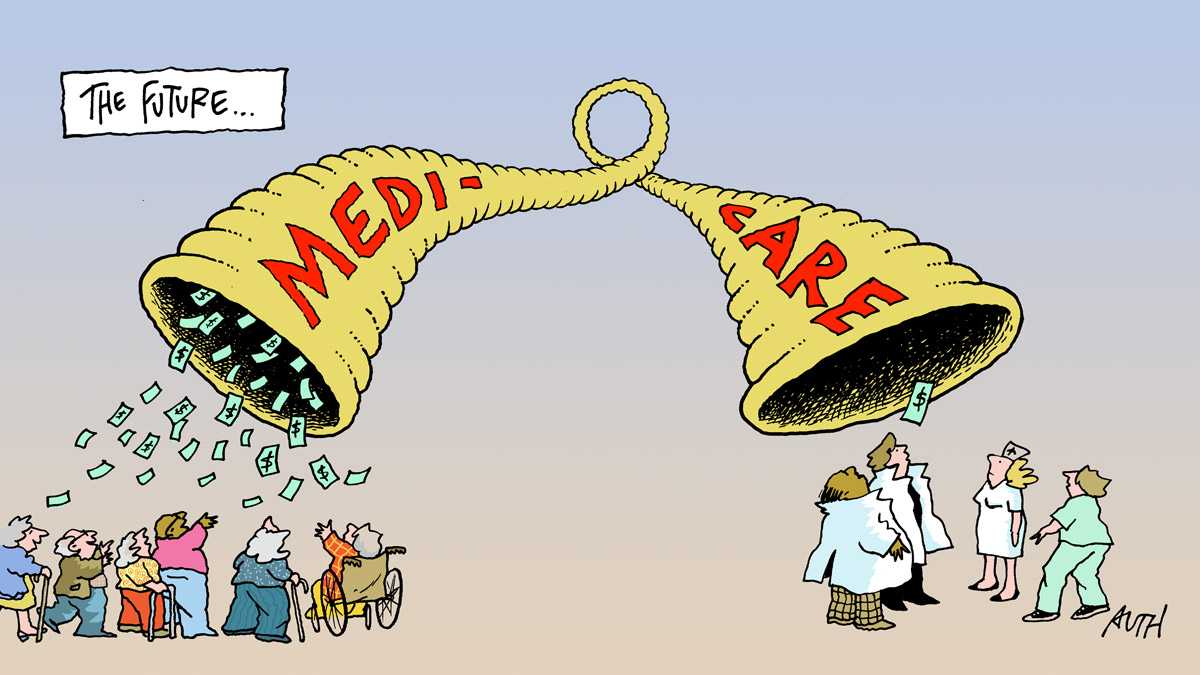
Cartoon – The Future of Medicare

ObamaCare Medicare: ObamaCare and Medicare

Coronavirus: 15 emerging themes for boards and executive teams

https://www.mckinsey.com/business-functions/risk/our-insights/coronavirus-15-emerging-themes-for-boards-and-executive-teams?cid=other-eml-alt-mip-mck&hlkid=0e0b80570bfe48508db4370a1999a949&hctky=9502524&hdpid=b867bc22-e8f5-41b6-b080-40a5d4c21c71

11 Ways To Create More Time To Think | Auguste rodin, Rodin, Rodin ...

Board directors and executives can pool their wisdom to help companies grapple with the challenge of a lifetime.

As Winston Churchill said, “Now this is not the end. It is not even the beginning of the end. But it is, perhaps, the end of the beginning.” We are seeing some faint signs of progress in the struggle to contain the pandemic. But the risk of resurgence is real, and if the virus does prove to be seasonal, the effect will probably be muted. It is likely never more important than now for boards of directors and executive management teams to tackle the right questions and jointly guide their organizations toward the next normal.

Recently, we spoke with a group of leading nonexecutive chairs and directors at companies around the world who serve on the McKinsey Resilience Advisory Council. They generously shared the personal insights and experiences gained from their organizations’ efforts to manage through the crisis and resume work. The 15 themes that emerged offer a guide to boards and executive teams everywhere. Together, they can debate these issues and set an effective context for the difficult decisions now coming up as companies plan their return to full activity.

Managing through the crisis

1. Boards must strike the right balance between hope for the future and the realism that organizations need to hear. There are many prognostications on what comes after COVID-19. Many will be helpful. Some will be right. Boards and managers may have some hopes and dreams of their own. Creating value and finding pockets of growth are possible. It is important to have these aspirations, because they form the core of an inner optimism and confidence that organizations need. However, leaders should not conflate aspirations with a prescience about the future.

2. The unknown portion of the crisis may be beyond anything we’ve seen in our professional lives. Boards and managers feel like they might be grappling with only 5 percent of the issues, while the vast majority are still lurking, unknown. Executives are incredibly busy, fighting fires in cash management and other areas. But boards need to add to their burden and ask them to prepare for a “next normal” strategy discussion. Managers need to do their best to find out what these issues are, and then work with boards to ensure that the organization can navigate them. The point isn’t to have a better answer. The point is to build the organizational capability to learn quickly why your answer is wrong, and pivot faster than your peers do. Resilience comes through speed. This may be a new capability that very few organizations have now, and they will likely need to spend real time building it.

3. Beware of a gulf between executives and the rank and file. Top managers are easily adapting to working from home and to flexible, ill-defined processes and ways of working, and they see it as being very effective and also the wave of the future. Many people in the trenches think it is the worst thing to happen to them (even those that are used to working remotely). Remote working is raising the divide between elites and the common man and woman. There is a real risk of serious tension in the social fabric of organizations and in local and national communities.

4. Don’t overlook the risks faced by self-employed professionals, informal workers, and small businesses. These groups are often not receiving sufficient support. But their role in the economy is vital, and they may be noticed only later, when it is too late.

5. Certain industries and sectors are truly struggling and require support. Several disrupted industries and many organizations in higher education, the arts, and sports are severely struggling and require support to safeguard their survival.

Return to work—the path ahead

6. Mid- to long-term implications and scenarios vary considerably. It’s important to differentiate between industries and regions. Some industries may never come back to pre-COVID-19 levels.

7. What went wrong? Boards and executives, but also academics, need to debate the question. Where should we have been focusing? Take three examples. Why did companies ignore the issue of inadequate resilience in their supply chain? The risks of single sourcing were well known and transparent. Also, why did we move headlong toward greater specialization in the workforce, when we knew that no single skill was permanently valuable? Finally, why did we refuse to evolve our business models, although we knew that technology and shifts in societal preferences were forcing us down a treadmill of ever decreasing value-creation potential?

8. How can we prevent a backlash to globalization? The tendency toward nationalism was already strong and is growing during the crisis. The ramifications will be challenging. For example, in pharmaceutical development, residents of the country where a pharma company has its headquarters may expect to get the drug first. Global companies, despite their experience, may find it harder to address and engage directly with diverse, volatile, and potentially conflicting stakeholders. In such times, societies may need someone to mediate between the private sector and some of these stakeholders.

9. Companies need help with government relations. Strong government interventions are occurring on the back of a serious loss of confidence in free-market mechanisms. There is little question that different governments will land on different answers to the debate around how free markets really ought to be structured. The corporate community has been thrust into a new relationship with government, and it is struggling. The government landscape is fragmented, with highly varied approaches and competencies. Companies are looking for a playbook; no one has an infrastructure to manage this complexity.

10. Where will the equity come from, and with what strings attached? Governments are propping up various sectors with new capital. What will they receive in return? Will they distort markets? How can companies manage this process carefully to emerge from the crisis with a stronger balance sheet? Further, much more capital is likely needed; presumably some of it will come from the private sector. Will capital markets be effective and trusted in such times? Who governs this overall process, and what role should the government play? Is it the time for more state funds?

11. The balance between profits and cash flow is tricky, and essential to get right. Many companies are caught right now and are sacrificing their bottom line in order to pay for their financing. That’s not sustainable; companies will need guidance on how to balance the two.

12. It may be time for responsible acquisitions, including to help restructure certain industries. Many “resilients” have “kept their powder dry,” and are now ready to acquire. But they need to be sensitive and allow sellers a good path to exit. We need guidelines for responsible acquisitions.

13. Cyberrisk is growing. Remote working increases the “attack surface” for criminals and state actors. Both are more active. Chief information officers and chief information security officers are grappling with the overwhelming demand for work-from-home technology and the need for stringent cybersecurity.

14. Innovation may never have been so important. Innovation has always been essential to solving big problems. The world is looking not just for new things but also for new ways of doing things (especially on the people side, where we need new behaviors, long-term rather than short-term), capabilities, and work ethics.

15. The path ahead will surely have ups and downs and will require resilience. As lockdowns are relaxed, and segments of the economy reopen, viral resurgences and unforeseen events will keep growth from being a straight line going up. It will likely be a lengthy process of preserving “lives and livelihoods” over several months, if not years. The reality is that many or even most business leaders made choices over the past decades that traded resilience for a perceived increase in shareholder value. Now may be the moment to consider that the era of chipping away at organizational resilience in the name of greater efficiency may have reached its limits. This is not to say that there are no efficiencies to be sought or found, but more that the trade-off between efficiency and resiliency needs to be defined far more clearly than it has been in recent years.


It is the board’s responsibility to coach and advise its management team, especially when the terrain is trickier than usual. However, boards should not mistake the need for vigorous debate with the need for consensus. More than ever, a bias to action is essential, which will frequently mean getting comfortable with disagreement. Apart from all the operational focus needed for the return to work, it is even more important that boards and management teams take a step back to reflect upon these 15 core themes. In summary:

  1. Take the time to recognize how the people who (directly or indirectly) depend on the company feel.
  2. Have aspirations about the post-COVID world, but build the resilience to make them a reality.
  3. Strengthen your capability to engage and work with regulators and the government.
  4. Watch out for non-COVID risks, and make sure to carve out time to dedicate to familiar risks that have never gone away.
  5. Find out what went wrong, and answer the uncomfortable truths that investigation uncovers.