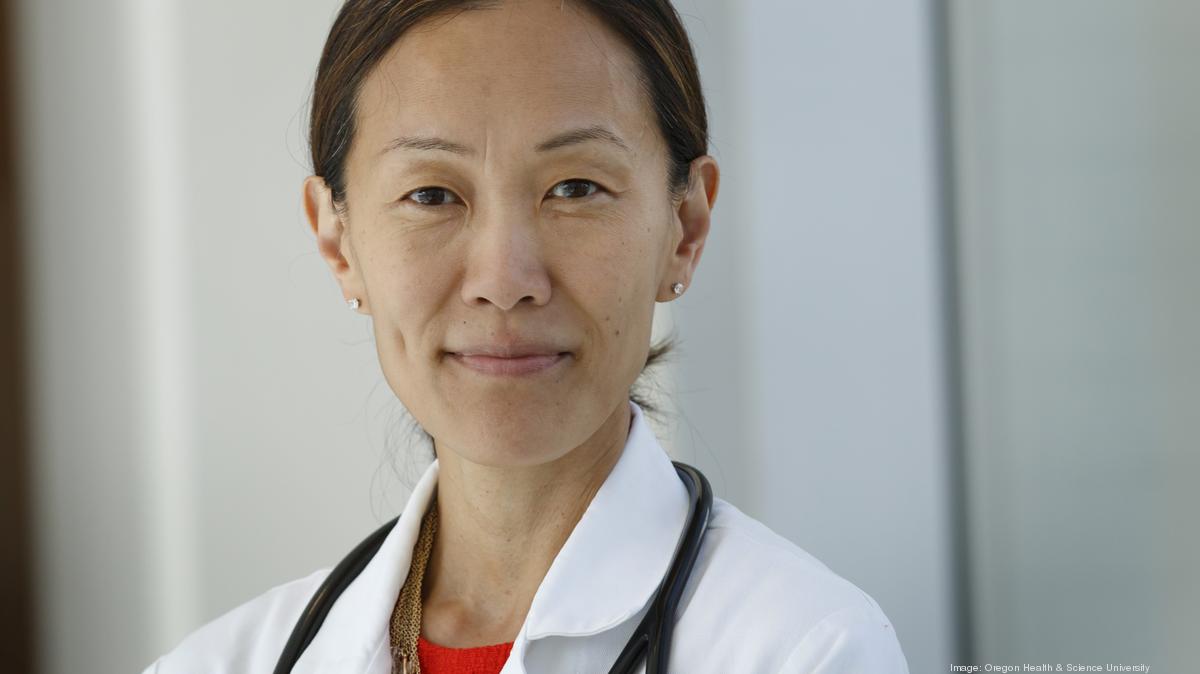
TED Esther Choo. Emergency physician and public health advocate. Life on the medical front lines of the pandemic

https://www.ted.com/about/programs-initiatives/ted-connects-community-hope

Doctors give OHSU's Esther Choo a standing ovation for gender bias ...

Esther Choo is an emergency physician and associate professor at the Oregon Health & Science University. She is a popular science communicator who has used social media to talk about racism and sexism in healthcare. She was the president of the Academy of Women in Academic Emergency Medicine and is a member of the American Association of Women Emergency Physicians.

As the coronavirus pandemic sweeps the globe, it’s hard to know where to turn or what to think. TED Connects is a free, live, daily conversation series featuring experts whose ideas can help us reflect and work through this uncertain time with a sense of responsibility, compassion and wisdom.


Ascension will protect pay of employees shifted, unable to work during pandemic, CEO says

https://www.beckershospitalreview.com/compensation-issues/ascension-will-protect-pay-of-employees-shifted-unable-to-work-during-pandemic-ceo-says.html?utm_medium=email

St. Vincent's Health System | LinkedIn

In an email to 160,000 employees, Ascension’s CEO said the St. Louis-based hospital system will protect their pay if they’re temporarily assigned to different jobs or unable to work for reasons linked to COVID-19.

In the April 3 email, Ascension President and CEO Joseph R. Impicciche said the protection will come through such programs as furlough pay, pay continuation, PTO advance, worker’s compensation and short-term disability.

Ascension also will offer daycare subsidies and reimbursements for employees who care for infected patients and may need to stay in a hotel for social-distancing purposes, the email stated.

“We are blessed to be able to make this commitment and appreciate the tremendous work and flexibility of our associates, leaders and physicians in providing compassionate, personalized care,” Mr. Impicciche wrote. “I am proud to witness the way all associates have come together to address the challenges of today, just like we have throughout our history.”


During a Pandemic, an Unanticipated Problem: Out-of-Work Health Workers

https://www.yahoo.com/news/during-pandemic-unanticipated-problem-health-150355070.html
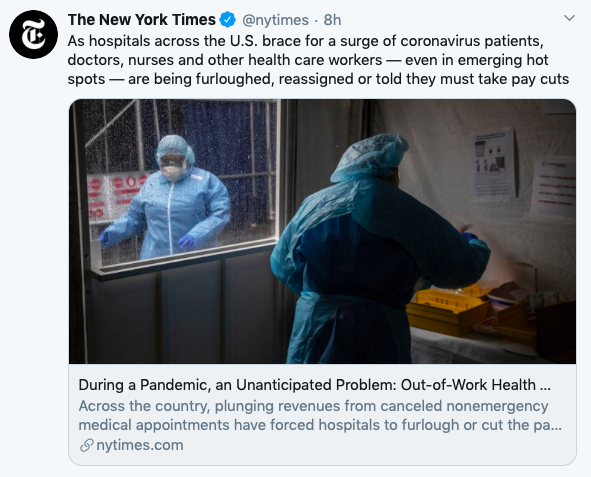
Jordan Schachtel on Twitter: "The people at The New York Times are ...

As hospitals across the country brace for an onslaught of coronavirus patients, doctors, nurses and other health care workers — even in emerging hot spots — are being furloughed, reassigned or told they must take pay cuts.

The job cuts, which stretch from Massachusetts to Nevada, are a new and possibly urgent problem for a business-oriented health care system whose hospitals must earn revenue even in a national crisis. Hospitals large and small have canceled many elective services — often under state government orders — as they prepare for the virus, sending revenues plummeting.

That has left trained health care workers sidelined, even in areas around Detroit and Washington, where infection rates are climbing, and even as hard-hit hospitals are pleading for help.

“I’m 46. I’ve never been on unemployment in my life,” said Casey Cox, who three weeks ago worked two jobs, one conducting sleep research at the University of Michigan and another as a technician at the St. Joseph Mercy Chelsea Hospital near Ann Arbor, Michigan. Within a week, he had lost both.

Mayor Bill de Blasio of New York has begged doctors and other medical workers from around the country to come to the city to help in areas where the coronavirus is overwhelming hospitals.

“Unless there is a national effort to enlist doctors, nurses, hospital workers of all kinds and get them where they are needed most in the country in time, I don’t see, honestly, how we’re going to have the professionals we need to get through this crisis,” de Blasio said Friday morning on MSNBC.

And the Department of Veterans Affairs is scrambling to hire health care workers for its government-run hospitals, especially in hard-hit New Orleans and Detroit, where many staff members have fallen ill. The department moved to get a federal waiver to hire retired medical workers to beef up staff levels.

But even as some hospitals are straining to handle the influx of coronavirus patients, empty hospital beds elsewhere carry their own burden.

“We’re in trouble,” said Gene Morreale, the chief executive of Oneida Health Hospital in upstate New York, which has not yet seen a surge in coronavirus patients.

Governors in dozens of states have delivered executive orders or guidelines directing hospitals to stop nonurgent procedures and surgeries to various degrees. Last month, the U.S. surgeon general, Dr. Jerome M. Adams, also implored hospitals to halt elective procedures.

That has left many health systems struggling to survive.

Next week, Morreale said, Oneida will announce that it is putting 25% to 30% of its employees on involuntary furlough. They will have access to their health insurance through June. Physicians and senior staff at the hospital have taken a 20% pay cut.

“We’ve been here 121 years, and I’m hoping we’re still there on the other side of this,” Morreale said.

Appalachian Regional Healthcare, a 13-hospital system in eastern Kentucky and southern West Virginia, has seen a 30% decrease in its overall business because of a decline in patient volume and services related to the pandemic. Last week, the hospital system announced it would furlough about 8% of its workforce — around 500 employees.

Hospital executives across the country are cutting pay while also trying to repurpose employees for other jobs.

At Intermountain Healthcare, which operates 215 clinics and 24 hospitals in Utah, Idaho and Nevada, about 600 of the 2,600 physicians, physicians assistants and registered nurses who are compensated based on volume will see their pay dip by about 15%, said Daron Cowley, a company spokesman.

Those reductions are tied to the drop in procedures, which has fallen significantly for some specialties, he said. The organization is working to preserve employment as much as possible, in part by trying to deploy 3,000 staff members into new roles.

“You have an endoscopy tech right now that may be deployed to be at hospital entrances” where they would take the temperatures of people coming in, Cowley explained.

In Boston, a spokesman for Partners HealthCare, with 12 hospitals, including Massachusetts General and Brigham and Women’s, said staff members whose work has decreased are being deployed to other areas or will be paid for up to eight weeks if no work is available.

But redeployment is not always an option. Janet Conway, a spokeswoman for Cape Fear Valley Health System in Fayetteville, North Carolina, said many of the company’s operating room nurses trained in specialized procedures have been furloughed because their training did not translate to other roles.

“Those OR nurses, many have never worked as a floor nurse,” she said.

Conway said nearly 300 furloughed staff members have the option to use their paid time off, but beyond that, the furlough would be unpaid. Most employees are afforded 25 days per year.

Some furloughed hospital workers are likely to be asked to return as the number of coronavirus cases rise in their communities. But the unpredictable virus has offered little clarity and left hospitals, like much of the economy, in a free fall.

Many health systems are making direct cuts to their payrolls, eliminating or shrinking performance bonuses and prorating paychecks to mirror reduced workload until operations stabilize.

Scott Weavil, a lawyer in California who counsels physicians and other health care workers on employment contracts, said he was hearing from doctors across the country who were being asked to take pay cuts of 20% to 70%.

The requests are coming from hospital administrators or private physician groups hired by the hospitals, he said, and are essentially new contracts that doctors are being asked to sign.

Many of the contracts do not say when the cuts might end, and are mostly affecting doctors who are not treating coronavirus patients on the front lines, such as urologists, rheumatologists, bariatric surgeons, obstetricians and gynecologists.

Such doctors are still being asked to work — often in a decreased capacity — yet may be risking their health going into hospitals and clinics.

“It’s just not sitting well,” Weavil said, noting that he tells doctors they unfortunately have few options if they want to work for their institution long term.

“If you fight this pay cut, administration could write your name down and remember that forever,” he said he tells them.

In other cases, physicians are continuing to find opportunities to practice in a more limited capacity, like telemedicine appointments. But that has not eliminated steep pay cuts.

“Physicians are only paid in our clinic based on their productivity in the work they do,” said Dr. Pam Cutler, the president of Western Montana Clinic in Missoula. “So they’re automatically taking a very significant — usually greater than 50% or 25% — pay cut just because they don’t have any work.”

In some areas, layoffs have left behind health care workers who worry that they will not be able to find new roles or redeploy their skills.

Cox in Michigan said he was briefly reassigned at his hospital, helping screen and process patients coming in with coronavirus symptoms, but eventually the people seeking reassignments outgrew the number of roles.

He also expressed concern that inevitable changes in the health care industry after the pandemic — paired with the possibility of a lengthy period of unemployment — could make it difficult to get his job back.

“I’m just concerned that the job I got laid off from may not be there when this is over,” Cox said. “The longer you’re away, the more you worry, ‘Am I going to be able to come back?’ So there’s a lot of anxiety about it.”

Even as many of the largest hospital networks grapple with sudden financial uncertainty, much smaller practices and clinics face a more immediate threat.

According to a statistical model produced by HealthLandscape and the American Academy of Family Physicians, by the end of April, nearly 20,000 family physicians could be fully out of work, underemployed or reassigned elsewhere, particularly as cities like New York consider large-scale, emergency reassignments of physicians.

“Many of these smaller practices were living on a financial edge to start with, so they’re not entering into this in a good position at all,” said Dr. Gary Price, the president of the Physicians Foundation. “Their margins are narrower, their patients don’t want to come in, and many of them shouldn’t anyway, so their cash flow has been severely impacted and their overhead really hasn’t.”


Nonprofit hospitals vulnerable to coronavirus-related market fallout, Fitch says

https://www.beckershospitalreview.com/finance/nonprofit-hospitals-vulnerable-to-coronavirus-related-market-fallout-fitch-says.html

I Like Boats Dump- Especially Boats Crashing Into Waves - Album on ...

Continued market losses prompted by the COVID-19 pandemic will likely weaken key liquidity metrics and pressure the ratings of some nonprofit hospitals, according to a new Fitch Ratings report. 

About half of Fitch’s rated nonprofit hospitals have 10 percent to 40 percent of their portfolios invested in equities, but other nonprofit hospitals exceed this range by a wide margin, Fitch noted.

Throughout the last month, the stock market suffered historic losses, which caused hospitals with more aggressive asset allocation to underperform their more conservative counterparts by 10 percent to 25 percent, Fitch said. 

Fitch said that hospitals in the last few weeks have seen a median loss of about 30 days of cash on hand. It noted this metric is not “an immediate concern yet, given the ample liquidity these hospitals have.”

But Fitch said most hospitals have cash on hand to fund about 200 days of operations.

The ratings agency said the market likely will remain volatile, and “time will tell if and how the stock market declines eat into a hospital’s reserves.”


How hospital capacity varies dramatically across the country

https://www.healthcaredive.com/news/how-hospital-capacity-varies-dramatically-across-the-country/574892/

POPULATION                                    BED COUNT 

20M                      10M people                            0                          0                         25k beds                     50k

LUMEDX (@Lumedx) | Twitter

Healthcare Dive analyzed data to paint a picture of hospital capacity, pinpointing areas with a higher ratio of people to beds and signaling where there is a risk for capacity issues.

Fewer hospital beds in select regions make them especially vulnerable to the novel coronavirus as it’s expected to spread from big city hot spots to other areas of the country.

As the U.S. has become the next epicenter of the outbreak, hospitals are preparing for the worst. The pathogen threatens to overwhelm their facilities and resources, especially if mitigation efforts fail to blunt a surge of COVID-19 patients.

The latest figures from the Johns Hopkins Coronavirus Resource Center report more than 143,000 confirmed cases in the U.S. and more than 2,500 deaths as of Monday.

The New York City metro area has the most beds compared to the rest of the country. Still, that is not enough capacity to meet the crushing demand.

To illustrate hospital capacity across the country, Healthcare Dive sought to compare bed counts to population, and found population size isn’t always indicative of the number of beds available.

Population size is not always indicative of bed capacity in the top 20 metro areas

Below are the 20 most populated metro areas in the U.S., sorted by population. As you move down the chart, population size decreases, but bed counts do not always. Areas like D.C. and Seattle have fewer beds relative to population size, while Miami and Philadelphia have more beds relative to population.

Some areas like Washington, D.C., have relatively fewer beds compared to their population, while others like Miami, Philadelphia and St. Louis have more beds relative to the number of people in the region.

Some hospitals are turning to hotels and tents, and Vice President Mike Pence has said he’s working with the Department of Defense to get field hospitals and other options online.

Still, researchers cautioned there is a long way to go to meet projected demands. If America’s healthcare system was able to free up half of its beds by discharging patients, the country would still need three times as many beds, Ashish Jha, director of the Harvard Global Health Institute, told reporters during a call on Tuesday. That projection assumes 40% of Americans get infected over the next six months.

“What we know right now is that capacity to manage patients varies dramatically from community to community,” Jha said.

Areas with the highest ratio of people per bed

To paint a picture of hospital capacity across the country, Healthcare Dive used CMS cost reports and population data to calculate the ratio of people per bed in metropolitan areas and regions. In other words, how many residents are there for a single bed? It’s a way to pinpoint areas with a higher ratio of people to beds, signaling areas potentially at risk for capacity issues.

HOW HEALTHCARE DIVE ANALYZED HOSPITAL BED COUNTS

Hospitals certified by Medicare are required to submit annual cost reports to CMS, which include a vast array of information from bed counts to financials. Hospital beds analyzed in this report do not include all the beds a hospital may have reported to CMS.

Healthcare Dive excluded nursery, labor and delivery beds and psychiatric hospitals. In addition, due to the inconsistent reporting in ICU beds, Healthcare Dive did not highlight areas with higher ratios of people per ICU bed. It’s also important to note that some hospitals may have opened or closed since these latest CMS cost reports were published.

Healthcare Dive analyzed specific geographic areas, in this case metropolitan CBSAs, or core-based statistical areas, which are geographic areas that consist of an urban center of 50,000 people or more.

In the U.S., about 42% of the more than 143,000 cases are concentrated in New York, overwhelming available resources. Still, case counts are swelling in areas outside of New York including Chicago, Detroit and New Orleans. Indicating the outbreak is likely to be widespread in America.

Healthcare Dive found the Bloomsburg-Berwick, Pennsylvania, area has the lowest ratio in the nation with 86 people for each bed. Most areas have much higher ratios, the median being around 400 people per bed when comparing CBSAs. The metro area of New York City sits in the middle with 405 people per bed.

The Greeley, Colorado area has the nation’s highest ratio of people per bed, according to the data. About 60 miles northeast of Denver and with a population of more than 314,000, there are 1,397 people for every one hospital bed in the Greeley area.

The CMS data shows a total of 225 hospital beds in the Greeley area, operated by Banner Health’s North Colorado Medical Center.

However, a new 50-bed hospital opened recently and was not included in the most recent cost reports. It is operated by UCHealth.

Still, while those numbers may seem grim, Colorado’s hospital leaders cautioned that the state can and is working to tap into additional resources, citing freestanding emergency rooms and ambulatory surgical centers.

It’s imperative to look beyond just one locale or one hospital and consider the resources of the state as a whole, Colorado’s hospital leaders told Healthcare Dive.

Colorado has a total of 10,293 hospital beds (12,558 licensed beds) and at least 973 ICU beds, the Colorado Hospital Association said.

“It’s going to take the whole system for us to get through this,” Julie Lonborg, senior vice president at the Colorado Hospital Association, told Healthcare Dive.

There are only one or two hospitals in almost all of the 10 regions with the highest ratio of people per bed. Rounding out the top 10 areas with the highest ratio of people per bed following Greeley, include Albany, Oregon; Gettysburg, Pennsylvania; Merced, California; California-Lexington Park, Maryland; Bremerton-Silverdale, Washington; Lawrence, Kansas; Monroe, Michigan; Provo-Orem, Utah; and Ogden-Clearfield, Utah.

The data shows the total bed capacity in a region, but does not take into account the patients currently occupying those beds. However, in an effort to free up existing beds, many hospitals have halted elective surgeries, including in Greeley to free up resources and staff to be able to respond to a potential surge.

“UCHealth Greeley Hospital is caring for a large number of patients at this time, and by working together as a large system, UCHealth is able to redirect patients and admissions to other facilities to help even out our capacities at this and other hospitals,” Kelly Tracer, a spokesperson for the hospital, told Healthcare Dive.

In fact, many hospitals plan to lean on the larger systems they’re a part of to shuffle resources to respond to the pandemic.

In Gettysburg, Pennsylvania, there are 76 hospital beds and 1,353 people per hospital bed. WellSpan Health, which operates Gettysburg Hospital, said it plans to coordinate its response by using its eight other hospitals in different areas and some 200 locations.

“We are taking a comprehensive approach to this issue, developing a network of more than 10 outdoor testing locations across our five-county region and temporarily repurposing several of our outpatient medical practices to care locations dedicated solely for the treatment of patients who are suspected or confirmed to have COVID-19 and have non-emergency medical needs,” according to a statement WellSpan Health provided Healthcare Dive.

Other locations with the highest people per bed ratio are converting existing space into dedicated areas to treat COVID-19 patients to prepare for a crush of patients, including in Lawrence, Kansas, with 893 people for every bed.

Lawrence Memorial Hospital in Lawrence, Kansas, about 40 miles west of Kansas City, is prepared to up its capacity to 205, LMH said in a statement. The hospital reported 136 beds to CMS but said it is licensed for 174.

“At any given time we have upwards of 100 patients,” Traci Hoopingarner, vice president of clinical care and chief nursing officer for LMH Health, said in a statement.

As New York continues to grapple with mounting cases, leaders are issuing dire warnings to the rest of the country.

“New York is the canary in the coal mine. What happens to New York is going to wind up happening in California and Washington state and Illinois. It’s just a matter of time,” New York Gov. Andrew Cuomo said.

Below is an interactive table of hospital bed availability in different metros across the country. Search for your metro area to find the corresponding hospital capacity.


Quorum says it may have to file for bankruptcy

https://www.healthcaredive.com/news/quorum-10k-delay-bankruptcy-warning/575491/

Dive Brief:

  • For-profit hospital operator Quorum Health said in a recent filing with the Securities and Exchange Commission that it may have to file for Chapter 11 bankruptcy to address current liquidity needs while continuing to care for patients and keep its hospitals operating.
  • The company said it’s in ongoing discussions with certain debt holders concerning a recapitalization or financial reorganization transaction.
  • Quorum also announced in the SEC filing that it will be late to file its annual 10-K report, covering financials for its fiscal year ending December 31, 2019.

Dive Insight:

COVID-19 has upended hospitals’ typical operations, prompting many to halt lucrative elective surgeries and cancel doctors visits to preserve staff and resources. Some worry those patients and revenue may never come back as unemployment claims go up and people lose their employer-sponsored health coverage. 

Tennessee-based Quorum Health, which operates 24 hospitals in 14 states, may have already been more ill-positioned financially than other systems for such a pandemic.

Quorum missed Wall Street earnings expectations in its most recent financials for the third quarter of 2019, posting a net loss of almost $76 million and a revenue decline almost 9% year over year. The company now said it’s delaying its 10K report with its most recent financials due to restructuring talks, but has 15 days to do so.

The for-profit chain went public in May 2016 with 38 hospitals – 14 of which have since shuttered. In 2017 private equity firm KKR took a 5.6% stake in the system for $11.3 million. 

Beyond being Quorum’s largest debt-holder today, KKR also owns about 9% of its public shares. In December, the firm offered to buy Quorum out and take the hospital chain private at $1 a share.

While negotiating with debt holders and weighing its options, Quorum intends to maintain all operations at its hospitals without any interruption in service, CEO Robert Fish said in a statement.

“Our facilities play a critically important role in their communities and the fight against COVID-19,” Fish said. “We are intensely focused on ensuring our employees have the resources they need to provide quality care to the patients and communities they serve, now and well into the future.”


Drivers of health and the coronavirus

Drivers of health and the coronavirus

Truck drivers under increased pressure due to coronavirus

I don’t have time for a fully formed post or column on this, but I want to make note of a few ways in which the COVID-19 pandemic is intersecting with drivers of health (which include social determinants and health system factors). The following list is not necessarily exhaustive and my focus is on the U.S.

  • Right now the health system cannot offer anything to prevent the consequences of COVID-19 infection. Prevention is entirely within the realm of public health measures and personal behaviors. In this way, this is a lot like HIV/AIDS before the mid-1990s. If one were engaged in an exercise of attributing COVID-19 deaths to various factors, personal behavior — degree of social distancing, hand washing, etc. — would get a significant share.
  • But, individuals do not fully control their own COVID-19 destiny. Not everyone can avoid all risk of exposure. Food and other necessities need to be brought into the house. We want some people to work (e.g., health care workers, those involved in producing and transporting food and medical supplies). Not everyone can control the behavior of everyone else in their household. Teens and young adults might sneak out, despite what their parents say.
  • Among those at highest risk will be people who don’t have the privilege of working from home. They need income and can’t get it without leaving the house. Peeling this onion leads back to the customary markers of socioeconomic status (education, income, rank/class, etc.) as drivers of health.
  • Those with privilege are more likely to find ways to get testing, care, and going forward, probably will be among the first (after health care workers) to get vaccinated. This is how it has always been in the U.S.
  • Policy clearly plays a role. Where leaders were slower to implement changes to increase or require social distancing, outbreaks are more widespread (relative to the counterfactual of those changes made sooner). Even national policy makers were slow to recognize the importance of preparing for a pandemic. Mistakes were made. Balls were dropped. So, policy/government is a driver, of course.
  • Finally, the health system clearly plays a role, not in prevention but in treatment. People can be saved, if the resources are there to save them and they can be accessed. Where and for whom health care is more available and accessible, people will be better off. This is complex because of the intersection of the effectiveness of health care, its accessibility (which is reduced for people losing job-based insurance, otherwise un- or under-insured, or without the resources to pay cost sharing, etc.), and the degree to which the health system has prepared for such a pandemic (which intersects with policy and health economics). So, the health system should get some blame/credit for deaths/saved lives, but it’s not so clear how much.

Fundamentally, it’s interesting how much we are reliant on collective resources — government through policy and shared health care infrastructure. The best thing we can do for ourselves individually is to engage in safe behaviors. But we also need collective action for our future well being. Yes/and, not either/or.


The Memo: Scale of economic crisis sends shudders through nation

The Memo: Scale of economic crisis sends shudders through nation

Pandemic derails resilient US economy | TheHill

New data released Thursday revealed the scale of the economic devastation wrought by the coronavirus crisis — and experts say there is no end in sight.

More than 6.6 million new unemployment claims were filed during the week ending March 28, according to the Department of Labor. The figure was double that of the previous week, which had itself been by far the highest since records began.

The stark reality is that roughly 10 million people have been dumped from their jobs in two weeks. A previously robust economy has been scythed down by the virus. A nation that had been enjoying its lowest unemployment rate for decades is now virtually certain to see jobless totals surpass those of the Great Recession a decade ago.

“The present economic situation is awful,” said Jason Furman, a Harvard University professor who served as chairman of President Obama’s Council of Economic Advisers. “The data is just telling us what we can see with our own eyes — there is very little business happening.”

Economists who had already been deeply worried about the immediate outlook are now wondering if their earlier projections were in fact too rosy.

“In our earlier scenario, we had expected 6.5 million job losses by May,” said Beth Ann Bovino, the chief U.S. economist at Standard & Poor’s. That figure will be exceeded, she now believes, given that there were “more lockdowns, more business closures and more businesses just trying to keep themselves alive” by laying off workers.

Heidi Shierholz, senior economist and director of policy at the Economic Policy Institute, said that even the 10 million figure for new unemployment claims was “likely a massive undercount” of actual losses because, during that period, self-employed people and workers in the so-called “gig economy” were generally not eligible to apply. This is changing as a consequence of the package recently passed by Congress that extends eligibility for unemployment benefits, as well as providing other aid for businesses and individuals.

“Our estimate is that by the end of June, 20 million people will have lost their jobs — and I am wondering if even that is optimistic,” Shierholz said.

The political ramifications of such a huge economic shock are unknowable.

President Trump had been looking forward to using the economy as his strongest card as he seeks a second term in November. That card has been shredded.

Trump has promised repeatedly during his White House briefings on the crisis that the nation can bounce back very fast once the public health dangers have receded.

Trump’s approval ratings have also ticked up modestly since the crisis began in many polls. He may be benefitting from the traditional “rallying around the flag” effect that has occurred in previous moments of crisis.

President George W. Bush, for example, hit 90 percent approval in a Gallup poll — the highest result for any president in the polling organization’s history — right after the terrorist attacks of Sept. 11, 2001.

In a statement on Thursday, probable Democratic nominee Joe Biden hit Trump for “failing to prepare our nation” for the ramifications of the coronavirus crisis. Biden called on Trump to allow open enrollment in the Affordable Care Act and also jabbed at Treasury Secretary Steven Mnuchin for having referred to previous unemployment figures as “not relevant.”

In response, Trump campaign communications director Tim Murtaugh blasted back at Biden for “ineffectively sniping from the sidelines, stumbling through television interviews, and hoping for relevance and political gain.”

Economic experts caution that Trump’s promises of a v-shaped recovery, in which the nation jolts itself back into strong economic shape quickly, are almost certainly unrealistic. It will not be a matter of the nation simply rolling the shutters back up and returning to business as usual.

“The economy is not symmetrical,” said Furman. “It is easier to separate someone from a job than to connect someone to a job. In recessions, the unemployment rate can go up very quickly and it comes down very slowly. The worry is that this will be like that.”

Several economic experts who spoke with The Hill made similar points, unprompted, as to the ways the federal government could ease the crisis.

One refrain was that huge assistance needs to be made available to states. States are generally required to balance their budgets. In a situation like the current one, where their tax revenue is cratering, this means they are obligated to severely cut spending — something that most economists believe would deepen and prolong the recession.

Another theme was the need to tie together financial assistance for businesses and the retention of employees.

The recently passed stimulus package makes some effort to do that, particularly in the case of small businesses. The Paycheck Protection Program extends loans to small businesses based upon eight weeks of payroll costs plus an additional 25 percent of the total.

The payroll portion of the loans would be forgiven — rendering them in effect a grant, not a loan — so long as the workforce was maintained at existing levels.

Economic experts praise the principle but worry that the total amount of money in the pot for these loans — $349 billion — may not be enough. 

“The small business subsidies will be critical,” said Steven Hamilton, an assistant professor of economics at The George Washington University. “The government needs to get the word out on those, and Congress will likely need to pass an expansion both to adequately fund the existing scheme and to make the scheme more generous to businesses to keep them from laying off workers.”

The public seems to share the view that the aid package, which also includes checks of up to $1,200 for individuals, is a move in the right direction — but unlikely to suffice.

A CBS News poll released late Thursday afternoon indicated 81 percent of Americans support the recent legislation but 57 percent also say it likely won’t be enough.

The same trepidation is shared by the experts, given the unprecedented nature of the coronavirus and the economic crisis it has created.

“It’s like nothing we have ever seen before,” said Shierholz.


Federal pandemic money fell for years. Trump’s budgets didn’t help

https://www.politifact.com/article/2020/mar/30/federal-pandemic-money-fell-years-trumps-budgets-d/?fbclid=IwAR3Z3CZ-bU6n4Q5IxIVgsFey0ELs2F6uplsqCHpkLlHN61m5-yQ637SKqeM

PolitiFact (@PolitiFact) | Twitter

IF YOUR TIME IS SHORT

  • Federal support to build state and local capacity to manage a new viral crisis fell by 50% after 2003.
  • The decline in federal aid spans three presidencies and many sessions of Congress.
  • President Donald Trump sought $100 million in cuts that would have made the situation harder.

President Donald Trump’s critics have charged that he undermined efforts that could have helped the nation respond faster and better to the coronavirus. He’s been criticized for downgrading the focus on pandemic threats on the National Security Council and chastised for seeking budget cuts at the Centers for Disease Control and Prevention.

That isn’t the full story of U.S. pandemic preparedness.

The broader picture is that money to prepare for this day has steadily dwindled over the past 15 years — across three presidents and many sessions of Congress.

The funds for pandemics remained about the same under Trump (and would have been lower if his budgets were enacted). But compared with where funding stood in 2003, support to build state and local capacity has fallen by half.

As hospitals and public health agencies aimed for leaner, more efficient operations, the combination of fewer federal dollars and market pressures left them with little cushion to meet the explosive demands of the novel coronavirus.

Over the years, Washington put more emphasis on fighting predictable problems, like the seasonal flu, and outright aggression in the form of chemical, biological and radiological terrorism.

Sandro Galea, dean of Boston University’s School of Public Health, said people like him have been hamstrung in the debate.

“Public health has been on the defensive,” Galea said. “There’s been no space except for talk of bioterrorism. The discussion about investing in the public health system has been utterly sidelined.”

The long-term decline

Frontline readiness for a pandemic depends on many factors.

There have to be enough people with the right skills; enough beds, equipment and materials to treat patients; and the right practices to coordinate efforts across a region. Federal money helps support all of that.

The Centers for Disease Control and Prevention distributes grants to state and local public health agencies, labs and hospitals. In nominal dollars, the funding for the CDC’s Public Health Emergency Preparedness grants went from $939 million in 2003 to $675 million in 2020.

Private health providers get money through a hospital preparedness program within the Health and Human Services Department. It helps local coalitions of hospitals, public health agencies and emergency managers plan and get ready for a sudden health threat. That money went from $515 million to $275 million in the same 17-year period.

Corrected for inflation, combined spending went from over $2 billion in 2003 to a bit under $1 billion in 2020.

These programs came to the fore after the Sept. 11 attacks when concern over bioterrorism spiked. For lawmakers, the concern was personal — letters tainted with anthrax reached Capitol Hill.

But the money gradually faded, and the capacity of state and local public health departments and labs did not keep pace with the likelihood of a viral disease like COVID-19.

“Health departments can’t retain workforce or modernize their disease surveillance and laboratory capacity without adequate, long-term funding,” said Dara Lieberman, director of government relations with Trust for America’s Health, a public health advocacy group. “Today, we’re paying the price.”

Local health systems needed to do their part, but the federal government was uniquely positioned to help.

“The purchasing power of the federal government is second to none, and it has failed to stockpile or otherwise negotiate pipelines to get access to the personal protective gear and medical equipment that it has known with certainty would be needed in a respiratory pandemic,” said Ellen Carlin at Georgetown University’s Center for Global Health Science and Security.

But the news hasn’t been all bad. 

After the Ebola scare in 2014, Washington and the states showed renewed interest in preparing for a naturally occurring viral threat.

Congress provided a bit of extra money, and according to a Health and Human Services study the improvement was striking: In 2014, about 70% of hospital administrators said they were unprepared for an emerging infectious disease like Ebola. Three years later, only 14% said they weren’t ready.

But hospital leaders also warned that it was hard for them to maintain that level “given competing priorities for hospital resources and staff time.”

Local hospitals and public health agencies have come a long way since 2003, said Crystal Watson, assistant professor, at the Johns Hopkins Center for Health Security and former staffer at the Homeland Security Department.

But she said they faced multiple pressures. In addition to falling federal support, Watson said the demand to maintain a healthy bottom line helped shape the situation today.

“Hospitals are under pressure to be efficient,” Watson said. “They don’t stockpile tons of equipment and materials and they don’t have tons of empty beds because that is not profitable. When you need more supplies, and more personnel, that’s when you learn what you lack.”

Today, Watson said, the lesson is clear.

“In retrospect, none of this has been funded at the level it should have been,” she said.

A thinly stocked stockpile

This crisis has also revealed the cracks in the Strategic National Stockpile, the current go-to source for ventilators, masks and other essential needs. States have clamored for supplies, and so far, deliveries have lagged far behind demand.

During her time with Homeland Security, Watson contributed to an assessment of the Strategic National Stockpile. Watson said the stockpile was designed with a long list of threats in mind, from chemical and biological terrorism to natural disasters. Something like COVID-19 would be just one threat among many.

“It’s primary purpose, and where it had more of a focus, was on bioterrorism,” Watson said. “That’s understandable. Who else but the government is going to buy a vaccine to protect the population against smallpox?”

The most recent strategic plan for the stockpile reflects the competing demands.

It mentions emerging infectious disease 15 times. Preparing for anthrax shows up nearly 50 times.

Criticisms of Trump need context

As the first cases emerged in the United States, Democrats criticized Trump’s preparedness on two fronts: He eliminated a key office in the National Security Council, and he tried to cut the CDC’s budget. 

The budget claims have merit. The complaints about the National Security Council  are reasonable, but could be more organizational streamlining than a loss of capability.

Until the spring of 2018, the National Security Council had an office that focused on global health and biodefense. When John Bolton took the lead on the council, he crafted an overall organizational reshuffle.

The functions of the global health division were absorbed into the council’s division that dealt with weapons of mass destruction and biodefense. The White House established a Biodefense Steering Committee headed by the Health and Human Services secretary, and issued a National Biodefense Strategy.

At the time, the Center for Strategic and International Studies think tank said the White House should name a senior-level leader to oversee the policy. The White House did not follow that advice.

The Trump campaign pointed to arguments from Bolton and the former senior director of the council, Tim Morrison, rejecting the idea that they lost their focus on this kind of threat.

On the budget, Trump unsuccessfully pressed for cuts in programs that relate directly to the current crisis. In his 2018 budget, he proposed cutting over $100 million from programs aimed specifically at strengthening public hospitals and labs — a 17% reduction. For fiscal year 2020, he wanted to cut $100 million, again about 17%, from programs that target emerging and zoonotic infectious diseases.

Congress ignored the president’s budget plans and largely kept the flow of dollars steady, even increasing them slightly. 

In 2018, Congress created a new Infectious Diseases Rapid Response Reserve Fund to provide quick money between the time when a crisis strikes and Congress delivers aid with real heft. The fund held $135 million when HHS secretary Alex Azar declared a health emergency in early February, which freed up that money.

That doesn’t mean the Trump administration’s preferences had no effect, said Tony Mazzaschi, with the Association of Schools and Programs of Public Health, a group that lobbies Congress on behalf of public health schools. The threat of cuts made the status quo seem like a win when it wasn’t.

“One of the perverse things that happens is the public health community has to play defense and can’t argue for increases,” Mazzaschi said.


California Hospitals Face Surge With Proven Fixes And Some Hail Marys

https://khn.org/news/california-hospitals-face-surge-with-proven-fixes-and-some-hail-marys/

California Hospitals Face Surge With Proven Fixes And Some Hail ...

California’s hospitals thought they were ready for the next big disaster.

They’ve retrofitted their buildings to withstand a major earthquake and  whisked patients out of danger during deadly wildfires. They’ve kept patients alive with backup generators amid sweeping power shutoffs and trained their staff to thwart would-be shooters.

But nothing has prepared them for a crisis of the magnitude facing hospitals today.

“We’re in a battle with an unseen enemy, and we have to be fully mobilized in a way that’s never been seen in our careers,” said Dr. Stephen Parodi, an infectious disease expert for Kaiser Permanente in California. (Kaiser Health News, which produces California Healthline, is not affiliated with Kaiser Permanente.)

As California enters the most critical period in the state’s battle against COVID-19, the state’s 416 hospitals — big and small, public and private — are scrambling to build the capacity needed for an onslaught of critically ill patients.

Hospitals from Los Angeles to San Jose are already seeing a steady increase in patients infected by the virus, and so far, hospital officials say they have enough space to treat them. But they also issued a dire warning: What happens over the next four to six weeks will determine whether the experience of California overall looks more like that of New York, which has seen an explosion of hospitalizations and deaths, or like that of the San Francisco Bay Area, which has so far managed to prevent a major spike in new infections, hospitalizations and death.

Some of their preparations share common themes: Postpone elective surgeries. Make greater use of telemedicine to limit face-to-face contact. Erect tents outside to care for less critical patients. Add beds — hospital by hospital, a few dozen at a time — to spaces like cafeterias, operating rooms and decommissioned wings.

But by necessity — because of shortages of testing, ventilators, personal protective equipment and even doctors and nurses — they’re also trying creative and sometimes untried strategies to bolster their readiness and increase their capacity.

In San Diego, hospitals may use college dormitories as alternative care sites. A large public hospital in Los Angeles is turning to 3D printing to manufacture ventilator parts. And in hard-hit Santa Clara County, with a population of nearly 2 million, public and private hospitals have joined forces to alleviate pressure on local hospitals by caring for patients at the Santa Clara Convention Center.

Yet some hospitals acknowledge that, despite their efforts, they may end up having to park patients in hallways.

“The need in this pandemic is so different and so extraordinary and so big that a hospital’s typical surge plan will be insufficient for what we’re dealing with in this state and across the nation,” said Carmela Coyle, president and CEO of the California Hospital Association.

Across the U.S., more than 213,000 cases of COVID-19 have been confirmed, and at least 4,750 people have died. California accounts for more than 9,400 cases and at least 199 deaths.

Health officials and hospital administrators are singling out April as the most consequential month in California’s effort to combat a steep increase in new infections. State Health and Human Services Secretary Mark Ghaly said Wednesday that the number of hospitalizations is expected to peak in mid-May.

Gov. Gavin Newsom said there were 1,855 COVID-19 cases in hospitals Wednesday, a number that had tripled in six days, and 774 patients in critical care. By mid-May, the number of critical care patients is expected to climb to 27,000, he said.

Newsom said the state needs nearly 70,000 more hospital beds, bringing its overall capacity to more than 140,000 — both inside hospitals and also at alternative care sites like convention centers. The state also needs 10,000 more ventilators than it normally has to aid the crush of patients needing help to breathe, he said, and so far has acquired fewer than half.

Newsom and state health officials worked with the Trump administration to bring a naval hospital ship to the Port of Los Angeles, where it is already treating patients not infected with the novel coronavirus. The state is working with the Army Corps of Engineers to deploy eight mobile field hospitals, including one in Santa Clara County. And it is bringing hospitals back online that were shuttered or slated to close, including one each in Daly City, Los Angeles, Long Beach and Costa Mesa.

The governor is also drafting a plan to make greater use of hotels and motels and nursing homes to house patients, if needed.

But the size of the surge that hits hospitals depends on how well the public follows social distancing and stay-at-home orders, said Newsom and hospital administrators. “This is not just about health care providers caring for the sick,” said Dr. Steve Lockhart, the chief medical officer of Sutter Health, which has 22 hospitals across Northern California.

While hospitals welcomed the state assistance, they’re also undertaking dramatic measures to prepare on their own.

“I’m genuinely very worried, and it scares me that so many people are still out there doing business as usual,” said Chris Van Gorder, CEO of Scripps Health, a system with five major hospitals in San Diego County. “It wouldn’t take a lot to overwhelm us.”

Internal projections show the hospital system could need 8,000 beds by June, he said. It has 1,200.

In addition to taking precautions to protect its health care workers — such as using baby monitors to observe patients without risking infection — it is working with area colleges to use dorm rooms as hospital rooms for patients with mild cases of COVID-19, among other efforts, he said.

“Honestly, I think we should have been better prepared than we are,” Van Gorder said. “But hospitals cannot take on this burden themselves.”

Van Gorder and other hospital administrators say a continued shortage of COVID-19 tests has hampered their response — because they still don’t know exactly which patients have the virus — as has the chronic underfunding of public health infrastructure.

Kaiser Permanente wants to double the capacity of its 36 California hospitals, Parodi said. It is also working with the garment industry to manufacture face masks, and eyeing hotel rooms for less critical patients.

Harbor-UCLA Medical Center, a 425-bed safety-net hospital in Los Angeles, is working to increase its capacity by 200%, said Dr. Anish Mahajan, the hospital’s chief medical officer.

Harbor-UCLA is using 3D printers to produce ventilator piping equipped to serve two patients per machine. And in March it transformed a new emergency wing into an intensive care unit for COVID-19 patients.

“This was a shocking thing to do,” Mahajan said of the unprecedented move to create extra space.

He said some measures are untested, but hospitals across the state are facing extreme pressure to do whatever they can to meet their greatest needs.

In March, Stanford Hospital in the San Francisco Bay Area launched a massive telemedicine overhaul of its emergency department to reduce the number of employees who interact with patients in person. This is the first time the hospital has used telemedicine like this, said Dr. Ryan Ribeira, an emergency physician who spearheaded the project.

Stanford also did some soul-searching, thinking about which of its staff might be at highest risk if they catch COVID-19, and has assigned them to parts of the hospital with no coronavirus patients or areas dedicated to telemedicine. “These are people that we might have otherwise had to drop off the schedule,” Ribeira said.

Nearby, several San Francisco hospitals that were previously competitors have joined forces to create a dedicated COVID-19 floor at Saint Francis Memorial Hospital with four dozen critical care beds.

The city currently has 1,300 beds, including 200 ICU beds. If the number of patients surges as it has in New York, officials anticipate needing 5,000 additional beds.

But the San Francisco Bay Area hasn’t yet seen the expected surge. UCSF Health had 15 inpatients with COVID-19 Tuesday. Zuckerberg San Francisco General Hospital and Trauma Center had 18 inpatients with the disease Wednesday.

While hospital officials are cautiously optimistic that local and state stay-at-home orders have worked to slow the spread of the virus, they are still preparing for what could be a major increase in admissions.

“The next two weeks is when we’re really going to see the surge,” said San Francisco General CEO Susan Ehrlich. “We’re preparing for the worst but hoping for the best.”