Pandemic response complicated by public health agencies’ inability to receive data from hospitals

https://www.healthcaredive.com/news/pandemic-response-complicated-by-public-health-agencies-inability-to-recei/578663/

Dive Brief:

  • The biggest problem with electronic syndromic surveillance reporting isn’t that hospitals lack the capacity to send data — it’s that public health agencies lack the ability to receive it, according to a new report published in the Journal of the American Medical Informatics Association.
  • More than four in 10 U.S. hospitals say their local, state and federal public health agencies are unable to receive data electronically, reflecting a decade-long investment in health IT infrastructure on the private sector side without a concomitant investment from its federal partners, researchers found.
  • Hospitals in regions forecast to be some of the hardest hit from COVID-19 were more likely to say public health agencies were unable to receive health data electronically, implying areas of highest need were some of the least prepared to mount a coordinated, data-driven response going into the pandemic.

Dive Insight:

Effective pandemic response requires real-time, accurate data sharing between providers and public health agencies, allowing the government to track outbreaks and allocate resources as needed.

A lack of nationwide, interoperable reporting infrastructure has been one of the major criticisms of the Trump administration’s handling of the pandemic, which has infected almost 1.7 million and killed 99,000 people in the U.S. as of Wednesday.

CMS requires hospitals be able to electronically send and receive health information, including lab results and syndromic surveillance data, to and from public health agencies like their state’s department of health. For more than a decade, providers have funneled significant resources into their IT infrastructure due to a slurry of federal incentive programs, though EHR implementation remains piecemeal across the U.S. due to cost and other barriers.

The JAMIA study, one of the first looking at the state of health data reporting, analyzed 2018 American Hospital Association data to identify hospital-reported barriers to surveillance data reporting, and Harvard Global Health Institute data on the coronavirus pandemic’s projected impact on hospital capacity at the hospital referral region (HRR) level. Researchers assumed a 40% population infection rate over 12 months.

The group found 31 high-need HRRs, those in the top quartile of projected beds needed for COVID-19 patients, with more than half of the hospitals in the region saying the relevant public health agency couldn’t electronically receive data.

That suggests areas more likely to be overwhelmed by the pandemic had some of the least interoperable data-sharing capabilities going into it, hamstringing outbreak response.

Researchers found the most common barrier to data-sharing nationwide, reported by 41% of hospitals, was that public health agencies didn’t have the capacity to receive data electronically.

The next most common, reported by 32% of hospitals, was interface-related issues, such as costs or implementation complexity; followed by difficulty extracting data from the EHR (14% of hospitals reporting), different data standards (also 14%), hospitals lacking the capacity to send data (8%) and hospitals being unsure what public health agencies to send the data to (3%).

Researchers also found significant state variance in hospitals saying public health agencies couldn’t receive needed data electronically, running the gamut from 83% of hospitals saying so in Hawaii and Rhode Island to 40% in New Jersey and Virginia to none in Delaware.

Geographic variation is likely due to different funding priorities in different places, as some agencies may only be able to receive specific data elements or interface with a select number of EHRs. This spotty IT implementation results in a patchwork picture of disease progression across the U.S., though the Centers for Disease Control and Prevention is working to automate the COVID-19 reporting process.

The study does have some significant limitations. It’s a relatively one-sided portrayal of the issue, as researchers did not have access to data or survey results from public health agencies. And, since AHA survey results were from two years ago, the EHR landscape could have shifted since 2018.

However, researchers called upon policymakers to build up public health agencies’ IT capabilities, especially as states begin to reopen despite an increasingly likely resurgence of the virus in the fall.

“Policymakers should prioritize investment in public health IT infrastructure along with broader health system information technology for both long-term COVID-19 monitoring as well as future pandemic preparedness,” authors A Jay Holmgren, a doctoral candidate at Harvard Business School; Nate Apathy, a doctoral candidate at Indiana University’s Richard M. Fairbanks School of Public Health; and Julia Adler-Milstein, a professor at University of San Francisco Department of Medicine, wrote.


Chicago hospitals blame 11th-hour legislation shakeup for ending $1B South Side project

https://www.healthcaredive.com/news/chicago-hospitals-end-plans-for-new-south-side-system/578673/

Chicago hospitals blame 11th-hour legislation shakeup for ending ...

Dive Brief:

  • Four Chicago hospitals were on track to create a new health system designed to expand access to care to reduce health inequities on the city’s South Side, but the effort was derailed after state funding plans changed. The hospitals planned on receiving $520 million over five years from the state to offset any losses as they stood up the new system.
  • The hospitals are blaming an “eleventh-hour shift in the legislation” that they say forces them to abandon plans to form the new system, according to a letter sent to the director of the Illinois Department of Healthcare and Family Services. They contend a broad health bill as approved did not provide the requested funding.
  • The quartet warned that the move by the legislators would only continue to perpetuate health disparities among the African American community, also laid bare by the novel coronavirus claiming more African American lives in Chicago than whites.

Dive Insight:

The four hospitals — Advocate Trinity Hospital, Mercy Hospital and Medical Center (a member of Trinity Health), South Shore Hospital and St. Bernard Hospital — had ambitious plans for the underserved area of the city, in which nearly 60% of residents leave the area for care, leaders have claimed.

The group had planned to invest at least $1.1 billion to erect a new hospital and community health centers, targeted at reducing the health disparities. Average life expectancy is 30 years shorter for residents on the South Side compared to other parts of the city.

But forming a new health system would create financial challenges of its own, which is why the four hospitals were leaning on the state to help with funding.

The system “moved closer to reality in recent weeks, as the agreements for the complex legal transaction as well as the financial and operational models — have been refined and finalized,” the letter to the Illinois health official said.

The system even held virtual town hall meetings, convening more than 700 community leaders and residents across 11 ZIP codes to assess their needs and wants from the new provider.

But leaders blamed the failed plans due to changes in legislation that they expected to help fund the effort. The bill was approved by both the state Senate and House on Friday.

“You can imagine our profound disappointment that our project is not identified in the final form of the legislation and that, in fact, HFS cannot allocate funds associated with the hospital and health care transformation pool without further action,” according to the letter. ​

The group hopes that its business plan will serve as a resource for the state should a similar plan be developed in the future.


Providence, 1st to treat COVID-19 patient, posts $1.1B loss

https://www.healthcaredive.com/news/providence-1st-to-treat-covid-19-patient-posts-11b-loss/578585/

Dr. Ryan Keay: Medicaid Plays a Crucial Role in Alleviating the ...

Dive Brief:

  • Providence posted a net loss of $1.1 billion and operating loss of $276 million for the first quarter of 2020, drastically down from a net gain of $543 million and operating loss of $4 million in the first quarter of 2019 as the COVID-19 pandemic has slashed financial operations for providers across the country.
  • The Catholic nonprofit system saw investment losses of $763 million as stock market volatility followed stay-at-home orders in March and April for much of the United States. That compared to a $582 million investment gain in the prior-year period.
  • Patient volumes dropped as Providence suspended non-emergency procedures amid the pandemic. Surgeries declined 8%, total outpatient visits dropped 3% and acute patient days were down 5%, according to a financial report filed late last week.

Dive Insight:

Providence Regional Medical Center in Everett, Washington, was the first to knowingly treat a COVID-19 patient in the United States — on Jan. 20. Since then, cases have plateaued, with the rate becoming “more manageable” throughout the communities Providence serves.

The system suspended elective procedures the week of March 16 and saw telehealth appointments skyrocket from an average of 50 visits per day to more than 12,000. “Now, the critical path forward is reopening services safely so that we can get back to patients who have delayed their care,” Providence CFO Venkat Bhamidipati said in a statement.

Providence reported receiving $509 million from the Coronavirus Aid, Relief, and Economic Security Act and $1.6 billion in accelerated Medicare payments. The system tapped $800 million in private credit lines as well. As of the end of the first quarter, Providence had 182 days cash on hand, down slightly from the prior-year period.

The hospital operator is far from alone in reporting steep first-quarter losses, and ratings agencies predict the second quarter will not be kind to nonprofits either.

So far, the system has not imposed layoffs but has cut overtime and seen voluntary furloughs and executive pay cuts. “If patient census and revenue does not return to anticipated levels, we would also consider involuntary options,” according to the filing.

Providence’s operating EBIDTA margin was down to 0.9% in the first quarter of this year from 5.5% in the first quarter of 2019.

Operating expenses increased 10% to $6.6 billion, driven by increases in labor costs and supplies. The system noted paying “significantly higher” premiums to obtain personal protective equipment and increased costs for ICU medications amid the pandemic.

The filing discloses a complaint under the California Corporations Code from earlier this month. It was filed by two of the three corporate members of Hoag Hospital, seeking to dissolve the third member and remove Hoag as an obligated group member. Providence states it “believes that the complaint is without merit, and believes the legal process will vindicate this position.”

The 51-hospital system created by the 2016 merger of Washington-based Providence and California-based St. Joseph is coming off a 2019 surplus of $1.36 billion, swinging to the black from 2018’s deficit of $445 million.


McLaren Health Care’s too secretive about finances, PPE, Michigan nurse union says

https://www.beckershospitalreview.com/workforce/mclaren-health-care-s-too-secretive-about-finances-ppe-michigan-nurse-union-says.html?utm_medium=email

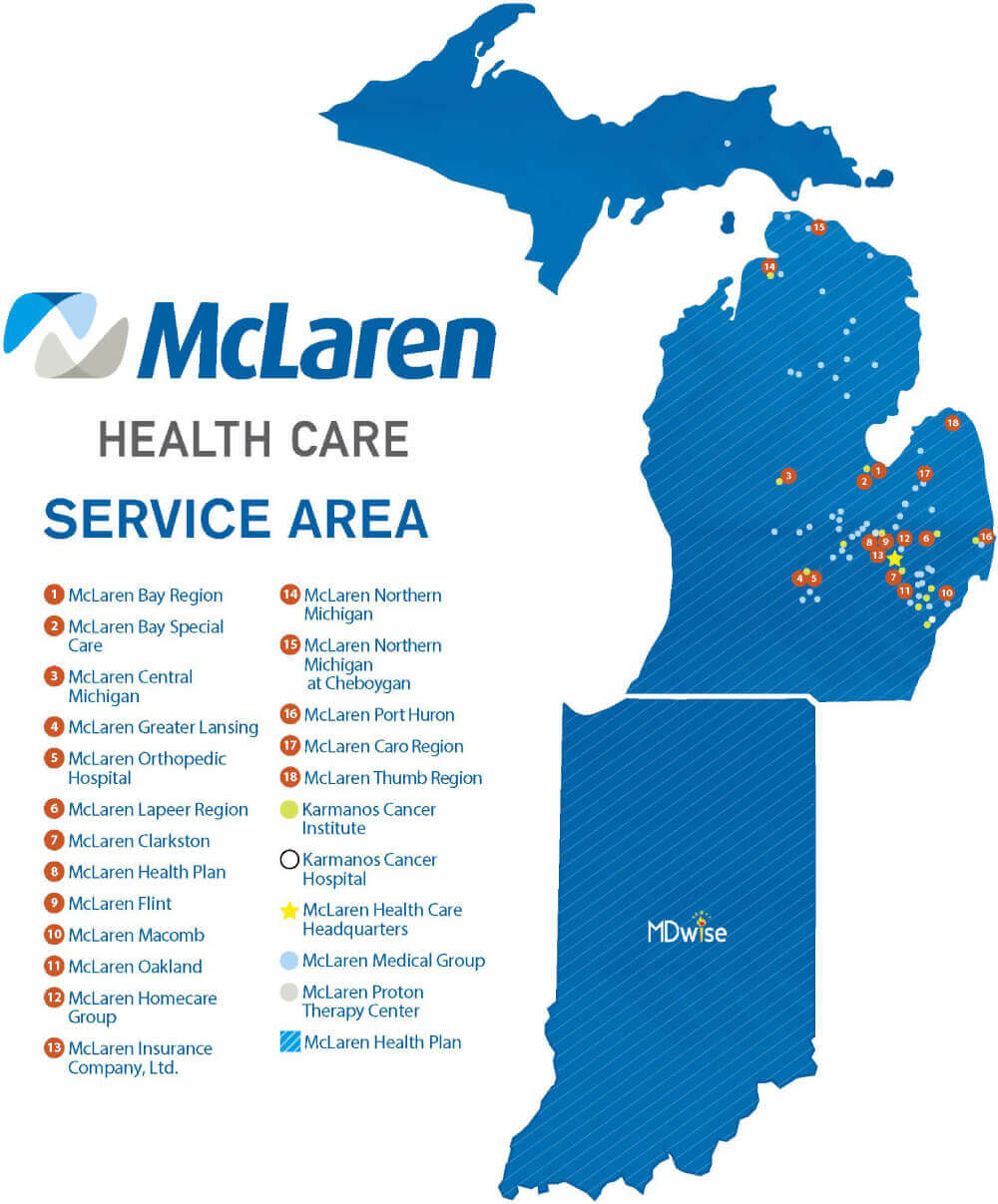
About McLaren Health Care

Ten nurse unions in Michigan are accusing McLaren Health Care of not being transparent about its finances and personal protective equipment supply during the COVID-19 pandemic, but the health system said it has shared some of that information.

Many of the nurse unions have filed unfair labor practice charges with the National Labor Relations Board, alleging that by not sharing information with front-line healthcare workers the Grand Blanc, Mich.-based health system is violating federal labor law, a media release from the Michigan Nurses Association states.

According to the association, each of its 10 unions received a letter from the health system May 15, in which the system refused to divulge how much funding it received in federal COVID-19 grants. The health system also has refused to provide details about its protective gear inventory, the unions allege.

“The fact that they won’t share basic financial information with those of us working on the front lines makes you wonder if they have something to hide,” said Christie Serniak, a nurse at McLaren Central Michigan hospital in Mount Pleasant and president of the Michigan Nurses Association affiliate.

But the health system maintains it has been transparent and has worked with labor unions and bargaining units across the system since the beginning of the coronavirus pandemic.

“We’ve openly shared information about our operations, the challenges of restrictions on elective procedures, our plans for managing influxes of patients and our supplies of personal protective equipment,” Shela Khan Monroe, vice president of labor and employment relations at McLaren Health Care told Becker’s Hospital Review.

Ms. Khan Monroe said that the information has been shared through weekly meetings, departmental meetings and several union negotiation sessions over the last two months.

The unions also say that the health system has not offered its workers hazard pay or COVID-19 paid leave that is on par with other systems. They say that only workers who test positive for COVID-19 can take additional paid time off.

In a written statement, McLaren disputed the union’s claims about employee leave, saying that employees “dealing with child care and other COVID-related family matters” can take time off to care for loved ones.

McLaren did not specify if this time off is paid. Becker’s has reached out for clarification and will update the article once more information is available.

“We have negotiations pending with several of the unions involved in the coalition, and while we are deeply disappointed in these recent tactics, we will continue to work towards productive outcomes for all concerned,” said Ms. Khan Monroe.

Recently, a coalition of unions urged McLaren Health Care executives to reduce their own salaries before laying off employees.


UW Medicine to furlough 4,000 union employees

https://www.beckershospitalreview.com/finance/uw-medicine-to-furlough-4-000-union-employees.html?utm_medium=email

UW Medicine furloughing 1,500 staffers | News | dailyuw.com

UW Medicine will furlough approximately 4,000 unionized employees due to financial challenges related to COVID-19 response, the Seattle-based organization said May 25.

The furloughs will last at least one week and as many as eight weeks. Affected employees will maintain their healthcare benefits, including insurance, during the furlough.

“This has been a very difficult, but necessary, decision to address the financial challenges facing UW Medicine and all healthcare organizations responding to the COVID-19 pandemic,” Lisa Brandenburg, president of UW Medicine Hospitals & Clinics, said in a news release. “We have taken deliberate steps to ensure patient care is not impacted by aligning staff levels with current and predicted patient volumes including the return of elective procedures, expanded in-person clinical services and continued expansion of telehealth, while ensuring UW Medicine is prepared to respond to future surges of patients with COVID-19.”

The decision comes one week after UW Medicine announced furloughs of 1,500 professional and nonunion staff members. UW Medicine said executive leaders, directors and managers are also participating in furloughs.

The actions are intended to help the organization address an anticipated $500 million loss from the pandemic.


Charting the rebound of physician office visits

https://mailchi.mp/f2774a4ad1ea/the-weekly-gist-may-22-2020?e=d1e747d2d8

MultiBrief: Telehealth is keeping doctors, patients connected in ...

As patients begin to return to doctors’ offices, we were intrigued to read an analysis out this week from the Commonwealth Fund that provides a first glimpse into the pace of the recovery. Researchers from Harvard University and healthcare technology company Phreesia analyzed data from 12M visits at over 50,000 physician practices, finding that in-person visits had declined nearly 70 percent by mid-April, compared to pre-pandemic levels.

Behavioral health providers, medical specialists and primary care practices maintained the most volume, and procedural specialists were the hardest hit. Many practices deployed telemedicine quickly, but even with those added encounters, total visits were still down by nearly 60 percent. While visits are starting to return, it’s likely that physician practices are in for a long, slow rebound. Telemedicine as a percentage of all visits peaked in late April, and by mid-May, in-person visits had reached 55 percent of pre-pandemic levels.

Even if virtual volumes pull back from their COVID high, we’re likely to see telemedicine play a much more expansive role moving forward. Dr. Rushika Fernandopulle, CEO of Iora Health, shared his company’s learnings from their COVID-19 response, predicting that ultimately 70-80 percent of physician encounters could be virtual, necessitating a need to reorganize care delivery around populations, instead of practices.

Expect the next year to be a reckoning as changes in payment and regulations, combined with a heated marketplace for virtual care, continue to shift the balance between in-person and virtual care.


Is it time for hospital at home?

https://mailchi.mp/f2774a4ad1ea/the-weekly-gist-may-22-2020?e=d1e747d2d8

JAMA - The John A. Hartford Foundation

We’ve long been intrigued by “hospital at home” care models, which deliver hospital-level care for acute conditions, supported by caregivers and technology, in a patient’s home. Stymied by the lack of payment, however, few health systems have pursued the approach. But as COVID-19 has made patients fearful of entering hospitals, we’ve had a flurry of health system leaders ask us whether they should consider launching a program now.

We think the answer is yes—with some caveats. A growing body of evidence supports its use. Cost of care is lower compared to a traditional inpatient stay. Patient satisfaction with care is high. And from a clinical perspective, hospital at home is well-established, capable of managing a number of mild- and moderate-acuity medical conditions, including exacerbations of chronic diseases like heart failure and diabetes, as well as infections like pneumonia and cellulitis, often better than a traditional hospital stay. Some programs are now using hospital at home for management of COVID-19 patients as well. Physician leaders we’ve spoken with are also interested in using the approach to manage post-operative recovery.

“Over half of our joint replacement patients spend time in skilled nursing or inpatient rehab,” one doctor told us. “People think those places are death traps now, and those cases aren’t coming back until we can find another way for them to recover.”

For patients averse to facility-based care, and systems wanting to offer an alternative, hospital at home sounds like a panacea. But experts recommend approaching it with a clear eye to the economics and ramp-up time, which can easily take 12 to 18 months. With emergency regulations released last month, Medicare will now provide payment for hospital care provided in an alternate setting, including the patient’s home—although it’s unclear whether that will continue once the COVID emergency ends. Commercial payer coverage usually requires a separate negotiation.

According to one leader, “Grass roots support of doctors is not enough. The CEO and CFO have to be on board with changing the care and payment model if it’s ever going to be more than a pilot.” But with patients and doctors becoming more comfortable with virtual care and open to new options, there is a a window of opportunity for expanding home-based care—and the longer the COVID-19 crisis lasts, the more hospital at home could provide a competitive advantage over being admitted to a busy, crowded inpatient hospital.


Employers seeking a “source of truth” for coronavirus guidance

https://mailchi.mp/f2774a4ad1ea/the-weekly-gist-may-22-2020?e=d1e747d2d8

What Is Truth? | Psychology Today

As states begin to reopen, employers need guidance to ensure safe, COVID-free operations, and are beginning to call local health systems for advice on how to manage this daunting task. Providing this support is uncharted territory for most systems, and they’re learning on the fly as they bring back shuttered outpatient services and surgery centers themselves. This week we convened leaders from across our Gist Healthcare membership to share ideas on how to assist employers in bringing businesses safely back online—and to discuss whether the pandemic might create broader opportunities for working with the employer community.

It’s no surprise some companies are hoping that providers can step in to test their full workforce, but as several systems shared, “Even if we thought that was the right plan, testing supplies and PPE are still too limited for us to deliver on it now.” Better to support businesses in creating comprehensive screening strategies (with some offering their own app-based solutions), coupled with a testing plan for symptomatic employees.

Health systems have been surprised by the hunger for information on COVID-19 among the business community. Hundreds of companies have registered for informational webinars, hosted by systems through their local chambers of commerce. They’re excited to receive distilled information on local COVID-19 impact and response. As one leader said, the system isn’t really creating new educational content, but rather summarizing and synthesizing CDC, state and local guidance.

Business leaders are looking for “a source of truth” from their local health system amid conflicting guidelines and media reports. Case in point: employers are asking about the need for antibody testing, having been approached by testing vendors and feeling pressure from employees. Guidance from system doctors provides a plain-spoken interpretation on testing utility (great for looking at a population, meaningless right now for an individual), and helps them make smarter decisions and educate their workforce.

Health systems are hopeful that helping employers through the coronavirus crisis will lay the foundation for longer-term partnerships with employers, allowing them to continue to provide benefits through lower cost, coordinated care and network options. 

Timing is critical, and it may be smaller businesses that have the ability to change more quickly. Large companies have mostly locked in their benefits for 2021, whereas many mid-market businesses are looking for alternative options now.

Worksite health, telemedicine, and direct primary care arrangements are all on the table. One system surveyed local brokers and employers and found that 20 percent of mid-market employers are open to narrow-network partnerships. “The number seems low,” they reported, “but it’s up from five percent last year, a huge jump.” For systems seeking direct partnerships with employers, there’s a window of opportunity right now to find those businesses committed to continuing to offer benefits, who are looking for a creative, local alternative—and to get that first Zoom meeting on the calendar.


Advocate Aurora reports Q1 operating loss, gets $328M bailout

https://www.beckershospitalreview.com/finance/advocate-aurora-reports-q1-operating-loss-gets-328m-bailout.html?utm_medium=email

MyAdvocateAurora | Health Record | Advocate Aurora Health

Advocate Aurora Health saw revenue increase year over year in the first quarter of this year, but it ended the period with an operating loss, according to recently released unaudited financial documents

Advocate Aurora Health, which was formed in 2018 and has dual headquarters in Downers Grove, Ill., and Milwaukee, reported revenue of $3.1 billion in the first quarter of 2020, up from $3 billion in the same period a year earlier. Patient service revenue climbed 3.5 percent year over year, while capitation revenue dropped 13.2 percent.

The health system said it began postponing or canceling elective procedures on March 17 due to the COVID-19 pandemic, and the public curtailed visits to physicians, clinics and emergency rooms for fear of contracting the virus.

“These actions have served to decrease revenues from non-COVID-19 patients while driving up costs to prepare for and care for COVID-19 patients with minimal additional revenues from these patients,” Advocate Aurora said.

To help offset financial damage caused by the COVID-19 pandemic, the health system implemented cost-reduction measures. Since April 1, it has also received $328 million in grants made available through the Coronavirus Aid, Relief and Economic Security Act and about $730 million in advance Medicare payments, which must be paid back.

Advocate Aurora’s expenses were up 9 percent in the first quarter of this year compared to the same period of 2019. The increase was due in part to it acquiring the remaining 51 percent interest in Bay Area Medical Center in Marinette, Wis., in April 2019.

Advocate Aurora posted an operating loss of $85.6 million in the first quarter of this year. That’s compared to operating income of $112.8 million in the same period a year earlier. Excluding nonrecurring expenses, the health system posted an operating loss of $49.3 million in the first quarter of this year and operating income of $131.2 million a year earlier.

The 26-hospital system reported a nonoperating loss of $1.23 billion in the first quarter of this year, which was largely attributable to investment losses. Advocate Aurora ended the first quarter with a net loss of $1.3 billion, compared to net income of $596.8 million a year earlier. 

As of March 31, the health system had 229 days cash on hand, down from 274 days in December 2019. 


HCA asks union to abandon wage increases this year

https://www.beckershospitalreview.com/hr/hca-asks-union-to-abandon-wage-increases-this-year.html?utm_medium=email

HCA revenue beats the hospital chain's expectations in 2019

A union representing more than 150,000 registered nurses in hundreds of U.S. hospitals is disputing with Nashville, Tenn.-based HCA Healthcare regarding pay and benefits.

National Nurses United said HCA is demanding that the union choose between an undetermined number of layoffs and no 401(k) match for this year or no layoffs and no nurse pay increases for the rest of the year, according to ABC affiliate Kiii TV.

HCA Healthcare, which to date has avoided layoffs due to the pandemic, told Becker’s Hospital Review it is asking the union to give up their demand for wage increases this year, just as nonunion employees have. HCA executive leadership, corporate and division colleagues and hospital executives have also taken pay cuts.  

The union said it takes issue with having to make this choice given HCA’s profits in the last decade, the additional funding the for-profit hospital operator received from the federal government’s Coronavirus Aid, Relief and Economic Security Act, and additional Medicare loans.

“It is outrageous for HCA to use the cover of the pandemic to swell its massive profits at the expense of its dedicated caregivers and the patients who will also be harmed by cuts in nursing staff,” Malinda Markowitz, RN, California Nurses Association/National Nurses United president, said in a news release.

HCA pointed to the pandemic pay program it implemented and recently extended through at least the end of June that allows employees who are called off or affected by a facility closure and cannot be redeployed to receive 70 percent of their base pay.

“It is surprising and frankly disappointing that unions would demand pay raises for their members and may reject the continuation of a generous pay program that is providing continued paychecks for more the 100,000 colleagues,” HCA said in a statement. “The goal of HCA Healthcare’s pandemic pay program is to keep our caregivers employed and receiving paychecks at a time when hospitals throughout the country are experiencing significant declines in patient volume and there is not enough work for them.”

HCA said more than 16,000 union members have participated in the pandemic pay program, even though it is not part of their contract.