The Tit for Tat Game in Healthcare produces No Winners

Tit for Tat battles in healthcare are nothing new. Last week, they were on full display.

  • Health insurers and drug manufacturers squared off in national ad campaigns accusing the other of complicity in keeping drug costs high.
  • The House Energy and Commerce and Ways and Means Committees held hearings challenging non-profit hospital tax exemptions as momentum builds for a new site neutral payment policy opposed by the American Hospital Association. In tandem, Indiana Republican Rep. Victoria Spartz reintroduced “Combatting Hospital Monopolies Act,”– a bill April 20 that would allow the FTC to enforce antitrust rules among the nation’s more than 2,900 nonprofit hospitals.

The intensity of these battles is likely to increase because healthcare affordability is a kitchen-table issue and the public’s paying attention.

Executive compensation in hospitals, drug companies and health insurers is a flashpoint: the disparity between pay packages for healthcare CEOs and their rank-and-file employees is widening. Books and documentaries about healthcare rogue operators like Theranos and Purdue draw wide audiences. And announcements like the Kaiser Permanente-Geisinger deal last week lend to the industry’s growing kinship with BIG BUSINESS.

The corporatization of U.S. healthcare has endangered its future.  The time has come to revisit its purpose, refresh its structure and re-organize its finances.

  • Revisit it’s purpose:
  • The modern health system has evolved through economic cycles, population growth, scientific explosion and shifting demand. Regulations, roles and money has followed. The integration of artificial intelligence is the next threshold in its evolution unlocking efficiencies heretofore unimagined and capabilities that enable self-care and customization. Might the system’s purpose shift from producing products and services for patients to enabling individuals to care for themselves and others more effectively? Might price and cost transparency in each sector be without pre-condition and barriers? And might the system’s true north be health and wellbeing rather than utilization and revenue growth?
  • Refresh its structure:
  • The system’s fundamental flaw is structural: the U.S. operates a health system of caregivers and facilities that serve its majority and a separate system of 3000 public health programs that serve the rest. Though long acknowledged, social determinants of health play second fiddle to specialized services to populations that are insured. The destination for the system must be health + social services, not health or human services, and the fiduciary role of its prominent non-profit institutions to steward the transition. In tandem, the system’s financing (through insurance) and delivery (through services and facilities) must necessarily be integrated so investments in prevention, population health management and care coordination are optimized.
  • Re-organize its finances:
  • The health system’s primary financing is derived primarily from direct government appropriations (vis a vis tax collections from individuals and employers) and profits earned by its operators and suppliers. Its capital investing is increasingly dependent on private equity that seeks profits in 5-6 years for its limited partner investors. In systems of the world with better outcomes and lower costs, government financing plays a bigger role balancing prevention and social services with the needs of the sick. The U.S. financing system rewards taking care of health problems after they’re manifest in hospitalization or medication management and insignificant investment elsewhere. Capitalizing innovation across the system is an imperative: otherwise, risk-taking by private investors in the system will default to short-term returns. And the public’s long-term wellbeing is compromised.

Most of the food fights in healthcare like last week’s revolve around each sector’s unique response to the three challenges above. That’s why they exist: to protect the interests of their members and advocate on their behalf. All believe their mission and vision is essential to the greater good and the moral high ground theirs. Some are imperiled more than others: not for profit, rural and safety net hospitals, long-term care operators, direct caregivers and public health programs at the top of this list.

Educating lawmakers is necessary but what’s needed is serious, objective forward-looking definition of the U.S. health system’s future. The tit for tat game will not solve anything. That’s where we are.

Paul

PS: Bipartisanship in Congress is rare.

Hospitals, particularly non-profit hospitals, may be the exception. Bipartisan headwinds are swelling and adversaries organizing. Members of Congress appear keen to assert more influence in how hospitals operate.

Price transparency, cost controls, site-neutral payments, charity care, pay equity and funding for non-patient care activity are on their radar. Hospitals, especially large not-for-profit multi-hospital systems, have joined drug manufacturers and pharmacy benefits managers as targets for reformers seeking lower cost and greater accountability.

As the debt ceiling is debated and FY24 federal budget is crafted, softening support for healthcare will take its toll across the industry and create unintended negative consequences for all.

How Many More Will Die From Fear of the Coronavirus?

Fear of contracting the coronavirus has resulted in many people missing necessary screenings for serious illnesses, like cancer and heart disease.

Seriously ill people avoided hospitals and doctors’ offices. Patients need to return. It’s safe now.

More than 100,000 Americans have died from Covid-19. Beyond those deaths are other casualties of the pandemic — Americans seriously ill with other ailments who avoided care because they feared contracting the coronavirus at hospitals and clinics.

The toll from their deaths may be close to the toll from Covid-19. The trends are clear and concerning. Government orders to shelter in place and health care leaders’ decisions to defer nonessential care successfully prevented the spread of the virus. But these policies — complicated by the loss of employer-provided health insurance as people lost their jobs — have had the unintended effect of delaying care for some of our sickest patients.

To prevent further harm, people with serious, complex and acute illnesses must now return to the doctor for care.

Across the country, we have seen sizable decreases in new cancer diagnoses (45 percent) and reports of heart attacks (38 percent) and strokes (30 percent). Visits to hospital emergency departments are down by as much as 40 percent, but measures of how sick emergency department patients are have risen by 20 percent, according to a Mayo Clinic study, suggesting how harmful the delay can be. Meanwhile, non-Covid-19 out-of-hospital deaths have increased, while in-hospital mortality has declined.

These statistics demonstrate that people with cancer are missing necessary screenings, and those with heart attack or stroke symptoms are staying home during the precious window of time when the damage is reversible. In fact, a recent poll by the American College of Emergency Physicians and Morning Consult found that 80 percent of Americans say they are concerned about contracting the coronavirus from visiting the emergency room.

Unfortunately, we’ve witnessed grievous outcomes as a result of these delays. Recently, a middle-aged patient with abdominal pain waited five days to come to a Mayo Clinic emergency department for help, before dying of a bowel obstruction. Similarly, a young woman delayed care for weeks out of a fear of Covid-19 before she was transferred to a Cleveland Clinic intensive care unit with undiagnosed leukemia. She died within weeks of her symptoms appearing. Both deaths were preventable.

The true cost of this epidemic will not be measured in dollars; it will be measured in human lives and human suffering. In the case of cancer alone, our calculations show we can expect a quarter of a million additional preventable deaths annually if normal care does not resume. Outcomes will be similar for those who forgo treatment for heart attacks and strokes.

Over the past 12 weeks, hospitals deferred nonessential care to prevent viral spread, conserve much-needed personal protective equipment and create capacity for an expected surge of Covid-19 patients. During that time, we also have adopted methods to care for all patients safely, including standard daily screenings for the staff and masking protocols for patients and the staff in the hospital and clinic. At this point, we are gradually returning to normal activities while also mitigating risk for both patients and staff members.

The Covid-19 crisis has changed the practice of medicine in fundamental ways in just a matter of months. Telemedicine, for instance, allowed us to pivot quickly from in-person care to virtual care. We have continued to provide necessary care to our patients while promoting social distancing, reducing the risk of viral spread and recognizing patients’ fears.

Both Cleveland Clinic and Mayo Clinic have gone from providing thousands of virtual visits per month before the pandemic to hundreds of thousands now across a broad range of demographics and conditions. At Cleveland Clinic, 94 percent of diabetes patients were cared for virtually in April.

While virtual visits are here to stay, there are obvious limitations. There is no substitute for in-person care for those who are severely ill or require early interventions for life-threatening conditions. Those are the ones who — even in the midst of this pandemic — must seek the care they need.

Patients who need care at a clinic or hospital or doctor’s office should know they have reduced the risk of Covid-19 through proven infection-control precautions under guidelines from the Centers for Disease Control and Prevention. We’re taking unprecedented actions, such as restricting visiting hours, screening patient and caregiver temperatures at entrances, encouraging employees to work from home whenever possible, providing spaces that allow for social distancing, and requiring proper hand hygiene, cough etiquette and masking.

All of these strategies are intended to significantly reduce risk while allowing for vital, high-quality care for our patients.

The novel coronavirus will not go away soon, but its systemic side effects of fear and deferred care must.

We will continue to give vigilant attention to Covid-19 while urgently addressing the other deadly diseases that haven’t taken a pause during the pandemic. For patients with medical conditions that require in-person care, please allow us to safely care for you — do not delay. Lives depend on it.


Trump reportedly squandered 3 crucial weeks to mitigate the coronavirus outbreak after a CDC official’s blunt warnings spooked the stock market

https://www.businessinsider.com/trump-wasted-3-weeks-coronavirus-mitigation-time-february-march-nyt-2020-4

Dow closes with decline of 950 points as coronavirus continues to ...

  • President Donald Trump’s administration wasted three key weeks between February and March that could have been spent enacting mitigatory measures against COVID-19, The New York Times reported on Saturday.
  • By the end of February, top officials knew that time was running out to stem the virus spread, and wanted to present Trump with a plan to enact aggressive social distancing and stay-at-home measures.
  • But on February 26, a top CDC official issued stark warnings about the virus’ spread right before the stock market plummeted, which angered Trump for being, in his view, too alarmist. 
  • The Times reported that the entire episode killed off the efforts to persuade Trump to take aggressive, action to mitigate the virus’ spread. In the end, Trump didn’t issue stay-at-home guidance until March 16. 

President Donald Trump’s administration stalled three key weeks in February that could have been spent enacting mitigatory measures against COVID-19 after Trump was angered by a public health official issuing a dire warning about the virus, The New York Times reported on Saturday.

On Saturday,The Times published a lengthy investigation of all the instances Trump brushed aside warnings of the severity of the coronavirus crisis, failed to act, and was delayed by significant infighting and mixed messages from the White House over what action to take and when. 

The Times wrote: “These final days of February, perhaps more than any other moment during his tenure in the White House, illustrated Mr. Trump’s inability or unwillingness to absorb warnings coming at him.”

The Times conducted dozens of interviews with current and former officials and obtained 80 pages of emails from a number of public health experts both within and outside of the federal government who sounded the alarm about the severity of the crisis on an email chain they called “Red Dawn.”

One of the members of the email group, Health & Human Service disaster preparedness official Dr. Robert Kadlec, became particularly concerned about how rapidly the virus could spread when Dr. Eva Lee, a Georgia Tech researcher, shared a study with the group about a 20-year-old woman in China who spread the virus to five of her family members despite showing no symptoms.

“Eva is this true?! If so we have a huge [hole] on our screening and quarantine effort,” he replied on February 23. 

At that point, researchers and top officials in the federal government determined that since it was way too late to try to keep the virus out of the United States, the best course of action was to introduce mitigatory, non-pharmaceutical interventions (NPIs) like social distancing and prohibiting large gatherings.

As officials sounded the alarm that they didn’t have any time to waste before enacting aggressive measures to contain the virus, top public health officials including Dr. Robert Kadlec concluded that it was time to present Trump with a plan to curb the virus called “Four Steps to Mitigation.”

The plan, according to The Times, included canceling large gatherings, concerts, and sporting events, closing down schools, and both governments and private businesses alike ordering employees to work from home and stay at home as much as possible, in addition to quarantine and isolating the sick.

But their entire plan was derailed by a series of events that ended up delaying the White House’s response by several weeks, wasting precious time in the process.

Trump was on a state visit to India when Dr. Kadlec and other experts wanted to present him with the plan, so they decided to wait until he came back.

But less than a day later, Dr. Nancy Messonnier, the director of the National Center for Immunization and Respiratory Diseases at the CDC, publicly sounded the alarm about the severity of the coronavirus outbreak in a February 26 press conference, warning that the outbreak would soon become a pandemic.

“It’s not so much a question of if this will happen anymore but rather more a question of exactly when this will happen and how many people in this country will have severe illness,” Messonnier said, bluntly warning that community transmission of the virus would be inevitable.

The Times reported that Trump spent the plane ride stewing in anger both over Messonnier’s comments and the resulting plummet of the stock market they caused, calling Secretary of Health & Human Services Alex Azar “raging that Dr. Messonnier had scared people unnecessarily,” The Times said. 

The Times reported that the entire episode effectively killed off any efforts to persuade Trump to take aggressive, decisive action to mitigate the virus’ spread and led to Azar being sidelined, writing, ” With Mr. Pence and his staff in charge, the focus was clear: no more alarmist messages.” 

In the end, Dr. Kadlec’s team never made their presentation. Trump did not issue nationwide social distancing and stay-at-home guidelines until March 16, three weeks after Messonnier warned that the US had limited time to mitigate community transmission of the virus, and several weeks after top experts started calling for US officials to implement such measures.

In those nearly three weeks between February 26 and March 16, the number of confirmed COVID-19 cases rose from just 15 to 4,226, The Times said. As of April 12, there are over half a million confirmed cases in the United States with over 21,000 deaths.


When the coronavirus lockdowns end, we will live in a shrunken world

https://www.yahoo.com/news/coronavirus-lockdowns-end-live-shrunken-122800321.html

Flipboard: When the coronavirus lockdowns end, we will live in a ...

  • A projection from the Department of Homeland Security, published by the New York Times, shows coronavirus cases spiking again at the end of summer.
  • It’s a stark reminder that American life after lockdown will still be one of limited human interaction. And that means we’ll have to live with a smaller economy too. 
  • The economy will be packed with uncertainty given the possibility of another shelter-in-place order.
  • Until we can all hang out again with confidence, the US economy is going to be a shell of its former self.

When the US emerges from its various shades of shelter-in-place orders, it will emerge to a shrunken global economy. One that will not easily be inflated living within parameters the coronavirus demands.

Financial transactions are a form of human interaction, and even after strict orders to stay at home are lifted, Americans will need to limit human interaction to mitigate the spread of coronavirus. One projection from the Department of Homeland Security, first reported by the New York Times, imagines a world where schools remain closed, 25% of Americans work from home, and social distancing remains in place through the summer.

And people will still be scared. They will know that there is an deadly virus infecting people who interact with other people.

In this scenario, back to work doesn’t mean back to growth because people won’t be spending money the way they did before. Back to work simply means finding a more sane, stable way to maintain society until we get a vaccine. There will be no V-shaped recovery. This is a marathon, and if we’re lucky, we will limp across the finish line.

As incomplete as it is, China is the best picture we have for understanding what a life after lockdown looks like, and it doesn’t look like a booming economy. 460,000 businesses closed permanently in China during the first quarter.

One Chinese county has gone back into lockdown already. In Beijing — where state media says epidemic prevention and control will “probably” become “long-term normal” — restaurants have been ordered to maintain social distance by cutting seating in half and limiting tables to three people. Customers have been slow to come back anyway.

All of this is to say that even if we’re out of lockdown, this saga isn’t remotely over.

Deflation strikes back

What China’s economy is telling us is that once this weird supply funk brought on by everyone staying home is over, and some people are able to go back to work, we’ll still have a demand crisis. Even though the virus has been contained analysts at Oxford Economics told clients it expects to see “basically no growth” in China this year. With other global economies weakened it will sell fewer exports. 

Zhu Jun, director of the international department of the People’s Bank of China, said that there’s a small chance the world risks another Great Depression. Cheery, I know, but until there’s a vaccine, optimism will be in short supply.

Here in the US, just as in China, people will be broke and businesses will be broken. Money will be scarce. Demand will be depressed not just because of a lack of funds, but because people will have changed their behavior to avoid getting sick. 

Wall Street it seems, hasn’t processed this bad news yet. It’s taking this pandemic day-by-day, not looking at life after lockdown. This week the market rallied on news that all over the US, even New York City, the curve is flattening. It was a silly rally.

It’s silly for the market to declare victory before we’ve even seen how much damage has been done (that will take months at least). It’s silly to expect any kind of stability until we know what kind of demand a post-shelter-in-place, pre-vaccine American economy will have.

Finally, we don’t know how long Washington will be in a giving mood. So far the Federal Reserve has pulled out all the stops, and Congress has approved trillions in aid. But will Washington keep sending checks to unemployed Americans until we have a vaccine? 

US employment by industry who can work from home

We thought we knew uncertainty

I think back to all the times I’ve heard CEOs and Wall Street types talk about uncertainty around regulations, or elections, or literally anything else that has happened in my life time, and I have to laugh. All of it seems silly compared to the uncertainty before us right now.

It is quite possible that sometime this summer scientists will develop a treatment for COVID-19 that makes the symptoms much more mild — something more like a standard, week-long flu. That discovery could make things a lot easier, and really bolster confidence enough to bring the economy back until we have a vaccine. But government officials obviously can’t plan with that in mind. Neither can businesses.

And so, those charged with imagining the worst case scenario must imagine a world where Americans are again forced to shelter-in-place to flatten the curve. Homeland Security’s projections put a resurgence of the virus somewhere around the end of summer to the beginning of fall. It’s not unreasonable to think certain populations may have to go back into shelter-in-place then.

Singapore has a robust system of testing for and tracking the coronavirus and its citizens went back into shelter-in-place this week. Here in the US we don’t have such a system. Last week the White House ended federal funding for its drive-thru testing site program.

On Friday New York Governor Andrew Cuomo urged the President to invoke the Defense Production Act to ramp up production of antibody tests that can show who has been infected with the coronavirus and built up immunity. That would allow people to go back to work, but the federal government will only be able to produce 2,000 a day in the next two weeks. 

As a nation, we need to be doing everything we can to ensure that when this lockdown is over, those who can go out can do so with as much confidence as possible. We need to inject as much certainty into this situation as possible Without testing, that’s not happening.

In an interview with CNBC, Bill Gates — the Microsoft founder and billionaire philanthropist who has dedicated a significant chunk of his charitable efforts to studying pandemics — said the federal government simply doesn’t seem interested in a unified testing system. This is one of the few variables in this pandemic the government can control, and it’s blowing it.

Testing is one of the only things that will make our beleaguered, shrunken coronavirus economy a little bit bigger. It’s one of the only ways we can impact the ugly twist of this economic downturn, behavior.

Even then, though, the possibility of an outbreak in a workplace, city, or state will change the way our economy works in ways that will make money scarce. We need to be ready for that.


Cartoon – Famous Last Words

Granlund cartoon: Famous last words - Opinion - Morning Sun ...


The Memo: Scale of economic crisis sends shudders through nation

The Memo: Scale of economic crisis sends shudders through nation

Pandemic derails resilient US economy | TheHill

New data released Thursday revealed the scale of the economic devastation wrought by the coronavirus crisis — and experts say there is no end in sight.

More than 6.6 million new unemployment claims were filed during the week ending March 28, according to the Department of Labor. The figure was double that of the previous week, which had itself been by far the highest since records began.

The stark reality is that roughly 10 million people have been dumped from their jobs in two weeks. A previously robust economy has been scythed down by the virus. A nation that had been enjoying its lowest unemployment rate for decades is now virtually certain to see jobless totals surpass those of the Great Recession a decade ago.

“The present economic situation is awful,” said Jason Furman, a Harvard University professor who served as chairman of President Obama’s Council of Economic Advisers. “The data is just telling us what we can see with our own eyes — there is very little business happening.”

Economists who had already been deeply worried about the immediate outlook are now wondering if their earlier projections were in fact too rosy.

“In our earlier scenario, we had expected 6.5 million job losses by May,” said Beth Ann Bovino, the chief U.S. economist at Standard & Poor’s. That figure will be exceeded, she now believes, given that there were “more lockdowns, more business closures and more businesses just trying to keep themselves alive” by laying off workers.

Heidi Shierholz, senior economist and director of policy at the Economic Policy Institute, said that even the 10 million figure for new unemployment claims was “likely a massive undercount” of actual losses because, during that period, self-employed people and workers in the so-called “gig economy” were generally not eligible to apply. This is changing as a consequence of the package recently passed by Congress that extends eligibility for unemployment benefits, as well as providing other aid for businesses and individuals.

“Our estimate is that by the end of June, 20 million people will have lost their jobs — and I am wondering if even that is optimistic,” Shierholz said.

The political ramifications of such a huge economic shock are unknowable.

President Trump had been looking forward to using the economy as his strongest card as he seeks a second term in November. That card has been shredded.

Trump has promised repeatedly during his White House briefings on the crisis that the nation can bounce back very fast once the public health dangers have receded.

Trump’s approval ratings have also ticked up modestly since the crisis began in many polls. He may be benefitting from the traditional “rallying around the flag” effect that has occurred in previous moments of crisis.

President George W. Bush, for example, hit 90 percent approval in a Gallup poll — the highest result for any president in the polling organization’s history — right after the terrorist attacks of Sept. 11, 2001.

In a statement on Thursday, probable Democratic nominee Joe Biden hit Trump for “failing to prepare our nation” for the ramifications of the coronavirus crisis. Biden called on Trump to allow open enrollment in the Affordable Care Act and also jabbed at Treasury Secretary Steven Mnuchin for having referred to previous unemployment figures as “not relevant.”

In response, Trump campaign communications director Tim Murtaugh blasted back at Biden for “ineffectively sniping from the sidelines, stumbling through television interviews, and hoping for relevance and political gain.”

Economic experts caution that Trump’s promises of a v-shaped recovery, in which the nation jolts itself back into strong economic shape quickly, are almost certainly unrealistic. It will not be a matter of the nation simply rolling the shutters back up and returning to business as usual.

“The economy is not symmetrical,” said Furman. “It is easier to separate someone from a job than to connect someone to a job. In recessions, the unemployment rate can go up very quickly and it comes down very slowly. The worry is that this will be like that.”

Several economic experts who spoke with The Hill made similar points, unprompted, as to the ways the federal government could ease the crisis.

One refrain was that huge assistance needs to be made available to states. States are generally required to balance their budgets. In a situation like the current one, where their tax revenue is cratering, this means they are obligated to severely cut spending — something that most economists believe would deepen and prolong the recession.

Another theme was the need to tie together financial assistance for businesses and the retention of employees.

The recently passed stimulus package makes some effort to do that, particularly in the case of small businesses. The Paycheck Protection Program extends loans to small businesses based upon eight weeks of payroll costs plus an additional 25 percent of the total.

The payroll portion of the loans would be forgiven — rendering them in effect a grant, not a loan — so long as the workforce was maintained at existing levels.

Economic experts praise the principle but worry that the total amount of money in the pot for these loans — $349 billion — may not be enough. 

“The small business subsidies will be critical,” said Steven Hamilton, an assistant professor of economics at The George Washington University. “The government needs to get the word out on those, and Congress will likely need to pass an expansion both to adequately fund the existing scheme and to make the scheme more generous to businesses to keep them from laying off workers.”

The public seems to share the view that the aid package, which also includes checks of up to $1,200 for individuals, is a move in the right direction — but unlikely to suffice.

A CBS News poll released late Thursday afternoon indicated 81 percent of Americans support the recent legislation but 57 percent also say it likely won’t be enough.

The same trepidation is shared by the experts, given the unprecedented nature of the coronavirus and the economic crisis it has created.

“It’s like nothing we have ever seen before,” said Shierholz.


Trump Medicaid proposal sparks bipartisan warnings

Trump Medicaid proposal sparks bipartisan warnings

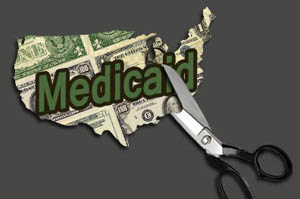
Image result for Medicaid cuts

Republicans and Democrats alike are warning that a recent proposal from the Trump administration could lead to billions of dollars in cuts to Medicaid, forcing states to eliminate benefits, reduce enrollment or cut payments to health providers.

In a rare sign of unity, hospitals, insurers, patient advocates and members of both political parties are on the same page in their opposition to the Trump administration’s plan, and most have urged the administration to withdraw a proposal they say would “cripple” Medicaid, the federal-state partnership that provides health care for the poor.

The proposal hasn’t received as much attention as the administration’s other efforts to reform Medicaid, such as implementing work requirements, but it could have the most damaging effect because of how far-reaching it is, experts argue.

“This is high stakes,” said Matt Salo, executive director of the National Association of Medicaid Directors, whose board urged the administration to completely withdraw the proposal.

Trump allies have also voiced their concerns.

“The Medicaid fiscal accountability rule is a concern to my governor, and the stakeholders are worried the rule as proposed could lead to hospital closures, problems with access to care and threaten the safety net,” Sen. John Cornyn (R-Texas) told Department of Health and Human Services Secretary Alex Azar last week during a hearing on the agency’s fiscal 2021 budget request.

Sen. Mark Warner (D-Va.) warned during the same hearing that the proposal could “dramatically affect Medicaid eligibility” and “wreak havoc on budgets in red states and blue states all across the country.”

The proposal would overhaul the complex payment arrangements states use to raise money for their Medicaid programs — funding that is then matched by the federal government.

The administration argues some states use questionable methods of raising funds so they can leverage more money from Washington. One approach used by states consists of taxing providers who stand to benefit from more Medicaid funds flowing into the state.

But governors and state Medicaid directors argue those long-standing arrangements are both legal and necessary as states look for ways to keep up with escalating health care costs.

The proposal would allow the Centers for Medicare and Medicaid Services (CMS) to limit the extra payments from states to providers serving high numbers of uninsured patients or Medicaid patients. Opponents say such changes could result in providers deciding not to accept Medicaid patients.

Dozens of states wrote public comments to CMS Administrator Seema Verma, urging her to withdraw the proposal, including conservative states that are typically supportive of her work.

“If the rule is finalized as proposed, it will immediately disrupt the Medicaid program in Alabama and we believe across the country,” wrote Stephanie McGee Azar, commissioner of the Alabama Medicaid Agency, who is not related to Alex Azar. She added that it would have “unintended consequences that will affect access to care in Alabama to our most vulnerable populations.”

Florida Gov. Ron DeSantis’s (R) administration warned the effect of the proposal would be “immediate and crippling.”

Meanwhile, a letter signed by state Medicaid officials in Michigan, Missouri, New York, Oregon, Pennsylvania, South Carolina, Tennessee, Illinois, Louisiana, Colorado, Pennsylvania and Washington argued the proposal would likely “force states to cut Medicaid eligibility, benefits and/or provider payments, which would have the effect of decreasing low-income individuals’ access to important health care services.”

The public comment period closed Jan. 31. CMS now needs to go through the 4,000 comments before deciding whether to finalize the rule.

Verma and her supporters argue the proposal is not intended to cut Medicaid but instead aims to improve transparency and accountability in the $600 billion a year program.

“It’s not surprising providers and the states are objecting when they are getting federal money for free,” argued Brian Blase, who previously served on President Trump’s National Economic Council, where he worked on health care issues. “They don’t want transparency and they don’t want their financing gimmicks checked.”

Blase predicted the rule, if implemented as proposed, would reduce Medicaid spending by a “very small amount.”

Verma also pushed back on opponents, criticizing a study commissioned by the American Hospital Association that estimated the rule could reduce Medicaid funding by as much as $49 billion annually.

“This proposed rule is not intended to reduce Medicaid payments, and alarmist estimates that this rule, if finalized, will suddenly remove billions of dollars from the program and threaten beneficiary access are overblown and without credibility,” she wrote in a blog post last week.

Some experts disagree with her, pointing to other actions the administration has taken on Medicaid, including work requirements.

“I think one should view this rule not in isolation, but in combination with the broader agenda of this administration on Medicaid,” said Edwin Park, a research professor at Georgetown University McCourt School of Public Policy. “Their ultimate agenda is about cutting the Medicaid program, changing the Medicaid program as it currently stands.”

State officials have complained that they were not asked for their input before the proposal was released, nor did CMS conduct a regulatory analysis of potential effects.

A nonpartisan agency that advises Congress on Medicaid policy wrote to Alex Azar advising he not implement the rule because CMS has not fully assessed the possible effects.

“The Commission is concerned that the proposed changes could reduce payments to providers in ways that could jeopardize access to care for Medicaid enrollees,” the advisory group wrote.

For example, Maine’s Department of Health and Human Services has planned to make $86 million in supplemental payments to hospitals in fiscal 2020, which began July 1.

The rule “would require significant changes to MaineCare and could force the State to cut back on eligibility or services,” Jeanne Lambrew wrote in the department’s public comment.

The administration hasn’t given any signals that it plans to back down from the proposal, despite considerable pushback from stakeholders, states and bipartisan members of Congress.

“We will work with states to help them recreate their practices in ways that are in conformity with the statute and try to be fair and equitable in all our dealings with states,” Alex Azar told lawmakers last week on Capitol Hill.