We Work on the Front Lines of COVID-19. Here’s What Hospitals Should Do

https://www.medpagetoday.com/infectiousdisease/covid19/86185?xid=fb_o&trw=no&fbclid=IwAR3iM5LMZj3BxWisk3puZ2T3bOCeBaDS_xCRoTrnVaZYfj4-DZPmUfr01cw

We Work on the Front Lines of COVID-19. Here's What Hospitals ...

A game plan from ground zero.

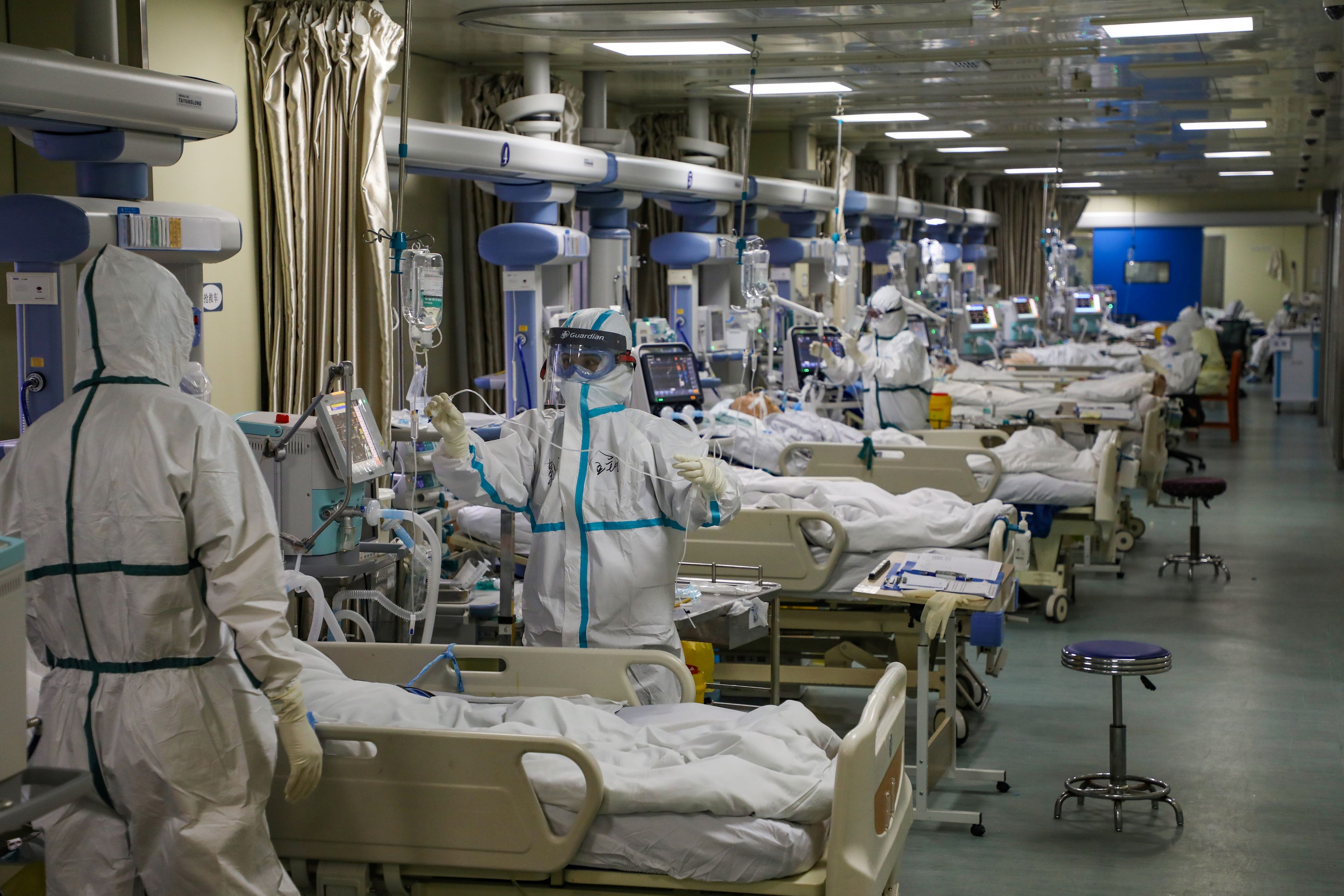
It’s only a matter of time before all of us are directly affected by COVID-19. Proper preparation is the only way to ensure high-quality patient care and staff well-being in this challenging time. Having collectively spent time caring for patients at two different tertiary care facilities in New York on the medical floors and intensive care units, common themes are emerging that represent opportunities for hospitals in other parts of the country to start taking action before COVID-19 patients start filling up beds en masse.

Staffing

It takes a LOT of people to care for a COVID-19 onslaught; mapping out different staffing scenarios in the event you have 40 or 400 COVID patients is imperative. Staffing needs for COVID patients are higher than normal because of the patients’ complex medical needs — many require ICU level nursing and respiratory therapists — and because both clinical and non-clinical staff will inevitably become sick and need to be taken out of work. Staff should be screened for symptoms and high-risk contacts; those who are symptomatic should be proactively encouraged to stay home instead of showing up to work not feeling well and putting other care team members and patients at risk. This requires back-up staffing plans to fill in when your people become sick. Shutting down non-urgent and elective departments provides staffing redundancy to pull from when needed. All employees should be given advance notice about staffing plans so that potential role changes are clear.

Testing

Robust testing processes for both patients and your healthcare workforce are critical for success. Hospitals should be taking this time to obtain in-house rapid testing kits to avoid unnecessary patient isolation and conserve personal protective equipment (PPE) while waiting for test results.

Healthcare workers are understandably scared about contracting COVID-19 themselves and giving it to their family members. We recommend all staff members be tested for active infection so that those who are infected can be proactively quarantined.

Forward-thinking institutions should be prioritizing antibody testing for healthcare workers. While this testing is still in its infancy, it is quite likely that those with strong antibodies to COVID-19 possess some degree of immunity. Therefore, if you can identify which doctors, nurses, respiratory therapists, physical therapists, and janitorial staff have already developed an immune response to COVID-19, these staff members can take priority staffing infected units with the goal of reducing the number of new infections in healthcare workers and limiting exposure to those who have yet to contract the virus.

Communication

Each institution’s COVID-19 protocols and policies change rapidly as we learn more about the virus. How you communicate these ever-changing procedures with staff is critical. Most hospitals rely on daily email updates that are text-heavy; however, overwhelmed inboxes and less time with devices while wearing PPE limits the success of email as a sole communication channel.

Communication through graphics takes on new importance — signage noting changes in hospital geography, large pictures of donning and doffing instructions, phone numbers to call with equipment shortages, and clear instructions to staff about testing protocols, isolation, and removing patients from isolation need to be conveniently placed where staff can access information in real time without consulting their electronic devices. High-yield locations for just-in-time visual communication include outside patient rooms, nursing stations, break rooms, and elevators, so that the target information reaches its busy, hard-working audience successfully and repeatedly, minimizing confusion and augmenting clarity.

Limiting the Need to Enter the Room

Given ongoing PPE shortages, particularly around single-use gowns and N95 masks, minimizing the number of instances that staff, particularly nurses, need to enter the room is critical. This requires an adjustment from normal patient care. We recommend extension tubing to bring IV poles and medications outside the room. Tablets such as iPads can permit video calls with patients to check on non-urgent items. Centralized monitoring of oxygen saturations for all admitted patients can minimize the frequency of supplemental oxygen adjustment.

Similarly, given the increased risk of COVID-19 in diabetic patients, continuous blood glucose monitoring can minimize the need for frequent manual fingerstick measurements for patients receiving supplemental insulin.

Discharge Planning

Discharging patients to home or rehabilitation facilities presents novel challenges. A home discharge requires education, equipment, and follow-up. Education on home monitoring of vitals signs like oxygen saturation and blood pressure with instructions on critical values that should prompt patients to return to the hospital can expedite discharge and open hospital beds for other sick patients. Both patients and family members must also be educated on quarantine procedures to limit household transmission.

Many patients will have temporary oxygen requirements and we have seen home oxygen shortages in our areas. Coordinating a strategy with your outpatient clinicians, home oxygen suppliers, and insurance companies can facilitate getting patients home sooner on home oxygen and freeing up beds for sicker patients. Further, many patients are eager to go home earlier since hospital visitation limitations mean they’re sitting in bed alone away from family and the more a hospital can do to safely discharge patients home with appropriate supplies and follow-up will be beneficial to both patients and the hospital.

Hospitals must also be prepared to integrate these patients into their existing telehealth infrastructure, which has become the mainstay of ambulatory medicine in lieu of traditional office visits. For many patients, this will be a new way of accessing care. Prior to discharge, hospital staff should ensure patients have downloaded the necessary apps with login information and feel comfortable they will be able to follow up with their physician using technology following discharge.

There is a huge opportunity for hospitals that have not been caring for large numbers of COVID-19 patients to prepare ahead of time in a manner that optimizes patient care and minimizes risks to staff. Those of us on the early front lines have learned many of these lessons the hard way. An ounce of prevention is worth a pound of cure — we encourage all healthcare systems to take action before the storm comes.


In worst-case scenario, COVID-19 coronavirus could cost the U.S. billions in medical expenses

https://www.healthcarefinancenews.com/node/140021?mkt_tok=eyJpIjoiTVdVNE16UmpZMkUzWlRnNCIsInQiOiJtcG1Tc29ZQVREZmlnTG9mSVFXams4K3pwYW1oRGh6b0xVekZnRlFKUUlNN2l4a3loWjBlZXZ0cm1UZFBYeTd1c1NkR2ZsdnI2aW5ZQVV0VlIrZHZPOFlkNFl4UDNsNTFBTmFXMzBhYVFnYUgyMjlYTHNzS3JuK09GTXo4UFVKQyJ9

In worst-case scenario, COVID-19 coronavirus could cost the U.S. ...

If 20% of the US population were to become infected with COVID-19, it would result in an average of $163.4 billion in direct medical costs.

One of the major concerns about the COVID-19 coronavirus pandemic has been the burden that cases will place on the healthcare system. A new study published April 23 in the journal Health Affairs found that the spread of the virus could cost hundreds of billions of dollars in direct medical expenses alone and require resources such as hospital beds and ventilators that may exceed what is currently available.

The findings demonstrate how these costs and resources can be cut substantially if the spread of COVID-19 coronavirus can be reduced to different degrees.

The study was led by the Public Health Informatics, Computational and Operations Research team at the City University of New York Graduate School of Public Health and Health Policy, along with the Infectious Disease Clinical Outcomes Research Unit at the Los Angeles Biomedical Research Institute, Harbor-UCLA Medical Center and Torrance Memorial Medical Center.

The team developed a computer simulation model of the entire U.S. that could then simulate what would happen if different proportions of the population end up getting infected with the COVID-19 coronavirus. In the model, each infected person would develop different symptoms over time and, depending upon the severity of those symptoms, visit clinics, emergency departments or hospitals.

The resources each patient would require – such as healthcare personnel time, medication, hospital beds and ventilators – would then be based on the health status of each patient. The model then tracks the resources involved, the associated costs and the outcomes for each patient.

For example, if 20% of the U.S. population were to become infected with the COVID-19 coronavirus, there would be an average of 11.2 million hospitalizations and 1.6 million ventilators used, costing an average of $163.4 billion in direct medical costs during the course of the infection.

The study shows the factors that could push this amount up to 13.4 million hospitalizations and 2.3 million ventilators used, costing an average of $214.5 billion. If 50% of the U.S. population were to get infected with COVID-19, there would be 27.9 million hospitalizations, 4.1 million ventilators used and 156.2 million hospital bed days accrued, costing an average of $408.8 billion in direct medical costs during the course of the infection.

This increases to 44.6 million hospitalizations, 6.5 million ventilators used and 249.5 million hospital bed days (general ward plus ICU bed days) incurred, costing an average of $654 billion during the course of the infection if 80% of the U.S. population were to get infected. The significant difference in medical costs when various proportions of the population get infected show the value of any strategies that could reduce infections and, conversely, the potential cost of simply letting the virus run its course – the “herd immunity” approach.

Simply put, allowing people to get infected until herd immunity thresholds are met would come at a tremendous cost, and even if social-distancing measures were relaxed and the country “opened up” too early, the healthcare system, as well as the broader economy, would come close to buckling under the weight of the additional costs.

WHAT’S THE IMPACT?

The study shows how costly the coronavirus is compared to other common infectious diseases. For example, a single symptomatic COVID-19 infection costs an average of $3,045 in direct medical costs during the course of the infection alone. This is four times higher than a symptomatic influenza case and 5.5 times higher than a symptomatic pertussis case. Factoring in the costs from longer lasting effects of the infection such as lung damage and other organ damage increased the average cost to $3,994.

Importantly, for a sizable proportion of those who get infected, healthcare costs don’t end when the active infection ends, and costs will likely stay high even after the bulk of the pandemic has passed.

A continuing concern is that the U.S. healthcare system will become overloaded with the surge of COVID-19 coronavirus cases and will subsequently not have enough person-power, ventilators and hospital beds to accommodate the influx of patients. The study shows that even when only 20% of the population gets infected, the current number of available ventilators and ICU beds will not be sufficient.

According to the Society of Critical Care Medicine, there are approximately 96,596 ICU beds and 62,000 full-featured mechanical ventilators in the U.S., substantially lower than what would be needed when only 20% of the population gets infected.

THE LARGER TREND

Data released this week by Kaufman Hall illustrates the extent to which U.S. hospitals are already suffering financially due to the coronavirus.

Looking at earnings before interest, taxes, depreciation and amortization, hospitals’ operating margins fell more than 100% in March, dropping a full 13 percentage points relative to last year. Compared to most months, that’s a much greater change. Operating EBITDA margin was up just 1% in March 2019, for example, and down 1% in February of this year.

These margins likely fell even further across broader health systems, which often include substantial physician and ambulatory operations outside of the hospital, Kaufman Hall found. Overall, operating margins fell 170% below budget for the month.


U.S. coronavirus updates

https://www.axios.com/coronavirus-west-virginia-first-case-ac32ce6d-5523-4310-a219-7d1d1dcb6b44.html

Coronavirus outbreak is level of public pain we haven't seen in ...


The pandemic is a long way from over, and its impact on our daily lives, information ecosystem, politics, cities and health care will last even longer.

The big picture: The novel coronavirus has infected more than 939,000 people and killed over 54,000 in the U.S., Johns Hopkins data shows. More than 105,000 Americans have recovered from the virus as of Sunday.

Lockdown measures: Demonstrators gathered in Florida, Texas and Louisiana Saturday to protest stay-at-home orders designed to protect against the spread of COVID-19, following a week of similar rallies across the U.S.

  • 16 states have released formal reopening plans, Vice President Mike Pence said at Thursday’s White House briefing. Several Southern states including South Carolina have already begun reopening their economies.
  • Alaska, Oklahoma and Georgia reopened some non-essential businesses Friday. President Trump said Wednesday he “strongly” disagrees with Georgia Gov. Brian Kemp on the move.
  • California’s stay-at-home orders and business restrictions will remain in place, Gov. Gavin Newsom made clear at a Wednesday news briefing. But some local authorities reopened beaches in Southern California Saturday.
  • New York recorded its third-straight day of fewer coronavirus deaths Friday. Still, Gov. Andrew Cuomo said he’s not willing to reopen the state, citing CDC guidance that states need two weeks of flat or declining numbers.

Catch up quick: Deborah Birx said Sunday that it “bothers” her that the news cycle is still focused on Trump’s comments about disinfectants possibly treating coronavirus, arguing that “we’re missing the bigger pieces” about how Americans can defeat the virus.

  • Anthony Fauci said Saturday the U.S. is testing roughly 1.5 million to 2 million people a week. “We probably should get up to twice that as we get into the next several weeks, and I think we will,” he said.
  • The number of sailors aboard the USS Kidd to test positive for the coronavirus has risen from 18 Friday to 33, the U.S. Navy said Saturday. It’s the second major COVID-19 outbreak on a U.S. naval vessel, after the USS Theodore Roosevelt, where a total of 833 crew members tested positive, per the Navy’s latest statement.
  • The first person known to have the coronavirus when they died was killed by a heart attack “due to COVID-19 infection” on Feb. 6, autopsy results obtained by the San Francisco Chronicle on Saturday show.
  • Some young coronavirus patients are having severe strokes.
  • Trump tweeted Saturday that White House press conferences are “not worth the time & effort.” As first reported by Axios, Trump plans to pare back his coronavirus briefings.
  • The South is at risk of being devastated by the coronavirus, as states tend to have at-risk populations and weak health care systems.
  • New York Gov. Andrew Cuomo said Friday Trump was right to criticize the World Health Organization’s handling of the global outbreak.
  • Trump signed legislation Friday for $484 billion in more aid to small businesses and hospitals.
  • The House voted along party lines on Thursday to establish a select committee to oversee the federal government’s response to the crisis.
  • Unemployment: Another 4.4 million Americans filed last week. More than 26 million jobless filings have been made in five weeks due to the pandemic.


U.S. with 1/3 of Confirmed Coronavirus Cases with Less Than 2% of Population Tested

https://coronavirus.jhu.edu/map.html

Coronavirus outbreak affecting some Durham high school students ...

By the numbers: The coronavirus has infected over 2.9 million people and killed over 200,000, Johns Hopkins data shows. More than 829,000 people have recovered from COVID-19. The U.S. has reported the most cases in the world (more than 940,000 from 5.1 million tests), followed by Spain (over 223,000).


Learning from the largest US study of coronavirus patients

https://mailchi.mp/0d4b1a52108c/the-weekly-gist-april-24-2020?e=d1e747d2d8

ICU patients with coronavirus and pneumonia treated in Wuhan ...

study published this week in JAMA provides a look at the largest series of COVID-19 hospitalized patients studied to date in the US, reporting that almost all patients treated had at least one underlying condition. Physicians from Northwell Health evaluated the outcomes, comorbidities and clinical course of 5,700 confirmed coronavirus patients hospitalized between March 1st and April 4th across the New York City area. Hospitalized patients, 60 percent of whom were men, had a high burden of chronic disease.

Similar to other reports, older patients, and those with a higher chronic disease burden (especially diabetes) were both more likely to require mechanical ventilation, and more likely to die. Only nine of the 436 patients under age 50 who had no significant cormorbidities (as measured by the Charlson Comorbidity Index) had died. One number received the most press coverage: as reported in the abstract, 88 percent of patients who received mechanical ventilation died. Digging into the details of the series, this may end up being an overestimation, as the statistic is based on a subset of 320 ventilated patients who either died or were discharged by April 4th. At that time, 831 patients remained in the hospital on ventilators, with outcomes still to be determined. Ultimately, the mortality rate of full cohort of ventilated patients could fall nearer to the 50-60 percent range seen in other studies.

Regardless, the rich dataset of the Northwell report adds to the body of evidence that severe COVID-19 infections and deaths involve several organ systems. This Science article provides a thorough (and comprehensible to the non-clinician) review of how the virus invades the body. While the lungs remain “ground zero” for infection, critically ill patients may experience serious kidney, cardiac, or even nervous system involvement. A host of chronic diseases predispose patients for worse outcomes—yet doctors remain puzzled that they aren’t seeing “a huge number of asthmatics” in ICUs. Patients are presenting with dangerously low oxygen levels but less distress than expected, likely because they are able to still “blow off” carbon dioxide, limiting the body’s ability to sense the seriousness of their condition.

Many dying patients are overwhelmed by a “cytokine storm”—an overreaction of the immune system that compounds organ failure. And new evidence suggests that large numbers of critically ill patients may experience abnormal blood clotting, contributing to the high mortality rates of the disease. The more doctors and scientists learn about coronavirus, the more complex the disease process seems—leaving doctors with work to do to understand, manage, and treat the tens of thousands of these seriously ill patients.


The Health 202: States are ending their coronavirus lockdowns earlier than health roadmaps recommend

https://www.washingtonpost.com/news/powerpost/paloma/the-health-202/2020/04/23/the-health-202-states-are-ending-their-coronavirus-lockdowns-earlier-than-health-roadmaps-recommend/5ea09b5988e0fa34528d6eb8/?utm_campaign=wp_the_health_202&utm_medium=email&utm_source=newsletter&wpisrc=nl_health202

The Health 202: States are ending their coronavirus lockdowns ...

Over a nearly three-week span in March, most state governors across the nation locked down their states because of the novel coronavirus.

Gradually opening things up will take even longer — and probably will vary considerably from state to state.

Governors are feeling pressure from two sides. Many troubling questions about the coronavirus remain unanswered, such as how to get more Americans tested and whether the United States even has enough capacity to track and isolate virus cases. At the same time, they’re feeling immense pressure to restart economic activity, with tens of millions of Americans out of work and the country stuck in a deepening economic crater.

As governors weigh when and how to reopen public gathering spots, there are several road maps they could look to.

Yesterday the National Governors Association released a 10-point guide for states. The first point is to make coronavirus testing broadly available. It urges states to improve surveillance to detect outbreaks, ensure hospitals are equipped to respond to surges and create a plan to reopen in stages.

The plan also warns states against opening prematurely. 

“Opening without the tools in place to rapidly identify and stop the spread of the virus … could send states back into crisis mode, push health systems past capacity and force states back into strict social distancing measures,” it says.

Then there’s guidance from the Trump administration, which says states should first see a decrease in confirmed coronavirus cases over a 14-day period. That guidance is in line with what public health experts have recommended — although Trump has also frequently suggested he’d like to see states open sooner.

So far, governors vary widely in how they’re approaching the issue.

Some, like Trump, are chomping at the bit. Georgia Gov. Brian Kemp (R) is allowing businesses including gyms and barber shops to reopen on Friday. Colorado Gov. Jared Polis (D) has said some businesses may reopen on Monday, and retailers can have a limited number of in-store shoppers starting May 1.

Other governors are much more cautious. Virginia Gov. Ralph Northam (D), for example, has issued a stay-at-home order in effect until June 10. California Gov. Gavin Newsom (D) declined yesterday to name a date for easing restrictions, saying the state hasn’t reached its six goals before reopening the economy.

Newsom, however, did indicate progress has been made with his detailed playbook for reopening the state. After a phone conversation with Trump, the governor said the two had agreed to significantly ramp up testing across California, with hundreds of thousands of new swabs on the way and 86 new testing sites opening.

But virtually every governor is working on plans, some in coordination with other governors, on how to shape the post-quarantine world.

Here are the states opening things up first:

Georgia: Certain businesses may open on Friday; theaters and restaurants can reopen on Monday. Bars, nightclubs and music venues will remain closed; schools have been closed through the end of the school year.

Kemp explained his decision to reopen tanning salons, barber shops, massage parlors and bowling alleys, saying on Monday: “I see the terrible impact of covid-19 on public health as well as the pocketbook.” Kemp said he will urge businesses to take precautions, such as screening for fevers, spacing workstations apart and having workers wear gloves and masks “if appropriate,” my Washington Post colleagues William Wan, Carolyn Y. Johnson and Joel Achenbach report.

“Georgia, according to some models, is one of the last states that should be reopening,” they write. “The state has had more than 830 covid-19 deaths. It has tested fewer than 1 percent of its residents — low compared with other states and the national rate. And the limited amount of testing so far shows a high rate of positives, at 23 percent.”

Trump blasted Kemp’s decision during his briefing last night, saying it violates his administration’s phase 1 guidelines for when to reopen.


Colorado: Polis is allowing the state’s stay-at-home order to expire Sunday, after which the state will gradually reopen businesses. Starting May 4, nonessential offices may have 50 percent of their workforce at the site, although large workplaces will be advised to conduct symptom and temperature checks.

Polis has warned the restrictions won’t all be lifted at the same time.

“The virus will be with us,” he said earlier this month. “We have to find a sustainable way that will be adapted in real time to how we live with it.”


South Carolina: Gov. Henry McMaster (R) said Monday he was allowing nonessential businesses such as department stores and retailers to open, followed by beaches on Tuesday.

But businesses must follow three rules for operating: They must limit the number of customers in the store; require patrons to be six feet apart; and follow sanitation guidelines from the Centers for Disease Control and Prevention.

“I urge everyone to remember we are still in a very serious situation,” McMaster said at a news conference. “We know that this disease, this virus, spreads easily, and we know it is deadly. So we must be sure that we continue to be strict and disciplined with our social discipline and taking care not to infect others.”


Tennessee: Gov. Bill Lee (R) said he plans to allow some businesses to reopen once his “safer-at-home” order expires in one week. But the state’s biggest cities will make their own reopening determinations. Lee has appointed a 30-member economic recovery group to create a plan.

Lee, along with Kemp and McMaster, have met with the governors of Mississippi, Alabama and Florida to consider how to reopen their economies in a coordinated way in the country’s southeast region. The number of new cases and deaths in Florida has leveled off somewhat — something the state’s governor, Ron DeSantis (R), has been pointing to as he urges a speedy reopening in his state.

Ahh, oof and ouch

AHH: CDC Director Robert Redfield confirmed comments he made to our colleague Lena H. Sun after Trump claimed he’d been “misquoted.”
Trump claims his CDC director was ‘misquoted’ on second wave of covid-19
Director of the Centers for Disease Control and Prevention Robert Redfield said April 22 that his statement on covid-19 in the fall is “accurately quoted.” (The Washington Post)

The president took issue with the portrayal of comments from Redfield following an interview with our Post colleague Lena H. Sun. In that interview, Redfield warned that a second wave of the coronavirus could be worse than the current one.

“There’s a possibility that the assault of the virus on our nation next winter will actually be even more difficult than the one we just went through,” Redfield told Lena. He added: “We’re going to have the flu epidemic and the coronavirus epidemic at the same time.”

The president again repeated the claim at his daily White House coronavirus task force briefing – this time, with Redfield standing awkwardly next to him.

Redfield then said this: “I’m accurately quoted in The Washington Post.”

But Redfield also sought to “soften his words as the president glowered next to him,” Lena, Ashley Parker, Josh Dawsey and Yasmeen Abutaleb write.

“The remarkable spectacle provided another illustration of the president’s tenuous relationship with his own administration’s scientific and public health experts, where the unofficial message from the Oval Office is an unmistakable warning: Those who challenge the president’s erratic and often inaccurate coronavirus views will be punished — or made to atone,” they write.

Ahh, oof and ouch

AHH: CDC Director Robert Redfield confirmed comments he made to our colleague Lena H. Sun after Trump claimed he’d been “misquoted.”
Trump claims his CDC director was ‘misquoted’ on second wave of covid-19

It’s apparent “Trump is again bristling at a health official offering too dire a scenario,” our colleague Aaron Blake writes. He points out that Trump was set off a previous time when another top CDC official warned in February that the spread of the coronavirus was inevitable.

OOF: The former head of the U.S. agency pursuing a coronavirus vaccine says he was ousted for opposing efforts to promote hydroxychloroquine, a drug Trump has insistently touted as a weapon against the virus despite a lack of scientific proof.

Rick Bright, previously the director of the Biomedical Advanced Research and Development Authority, said he was dismissed and pushed into a narrower role after he called for strictly vetting supposed treatments like anti-malarials repeatedly embraced publicly by the president. 

“I believe this transfer was in response to my insistence that the government invest the billions of dollars allocated by Congress to address the Covid-19 pandemic into safe and scientifically vetted solutions, and not in drugs, vaccines and other technologies that lack scientific merit,” Bright said in a statement, according to the New York Times’s Michael D. Shear and Maggie Haberman.

He added: “I am speaking out because to combat this deadly virus, science — not politics or cronyism — has to lead the way.” 

The president was asked about Bright during last night’s briefing and whether the official was pushed out.

“Maybe he was and maybe he wasn’t. I don’t know who he is,” Trump responded.

OUCH: There were early missteps by Health and Human Services Secretary Alex Azar that bogged down the government’s response to the virus.

In late January, days after the first coronavirus case was confirmed in the United States, Azar told Trump in a meeting the coronavirus spread was “under control,” the Wall Street Journal’s Rebecca Ballhaus and Stephanie Armour report. Azar also told the president more than a million diagnostic tests would be available in weeks and that it was the “fastest we’ve ever created a test.”

These promises didn’t pan out.

“Six weeks after that Jan. 29 meeting, the federal government declared a national emergency and issued guidelines that effectively closed down the country,” Rebecca and Stephanie write. “Mr. Azar, who had been at the center of the decision-making from the outset, was eventually sidelined.”

There were numerous factors that slowed the administration’s initial coronavirus response, but “interviews with more than two dozen administration officials and others involved in the government’s coronavirus effort show that Mr. Azar waited for weeks to brief the president on the threat, oversold his agency’s progress in the early days and didn’t coordinate effectively across the health-care divisions under his purview,” they report.

Earlier this year, Azar tapped an aide to lead HHS’s day-to-day coronavirus response who had joined the agency after running a dog-breeding business for six years. 

The aide, Brian Harrison, was derisively called “the dog breeder” by some within the White House, Reuters’s Aram Roston and Marisa Taylor report.

“Azar’s optimistic public pronouncement and choice of an inexperienced manager are emblematic of his agency’s oft-troubled response to the crisis,” they add. “… Harrison, 37, was an unusual choice, with no formal education in public health, management, or medicine and with only limited experience in the fields. In 2006, he joined HHS in a one-year stint as a ‘Confidential Assistant’ to Azar, who was then deputy secretary. He also had posts working for Vice President Dick Cheney, the Department of Defense and a Washington public relations company.”

There’s much we don’t know about the coronavirus

Scientists say a mysterious blood-clotting complication may be causing a number of the coronavirus-related deaths.

Doctors are learning that covid-19, once believed to be a straightforward respiratory virus, is much more frightening. Since the earlier waves of coronavirus cases, doctors have learned that the disease attacks not just lungs but kidneys, the heart, intestines, liver and the brain. Autopsies also have shown that some coronavirus patients lungs were filled with hundreds of microclots, our Post colleague Ariana Eunjung Cha reports.

“The problem we are having is that while we understand that there is a clot, we don’t yet understand why there is a clot,” said Lewis Kaplan, a University of Pennsylvania physician and head of the Society of Critical Care Medicine. “We don’t know. And therefore, we are scared.”

“In hindsight, there were hints blood problems had been an issue in China and Italy as well, but it was more of a footnote in studies and on information-sharing calls that had focused on the disease’s destruction of the lungs,” Ariana writes.

New data provide troubling statistics about coronavirus patients on ventilators.

A study found 88 percent of 320 coronavirus patients on ventilators in New York state’s largest health system died.

It’s an uptick from pre-pandemic figures. “That compares with the roughly 80 percent of patients who died on ventilators before the pandemic, according to previous studies — and with the roughly 50 percent death rate some critical care doctors had optimistically hoped when the first cases were diagnosed,” Ariana reports.

The research, published in the journal JAMA, also notes many of the hospitalized had other conditions.

“The paper also found that of those who died, 57 percent had hypertension, 41 percent were obese and 34 percent had diabetes, which is consistent with risk factors listed by the Centers for Disease for Control and Prevention,” she adds. “Noticeably absent from the top of the list was asthma. As doctors and researchers have learned more about covid-19, the less it seems that asthma plays a dominant role in outcomes.”

The economic fallout

If there’s a recovery from the current economic downswing this year, it could be temporary, economists warn.

There’s a growing chance of a second economic downturn if there’s another surge of the coronavirus or if there’s an increase in bankruptcies and defaults, our Post colleague Heather Long reports.

Instead of a V-shaped recovery, economists say, it is increasingly likely that the recovery will be W-shaped, in which there are improvements before another downturn later this year or in the following year. That possibility is “in part because creating a vaccine is likely to take at least a year and millions of Americans and businesses are piling up debt without an easy ability to repay it,” Heather writes.

“It could be triggered by reopening the economy too quickly and seeing a second spike in deaths from covid-19, the disease the coronavirus causes,” she adds. “… This could cause many businesses, which were barely hanging on, to close again. Many Americans could become even more afraid to venture out until a vaccine is found.”

“Pretending the world will return to normal in three months or six months is just wrong,” said Diane Swonk, chief economist at Grant Thornton, told The Post. “The economy went into an ice age overnight. We’re in a deep freeze. As the economy thaws, we’ll see the damage done as well. Flooding will occur.”

https://www.nga.org/wp-content/uploads/2020/04/NGA-Report.pdf?utm_campaign=wp_the_health_202&utm_medium=email&utm_source=newsletter&wpisrc=nl_health202


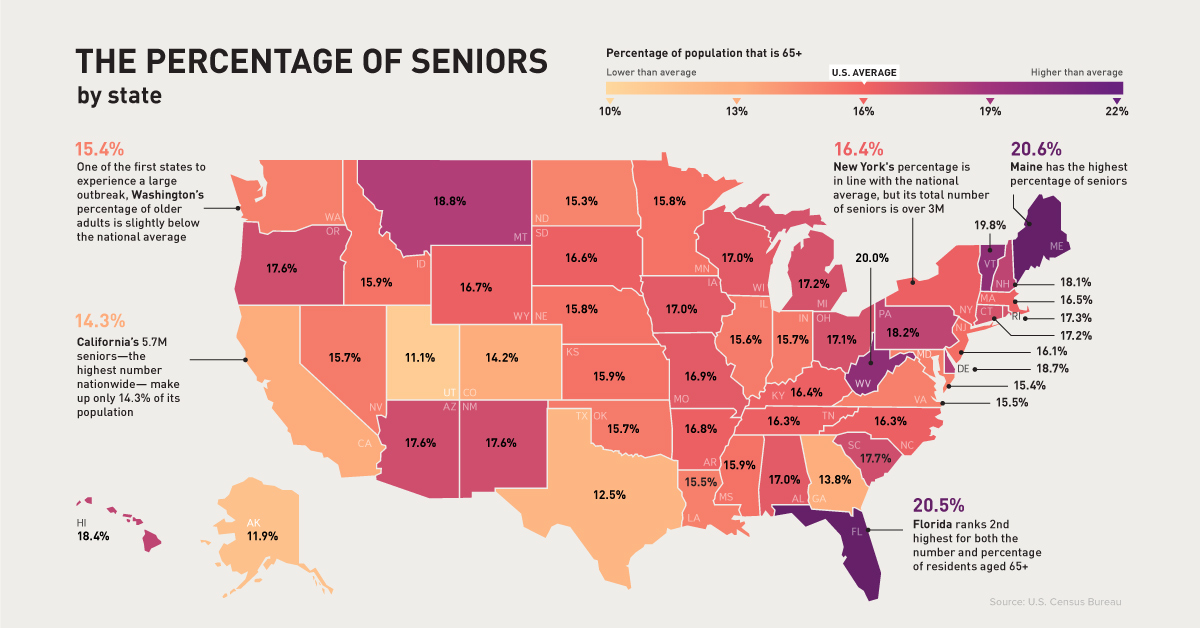
At Risk: The Geography of America’s Senior Population

At Risk: The Geography of America’s Senior Population

At Risk: The Geography of the U.S. Senior Population

U.S. Senior Population by State, Covid-19

senior population vs covid-19 outbreak


Medical supply scramble continues

https://www.axios.com/newsletters/axios-vitals-fb6b1c68-afc1-4b2b-9096-de20fd0b10a7.html?utm_source=newsletter&utm_medium=email&utm_campaign=newsletter_axiosvitals&stream=top

What's Really To Blame For Drug Shortages

The U.S. is still scrambling to get health care workers the personal protective equipment, ventilators and lab testing materials that they need.

Between the lines: President Trump has repeatedly said that governors are responsible for obtaining supplies for their states, but industry groups are asking the federal government to play a larger role.

  • The American Medical Association asked FEMA to create a national system to acquire and distribute personal protective equipment, in light of ongoing shortages.
  • David Skorton, president and CEO of the Association of American Medical Colleges, wrote a letter to coronavirus task force coordinator Deborah Birx asking for more federal help with diagnostic testing supply shortages.

Meanwhile, the private sector is shifting into gear on its own and in partnership with the government.

  • The Trump administration and 20 major health care systems launched a new ventilator loan program that will allow hospitals to ship unused machines to areas where they are needed most to fight the coronavirus pandemic, Axios’ Joann Muller reports.
  • General Motors started manufacturing ventilators on Tuesday under a $489.4 million federal contract. But it will take until August to produce all 30,000 the government ordered under the Defense Production Act.
  • Space-focused organizations around the U.S. are now looking to manufacture ventilators and other much-needed health equipment to aid the pandemic relief effort, Axios’ Miriam Kramer reports.

1 scary stat: Prescription drugs needed by patients on ventilators are being filled only 53% of the time so far in April, as demand has skyrocketed, according to Vizient, a health care purchasing group.


Bill Gates says the world is entering ‘uncharted territory’ because it wasn’t prepared for a pandemic like COVID-19

https://www.businessinsider.com/bill-gates-warns-world-is-entering-uncharted-territory-coronavirus-2020-4

5 Books Bill Gates Wants You to Read This Summer | Time

  • Microsoft cofounder Bill Gates said the world was entering into “uncharted territory” because it was not prepared for a pandemic like COVID-19, the disease caused by the novel coronavirus.
  • Speaking to “BBC Breakfast” by video chat on Sunday, Gates said the world should’ve invested more in mitigating a global health crisis.
  • “There is the period where the virus shows up in those first few months,” he said. “Were the tests prepared? Did countries think through getting their ICU and ventilator capacity up?”
  • He added that once the crisis is over “very few countries are going to get an A grade” for their handling of the outbreak.

Microsoft cofounder Bill Gates said the world was entering into “uncharted territory” because it was not prepared for a pandemic like COVID-19, the disease caused by the novel coronavirus.

Gates, who has been warning about the risk of a pandemic disease for years and who has poured millions into fighting the new coronavirus outbreak, told “BBC Breakfast” on Sunday that the world should have invested more into mitigating a global health crisis.

“Well, there was a period when I and other health experts were saying that this was the greatest potential downfall the world faced,” he told the BBC in an interview on Sunday, highlighting his previous warnings against the possibility of a deadly pandemic.

“So we definitely will look back and wish we had invested more,” he said, “so that we could quickly have all the diagnostics, drugs, and vaccines. We underinvested,” he said.

The 67-year-old billionaire warned that in the period before COVID-19 became a public-health crisis, countries could have better prepared their testing capabilities and made sure hospitals were stocked with ventilators and other necessary health supplies.

“There is the period where the virus shows up in those first few months,” he said. “Were the tests prepared? Did countries think through getting their ICU and ventilator capacity up?”

He added that once the crisis is over “very few countries are going to get an A grade” for their handling of the outbreak.

“Now, here we are, we didn’t simulate this, we didn’t practice,” he said. “So both in health policies and economic policies, we find ourselves in uncharted territory.”

Gates has become an outspoken advocate for preparing for a global health crisis like COVID-19.

Speaking to the Financial Times earlier this month, Gates said that COVID-19 was the “biggest event that people will experience in their entire lives” and world leaders and global policymakers have “paid many trillions of dollars more than we might have had to if we’d been properly ready.”

He told FT he was confident that lessons learned from this outbreak would encourage people to better prepare for next time but lamented that the cost this time around was too high.

“It shouldn’t have required a many trillions of dollars loss to get there,” he said. “The science is there. Countries will step forward.”


The US just became the first country in the world to record more than 2,000 coronavirus deaths in 24 hours

https://www.yahoo.com/news/us-just-became-first-country-092209704.html

US becomes first country to record 2,000 coronavirus deaths in 1 ...

The US has become the first country in the world to record more than 2,000 coronavirus deaths in a single day.

2,108 people lost their lives on Friday, according to data collated by researchers at Johns Hopkins University.

The US also surpassed half a million infections at the end of what has been a devastating week.

More Americans died between Monday and Saturday (8,800) than died from the wars in Afghanistan and Iraq combined. 

The US death toll, 18,693, as of Saturday morning, is expected to surpass that in Italy, 18,849, by Sunday, but the overall picture indicates that while deaths continue to rise, the speed of the outbreak looks to be slowing.

“We’re starting to see the leveling off and the coming down,”Dr Anthony Fauci, the US top epidemiologist advising the White House, said on Friday.

But other officials were keen to play down any thoughts of an end to the crisis.

“As encouraging as they are, we have not reached the peak,” Dr Deborah Birx, White House coronavirus response director, said of the easing of new cases on Friday.

While the US as a whole may look better, New York state is still in a dire situation, and remains the country’s worst affected region. 777 new fatalities were reported on Friday, according to The Associated Press.