How The Rapid Shift To Telehealth Leaves Many Community Health Centers Behind During The COVID-19 Pandemic

https://www.healthaffairs.org/do/10.1377/hblog20200529.449762/full/

How to reduce the impact of coronavirus on our lives - The ...

The COVID-19 pandemic has transformed the landscape of ambulatory care with rapid shifts to telehealth. Well-resourced hospitals have quickly made the transition. Community health centers (CHCs), which serve more than 28 million low-income and disproportionately uninsured patients in rural and underserved urban areas of the United States, have not fared as well since ambulatory visits have disappearedresulting in furloughs, layoffs, and more than 1,900 temporary site closures throughout the country. Government officials have taken notice, and the Coronavirus Aid, Relief, and Economic Security (CARES) Act infused $1.32 billion toward COVID-19 response and maintaining CHC capacity.

Many states have directed insurers to temporarily cover COVID-19-related services via telehealth while mandating parity of reimbursement for telehealth visits with in-person visits for their Medicaid program.

Preparedness Of Community Health Centers For Telehealth

Despite the changes, many health centers may not be ready to implement high-quality telehealth. study using 2016 data showed that only 38 percent of CHCs used any telehealth. In our review of 2018 Uniform Data System data—the most recent available—from a 100 percent sample of US CHCs, we found that our nation’s health centers are largely unprepared for this transformation.

Across the US, 56 percent of 1,330 CHCs did not have any telehealth use in 2018 (exhibit 1). Of those without telehealth use, only about one in five were in the process of actively implementing or exploring telehealth. Meanwhile, 47 percent of the centers using telehealth were doing so only with specialists such as those at referral centers, rather than with patients. Of those using telehealth, the majority (68 percent) used it to provide mental health services; fewer used it for primary care (30 percent) or management of chronic conditions (21 percent), suggesting that most CHCs with telehealth capabilities prior to COVID-19 were not using it for the most frequent types of services provided at CHCs.

CHCs not using telehealth reported several barriers to implementation (exhibit 2). Thirty-six percent cited lack of reimbursement, 23 percent lacked funding for equipment, and 21 percent lacked training for providing telehealth. Although most barriers were similar in both urban and rural regions, a greater proportion of rural clinics compared to urban clinics (18 percent versus 7 percent) reported inadequate broadband services as an issue.

The COVID-19 pandemic has laid bare the enormous disparities in telehealth capacity. Without adequate telehealth capacity and support, many CHCs will be left without means of providing the continuous preventive and chronic disease care that can keep communities healthy and out of the hospital. During the crisis, the Health Resources and Services Administration estimates that CHCs have seen 57 percent of the number of weekly visits compared to pre-COVID-19 visit rates, 51 percent of which have been conducted virtually, suggesting that many CHC patients have forgone care that they would have otherwise received. Given CHCs serve a disproportionate share of low-income, racial/ethnic minority, and immigrant populations—populations hardest hit by the COVID-19 pandemic—any disruption to CHC capacity may exacerbate the racial disparities that have rapidly emerged.

While an important first step, policy makers cannot simply infuse more funding to CHCs and expect them to withstand the challenges of the COVID-19 era. We recommend three targeted strategies to help CHCs adapt and perhaps even thrive beyond COVID-19: legislate permanent parity in telehealth reimbursement for all insurers; allocate sufficient funding and guidance for telehealth equipment, personnel, training, and protocols; and implement telehealth systems tailored to vulnerable populations.

Permanent All-Payer Parity For Telehealth Reimbursement

Payment parity—where telehealth is reimbursed at the same level as an in-person visit—is a crucial issue that must be addressed and instituted beyond the current public health emergency. Without commensurate reimbursement for telehealth, CHCs cannot maintain patient volume or make the long-term investments necessary to remain financially viable. A “global budget” of paying CHCs a fixed payment per patient per month would give practices flexibility in how and where to treat the patient, although this may be politically and practically challenging. Meanwhile, payment parity has already been implemented and could simply be permanently codified into existing reimbursement schemes, giving providers the option to select the best mode of treatment without making financial trade-offs.

In reviewing state telehealth policies during COVID-19, all states have implemented temporary executive orders or released guidance on telehealth access—although with significant variations. At least 22 states have explicitly implemented telehealth parity for Medicaid. For Medicare, the Centers for Medicare and Medicaid Services (CMS) expanded access to telehealth beyond designated rural areas, loosened HIPAA requirements around telehealth platforms, and instituted parity in reimbursement with in-person visits.

To build on these significant steps, states should mandate telehealth parity across all payers and cover all services provided at CHCs, not just COVID-19-related care. At least 12 states have mandated all-payer parity for telehealth. Meanwhile, private insurers have individually adjusted telehealth policies on a state-by-state basis if there was no statewide mandate. Nevertheless, all payers should reimburse at parity given the patchwork quilt of insurance plans that exists at CHCs.

Furthermore, state legislatures and CMS should look to extend parity beyond the current COVID-19 emergency so that CHCs can make sustainable investments that continue to benefit patients. Even as states reopen, in-person visits are unlikely to return to their previous volume as the threat of infection continues to loom. Temporary measures should be made permanent so that CHCs can make sustainable investments that continue to benefit patients.

Funding And Guidance For Equipment, Personnel, Training, And Protocols

For telehealth to function smoothly and reduce errors, proper hardware and software are critical, including telephone service, computers, broadband internet access, and electronic health records. The Federal Communications Commission (FCC) released funding to procure telehealth services and devices and some CHCs have received private funding; similar targeted funding mechanisms from states and the federal government are necessary at scale to equip hundreds of CHCs with the necessary telehealth capabilities.

However, merely having technology is not sufficient. Proper personnel with appropriate training are key to a high-functioning telehealth system along with support from information technology specialists. Additionally, CHCs need ancillary systems in place to allow for the effective use of phone and video visits. Empanelment systems to attribute patients to providers can allow for longitudinal follow-up even with telehealth. Daily huddles and team-based care can enhance the inherent complexities of coordinating care remotely. Protocols should be tailored for different specialties and services such as nutrition management and social work. Meanwhile, a robust e-consult referral network should allow primary care providers at CHCs to easily connect patients to specialty care when necessary. Adding robust protocols and systems will allow for the successful implementation and scaling of telehealth.

For example, groups of CHCs called the Health Center Controlled Networks (HCCNs), which have traditionally collaborated to leverage health information technology, are positioned to harness their economies of scale and group purchasing power to widely adopt new infrastructure while standardizing protocols. They could be a means to accelerate the adoption of telehealth technologies, trainings, and care models to optimize the use of telehealth across CHCs.

Telehealth Support For Vulnerable Patients

The patient population seen by CHCs presents unique challenges that not all ambulatory practices, particularly those in affluent neighborhoods, may face. Health centers care for many immigrant patients with limited English proficiency. Thus, clinics need financial support to contract with telehealth interpreter and translation services to provide equitable access and care. Better yet, all telehealth platforms contracting with CHCs should be required to provide multilingual support to deliver equitable access to telehealth services.

Moreover, many low-income patients lack health and digital literacy. Virtual telehealth platforms should design applications such that interfaces are intuitive and easy to navigate. They should provide specialized support to guide patients who are not familiar with telehealth systems. Additionally, insurers can reimburse CHCs that provide patient navigators, care coordinators, and shared decision-making support that bridge the health literacy divide.

Many around the US also do not have access to high-speed internet, consistent telephone services, and phones or computers with video conferencing capabilities. First, to allow for flexible access to telehealth for all patients, insurers should permanently waive geographic and originating site restrictions that limit the type and location of facilities from which patients can use telehealth. Second, insurers should waive audio-video requirements and consistently reimburse for phone-only visits to accommodate patients without video conferencing. Third, the type of services covered by telehealth should be expanded—ranging from primary care to physical therapy to nutrition counseling to behavioral health.

To address disparities in ownership of digital devices, taking a page out of the book of educators in low-income neighborhoods, local governments could loan laptops and smartphones or supply internet hotspots and phone-charging stations for these communities to enable access. Additionally, insurers could reimburse for the FCC Lifeline program to provide affordable communication services and cellular data to low-income populations to maintain their outpatient care.

Conclusions

As the COVID-19 pandemic sweeps through the US, health care delivery will never be the same. Health centers are struggling as many have been largely unprepared for the abrupt swing toward telehealth. COVID-19 may pose long-lasting damaging effects on CHCs and the patient populations that they serve. Nonspecific federal and state funding will allow CHCs to survive; however, deliberate action is needed to enhance telehealth capacities and ensure long-term resilience.

Similar to the Association of American Medical Colleges’ recent letter to CMS to make various telehealth changes permanent, both CMS and state governments should take immediate action by making permanent parity in reimbursement for telehealth services by all payers. State and federal policy should direct payers to lift onerous restrictions on the types of services covered via telehealth, audio/video requirements, and geographic and originating sites of telehealth services. States and payers should also explore innovative solutions to expand access to cellular data services and digital devices that allow low-income patients to digitally “get to their appointment,” similar to non-emergency medical transportation. Local governments should invest in digital infrastructure that expands broadband coverage and provides internet or cellular access points for people to engage in telehealth. Additionally, CHCs should come together under HCCNs to harness their group purchasing power to rapidly implement telehealth infrastructure that provides multilingual support and other tools that bridge gaps in digital literacy. Finally, best practices, trainings, and protocols should be standardized and disseminated across CHC networks to optimize the quality of telehealth.  

By reorienting the goals for implementing telehealth, policy makers, payers, and providers can empower health centers to thrive into the future and meet the nation’s underserved patients where they are, even during the pandemic. In the long run, telehealth can increase access and equity—but only if the right investments are made now to fill the gaps laid bare by COVID-19.


U.S. Passes 2 Million Coronavirus Cases as States Lift Restrictions, Raising Fears of a Second Wave

https://www.democracynow.org/2020/6/11/dr_craig_spencer?utm_source=Democracy+Now%21&utm_campaign=a7a0b2232c-Daily_Digest_COPY_01&utm_medium=email&utm_term=0_fa2346a853-a7a0b2232c-192434661

U.S. Reaches More Than 2 Million Coronavirus Cases - YouTube

The number of confirmed U.S. coronavirus cases has officially topped 2 million as states continue to ease stay-at-home orders and reopen their economies and more than a dozen see a surge in new infections. “I worry that what we’ve seen so far is an undercount and what we’re seeing now is really just the beginning of another wave of infections spreading across the country,” says Dr. Craig Spencer, director of global health in emergency medicine at Columbia University Medical Center.

AMY GOODMAN: I certainly look forward to the day you’re sitting here in the studio right next to me, but right now the numbers are grim. The number of confirmed U.S. coronavirus cases has officially topped 2 million in the United States, the highest number in the world by far, but public health officials say the true number of infections is certain to be many times greater. Officially, the U.S. death toll is nearing 113,000, but that number is expected to be way higher, as well.

This comes as President Trump has announced plans to hold campaign rallies in several states that are battling new surges of infections, including Florida, Texas, North Carolina and Arizona — which saw cases rise from nearly 200 a day last month to more than 1,400 a day this week.

On Tuesday, the country’s top infectious disease expert, Dr. Anthony Fauci, called the coronavirus his worst nightmare.

DR. ANTHONY FAUCI: Now we have something that indeed turned out to be my worst nightmare: something that’s highly transmissible, and in a period — if you just think about it — in a period of four months, it has devastated the world. … And it isn’t over yet.

AMY GOODMAN: This comes as Vice President Mike Pence tweeted — then deleted — a photo of himself on Wednesday greeting scores of Trump 2020 campaign staffers, all of whom were packed tightly together, indoors, wearing no masks, in contravention of CDC guidelines to stop the spread of the coronavirus.

Well, for more, we’re going directly to Dr. Craig Spencer, director of global health in emergency medicine at Columbia University Medical Center. His recent piece in The Washington Post is headlined “The strange new quiet in New York emergency rooms.”

Dr. Spencer, welcome back to Democracy Now! It’s great to have you with this, though this day is a very painful one. Cases in the United States have just topped 2 million, though that number is expected to be far higher, with the number of deaths at well over 113,000, we believe, Harvard University predicting that that number could almost double by the end of September. Dr. Craig Spencer, your thoughts on the reopening of this country and what these numbers mean?

DR. CRAIG SPENCER: That’s a really good question. So, when you think about those numbers, remember that very early on, in March, in April, when I was seeing this huge surge in New York City emergency departments, we weren’t testing. We were testing people that were only being admitted to the hospital, so we were knowingly sending home, all across the epicenter, people that were undoubtedly infected with coronavirus, that are not included in that case total. So you’re right: The likely number is much, much higher, maybe 5, 10 times higher than that.

In addition, we know that that’s true for the death count, as well. This has become this political flashpoint, talking about how many people have died. We know that it’s an incredible and incalculable toll, over 100,000. Within the next few days, we’ll have more people that have died from COVID than died during World War I here in the United States. So that’s absolutely incredible.

We know that, also, just because New York City was bad, other places across the country might not get as bad, but that doesn’t mean that they’re not bad. So, we had this huge surge, of a bunch of deaths in New York City, you know, over 200,000 cases, tens of thousands of deaths. What we’re seeing now is we’re seeing this virus continue to roll across this country, causing these localized outbreaks.

And this is, I think, going to be our reality, until we take this serious, until we actually take the actions necessary to stop this virus from spreading. Opening up, like we’ve seen in Arizona and many other places, is exactly counter to what we need to be doing to keep this virus under control. So, yeah, I worry that what we’ve seen so far is an undercount and what we’re seeing now is really just the beginning of another wave of infections spreading across the country.

NERMEEN SHAIKH: Well, Dr. Spencer, I want to ask — it’s not just in the U.S. that cases have hit this dreadful milestone. Worldwide, cases have now topped 7 million, although, like the U.S., the number is likely to be much higher because of inadequate testing all over the world. But I’d like to focus on the racial dimension of the impact of coronavirus, not just in the U.S., but also worldwide. Just as one example, in Brazil — and this is a really stunning statistic — that in Rio’s favelas, more people have died than in 15 states in Brazil combined. So, could you talk about this, both in the context of the U.S., and explain whether that is still the case, and what you expect in terms of this racial differential, how it will play out as this virus spreads?

DR. CRAIG SPENCER: Absolutely. What we’re seeing, not just in the United States, but all over the world, is coronavirus is amplifying these racial and ethnic inequities. It is impacting disproportionately vulnerable and already marginalized populations.

Starting here in the U.S., if you think about the fact, in New York City, the likelihood of dying from coronavirus was double if you’re Black or African American or Latino or Hispanic, double than what it was for white or Asian New Yorkers, so we already know that this disproportionate impact on already marginalized and vulnerable communities exists here in the United States, in the financial capital of the world. It’s the same throughout the U.S. A lot of the data that we’re seeing over the past few days, as we’re getting this disaggregated data by race and ethnic background, is that it is hitting these communities much harder than it is hitting white and other communities in the United States.

The statistics that you give for Brazil are being played out all over the world. We know that communities that already lack access to good healthcare or don’t have the same economic ability to stay home and participate in social distancing are being disproportionately impacted.

That is why we need to focus on and think about, in our public health messaging and in our public health efforts, to think about those communities that are already on the margins, that are already vulnerable, that are already suffering from chronic health conditions that may make them more likely to get infected with and die from this disease. We need to think about that as part of our response, not just in New York, not just in the U.S., but in Brazil, in Peru, in Ecuador, in South Africa, in many other countries, where we’re seeing the disproportionate number of cases coming from now.

We’re seeing — you know, I think it was just pointed out that three-quarters of all the new cases, the record-high cases, over 136,000 this past weekend on one day, three-quarters of those are coming from just 10 countries. And we know that that will continue, and it will burn through those countries and will continue through many more.

As of right now, we haven’t seen huge numbers in places like West Africa and East Africa, sub-Saharan Africa, where many people were concerned about initially. Part of that is because they have in place a lot of the tools from previous outbreaks, especially in West Africa around Ebola. But it may be that we need more testing. It may be that we’re still waiting to see the big increase in cases that may eventually hit there, as well.

NERMEEN SHAIKH: Dr. Spencer, you mentioned that on Sunday — it was Sunday where there were 136,000 new infections, which was a first. It was the highest number since the virus began. But even as the virus is spreading, much like states opening in the U.S., countries are also starting to reopen around the world, including countries that have now among the highest outbreaks. Brazil is now second only to the U.S. in the number of infections, and Russia is third, and these countries are opening, along with India and so on. So, could you — I mean, there are various reasons that countries are opening. A lot of them are not able — large numbers of people are not able to survive as long as the country is closed, like, in fact, Brazil and India. So what are the steps that countries can take to reopen safely? What is necessary to arrest the spread of the virus and allow people at the same time to be out?

DR. CRAIG SPENCER: It’s tough, because we know that this virus cannot infect you if this virus does not find you. If there’s going to be people in close proximity, whether it’s in India or Illinois, this virus will pass and will infect you. I have a lot of concern, much as you pointed out, places like India, 1.3 billion people, where they’re starting to open up after a longer period of being locked down, and case numbers are steadily increasing.

You’re right that a lot of people around the world don’t have access to multitrillion-dollar stimulus plans like we do in the United States, the ability to provide at least some sustenance during this time that people are being forced at home. Many people, if they don’t go outside, don’t eat. If they don’t work, you know, their families can’t pay rent or really just can’t live.

What do we do? We rely on the exact same tools that we should be relying on here, which is good public health principles. You need to be able to locate those people who are sick, isolate them, remove them from the community, and try to do contact tracing to see who they potentially have exposed. Otherwise, we’re going to continue to have people circulating with this virus that can continue to infect other people.

It’s much harder in places where people may not have access to a phone or may not have an address or may not have the same infrastructure that we have here in the United States. But it’s absolutely possible. We’ve done this with smallpox eradication decades ago. We need to be doing this good, simple, bread-and-butter, basic public health work all around the world. But that takes a lot of commitment, it takes a lot of money, and it takes a lot of time.

AMY GOODMAN: It looks like President Trump is reading the rules and just doing the opposite — I mean, everything from pulling out of the World Health Organization, which — and if you could talk about the significance of this? You’re a world health expert. You yourself survived Ebola after working in Africa around that disease. And also here at home, I mean, pulling out of Charlotte, the Republican convention, because the governor wouldn’t agree to no social distancing, and he didn’t want those that came to the convention to wear masks. If you can talk about the significance, what might seem trite to some people, but what exactly masks do? And also, in this country, the states we see that have relaxed so much — he might move, announce tomorrow, the convention to Florida. There’s surges there. There’s surges in Arizona, extremely desperate question of whether a lockdown will be reimposed there. What has to happen? What exactly, when we say testing, should be available? And do you have enough masks even where you work?

DR. CRAIG SPENCER: Great. Yes. So, let me answer each of those. I think, first, on the World Health Organization, and really the rhetoric that is coming from the White House, it needs to be one of global solidarity right now. We are not going to beat this alone. I think that that’s been proven. This idea of American exceptionalism now is only true in that we have the most cases of anywhere in the world. We are not going to beat this alone. No country is going to beat this alone. As Dr. Fauci said, this is his worst nightmare. It’s my worst nightmare, as well. This is a virus that was first discovered just months ago, and has now really taken over the world. We need organizations like the World Health Organization, even if it isn’t perfect. And I’ve had qualms with it in the past. I’ve written about it, I’ve spoken about it, about the response as part of the West Africa Ebola outbreak that I witnessed firsthand. But at the end of the day, they do really, really good work, and they do the work that other organizations, including the United States, are not doing around the world, and that protects us. So, we absolutely, despite their imperfections, need to further invest and support them.

In terms of masks, masks may be, in addition to social distancing, one of the few things that really, really helps us and has proven to decrease transmission. We know that if a significant proportion of society — you know, 60, 70, 80% of people — are wearing masks, that will significantly decrease the amount of transmission and can prevent this virus from spreading very rapidly. Everyone should be wearing masks. I think, in the United States right now, we should consider the whole country as a hot zone. And the risk of transmission being very high, regardless of whether you’re in New York or North Dakota, people should be wearing a mask when they’re going outside and when they’re interacting with others that they generally don’t interact with.

We know the science is good. I will say that from a public health perspective, there was some initial reluctance and, really, I guess, some confusion early on about whether people should be using masks. We didn’t have a lot of the science to know whether it would help. We do now. And thankfully, we’re changing our recommendations.

We also were concerned about the availability of masks early on. As you mentioned, there was questions around availability of personal protective equipment, whether we had enough in hospitals to provide care while keeping providers safe. It’s better now, but there are still a lot of people who are saying that they’re reusing masks, that we still need more personal protective equipment. So, for the moment, everyone should be wearing a mask.

AMY GOODMAN: And for the protests outside?

DR. CRAIG SPENCER: Absolutely. Yeah, of course. Just because I think we have personal passions around public health crises, that doesn’t prevent us from being infected. From a public health perspective, of course I have concerns that people who are close and are yelling and are being tear-gassed and are not wearing masks, if that’s all the case, it’s certainly an environment where the coronavirus could spread.

So, what I’ve been telling everyone that’s protesting is exercise your right to protest — I think that’s great — but be safe. We are in a pandemic. We’re in a public health emergency. Wear a mask. Socially distance as much as you possibly can. Wash your hands.

AMY GOODMAN: And are you telling the authorities to stop tear-gassing and pepper-spraying the protesters?

DR. CRAIG SPENCER: I mean, well, one, it’s illegal. You should definitely stop tear-gassing. We know that what happens when people get tear-gassed is they cough, and it increases the secretions, which increases the risk. It increases the transmissibility of this virus.

In addition to that, you know, holding people and arresting them and putting them into small cells with others without masks is also, as we’ve seen from this huge number of cases in places like meatpacking plants or in jails, in prisons, the number of cases have been extremely high in those places. Putting people into holding cells for a prolonged period of time is not going to help; it’s definitely going to increase the transmissibility of this virus.

So, yes, everyone should be wearing a mask. I think everyone should have a mask on when you’re anywhere that your interacting with others can potentially spread this.

I think your other question was around testing. We know that right now testing has significantly increased in the U.S. Is it adequate? No, I don’t think so. I know I hear from a lot of people who say they still have to drive two to three hours to get a test. We still have questions around the reliability of some of serology tests, or the antibody tests. Those are the tests that will tell you whether or not you’ve been previously exposed and now have antibodies to the disease. Some of the more readily available tests just aren’t that great. And so, we can’t use them yet to make really widespread decisions on who might have antibodies, who might have protection and who can maybe more safely go back into society without the fear of being infected.

NERMEEN SHAIKH: Dr. Spencer, we just have 30 seconds. Very quickly, there are 135 vaccines in development. What’s your prognosis? When will there be a vaccine or a drug treatment?

DR. CRAIG SPENCER: We have one drug that shortens the time that people are sick. We don’t know about the impact on mortality. There are other treatments that are in process now. Hopefully some of them work.

In terms of vaccines, we will have a vaccine, very likely, that we know is effective, probably at some time later this year. The bigger process is going to be how do we scale it up to make hundreds of millions of doses; how do we do it in a way that we can get it to all of the people that deserve it, not just the people that can pay for it. I think these are going to be some of the bigger questions and bigger problems that we’re going to face, going forward. But I’m optimistic that we’ll have a vaccine or many vaccines, hopefully, in the next year.

AMY GOODMAN: Dr. Craig Spencer, we want to thank you so much for being with us, director of global health in emergency medicine at Columbia University Medical Center. And thank you so much for your work as an essential worker. Dr. Spencer’s recent piece, we’ll link to at democracynow.org. It’s in The Washington Post, headlined “The strange new quiet in New York emergency rooms.”

When we come back, George Floyd’s brother testifies before Congress, a day after he laid his brother to rest. Stay with us.


Hospitals push for release of $50B more in COVID-19 funds

https://www.healthcaredive.com/news/hospitals-push-for-release-of-50b-more-in-covid-19-funds/579072/

COVID-19 Stimulus Bill: What It Means for States

Dive Brief:

  • The American Hospital Association is urging HHS to distribute at least $50 billion more in funding from the $175 billion allocated by Congress to hospitals as providers continue to wrestle with the challenges spurred by the outbreak of the novel coronavirus. 
  • More funds are “urgently needed” for the more than 5,000 hospitals and health systems AHA represents, the group wrote in a letter to HHS Secretary Alex Azar on Tuesday.
  • While AHA is calling for more money for all hospitals, it also wants a special focus paid to hospitals in hot spot areas and those serving a higher number of Medicaid and uninsured patients. 

Dive Insight:

AHA is requesting $10 billion for hot spot areas, $10 billion for hospitals with a larger share of Medicaid and uninsured patients and another $30 billion for all hospitals, including inpatient rehabilitation centers and inpatient psychiatric facilities.

Making substantial funds of money available will help facilities weather the pandemic and will “actually ensure they are able to keep their doors open,” AHA CEO Richard Pollack wrote. The second quarter is expected be the hardest hit to hospital operations.​

On Tuesday, the HHS Office of the Assistant Secretary for Preparedness and Response said it was making available another $225 million for health systems. That’s a drop in the bucket compared to the total federal funds that have already gone out the door. 

So far, the federal government has earmarked a total of $175 billion to disperse to hospitals and providers across the country. Only a portion of those funds have gone out. Initially, HHS sent out $30 billion directed to all eligible hospitals, based on Medicare fee-for-service. The criteria for funding faced criticism over seemingly giving an advantage to certain hospitals over others, such as those with many Medicaid patients.

Other more targeted tranches have followed, including $20 billion based on net patient service revenue. Disbursements of $10 and $12 billion were reserved for rural providers and hot spots, respectively.

AHA’s latest requests seems to acknowledge the concerns others have raised about providers with high Medicaid numbers.

Late last month, America’s Essential Hospitals, which represent safety net hospitals, said the administration should quickly move to dstribute more funding to facilities serving large shares of uninsured and Medicaid members.

“They continue to struggle with the heavy financial costs of this public health emergency and need relief now,” Bruce Siegel, CEO of AEH, said in a statement.

HHS developed funding formulas that rely heavily on a Medicare and net patient service revenue, so facilities that rely more on Medicaid as opposed to private insurers and Medicare, like pediatric hospitals, are at a disadvantage when it comes to receiving funds.

As such, AHA is calling for an additional $20 billion, divided evenly between hot spot hospitals and those with a large share of Medicaid patients.

“These hospitals care for the nation’s most vulnerable patients, who, largely as a result of underlying health conditions, have suffered disproportionately from the pandemic. They have been hospitalized at greater rates, and required more care and resources once hospitalized,” AHA said of hospitals with large shares of Medicaid patients.


Health Equity Principles for State and Local Leaders in Responding to, Reopening and Recovering from COVID-19

https://www.rwjf.org/en/library/research/2020/05/health-equity-principles-for-state-and-local-leaders-in-responding-to-reopening-and-recovering-from-covid-19.html

Centering Health Equity in COVID-19 Response and Recovery Plans ...

Health equity means that everyone has a fair and just opportunity to be as healthy as possible. This requires removing obstacles to health such as poverty, discrimination, and their consequences, including powerlessness and lack of access to good jobs with fair pay, quality education and housing, safe environments, and health care.”

COVID-19 has unleashed a dual threat to health equity in the United States: a pandemic that has sickened millions and killed tens of thousands and counting, and an economic downturn that has resulted in tens of millions of people losing jobs—the highest numbers since the Great Depression. The COVID pandemic underscores that:

  • Our health is inextricably linked to that of our neighbors, family members, child- and adult-care providers, co-workers, school teachers, delivery service people, grocery store clerks, factory workers, and first responders, among others;
  • Our current health care, public health, and economic systems do not adequately or equitably protect our well-being as a nation; and
  • Every community is experiencing harm, though certain groups are suffering disproportionately, including people of color, workers with low incomes, and people living in places that were already struggling financially before the economic downturn.

For communities and their residents to recover fully and fairly, state and local leaders should consider the following health equity principles in designing and implementing their responses. These principles are not a detailed public health guide for responding to the pandemic or reopening the economy, but rather a compass that continually points leaders toward an equitable and lasting recovery.


Collect, analyze, and report data disaggregated by age, race, ethnicity, gender, disability, neighborhood, and other sociodemographic characteristics.

Pandemics and economic recessions exacerbate disparities that ultimately hurt us all. Therefore, state and local leaders cannot design equitable response and recovery strategies without monitoring COVID’s impacts among socially and economically marginalized groups.¹ Data disaggregation should follow best practices and extend not only to public health data on COVID cases, hospitalizations, and fatalities, but also to: measures of access to testing, treatment, personal protective equipment (PPE), and safe places to isolate when sick; receipt of social and economic supports; and the downstream consequences of COVID on well-being, ranging from housing instability to food insecurity.

Geographic identifiers would allow leaders and the public to understand the interplay between place and social factors, as counties with large black populations account for more than half of all COVID deaths, and rural communities and post-industrial cities generally fare worse in economic downturns. Legal mandates for data disaggregation are proliferating, but 11 states are still not reporting COVID deaths by race; 16 are not reporting by gender; and 26 are not reporting based on congregate living status (e.g., nursing homes, jails). Only three are reporting testing data by race and ethnicity.

While states and cities can do more, the federal government should also support data disaggregation through funding and national standards.

Include in decision-making the people most affected by health and economic challenges, and benchmark progress based on their outcomes.

Our communities are stronger, more stable, and more prosperous when every person, including the most disadvantaged residents, is healthy and financially secure. Throughout the response and recovery, state and local leaders should ask: Are we making sure that people facing the greatest risks have access to PPE, testing and treatment, stable housing, and a way to support their families? And, are we creating ways for residents—particularly those hardest hit—to meaningfully participate in and shape the government’s recovery strategy?

Accordingly, policymakers should create space for leaders from these communities to be at decision-making tables and should regularly consult with community-based organizations that can identify barriers to accessing health and social services, lift up grassroots solutions, and disseminate public health guidance in culturally and linguistically appropriate ways. For example, they could recommend trusted, accessible locations for new testing sites and advise on how to diversify the pool of contact tracers, who will be crucial to tamping down the spread of infection in reopened communities. They could also collaborate with government leaders to ensure that all people who are infected with coronavirus (or exposed to someone infected) have a safe, secure, and acceptable place to isolate or quarantine for 14 days. Key partners could include community health centers, small business associations, community organizing groups, and workers’ rights organizations, among others. Ultimately, state and local leaders should measure the success of their response based not only on total death counts and aggregate economic impacts but also on the health and social outcomes of the most marginalized.

Establish and empower teams dedicated to promoting racial equity in response and recovery efforts.

Race or ethnicity should not determine anyone’s opportunity for good health or social well-being, but, as COVID has shown, we are far from this goal. People of color are more likely to be front-line workers, to live in dense or overcrowded housing, to lack health insurance, and to experience chronic diseases linked to unhealthy environments and structural racism. Therefore, state and local leaders should empower dedicated teams to address COVID-related racial disparities, as several leaders, Republican and Democrat, have already done.

To be effective, these entities should: include leaders of color from community, corporate, academic, and philanthropic sectors; be integrated as key members of the broader public health and economic recovery efforts; and be accountable to the public. These teams should foster collaboration between state, local, and tribal governments to assist Native communities; anticipate and mitigate negative consequences of current response strategies, such as bias in enforcement of public health guidelines; address racial discrimination within the health care system; and ensure access to tailored mental health services for people of color and immigrants who are experiencing added trauma, stigma, and fear. Ultimately, resources matter. State and local leaders must ensure that critical health and social supports are distributed fairly, proportionate to need, and free of undue restrictions to meet the needs of all groups, including black, Latino, Asian, and Indigenous communities.


Proactively identify and address existing policy gaps while advocating for further federal support.

The Congressional response to COVID has been historic in its scope and speed, but significant gaps remain. Additional federal resources are needed for a broad range of health and social services, along with fiscal relief for states and communities facing historically large budget deficits due to COVID. Despite these challenges, state and local leaders must still find ways to take targeted policy actions. The following questions can help guide their response.

Who is left out?Inclusion of all populations will strengthen the public health response and lessen the pandemic’s economic fallout for all of society, but federal actions to date have not included all who have been severely harmed by the pandemic. As a result, many states and communities have sought to fill gaps in eviction protections and paid sick and caregiving leave. Others are extending support to undocumented immigrants and mixed-status families through public-private partnerships, faith-based charities, and community-led mutual aid systems. Vital health care providers, including safety net hospitals and Indian Health Service facilities, have also been disadvantaged and need targeted support.

Will protections last long enough?Many programs, such as expanded Medicaid funding, are tied to the federal declaration of a public health emergency, which will likely end before the economic crisis does. Other policies, like enhanced unemployment insurance and mortgage relief, are set to expire on arbitrary dates. And still others, such as stimulus checks, were one-time payments. Instead, policy extensions should be tied to the extent of COVID infection in a state or community (or its anticipated spread) and/or to broader economic measures such as unemployment. This is particularly important as communities will likely experience re-openings and closings over the next six to 12 months as COVID reemerges.

Have programs that meet urgent needs been fully and fairly implemented?Allexisting federal resources should be used in a time of great need. For example, additional states should adopt provisions that would allow families with school-age children to receive added Supplemental Nutrition Assistance Program (SNAP) benefits, and more communities need innovative solutions to provide meals to young children who relied on schools or child care providers for breakfast and lunch. States should also revise eligibility, enrollment, and recertification processes that deter Medicaid use by children, pregnant women, and lawfully residing immigrants.

Invest in strengthening public health, health care, and social infrastructure to foster resilience.

Health, public health, and social infrastructure are critical for recovery and for our survival of the next pandemic, severe weather event, or economic downturn. A comprehensive public health system is the first line of defense for rural, tribal, and urban communities. While a sizable federal reinvestment in public health is needed, states and communities must also reverse steady cuts to the public health workforce and laboratory and data systems.

Everyone in this country should have paid sick and family leave to care for themselves and loved ones; comprehensive health insurance to ensure access to care when sick and to protect against medical debt; and jobs and social supports that enable families to meet their basic needs and invest in the future. As millions are projected to lose employer-sponsored health insurance, Medicaid expansion becomes increasingly vital for its proven ability to boost health, reduce disparities, and provide a strong return on investment. In the longer term, policies such as earned income tax credits and wage increases for low-wage workers can help secure economic opportunity and health for all. Finally, states and communities should invest in affordable, accessible high-speed internet, which is crucial to ensuring that everyone—not just the most privileged among us—is informed, connected to schools and jobs, and engaged civically.

These principles can guide our nation toward an equitable response and recovery and help sow the seeds of long-term, transformative change. States and cities have begun imagining and, in some cases, advancing toward this vision, putting a down payment on a fair and just future in which health equity is a reality. Returning to the ways things were is not an option.

Administration Wants To Cut Back A Billion-Dollar Healthcare Program. Hospitals Say Now Is A Really Bad Time.

https://www.buzzfeednews.com/article/zoetillman/trump-medicare-cuts-hospitals-coronavirus-lawsuits?mkt_tok=eyJpIjoiTVRRd00yUmpZbUV3TVRVeiIsInQiOiJTZ0piR2wyRnBZOU5jR3N2TTNzd3Vrb040dHA5K0hVT0lQRm82YnFkVlNVVko4QlVRU0Z0SVVTQWxZUXJmWTZFTVBqaVh0N1JRWHFJTmg2dkNDb0hQTjBYYmxyUnphMEVGSmhwN0NJWUE3V0FFa2FIenJRZTJjWmliSWZKRVwvcU8ifQ%253D%253D

340B Drug Pricing Program: What Is it, How Does It Work?

The Trump administration has been fighting in court with public and nonprofit hospitals since 2017 over a plan to slash the reimbursement rates for drugs prescribed to Medicare patients.

In 2018, Park Ridge Health, a not-for-profit healthcare network in western North Carolina that serves a large population of lower-income patients, delayed plans to buy a new CT scanner for stroke patients.

The Trump administration had drastically scaled back a federal drug reimbursement program that benefitted public and not-for-profit hospitals. Park Ridge, now called AdventHealth Hendersonville, stood to lose $3.3 million per year, the hospital’s chief financial officer wrote in a court affidavit, and it wasn’t just the CT scanner on the line — that money went toward a variety of services for elderly and poor patients, including new cancer treatment facilities, women’s healthcare, and partnerships with nonprofits on issues like prescription drug abuse.

Park Ridge and other hospitals have been battling with the administration in court for three years over a plan to slash by nearly 30% the reimbursement rate that hospitals get for certain drugs prescribed to Medicare patients. The hospitals won the first round. The US Court of Appeals for the DC Circuit heard arguments in November and has yet to rule, and for now the cut is still in effect. In the meantime, the Centers for Medicare & Medicaid Services (CMS) is exploring another way to make the cut if they lose the case, over the objection of hospitals.

The litigation predates the coronavirus pandemic, but the stakes are higher as hospitals nationwide lose tens of billions of dollars weekly while nonessential services and elective surgeries are on hold because of the ongoing crisis.

“If [hospitals] lost that money now, it would make an already dire financial situation worse,” Lindsay Wiley, director of the Health Law and Policy Program at American University Washington College of Law, wrote in an email to BuzzFeed News.

Hospitals that serve a high proportion of lower-income patients can buy outpatient drugs at a discounted price through what’s known as the 340B program. Until 2017, these hospitals were reimbursed by the federal government for drugs prescribed to Medicare patients at a higher rate than the discounted price the hospitals paid.

The CMS announced in 2017 that it was slashing the reimbursement rate from 6% above the average price of the drugs to 22.5% below the average cost. The agency said the program gave hospitals an incentive to overprescribe drugs and cost patients more money, and shouldn’t provide a windfall to subsidize other services.

Hospitals that opposed the change argued that they had put money earned through the program — which can run in the millions of dollars for a hospital each year — into services for poor and underserved communities, as Congress intended.

The CMS estimated that cutting the reimbursement rate for the drugs would reduce the amount of money paid to hospitals by $1.6 billion in 2018 alone. Scaling back that funding would actually increase the rates paid by the government for other services for Medicare patients — the payment system has to be “budget neutral” — but Park Ridge and other hospitals that took the administration to court said they still expected net losses of millions of dollars.

Many hospitals that participate in the 340B program “are in the red to begin with,” said Maureen Testoni, president and CEO of 340B Health, a membership group for hospitals and health systems that participate.

“So on top of that, you add this pandemic and all the financial turmoil that this has caused,” Testoni said. The pandemic has highlighted “how critical [hospitals] are … and what an important role they play. And, financially, they’re not in a situation where they can play that role when they have this big financial reduction.”

While waiting for the DC Circuit to rule, the CMS is exploring ways to move forward with the rate cut even if it loses. Last month, the agency launched a survey to collect data from 340B hospitals that the CMS says would address the issues that led the lower court judge to rule against the government. Hospitals opposed the survey and asked the agency to at least delay it, saying they’d have to divert resources that are already stretched thin during the pandemic to respond.

“Now is not the time to distract hospitals’ attention from the vital job at hand to complete a CMS survey on drug acquisition costs. By launching the survey with no notice on April 24 and providing less than three weeks to respond, CMS is creating an unnecessary burden on hospitals at the worst possible moment,” Testoni wrote in a May 4 letter to the agency. The agency didn’t respond.

Representatives of hospitals involved in the lawsuits declined interview requests, citing the pending litigation. The American Hospital Association, a lead plaintiff, declined an interview request but sent a statement:

“The COVID-19 pandemic has created the greatest financial crisis in history for America’s hospitals and health systems, with our field losing over $50 billion each month. While it is too soon to have precise data on the full impact of this pandemic, the unlawful Medicare cuts that we are contesting in federal court have added significantly to the financial pressure all hospitals face,” the group said.

A spokesperson for the Department of Health and Human Services did not return a request for comment. In court, the Justice Department has argued that the district court judge lacked authority to review the rate cut at all, and that even if he could, the government had the power to bring the rate in line with what the available data showed hospitals were paying for the drugs.

“[O]vercompensation for some drugs or treatments means reduced payments for other drugs and treatments, and correcting overcompensation permits more equitable distribution of limited funds,” Justice Department lawyers argued in the government’s brief to the DC Circuit. “The result of bringing the Medicare payment amount for 340B drugs into alignment with average acquisition cost was therefore the redistribution of the anticipated $1.6 billion in savings, resulting in a 3.2% increase in the Medicare payment rates for non-drug items and services.”

Congress created the 340B program in 1992. Healthcare providers eligible for the program can buy outpatient drugs at discounted rates from pharmaceutical companies. When hospitals prescribe those drugs to patients covered by Medicare — the federal insurance program for people who are over the age of 65 or have disabilities — they submit claims to the government for reimbursement.

Starting in 2006, Congress gave the CMS two options to set the drug reimbursement rate. It could rely on what hospitals were actually paying to buy drugs if it had “statistically sound survey data” or, if that wasn’t available, the average sales price of the drugs. If the agency used the second, alternative option, Congress set a default rate: the average sales price plus 6%.

In the summer of 2017, the Trump administration announced a plan to change the rate. Under the new rule, the Medicare agency said it would pay the average sales price of drugs minus 22.5%. That rate would come closer to matching the discounted rate hospitals were paying through the 340B program, the agency said.

Hospitals don’t have to track or disclose how they use money saved through the program. Kelly Cleary, who spent three years as the chief legal officer for the CMS, said hospitals had provided examples of how they were using the funds to expand services into underserved areas and provide free or low-cost care.

“The money was going toward a purpose that was consistent with their mission,” said Cleary, who was involved in the CMS’s effort to change the rate and defend it in court. She returned to private practice last month as a partner at the law firm Akin Gump Strauss Hauer & Feld.

The chief financial officer for the Henry Ford Health System, which serves patients in Detroit and Jackson, Michigan, wrote in a court affidavit that even if the cut meant that reimbursement rates increased for other Medicare services, the hospital network still expected to lose around $8.5 million by the end of 2018 — money that had gone toward services for patients with low incomes, such as free and low-cost medications, a free community clinic, and mobile health units.

The margin between what the Henry Ford Health System paid for drugs through the 340B program and what it received back from Medicare helped hospitals in that network provide care for “underserved and indigent populations … that would otherwise be financially unsustainable,” the officer wrote.

In support of the rate cut, the CMS pointed to a 2015 report by the Government Accountability Office that showed hospitals participating in the program had an incentive to prescribe more drugs than hospitals that weren’t in the program, and that meant higher copayments for Medicare patients who were prescribed more drugs or higher-priced drugs. The agency concluded hospitals were receiving too much of a net financial benefit.

“While we recognize the intent of the 340B Program,” the agency wrote in a November 2017 notice in the Federal Register, “we believe it is inappropriate for Medicare to subsidize other activities.”

It’s a position that aligned the government with the pharmaceutical industry, which argued that some hospitals had abused the program. Drugmakers pointed out that even with a cut to the reimbursement rate, the healthcare providers would still get the benefit of discounted drugs. A representative of PhRMA, a membership group for the pharmaceutical industry, declined an interview request, but sent BuzzFeed News a copy of comments the group submitted in support of the cut.

“PhRMA is concerned that the 340B program continues to grow rapidly and without patient benefits, thus increasingly departing from its purpose and statutory boundaries,” the group wrote. “This growth in the 340B program creates market-distorting incentives that affect consumer prices for medicines, shift care to more expensive hospital settings, and accelerate provider market consolidation.”

Hospitals that supported the program, meanwhile, said the proposal punished providers who work with vulnerable patients, and they urged the CMS to focus its efforts instead on bringing down drug costs.

The agency disputed that the plan was punitive and said that “lowering the price of pharmaceuticals is a top priority” but was outside the scope of what it was considering at the time.


Hospitals and hospital associations began suing the administration shortly after the rule became final in November 2017. They argued that the CMS had come up with the new rate using a process that Congress hadn’t approved. The agency admitted that it didn’t have the “statistically sound” survey data on what hospitals were actually paying for the drugs — the first method Congress had laid out — so instead it used an estimate of average purchase costs compiled by the Medicare Payment Advisory Commission, an agency that advises Congress.

The problem with the government’s approach, the hospitals argued, was that Congress had said the CMS could either use survey data on purchase costs or the average sales price of the drugs, but not a hybrid of the two. Congress had given the CMS authority to “adjust” rates, but cutting the reimbursement rate by nearly 30% was more than just an adjustment, the hospitals said.

US District Judge Rudolph Contreras in Washington, DC, sided with the hospitals. In a December 2018 opinion, he wrote that the rate cut’s “magnitude and its wide applicability inexorably lead to the conclusion” that the agency had “fundamentally altered” what Congress had spelled out.

The judge stopped short of blocking the rule and ordering the government to reimburse hospitals for the difference between the previous rate and the CMS’s new, lower rate, however, writing that it was “likely to be highly disruptive.” He noted that the payment system had to stay budget neutral, which meant the money would need to come from another source, a “quagmire that may be impossible to navigate” given how much money the government paid out of Medicare each year. He asked for more briefing on what the agency should do to fix the problem, but that issue was put on hold as the administration took the case to the DC Circuit.

A three-judge DC Circuit panel heard arguments on Nov. 8 and has yet to release a decision. In the meantime, hospitals have continued to file lawsuits as their claims for reimbursement at the previous, higher rate are rejected; earlier this month, a hospital system in Jacksonville, Florida, which is part of the University of Florida, filed a new suit in federal court in Washington. And the CMS is going ahead with its survey over the objections from hospitals.

“The pandemic amplifies the significance of this policy, but the fact remains that there were winners and losers with the policy and it’s always going to be a zero-sum game,” Cleary said. “If the court rules against the agency and the agency is forced to walk back the policy, that stands to negatively impact thousands of hospitals.”

Wiley, of American University, told BuzzFeed News that even before the pandemic, the fight over the 340B program highlighted how hospitals and drugmakers were “actively throwing each other under the bus” in the broader debate about who was to blame for the high cost of prescription drugs and what the federal government should do about it.

“Which stakeholders voters perceive to be the heroes of the pandemic response could affect health reform and reimbursement politics for years to come,” she wrote.


100,000 Lives Lost to COVID-19. What Did They Teach Us?

https://www.propublica.org/article/100000-lives-lost-to-covid-19-what-did-they-teach-us?utm_source=pardot&utm_medium=email&utm_campaign=dailynewsletter&utm_content=feature

May 27 data: Four new Utah COVID-19 deaths as US count tops ...

Each person who has died of COVID-19 was somebody’s everything. Even as we mourn for those we knew, cry for those we loved and consider those who have died uncounted, the full tragedy of the pandemic hinges on one question: How do we stop the next 100,000?

The United States has now recorded 100,000 deaths due to the coronavirus.

It’s a moment to collectively grieve and reflect.

Even as we mourn for those we knew, cry for those we loved and consider also those who have died uncounted, I hope that we can also resolve to learn more, test better, hold our leaders accountable and better protect our citizens so we do not have to reach another grim milestone.

Through public records requests and other reporting, ProPublica has found example after example of delays, mistakes and missed opportunities. The CDC took weeks to fix its faulty test. In Seattle, 33,000 fans attended a soccer match, even after the top local health official said he wanted to end mass gatherings. Houston went ahead with a livestock show and rodeo that typically draws 2.5 million people, until evidence of community spread shut it down after eight days. Nebraska kept a meatpacking plant open that health officials wanted to shut down, and cases from the plant subsequently skyrocketed. And in New York, the epicenter of the pandemic, political infighting between Gov. Andrew Cuomo and Mayor Bill de Blasio hampered communication and slowed decision making at a time when speed was critical to stop the virus’ exponential spread.

COVID-19 has also laid bare many long-standing inequities and failings in America’s health care system. It is devastating, but not surprising, to learn that many of those who have been most harmed by the virus are also Americans who have long suffered from historical social injustices that left them particularly susceptible to the disease.

This massive loss of life wasn’t inevitable. It wasn’t simply unfortunate and regrettable. Even without a vaccine or cure, better mitigation measures could have prevented infections from happening in the first place; more testing capacity could have allowed patients to be identified and treated earlier.

The COVID-19 pandemic is not over, far from it.

At this moment, the questions we need to ask are: How do we prevent the next 100,000 deaths from happening? How do we better protect our most vulnerable in the coming months? Even while we mourn, how can we take action, so we do not repeat this horror all over again?

Here’s what we’ve learned so far.

Though we’ve long known about infection control problems in nursing homes, COVID-19 got in and ran roughshod.

From the first weeks of the coronavirus outbreak in the United States, when the virus tore through the Life Care Center in Kirkland, Washington, nursing homes and long-term care facilities have emerged as one of the deadliest settings. As of May 21, there have been around 35,000 deaths of staff and residents in nursing homes and long-term care facilities, according to the nonprofit Kaiser Family Foundation.

Yet the facilities have continued to struggle with basic infection control. Federal inspectors have found homes with insufficient staff and a lack of personal protective equipment. Others have failed to maintain social distancing among residents, according to inspection reports ProPublica reviewed. Desperate family members have had to become detectives and activists, one even going as far as staging a midnight rescue of her loved one as the virus spread through a Queens, New York, assisted living facility.

What now? The risk to the elderly will not decrease as time goes by — more than any other population, they will need the highest levels of protection until the pandemic is over. The CEO of the industry’s trade group told my colleague Charles Ornstein: “Just like hospitals, we have called for help. In our case, nobody has listened.” More can be done to protect our nursing home and long term care population. This means regular testing of both staff and residents, adequate protective gear and a realistic way to isolate residents who test positive.

Racial disparities in health care are pervasive in medicine, as they have been in COVID-19 deaths.

African Americans have contracted and died of the coronavirus at higher rates across the country. This is due to myriad factors, including more limited access to medical care as well as environmental, economic and political factors that put them at higher risk of chronic conditions. When ProPublica examined the first 100 recorded victims of the coronavirus in Chicago, we found that 70 were black. African Americans make up 30% of the city’s population.

What now? States should make sure that safety-net hospitals, which serve a large portion of low-income and uninsured patients regardless of their ability to pay, and hospitals in neighborhoods that serve predominantly black communities, are well-supplied and sufficiently staffed during the crisis. More can also be done to encourage African American patients to not delay seeking care, even when they have “innocent symptoms” like a cough or low-grade fever, especially when they suffer other health conditions like diabetes.

Racial disparities go beyond medicine, to other aspects of the pandemic. Data shows that black people are already being disproportionately arrested for social distancing violations, a measure that can undercut public health efforts and further raise the risk of infection, especially when enforcement includes time in a crowded jail.

Essential workers had little choice but to work during COVID-19, but adequate safeguards weren’t put in place to protect them.

We’ve known from the beginning there are some measures that help protect us from the virus, such as physical distancing. Yet millions of Americans haven’t been able to heed that advice, and have had no choice but to risk their health daily as they’ve gone to work shoulder-to-shoulder in meat-packing plants, rung up groceries while being forbidden to wear gloves, or delivered the mail. Those who are undocumented live with the additional fear of being caught by immigration authorities if they go to a hospital for testing or treatment.

What now? Research has shown that there’s a much higher risk of transmission in enclosed spaces than outdoors, so providing good ventilation, adequate physical distancing, and protective gear as appropriate for workers in indoor spaces is critical for safety. We also now know that patients are likely most infectious right before or at the time when symptoms start appearing, so if workplaces are generous about their sick leave policies, workers can err on the side of caution if they do feel unwell, and not have to choose between their livelihoods and their health. It’s also important to have adequate testing capacity, so infections can be caught before they turn into a large outbreak.

Frontline health care workers were not given adequate PPE and were sometimes fired for speaking up about it.

While health workers have not, thankfully, been dying at conspicuously higher rates, they continue to be susceptible to the virus due to their work. The national scramble for ventilators and personal protective equipment has exposed the just-in-time nature of hospitals’ inventories: Nurses across the country have had to work with expired N95 masks, or no masks at all. Health workers have been suspended, or put on unpaid leave, because they didn’t see eye to eye with their administrators on the amount of protective gear they needed to keep themselves safe while caring for patients.

First responders — EMTs, firefighters and paramedics — are often forgotten when it comes to funding, even though they are the first point of contact with sick patients. The lack of a coherent system nationwide meant that some first responders felt prepared, while others were begging for masks at local hospitals.

What now? As states reopen, it will be important to closely track hospital capacity, and if cases rise and threaten their medical systems’ ability to care for patients, governments will need to be ready to pause or even dial back reopening measures. It should go without saying that adequate protective gear is a must. I also hope that hospital administrators are thinking about mental health care for their staffs. Doctors and nurses have told us of the immense strain of caring for patients whom they don’t know how to save, while also worrying about getting sick themselves, or carrying the virus home to their loved ones. Even “heroes” need supplies and support.

What we still have to learn:

There continue to be questions on which data is lacking, such as the effects of the coronavirus on pregnant women. Without evidence-based research, pregnant women have been left to make decisions on their own, sometimes trying to limit their exposure against their employer’s wishes.

Similarly, there’s a paucity of data on children’s risk level and their role in transmission. While we can confidently say that it’s rare for children to get very ill if they do get infected, there’s not as much information on whether children are as infectious as adults. Answering that question would not just help parents make decisions (Can I let my kid go to day care when we live with Grandma?) but also help officials make evidence-based decisions on how and when to reopen schools.

There’s some research I don’t want to rush. Experts say the bar for evidence should be extremely high when it comes to a vaccine’s safety and benefit. It makes sense that we might be willing to use a therapeutic with less evidence on critically ill patients, knowing that without any intervention, they would soon die. A vaccine, however, is intended to be given to vast numbers of healthy people. So yes, we have to move urgently, but we must still take the time to gather robust data.

Our nation’s leaders have many choices to make in the coming weeks and months. I hope they will heed the advice of scientists, doctors and public health officials, and prioritize the protection of everyone from essential workers to people in prisons and homeless shelters who does not have the privilege of staying home for the duration of the pandemic.

The coronavirus is a wily adversary. We may ultimately defeat it with a vaccine or effective therapeutics. But what we’ve learned from the first 100,000 deaths is that we can save lives with the oldest mitigation tactics in the public health arsenal — and that being slow to act comes with a terrible cost.

I refuse to succumb to fatalism, to just accepting the ever higher death toll as inevitable. I want us to make it harder for this virus to take each precious life from us. And I believe we can.


Chicago hospitals blame 11th-hour legislation shakeup for ending $1B South Side project

https://www.healthcaredive.com/news/chicago-hospitals-end-plans-for-new-south-side-system/578673/

Chicago hospitals blame 11th-hour legislation shakeup for ending ...

Dive Brief:

  • Four Chicago hospitals were on track to create a new health system designed to expand access to care to reduce health inequities on the city’s South Side, but the effort was derailed after state funding plans changed. The hospitals planned on receiving $520 million over five years from the state to offset any losses as they stood up the new system.
  • The hospitals are blaming an “eleventh-hour shift in the legislation” that they say forces them to abandon plans to form the new system, according to a letter sent to the director of the Illinois Department of Healthcare and Family Services. They contend a broad health bill as approved did not provide the requested funding.
  • The quartet warned that the move by the legislators would only continue to perpetuate health disparities among the African American community, also laid bare by the novel coronavirus claiming more African American lives in Chicago than whites.

Dive Insight:

The four hospitals — Advocate Trinity Hospital, Mercy Hospital and Medical Center (a member of Trinity Health), South Shore Hospital and St. Bernard Hospital — had ambitious plans for the underserved area of the city, in which nearly 60% of residents leave the area for care, leaders have claimed.

The group had planned to invest at least $1.1 billion to erect a new hospital and community health centers, targeted at reducing the health disparities. Average life expectancy is 30 years shorter for residents on the South Side compared to other parts of the city.

But forming a new health system would create financial challenges of its own, which is why the four hospitals were leaning on the state to help with funding.

The system “moved closer to reality in recent weeks, as the agreements for the complex legal transaction as well as the financial and operational models — have been refined and finalized,” the letter to the Illinois health official said.

The system even held virtual town hall meetings, convening more than 700 community leaders and residents across 11 ZIP codes to assess their needs and wants from the new provider.

But leaders blamed the failed plans due to changes in legislation that they expected to help fund the effort. The bill was approved by both the state Senate and House on Friday.

“You can imagine our profound disappointment that our project is not identified in the final form of the legislation and that, in fact, HFS cannot allocate funds associated with the hospital and health care transformation pool without further action,” according to the letter. ​

The group hopes that its business plan will serve as a resource for the state should a similar plan be developed in the future.


Memorial Day: Why veterans are particularly vulnerable to the coronavirus pandemic

https://theconversation.com/memorial-day-why-veterans-are-particularly-vulnerable-to-the-coronavirus-pandemic-139251?utm_medium=email&utm_campaign=Latest%20from%20The%20Conversation%20for%20May%2022%202020%20-%201630015658&utm_content=Latest%20from%20The%20Conversation%20for%20May%2022%202020%20-%201630015658+Version+A+CID_f23e0e73a678178a59d0287ef452fe33&utm_source=campaign_monitor_us&utm_term=Memorial%20Day%20Why%20veterans%20are%20particularly%20vulnerable%20to%20the%20coronavirus%20pandemic

Memorial Day: Why veterans are particularly vulnerable to the ...

As the nation takes a day to memorialize its military dead, those who are living are facing a deadly risk that has nothing to do with war or conflict: the coronavirus.

Different groups face different degrees of danger from the pandemic, from the elderly who are experiencing deadly outbreaks in nursing homes to communities of color with higher infection and death rates. Veterans are among the most hard-hit, with heightened health and economic threats from the pandemic. These veterans face homelessness, lack of health care, delays in receiving financial support and even death.

I have spent the past four years studying veterans with substance use and mental health disorders who are in the criminal justice system. This work revealed gaps in health care and financial support for veterans, even though they have the best publicly funded benefits in the country.

Here are eight ways the pandemic threatens veterans:

1. Age and other vulnerabilities

In 2017, veterans’ median age was 64, their average age was 58 and 91% were male. The largest group served in the Vietnam era, where 2.8 million veterans were exposed to Agent Orange, a chemical defoliant linked to cancer.

Younger veterans deployed to Iraq and Afghanistan were exposed to dust storms, oil fires and burn pits with numerous toxins, and perhaps as a consequence have high rates of asthma and other respiratory illnesses.

Age and respiratory illnesses are both risk factors for COVID-19 mortality. As of May 22, there have been 12,979 people under Veterans Administration care with COVID-19, of whom 1,100 have died.

2. Dangerous residential facilities

Veterans needing end-of-life care, those with cognitive disabilities or those needing substance use treatment often live in crowded VA or state-funded residential facilities.

State-funded “soldiers’ homes” are notoriously starved for money and staff. The horrific situation at the soldiers’ home in Holyoke, Massachusetts, where more than 79 veteran residents have died from a COVID-19 outbreak, illustrates the risk facing the veterans in residential homes.

3. Benefits unfairly denied

When a person transitions from active military service to become a veteran, they receive a Certificate of Discharge or Release. This certificate provides information about the circumstances of the discharge or release. It includes characterizations such as “honorable,” “other than honorable,” “bad conduct” or “dishonorable.” These are crucial distinctions, because that status determines whether the Veterans Administration will give them benefits.

Research shows that some veterans with discharges that limit their benefits have PTSD symptoms, military sexual trauma or other behaviors related to military stress. Veterans from Iraq and Afghanistan have disproportionately more of these negative discharges than veterans from other eras, for reasons still unclear.

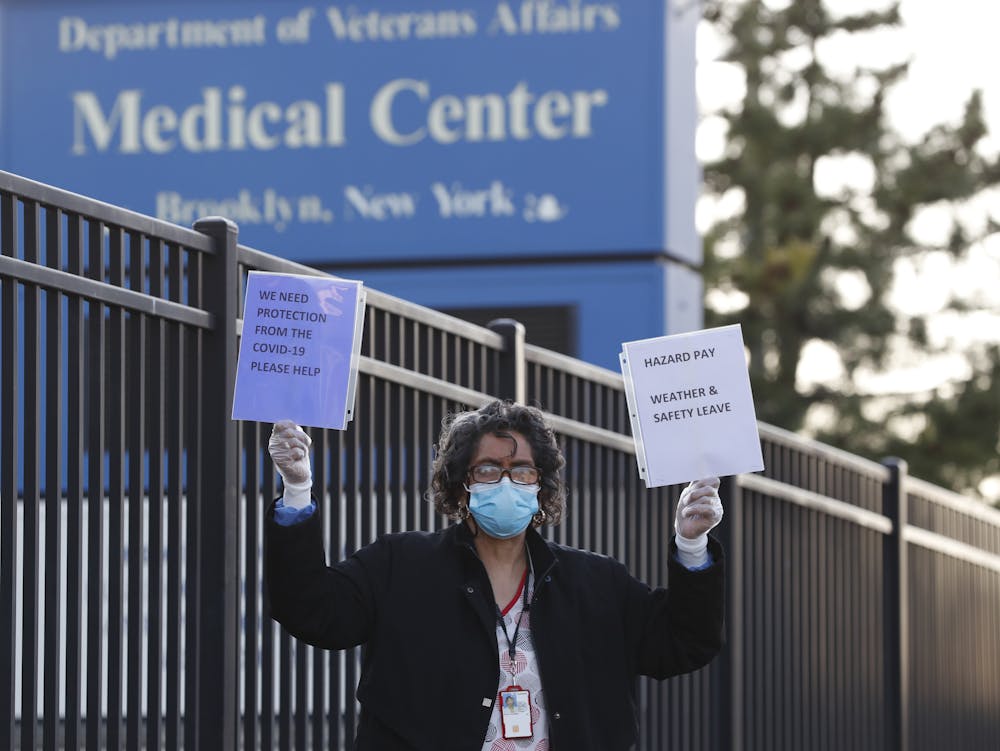
VA hospitals across the country are short-staffed and don’t have the resources they need to protect their workers. AP/Kathy Willens

The Veterans Administration frequently and perhaps unlawfully denies benefits to veterans with “other than honorable” discharges.

Many veterans have requested upgrades to their discharge status. There is a significant backlog of these upgrade requests, and the pandemic will add to it, further delaying access to health care and other benefits.

4. Diminished access to health care

Dental surgery, routine visits and elective surgeries at Veterans Administration medical centers have been postponed since mid-March. VA hospitals are understaffed – just before the pandemic, the VA reported 43,000 staff vacancies out of more than 400,000 health care staff positions. Access to health care will be even more difficult when those medical centers finally reopen because they may have far fewer workers than they need.

As of May 4, 2020, 2,250 VA health care workers have tested positive for COVID-19, and thousands of health care workers are under quarantine. The VA is asking doctors and nurses to come out of retirement to help already understaffed hospitals.

5. Mental health may get worse

An average of 20 veterans die by suicide every day. A national task force is currently addressing this scourge.

But many outpatient mental health programs are on hold or being held virtually. Some residential mental health facilities have closed.

Under these conditions, the suicide rate for veterans may grow. Suicide hotline calls by veterans were up by 12% on March 22, just a few weeks into the crisis.

6. Complications for homeless veterans and those in the justice system

An estimated 45,000 veterans are homeless on any given night, and 181,500 veterans are in prison or jail. Thousands more are under court-supervised substance use and mental health treatment in veterans treatment courtsMore than half of veterans involved with the justice system have either mental health problems or substance use disorders.

As residential facilities close to new participants, many veterans eligible to leave prison or jail have nowhere to go. They may stay incarcerated or become homeless.

Courts have moved online or ceased formal operations altogether, meaning no veteran charged with a crime can be referred to a treatment court. It is unclear whether those who were already participating in a treatment program will face delays graduating from court-supervised treatments.

Further, some veterans treatment courts still require participants to take drug tests. With COVID-19 circulating, those participants must put their health at risk to travel to licensed testing facilities.

As veterans’ facilities close to new participants, many veterans eligible to leave prison or jail have nowhere to go and may become homeless, like this Navy veteran in Los Angeles. Getty/Mario Tama

7. Disability benefits delayed

In the pandemic’s epicenter in New York, tens of thousands of veterans should have access to VA benefits because of their low income – but don’t, so far.

The pandemic has exacerbated existing delays in finding veterans in need, filing their paperwork and waiting for decisions. Ryan Foley, an attorney in New York’s Legal Assistance Group, a nonprofit legal services organization, noted in a personal communication that these benefits are worth “tens of millions of dollars to veterans and their families” in the midst of a health and economic disaster.

All 56 regional Veterans Administration offices are closed to encourage social distancing. Compensation and disability evaluations, which determine how much money veterans can get, are usually done in person. Now, they must be done electronically, via telehealth services in which the veteran communicates with a health care provider via computer.

But getting telehealth up and running is taking time, adding to the longstanding VA backlog. Currently, more than 100,000 veterans wait more than 125 days for a decision. (That is what the VA defines as a backlog – anything less than 125 days is not considered a delay on benefit claims.)

8. Economic catastrophe

There are 1.2 million veteran employees in the five industries most severely affected by the economic fallout of the coronavirus.

A disproportionately high number of post-9/11 veterans live in some of the hardest-hit communities that depend on these industries. Veterans returning from overseas will face a dire economic landscape, with far fewer opportunities to integrate into civilian life with financial security.

In addition, severely disabled veterans living off of VA benefits were initially required to file a tax return to get stimulus checks. This initial filing requirement delayed benefits for severely disabled veterans by at least a month. The IRS finally changed the requirements after public outcry, given that many older and severely disabled veterans do not have access to computers or the technological skills to file electronically.

There are many social groups to pay attention to, all with their own problems to face during the pandemic. With veterans, many of the problems they face now existed long before the coronavirus arrived on U.S. shores.

But with the challenges posed by the situation today, veterans who were already lacking adequate benefits and resources are now in deeper trouble, and it will be harder to answer their needs.


Coronavirus’ double whammy on vulnerable populations

https://www.axios.com/newsletters/axios-vitals-e6483366-26b3-4f34-99c1-f2b356e47b4a.html?utm_source=newsletter&utm_medium=email&utm_campaign=newsletter_axiosvitals&stream=top

The coronavirus' double whammy on minorities and low-income ...

Minorities and low-income people are more likely to become seriously ill if infected with the coronavirus, according to a new Kaiser Family Foundation analysis.

Why it matters: These populations are also less likely to be able to social distance, or have been hit hardest economically by doing so. The coronavirus may be a national problem, but its impact is most devastating to the people who were already worse off.

Kaiser Family Foundation - Health Policy Research, Analysis ...


The big picture: Even before the virus hit, minorities suffered from worse health outcomes, in part because they’re more likely to be low-income — which is also correlated with higher rates of chronic conditions.

  • People with underlying health conditions — like heart disease, chronic obstructive pulmonary disease (COPD), uncontrolled asthma, diabetes or obesity — are more vulnerable to severe illness from the novel coronavirus.
  • Health care and socioeconomic disparities also exacerbate Native Americans’ and black Americans’ risk.
  • And “even though the shares of Hispanic and Native Hawaiian or Pacific Islander nonelderly adults at higher risk for serious illness if infected are similar to that of White adults, these groups face disparities in other health, social, and economic factors that may contribute to barriers to health care associated with coronavirus,” KFF adds.

Between the lines: People with low-income jobs deemed essential — like grocery store workers, home health aides or delivery drivers — are also at higher risk of contracting the virus.

  • Those in other low-income jobs, like in retail or restaurants, are more likely to be out of work right now or working fewer hours.
  • As the fight between businesses and workers heats up in states reopening sooner than public health experts advise, low-income workers have less of an option to quit if they feel unsafe.


The South is vulnerable to a coronavirus nightmare

https://www.axios.com/newsletters/axios-vitals-d53939d5-90fb-4aef-a87d-30cf2b0ceebf.html?utm_source=newsletter&utm_medium=email&utm_campaign=newsletter_axiosvitals&stream=top

COVID-19 vulnerability index, by county

Arrow


The South is at risk of being devastated by the coronavirus.

Why it matters: Southern states tend to have at-risk populations and weak health care systems — and they’re the ones moving fastest to loosen social distancing rules. That puts them at risk for the worst-case coronavirus scenarios.

The big picture: To stop the spread of the coronavirus, there are really only two options: stringent social distancing, or stringent public health measures.

Driving the news: Several southern states including Georgia, Tennessee and South Carolina have recently announced that they’re starting to back off of social distancing.

  • Our national testing capacity is still nowhere near where experts say it needs to be, and only some communities have announced efforts to build up contact tracing.

Between the lines: The Surgo Foundation created a coronavirus community vulnerability index that takes into account factors like socioeconomic status, minority status, housing type, epidemiologic factors and health care system factors.

The bottom line: The South is already worse off in almost every way, partially due to policy choices made in these states. Its comparatively unhealthy population is vulnerable to more serious illness, and looser social distancing will enable the virus’ spread.