What it’s like to be a nurse after 6 months of COVID-19 response

https://www.healthcaredive.com/news/what-its-like-to-be-a-nurse-6-months-coronavirus/581709/

Those on the front lines of the fight against the novel coronavirus worry about keeping themselves, their families and their patients safe.

That’s especially true for nurses seeking the reprieve of their hospitals returning to normal operations sometime this year. Many in the South and West are now treating ICUs full of COVID-19 patients they hoped would never arrive in their states, largely spared from spring’s first wave.

And like many other essential workers, those in healthcare are falling ill and dying from COVID-19. The total number of nurses stricken by the virus is still unclear, though the Centers for Disease Control and Prevention has reported 106,180 cases and 552 deaths among healthcare workers. That’s almost certainly an undercount.

National Nurses United, the country’s largest nurses union, told Healthcare Dive it has counted 165 nurse deaths from COVID-19 and an additional 1,060 healthcare worker deaths.

Safety concerns have ignited union activity among healthcare workers during the pandemic, and also given them an opportunity to punctuate labor issues that aren’t new, like nurse-patient ratios, adequate pay and racial equality.

At the same time, the hospitals they work for are facing some of their worst years yet financially, after months of delayed elective procedures and depleted volumes that analysts predict will continue through the year. Many have instituted furloughs and layoffs or other workforce reduction measures.

Healthcare Dive had in-depth conversations with three nurses to get a clearer picture of how they’re faring amid the once-in-a-century pandemic. Here’s what they said.

Elizabeth Lalasz, registered nurse, John H. Stroger Hospital in Chicago

Elizabeth Lalasz has worked at John H. Stroger Hospital in Chicago for the past 10 years. Her hospital is a safety net facility, catering to those who are “Black, Latinx, the homeless, inmates,” Lalasz told Healthcare Dive. “People who don’t actually receive the kind of healthcare they should in this country.”

Data from the CDC show racial and ethnic minority groups are at increased risk of getting COVID-19 or experiencing severe illness, regardless of age, due to long-standing systemic health and social inequities.

CDC data reveal that Black people are five times more likely to contract the virus than white people.

This spring Lalasz treated inmates from the Cook County Jail, an epicenter in the city and also the country. “That population gradually decreased, and then we just had COVID patients, many of them Latinx families,” she said.

Once Chicago’s curve began to flatten and the hospital could take non-COVID patients, those coming in for treatment were desperately sick. They’d been delaying care for non-COVID conditions, worried a trip to the hospital could risk infection.

A Kaiser Family Foundation poll conducted in May found that 48% of Americans said they or a family member had skipped or delayed medical care because of the pandemic. And 11% said the person’s condition worsened as a result of the delayed care.

When patients do come into Lalasz’s hospital, many have “chest pain, then they also have diabetes, asthma, hypertension and obesity, it just adds up,” she said.

“So now we’re also treating people who’ve been delaying care. But after the recent southern state surges, the hospital census started going down again,” she said.

Amy Arlund, registered nurse, Kaiser Permanente Medical Center in Fresno, California:

Amy Arlund works the night shift at Kaiser Fresno as an ICU nurse, which she’s done for the past two decades.

She’s also on the hospital’s infection control committee, where for years she’s fought to control the spread of clostridium difficile colitis, or C. diff., in her facility. The highly infectious disease can live on surfaces outside the body for months or sometimes years.

The measures Arlund developed to control C. diff served as her litmus test, as “the top, most stringent protocols we could adhere to,” when coronavirus patients arrived at her hospital, she told Healthcare Dive.

But when COVID-19 cases surged in northern states this spring, “it’s like all those really strict isolation protocols that prior to COVID showing up would be disciplinable offenses were gone,” Arlund said.

Widespread personal protective equipment shortages at the start of the pandemic led the CDC and the Occupational Safety and Health Administration to change their longstanding guidance on when to use N95 respirator masks, which have long been the industry standard when dealing with novel infectious diseases.

The CDC also issued guidance for N95 respirator reuse, an entirely new concept to nurses like Arlund who say those changes go against everything they learned in school.

“I think the biggest change is we always relied on science, and we have always relied heavily on infection control protocols to guide our practice,” Arlund said. “Now infection control is out of control, we can no longer rely on the information and resources we always have.”

The CDC says experts are still learning how the coronavirus spreads, though person-to-person transmission is most common, while the World Health Organization recently acknowledged that it wouldn’t rule out airborne transmission of the virus.

In Arlund’s ICU, she’s taken care of dozens of COVID positive patients and patients ruled out for coronavirus, she said. After a first wave in the beginning of April, cases dropped, but are now rising again.

Other changing guidance weighing heavily on nurses is how to effectively treat coronavirus patients.

“Are we doing remdesivir this week or are we going back to the hydroxychloroquine, or giving them convalescent plasma?”Arlund said. “Next week I’m going to be giving them some kind of lavender enema, who knows.”

Erik Andrews, registered nurse, Riverside Community Hospital in Riverside, California:

Erik Andrews, a rapid response nurse at Riverside Community Hospital in California, has treated coronavirus patients since the pandemic started earlier this year. He likens ventilating them to diffusing a bomb.

“These types of procedures generate a lot of aerosols, you have to do everything in perfectly stepwise fashion, otherwise you’re going to endanger yourself and endanger your colleagues,” Andrews, who’s been at Riverside for the past 13 years, told Healthcare Dive.

He and about 600 other nurses at the hospital went on strike for 10 days this summer after a staffing agreement between the hospital and its owner, HCA Healthcare, and SEIU Local 121RN, the union representing RCH nurses, ended without a renewal.

The nurses said it would lead to too few nurses treating too many patients during a pandemic. Insufficient PPE and recycling of single-use PPE were also putting nurses and patients at risk, the union said, and another reason for the strike.

But rapidly changing guidance around PPE use and generally inconsistent information from public officials are now making the nurses at his hospital feel apathetic.

“Unfortunately I feel like in the past few weeks it’s gotten to the point where you have to remind people about putting on their respirator instead of face mask, so people haven’t gotten lax, but definitely kind of become desensitized compared to when we first started,” Andrews said.

With two children at home, Andrews slept in a trailer in his driveway for 12 weeks when he first started treating coronavirus patients. The trailer is still there, just in case, but after testing negative twice he felt he couldn’t spend any more time away from his family.

He still worries though, especially about his coworkers’ families. Some coworkers he’s known for over a decade, including one staff member who died from COVID-19 related complications.

“It’s people you know and you know that their families worry about them every day,” he said. “So to know that they’ve had to deal with that loss is pretty horrifying, and to know that could happen to my family too.”


Photo of COVID-19 victim in Indonesia sparks fascination—and denial

https://www.nationalgeographic.com/photography/2020/07/covid-victim-photograph-sparks-fascination-and-denial-indonesia/?cmpid=org=ngp::mc=crm-email::src=ngp::cmp=editorial::add=SpecialEdition_20200724&rid=C1D3D2601560EDF454552B245D039020

Photo of COVID-19 victim in Indonesia sparks fascination—and denial

Coronavirus victim wrapped in plastic shows what many didn’t want the populace to see.

Photojournalist Joshua Irwandi shadowed hospital workers in Indonesia, taking a striking image of a plastic-wrapped body of a COVID-19 victim while making sure not to reveal distinguishing characteristics, or even gender.

The image, taken for Nat Geo as part of a National Geographic Society grant, struck a chord in the nation of 270 million people. Indonesia had been slow to fight the global pandemic, with President Joko “Jokowi” Widodo touting an unproven herbal remedy in March. Some of the reactions to Irwandi’s image, which humanized the suffering from the virus, have been hostile.

Irwandi’s photograph has been displayed on television news and shared by the spokesperson for the nation’s coronavirus response team. The image was widely screen-grabbed and republished without Irwandi’s consent by Indonesian media. More than 340,000 people have “liked” the image on his Instagram page, which he posted after the Nat Geo story published on July 14. More than 1 million people also liked it in its first few hours on Nat Geo’s Instagram.

“It’s clear that the power of this image has galvanized discussion about coronavirus,” Irwandi said from his home in Indonesia. “We have to recognize the sacrifice, and the risk, that the doctors and nurses are making.”

There’s no question the photograph broke through, agreed Fred Ritchin, dean emeritus of the International Center of Photography: “Here we have a mummified person. It makes you look at it, feel terror.”

At the same time, there is distance, Ritchin said. “To me, the image was of someone being thrown out, discarded, wrapped in cellophane, sprayed with disinfectant, mummified, dehumanized, othered … It makes sense in a way. People have othered people with the virus because they don’t want to be anywhere near the virus.”

After Irwandi posted the photograph, a popular singer with a massive following accused the photographer of fabricating the news, said COVID-19 wasn’t so dangerous, and opined that a photojournalist shouldn’t be allowed to take a photograph in a hospital if the family could not see the victim. The singer’s followers erroneously charged Irwandi with setting up the photo with a mannequin, and called him “a slave” of the World Health Organization. The 28-year-old photographer’s ethics were questioned by the government this week, which also suggested the name of the hospital, which was not disclosed in the photograph, should be revealed, CNN Indonesia reported.

”Details of my private life have been published without my permission,“ Irwandi said. ”We’ve gone really astray from the photojournalistic intent of my photograph.“

However, he has gotten support from the nation’s association of photojournalists. They countered that the image met journalistic standards—and demanded the singer apologize, which he subsequently did.

Irwandi says some government officials have said the nation should take COVID-19 more seriously. As of Tuesday, the Johns Hopkins University Coronavirus Tracker had reported 4,320 COVID-19 deaths and 89,869 cases from Indonesia, although the count is believed to be vastly underreported. Many people aren’t practicing social distancing, and hordes have not been wearing masks. Large-scale social restrictions began fading last month.

His hope is that the image encourages Indonesians to take precautions—and save lives. He cited a challenge to photojournalists given in May by Harvard professor Sarah Elizabeth Lewis: to move beyond statistics and show how COVID-19 is affecting people. Other photographers, such as Lynsey Addario, have been motivated to do the same thing. (Addario also has been supported by a National Geographic Society fund for COVID-19 reporting.)

So, what are Irwandi’s next steps?

He paused a moment.

“I think I’m going to stay low for a time,” he said.


The state of the global race for a coronavirus vaccine

https://www.axios.com/race-for-coronavirus-vaccine-us-china-oxford-eace8d13-59b6-404f-9dd9-569d00e01f58.html

The state of the global race for a coronavirus vaccine - Axios

Vaccines from the U.K., U.S. and China are sprinting ahead in a global race that involves at least 197 vaccine candidates and is producing geopolitical clashes even as it promises a possible pandemic escape route.

Driving the news: The first two candidates to reach phase three trials — one from the University of Oxford and AstraZeneca, the other from China — both appear safe and produce immune responses, according to preliminary results published today in The Lancet.

  • A vaccine from Moderna, the U.S. biotech firm, is heading into phase three trials after similarly encouraging initial results.
  • There are at least 16 other vaccines currently in clinical trials in Australia, France, Germany, India, Russia, South Korea, the U.K., the U.S. and China, which is experimenting with a variety of vaccine types and has five candidates already in trials.

What they’re saying: Experts are increasingly confident that it’s no longer a question of if but when vaccines will be available.

  • “Absolutely, for sure, we will get more than one vaccine,” Barry Bloom, a professor of public health at Harvard, told reporters today.
  • He cautioned that it’s not yet clear which vaccines will win the race and that we won’t know how effective they are in protecting against COVID-19 — and for how long — until after phase three trials.

Pressed on when a vaccine could be approved, Bloom said that while it seemed “utterly crazy seven months ago,” January was looking increasingly realistic.

  • Richard Horton, The Lancet‘s editor-in-chief, is more cautious: “If we have a vaccine by the end of 2021, we will have done incredibly well.”
  • Zeke Emanuel, chair of the Department of Medical Ethics and Health Policy at the University of Pennsylvania, splits the difference: “Seven months after we got the genome, to have three vaccines in phase three is literally unprecedented. If in six to eight months we get a license, that will be, again, totally unprecedented in world history.”

But, but, but: “Getting something approved doesn’t protect you from COVID,” Emanuel warns.

  • The challenges of producing, distributing and delivering a vaccine (particularly in two doses, as the Oxford vaccine requires) around the entire world are hard to even fathom.
  • Even distributing a vaccine in one country will require an unprecedented buildup of facilities, materials (like glass vials), personnel and protocols, assuming enough people are even willing to take it.

Illustration of syringe in the earth

The global picture is even murkier. Several countries and pharmaceutical companies have committed to “fair and equitable” distribution.

  • In principle, that would suggest a vulnerable front-line worker in Uganda, say, should get the vaccine before a young, healthy person in the United States.
  • In practice, well … no one really knows.

The bottom line: “It’s very fragmented, and in some ways that’s understandable,” Horton says. “But the danger of that is that many countries will lose out and only the strongest country, the country with the most money, will win.”

  • If countries hoard supplies rather than prioritizing at-risk people elsewhere, Bloom says, “that should be a cause not just of global concern but of global shame.”

For now, governments are prioritizing their own populations.

  • The Trump administration is pouring at least $3.5 billion into the development and manufacture of three leading vaccine candidates, with the promise of hundreds of millions of doses should they prove safe and effective.
  • Even as the homegrown Oxford vaccine takes a global lead, the U.K. is hedging its bets by purchasing 90 million doses being developed by German and French companies.
  • The U.K. and U.S. have both also put in large pre-orders of the Oxford vaccine, though AstraZeneca says 1 billion doses will also be manufactured in India and distributed mainly to other low- and middle-income countries.
  • The WHO and EU are attempting to create a framework for distributing the vaccine globally, though the U.S. has declined to take part.

Illustration of syringes forming a health plus/cross

What to watch: Managing the largest vaccination project in history will clearly require global collaboration — but it’s also becoming a competition between rival powers.

  • Six months from now, we will be in a situation where a few countries will have vaccines, and we believe those countries will be the UK, Russia, China and the US,” Kirill Dmitriev, the head of Russia’s sovereign wealth fund, told the FT.

Between the lines: Others are less certain Russia will be in that group, though Dmitriev says a vaccine bankrolled by his fund and developed by the state-run Gamaleya Institute will move into phase three trials next month.

“Basically other countries will decide, you know, which vaccine to buy … and who do you trust?”

— Kirill Dmitriev

State of play: There’s a clear lack of trust among the competitors.

  • According to the U.S, U.K. and Canada, hackers linked to Russian military intelligence have attempted to steal vaccine research in order to aid their own efforts.
  • The U.S. has also accused China of pilfering American research.
  • House Republican leader Kevin McCarthy will introduce a bill on Tuesday that would sanction foreign hackers attempting to steal U.S. vaccine research, according to a copy of the bill obtained by Axios’ Alayna Treene.

Zoom out: It will be a victory for humanity when the first coronavirus vaccines are approved. But the competition to obtain one early goes beyond national pride.

  • Vaccines will save countless lives, drive economic recoveries, and could provide rare opportunities to generate goodwill and influence abroad.
  • “There’s a huge soft power advantage to the U.S. ensuring that other countries can get the vaccine and protect themselves,” Emanuel says. The same would, of course, be true for China.

The bottom line: The race is on, but it won’t end when the first vaccine is approved.


We’re still in the early stages of the vaccine race

https://www.axios.com/newsletters/axios-vitals-a91eb4fb-e10d-46cf-b919-96e1e6e08b22.html?utm_source=newsletter&utm_medium=email&utm_campaign=newsletter_axiosvitals&stream=top

Oxford and CanSino released coronavirus vaccine data. It's still ...

New clinical trial data from two experimental coronavirus vaccines — one from Oxford University and AstraZeneca in the U.K., and the other from CanSino Biologics in China — are providing cautious optimism in the race to combat the pandemic, Axios’ Bob Herman reports.

The big picture: Science has never moved this fast to develop a vaccine. And researchers are still several months away from a clearer idea of whether the leading candidates help people generate robust immune responses to this virus.

Driving the news: The Oxford and CanSino vaccines didn’t lead to any severe adverse reactions or hospitalizations, according to the results released yesterday.

  • Safety — not efficacy — was the main thing these studies were supposed to be testing. And they performed well enough to move on to further trials.
  • Competing candidates from Moderna and Pfizer/BioNTech have also performed well in safety trials.

Yes, but: Future trials will be the ones that tell us whether any of these potential vaccines actually trigger patients’ immune systems to respond to the virus.

  • In the results released yesterday, Oxford researchers gave their vaccine to 543 people but only tested 35 for “neutralizing antibodies.” A separate, nonrandomized group of 10 people got a booster dose of the Oxford vaccine a month after the initial dose.
  • Preliminary antibody responses from CanSino’s vaccine were “disappointing” to several experts.

The bottom line: There are 23 coronavirus vaccines in clinical testing right now, according to the World Health Organization.

  • We now have data on the first four, but the studies mostly are confirming that the vaccines aren’t severely harmful and that large-scale studies are warranted — not that they definitely work yet.
  • “It is good and hopeful news indeed, but we’ll only know when the large trials are done,” tweeted Robert Califf, a former FDA commissioner under President Obama.


A coronavirus vaccine: Where does it stand?

https://www.politifact.com/article/2020/jul/13/coronavirus-vaccine-where-does-it-stand/?fbclid=IwAR3hk04P0N3AuJXsKCr_JqV8vu0qZ6njsHE3if6xX6E2AxsllV1m81LjtX4

Coronavirus vaccines get a biotech boost

IF YOUR TIME IS SHORT

Scientists are expressing cautious optimism that a vaccine can be ready to go by the late spring of 2021, although it’s unclear how much longer it would take to distribute the vaccine widely.

Two possible vaccines are in phase 3 clinical trials; once those trials are completed, they would be candidates for approval. Another eight vaccines have begun phase 2 trials. And more than 100 other vaccines that haven’t begun clinical trials are in the pipeline.

• The Food and Drug Administration recently produced guidelines for the minimum effectiveness of vaccines seeking the agency’s approval. Vaccine officials say these guidelines are important to ensure public confidence in vaccines.


More than four months into the coronavirus pandemic, how close is the U.S. and the world to a safe and effective vaccine? Scientists say they see steady progress and are expressing cautious optimism that a vaccine could be ready by spring of 2021.

As of early July, there were roughly 160 vaccine projects under way worldwide, according to the World Health Organization

Generally, a vaccine trial has several phases. In an initial phase, the vaccine is given to 20 to 100 healthy volunteers. The focus in this phase is to make sure the vaccine is safe, and to note any side effects.

In the second phase, there are hundreds of volunteers. In addition to monitoring safety, researchers try to determine whether shots produce an immune-system response.

The third phase involves thousands of patients. This phase continues the goals of the first two, but adds a focus on how effective the vaccine is. This phase also collects data on more unusual negative side effects.

In ordinary circumstances, these phases take years to complete. But for coronavirus, the timeline is being shortened. This has spurred more public-private partnerships and significantly increased funding.

Here’s a rundown of the 13 vaccine candidates that are furthest along in the clinical phases:

Coronavirus vaccines that are the furthest along:

A Coronavirus Vaccine: Where Does It Stand? – Corridor News

The three vaccine candidates that are furthest along are both in phase 3. 

One is being developed by researchers at Oxford University in the U.K. It uses a weakened version of a virus that causes common colds in chimpanzees. Researchers then added proteins, known as antigens, from the novel coronavirus, in the hope that these could prime the human immune system to fight the virus once it encounters it.

Another candidate in a phase 3 trial is being developed in China. It uses a killed, and thus safe, version of the novel coronavirus to spur an immune reaction.

And on July 15, the biotech company Moderna, which is partnering with the National Institutes of Health, announced that it would be moving to phase 3 within two weeks.

Two others have made it as far as phase 2, while eight others are finishing their phase 1 trials while also beginning phase 2 trials.

These candidates are being developed by a mix of corporations and institutions in several countries. These efforts seek to leverage a range of different technologies.

One uses RNA material that provides the instructions for a body to produce the needed antigens itself. This is a relatively untested approach to vaccination, but if it works, it has aspects that could make it easier to manufacture. Another approach is similar, but uses DNA instead of RNA.

One U.S. biotech firm, Novavax, is receiving federal funding to produce a vaccine that uses a lab-made protein to inspire an immune response.

Beyond these, another 10 vaccine candidates are in phase 1 clinical trials, while another 140 haven’t reached the clinical phase yet.

Having so many potential vaccines this far along is impressive, experts say, given the short time scientists have known about the novel coronavirus. 

“Overall, the pace of development and advancement to Phase 3 trials is impressive,” said Matthew B. Laurens, associate professor at the University of Maryland School of Medicine’s Center for Vaccine Development and Global Health. “The public-private partnerships have been highly successful and are achieving goals for rapid vaccine development.”

In addition, the fact that several types of vaccine approaches are being tested means we aren’t putting all of our eggs in one basket.

“We will need several candidates should any one of these experience difficulties in manufacturing or show a safety signal when implemented in larger numbers of people,” Laurens said.

Meanwhile, at a time of rising public skepticism of government and vaccines, the Food and Drug Administration recently released additional guidelines on vaccine effectiveness. The new guidance requires vaccines to prevent or decrease the severity of the disease at least 50% of the time if they are to win the agency’s approval.

The FDA guidelines “reaffirmed the very rigorous FDA process for approving any vaccine. That gives a great deal of reassurance that this was going to be handled by the book,” said William Schaffner, a professor of preventive medicine and infectious diseases at Vanderbilt University Medical Center. “The more we talk about doing things fast, the more the public thinks, ‘They’re probably cutting corners.’”

How fast will we have access to a workable vaccine?

In early April, Kathleen M. Neuzil, director of the University of Maryland’s vaccine center, told PolitiFact that if all went well, there might be five or six vaccines in trials within six months. Now, three and a half months later, there are two to three times that number.

Anthony Fauci, director of the National Institute of Allergy and Infectious Diseases, and other officials have remained consistent in their estimation of the timeline: 12 to 18 months from the start of the pandemic, or roughly the late spring of 2021.

Schaffner told PolitiFact that he continues to see the first quarter of 2021 as a reasonable target. “I think that’s where the needle is pointing,” he said.

It remains to be seen how fast vaccines can be manufactured and distributed once approved for general use. Officials are also grappling with which Americans will get access first. So it’s unclear how long a person would have to wait to get vaccinated.

Laurens said he is not overly concerned about the distribution, because that is something that officials have long experience with. “Well-established programs exist for vaccine distribution, including for seasonal vaccination of large numbers of individuals,” he said.

Another hopeful sign, Schaffner said, is that the coronavirus itself seems to be relatively stable. There had been concern that the novel coronavirus, like many other viruses, is mutating over time. If the virus changes enough, that could become a problem that bedevils vaccine researchers.

But so far, that hasn’t happened. Even if evidence emerges that mutations are making the virus more transmissible, or that a new variant is making people sicker, that shouldn’t affect the vaccine process. “The central core of the virus would remain the same,” Schaffner said.

During the past month, there has been relatively little news about how much progress is being made on particular vaccines. Schaffner is not worried by the relative quiet.

“In a vaccine trial, if there’s an adverse safety finding, the guillotine comes down and that trial is stopped,” he said. “So quiet is good, because we’d know if something bad happens.”


Coronavirus cases soar by more than 1 million over 5 days

https://www.cnn.com/2020/07/14/world/million-coronavirus-cases-five-days-intl/index.html

Coronavirus cases soar by more than 1 million over 5 days - WRCBtv ...

Coronavirus cases soared by more than a million globally in just five days as the numbers continue to accelerate from week to week, according to figures from Johns Hopkins University.

Reported cases increased by 1,046,200 from July 6 through July 10, up from a 994,400 increase over the five days from July 5 through July 9.
The total global case number surpassed 13 million on Monday, growing by 1,061,600 between July 8 and July 13.
While some countries that were hit early in the outbreak have managed to contain the virus, the number of cases globally has been accelerating fairly steadily.
There have now been more than half a million deaths from the virus worldwide, according to JHU data.
The World Health Organization’s director-general on Monday warned there would be “no return to the old normal for the foreseeable future.”
Tedros Adhanom Ghebreyesus told a media briefing in Geneva that there were no shortcuts out of this pandemic, and that while we may hope for an effective vaccine, there must be a focus on using the tools that are available now to suppress transmission and save lives.
“We need to reach a sustainable situation where we do have adequate control of this virus without shutting down our lives entirely, or lurching from lockdown to lockdown,” Tedros said.
He told reporters there was a “roadmap to a situation where we can control the disease and get on with our lives” that would require three things: a focus on reducing mortality and suppressing transmission; an “empowered, engaged community” that takes individual measures to protect the whole community; and strong government leadership and communication.
Two countries accounted for half of all new cases added worldwide on Sunday, he told the briefing.
“Yesterday, 230,000 cases of Covid-19 were reported to WHO. Almost 80% of those cases were reported from just 10 countries, and 50% come from just two countries,” he said.
Tedros did not name the countries, but WHO data indicated that he was referring to the United States and Brazil. According to the JHU tally of cases, the US, India and Brazil accounted for more than 112,000 new cases on Sunday.
The US has the world’s highest confirmed numbers, with at least 3.4 million recorded cases and at least 135,615 deaths. Brazil has almost 2 million confirmed cases and India is closing in on one million.
“Let me be blunt: Too many countries are headed in the wrong direction,” Tedros said.
“If governments do not clearly communicate with their citizens and roll out a comprehensive strategy focused on suppressing transmission and saving lives; if populations do not follow the basic principles of physical distancing, hand washing, wearing masks, there is only one way this is going to go. It’s going to get worse and worse and worse.”
“But it does not have to be this way,” he added. “It’s never too late to bring the virus under control, even if there has been explosive transmission.”


Administration Formally withdraws US from WHO

https://thehill.com/homenews/administration/506214-trump-administration-formally-withdraws-us-from-WHO-

Trump administration informs Congress the US is withdrawing from WHO

The White House has officially withdrawn the United States from the World Health Organization (WHO), a senior administration official confirmed Tuesday, breaking ties with a global public health body in the middle of the coronavirus pandemic.

The U.S. withdrawal is effective as of Monday and has been submitted to the United Nations secretary-general, the official said.

Sen. Bob Menendez (N.J.), the top Democrat on the Senate Foreign Affairs Committee, tweeted that the administration informed Congress of the withdrawal.

“To call Trump’s response to COVID chaotic & incoherent doesn’t do it justice. This won’t protect American lives or interests — it leaves Americans sick & America alone,” the senator tweeted.

The formal notification of withdrawal concludes months of threats from the Trump administration to pull the United States out of the WHO, which is affiliated with the United Nations. President Trump has repeatedly assailed the organization for alleged bias toward China and its slow response to the coronavirus outbreak in Wuhan.

But public health experts and Democrats have raised alarms that the decision may be short-sighted and could undercut the global response to the pandemic, which has infected 11.6 million people worldwide. The U.S. has the highest number of reported cases in the world at nearly 3 million.

They have also argued that some of the WHO’s initial missteps can be attributed to China’s lack of transparency in the early stages of the outbreak.

The president first froze funding for the WHO in April while his administration conducted a review of its relationship with the entity. Weeks later, he wrote to the WHO demanding reforms but did not specify what those reforms would be.

Trump announced at the end of May the U.S. was “terminating” ties with the WHO.

The move was cheered by conservatives who had accused the WHO of harboring pro-China bias and argued the global body was not a productive use of funds.

Critics of the WHO have pointed to its initial assertion that the coronavirus could not be spread via human-to-human transmission, and Trump has harped on the organization’s opposition to travel bans after he imposed one on China.

Trump and his allies have also lashed out at the WHO for failing to stop early warning signs of the outbreak.

China first alerted the WHO to the presence of a cluster of atypical pneumonia in the city of Wuhan on Dec. 31 after the WHO picked up reports through its epidemic intelligence system. But there is evidence to indicate the virus was circulating in Wuhan as early as mid-November.

The United States contributes upwards of $400 million annually to the WHO — making it the group’s largest contributor — and public health experts have warned that a suspension of funds would severely damage the organization.


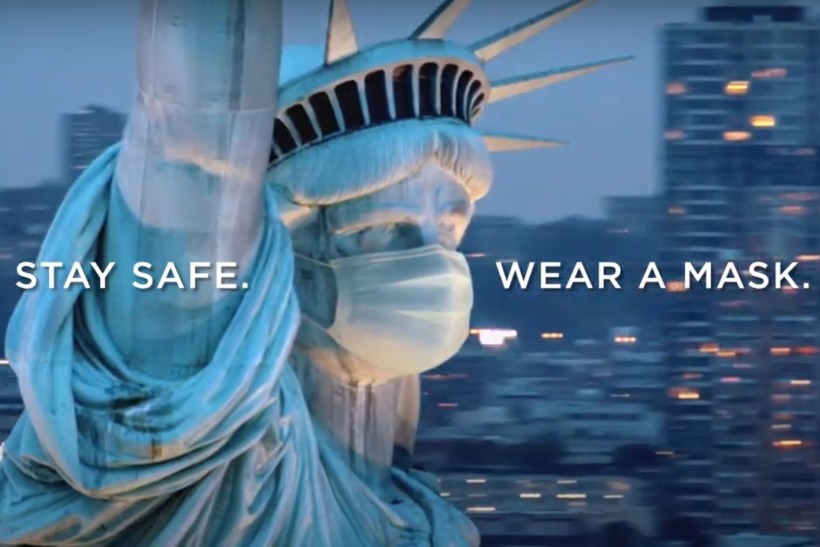
Slow the spread, save the economy—mask up

https://mailchi.mp/7d224399ddcb/the-weekly-gist-july-3-2020?e=d1e747d2d8

3 agency entries for New York governor's mask PSA | Campaign US

If Americans don’t believe public health officials or medical researchers, perhaps they’ll believe Wall Street. A new analysis released by the investment bank Goldman Sachs this week argues that implementing a national mask-wearing mandate is “worth” about 5 percent of US gross domestic product (GDP). Performing a regression analysis of reported masking behavior among residents of states with state-level mandates, as well as infection rates following the mandate implementation, Goldman’s analysts found that mask mandates result in a 25 percent reduction in the growth rate of infections, as well as a decline in COVID fatalities.

The analysis estimates that implementing a national mandate would increase the percentage of people who wear masks by 15 percentage points, with larger impact in states that currently have low levels of mask compliance. Goldman Sachs had previously constructed an “effective lockdown index”, estimating that the coronavirus pandemic subtracted 17 percent from US GDP between January and April.

Given spikes in COVID infections across Sun Belt states, the analysis found that avoiding potential lockdowns by instead implementing a mask mandate could avoid a further 5 percent decrease in GDP. Both the Centers for Disease Control (CDC) and the World Health Organization (WHO) recommend that the general public wear masks, and a growing body of scientific research indicates that masking significantly reduces the spread of COVID.

Now the bankers have weighed in. We don’t know who still needs to hear this, but please wear a mask when you’re out and about this holiday weekend. Please.


Six months in, coronavirus failures outweigh successes

Six months in, coronavirus failures outweigh successes

Covid-19 news: UK deaths fall below five-year average | New Scientist

In the six months since the World Health Organization (WHO) detected a cluster of atypical pneumonia cases at a hospital in Wuhan, China, the coronavirus pandemic has touched every corner of the globe, carving a trail of death and despair as humankind races to catch up.

At least 10.4 million confirmed cases have been diagnosed worldwide, and the true toll is likely multiples of that figure. In the United States, health officials believe more than 20 million people have likely been infected.

A staggering 500,000 people around the globe have died in just six months. More people have succumbed to the virus in the U.S. — 126,000 — than the number of American troops who died in World War I.

But even after months of painful lockdowns worldwide, the virus is no closer to containment in many countries. Public health officials say the pandemic is getting worse, fueled by new victims in both nations that have robust medical systems and poorer developing countries.

“We all want this to be over. We all want to get on with our lives. But the hard reality is this is not even close to being over,” WHO Director-General Tedros Adhanom Ghebreyesus said Monday. “Globally, the pandemic is actually speeding up.”

In the U.S., the fierce urgency of March and April has given way to the complacency of summer, as bars and restaurants teem with young people who appear largely convinced the virus poses no threat to them. New outbreaks, especially among younger Americans, have forced 16 states to pause or roll back their reopening plans.

“This is a really challenging point in time. It’s challenging because people are tired of the restrictions on their activity, people are tired of not being able to socialize, not being able to go to work,” said Richard Besser, a former acting director of the Centers for Disease Control and Prevention (CDC) who now heads the Robert Wood Johnson Foundation.

“You have people who have reached that point of pandemic fatigue where they just don’t want to hear it anymore, they just want to go back to their life,” he added.

The number of new U.S. cases has risen sharply in recent weeks, led disproportionately by states in the South, the Midwest and the Sun Belt. More than a quarter-million people tested positive for the coronavirus last week, and more than 40,000 tested positive on three consecutive days over the weekend.

“We are now having 40-plus thousand new cases a day. I would not be surprised if we go up to 100,000 a day if this does not turn around. And so I am very concerned,” Anthony Fauci, director of the National Institute for Allergy and Infectious Diseases, told a Senate panel on Tuesday.

Public health experts now worry that a rising tide of death is about to crest across the United States. Officials in Alabama, Arizona, California, Mississippi and Texas are reporting a surging number of COVID-19 hospitalizations, leading to fears that health systems could soon be overrun.

“If you’re over the hospital capacity, people will start dying faster,” said Eric Feigl-Ding, an epidemiologist and health economist at the Harvard T.H. Chan School of Public Health and a senior fellow at the Federation of American Scientists.

Already, Arizona has reported more coronavirus deaths per million residents in the last week, at 4.77, than any nation on Earth except Chile and Peru.

The response to the coronavirus pandemic has varied widely, and in some parts of the world, both wealthy and developing nations have brought it under control. In the U.S., some states hit hard early on have wrangled transmission under control.

But even in states that have achieved some measure of success, the spikes in cases stand in stark contrast to countries that have bent the epidemiological curves to manageable levels.

Mass screenings in South Korea crushed the spread, and quick action to identify and isolate contacts in more recent hot spots have meant new outbreaks are quickly contained. South Korea, with a population of 51 million, has reported just 316 new cases in the past week, fewer than the number of new cases reported in Rhode Island, a state with slightly more than 1 million residents.

Germany raced to protect its elderly population and rapidly expanded its hospital capacity. It deployed the world’s most successful diagnostics test, developed at a Berlin hospital, on a massive scale. With a population of 83 million, the country has reported 78 coronavirus deaths in the past week; Mississippi, population 3 million, reported 96 coronavirus-related deaths during the same period.

Vietnam imposed mandatory quarantines on contacts, including international travelers, in government-run centers to stop the spread. Among its 95 million residents, Vietnam has confirmed 355 total cases since the outbreak began. Alabama, population 4.9 million, reported 358 cases on Sunday alone.

Those countries have begun loosening restrictions on their populations and their economies, with few signs of major flare-ups.

The United States has begun to open up too but without bending the curve downward, and the results have been disastrous. The number of daily confirmed cases has more than doubled in nine states over the past two weeks and has increased by more than half in 17 more.

“I have really grave concerns that viral transmission is going to get out of control,” Besser said.

In interviews, public health experts and epidemiologists confess to feelings of depression and disgust over the state of the nation’s response. Some remain exasperated that there is still no coordinated national response from the White House or federal agencies.

President Trump has rarely mentioned the virus in recent weeks, aside from using racial epithets and suggesting his administration would slow testing to reduce the number of confirmed cases. He later said he was joking.

“There should be some sort of federal leadership,” Feigl-Ding said. “Every state’s on its own, for the most part.”

Left to their own devices, some states are trending in the right direction. Connecticut, Maryland, New Hampshire, New York, North Dakota, Rhode Island, South Dakota and the District of Columbia have seen their case counts decline for two consecutive weeks or more. New York reported 4,591 new cases in the last week — a startlingly high figure but only a fraction of the 65,000 cases infecting the state during its worst week, in early April.

States with their numbers on the decline have benefited from fast action and strict measures. They’re also viewed as role models for states that are now experiencing surges.

“States who are now on the rapid upslope need to act quickly, take the advice and example of states that have already been through this,” said Abraar Karan, an internist at Brigham and Women’s Hospital and Harvard Medical School. “We know what needs to be done to win this in the short run, and we are working on what needs to happen for the longer term.”

If there is a silver lining, it is that the number of tests American states are conducting on a daily basis has grown to about 600,000, on its way toward the millions the nation likely needs to fully control the spread.

But that silver lining frames a darkening cloud: As the virus spreads, even the higher testing capacity has been strained, and state and local governments are hitting their limits and running low on supplies.

The greater number of tests does not account for the speed of the spread, as Trump has suggested. The share of tests that come back positive has averaged almost 7 percent over the last week, according to The Hill’s analysis of national figures; in the first week of June, just 4.6 percent of tests were coming back positive.

If greater testing were responsible for more cases, the percentage coming back positive should decrease rather than increase. The higher positive rates are an indication the virus is spreading more rapidly.

As with so much else in American life, the coronavirus has become a political battleground. The new front is over face masks, which studies show dramatically reduce transmission. States that have mandated wearing masks in public saw the number of new cases decline by a quarter between the first and third weeks of June; states that do not require masks in any setting saw the number of cases rise by 84 percent over that same span.

“From a public health perspective, it’s demoralizing, it’s tragic … because our public health leaders know what to do to get this under control, but we’re in a situation where the CDC is not out front in a leadership role. We’re not hearing from them every day. They’re not explaining and capturing people’s hearts and minds,” said Besser, the former CDC chief. “If we have a vaccine, that will be terrific if it’s safe and effective. But until that point, these are the only tools we have, these tools of public health, and they’re very crude tools.”


WHO Reports Largest Single-Day Spike In Coronavirus Cases

https://talkingpointsmemo.com/news/who-reports-largest-single-day-spike-in-coronavirus-cases

WHO reports largest single-day increase in coronavirus cases

The World Health Organization on Sunday reported the largest single-day increase in coronavirus cases by its count, at more than 183,000 new cases in the latest 24 hours.

The UN health agency said Brazil led the way with 54,771 cases tallied and the U.S. next at 36,617. Over 15,400 came in in India.

Experts said rising case counts can reflect multiple factors including more widespread testing as well as broader infection.

Overall in the pandemic, WHO reported 8,708,008 cases — 183,020 in the last 24 hours — with 461,715 deaths worldwide, with a daily increase of 4,743.

More than two-thirds of those new deaths were reported in the Americas.

In Spain, officials ended a national state of emergency after three months of lockdown, allowing its 47 million residents to freely travel around the country for the first time since March 14. The country also dropped a 14-day quarantine for visitors from Britain and the 26 European countries that allow visa-free travel.

But there was only a trickle of travelers at Madrid-Barajas Airport, which on a normal June day would be bustling.

“This freedom that we now have, not having to justify our journey to see our family and friends, this was something that we were really looking forward to,” Pedro Delgado, 23, said after arriving from Spain’s Canary Islands.

Spanish Prime Minister Pedro Sánchez urged people to take maximum precautions: “The virus can return and it can hit us again in a second wave, and we have to do whatever we can to avoid that at all cost.”

At a campaign rally in Tulsa, Oklahoma, Trump said Saturday the U.S. has tested 25 million people, but the “bad part” is that it found more cases.

“When you do testing to that extent, you’re going to find more people, you’re going to find more cases,” Trump said. “So I said to my people, ‘Slow the testing down, please.’″

White House trade adviser Peter Navarro said on CNN that Trump was being “tongue-in-cheek” and made the comment in a “light mood.”

Democratic rival Joe Biden’s campaign accused Trump of “putting politics ahead of the safety and economic well-being of the American people.”

The U.S. has the world’s highest number of reported infections, over 2.2 million, and the highest death toll, at about 120,000, according to Johns Hopkins. Health officials say robust testing is vital for tracking outbreaks and keeping the virus in check.

In England, lockdown restrictions prevented druids, pagans and party-goers on Sunday from watching the sun rise at the ancient circle of Stonehenge to mark the summer solstice, the longest day of the year in the Northern Hemisphere. English Heritage, which runs the site, livestreamed it instead. A few people gathered outside the fence.

“You can’t cancel the sunrise,” druid Arthur Pendragon told the BBC.

The number of confirmed virus cases is still growing rapidly not only in the U.S. but in Brazil, South Africa and other countries, especially in Latin America.

Brazil’s Health Ministry said the total number of cases had risen by more than 50,000 in a day. President Jair Bolsonaro has been downplaying the risks even as his country has seen nearly 50,000 fatalities, the second-highest death toll in the world.

South Africa reported a one-day high of almost 5,000 new cases on Saturday and 46 deaths. Despite the increase, President Cyril Ramaphosa announced a further loosening of one of the world’s strictest lockdowns. Casinos, beauty salons and sit-down restaurant service will reopen.

In the United States, the virus appears to be spreading across the West and South. Arizona reported over 3,100 new infections, just short of Friday’s record, and 26 deaths. Nevada also reported a new high of 445 cases.

In Europe, a single meatpacking plant in Germany has had over 1,000 cases, so the regional government issued a quarantine for all 6,500 workers, managers and family members.

In Asia, China and South Korea reported new coronavirus cases Sunday in outbreaks that threatened to set back their recoveries.

Chinese authorities recorded 25 new confirmed cases — 22 in Beijing. In the past week, Beijing tightened travel controls by requiring anyone who wants to leave the Chinese capital, a city of 20 million people, to show proof they tested negative for the virus.

In South Korea, nearly 200 infections have been traced to employees at a door-to-door sales company in Seoul, and at least 70 other infections are tied to a table tennis club there. But South Korean officials are reluctant to enforce stronger social distancing to avoid hurting the economy.