


Cartoon – Fighting Healthcare Reform


A key part of President Biden’s new coronavirus strategy is a push to administer 100 million doses in 100 days, or a lofty sounding 1 million immunizations a day.
That goal, part of a comprehensive national plan launched this week, has raised questions about how quickly the United States can, and should aim to, deliver vaccines to its population.
The strategy document calls the 1 million shots per day pace “aggressive,” an effort that will “take every American doing their part.” But critics have pointed out that it does not constitute a major leap from the current rate, which has already neared or even surpassed the target. Many wonder why the country cannot move more swiftly.
It remains possible that the United States could pick up its pace as vaccine supply increases and logistics improve. But in international context 1 million doses a day does not seem slow.
Though differences in population, logistical capacity and data transparency, along with different levels of vaccine vetting and effectiveness between vaccine types, make it hard to compare vaccination campaigns across countries, the United States is near the top of the pack, behind some of the fastest countries to vaccinate, including Israel and Britain, but ahead of most of the rest of the world.
The biggest factor shaping the rate of vaccination is global supply.
Though the development and emergency approval of coronavirus vaccines has unfolded at an unprecedented pace, drug companies are scrambling to make enough doses to meet demand. As some countries receive a high number of doses from among the limited total produced, others must wait their turn.
So far, a small number of relatively rich countries, including the United States, have snapped up the initial supply, relegating low- and middle-income countries to the back of the line — possibly for years. Some projections suggest poor countries will not have enough doses until 2023 or 2024.
Rich countries are set to fare better. The European Commission aims to vaccinate 70 percent of the adult population of the European Union by the summer, though details of that plan are not yet clear.
Anthony S. Fauci, adviser to President Biden and director of the National Institute of Allergy and Infectious Diseases, said this week that the United States could potentially reach “herd immunity” by fall 2021.

Will other large countries move faster than the United States?
Possibly, but it is hard to say.
Questions about manufacturing capacity, the potential approval of additional vaccines and the impact of the new U.K. variant make predictions tough. However, India offers an interesting point of comparison.
On Jan. 16, India launched a plan to vaccinate 300 million people by August.
The roughly 200 day push to deliver 600 million doses is more ambitious than the U.S. plan. However, India’s population is more than three times larger than that of the United States.
China promised to vaccinate some 50 million people against the coronavirus before the Lunar New Year holiday next month — a seemingly rapid pace. But a report in a news outlet controlled by the ruling Communist Party said the country had administered 15 million doses by Jan. 20.
There are also questions about whether Chinese-made vaccines are as effective as the Moderna, Pfizer and AstraZeneca formulations used elsewhere.
Days after Brazilian officials announced that a vaccine made by Chinese company Sinovac was 78 percent effective protecting against moderate and severe covid-19 cases, for instance, they were forced to clarify that the shot’s efficacy rate among all cases was only 50.4 percent.
Ultimately, the biggest difference between the U.S. vaccination push and the Chinese effort is need.
Though there are doubts about China’s figures, the country reports just above 4,600 coronavirus deaths to date — comparable to the 4,409 U.S. deaths on Inauguration Day alone.
https://www.wnpr.org/post/we-are-looking-answers-treating-covid-long-haulers

In early March, Vic Gara came down with severe muscle aches, headaches and a rising blood pressure, indicators of COVID-19 that weren’t well understood early on in the pandemic.
“Taking a shower, just the water hurt my body,” he said. “I couldn’t sleep. I slowly became hypoxic. I just couldn’t breathe.”
Eventually, he was admitted to Hartford Hospital, where he was quarantined immediately and separated from his wife, Laura.
“My wife was walking in from after parking the car, and I saw her from maybe 15, 20 feet away and I just barely raised my hand and said goodbye to her,” Gara recalled. “And I was there for a month.”
The 57-year-old was intubated and spent 11 days on a ventilator, which helped him breathe, before he regained consciousness. Like so many others who required intensive care, Gara was first transferred to a rehabilitation hospital for a short time before he could return to his home in West Granby.
He thought the worst was behind him. But by midsummer, Gara struggled with exhaustion, his headaches returned, he had poor balance and trouble speaking and “brain fog” had set in. Then he joined an online support group for COVID-19 survivors.
“Not until I was contacted did I find out, ‘Oh my god, there’s other people like me that are suffering almost identical situations,’” he said.
There is an untold number of COVID-19 survivors worldwide who struggle with long-term symptoms and complications from the virus. Scientists don’t yet know how common this occurs, but what they do know is symptoms can be both physical and mental in nature, and they can delay people from making a full recovery.
As the phenomenon becomes more well-known and researched, health organizations across Connecticut and the country are creating and expanding dedicated COVID-19 recovery programs to help survivors.
“We’re now seeing patients that have had some of those symptoms for eight, nine months,” said Dr. Jerry Kaplan, outpatient medical director at Gaylord Hospital in Wallingford. He runs the organization’s new COVID-19 recovery and rehabilitation program.
The hospital created an online support group over the summer for former COVID-19 rehab patients like Gara. Kaplan said that’s when patients came forward with a wide range of lingering health issues.
Gaylord opened its specialized outpatient program in early fall, and it provides COVID-19 survivors with occupational and physical therapies, nutrition education, psychological treatment and other services.
“Even if you can’t do everything you were doing before, we can get you to the highest possible functional level,” Kaplan said, “and that’s really what the program is designed to do.”
The program has picked up in the last several months as long-term complications from COVID-19 illness become more well-known.
“As we see more patients hospitalized with COVID now, we will continue to see the need for COVID recovery programs in the future,” Kaplan said.
The Post-COVID-19 Recovery Program at Yale Medicine opened several months ago as a Friday clinic with a small patient roster. Dr. Denyse Lutchmansingh said it has now expanded to three days a week as more patients and medical clinicians discover the program.
“I think early on, people would say, give it a couple of weeks and you should feel better,” she said. “And now we’re well past that give-it-a-couple-of-weeks period and people are still having symptoms.”
Lutchmansingh, a pulmonary and critical care physician who leads the Yale recovery program, said she and her colleagues initially expected that patients who had had moderate to severe COVID-19 illness, like Gara, would be the ones needing long-term recovery services the most.
That’s only been partly true.
“Patients who were classified as mild disease have also had persistent symptoms almost as severe as a patient who was hospitalized in an intensive care unit, and that has been quite eye-opening,” she said.
Lutchmansingh said the clinic is also seeing a surprisingly young population. She has patients in their 30s and 40s who were runners, athletically inclined, or generally in good health prior to getting a mild case of COVID-19 “who now struggle to walk up a flight of stairs.”
It’s some of these patients that Lutchmansingh has seen struggle the most mentally with their persistent symptoms.
“Because they expected to recover very quickly and move on,” she said.
Dr. Serena Spudich is the division chief of neurological infections and global neurology at Yale School of Medicine and leads a designated neuro-COVID clinic, which opened in October.
Her team collaborates with Lutchmansingh and other clinicians in the greater community to get referrals for COVID-19 survivors suffering with tingling and numbness, loss or impaired senses of smell, taste and hearing, headaches, cognitive impairment and other complications.
Many of these patients were never hospitalized or never required intensive care for COVID-19.
This is where more research can help make sense of the trends that health providers are seeing in their COVID-19 “long hauler” patients, Spudich said.
“I think it’s really important to try to understand why some people get these neurologic issues, and many people don’t seem to,” she said. “I know lots of people who’ve recovered from COVID who seem completely fine.”
Scientists are still trying to estimate exactly how many people in the world ever had COVID-19, including those who never got tested or people who got false negative results — cases that have not been recorded.
Only then might health experts know how common or rare long-term complications are among survivors, Spudich said.
“I think it’s important to be aware of them, to understand them and of course provide treatment for them,” she said. “But I worry that it’s sort of a fire that can take off where all the social media, all the press attention will suddenly make a lot of people think, ‘Oh, I’m having post-COVID problems.’”
“What is really, really important is getting patients who are having symptoms to a provider who can really critically take care of them and try to understand clinically what’s happening with them.”
What patients often want to know is, when will their health get back to what it was prior to COVID-19? And health experts don’t yet have a good answer to that as scientists continue to follow survivors in their recovery.
“We always make it clear to the patients that we don’t have all the answers. We are looking for answers,” Lutchmansingh said. “We remain hopeful, we have seen patients improve and build back to baseline, but it is a long pathway and it is not necessarily an easy pathway.”
For Gara, he continues recovery treatment at Gaylord on an outpatient basis. He tries to get outside more and build up his endurance with walks. For the most part, he takes it one day at a time.
“I went into it with an open mind and trying to stay positive,” he said. “I learned how to be more positive and look for the good rather than the bad. It helps.”
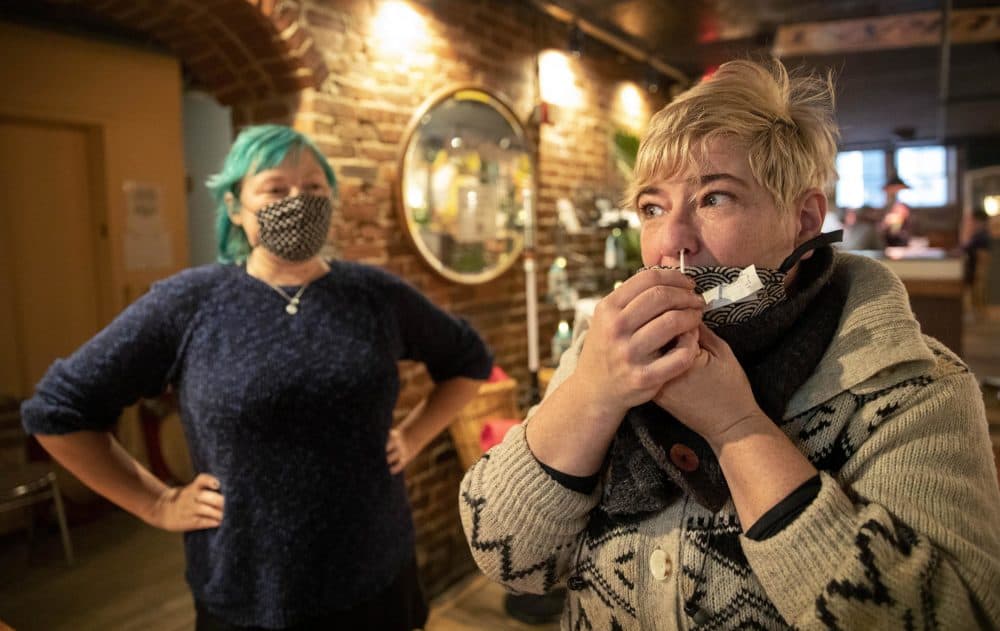
In the old days, pre-pandemic, the line in the brick-walled basement bar of Grendel’s Den would have consisted of young customers waiting to have their ID cards checked.
These days, says owner Kari Kuelzer, it’s made up of staff members getting checked for the coronavirus.
On a recent pre-opening early afternoon, a half dozen staffers assembled amid the twinkling lights and unoccupied tables, and Kuelzer handed out testing swabs.
“This is our test kit,” she explained, opening a clear plastic bag. “It’s a vial and then 10 swabs. They self-swab. And then it goes in the vial. And off I go to Kendall Square.”
Grendel’s Den, a classic Harvard Square hangout for more than 50 years, has just become the site of a coronavirus experiment: Twice a week, the restaurant will gather nose samples from up to 10 staffers, combine them and take them for processing to the company CIC Health a couple of miles away in Kendall Square.

Combining the samples is known as pooled testing — an increasingly popular way for employers, schools and others on limited budgets to keep an eye out for coronavirus infections. If the pool comes back negative, everyone’s good. If it’s positive, each person needs an individual test.
Kuelzer has been pushing the city of Cambridge and the broader restaurant community to get more testing,” to help us essentially achieve the sort of workplace safety that they achieved at Harvard University over the course of the fall,” she says.
Frequent testing helped Harvard and many other universities keep coronavirus rates low.
“If there’s people in our community in the university setting and at large institutions that are receiving that level of protection, there has to be a way to extend it to people who are not in that bubble of privilege, of being part of a major university,” Kuelzer says.
Until recently, she says, there wasn’t an affordable way to get her staff tested, and she had to ask them to do it on their own. In November, an outbreak hit seven staff members, and Grendel’s closed.
It recently reopened, and she found that testing had evolved to the point that she could get the staff pooled testing, twice a week, for $150 each time.
CIC Health already offers individual tests, and pooled testing to big institutions like schools, says chief marketing officer Rodrigo Martinez.
“And the other piece that is missing is exactly how do you offer pooled testing to a small company, restaurant, organization, team, nonprofit, whatever it is, in a way that they can actually access it?” he says. “And this is exactly the service that we’re piloting in beta.”
By “beta,” Martinez means that the Grendel’s Den arrangement is basically a field test to see how it goes and iron out kinks, and CIC Health isn’t marketing it broadly yet. But the market could be large.
“In theory, every small business that wants testing might be in need and desire of being able to do pooled testing,” he says.
The market could also be temporary. At Grendel’s, Kari Kuelzer says she sees the pooled testing as only a stopgap until the staff can get vaccinated.
It’s a stopgap that patrons can help support if they choose, in a brand new type of tipping: They can buy their server a coronavirus test for $15.
“If you want to help this waitress or that bartender who you care about because they make your day good stay safe, you can buy them a test,” Kuelzer says.
Overall, she says, it’s so far so good for the Grendel’s Den testing experiment. The result from the first round of testing came back last week in less than 24 hours — and it was negative for the coronavirus.
https://apnews.com/article/us-news-nutrition-coronavirus-pandemic-d1e17ef502ab92bd41216c90ac60ba5f
When COVID-19 first swarmed the United States, one health insurer called some customers with a question: Do you have enough to eat?
Oscar Health wanted to know if people had adequate food for the next couple weeks and how they planned to stay stocked up while hunkering down at home.
“We’ve seen time and again, the lack of good and nutritional food causes members to get readmitted” to hospitals, Oscar executive Ananth Lalithakumar said.
Food has become a bigger focus for health insurers as they look to expand their coverage beyond just the care that happens in a doctor’s office. More plans are paying for temporary meal deliveries and some are teaching people how to cook and eat healthier foods.
Benefits experts say insurers and policymakers are growing used to treating food as a form of medicine that can help patients reduce blood sugar or blood pressure levels and stay out of expensive hospitals.
“People are finally getting comfortable with the idea that everybody saves money when you prevent certain things from happening or somebody’s condition from worsening,” said Andrew Shea, a senior vice president with the online insurance broker eHealth.
This push is still relatively small and happening mostly with government-funded programs like Medicaid or Medicare Advantage, the privately run versions of the government’s health program for people who are 65 or older or have disabilities. But some employers that offer coverage to their workers also are growing interested.
Medicaid programs in several states are testing or developing food coverage. Next year, Medicare will start testing meal program vouchers for patients with malnutrition as part of a broader look at improving care and reducing costs.
Nearly 7 million people were enrolled last year in a Medicare Advantage plan that offered some sort of meal benefit, according to research from the consulting firm Avalere Health. That’s more than double the total from 2018.
Insurers commonly cover temporary meal deliveries so patients have something to eat when they return from the hospital. And for several years now, many also have paid for meals tailored to patients with conditions such as diabetes.
But now insurers and other bill payers are taking a more nuanced approach. This comes as the coronavirus pandemic sends millions of Americans to seek help from food banks or neighborhood food pantries.
Oscar Health, for instance, found that nearly 3 out of 10 of its Medicare Advantage customers had food supply problems at the start of the pandemic, so it arranged temporary grocery deliveries from a local store at no cost to the recipient.
The Medicare Advantage specialist Humana started giving some customers with low incomes debit cards with either a $25 or $50 on them to help buy healthy food. The insurer also is testing meal deliveries in the second half of the month.
That’s when money from government food programs can run low. Research shows that diabetes patients wind up making more emergency room visits then, said Humana executive Dr. Andrew Renda.
“It may be because they’re still taking their medications but they don’t have enough food. And so their blood sugar goes crazy and then they end up in the hospital,” he said.
The Blue Cross-Blue Shield insurer Anthem connected Medicare Advantage customer Kim Bischoff with a nutritionist after she asked for help losing weight.
The 43-year-old Napoleon, Ohio, resident had lost more than 100 pounds about 11 years ago, but she was gaining weight again and growing frustrated.
The nutritionist helped wean Bischoff from a so-called keto diet largely centered on meats and cheeses. The insurer also arranged for temporary food deliveries from a nearby Kroger so she could try healthy foods like rice noodles, almonds and dried fruits.
Bischoff said she only lost a few pounds. But she was able to stop taking blood pressure and thyroid medications because her health improved after she balanced her diet.
“I learned that a little bit of weight gain isn’t a huge deal, but the quality of my health is,” she said.
David Berwick of Somerville, Massachusetts, credits a meal delivery program with improving his blood sugar, and he wishes he could stay on it. The 64-year-old has diabetes and started the program last year at the suggestion of his doctor. The Medicaid program MassHealth covered it.
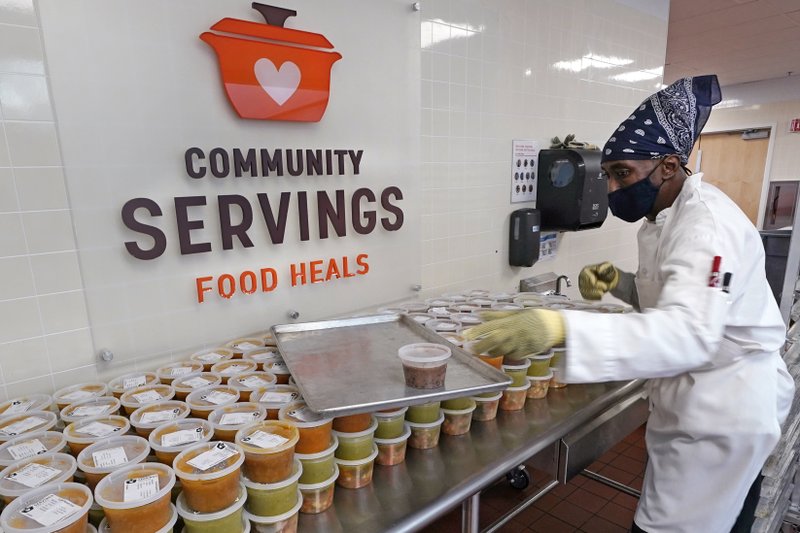
Berwick said the nonprofit Community Servings gave him weekly deliveries of dry cereal and premade meals for him to reheat. Those included soups and turkey meatloaf Berwick described as “absolutely delicious.”
“They’re not things I would make on my own for sure,” he said. “It was a gift, it was a real privilege.”
These programs typically last a few weeks or months and often focus on customers with a medical condition or low incomes who have a hard time getting nutritious food. But they aren’t limited to those groups.
Indianapolis-based Preventia Group is starting food deliveries for some employers that want to improve the eating habits of people covered under their health plans. People who sign up start working with a health coach to learn about nutrition.
Then they can either begin short-term deliveries of meals or bulk boxes of food and recipes to try. The employer picks up the cost.
It’s not just about hunger or a lack of good food, said Chief Operating Officer Susan Rider. They’re also educating people about what healthy, nutritious food is and how to prepare it.
Researchers expect coverage of food as a form of medicine to grow as insurers and employers learn more about which programs work best. Patients with low incomes may need help first with getting access to nutritional food. People with employer-sponsored coverage might need to focus more on how to use their diet to manage diabetes or improve their overall health.
A 2019 study of Massachusetts residents with similar medical conditions found that those who received meals tailored to their condition had fewer hospital admissions and generated less health care spending than those who did not.
Study author Dr. Seth Berkowitz of the University of North Carolina noted that those meals are only one method for addressing food or nutrition problems. He said a lot more can be learned “about what interventions work, in what situations and for whom.”
A lack of healthy food “is very clearly associated with poor health, so we know we need to do something about it,” Berkowitz said.
The former White House coronavirus response coordinator told CBS News’s “Face The Nation” that she saw Trump presenting graphs about the coronavirus that she did not help make. Someone inside or outside of the administration, she said, “was creating a parallel set of data and graphics that were shown to the president.”
Birx also said that there were people in the White House who believed the coronavirus was a hoax and that she was one of only two people in the White House who routinely wore masks.
Birx was often caught between criticism from Trump, who at one point called her “pathetic” on Twitter when she contradicted his more optimistic predictions for the virus, and critics in the scientific community who thought she did not do enough to combat false information about the virus from Trump, The Post’s Meryl Kornfield reports.
“Colleagues of mine that I’d known for decades — decades — in that one experience, because I was in the White House, decided that I had become this political person, even though they had known me forever,” she told CBS. “I had to ask myself every morning, ‘Is there something that I think I can do that would be helpful in responding to this pandemic?’ And it’s something I asked myself every night.”
Anthony Fauci, director of the National Institute of Allergy and Infectious Diseases, told the New York Times that Trump repeatedly tried to minimize the severity of the virus and would often chide him for not being positive enough in his statements about the virus.
Fauci also described facing death threats as he was increasingly vilified by the president’s supporters. “One day I got a letter in the mail, I opened it up and a puff of powder came all over my face and my chest,” he said. The powder turned out to be benign.
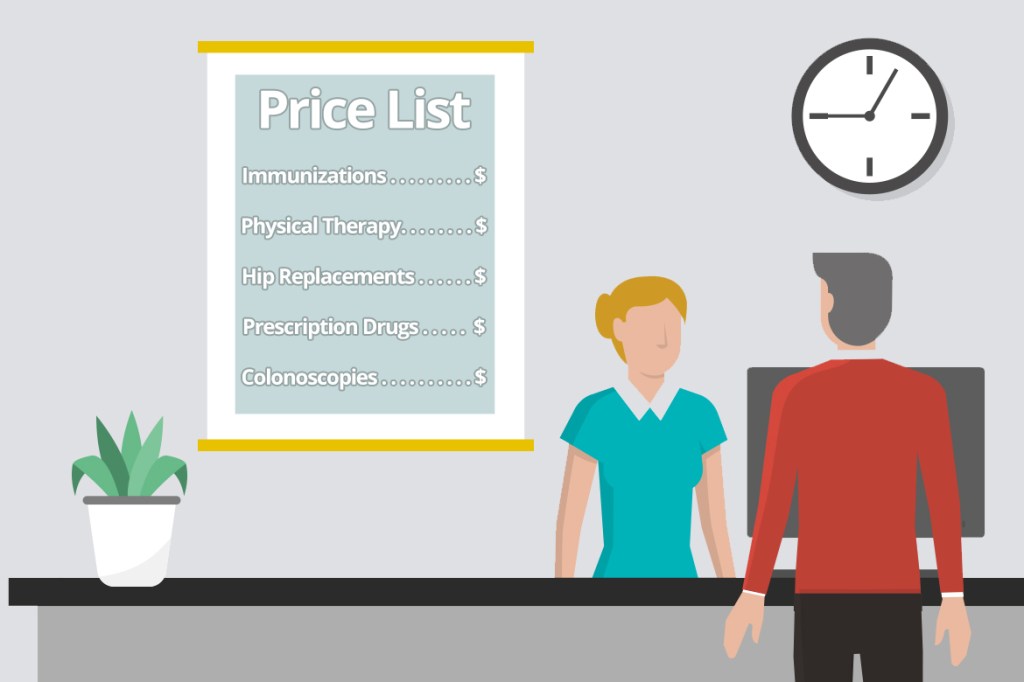
Hospitals are now required to disclose the prices they secretly negotiate with insurers.
But many are dragging their feet on the new regulations, which were passed under President Donald Trump and could very well stay in place under President Biden.
“Hospitals are playing a hide-and-seek game,” said Ge Bai, an expert on health-care pricing at Johns Hopkins Bloomberg School of Public Health. “Even with this regulation, most of them are not being fully transparent.”
Hospitals lost a bruising court battle last year to stop the rules, which require them to publish a list of prices for goods and services. The point is to bring more transparency to prices for medical goods and services — information that has long been inaccessible to consumers. The new rules were a centerpiece of Trump’s promise to inject more price transparency in the health-care system and curb surprise billing.
But Nisha Kurani, a policy analyst at the Kaiser Family Foundation who is tracking hospital responses to the new rule, said she’s seen the full gamut.
MedStar in Washington posted its prices in an Excel sheet on its website, but other hospitals only posted price estimates, uploaded files in difficult to use formats, or promised to release information only after someone inputs their insurance, Kurani said.
A Gothamist investigation found that only one of five major New York hospitals posted a list of their negotiated services to their website, and even then, not for all procedures. The fine for not complying with the new rules — $300 a day — is a drop in the bucket for many hospitals.
The Biden administration hasn’t taken any public position on the rules — and right now, officials are focused on reversing dozens of other Trump administration regulations they believe are damaging to health insurance and costs in the United States.
Revising the hospital transparency rules — if that’s even something the new administration wants to do — would likely be far down on the priority list, despite heavy lobbying by the hospital industry to suspend enforcement of the new rule.
Plus, price transparency is broadly popular among the public and was one of the planks of a joint health policy plan developed by a task force Biden formed with Sen. Bernie Sanders (I-Vt.) after the 2020 primary elections.
Molly Smith, the association’s group vice president for public policy, said many of the staff members who would normally be tasked with compiling and formatting the price data are the same people being asked to help set up patient registries and vaccine tracking systems in response to the pandemic.
“We’ve got a lot of hospitals that are at or beyond capacity,” Smith said.
A lawyer for the hospital association said that it is considering petitioning its legal case to the Supreme Court. Meanwhile, the lobbying group has been pushing the Biden administration to suspend enforcement of the new rule.
“In the past there was absolutely no power for the consumer. It was like highway robbery being committed every day by the health-care system,” said Cynthia Fisher, head of the nonprofit Patient Rights Advocate, which pushes for price transparency.
But now, Fisher says, “it’s the American consumer who is going to drive down the cost of care.”
Experts in health-care economics hotly debate whether the price transparency rules will, in fact, drive down costs. Even those who support the changes say the effect might be incremental.
“I don’t think it’s going to be an earthquake in terms of pricing, but it’s a first step in the right direction,” said Bai.
There are several reasons the new price transparency rule may not have a massive effect on hospital prices. Perhaps the biggest, and one often cited by the hospital lobby, is that most Americans are not going to pay the negotiated price for a procedure. Instead, they are likely to pay co-pays or coinsurance that amount to a fraction of this price.
This isn’t always true, of course. Those with high-deductible plans may pay the negotiated rate, and for those without insurance paying out of pocket, it can be helpful to get a peek behind the sticker price. But even for these patients, it may be challenging to extract useful information from unwieldy spreadsheets full of obscure billing codes.
Bai said that she is hopeful that third parties may make some of the pricing information easier for consumers to use. And some self-insured employers may start identifying cheaper providers and incentivizing patients to use them. The rules also require hospitals to provide cost-sharing estimates for commonly used procedures in an easily navigable format.
The market for health care has become increasingly consolidated as hospitals merge and buy up physician practices. If a hospital is the only health-care provider in town, then there’s not a whole lot patients can do about high prices, even if they think they’re unfair.
“I don’t think transparency will fundamentally change the power balance between the payer and the hospital in many markets,” Bai said.


