Healthcare groups call racism a ‘public health’ concern in wake of tensions over police brutality

https://www.fiercehealthcare.com/practices/healthcare-groups-denounce-systemic-racism-wake-tensions-over-police-brutality?mkt_tok=eyJpIjoiWmpobE5XVmlaRGd6T0dFdyIsInQiOiJsQmxnbVNxNVlISVNkczJIZkJXb3ZFZG9tVlpMblZ1XC9oVVB6SlRINzNhOXE4MWQzNk1cL3JTaDlcL2l0MGdhSnk0NUtqY1RzdThCN1wvZ1ZoVUxqOHJwZFJcL1wvK3FtS0o5NFwvSHA0WHhTUnhVNnY3bk5RNmhRQTdxYzYwclhYN3JTRW8ifQ%3D%3D&mrkid=959610

After days of protests across the world against police brutality toward minorities sparked by the killing of George Floyd in Minneapolis, healthcare groups are speaking out against the impact of “systemic racism” on public health.

“These ongoing protests give voice to deep-seated frustration and hurt and the very real need for systemic change. The killings of George Floyd last week, and Ahmaud Arbery and Breonna Taylor earlier this year, among others, are tragic reminders to all Americans of the inequities in our nation,” Rick Pollack, president and CEO of the American Hospital Association (AHA), said in a statement.

As places of healing, hospitals have an important role to play in the wellbeing of their communities. As we’ve seen in the pandemic, communities of color have been disproportionately affected, both in infection rates and economic impact,” Pollack said. “The AHA’s vision is of a society of healthy communities, where all individuals reach their highest potential for health … to achieve that vision, we must address racial, ethnic and cultural inequities, including those in health care, that are everyday realities for far too many individuals. While progress has been made, we have so much more work to do.”

The Society for Healthcare Epidemiology of America (SHEA) also decried the public health inequality highlighted by the dual crises.

“The violent interactions between law enforcement officers and the public, particularly people of color, combined with the disproportionate impact of COVID-19 on these same communities, puts in perspective the overall public health consequences of these actions and overall health inequity in the U.S.,” SHEA said in a statement. Association of American Medical Colleges (AAMC) executives called for health organizations to do more to address inequities. 

“Over the past three months, the coronavirus pandemic has laid bare the racial health inequities harming our black communities, exposing the structures, systems, and policies that create social and economic conditions that lead to health disparities, poor health outcomes, and lower life expectancy,” said David Skorton, M.D., AAMC president and CEO, and David Acosta, M.D., AAMC chief diversity and inclusion officer, in a statement.

“Now, the brutal and shocking deaths of George Floyd, Breonna Taylor, and Ahmaud Arbery have shaken our nation to its core and once again tragically demonstrated the everyday danger of being black in America,” they said. “Police brutality is a striking demonstration of the legacy racism has had in our society over decades.”

They called on health system leaders, faculty researchers and other healthcare staff to take a stronger role in speaking out against forms of racism, discrimination and bias. They also called for health leaders to educate themselves, partner with local agencies to dismantle structural racism and employ anti-racist training.


“All policy is health policy”

https://www.axios.com/newsletters/axios-vitals-8873028c-f37e-4712-a53a-ae324c56dbb6.html?utm_source=newsletter&utm_medium=email&utm_campaign=newsletter_axiosvitals&stream=top

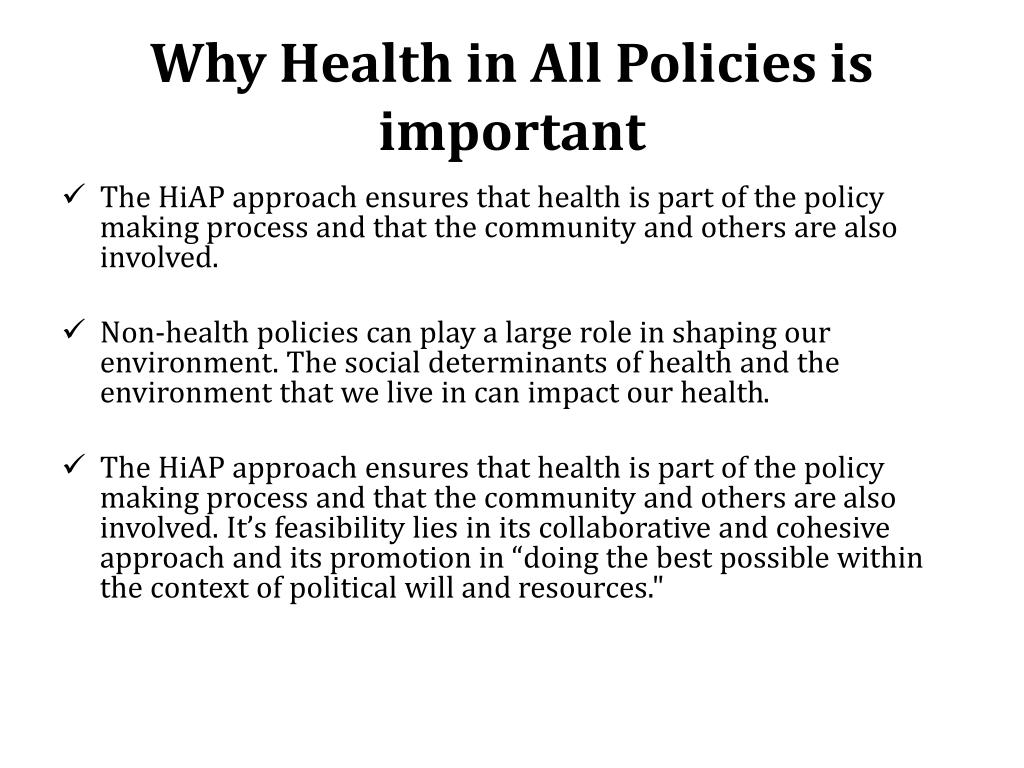
PPT - Health in All Policies PowerPoint Presentation, free ...

The effects of racism are often inseparable from black Americans’ health and well-being, as “black communities bear the physical burdens of centuries of injustice, toxic exposures, racism, and white supremacist violence,” Rachel Hardeman, Eduardo Medina and Rhea Boyd write in the New England Journal of Medicine:

Any solution to racial health inequities must be rooted in the material conditions in which those inequities thrive. Therefore, we must insist that for the health of the black community and, in turn, the health of the nation, we address the social, economic, political, legal, educational, and health care systems that maintain structural racism. Because as the Covid-19 pandemic so expeditiously illustrated, all policy is health policy…

The response to the pandemic has made at least one thing clear: systemic change can in fact happen overnight.


Rich vs. poor hospitals

https://www.axios.com/hospitals-coronavirus-inequality-segregation-f10c49eb-5ccc-4739-b2a9-254fd9a3d40e.html

Rich vs. poor hospitals | News Break

The inequalities in American health care extend right into the hospital: Cash-strapped safety-net hospitals treat more people of color, while wealthier facilities treat more white patients.

Why it matters: Safety-net hospitals lack the money, equipment and other resources of their more affluent counterparts, which makes providing critical care more difficult and exacerbates disparities in health outcomes.

The big picture: A majority of patients who go to safety-net hospitals are black or Hispanic; 40% are either on Medicaid or uninsured.

The other side: Wealthy hospitals, including many prominent academic medical centers, are “far less likely to serve or treat black and low-income patients even though those patients may live in their backyards,” said Arrianna Planey, an incoming health policy professor at the University of North Carolina.

  • An investigation by the Boston Globe in 2017 found black people in Boston “are less likely to get care at several of the city’s elite hospitals than if you are white.”
  • The Cleveland Clinic has expanded into a global icon for health care, but rarely cares for those in the black neighborhoods that surround its campus, Dan Diamond of Politico reported in 2017.

Between the lines: The way the federal government is bailing out hospitals for the revenues they’ve lost during coronavirus is exacerbating this inequality. More money is flowing to richer hospitals.

  • For example, the main hospital within University of Colorado Health has gotten $79.3 million from the government’s main “provider relief” fund — about the same amount as Cook County Health, Chicago’s public hospital system, which predominantly treats low-income black and Hispanic people. It has gotten $77.6 million from that pot.
  • The Colorado system, however, is sitting on billions of dollars in cash and investments that Chicago’s safety-net hospitals don’t have. Chicago has also seen a worse coronavirus outbreak.

The bottom line: Poor hospitals that treat minorities have had to rely on GoFundMe pages and beg for ventilators during the pandemic, while richer systems move ahead with new hospital construction plans.


66% of counties with most COVID-19 cases lack infectious disease physician

https://www.beckershospitalreview.com/infection-control/66-of-counties-with-most-covid-19-cases-lack-infectious-disease-physician.html?utm_medium=email

About 208 million Americans are living in counties with no or very few infectious disease physicians, and many of these areas have been hit hardest by COVID-19, according to a study published in Annals of Internal Medicine.

Researchers determined the density of infectious disease physicians in every U.S. county using 2017 Medicare Provider Utilization and Payment Data. They also used aggregated data from the CDC and local public health agencies to plot the rate of confirmed COVID-19 cases in each county as of May 12.

Four study findings:

1. Of the 3,142 total counties in the U.S., 79.5 percent did not have a single infectious disease physician.

2. Among 785 counties with the highest burden of COVID-19 cases, 66 percent did not have an infectious disease physician working in the county.

3. About 9.9 percent of counties had an infectious disease physician density below the national average of 1.76 physicians per 100,000 population.

4. Only 10.5 percent of counties had an infectious disease physician density above the national average.

“The deficits in our [infectious disease] physician workforce today have left us poorly prepared for the unprecedented demand ahead,” study authors said, highlighting telemedicine as a key strategy for expanding access to this speciality.

To view the full study, click here.


Providers show support amid unrest: #WhiteCoatsForBlackLives

https://www.healthcaredive.com/news/providers-show-support-amid-unrest-whitecoatsforblacklives/579020/

Dive Brief:

  • The American Hospital Association on Monday condemned what they called the “senseless killing of an unarmed black man in Minneapolis,” referring to George Floyd, who died more than a week ago after a police officer held his knee on Floyd’s neck for more than eight minutes. AHA said the group’s vision is a “society of healthy communities, where ALL individuals reach their highest potential for health.”
  • Medical societies, providers and other healthcare organizations weighed in to support peaceful protests, especially as the COVID-19 pandemic shines a light on racial inequities in access to healthcare and job security in America.
  • Health officials also expressed worry that the protest gatherings could further spread of the novel coronavirus. Minnesota Gov. Tim Walz said hospitals in the state could be overwhelmed. And some COVID-19 testing sites have been shut down for safety reasons, further exacerbating concerns.

Dive Insight:

Since protests and occasionally violent police confrontations in recent days were sparked by Floyd’s death, providers have taken to social media with notes of support and pictures of themselves taking a knee in their scrubs under the hashtag #WhiteCoatsForBlackLives.

The American Medical Association responded to ongoing unrest Friday, saying the harm of police violence is “elevated amidst the remarkable stress people are facing amidst the COVID-19 pandemic.”

Board Chair Jesse Ehrenfeld and Patrice Harris, AMA’s first African American woman to be president, continued: “This violence not only contributes to the distrust of law enforcement by marginalized communities but distrust in the larger structure of government including for our critically important public health infrastructure. The disparate racial impact of police violence against Black and Brown people and their communities is insidiously viral-like in its frequency, and also deeply demoralizing, irrespective of race/ethnicity, age, LGBTQ or gender.”

Other organizations weighed in, including CommonSpirit Health, the American Psychiatric Association, the American College of Physicians and several medical colleges.

The nascent research and data from the pandemic in the U.S. have shown people of color are more likely to die from COVID-19 than white people. The reasons behind that are myriad and complex, but many can be traced back to systemic inequality in social services and the healthcare system.

Payers, providers and other healthcare organizations have attempted to address these issues through programs targeting social determinants of health like stable housing, food security and access to transportation.

But despite these efforts over several years to recognize and document the disparities, they have persisted and in some cases widened, Samantha Artiga, director of the Disparities Policy Project at the Kaiser Family Foundation, noted in a blog post Monday.

Health disparities, including disparities related to COVID-19, are symptoms of broader underlying social and economic inequities that reflect structural and systemic barriers and biases across sectors,” she wrote.

Providers have waded into political issues affecting them before, including gun violence. Several organizations also objected to the Trump administration’s decision to cut ties with the World Health Organization in the midst of the pandemic.

The American Public Health Association in late 2018 called law enforcement violence a public health issue.


The Essence of Big Pharma


Health Equity Principles for State and Local Leaders in Responding to, Reopening and Recovering from COVID-19

https://www.rwjf.org/en/library/research/2020/05/health-equity-principles-for-state-and-local-leaders-in-responding-to-reopening-and-recovering-from-covid-19.html

Centering Health Equity in COVID-19 Response and Recovery Plans ...

Health equity means that everyone has a fair and just opportunity to be as healthy as possible. This requires removing obstacles to health such as poverty, discrimination, and their consequences, including powerlessness and lack of access to good jobs with fair pay, quality education and housing, safe environments, and health care.”

COVID-19 has unleashed a dual threat to health equity in the United States: a pandemic that has sickened millions and killed tens of thousands and counting, and an economic downturn that has resulted in tens of millions of people losing jobs—the highest numbers since the Great Depression. The COVID pandemic underscores that:

  • Our health is inextricably linked to that of our neighbors, family members, child- and adult-care providers, co-workers, school teachers, delivery service people, grocery store clerks, factory workers, and first responders, among others;
  • Our current health care, public health, and economic systems do not adequately or equitably protect our well-being as a nation; and
  • Every community is experiencing harm, though certain groups are suffering disproportionately, including people of color, workers with low incomes, and people living in places that were already struggling financially before the economic downturn.

For communities and their residents to recover fully and fairly, state and local leaders should consider the following health equity principles in designing and implementing their responses. These principles are not a detailed public health guide for responding to the pandemic or reopening the economy, but rather a compass that continually points leaders toward an equitable and lasting recovery.


Collect, analyze, and report data disaggregated by age, race, ethnicity, gender, disability, neighborhood, and other sociodemographic characteristics.

Pandemics and economic recessions exacerbate disparities that ultimately hurt us all. Therefore, state and local leaders cannot design equitable response and recovery strategies without monitoring COVID’s impacts among socially and economically marginalized groups.¹ Data disaggregation should follow best practices and extend not only to public health data on COVID cases, hospitalizations, and fatalities, but also to: measures of access to testing, treatment, personal protective equipment (PPE), and safe places to isolate when sick; receipt of social and economic supports; and the downstream consequences of COVID on well-being, ranging from housing instability to food insecurity.

Geographic identifiers would allow leaders and the public to understand the interplay between place and social factors, as counties with large black populations account for more than half of all COVID deaths, and rural communities and post-industrial cities generally fare worse in economic downturns. Legal mandates for data disaggregation are proliferating, but 11 states are still not reporting COVID deaths by race; 16 are not reporting by gender; and 26 are not reporting based on congregate living status (e.g., nursing homes, jails). Only three are reporting testing data by race and ethnicity.

While states and cities can do more, the federal government should also support data disaggregation through funding and national standards.

Include in decision-making the people most affected by health and economic challenges, and benchmark progress based on their outcomes.

Our communities are stronger, more stable, and more prosperous when every person, including the most disadvantaged residents, is healthy and financially secure. Throughout the response and recovery, state and local leaders should ask: Are we making sure that people facing the greatest risks have access to PPE, testing and treatment, stable housing, and a way to support their families? And, are we creating ways for residents—particularly those hardest hit—to meaningfully participate in and shape the government’s recovery strategy?

Accordingly, policymakers should create space for leaders from these communities to be at decision-making tables and should regularly consult with community-based organizations that can identify barriers to accessing health and social services, lift up grassroots solutions, and disseminate public health guidance in culturally and linguistically appropriate ways. For example, they could recommend trusted, accessible locations for new testing sites and advise on how to diversify the pool of contact tracers, who will be crucial to tamping down the spread of infection in reopened communities. They could also collaborate with government leaders to ensure that all people who are infected with coronavirus (or exposed to someone infected) have a safe, secure, and acceptable place to isolate or quarantine for 14 days. Key partners could include community health centers, small business associations, community organizing groups, and workers’ rights organizations, among others. Ultimately, state and local leaders should measure the success of their response based not only on total death counts and aggregate economic impacts but also on the health and social outcomes of the most marginalized.

Establish and empower teams dedicated to promoting racial equity in response and recovery efforts.

Race or ethnicity should not determine anyone’s opportunity for good health or social well-being, but, as COVID has shown, we are far from this goal. People of color are more likely to be front-line workers, to live in dense or overcrowded housing, to lack health insurance, and to experience chronic diseases linked to unhealthy environments and structural racism. Therefore, state and local leaders should empower dedicated teams to address COVID-related racial disparities, as several leaders, Republican and Democrat, have already done.

To be effective, these entities should: include leaders of color from community, corporate, academic, and philanthropic sectors; be integrated as key members of the broader public health and economic recovery efforts; and be accountable to the public. These teams should foster collaboration between state, local, and tribal governments to assist Native communities; anticipate and mitigate negative consequences of current response strategies, such as bias in enforcement of public health guidelines; address racial discrimination within the health care system; and ensure access to tailored mental health services for people of color and immigrants who are experiencing added trauma, stigma, and fear. Ultimately, resources matter. State and local leaders must ensure that critical health and social supports are distributed fairly, proportionate to need, and free of undue restrictions to meet the needs of all groups, including black, Latino, Asian, and Indigenous communities.


Proactively identify and address existing policy gaps while advocating for further federal support.

The Congressional response to COVID has been historic in its scope and speed, but significant gaps remain. Additional federal resources are needed for a broad range of health and social services, along with fiscal relief for states and communities facing historically large budget deficits due to COVID. Despite these challenges, state and local leaders must still find ways to take targeted policy actions. The following questions can help guide their response.

Who is left out?Inclusion of all populations will strengthen the public health response and lessen the pandemic’s economic fallout for all of society, but federal actions to date have not included all who have been severely harmed by the pandemic. As a result, many states and communities have sought to fill gaps in eviction protections and paid sick and caregiving leave. Others are extending support to undocumented immigrants and mixed-status families through public-private partnerships, faith-based charities, and community-led mutual aid systems. Vital health care providers, including safety net hospitals and Indian Health Service facilities, have also been disadvantaged and need targeted support.

Will protections last long enough?Many programs, such as expanded Medicaid funding, are tied to the federal declaration of a public health emergency, which will likely end before the economic crisis does. Other policies, like enhanced unemployment insurance and mortgage relief, are set to expire on arbitrary dates. And still others, such as stimulus checks, were one-time payments. Instead, policy extensions should be tied to the extent of COVID infection in a state or community (or its anticipated spread) and/or to broader economic measures such as unemployment. This is particularly important as communities will likely experience re-openings and closings over the next six to 12 months as COVID reemerges.

Have programs that meet urgent needs been fully and fairly implemented?Allexisting federal resources should be used in a time of great need. For example, additional states should adopt provisions that would allow families with school-age children to receive added Supplemental Nutrition Assistance Program (SNAP) benefits, and more communities need innovative solutions to provide meals to young children who relied on schools or child care providers for breakfast and lunch. States should also revise eligibility, enrollment, and recertification processes that deter Medicaid use by children, pregnant women, and lawfully residing immigrants.

Invest in strengthening public health, health care, and social infrastructure to foster resilience.

Health, public health, and social infrastructure are critical for recovery and for our survival of the next pandemic, severe weather event, or economic downturn. A comprehensive public health system is the first line of defense for rural, tribal, and urban communities. While a sizable federal reinvestment in public health is needed, states and communities must also reverse steady cuts to the public health workforce and laboratory and data systems.

Everyone in this country should have paid sick and family leave to care for themselves and loved ones; comprehensive health insurance to ensure access to care when sick and to protect against medical debt; and jobs and social supports that enable families to meet their basic needs and invest in the future. As millions are projected to lose employer-sponsored health insurance, Medicaid expansion becomes increasingly vital for its proven ability to boost health, reduce disparities, and provide a strong return on investment. In the longer term, policies such as earned income tax credits and wage increases for low-wage workers can help secure economic opportunity and health for all. Finally, states and communities should invest in affordable, accessible high-speed internet, which is crucial to ensuring that everyone—not just the most privileged among us—is informed, connected to schools and jobs, and engaged civically.

These principles can guide our nation toward an equitable response and recovery and help sow the seeds of long-term, transformative change. States and cities have begun imagining and, in some cases, advancing toward this vision, putting a down payment on a fair and just future in which health equity is a reality. Returning to the ways things were is not an option.

State-by-state breakdown of 354 rural hospitals at high risk of closing

https://www.beckershospitalreview.com/finance/state-by-state-breakdown-of-354-rural-hospitals-at-high-risk-of-closing.html?utm_medium=email

What Rural Hospital Closures Mean for EMS Professionals

Twenty-five percent of the 1,430 rural hospitals in the U.S. are at high risk of closing unless their finances improve, according to an annual analysis from Guidehouse, a consulting firm. 

The 354 rural hospitals at high risk of closing are spread across 40 states and represent more than 222,000 annual discharges. According to the analysis, 287 of these hospitals — 81 percent — are considered highly essential to the health and economic wellbeing of their communities.

Several factors are putting rural hospitals at risk of closing, according to the analysis, which looked at operating margin, days cash on hand, debt-to-capitalization ratio, current ratio and inpatient census to determine the financial viability of rural hospitals. Declining inpatient volume, clinician shortages, payer mix degradation and revenue cycle management challenges are among the factors driving the rural hospital crisis.

The Guidehouse study analyzed the financial viability of rural hospitals prior to the COVID-19 pandemic, and the authors noted that the rural hospital crisis could significantly worsen due to the pandemic or any downturn in the economy. 

Here are the number and percentage of rural hospitals at high risk of closing in each state based on the analysis:

Tennessee
Rural hospitals at high risk of closing: 19 (68 percent)

Alabama
Rural hospitals at high risk of closing: 18 (60 percent)

Oklahoma
Rural hospitals at high risk of closing: 28 (60 percent)

Arkansas
Rural hospitals at high risk of closing: 18 (53 percent)

Mississippi
Rural hospitals at high risk of closing: 25 (50 percent)

West Virginia
Rural hospitals at high risk of closing: 9 (50 percent)

South Carolina
Rural hospitals at high risk of closing: 4 (44 percent)

Georgia
Rural hospitals at high risk of closing: 14 (41 percent)

Kentucky
Rural hospitals at high risk of closing: 18 (40 percent)

Louisiana
Rural hospitals at high risk of closing: 11 (37 percent)

Maine
Rural hospitals at high risk of closing: 7 (33 percent)

Indiana
Rural hospitals at high risk of closing: 8 (31 percent)

Kansas
Rural hospitals at high risk of closing: 26 (31 percent)

New Mexico
Rural hospitals at high risk of closing: 3 (30 percent)

Michigan
Rural hospitals at high risk of closing: 13 (29 percent)

Missouri
Rural hospitals at high risk of closing: 10 (26 percent)

Virginia
Rural hospitals at high risk of closing: 5 (25 percent)

Oregon
Rural hospitals at high risk of closing: 4 (24 percent)

California
Rural hospitals at high risk of closing: 6 (23 percent)

North Carolina
Rural hospitals at high risk of closing: 6 (23 percent)

Florida
Rural hospitals at high risk of closing: 2 (22 percent)

North Dakota
Rural hospitals at high risk of closing: 7 (21 percent)

Ohio
Rural hospitals at high risk of closing: 6 (20 percent)

Vermont
Rural hospitals at high risk of closing: 2 (20 percent)

Idaho
Rural hospitals at high risk of closing: 4 (19 percent)

Pennsylvania
Rural hospitals at high risk of closing: 4 (19 percent)

Washington
Rural hospitals at high risk of closing: 5 (18 percent)

Wyoming
Rural hospitals at high risk of closing: 3 (18 percent)

Texas
Rural hospitals at high risk of closing: 14 (16 percent)

Colorado
Rural hospitals at high risk of closing: 4 (14 percent)

Illinois
Rural hospitals at high risk of closing: 7 (14 percent)

Montana
Rural hospitals at high risk of closing: 7 (14 percent)

Nebraska
Rural hospitals at high risk of closing: 8 (13 percent)

New York
Rural hospitals at high risk of closing: 4 (13 percent)

Iowa
Rural hospitals at high risk of closing: 9 (12 percent)

Minnesota
Rural hospitals at high risk of closing: 8 (11 percent)

Alaska
Rural hospitals at high risk of closing: 1 (10 percent)

Arizona
Rural hospitals at high risk of closing: 1 (10 percent)

New Hampshire
Rural hospitals at high risk of closing: 1 (9 percent)

Wisconsin
Rural hospitals at high risk of closing: 5 (9 percent)


Medicaid nearing ‘eye of the storm’ as newly unemployed look for coverage

https://www.fiercehealthcare.com/payer/medicaid-nearing-eye-storm-as-newly-unemployed-look-for-coverage?mkt_tok=eyJpIjoiTXpaa1pEa3pOVGN5T1RnMiIsInQiOiJNbUdDbys5YmFjZDh2MjB2WTd6T0ZRTUg1cGlIYnAyTjNhdzBHdnpEblpZVGxjZEpQM0xPSEFvVG9RdGJQbzdcL21KcmxGV2Vkb1RzWTQ4TnlQQlcxU1BIMXkrZEFMRWwxUDZpTGdpQVlpMVJMR01CRWFDMk1OSGpRSDlLK3RNUTEifQ%3D%3D&mrkid=959610
Medicaid nearing 'eye of the storm' as newly unemployed look for ...

As the coronavirus roils the economy and throws millions of Americans out of work, Medicaid is emerging as a default insurance plan for many of the newly unemployed. That could produce unprecedented strains on the vital health insurance program, according to state officials and policy researchers.

Americans are being urged to stay home and practice “social distancing” to prevent the spread of the virus, causing businesses to shutter their doors and lay off workers.

The Labor Department reported Thursday that more than 6.6 million people signed up for unemployment insurance during the week that ended March 28. This number shattered the record set the previous week, with 3.3 million sign-ups. Many of these newly unemployed people may turn to Medicaid for their families.

Policymakers have often used Medicaid to help people gain health coverage and healthcare in response to disasters such as Hurricane Katrina, the water crisis in Flint, Michigan, and the 9/11 terrorist attacks. But never has it faced a public health crisis and economic emergency in which people nationwide need its help all in virtually the same month.

“Medicaid is absolutely going to be in the eye of the storm here,” said Joan Alker, executive director of the Georgetown University Center for Children and Families. “It is the backbone of our public health system, our public coverage system, and will see increased enrollment due to the economic conditions.”

Meeting those needs will require hefty investments―both in money and manpower.

Medicaid—which is run jointly by the states and federal government and covers about 70 million Americans―is already seeing early application spikes. Because insurance requests typically lag behind those for other benefits, the numbers are expected to grow in the coming months.

“We have been through recessions in the past, such as in 2009, and saw what that meant,” said Matt Salo, who heads the National Association of Medicaid Directors. “We are going to see that on steroids.”

The majority of states have expanded their Medicaid programs since 2014 to cover more low-income adults under a provision in the Affordable Care Act (ACA). That may help provide a cushion in those areas. In the 14 states that have chosen not to expand, many of the newly unemployed adults will not be eligible for coverage.

It’s possible the pandemic could change the decision-making calculus for non-expansion states, Salo said. “The pandemic is like a punch in the mouth.”

But even without expansion in those states, the Medicaid rolls could increase with more children coming into the system as their families’ finances deteriorate. Many states don’t have the resources or systems in place to meet the demand.

“It is going to hit faster and harder than we’ve ever experienced before,” Salo said.

The unique circumstances of social distancing impose new challenges for those whose jobs are to enroll people for coverage. In California, where more than a million people have filed for unemployment insurance since March 13, much of the workforce that would typically be signing people up and processing their paperwork is now working from home, which adds a layer of complexity in terms of accessing files and documents, and can inhibit communication.

“It’s going to be certainly more difficult than it was under the [2008] recession,” said Cathy Senderling-McDonald, deputy executive director for the County Welfare Directors Association of California. She said that although strides have been made in the past decade to set up better online forms and call centers, it will still be a heavy lift to get people enrolled without seeing them in person.

In some states, the challenges to the system are already noticeable.

Utah, for instance, has seen a 46% increase in applications for Medicaid. (These applications can be for individuals or families.) In March 2019, about 14,000 people applied. This March, it was more than 20,400.

“Our services are needed now more than ever,” said Muris Prses, assistant director of eligibility services for the Utah Department of Workforce Services, which processes Medicaid enrollment. The state typically takes 15 days to determine whether someone is eligible, he said, though that will increase by several days because of the surge in applicants and some staff working at home.

In Nevada, where the hotel- and casino-dominated economy has been hit particularly hard, applications for public benefits programs, including food stamps and Medicaid, skyrocketed from 200 a day in February to 2,000 in mid-March, according to the state Department of Health and Human Services. The volume of calls to a consumer hotline for Medicaid and health coverage questions is four times the regular amount.

In Ohio, the number of Medicaid applications has already exceeded what’s typical for this time of year. The state expects that figure to continue to climb.

States that haven’t yet seen the surge warned that it’s almost certainly coming. And as layoffs continue, some are already experiencing the strains on the system, including processing times that could leave people uninsured for months, while Medicaid applications process.

For 28-year-old Kristen Wolfe, of Salt Lake City, who lost her job and her employer-sponsored health insurance March 20, it’s a terrifying time.

Wolfe, who has lupus—an autoimmune disorder that requires regular doctor appointments and prescription medication―quickly applied for Medicaid. But after she filled in her details, including a zero-dollar income, she learned the decision on her eligibility could take as long as 90 days. She called the Utah Medicaid agency and, after being on hold for more than an hour, was told they did not know when she would hear back.

“With my health, it’s scary to leave things in limbo,” said Wolfe, who used her almost-expired insurance last week to order 90-day medication refills, just in case. “I am pretty confident I will qualify, but there is always the ‘What if I don’t?’”

Others have reported smoother sailing, though.

Jen Wittlin, 33—who, until recently, managed the now-closed bar in Providence, Rhode Island’s Dean Hotel―qualified for Medicaid coverage starting April 1. She was able to sign up online after waiting about half an hour on the phone to get help answering specific questions. Once she receives a check for unemployment insurance, the state will reassess her income—currently zero―to see if she still qualifies.

“It was all immediate,” she said.

In fact, she said, she is now working to help newly uninsured former colleagues also enroll in the program, using the advice the state gave her.

In California, officials are trying to reassign some employees—who are now working remotely―to help with the surge. But the system to determine Medicaid eligibility is complicated and requires time-intensive training, Senderling-McDonald said. She’s trying to rehire people who’ve retired and relying on overtime from staffers.

“It’s hard to expand this particular workforce very, very quickly by a lot,” she said. “We can’t just stick a new person in front of a computer and tell them to go. They’re going to screw everything up.”

The move away from in-office sign-ups is also a disadvantage for older people and those who speak English as a second language, two groups who frequently felt more comfortable enrolling in person, she added.

Meanwhile, increasing enrollment and the realities of the coronavirus will likely create a need for costly medical care across the population.

“What about when we start having many people who may be in the hospital, in ICUs or on ventilators?” said Maureen Corcoran, the director of Ohio’s Medicaid program. “We don’t have any specific answers yet.”

These factors will hit just as states―which will experience shrinking tax revenue because of the plunging economy—have less money to pay their share of the Medicaid tab.

“It’s all compounded,” said Lisa Watson, a deputy secretary at Pennsylvania’s Department of Human Services, which oversees Medicaid.

The federal government pays, on average, about 61% of the costs (PDF) for traditional Medicaid and about 90% of the costs for people who joined the program through the ACA expansion. The rest comes from state coffers. And, unlike the federal government, states are constitutionally required to balance their budgets. The financial squeeze could force cuts in other areas, like education, child welfare or law enforcement.

On March 18 (PDF), Congress agreed to bump up what Washington pays by 6.2 percentage points (PDF) as part of the second major stimulus bill aimed at the economic consequences of the pandemic. That will barely make a dent, Salo argued.

“The small bump is good, and we are glad it’s there, but in no way is that going to be sufficient,” he said.


How hospital capacity varies dramatically across the country

https://www.healthcaredive.com/news/how-hospital-capacity-varies-dramatically-across-the-country/574892/

POPULATION                                    BED COUNT 

20M                      10M people                            0                          0                         25k beds                     50k

LUMEDX (@Lumedx) | Twitter

Healthcare Dive analyzed data to paint a picture of hospital capacity, pinpointing areas with a higher ratio of people to beds and signaling where there is a risk for capacity issues.

Fewer hospital beds in select regions make them especially vulnerable to the novel coronavirus as it’s expected to spread from big city hot spots to other areas of the country.

As the U.S. has become the next epicenter of the outbreak, hospitals are preparing for the worst. The pathogen threatens to overwhelm their facilities and resources, especially if mitigation efforts fail to blunt a surge of COVID-19 patients.

The latest figures from the Johns Hopkins Coronavirus Resource Center report more than 143,000 confirmed cases in the U.S. and more than 2,500 deaths as of Monday.

The New York City metro area has the most beds compared to the rest of the country. Still, that is not enough capacity to meet the crushing demand.

To illustrate hospital capacity across the country, Healthcare Dive sought to compare bed counts to population, and found population size isn’t always indicative of the number of beds available.

Population size is not always indicative of bed capacity in the top 20 metro areas

Below are the 20 most populated metro areas in the U.S., sorted by population. As you move down the chart, population size decreases, but bed counts do not always. Areas like D.C. and Seattle have fewer beds relative to population size, while Miami and Philadelphia have more beds relative to population.

Some areas like Washington, D.C., have relatively fewer beds compared to their population, while others like Miami, Philadelphia and St. Louis have more beds relative to the number of people in the region.

Some hospitals are turning to hotels and tents, and Vice President Mike Pence has said he’s working with the Department of Defense to get field hospitals and other options online.

Still, researchers cautioned there is a long way to go to meet projected demands. If America’s healthcare system was able to free up half of its beds by discharging patients, the country would still need three times as many beds, Ashish Jha, director of the Harvard Global Health Institute, told reporters during a call on Tuesday. That projection assumes 40% of Americans get infected over the next six months.

“What we know right now is that capacity to manage patients varies dramatically from community to community,” Jha said.

Areas with the highest ratio of people per bed

To paint a picture of hospital capacity across the country, Healthcare Dive used CMS cost reports and population data to calculate the ratio of people per bed in metropolitan areas and regions. In other words, how many residents are there for a single bed? It’s a way to pinpoint areas with a higher ratio of people to beds, signaling areas potentially at risk for capacity issues.

HOW HEALTHCARE DIVE ANALYZED HOSPITAL BED COUNTS

Hospitals certified by Medicare are required to submit annual cost reports to CMS, which include a vast array of information from bed counts to financials. Hospital beds analyzed in this report do not include all the beds a hospital may have reported to CMS.

Healthcare Dive excluded nursery, labor and delivery beds and psychiatric hospitals. In addition, due to the inconsistent reporting in ICU beds, Healthcare Dive did not highlight areas with higher ratios of people per ICU bed. It’s also important to note that some hospitals may have opened or closed since these latest CMS cost reports were published.

Healthcare Dive analyzed specific geographic areas, in this case metropolitan CBSAs, or core-based statistical areas, which are geographic areas that consist of an urban center of 50,000 people or more.

In the U.S., about 42% of the more than 143,000 cases are concentrated in New York, overwhelming available resources. Still, case counts are swelling in areas outside of New York including Chicago, Detroit and New Orleans. Indicating the outbreak is likely to be widespread in America.

Healthcare Dive found the Bloomsburg-Berwick, Pennsylvania, area has the lowest ratio in the nation with 86 people for each bed. Most areas have much higher ratios, the median being around 400 people per bed when comparing CBSAs. The metro area of New York City sits in the middle with 405 people per bed.

The Greeley, Colorado area has the nation’s highest ratio of people per bed, according to the data. About 60 miles northeast of Denver and with a population of more than 314,000, there are 1,397 people for every one hospital bed in the Greeley area.

The CMS data shows a total of 225 hospital beds in the Greeley area, operated by Banner Health’s North Colorado Medical Center.

However, a new 50-bed hospital opened recently and was not included in the most recent cost reports. It is operated by UCHealth.

Still, while those numbers may seem grim, Colorado’s hospital leaders cautioned that the state can and is working to tap into additional resources, citing freestanding emergency rooms and ambulatory surgical centers.

It’s imperative to look beyond just one locale or one hospital and consider the resources of the state as a whole, Colorado’s hospital leaders told Healthcare Dive.

Colorado has a total of 10,293 hospital beds (12,558 licensed beds) and at least 973 ICU beds, the Colorado Hospital Association said.

“It’s going to take the whole system for us to get through this,” Julie Lonborg, senior vice president at the Colorado Hospital Association, told Healthcare Dive.

There are only one or two hospitals in almost all of the 10 regions with the highest ratio of people per bed. Rounding out the top 10 areas with the highest ratio of people per bed following Greeley, include Albany, Oregon; Gettysburg, Pennsylvania; Merced, California; California-Lexington Park, Maryland; Bremerton-Silverdale, Washington; Lawrence, Kansas; Monroe, Michigan; Provo-Orem, Utah; and Ogden-Clearfield, Utah.

The data shows the total bed capacity in a region, but does not take into account the patients currently occupying those beds. However, in an effort to free up existing beds, many hospitals have halted elective surgeries, including in Greeley to free up resources and staff to be able to respond to a potential surge.

“UCHealth Greeley Hospital is caring for a large number of patients at this time, and by working together as a large system, UCHealth is able to redirect patients and admissions to other facilities to help even out our capacities at this and other hospitals,” Kelly Tracer, a spokesperson for the hospital, told Healthcare Dive.

In fact, many hospitals plan to lean on the larger systems they’re a part of to shuffle resources to respond to the pandemic.

In Gettysburg, Pennsylvania, there are 76 hospital beds and 1,353 people per hospital bed. WellSpan Health, which operates Gettysburg Hospital, said it plans to coordinate its response by using its eight other hospitals in different areas and some 200 locations.

“We are taking a comprehensive approach to this issue, developing a network of more than 10 outdoor testing locations across our five-county region and temporarily repurposing several of our outpatient medical practices to care locations dedicated solely for the treatment of patients who are suspected or confirmed to have COVID-19 and have non-emergency medical needs,” according to a statement WellSpan Health provided Healthcare Dive.

Other locations with the highest people per bed ratio are converting existing space into dedicated areas to treat COVID-19 patients to prepare for a crush of patients, including in Lawrence, Kansas, with 893 people for every bed.

Lawrence Memorial Hospital in Lawrence, Kansas, about 40 miles west of Kansas City, is prepared to up its capacity to 205, LMH said in a statement. The hospital reported 136 beds to CMS but said it is licensed for 174.

“At any given time we have upwards of 100 patients,” Traci Hoopingarner, vice president of clinical care and chief nursing officer for LMH Health, said in a statement.

As New York continues to grapple with mounting cases, leaders are issuing dire warnings to the rest of the country.

“New York is the canary in the coal mine. What happens to New York is going to wind up happening in California and Washington state and Illinois. It’s just a matter of time,” New York Gov. Andrew Cuomo said.

Below is an interactive table of hospital bed availability in different metros across the country. Search for your metro area to find the corresponding hospital capacity.