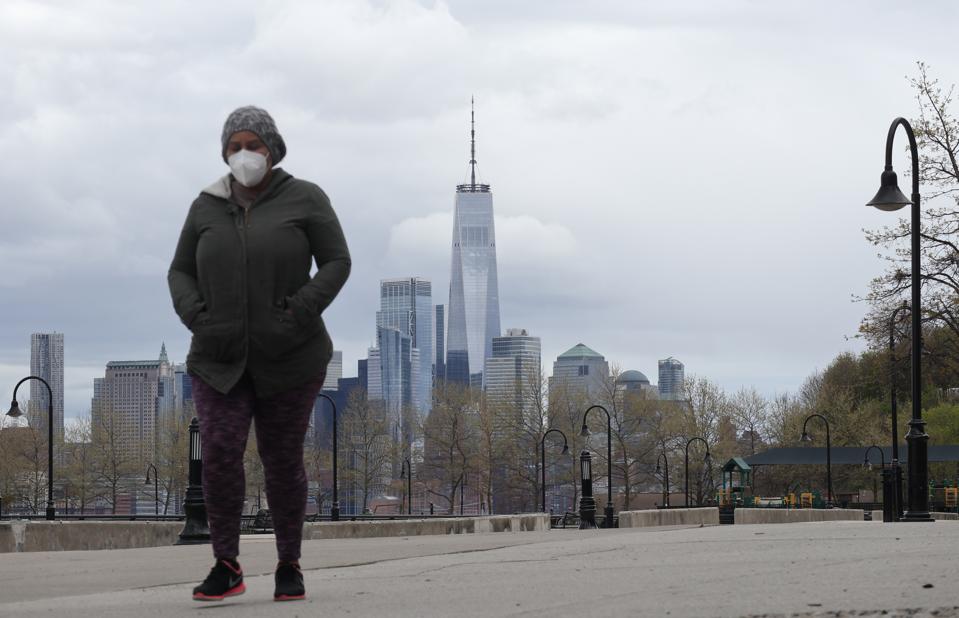
U.S. Coronavirus Cases Passes 1 Million–A Third Of All Cases Globally

https://www.forbes.com/sites/mattperez/2020/04/28/us-coronavirus-cases-passes-1-million–a-third-of-all-cases-globally/?utm_source=newsletter&utm_medium=email&utm_campaign=dailydozen&cdlcid=5d2c97df953109375e4d8b68#5526ebe370a5

U.S. Coronavirus Cases Passes 1 Million--A Third Of All Cases Globally

TOPLINE

Confirmed cases of the COVID-19 coronavirus passed 1 million in the United States Tuesday, making up a third of all global cases, according to data compiled by Johns Hopkins University.

KEY FACTS

Of the 1,002,498 Americans who have been confirmed to have contracted the disease, 57,266 have died while 112,315 have recovered.

The new milestone comes as some states announce plans for reopening, something President Trump has been adamantly pushing for as 26 million Americans lose their jobs during the pandemic.

New York, the epicenter of the outbreak with 295,106 cases, saw its hospital admittance number drop below 1,000 for the first time in a month on Monday, with Governor Andrew Cuomo detailing a plan to start easing stay-at-home restrictions in parts of the state starting as early as May 15.

Georgia Governor Brian Kemp, however, with the state’s 24,604 cases, has drawn criticism from health officials and even Trump for allowing businesses like restaurants, hair salons and gyms to reopen before seeing a sustained reduction in cases.

Around 5.6 million people, or about 1.7% of the population, have been tested for the coronavirus, but researchers at Harvard Global Health Institute report that the country will need to perform 3.5 million tests per week at minimum before reopening.

Dr. Anthony Fauci, the country’s top infectious disease doctor, warned Tuesday during an interview that “it’s inevitable that we will have a return of the virus,” and that states reopening prematurely could cause “a rebound to get us right back in the same boat that we were in a few weeks ago.”

BIG NUMBER

87%. That’s how many Americans support current social distancing restrictions, or even want stronger measures in place, according to an Associated Press-NORC Center for Public Affairs Research survey conducted from April 16-20.

KEY BACKGROUND

The U.S. reached 500,000 cases on April 10 and 100,000 on March 27. The model prefered by the federal government increased the projected death count from the coronavirus for the second time in a week on Tuesday, now projecting 74,000 total deaths from the virus.

TANGENT

Germany has been a leader in mitigating the spread of the coronavirus, but after easing some lockdown restrictions this past week, the country saw an uptick in infection rate.


COVID-19 brings largest quarterly GDP drop since last recession

https://www.beckershospitalreview.com/finance/covid-19-brings-largest-quarterly-gdp-drop-since-last-recession.html?utm_medium=email

GDP sinks 4.8% in the first quarter, biggest drop since 2008 and ...

Gross domestic product in the U.S. fell 4.8 percent in the first quarter of 2020, the biggest drop the nation’s economy has seen since the last recession in 2008, according to The Wall Street Journal.

The downturn reflects how shutdowns of businesses and schools and social distancing, which started in the final three weeks of the first quarter, affected the U.S. economy. According to The Journal, many economists believe the U.S. is now in a recession, as layoffs and declines across industries hit unprecedented levels.

With the economy largely shut down in April, economists are expecting a bigger drop-off in economic activity in the second quarter of this year. A few states have started to slowly reopen their economies, but many still have social-distancing restrictions in place that extend through May.


Healthcare CFOs weigh-in on the challenges ahead

https://www.pwc.com/us/en/library/covid-19/pwc-covid-19-cfo-pulse-survey.html

What CFOs think about the economic impact of COVID-19

How finance leaders see a return to work

Business perspectives on what it will take to shift from crisis mode are solidifying. US finance leaders are focused on shoring up financial positions, as US businesses head into a period of even more operational complexity while they orchestrate a safe return to the workplace. Back-to-work playbooks put workforce health first, as companies set course for a phased-in return to the workplace that will not be uniform across the US or internationally, findings from the survey show. Returning employees and customers are going to experience a work environment that will differ in marked ways as a result. Another change likely to endure post-crisis is the strong role corporate leaders have taken within their communities, placing a renewed emphasis on environmental, social and governance (ESG) efforts going forward.

The actions CFOs are taking show how US businesses continue to adjust to very difficult current conditions with an eye toward an evolving post-COVID world. The level of concern related to the crisis is holding steady. It is high but stabilizing, with 72% of respondents reporting that COVID-19 has the potential for “significant impact” to their business operations vs. 74% two weeks ago.

Key findings

Back-to-work playbooks reshape how jobs performed
49% say remote work is here to stay for some roles, as companies plan to alternate crews and reconfigure worksites.

Protecting people top of mind
77% plan to change safety measures like testing, while 50% expect higher demand for enhanced sick leave and other policy protections.

Substantive impacts expected in 2020 results
Half of all respondents (53%) are projecting a decline of at least 10% in company revenue and/or profit this year.

Cost pressures intensify
A third (32%) expect layoffs to occur, as CFOs continue to target costs, while 70% consider deferring or canceling planned investments.

Economic events shaping CFO response last week

This survey, our fourth since emergency lockdowns took effect in the US, reflects the views of 305 US finance leaders during the week of April 20. It was a week when oil futures traded below $0 as energy markets confronted downshifting global demand, Congress replenished emergency funding of $480 billion for small firms and healthcare systems, and everyone heard the call to get ready to go back to work as the US and Europe firmed up plans to ease quarantines.

Post-crisis world taking shape in plans to reboot the workplace

Health and safety are top priorities for leaders as they prepare to bring people back to on-site work. More than three-quarters (77%) are putting new safety measures in place, while others are taking steps to promote physical distancing, such as reconfiguring workspaces (65%). Findings also show where the virus may have longer-lasting impact on ways of working. Half (49%) of companies say they’re planning to make remote work a permanent option for roles that allow. That’s even higher (60%) among financial services organizations.

Takeaways

Among the small percentage of companies that are beginning to bring people back, returning to work will not mean a return to normal. Companies should consider how to help frontline managers lead with empathy, to communicate transparently and make decisions quickly so employees understand where they stand, have access to the resources available to them, and can share feedback to ensure they feel safe and get what they need. Tools such as workforce location tracking and contact tracing can help support employees with suspected or confirmed infections, while also helping to identify the level of risk exposure. Companies looking to make remote work a permanent option will need to enable leaders to manage a blended workforce of on-site and remote workers during the next 12 to 18 months.

Given that many people may be wary of returning to on-site work, there’s an opportunity for companies to create more targeted benefits to help make the transition easier. Paid sick leaves and worker protections, help with childcare, private transportation to and from work, or other benefits could help employees who may need extra flexibility or who want additional support as they prepare to come back.

Forecasting substantive impacts on 2020 performance

A majority of respondents (80%) continue to expect a decline in revenues and/or profits in 2020. Projections by sector vary, with consumer markets likely the hardest hit: one-third (32%) of CFOs expect a 25% or greater decline in revenues and/or profits this year, compared to 24% of respondents in all sectors.

Takeaways

Outlooks for financial results have held relatively steady in the survey over the last month, and are probably indicative of actual impact. Companies have had the time to evaluate the effects. CFO projections for declining revenue and profits coincide with a widening realization that the US economy is in recession. Since mid-March, jobless claims have soared past 26 million, and Congress passed relief packages of $2.5 trillion. CFOs are evaluating a wide range of scenarios that cover the health situation, the shape of the economic recovery, the spillover into the financial markets, and the resulting impacts on their business. This crisis is setting a new benchmark standard for “unknowable.”

Cost pressures intensifying

CFOs are considering additional ways to scale back on planned investment and/or other fixed costs amid volatility in demand. A third (32%) expect layoffs to occur in the next month, up from 26% two weeks ago. Protecting cash and liquidity positions is paramount. Financial impacts of COVID-19, including effects on liquidity and capital resources, remain the top concern of CFOs (71%). Over half (56%) say they are changing company financing plans, up from 46% two weeks ago.

Among other actions, 43% plan to adjust guidance, which is consistent with responses two weeks ago. This figure will likely increase as companies go through the earnings season over the next two to three weeks. Separately, 91% of respondents are planning to include a discussion of COVID-19 in external reporting. Depending on the type of company, this can mean inclusion in financial statements and/or in risk factors and MD&A results of operations, earnings release or MD&A liquidity sections.

Takeaways

Many CFOs have focused on how they can manage their cash pressures to ride out the crisis. Common approaches have included stop-gap measures, such as hiring freezes and tightening controls on discretionary costs to put an end to travel and events, or the use of contractors. Findings show that these types of cost actions are likely to continue, and they remain at the top of the CFO agenda.

Of those who say they’re considering deferring or canceling planned investments, 80% are considering facilities and general capital expenditures. At the same time, investment programs in areas that are considered important to future growth — including digital transformations, customer experience, or cybersecurity and privacy — are less likely to be targeted. CFOs will increasingly look for ways to prioritize costs in these areas, as businesses grow more confident in recovery prospects — even though current demand is subdued.

Priorities to de-risk supply chains

As companies continue to wade through mitigation efforts and start to think about recovery, many are planning changes to make their supply chains more resilient. Findings show CFOs prioritizing specific actions: 56% cite developing alternate options for sourcing, and 54% say better understanding the financial and operational health of their suppliers.

Takeaways

Findings confirm an emphasis on de-risking supply chains, as companies prioritize the health and reliability of their supplier base among changes they’re planning as a result of COVID-19. In particular, there is a focus on managing risk around supply elements, such as reducing structural vulnerability with other sourcing options.

Some companies are starting to invest in creating data-backed profiles of their supplier base so they know where and when to look for second sources. Others are increasing communication with suppliers to better understand financial health. For many, conducting deeper financial and health reviews of suppliers will become a regular part of their business reviews. Physical supply chain relocations will likely happen only as a last resort, given the costs involved. However, automation of certain elements of the supply chain — to eliminate time-consuming manual tracking efforts and check tariff structures, for example — will likely become more common as companies seek better data to make more informed decisions.

Strategies yet to change, but tech likely to drive M&A

The impact of the outbreak on mergers and acquisitions (M&A) strategies remains mixed. While 40% of respondents say their company’s M&A strategy is not being affected by COVID-19, compared with 34% two weeks ago, one in five say it’s too difficult to assess what changes, if any, will need to be made to strategy. CFOs within the technology, media and telecommunications industry stand out in particular. They are less likely to report decreasing appetite for M&A due to COVID-19, compared with peers in other sectors, and 55% say the crisis hasn’t changed their M&A strategy.

Takeaways

These findings highlight the fundamental strengths of the tech sector and suggest it will be among those driving M&A in the months ahead.  Tech giants, in particular, have large cash reserves. Moreover, demand for some tech products and services is strong as businesses return to work — 40% of CFOs say they will accelerate automation and new ways of working as they transition back. Additionally, technologies such as drones, artificial intelligence and robotics, will likely enjoy wider adoption in the post-COVID-19 environment. This leaves tech better-positioned to weather the pandemic’s economic fallout and to execute on inorganic growth strategies. M&A is likely to recover faster than the US economy, with tech among the cash and capital-rich sectors leading the charge. PwC studies show that a combination of factors has been driving a decoupling of deals from the broader economy.

Business recovery timeframes have extended

Organizations are realizing the business recovery from the impacts of the virus will take longer. The March measures of manufacturing and services activities show sharp drops. Demand is not only declining, it’s shifting. Moreover, even as some US states start to reopen, difficulties in setting up testing could keep some states in a holding pattern. As a result, for CFOs, the time required to return to “business as usual” the moment that COVID-19 ends continues to lengthen. Currently, 48% believe it will take at least three months to return to normal, up from 39% two weeks ago.

Takeaways

As reality sets in and companies understand the true impacts to their operations, CFO perceptions of the length of time to business recovery has extended. According to our analysis of how companies gauge their response to the crisis in PwC’s COVID-19 Navigator diagnostic tool, the expected impact of COVID-19 on businesses globally remains high, with consumer markets and manufacturing the most susceptible among industries. Put another way, businesses that are less reliant on a large, complex supply chain to deliver products, or are able to work relatively effectively while remote, are also likely to be among the least exposed.

Consumer-facing companies reconfigure physical sites as shutdowns start to lift

Companies in consumer-facing sectors continue to contend with both sides of the demand equation, as consumers sheltering in place focus single-mindedly on essential products to the exclusion of other offerings. Consumer markets (CM) CFOs are more likely to list a decrease in consumer confidence and spending as a top-three concern than they were two weeks ago (66% vs. 50%). For CM CFOs, consumer confidence trends translate almost directly to revenues, with 32% projecting an adverse impact on revenue and/or profit of at least 25% in 2020, compared with 24% of respondents across all industries.

In response, almost three-quarters of CM CFOs (73%) are considering deferring or canceling planned investments, targeting mostly general capital expenses, such as facilities. They also say technologies that can improve their understanding of changes in customer demand are a top-three priority as they plan changes to their supply chain strategies (41% vs. 30% for all sectors).

CM CFOs are planning workplace safety measures (86% vs. 77% for all sectors) and reconfiguring work sites to promote physical distancing as part of their transition back to on-site work (77% vs. 65% for all sectors). They recognize that consumers want the assurance of a safe physical environment above all else, especially because the majority of CM products and services require a physical component, despite the continuing shift to online.

Takeaways

Consumer-facing companies continue to be among the hardest hit, as the public health crisis keeps the majority of consumers confined to their homes for now. As they grapple with immediate challenges, CM companies are pulling back on capital investments. However, most are still planning to shore up their digital presence in response to accelerated online demand that could last well beyond the recovery period.

Health system pivots to new ways of working

What’s on the mind of financial leaders in the health industry? As they plan to bring more of their workforce back on-site, they are more likely than leaders in other industries to be leaning on technology to help them manage staffing uncertainties. Fifty-four percent of healthcare CFO respondents said they plan to accelerate automation and new ways of working, compared with an average of 40% across all industries.

Healthcare organizations are simultaneously solving two critical issues: uncertainty about demand and protecting their workforce. Health organization CFOs (70%) were more likely than executives from other industries (an average of 50%) to report that they expect higher demand for employee protections in the next month. Meanwhile, consumer anxiety over their own safety is driving up uncertainty about demand for healthcare and medical products. Forty-one percent of healthcare finance leaders listed tools to better understand customer demand as a top-three priority area when considering changes to their supply chain strategies, compared to 30% of financial leaders in all sectors. Fifty-one percent of healthcare finance leaders said they are making staffing changes as a result of slowed demand.

Takeaways

survey conducted by PwC’s Health Research Institute in early April found that some consumers are delaying care and medications amid the pandemic. In this latest PwC survey of CFOs, healthcare leaders report uncertainty about how much of their business will return as the threat of the pandemic ebbs, making staffing decisions difficult.

As the nation continues to grapple with the pandemic, getting back to work is top of mind for US financial leaders overall, but this is an especially pressing issue for health leaders. They must plan for their own workforces, while dealing with an unfolding financial calamity — 81% expect their company’s revenue and/or profits to decline this year as a result of COVID-19. On par with other industries, they expect this decline, even though their organizations play central roles in addressing the human toll of the pandemic. One strategy is to use telehealth technology to virtually care for patients, thereby protecting patients and caregivers during the pandemic.

Financial firms see fewer layoffs, but slower recovery

Financial services (FS) CFOs are bracing for a longer road back to normal. About a third (35%) now think it could take six months to get back to business as usual, up sharply from 15% just two weeks ago. They’re also more optimistic about the bottom line. More than a quarter (27%) of FS survey respondents expect revenue and/or profits to fall by 10% or less. Across all industries, only 18% felt as confident.

Takeaways

Banks are playing a critical role in helping stabilize the economy, as they work on the front lines to distribute CARES Act provisions. Along with insurers and asset managers, they also rely heavily on workers with specialized technical and institutional knowledge. This may explain why FS CFOs expect fewer layoffs (15% vs. 32% overall) or furloughs (17% vs. 44% overall) over the next month. Now, they’re trying to focus on keeping workers healthy and safe.

Conversations are starting to shift toward when and how to transition back to physical offices. For some employees, work may look very different: More FS CFOs are considering making remote work a permanent option for roles that allow it (60% vs. 49% overall). To better protect their employees, they’re also looking to evaluate new tools to support workforce tracking and contact tracing (32% vs. 22% overall) as part of the return-to-work process.

Deeper insight into health of suppliers is top priority for industrial products

The industrial products (IP) sector is in full-throttle cost-cutting mode. Nearly all IP CFOs (96%) report considering cost containment measures, compared with 87% two weeks ago. Some of this comes in the form of layoffs: 49% of IP CFOs expect layoffs to occur vs. 36% two weeks ago. The longer the crisis lasts, the longer the impact on recovery times for their business. When asked how long it would take for their business to return to business as usual if the COVID-19 crisis were to end today, 15% of IP CFOs said less than one month, down from 25% two weeks ago.

Meanwhile, they’re closely examining challenged supply chains. When asked to list their top-three priority areas when planning changes to supply-chain strategies, 66% of IP CFOs identified understanding the financial and operational health of their suppliers, compared to 54% of CFOs across all industries. A majority (56%) also cited developing additional and alternate sourcing options as a priority. And the extent of the financial damage is sinking in: 65% of IP CFOs estimate 2020 revenues and/or profits will drop at least 10%.

Takeaways

IP CFOs are signaling they’re in the thick of the crisis, as they absorb historical lows in production, with March US industrial output plunging to levels not seen since the end of WWII. Continued cost actions are still in the cards.

IP finance leaders are looking ahead to get back to business, with some already bringing workers back on-site. Some are expecting changes to the workplace. Thirty-nine percent of IP CFOs are considering making remote work a permanent option for roles that allow, and 31% are considering accelerating automation and new ways of working. While these are still early days for US producers in returning to work, bringing millions of workers back into the fold may well usher in more change management than the industry now expects.

Tech, media and telecom well-positioned to power the recovery

Technology, media and telecommunications (TMT) companies are well-positioned for recovery from the initial blow of COVID-19. As they stabilize operations in response to the crisis, the percentage of TMT CFOs anticipating revenue and/or profit declines is down 19 percentage points from two weeks ago to 65%. The data suggest that TMT companies are preparing for a future in which virtual work options gain greater acceptance over traditional office settings. TMT companies are more likely to reduce their real estate footprint as they transition back to on-site work (38% compared to 26% for all sectors), and 55% say they’re planning to make remote work permanent for positions that allow.

Of those who said they’re considering deferring or canceling planned investments, TMT companies are less likely to reduce digital transformation investments (13%) than all sectors (22%). Their increased optimism about digital investment as they strategize for the future is further borne out by the data: Two weeks ago, of those who said they were deferring or canceling planned investment, TMT was on track to reduce digital investments at the same rate as other sectors (25%).

Takeaways

The resilience of TMT companies is evident in their approach to this crisis. Bolstered by robust liquidity, the majority of companies in the sector are looking ahead to a recovery they will power by using both organic growth and M&A. In the wake of a crisis that has accelerated more widespread virtual connectivity, look for new emerging-tech-enabled business models to take shape.

Where to focus next

COVID-19 has put businesses under enormous strain to drive new ways of working. When the pandemic began, many companies put their people’s health and safety at the center of their decision-making, and they appear to be doing the same as they prepare to ramp up business. With most firms expecting to bring people back on-site in phases, leaders will need to help employees adjust to a changed environment while still managing the well-being, engagement and productivity of all workers. Purpose-led communication will continue to be critical to keep people informed, and leaders should demonstrate empathy while helping employees adjust to what will likely be an extended transition period. 


CMS suspends advance payments to providers, is reevaluating accelerated payments for hospitals

https://www.fiercehealthcare.com/hospitals-health-systems/cms-suspends-accelerated-payment-program?mkt_tok=eyJpIjoiWXpNMlpXUTVaakpoTmpJMSIsInQiOiJzU3ViK3ZwV0oyMUxOS3N5T0tXY3h1anlUSW5ndTJ0MDlEMkE1S3BGRDg1Mlc1eDdpY3hGaHRCV0U1eUpFbWxhR3ZoSVlRdlU5M1NCek5FamxZZ0NLMEhxQ25teFwvNVwvSFEzYnlETEpuMnlZM0FJYThWeEhTcUFodElZUEcwS1RlIn0%3D&mrkid=959610

CMS suspends advance payments to providers, is reevaluating ...

The Trump administration is suspending a program that offered advanced payments to providers and reevaluating another program that offered accelerated payments to health systems after doling out about $100 billion. 

The Centers for Medicare & Medicaid Services (CMS) announced over the weekend it is immediately suspending its Advance Payment Program to Medicare Part B suppliers such as doctors, non-physician practitioners and durable medical equipment suppliers.

The agency is reevaluating the amounts that will be paid under its Accelerated Payment Program, which have been made available to fee-for-service Medicare providers such as hospitals in light of the $100 billion already sent to providers through the program.

CMS had expanded the loan programs to ensure providers and suppliers had resources needed to combat COVID-19 as many began furloughing or laying off workers due to sharp revenue drops from elective care amid the COVID-19 response.

CMS approved more than 24,000 applications under the program and advanced more than $40 billion to Part B suppliers in the last several weeks. It approved 21,000 applications for accelerated payments, totaling nearly $60 billion in payments to hospitals.

Prior to COVID-19, the agency had only approved just over 100 of such requests.

The advanced and accelerated payments are not grants, but instead payments that are required to be paid back within one year, officials said.  

In a release, CMS officials said the actions are also being taken “in light of the $175 billion recently appropriated for healthcare provider relief payments,” the agency said, referring to $100 billion allocated in the CARES Act as well as $75 billion allocated to providers through the Paycheck Protection Program and Health Care Enhancement Act.

The Department of Health and Human Services is distributing that money through the Provider Relief Fund. Those funds will be used to support healthcare-related expenses or lost revenue attributable to the COVID-19 pandemic and to ensure uninsured Americans can get treatment for COVID-19, officials said.

Among the recipients of the funding, HCA Healthcare said it benefited from about $4 billion in accelerated Medicare payments provided under the CARES Act, saying that money will be repaid over an eight-month period beginning in August. HCA also received about $700 million of funds from the first phase of the public health and social services emergency fund.

Those two pieces of economic assistance have had the greatest impact in stabilizing the health system’s financials amid challenges presented by COVID-19, HCA officials said during a recent conference call with analysts.


Cartoon – Times are Tough

Times Are Tough - Small Business Trends

The only way to get back to normal this summer is to test everyone in the United States, Nobel Prize-winning economist says

https://www.washingtonpost.com/business/2020/04/27/economy-coronavirus-romer-reopen/?fbclid=IwAR0AI-Cmf34bjZwphHNREngiy6CoKIbYHU2zb1QlnBg_jm7MXgWObMTVjZ4&utm_campaign=wp_main&utm_medium=social&utm_source=facebook

Coronavirus tests should be as cheap as a 'morning latte' to ...

Paul Romer estimates that testing every American would cost $100 billion, a hefty sum but less than the $2 trillion Congress has spent so far.

Nobel Prize-winning economist Paul Romer says a return to nearly normal life is possible this summer if the United States does wide-scale testing for the coronavirus.

Romer is calling on the U.S. government to test everyone in the nation once every two weeks and isolate people who test positive for the deadly coronavirus. He estimates that doing so would cost $100 billion, a hefty sum but far less than the $2 trillion Congress has spent so far and less than the cost of keeping the economy partly closed for months to come.

“I’m on the optimistic end of how quickly we can scale testing up,” said Romer, who won the 2018 Nobel Prize for economics. “I do think there’s a way most people could feel safe returning to what feels like normal life this summer if we do this wide-scale testing.”

So far, the nation has tested about 5 million people — or less than 2 percent of the population. Last week, Congress approved an additional $25 billion for testing as part of the latest funding bill, which Romer calls a good start but not enough.

Restarting the U.S. economy isn’t just about government officials clearing certain businesses to reopen. People have to feel safe enough to venture out. Romer says that will happen only when nearly everyone in the country is getting tested on a regular basis and people who are sick are being quarantined.

“It’s totally in our control to fix this,” Romer said in a phone interview. “We should be spending $100 billion on the testing. We should just get it going. It’s just not that hard.”

He advises starting with screening all health-care and front-line workers in the next month and then scaling up the testing to the rest of the nation this summer by using university labs to process tests.

Romer says massive testing is the only viable option for the nation. Otherwise, the economy will limp along, leaving millions of people unemployed and forcing small businesses to shut forever. It could take years to recover from that kind of pain. On the flip side, reopening much of the nation too soon could cause deaths to skyrocket again.

Top White House officials voiced support for more testing over the weekend. Treasury Secretary Steven Mnuchin said on Fox News Sunday that the Trump administration would “balance” reopening the economy with “more testing” to “monitor this very, very carefully.”

Deborah Birx, the White House’s coronavirus task force coordinator, said Sunday that more testing would be needed and that “social distancing will be with us through the summer.

As Congress and the White House debate another round of economic relief, it’s unclear how much more money will be allocated for testing. Evidence from China and Germany, which have begun to reopen much of their economies, shows that people remain reluctant to go out and spend again. Subways in China remain half full, big public spaces such as casinos remain nearly empty and economic activity is still way off from normal.

Although some have balked at the cost of testing every American, Romer points out that the United States is losing at least $500 billion a month from the Great Lockdown. His estimate is more modest than some other economists such as St. Louis Federal Reserve President Jim Bullard, who says the nation is losing $25 billion a day right now. Bullard has also endorsed universal testing as the only way to fix the nation’s health — and economic — problems.

“Every month of delay makes the recovery slower — and take longer,” Romer said.

Romer won the Nobel Prize for modeling the U.S. and global economies. A former chief economist at the World Bank, he has built a career thinking through big international problems and what to do about them. But the coronavirus fight is also personal for him. He has a daughter who is an intensive care physician in Philadelphia.


In worst-case scenario, COVID-19 coronavirus could cost the U.S. billions in medical expenses

https://www.healthcarefinancenews.com/node/140021?mkt_tok=eyJpIjoiTVdVNE16UmpZMkUzWlRnNCIsInQiOiJtcG1Tc29ZQVREZmlnTG9mSVFXams4K3pwYW1oRGh6b0xVekZnRlFKUUlNN2l4a3loWjBlZXZ0cm1UZFBYeTd1c1NkR2ZsdnI2aW5ZQVV0VlIrZHZPOFlkNFl4UDNsNTFBTmFXMzBhYVFnYUgyMjlYTHNzS3JuK09GTXo4UFVKQyJ9

In worst-case scenario, COVID-19 coronavirus could cost the U.S. ...

If 20% of the US population were to become infected with COVID-19, it would result in an average of $163.4 billion in direct medical costs.

One of the major concerns about the COVID-19 coronavirus pandemic has been the burden that cases will place on the healthcare system. A new study published April 23 in the journal Health Affairs found that the spread of the virus could cost hundreds of billions of dollars in direct medical expenses alone and require resources such as hospital beds and ventilators that may exceed what is currently available.

The findings demonstrate how these costs and resources can be cut substantially if the spread of COVID-19 coronavirus can be reduced to different degrees.

The study was led by the Public Health Informatics, Computational and Operations Research team at the City University of New York Graduate School of Public Health and Health Policy, along with the Infectious Disease Clinical Outcomes Research Unit at the Los Angeles Biomedical Research Institute, Harbor-UCLA Medical Center and Torrance Memorial Medical Center.

The team developed a computer simulation model of the entire U.S. that could then simulate what would happen if different proportions of the population end up getting infected with the COVID-19 coronavirus. In the model, each infected person would develop different symptoms over time and, depending upon the severity of those symptoms, visit clinics, emergency departments or hospitals.

The resources each patient would require – such as healthcare personnel time, medication, hospital beds and ventilators – would then be based on the health status of each patient. The model then tracks the resources involved, the associated costs and the outcomes for each patient.

For example, if 20% of the U.S. population were to become infected with the COVID-19 coronavirus, there would be an average of 11.2 million hospitalizations and 1.6 million ventilators used, costing an average of $163.4 billion in direct medical costs during the course of the infection.

The study shows the factors that could push this amount up to 13.4 million hospitalizations and 2.3 million ventilators used, costing an average of $214.5 billion. If 50% of the U.S. population were to get infected with COVID-19, there would be 27.9 million hospitalizations, 4.1 million ventilators used and 156.2 million hospital bed days accrued, costing an average of $408.8 billion in direct medical costs during the course of the infection.

This increases to 44.6 million hospitalizations, 6.5 million ventilators used and 249.5 million hospital bed days (general ward plus ICU bed days) incurred, costing an average of $654 billion during the course of the infection if 80% of the U.S. population were to get infected. The significant difference in medical costs when various proportions of the population get infected show the value of any strategies that could reduce infections and, conversely, the potential cost of simply letting the virus run its course – the “herd immunity” approach.

Simply put, allowing people to get infected until herd immunity thresholds are met would come at a tremendous cost, and even if social-distancing measures were relaxed and the country “opened up” too early, the healthcare system, as well as the broader economy, would come close to buckling under the weight of the additional costs.

WHAT’S THE IMPACT?

The study shows how costly the coronavirus is compared to other common infectious diseases. For example, a single symptomatic COVID-19 infection costs an average of $3,045 in direct medical costs during the course of the infection alone. This is four times higher than a symptomatic influenza case and 5.5 times higher than a symptomatic pertussis case. Factoring in the costs from longer lasting effects of the infection such as lung damage and other organ damage increased the average cost to $3,994.

Importantly, for a sizable proportion of those who get infected, healthcare costs don’t end when the active infection ends, and costs will likely stay high even after the bulk of the pandemic has passed.

A continuing concern is that the U.S. healthcare system will become overloaded with the surge of COVID-19 coronavirus cases and will subsequently not have enough person-power, ventilators and hospital beds to accommodate the influx of patients. The study shows that even when only 20% of the population gets infected, the current number of available ventilators and ICU beds will not be sufficient.

According to the Society of Critical Care Medicine, there are approximately 96,596 ICU beds and 62,000 full-featured mechanical ventilators in the U.S., substantially lower than what would be needed when only 20% of the population gets infected.

THE LARGER TREND

Data released this week by Kaufman Hall illustrates the extent to which U.S. hospitals are already suffering financially due to the coronavirus.

Looking at earnings before interest, taxes, depreciation and amortization, hospitals’ operating margins fell more than 100% in March, dropping a full 13 percentage points relative to last year. Compared to most months, that’s a much greater change. Operating EBITDA margin was up just 1% in March 2019, for example, and down 1% in February of this year.

These margins likely fell even further across broader health systems, which often include substantial physician and ambulatory operations outside of the hospital, Kaufman Hall found. Overall, operating margins fell 170% below budget for the month.


Large, Troubled Companies Got Bailout Money in Small-Business Loan Program

Large, Troubled Companies Got Bailout Money in Small-Business Loan ...

Companies with accounting problems or in trouble with the government received millions in federal loans.

A company in Georgia paid $6.5 million to resolve a Justice Department investigation — and, two weeks later, received a $10 million federally backed loan to help it survive the coronavirus crisis.

Another company, AutoWeb, disclosed last week that it had paid its chief executive $1.7 million in 2019 — a week after it received $1.4 million from the same loan program.

And Intellinetics, a software company in Ohio, got $838,700 from the government program — and then agreed, the following week, to spend at least $300,000 to purchase a rival firm.

The vast economic rescue package that President Trump signed into law last month included $349 billion in low-interest loans for small businesses. The so-called Paycheck Protection Program was supposed to help prevent small companies — generally those with fewer than 500 employees in the United States — from capsizing as the economy sinks into what looks like a severe recession.

The loan program was meant for companies that could no longer finance themselves through traditional means, like raising money in the markets or borrowing from banks under existing credit lines. The law required that the federal money — which comes at a low 1 percent interest rate and in some cases doesn’t need to be paid back — be spent on things like payroll or rent.

But the program has been riddled with problems. Within days of its start, its money ran out, prompting Congress to approve an additional $310 billion in funding that will open for applications on Monday. Countless small businesses were shut out, even as a number of large companies received millions of dollars in aid.

Some, including restaurant chains like Ruth’s Chris and Shake Shack, agreed to return their loans after a public outcry. But dozens of large but lower-profile companies with financial or legal problems have also received large payouts under the program, according to an analysis of the more than 200 publicly traded companies that have disclosed receiving a total of more than $750 million in bailout loans.

Another dozen or so collected money even though they have recently reported being able to raise large sums through private means. Several others have recently showered top executives with seven-figure pay packages.

The government isn’t disclosing who receives aid, leaving it up to individual companies to decide whether to disclose that they obtained loans. That makes a full accounting of the loan program impossible.

“It’s outrageous,” said Amanda Ballantyne, the executive director of Main Street Alliance, an advocacy group for small businesses. She added that there were countless small business owners “who have laid off all their staff, are trying to file for unemployment and will go bankrupt because of the problems with the way this Paycheck Protection Program was designed.”

Applicants for loans do not need to provide evidence that they have been harmed by the pandemic. They simply need to certify that “current economic uncertainty makes this loan request necessary” to support their operations.

Instead of having the Small Business Administration, which is guaranteeing the loans, decide which companies get funding, the process was essentially outsourced to banks. The banks collect fees for each loan they make but don’t have to monitor whether the recipients use the money appropriately.

For small business owners shut out of the program, watching big companies collect loans while their applications languish has been infuriating.

“It has been beyond frustrating,” said Diane Burgio, a single mother who runs a design business in New York City that employs four people. She was one of more than 280,000 applicants who sought, and did not get, a loan from JPMorgan Chase.

The New York Times identified roughly a dozen publicly traded companies that had recently boasted about their access to ample capital — and then applied for and received millions of dollars in the federal loans.

Legacy Housing, a Texas company that manufactures premade homes, announced on April 1 that it had access to a new $25 million credit line. Curtis D. Hodgson, Legacy’s executive chairman, told investors that he expected any damage from the coronavirus to be short-lived. “Our order book is still strong, and we are well-positioned once the situation begins to normalize,” he said.

Less than two weeks later, on April 10, the company announced that a local lender, Peoples Bank, had approved it for $6.5 million under the S.B.A. loan program.

In an interview on Sunday, Mr. Hodgson said that an inquiry from The Times led the company to decide to give back the money it borrowed, though he defended seeking the loan in the first place. “Legacy is a highly leveraged company without cash on hand,” he said. “Here was a way to get a cash infusion.”

Escalade Sports, which makes things like table tennis tables and basketball hoops, already had a $50 million credit line from JPMorgan Chase. The company’s chief executive, Dave Fetherman, told investors this month that the company, based in Evansville, Ind., had “a strong balance sheet” and was seeing rising demand for its products, with so many Americans cooped up in their homes.

Days earlier, Escalade got a $5.6 million federally backed loan. A spokesman for Escalade said the company “fully met all required conditions at the time we applied for the P.P.P. loan.”

Executives at some companies said applying for the loans made clear business sense. The loans are essentially free money: They have rock-bottom interest rates and can be forgiven if, among other things, the borrower maintains the size of its work force. In some cases, executives said, their bankers encouraged them to apply for the loans.

At least seven companies that received a total of $45 million in loans under the federal government’s program have recently had serious scrapes with the federal government.

MiMedx Group, a biopharmaceutical company in Marietta, Ga., got a $10 million loan on April 21. On April 6, the company had agreed to pay the Justice Department $6.5 million to resolve allegations that it violated federal law by knowingly overcharging the Department of Veterans Affairs for medical supplies.

MiMedx, which makes and sells human tissue grafts, also ran into problems with the Securities and Exchange Commission. Last year, the agency sued MiMedx, accusing the company of exaggerating its revenue to investors over several years. MiMedx agreed to settle the case for $1.5 million, without admitting wrongdoing. Two of its former top executives were indicted last year by federal prosecutors in Manhattan on charges of accounting fraud.

A MiMedx spokeswoman, Hilary Dixon, said the company was trying to move past its accounting scandal. “We don’t have the option of raising capital in the public markets owing to our financial restatement process,” she said.

Another company, US Auto Parts Network, which received a $4.1 million loan through the program, has been in a heated dispute in recent years with Customs and Border Protection. The agency has seized some of the company’s imported products, claiming they are counterfeit.

US Auto Parts Network didn’t respond to requests for comment.

At least two companies that received federally backed loans have previously borrowed heavily from their own executives or others close to the firms — meaning that the new loans could help the companies repay their insiders.

Infinite Group, a cybersecurity firm in Pittsford, N.Y., had been borrowing hundreds of thousands of dollars from its board members and the brother of a top executive at annual interest rates as high as 7.5 percent. This month, Infinite secured a nearly $1 million federally backed loan whose 1 percent interest rate could allow the company to dramatically lower its funding costs. Company officials didn’t respond to requests for comment.

Intellinetics, the company that announced that it was buying a rival days after it received its emergency loan of $838,700, borrowed nearly $400,000 last fall from two brothers who run a small New York brokerage firm, Taglich Brothers. If the money isn’t repaid by May 15, Intellinetics will need to give the brothers stock in the company or start paying a steep 12 percent interest rate. (Some of that debt has already been converted into stock.)

“Securing the PPP funding gives us extra confidence and ability to restart and hit the ground running,” James F. DeSocio, the company’s chief executive, said in a news release.

Infinite Group and Intellinetics have not said precisely how they intend to use the loan proceeds.

A number of other companies have had serious accounting problems. The chief financial officer of CPI Aerostructures, an aerospace manufacturer that got a $4.8 million loanresigned in February after the company disclosed major problems with how it reported revenue.

And several firms have been paying their top executives millions of dollars despite financial problems that predate the coronavirus crisis.

For example, AutoWeb’s chief executive, Jared Rowe, got $4.7 million in total compensation over the past two years — including $1.7 million in 2019 — even as its stock price plummeted more than 70 percent. The company declined to comment.

And Manning & Napier, an investment firm in Fairport, N.Y., that has about $20 billion in assets under management, disclosed in March that its chief executive, Marc O. Mayer, earned nearly $5 million last year. On April 19, the company was approved for $6.7 million in the paycheck protection loans — even as the company said it would pay out a quarterly dividend to its shareholders.

Last week, amid mounting public anger toward large recipients of the rescue loans, Manning & Napier said it had decided not to take the money.

While the federal loan program is supposed to help companies avoid layoffs, some of the large recipients of loans have already dramatically reduced their workforces — and not always because of the coronavirus.

Harvard Bioscience, based in Holliston, Mass., has been trying since last year to pacify an activist investor that is pressuring management to boost the company’s stock price. The company closed facilities in North Carolina and Connecticut and said in February, before the coronavirus upended the economy, that it was laying off about 10 percent of its work force.

This month, Harvard Bioscience received a $6.1 million loan through the paycheck protection program. In a securities filing disclosing the loan, the company didn’t say why it sought the money or how it would use it. A spokesman didn’t respond to requests for comment.

A number of relatively large companies with connections to Mr. Trump also received millions of dollars in loans.

Phunware, a data-collection company that received a $2.9 million loan this month, counts Mr. Trump’s re-election campaign and Fox News as two of its biggest clients.

Continental Materials, a heating and air conditioning and construction material supplier based in Chicago, got a $5.5 million loan. The firm’s chief executive, James Gidwitz, is a major Trump donor, and his brother Ronald was appointed ambassador to Brussels by Mr. Trump after serving as Illinois campaign finance chairman for the 2016 Trump campaign.

It isn’t clear whether political considerations helped Phunware and Continental Materials get their loans approved. Neither company responded to requests for comment.


Hospitals that have disclosed bailout funds

https://www.axios.com/newsletters/axios-vitals-daff1b24-727d-44eb-adb9-9f33cd61bc16.html?utm_source=newsletter&utm_medium=email&utm_campaign=newsletter_axiosvitals&stream=top

Hospitals Need Cash. Health Insurers Have It.

More than $1.2 billion in federal bailout funds have been disclosed by hospitals and health systems thus far, including $150 million that was sent to Mayo Clinic, according to a review of financial documents by Axios’ Bob Herman.

Why it matters: Hospitals do not have to repay these taxpayer funds, which are supposed to offset the lost revenue and higher costs associated with handling the coronavirus outbreak. But there is no central location to track where the money is flowing.

The big picture: Hospitals and other health care providers can receive coronavirus funds through two primary sources:

Where it stands: Axios has found 11 hospital organizations — ranging from small community hospitals to large, multistate systems — that have disclosed bailout funding and Medicare loans through municipal bondholder documents or public filings, and compiled them into a database.

  • Some of the largest bailout payments disclosed so far have gone to HCA Healthcare ($700 million), Mayo Clinic ($150 million), Mercy ($101.7 million) and NYU Langone Health ($73.1 million).
  • $50 billion of the first $100 billion in bailout funds is “allocated proportional to providers’ share of 2018 net patient revenue,” according to HHS, and therefore likely favors systems that are bigger and/or charge higher prices.
  • Medicare has sent $100 billion as loans as of April 24, $7 billion of which has been disclosed to these 11 hospital systems.

Go deeper: The hospital bailout funding database


The pandemic didn’t come out of nowhere. The U.S. ignored the warnings.

https://www.washingtonpost.com/opinions/global-opinions/the-pandemic-didnt-come-out-of-nowhere-the-us-ignored-the-warnings/2020/04/21/3bf37566-7db3-11ea-a3ee-13e1ae0a3571_story.html?utm_campaign=wp_opinions&utm_medium=email&utm_source=newsletter&wpis

The pandemic didn't come out of nowhere. The U.S. ignored the ...

“CAME OUT of nowhere,” President Trump said March 6 of the coronavirus pandemic. “I just think this is something . . . that you can never really think is going to happen.” A few weeks later, he added, “I would view it as something that just surprised the whole world.” Mr. Trump also said, “Nobody knew there would be a pandemic or epidemic of this proportion.”

Of course, no one can pinpoint the exact moment that lightning will strike. But a global pandemic? Experts have predicted it, warned about the preparedness gaps and urged action. Again and again and again.

Just look at 2019. In January, the U.S. intelligence community issued its annual global threat assessment. It declared, “We assess that the United States and the world will remain vulnerable to the next flu pandemic or large-scale outbreak of a contagious disease that could lead to massive rates of death and disability, severely affect the world economy, strain international resources, and increase calls on the United States for support. . . . The growing proximity of humans and animals has increased the risk of disease transmission. The number of outbreaks has increased in part because pathogens originally found in animals have spread to human populations.”

In September, the Johns Hopkins Center for Health Security issued a report titled “Preparedness for a High-Impact Respiratory Pathogen Pandemic.” The report found that if such a pathogen emerged, “it would likely have significant public health, economic, social, and political consequences. . . . The combined possibilities of short incubation periods and asymptomatic spread can result in very small windows for interrupting transmission, making such an outbreak difficult to contain.” The report pointed to “large national and international readiness gaps.”

In October, the Nuclear Threat Initiative, working with the Johns Hopkins center and the Economist Intelligence Unit, published its latest Global Health Security Index, examining open-source information about the state of health security across 195 nations, and scoring them. The report warned, “No country is fully prepared for epidemics or pandemics, and every country has important gaps to address.” The report found that “Fewer than 5 percent of countries scored in the highest tier for their ability to rapidly respond to and mitigate the spread of an epidemic.”

In November, the Center for Strategic and International Studies published a study by its Commission on Strengthening America’s Health Security. It warned, “The American people are far from safe. To the contrary, the United States remains woefully ill-prepared to respond to global health security threats. This kind of vulnerability should not be acceptable to anyone. At the extreme, it is a matter of life and death. . . . Outbreaks proliferate that can spread swiftly across the globe and become pandemics, disrupting supply chains, trade, transport, and ultimately entire societies and economies.” The report recommended: “Restore health security leadership at the White House National Security Council.”

Came out of nowhere? Not even close. The question that must be addressed in future postmortems is why all this expertise and warning was ignored.