216 hospitals furloughing workers in response to COVID-19

https://www.beckershospitalreview.com/finance/49-hospitals-furloughing-workers-in-response-to-covid-19.html?utm_medium=email

City of San Antonio furloughs nearly 300 amid COVID-19 pandemic | WOAI

Many U.S. hospitals and health systems have suspended elective procedures to save capacity, supplies and staff to treat COVID-19 patients.

As a result of suspending these nonemergent procedures, several systems have lost or expect to lose a large chunk of their annual revenue, forcing them to make cost reduction a top priority. 

Below is a breakdown of the hospitals that have furloughed staff in an effort to remain financially stable amid the COVID-19 pandemic.


April 29

1. Stamford (Conn.) Health plans to furlough 375 employees to help offset a revenue loss from the COVID-19 pandemic, according to the Stamford Advocate. The health system said revenue was down $10 million in March, and that loss is expected to hit $27 million in April. The health system has 3,600 employees.

2. Citing a revenue loss of $85 million per month due to the COVID-19 pandemic, University of Virginia Health System in Charlottesville, plans to furlough a portion of its staff not involved in direct patient care. The furloughs will last up to three months. Affected employees can retain their health insurance benefits and can use their paid time off to help offset some of the pay loss. The health system also plans to reduce executive and physician compensation.

3. St. Joseph Mercy Health System in Livingston, Mich., has furloughed 50 staff members due to the COVID-19 pandemic, according to the Livingston Daily. The furloughs affected support staff from both of the health systems locations.

4. After exhausting other alternatives to shore up finances amid the pandemic, University of Rochester (N.Y.) Medical Center will begin furloughing employees in May, according to WXXI News. The hospital system hasn’t yet determined the number of employees that will be affected or how long the furlough will last.

5. Citing a patient volume and revenue drop from the COVID-19 pandemic, Coshocton (Ohio) Regional Medical Center has furloughed a portion of its 320 employees, according to the Coshocton Tribune. The furloughs are expected to last until May 31.

6. Willis-Knighton Health System in Shreveport, La., has placed a portion of its staff on unpaid leave. Affected staff worked in areas where the health system found a lower or nonexistent demand for services. In a statement provided to Becker’s Hospital Review, Chief Administrative Officer Brian Crawford said the state’s directive to curb non-emergent procedures and the effects of the pandemic left about half of the services provided by Willis-Knighton significantly reduced or halted.

7. Henderson, Ky.-based Methodist Health plans to furlough 50 employees due to the COVID-19 pandemic, according to WEHT. The health system said patient volumes have been gravely affected by the state ban on non-emergent procedures.

April 28

1. To help minimize the financial hit from the COVID-19 pandemic, St. Louis-based SSM Health plans to furlough 2,000 employees. The furloughs, expected to last at least 13 weeks, will affect about 5 percent of the health system’s workforce. The health system said it also plans to place more workers on partial furlough or reduce their hours. Affected employees can apply for federal and state unemployment.

2. Bethel, Alaska-based Yukon-Kuskokwim Health will furlough, lay off or reduce hours of 300 workers to help offset a revenue loss attributed to the COVID-19 pandemic, according to Alaska Public Radio. The cuts and furloughs will occur across four categories: workers who are immediately laid off, workers who are furloughed, workers who volunteer for furlough and workers who have their hours cut by 50 percent. The health system employs about 1,400 people.

3. Citing a projected $100 million shortfall in revenue from March through June due to the pandemic, Rancho Mirage, Calif.-based Eisenhower Health has furloughed a portion of its staff, according to The Desert Sun. About 30 to 35 employees have been fully furloughed and others have been partially furloughed with reduced hours.

4. Washington, Ind.-based Daviess Community Hospital has furloughed a portion of its staff to help stabilize its financial position after a revenue loss caused by the COVID-19 pandemic, according to the Washington Times Herald. Affected employees can retain their benefits and have the opportunity to apply for unemployment. The furloughs will be reevaluated after 30 days.

5. University of Vermont Health System in Burlington has furloughed a few hundred employees due to the COVID-19 pandemic, according to NBC affiliate NECN. About 70 of the affected staffers were reassigned to different roles within the health system. The exact number of furloughed employees was not disclosed.

6. Citing a 40 percent reduction in patient volume and a resulting revenue drop, Memphis, Tenn.-based Methodist Le Bonheur Healthcare has furloughed a portion of its staff, according to the Daily Memphian. Some of the employees volunteered to take furloughs. Employees will still have health insurance benefits.

7. Palm Springs, Calif.-based Desert Regional Medical Center has furloughed an undisclosed number of employees because of a patient volume drop amid the COVID-19 pandemic, according to The Desert Sun.

8. Oceanside, Calif.-based Tri-City Medical Center has sent layoff or furlough notices to 24 nurses amid the COVID-19 pandemic, according to the Voice of San Diego.

April 27

1. Citing a revenue loss due to the COVID-19 pandemic, Jackson-based West Tennessee Healthcare has furloughed 1,100 individuals of its 7,000-person workforce. The health system said it lost $18 million in March due to the statewide ban on elective procedures that went into effect March 23. To comply with the order, the health system temporarily shut down some hospital departments as well as its outpatient surgery center.

2. Annapolis, Md.-based Anne Arundel Medical Center has furloughed 1,000 employees due to low patient volume and other financial challenges brought by the COVID-19 pandemic. All furloughed employees received 80 hours of pay and are able to retain their benefits through June 30. The medical center said it plans to redeploy some of the furloughed workers to support an anticipated COVID-19 surge.

3. Lexington, Ky.-based UK Healthcare has furloughed 1,500 employees to help offset a COVID-19-related revenue loss, according to Kentucky.com. The health system said it has seen a drop in the number of services offered after elective procedures were canceled statewide in March. The health system said earlier in April it planned to place some employees on unpaid leave after April 25 if the pandemic continued to affect operations.

4. St. Joseph Hospital in Nashua, N.H., has furloughed 300 employees due to the COVID-19 pandemic, according to WMUR. The furloughs affect about 20 percent of the hospital’s employees. In March, the hospital said it lost $3.6 million in revenue, a number expected to double by the end of April.

5. Citing a financial hit from the COVID-19 pandemic, Fresno, Calif.-based St. Agnes Medical Center has furloughed 175 employees, according to ABC affiliate KFSN. The hospital said it has seen a large drop in the number of elective surgeries and emergency room visits during the pandemic. Affected employees are able to retain healthcare benefits.

6. Pikeville (Ky.) Medical Center has furloughed more than 200 employees amid mounting financial pressure due to the COVID-19 pandemic, according to WCHS TV. The medical center said that the furloughs are necessary because it is predicting a “significant historical financial loss for April.” The furloughs took effect April 26.

7. In an effort to offset financial losses due to the COVID-19 pandemic, Cody (Wyo.) Regional Health said it is furloughing a portion of its nonclinical staff, according to The Cody Enterprise. The health system said the furloughs will last at least two months. Since the crisis began, Cody Regional Health’s revenue has been down 60 percent, according to the report.

8. Citing a decrease in patient volume and revenue, Mobile, Ala.-based Infirmary Health has furloughed a portion of its staff, according to NBC 15. Affected employees will retain their healthcare benefits.

9. Show Low, Ariz.-based Summit Healthcare, projecting a revenue decrease of 40 percent to 50 percent due to COVID-19, is asking employees to voluntarily take furloughs, according to the White Mountain Independent. The hospital system said that the state ban on elective surgeries has significantly reduced workloads and volumes. The voluntary furloughs would begin May 2 and last 90 days.

“Furloughing allows us to retain talent while providing limited benefits,” Summit Healthcare CEO Ron McArthur told the publication.

10. Dalles, Ore.-based Mid-Columbia Medical Center plans to furlough employees beginning May 3 in an effort to help offset losses attributed to the COVID-19 pandemic, according to The Dalles Chronicle. The furloughs will affect departments that are not seeing a high patient volume.

11. Due to a revenue loss from the COVID-19 pandemic, Stanford (Calif.) Health Care employees have the option to take a 20 percent pay cut, using paid time off, or taking a furlough, according to the San Francisco Chronicle. Employees must use one of those options between April 27 and July 4.

April 24

1. HealthPartners will furlough 2,600 workers in an effort to help offset the financial hit from the COVID-19 pandemic, the seven-hospital system in Bloomington, Minn., said April 23. The furloughs, made because the pandemic caused an “immediate and significant decrease in revenue,” affect about 10 percent of its workforce. The furloughs will take place in areas where the organization has stopped, slowed or deferred work temporarily.

2. Citing financial challenges due to the COVID-19 pandemic, Buffalo, N.Y.-based Catholic Health plans to furlough up to 1,200 employees, according to WKBW. The furloughs will affect management and non-management positions. They will begin April 26 and will be reevaluated after 30 days. Affected employees will retain health benefits and can apply for unemployment.

3. Kansas City, Mo.-based Children’s Mercy will furlough 575 employees for up to 60 days, according to KCTV 5. The furloughs will take effect April 26. Hospital officials said the furloughs are an effort to help offset fiscal losses attributed to the COVID-19 pandemic.

4. Mary Free Bed Rehabilitation Hospital in Grand Rapids, Mich., has furloughed 20 percent of its employees due to the COVID-19 pandemic, according to WOOD TV. The furloughs will affect about 400 staffers. Furloughed employees have access to health and life insurance through June 30.

5. Maryville, Tenn.-based Blount Memorial Hospital has furloughed 211 employees due to low patient volume amid the COVID-19 pandemic, according to The Daily Times. 

6. Citing a loss of $10 million per month due to the COVID-19 pandemic, Chicago-based Sinai Health System plans to lay off 24 nonclinical employees, furlough about 150 caregivers and cut hours for another 200 employees, according to Crain’s Chicago Business. The four-hospital system said it plans to call 200 furloughed employees back to work in 60 days.

7. After suffering a steep financial loss due to the COVID-19 pandemic, Bangor, Maine-based St. Joseph Healthcare has furloughed 100 of its 1,200 employees, according to The Bangor Daily News. St. Joseph said it ended March with an operating loss of $4 million and expects a bigger hit in April. The majority of affected staff volunteered to take a furlough.

8. Laurinburg, N.C.-based Scotland Health Care System will furlough nearly 70 employees through June 30, according to The Laurinburg Exchange. Most affected employees work in nonclinical roles, though some front-line staff were furloughed. The health system said the furloughs were necessary given the drop in patient volume and revenue caused by the COVID-19 pandemic.

9. Citing a slowdown in elective procedures and a resulting revenue drop, St. Paul, Minn.-based Regions Hospital plans to furlough about 30 employees, according to the Pioneer Press. The affected employees include nurses, physicians, lab techs and other emergency room staffers.

10. Winston-Salem, N.C.-based Wake Forest Baptist Health plans to furlough a portion of its leadership and administrative staff as early as next week, according to The Winston-Salem Journal. The furlough period would last 16 weeks. It is unclear how many employees will be affected.

April 23

1. Detroit-based Henry Ford Health System plans to furlough 2,800 staffers not directly involved in patient care due to financial damage from the COVID-19 pandemic. The six-hospital system recorded a $43 million loss in operating income in March due to the cancellation of elective procedures, temporary clinic closures and the additional expenses of acquiring personal protective gear. The health system expects bigger losses in April and May.

2. Citing a financial hit from the COVID-19 pandemic, Providence, R.I.-based Lifespan has furloughed about 1,100 employees, according to The Providence Journal. A hospital spokesperson said most of the furloughs were taken voluntarily, and some employees have been able to take vacation or sick leave to maintain pay. Affected employees can retain their benefits, such as health insurance.

3. Woodbury, N.J.-based Inspira Health has furloughed 219 employees due to the COVID-19 pandemic, according to the Philadelphia Business Journal. The list of furloughed employees will be reviewed every two weeks, the health system said. Inspira has about 6,000 employees.

4. Macomb, Ill.-based McDonough District Hospital plans to furlough 60 workers amid declining revenue from the COVID-19 pandemic, according to local radio station WGIL. The health system experienced a $1.2 million loss in net revenue in March, and expects April to have a much larger loss.

5. To address the financial impact and patient volume dip caused by the COVID-19 pandemic, Greenville, N.C.-based Vidant Health will furlough a portion of its workforce, according to ABC 12. The health system will start the furloughs April 26. The number of affected employees was not disclosed.

6. Olean, N.Y.-based Upper Allegheny Health System plans to start a voluntary furlough program in an effort to help offset some of the losses from the COVID-19 pandemic, according to Tap Into Greater Olean. The system projects it will incur a $25 million loss related to COVID-19 in 2020.

7. Due to the suspension of elective procedures and subsequent revenue drop, Grand Forks, N.D.-based Altru Health System plans to reduce the number staffing hours by 10 percent to 15 percent through furloughs and a system-required absence program, according to The Grand Forks Herald. The hospital system said it is facing a potential loss of $65 million this year due to the COVID-19 pandemic.

8. Cleveland-based University Hospital plans to cut the hours and pay of 4,100 employees not involved in patient care, according to Cleveland.com.  Salaried nonclinical staffers are required to take a one-week unpaid furlough every five weeks. Hourly nonclinical workers will have their hours cut by 20 percent each week. Affected employees can use paid time off and sick time during those unpaid weeks. Hospital staff will still receive benefits, like health insurance.

9. Citing the financial hit from COVID-19, Wausau, Wis.-based Aspirus Health plans to furlough a portion of its staff beginning May 1, according to a system press release. The furloughs will primarily affect employees who do not work directly in patient care.

“This is the most difficult decision our leadership team has ever made,” said Aspirus President and CEO Matthew Heywood. “These drastic actions are ones we hoped to avoid but must take to ensure we can continue to serve our communities throughout this pandemic and for generations after.”

10. To help protect the long-term financial health of the organization, Buffalo, N.Y.-based Kaleida Health is offering a temporary voluntary furlough program for its staff, the health system announced April 22 in a news release. The furlough program is a joint agreement with two unions that represent 8,000 Kaleida Health employees. Affected employees would be able to retain benefits, like health insurance.

Note: Rochester, Minn.-based Mayo Clinic said April 22 that 30,000 staff members will be affected by furloughs or cut hours. More information about the furloughs are listed under April  13, or you can click here

April 22

1. Southfield, Mich.-based Beaumont Health will permanently lay off 450 staff members, cut executive pay and furlough 2,475 workers due to the financial hit from the COVID-19 pandemic. Most of the 450 layoffs affect corporate staff or administrative employees. The furloughs affect staff not directly caring for patients and hospital administrative staff.

2. Philadelphia-based Tower Health has furloughed at least 1,000 employees due to the financial hit from the COVID-19 pandemic. The furloughs affect roughly 7 percent of the system’s 14,000-person workforce.The seven-hospital system said it has lost about 50 percent of its revenue due to the suspension of elective procedures and drop in outpatient volume.

3. Citing the suspension of elective procedures and a 50 percent reduction in revenue, Kalamazoo, Mich.-based Bronson Healthcare has furloughed hundreds, according to WWMT.   Furloughed employees will not be paid for at least four months, and they can not use paid time off. The number of furloughed employees was not disclosed.

4. Utica, N.Y.-based Mohawk Valley Health System will furlough about 20 percent of its workforce of 4,000 for up to four months, according to the Utica Observer-Dispatch. The health system said it is part of a cost-cutting plan to recover from lost revenue caused by the COVID-19 pandemic.

5. About 200 employees at Ithaca, N.Y.-based Cayuga Medical Center have volunteered to take a furlough, according to Ithaca.com. The hospital, which employs 1,500, has seen a 50 percent drop in patient volume. Employees that opt into the furlough program can retain health insurance, apply for unemployment benefits and will receive a stipend upon returning to work.

6. Hudson, N.Y.-based Columbia Memorial Hospital will furlough 125 workers due to a drop in patient volume and revenue caused by the COVID-19 pandemic, according to News 10, an ABC affiliate. Furloughed workers can keep their health insurance and apply for unemployment benefits.

7. St. Mary’s Health System in Lewiston, Maine, will furlough about 5 percent of its workforce to help offset losses attributed to the COVID-19 pandemic, according to the Sun Journal. The furloughs, which affect 77 staffers, will begin April 27 and last for 30 days.

8. Seventy-one employees from Bay Area Hospital in Coos Bay, Ore., opted to take voluntarily furloughs, according to KCBY. The employees will be furloughed for 45 days.

9. Rosemont, Ill.-based Pipeline Health, which operates Weiss Memorial Hospital in Chicago and West Suburban Medical Center in Oak Park, Ill., has furloughed an undisclosed number of its staff due to the COVID-19 pandemic, according to the Chicago Tribune. Those employees will keep their health insurance and can apply for unemployment.

10. Citing a revenue decline of 50 percent due to the COVID-19 pandemic, Dansville, N.Y.-based Noyes Health has furloughed a portion of its staff for one to two week on a rolling basis, according to The Livingston County News. Furloughed staff will retain health insurance benefits.

11. Madison, Wis.-based UW Health plans to furlough some staff due to the COVID-19 pandemic, according to the Wisconsin State Journal. UW Health CEO Alan Kaplan, MD, said UW Health saw a 62 percent decline in surgeries and patient volume, and as a result is expecting losses of $350 to $400 million between March 15 and June 30.

12. West Des Moines, Iowa-based UnityPoint Health said it will implement furloughs starting April 26, according to 25 News, an NBC affiliate.  Furloughs will affect employees in areas of the system that are not operating at capacity or experiencing closures.

13. Gottlieb Memorial Hospital in Melrose Park, Ill., has furloughed some staff in response to the COVID-19 pandemic, according to the Chicago Tribune. 

14. MacNeal Hospital in Berwyn, Ill., has furloughed some staff in response to the COVID-19 pandemic, according to the Chicago Tribune. 

April 21

1. Phoenix-based Banner Health plans to furlough 5 percent to 7 percent of its workforce in response to the COVID-19 pandemic. Some affected employees may be furloughed for just a few weeks. Affected employees will still have benefits, like health insurance.

2. Citing the suspension of elective procedures, Ogdensburg, N.Y.-based Claxton-Hepburn Medical Center has furloughed or cut pay for 170 workers, according to WWNY TV. The furloughed employees will not be paid.

3. Rochester, Minn.-based Olmsted Medical Center, which employs 1,300 people, plans to furlough a portion of its staff to offset the financial hit caused by the COVID-19 pandemic, according to ABC 6 News. The medical center is projecting a loss of nearly $25 million for April through June due to the suspension of elective procedures.

4. Myrtue Medical Center, a Harlan, Iowa-based hospital with 422 employees, has furloughed a portion of its workforce due to a revenue drop from the COVID-19 pandemic, according to HarlanOnline.com. The hospital said that the pandemic has caused a nearly 50 percent drop in procedures, visits and overall patient volumes.

5. Hutchinson (Kan.) Regional Healthcare System, experiencing financial strain from the COVID-19 pandemic, plans to furlough staff, according to The Hutchinson News. The system said the furloughs will affect employees at each of its facilities, but declined to discuss the number of employees that will be furloughed.

6. Poteau-based Eastern Oklahoma Medical Center, a 25-bed critical access hospital, has furloughed 52 employees, according to Erie News Now. The hospital said that suspending non-emergent procedures has caused a dip in patient volume and revenue.

7. Citing a revenue loss from the COVID-19 pandemic and suspension of elective procedures, Framingham, Mass.-based MetroWest Medical Center has furloughed an undisclosed number of nurses, according to The Milford Daily News.

April 20

1. Citing the financial burden caused by the COVID-19 pandemic, Carthage (N.Y.) Area Hospital has furloughed 20 percent of its staff, according to local news station WWNY TV. About 83 staff members are affected. Furloughed employees with health insurance can still receive those benefits.

2. Sioux Falls, Idaho-based Avera Health will furlough 650 workers due to the suspension of elective procedures and resulting revenue loss, according to The Grand Forks Herald. Avera will also cut pay for 1,500 employees. The health system has 19,000 employees across a five-state region.

3. St. Lawrence Health System, a three-hospital system in Potsdam, N.Y., plans to furlough at least 400 workers to help offset the revenue loss caused by the COVID-19 pandemic, according to North Country Now. Due to a drop in patient volume due to the suspension of elective procedures, the system is projecting a cash flow decrease of $10 million in the next 30 days. The health system’s website says it has more than 2,025 employees.

4. Rapid City, S.D.-based Monument Health will place 200 employees on furlough, according to KOTA TV. The health system said that it implemented furloughs to help preserve protective gear and save costs after suspending elective surgeries. The furloughs, which are effective April 25, affect 4 percent of Monument Health’s workforce.

5. In an effort to offset a revenue loss due to the COVID-19 pandemic, Niagara Falls (N.Y.) Memorial Hospital has furloughed 52 workers, according to WKBW.

6. Elizabethtown (N.Y.) Community Hospital has furloughed 25 staff members after experiencing a revenue cut of 50 percent due to the suspension of elective procedures during the COVID-19 pandemic, according to the Adirondack Daily Enterprise. 

7. Manatee Memorial Hospital, a safety-net facility in Bradenton, Fla., has furloughed a portion of its staff due to the COVID-19 pandemic, according to Bradenton.com. Affected employees will be able to retain health and life insurance. It is unclear how many staff members are affected or how long the furlough will last.

8. Tucson (Ariz.) Medical Center has furloughed some of its staff to help offset a revenue loss caused by the COVID-19 pandemic, according to Tucson.com. The health system said it is estimating a revenue loss of $20 million in April alone.

9. Tucson, Ariz.-based Carondelet Health Network has implemented furloughs across the system due to the COVID-19 pandemic, according to Tucson.com.

10. Gillette, Wyo.-based Campbell County Health has furloughed an undisclosed number of employees, according to The Gillette News Record. Affected employees are eligible to retain their health insurance and are expected to return to work within six to 12 weeks, according to the report.

April 17

1. Citing declines in revenue and patient volume due to the COVID-19 pandemic, Murray (Ky.) Calloway County Hospital plans to implement furloughs in all departments, according to local news station WPSD. The hospital said the reductions will affect about 15 percent to 30 percent of staff in each department, according to the report.

2. Lockport, N.Y.-based Eastern Niagara Hospital will furlough 60 employees in response to the suspension of elective procedures due to the pandemic, according to Buffalo, N.Y., ABC affiliate WKBW. The furloughs affect union and nonunion employees.

3. Lowville, N.Y.-based Lewis County Health System is temporarily placing 14 percent of its workforce on unpaid leave due to the COVID-19 pandemic, according to WWYN. The health system will ask for volunteers before furloughs will be mandated based on seniority. Furloughs are expected to last eight weeks.

4. Citing a financial hit from the suspension of elective procedures, Traverse City, Mich.-based Munson Healthcare is furloughing a portion of its staff, according to 9&10 News. Ed Ness, president and CEO of Munson Healthcare, told the CBS affiliate that the health system is projected to lose $7 million to $10 million a month.

5. Ann & Robert H. Lurie Children’s Hospital, based in Chicago, has furloughed about 20 percent of its staff through the end of April, according to the Chicago Tribune. Those staff members are still receiving pay and healthcare benefits. The hospital said it is losing about $10 million a week because it suspended elective surgeries and outpatient visits and is seeing a drop in inpatient visits.

6. Due to the COVID-19 pandemic, Maywood, Ill.-based Loyola Medicine has furloughed primarily nonclinical staff and reduced hours for other employees, according to the Chicago Tribune Furloughed workers are still receiving healthcare benefits.

“We hope to bring back as many furloughed employees as we can, when possible,” Loyola told the newspaper.

7. Citing a revenue drop from the COVID-19 pandemic, Somerset, Ky.-based Lake Cumberland Regional Hospital has 17 percent of its workforce on furlough, according to the Commonwealth Journal. Affected employees will continue to receive health insurance and 25 percent of their wages.

8. Aiken (S.C.) Regional Medical Centers will furlough 54 employees in an effort to offset revenue losses due to the COVID-19 pandemic, according to WJBF. Affected employees will be eligible for unemployment.

9. Due to the impact of the COVID-19 pandemic on its business operations, Boston-based Fenway Health will furlough a portion of its staff this week, according to The Rainbow Times.

“This is not something we are doing lightly. But Fenway Health is not immune to the economic forces affecting every health care system in the state in the midst of the COVID-19 crisis,” Fenway Health CEO Ellen LaPointe, told the publication. “These measures are temporary.”

10. El Paso, Texas-based Hospitals of Providence will furlough a portion of its staff to help offset a drop in patient volume, according to El Paso Times. Hospitals of Providence said that less than 3 percent of staff would be affected.

11. Jacksboro, Texas-based Faith Community Health System has furloughed, cut hours or reassigned about 75 percent of its staff due to the suspension of elective procedures, according to The Dallas Morning News.

“Where larger hospitals might have the ability to sustain that loss of revenue, rural hospitals just don’t. It has hit us faster and harder,” Faith Community CEO Frank Beaman told the publication.

April 16

1. Samaritan Medical Center in Watertown, N.Y., will furlough 10 percent of its 2,400 employee workforce due to a revenue loss stemming from the COVID-19 pandemic, according to NNY360. The medical center expects the furloughs to last about three months.

2. In an effort to ensure the long-term financial stability of the organization, DuBois, Pa.-based Penn Highlands Healthcare has furloughed or laid off 600 employees, according to The Progress News. About 60 percent of the 600 affected staff were furloughed. The health system has seen its revenue dip about 40 percent due to the suspension of elective procedures.

3. New Bedford, N.H.-based SolutionHealth, which includes Manchester, N.H.-based Elliot Hospital System and Nashua-based Southern New Hampshire Health, plans to furlough 650 staff members to offset a revenue hit from the COVID-19 pandemic, according to The Union Leader. 

4. Titus Regional Medical Center, a 108-bed facility in Mount Pleasant, Texas, has furloughed about 10 percent of its staff due to the COVID-19 pandemic, according to The Texas Tribune. It has about 800 employees. Titus said it expects the virus to cause a financial hit of $3.3 million, or about 14 days of cash.

5. Citing a financial hit from the COVID-19 pandemic, Chillicothe, Ohio-based Adena Health System has furloughed 500 staff members, according to WBNS, a CBS affiliate. The health system is projecting that it will have a deficit of more than $50 million through 2020 due to the suspension of elective procedures.

6. Akron, Ohio-based Summa Health is furloughing 360 employees in an effort to cut costs during the COVID-19 pandemic, according to The Beacon Journal. Summa Health has about 7,200 employees. The furloughs started this week. It is unclear when they will end.

7. Jupiter (Fla.) Medical Center has furloughed 50 workers in administrative and support positions due to the COVID-19 pandemic, according to The Palm Beach Post. The furloughs affect 2.7 percent of the hospital’s 1,883 employees and are expected to last through the peak of the pandemic.

8. Citing a patient volume and revenue loss from the COVID-19 pandemic, Paragould-based Arkansas Methodist Medical Center plans to furlough a portion of its staff starting April 20, according to local news station KAIT8. 

9. Dunn, N.C.-based Harnett Health has furloughed 80 staff members due to theCOVID-19 pandemic, according to My Daily Record. 

“We want to reassure our community that we are still here and able to provide care whenever they may need us,” Harnett Health President Cory Hess told the publication. “The restructuring is a direct result of having to temporarily shut down some of our services to reduce the spread of COVID-19.”

10. Citing a revenue dip due to the COVID-19 pandemic, Pocatello, Idaho-based Portneuf Medical Center will furlough and lay off a portion of its staff, according to the Idaho State Journal. It is unclear how many staff members were furloughed and laid off. The furloughs are expected to last 90 days, but some employees may be called back earlier.

“To balance the resources needed to care for our sickest patients against the economic impact of postponed visits and the decline in surgeries, we have made some difficult workforce decisions,” a spokesperson for Portneuf Medical Center told the publication.

11. San Francisco-based Dignity Health has furloughed a portion of its nonclinical staff, Laurie Harting, Dignity’s CEO for the Greater Sacramento region, told the Sacramento Business Journal. The number of affected employees was not disclosed.

12. While Sacramento-based Sutter Health has created a labor pool to redeploy and reassign employees, some who are unable to be reassigned have been furloughed, according to the Sacramento Business Journal. Sutter has offered these affected employees 80 hours of “disaster pay” to account for hours lost and is creating a relief fund for employees. It is unclear how many employees are receiving the disaster pay. The health system has not laid off employees.

April 15

1. Citing a decline in elective surgeries and other nonemergent procedures due to the COVID-19 pandemic, Dallas-based Tenet Healthcare has furloughed about 10 percent of its workforce of more than 113,000. Affected employees include those in administrative support roles, corporate office jobs and elective care. Earlier in April, Tenet said it planned to furlough 500 employees, but the health system said it had to raise the number of furloughs after the costly government-mandated suspension of elective procedures.

2. Citing the suspension of elective procedures, Detroit Medical Center is furloughing 480 employees who are not involved in treating COVID-19 patients or other critical patient care, according to Fox Detroit.

3. Lovelace Health System, based in Albuquerque, N.M., plans to furlough or cut hours of about 630 people, according to The Albuquerque Journal. The temporary workforce reduction affects about 15 percent of the health system’s 4,239 employees.

4. Citing a revenue drop of 60 percent due to the COVID-19 pandemic, Rutland City, Vt.-based Rutland Regional Health System has furloughed 150 employees, according to WCAX. The hospital has about 1,200 employees total.

5. Philadelphia-based Einstein Healthcare Network plans to move forward with furloughs due to a significant decline in physician practice and outpatient volume, according to WHYY. Health system officials said they project a $50 million to $60 million hit in 2020. Internal documents revealed that 70 percent of the health system’s expenses are staff related. Einstein Healthcare department heads were instructed to choose which employees to furlough this week.

6. Abbeville (S.C.) Area Medical Center has furloughed or cut hours of 75 employees for at least two months, according to the Index-Journal. Both clinical and nonclinical staff are affected.

“Like many hospital systems across the state and nation, the COVID-19 pandemic has created financial challenges for Abbeville Area Medical Center,” Dean Turner, Abbeville Area Medical Center’s CEO, told the publication. “This was a difficult decision but one that was necessary not only to ensure that our hospital can continue to serve patients, but also to ensure that our employees have jobs to come back to in the next six to eight weeks, if not sooner.”

7. Citing a financial toll from the COVID-19 pandemic, Roanoke, Va.-based Carilion Clinic plans to furlough a portion of its staff, CEO Nancy Agee announced in a video to employees. The number of affected employees has yet to be determined.

8. Jonesboro, Ark.-based St. Bernards Healthcare has furloughed 50 employees due to a significant decline in patient volume and revenue, according to Arkansas Business. The health system said that it is working to help furloughed staff “receive every benefit possible.”

9. In an effort to conserve cash and ensure the future financial stability of the organization, Sedalia, Mo.-based Bothwell Regional Health Center has furloughed 50 staff members, according to KSIS Radio. The COVID-19 pandemic has resulted in a 43 percent reduction in revenue, the hospital said.

10. Queensbury, N.Y.-based Hudson Headwaters Health Network has furloughed 50 employees due to the revenue hit from the COVID-19 pandemic, according to North Country Public Radio.

11. Decatur, Ill.-based HSHS St. Mary’s Hospital is asking employees to take voluntary furloughs due to a decline in patient volume from the COVID-19 pandemic, according to WCIA. 

12. Fayetteville, Ark.-based Washington Regional Medical Center is furloughing a portion of its staff to help offset revenue losses due to the COVID-19 pandemic, according to KNWA, a Fox affiliate. The number of furloughs has yet to be determined.

13. In an effort to offset some of the financial losses from the COVID-19 pandemic, Mount Clemens, Mich.-based McLaren Macomb Hospital plans to furlough up to 20 nurses, according to Detroit News. 

April 14

1. Kalispell (Mont.) Regional Healthcare will furlough 600 employees in an effort to help offset the financial hit from the COVID-19 pandemic, according to NBC Montana. The health system expects to incur a revenue loss of $16 million per month due to the suspension of elective procedures.

“The compounding effect of the loss of patient volumes, cancellation of elective surgeries, and the closure of entire service lines has had a tremendous financial impact on KRH,” Craig Lambrecht, MD, Kalispell Regional president and CEO, told the publication. “Cost cutting efforts have been underway but unfortunately those efforts alone cannot remedy the significance of these losses.”

2. UT Health East Texas in Tyler has furloughed or reduced hours of about 10 percent of its staff due to a decline in patient volume stemming from the COVID-19 pandemic, according to KLTV. The furloughs will last about 90 days, but some employees may be called back earlier. Employees will still have access to health insurance and paid time off benefits.

3. Manchester, N.H.-based Catholic Medical Center has furloughed 700 employees after canceling elective procedures to save staff and supplies for COVID-19 patients, according to The Union Leader. The hospital said it is losing about half of its typical monthly revenue. Furloughed workers can use paid time off.

4. Citing a revenue loss tied to the COVID-19 pandemic, Glens Falls (N.Y.) Hospital furloughed 337 workers, according to The Glens Falls Post-Star. Affected employees work in nonclinical roles.

5. Weymouth, Mass.-based South Shore Health has placed 219 employees on furlough in an effort to counter some of the financial strain caused by COVID-19, according to The Patriot Ledger. The health system has more than 5,600 employees. The health system said it is looking to reassign some of the workers to new roles.

6. Las Cruces, N.M.-based Memorial Medical Center has furloughed 125 employees, according to The Las Cruces Sun News. The furloughs affected nearly all departments and will last 60 days. The employees will earn partial pay and will still retain health benefits.

7. Minneapolis-based Allina Health said that employees in nonclinical and indirect patient care roles must take at least one mandatory furlough in a 30-day period, according to SW News Media. The mandatory unpaid furlough will be one week in duration. Employees can use paid time off to cover the mandatory furlough.

“Not unlike other health care systems in Minnesota and across the nation, these changes have created significant financial pressures for Allina Health,” the health system said in a news release.

8. Irving, Texas-based Christus Health implemented furloughs for a portion of its staff, according to KLTV. The health system said employees will retain their healthcare benefits and are allowed to take paid time off. The system didn’t disclose how many employees will be affected.

9. In an effort to help offset an expected revenue loss of $6 million per month, Derby, Conn.-based Griffin Hospital is furloughing 99 employees, according to The New Haven Register. The furloughed employees work in nonclinical roles.

10. Las Cruces, N.M.-based MountainView Regional Medical Center has placed 67 employees on furlough, according to The Las Cruces Sun News. The medical center has furloughed employees from departments where services have been suspended during the pandemic.

11. Nacogdoches (Texas) Memorial Hospital has furloughed a portion of its staff due to the COVID-19 pandemic, according to The Lufkin Daily News. The hospital said it has been stockpiling supplies for an anticipated surge in COVID-19 patients, which has “resulted in extraordinary expenses piling up at exactly the same time that we’ve intentionally driven volumes down by more than 50 percent.”

April 13

1. Citing a revenue drop due to the COVID-19 pandemic, Decatur (Ala.) Morgan Hospital is furloughing about 10 percent of its staff, 100 workers, according to The Decatur Daily. 

2. Springfield, Mo.-based CoxHealth has furloughed 283 employees due to the suspension of elective procedures, according to The Springfield News-Leader. The hospital said it is working to get some of the furloughed employees redeployed to other positions in the health system.

3. Canton, Ohio-based Aultman Health will furlough about 400 employees, according to The Canton Rep. The majority of furloughed employees work in nonclinical roles, low-volume service areas or can’t be redeployed to care settings.

4. Evangelical Community Hospital, based in Lewisburg, Pa., has placed 400 workers on a furlough, according to The Williamsport Sun-Gazette. The hospital employs about 1,900 workers.

“Furloughs were across the board,” Deanna Hollenbach, a Evangelical Community Hospital spokesperson, told The Sun-Gazette.

5. Danville, Ky.-based Ephraim McDowell Health plans to furlough 20 percent of its 1,700-employee workforce, according to The Advocate Messenger.  The hospital system said that it needed to “take immediate steps to ensure that we can sustain our operations after the COVID-19 crisis ends,” according to a statement obtained by the publication.

6. Starting April 13, Farmington, N.M.-based San Juan Regional Medical Center is furloughing a portion of its staff, according to The Farmington Daily Times. The furloughs will affect employees in elective care and in nonclinical roles.

7. Citing a revenue loss of 50 percent, Elmeria, N.Y.-based Arnot Health plans to furlough a portion of its staff to shore up finances, according to MyTwinTiers.com.  Affected employees will be notified by April 17.

“The subsequent reductions in patient revenue have made it impossible for Arnot Health to afford the cost of current staffing levels in all but the most essential areas at this time,” the hospital said in a news release.

8. Although Mayo Clinic previously said it would protect full pay and benefits through April 28, after that date the system now says it will furlough some staff and implement pay cuts to address significant reductions in revenues. The Rochester, Minn.-based system said it projects a $900 million shortfall, even with the furloughs and pay cuts.  On April 22, Mayo Clinic said the furloughs and reduced hours will impact about 30,000 staff members. The system also said it expects to incur $3 billion in losses due to the COVID-19 pandemic. The furloughs or reduced hours affect about 42 percent of Mayo Clinic’s 70,000 employees across its campuses in Arizona, Florida and Minnesota.

9. Anderson, S.C.-based AnMed Health will begin implementing furloughs April 19, according to WWYF. The furloughs are expected to last about three months. There was no specific number of furloughs announced, but officials said both clinical and nonclinical employees will be affected.

10. Spartanburg (S.C.) Regional Healthcare System has furloughed some of its staff, according to WWYF. The health system has set up a COVID-19 fund to support affected staff.

11. La Crosse, Wis.-based Gundersen Health System has furloughed some of its staff, according to The La Crosse Tribune. Gundersen officials said that its locations have experienced a 40 percent to 80 percent decrease in business operations in the last few weeks due to the suspension of nonemergent procedures and clinic visits.

“These are temporary actions,” Gundersen CEO Scott Rathgaber, MD, told the publication. “We plan to bring staff back to fully serve the needs of our patients and communities when our procedures and appointments can safely return to normal operations.”

12. Grays Harbor Community Hospital, based in Aberdeen, Wash., has implemented furloughs after the system saw a 45 percent drop in outpatient procedures due to the COVID-19 pandemic, according to KXRO. The hospital said it was also incurring more costs to procure equipment for staff. The furloughs will begin April 13 and last 90 days.

13. Citing millions of dollars in lost revenue due to the COVID-19 pandemic, Bennington-based Southwestern Vermont Health Care is furloughing a portion of its workforce, according to The Bennington Banner. The health system expects to furlough about 100 of its 1,400 workers and said it will reassess the furloughs every two weeks.

14. Putnam, Conn.-based Day Kimball Healthcare has furloughed workers due to a drop in patient volume and revenue, according to NBC Connecticut.

April 10

1. Allentown, Pa.-based Lehigh Valley Health Network has furloughed about 900 employees who work at its physician practices, according to The Morning Call. The email obtained by the publication stated that furloughed workers can return to work after in-person patient visits return to normal levels.

2. Halifax Health, based in Daytona Beach, Fla, has placed 300 staff members on a mandatory four-month furlough, according to The Daytona Beach News Journal. The news comes just nine days after the system asked for volunteers to take furloughs. The health system is also mandating that nonclinical staff not included in the furlough take one day off per week.

3. Citing financial pressure from the COVID-19 pandemic, Escondido, Calif.-based Palomar Health has issued temporary layoffs for 221 employees, according to NBC San Diego. The furloughs will last 21 days and may be extended. Palomar Health said it is facing a significant revenue decline and incurred more costs to procure equipment.

4. Citing a 60 percent reduction in revenue in the last two weeks due to the pandemic, Marshall, Mich.-based Oaklawn Hospital has temporarily laid off 200 employees, according to local news station WWMT. The temporary layoffs affect about 17 percent of its 1,150 employees.

5. More than half of the employees at Gold Beach, Ore.-based Curry Health Network will be furloughed, laid off or have hours cut, according to Oregon Live. The hospital network said that 192 employees will be affected. At the beginning of March the network employed 340. The system said the state’s ban on elective procedures to free up capacity and supplies for COVID-19 patients cut into its revenue stream, according to the report.

6. Baptist Health, an eight-hospital system based in Louisville, Ky., has implemented temporary unpaid furloughs for employees in jobs that do not support caregivers or are not critical to treating COVID-19 patients. The health system did not disclose the number of furloughed employees.

“Our intent is to return to normal operations as soon as possible, and begin calling back employees. This is just a temporary measure,” said Baptist Health CEO Gerard Colman.

7. Batesville, Ark.-based White River Health System has furloughed some employees for 30 days due to a decrease in patient volume, according to local news station KARK. It is unclear how many employees were placed on furlough, but they are expected to be temporary.

8. Citing volume declines of more than 50 percent due to the COVID-19 pandemic, Georgetown, S.C.-based Tidelands Health has furloughed an undisclosed number of staff, according to WPDE, an ABC affiliate.

9. Gardener, Mass.-based Heywood Healthcare has furloughed an undisclosed number of staff in units and facilities that were closed in preparation for a surge of coronavirus patients, according to The Gardener News. The first furlough will last four weeks and will mainly affect staff that work in outpatient settings.

“We are actually seeing a $5 million drop in overall revenue for our organization, so we are going to really work on staffing, and we are going to implement a variety of things today, including furloughs — both full furloughs for staff and partial furloughs — continuing to use low activity days, some very limited layoffs, reducing scheduled hours, changing our on-call arrangements, restructuring job positions, reducing the contracted services we have, as we try to tackle and lower our expenses,” Win Brown, president and CEO of Heywood Healthcare, told the publication.

10. Brewer, Maine -based Northern Light Health is asking its staff to volunteer to take furloughs, according to CentralMaine.com. The health system said it has no plans to conduct involuntary furloughs.

April 9

1. Citing severe patient volume disruptions caused by the COVID-19 pandemic, Johnson City, Tenn.-based Ballad Health plans to furlough at least 1,300 workers, cut pay for some senior leaders and suspend retirement contributions. Ballad is projecting a cash flow drop of $150 million in the next 90 days due to the suspension of elective procedures.

2. Lewiston-based Central Maine Healthcare will furlough 330 employees to help offset the revenue loss caused by the COVID-19 pandemic, according to Bangor Daily News. The furloughs affect about 10 percent of its workforce.

“Furloughs like this are one way that we can adjust and manage the balance sheet appropriately. It also allows us to do that without having to sacrifice jobs permanently, without having to end the provision of care,” Kate Carlisle, director of public relations and community affairs for Central Maine Healthcare, told the publication.

3. Oswego (N.Y.) Health will furlough 25 percent of its workforce next week, according to Syracuse.com. Health system officials said that it has been losing about $180,000 per day since the beginning of March due to the coronavirus pandemic. Oswego Health said the furloughs should last about 10 to 12 weeks.

4. Citing a revenue and patient volume dip caused by the COVID-19 pandemic, Hopkinsville, Ky.-based Jenny Stuart Health has furloughed 248 staff members, according to Kentucky New Era. The health system has about 1,000 employees.

“This is an incredibly difficult time for our health system, and this is not a decision we made lightly. I regret the immediate personal impact on these employees and their families,” Jennie Stuart Health CEO Eric Lee told the publication.

5. Marshfield (Wis.) Clinic will furlough employees who are not involved in preparing for the anticipated surge in COVID-19 patients, according to local news station WEAU.  The furloughs are expected to be temporary, and staff can be recalled at any point in time to help manage the surge, according to the report.

6. Due to the suspension of elective procedures, Ashtabula (Ohio) County Medical Center is furloughing a portion of its workforce, according to the Star Beacon. To reduce the number of employees affected by the furlough, the hospital is training some employees to support different clinical departments in anticipation of a surge of COVID-19 patients.

7. University of Kansas Health System St. Francis Campus in Topeka is laying off 29 employees and furloughing 235, according to The Topeka Capital Journal. The furloughs and layoffs are an effort to offset the financial impact of the COVID-19 pandemic. The furloughs affect about 17 percent of the hospital’s staff.

8. Holyoke, Colo.-based Melissa Memorial Hospital is placing 19 employees on furlough for about three months, according to The Holyoke Enterprise. Furloughed employees are expected to return to work on July 26. The hospital said the decision was made because revenue was down due to the suspension of elective procedures.

9. Mad River Community Hospital, a 78-bed hospital in Arcata, Calif., is placing some employees on a full or partial furlough, according to Lost Coast Outpost. Hospital officials said the move is “essential” to ensure its doors remain open after the pandemic.

10. Citing challenges due to the COVID-19 pandemic, Oklahoma City-based Integris Health plans to furlough employees not involved in direct patient care, according to News 9. The furloughs are expected to be temporary. Affected employees will still receive health insurance benefits.

11. Abilene (Texas) Regional Medical Center has placed a small number of employees on furlough, according to KTXS, an ABC affiliate. Affected employees work in areas where services have been curtailed or suspended due to the COVID-19 pandemic.

April 8

1. MUSC Health, an eight-hospital system based in Charleston, S.C., said it would temporarily lay off 900 employees, or 5 percent of its workforce, to offset the financial hit caused by the COVID-19 pandemic. The temporary layoffs, which do not affect nonclinical workers, were effective April 7.

2. Nonclinical employees at Peoria, Ill.-based OSF HealthCare will be subject to mandatory paid time off or will be furloughed, the health system said April 7. The health system said the furloughs are necessary to help offset a revenue loss caused by the COVID-19 pandemic.

“It is important for the communities OSF has been called to serve for more than 142 years that we stabilize our financial position and protect our culture so we can continue to serve those communities, and our Mission Partners and their families in Illinois and Michigan,” said Mike Allen, CFO of OSF HealthCare. “Our priority remains equipping our frontlines with the resources they need to ensure the continuation of essential care, while protecting those providing that care.”

3. Citing a revenue and patient volume reduction caused by the COVID-19 pandemic, Holyoke, Mass.-based Valley Health System has furloughed 225 employees, according to Western Mass News. The furloughs affect about 11 percent of its workforce.

4. Odessa (Texas) Regional Medical Center has furloughed 60 employees to help offset a revenue loss due to the COVID-19 pandemic, CBS 7 reports. Affected employees will still receive insurance and are expected to be called back to work.

5. Medical Center Hospital in Odessa, Texas, has furloughed 30 staff members after the facility was ordered to suspend the lucrative elective procedures to save resources and staff to treat COVID-19 patients, according to CBS 7. The hospital has reassigned hospital workers to different areas, but Medical Center Hospital CEO Russell Tippin told the publication that it has been difficult.

“We’re in such a regulated industry that it’s hard,” Mr. Tippin told CBS 7. “You can’t take a pharmacist and put them in radiology. And you can’t take a radiologist and put them in pharmacy.”

6. Citing financial difficulties caused by the COVID-19 pandemic, Chillicothe, Ohio-based Adena Health System plans to furlough nonclinical workers in the coming weeks, according to a video from Adena CEO Jeff Graham.

7. In an effort to ease the financial damage caused by the COVID-19 pandemic, Amarillo, Texas-based BSA Hospital plans to furlough some of its employees for up to 90 days, according to ABC 7 Amarillo. 

8. Magnolia (Ark.) Regional Medical Center has furloughed an undisclosed number of nonclinical staff, including administrative and clerical workers, according to The Magnolia Banner News. The furloughs are expected to last at least two months. Affected staff will remain on the MRMC roster and maintain insurance, according to the report.

9. Caribou, Maine-based Cary Medical Center has furloughed a number of employees due to a drop in patient volume and revenue as a result of preparing for a COVID-19 patient surge, according to The Bangor Daily News. A majority of the furloughs affect support staff for physicians, according to the report.

10. In response to the COVID-19 pandemic, Hartford, Conn.-based Trinity Health of New England plans to furlough an undisclosed number of employees, according to The Hartford Courant. The majority of the furloughs will affect nonclinical workers.

“This will enable us to focus our resources on the functions directly related to essential COVID-19 patient care needs that we anticipate, while protecting people and helping prevent the spread of the disease,” Trinity Health of New England said in a statement to The Hartford Courant. 

April 7

1. Tulsa, Okla.-based HillCrest HealthCare System will furlough 600 employees for up to 90 days, according to local news station KRMG. The furloughs affect about 9 percent of staff and are a result of a decline in routine and elective procedures due to the COVID-19 pandemic.

2. Thomas Health System in South Charleston, W.Va., plans to furlough “less than 500” employees starting this week, according to the West Virginia Gazette Mail. In announcing the furloughs, the health system cited the suspension of nonemergent procedures due to the COVID-19 pandemic.

3. Citing a decrease in patient volume and revenue due to the pandemic, Cookeville (Tenn.) Regional Medical Center has furloughed 400 employees, according to Fox 17 News. 

“The pandemic created by COVID-19 has had a devastating impact not only in our community and state but across our entire country and the world that has required each of us to make sacrifices,” the hospital said in a statement to Fox 17 News. 

4. Cape Fear Valley Health, based in Fayetteville, N.C., plans to furlough an additional 350 employees, according to The Fayetteville Observer. The health system had already furloughed about 300 employees on March 27. The health system said since the first round of furloughs, its inpatient occupancy has dropped to 60 percent.

5. Citing a revenue and patient volume drop from the COVID-19 pandemic, Washington Court House, Ohio-based Fayette County Memorial Hospital has furloughed 71 of its 352 employees, according to radio station WKKJ. The furloughs are expected to last for 30 days.

6. M Health Fairview, a 10-hospital system in Minneapolis, is asking physicians, nurse practitioners and physician assistants in some clinics to volunteer to take a week of unpaid leave as a furlough, according to The Star Tribune.The system is taking volunteers for one-week physician furloughs through May 3. Those who volunteer will still receive benefits.

7. Mountain Home, Ark.-based Baxter Regional Medical Center plans to furlough an undisclosed number of employees to ease the financial hit from a decrease in volume and increased costs to prepare for the COVID-19 pandemic, according to local news station KTLO.  The furloughs are expected to be temporary. The hospital will reevaluate if additional measures are needed or if employees can return after four weeks.

8. Joplin, Mo.-based Freeman Health System plans to furlough an undisclosed number of employees after suspending elective procedures to prepare for the anticipated surge in COVID-19 patients, according to FourStatesHomepage.com

9. Lawrence (La.) General Hospital has placed 160 staff members on a four-week furlough, according to The Eagle Tribune. Most of the furloughs, which are expected to be temporary, affect nonclinical workers. Lawrence General has about 2,000 employees.

10. Froedtert Health has furloughed some workers, according to local news station Fox 6, which spoke to furloughed nurses from the Wauwatosa, Wis.-based system on the condition of anonymity.

April 6

1. Huntington, W.Va.-based Mountain Health Network furloughed 550 employees and cut the hours of 450, according to local news station WSAZ. The furloughs are a result of the financial and resource strain prompted by the COVID-19 pandemic.

2. LRGHealthcare, based in Laconia, N.H., plans to furlough 600 employees for up to four months to cope with the financial effects of the COVID-19 pandemic, according to the Laconia Daily Sun. Affected employees will keep their medical insurance and can receive unemployment compensation.

3. Citing a 35 percent reduction in revenue due to the COVID-19 pandemic, Columbia, Tenn.-based Maury Regional Health will furlough 340 employees this week, according to The Columbia Daily Herald. Maury Regional Health employs more than 3,000.

“We are experiencing unprecedented events as the COVID-19 pandemic evolves. After much deliberation, we were forced to make the difficult decision to furlough employees in the face of declining volumes and revenue. We plan to begin calling back employees as patient volumes normalize,” Maury Regional CEO Alan Watson told the Daily Herald.

4. Franklin, Tenn.-based Williamson Medical Center will furlough 200 employees due to a loss in revenue attributed to the COVID-19 pandemic and government mandates to postpone elective procedures, according to The Tenneseean. The furloughs, which began taking place April 1, are expected to be temporary.

5. Coos Bay, Ore.-based North Bend Medical Center has furloughed 130 employees to prepare for the novel coronavirus pandemic, according to TheWorldLink.com. The medical center is still providing insurance to the furloughed workers.

6. Citing a $16 million revenue loss in March due to the postponement of elective procedures, Sarasota (Fla.) Memorial Hospital will furlough an undisclosed number of employees, according to local news station WUSF. The hospital, which has 6,400 employees, expects to lose even more revenue in April and May due to the COVID-19 pandemic.

7. Dayton, Ohio-based Premier Health will furlough an undisclosed number of employees due to an anticipated financial hit from Ohio’s interim ban on nonessential surgeries, according to The Dayton Business Journal. The furloughs will affect employees that are not providing patient care.

8. Due to a loss in revenue and patient volume, Conway (S.C.) Medical Center plans to furlough about 100 employees who are not frontline care providers, according to WMBF. The hospital said the mandate on suspending elective procedures caused the revenue and volume drop.

April 3

1. Burlington, Mass.-based Wellforce, which includes four community hospitals, one academic medical center and a children’s hospital, has furloughed 719 workers, according to the Boston Business Journal. The affected employees will be furloughed for at least 90 days to help the system deal with the drastic volume decrease from suspending elective procedures. In addition, 1,236 employees will have their hours and pay reduced, according to the report.

2. Southbridge, Mass.-based Harrington Healthcare has furloughed 131 employees across its network this week, according to MassLive. About 20 of the 131 affected employees were “partially furloughed,” meaning their hours were significantly reduced, according to the report. Chris Canniff, the company’s vice president of administration and human resources, said the provider has seen a 50 percent decline in patient volume amid the COVID-19 pandemic. Furloughed employees will not be paid for four weeks.

3. Seattle-based Virginia Mason Medical Center said it has seen a 30 percent decline in revenue since the COVID-19 pandemic started and Gov. Jay Inslee ordered hospitals to suspend elective procedures. As a result, the system is furloughing an undisclosed number of employees, according to local station K5 News. Most of the affected employees are in nonclinical roles.

“We rely substantially on outpatient revenue to ensure our financial viability,” wrote medical center executives in an internal memo to Virginia Mason leaders obtained by K5 News. “This is an unprecedented time and it calls for drastic measures.”

4. Citing drastic revenue decreases and increased expenses, Columbus, Ohio-based Mount Carmel Health System will furlough nonclinical staff, according to ABC 6. The health system said fewer than 500 employees will be affected. The system employs more than 10,000. In addition to the furloughs, the health system is implementing pay cuts for executives and physicians, according to the report.

5. Atlantic City, N.J.-based AtlantiCare has furloughed some of its workers due to the COVID-19 pandemic, according to NJ.com. In addition, the system has asked staff members, including nurses and physicians, to voluntarily take a furlough or a reduction in their hours, according to Press of Atlantic City. The staffing changes began taking place March 30. The changes are considered temporary, and affected employees will keep their benefits.

6. Citing a drop in patient revenue due to government mandates to help the COVID-19 pandemic, Dayton, Ohio-based Kettering Health Network is placing some of its employees on furlough, according to the Dayton Business Journal. 

7. New Bedford, Mass.-based Southcoast Health will furlough some staff not actively involved in patient care efforts because the health system is absorbing a deep revenue hit, according to Southcoast Today. The health system will pay a portion of furloughed employees’ insurance premiums through June 30.

April 2

1. Livonia, Mich.-based Trinity Health plans to furlough 2,500 employees. The system made the decision to help offset the financial hit from COVID-19. Most of the affected employees are in nonclinical roles.

2. Boston Medical Center is furloughing 700 staff members, or 10 percent of its workforce, due to financial losses from the COVID-19 pandemic. Kate Walsh, CEO of Boston Medical Center, told The Globe that the hospital has lost about $5 million in revenue per week, and that the furloughs will help save the system about $1 million per week.

3. Citing a revenue hit from the COVID-19 pandemic, Cincinnati-based Bon Secours Mercy Health will furlough 700 employees and freeze wages of all nonclinical personnel. The furloughs are expected to begin next week and last 30 to 90 days, depending on how long the pandemic lasts, according to Bon Secours Mercy Health CEO John Starcher. Bon Secours Mercy Health estimates it will see an operating loss of at least $100 million per month while the pandemic lasts.

4. Citing a severe disruption in services due to the COVID-19 pandemic, Duluth, Minn.-based Essentia Health has placed about 500 nonclinical staff on administrative leave.

5. Hartford-based Connecticut Children’s Medical Center is furloughing 400 employees across its system due to the expected financial hit from COVID-19, according to The Hartford Courant. The system said its patient volume has been cut in half due to halting elective procedures. Furloughed employees are mainly nonclinical workers, and are expected to return to work in early June, or when elective procedures can resume.

6. Clay County Medical Center, a 25-bed hospital in Clay Center, Kan., has furloughed 25 percent of its staff in response to the COVID-19 pandemic, according to The Clay Center Dispatch. It has about 300 employees, according to its website.

7. Williamson Medical Center in Franklin, Tenn., will temporarily furlough 200 employees to sustain its financial resources during the COVID-19 pandemic.

8. Dallas-based Steward Health Care is informing employees to expect furloughs at its facilities across the U.S. as the system works to overcome the “seismic shock” of the COVID-19 pandemic. The health system said it has started a temporary furlough program for some employees of its hospitals in nine states. Most affected staff work in nonclinical jobs.

9. Huntsville (Ala.) Hospital System, faced with expenses and a loss of revenue due to the novel coronavirus, has implemented a cost reduction plan that includes furloughs, according to AL.com. Huntsville Hospital said April 9 that it had to furlough or cut hours for 2,000 employees.

10. Syracuse, N.Y.-based St. Joseph Health plans to furlough an undisclosed number of workers as it prepares to deal with an “unprecedented fiscal fallout” from the COVID-19 pandemic, Syracuse.com reports. St. Joseph Health will also cut pay for senior management.

11. Baptist Health in Little Rock, Ark., has started furloughing an undisclosed number of employees this week to address an expected revenue loss from the pandemic.

12. Little Rock-based Arkansas Heart Hospital has furloughed workers due to the interruption of normal hospital operations.

March 27 to April 1

1. Citing the financial hit from the COVID-19 pandemic, Greenville, S.C.-based Prisma Health said it will furlough an undisclosed number of clinical, corporate and administrative workers. On April 9, Prisma Health executives told legislators that it was forced to furlough or cut hours for 3,900 of its 30,000 person workforce, according to The State.

2. Chattanooga, Tenn.-based Erlanger Health System said it is implementing a cost-reduction plan that includes furloughs and pay reductions for leadership. The moves were prompted by the COVID-19 pandemic. Administrative employees also are affected by the furlough.

3. Appalachian Regional Healthcare, a 13-hospital system in Lexington, Ky., will furlough about 500 employees due to a sharp reduction in business and revenue.  In addition to the financial aspect, Appalachian Regional said its decision was to protect employees not involved in direct patient care from contracting the novel virus and ensure that the health system has enough supplies to treat the anticipated surge of COVID-19 patients.

4. Cleveland-based St. Vincent Charity Medical Center has furloughed about 70 employees amid the COVID-19 pandemic. Affected employees include nurses, surgical assistants, clerical and other support staff.

5. Morehead, Ky.-based St. Claire HealthCare announced it will furlough 300 employees who are not involved in direct patient care to ensure it can sustain clinical operations during and after the COVID-19 pandemic.

6. Astoria, Ore.-based Columbia Memorial Hospital has furloughed 90 of its 740 employees after the facility scaled back nonemergent procedures to concentrate on the coronavirus.

7. Citing the spreading and unforgiving demands of the COVID-19 pandemic, Canton, Ohio-based Mercy Medical Center has furloughed workers. The move came shortly after the state ordered hospitals to suspend elective surgeries and procedures to free up capacity and supplies to treat COVID-19 patients.The number of staff affected was not disclosed.

8. Meadville (Pa.) Medical Centehas furloughed more than 225 employees to ensure the hospital’s financial stability. The hospital said the furlough is expected to last through April 5, but warned an extension is possible if the pandemic continues to affect business operations and revenue.

9. To help the system survive the economic challenges linked to the COVID-19 pandemic, Rockford, Ill.-based Mercyhealth has furloughed an undisclosed number of employees who are not providing direct patient care.

10. In response to the COVID-19 pandemic, Lewisburg, Pa.-based Evangelical Community Hospital has furloughed a “significant” number of employees who are not involved in direct patient care.


COVID-19 brings largest quarterly GDP drop since last recession

https://www.beckershospitalreview.com/finance/covid-19-brings-largest-quarterly-gdp-drop-since-last-recession.html?utm_medium=email

GDP sinks 4.8% in the first quarter, biggest drop since 2008 and ...

Gross domestic product in the U.S. fell 4.8 percent in the first quarter of 2020, the biggest drop the nation’s economy has seen since the last recession in 2008, according to The Wall Street Journal.

The downturn reflects how shutdowns of businesses and schools and social distancing, which started in the final three weeks of the first quarter, affected the U.S. economy. According to The Journal, many economists believe the U.S. is now in a recession, as layoffs and declines across industries hit unprecedented levels.

With the economy largely shut down in April, economists are expecting a bigger drop-off in economic activity in the second quarter of this year. A few states have started to slowly reopen their economies, but many still have social-distancing restrictions in place that extend through May.


Healthcare CFOs weigh-in on the challenges ahead

https://www.pwc.com/us/en/library/covid-19/pwc-covid-19-cfo-pulse-survey.html

What CFOs think about the economic impact of COVID-19

How finance leaders see a return to work

Business perspectives on what it will take to shift from crisis mode are solidifying. US finance leaders are focused on shoring up financial positions, as US businesses head into a period of even more operational complexity while they orchestrate a safe return to the workplace. Back-to-work playbooks put workforce health first, as companies set course for a phased-in return to the workplace that will not be uniform across the US or internationally, findings from the survey show. Returning employees and customers are going to experience a work environment that will differ in marked ways as a result. Another change likely to endure post-crisis is the strong role corporate leaders have taken within their communities, placing a renewed emphasis on environmental, social and governance (ESG) efforts going forward.

The actions CFOs are taking show how US businesses continue to adjust to very difficult current conditions with an eye toward an evolving post-COVID world. The level of concern related to the crisis is holding steady. It is high but stabilizing, with 72% of respondents reporting that COVID-19 has the potential for “significant impact” to their business operations vs. 74% two weeks ago.

Key findings

Back-to-work playbooks reshape how jobs performed
49% say remote work is here to stay for some roles, as companies plan to alternate crews and reconfigure worksites.

Protecting people top of mind
77% plan to change safety measures like testing, while 50% expect higher demand for enhanced sick leave and other policy protections.

Substantive impacts expected in 2020 results
Half of all respondents (53%) are projecting a decline of at least 10% in company revenue and/or profit this year.

Cost pressures intensify
A third (32%) expect layoffs to occur, as CFOs continue to target costs, while 70% consider deferring or canceling planned investments.

Economic events shaping CFO response last week

This survey, our fourth since emergency lockdowns took effect in the US, reflects the views of 305 US finance leaders during the week of April 20. It was a week when oil futures traded below $0 as energy markets confronted downshifting global demand, Congress replenished emergency funding of $480 billion for small firms and healthcare systems, and everyone heard the call to get ready to go back to work as the US and Europe firmed up plans to ease quarantines.

Post-crisis world taking shape in plans to reboot the workplace

Health and safety are top priorities for leaders as they prepare to bring people back to on-site work. More than three-quarters (77%) are putting new safety measures in place, while others are taking steps to promote physical distancing, such as reconfiguring workspaces (65%). Findings also show where the virus may have longer-lasting impact on ways of working. Half (49%) of companies say they’re planning to make remote work a permanent option for roles that allow. That’s even higher (60%) among financial services organizations.

Takeaways

Among the small percentage of companies that are beginning to bring people back, returning to work will not mean a return to normal. Companies should consider how to help frontline managers lead with empathy, to communicate transparently and make decisions quickly so employees understand where they stand, have access to the resources available to them, and can share feedback to ensure they feel safe and get what they need. Tools such as workforce location tracking and contact tracing can help support employees with suspected or confirmed infections, while also helping to identify the level of risk exposure. Companies looking to make remote work a permanent option will need to enable leaders to manage a blended workforce of on-site and remote workers during the next 12 to 18 months.

Given that many people may be wary of returning to on-site work, there’s an opportunity for companies to create more targeted benefits to help make the transition easier. Paid sick leaves and worker protections, help with childcare, private transportation to and from work, or other benefits could help employees who may need extra flexibility or who want additional support as they prepare to come back.

Forecasting substantive impacts on 2020 performance

A majority of respondents (80%) continue to expect a decline in revenues and/or profits in 2020. Projections by sector vary, with consumer markets likely the hardest hit: one-third (32%) of CFOs expect a 25% or greater decline in revenues and/or profits this year, compared to 24% of respondents in all sectors.

Takeaways

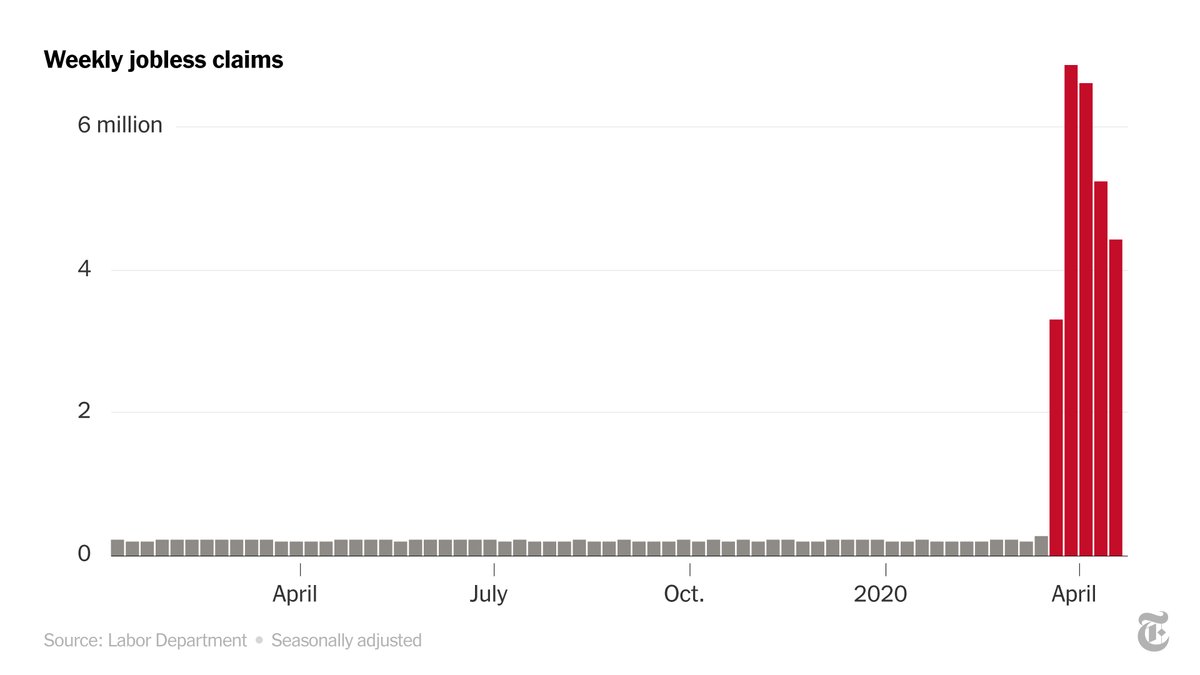
Outlooks for financial results have held relatively steady in the survey over the last month, and are probably indicative of actual impact. Companies have had the time to evaluate the effects. CFO projections for declining revenue and profits coincide with a widening realization that the US economy is in recession. Since mid-March, jobless claims have soared past 26 million, and Congress passed relief packages of $2.5 trillion. CFOs are evaluating a wide range of scenarios that cover the health situation, the shape of the economic recovery, the spillover into the financial markets, and the resulting impacts on their business. This crisis is setting a new benchmark standard for “unknowable.”

Cost pressures intensifying

CFOs are considering additional ways to scale back on planned investment and/or other fixed costs amid volatility in demand. A third (32%) expect layoffs to occur in the next month, up from 26% two weeks ago. Protecting cash and liquidity positions is paramount. Financial impacts of COVID-19, including effects on liquidity and capital resources, remain the top concern of CFOs (71%). Over half (56%) say they are changing company financing plans, up from 46% two weeks ago.

Among other actions, 43% plan to adjust guidance, which is consistent with responses two weeks ago. This figure will likely increase as companies go through the earnings season over the next two to three weeks. Separately, 91% of respondents are planning to include a discussion of COVID-19 in external reporting. Depending on the type of company, this can mean inclusion in financial statements and/or in risk factors and MD&A results of operations, earnings release or MD&A liquidity sections.

Takeaways

Many CFOs have focused on how they can manage their cash pressures to ride out the crisis. Common approaches have included stop-gap measures, such as hiring freezes and tightening controls on discretionary costs to put an end to travel and events, or the use of contractors. Findings show that these types of cost actions are likely to continue, and they remain at the top of the CFO agenda.

Of those who say they’re considering deferring or canceling planned investments, 80% are considering facilities and general capital expenditures. At the same time, investment programs in areas that are considered important to future growth — including digital transformations, customer experience, or cybersecurity and privacy — are less likely to be targeted. CFOs will increasingly look for ways to prioritize costs in these areas, as businesses grow more confident in recovery prospects — even though current demand is subdued.

Priorities to de-risk supply chains

As companies continue to wade through mitigation efforts and start to think about recovery, many are planning changes to make their supply chains more resilient. Findings show CFOs prioritizing specific actions: 56% cite developing alternate options for sourcing, and 54% say better understanding the financial and operational health of their suppliers.

Takeaways

Findings confirm an emphasis on de-risking supply chains, as companies prioritize the health and reliability of their supplier base among changes they’re planning as a result of COVID-19. In particular, there is a focus on managing risk around supply elements, such as reducing structural vulnerability with other sourcing options.

Some companies are starting to invest in creating data-backed profiles of their supplier base so they know where and when to look for second sources. Others are increasing communication with suppliers to better understand financial health. For many, conducting deeper financial and health reviews of suppliers will become a regular part of their business reviews. Physical supply chain relocations will likely happen only as a last resort, given the costs involved. However, automation of certain elements of the supply chain — to eliminate time-consuming manual tracking efforts and check tariff structures, for example — will likely become more common as companies seek better data to make more informed decisions.

Strategies yet to change, but tech likely to drive M&A

The impact of the outbreak on mergers and acquisitions (M&A) strategies remains mixed. While 40% of respondents say their company’s M&A strategy is not being affected by COVID-19, compared with 34% two weeks ago, one in five say it’s too difficult to assess what changes, if any, will need to be made to strategy. CFOs within the technology, media and telecommunications industry stand out in particular. They are less likely to report decreasing appetite for M&A due to COVID-19, compared with peers in other sectors, and 55% say the crisis hasn’t changed their M&A strategy.

Takeaways

These findings highlight the fundamental strengths of the tech sector and suggest it will be among those driving M&A in the months ahead.  Tech giants, in particular, have large cash reserves. Moreover, demand for some tech products and services is strong as businesses return to work — 40% of CFOs say they will accelerate automation and new ways of working as they transition back. Additionally, technologies such as drones, artificial intelligence and robotics, will likely enjoy wider adoption in the post-COVID-19 environment. This leaves tech better-positioned to weather the pandemic’s economic fallout and to execute on inorganic growth strategies. M&A is likely to recover faster than the US economy, with tech among the cash and capital-rich sectors leading the charge. PwC studies show that a combination of factors has been driving a decoupling of deals from the broader economy.

Business recovery timeframes have extended

Organizations are realizing the business recovery from the impacts of the virus will take longer. The March measures of manufacturing and services activities show sharp drops. Demand is not only declining, it’s shifting. Moreover, even as some US states start to reopen, difficulties in setting up testing could keep some states in a holding pattern. As a result, for CFOs, the time required to return to “business as usual” the moment that COVID-19 ends continues to lengthen. Currently, 48% believe it will take at least three months to return to normal, up from 39% two weeks ago.

Takeaways

As reality sets in and companies understand the true impacts to their operations, CFO perceptions of the length of time to business recovery has extended. According to our analysis of how companies gauge their response to the crisis in PwC’s COVID-19 Navigator diagnostic tool, the expected impact of COVID-19 on businesses globally remains high, with consumer markets and manufacturing the most susceptible among industries. Put another way, businesses that are less reliant on a large, complex supply chain to deliver products, or are able to work relatively effectively while remote, are also likely to be among the least exposed.

Consumer-facing companies reconfigure physical sites as shutdowns start to lift

Companies in consumer-facing sectors continue to contend with both sides of the demand equation, as consumers sheltering in place focus single-mindedly on essential products to the exclusion of other offerings. Consumer markets (CM) CFOs are more likely to list a decrease in consumer confidence and spending as a top-three concern than they were two weeks ago (66% vs. 50%). For CM CFOs, consumer confidence trends translate almost directly to revenues, with 32% projecting an adverse impact on revenue and/or profit of at least 25% in 2020, compared with 24% of respondents across all industries.

In response, almost three-quarters of CM CFOs (73%) are considering deferring or canceling planned investments, targeting mostly general capital expenses, such as facilities. They also say technologies that can improve their understanding of changes in customer demand are a top-three priority as they plan changes to their supply chain strategies (41% vs. 30% for all sectors).

CM CFOs are planning workplace safety measures (86% vs. 77% for all sectors) and reconfiguring work sites to promote physical distancing as part of their transition back to on-site work (77% vs. 65% for all sectors). They recognize that consumers want the assurance of a safe physical environment above all else, especially because the majority of CM products and services require a physical component, despite the continuing shift to online.

Takeaways

Consumer-facing companies continue to be among the hardest hit, as the public health crisis keeps the majority of consumers confined to their homes for now. As they grapple with immediate challenges, CM companies are pulling back on capital investments. However, most are still planning to shore up their digital presence in response to accelerated online demand that could last well beyond the recovery period.

Health system pivots to new ways of working

What’s on the mind of financial leaders in the health industry? As they plan to bring more of their workforce back on-site, they are more likely than leaders in other industries to be leaning on technology to help them manage staffing uncertainties. Fifty-four percent of healthcare CFO respondents said they plan to accelerate automation and new ways of working, compared with an average of 40% across all industries.

Healthcare organizations are simultaneously solving two critical issues: uncertainty about demand and protecting their workforce. Health organization CFOs (70%) were more likely than executives from other industries (an average of 50%) to report that they expect higher demand for employee protections in the next month. Meanwhile, consumer anxiety over their own safety is driving up uncertainty about demand for healthcare and medical products. Forty-one percent of healthcare finance leaders listed tools to better understand customer demand as a top-three priority area when considering changes to their supply chain strategies, compared to 30% of financial leaders in all sectors. Fifty-one percent of healthcare finance leaders said they are making staffing changes as a result of slowed demand.

Takeaways

survey conducted by PwC’s Health Research Institute in early April found that some consumers are delaying care and medications amid the pandemic. In this latest PwC survey of CFOs, healthcare leaders report uncertainty about how much of their business will return as the threat of the pandemic ebbs, making staffing decisions difficult.

As the nation continues to grapple with the pandemic, getting back to work is top of mind for US financial leaders overall, but this is an especially pressing issue for health leaders. They must plan for their own workforces, while dealing with an unfolding financial calamity — 81% expect their company’s revenue and/or profits to decline this year as a result of COVID-19. On par with other industries, they expect this decline, even though their organizations play central roles in addressing the human toll of the pandemic. One strategy is to use telehealth technology to virtually care for patients, thereby protecting patients and caregivers during the pandemic.

Financial firms see fewer layoffs, but slower recovery

Financial services (FS) CFOs are bracing for a longer road back to normal. About a third (35%) now think it could take six months to get back to business as usual, up sharply from 15% just two weeks ago. They’re also more optimistic about the bottom line. More than a quarter (27%) of FS survey respondents expect revenue and/or profits to fall by 10% or less. Across all industries, only 18% felt as confident.

Takeaways

Banks are playing a critical role in helping stabilize the economy, as they work on the front lines to distribute CARES Act provisions. Along with insurers and asset managers, they also rely heavily on workers with specialized technical and institutional knowledge. This may explain why FS CFOs expect fewer layoffs (15% vs. 32% overall) or furloughs (17% vs. 44% overall) over the next month. Now, they’re trying to focus on keeping workers healthy and safe.

Conversations are starting to shift toward when and how to transition back to physical offices. For some employees, work may look very different: More FS CFOs are considering making remote work a permanent option for roles that allow it (60% vs. 49% overall). To better protect their employees, they’re also looking to evaluate new tools to support workforce tracking and contact tracing (32% vs. 22% overall) as part of the return-to-work process.

Deeper insight into health of suppliers is top priority for industrial products

The industrial products (IP) sector is in full-throttle cost-cutting mode. Nearly all IP CFOs (96%) report considering cost containment measures, compared with 87% two weeks ago. Some of this comes in the form of layoffs: 49% of IP CFOs expect layoffs to occur vs. 36% two weeks ago. The longer the crisis lasts, the longer the impact on recovery times for their business. When asked how long it would take for their business to return to business as usual if the COVID-19 crisis were to end today, 15% of IP CFOs said less than one month, down from 25% two weeks ago.

Meanwhile, they’re closely examining challenged supply chains. When asked to list their top-three priority areas when planning changes to supply-chain strategies, 66% of IP CFOs identified understanding the financial and operational health of their suppliers, compared to 54% of CFOs across all industries. A majority (56%) also cited developing additional and alternate sourcing options as a priority. And the extent of the financial damage is sinking in: 65% of IP CFOs estimate 2020 revenues and/or profits will drop at least 10%.

Takeaways

IP CFOs are signaling they’re in the thick of the crisis, as they absorb historical lows in production, with March US industrial output plunging to levels not seen since the end of WWII. Continued cost actions are still in the cards.

IP finance leaders are looking ahead to get back to business, with some already bringing workers back on-site. Some are expecting changes to the workplace. Thirty-nine percent of IP CFOs are considering making remote work a permanent option for roles that allow, and 31% are considering accelerating automation and new ways of working. While these are still early days for US producers in returning to work, bringing millions of workers back into the fold may well usher in more change management than the industry now expects.

Tech, media and telecom well-positioned to power the recovery

Technology, media and telecommunications (TMT) companies are well-positioned for recovery from the initial blow of COVID-19. As they stabilize operations in response to the crisis, the percentage of TMT CFOs anticipating revenue and/or profit declines is down 19 percentage points from two weeks ago to 65%. The data suggest that TMT companies are preparing for a future in which virtual work options gain greater acceptance over traditional office settings. TMT companies are more likely to reduce their real estate footprint as they transition back to on-site work (38% compared to 26% for all sectors), and 55% say they’re planning to make remote work permanent for positions that allow.

Of those who said they’re considering deferring or canceling planned investments, TMT companies are less likely to reduce digital transformation investments (13%) than all sectors (22%). Their increased optimism about digital investment as they strategize for the future is further borne out by the data: Two weeks ago, of those who said they were deferring or canceling planned investment, TMT was on track to reduce digital investments at the same rate as other sectors (25%).

Takeaways

The resilience of TMT companies is evident in their approach to this crisis. Bolstered by robust liquidity, the majority of companies in the sector are looking ahead to a recovery they will power by using both organic growth and M&A. In the wake of a crisis that has accelerated more widespread virtual connectivity, look for new emerging-tech-enabled business models to take shape.

Where to focus next

COVID-19 has put businesses under enormous strain to drive new ways of working. When the pandemic began, many companies put their people’s health and safety at the center of their decision-making, and they appear to be doing the same as they prepare to ramp up business. With most firms expecting to bring people back on-site in phases, leaders will need to help employees adjust to a changed environment while still managing the well-being, engagement and productivity of all workers. Purpose-led communication will continue to be critical to keep people informed, and leaders should demonstrate empathy while helping employees adjust to what will likely be an extended transition period. 


The only way to get back to normal this summer is to test everyone in the United States, Nobel Prize-winning economist says

https://www.washingtonpost.com/business/2020/04/27/economy-coronavirus-romer-reopen/?fbclid=IwAR0AI-Cmf34bjZwphHNREngiy6CoKIbYHU2zb1QlnBg_jm7MXgWObMTVjZ4&utm_campaign=wp_main&utm_medium=social&utm_source=facebook

Coronavirus tests should be as cheap as a 'morning latte' to ...

Paul Romer estimates that testing every American would cost $100 billion, a hefty sum but less than the $2 trillion Congress has spent so far.

Nobel Prize-winning economist Paul Romer says a return to nearly normal life is possible this summer if the United States does wide-scale testing for the coronavirus.

Romer is calling on the U.S. government to test everyone in the nation once every two weeks and isolate people who test positive for the deadly coronavirus. He estimates that doing so would cost $100 billion, a hefty sum but far less than the $2 trillion Congress has spent so far and less than the cost of keeping the economy partly closed for months to come.

“I’m on the optimistic end of how quickly we can scale testing up,” said Romer, who won the 2018 Nobel Prize for economics. “I do think there’s a way most people could feel safe returning to what feels like normal life this summer if we do this wide-scale testing.”

So far, the nation has tested about 5 million people — or less than 2 percent of the population. Last week, Congress approved an additional $25 billion for testing as part of the latest funding bill, which Romer calls a good start but not enough.

Restarting the U.S. economy isn’t just about government officials clearing certain businesses to reopen. People have to feel safe enough to venture out. Romer says that will happen only when nearly everyone in the country is getting tested on a regular basis and people who are sick are being quarantined.

“It’s totally in our control to fix this,” Romer said in a phone interview. “We should be spending $100 billion on the testing. We should just get it going. It’s just not that hard.”

He advises starting with screening all health-care and front-line workers in the next month and then scaling up the testing to the rest of the nation this summer by using university labs to process tests.

Romer says massive testing is the only viable option for the nation. Otherwise, the economy will limp along, leaving millions of people unemployed and forcing small businesses to shut forever. It could take years to recover from that kind of pain. On the flip side, reopening much of the nation too soon could cause deaths to skyrocket again.

Top White House officials voiced support for more testing over the weekend. Treasury Secretary Steven Mnuchin said on Fox News Sunday that the Trump administration would “balance” reopening the economy with “more testing” to “monitor this very, very carefully.”

Deborah Birx, the White House’s coronavirus task force coordinator, said Sunday that more testing would be needed and that “social distancing will be with us through the summer.

As Congress and the White House debate another round of economic relief, it’s unclear how much more money will be allocated for testing. Evidence from China and Germany, which have begun to reopen much of their economies, shows that people remain reluctant to go out and spend again. Subways in China remain half full, big public spaces such as casinos remain nearly empty and economic activity is still way off from normal.

Although some have balked at the cost of testing every American, Romer points out that the United States is losing at least $500 billion a month from the Great Lockdown. His estimate is more modest than some other economists such as St. Louis Federal Reserve President Jim Bullard, who says the nation is losing $25 billion a day right now. Bullard has also endorsed universal testing as the only way to fix the nation’s health — and economic — problems.

“Every month of delay makes the recovery slower — and take longer,” Romer said.

Romer won the Nobel Prize for modeling the U.S. and global economies. A former chief economist at the World Bank, he has built a career thinking through big international problems and what to do about them. But the coronavirus fight is also personal for him. He has a daughter who is an intensive care physician in Philadelphia.


U.S. coronavirus updates

https://www.axios.com/coronavirus-west-virginia-first-case-ac32ce6d-5523-4310-a219-7d1d1dcb6b44.html

Coronavirus outbreak is level of public pain we haven't seen in ...


The pandemic is a long way from over, and its impact on our daily lives, information ecosystem, politics, cities and health care will last even longer.

The big picture: The novel coronavirus has infected more than 939,000 people and killed over 54,000 in the U.S., Johns Hopkins data shows. More than 105,000 Americans have recovered from the virus as of Sunday.

Lockdown measures: Demonstrators gathered in Florida, Texas and Louisiana Saturday to protest stay-at-home orders designed to protect against the spread of COVID-19, following a week of similar rallies across the U.S.

  • 16 states have released formal reopening plans, Vice President Mike Pence said at Thursday’s White House briefing. Several Southern states including South Carolina have already begun reopening their economies.
  • Alaska, Oklahoma and Georgia reopened some non-essential businesses Friday. President Trump said Wednesday he “strongly” disagrees with Georgia Gov. Brian Kemp on the move.
  • California’s stay-at-home orders and business restrictions will remain in place, Gov. Gavin Newsom made clear at a Wednesday news briefing. But some local authorities reopened beaches in Southern California Saturday.
  • New York recorded its third-straight day of fewer coronavirus deaths Friday. Still, Gov. Andrew Cuomo said he’s not willing to reopen the state, citing CDC guidance that states need two weeks of flat or declining numbers.

Catch up quick: Deborah Birx said Sunday that it “bothers” her that the news cycle is still focused on Trump’s comments about disinfectants possibly treating coronavirus, arguing that “we’re missing the bigger pieces” about how Americans can defeat the virus.

  • Anthony Fauci said Saturday the U.S. is testing roughly 1.5 million to 2 million people a week. “We probably should get up to twice that as we get into the next several weeks, and I think we will,” he said.
  • The number of sailors aboard the USS Kidd to test positive for the coronavirus has risen from 18 Friday to 33, the U.S. Navy said Saturday. It’s the second major COVID-19 outbreak on a U.S. naval vessel, after the USS Theodore Roosevelt, where a total of 833 crew members tested positive, per the Navy’s latest statement.
  • The first person known to have the coronavirus when they died was killed by a heart attack “due to COVID-19 infection” on Feb. 6, autopsy results obtained by the San Francisco Chronicle on Saturday show.
  • Some young coronavirus patients are having severe strokes.
  • Trump tweeted Saturday that White House press conferences are “not worth the time & effort.” As first reported by Axios, Trump plans to pare back his coronavirus briefings.
  • The South is at risk of being devastated by the coronavirus, as states tend to have at-risk populations and weak health care systems.
  • New York Gov. Andrew Cuomo said Friday Trump was right to criticize the World Health Organization’s handling of the global outbreak.
  • Trump signed legislation Friday for $484 billion in more aid to small businesses and hospitals.
  • The House voted along party lines on Thursday to establish a select committee to oversee the federal government’s response to the crisis.
  • Unemployment: Another 4.4 million Americans filed last week. More than 26 million jobless filings have been made in five weeks due to the pandemic.


Jobless Numbers Are ‘Eye-Watering’ but Understate the Crisis

How the coronavirus created a U.S. unemployment crisis — in 3 graphics

With 4.4 million added last week, the five-week total passed 26 million. The struggle by states to field claims has hampered economic recovery.

Nearly a month after Washington rushed through an emergency package to aid jobless Americans, millions of laid-off workers have still not been able to apply for those benefits — let alone receive them — because of overwhelmed state unemployment systems.

Across the country, states have frantically scrambled to handle a flood of applications and apply a new set of federal rules even as more and more people line up for help. On Thursday, the Labor Department reported that another 4.4 million people filed initial unemployment claims last week, bringing the five-week total to more than 26 million.

“At all levels, it’s eye-watering numbers,” Torsten Slok, chief international economist at Deutsche Bank Securities, said. Nearly one in six American workers has lost a job in recent weeks.

Delays in delivering benefits, though, are as troubling as the sheer magnitude of the figures, he said. Such problems not only create immediate hardships, but also affect the shape of the recovery when the pandemic eases.

Laid-off workers need money quickly so that they can continue to pay rent and credit card bills and buy groceries. If they can’t, Mr. Slok said, the hole that the larger economy has fallen into “gets deeper and deeper, and more difficult to crawl out of.”

Hours after the Labor Department report, the House passed a $484 billion coronavirus relief package to replenish a depleted small-business loan program and fund hospitals and testing. The Senate approved the bill earlier this week.

Even as Congress continues to provide aid, distribution has remained challenging. According to the Labor Department, only 10 states have started making payments under the federal Pandemic Unemployment Assistance program, which extends coverage to freelancers, self-employed workers and part-timers. Most states have not even completed the system needed to start the process.

Ohio, for example, will not start processing claims under the expanded federal eligibility criteria until May 15. Recipients whose state benefits ran out, but who can apply for extended federal benefits, will not begin to have their claims processed until May 1.

Pennsylvania opened its website for residents to file for the federal program a few days ago, but some applicants were mistakenly told that they were ineligible after filling out the forms. The state has given no timetable for when benefits might be paid.

Reports of delays, interruptions and glitches continue to come in from workers who have been unable to get into the system, from others who filed for regular state benefits but have yet to receive them, and from applicants who say they have been unfairly turned down and unable to appeal.

Florida has paid just 17 percent of the claims filed since March 15, according to the state’s Department of Economic Opportunity.

“Speed matters” when it comes to government assistance, said Carl Tannenbaum, chief economist at Northern Trust. Speed can mean the difference between a company’s survival and its failure, or between making a home mortgage payment and facing foreclosure.

There is “a race between policy and a pandemic,” Mr. Tannenbaum said, and in many places, it is clear that the response has been “very uneven.”

Using data reported by the Labor Department for March 14 to April 11, the Economic Policy Institute, a liberal research group, estimated that seven in 10 applicants were receiving benefits. That left seven million other jobless workers who had filed claims but were still waiting for relief.

States manage their own unemployment insurance programs and set the level of benefits and eligibility rules. Now they are responsible for administering federal emergency benefits that provide payments for an additional 13 weeks, cover previously ineligible workers and add $600 to the regular weekly check.

So far, 44 states have begun to send the $600 supplement to jobless workers who qualified under state rules, the Labor Department said. Only two — Kentucky and Minnesota — have extended federal benefits to workers who have used up their state allotment.

With government phones and websites clogged and drop-in centers closed, legal aid lawyers around the country are fielding complaints from people who say they don’t know where else to turn.

“Our office has received thousands of calls,” said John Tirpak, a lawyer with the Unemployment Law Project, a nonprofit group in Washington.

People with disabilities and nonnative English speakers have had particular problems, he said.

Even those able to file initially say they have had trouble getting back into the system as required weekly to recertify their claims.

Colin Harris of Marysville, Wash., got a letter on March 31 from the state’s unemployment insurance office saying he was eligible for benefits after being laid off as a quality inspector at Safran Cabin, an aerospace company. He submitted claims two weeks in a row and heard nothing. When he submitted his next claim, he was told that he had been disqualified. He has tried calling more than 200 times since then, with no luck.

“And that’s still where I am right now,” he said, “unable to talk to somebody to find out what the issue is.” If he had not received a $1,200 stimulus check from the federal government, he said, he would not have been able to make his mortgage payment.

Last week’s tally of new claims was lower than each of the previous three weeks. But millions of additional claims are still expected to stream in from around the country over the next month, while hiring remains piddling.

States are frantically trying to catch up. California, which has processed 2.7 million claims over the last four weeks, opened a second call center on Monday. New York, which has deployed 3,100 people to answer the telephone, said this week that it had reduced the backlog that accumulated by April 8 to 4,305 from 275,000.

Florida had the largest increase in initial claims last week, although the state figures, unlike the national total, are not seasonally adjusted. That increase could be a sign that jobless workers finally got access to the system after delays, but it is impossible to assess how many potential applicants have still failed to get in.

The 10 states that have started making Pandemic Unemployment Assistance payments to workers who would not normally qualify under state guidelines are Alabama, Colorado, Iowa, Kentucky, Louisiana, Massachusetts, Rhode Island, Tennessee, Texas and Utah.

Pain is everywhere, but it is most widespread among the most vulnerable.

In a survey that the Pew Research Center released on Tuesday, 52 percent of low-income households — below $37,500 a year for a family of three — said someone in the household had lost a job because of the coronavirus, compared with 32 percent of upper-income ones (with earnings over $112,600). Forty-two percent of families in the middle have been affected as well.

Those without a college education have taken a disproportionate hit, as have Hispanics and African-Americans, the survey found.

An outsize share of jobless claims have also been filed by women, according to an analysis from the Fuller Project, a nonprofit journalism organization that focuses on women.

Josalyn Taylor, 31, learned that she was out of a job on March 16. “I clocked in at 3 o’clock, and by 3:30 my boss called me and told me we were going to shut down for three weeks,” said Ms. Taylor, an assistant manager at Cicis Pizza in Galveston, Tex. The restaurant has yet to reopen.

Two days later, she applied for unemployment insurance, but she kept receiving a message that a claim was already active for her Social Security number and that she could not file. She has tried to clear up the matter hundreds of times — online, by phone and through the Texas Workforce Commission’s site on Facebook — with no luck.

“I used my stimulus check to pay my light bill, and I’m using that to keep groceries and stuff in the house,” said Ms. Taylor, who is five months pregnant. “But other than that, I don’t have any other income, and I’m almost out of money.”

The first wave of layoffs most heavily whacked the restaurant, travel, personal care, retail and manufacturing industries, but the damage has spread to a much broader range of sectors.

At the online job site Indeed, for example, postings for software development jobs are down nearly 30 percent from last year, while listings for finance and banking openings are down more than 40 percent.

New layoffs are expected to ease over the next couple of months, but the damage to the economy is likely to last much longer. In a matter of weeks, the shutdown has more than erased 10 years of net job gains — more than 19 million jobs.

Health and education are going to revive relatively quickly, said Rick Rieder, chief investment officer for global fixed income at BlackRock, but leisure and hospitality are going to take a lot longer.

“A lot of the people who have been furloughed won’t come back,” he said. “Companies will either close or decide not to take back those workers.”

Over the past decade, the employment landscape has shifted substantially as new types of jobs have appeared and old categories have disappeared. The U.S. economy, Mr. Rieder said, is “going to go through another period of evolution.”


4.4 million Americans sought jobless benefits last week, as economic pain continued across the United States

https://www.washingtonpost.com/business/2020/04/23/economy-coronavirus-unemployment/?fbclid=IwAR3EbJpE7nmIUWOM4HUrZVOKaBmls7Uh3gL5ewCP98q7So0s38JlPdTT-SI&utm_campaign=wp_main&utm_medium=social&utm_source=facebook

4.4 million Americans sought jobless benefits last week, as ...

The White House and Congress have tried to arrest the downturn, but the coronavirus pandemic keeps pushing Americans out of the labor force.

More than 4.4 million Americans filed for unemployment benefits last week, according to the Labor Department, a signal the tidal wave of job losses continues to grow during the coronavirus pandemic.

It’s the fifth straight week that job losses were measured in the millions. From March 15 to April 18, 26.5 million people have probably been laid off or furloughed. The number of jobs lost in that brief span effectively erased all jobs created after the 2008 financial crisis. Jobless figures on this scale haven’t been seen since the Great Depression.

The new weekly total comes on top of 22 million Americans who had sought benefits in previous weeks, a volume that has overwhelmed state systems for processing unemployment claims. Economists estimate the national unemployment rate sits between 15 and 20 percent, much higher than it was during the Great Recession in 2008 and 2009. The unemployment rate at the peak of the Great Depression was about 25 percent.

The new weekly jobless claims figure came in around economists’ predictions, which were expected “to be staggering, but not growing, which is a small mercy,” said Julia Pollak, a labor economist at ZipRecruiter. For comparison, 5.2 million people filed unemployment claims for the week ending April 11.

As the coronavirus began spreading in the United States earlier this year, many businesses rapidly began to close. Hotels, restaurants, and airlines were hit particularly hard, but few businesses were immune from the economic toll. The problems have only worsened each week, as more Americans reduced their spending and more businesses cut workers because income has fallen so sharply.

Pollack said many businesses quickly “cut to the bone” when they realized how the pandemic would gut sales. Now, many of the new layoffs stem from businesses like news organizations and tech companies that weren’t directly affected by people staying home but are suffering the consequences of vanishing ad revenue and paid subscriptions.

“We see declines across every major industry and state, although the declines hit industries at different times,” Pollak said.

Meanwhile, consumer spending, the engine behind the longest economic expansion in U.S. history, has evaporated. If they’re still operating, many offices are working with skeleton staffs and staring down months of dismal revenue.

The White House and Congress have tried to intervene, but with limited impact so far.

New funding for small businesses in a $2 trillion March emergency spending package quickly dried up in the face of overwhelming demand, prompting the Senate to expand funding by $310 billion on Tuesday. The bill would direct an additional $60 billion to a separate small-business emergency grant and loan program. The House is slated to vote on the measure Thursday afternoon.

Even with all the new government spending, hopes for a sharp economic rebound are fading, overtaken by the public fear of going back to restaurants, movie theaters, schools and gyms. The growing possibility of a “W”-shaped recovery — in which a resurgence of the virus, or a spike in defaults and bankruptcies, triggers another downturn — has analysts reframing what a reopened or rehabilitated economy might look like.

This year defies historical comparison. In 2020, 28.9 million people have filed for unemployment benefits. Halfway through the fourth month of the year, the figure has already eclipsed the full-year totals of every year but 1982 (30.4 million) and 2009 (29.8 million). At this rate, it will overtake both within a week or so.

Less than half of working-age Americans will be earning a wage next month, said James Knightley, ING Chief International Economist.

“In an election year, this means that the call for politicians to reopen the economy is only going to get louder, irrespective of the health advice,” Knightley said.

In five weeks, 9.4 percent of the working-age population has filed for unemployment insurance, said Nick Bunker, Indeed Hiring Lab’s director of economic research. That’s about twice the share of the population that lost a job during the Great Recession. In some states, such as Michigan, about one in four workers has filed an unemployment claim in the past few weeks.

“The numbers detailing the shock to the U.S. labor market are so large, and cover such a short time, that your first reaction is that they’re a typo,” Bunker said.

Employers are also unlikely to be hiring at the same levels they were before the pandemic. As of April 16, job postings on Indeed were down 34 percent compared with last year, Bunker said.

The job losses, like the epidemic itself, haven’t fallen evenly across the country. In three states — Hawaii, Kentucky and Michigan — about 1 in 4 workers have filed for unemployment benefits in the past 5 weeks. In Michigan, plant shutdowns and furloughs have ravaged the manufacturing economy, which had only recently recovered all the jobs it lost in the Great Recession.

On the opposite of the ledger sits South Dakota, where Gov. Kristi L. Noem (R) has resisted calls to lock down the state’s businesses to slow the spread of the coronavirus. Only 6 percent of the state’s labor force has applied for unemployment benefits. It may be a regional trend: Neighboring Wyoming and Nebraska, and nearby Utah, also have unusually low claims numbers.

As part of its sprawling stimulus package, Washington has rolled out relief for millions of households and small businesses struggling to make ends meet. But money for struggling businesses quickly ran dry, and system glitches have prevented $1,200 stimulus checks from reaching some of the neediest.

On Tuesday, the Senate passed a bill to expand the Paycheck Protection Program for small businesses by $310 billion, and flood a separate small-business emergency grant and loan initiative by an additional $60 billion.

Meanwhile, many low-income veterans and Social Security recipients still haven’t received the stimulus money in their bank accounts, while other IRS checks are going to dead people. People who didn’t file tax returns last year or don’t have direct-deposit information may have weeks more to wait.

In the wake of the Great Recession, the number of unemployed — about 15 million — was significantly higher than the number who claimed benefits, and the unemployment rate still peaked at just 10 percent. Economists expect the United States to blow by that figure when April’s jobs data are released on May 8.

Granted, this comes as unemployment eligibility and benefits have been greatly expanded. The government has relied on the unemployment insurance system to deliver relief to out-of-work Americans as it forces millions of businesses to close during temporary stay-at-home orders. The soaring numbers are, for once, a sign of the system working as intended.


181 hospitals furloughing workers in response to COVID-19

https://www.beckershospitalreview.com/finance/49-hospitals-furloughing-workers-in-response-to-covid-19.html?utm_medium=email

City of San Antonio furloughs nearly 300 amid COVID-19 pandemic | WOAI

Many U.S. hospitals and health systems have suspended elective procedures to save capacity, supplies and staff to treat COVID-19 patients.

As a result of suspending these nonemergent procedures, several systems have lost or expect to lose a large chunk of their annual revenue, forcing them to make cost reduction a top priority. 

Below is a breakdown of the hospitals that have furloughed staff in an effort to remain financially stable amid the COVID-19 pandemic.

April 22

1. Detroit-based Henry Ford Health System plans to furlough 2,800 staffers not directly involved in patient care due to financial damage from the COVID-19 pandemic. The six-hospital system recorded a $43 million loss in operating income in March due to the cancellation of elective procedures, temporary clinic closures and the additional expenses of acquiring personal protective gear. The health system expects bigger losses in April and May.

2. Citing a financial hit from the COVID-19 pandemic, Providence, R.I.-based Lifespan has furloughed about 1,100 employees, according to The Providence Journal. A hospital spokesperson said most of the furloughs were taken voluntarily, and some employees have been able to take vacation or sick leave to maintain pay. Affected employees can retain their benefits, such as health insurance.

3. Woodbury, N.J.-based Inspira Health has furloughed 219 employees due to the COVID-19 pandemic, according to the Philadelphia Business Journal. The list of furloughed employees will be reviewed every two weeks, the health system said. Inspira has about 6,000 employees.

4. Macomb, Ill.-based McDonough District Hospital plans to furlough 60 workers amid declining revenue from the COVID-19 pandemic, according to local radio station WGIL. The health system experienced a $1.2 million loss in net revenue in March, and expects April to have a much larger loss.

5. To address the financial impact and patient volume dip caused by the COVID-19 pandemic, Greenville, N.C.-based Vidant Health will furlough a portion of its workforce, according to ABC 12. The health system will start the furloughs April 26. The number of affected employees was not disclosed.

6. Olean, N.Y.-based Upper Allegheny Health System plans to start a voluntary furlough program in an effort to help offset some of the losses from the COVID-19 pandemic, according to Tap Into Greater Olean. The system projects it will incur a $25 million loss related to COVID-19 in 2020.

7. Due to the suspension of elective procedures and subsequent revenue drop, Grand Forks, N.D.-based Altru Health System plans to reduce the number staffing hours by 10 percent to 15 percent through furloughs and a system-required absence program, according to The Grand Forks Herald. The hospital system said it is facing a potential loss of $65 million this year due to the COVID-19 pandemic.

8. Cleveland-based University Hospital plans to cut the hours and pay of 4,100 employees not involved in patient care, according to Cleveland.com.  Salaried nonclinical staffers are required to take a one-week unpaid furlough every five weeks. Hourly nonclinical workers will have their hours cut by 20 percent each week. Affected employees can use paid time off and sick time during those unpaid weeks. Hospital staff will still receive benefits, like health insurance.

9. Citing the financial hit from COVID-19, Wausau, Wis.-based Aspirus Health plans to furlough a portion of its staff beginning May 1, according to a system press release. The furloughs will primarily affect employees who do not work directly in patient care.

“This is the most difficult decision our leadership team has ever made,” said Aspirus President and CEO Matthew Heywood. “These drastic actions are ones we hoped to avoid but must take to ensure we can continue to serve our communities throughout this pandemic and for generations after.”

10. To help protect the long-term financial health of the organization, Buffalo, N.Y.-based Kaleida Health is offering a temporary voluntary furlough program for its staff, the health system announced April 22 in a news release. The furlough program is a joint agreement with two unions that represent 8,000 Kaleida Health employees. Affected employees would be able to retain benefits, like health insurance.

Note: Rochester, Minn.-based Mayo Clinic said April 22 that 30,000 staff members will be affected by furloughs or cut hours. More information about the furloughs are listed under April  13, or you can click here

April 22

1. Southfield, Mich.-based Beaumont Health will permanently lay off 450 staff members, cut executive pay and furlough 2,475 workers due to the financial hit from the COVID-19 pandemic. Most of the 450 layoffs affect corporate staff or administrative employees. The furloughs affect staff not directly caring for patients and hospital administrative staff.

2. Philadelphia-based Tower Health has furloughed at least 1,000 employees due to the financial hit from the COVID-19 pandemic. The furloughs affect roughly 7 percent of the system’s 14,000-person workforce.The seven-hospital system said it has lost about 50 percent of its revenue due to the suspension of elective procedures and drop in outpatient volume.

3. Citing the suspension of elective procedures and a 50 percent reduction in revenue, Kalamazoo, Mich.-based Bronson Healthcare has furloughed hundreds, according to WWMT.   Furloughed employees will not be paid for at least four months, and they can not use paid time off. The number of furloughed employees was not disclosed.

4. Utica, N.Y.-based Mohawk Valley Health System will furlough about 20 percent of its workforce of 4,000 for up to four months, according to the Utica Observer-Dispatch. The health system said it is part of a cost-cutting plan to recover from lost revenue caused by the COVID-19 pandemic.

5. About 200 employees at Ithaca, N.Y.-based Cayuga Medical Center have volunteered to take a furlough, according to Ithaca.com. The hospital, which employs 1,500, has seen a 50 percent drop in patient volume. Employees that opt into the furlough program can retain health insurance, apply for unemployment benefits and will receive a stipend upon returning to work.

6. Hudson, N.Y.-based Columbia Memorial Hospital will furlough 125 workers due to a drop in patient volume and revenue caused by the COVID-19 pandemic, according to News 10, an ABC affiliate. Furloughed workers can keep their health insurance and apply for unemployment benefits.

7. St. Mary’s Health System in Lewiston, Maine, will furlough about 5 percent of its workforce to help offset losses attributed to the COVID-19 pandemic, according to the Sun Journal. The furloughs, which affect 77 staffers, will begin April 27 and last for 30 days.

8. Seventy-one employees from Bay Area Hospital in Coos Bay, Ore., opted to take voluntarily furloughs, according to KCBY. The employees will be furloughed for 45 days.

9. Rosemont, Ill.-based Pipeline Health, which operates Weiss Memorial Hospital in Chicago and West Suburban Medical Center in Oak Park, Ill., has furloughed an undisclosed number of its staff due to the COVID-19 pandemic, according to the Chicago Tribune. Those employees will keep their health insurance and can apply for unemployment.

10. Citing a revenue decline of 50 percent due to the COVID-19 pandemic, Dansville, N.Y.-based Noyes Health has furloughed a portion of its staff for one to two week on a rolling basis, according to The Livingston County News. Furloughed staff will retain health insurance benefits.

11. Madison, Wis.-based UW Health plans to furlough some staff due to the COVID-19 pandemic, according to the Wisconsin State Journal. UW Health CEO Alan Kaplan, MD, said UW Health saw a 62 percent decline in surgeries and patient volume, and as a result is expecting losses of $350 to $400 million between March 15 and June 30.

12. West Des Moines, Iowa-based UnityPoint Health said it will implement furloughs starting April 26, according to 25 News, an NBC affiliate.  Furloughs will affect employees in areas of the system that are not operating at capacity or experiencing closures.

13. Gottlieb Memorial Hospital in Melrose Park, Ill., has furloughed some staff in response to the COVID-19 pandemic, according to the Chicago Tribune. 

14. MacNeal Hospital in Berwyn, Ill., has furloughed some staff in response to the COVID-19 pandemic, according to the Chicago Tribune. 

April 21

1. Phoenix-based Banner Health plans to furlough 5 percent to 7 percent of its workforce in response to the COVID-19 pandemic. Some affected employees may be furloughed for just a few weeks. Affected employees will still have benefits, like health insurance.

2. Citing the suspension of elective procedures, Ogdensburg, N.Y.-based Claxton-Hepburn Medical Center has furloughed or cut pay for 170 workers, according to WWNY TV. The furloughed employees will not be paid.

3. Rochester, Minn.-based Olmsted Medical Center, which employs 1,300 people, plans to furlough a portion of its staff to offset the financial hit caused by the COVID-19 pandemic, according to ABC 6 News. The medical center is projecting a loss of nearly $25 million for April through June due to the suspension of elective procedures.

4. Myrtue Medical Center, a Harlan, Iowa-based hospital with 422 employees, has furloughed a portion of its workforce due to a revenue drop from the COVID-19 pandemic, according to HarlanOnline.com. The hospital said that the pandemic has caused a nearly 50 percent drop in procedures, visits and overall patient volumes.

5. Hutchinson (Kan.) Regional Healthcare System, experiencing financial strain from the COVID-19 pandemic, plans to furlough staff, according to The Hutchinson News. The system said the furloughs will affect employees at each of its facilities, but declined to discuss the number of employees that will be furloughed.

6. Poteau-based Eastern Oklahoma Medical Center, a 25-bed critical access hospital, has furloughed 52 employees, according to Erie News Now. The hospital said that suspending non-emergent procedures has caused a dip in patient volume and revenue.

7. Citing a revenue loss from the COVID-19 pandemic and suspension of elective procedures, Framingham, Mass.-based MetroWest Medical Center has furloughed an undisclosed number of nurses, according to The Milford Daily News.

April 20

1. Citing the financial burden caused by the COVID-19 pandemic, Carthage (N.Y.) Area Hospital has furloughed 20 percent of its staff, according to local news station WWNY TV. About 83 staff members are affected. Furloughed employees with health insurance can still receive those benefits.

2. Sioux Falls, Idaho-based Avera Health will furlough 650 workers due to the suspension of elective procedures and resulting revenue loss, according to The Grand Forks Herald. Avera will also cut pay for 1,500 employees. The health system has 19,000 employees across a five-state region.

3. St. Lawrence Health System, a three-hospital system in Potsdam, N.Y., plans to furlough at least 400 workers to help offset the revenue loss caused by the COVID-19 pandemic, according to North Country Now. Due to a drop in patient volume due to the suspension of elective procedures, the system is projecting a cash flow decrease of $10 million in the next 30 days. The health system’s website says it has more than 2,025 employees.

4. Rapid City, S.D.-based Monument Health will place 200 employees on furlough, according to KOTA TV. The health system said that it implemented furloughs to help preserve protective gear and save costs after suspending elective surgeries. The furloughs, which are effective April 25, affect 4 percent of Monument Health’s workforce.

5. In an effort to offset a revenue loss due to the COVID-19 pandemic, Niagara Falls (N.Y.) Memorial Hospital has furloughed 52 workers, according to WKBW.

6. Elizabethtown (N.Y.) Community Hospital has furloughed 25 staff members after experiencing a revenue cut of 50 percent due to the suspension of elective procedures during the COVID-19 pandemic, according to the Adirondack Daily Enterprise. 

7. Manatee Memorial Hospital, a safety-net facility in Bradenton, Fla., has furloughed a portion of its staff due to the COVID-19 pandemic, according to Bradenton.com. Affected employees will be able to retain health and life insurance. It is unclear how many staff members are affected or how long the furlough will last.

8. Tucson (Ariz.) Medical Center has furloughed some of its staff to help offset a revenue loss caused by the COVID-19 pandemic, according to Tucson.com. The health system said it is estimating a revenue loss of $20 million in April alone.

9. Tucson, Ariz.-based Carondelet Health Network has implemented furloughs across the system due to the COVID-19 pandemic, according to Tucson.com.

10. Gillette, Wyo.-based Campbell County Health has furloughed an undisclosed number of employees, according to The Gillette News Record. Affected employees are eligible to retain their health insurance and are expected to return to work within six to 12 weeks, according to the report.

April 17

1. Citing declines in revenue and patient volume due to the COVID-19 pandemic, Murray (Ky.) Calloway County Hospital plans to implement furloughs in all departments, according to local news station WPSD. The hospital said the reductions will affect about 15 percent to 30 percent of staff in each department, according to the report.

2. Lockport, N.Y.-based Eastern Niagara Hospital will furlough 60 employees in response to the suspension of elective procedures due to the pandemic, according to Buffalo, N.Y., ABC affiliate WKBW. The furloughs affect union and nonunion employees.

3. Lowville, N.Y.-based Lewis County Health System is temporarily placing 14 percent of its workforce on unpaid leave due to the COVID-19 pandemic, according to WWYN. The health system will ask for volunteers before furloughs will be mandated based on seniority. Furloughs are expected to last eight weeks.

4. Citing a financial hit from the suspension of elective procedures, Traverse City, Mich.-based Munson Healthcare is furloughing a portion of its staff, according to 9&10 News. Ed Ness, president and CEO of Munson Healthcare, told the CBS affiliate that the health system is projected to lose $7 million to $10 million a month.

5. Ann & Robert H. Lurie Children’s Hospital, based in Chicago, has furloughed about 20 percent of its staff through the end of April, according to the Chicago Tribune. Those staff members are still receiving pay and healthcare benefits. The hospital said it is losing about $10 million a week because it suspended elective surgeries and outpatient visits and is seeing a drop in inpatient visits.

6. Due to the COVID-19 pandemic, Maywood, Ill.-based Loyola Medicine has furloughed primarily nonclinical staff and reduced hours for other employees, according to the Chicago Tribune Furloughed workers are still receiving healthcare benefits.

“We hope to bring back as many furloughed employees as we can, when possible,” Loyola told the newspaper.

7. Citing a revenue drop from the COVID-19 pandemic, Somerset, Ky.-based Lake Cumberland Regional Hospital has 17 percent of its workforce on furlough, according to the Commonwealth Journal. Affected employees will continue to receive health insurance and 25 percent of their wages.

8. Aiken (S.C.) Regional Medical Centers will furlough 54 employees in an effort to offset revenue losses due to the COVID-19 pandemic, according to WJBF. Affected employees will be eligible for unemployment.

9. Due to the impact of the COVID-19 pandemic on its business operations, Boston-based Fenway Health will furlough a portion of its staff this week, according to The Rainbow Times.

“This is not something we are doing lightly. But Fenway Health is not immune to the economic forces affecting every health care system in the state in the midst of the COVID-19 crisis,” Fenway Health CEO Ellen LaPointe, told the publication. “These measures are temporary.”

10. El Paso, Texas-based Hospitals of Providence will furlough a portion of its staff to help offset a drop in patient volume, according to El Paso Times. Hospitals of Providence said that less than 3 percent of staff would be affected.

11. Jacksboro, Texas-based Faith Community Health System has furloughed, cut hours or reassigned about 75 percent of its staff due to the suspension of elective procedures, according to The Dallas Morning News.

“Where larger hospitals might have the ability to sustain that loss of revenue, rural hospitals just don’t. It has hit us faster and harder,” Faith Community CEO Frank Beaman told the publication.

April 16

1. Samaritan Medical Center in Watertown, N.Y., will furlough 10 percent of its 2,400 employee workforce due to a revenue loss stemming from the COVID-19 pandemic, according to NNY360. The medical center expects the furloughs to last about three months.

2. In an effort to ensure the long-term financial stability of the organization, DuBois, Pa.-based Penn Highlands Healthcare has furloughed or laid off 600 employees, according to The Progress News. About 60 percent of the 600 affected staff were furloughed. The health system has seen its revenue dip about 40 percent due to the suspension of elective procedures.

3. New Bedford, N.H.-based SolutionHealth, which includes Manchester, N.H.-based Elliot Hospital System and Nashua-based Southern New Hampshire Health, plans to furlough 650 staff members to offset a revenue hit from the COVID-19 pandemic, according to The Union Leader. 

4. Titus Regional Medical Center, a 108-bed facility in Mount Pleasant, Texas, has furloughed about 10 percent of its staff due to the COVID-19 pandemic, according to The Texas Tribune. It has about 800 employees. Titus said it expects the virus to cause a financial hit of $3.3 million, or about 14 days of cash.

5. Citing a financial hit from the COVID-19 pandemic, Chillicothe, Ohio-based Adena Health System has furloughed 500 staff members, according to WBNS, a CBS affiliate. The health system is projecting that it will have a deficit of more than $50 million through 2020 due to the suspension of elective procedures.

6. Akron, Ohio-based Summa Health is furloughing 360 employees in an effort to cut costs during the COVID-19 pandemic, according to The Beacon Journal. Summa Health has about 7,200 employees. The furloughs started this week. It is unclear when they will end.

7. Jupiter (Fla.) Medical Center has furloughed 50 workers in administrative and support positions due to the COVID-19 pandemic, according to The Palm Beach Post. The furloughs affect 2.7 percent of the hospital’s 1,883 employees and are expected to last through the peak of the pandemic.

8. Citing a patient volume and revenue loss from the COVID-19 pandemic, Paragould-based Arkansas Methodist Medical Center plans to furlough a portion of its staff starting April 20, according to local news station KAIT8. 

9. Dunn, N.C.-based Harnett Health has furloughed 80 staff members due to theCOVID-19 pandemic, according to My Daily Record. 

“We want to reassure our community that we are still here and able to provide care whenever they may need us,” Harnett Health President Cory Hess told the publication. “The restructuring is a direct result of having to temporarily shut down some of our services to reduce the spread of COVID-19.”

10. Citing a revenue dip due to the COVID-19 pandemic, Pocatello, Idaho-based Portneuf Medical Center will furlough and lay off a portion of its staff, according to the Idaho State Journal. It is unclear how many staff members were furloughed and laid off. The furloughs are expected to last 90 days, but some employees may be called back earlier.

“To balance the resources needed to care for our sickest patients against the economic impact of postponed visits and the decline in surgeries, we have made some difficult workforce decisions,” a spokesperson for Portneuf Medical Center told the publication.

11. San Francisco-based Dignity Health has furloughed a portion of its nonclinical staff, Laurie Harting, Dignity’s CEO for the Greater Sacramento region, told the Sacramento Business Journal. The number of affected employees was not disclosed.

12. While Sacramento-based Sutter Health has created a labor pool to redeploy and reassign employees, some who are unable to be reassigned have been furloughed, according to the Sacramento Business Journal. Sutter has offered these affected employees 80 hours of “disaster pay” to account for hours lost and is creating a relief fund for employees. It is unclear how many employees are receiving the disaster pay. The health system has not laid off employees.

April 15

1. Citing a decline in elective surgeries and other nonemergent procedures due to the COVID-19 pandemic, Dallas-based Tenet Healthcare has furloughed about 10 percent of its workforce of more than 113,000. Affected employees include those in administrative support roles, corporate office jobs and elective care. Earlier in April, Tenet said it planned to furlough 500 employees, but the health system said it had to raise the number of furloughs after the costly government-mandated suspension of elective procedures.

2. Citing the suspension of elective procedures, Detroit Medical Center is furloughing 480 employees who are not involved in treating COVID-19 patients or other critical patient care, according to Fox Detroit.

3. Lovelace Health System, based in Albuquerque, N.M., plans to furlough or cut hours of about 630 people, according to The Albuquerque Journal. The temporary workforce reduction affects about 15 percent of the health system’s 4,239 employees.

4. Citing a revenue drop of 60 percent due to the COVID-19 pandemic, Rutland City, Vt.-based Rutland Regional Health System has furloughed 150 employees, according to WCAX. The hospital has about 1,200 employees total.

5. Philadelphia-based Einstein Healthcare Network plans to move forward with furloughs due to a significant decline in physician practice and outpatient volume, according to WHYY. Health system officials said they project a $50 million to $60 million hit in 2020. Internal documents revealed that 70 percent of the health system’s expenses are staff related. Einstein Healthcare department heads were instructed to choose which employees to furlough this week.

6. Abbeville (S.C.) Area Medical Center has furloughed or cut hours of 75 employees for at least two months, according to the Index-Journal. Both clinical and nonclinical staff are affected.

“Like many hospital systems across the state and nation, the COVID-19 pandemic has created financial challenges for Abbeville Area Medical Center,” Dean Turner, Abbeville Area Medical Center’s CEO, told the publication. “This was a difficult decision but one that was necessary not only to ensure that our hospital can continue to serve patients, but also to ensure that our employees have jobs to come back to in the next six to eight weeks, if not sooner.”

7. Citing a financial toll from the COVID-19 pandemic, Roanoke, Va.-based Carilion Clinic plans to furlough a portion of its staff, CEO Nancy Agee announced in a video to employees. The number of affected employees has yet to be determined.

8. Jonesboro, Ark.-based St. Bernards Healthcare has furloughed 50 employees due to a significant decline in patient volume and revenue, according to Arkansas Business. The health system said that it is working to help furloughed staff “receive every benefit possible.”

9. In an effort to conserve cash and ensure the future financial stability of the organization, Sedalia, Mo.-based Bothwell Regional Health Center has furloughed 50 staff members, according to KSIS Radio. The COVID-19 pandemic has resulted in a 43 percent reduction in revenue, the hospital said.

10. Queensbury, N.Y.-based Hudson Headwaters Health Network has furloughed 50 employees due to the revenue hit from the COVID-19 pandemic, according to North Country Public Radio.

11. Decatur, Ill.-based HSHS St. Mary’s Hospital is asking employees to take voluntary furloughs due to a decline in patient volume from the COVID-19 pandemic, according to WCIA. 

12. Fayetteville, Ark.-based Washington Regional Medical Center is furloughing a portion of its staff to help offset revenue losses due to the COVID-19 pandemic, according to KNWA, a Fox affiliate. The number of furloughs has yet to be determined.

13. In an effort to offset some of the financial losses from the COVID-19 pandemic, Mount Clemens, Mich.-based McLaren Macomb Hospital plans to furlough up to 20 nurses, according to Detroit News. 

April 14

1. Kalispell (Mont.) Regional Healthcare will furlough 600 employees in an effort to help offset the financial hit from the COVID-19 pandemic, according to NBC Montana. The health system expects to incur a revenue loss of $16 million per month due to the suspension of elective procedures.

“The compounding effect of the loss of patient volumes, cancellation of elective surgeries, and the closure of entire service lines has had a tremendous financial impact on KRH,” Craig Lambrecht, MD, Kalispell Regional president and CEO, told the publication. “Cost cutting efforts have been underway but unfortunately those efforts alone cannot remedy the significance of these losses.”

2. UT Health East Texas in Tyler has furloughed or reduced hours of about 10 percent of its staff due to a decline in patient volume stemming from the COVID-19 pandemic, according to KLTV. The furloughs will last about 90 days, but some employees may be called back earlier. Employees will still have access to health insurance and paid time off benefits.

3. Manchester, N.H.-based Catholic Medical Center has furloughed 700 employees after canceling elective procedures to save staff and supplies for COVID-19 patients, according to The Union Leader. The hospital said it is losing about half of its typical monthly revenue. Furloughed workers can use paid time off.

4. Citing a revenue loss tied to the COVID-19 pandemic, Glens Falls (N.Y.) Hospital furloughed 337 workers, according to The Glens Falls Post-Star. Affected employees work in nonclinical roles.

5. Weymouth, Mass.-based South Shore Health has placed 219 employees on furlough in an effort to counter some of the financial strain caused by COVID-19, according to The Patriot Ledger. The health system has more than 5,600 employees. The health system said it is looking to reassign some of the workers to new roles.

6. Las Cruces, N.M.-based Memorial Medical Center has furloughed 125 employees, according to The Las Cruces Sun News. The furloughs affected nearly all departments and will last 60 days. The employees will earn partial pay and will still retain health benefits.

7. Minneapolis-based Allina Health said that employees in nonclinical and indirect patient care roles must take at least one mandatory furlough in a 30-day period, according to SW News Media. The mandatory unpaid furlough will be one week in duration. Employees can use paid time off to cover the mandatory furlough.

“Not unlike other health care systems in Minnesota and across the nation, these changes have created significant financial pressures for Allina Health,” the health system said in a news release.

8. Irving, Texas-based Christus Health implemented furloughs for a portion of its staff, according to KLTV. The health system said employees will retain their healthcare benefits and are allowed to take paid time off. The system didn’t disclose how many employees will be affected.

9. In an effort to help offset an expected revenue loss of $6 million per month, Derby, Conn.-based Griffin Hospital is furloughing 99 employees, according to The New Haven Register. The furloughed employees work in nonclinical roles.

10. Las Cruces, N.M.-based MountainView Regional Medical Center has placed 67 employees on furlough, according to The Las Cruces Sun News. The medical center has furloughed employees from departments where services have been suspended during the pandemic.

11. Nacogdoches (Texas) Memorial Hospital has furloughed a portion of its staff due to the COVID-19 pandemic, according to The Lufkin Daily News. The hospital said it has been stockpiling supplies for an anticipated surge in COVID-19 patients, which has “resulted in extraordinary expenses piling up at exactly the same time that we’ve intentionally driven volumes down by more than 50 percent.”

April 13

1. Citing a revenue drop due to the COVID-19 pandemic, Decatur (Ala.) Morgan Hospital is furloughing about 10 percent of its staff, 100 workers, according to The Decatur Daily. 

2. Springfield, Mo.-based CoxHealth has furloughed 283 employees due to the suspension of elective procedures, according to The Springfield News-Leader. The hospital said it is working to get some of the furloughed employees redeployed to other positions in the health system.

3. Canton, Ohio-based Aultman Health will furlough about 400 employees, according to The Canton Rep. The majority of furloughed employees work in nonclinical roles, low-volume service areas or can’t be redeployed to care settings.

4. Evangelical Community Hospital, based in Lewisburg, Pa., has placed 400 workers on a furlough, according to The Williamsport Sun-Gazette. The hospital employs about 1,900 workers.

“Furloughs were across the board,” Deanna Hollenbach, a Evangelical Community Hospital spokesperson, told The Sun-Gazette.

5. Danville, Ky.-based Ephraim McDowell Health plans to furlough 20 percent of its 1,700-employee workforce, according to The Advocate Messenger.  The hospital system said that it needed to “take immediate steps to ensure that we can sustain our operations after the COVID-19 crisis ends,” according to a statement obtained by the publication.

6. Starting April 13, Farmington, N.M.-based San Juan Regional Medical Center is furloughing a portion of its staff, according to The Farmington Daily Times. The furloughs will affect employees in elective care and in nonclinical roles.

7. Citing a revenue loss of 50 percent, Elmeria, N.Y.-based Arnot Health plans to furlough a portion of its staff to shore up finances, according to MyTwinTiers.com.  Affected employees will be notified by April 17.

“The subsequent reductions in patient revenue have made it impossible for Arnot Health to afford the cost of current staffing levels in all but the most essential areas at this time,” the hospital said in a news release.

8. Although Mayo Clinic previously said it would protect full pay and benefits through April 28, after that date the system now says it will furlough some staff and implement pay cuts to address significant reductions in revenues. The Rochester, Minn.-based system said it projects a $900 million shortfall, even with the furloughs and pay cuts.  On April 22, Mayo Clinic said the furloughs and reduced hours will impact about 30,000 staff members. The system also said it expects to incur $3 billion in losses due to the COVID-19 pandemic. The furloughs or reduced hours affect about 42 percent of Mayo Clinic’s 70,000 employees across its campuses in Arizona, Florida and Minnesota.

9. Anderson, S.C.-based AnMed Health will begin implementing furloughs April 19, according to WWYF. The furloughs are expected to last about three months. There was no specific number of furloughs announced, but officials said both clinical and nonclinical employees will be affected.

10. Spartanburg (S.C.) Regional Healthcare System has furloughed some of its staff, according to WWYF. The health system has set up a COVID-19 fund to support affected staff.

11. La Crosse, Wis.-based Gundersen Health System has furloughed some of its staff, according to The La Crosse Tribune. Gundersen officials said that its locations have experienced a 40 percent to 80 percent decrease in business operations in the last few weeks due to the suspension of nonemergent procedures and clinic visits.

“These are temporary actions,” Gundersen CEO Scott Rathgaber, MD, told the publication. “We plan to bring staff back to fully serve the needs of our patients and communities when our procedures and appointments can safely return to normal operations.”

12. Grays Harbor Community Hospital, based in Aberdeen, Wash., has implemented furloughs after the system saw a 45 percent drop in outpatient procedures due to the COVID-19 pandemic, according to KXRO. The hospital said it was also incurring more costs to procure equipment for staff. The furloughs will begin April 13 and last 90 days.

13. Citing millions of dollars in lost revenue due to the COVID-19 pandemic, Bennington-based Southwestern Vermont Health Care is furloughing a portion of its workforce, according to The Bennington Banner. The health system expects to furlough about 100 of its 1,400 workers and said it will reassess the furloughs every two weeks.

14. Putnam, Conn.-based Day Kimball Healthcare has furloughed workers due to a drop in patient volume and revenue, according to NBC Connecticut.

April 10

1. Allentown, Pa.-based Lehigh Valley Health Network has furloughed about 900 employees who work at its physician practices, according to The Morning Call. The email obtained by the publication stated that furloughed workers can return to work after in-person patient visits return to normal levels.

2. Halifax Health, based in Daytona Beach, Fla, has placed 300 staff members on a mandatory four-month furlough, according to The Daytona Beach News Journal. The news comes just nine days after the system asked for volunteers to take furloughs. The health system is also mandating that nonclinical staff not included in the furlough take one day off per week.

3. Citing financial pressure from the COVID-19 pandemic, Escondido, Calif.-based Palomar Health has issued temporary layoffs for 221 employees, according to NBC San Diego. The furloughs will last 21 days and may be extended. Palomar Health said it is facing a significant revenue decline and incurred more costs to procure equipment.

4. Citing a 60 percent reduction in revenue in the last two weeks due to the pandemic, Marshall, Mich.-based Oaklawn Hospital has temporarily laid off 200 employees, according to local news station WWMT. The temporary layoffs affect about 17 percent of its 1,150 employees.

5. More than half of the employees at Gold Beach, Ore.-based Curry Health Network will be furloughed, laid off or have hours cut, according to Oregon Live. The hospital network said that 192 employees will be affected. At the beginning of March the network employed 340. The system said the state’s ban on elective procedures to free up capacity and supplies for COVID-19 patients cut into its revenue stream, according to the report.

6. Baptist Health, an eight-hospital system based in Louisville, Ky., has implemented temporary unpaid furloughs for employees in jobs that do not support caregivers or are not critical to treating COVID-19 patients. The health system did not disclose the number of furloughed employees.

“Our intent is to return to normal operations as soon as possible, and begin calling back employees. This is just a temporary measure,” said Baptist Health CEO Gerard Colman.

7. Lexington, Ky.-based UK HealthCare said it plans to place some employees on unpaid leave after April 25 if the pandemic continues to affect operations, according to WKYT.  Direct care providers will not be affected by the furloughs.

8. Batesville, Ark.-based White River Health System has furloughed some employees for 30 days due to a decrease in patient volume, according to local news station KARK. It is unclear how many employees were placed on furlough, but they are expected to be temporary.

9. Citing volume declines of more than 50 percent due to the COVID-19 pandemic, Georgetown, S.C.-based Tidelands Health has furloughed an undisclosed number of staff, according to WPDE, an ABC affiliate.

10. Gardener, Mass.-based Heywood Healthcare has furloughed an undisclosed number of staff in units and facilities that were closed in preparation for a surge of coronavirus patients, according to The Gardener News. The first furlough will last four weeks and will mainly affect staff that work in outpatient settings.

“We are actually seeing a $5 million drop in overall revenue for our organization, so we are going to really work on staffing, and we are going to implement a variety of things today, including furloughs — both full furloughs for staff and partial furloughs — continuing to use low activity days, some very limited layoffs, reducing scheduled hours, changing our on-call arrangements, restructuring job positions, reducing the contracted services we have, as we try to tackle and lower our expenses,” Win Brown, president and CEO of Heywood Healthcare, told the publication.

11. Brewer, Maine -based Northern Light Health is asking its staff to volunteer to take furloughs, according to CentralMaine.com. The health system said it has no plans to conduct involuntary furloughs.

April 9

1. Citing severe patient volume disruptions caused by the COVID-19 pandemic, Johnson City, Tenn.-based Ballad Health plans to furlough at least 1,300 workers, cut pay for some senior leaders and suspend retirement contributions. Ballad is projecting a cash flow drop of $150 million in the next 90 days due to the suspension of elective procedures.

2. Lewiston-based Central Maine Healthcare will furlough 330 employees to help offset the revenue loss caused by the COVID-19 pandemic, according to Bangor Daily News. The furloughs affect about 10 percent of its workforce.

“Furloughs like this are one way that we can adjust and manage the balance sheet appropriately. It also allows us to do that without having to sacrifice jobs permanently, without having to end the provision of care,” Kate Carlisle, director of public relations and community affairs for Central Maine Healthcare, told the publication.

3. Oswego (N.Y.) Health will furlough 25 percent of its workforce next week, according to Syracuse.com. Health system officials said that it has been losing about $180,000 per day since the beginning of March due to the coronavirus pandemic. Oswego Health said the furloughs should last about 10 to 12 weeks.

4. Citing a revenue and patient volume dip caused by the COVID-19 pandemic, Hopkinsville, Ky.-based Jenny Stuart Health has furloughed 248 staff members, according to Kentucky New Era. The health system has about 1,000 employees.

“This is an incredibly difficult time for our health system, and this is not a decision we made lightly. I regret the immediate personal impact on these employees and their families,” Jennie Stuart Health CEO Eric Lee told the publication.

5. Marshfield (Wis.) Clinic will furlough employees who are not involved in preparing for the anticipated surge in COVID-19 patients, according to local news station WEAU.  The furloughs are expected to be temporary, and staff can be recalled at any point in time to help manage the surge, according to the report.

6. Due to the suspension of elective procedures, Ashtabula (Ohio) County Medical Center is furloughing a portion of its workforce, according to the Star Beacon. To reduce the number of employees affected by the furlough, the hospital is training some employees to support different clinical departments in anticipation of a surge of COVID-19 patients.

7. University of Kansas Health System St. Francis Campus in Topeka is laying off 29 employees and furloughing 235, according to The Topeka Capital Journal. The furloughs and layoffs are an effort to offset the financial impact of the COVID-19 pandemic. The furloughs affect about 17 percent of the hospital’s staff.

8. Holyoke, Colo.-based Melissa Memorial Hospital is placing 19 employees on furlough for about three months, according to The Holyoke Enterprise. Furloughed employees are expected to return to work on July 26. The hospital said the decision was made because revenue was down due to the suspension of elective procedures.

9. Mad River Community Hospital, a 78-bed hospital in Arcata, Calif., is placing some employees on a full or partial furlough, according to Lost Coast Outpost. Hospital officials said the move is “essential” to ensure its doors remain open after the pandemic.

10. Citing challenges due to the COVID-19 pandemic, Oklahoma City-based Integris Health plans to furlough employees not involved in direct patient care, according to News 9. The furloughs are expected to be temporary. Affected employees will still receive health insurance benefits.

11. Abilene (Texas) Regional Medical Center has placed a small number of employees on furlough, according to KTXS, an ABC affiliate. Affected employees work in areas where services have been curtailed or suspended due to the COVID-19 pandemic.

April 8

1. MUSC Health, an eight-hospital system based in Charleston, S.C., said it would temporarily lay off 900 employees, or 5 percent of its workforce, to offset the financial hit caused by the COVID-19 pandemic. The temporary layoffs, which do not affect nonclinical workers, were effective April 7.

2. Nonclinical employees at Peoria, Ill.-based OSF HealthCare will be subject to mandatory paid time off or will be furloughed, the health system said April 7. The health system said the furloughs are necessary to help offset a revenue loss caused by the COVID-19 pandemic.

“It is important for the communities OSF has been called to serve for more than 142 years that we stabilize our financial position and protect our culture so we can continue to serve those communities, and our Mission Partners and their families in Illinois and Michigan,” said Mike Allen, CFO of OSF HealthCare. “Our priority remains equipping our frontlines with the resources they need to ensure the continuation of essential care, while protecting those providing that care.”

3. Citing a revenue and patient volume reduction caused by the COVID-19 pandemic, Holyoke, Mass.-based Valley Health System has furloughed 225 employees, according to Western Mass News. The furloughs affect about 11 percent of its workforce.

4. Odessa (Texas) Regional Medical Center has furloughed 60 employees to help offset a revenue loss due to the COVID-19 pandemic, CBS 7 reports. Affected employees will still receive insurance and are expected to be called back to work.

5. Medical Center Hospital in Odessa, Texas, has furloughed 30 staff members after the facility was ordered to suspend the lucrative elective procedures to save resources and staff to treat COVID-19 patients, according to CBS 7. The hospital has reassigned hospital workers to different areas, but Medical Center Hospital CEO Russell Tippin told the publication that it has been difficult.

“We’re in such a regulated industry that it’s hard,” Mr. Tippin told CBS 7. “You can’t take a pharmacist and put them in radiology. And you can’t take a radiologist and put them in pharmacy.”

6. Citing financial difficulties caused by the COVID-19 pandemic, Chillicothe, Ohio-based Adena Health System plans to furlough nonclinical workers in the coming weeks, according to a video from Adena CEO Jeff Graham.

7. In an effort to ease the financial damage caused by the COVID-19 pandemic, Amarillo, Texas-based BSA Hospital plans to furlough some of its employees for up to 90 days, according to ABC 7 Amarillo. 

8. Magnolia (Ark.) Regional Medical Center has furloughed an undisclosed number of nonclinical staff, including administrative and clerical workers, according to The Magnolia Banner News. The furloughs are expected to last at least two months. Affected staff will remain on the MRMC roster and maintain insurance, according to the report.

9. Caribou, Maine-based Cary Medical Center has furloughed a number of employees due to a drop in patient volume and revenue as a result of preparing for a COVID-19 patient surge, according to The Bangor Daily News. A majority of the furloughs affect support staff for physicians, according to the report.

10. In response to the COVID-19 pandemic, Hartford, Conn.-based Trinity Health of New England plans to furlough an undisclosed number of employees, according to The Hartford Courant. The majority of the furloughs will affect nonclinical workers.

“This will enable us to focus our resources on the functions directly related to essential COVID-19 patient care needs that we anticipate, while protecting people and helping prevent the spread of the disease,” Trinity Health of New England said in a statement to The Hartford Courant. 

April 7

1. Tulsa, Okla.-based HillCrest HealthCare System will furlough 600 employees for up to 90 days, according to local news station KRMG. The furloughs affect about 9 percent of staff and are a result of a decline in routine and elective procedures due to the COVID-19 pandemic.

2. Thomas Health System in South Charleston, W.Va., plans to furlough “less than 500” employees starting this week, according to the West Virginia Gazette Mail. In announcing the furloughs, the health system cited the suspension of nonemergent procedures due to the COVID-19 pandemic.

3. Citing a decrease in patient volume and revenue due to the pandemic, Cookeville (Tenn.) Regional Medical Center has furloughed 400 employees, according to Fox 17 News. 

“The pandemic created by COVID-19 has had a devastating impact not only in our community and state but across our entire country and the world that has required each of us to make sacrifices,” the hospital said in a statement to Fox 17 News. 

4. Cape Fear Valley Health, based in Fayetteville, N.C., plans to furlough an additional 350 employees, according to The Fayetteville Observer. The health system had already furloughed about 300 employees on March 27. The health system said since the first round of furloughs, its inpatient occupancy has dropped to 60 percent.

5. Citing a revenue and patient volume drop from the COVID-19 pandemic, Washington Court House, Ohio-based Fayette County Memorial Hospital has furloughed 71 of its 352 employees, according to radio station WKKJ. The furloughs are expected to last for 30 days.

6. M Health Fairview, a 10-hospital system in Minneapolis, is asking physicians, nurse practitioners and physician assistants in some clinics to volunteer to take a week of unpaid leave as a furlough, according to The Star Tribune.The system is taking volunteers for one-week physician furloughs through May 3. Those who volunteer will still receive benefits.

7. Mountain Home, Ark.-based Baxter Regional Medical Center plans to furlough an undisclosed number of employees to ease the financial hit from a decrease in volume and increased costs to prepare for the COVID-19 pandemic, according to local news station KTLO.  The furloughs are expected to be temporary. The hospital will reevaluate if additional measures are needed or if employees can return after four weeks.

8. Joplin, Mo.-based Freeman Health System plans to furlough an undisclosed number of employees after suspending elective procedures to prepare for the anticipated surge in COVID-19 patients, according to FourStatesHomepage.com

9. Lawrence (La.) General Hospital has placed 160 staff members on a four-week furlough, according to The Eagle Tribune. Most of the furloughs, which are expected to be temporary, affect nonclinical workers. Lawrence General has about 2,000 employees.

10. Froedtert Health has furloughed some workers, according to local news station Fox 6, which spoke to furloughed nurses from the Wauwatosa, Wis.-based system on the condition of anonymity.

April 6

1. Huntington, W.Va.-based Mountain Health Network furloughed 550 employees and cut the hours of 450, according to local news station WSAZ. The furloughs are a result of the financial and resource strain prompted by the COVID-19 pandemic.

2. LRGHealthcare, based in Laconia, N.H., plans to furlough 600 employees for up to four months to cope with the financial effects of the COVID-19 pandemic, according to the Laconia Daily Sun. Affected employees will keep their medical insurance and can receive unemployment compensation.

3. Citing a 35 percent reduction in revenue due to the COVID-19 pandemic, Columbia, Tenn.-based Maury Regional Health will furlough 340 employees this week, according to The Columbia Daily Herald. Maury Regional Health employs more than 3,000.

“We are experiencing unprecedented events as the COVID-19 pandemic evolves. After much deliberation, we were forced to make the difficult decision to furlough employees in the face of declining volumes and revenue. We plan to begin calling back employees as patient volumes normalize,” Maury Regional CEO Alan Watson told the Daily Herald.

4. Franklin, Tenn.-based Williamson Medical Center will furlough 200 employees due to a loss in revenue attributed to the COVID-19 pandemic and government mandates to postpone elective procedures, according to The Tenneseean. The furloughs, which began taking place April 1, are expected to be temporary.

5. Coos Bay, Ore.-based North Bend Medical Center has furloughed 130 employees to prepare for the novel coronavirus pandemic, according to TheWorldLink.com. The medical center is still providing insurance to the furloughed workers.

6. Citing a $16 million revenue loss in March due to the postponement of elective procedures, Sarasota (Fla.) Memorial Hospital will furlough an undisclosed number of employees, according to local news station WUSF. The hospital, which has 6,400 employees, expects to lose even more revenue in April and May due to the COVID-19 pandemic.

7. Dayton, Ohio-based Premier Health will furlough an undisclosed number of employees due to an anticipated financial hit from Ohio’s interim ban on nonessential surgeries, according to The Dayton Business Journal. The furloughs will affect employees that are not providing patient care.

8. Due to a loss in revenue and patient volume, Conway (S.C.) Medical Center plans to furlough about 100 employees who are not frontline care providers, according to WMBF. The hospital said the mandate on suspending elective procedures caused the revenue and volume drop.

April 3

1. Burlington, Mass.-based Wellforce, which includes four community hospitals, one academic medical center and a children’s hospital, has furloughed 719 workers, according to the Boston Business Journal. The affected employees will be furloughed for at least 90 days to help the system deal with the drastic volume decrease from suspending elective procedures. In addition, 1,236 employees will have their hours and pay reduced, according to the report.

2. Southbridge, Mass.-based Harrington Healthcare has furloughed 131 employees across its network this week, according to MassLive. About 20 of the 131 affected employees were “partially furloughed,” meaning their hours were significantly reduced, according to the report. Chris Canniff, the company’s vice president of administration and human resources, said the provider has seen a 50 percent decline in patient volume amid the COVID-19 pandemic. Furloughed employees will not be paid for four weeks.

3. Seattle-based Virginia Mason Medical Center said it has seen a 30 percent decline in revenue since the COVID-19 pandemic started and Gov. Jay Inslee ordered hospitals to suspend elective procedures. As a result, the system is furloughing an undisclosed number of employees, according to local station K5 News. Most of the affected employees are in nonclinical roles.

“We rely substantially on outpatient revenue to ensure our financial viability,” wrote medical center executives in an internal memo to Virginia Mason leaders obtained by K5 News. “This is an unprecedented time and it calls for drastic measures.”

4. Citing drastic revenue decreases and increased expenses, Columbus, Ohio-based Mount Carmel Health System will furlough nonclinical staff, according to ABC 6. The health system said fewer than 500 employees will be affected. The system employs more than 10,000. In addition to the furloughs, the health system is implementing pay cuts for executives and physicians, according to the report.

5. Atlantic City, N.J.-based AtlantiCare has furloughed some of its workers due to the COVID-19 pandemic, according to NJ.com. In addition, the system has asked staff members, including nurses and physicians, to voluntarily take a furlough or a reduction in their hours, according to Press of Atlantic City. The staffing changes began taking place March 30. The changes are considered temporary, and affected employees will keep their benefits.

6. Citing a drop in patient revenue due to government mandates to help the COVID-19 pandemic, Dayton, Ohio-based Kettering Health Network is placing some of its employees on furlough, according to the Dayton Business Journal. 

7. New Bedford, Mass.-based Southcoast Health will furlough some staff not actively involved in patient care efforts because the health system is absorbing a deep revenue hit, according to Southcoast Today. The health system will pay a portion of furloughed employees’ insurance premiums through June 30.

April 2

1. Livonia, Mich.-based Trinity Health plans to furlough 2,500 employees. The system made the decision to help offset the financial hit from COVID-19. Most of the affected employees are in nonclinical roles.

2. Boston Medical Center is furloughing 700 staff members, or 10 percent of its workforce, due to financial losses from the COVID-19 pandemic. Kate Walsh, CEO of Boston Medical Center, told The Globe that the hospital has lost about $5 million in revenue per week, and that the furloughs will help save the system about $1 million per week.

3. Citing a revenue hit from the COVID-19 pandemic, Cincinnati-based Bon Secours Mercy Health will furlough 700 employees and freeze wages of all nonclinical personnel. The furloughs are expected to begin next week and last 30 to 90 days, depending on how long the pandemic lasts, according to Bon Secours Mercy Health CEO John Starcher. Bon Secours Mercy Health estimates it will see an operating loss of at least $100 million per month while the pandemic lasts.

4. Citing a severe disruption in services due to the COVID-19 pandemic, Duluth, Minn.-based Essentia Health has placed about 500 nonclinical staff on administrative leave.

5. Hartford-based Connecticut Children’s Medical Center is furloughing 400 employees across its system due to the expected financial hit from COVID-19, according to The Hartford Courant. The system said its patient volume has been cut in half due to halting elective procedures. Furloughed employees are mainly nonclinical workers, and are expected to return to work in early June, or when elective procedures can resume.

6. Clay County Medical Center, a 25-bed hospital in Clay Center, Kan., has furloughed 25 percent of its staff in response to the COVID-19 pandemic, according to The Clay Center Dispatch. It has about 300 employees, according to its website.

7. Williamson Medical Center in Franklin, Tenn., will temporarily furlough 200 employees to sustain its financial resources during the COVID-19 pandemic.

8. Dallas-based Steward Health Care is informing employees to expect furloughs at its facilities across the U.S. as the system works to overcome the “seismic shock” of the COVID-19 pandemic. The health system said it has started a temporary furlough program for some employees of its hospitals in nine states. Most affected staff work in nonclinical jobs.

9. Huntsville (Ala.) Hospital System, faced with expenses and a loss of revenue due to the novel coronavirus, has implemented a cost reduction plan that includes furloughs, according to AL.com. Huntsville Hospital said April 9 that it had to furlough or cut hours for 2,000 employees.

10. Syracuse, N.Y.-based St. Joseph Health plans to furlough an undisclosed number of workers as it prepares to deal with an “unprecedented fiscal fallout” from the COVID-19 pandemic, Syracuse.com reports. St. Joseph Health will also cut pay for senior management.

11. Baptist Health in Little Rock, Ark., has started furloughing an undisclosed number of employees this week to address an expected revenue loss from the pandemic.

12. Little Rock-based Arkansas Heart Hospital has furloughed workers due to the interruption of normal hospital operations.

March 27 to April 1

1. Citing the financial hit from the COVID-19 pandemic, Greenville, S.C.-based Prisma Health said it will furlough an undisclosed number of clinical, corporate and administrative workers. On April 9, Prisma Health executives told legislators that it was forced to furlough or cut hours for 3,900 of its 30,000 person workforce, according to The State.

2. Chattanooga, Tenn.-based Erlanger Health System said it is implementing a cost-reduction plan that includes furloughs and pay reductions for leadership. The moves were prompted by the COVID-19 pandemic. Administrative employees also are affected by the furlough.

3. Appalachian Regional Healthcare, a 13-hospital system in Lexington, Ky., will furlough about 500 employees due to a sharp reduction in business and revenue.  In addition to the financial aspect, Appalachian Regional said its decision was to protect employees not involved in direct patient care from contracting the novel virus and ensure that the health system has enough supplies to treat the anticipated surge of COVID-19 patients.

4. Cleveland-based St. Vincent Charity Medical Center has furloughed about 70 employees amid the COVID-19 pandemic. Affected employees include nurses, surgical assistants, clerical and other support staff.

5. Morehead, Ky.-based St. Claire HealthCare announced it will furlough 300 employees who are not involved in direct patient care to ensure it can sustain clinical operations during and after the COVID-19 pandemic.

6. Astoria, Ore.-based Columbia Memorial Hospital has furloughed 90 of its 740 employees after the facility scaled back nonemergent procedures to concentrate on the coronavirus.

7. Citing the spreading and unforgiving demands of the COVID-19 pandemic, Canton, Ohio-based Mercy Medical Center has furloughed workers. The move came shortly after the state ordered hospitals to suspend elective surgeries and procedures to free up capacity and supplies to treat COVID-19 patients.The number of staff affected was not disclosed.

8. Meadville (Pa.) Medical Centehas furloughed more than 225 employees to ensure the hospital’s financial stability. The hospital said the furlough is expected to last through April 5, but warned an extension is possible if the pandemic continues to affect business operations and revenue.

9. To help the system survive the economic challenges linked to the COVID-19 pandemic, Rockford, Ill.-based Mercyhealth has furloughed an undisclosed number of employees who are not providing direct patient care.

10. In response to the COVID-19 pandemic, Lewisburg, Pa.-based Evangelical Community Hospital has furloughed a “significant” number of employees who are not involved in direct patient care.


Henry Ford Health to furlough 2,800 workers

https://www.beckershospitalreview.com/finance/henry-ford-health-to-furlough-2-800-workers.html?utm_medium=email

Henry Ford furloughing 2,800 employees due to COVD-19 financial ...

Financial damage from the COVID-19 pandemic is forcing Detroit-based Henry Ford Health System to furlough 2,800 workers, the health system announced April 22. 

The six-hospital system decided to furlough employees who are not directly involved in patient care after recording a $43 million loss in operating income in March due to the cancellation of elective procedures, temporary site closures, and expenses related to personal protective equipment and other supplies needed to care for COVID-19 patients. The health system expects more significant losses in April and May.

“I know that news concerning furloughs is painful — especially for an organization like ours, whose greatest strength has always been our people,” Henry Ford President and CEO Wright Lassiter III wrote in an email to employees. “We value each team member’s unique contribution and this decision does not change that. But, we must face these realities head on.”

In addition to the furloughs, the health system’s executives and senior leaders will begin contributing 10 percent to 25 percent of their salaries to funds created to support employees.

Henry Ford Health reported a net operating loss of $36.2 million for the first three months of this year, compared to operating income of $39.4 million in the same period of 2019.