Consumer prices fell in December as inflation continues to cool

U.S. consumers got a reprieve from soaring costs in December: the Consumer Price Index declined on a monthly basis, the first drop since last summer as falling prices for items including gasoline and used cars dragged the overall index down.

By the numbers:

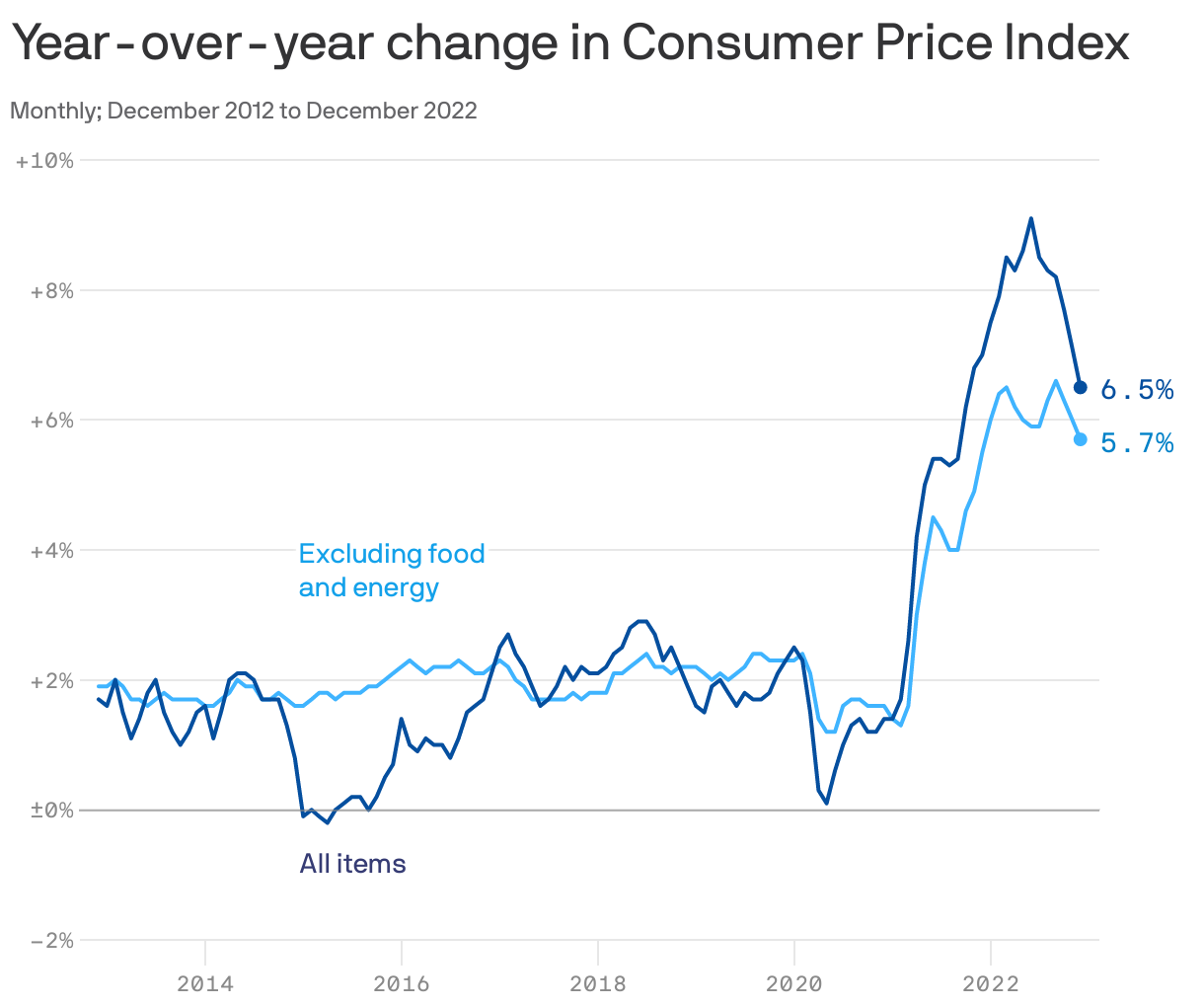
The index, which captures price changes across a basket of consumer goods and services, fell 0.1%, following an increase by the same amount in November. Over the past 12 months ending in December, the index is up 6.5%, falling from 7.1% through November.

  • Core CPI, which excludes food and fuel costs, rose by 0.3% last month. Over the last 12 months through December, the index rose 5.7%. In November, those figures were 0.2% and 6%, respectively.

Why it matters:

The hot inflation that persisted through much of last year continues to show signs of receding — offering at least some relief for shoppers, the White House and the Federal Reserve, though some underlying inflation pressure remains.

Where it stands:

The data caps a year in which consumer prices rose rapidly, though the pace of cost increases began to slow in the final months of the year.

  • As consumers shifted spending and supply chains began to heal, price increases for a range of goods have cooled or, in some cases, costs have fallen outright.

Between the lines:

The Federal Reserve, which has been raising interest rates aggressively to tame inflation, is watching the services sector closely, where inflation can be more challenging to stamp out.

  • A sub-index measuring price moves within the services category (excluding housing) accelerated by 0.4%, after two straight months of cooler readings
  • Still, in the 12 months through December, this sub-index is up 7.4% (compared to 7.3% in November).

Inflation cools in November for the second-straight month

Following a cooler-than-expected inflation reading in October, consumer price gains slowed even further last month: the Consumer Price Index rose 7.1% in the year ending in November, down from 7.7% the prior month, the Labor Department said on Tuesday.

Why it matters: Inflation is still way too high, but the data offers some hope that it can ease alongside a still-healthy economy.

By the numbers: On a monthly basis, CPI rose 0.1%, slower than the 0.4% in October.

  • Core CPI, which strips out volatile food and energy costs, also continued to ease. On a monthly basis, it rose 0.2% — up 6% over the 12 months ending in November.
  • In October, those figures were 0.3% and 6.3%, respectively.

Where it stands: The Federal Reserve has raced to try to get inflation under control, raising interest rates at a historic clip — moves that risk throwing the economy into a recession.

  • Officials will likely raise rates by a smaller (but still historically huge) amount following a two-day policy meeting that concludes on Wednesday.
  • That will come after surprisingly cooler inflation readings, though officials have warned that its war on inflation is far from over.

Inflation cools more than expected in October

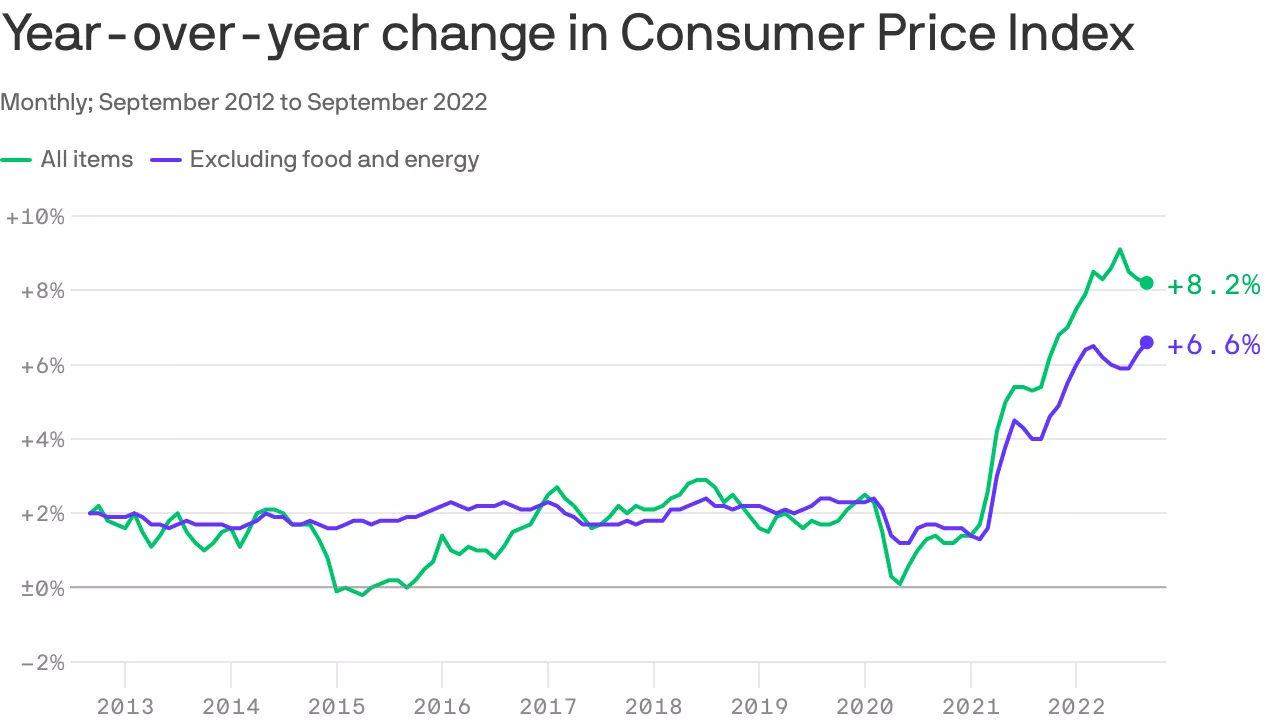
The Consumer Price Index cooled more than expected in October: it rose 7.7% from a year earlier, down from 8.2% the prior month, the Labor Department said on Thursday.

Why it matters: Inflation still remains painfully high, but a bigger-than-expected easing in price pressures for items like used cars and apparel helped pull the overall index down.

By the numbers: On a monthly basis, CPI rose 0.4%, the same pace as September.

  • Core CPI, a closely watched gauge that strips out volatile food and energy costs, eased in October. On a monthly basis, it rose 0.3% — up 6.3% from a year ago.
  • In September, those figures were 0.6% and 6.6%, respectively.

Catch up quick: Soaring costs have eroded many Americans’ wage gains, souring their view on the economy that has otherwise held up.

  • Supply chain problems have led to shortages of vehicles and other consumer goods, which pushed up prices. Russia’s invasion of Ukraine has created a volatile backdrop for energy costs.
  • Those supply chain pressures have eased and consumers have dialed back demand for goods, pushing prices down. But costs for services have raced ahead.

Where it stands: The Fed has raced to try to get inflation under control, raising interest rates at a historic clip.

  • In recent months, inflation data has surprised to the upside. That’s kept officials on an aggressive path to slow the economy down, with the hope inflation will follow suit. Those moves have risked throwing the economy into a recession.

U.S. adds solid 315,000 jobs in August

America had another month of solid job gains: The economy added 315,000 jobs in August, while the unemployment rate ticked up to 3.7% as more workers entered the labor force, the government said on Friday.

Why it matters: Employers continue to hire workers at a robust pace, even as the Federal Reserve raises interest rates swiftly to crush inflation.

  • Job growth eased from July’s breakneck pace, which were revised a tick higher to 528,000 jobs. Job growth in June was weaker than initially thought, downwardly revised by 100,000 to 293,000.
  • The August figures are roughly in line with economists’ expectations.

Details: Perhaps the most welcoming piece of news in the report is the influx of workers who entered the labor force last month. The labor force participation rate — the share of people working or looking for work — rose by 0.3 percentage points, after a string of monthly declines.

  • Average hourly earnings rose by 0.3%, a slowdown from the 0.5% rate in July.

The backdrop: The Fed has been bracing for some heat to come out of the labor market. It has raised interest rates at a historically rapid pace in a bid to squash elevated inflation. This report offers some good news as wage growth slowed — and more workers entered the workforce, helping ease the tightness in the labor market.

  • Higher rates work to slow demand by making it pricier for consumers and companies to borrow money, causing slower economic growth and, in turn, less price pressure.
  • “While higher in­ter­est rates, slower growth, and softer la­bor mar­ket con­di­tions will bring down in­fla­tion, they will also bring some pain to house­holds and busi­nesses,” chair Jerome Powell said last week.

Inflation drops to zero in July due to falling gas prices

Consumer prices were unchanged in July, as plunging prices for gasoline dragged the Consumer Price Index down to zero. Core inflation, which excludes energy and food, rose only 0.3%, below what analysts expected.

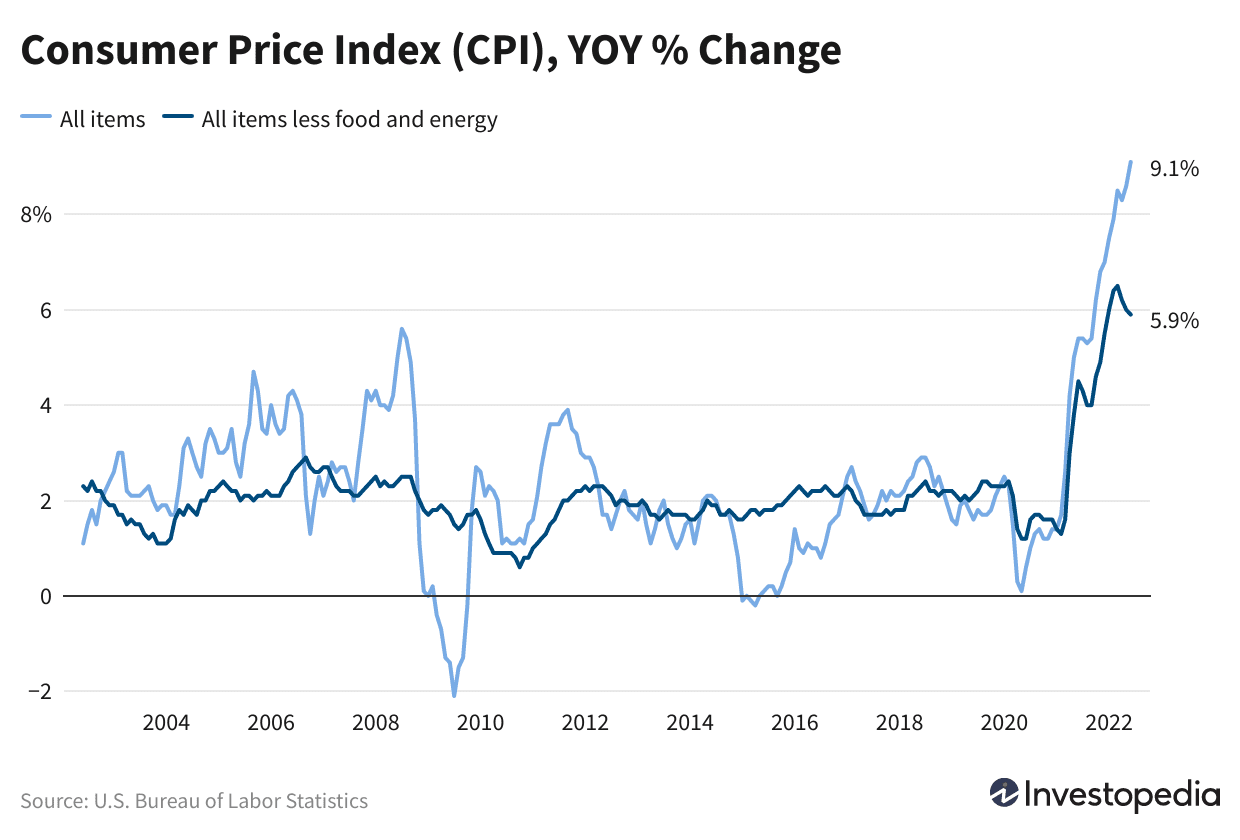
Driving the news: The Labor Department reported that overall consumer prices rose 0% last month, and are up 8.5% over the past year. That compares to a 9.1% year-over-year reported in June.

Why it matters: Falling gasoline prices are clearly giving American consumers some inflation relief, and the broader inflation picture was more favorable in July than economists had expected.

By the numbers: Gasoline prices fell 7.7% in July, dragging down headline inflation. Other items with falling prices included used cars and trucks (-0.4%) and airfares (down 7.8%).

  • But rents kept rising, a major factor in stubbornly high underlying inflation. Renters faced a 0.7% rise in costs.

What’s next: The Federal Reserve has indicated it intends to keep raising interest rates until there is clear evidence inflation is waning. After two straight months of extremely hot inflation readings, this report will be welcome news.

The Fed’s big mistake

The Federal Reserve just raised interest rates by three-quarters of a percentage point, the biggest single increase in interest rates since 1994. It’s another move in the Fed’s effort to tackle the fastest inflation in four decades.

I understand the Fed’s urgency, but it has entered dangerous territory. If the Fed continues down this path – as it has signaled it will – the economy will be plunged into a recession. Every time over the last half century the Fed has raised interest rates this much and this quickly, it has caused a recession.

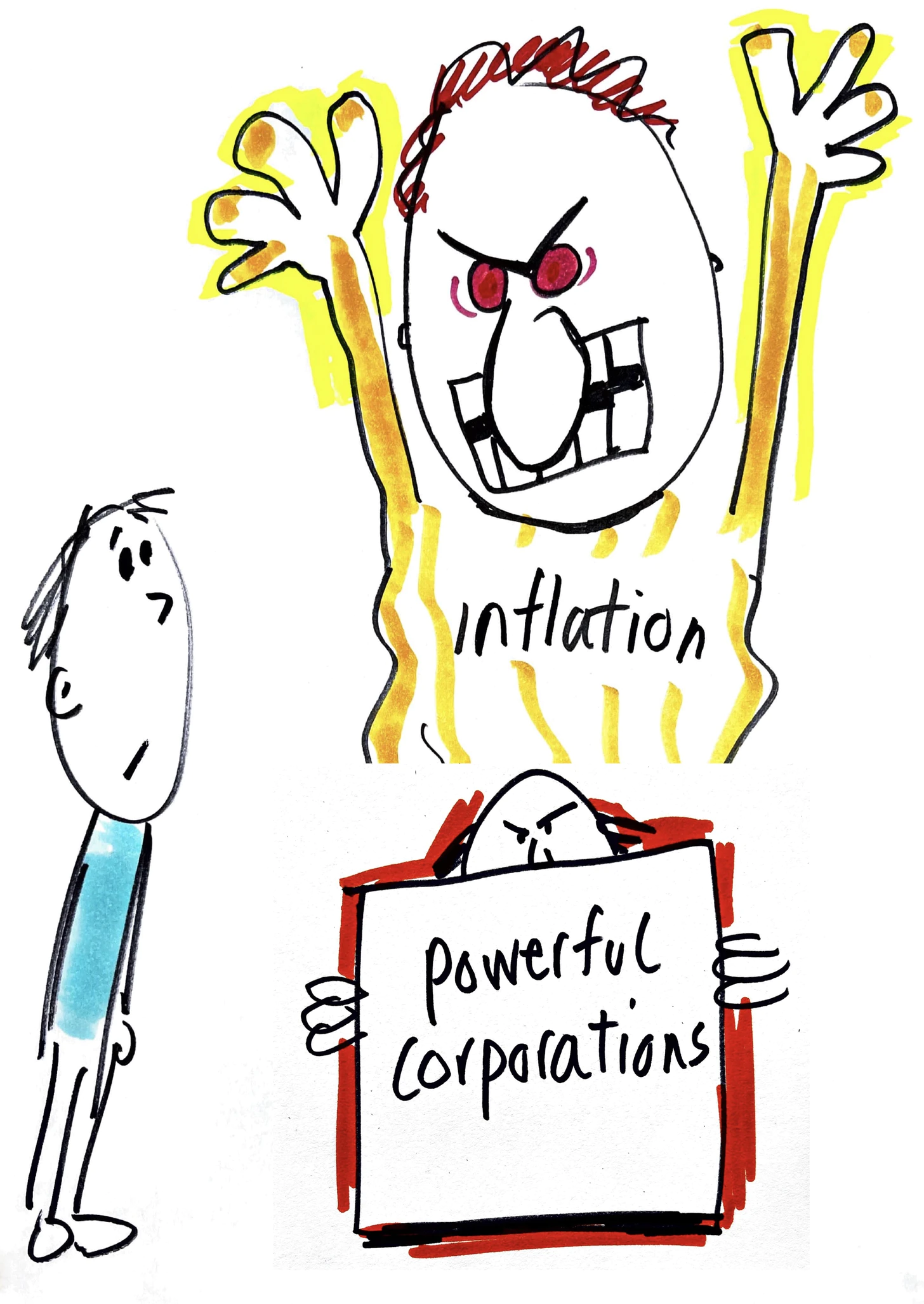
Besides, interest rate increases will not remedy the major causes of the current inflation – huge pent-up worldwide demand from two years of pandemic, shortages of goods and services responding to that demand, Putin’s war in Ukraine, and big profitable corporations with enough pricing power to use inflation as a cover for pushing up prices even further.

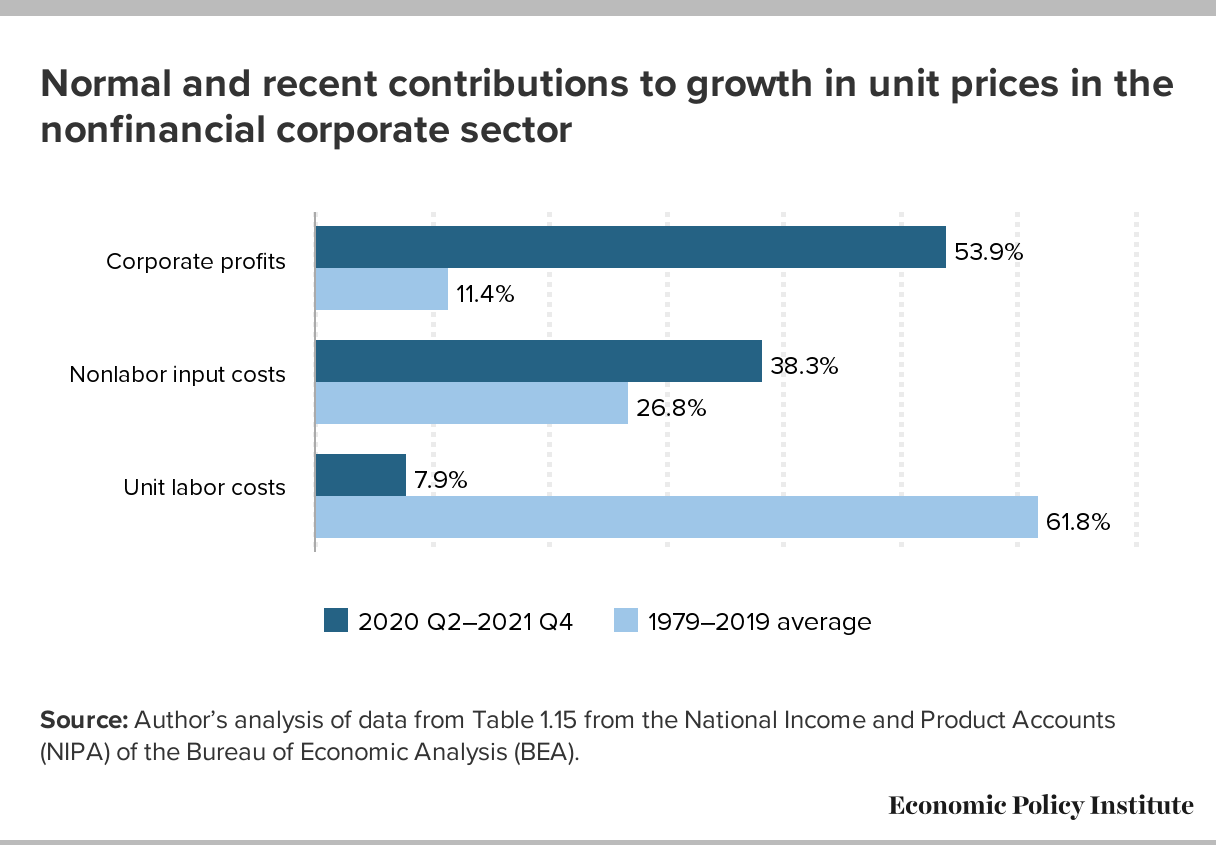
The Fed assumes that price increases are being driven by wage increases — so-called “wage-price inflation.” That’s incorrect. Wages are lagging behind inflation. A more accurate description of what we’re now seeing might be called “profit-price inflation” — prices driven upward by corporations seeking increased profits. (See chart below, from the Economic Policy Institute.)

A recession will be especially harmful to people who are most vulnerable to downturns in the economy — who are the first to be fired (and last to be hired again when the economy turns upward): lower-wage workers, disproportionately women and people of color.  

The Fed is making a big mistake.

The winter jobs boom

It was a winter of surging job creation. Employers created jobs on a mass scale, Americans returned to the workforce, and the labor market shrugged off the Omicron variant and its broader pandemic funk.

  • That’s the takeaway from the February jobs report, which showed employers added 678,000 jobs last month. December and January job growth was better than previously thought, and the unemployment rate fell to 3.8%.

Why it matters: Yes, inflation is high as prices rose 7.5% over the last year as of January, and could rise higher as disruptions from the Ukraine war ripple through the economy.

  • But rising prices are coming amid an astonishingly rapid jobs boom.

Between the lines: The report shows the pandemic impact is fading. But some analysts warn not to expect this level of gains to continue as the crisis in Ukraine cuts into growth.

  • “The improvement in the American labor market is now very much a rearview mirror phenomenon,” economist Joe Brusuelas wrote in a research note.

One big surprise: Wage growth was essentially nonexistent, with average hourly earnings rising only a penny to $31.58.

  • That may reflect the nature of the jobs being added — disproportionately in the low-paying leisure and hospitality sector.
  • That is good news for those worried that rising wages and prices will drive further inflation. It is worse news for workers, whose average pay gain of 5.1% over the last year is far below inflation.

The share of adults in the labor force — which includes those looking for work — ticked up, as did the share of the population that’s actually employed. That suggests the robust job growth is pulling people back into the workforce, if gradually.

  • The labor force participation rate was 62.3% in February, more than a percentage point below its level two years ago, before the pandemic.

State of play: The Federal Reserve is set to begin an interest rate hiking campaign on March 16, amid high inflation and new geopolitical uncertainty from the Ukraine war. The new numbers are unlikely to change that one way or the other.

The Pandemic’s Most Treacherous Phase

https://www.project-syndicate.org/commentary/us-pandemic-crisis-will-worsen-in-october-by-barry-eichengreen-2020-09?utm_source=Project+Syndicate+Newsletter&utm_campaign=d57658f7c7-sunday_newsletter_13_09_2020&utm_medium=email&utm_term=0_73bad5b7d8-d57658f7c7-105592221&mc_cid=d57658f7c7&mc_eid=5f214075f8

The most dangerous phase of the COVID-19 crisis in the US may actually be now, not last spring. If the economy falters a second time, whether because of inadequate fiscal stimulus or flu season and a second COVID-19 wave, it will not receive the additional monetary and fiscal support that protected it in the spring.

April marked the most dramatic and, some would say, dangerous phase of the COVID-19 crisis in the United States. Deaths were spiking, bodies were piling up in refrigerated trucks outside hospitals in New York City, and ventilators and personal protective equipment were in desperately short supply. The economy was falling off the proverbial cliff, with unemployment soaring to 14.7%.

Since then, supplies of medical and protective equipment have improved. Doctors are figuring out when to put patients on ventilators and when to take them off. We have recognized the importance of protecting vulnerable populations, including the elderly. The infected are now younger on average, further reducing fatalities. With help from the Coronavirus Aid, Relief, and Economic Security (CARES) Act, economic activity has stabilized, albeit at lower levels.

Or so we are being told.

In fact, the more dangerous phase of the crisis in the US may actually be now, not last spring. While death rates among the infected are declining with improved treatment and a more favorable age profile, fatalities are still running at roughly a thousand per day. This matches levels at the beginning of April, reflecting the fact that the number of new infections is half again as high.

Mortality, in any case, is only one aspect of the virus’s toll. Many surviving COVID-19 patients continue to suffer chronic  and impaired mental function. If 40,000 cases a day is the new normal, then the implications for morbidity – and for human health and economic welfare – are truly dire.

And, like it or not, there is every indication that many Americans, or at least their current leaders, are willing to accept 40,000 new cases and 1,000 deaths a day. They have grown inured to the numbers. They are impatient with lockdowns. They have politicized masks.

This is also a more perilous phase for the economy. In March and April, policymakers pulled out all the stops to staunch the economic bleeding. But there will be less policy support now if the economy again goes south. Although the Federal Reserve can always devise another asset-purchase program, it has already lowered interest rates to zero and hoovered up many of the relevant assets. This is why Fed officials have been pressing the Congress and the White House to act.

Unfortunately, Congress seems incapable of replicating the bipartisanship that enabled passage of the CARES Act at the end of March. The $600 weekly supplement to unemployment benefits has been allowed to expire. Divisive rhetoric from President Donald Trump and other Republican leaders about “Democrat-led” cities implies that help for state and local governments is not in the cards.

Consequently, if the economy falters a second time, whether because of inadequate fiscal stimulus or flu season and a second COVID-19 wave, it will not receive the additional monetary and fiscal support that protected it in the spring.

The silver bullet on which everyone is counting, of course, is a vaccine. This, in fact, is the gravest danger of all.

There is a high likelihood that a vaccine will be rolled out in late October, at Trump’s behest, whether or not Phase 3 clinical trials confirm its safety and effectiveness. This specter conjures memories of President Gerald Ford’s rushed swine flu vaccine, also prompted by a looming presidential election, which resulted in cases of Guillain-Barré syndrome and multiple deaths. This episode, together with a fraudulent scientific paper linking vaccination to autism, did much to help foster the modern anti-vax movement.5

The danger, then, is not merely side effects from a flawed vaccine, but also widespread public resistance even to a vaccine that passes its Phase 3 clinical trial and has the support of the scientific community. This is especially worrisome insofar as skepticism about the merits of vaccination tends to rise anyway in the aftermath of a pandemic that the public-health authorities, supposedly competent in such matters, failed to avert.

Studies have shown that living through a pandemic negatively affects confidence that vaccines are safe and disinclines the affected to vaccinate their children. This is specifically the case for individuals who are in their “impressionable years” (ages 18-25) at the time of exposure, because it is at this age that attitudes about public policy, including health policy, are durably formed. This heightened skepticism about vaccination, observed in a variety of times and places, persists for the balance of the individual’s lifetime.

The difference now is that Trump and his appointees, by making reckless and unreliable claims, risk aggravating the problem. Thus, if steps are not taken to reassure the public of the independence and integrity of the scientific process, we will be left only with the alternative of “herd immunity,” which, given COVID-19’s many known and suspected comorbidities, is no alternative at all.

All this serves as a warning that the most hazardous phase of the crisis in the US will most likely start next month. And that is before taking into account that October is also the beginning of flu season.


The Fed’s independence helped it save the US economy in 2008 – the CDC needs the same authority today

https://theconversation.com/the-feds-independence-helped-it-save-the-us-economy-in-2008-the-cdc-needs-the-same-authority-today-142593

Centers for Disease Control and Prevention

The image of scientists standing beside governors, mayors or the president has become common during the pandemic. Even the most cynical politician knows this public health emergency cannot be properly addressed without relying on the scientific knowledge possessed by these experts.

Yet, ultimately, U.S. government health experts have limited power. They work at the discretion of the White House, leaving their guidance subject to the whims of politicians and them less able to take urgent action to contain the pandemic.

The Centers for Disease Control and Prevention has issued guidelines only to later revise them after the White House intervened. The administration has also undermined its top infectious disease expert, Dr. Anthony Fauci, over his blunt warnings that the pandemic is getting worse – a view that contradicts White House talking points.

And most recently, the White House stripped the CDC of control of coronavirus data, alarming health experts who fear it will be politicized or withheld.

In the realm of monetary policy, however, there is an agency with experts trusted to make decisions on their own in the best interests of the U.S. economy: the Federal Reserve. As I describe in my recent book, “Stewards of the Market,” the Fed’s independence allowed it to take politically risky actions that helped rescue the economy during the financial crisis of 2008.

That’s why I believe we should give the CDC the same type of authority as the Fed so that it can effectively guide the public through health emergencies without fear of running afoul of politicians.


The paradox of expertise

There is a paradox inherent in the relationship between political leaders and technical experts in government.

Experts have the training and skill to apply scientific knowledge in complex biological and economic systems, yet democratically elected political leaders may overrule or ignore their advice for ill or good.

This happened in May when the CDC, the federal agency charged with controlling the spread of disease, removed advice regarding the dangers of singing in church choirs from its website. It did not do so because of new evidence. Rather, it was because of political pressure from the White House to water down the guidance for religious groups.

Similarly, the White House undermined the CDC’s guidance on school reopenings and has pressured it to revise them. So far, it seems the CDC has rebuffed the request.

The ability of elected leaders to ignore scientists – or the scientists’ acquiescence to policies they believe are detrimental to public welfare – is facilitated by many politicians’ penchant for confident assertion of knowledge and the scientist’s trained reluctance to do so.

Compare Fauci’s repeated comment that “there is much we don’t know about the virus” with President Donald Trump’s confident assertion that “we have it totally under control.”


Experts with independence

Given these constraints on technical expertise, the performance of the Fed in the financial crisis of 2008 offers an informative example that may be usefully applied to the CDC today.

The Federal Reserve is not an executive agency under the president, though it is chartered and overseen by Congress. It was created in 1913 to provide economic stability, and its powers have expanded to guard against both depression and crippling inflation.

At its founding, the structure of the Fed was a political compromise designed make it independent within the government in order to de-politicize its economic policy decisions. Today its decisions are made by a seven-member board of governors and a 12-member Federal Open Market Committee. The members, almost all Ph.D. economists, have had careers in academia, business and government. They come together to analyze economic data, develop a common understanding of what they believe is happening and create policy that matches their shared analysisThis group policymaking is optimal when circumstances are highly uncertain, such as in 2008 when the global financial system was melting down.

The Fed was the lead actor in preventing the system’s collapse and spent several trillion dollars buying risky financial assets and lending to foreign central banks – decisions that were pivotal in calming financial markets but would have been much harder or may not have happened at all without its independent authority.

The Fed’s independence is sufficiently ingrained in our political culture that its chair can have a running disagreement with the president yet keep his job and authority.


Putting experts at the wheel

A health crisis needs trusted experts to guide decision-making no less than an economic one does. This suggests the CDC or some re-imagined version of it should be made into an independent agency.

Like the Fed, the CDC is run by technical experts who are often among the best minds in their fields. Like the Fed, the CDC is responsible for both analysis and crisis response. Like the Fed, the domain of the CDC is prone to politicization that may interfere with rational response. And like the Fed, the CDC is responsible for decisions that affect fundamental aspects of the quality of life in the United States.

Were the CDC independent right now, we would likely see a centralized crisis management effort that relies on the best science, as opposed to the current patchwork approach that has failed to contain the outbreak nationally. We would also likely see stronger and consistent recommendations on masks, social distancing and the safest way to reopen the economy and schools.

Independence will not eliminate the paradox of technical expertise in government. The Fed itself has at times succumbed to political pressure. And Trump would likely try to undermine an independent CDC’s legitimacy if its policies conflicted with his political agenda – as he has tried to do with the central bank.

But independence provides a strong shield that would make it much more likely that when political calculations are at odds with science, science wins.


State of the Union: by Paul Field

Image may contain: text that says 'Whoever Paul Field is he hit the nail on the head. Field PM own opinion, but you post Everyone entitled silly "Welcome Socialism... You Socialism. the wealthiest, geographically advantaged, productive people. about This failure our, "Booming economy," modest challenges. tis the market dissonance stores, farmers/producers and crisis about corporations needing emergency bailout longest history ending interest with being unable equipped provide healthcare, time post profits. crisis response depending antiquated systems nobody remembers operate. But all, politicization the for the benefit of education, science, natural lifestyles, lifestyles, charity, compassion, virtually else for brief gain gutted our society.'