Kaiser Permanente: 8 key capabilities for a sustained response to COVID-19

https://www.fiercehealthcare.com/hospitals/kaiser-permanente-8-key-capabilities-for-a-sustained-response-to-covid-19?mkt_tok=eyJpIjoiT1dRNE5UVmhOR014WVRBNSIsInQiOiJMbGJHalA3UVBpNnpFb1dmMlozajNmSmJ1ZFZMYjgxUWJqdER6dmdteENYZnVYVlg0ZFdpRDIwVTh6ZW56MjNVTTVHbm9mWHFtTVlPcllUN1JjbHpiUGw5MFJxVnpHN3JaRFhMdGZSdUdlSHdQRjBqbnY1Ym9pUTErbDdEdThOZSJ9&mrkid=959610

Kaiser Permanente: 8 key capabilities for a sustained response to ...

As the industry braces for the next phase of COVID-19, experts at Kaiser Permanente are sharing several key capabilities that will be critical to prepare for another potential surge.

In an article for NEJM Catalyst, leaders at the healthcare giant highlight eight focus areas health systems must consider as the country reopens and offer a look at how Kaiser Permanente tackled those challenges.

A critical starting point, they write, is a robust testing program that feeds into essential contact tracing and monitoring of any spikes in cases. As of May 18, Kaiser Permanente has performed more than 233,706 diagnostic tests and is also tracking the spread telephonically through its call centers as well as secure emails between patients and doctors.

The Oakland, California-based system is also mulling greater use of patient symptom surveying and harnessing data within electronic health records to further enhance the testing effort, according to the article.

Stephen Parodi, M.D., executive vice president at The Permanente Federation and Kaiser Permanente’s national infectious disease leader, told Fierce Healthcare that the goal of the paper is to spotlight how crucial it is to consider all fronts in preventing the spread of COVID-19.

“I think one of the biggest takeaways here is that we need a complete and comprehensive approach to suppress the virus,” Parodi, one of the report’s lead authors, said.

Bechara Choucair, M.D., senior vice president and chief health officer at Kaiser Permanente, is also one of the paper’s lead authors.

The other capabilities included in the report are:

  • Enhanced contact tracing and isolation efforts
  • Robust community health efforts
  • Home health care options
  • Ability to maintain surge capacity
  • Targeted and safe strategies to reopen
  • Ongoing research on the virus
  • Effective communication with patients

Parodi said two of the biggest challenges Kaiser Permanente faced in working through this checklist of capabilities were a lack of supplies and the need to work alongside other organizations.

He said that didn’t only mean strengthening and reinforcing existing relationships with community groups but also reaching out to other health systems and providers to coordinate plans and work together.

It also required coordination between officials and policymakers at all levels of government, he said.

“Having the leaders at individual medical centers working with the county level folks is really key to making sure that we’re aware of each other’s work and response, then actually syncing them together,” Parodi said.

Parodi also said that Kaiser Permanente went “wholesale” into using telehealth during the initial surge of COVID-19 cases, and now the system and its physicians will be working together to determine where virtual care is most appropriate and effective, as the interest in and growth of those services isn’t going away anytime soon.

He added that moving into the reopening phase poses its own set of challenges, because it’s an “unprecedented” situation to navigate.

Kaiser Permanente is aiming to center shared decision-making and patient education in the response to reopening, he said, while also providing guidance to support providers. That way, decisions are ultimately made by the doctor and patient, but they’re informed and guided decisions, he said.

“There is no set playbook for how to do it right,” Parodi said.


States are wrestling on their own with how to expand testing, with little guidance from the Trump administration

https://www.washingtonpost.com/politics/states-are-wrestling-on-their-own-with-how-to-expand-testing-with-little-guidance-from-the-trump-administration/2020/06/09/d02672f4-9bab-11ea-ad09-8da7ec214672_story.html?utm_campaign=Newsletter%20Weekly%20Roundup%3A%20Healthcare%20Dive%3A%20Daily%20Dive%2006-13-2020&utm_medium=email&utm_source=Sailthru

States are wrestling on their own with how to expand testing, with ...

In Maryland, drive-through coronavirus testing sites are now open to all residents, whether or not they show signs of illness.

In Oregon, by contrast, officials have said that generally only people with symptoms of covid-19, the illness associated with the coronavirus, should be tested — even in the case of front-line health-care workers.

In Rhode Island, officials have proactively tested all of the state’s 7,500 nursing home residents, including those with no symptoms, and are developing plans to test more people in high-risk workplaces, such as restaurants and grocery stores.

The wide range of approaches across the country comes as the federal government has offered little guidance on the best way to test a broad swath of the population, leaving state public health officials to wrestle on their own with difficult questions about how to measure the spread of the virus and make decisions about reopening their economies.

Faced with conflicting advice from experts in the field, states are using different tests that vary in reliability and have adopted a variety of policies about who else should get tested and when — particularly when it comes to asymptomatic people who are considered low-risk for the illness.

“The states are on their own,” said Kelly Wroblewski, director of infectious diseases at the Association of Public Health Laboratories, noting that the kind of guidance the federal government routinely gives in screening for flu and other outbreaks “has been absent” in the covid-19 pandemic. “There has been no coordination.”

That means that while tests are available to anyone who wants them in states such as Kentucky and Georgia and some large cities such as Detroit and Los Angeles, state officials in Idaho and Louisiana continue to recommend that only sick people get tested.

The lack of a unified national strategy has left Americans uncertain about whether and how to be tested and is hampering reopening plans, experts warn.

Many officials now worry that protests in more than 100 U.S. cities in recent days after the death of George Floyd in police custody, which have drawn thousands of people packed closely together, could spark new infections.

So far, about 460,000 Americans are being tested a day — 0.15 percent of the population, and still shy of the 900,000 to 30 million that experts say need to be tested daily to capture the extent of the virus’s spread.

“The case numbers we’re seeing are probably massively undercounted,” said Divya Siddarth, a researcher who helped devise a testing strategy for Harvard University’s Safra Center that emphasizes finding and suppressing the disease in areas with fewer cases. “These [lower prevalence] regions are likely to reopen, and they’ve barely done any tests.”

The lack of clear information is forcing businesses large and small, schools, universities and professional sports organizations to make their own decisions about how much testing they need to be safe.

Some institutions have announced their own plans for universal testing. The National Hockey League, for example, has said it plans to test all players daily as part of a plan to resume play in June. The University of Arizona has developed its own antibody test that’s available to all students and local health-care workers.

Under a law passed earlier this year, the Trump administration is required to develop a national testing strategy. But an 81-page document submitted to Congress by the Department of Health and Human Services late last month was not released publicly and offered few detailed recommendations.

The Washington Post obtained a copy of the plan, which set a goal for states of testing at least 2 percent of their residents in May and June. But how to meet that benchmark and whether to go further was left up to state leaders who were required to submit plans this month to HHS for review.

The Centers for Disease Control and Prevention has recommended universal testing for residents of nursing homes, which have been especially hit hard by the coronavirus. But the HHS document said the CDC was still working on guidelines for other large populations of mostly asymptomatic people — including at universities, prisons and “critical infrastructure worksites” — as well as those for integrating testing into reopening work places.

Mia Palmieri Heck, a spokeswoman for HHS, said the federal government “has provided prescriptive criteria about testing asymptomatic individuals when they affect highly vulnerable populations such as individuals who live in nursing homes, working in or visiting health-care clinics or communal dining spaces.” She added that federal experts have also been advising states on developing plans to more broadly test people without symptoms to determine community spread.

The question of asymptomatic testing is particularly tricky given that the CDC late last month said that its researchers now believe as many as 35 percent of people infected with the coronavirus never show symptoms of disease.

Typifying the kind of conflicting information facing states, a World Health Organization official sparked global confusion on Monday when she said it is “very rare” for people with no symptoms to transmit the disease. After significant pushback from researchers, the official said Tuesday that scientists continue to believe that people without symptoms do in fact spread the virus — but more research is needed to understand by how much.

She noted that some modeling shows as much as 41 percent of transmission may be due to asymptomatic people.

“In some ways, this may be the Achilles’ heel of the entire testing challenge for this virus,” said Ashish Jha, director of the Harvard Global Health Institute, who has advocated for increasing the number of people getting tested.

Local and state health officials worry that the lack of coherent strategy could result in tests becoming widely available for the affluent, while remaining limited for those with fewer resources, including minority communities that have already been disproportionately affected by the virus.

At the University of Arizona, officials plan to reserve molecular swab tests, which determine if a person is currently infected, for symptomatic students and their contacts. Each test is about $50 to $75 dollars; there are 60,000 students, staff and faculty and each would have to be tested repeatedly.

“Maybe the NFL can afford that; we can’t, and I don’t know any university that can,” said Robert C. Robbins, the university’s president.

‘Box the virus in’

When coronavirus cases began to mount in March, a severe shortage of test kits and supplies meant tests were sharply rationed. Even after it was clear that the virus was spreading in the United States, the CDC at first recommend only testing people who had visited China or been in contact with someone who had.

Later, federal officials suggested that younger, healthy people did not necessarily need testing even if they were experiencing coronavirus symptoms, reasoning that the tests should be reserved for hospitalized patients for whom a positive result might make a difference in treatment plan.

As tests have become more available, officials have begun to recommend that anyone who is experiencing signs of illness, even a mild cough or sore throat, get one.

The goal is to identify and quarantine people with the disease, and then use contact tracers to track down people who have interacted with that person and quarantine them as well.

“Testing is just part of a comprehensive strategy,” former CDC director Tom Frieden said. “As you emerge from that sheltering situation, you box the virus in.”

But when it comes to testing people without symptoms, state recommendations vary.

About at least half of states aim to test people identified as contacts of known positive cases, according to a Post tally, as was recommended in new guidance from the CDC this week. But many others tell those people to self-isolate for 14 days.

“Every state is figuring this out on its own, little bit by little bit,” said Philip Chan, medical director for the Rhode Island Department of Health.

Nearly all states have set aside thousands of tests for people in congregate settings — residential settings where large numbers of people live in proximity, especially nursing homes and prisons.

But only a handful of states have so far satisfied the CDC goal to test everyone living in a nursing home, where the age and underlying medical conditions of residents make them especially vulnerable to covid-19 outbreaks.

Some states have also prioritized testing front-line health-care workers and other people working elbow-to-elbow in manufacturing facilities, particularly meatpacking plants, which have been hit hard by the virus.

Even states that have conducted widespread testing in such facilities face difficult questions about whether a single round of testing is sufficient, given that people could easily contract the virus at any time, including after testing negative.

“There’s not a lot of communication between the states and there’s not a lot of specifics, so everybody’s kind of going on their own,” Wroblewski said.

A tricky disease

A number of states and large cities, such as Detroit and Los Angeles, have opened drive-through testing sites like those offered in Maryland, a mode of mass testing used effectively overseas in South Korea and elsewhere.

Experts have warned that drive-through sites often fail to collect enough information from those tested to follow up effectively. They also prioritize people who choose to show up, tending to mean tests go to better educated and informed residents and not necessarily those most likely to have been exposed to the virus.

In Macon, Ga., the Moonhanger Group set up drive-through testing for employees returning to work at their four restaurants. But they did not wait for the results, or for all employees to get tested, before reopening on May 26.

“We were confident, based on the low number of positive results reported in Bibb county, that none of our employees would test positive and we hoped to share that news with the public,” owner Wes Griffith wrote on Facebook. “Unfortunately and surprisingly, we have employees who have tested positive. All of them were a-symptomatic.” Griffith did not respond to a request for comment.

Three of the four restaurants had to quickly close again, pending further testing.

In Georgia, public officials are advertising on radio and social media to encourage anyone to get tested at drive-through sites.

Those tested have included political leaders, who got tested largely to encourage others to do so too, only to find themselves “shocked” when their results came back positive, said Phillip Coule, chief medical officer of the Augusta University Health System, which is partnering with the state on testing.

“It’s a great demonstration of how tricky this disease is,” he said.

Other states have downplayed asymptomatic testing as unreliable or a poor use of resources.

Coule noted that the message, “If you want a test, you can get a test,” puts the onus for deciding who should get tested on individuals, rather than prioritizing the highest-risk or the most vulnerable. One of his patients, he noted, sought a test because he wanted to honeymoon in St. Lucia and needed a negative result to enter the country.

Oregon only opened testing to front-line workers and long-term care residents without symptoms in April and continues not to recommend asymptomatic testing, saying on the state website that it is “not useful” because the false negative rate is high. Viral tests have been estimated to have up to a 20 percent false negative rate.

At a recent news conference, Oregon Health Authority Chief Medical Officer Dana Hargunani said people without symptoms are “unlikely or certainly less likely to cause transmission of the virus.”

‘It’s like a war’

For states looking to figure out who to test and when, advice from national experts has been abundant — but not always consistent.

Proposals from academics and other experts vary widely in their recommendations of the numbers of tests that should be performed each day, and many do not offer guidance about who should be tested.

Some researchers have recommended focusing on parts of the country that have few cases in hopes of stamping out the disease.

“We should quickly get resources to places where the disease can be suppressed, then backfill tests in the places currently overwhelmed,” said Glen Weyl, an economist at Microsoft, who worked on the Harvard University proposal. “It’s like a war — you have to more troops than the enemy in order to win a battle.”

Other researchers have proposed blanketing the country with tests, with a focus on places experiencing clear outbreaks.

Paul Romer, an economist at New York University, said there should be mass testing in hot spots that is quickly expanded to near-universal, constant testing for everyone — 23 million tests a day, noting that the cost of tests have dropped.

“It would be feasible if we just invested and made it happen,” he said.

Other countries have used aggressive and organized testing to help stop the spread of the virus. South Korea — where the first case of the coronavirus was diagnosed on the same day as in the United States — quickly started mass testing at drive-through sites to spot and isolate cases.

The government has also instituted a sophisticated and aggressive effort to trace contacts of any known case, to squelch outbreaks. After several people who visited nightclubs in Seoul tested positive in early May, the government within two weeks tracked down 46,000 people who might have been exposed and tested them all.

In Wuhan, China, the site of the world’s first major coronavirus outbreak, government officials said they tested nearly 10 million of the city’s 11 million residents since mid-May, part of an effort to test universally and ensure the city doesn’t experience a new wave of infections.

Still, many experts agree that completely random asymptomatic testing is not an effective strategy.

A report issued late last month by the Center for Infectious Disease Research and Policy at the University of Minnesota called for ramping up testing nationwide, including in some congregate settings and as part of public health research. But the report found that widespread testing of people without symptoms was not advisable in most workplaces, in schools or in the broader community.

Researchers at the center found such testing could waste precious resources and could cause problems for communities, given that the tests are not fully reliable.

“There’s been far too much of this group think around, ‘test, test, test,’ without understanding what it’s accomplishing,” said Michael Osterholm, the director of the center. “You need the right test, at the right time, for the right reasons.”

The report’s central recommendation: that HHS form a blue-ribbon commission with national experts to formulate advice for states.


Masks now seen as vital tool in coronavirus fight

Masks now seen as vital tool in coronavirus fight

Masks now seen as vital tool in coronavirus fight | TheHill

Evidence is mounting that widespread mask-wearing can significantly slow the spread of coronavirus and help reduce the need for future lockdowns. 

Public health authorities did not initially put an emphasis on masks, but that’s changed and there is now increasing consensus that they play an important role in hindering transmission of the virus at a time when wearing one has become politicized as some states and businesses have made them a requirement for certain activities.

Wearing a mask is also seen by experts as a relatively easy action that could help avoid much costlier responses like stay at home orders and closing businesses.

“It’s a lot less economically disruptive to wear a mask than to shut society, so I can’t understand some of the resistance to mask wearing,” Tom Frieden, the former director of the Centers for Disease Control and Prevention (CDC), said on a call with reporters on Thursday.

Experts say mask-wearing is not the only response needed to slow the spread of the virus. Avoiding crowds and staying six feet apart from others is also important, as is an effective system of testing and contact tracing so people can quarantine and prevent further spread. 

study from University of Cambridge researchers this week found that widespread mask-wearing can help prevent a resurgence of the virus with less reliance on lockdowns that have proven economically devastating.

The modeling in the study found that if 50 percent or more of the population routinely wore masks, each infected person would on average spread the virus to less than one additional person, causing the outbreak to decline, the university said.

“We have little to lose from the widespread adoption of facemasks, but the gains could be significant,” Renata Retkute, one of the authors of the study, said in a statement. 

Scott Gottlieb, the former FDA Commissioner for President Trumppointed to the study on Twitter this week and wrote: “More widespread masking with higher quality masks could help mitigate a second wave.”

It cannot be ruled out that further lockdowns will be needed, but wearing a mask is one part of a strategy to help avoid them, according to Joshua Sharfstein, vice dean at the Johns Hopkins Bloomberg School of Public Health.

“I think it could substantially help open workplaces, but I’d still want to maximize distancing,” he said.

The emphasis on masks has been slow to develop in some places. The World Health Organization did not issue a recommendation for the general public to wear masks until last week, previously only saying people who are sick and those caring for them should use masks.

In the early days of the outbreak in the United States, there was also concern about the general public using up masks that were in short supply for health workers. 

“Seriously people- STOP BUYING MASKS!” Surgeon General Jerome Adams tweeted at the end of February. “They are NOT effective in preventing general public from catching #Coronavirus, but if healthcare providers can’t get them to care for sick patients, it puts them and our communities at risk!”

That has changed, though, and the general public is now recommended to wear a simple cloth covering that could even be homemade, while leaving more advanced N95 masks for health care workers. The CDC now recommends wearing a mask in public when it is hard to stay six feet away from others, such as in grocery stores and pharmacies. Experts add that wearing a mask is mostly to protect others, not oneself.

“I don’t think it was so obvious from the beginning,” Sharfstein said, pushing back on critics who say authorities were slow to issue mask recommendations. “But it’s become more obvious,” he added.

Public health experts are lamenting, though, that mask-wearing has become politicized as opponents call requirements they wear one an infringement on their personal freedoms. 

President Trump did not publicly wear a mask during a May visit to a Ford factory despite the company policy requiring one. He also called it “unusual” that presumptive Democratic presidential nominee Joe Biden wore a mask during a Memorial Day ceremony, though he said he “wasn’t criticizing.”

In Arizona, which has seen a surge in coronavirus cases recently, Gov. Doug Ducey (R) was pressed at a news conference on Thursday by a reporter who asked, “When was the last time you wore a face mask, governor?”

“I’ve got my face masks with me today,” Ducey said, taking some out of his pocket. “And when I’m not physically distancing, I wear them and wash them often.”

Some states, like Massachusetts and New York, have mandated masks when people are in public and cannot stay six feet apart. Asked if he would mandate masks in Arizona, Ducey did not answer directly, but said, “I want people to wear masks when they can’t socially distance.”

Carlos del Rio, a professor of epidemiology at Emory University, compared the situation with mask-wearing to the early days of seatbelts.

“Imagine if today was the ‘60s and we were starting to use seatbelts and you would have some politicians say, ‘Oh, seatbelts don’t make a difference; I like my freedom; I don’t like to be tied down when I’m driving,’” he said. 

But, he added: “Over and over the evidence is showing masks work; masks make a difference.”

“I didn’t jump on masks immediately,” he said. “But after a while, I said, ‘Yeah this is what we all need to be doing,’ but I think it took some time.”


State-by-state breakdown of 130 rural hospital closures

https://www.beckershospitalreview.com/finance/state-by-state-breakdown-of-130-rural-hospital-closures.html

Rural Hospital Closures Hit Poor, Minority Communities Hardest ...

Nearly one in five Americans live in rural areas and depend on their local hospital for care. Over the past 10 years, 130 of those hospitals have closed.

Thirty-three states have seen at least one rural hospital shut down since 2010, and the closures are heavily clustered in states that have not expanded Medicaid under the ACA, according to the Cecil G. Sheps Center for Health Services Research.

Twenty-one rural hospitals in Texas have closed since 2010, the most of any state. Tennessee has the second-most closures, with 13 rural hospitals shutting down in the past decade. In third place is Oklahoma with eight closures. 

Listed below are the 130 rural hospitals that have closed since Jan. 1, 2010, as tracked by the Sheps Center. For the purposes of its analysis, the Sheps Center defined a hospital closure as the cessation in the provision of inpatient services.

“We follow the convention of the Office of Inspector General that a closed hospital is ‘a facility that stopped providing general, short-term, acute inpatient care,'” reads a statement on the Sheps Center’s website. “We did not consider a hospital closed if it: merged with, or was sold to, another hospital but the physical plant continued to provide inpatient acute care, converted to critical access status, or both closed and reopened during the same calendar year and at the same physical location.”

As of June 8, all the facilities listed below had stopped providing inpatient care. However, some of them still offered other services, including outpatient care, emergency care, urgent care or primary care.

Alabama
SouthWest Alabama Medical Center (Thomasville)
Randolph Medical Center (Roanoke)
Chilton Medical Center (Clanton)
Florence Memorial Hospital
Elba General Hospital
Georgiana Medical Center

Alaska
Sitka Community Hospital

Arizona
Cochise Regional Hospital (Douglas)
Hualapai Mountain Medical Center (Kingman)
Florence Community Healthcare

Arkansas
De Queen Medical Center

California
Kingsburg Medical Center
Corcoran District Hospital
Adventist Health Feather River (Paradise)
Coalinga Regional Medical Center

Florida
Campbellton-Graceville Hospital
Regional General Hospital (Williston)
Shands Live Oak Regional Medical Center
Shands Starke Regional Medical Center

Georgia
Hart County Hospital (Harwell)
Charlton Memorial Hospital (Folkston)
Calhoun Memorial Hospital (Arlington)
Stewart-Webster Hospital (Richland)
Lower Oconee Community Hospital (Glenwood)
North Georgia Medical Center (Ellijay)

Illinois
St. Mary’s Hospital (Streator)

Indiana
Fayette Regional Health System

Kansas
Central Kansas Medical Center (Great Bend)
Mercy Hospital Independence
Mercy Hospital Fort Scott
Horton Community Hospital
Oswego Community Hospital
Sumner Community Hospital (Wellington)

Kentucky
Nicholas County Hospital (Carlisle)
Parkway Regional Hospital (Fulton)
New Horizons Medical Center (Owenton)
Westlake Regional Hospital (Columbia)

Louisiana
Doctor’s Hospital at Deer Creek (Leesville)

Maine
St. Andrews Hospital (Boothbay Harbor)
Southern Maine Health Care-Sanford Medical Center
Parkview Adventist Medical Center (Brunswick)

Maryland
Edward W. McCready Memorial Hospital (Crisfield)

Massachusetts
North Adams Regional Hospital

Michigan
Cheboygan Memorial Hospital

Minnesota
Lakeside Medical Center
Albany Area Hospital
Albert Lea-Mayo Clinic Health System
Mayo Clinic Health System-Springfield

Mississippi
Patient’s Choice Medical of Humphreys County (Belzoni)
Pioneer Community Hospital of Newton
Merit Health Natchez-Community Campus
Kilmichael Hospital
Quitman County Hospital (Marks)

Missouri
Sac-Osage Hospital (Osceola)
Parkland Health Center-Weber Road (Farmington)
Southeast Health Center of Reynolds County (Ellington)
Southeast Health Center of Ripley County (Doniphan)
Twin Rivers Regional Medical Center (Kennett)
I-70 Community Hospital (Sweet Springs)
Pinnacle Regional Hospital (Boonville)

Nebraska
Tilden Community Hospital

Nevada
Nye Regional Medical Center (Tonopah)

New York
Lake Shore Health Care Center
Moses-Ludington Hospital (Ticonderoga)

North Carolina
Blowing Rock Hospital
Vidant Pungo Hospital (Belhaven)
Novant Health Franklin Medical Center (Louisburg)
Yadkin Valley Community Hospital (Yadkinville)
Our Community Hospital (Scotland Neck)
Sandhills Regional Medical Center (Hamlet)
Davie Medical Center-Mocksville

Ohio
Physicians Choice Hospital-Fremont
Doctors Hospital of Nelsonville

Oklahoma
Muskogee Community Hospital
Epic Medical Center (Eufaula)
Memorial Hospital & Physician Group (Frederick)
Latimer County General Hospital (Wilburton)
Pauls Valley General Hospital
Sayre Community Hospital
Haskell County Community Hospital (Stigler)
Mercy Hospital El Reno

Pennsylvania
Saint Catherine Medical Center Fountain Springs (Ashland)
Mid-Valley Hospital (Peckville)
Ellwood City Medical Center
UPMC Susquehanna Sunbury

South Carolina
Bamberg County Memorial Hospital
Marlboro Park Hospital (Bennettsville)
Southern Palmetto Hospital (Barnwell)
Fairfield Memorial Hospital (Winnsboro)

South Dakota
Holy Infant Hospital (Hoven)

Tennessee
Riverview Regional Medical Center South (Carthage)
Starr Regional Medical Center-Etowah
Haywood Park Community Hospital (Brownsville)
Gibson General Hospital (Trenton)
Humboldt General Hospital
United Regional Medical Center (Manchester)
Parkridge West Hospital (Jasper)
Tennova Healthcare-McNairy Regional (Selmer)
Copper Basin Medical Center (Copperhill)
McKenzie Regional Hospital
Jamestown Regional Medical Center
Takoma Regional Hospital (Greeneville)
Decatur County General Hospital (Parsons)

Texas
Wise Regional Health System-Bridgeport
Shelby Regional Medical Center
Renaissance Hospital Terrell
East Texas Medical Center-Mount Vernon
East Texas Medical Center-Clarksville
East Texas Medical Center-Gilmer
Good Shepherd Medical Center (Linden)
Lake Whitney Medical Center (Whitney)
Hunt Regional Community Hospital of Commerce
Gulf Coast Medical Center (Wharton)
Nix Community General Hospital (Dilley)
Weimar Medical Center
Care Regional Medical Center (Aransas Pass)
East Texas Medical Center-Trinity
Little River Healthcare Cameron Hospital
Little River Healthcare Rockdale Hospital
Stamford Memorial Hospital
Texas General-Van Zandt Regional Medical Center (Grand Saline)
Hamlin Memorial Hospital
Chillicothe Hospital
Central Hospital of Bowie

Virginia
Lee Regional Medical Center (Pennington Gap)
Pioneer Community Hospital of Patrick County (Stuart)
Mountain View Regional Hospital (Norton)

West Virginia
Williamson Memorial Hospital
Fairmont Regional Medical Center

Wisconsin
Franciscan Skemp Medical Center (Arcadia)


Amwell CEOs on the telehealth boom and why it will ‘democratize’ healthcare

https://www.fiercehealthcare.com/tech/amwell-ceos-telehealth-boom-will-democratize-healthcare?mkt_tok=eyJpIjoiWmpobE5XVmlaRGd6T0dFdyIsInQiOiJsQmxnbVNxNVlISVNkczJIZkJXb3ZFZG9tVlpMblZ1XC9oVVB6SlRINzNhOXE4MWQzNk1cL3JTaDlcL2l0MGdhSnk0NUtqY1RzdThCN1wvZ1ZoVUxqOHJwZFJcL1wvK3FtS0o5NFwvSHA0WHhTUnhVNnY3bk5RNmhRQTdxYzYwclhYN3JTRW8ifQ%3D%3D&mrkid=959610

Amwell CEOs on the telehealth boom and why it will 'democratize ...

The COVID-19 pandemic has catapulted the telehealth industry forward by decades in a matter of months, according to Amwell’s Roy Schoenberg.

That not only benefits the Amwell’s business, but it’s a win for patients, said Schoenberg, who serves as the company’s president and co-CEO.

“We are going to see an enormous amount of change, nothing short of a revolution, going forward,” he told Fierce Healthcare.

Roy and his brother Ido Schoenberg have been telehealth advocates for more than a decade since launching Amwell, formerly American Well, in 2006. The Boston-based telehealth company works with more than 240 health systems comprised of 2,000 hospitals and 55 health plan partners with over 36,000 employers, reaching over 150 million lives.

Like other virtual care companies, Amwell has seen skyrocketing demand for its services during the COVID-19 pandemic as stay-at-home orders and social distancing guidelines prevented many patients from visiting doctors in person. Shares in public digital health companies like Teladoc and Livongo have grown by double digits during the health crisis.

The momentum around telehealth also has attracted investors. The company recently raised $194 million in a series C funding round.

Amwell also is gearing up to go public later this year, according to CNBC’s Christina Farr and Ari Levy. The company confidentially filed for an IPO earlier this week and has hired Goldman Sachs and Morgan Stanley to lead the deal, Farr and Levy reported last week, citing people who asked not to be named because the plans have not been announced.

The company declined to comment on the CNBC report.

Before the COVID-19 pandemic began, Amwell was providing an average of 5,000 telehealth visits a day. That has jumped to 45,000 to 50,000 virtual visits a day due to the coronavirus, said Ido Schoenberg, who serves as chairman and co-CEO. 

“We saw 30 times, 40 times higher volumes and we have clients that had 2% to 3% of their patient volume online that now have 75% of visits online,” he said. “It’s truly incredible. The number of active providers on our platform grew seven times over in two months.”

As visits surged, technology companies struggled to keep up with demand, and patients reported long wait times for virtual visits on some platforms.

Roy Schoenberg acknowledged Amwell also faced challenges rapidly scaling its technology and services almost overnight as it was “thrown into the center stage of trying to save the world.”

The company leverages automation for processes such as onboarding physicians, credentialing, licensing, and working with health plans and that capability proved critical to scaling its services, the executives said.

“We needed to allow 40,000 to 50,000 physicians to come on to our system and begin to use it. If this was a manual process, it would have been broken,” Roy Schoenberg said.

Regulatory barriers to telehealth also quickly fell away, at least temporarily. The Centers for Medicare and Medicaid Services and commercial health plans have expanded access to telehealth by offering payment parity for many telehealth services for the first time.

While questions remain about what regulatory flexibilities will remain in place to support the ongoing demand for telehealth, Amwell executives believe virtual care has proven its value to providers, payers and patients.

CMS will likely tighten up some of the relaxed requirements around telehealth which is a “fiscally responsible approach,” Roy Schoenberg said.

“At the end of the day, even though the government tends to be a little bit slow, it gravitates to where the value is. How long will it take for the payment structure to retract and then expand, that’s anyone’s guess. We have an election year coming in. Who knows what that is going to do? There may be some changes, but I think overall, the genie is out of the bottle, the toothpaste is out of the tube, or whatever phrase you want to use,” he said.

The executives never doubted that telehealth would, at some point, reach the mainstream. Now that it’s happened, health systems and patients have become advocates for the technology and that will also put pressure on CMS and commercial payers to continue to support it, they said.

The executives now see an opportunity for Amwell to use its platform to expand the reach of healthcare to more patients. There is a growing industry of telehealth providers, device makers, and technology-enabled disease management companies that will enable digital home healthcare services, they said.

“What we built is something way bigger than a video conference between doctor and patient, which you can easily do using Zoom or FaceTime,” Ido Schoenberg said.

Digital connectivity will enable providers to gather health data on patients from wearables and devices to better understand gaps in care, get an overall picture of patients’ health and then provide more effective interventions, all without patients leaving their living rooms. The combination of telehealth and remote devices will enable elderly, frail patients to receive care at home, where they want to be, rather than being moved to a skilled nursing facility, they said.

“It’s about the ability to democratize healthcare and make great care available to many more people that today don’t always have access to it,” Ido Schoenberg said.

Roy Schoenberg added, “These are the opportunities opening fast and furious in front of us and the promise is to make healthcare less painful as an individual experience. That’s the value proposition.”


U.S. Passes 2 Million Coronavirus Cases as States Lift Restrictions, Raising Fears of a Second Wave

https://www.democracynow.org/2020/6/11/dr_craig_spencer?utm_source=Democracy+Now%21&utm_campaign=a7a0b2232c-Daily_Digest_COPY_01&utm_medium=email&utm_term=0_fa2346a853-a7a0b2232c-192434661

U.S. Reaches More Than 2 Million Coronavirus Cases - YouTube

The number of confirmed U.S. coronavirus cases has officially topped 2 million as states continue to ease stay-at-home orders and reopen their economies and more than a dozen see a surge in new infections. “I worry that what we’ve seen so far is an undercount and what we’re seeing now is really just the beginning of another wave of infections spreading across the country,” says Dr. Craig Spencer, director of global health in emergency medicine at Columbia University Medical Center.

AMY GOODMAN: I certainly look forward to the day you’re sitting here in the studio right next to me, but right now the numbers are grim. The number of confirmed U.S. coronavirus cases has officially topped 2 million in the United States, the highest number in the world by far, but public health officials say the true number of infections is certain to be many times greater. Officially, the U.S. death toll is nearing 113,000, but that number is expected to be way higher, as well.

This comes as President Trump has announced plans to hold campaign rallies in several states that are battling new surges of infections, including Florida, Texas, North Carolina and Arizona — which saw cases rise from nearly 200 a day last month to more than 1,400 a day this week.

On Tuesday, the country’s top infectious disease expert, Dr. Anthony Fauci, called the coronavirus his worst nightmare.

DR. ANTHONY FAUCI: Now we have something that indeed turned out to be my worst nightmare: something that’s highly transmissible, and in a period — if you just think about it — in a period of four months, it has devastated the world. … And it isn’t over yet.

AMY GOODMAN: This comes as Vice President Mike Pence tweeted — then deleted — a photo of himself on Wednesday greeting scores of Trump 2020 campaign staffers, all of whom were packed tightly together, indoors, wearing no masks, in contravention of CDC guidelines to stop the spread of the coronavirus.

Well, for more, we’re going directly to Dr. Craig Spencer, director of global health in emergency medicine at Columbia University Medical Center. His recent piece in The Washington Post is headlined “The strange new quiet in New York emergency rooms.”

Dr. Spencer, welcome back to Democracy Now! It’s great to have you with this, though this day is a very painful one. Cases in the United States have just topped 2 million, though that number is expected to be far higher, with the number of deaths at well over 113,000, we believe, Harvard University predicting that that number could almost double by the end of September. Dr. Craig Spencer, your thoughts on the reopening of this country and what these numbers mean?

DR. CRAIG SPENCER: That’s a really good question. So, when you think about those numbers, remember that very early on, in March, in April, when I was seeing this huge surge in New York City emergency departments, we weren’t testing. We were testing people that were only being admitted to the hospital, so we were knowingly sending home, all across the epicenter, people that were undoubtedly infected with coronavirus, that are not included in that case total. So you’re right: The likely number is much, much higher, maybe 5, 10 times higher than that.

In addition, we know that that’s true for the death count, as well. This has become this political flashpoint, talking about how many people have died. We know that it’s an incredible and incalculable toll, over 100,000. Within the next few days, we’ll have more people that have died from COVID than died during World War I here in the United States. So that’s absolutely incredible.

We know that, also, just because New York City was bad, other places across the country might not get as bad, but that doesn’t mean that they’re not bad. So, we had this huge surge, of a bunch of deaths in New York City, you know, over 200,000 cases, tens of thousands of deaths. What we’re seeing now is we’re seeing this virus continue to roll across this country, causing these localized outbreaks.

And this is, I think, going to be our reality, until we take this serious, until we actually take the actions necessary to stop this virus from spreading. Opening up, like we’ve seen in Arizona and many other places, is exactly counter to what we need to be doing to keep this virus under control. So, yeah, I worry that what we’ve seen so far is an undercount and what we’re seeing now is really just the beginning of another wave of infections spreading across the country.

NERMEEN SHAIKH: Well, Dr. Spencer, I want to ask — it’s not just in the U.S. that cases have hit this dreadful milestone. Worldwide, cases have now topped 7 million, although, like the U.S., the number is likely to be much higher because of inadequate testing all over the world. But I’d like to focus on the racial dimension of the impact of coronavirus, not just in the U.S., but also worldwide. Just as one example, in Brazil — and this is a really stunning statistic — that in Rio’s favelas, more people have died than in 15 states in Brazil combined. So, could you talk about this, both in the context of the U.S., and explain whether that is still the case, and what you expect in terms of this racial differential, how it will play out as this virus spreads?

DR. CRAIG SPENCER: Absolutely. What we’re seeing, not just in the United States, but all over the world, is coronavirus is amplifying these racial and ethnic inequities. It is impacting disproportionately vulnerable and already marginalized populations.

Starting here in the U.S., if you think about the fact, in New York City, the likelihood of dying from coronavirus was double if you’re Black or African American or Latino or Hispanic, double than what it was for white or Asian New Yorkers, so we already know that this disproportionate impact on already marginalized and vulnerable communities exists here in the United States, in the financial capital of the world. It’s the same throughout the U.S. A lot of the data that we’re seeing over the past few days, as we’re getting this disaggregated data by race and ethnic background, is that it is hitting these communities much harder than it is hitting white and other communities in the United States.

The statistics that you give for Brazil are being played out all over the world. We know that communities that already lack access to good healthcare or don’t have the same economic ability to stay home and participate in social distancing are being disproportionately impacted.

That is why we need to focus on and think about, in our public health messaging and in our public health efforts, to think about those communities that are already on the margins, that are already vulnerable, that are already suffering from chronic health conditions that may make them more likely to get infected with and die from this disease. We need to think about that as part of our response, not just in New York, not just in the U.S., but in Brazil, in Peru, in Ecuador, in South Africa, in many other countries, where we’re seeing the disproportionate number of cases coming from now.

We’re seeing — you know, I think it was just pointed out that three-quarters of all the new cases, the record-high cases, over 136,000 this past weekend on one day, three-quarters of those are coming from just 10 countries. And we know that that will continue, and it will burn through those countries and will continue through many more.

As of right now, we haven’t seen huge numbers in places like West Africa and East Africa, sub-Saharan Africa, where many people were concerned about initially. Part of that is because they have in place a lot of the tools from previous outbreaks, especially in West Africa around Ebola. But it may be that we need more testing. It may be that we’re still waiting to see the big increase in cases that may eventually hit there, as well.

NERMEEN SHAIKH: Dr. Spencer, you mentioned that on Sunday — it was Sunday where there were 136,000 new infections, which was a first. It was the highest number since the virus began. But even as the virus is spreading, much like states opening in the U.S., countries are also starting to reopen around the world, including countries that have now among the highest outbreaks. Brazil is now second only to the U.S. in the number of infections, and Russia is third, and these countries are opening, along with India and so on. So, could you — I mean, there are various reasons that countries are opening. A lot of them are not able — large numbers of people are not able to survive as long as the country is closed, like, in fact, Brazil and India. So what are the steps that countries can take to reopen safely? What is necessary to arrest the spread of the virus and allow people at the same time to be out?

DR. CRAIG SPENCER: It’s tough, because we know that this virus cannot infect you if this virus does not find you. If there’s going to be people in close proximity, whether it’s in India or Illinois, this virus will pass and will infect you. I have a lot of concern, much as you pointed out, places like India, 1.3 billion people, where they’re starting to open up after a longer period of being locked down, and case numbers are steadily increasing.

You’re right that a lot of people around the world don’t have access to multitrillion-dollar stimulus plans like we do in the United States, the ability to provide at least some sustenance during this time that people are being forced at home. Many people, if they don’t go outside, don’t eat. If they don’t work, you know, their families can’t pay rent or really just can’t live.

What do we do? We rely on the exact same tools that we should be relying on here, which is good public health principles. You need to be able to locate those people who are sick, isolate them, remove them from the community, and try to do contact tracing to see who they potentially have exposed. Otherwise, we’re going to continue to have people circulating with this virus that can continue to infect other people.

It’s much harder in places where people may not have access to a phone or may not have an address or may not have the same infrastructure that we have here in the United States. But it’s absolutely possible. We’ve done this with smallpox eradication decades ago. We need to be doing this good, simple, bread-and-butter, basic public health work all around the world. But that takes a lot of commitment, it takes a lot of money, and it takes a lot of time.

AMY GOODMAN: It looks like President Trump is reading the rules and just doing the opposite — I mean, everything from pulling out of the World Health Organization, which — and if you could talk about the significance of this? You’re a world health expert. You yourself survived Ebola after working in Africa around that disease. And also here at home, I mean, pulling out of Charlotte, the Republican convention, because the governor wouldn’t agree to no social distancing, and he didn’t want those that came to the convention to wear masks. If you can talk about the significance, what might seem trite to some people, but what exactly masks do? And also, in this country, the states we see that have relaxed so much — he might move, announce tomorrow, the convention to Florida. There’s surges there. There’s surges in Arizona, extremely desperate question of whether a lockdown will be reimposed there. What has to happen? What exactly, when we say testing, should be available? And do you have enough masks even where you work?

DR. CRAIG SPENCER: Great. Yes. So, let me answer each of those. I think, first, on the World Health Organization, and really the rhetoric that is coming from the White House, it needs to be one of global solidarity right now. We are not going to beat this alone. I think that that’s been proven. This idea of American exceptionalism now is only true in that we have the most cases of anywhere in the world. We are not going to beat this alone. No country is going to beat this alone. As Dr. Fauci said, this is his worst nightmare. It’s my worst nightmare, as well. This is a virus that was first discovered just months ago, and has now really taken over the world. We need organizations like the World Health Organization, even if it isn’t perfect. And I’ve had qualms with it in the past. I’ve written about it, I’ve spoken about it, about the response as part of the West Africa Ebola outbreak that I witnessed firsthand. But at the end of the day, they do really, really good work, and they do the work that other organizations, including the United States, are not doing around the world, and that protects us. So, we absolutely, despite their imperfections, need to further invest and support them.

In terms of masks, masks may be, in addition to social distancing, one of the few things that really, really helps us and has proven to decrease transmission. We know that if a significant proportion of society — you know, 60, 70, 80% of people — are wearing masks, that will significantly decrease the amount of transmission and can prevent this virus from spreading very rapidly. Everyone should be wearing masks. I think, in the United States right now, we should consider the whole country as a hot zone. And the risk of transmission being very high, regardless of whether you’re in New York or North Dakota, people should be wearing a mask when they’re going outside and when they’re interacting with others that they generally don’t interact with.

We know the science is good. I will say that from a public health perspective, there was some initial reluctance and, really, I guess, some confusion early on about whether people should be using masks. We didn’t have a lot of the science to know whether it would help. We do now. And thankfully, we’re changing our recommendations.

We also were concerned about the availability of masks early on. As you mentioned, there was questions around availability of personal protective equipment, whether we had enough in hospitals to provide care while keeping providers safe. It’s better now, but there are still a lot of people who are saying that they’re reusing masks, that we still need more personal protective equipment. So, for the moment, everyone should be wearing a mask.

AMY GOODMAN: And for the protests outside?

DR. CRAIG SPENCER: Absolutely. Yeah, of course. Just because I think we have personal passions around public health crises, that doesn’t prevent us from being infected. From a public health perspective, of course I have concerns that people who are close and are yelling and are being tear-gassed and are not wearing masks, if that’s all the case, it’s certainly an environment where the coronavirus could spread.

So, what I’ve been telling everyone that’s protesting is exercise your right to protest — I think that’s great — but be safe. We are in a pandemic. We’re in a public health emergency. Wear a mask. Socially distance as much as you possibly can. Wash your hands.

AMY GOODMAN: And are you telling the authorities to stop tear-gassing and pepper-spraying the protesters?

DR. CRAIG SPENCER: I mean, well, one, it’s illegal. You should definitely stop tear-gassing. We know that what happens when people get tear-gassed is they cough, and it increases the secretions, which increases the risk. It increases the transmissibility of this virus.

In addition to that, you know, holding people and arresting them and putting them into small cells with others without masks is also, as we’ve seen from this huge number of cases in places like meatpacking plants or in jails, in prisons, the number of cases have been extremely high in those places. Putting people into holding cells for a prolonged period of time is not going to help; it’s definitely going to increase the transmissibility of this virus.

So, yes, everyone should be wearing a mask. I think everyone should have a mask on when you’re anywhere that your interacting with others can potentially spread this.

I think your other question was around testing. We know that right now testing has significantly increased in the U.S. Is it adequate? No, I don’t think so. I know I hear from a lot of people who say they still have to drive two to three hours to get a test. We still have questions around the reliability of some of serology tests, or the antibody tests. Those are the tests that will tell you whether or not you’ve been previously exposed and now have antibodies to the disease. Some of the more readily available tests just aren’t that great. And so, we can’t use them yet to make really widespread decisions on who might have antibodies, who might have protection and who can maybe more safely go back into society without the fear of being infected.

NERMEEN SHAIKH: Dr. Spencer, we just have 30 seconds. Very quickly, there are 135 vaccines in development. What’s your prognosis? When will there be a vaccine or a drug treatment?

DR. CRAIG SPENCER: We have one drug that shortens the time that people are sick. We don’t know about the impact on mortality. There are other treatments that are in process now. Hopefully some of them work.

In terms of vaccines, we will have a vaccine, very likely, that we know is effective, probably at some time later this year. The bigger process is going to be how do we scale it up to make hundreds of millions of doses; how do we do it in a way that we can get it to all of the people that deserve it, not just the people that can pay for it. I think these are going to be some of the bigger questions and bigger problems that we’re going to face, going forward. But I’m optimistic that we’ll have a vaccine or many vaccines, hopefully, in the next year.

AMY GOODMAN: Dr. Craig Spencer, we want to thank you so much for being with us, director of global health in emergency medicine at Columbia University Medical Center. And thank you so much for your work as an essential worker. Dr. Spencer’s recent piece, we’ll link to at democracynow.org. It’s in The Washington Post, headlined “The strange new quiet in New York emergency rooms.”

When we come back, George Floyd’s brother testifies before Congress, a day after he laid his brother to rest. Stay with us.


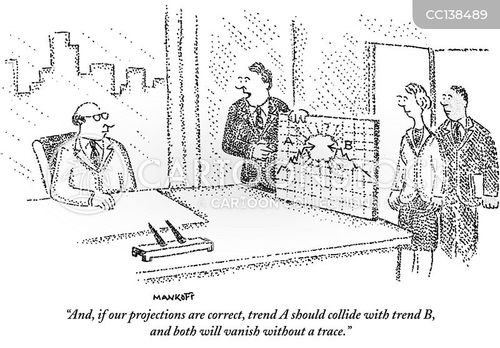
Cartoon – Coronavirus Projections

Vanish Cartoons and Comics - funny pictures from CartoonStock

Trinity Health gets $2.2B in bailout funds, advance Medicare payments

https://www.beckershospitalreview.com/finance/trinity-health-gets-2-2b-in-bailout-funds-advance-medicare-payments.html?utm_medium=email

New Relationships for Health Plans: Accountable Systems of Care ...

Trinity Health saw revenue decline in the first nine months of fiscal year 2020, and the Livonia, Mich.-based health system ended the period with an operating loss, according to unaudited financial documents

Trinity Health saw revenue decline less than 1 percent year over year to $14.2 billion in the first nine months of the fiscal year, which ended March 31. The health system attributed the drop in revenue to the COVID-19 pandemic and the divestiture of Camden, N.J.-based Lourdes Health System in June 2019.

The 92-hospital system’s expenses were also up 1.2 percent year over year. Trinity Health ended the first three quarters of fiscal 2020 with expenses of $14.3 billion. Same-hospital expense growth was driven by increases in labor and supply costs, purchased services and costs related to its conversion to the Epic EHR platform in the Michigan region. The health system said the pandemic added $14.1 million of costs in March.

Trinity Health has taken several steps to reduce operating and capital spending in response to the pandemic, including implementing furloughs and reducing salaries for executives. In early April, Trinity Health announced plans to furlough 2,500 employees, most of whom are in nonclinical roles. 

Trinity Health reported an operating loss of $103.5 million for the first nine months of the current fiscal year, compared to operating income of $115.2 million in the same period a year earlier.

After factoring in investments and other nonoperating items, Trinity Health posted a net loss of $883.5 million in the first three quarters of fiscal 2020, down from net income of $457.9 million a year earlier. Nonoperating losses in the first nine months of fiscal 2020 were primarily driven by the pandemic’s effect on global investment market conditions in March, the health system said.

To help offset financial damage, Trinity Health received funds from the $175 billion in relief aid Congress has allocated to hospitals and other healthcare providers to cover expenses and lost revenue tied to the pandemic. The health system said it received a total of $600 million in federal grants in April and May. 

Trinity Health also applied for and received $1.6 billion of Medicare advance payments, which must be repaid.

Though Trinity Health is unable to forecast the pandemic’s impact on its financial position, it said the ultimate effect of COVID-19 on its operating margins and financial results “is likely to be adverse and significant.” 


“All policy is health policy”

https://www.axios.com/newsletters/axios-vitals-8873028c-f37e-4712-a53a-ae324c56dbb6.html?utm_source=newsletter&utm_medium=email&utm_campaign=newsletter_axiosvitals&stream=top

PPT - Health in All Policies PowerPoint Presentation, free ...

The effects of racism are often inseparable from black Americans’ health and well-being, as “black communities bear the physical burdens of centuries of injustice, toxic exposures, racism, and white supremacist violence,” Rachel Hardeman, Eduardo Medina and Rhea Boyd write in the New England Journal of Medicine:

Any solution to racial health inequities must be rooted in the material conditions in which those inequities thrive. Therefore, we must insist that for the health of the black community and, in turn, the health of the nation, we address the social, economic, political, legal, educational, and health care systems that maintain structural racism. Because as the Covid-19 pandemic so expeditiously illustrated, all policy is health policy…

The response to the pandemic has made at least one thing clear: systemic change can in fact happen overnight.


Rich vs. poor hospitals

https://www.axios.com/hospitals-coronavirus-inequality-segregation-f10c49eb-5ccc-4739-b2a9-254fd9a3d40e.html

Rich vs. poor hospitals | News Break

The inequalities in American health care extend right into the hospital: Cash-strapped safety-net hospitals treat more people of color, while wealthier facilities treat more white patients.

Why it matters: Safety-net hospitals lack the money, equipment and other resources of their more affluent counterparts, which makes providing critical care more difficult and exacerbates disparities in health outcomes.

The big picture: A majority of patients who go to safety-net hospitals are black or Hispanic; 40% are either on Medicaid or uninsured.

The other side: Wealthy hospitals, including many prominent academic medical centers, are “far less likely to serve or treat black and low-income patients even though those patients may live in their backyards,” said Arrianna Planey, an incoming health policy professor at the University of North Carolina.

  • An investigation by the Boston Globe in 2017 found black people in Boston “are less likely to get care at several of the city’s elite hospitals than if you are white.”
  • The Cleveland Clinic has expanded into a global icon for health care, but rarely cares for those in the black neighborhoods that surround its campus, Dan Diamond of Politico reported in 2017.

Between the lines: The way the federal government is bailing out hospitals for the revenues they’ve lost during coronavirus is exacerbating this inequality. More money is flowing to richer hospitals.

  • For example, the main hospital within University of Colorado Health has gotten $79.3 million from the government’s main “provider relief” fund — about the same amount as Cook County Health, Chicago’s public hospital system, which predominantly treats low-income black and Hispanic people. It has gotten $77.6 million from that pot.
  • The Colorado system, however, is sitting on billions of dollars in cash and investments that Chicago’s safety-net hospitals don’t have. Chicago has also seen a worse coronavirus outbreak.

The bottom line: Poor hospitals that treat minorities have had to rely on GoFundMe pages and beg for ventilators during the pandemic, while richer systems move ahead with new hospital construction plans.