As the economic situation has worsened over the past few months, we’ve been working with several health systems to recalibrate strategy. For many, the anticipated “post-COVID recovery” period has turned into a struggle to reverse declining (often negative) margins, while still scrambling to address mounting workforce shortages. All this amid continued pressure from disruptive competitors and ever-rising consumer expectations.
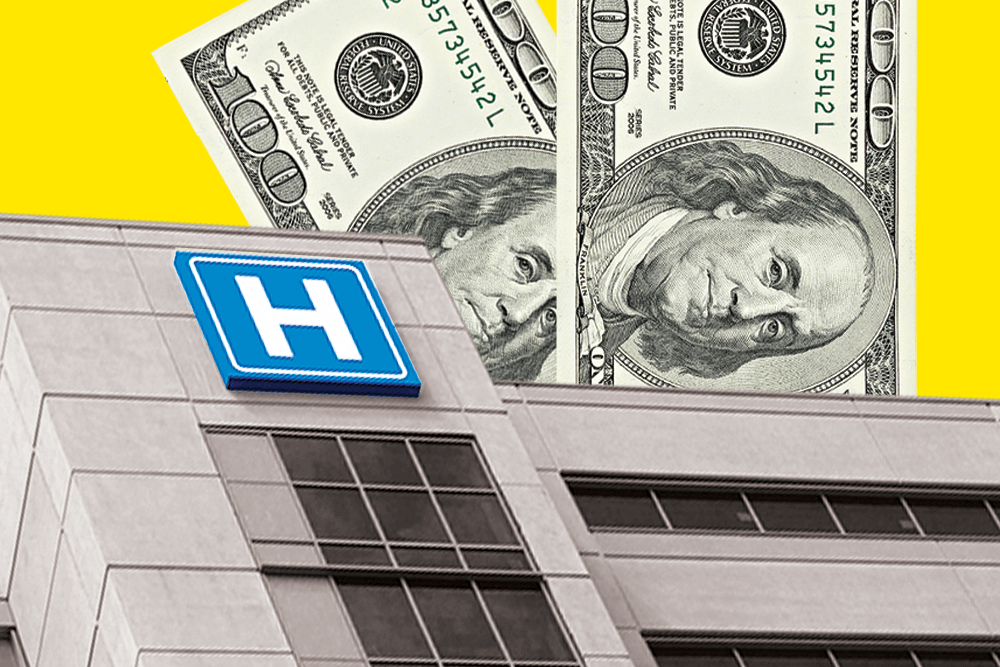
In the graphic above, we’ve pulled together some of the most important changes we believe health systems need to make. These range from improvements to the operating model (shifting to a team-based approach to staffing, greater use of automation where appropriate, and moving to asset-light capital strategies) to transformations of the clinical model (moving care into lower-cost outpatient and community settings, integrating virtual care into clinical delivery, and creating tighter alignment with key physicians).
In general, the goal is to deliver lower-cost care in less expensive settings, using less expensive staff.
But those cost-saving strategies will need to be coupled with a new go-to-market approach, including new payment models that reward systems for shifting away from high-cost (and highly reimbursed) care models.
Employers and consumers will expect more solution-based offerings, which integrate care across the continuum into coherent bundles of service. This will require a more deliberate focus on service line strategies, moving away from a fragmented, inpatient-centric model.
Contracting approaches must align payment with this shift, changing incentives to reward coordinated, cost-effective, outcomes-driven care.
A key insight from our discussions with health system leaders: short-term cost-cutting initiatives to “stop the bleed” won’t suffice—instead, more permanent solutions will be required that address not only the core operating model, but also the approach to revenue generation.
The post-COVID environment is turning out to be a lot tougher than many had expected, to say the least.
U.S.-based employers announced 32,517 cuts in June 2022, a 58.8 percent increase from 20,476 cuts announced in the same month last year, according to a new job report from Challenger, Gray & Christmas.
June marks the highest month since February 2021, when 34,531 cuts were announced. It is the second time this year that cuts were higher in 2022 than the corresponding month a year earlier.
Healthcare/products manufacturers and providers announced the most job cuts this year with 19,390, which is up 54 percent from the 12,620 announced through June 2021. The automotive industry posted the second-highest cuts with 15,578, a number that is up from the 6,111 cuts in the previous year.
Andrew Challenger, senior vice president of executive search firm Challenger, Gray & Christmas, said the numbers demonstrate increasing economic strain.
“Employers are beginning to respond to financial pressures and slowing demand by cutting costs. While the labor market is still tight, that tightness may begin to ease in the next few months,” Mr. Challenger said.
Locations suffering the highest losses include California with 28,692, New York at 15,952, and Pennsylvania at 9,310.
Several hospitals are trimming their workforces due to financial and operational challenges, and some are offering affected workers new positions.
1. Santa Cruz Valley Hospital in Green Valley, Ariz., closed June 30. The closure resulted in 315 workers losing their jobs. CEO Steve Harris said the decision to close Santa Cruz Valley Regional Hospital was made after it was unable to secure emergency department staffing for the Fourth of July weekend. The hospital issued a Worker Adjustment and Retraining Notification Act notice June 20, which gave the hospital’s 315 workers notice of the mass layoff.
2. Claxton-Hepburn Medical Center in Ogdensburg, N.Y., is cutting approximately 5 percent of its 800-person workforce as it makes changes aimed at improving revenue cycle functions. The hospital said in late June that it is planning to outsource revenue cycle functions and lay off revenue cycle staff.
3. Sturgis (Mich.) Hospital said it is planning to lay off 194 employees in July as it scales back services or closes. The hospital subsequently secured a loan to keep it open through July, according to WTVB.
4. Bristol (Conn.) Health on June 16 eliminated 31 positions, including 10 that were filled and 21 that were vacant. The majority of those laid off were in management.
5. Citing skyrocketing expenses and flat revenue, St. Charles Health System in Bend, Ore., will cut 181 positions, according to a May 18 announcement. The workforce reduction includes laying off 105 caregivers and eliminating 76 vacant positions. The layoffs affect mainly nonclinical workers, including many leadership positions. The four-hospital health system said it took steps to address its financial challenges, but it ended the month of April with a $21.8 million loss.
6. Toledo, Ohio-based ProMedica’s health plan, Paramount, is laying off about 200 employees in July after losing a Medicaid contract. Anthem acquired Paramount’s Medicaid contract, and ProMedica and Anthem have been working to identify open roles for employees affected by the layoffs.
7. Greenwood (Miss.) Leflore Hospital announced in May that it will lay off 30 employees to help offset losses. The layoffs, which include an undisclosed number of physicians, affect less than 4 percent of the hospital’s workforce. Many of the affected employees were notified May 17.
8. Mercy Medical Center in Springfield, Mass., part of Trinity Health of New England, is trimming jobs. The hospital laid off 12 of its 380 unionized nurses, the Massachusetts Nurses Association told Western Mass News in May. Translators and ancillary staff were also affected by the cuts. Trinity Health of New England, which declined to provide the number of workers affected by the layoffs, attributed the cuts to national disruption in the healthcare industry. In addition to the layoffs, Trinity Health of New England is also eliminating some positions that are currently vacant.
Private insurers pay high and rising prices to hospitals. But whether this is “good” or “bad” depends on what’s behind this phenomenon. Do high prices reflect investments in quality? Or do they instead reflect issues like lack of competition due to hospital consolidation? The answer matters for efforts to reduce health care spending.
In a new paper in the Journal of Health Economics, Craig Garthwaite, Christopher Ody and Amanda Starc investigated whether the prospect of financial rewards drove differences in hospital quality measures — including things like mortality rates, patient experience, technology adoption and emergency department wait times. Specifically, the authors’ examined whether hospitals are more likely to invest in quality if they will be rewarded through higher prices. This is more feasible if they’re serving lots of commercially insured patients, since private insurers may pay higher rates if patients value those hospitals. But that strategy may not be successful in areas with large shares of the population on Medicare and Medicaid, which do not negotiate prices.
The researchers found that:
Hospitals in areas with more privately insured patients had higher quality scores compared to hospitals with more publicly insured patients.
Hospitals targeting more privately insured patients also had higher costs than those relying more on payers like Medicare and Medicaid.
These results suggest hospitals make strategic investments in quality to attract privately insured patients. This is consistent with what one might expect from market competition and the results of other recent research. These findings do not, however, imply that prices are “optimal.” Prices also reflect factors like provider consolidation that have little observable effects on quality. Indeed, hospital prices likely reflect a mix of valuable and wasteful spending.
The analysis does have limitations. The authors used the demographics of the areas around the hospital instead of each hospital’s actual potential mix of patients. In addition, it is possible that some quality differences across hospitals actually reflect differences between patients with private and public insurance which aren’t easy to capture in data. However, the authors’ results were similar across several quality measures, including those where this is less of a concern.
These results can help better inform efforts to reduce health care costs. Policymakers interested in reducing hospital prices should be aware that doing so might reduce investments in quality. This suggests placing a greater emphasis on policies that target prices stemming from clear sources of inefficiencies, like consolidation, since such tradeoffs are likely smaller.
Summary U.S. hospitals and health systems continued to face difficult financial and operational headwinds in May. Operating margins rose from April but remained significantly lower than pre-pandemic levels and May 2021.
Volumes were up slightly from the previous month, with rising ED visits close to numbers last seen in 2019 and earlier. Gross operating revenues rose month-over-month and in comparison to May 2021. But expenses — especially labor costs — were elevated across nearly every metric month-over-month.
Margins The median Kaufman Hall Year-To-Date (YTD) Operating Margin Index reflecting actual margins was -0.33% through May. The median change in Operating Margin was up 18.9% from last month but down 45.6% from May 2021. The median change in Operating EBITDA Margin was up 13.5% month-over-month, but down 36.1% from May 2021.
Volumes Patient volumes rose in May, with Length of Stay (LOS) up 2.3% from April and 5.5% compared to May 2021. Patient Days increased by 4.8% month-over-month but dropped 0.5% versus May 2021. Adjusted Patient Days grew 3.5% from April to May and were 4% above May 2021 levels. Adjusted Discharges rose slightly, at 0.6% month-over-month, but were down 0.3% compared to May 2021. Surgeries barely fluctuated, with Operating Room Minutes down 1.0% from last month and up just 0.1% YOY. Emergency Department (ED) Visits jumped 9.5% from April to May and were up 4.5% YOY.
Revenues Volume increases resulted in slightly improved revenue performance in May. Gross Operating Revenue was up 3.4% from April and 7.6% YOY, and is up 6.9% YTD. Similarly, Outpatient (OP) Revenue rose 2.2% from April levels, 9.4% YOY and is up 9.1% YTD. Inpatient (IP) Revenue climbed 3.5% from the previous month and 2.6% from May 2021, and is up 4.2% YTD.
Expenses Total Expenses continued to climb in May, rising 1.1% from April and 10.7% from May 2021. Inflation and labor shortages contributed to total costs climbing 10.4% YTD.
Labor Expense per Adjusted Discharge inched up by 1.0% from April and has surged 13.6% YTD, while Full-Time Employees Per Adjusted Occupied Bed (FTEs per AOB), is down by 2.7% YTD, indicating that hospitals are spending more on labor costs with fewer hours worked. However, FTEs per AOB rose slightly in May, up 2.8% from April. Total Expense per Adjusted Discharge increased by 0.3% from April, and Labor Expense per Adjusted Discharge rose 1.0% from last month.
Non-Operating The Federal Reserve raised its benchmark rate by 75 basis points in mid-June, the most aggressive increase since 1994, as inflation hit a 40-year high of 8.6% in May. New projections show The Federal Open Market Committee (FOMC) participants expect the Fed to raise rates to at least 3% this year, with half indicating 3.375%. Labor metrics remain strong with unemployment reading 3.6% in May and employers adding 390,000 new jobs.
Consumer sentiment hit a record low reading of 50.2 in early June, comparable to the low point reached during the 1980 recession. US equities ended May with marginal gains after weeks of volatile trading due to economic data and corporate earnings sowing doubt over the health of the US economy.
Takeaways at a Glance
Nearly halfway through 2022, margins are cumulatively negative. While some metrics have normalized, hospitals continue to perform below pre-pandemic levels, and there is an uncertain outlook for the rest of the year.
Elevated labor costs remain a significant challenge. Hospitals are still seeing higher labor costs and fewer hours worked, a sign of inflation and an indicator that long-standing labor shortages are likely worsened by increased turnover.
Warmer temperatures and ED visits drove up volumes and revenues. Patients often schedule elective procedures during the summer months, which may have contributed to growing volumes. Emergency department visits also spiked this past month as people spent more time outdoors.
Pent-up demand for hospital services also contributed to an increase in patients. Sicker patients continued to schedule procedures they had previously postponed, suggesting a return to normalcy as COVID-19 hospitalizations remained relatively low.
Here are 19 health systems with strong operational metrics and solid financial positions, according to reports from Fitch Ratings, Moody’s Investors Service and S&P Global Ratings.
1. Morristown, N.J.-based Atlantic Health System has an “Aa3” rating and stable outlook with Moody’s. The health system has strong operating performance and liquidity metrics, Moody’s said. The credit rating agency expects Atlantic Health System to sustain strong performance to support capital spending.
2. Banner Health has an “AA-” rating and stable outlook with Fitch. The Phoenix-based health system’s core hospital delivery system and growth of its insurance division combine to make it a successful highly integrated delivery system, Fitch said. The credit rating agency said it expects Banner to maintain operating EBITDA margins of about 8 percent on an annual basis, reflecting the growing revenues from the system’s insurance division and large employed physician base.
3. Clearwater, Fla.-based BayCare has an “AA” rating and stable outlook with Fitch. The 14-hospital system has excellent liquidity and operating metrics, which are supported by its leading market position in a four-county area, Fitch said. The credit rating agency expects strong revenue growth and cost management to sustain BayCare’s operating performance.
4. CentraCare has an “AA-” rating and stable outlook with Fitch. The St. Cloud, Minn.-based system has a leading market position and solid operating margins, Fitch said. The credit rating agency said it expects CentraCare’s operating platform to remain strong.
5. Greensboro, N.C.-based Cone Health has an “AA” rating and stable outlook with Fitch. The health system has a leading market share and a favorable payer mix, Fitch said. The health system’s broad operating platform and strategic capital investments should enable it to return to stronger operating results, the credit rating agency said.
6. Franciscan Alliance has an “AA” rating and stable outlook with Fitch. The Mishawaka, Ind.-based health system has a very strong cash position and maintains leading market shares in seven of its nine defined primary service areas, Fitch said. The health system benefits from a good payer mix, the credit rating agency said.
7. Gundersen Health System has an “AA-” rating and stable outlook with Fitch. The La Crosse, Wis.-based health system has strong balance sheet metrics and a leading market position and expanding operating platform in its service area, Fitch said The credit rating agency expects the health system to return to strong operating performance as it emerges from disruption related to the COVID-19 pandemic.
8. Falls Church, Va.-based Inova Health System has an “Aa2” rating and stable outlook with Moody’s. The health system has a consistently strong operating cash flow margin and ample balance sheet resources, Moody’s said. Inova’s financial excellence will remain undergirded by its favorable regulatory and economic environment, the credit rating agency said.
9. Vineland, N.J.-based Inspira Health Network has an “AA-” rating and stable outlook with Fitch. The health system has strong operating performance, a leading market position in a stable service area and a growing residency program, Fitch said. The credit rating agency expects the system’s growing outpatient footprint and an increase in patient volumes to support its operating stability.
10. Oakland, Calif.-based Kaiser Permanente has an “AA-” rating and stable outlook with Fitch. The health system has a strong financial profile, and the system’s operating platform is “arguably the most emulated model” for nonprofit healthcare delivery in the U.S., Fitch said. By revenue base, Kaiser is the largest nonprofit health system in the U.S., and it is the most fully integrated healthcare delivery system in the country, according to the credit rating agency.
11. Mass General Brigham has an “Aa3” rating and stable outlook with Moody’s and an “AA-” rating and stable outlook with S&P. The Boston-based health system has an excellent clinical reputation, good financial performance and strong balance sheet metrics, Moody’s said. The credit rating agency said it expects Mass General Brigham to maintain a strong market position and stable financial performance.
12. Rochester, Minn.-based Mayo Clinic has an “Aa2” rating and stable outlook with Moody’s. The credit rating agency said Mayo Clinic’s strong market position and patient demand will drive favorable financial results. The health system “will continue to leverage its excellent reputation and patient demand to continue generating favorable operating performance while maintaining strong balance sheet ratios,” Moody’s said.
13. Methodist Health System has an “Aa3” rating and stable outlook with Moody’s. The Dallas-based system has strong operating performance, and investments in facilities have allowed it to continue to capture more market share in the fast-growing Dallas-Fort Worth, Texas, area, Moody’s said. The credit rating agency said it expects Methodist Health System’s strong operating performance and favorable liquidity to continue.
14. Traverse City, Mich.-based Munson Healthcare has an “AA” rating and stable outlook with Fitch. The health system has a strong market position, a good payer mix and robust cash-to-adjusted debt levels, Fitch said. The credit rating agency expects the system to weather an expected period of weakened operating cash flow margins.
15. Albuquerque, N.M.-based Presbyterian Healthcare Services has an “Aa3” rating and stable outlook with Moody’s and an “AA” rating and stable outlook with Fitch. Presbyterian Healthcare Services is the largest health system in New Mexico, and it has strong revenue growth and a healthy balance sheet, Moody’s said. The credit rating agency said it expects the health system’s balance sheet and debt metrics to remain strong.
16. Chicago-based Rush Health has an “AA-” rating and stable outlook with Fitch. The health system has a strong financial profile and a broad reach for high-acuity services as a leading academic medical center, Fitch said. The credit rating agency expects Rush’s services to remain profitable over time.
17. Stanford (Calif.) Health Care has an “AA” rating and stable outlook with Fitch. The health system has extensive clinical reach in a competitive market and its financial profile is improving, Fitch said. The health system’s EBITDA margins rebounded in fiscal year 2021 and are expected to remain strong going forward, the crediting rating agency said.
18. University of Chicago Medical Center has an “AA-” rating and stable outlook with Fitch. The credit rating agency said it expects University of Chicago Medical Center’s capital-related ratios to remain strong, in part because of its broad reach of high-acuity services.
19. University of Iowa Hospitals and Clinics has an “Aa2” rating and stable outlook with Moody’s. The Iowa City-based health system, the only academic medical center in Iowa, has strong patient demand and excellent financial management, Moody’s said. The credit rating agency said it expects the health system to continue to manage the pandemic with improved operating cash flow margins.
Not-for-profit hospitals and healthcare systems continue to face significant operating challenges as they attempt to keep revenues on pace with escalating operating expenses fueled by inflation, according to a June 27 report from S&P.
Highlights from the report:
The first quarter of 2022 marked the toughest performance quarter on record for U.S. not-for-profit hospitals and health systems, highlighted by widespread inflationary pressures across the sector.
High labor expenses are likely to cause sustained operating hurdles, and demands on cash flow combined with weaker investment market returns could reduce financial flexibility through the remainder of 2022 and into 2023.
S&P notes that higher interest costs are likely to make borrowing options more expensive. Furthermore, the re-introduction of sequestration and the likely end of the public health emergency later this year will also have to be absorbed into cash flow.
The regulatory environment is becoming tougher and eliminating mergers and acquisitions as an option for many providers. Given recent denials by the Federal Trade Commission and other regulatory agencies, this option may be increasingly difficult to deploy. If these denials affect organizations that are already struggling operationally, options could become increasingly limited for certain providers.
Welcome to the second installment of Pulse on Healthcare. This month’s issue takes a look at the issues causing financial distress for healthcare organizations, and how CFOs can take action to relieve it.
According to the 2022 BDO Healthcare CFO Outlook Survey, 63% of healthcare organizations are thriving, but 34% are just surviving. And while healthcare CFOs have an optimistic outlook—82% expect to be thriving in one year—they’ll need to make changes this year if they’re going to reach their revenue goals. To prevent and solve for financial distress, CFOs need to review and address the underlying causes. Otherwise, they might find themselves falling short of expectations in the year ahead.
Here are six ways for CFOs to address financial distress:
1. Staffing shortages: 40% of healthcare CFOs say retaining key talent will be a top workforce challenge in 2022.
How can you avoid a labor shortage? Think about increasing wages for your frontline staff, especially your nurses. You could also reconsider the benefits you’re offering and ask yourself what offerings would be attractive for your frontline staff. For example, whether you offer free childcare could mean the difference between your staff staying and walking out for another employment opportunity. Additionally, consider enhancing or simplifying processes through technology to relieve some strain from day-to-day tasks.
2. Budget forecasting: Almost half (45%) of healthcare organizations will undergo a strategic cost reduction exercise in 2022 to meet their profitability goals.
How else can you cut costs? One option is to adopt a zero-based approach to budgeting this year. This allows you to build your budget from the ground up and find new areas to adjust costs to free up resources. Consider some non-traditional cost reduction areas, like telecommunication or select janitorial expenses, which are overlooked year after year. Cost savings in these areas can be substantial and quick to implement.
3. Bond covenant violations: 42% of healthcare CFOs have defaulted on their bond or loan covenants in the past 12 months. Interestingly, 25% say they have not defaulted but are concerned they will default in the next year.
How can you avoid violations? The first step to take is to meet with your financial advisors, especially if you are worried you’re going to default on your bond or loan covenants. You want to get their counsel before you default so you can prepare your organization and mitigate the damage. Ideally, they can help you avoid a default altogether.
4. Supply chain strains: 84% of healthcare CFOs say supply chain disruption is a risk in 2022.
How can you mitigate these risks? Supply chain shortages are a ubiquitous problem across industries right now, but not all of the issues are within your control. Focus on what is, including assessing your supply chain costs and seeing where you can find the same or similar products for lower prices. Identifying alternative suppliers may end up saving you a lot of frustration, especially if your regular suppliers run into disruptions.
5. Increased cost of resources: 39% of healthcare CFOs are concerned about rising material costs and expect it will pose a significant threat to their supply chain.
How can you alleviate these concerns? Price increases for the resources you purchase — including medical supplies, drugs, technology and more — could deplete your financial reserves and strain your liquidity, exacerbating your financial difficulties. You may be able to switch from physician-preferred products to other, most cost-effective products for the time being. Switching medical suppliers may even save you money in the long run. Involving clinical leadership in the process can keep physicians informed of the choices you are making and the motivation behind them.
6. Patient volume: 39% of healthcare CFOs are making investments to improve the patient experience.
How can you satisfy your patient stakeholders? As hospitals and physician practices get closer to the new normal of care, patients are returning to procedures and check-ins they put off at the height of the pandemic. Patients want a comfortable experience that will keep them coming back, including a safe and clean atmosphere at in-person offices.
They also want access to frictionless telehealth and patient portals for those who don’t want to or can’t travel to receive care. Revisit your “Digital Front Door Strategy” and consider ways to improve and streamline it. These investments can also go toward improving health equity strategies to ensure everyone across communities is receiving the same level of care.
The former CFO of Pacific Hospital’s physician management arm was sentenced to 15 months in prison June 24 for a tax offense related to a kickback scheme, according to the Justice Department.
The sentencing came about four years after George Hammer was charged. In 2018, he pleaded guilty to one count of filing a false tax return.
Mr. Hammer allegedly supported a kickback scheme that resulted in the submission of more than $500 million in bills for kickbacks for surgeries. He allegedly supported the kickback scheme by facilitating payments to people receiving kickbacks and bribes pursuant to sham contracts that were used to conceal illicit payments, according to the Justice Department.
The Department of Justice notes that Mr. Hammer was a salaried employee and did not profit directly from the kickbacks and bribes.
Twenty-two defendants, including the owner of Pacific Hospital in Long Beach, Calif., have been convicted for participating in the scheme.










 HENRY KOTULA