
Healthcare added 34K jobs in March as temp nursing demand wanes

Dive Brief:

  • Healthcare job growth continued to climb in March with the industry adding 34,000 jobs last month, according to a report released from the Bureau of Labor Statistics on April 7. 
  • The job growth is lower than the six-month average monthly job gain of 54,000 in healthcare. Home health services and hospitals recorded the most gains, adding 15,000 and 11,000 jobs, respectively. 
  • The BLS report comes as demand for temporary nurses declines with median rates of temp staff billing down, according to a report out last week from Jefferies.

Dive Insight:

Labor shortages have been a continuing obstacle for hospitals and health systems, after the coronavirus pandemic spurred industry job reductions and clinicians left the field due to burnout. Temporary nurse staffing agencies swooped in to ease labor shortages, with hospital systems paying higher rates to temp agencies to staff their floors. 

Hospitals ended last year with negative margins, driven by labor expenses that rose as much as 36% compared with pre-pandemic levels. The average weekly rate for travel nurses reached $3,900 in January 2022, according to staffing platform Vivian Health, prompting lawmakers and industry groups to ask the White House to investigate nurse staffing agencies.

But hospitals may be catching a break from labor and temporary staffing pressures. Data from private healthcare staffers, including Aya Healthcare and Fastaff, show that demand for temporary nurses declined by 2.2%, with median bill rates dropping 2.9% week over week, according to the Jefferies report.

The accelerated decline in demand and bill rates could be a sign of labor woes easing, especially for nurse-dependent hospital operators like HCA Healthcare, according to the report.

“As we see order and bill rate data for temp nurses decline, we are gaining optimism that nurse-dependent healthcare providers such as hospitals [HCA Healthcare, Community Health Systems, Tenent Healthcare] and post-acute players [Amedisys, Encompass Health, Enhabit] will begin to see labor headwinds ease, which should help these companies achieve or exceed earnings goals this year,” the report said.

While labor shortages have battered HCA Healthcare and CHS, both operators suggested in recent earnings reports that labor pains could be easing. HCA reported in January that it was decreasing its nursing turnover and CHS reported in October that it had made progress in reducing its contract labor expenses.

Hospitals continue gaining jobs

Reports have showed that labor shortages appear to be easing this year, with a December report from Fitch Ratings noting that staffing shortages at nonprofit hospitals appeared to be incrementally waning.
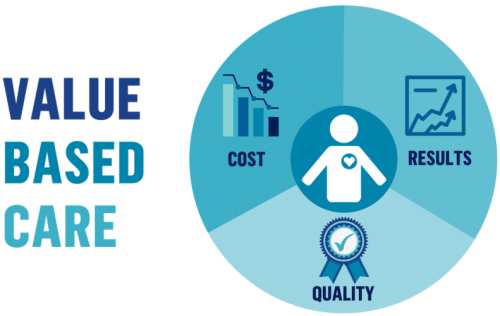
Value-based Care

Context: 

Value-based care is widely accepted as key to the health system’s transformation. Changing provider incentives from volume to value and engaging provider organizations in risk-sharing models with payers (including Medicare) are means to that end. But implementation vis a vis value-based models has produced mixed results thus far and current financial pressures facing providers (esp. hospitals) have stymied momentum in pursuit of value in healthcare. Last week, CMS indicated it intends to continue its value-based insurance design (VBID) model which targets insurers, and last month announced continued commitment to its bundled payment and ACO models. But they’re considered ‘works in process’ that, to date, have attracted early adopters with mixed results.

Questions:

What’s ahead for the value agenda in healthcare? Is it here to stay or will something replace it? How is your organization adapting?

Key takeaways from Discussion:

  • ‘Not-for-profit hospitals and health systems are fighting to survive: near-term investments in value-based models are unlikely unless they’re associated with meaningful near-term savings that hospitals and physicians realize. Unlike investor-owned systems and private-equity backed providers, NFP systems face unique regulatory constraints, increasingly limited access to capital hostile treatment in media coverage and heavy-handed treatment by health insurers.’
  • Demonstrating value in healthcare remains its most important issue but implementing policies that advance a system-wide definition of value and business models that create a fair return on investment for risk-taking organizations are lacking. The value agenda must be adopted by commercial payers, employers and Medicaid and not limited to/driven by Medicare-alone.’
  • The ACO REACH model is promising but hospitals are hesitant to invest in its implementation unless compelled by direct competitive threats and/or market share leakage. It involves a high level of financial risk and relationship stress with physicians if not implemented effectively.’
  • ‘Health insurers are advantaged over provider organizations in implementing value-strategies: they have data, control of provider networks and premium dollars.’
  • ‘Any and all value models must directly benefit physicians: burnout and frustration are palpable, and concern about income erosion is widespread.’
  • ‘Value in healthcare is a long-term aspirational goal: getting there will be tough.’

My take:

Hospitals, health systems, medical groups and other traditional providers are limited in their abilities to respond to opportunities in AI and value-based models by near-term operating margin pressures and uncertainty about their finances longer-term. Risk avoidance is reality in most settings, so investments in AI-solutions and value-based models must produce near-term ROI: that’s reality. Outsiders that operate in less-regulated environments with unlimited access to capital are advantaged in accessing and deploying AI and value-based model pursuits. Thus, partnerships with these may be necessary for most traditional providers.

AI is tricky for providers:

Integration of AI capabilities in hospitals and medical practices will produce added regulator and media scrutiny about data security and added concern for operational transparency. It will also prompt added tension in the workforce as new operational protocols are implemented and budgets adapted.  And cooperation with EHR platforms—EPIC, Meditech, Cerner et al—will be essential to implementation. But many think that unlikely without ‘forced’ compliance.

Value-based models:

Participation in value-based models is a strategic imperative: in the near term, it adds competencies necessary to network design and performance monitoring, care coordination, risk and data management. Longer-term, it enables contracting directly with commercial payers and employers—Medicare alone will not drive the value-imperative in US healthcare successfully. Self-insured employers, private health insurers, and consumers will intensify pressure on providers for appropriate utilization, lower costs, transparent pricing, guaranteed outcome and satisfying user experiences. They’ll force consumerism and value into the system and reward those that respond effectively.

The immediate implications for all traditional provider organizations, especially not-for-profit health systems like the 11 who participated in Chicago last week, are 4:

  • Education: Boards, managers and affiliated clinicians need ongoing insight about generative AI and value-based models as they gain traction in the industry.
  • Strategy Development: Strategic planning models must assess the impacts of AI and value-based models in future-state scenario plans.
  • Capital: Whether through strategic partnerships with solution providers or capital reserves, investing in both of these is necessary in the near-term. A wait-and-see strategy is a recipe for long-term irrelevance.
  • Stakeholder Communication: Community leaders, regulators, trading partners, health system employees and media will require better messaging that’s supported by verifiable facts (data). Playing victim is not a sustainable communications strategy.

Generative AI and value-based models are the two most compelling changes in U.S. healthcare’s future. They’re not a matter of IF, but how and how soon.

Generative AI and its Future in Health Delivery

Context

Although Artificial intelligence has been around for 50 years and has experienced several starts and stops, the last 5 to 10 years have seen a considerable uptick in adoption, especially in healthcare. It’s embedded now in machine learning that enables faster and more precise imaging studies, clinical decision support tools in electronic medical records systems and many more. In recent months, its potential to play a bigger role, possibly replacing physician judgement among others, has received added attention.

The November 2022, the announcement of OpenAI’s ChatGPT platform drew widespread attention with speculation it might displace clinicians in diagnosing and treatment planning for patients. On March 22, 2023, tech moguls Elon Musk, Steve Wozniak and Andrew Yang called for a 6-month moratorium on generative AI stating: “Should we develop nonhuman minds that might eventually outnumber, outsmart, obsolete and replace us? Should we risk loss of control of our civilization? We call on all AI labs to immediately pause for at least 6 months the training of AI systems more powerful than GPT-4.” (1)  To date, more than 13,000 have signed on to their appeal. Per Lumeris CTO Jean-Claude Saghbini “Putting aside our own opinions as to whether or not a moratorium should be implemented, our recent experience of the last three years in the inability to have effective cross-governmental alignment on policy to fight the COVID pandemic suggests that global alignment on AI policy will be impossible”.

There’s widespread belief generative AI and GPT-4 are game changers in healthcare.

How, what, when and how much ($$$) are the big questions. The near-term issues associated with implementation–data-security, workforce usefulness, regulation, investment costs—are expected to be resolved eventually. Thus, it is highly likely that health systems, medical groups, health insurers and retail and digital health solution providers will operate in a widely-expanded AI-enabled world in the next 3-5 years.  

Questions

What role will AI and ChatGPT play in hospitals/health systems and other provider settings? Will development of AI systems more powerful than GPT-4 be suspended in response to the appeal? How is your organization preparing for the next wave of AI?

Key Takeaways from Discussion:

  • ‘Generative AI will not take the place of clinician judgement anytime soon. The processes of diagnosing and treating patients, especially complex conditions, will not be displaced. However, in primary and preventive health where standardization is more attainable, it will have profound impact perhaps sooner than in other areas.’
  • ‘GPT-4 et al will have profound impact on the delivery of healthcare and hospital operations, but there are many unknowns and risks associated with its use beyond routine tasks that can be standardized based on pattern recognition. ‘
  • ‘Continued development of platform solutions using GPT-4 and others in healthcare and other industries will accelerate. The moratorium will not happen. There’s too much at stake for investors and users.’
  • ‘Non-profit hospitals and health systems are struggling financially as a result of the supply and labor cost increases, declining reimbursement from payers and negative returns on investing activities (non-operating income). Caution is key, so AI-related investing will be conservative in the near-term. An exception would be AI solutions that mitigate workforce shortages or reduce administrative costs for documentation.’

Contract labor costs may be easing but still top of mind

There may be signs of costs coming down when it comes to contract labor in the healthcare world, but such workforce costs, as well as inflationary and supply pressures, continue to cause anxiety for industry administrators, according to the Institute of Supply Management.

“Employment continued to improve, with comments suggesting hospitals have been able to shift from temporary, agency staffing to permanent employees,” said Nancy LeMaster, chair of the ISM.

However, “the pressure on hospital margins from inflationary conditions and labor and supply costs were top-of-mind concerns.”

The March 2023 Hospital ISM Report on Business, published April 7, registered a Hospital Purchase Managers Index of 53.4 percent in March, the 34th straight month of growth. An index reading above 50 percent indicates that the hospital subsector is generally expanding.

Some shortages persist in the supply chain, particularly with products made from resin, while there has been a shift away from personal protective equipment toward complex medical devices on the inventory side. Prices for supplies and pharmaceuticals generally remain elevated, the ISM said.

10 health systems and their debt levels

A number of healthcare and hospital systems detailed their levels of debt when reporting recent financial results. Here is a summary of some of those systems’ reports, including debt totals calculated by ratings agencies:

  1. Augusta, Ga.-based AU Health, which comprises a 478-bed adult hospital and 154-bed children’s hospital and serves as the academic medical center for the Medical College of Georgia, had approximately $327 million of debt in fiscal 2022. The system, which  became affiliated with Atlanta-based Wellstar Health System on March 31, was  downgraded to “B2” from “Ba3” with a negative outlook, Moody’s said March 23.
  2. Salt Lake City-based Intermountain Health had long-term debt of $3.6 billion as of Dec. 31. Overall income for the 33-hospital system in 2022 totaled $2.6 billion, boosted by the affiliation effective April 1 of SCL Health, which contributed $4 billion.
  3. Credit rating agency Moody’s is revising Springfield Ill.-based Memorial Health System‘s outlook from stable to negative as the health system ended fiscal year 2022 with $343 million in outstanding debt. Moody’s expects Memorial to stabilize in 2023 but not reach historical levels until 2025, according to the March 24 report.
  4. New York City-based NYU Langone Hospitals, which has total debt outstanding of approximately $3.1 billion, had its outlook revised to positive from stable amid a “very good operating performance” that has helped lead to improved days of cash on hand, Moody’s said. NYU Langone consists of five inpatient locations in New York City and on Long Island as well as numerous ambulatory facilities in the five boroughs, Long Island, New Jersey and Florida.
  5. Bellevue, Wash.-based Overlake Hospital Medical Center was downgraded on a series of bonds as the 310-bed hospital faces ongoing labor and inflationary challenges and the possibility of not meeting its debt coverage requirements, Moody’s said March 9. The hospital, which also operates several outpatient clinics and physician offices in its service area, has $295 million of outstanding debt.
  6. Renton, Wash.-based Providence, has about $7.4 billion worth of debt. The 51-hospital system, which reported a fiscal 2022 operating loss of $1.7 billion, was downgraded as it continues to deal with ongoing operational challenges, Fitch Ratings said March 17, the first of three downgrades Providence suffered in the space of weeks. The Fitch downgrade to “A” from “A+” applies both to the system’s default rating and on the $7.4 billion in debt.
  7. Lansing, Mich.-based Sparrow Health had long-term debt of $353.5 million as of Dec. 31, S&P Global said. Sparrow Health has had a series of bonds it holds placed on credit watch amid concern over the eventual outcome of a planned merger with Ann Arbor-based University of Michigan Health, S&P Global said Feb. 16. The $7 billion merger was eventually approved April 3.
  8. St. Louis-based SSM Health, which had approximately $2.6 billion of total debt outstanding at the end of fiscal 2022, reported an operating loss of $248.9 million after its expenses increased 7.6 percent over the previous year. SSM Health had an “AA-” rating affirmed on a series of bonds it holds as the 23-hospital system dipped in operating income in fiscal 2022 after “several years of consistently solid performance,” according to a March 24 report from Fitch Ratings.
  9. Philadelphia-based Temple University Health had $395.6 million long-term debt as of Dec. 31. The system’s outlook was revised to stable from positive following recent results S&P Global described as “very challenged” and “deeply negative.” The referenced results are interim fiscal 2023 figures that contrast significantly with expectations, S&P said March 15. Temple Health is in danger of not meeting debt coverage requirements as a result.
  10. Dallas-based Tenet Healthcare reported $14.9 billion of long-term debt when it revealed net income of $410 million for the year Feb. 9. Tenet had its default rating affirmed at “B+” as the 61-hospital system’s operating income remains resilient in the face of industry pressures and debt levels stay manageable, Fitch Ratings said March 27.

States begin Medicaid redeterminations

https://mailchi.mp/c9e26ad7702a/the-weekly-gist-april-7-2023?e=d1e747d2d8

April 1st marked the start date of a one-year window for state Medicaid offices to reassess their beneficiary rolls, as Medicaid’s continuous enrollment policy sunsets. Since the early days of the pandemic, the federal government has boosted state Medicaid funding by 6.2 percent, in exchange for a requirement that current Medicaid beneficiaries maintain eligibility, regardless of changes to their income or other qualifiers. This policy helped grow national Medicaid enrollment to a record 90M, but a projected 15M may now lose coverage through the redetermination process. 

The Gist: After the US uninsured rate recently hit a record low, millions of Americans will now lose insurance coverage, at least temporarily.Of those no longer eligible for Medicaid, an estimated 2.7M will qualify for subsidized exchange plans, while around 400K in non-expansion states will have incomes too high for Medicaid and too low for exchange subsidies. The impact will vary in each state, both in terms of how quickly and how many Medicaid beneficiaries are disenrolled.

But in over half of states, at least one-fifth of those who will lose Medicaid coverage are projected to remain uninsured—a significant step backward in the effort to ensure universal coverage. 

Communication from Medicaid offices and exchange plan navigators will be key to preventing as many people as possible from becoming uninsured.

How can health systems compete in the ambulatory pricing arena?

https://mailchi.mp/c9e26ad7702a/the-weekly-gist-april-7-2023?e=d1e747d2d8

As the locus of care continues to shift from inpatient hospitals to outpatient centers, health system executives face a growing conundrum over pricing. The combination of “consumerism” and tougher reimbursement policies raises a question about how aggressively systems should discount services to compete in the ambulatory arena.

Site-neutral payment remains a goal for Medicare, and consumers are increasingly voting with their pocketbooks when it comes to choosing where to have procedures and diagnostics performed. “We know we’re going to have to give on price,” one CEO recently shared with us. “The question is how much, and how soon.” 

Should hospitals proactively shift to match prices offered by freestanding centers, or should they try to defend their substantially higher “hospital outpatient department” (HOPD) pricing?

The former choice could help win—or at least keep—business in the system, but at the risk of turning that business into a money-losing proposition. 

To compete successfully, hospitals will not only need to lower price, but also lower cost-to-serve—rethinking how operations are run, how overhead is allocated, and how services are staffed and delivered in ambulatory settings. 

“We’ve got to get our costs down,” the CEO admitted. “Trying to run an ambulatory business with our traditional hospital cost structure is a recipe for losing money.” 

And as a system CFO recently told us, “We can’t just trade good price for bad, for doing the same work. We have to be smart about where to discount services.” The future sustainability of many health systems will hinge on how they navigate this transition to an ambulatory-centric model.

Providence endures another credit downgrade

Renton, Wash.-based Providence suffered its third credit downgrade in less than three weeks when Moody’s revised a rating on bonds the 51-hospital system holds to “A2” from “A1.”

Such a rating reflects an expectation margins will remain weak in 2023. The outlook is negative.

The move follows similar actions by Fitch Ratings March 17 and S&P Global March 21 amid an anticipated multiyear process of financial recovery.

Capital expenditure for Providence is expected to be restricted after the completion of a couple of major projects this year to effect “margin recovery,” Moody’s said.

Providence reported a $1.7 billion operating loss in 2022.

Virginia Mason lays off over 300 administrative staff

Tacoma, Wash.-based Virginia Mason Franciscan Health has laid off more than 300 administrative employees, the Puget Sound Business Journal reported April 4. 

The job cuts affected less than 2 percent of the health system’s 19,000-plus workforce.

“Like many healthcare providers in the Pacific Northwest, we are experiencing tremendous financial strain caused by a number of factors, including lasting impacts from the COVID-19 pandemic, inflation and labor shortages,” Kelly Campbell, vice president of marketing and communications, told the Journal.

Affected employees will be eligible for career transition assistance, extended benefits and severance programs, according to the report. 

Virginia Mason, which includes 10 hospitals and nearly 300 care sites, said it is focused on improving efficiencies and reducing costs in response to financial headwinds.

In 2022, Washington hospitals reported a total net loss of more than $2.7 billion, compared to a $1.2 billion loss in 2021, while their net operating loss was $2.1 billion, up from $742 million in 2021. 

“We’re very concerned that access to this specialized care, the highest level of care, and in many cases, the life-saving care is threatened by unsustainable financial losses as hospitals are resorting to extraordinary means to close the gaps in their budgets,” Cassie Sauer, president and CEO of the Washington State Hospital Association, said in a March 21 media briefing.

Regulation of Consolidation

Jaime King On Consolidation and Competition — The Trials and Triumphs of Health Care Antitrust Law New England Journal of Medicine March 18, 2023; 388:1057-1060 DOI: 10.1056/NEJMp2201629

 “Over the past 30 years, health care consolidation has gone largely unchecked by federal and state antitrust enforcers, which has resulted in higher prices, stagnant quality of care, and limited access to care for patients. Similarly, consolidation has contributed to the availability of fewer employment options, limited wage growth, longer hours, and staff shortages for health care providers.

Antitrust law is designed to prevent such harms, but its failure to evolve alongside the health care industry has led to pervasive consolidation, which now necessitates regulation in some markets to address market-power abuses that competitive forces can no longer govern…

Although mergers are often justified with promises of improved quality or patient access, evidence supporting these claims is lacking.

Clinical integration as envisioned in accountable care organizations, for example, requires substantial oversight, training, and investment that goes well beyond the financial integration involved in most mergers. Most studies have found either no changes or a reduction in quality after provider mergers. Consolidation can also limit access to care; post-merger facility closures, reductions in charity care, and elimination of abortion and other reproductive health services have often occurred.

Consolidation among insurers also affects health care prices and quality. Insurers with market power can increase premiums above competitive levels by exercising monopoly power or can push provider payments below competitive levels by exercising monopsony power. Lower premiums are commonly found in areas with more insurers, whereas in the absence of competition, insurers that obtain price concessions from providers may not pass savings on to consumers.4 Some evidence suggests, however, that moderate amounts of insurer consolidation may be associated with improved patient experience, since providers in such markets have an incentive to compete on quality.

Given the health care industry’s growing complexity, future oversight could involve a combination of more responsive antitrust enforcement and creative regulatory interventions. Combining competitive and regulatory forces may offer the only hope for controlling health care prices, restoring high-quality care, protecting health care workers, and preserving and expanding access to care.”