FTC expands retrospective scrutiny of mergers

https://www.beckershospitalreview.com/hospital-transactions-and-valuation/ftc-expands-retrospective-scrutiny-of-mergers.html?utm_medium=email

Federal Trade Commission (FTC) Definition

The Federal Trade Commission is expanding its retrospective review of mergers and acquisitions, using data from before and after a deal to assess whether the transaction affected prices, quality and consumer choice. 

The FTC has retrospectively reviewed mergers since 1984. The two goals of the program are to understand whether the agency’s threshold for bringing an enforcement action in a merger case has been too permissive and to assess the performance of tools that FTC economists use to predict the effects of proposed mergers.

The expanded program means the agency will dedicate more time and resources to studying completed mergers, addressing antitrust questions that have not been extensively studied in previous years and expanding retrospective reviews to industries that have not been studied.

Compared to other industries, healthcare mergers have undergone extensive scrutiny under the retrospective review program, with eight studies since 2011. These retrospective analyses have proven influential to federal challenges of subsequent healthcare mergers: The FTC was able to challenge 13 hospital cases from 2008 to 2018.

As part of the expanded program, the FTC director of the bureau of economics will release an annual summary on lessons and findings from the retrospective studies.


Beaumont-Advocate Aurora merger stalls amid physician complaints: A timeline

https://www.beckershospitalreview.com/hospital-transactions-and-valuation/beaumont-advocate-aurora-merger-stalls-amid-physician-complaints-a-timeline.html?utm_medium=email

Beaumont Health closes deal to merge 3 nonprofit systems

Since Beaumont Health announced its intent to merge with Advocate Aurora Health in June, physicians, nurses and trustees of the Southfield, Mich.-based system have raised concerns about its leaders and the potential deal.

Below is a timeline of the news about the merger and subsequent complaints:

June 17: Beaumont Health announces it is in partnership talks with Advocate Aurora Health, less than one month after canceling a plan to merge with Akron, Ohio-based Summa Health. Advocate Aurora Health has dual headquarters in Downers Grove, Ill., and Milwaukee. The merger would create a $17 billion system with 36 hospitals. Beaumont has eight hospitals in Michigan, and Advocate Aurora has 16 hospitals in Wisconsin and 12 in Illinois.

July 22: News breaks that a no-confidence petition is being circulated by some physician leaders at Beaumont Health. Beaumont Health President and CEO John Fox and Executive Vice President and CMO David Wood Jr., MD, are targets of the petition, which cites concerns about the “imminent threat” of Beaumont’s merger with Advocate Aurora.

July 24: After concerns are raised by physicians, Beaumont’s board of directors pens a letter to employees voicing support of the potential merger and emphasizing it is not “selling” Beaumont. “Beaumont Health will continue to be a Michigan corporation with its own board of directors, leadership team and regional headquarters,” the board’s letter reads. “Stating anything other than this is simply factually wrong.”

Aug. 17: Beaumont confirms its board of trustees has agreed to delay a final vote on a merger with Advocate Aurora until physicians concerns are addressed. 

Aug. 19: Details of a survey completed by 1,500 of Beaumont physicians are released. The survey, which asked physicians to agree or disagree with several statements, revealed a lack of confidence in the system’s leadership. Specifically, 76 percent of the physicians who responded to the survey said they strongly disagree or somewhat disagree with the statement “I have confidence in corporate leadership.” The survey also revealed that 70 percent of physicians said they strongly disagree or somewhat disagree that “The proposed merger with Advocate Aurora Health is likely to enhance our capacity to provide compassionate, extraordinary care.”

Aug. 20. A report details the results of a survey completed by a group of nurses at Beaumont. The survey reveals that Beaumont’s leadership has lost the confidence of 650 nurses, and they also are concerned about the planned merger.

Sept. 10: It is reported that former Beaumont Health board vice chair and trustee Mark Shaevsky sent a letter to Michigan’s attorney general calling for the firing of Beaumont’s CEO, COO and CMO. Mr. Shaevsky told Crain’s that patient safety concerns raised by clinical leaders have not been addressed, and he is frustrated that the board supports the proposed merger. He also calls for the delay of the merger. Mr. Shaevsky served on the eight-hospital system’s board for 17 years.


8 health systems with strong finances

https://www.beckershospitalreview.com/finance/8-health-systems-with-strong-finances-091620.html?utm_medium=email

Here are eight health systems with strong operational metrics and solid financial positions, according to reports from Fitch Ratings, Moody’s Investors Service and S&P Global Ratings.

1. Minneapolis-based Allina Health has an “AA-” rating and stable outlook with Fitch. The health system has a strong financial profile and is the acute care leader in the broad Twin Cities metro area, Fitch said. The credit rating agency said Allina’s proven ability to rebound quickly from operating challenges supports the stable outlook.

2. Children’s Healthcare of Atlanta has an “Aa2” rating and stable outlook with Moody’s. The system has strong operating margins and is the leading pediatric provider in the Atlanta area, Moody’s said. The credit rating agency expects Children’s Healthcare of Atlanta to continue to generate robust margins and maintain exceptional liquidity while undergoing a new campus expansion project.

3. La Crosse, Wis.-based Gundersen Health System has an “AA-” rating and stable outlook with Fitch. The health system has consistently strong operating performance, strong balance sheet metrics and a low debt burden, Fitch said. The credit rating agency said Gundersen’s rating continues to be supported by its leading market position and expanding operating platform.

4. Houston Methodist has an “AA” rating and stable outlook with S&P. The system, which comprises an academic medical center and six community hospitals, has a strong enterprise profile and a history of excellent margins and cash flow, S&P said. The credit rating agency said Houston Methodist is well positioned to withstand the pressures from COVID-19.

5. Indianapolis-based Indiana University Health has an “AA” rating and stable outlook with Fitch. The health system has a solid balance sheet and strong operating cash flow despite short-term pressure from the COVID-19 pandemic. The credit rating agency expects IU Health’s EBITDA margins will range between 12 percent and 14 percent annually when margins recover from the pandemic.

6. Broomfield, Colo.-based SCL Health has an “AA-” rating and stable outlook with Fitch and an “Aa3” rating and stable outlook with Moody’s. The system has a track record of exceptional operations, consistent improvement in unrestricted liquidity levels and significant financial flexibility, Fitch said. The credit rating agency said SCL Health is well positioned to manage the pressures of COVID-19, having built up cash reserves.

7. San Diego-based Scripps Health has an “AA” rating and stable outlook with Fitch and an “Aa3” rating and stable outlook with Moody’s. The health system has a strong balance sheet, strong operations and has maintained a low leverage position, Fitch said. The credit rating agency expects Scripps will continue generating operating levels that are consistent with historical trends following recovery from the pandemic.

8. San Diego-based Sharp HealthCare has an “Aa3” rating and stable outlook with Moody’s and an “AA” rating and stable outlook with S&P. The health system has a healthy financial profile, an excellent balance sheet, a solid business position and is the leading provider in a competitive service area, S&P said. The credit rating agency said the system’s financial performance has remained stable despite COVID-19 and the recession.


A Wall Street Giant Tapped $1.5 Billion in Federal Aid for Its Hospitals

https://www.bloomberg.com/news/articles/2020-09-14/a-wall-street-giant-tapped-1-5-billion-in-federal-aid-for-its-hospitals
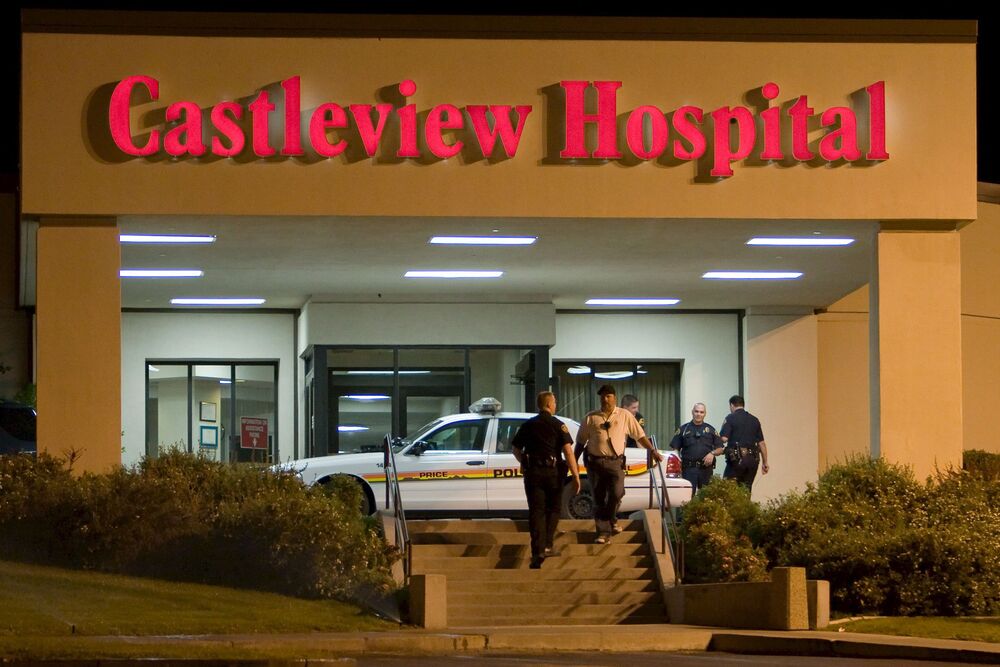
LifePoint’s Castleview Hospital in Price, Utah.

Private equity firm, flush with cash, sees ‘upside’ and more acquisitions.

Like hospital chains across the U.S., LifePoint Health tapped federal relief money to blunt the cost of the Covid-19 pandemic. It was a potent lifeline, a total of $1.5 billion.

But LifePoint is unusual in one respect, its owner: private equity firm Apollo Global Management, led by billionaire Leon Black.

LifePoint was certainly eligible for the money. But the extent of the federal assistance could contribute to concern in Washington over whether private equity-backed hospitals should have been. In July, the U.S. House passed a bill that would require health-care companies to disclose any private equity backing when seeking short-term loans from the federal Medicare program.

The reason for lawmakers’ concern: Private equity firms have ample access to cash. As recently as June, the Apollo fund that owns LifePoint had more than $2 billion to support its investments. Apollo, which manages $414 billion, recently told investors in an internal document that LifePoint was in such a strong market position that it was planning to make acquisitions of less fortunate hospitals.

The relief flowing to LifePoint illustrates a drawback of a government program designed to send out money quickly to every hospital, regardless of financial circumstances, according to Gerard Anderson, a health policy professor at Johns Hopkins University.

“This particular hospital system does not appear to need the money,” he said.

LifePoint and Apollo say they absolutely did. In their view, taxpayer money helped cover the soaring cost of treating Covid-19 patients and lost revenue because of the loss of fees from lucrative elective procedures. The assistance enabled the chain to retain all of its workers and provide essential service to its communities, they said.

“No health-care provider, including LifePoint, is immune to this, regardless of their ownership,” said LifePoint spokesperson Michelle Augusty.

Said an Apollo spokesperson: “Apollo is proud of LifePoint’s response to the Covid pandemic as they continue to provide vital care for both Covid and non-Covid patients.’’

LifePoint owns a far-flung collection of small-town hospitals, from Western Plains Medical Complex in Dodge City, Kansas, to Bourbon Community Hospital in Paris, Kentucky. For years, private equity has been pushing into every corner of American health care. Many medical professionals worry that these Wall Street-style investors will inevitably put profits before patients – something private equity denies.
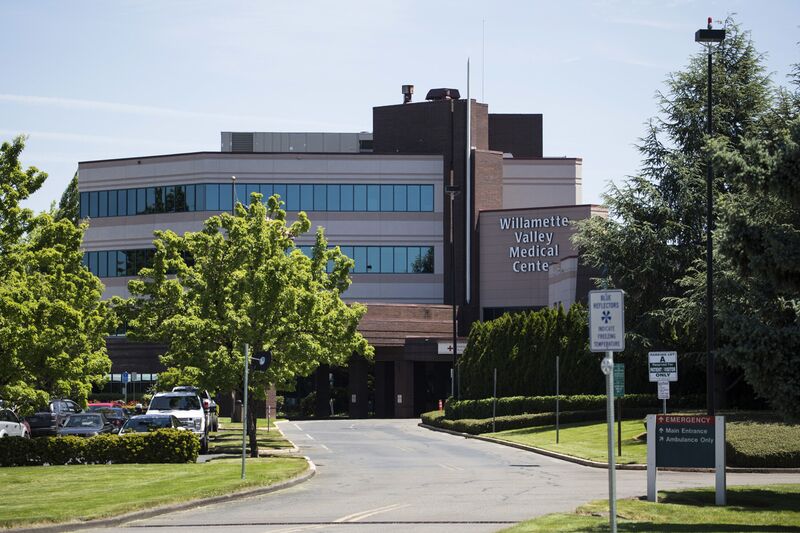
LifePoint’s Willamette Valley Medical Center in McMinnville, Oregon.

In April, LifePoint Chief Executive Officer David Dill and other hospital officials met with President Donald Trump. Dill urged Trump to keep helping hospitals, noting that LifePoint’s medical centers tend to be in the middle of the country, “smaller communities, which I know are communities very important to you,’’ according to a transcript of the meeting.

Rural hospitals are a very important part of the infrastructure in this country and also treating the uninsured and the Medicaid population as well,’’ Dill said.

Trump pointed out that the hospitals didn’t appear to be in the “hot spots.” Dill acknowledged they were handling only “a couple hundred Covid patients.” (The company said it has now cared for almost 20,000.)

In April, the month the government started distributing assistance, LifePoint borrowed $680 million in the capital markets. It also had access to $900 million in cash and an $800 million credit line, according to Moody’s Investors Service

By Apollo’s own account, LifePoint was doing just fine when the pandemic struck. In fact, it was thriving – and looking to expand. As of March 31, shortly before LifePoint got taxpayer dollars, Apollo’s investors were on track to double their money, internal documents show. On paper, they were sitting on a gain of more than $800 million.

“Independent hospital systems have greater difficulty weathering prolonged periods of financial stress,’’ Apollo wrote to its investors in May. “A  consolidation strategy will provide meaningful upside for Apollo funds’ investment.’’

Apollo said the crisis represented an opportunity: “The coronavirus pandemic will serve as a catalyst for additional M&A opportunities given the attractive scale and overall position of the LifePoint platform.”

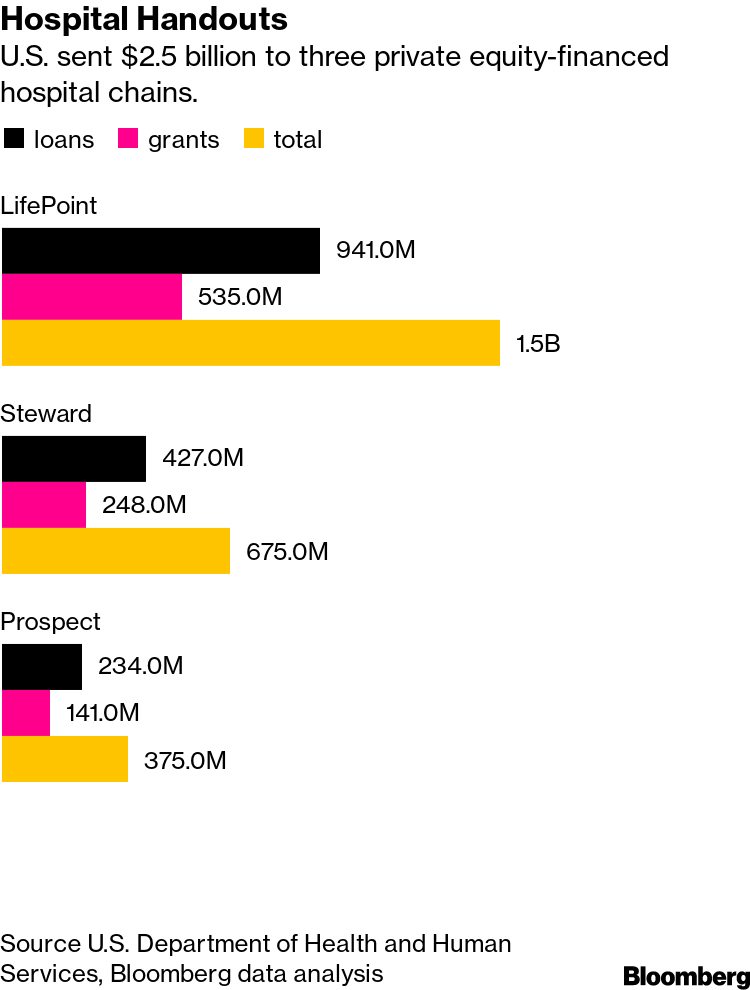
Apollo is one of three private equity firms whose hospitals, as a group, received a total of about $2.5 billion in bailout grants and loans, according to an analysis of the latest federal records. That’s a conservative figure because it doesn’t count the many smaller sums distributed to subsidiaries.
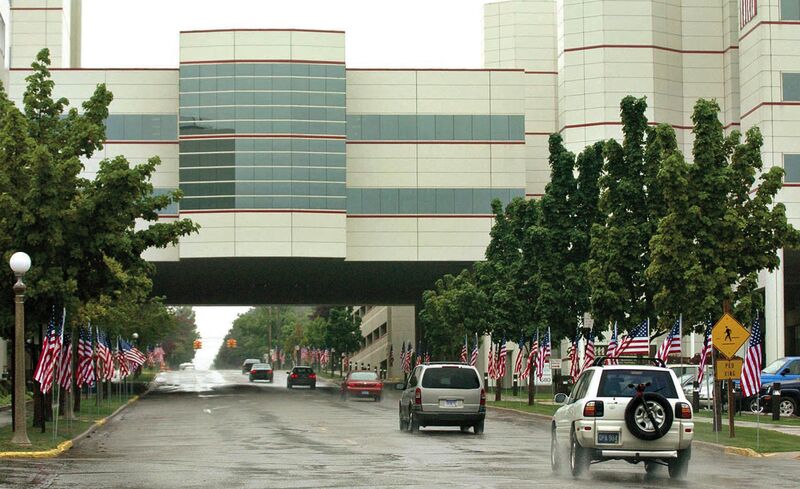
LifePoint’s UP Health System-Marquette in Michigan.
Steward Health Care, a hospital  chain financed by private equity firm Cerberus Capital Management, received $675 million in grants and loans. In May, Cerberus transferred ownership of Steward to a group of doctors in exchange for a note that can be converted into a 37.5% equity stake. Another hospital company, Prospect Medical Holdings, owned by private equity firm Leonard Green & Partners, took in $375 million.
Apollo’s LifePoint hospitals received the most: $941 million in subsidized loans and $535 million in outright grants. 
While Democratic lawmakers have said such firms could have instead tapped their own cash stockpiles, private equity industry representatives have said they have a duty to manage that money in the best interests of their investors, which include public pension plans.
A Wall Street Giant Tapped $1.5 Billion in Federal Aid for Its Hospitals -  Bloomberg

Apollo built its rural hospital empire through the acquisition of three regional hospital chains in 2015, 2016 and 2018.  Apollo Investment Fund VIII LP owns 76% of LifePoint, which is based in Brentwood, Tennessee.

Even though many individual rural hospitals are struggling, Apollo says it can operate them more efficiently by merging them together. LifePoint now owns 88 hospitals in 29 states. It had almost $9 billion of annual revenue last year.

Apollo says that on its watch, the chain has improved its infrastructure and technology, recruited care providers and built new centers.

And for rural hospitals, Apollo argues, bigger is better.

“We continue to believe that rural hospitals can benefit from being part of a larger well-run system that enables access to greater resources and infrastructure for improved patient care,” the Apollo spokesperson said.


Jefferson Health CFO walks back stance that Einstein is at risk without merger

https://www.beckershospitalreview.com/finance/jefferson-health-cfo-walks-back-stance-that-einstein-is-at-risk-without-merger.html?utm_medium=email

Jefferson Health Announces Partnership with Prepared Health to Coordinate  Care Transitions from Hospital to Home - Dina

Jefferson Health walked back its stance that Einstein Health Network’s flagship hospital is at risk of financial failure without a merger during the first day of arguments at a trial, according to Law360.

The Federal Trade Commission’s legal challenge to block the proposed merger of Einstein Healthcare Network and Jefferson Health started in court Sept. 14. The FTC argues that combining the two Philadelphia-based systems would reduce competition in the Philadelphia region and Montgomery County.

In response to the legal challenge, Jefferson Health and Einstein argued that the merger is a matter of survival for Einstein’s flagship hospital

The health systems argued that Einstein, which has only had annual operating profits twice since 2012, is on a path to financial failure without the deal and needs $500 million to invest in key capital projects and deferred maintenance. Further, the organizations said that without the infusion, Einstein will continue to weaken “as it is forced to cut services or close facilities.”

However, at day one of the trial, Jefferson Health CFO Peter DeAngelis conceded during arguments that Jefferson had no evidence that Einstein is in danger of insolvency, despite painting the finances as bleak, according to Law360. 

The hearing on the preliminary injunction is expected to last the entire week, but a decision won’t happen by the end of the week. An additional round of filings must be submitted by the FTC and the two health systems by Sept. 28. The judge overseeing the case hopes to issue a decision before Jan. 1, according to The Philadelphia Inquirer. 


Atlantic Health System to add 8th hospital

https://www.beckershospitalreview.com/hospital-transactions-and-valuation/atlantic-health-system-to-add-8th-hospital.html?utm_medium=email

Health Services in Rockaway, NJ - Morristown - Atlantic Health

CentraState Healthcare System, a single-hospital system based in Freehold, N.J., has signed a letter of intent to join Atlantic Health System, a seven-hospital system based in Morristown, N.J.

Under the agreement, Atlantic Health will become the majority corporate member in CentraState and both systems would hold seats on CentraState’s board.

The systems signed the letter of intent after expanding their oncology and neuroscience clinical affiliation earlier this year.

“We are thrilled to partner with CentraState to support their longstanding commitment to the community and make this investment in the health and well-being of New Jersey’s residents and families,” said Atlantic Health System President and CEO Brian Gragnolati in a news release. “Having worked closely over the past few years with the CentraState team, we feel fortunate for this opportunity to combine our talents and resources to deliver high quality, affordable and accessible care for patients across the state.”

Both systems will now begin the due diligence process and work toward a definitive agreement. 


Mednax sells off its radiology division

https://mailchi.mp/365734463200/the-weekly-gist-september-11-2020?e=d1e747d2d8

M&A Analysis: Mednax to Sell its Radiology and Teleradiology Business -

National physician staffing firm Mednax announced the sale of its radiology practice—which includes teleradiology company Virtual Radiologic, known as vRad—to venture-backed Radiology Partners for $885M.

Publicly-traded Mednax has been hit hard by both contracting disputes with UnitedHealthcare, as well as pandemic-related volume declines. Both its anesthesiology and radiology businesses suffered big losses with the halt of elective procedures in the spring, and saw volumes decline between 50-70 percent compared to the prior year.

The company began divesting in May with the sale of its anesthesiology division to investor-backed North American Partners in Anesthesia. Mednax leaders say these decisions to sell were made independent of the pandemic, and that they have been planning to return to the company’s roots of focusing exclusively on obstetrics and pediatric subspecialty care, including changing its name back to Pediatrix.

Acquiring firm Radiology Partners is the largest radiology practice in the country, working with 1,300 hospitals and healthcare facilities. With this acquisition, it will have 2,400 radiologists practicing in all 50 states and the District of Columbia.

Hospital-based physician staffing firms have been especially hard hit by COVID-induced volume declines. This has created a softening in valuations and opened the door for investment firms to accelerate practice purchases.

We expect the pace of deals to quicken as independent practices experience continued financial strain—with large national groups leading the way, taking advantage of lower practice prices to build large-scale specialty enterprises.


Einstein’s flagship hospital at risk without merger, Jefferson and Einstein say

https://www.beckershospitalreview.com/hospital-transactions-and-valuation/einstein-s-flagship-hospital-at-risk-without-merger-jefferson-and-einstein-say.html?utm_medium=email

FTC says merger of Jefferson and Einstein would raise hospital prices 6.9%

The merger of Einstein Healthcare Network and Jefferson Health is a matter of survival for Einstein’s flagship hospital, the two Philadelphia systems argued in a federal court filing this week, according to The Philadelphia Inquirer.

The health systems are attempting to overcome opposition to their merger from the Pennsylvania attorney general and the Federal Trade Commission.

A Sept. 14 hearing is slated on the FTC’s preliminary injunction request. 

A court filing from the two health systems argued that Einstein, which has only had annual operating profits twice since 2012, is on a path to financial failure and needs $500 million to invest in key capital projects and deferred maintenance.

Without the infusion, Jefferson and Einstein said Einstein will continue to weaken “as it is forced to cut services or close facilities,” the Inquirer reported.

“Einstein was unable to identify any alternative buyer to Jefferson that possessed the financial strength and scale necessary to address Einstein’s financial problems,” the filing read, according to the Inquirer. “No other potential strategic partners were willing and able to commit to keep EMCP [Einstein Medical Center Philadelphia] open with its current set of services.”

The FTC announced in February its intent to sue to block the merger, arguing that combining the two systems would reduce competition in Philadelphia and Montgomery County.

“Jefferson and Einstein have a history of competing against each other to improve quality and service,” the FTC said in the February announcement. “The proposed merger would eliminate the robust competition between Jefferson and Einstein for inclusion in health insurance companies’ hospital networks to the detriment of patients.”

The FTC said that with a combination, the two parties would own at least 60 percent of the inpatient general acute care service market around Philadelphia and at least 45 percent of that same market in Montgomery County.


Cartoon – Modern Health Policy

MSSNYeNews: October 18, 2019 - Foul Turns FairMSSNYeNews Surprise Medical  Bills -

Cartoon – Problem with U.S. Healthcare

Cartoon – Problem with U.S. Healthcare | HENRY KOTULA