Federal Medicaid cuts imperil rural hospitals and residents

https://www.ruralhealth.us/blogs/2025/06/federal-medicaid-cuts-imperil-rural-hospitals-and-residents-new-report-finds

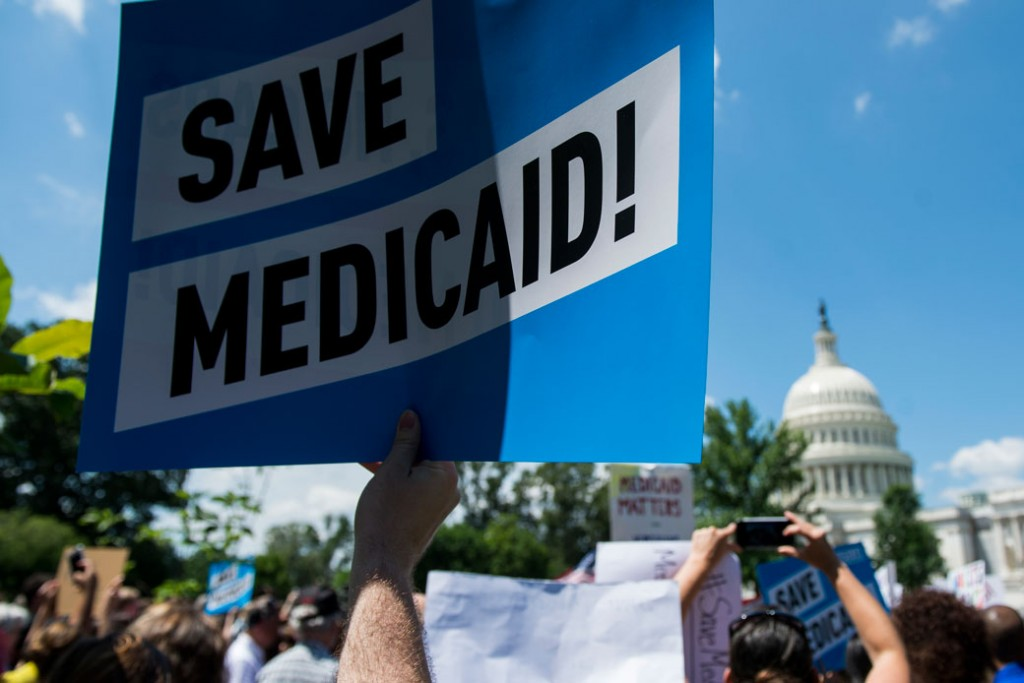
Medicaid serves as a vital source of health insurance coverage for Americans living in rural areas, including children, parents, seniors, individuals with disabilities, and pregnant women. Congressional lawmakers are currently considering more than $800 billion in cuts to the Medicaid program, which would reduce Medicaid funding and terminate coverage for vulnerable Americans.

The proposed changes would also result in a significant reduction in Medicaid reimbursement that could result in rural hospital closures.

The National Rural Health Association recently partnered with experts from Manatt Health to shed light on the potential impacts of those cuts on rural residents and the hospitals that care for them over the next decade.

The report, Estimated Impact on Medicaid Enrollment and Hospital Expenditures in Rural Communities, provides insight into the impact on rural America at a critical moment in the Congressional debate over the future of the reconciliation package.

NRHA held a press conference on June 24 that can be accessed with passcode MBTZf4$H. NRHA chief policy officer Carrie Cochran-McClain discussed the findings with Manatt Health partner and former deputy administrator at CMS Cindy Mann and the real world implications of the details of this report with three NRHA member hospital and health system leaders

Report findings provide insight into the impact on rural America at a critical moment in the Congressional debate over the future of the reconciliation package.

The report shows the significant impact from coverage losses that rural communities will face given:

  • Medicaid plays an outsized role in rural America, covering a larger share of children and adults in rural communities than in urban ones.
  • Nearly half of all children and one in five adults in small towns and rural areas rely on Medicaid or CHIP for their health insurance.
  • Medicaid covers nearly one-quarter of women of childbearing age and finances half of all births in these communities.

According to Manatt’s estimatesrural hospitals will lose 21 cents out of every dollar they receive in Medicaid funding due to the One Big Beautiful Bill Act. Total cuts in Medicaid reimbursement for rural hospitals—including both federal and state funds—over the ten-year period outlined in the bill would reach almost $70 billion for hospitals in rural areas. 

Reductions in Medicaid funding of this magnitude would likely accelerate rural hospital closures and reduce access to care for rural residents, exacerbating economic hardship in communities where hospitals are major employers.

As a key insurer in rural communities, Medicaid provides a financial lifeline for rural health care providers — including hospitals, rural health clinics, community health centers, and nursing homes—that are already facing significant financial distress. These cuts may lead to more hospitals and other rural facility closures, and for those rural hospitals that remain open, lead to the elimination or curtailment of critical services, such as obstetrics.

“Medicaid is a substantial source of federal funds in rural communities across the country. The proposed changes to Medicaid will result in significant coverage losses, reduce access to care for rural patients, and threaten the viability of rural facilities,” said Alan Morgan, CEO of the National Rural Health Association.

“It’s very clear that Medicaid cuts will result in rural hospital closures resulting in loss of access to care for those living in rural America.”

A media briefing will be held on Tuesday, June 24, from noon to 1:00 PM EST to provide more information about the analysis. This event will feature representatives from NRHA, Manatt Health, and rural hospital leaders across the country. Questions may be submitted in advance, as well as during the press conference. To register for and join the media briefing, click on the Zoom link here.

Please reach out to NRHA’s Advocacy Team with any questions.

About the National Rural Health Association

NRHA is a non-profit membership organization that provides leadership on rural health issues with tens of thousands of members nationwide. Our membership includes nearly every component of rural America’s health care, including rural community hospitals, critical access hospitals, doctors, nurses, and patients. We work to improve rural America’s health needs through government advocacy, communications, education, and research. Learn more about the association at RuralHealth.US.

About Manatt Health

Manatt Health is a leading professional services firm specializing in health policy, health care transformation, and Medicaid redesign. Their modeling draws upon publicly available state data including Medicaid financial management report data from the Centers for Medicare and Medicaid Services, enrollment and expenditure data from the Medicaid Budget and Expenditure System, and data from the Medicaid and CHIP Payment and Access Commission. The Manatt Health Model is tailored specifically to rural health and has been reviewed in consultation with states and other key stakeholders.

Protect Medicaid For American Families

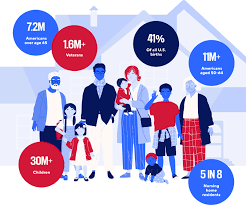
Medicaid is critical to our nation’s healthcare system, providing necessary care for more than 72 million Americans – including our neighbors and friends.

Who it Affects

Medicaid covers children, seniors in nursing homes, veterans, people with long-term chronic illnesses, those with mental health issues and working families.

The program helps keep Americans healthy at all stages of life, providing healthcare to families in need — especially as the country continues to recover from record-high inflation.

The Problem

Some policymakers are considering Medicaid cuts that would undermine coverage for countless patients and threaten Americans’ access to comprehensive, 24/7 hospital care.

Medicaid covers health services for patients who otherwise wouldn’t be able to pay for care. Coverage of services is essential for hospitals, and helps ensure all Americans have access to high-quality, 24/7 care, no matter where they live. 

Who Medicaid covers

Providing Lifesaving Healthcare Services

Medicaid covers patients with complex and chronic illnesses in need of long-term care, as well as emergency services and prescription coverage.

As the nation faces a growing mental health crisis, Medicaid also ensures millions of Americans — including veterans — have access to mental healthcare and substance abuse services.

Without access to affordable mental healthcare through Medicaid, veterans often lack the long-term support they deserve, and are left to deal with complex health issues years after their service.

The Threat To Rural America

Medicaid funding cuts pose a significant threat to patients in rural areas, who are more likely to suffer from chronic illness compared to their urban counterparts and are more reliant on Medicaid services in turn.

In these areas, where primary care providers are few and far between, hospitals become even more vital sites of care — and in some cases, the only sites of care available.

Rural hospitals, already more likely to be at risk of closure, rely on Medicaid funding to stay open and to continue providing lifesaving care to their patients. Nearly 150 rural hospitals have closed or converted since 2010 alone. Further cuts to care would eliminate a lifeline for Americans across the country — with devastating consequences for rural communities.

The Solution

Cuts to Medicaid funding will create irreparable harm for our nation’s most vulnerable communities, including millions of children, veterans, those with chronic illnesses, seniors in nursing homes, and working families. Medicaid helps provide security to these Americans, keeping them healthy at every stage of life.

Congress should vote against efforts to reduce Medicaid funding and instead focus on policies that strengthen access to 24/7 care, rather than take it away.

A closer look at nursing facility readiness for new staffing minimums

https://www.kaufmanhall.com/insights/blog/gist-weekly-june-28-2024

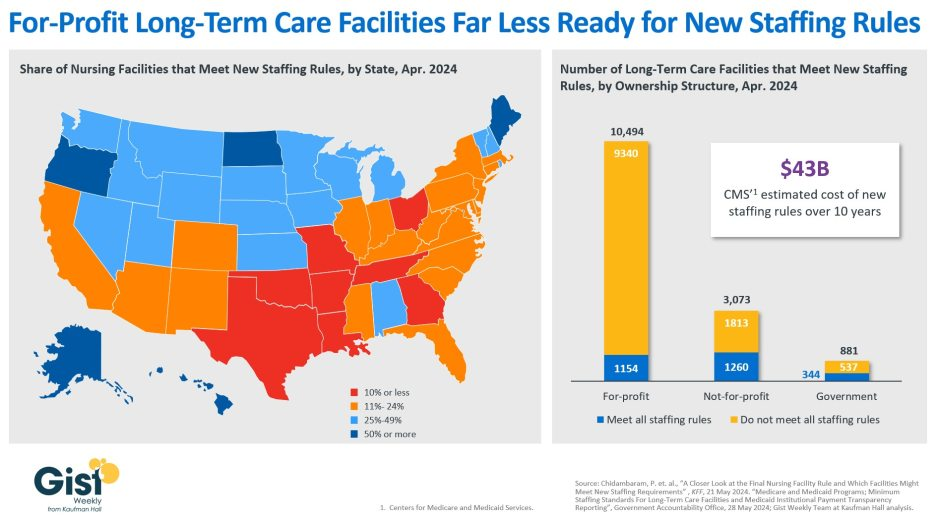
In late April, the Centers for Medicare & Medicaid Services (CMS) established new staffing standards for long-term care (LTC) facilities, mandating a minimum of 3.48 hours of nursing care per patient per day, with 33 minutes of that care from a registered nurse, at least one of whom must be always on site. The rule is slated to go into effect in two years for urban nursing homes and three years for rural nursing homes, with some facilities able to apply for hardship exemptions. 

Although about one in five LTC facilities nationwide currently meet these staffing standards, staffing levels vary greatly by both state and facility ownership profile. In 28 states, fewer than a quarter of LTC facilities meet the new standards, and in eight states fewer than 10% of facilities are already in compliance. 

Facilities in Texas are the least ready, with only 4% meeting the new staffing minimums. In terms of ownership structure, only 11% of for-profit facilities—which constitute nearly three quarters of all LTC facilities nationwide—have staffing levels that meet the new staffing minimums. 

The Government Accountability Office projects this new rule will cost LTC facilities $43B over the first ten years, a significant expense at a time when recruiting and retaining nursing talent is already challenging. 

Citing the risk of mass closures from facilities unable to comply, nursing home trade groups are suing to stop the mandate from going into effect, and there is also a bill advancing in the House that would repeal the staffing ratios. 

That bill is backed by the American Hospital Association, which fears the mandate “would have serious negative, unintended consequences, not only for nursing home patients and facilities, but the entire health continuum.”

Megadeals lift healthcare M&A revenues to record in Q2

https://www.healthcaredive.com/news/Kaufman-Hall-second-quarter-healthcare-report-megadeal/627260/

Dive Brief:

  • Healthcare mergers reached a record-high $19.2 billion in total transacted revenue in the second quarter of this year, led by the planned tie-up of Advocate Aurora Health and Atrium Health and several other large deals, according to the latest quarterly M&A report from Kaufman Hall.
  • Still, the number of healthcare transactions announced during the second quarter remained below pre-pandemic levels at just 13 deals, one more than the record-low total seen in the first quarter of this year. Activity so far in 2022 underscores what could be a longer-term shift toward fewer but larger hospital deals, the industry consultants said.
  • Kaufman Hall also predicted continued interest in partnerships between health systems and skilled nursing facilities that can offer new services or more specialized care. Such facilities can support patients’ earlier discharge from inpatient care to a lower-cost setting and can help reduce hospital re-admissions, the report said.

Dive Insight:

Dealmaking in the first half of the year continues a sluggish pace established in 2021, when just 49 health system mergers were announced all year. Last year’s tally marked the lowest annual deal total in a decade, according to Kaufman Hall.

But deals are getting larger. The second quarter’s $19.2 billion in transacted revenue is more than double the total of $8.5 billion seen in the second quarter of 2021, when a similar number of transactions was announced.

Megamergers, in which the seller’s annual revenue tops $1 billion, remain an ongoing trend. Kaufman Hall tracked two such deals in the second quarter: the Advocate-Atrium transaction and Trinity Health’s planned acquisition of Iowa-based MercyOne.

The second quarter saw two additional transactions with smaller-party revenue above $500 million: Bellin Health System’s merger with Gundersen Health System and George Washington University Hospital’s combination with Universal Health Services.

All told, the average size of the smaller party in a deal reached a record $1.5 billion in the second quarter. This was more than double 2021’s record average size of $619 million, Kaufman Hall found.

A couple of recent transactions illustrate the trend toward partnerships with skilled nursing facilities, the report noted. Hackensack Meridian Health announced in late March that the majority of its long-term care facilities would be acquired by Complete Care, and in April, Virtua Health announced the sale of its two skilled nursing facilities to Tryko Partners. Kaufman Hall advised Virtua Health in the transaction.

Healthcare workers are not returning to hospitals and nursing homes

https://mailchi.mp/f6328d2acfe2/the-weekly-gist-the-grizzly-bear-conflict-manager-edition?e=d1e747d2d8

The US healthcare sector added 64K jobs in February, an increase from recent months, but the gains were concentrated in provider offices and home health companies. Hospitals and nursing facilities, which have both struggled with widespread staffing shortages, saw more anemic job growth. In particular, nursing homes have lost 15 percent of their workforce, remaining significantly understaffed even though resident occupancy rates still lag pre-pandemic levels. This week, nursing home groups pushed back against President Biden’s call for minimum staffing levels, calling them unrealistic without federal funding.

The Gist: Hospital and nursing facility workers have taken on some of the most taxing and dangerous jobs during the pandemic, caring for the sickest patients while personally risking COVID infection. 

Healthcare workers are increasingly opting for safer, less intense jobs in outpatient care settings like physician offices, or are exiting direct patient care entirely. Even as the pandemic subsides, recruitment and retention of nurses and other caregivers will be of paramount importance, given rising vacancy rates and unabating staff shortages.

Nursing home staff shortages are worsening problems at overwhelmed hospitals

https://www.washingtonpost.com/health/2021/12/28/nursing-home-hospital-staff-shortages/

Nursing home staff shortages are worsening problems at overwhelmed hospitals  - The Washington Post

At the 390-bed Terrace View nursing home on the east side of Buffalo, 22 beds are shut down. There isn’t enough staff to care for a full house, safely or legally.

That means some fully recovered patients in the adjacent Erie County Medical Center must stay in their hospital rooms, waiting for a bed in the nursing home. Which means some patients in the emergency department, who should be admitted to the hospital, must stay there until a hospital bed opens up. The emergency department becomes stretched so thin that 10 to 20 percent of arrivals leave without seeing a caregiver — after an average wait of six to eight hours, according to the hospital’s data.

“We used to get upset when our ‘left without being seen’ went above 3 percent,” said Thomas Quatroche, president and chief executive of the Erie County Medical Center Corp., which runs the 590-bed public safety net hospital.

Nursing home bed and staff shortages were problems in the United States before the coronavirus pandemic. But the departure of 425,000 employees over the past two years has narrowed the bottleneck at nursing homes and other long-term care facilities at the same time that acute care hospitals are facing unending demand for services due to a persistent pandemic and staff shortages of their own.

With the omicron variant raising fears of even more hospitalizations, the problems faced by nursing homes are taking on even more importance. Several states have sent National Guard members to help with caregiving and other chores.

Hospitalizations, which peaked at higher than 142,000 in January, are rising again as well, reaching more than 71,000 nationally on Thursday, according to data tracked by The Washington Post. In some places, there is little room left in hospitals or ICUs.

About 58 percent of the nation’s 14,000 nursing homes are limiting admissions, according to a voluntary survey conducted by the American Health Care Association, which represents them. According to the U.S. Bureau of Labor Statistics, 425,000 employees, many of them low-paid certified nursing assistants who are the backbone of the nursing home workforce, have left since February 2020.

“What we’re seeing on the hospital side is a reflection of that,” said Rob Shipp, vice president for population health and clinical affairs at the Hospital Association of Pennsylvania, which represents medical providers in that state. The backups are not just for traditional medical inpatients ready for follow-up care, he said, but psychiatric and other patients as well.

A handful of developmentally disabled patients at Erie County Medical Center waited as long as a year for placement in a group setting, Quatroche said. Medical patients recovered from illness and surgery who cannot go home safely may wait days or weeks for a bed, he said.

“I don’t know if everyone understands how serious the situation is,” Quatroche said. “You really don’t know until you need care. And then you know immediately.”

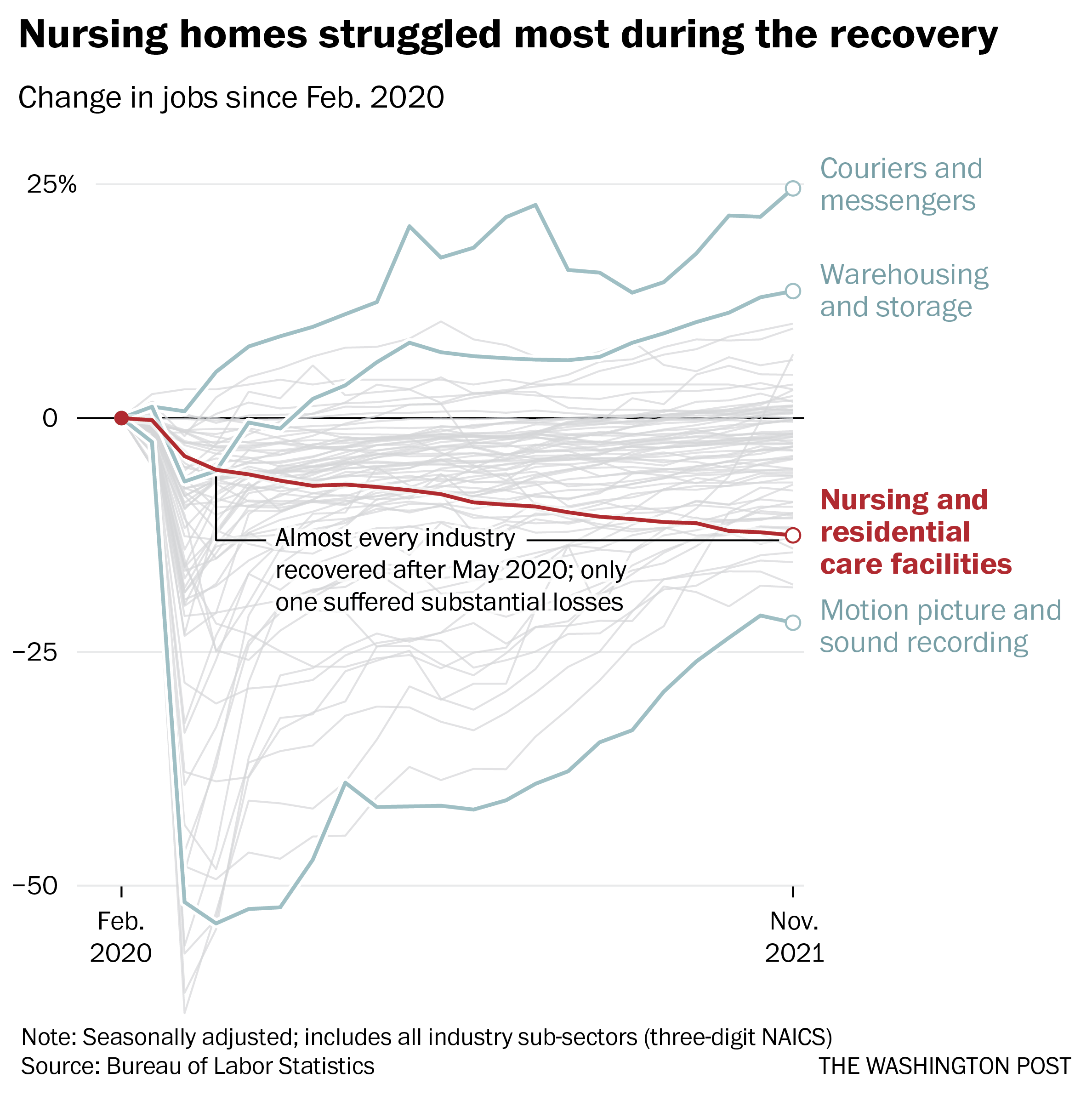
Remarkably, despite the horrific incidents of death and illness in nursing homes at the outset of the pandemic, more staff departures have come during the economic recovery. As restaurants and shops reopened and hiring set records, nursing homes continued to bleed workers, even as residents returned.

Nursing home staff shortages are worsening problems at overwhelmed hospitals  - The Washington Post

Nearly 237,000 workers left during the recovery, data through November show. No other industry suffered anything close to those losses over the same period, according to the Bureau of Labor Statistics.

Workers in the broader health-care industry have been quitting in record numbers for most of the pandemic, plagued by burnout, vulnerability to the coronavirus and poaching by competitors. Low-wage workers tend to quit at the highest rates, Labor Department data show, and nursing home workers are the lowest paid in the health sector, with nonmanagerial earnings averaging between $17.45 an hour for assisted living to $21.19 an hour for skilled nursing facilities, according to the BLS.

Nursing home occupancy fell sharply at the start of the pandemic, but inched back upward in 2021, according to the nonprofit National Investment Center for Seniors Housing and Care. One major force that held it back was worker shortages.

“Operators in the business have said we could admit more patients, but we cannot find the staff to allow that to happen,” said Bill Kauffman, senior principal at the organization.

Shortages have spawned fierce talent wars in the industry, Brookdale Senior Living Chief Executive Officer Cindy Baier said in a recent earnings call. When they don’t have enough workers, restaurants can reduce service hours and hospitals can cut elective surgeries, but nursing homes don’t have the option of eliminating critical services, she said. They must close beds.

“We are in the ‘people taking care of people’ business around-the-clock, 365 days a year,” she said.

Nursing homes tend to gain workers during a recession but can struggle to hire during expansions, according to an analysis of county-level data from the Great Recession recently published in the health care provision and financing journal Inquiry.

Steady income from their resident population and government programs such as Medicaid makes them recession-proof, and their low pay and challenging work conditions mean they’re chronically understaffed, said one of the study’s authors, Indiana University health-care economist Kosali Simon.

When recessions occur, nursing homes go on a hiring spree, filling holes in their staff with qualified workers laid off elsewhere.

“People during a recession may lose their construction jobs or jobs in retail sectors, and then look for entry-level positions at places like nursing homes where there is always demand,” Simon said.

Now, amid the Great Resignation” and the hot job market, the opposite is happening. In sparsely populated areas and regions where pay is lower, the problem is even worse.

The Diakonos Group, which operates 26 nursing homes, assisted-living facilities and group homes in Oklahoma, closed an 84-bed location for seniors with mental health needs in May “simply because we couldn’t staff it any longer,” said Chief Executive Officer Scott Pilgrim. Patients were transferred elsewhere, including Tulsa and Oklahoma City, he said.

The home in rural Medford, which depended entirely on Medicaid payments, “was never easy to staff, but once we started through covid and everything, our staff was just burned out.”

Diakonos boosted certified nursing assistants’ pay from $12 an hour and licensed practical nurses’ pay from $20 an hour, used federal and state assistance to offer bonuses and employed overtime, but workers kept leaving for better health-care jobs and positions in other industries, he said.

“I’ve never been able to pay what we ought to pay,” Pilgrim said. Eventually he began to limit admissions and eventually was forced to close.

“The hospitals are backed up,” he said. “They’re trying to find anywhere to send people. We get referrals from states all around us. The hospitals are desperate to find places to send people.”

In south central Pennsylvania, SpiriTrust Lutheran is not filling 61 of its 344 beds in six facilities because of the worker shortage, said Carol Hess, the company’s senior vice president.

“I have nurses who went to become real estate agents,” she said. “They were just burned out.”

Pay raises of $1 to $1.50 an hour and bonuses brought the lowest-paid workers to about $15 an hour, Hess said, and the company is planning a recruiting drive after Jan. 1. But the prognosis is still grim.

“We’re competing with restaurants for our dining team members,” Hess said. “We’re competing with other folks for cleaning and laundry and others.” In the area around Harrisburg where SpiriTrust employees live, some schools that turned out certified nurse assistants closed during the pandemic and haven’t reopened.

The nursing homes have begun borrowing licensed practical nurses from WellSpan Health, the nearby hospital system that discharges many of its patients to SpriTrust after they recover. About 15 have began their orientations this month, she said, and the two systems are collaborating to pay them.

The bed shortage is causing backups that can average several days in the hospital, said Michael Seim, the hospital system’s chief quality officer. That gives the hospitals an interest in helping any way they can, he said.

“We have between 80 and 100 patients waiting for some type of skilled care,” Seim said this month. The hospital has begun caring for more people at home, enrolling 400 people so far in a program that sends clinicians to check on them there. More than 90 percent have said they are happy with the program.

“I think the future of hospital-based care is partnerships,” Seim said. “It’s going to be health systems partnering across their service areas … to disrupt the model we have.”

Biden unveiled a vaccine mandate for nursing homes. What does it mean for the staffing crisis?

Rethinking How We Approach Long-Term Care In The U.S. | On Point

On Wednesday, President Joe Biden unveiled a new plan requiring nursing homes to vaccinate their employees or lose federal funding. Industry members are concerned the mandate will exacerbate current staffing shortages and make it harder for facilities to care for their residents. 

Biden ties employee vaccination to federal funding for nursing homes

Biden announced on Wednesday that nursing homes will have to require their workers be vaccinated against Covid-19 to receive Medicare and Medicaid funding, the New York Times reports.

CMS is expected to release an emergency rule covering this new requirement in September, according to Roll Call. Officials said the decision will affect more than 15,000 nursing homes with around 1.3 million workers across the country.

In a statement, CMS administrator Chiquita Brooks-LaSure said, “Keeping nursing home residents and staff safe is our priority. The data are clear that higher levels of staff vaccination are linked to fewer outbreaks among residents, many of whom are at an increased risk of infection, hospitalization, or death.”

As of Aug. 8, federal data showed that around 62% of all nursing home staff are currently vaccinated. But vaccination rates vary widely by state, with a high of 88% in some states and a low of 44% in others.

In addition, according to data from CMS, nationwide Covid-19 cases in nursing homes have increased from 319 cases on June 27 to 2,696 cases on Aug. 8. Since the beginning of the pandemic, federal data shows that around 134,000 nursing home residents and nearly 2,000 employees have died from Covid-19.

How will the vaccine mandate affect nursing homes?

According to Roll Call, divisions among nursing home staff about a vaccine mandate has some people in the industry—which has long suffered staffing shortages—concerned that even more workers will leave.

Lori Porter, CEO of the National Association of Health Care Assistants, said she is worried the industry could lose 20% to 30% of its workforce over the new vaccine requirement.

And Mark Parkinson, president and CEO of the American Health Care Association and National Center for Assisted Living, said a broader vaccine mandate for all health care organizations, instead of just nursing homes, is necessary to prevent further staffing shortages.

“Focusing only on nursing homes will cause vaccine hesitant workers to flee to other health care providers and leave many centers without adequate staff to care for residents,” Parkinson said. “It will make an already difficult workforce shortage even worse.”

Similarly, Katie Smith Sloan, president and CEO of LeadingAge, a nonprofit that represents more than 5,000 aging services providers, said the vaccine mandate should be extended to all health care workers in all settings. She also voiced concern that cutting funding to nursing homes will further hurt facilities that have struggled financially throughout the pandemic.

“Without Medicaid and Medicare funding, nursing homes cannot provide the quality care that our nation’s most vulnerable older adults need,” Smith Sloan said. “Our mission-driven nursing home members, who operate on narrow margins in the best of times, depend on those funds alone to care for their residents.”

Separately, David Grabowski, a professor of health care policy at Harvard Medical School, said funding cuts could put some nursing homes “in a precarious position” and that he believes there will be a “tremendous amount of pushback in the industry.”

Grabowski noted that while a national vaccine mandate could “level the playing field” for nursing homes looking for employees, they may still struggle to retain employees with jobs in other areas, such as retail or hotels, offering similar pay. “I think this is a good measure, but it needs to be paired with additional resources to help pay staff and make sure these are jobs they want to stay in,” he said. (Clason, Roll Call, 8/18; LaFraniere et al., New York Times, 8/18; Christ, Modern Healthcare, 8/18) 

Advisory Board’s take

This is a bold step—but it’s the right thing to do. Here’s why.

Mandating vaccinations for staff in skilled nursing facilities (SNFs) is definitely a bold step—but ensuring all staff are vaccinated is unquestionably the right thing to do. As health care leaders, it is our responsibility to care for our patients, our staff, and our communities, and during this pandemic, vaccination is the best way to do that. 

Nationally, staff working in post-acute and long-term care settings have been among the groups most hesitant to take a Covid-19 vaccine. The combination of the extremely vulnerable patient populations in those settings and the lack of voluntary vaccination was likely what motivated this move.

I don’t want to imply this will be easy. Many SNFs will struggle to achieve universal vaccination, and there is understandable fear associated with having to let go of staff in what is an extremely tight staffing environment. 

However, in my view, the staffing implications will be less severe than many believe. In some ways, a national mandate actually makes it easier for providers, because individual staff members can’t simply go work for another facility in order to avoid getting their shot. And as more and more employers across the country begin to mandate vaccinations—a list that so far includes large employers like Walmart and Tyson Foods—staff members will have minimal opportunities for alternate work arrangements that do not require them to get the vaccine. For many staff, even those who have refused in the past, the elimination of other options that would allow them to remain unvaccinated may give them the push they need to get the vaccine.

Some staff will refuse and leave the industry. In the short term, this will increase pressure on already tight staffing. In the medium to long term, however, a fully vaccinated workforce is better for providers. It’s better for recruiting, because it attracts potential workers who want to be in a safer environment. It’s better for the existing workforce, who will likely need to take fewer sick days. And it’s better for the reputation of the industry. In our summer consumer survey, we found that 76% of respondents would be more likely to receive care at a skilled nursing facility if all of that facility’s staff were vaccinated. Staff vaccination helps build a level of community trust in the safety of the facility, which will be critical as SNFs seek to return to growth during and after the Covid-19 pandemic.

Check out our resources for building consumer confidence in post-acute and senior care during and beyond a crisis. For help with how to prepare your staff and residents for the vaccine rollout at your facility, review our guide for long-term care leaders.

Are recent labor actions getting nursing unions what they want?

While nurses in Cook County, Illinois, struck a deal in recent days, those on a three-month-plus strike against a Tenet hospital in Massachusetts plan a protest at the chain’s Dallas headquarters.

Thousands of healthcare workers have waged strikes this summer to demand better staffing levels as the pandemic brought greater attention to what happens when a nurse must take care of more patients than they can reasonably handle.

In New York, a report from the attorney general that found nursing homes with low staffing ratings had higher fatality rates during the worst COVID-19 surges last spring helped spur legislators to pass a safe staffing law long-advocated for by the New York State Nurses Association.

While unions elsewhere face a steeper climb to win the success found in New York, through strikes and other actions, they’re attempting to get new staffing rules outlined in their employment contracts.

Most nursing strikes include demands for ratios, or limits on the number of patients a nurse can be required to care for, Rebecca Givan, associate professor in the School of Management and Labor Relations at Rutgers University, said.

“And employers are very anxious about that because it threatens their bottom line, so often when a compromise is found, it’s something that approaches a ratio but maybe has a bit more flexibility,” Givan said.

Some have been successful, like the 1,000 Chicago-area nurses at Stroger Hospital, Provident Hospital and Cook County Jail who waged a one-day strike on June 24 after negotiating with the county over a new contract for nearly eight months.

They reached a tentative agreement shortly after the strike, stipulating the hiring of 300 nurses, including 125 newly added positions throughout the system within the next 18 months.

The deal also includes wage increases to help retain staff, ranging from 12% to 31% over the contract’s four-year term, according to National Nurses United.

Meanwhile, 700 nurses at Tenet’s St. Vincent Hospital in Worcester, Massachusetts, have been on strike for over 100 days over staffing levels. Nurses represented by the Massachusetts Nurses Association have been trying to get an actual nurse-to-patient ratio outlined for specific units in their next contract.

The two sides haven’t come close to reaching a deal yet, and some nurses will travel to Tenet’s headquarters in Dallas on Wednesday in an attempt to appeal to corporate executives, according to MNA.

At the same time, federal lawmakers wrote to Tenet CEO Ron Rittenmeyer seeking details on the chain’s use of federal coronavirus relief funds amid the strike and alongside record profits it turned last year.

The hospital denied lawmakers’ claims in the letter that Tenet used federal funds to enrich executives and shareholders rather than meet patient and staff needs, saying in a statement it strongly objects to the “mischaracterization of the facts and false allegations of noncompliance with any federal program.”

The strike is currently the longest among nurses nationally in a decade, according to the union.

A number of other major hospital chains have contracts covering their nurses expiring this summer, including for-profit HCA Healthcare and nonprofit Sutter Health.

Unionized nurses at 10 HCA hospitals in Florida have reached a deal on a new collective bargaining agreement, though members still need to ratify it, according to National Nurses United. The details are still unclear.

And after joining NNU just last year, 2,000 nurses at HCA’s Mission Hospital in Asheville, North Carolina, ratified their first contract Saturday, which includes wage increases and the formation of a nurse-led staffing committee.

Newly-formed unions take an average of 409 days to win a first contract, according to an analysis from Bloomberg Law. In the healthcare industry, new unions take an average of 528 days to win a first contract, the longest among all sectors examined.

Across the country at Sutter’s California hospitals, disputes haven’t been so easily resolved. Healthcare workers at eight Sutter hospitals planned protests throughout July “to expose the threat to workers and patients caused by understaffing, long patient wait times and worker safety issues at Sutter facilities,” according to Service Employees International Union United Healthcare Workers West, which represents the workers.

Similar to the ongoing Tenet hospital strike, SEIU is highlighting Sutter’s profits so far this year and the federal relief funds it received.

Study: Higher Death Rates and Taxpayer Costs at Nursing Homes Owned by Private Equity

About 1 in 10 nursing homes in California and nationwide are owned by private equity (PE) investors, and new research suggests that death rates for residents of those facilities are substantially higher than at institutions with different forms of ownership.

Essential Coverage

Researchers from New York University, the University of Chicago, and the University of Pennsylvania found that the combination of subsidies from Medicare and Medicaid alongside incentives for PE owners to increase the value of their investments “could lead high-powered for-profit incentives to be misaligned with the social goal of affordable, quality care [PDF].” The researchers — Atul Gupta, Constantine Yannelis, Sabrina Howell, and Abhinav Gupta — reported that nursing homes owned by private equity entities were associated with a 10% increase in the short-term death rate of Medicare patients over a 12-year period. That means more than 20,000 people likely died prematurely in homes run by PE companies, according to their study, which was published in February by the National Bureau of Economic Research (NBER).

In addition to the higher short-term death rates, these homes were found to have sharper declines in measures of patient well-being, including lower mobility, increased pain intensity, and increased likelihood of taking antipsychotic medications, which the study said are discouraged in the elderly because the drugs increase mortality in this age group. Meanwhile, the study found that taxpayer spending per patient episode was 11% higher in PE-owned nursing homes.

Double-Checked, Triple-Checked, Quadruple-Checked

The researchers were stunned by the data. “You don’t expect to find these types of mortality effects. And so, you know, we double-checked it, triple-checked it, quadruple-checked it,” Atul Gupta, a coauthor of the NBER study, told NPR reporter Gabrielle Emanuel.

There’s nothing new about for-profit nursing homes, but private equity firms are a unique subset that in recent years has made significant investments in the industry, Dylan Scott reported in Vox. PE firms typically buy companies in pursuit of higher profits for shareholders than could be obtained by investing in the shares of publicly traded stocks. They then sell their investments at a profit, often within seven years of purchase. They often take on debt to buy a company and then put that debt on the newly acquired company’s balance sheet.

They also have purchased a mix of large chains and independent facilities — “making it easier to isolate the specific effect of private equity acquisitions, rather than just a profit motive, on patient welfare.” About 11% of for-profit nursing homes are owned by PE, according to David Grabowski, professor of health care policy at Harvard Medical School. The NBER study covered 1,674 nursing homes acquired in 128 unique transactions.

While the owners of many nursing homes may not be planning to sell them, they also have strong incentives to keep costs low, which may not be good for patients. A study funded by CHCF, for instance, found that “early in the pandemic, for-profit nursing homes had COVID-19 case rates five to six times higher than those of nonprofit and government-run nursing homes. This was true of both independent nursing homes and those that are part of a corporate chain.”

Nationallyabout 70% of nursing homes are operated by for-profit corporations, 24% of nursing homes are nonprofit, and 7% are government-owned. Corporate chains own 58%. In California, 84% of nursing homes are for-profit, 12% are nonprofit, and 3% are government-owned, according to the CHCF report.

Growing PE Investment in Health Care

Given the dramatic increase in PE ownership of nursing facilities coming out of the COVID-19 pandemic, the higher death rates are troubling. The year-over-year growth between 2019 and 2020 is especially striking. Before the pandemic, 2019 saw 33 private equity acquisitions of nursing homes valued at just over $483 million. In 2020, there were 43 deals valued at more than $1.5 billion, according to Bloomberg Law reporter Tony Pugh.

And PE interest in health care is not restricted to nursing homes, explained Gretchen Morgenson and Emmanuelle Saliba at NBC News. “Private equity’s purchases have included rural hospitals, physicians’ practices, nursing homes and hospice centers, air ambulance companies and health care billing management and debt collection systems.” Overall, PE investments in health care have increased more than 1,900% over the past two decades. In 2000, PE invested less than $5 billion. By 2017, investment had jumped to $100 billion.

Industry advocates argue that the investments are in nursing homes that would fail without an influx of PE capital. The American Investment Council said private equity firms invest in “nursing homes to help rescue, build, or grow businesses, often providing much-needed capital to strengthen struggling companies and employ Americans,” according to Bloomberg Law.

The Debate Over Staffing

A bare-bones nursing staff is implicated in poorer quality at PE-owned nursing homes, both before and during the COVID-19 pandemic. Staff is generally the greatest expense in nursing homes and a key place to save money. “Labor is the main cost of any health care facility — accounting for nearly half of its operating costs — so cutting it to a minimum is the fastest profit-making measure owners can take, along with paying lower salaries,” journalist Annalisa Merelli explained in Quartz.

Staffing shrinks by 1.4% after a PE purchase, the NBER study found.

The federal government does not set specific patient-to-nurse ratios. California and other states have set minimum standards, but they are generally “well below the levels recommended by researchers and experts to consistently meet the needs of each resident,” according to the journal Policy, Politics, & Nursing Practice.

According to nursing assistant Adelina Ramos, “understaffing was so significant [during the pandemic] that she and her colleagues . . . often had to choose which dying or severely ill patient to attend first, leaving the others alone.”

Ramos worked at the for-profit Genesis Healthcare, the nation’s largest chain of nursing homes, which accepted $180 million in state and federal funds during the COVID-19 crisis but remained severely understaffed. She testified before the US Senate Finance Committee in March as a part of a week long look into how the pandemic affected nursing homes.Before the pandemic, we had this problem,” she said of staffing shortages. “And with the pandemic, it made things worse.”

$12.46 an Hour

In addition, low pay at nursing homes compounds staffing shortages by leading to extremely high rates of turnover. Ramos and her colleagues were paid as little as $12.46 an hour.

“The average nursing home in the US has their entire nursing home staff change over the course of the calendar year. This is a horrible way to provide good, quality nursing home care,” Grabowski told NPR, speaking of his March 2021 study in Health Affairs.

Loss of front-line staff leads to reductions in therapies for healthier patients, which leads to higher death rates, according to the NBER study. The effect of these cuts is that front-line nurses spend fewer hours per day providing basic services to patients. “Those services, such as bed turning or infection prevention, aren’t medically intensive, but they can be critical to health outcomes,” wrote Scott at Vox.

Healthier patients tend to suffer the most from this lack of basic nursing. “Sicker patients have more regimented treatment that will be adhered to no matter who owns the facility,” the researchers said, “whereas healthier people may be more susceptible to the changes made under private equity ownership.”

Growing Interest on Capitol Hill

In addition to the Senate Finance Committee hearings, the House Ways and Means Committee held a hearing at the end of last month about the excess deaths in nursing homes owned by PE. “Private equity’s business model involves buying companies, saddling them with mountains of debt, and then squeezing them like oranges for every dollar,” said Representative Bill Pascrell (D-New Jersey), who chairs the House Ways and Means Committee’s oversight subcommittee.

The office of Senator Elizabeth Warren (D-Massachusetts) will investigate the effects of nursing-home ownership on residents, she announced on March 17.

The hope is that the pandemic’s effect on older people will bring more attention to the issues that lead to substandard nursing home care. “Much more is needed to protect nursing home residents,” Denise Bottcher, the state director of AARP’s Louisiana office, told the Senate panel. “The consequence of not acting is that someone’s mother or father dies.”

Biden Seeks $400 Billion to Buttress Long-Term Care

Biden Seeks $400 Billion to Buttress Long-Term Care. A Look at What's at  Stake. | Kaiser Health News

There’s widespread agreement that it’s important to help older adults and people with disabilities remain independent as long as possible. But are we prepared to do what’s necessary, as a nation, to make this possible?

That’s the challenge President Joe Biden has put forward with his bold proposal to spend $400 billion over eight years on home and community-based services, a major part of his $2 trillion infrastructure plan.

It’s a “historic and profound” opportunity to build a stronger framework of services surrounding vulnerable people who need considerable ongoing assistance, said Ai-jen Poo, director of Caring Across Generations, a national group advocating for older adults, individuals with disabilities, families and caregivers.

It comes as the coronavirus pandemic has wreaked havoc in nursing homes, assisted living facilities and group homes, killing more than 174,000 people and triggering awareness of the need for more long-term care options.

“There’s a much greater understanding now that it is not a good thing to be stuck in long-term care institutions” and that community-based care is an “essential alternative, which the vast majority of people would prefer,” said Ari Ne’eman, senior research associate at Harvard Law School’s Project on Disability.

“The systems we do have are crumbling” due to underfunding and understaffing, and “there has never been a greater opportunity for change than now,” said Katie Smith Sloan, president of LeadingAge, at a recent press conference where the president’s proposal was discussed. LeadingAge is a national association of more than 5,000 nonprofit nursing homes, assisted living centers, senior living communities and home care providers.

But prospects for the president’s proposal are uncertain. Republicans decry its cost and argue that much of what the proposed American Jobs Plan contains, including the emphasis on home-based care, doesn’t count as real infrastructure.

“Though this [proposal] is a necessary step to strengthen our long-term care system, politically it will be a challenge,” suggested Joseph Gaugler, a professor at the University of Minnesota’s School of Public Health, who studies long-term care.

Even advocates acknowledge the proposal doesn’t address the full extent of care needed by the nation’s rapidly growing older population. In particular, middle-income seniors won’t qualify directly for programs that would be expanded. They would, however, benefit from a larger, better paid, better trained workforce of aides that help people in their homes — one of the plan’s objectives.

“This [plan] isn’t everything that’s needed, not by any step of the imagination,” Poo said. “What we really want to get to is universal access to long-term care. But that will be a multistep process.”

Understanding what’s at stake is essential as communities across the country and Congress begin discussing Biden’s proposal.

The services in question. Home and community-based services help people who need significant assistance live at home as opposed to nursing homes or group homes.

Services can include home visits from nurses or occupational therapists; assistance with personal care such as eating or bathing; help from case managers; attendance at adult day centers; help with cooking, cleaning and other chores; transportation; and home repairs and modifications. It can also help pay for durable medical equipment such as wheelchairs or oxygen tanks.

The need. At some point, 70% of older adults will require help with dressing, hygiene, moving around, managing finances, taking medications, cooking, housekeeping and other daily needs, usually for two to four years. As the nation’s aging population expands to 74 million in 2030 (the year all baby boomers will have entered older age), that need will expand exponentially.

Younger adults and children with conditions such as cerebral palsy, blindness or intellectual disabilities can similarly require significant assistance.

The burden on families. Currently, 53 million family members provide most of the care that vulnerable seniors and people with disabilities require — without being paid and often at significant financial and emotional cost. According to AARP, family caregivers on average devote about 24 hours a week, to helping loved ones and spend around $7,000 out-of-pocket.

This reflects a sobering reality: Long-term care services are simply too expensive for most individuals and families. According to a survey last year by Genworth, a financial services firm, the hourly cost for a home health aide averages $24. Annually, assisted living centers charge an average $51,600, while a semiprivate room in a nursing home goes for $93,075.

Medicare limitations. Many people assume that Medicare — the nation’s health program for 61 million older adults and people with severe disabilities — will pay for long-term care, including home-based services. But Medicare coverage is extremely limited.

In the community, Medicare covers home health only for older adults and people with severe disabilities who are homebound and need skilled services from nurses and therapists. It does not pay for 24-hour care or care for personal aides or homemakers. In 2018, about 3.4 million Medicare members received home health services.

In nursing homes, Medicare pays only for rehabilitation services for a maximum of 100 days. It does not provide support for long-term stays in nursing homes or assisted living facilities.

Medicaid options. Medicaid — the federal-state health program for 72 million children and adults in low-income households — can be an alternative, but financial eligibility standards are strict and only people with meager incomes and assets qualify.

Medicaid supports two types of long-term care: home and community-based services and those provided in institutions such as nursing homes. But only care in institutions is mandated by the federal government. Home and community-based services are provided at the discretion of the states.

Although all states offer home and community-based services of some kind, there’s enormous variation in the types of services offered, who is served (states can set caps on enrollment) and state spending. Generally, people need to be frail enough to need nursing home care to qualify.

Nationally, 57% of Medicaid’s long-term care budget goes to home and community-based services — $92 billion in the 2018 federal budget year. But half of states still spend twice as much on institutional care as they do on community-based care. And 41 states have waiting lists, totaling nearly 820,000 people, with an average wait of 39 months.

Based on the best information available, between 4 million and 5 million people receive Medicaid-funded home and community-based services — a fraction of those who need care.

Workforce issues. Biden’s proposal doesn’t specify how $400 billion in additional funding would be spent, beyond stating that access to home and community-based care would be expanded and caregivers would receive “a long-overdue raise, stronger benefits, and an opportunity to organize or join a union.”

Caregivers, including nursing assistants and home health and personal care aides, earn $12 an hour, on average. Most are women of color; about one-third of those working for agencies don’t receive health insurance from their employers.

By the end of this decade, an extra 1 million workers will be needed for home-based care — a number of experts believe will be difficult, if not impossible, to reach given poor pay and working conditions.

“We have a choice to keep these poverty-wage jobs or make them good jobs that allow people to take pride in their work while taking care of their families,” said Poo of Caring Across Generations.

Next steps. Biden’s plan leaves out many details. For example: What portion of funding should go to strengthening the workforce? What portion should be devoted to eliminating waiting lists? What amount should be spent on expanding services?

How will inequities of the current system — for instance, the lack of accessible services in rural counties or for people with dementia — be addressed? “We want to see funding to states tied to addressing those inequities,” said Amber Christ, directing attorney of the health team at Justice in Aging, an advocacy organization.

Meanwhile, supporters of the plan suggest it could be just the opening of a major effort to shore up other parts of the safety net. “There are huge gaps in the system for middle-income families that need to be addressed,” said David Certner, AARP’s legislative counsel.

Reforms that should be considered include tax credits for caregivers, expanding Medicare’s home health benefit and removing the requirement that people receiving Medicare home health be homebound, said Christ of Justice in Aging.

We should be looking more broadly at potential solutions that reach people who have some resources but not enough to pay for these services as well,” she said.