Coronavirus spike won’t end elective surgeries, Milwaukee hospital execs say

https://www.beckershospitalreview.com/hospital-management-administration/coronavirus-spike-won-t-end-elective-surgeries-milwaukee-hospital-execs-say.html?utm_medium=email

Medical Technology News - COVID-19 Risk in Elective Surgery Reboot

Healthcare executives in the Milwaukee area say they plan to continue offering elective care even if COVID-19 hospitalizations spike, according to the Milwaukee Business Journal

Many public health experts expect a second wave of COVID-19 infections to hit by the end of the year. But the healthcare executives said that hospitals won’t need to implement strict elective care cancellation procedures as they did in March and April because more is known about the virus.

“We know COVID now,” Jeff Bahr, MD, chief Aurora Medical Group officer for Advocate Aurora Health, told the Business Journal. “I accept that there might be another peak. The name of the game right now is to be able to continue to serve patients and continue despite another bump or spike.”

Dr. Bahr added that Advocate Aurora Health executives plan to continue “with minimal interruption” to elective surgical procedures. 

Spokespeople for ProHealth Care, Froedtert Health, the Medical College of Wisconsin and Children’s Wisconsin also told the Business Journal that their organizations plan to continue some or all elective surgeries even if there is a second surge in COVID-19 cases.

Medical College of Wisconsin President and CEO John Raymond Sr., MD, told the Business Journal that “Even with a second wave or surge of COVID-19 cases, I do not believe that we will need to return to the stringent restrictions that were imposed on elective procedures and routine clinical care in March and April of this year.”

ProHealth Care and Children’s Hospital of Wisconsin officials said that they plan to offer elective care amid  a spike, but the amount of that care will depend on several factors, including whether there’s enough protective gear for staff. 

Health systems across the U.S. canceled elective procedures in mid-March in an effort to prepare for a spike in COVID-19 cases. As a result of the cancellations of the more lucrative services, health systems saw steep revenue drops. Throughout the last month, hospitals have started to resume elective services.  


WHO Reports Largest Single-Day Spike In Coronavirus Cases

https://talkingpointsmemo.com/news/who-reports-largest-single-day-spike-in-coronavirus-cases

WHO reports largest single-day increase in coronavirus cases

The World Health Organization on Sunday reported the largest single-day increase in coronavirus cases by its count, at more than 183,000 new cases in the latest 24 hours.

The UN health agency said Brazil led the way with 54,771 cases tallied and the U.S. next at 36,617. Over 15,400 came in in India.

Experts said rising case counts can reflect multiple factors including more widespread testing as well as broader infection.

Overall in the pandemic, WHO reported 8,708,008 cases — 183,020 in the last 24 hours — with 461,715 deaths worldwide, with a daily increase of 4,743.

More than two-thirds of those new deaths were reported in the Americas.

In Spain, officials ended a national state of emergency after three months of lockdown, allowing its 47 million residents to freely travel around the country for the first time since March 14. The country also dropped a 14-day quarantine for visitors from Britain and the 26 European countries that allow visa-free travel.

But there was only a trickle of travelers at Madrid-Barajas Airport, which on a normal June day would be bustling.

“This freedom that we now have, not having to justify our journey to see our family and friends, this was something that we were really looking forward to,” Pedro Delgado, 23, said after arriving from Spain’s Canary Islands.

Spanish Prime Minister Pedro Sánchez urged people to take maximum precautions: “The virus can return and it can hit us again in a second wave, and we have to do whatever we can to avoid that at all cost.”

At a campaign rally in Tulsa, Oklahoma, Trump said Saturday the U.S. has tested 25 million people, but the “bad part” is that it found more cases.

“When you do testing to that extent, you’re going to find more people, you’re going to find more cases,” Trump said. “So I said to my people, ‘Slow the testing down, please.’″

White House trade adviser Peter Navarro said on CNN that Trump was being “tongue-in-cheek” and made the comment in a “light mood.”

Democratic rival Joe Biden’s campaign accused Trump of “putting politics ahead of the safety and economic well-being of the American people.”

The U.S. has the world’s highest number of reported infections, over 2.2 million, and the highest death toll, at about 120,000, according to Johns Hopkins. Health officials say robust testing is vital for tracking outbreaks and keeping the virus in check.

In England, lockdown restrictions prevented druids, pagans and party-goers on Sunday from watching the sun rise at the ancient circle of Stonehenge to mark the summer solstice, the longest day of the year in the Northern Hemisphere. English Heritage, which runs the site, livestreamed it instead. A few people gathered outside the fence.

“You can’t cancel the sunrise,” druid Arthur Pendragon told the BBC.

The number of confirmed virus cases is still growing rapidly not only in the U.S. but in Brazil, South Africa and other countries, especially in Latin America.

Brazil’s Health Ministry said the total number of cases had risen by more than 50,000 in a day. President Jair Bolsonaro has been downplaying the risks even as his country has seen nearly 50,000 fatalities, the second-highest death toll in the world.

South Africa reported a one-day high of almost 5,000 new cases on Saturday and 46 deaths. Despite the increase, President Cyril Ramaphosa announced a further loosening of one of the world’s strictest lockdowns. Casinos, beauty salons and sit-down restaurant service will reopen.

In the United States, the virus appears to be spreading across the West and South. Arizona reported over 3,100 new infections, just short of Friday’s record, and 26 deaths. Nevada also reported a new high of 445 cases.

In Europe, a single meatpacking plant in Germany has had over 1,000 cases, so the regional government issued a quarantine for all 6,500 workers, managers and family members.

In Asia, China and South Korea reported new coronavirus cases Sunday in outbreaks that threatened to set back their recoveries.

Chinese authorities recorded 25 new confirmed cases — 22 in Beijing. In the past week, Beijing tightened travel controls by requiring anyone who wants to leave the Chinese capital, a city of 20 million people, to show proof they tested negative for the virus.

In South Korea, nearly 200 infections have been traced to employees at a door-to-door sales company in Seoul, and at least 70 other infections are tied to a table tennis club there. But South Korean officials are reluctant to enforce stronger social distancing to avoid hurting the economy.


HCA nurses issue 10-day strike notice at California hospital

https://www.healthcaredive.com/news/hca-nurses-issue-10-day-strike-notice-at-california-hospital/580359/

UPDATE: June 23, 2020: Riverside Community Hospital on Tuesday told Healthcare Dive the motivation behind the union’s strike notice “has very little to do with the best interest of their members and everything to do with contract negotiations.” The system said it has plans to ensure appropriate staffing and continued services for any type of event, including a strike.

Dive Brief:

  • Nurses at HCA Healthcare’s Riverside Community Hospital in south-central California issued a 10-day strike notice last week, citing a breakdown in discussions over safety and staffing, the union representing them said Monday.
  • The nurses plan to strike from Friday, June 26 through July 6, prior to starting contract negotiations with HCA on July 7.  The union plans to push for better staffing and safety measures, particularly hospital preparedness during states of emergency.
  • Neither HCA nor Riverside were available for comment, but the hospital told Becker’s Hospital Review it had hoped the union “would not resort to these tactics” during the COVID-19 pandemic and said it had not laid off or furloughed any employees due to the crisis.

Dive Insight:

The strike notice follows a recent job posting from the nation’s biggest for-profit chain seeking qualified nurses in the Los Angeles area in the event of a job action or work stoppage.

Nurses at Riverside Community Hospital pushed for an improved staffing agreement last year and got it — but the hospital recently ended that agreement, resulting in fewer RNs taking care of more patients amid a pandemic, according to the union.

Insufficient personal protective equipment, inadequate safety measures and recycling of single-use PPE is also putting nurses at increased risk of COVID-19 infection, the union alleges.

Scores of RNs at the hospital have fallen ill with COVID-19, according to a release, including deaths of an environmental services worker and a lab technician, that “have not caused RCH to improve staffing or increase PPE.”

PPE shortages have been a problem at all of the 27 hospitals SEIU Local 121 RN represents, the union says. But a member survey found HCA hospitals were particularly unprepared for shortages. Only 27% of local 121 RN members at HCA hospitals reported having access to N95 respirators in their unit, significantly lower than other hospitals surveyed, according to the union.

Nashville-based HCA has received the most among for-profits in Coronavirus Aid, Relief, and Economic Security Act funding so far, about $1 billion. The amount is about 2% of HCA’s total 2019 revenue.

The 184-hospital system said it has not had to furlough employees like other systems have, though some employees have been redeployed or seen their hours and pay decrease. HCA implemented a program providing seven weeks paid time off at 70% of base pay that was scheduled to expire May 16, but has been extended through this week.

A spokesperson with the country’s largest nurses union, National Nurses United, told Healthcare Dive the program isn’t technically a furlough because some HCA nurses participating said they must remain on call or work rotating shifts.

NNU has also recently fought with HCA over other pandemic-related labor issues. Nurses at 15 HCA hospitals protested in late May over contractually bargained wage increases the hospital says it can’t deliver due to financial strains, asking nurses to give up the increases or face layoffs.

Another dispute involves a last-minute change mandating in-person voting for nurses deciding whether to form a union at HCA’s Mission Hospital in Asheville, North Carolina, according to an NNU release.

SEIU Local 121 RN said HCA can “easily weather this storm financially, continue to provide profits for their shareholders, while at the same time support and protect nurses as they fight this disease and fight to save their community.”


Nebraska governor says he’ll withhold federal money from counties that require masks

https://www.latimes.com/world-nation/story/2020-06-18/nebraska-governor-mask-requirement-will-cost-counties-money

Nebraska governor: Mask rules will cost counties money meant to ...

Nebraska’s governor told local governments they will not receive any federal money to help fight the effects of the coronavirus pandemic if they require people to wear masks in public buildings.

The mandate from Republican Gov. Pete Ricketts seems at odds with his usual message, often delivered at his regular news conferences to address the COVID-19 outbreak, encouraging people to wear masks to slow the spread of the virus, the Omaha World-Herald reported.

Ricketts stands by that advice, his spokesman Taylor Gage said. Local governments can encourage mask-wearing in courthouses and other county government buildings, he said, but the governor “does not believe that failure to wear a mask should be the basis for denying taxpayers’ services.”

“Counties are not prohibited from requiring masks, but if they want CARES Act money, they have to be fully open, and that means they cannot deny service for not wearing a mask,” Gage said.

The mandate is drawing objections from county officials, who say it runs counter to Nebraska’s long-held bent toward local control and the advice of public health officials.

In Lincoln, officials planned to require all visitors to wear masks when entering the City-County Building, but those rules were dropped when officials learned that doing so would cost Lancaster County any chance at the $100 million that has been allotted to Nebraska counties as part of the federal economic rescue law.

“We’d like to have a little bit more ability to call the shots in our courthouse, but we realize that he has the right to set the rules,” said Deb Schorr, a longtime Lancaster County Board member.

Dakota County Assessor Jeff Curry said the order could have dire consequences in his county, which is home to a Tyson Foods meatpacking plant and has been one of the hardest-hit counties in the nation for the virus.

Curry said he was hoping that a mask requirement could be in place for the courthouse through July 1.

Nebraska continues to pull back on restrictions meant to slow the spread of the virus, even as more cases are recorded. On Wednesday, the state saw nearly 200 news cases of the virus reported, bringing Nebraska’s total to 17,226, according to the state’s online virus tracker. Nebraska has seen a total to 234 deaths related to the COVID-19 virus.


Moody’s: Patient volume recovered a bit in May, but providers face long road to recovery

https://www.fiercehealthcare.com/hospitals/moody-s-patient-volume-recovering-may-but-providers-face-long-road-to-recovery?mkt_tok=eyJpIjoiWmpjeVlXVTRZV0l5T1RndyIsInQiOiJLWWxjamNKK2lkZmNjcXV4dm0rdjZNS2lOanZtYTFoenViQjMzWnF0RGNlY1pkcjVGcFwvZFY4VjFaUUlZaFRBT1NRMGE5eWhGK1ZmR01ZSWVZWGMxOHRzTkptZVZXZmc5UnNvM3pVM2VIWDh6VllldFc3OGNZTTMxTDJrXC8wbzN1In0%3D&mrkid=959610

Moody's: Patient volume recovered a bit in May, but providers face ...

Patient volumes at hospitals, doctors’ and dentists’ offices recovered slightly in May but lagged well behind pre-pandemic levels, according to a new analysis from Moody’s Investors Service.

In all, the ratings agency estimated total surgeries at rated for-profit hospitals declined by 55% to 70% in April compared with the same period in 2019. States required hospitals to cancel or delay elective procedures, which are vital to hospitals’ bottom lines.

“Patients that had been under the care of physicians before the pandemic will return first in order to address known health needs,” officials from the ratings agency said in a statement. “Physicians and surgeons will be motivated to extend office or surgical hours in order to accommodate these patients.”

Those declines narrowed to 20% to 40% in May when compared to 2019.

Emergency room and urgent care volumes were still down 35% to 50% in May.

“This could reflect the prevalence of working-from-home arrangements and people generally staying home, which is leading to a decrease in automobile and other accidents outside the home,” the analysis said. “Weak ER volumes also suggest that many people remain apprehensive to enter a hospital, particularly for lower acuity care.”

The good news:  The analysis estimated it is unlikely there will be a return to the nationwide decline of volume experienced in late March and April because healthcare facilities are more prepared for COVID-19.

For instance, hospitals have enough personal protective equipment for staff and have expanded testing, the analysis said.

For-profit hospitals also have “unusually strong liquidity to help them weather the effects of the revenue loss associated with canceled or postponed procedures,” Moody’s added. “That is largely due to the CARES Act and other government financial relief programs that have caused hospital cash balances to swell.”

However, the bill for one of those sources of relief is coming due soon.

Hospitals and other providers will have to start repaying Medicare for advance payments starting this summer. The Centers for Medicare & Medicaid Services doled out more than $100 billion in advance payments to providers before suspending the program in late April.

Hospital group Federation of American Hospitals asked Congress to change the repayment terms for such advance payments, including giving providers at least a year to start repaying the loans.

Another risk for providers is the change in payer mix as people lose jobs and commercial coverage, shifting them onto Medicaid or the Affordable Care Act’s (ACA’s) insurance exchanges.

“This will lead to rising bad debt expense and a higher percentage of revenue generated from Medicaid or [ACA] insurance exchange products, which typically pay considerably lower rates than commercial insurance,” Moody’s said.


Coronavirus Doesn’t Recognize Man-Made Borders

Coronavirus Doesn’t Recognize Man-Made Borders

Coronavirus Doesn't Recognize Man-Made Borders - California Health ...

From El Centro Regional Medical Center, the largest hospital in California’s Imperial County, it takes just 30 minutes to drive to Mexicali, the capital of the Mexican state of Baja California. The international boundary that separates Mexicali from Imperial County is a bridge between nations. Every day, thousands of people cross that border for work or school. An estimated 275,000 US citizens and green card holders live in Baja California. El Centro Regional Medical Center has 60 employees who reside in Mexicali and commute across the border, CEO Adolphe Edward told Julie Small of KQED.

Now these inextricably linked places have become two of the most concerning COVID-19 hot spots in the US and Mexico. While Imperial County is one of California’s most sparsely populated counties, it has the state’s highest per capita infection rate — 836 per 100,000according to the California Department of Public Health. This rate is more than four times greater than Los Angeles County’s, which is second-highest on that list. Imperial County has 4,800 confirmed positive cases and 64 deaths, and its southern neighbor Mexicali has 4,245 infections and 717 deaths.

The COVID-19 crisis on the border is straining the local health care system. El Centro Regional Medical Center has 161 beds, including 20 in its intensive care unit (ICU). About half of all its inpatients have COVID-19, Gustavo Solis reported in the Los Angeles Times, and the facility no longer has any available ventilators.

When Mexicali’s hospitals reached capacity in late May, administrators alerted El Centro that they would be diverting American patients to the medical center. “They said, ‘Hey, our hospitals are full, you’re about to get the surge,’” Judy Cruz, director of El Centro’s emergency department, recounted to Rebecca Plevin in the Palm Springs Desert Sun.

By the first week of June, El Centro was so overburdened that “a patient was being transferred from the hospital in El Centro every two to three hours, compared to 17 in an entire month before the COVID-19 pandemic,” Miriam Jordan reported in the New York Times.

Border Hospitals Filled to Capacity

Since April, hospitals in neighboring San Diego and Riverside Counties have been accepting patient transfers to alleviate the caseload at the lone hospital in El Centro, but the health emergency has escalated and now those counties need relief. “We froze all transfers from Imperial County [on June 9] just to make sure that we have enough room if we do have more cases here in San Diego County,” Chris Van Gorder, CEO of Scripps Health, told Paul Sisson in the San Diego Union-Tribune. El Centro patients are now being airlifted as far as San Francisco and Sacramento.

According to the US Census Bureau, nearly 85% of Imperial County residents are Latino, and statewide, Latinos bear a disproportionate burden of COVID-19. The California Department of Public Health reports that Latinos make up 39% of California’s population but 57% of confirmed COVID-19 cases.

Nonessential travel between the US and Mexico has been restricted since March 21, with the measure recently extended until July 21. However, jobs in Southern California, such as in agricultural fields and packing houses, require regular movement between the two countries. “I’m always afraid that people are imagining this rush on the border,” Andrea Bowers, a spokesperson for the Imperial County Public Health Department, told Small. “It’s just folks living their everyday life.”

These jobs, some of which are considered essential because of their role in the food supply chain, may have contributed to the COVID-19 crisis on the border. Agricultural workers often lack access to adequate personal protective equipment and are unable to practice physical distancing. They also are exposed to air pollution, pesticides, heat, and more — long-term exposures that can cause the underlying health conditions that raise the risk of death for COVID-19 patients.

Comite Civico del Valle, a nonprofit focused on environmental health and civic engagement in Imperial Valley, set up 40 air pollution monitors throughout the county and found that levels of tiny, dangerous particulates violated federal limits, Solis reported.

“I can tell you there’s hypertension, there’s poor air pollution, there’s cancers, there’s asthma, there’s diabetes, there’s countless things people here are exposed to,” David Olmedo, an environmental health activist with Comite Civico del Valle, told Solis.

Fear of New Surges

With summer socializing in full swing, health experts worry that COVID-19 spikes will follow. Imperial County saw surges after Mother’s Day and Memorial Day, probably because of lapsed physical distancing and mask use at social events.

Latinos in California are adhering to recommended public health behaviors to slow the spread of the virus. CHCF’s recent COVID-19 tracking poll with Ipsos asked Californians about their compliance with recommended behaviors. Eighty-four percent of Californians, including 87% of Latinos, say they routinely wear a mask in public spaces all or most of the time. Seventy-two percent of Californians, including 73% of Latinos, say they avoid unnecessary trips out of the home most or all of the time, and 90% of Californians, including 91% of Latinos, say they stay at least six feet away from others in public spaces all or most of the time.

A Push to Reopen Anyway

Most counties in California have met the state’s readiness criteria for entering the “Expanded Stage 2” phase of reopening. Imperial County has not. In the past two weeks, more than 20% of all COVID-19 tests in the county came back positive, the Sacramento Bee reported. The state requires counties to have a seven-day testing positivity rate of no more than 8% to enter Expanded Stage 2.

Still, the Imperial County Board of Supervisors is pushing Governor Gavin Newsom for local control over its reopening timetable. The county has a high poverty rate — 24% compared with the statewide average of 13% — and “bills are stacking up,” Luis Pancarte, chairman of the board, said on a recent press call.

He worries that because neighboring areas like Riverside and San Diego have opened some businesses with physical distancing measures in place, Imperial County residents will travel to patronize restaurants and stores. This movement could increase transmission of the new coronavirus, just as reopening Imperial County too soon could as well.

More than 1,350 residents have signed a petition asking Newsom to ignore the Board of Supervisor’s request, Solis reported. The residents called on the supervisors to focus instead on getting the infection rate down and expanding economic relief for workers and businesses.

Cruz, who has been working around the clock to handle the county’s COVID-19 crisis, agrees with the petitioners. The surges after Mother’s Day and Memorial Day made her “really concerned about unlocking and letting people go back to normal,” she told Plevin. “It’s going to be just like those little gatherings that happened [on holidays], but on a bigger scale.”


Two Trump campaign staffers who attended rally test positive for coronavirus

https://www.axios.com/trump-campaign-rally-tulsa-coronavirus-d3b09725-129c-4aa4-ba2a-1ea868a6ecdd.html?stream=health-care&utm_source=alert&utm_medium=email&utm_campaign=alerts_healthcare

How TikTok Teens Taking Tickets Lowered Trump's Tulsa Rally Crowd ...

Two members of the Trump campaign staff who attended the president’s rally in Tulsa on Saturday have tested positive for the coronavirus, according to the campaign’s communications director Tim Murtaugh.

The big picture: The campaign says the two staffers wore face masks during the entire event, which drew thousands of supporters. Health officials, including several in Tulsa, had urged the campaign to delay the rally, warning of the risk of spreading the virus. Six campaign staffers for the president were quarantined after testing positive before the rally last week.

What he’s saying:

“After another round of testing for campaign staff in Tulsa, two additional members of the advance team tested positive for the coronavirus. These staff members attended the rally but were wearing masks during the entire event. Upon the positive tests, the campaign immediately activated established quarantine and contact tracing protocols.”

— Tim Murtaugh

Worth noting: The White House said on Monday it is “scaling back” coronavirus temperature checks for visitors who enter the complex.


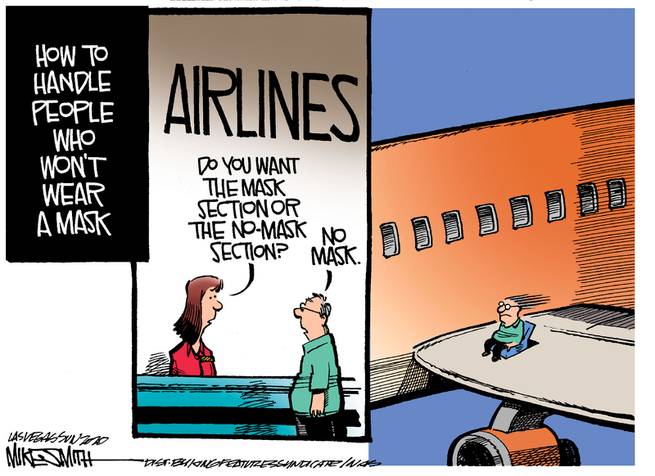
Cartoon – How to handle people who won’t wear a mask

Mike Smith Cartoon: 051420 smith cartoon masks -

Moody’s: US healthcare system rebounds from COVID-19 in May, but a bumpy road lies ahead

https://www.healthcaredive.com/news/moodys-us-healthcare-system-rebounds-from-covid-19-in-may-but-a-bumpy-ro/580152/

Banks rating downgrade: Moody's changes outlook on Indian banks to ...

Dive Brief:

  • A Moody’s Investors Service report on Thursday suggests that the U.S. healthcare industry is on the rebound from COVID-19, but recovery will likely to slow and uneven. Moreover, the report expressed concerns that regional flareups of coronavirus could majorly set back the return to normal volumes.
  • Investment firm Jefferies affirmed those worries in hospital traffic data shared Friday, noting “a sharp reversal” in hotspot state Arizona. Analysts tracked “record lows” in Arizona’s hospital traffic last week, down from what was thought to be the trough in April and sagging below May recovery amid a significant uptick in COVID-19 cases and protests.
  • “Whether states can continue their recovery even as cases increase, as we’ve seen in [Texas] and others, or if the recent reversals in [Arizona, Illinois,] etc. become more widespread is a trend to watch in coming weeks,” Jefferies analysts wrote.

Dive Insight:

Large sections of the healthcare sector all but shut down during the spring as the coronavirus led to nationwide shelter-in-place orders. However, as states and municipalities slowly reopen, so are the doors for hospitals, ambulatory surgical centers, clinics and other integral components of healthcare delivery.

As a result, Moody’s reported “considerable sequential improvement” during May. For example, while for-profit hospitals saw surgery volumes drop as much as 70% in April compared to the same period in 2019, May volumes were down about 20% to 40% compared to last year’s. Hospital-operated ambulatory surgical centers saw an 80% to 90% drop in April volumes, but only a 30% to 40% drop in May.

However, Moody’s noted that the “path to normalized volumes are not linear.” It also pointed out that emergency room care volumes, which dropped as much as 60% in April, have yet to really rebound, as they still appeared depressed as much as 50% in May.

“This could reflect the prevalence of working-from-home arrangements and people generally staying home, which is leading to a decrease in automobile and other accidents outside the home. Weak ER volumes also suggest that many people remain apprehensive to enter a hospital, particularly for lower acuity care,” the Moody’s report said.

The firm also noted that “the shape of recovery will vary by state, region and service line, reinforcing the importance of diversification for credit quality among healthcare service providers.”

However, Moody’s believes that the darkest days of March and April are behind much of the healthcare sector. It noted that most providers have stockpiled appropriate personal protective equipment and have reconfigured their offices, waiting rooms and other infrastructure to protect the health of both patients and employees.

Traffic data from 3,300 U.S. hospitals, tracked by Jefferies via mobile device pings, indicates that compared to January 2019 levels, national traffic lows of 43.7% in mid-April improved to 63.3% by early June.

But state-by-state analysis reveals some parts of the country are trending backwards. Arizona fell to a new low of 28.5% last week after hitting 51.5% on May 20. The analysts also reported Illinois hit its own new low on June 7.

While Moody’s did express some concern about regional outbreaks, it concluded that the precautions already taken “make it less likely that the U.S. would once again shut down all non-elective care across the nation if there is a second wave of coronavirus infections.”

Moody’s did express some concerns about hospital finances, but noted that for-profit hospitals “have unusually strong liquidity” due to payouts from the CARES Act and other government-sponsored financial relief programs.

Medical device firms should be prepared for a long and uneven recovery, according to Moody’s. The dental and orthopaedic sectors “will see a greater than average impact from consumers’ inability to pay for procedures or their unwillingness to engage with the healthcare system.” Moody’s forecast “a gradual, uneven pace of recovery,” with pre-tax earnings to decline as much as 30% in 2020 compared to 2019, while revenues will shrink around 10%. It expects that earnings will rebound in 2021 to 2019 levels.

Companies that operate in discretionary sectors will be hit harder as they rely on patients able to meet large deductibles or co-payments or to pay for related procedures entirely on their own. Moody’s noted that a large number of these procedures are performed in acute care hospitals with the assistance of robotics, but hospitals may be more conservative in their robotics investments given new budget constraints.


In countries keeping the coronavirus at bay, experts watch U.S. case numbers with alarm

https://www.washingtonpost.com/world/2020/06/19/countries-keeping-coronavirus-bay-experts-watch-us-case-numbers-with-alarm/?utm_campaign=wp_post_most&utm_medium=email&utm_source=newsletter&wpisrc=nl_most

Experts abroad watch U.S. coronavirus case numbers with alarm ...

As coronavirus cases surge in states across the South and West of the United States, health experts in countries with falling case numbers are watching with a growing sense of alarm and disbelief, with many wondering why virus-stricken U.S. states continue to reopen and why the advice of scientists is often ignored.

“It really does feel like the U.S. has given up,” said Siouxsie Wiles, an infectious-diseases specialist at the University of Auckland in New Zealand — a country that has confirmed only three new cases over the last three weeks and where citizens have now largely returned to their pre-coronavirus routines.

“I can’t imagine what it must be like having to go to work knowing it’s unsafe,” Wiles said of the U.S.-wide economic reopening. “It’s hard to see how this ends. There are just going to be more and more people infected, and more and more deaths. It’s heartbreaking.”

China’s actions over the past week stand in stark contrast to those of the United States. In the wake of a new cluster of more than 150 new cases that emerged in Beijing, authorities sealed off neighborhoods, launched a mass testing campaign and imposed travel restrictions.

Meanwhile, President Trump maintains that the United States will not shut down a second time, although a surge in cases has convinced governors in some states, including Arizona, to walk back their opposition to mandatory face coverings in public.

Commentators and experts in Europe, where cases have continued to decline, voiced concerns over the state of the U.S. response. A headline on the website of Germany’s public broadcaster read: “Has the U.S. given up its fight against coronavirus?” Switzerland’s conservative Neue Zürcher Zeitung newspaper concluded, “U.S. increasingly accepts rising covid-19 numbers.”

“The only thing one can say with certainty: There’s nothing surprising about this development,” a journalist wrote in the paper, referring to crowded U.S. beaches and pools during Memorial Day weekend in May.

Some European health experts fear that the rising U.S. caseloads are rooted in a White House response that has at times deviated from the conclusions of leading scientists.

“Many scientists appeared to have reached an adequate assessment of the situation early on [in the United States], but this didn’t translate into a political action plan,” said Thomas Gerlinger, a professor of health sciences at the University of Bielefeld in Germany. For instance, it took a long time for the United States to ramp up testing capacity.

Whereas the U.S. response to the crisis has at times appeared disconnected from American scientists’ publicly available findings, U.S. researchers’ conclusions informed the actions of foreign governments.

“A large portion of [Germany’s] measures that proved effective was based on studies by leading U.S. research institutes,” said Karl Lauterbach, a Harvard-educated epidemiologist who is a member of the German parliament for the Social Democrats, who are part of the coalition government. Lauterbach advised the German parliament and the government during the pandemic.

Despite its far older population, Germany has confirmed fewer than 9,000 coronavirus-linked deaths, compared to almost 120,000 in the United States. (Germany has about one-fourth of the United States’ population.)

Lauterbach cited in particular the work of Marc Lipsitch, a professor of epidemiology at Harvard University, whose research with colleagues recently suggested that forms of social distancing may have to remain in place into 2022. Lipsitch’s work, Lauterbach said, helped him to convince German Vice Chancellor Olaf Scholz that the pandemic will be “the new normal” for the time being, and it impacted German officials’ thinking on how long their strategy should be in place.

Regarding the effectiveness of face masks, Lauterbach added, “we almost entirely relied on U.S. studies.” Germany was among the first major European countries to make face masks mandatory on public transport and in supermarkets.

Lipsitch said Thursday that he was not previously aware of the impact of his research on German decision-making, but added that he has spoken to representatives of several other foreign governments in recent weeks, including Israeli Prime Minister Benjamin Netanyahu and officials or advisers from Canada, New Zealand and South Korea.

Even though Lipsitch cautioned it was impossible for him to say how or if his conversations influenced foreign governments’ thinking, he credited the overall European response as “science-based and a sincere effort to find out what experts in the field believe is a range of possible scenarios and consequences of decisions.”

Lipsitch said he presented some of his research to a White House group in the early stages of the U.S. outbreak but said the Trump administration’s response to the pandemic did not reflect his conclusions. “I think they have cherry-picked models that at each point looked the most rosy, and fundamentally not engaged with the magnitude of the problem,” he said.

The White House has defended its approach as science-based. After a study by Imperial College London predicted 510,000 deaths in Britain and 2.2 million in the United States if the pandemic remained fully uncontrolled, for instance, the Trump administration indicated that it was taking the research into account.

“If we didn’t act quickly and smartly, we would have had, in my opinion and in the opinion of others, anywhere from 10 to 20 and maybe even 25 times the number of deaths,” Trump said two months later,

But European researchers dispute that the U.S. government’s reliance on scientists to inform decision-making comes anywhere near the degree to which many European policymakers have relied on researchers.

After consulting U.S. research and German studies, for instance, German leaders agreed to make reopening dependent on case numbers, meaning restrictions snap back or reopening gets put on hold if the case numbers in a given region exceed a certain threshold.

Meanwhile, several U.S. states have reopened despite rising case numbers.

“I don’t understand that logic,” said Reinhard Busse, a health management professor a the Technical University of Berlin.

Lauterbach said that while most Germans disapproved of Trump before the pandemic, even his staunchest critics in Germany were surprised by how even respected U.S. institutions including the Centers for Disease Control and Prevention (CDC) struggled to respond to the crisis.

The CDC, for instance, initially botched the rollout of test kits in the early stages of the outbreak.

“Like many other aspects of our country, the CDC’s ability to function well is being severely handicapped by the interference coming from the White House,” said Harvard epidemiologist Lipsitch. “All of us in public health very much hope that this is not a permanent condition of the CDC.”

Some observers fear the damage will be difficult to reverse. “I’ve always thought of the CDC as a reliable and trusted source of information,” said Wiles, the New Zealand specialist. “Not anymore.”