

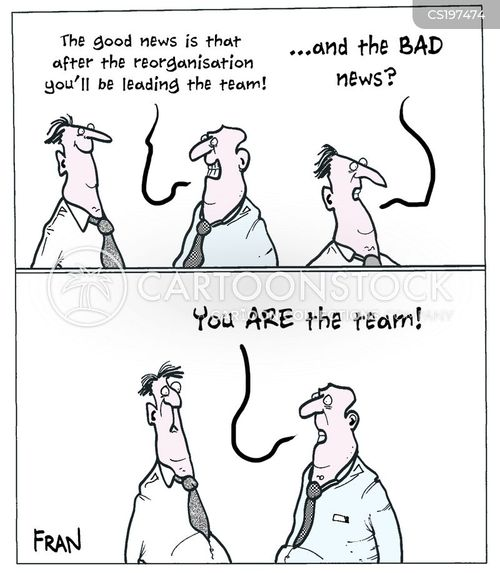
Cartoon – Reorganization Reality

Health systems are increasingly focused on their regional structures, reorganizing leadership to provide oversight most effectively. On Oct. 23, those changes hit the corner office.
Providence is phasing out the CEO role at two of its California hospitals, the Renton, Wash.-based system confirmed to Becker’s. One year ago, Providence’s Northern and Southern California regions came together to create a sole South Division. Now, a single chief executive — Garry Olney, DNP, RN — will oversee operations in the Northern California service area, replacing the CEOs of Napa-based Queen of the Valley Medical Center and Santa Rosa (Calif.) Memorial Hospital.
“This was part of a systemwide restructuring to streamline executive roles so we could preserve more resources for front-line caregivers and become nimbler and more responsive to the times,” the system said in a statement.
Providence isn’t alone in its desire to streamline leadership. Corewell Health East — part of Corewell Health, which has dual headquarters in Grand Rapids and Southfield, Mich. — made seven executive changes within the region, the system confirmed to Becker’s on Oct. 23. The senior vice president of medical group operations was let go, along with two hospital presidents. The region’s COO of acute and post-acute care, Nancy Susick, RN, will take over one hospital in addition to her current duties; the second hospital will be overseen in a dual capacity by Derk Pronger, who already helms another hospital in the region.
The word “streamline” was also used by Chicago-based CommonSpirit, which recently shared plans to lighten its regional load.
“We are also making further changes to streamline the organization, including the consolidation of our operating divisions into five regions from eight, clearly define our market-based focus and strategies and continue to refine our operating model,” CFO Dan Morissette said on an Oct. 12 investor call.
Regional revamps don’t always lead to cuts or “consolidation.” In some cases, they lead to the creation of new roles. Atlanta-based Emory Healthcare recently split its 10 hospitals into two divisions — one for regional hospitals, one for university hospitals — and tapped a president to helm each. Plus, Tampa (Fla.) General Hospital named eight new executives in a C-suite overhaul following the adoption of three Bravera Health hospitals into TGH North.
If the healthcare leaders plan to confront looming challenges, they need to be comfortable with “innovating and disrupting [themselves],” John Couris, president and CEO of Tampa General, told Becker’s.
“The way I would describe this is the last five years was all about foundational work,” Mr. Couris said. “The next five years and beyond is all about transformational work. So we’re shifting from the foundational activity to the transformational activity, and we need an organizational structure and a leadership team that reflects that journey. That’s why we made the changes.”

Roseville, Calif.-based Adventist Health plans to go from seven networks of care to five systemwide to reduce costs and strengthen operations, according to a Feb. 15 news release shared with Becker’s.
Under the reorganization, Adventist Health will have separate networks for Northern California, Central California, Southern California, Oregon and Hawaii.
“Reducing the number of care networks strengthens our operational structure and broadens the meaning and purpose of our network model as well as the geographical span of one Adventist Health,” Todd Hofheins, COO of Adventist Health, said in the release. “This also reduces overhead and administrative costs.”
The reorganization will result in job cuts, including reducing administration by more than $100 million.
“Our commitment to rural and urban healthcare remains steadfast, and we are expanding to other locations to invest and transform the integrated delivery of care,” Kerry Heinrich, president and CEO of Adventist Health, said in the release.
Specifically, the health system has a recently approved affiliation agreement for Mid-Columbia Medical Center in The Dalles, Ore., to join Adventist Health, the health system said. The agreement is pending final regulatory and state approvals.
Meanwhile, Adventist Health filed a Worker Adjustment and Retraining Notification Act notice with California officials Feb. 15.
Adventist Health will eliminate job functions and positions for employees at its corporate office campus along with some remote roles, the notice states.
Layoffs from Adventist Health began Feb. 1 and will continue into April, according to the notice.
Adventist Health said it has provided all affected employees 60 days’ written notice of the layoff. The health system expects about 59 employees to be separated from employment with Adventist Health.
Employees affected by the layoffs include administrative directors, directors, managers and project managers, among others.
“We recognize that these changes impact people’s lives and want to respect each affected individual,” Joyce Newmyer, chief people officer for Adventist Health, said in the health system’s release. “We will make every effort to identify other opportunities for team members impacted.”

The majority of hospitals are predicted to have negative margins in 2022, marking the worst year financially for hospitals since the beginning of the Covid-19 pandemic.
In Part 1 of Radio Advisory’s Hospital of the Future series, host Rachel (Rae) Woods invites Advisory Board experts Monica Westhead, Colin Gelbaugh, and Aaron Mauck to discuss why factors like workforce shortages, post-acute financial instability, and growing competition are contributing to this troubling financial landscape and how hospitals are tackling these problems.
Links:
As we emerge from the global pandemic, health care is restructuring. What decisions should you be making, and what do you need to know to make them? Explore the state of the health care industry and its outlook for next year by visiting advisory.com/HealthCare2023.




Providence, a 51-hospital system based in Renton Wash., received $651 million in federal grants in the first half of this year, but it wasn’t enough to offset the system’s losses tied to the COVID-19 pandemic.
The health system reported revenues of $12.5 billion in the first six months of this year, down from $12.6 billion in the same period a year earlier, according to financial documents released Aug. 17. Though the health system reported a rebound in patient volumes after the suspension of non-emergency procedures in March and April, net patient service revenue was down 10 percent year over year.
Providence’s expenses also increased. For the first two quarters of this year, the health system reported operating expenses of $12.7 billion, up 3 percent year over year. The increase was attributed to higher labor costs and increased personal protective equipment and pharmaceutical spend.
Reduced patient volumes combined with increased costs drove an operating loss of $221 million in the first half of this year. In the first half of 2019, Providence reported operating income of $250 million.
After factoring in nonoperating items, Providence ended the first six months of 2020 with a net loss of $538 million, compared to net income of $985 million in the same period of 2019.
To help offset financial damage, Providence received $651 million in federal grants made available under the Coronavirus Aid, Relief and Economic Security Act.
“We knew we were in for a marathon the moment we admitted our first patient with COVID-19 seven months ago,” Providence President and CEO Rod Hochman, MD, said in an earnings release. “Our caregivers have been on the front lines ever since, and we are incredibly proud and grateful for all they are doing to serve our communities during the greatest crisis of our lifetime.”
In its earnings release, Providence mapped out a three-part plan for the future. As part of that plan, the system said it is focused on improving testing capacity and turnaround times and advancing clinical research and best practices in the treatment of COVID-19. The system is also revising its operating model and cost structure.
 HENRY KOTULA