A new piece in the Atlantic sparked debate this week about the risk of ongoing COVID exposure to children as the country navigates toward the end of the pandemic. Brown University economist Emily Oster equated a child’s risk of serious illness from the coronavirus to that of their vaccinated grandmother. If grandma receives the Pfizer vaccine, her risk of serious illness is decreased by 95 percent. According to Oster, the condition of “being a child” aged 0-17 is 98 percent protective against hospitalization—so go ahead, plan that family summer vacation!
Oster cites no clinical or scientific experts in her piece, but some doctors were quick to respond that the comparisons are not equivalent (and also provide ready-made scripting for the “anti-vaxx” movement, which could claim that kids are already “basically vaccinated”).
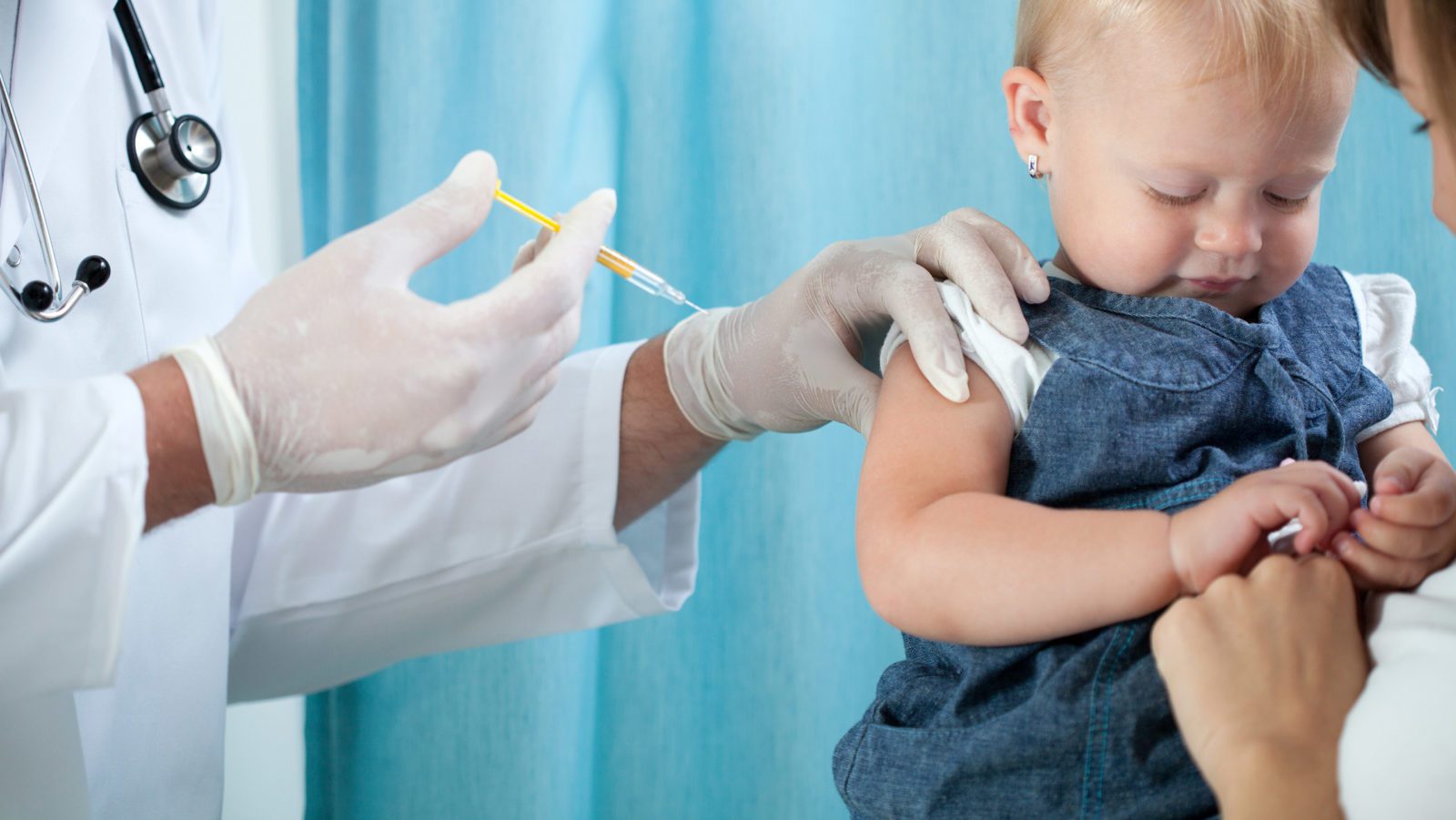
But the article does bring up a real question that millions of families will soon face: what can we do when grandma and grandpa (and hopefully mom and dad) are vaccinated, but the kids are not? Given the pace of clinical trials, teens could be eligible for vaccination as soon as late summer, but COVID vaccines might not be approved for younger children until months later—and this generational vaccine divide will likely linger into 2022.
Undoubtedly children are at lower risk from COVID than adults, and likely transmit the disease less frequently (although much of the data supporting the latter comes from studies in schools, where social distancing and masking are enforced). And we’re not out of the woods yet: as COVID cases surge again in Michigan, schools there have seen a spike in outbreaks as well.
As families look at conflicting data and messages in the media, they need clear, coordinated guidance from state and federal officials to help them gauge safety as they navigate their second “pandemic summer”.
The Democratic bill has $410 billion in stimulus checks and $360 billion in aid to state and local governments.
Expanded unemployment benefits cost $242 billion.
School spending is nearly $170 billion spread out over 10 years.
There are a few big chunks of money in the American Rescue Plan Act that have generated a lot of news coverage and are pretty well known. In response to a reader’s request, we present the whopping $1.86 trillion spending plan in pie chart form.
There are the $1,400 checks (or more likely deposits) to many citizens or permanent legal residents and their dependents. That comes to about $410 billion.
Aid to state, local, territorial and tribal governments costs about $360 billion.
The bill boosts and extends unemployment benefits. Add another $242 billion.
Over the next 10 years, the law spends nearly $170 billion on education. That includes $129 billion for K-12 schools — both public and private — and about $40 billion for higher education.
The money for vaccines and corralling the coronavirus became a political talking point. Democrats touted the $20-25 billion they included for vaccine supplies and research. Republicans argued that the bill spent less than 10% of its total cost on COVID-19.
People will parse the numbers in different ways. Some only count money spent directly on vaccine production. Some look more broadly at the economic damage wrought by the virus. We looked for money that went towards health care, whether that meant improving treatment on tribal lands, adding health care workers at clinics, or anything that reduced the health impacts of the pandemic.
We put the bill’s total public health spending at $143 billion.
Within that, the single biggest line item is $47.8 billion for mitigating the disease, a broad description that includes testing and surveillance. There is also $15 billion for COVID-related health care for veterans, $7.6 billion to help community health centers distribute vaccines, and about the same amount to the Centers for Disease Control and Prevention for roughly the same purpose.
The chart above lays out how the money breaks down.
All of the amounts so far come to $1.3 trillion over 10 years.The bill’s total cost is $1.86 trillion, which leaves about $500 billion dollars to flesh out.
The law has over $40 billion for child care. Money to keep people in their homes and to house the homeless comes to about $44 billion. There is $10 billion to put food on people’s tables. The expected cost of temporarily boosting the child tax credit is $109 billion.
In our chart, we fold all of that, plus subsidies for pensions and health insurance premiums, into the category of support for families. Our total is $352 billion.
Our last distinct category is transportation. Under that umbrella, we put $30 billion for mass transit, $15 billion for the airline industry, $8 billion for airports, and other related activities. That came to $58 billion.
The catch-all bucket of other spending includes items such as $66 billion for businesses, $50 billion for disaster relief at the Federal Emergency Management Agency, and $7 billion to expand broadband internet.
Some countries have stockpiles. Others have nothing. Getting a vaccine means living in the right place — or knowing the right people.
A 16-year-old in Israel can get a vaccine.
So can a 16-year-old in Mississippi.
And an 18-year-old in Shanghai.
But a 70-year-old in Shanghai can’t get one. Older people are at high risk for severe illness from Covid-19. But Chinese officials have been reluctant to vaccinate seniors, citing a lack of clinical trial data. Neither can an 80-year-old in Kenya. Low vaccine supply in many countries means only health care employees and other frontline workers are eligible, not the elderly.
Nor a 90-year-old in South Korea. Koreans 75 and older are not eligible until April 1. Only health care workers and nursing-home residents and staff are currently being vaccinated. The government initially said it was awaiting assurances that the AstraZeneca vaccine was safe and effective for older groups.
Anyone in Haiti.
Anyone in Papua New Guinea.
Anyone in these 67 countries. These countries have not reported any vaccinations, according to Our World in Data. Official figures can be incomplete, but many countries are still awaiting their first doses.
It wasn’t supposed to be like this: Covax, the global vaccine-sharing initiative, was meant to prevent unequal access by negotiating vaccine deals on behalf of all participating nations. Richer nations would purchase doses through Covax, and poorer nations would receive them for free.
But rich nations quickly undermined the program by securing their own deals directly with pharmaceutical companies. In many countries, they have reserved enough doses to immunize their own multiple times over.
Anyone who can afford a smartphone or an internet connection in India and is over 60 can get one. Mostly wealthy Indians are being inoculated in New Delhi and Mumbai, hospitals have reported, since vaccine appointments typically require registering online. Less than half of India’s population has access to the internet, and even fewer own smartphones.
And anyone who can pay $13,000 and travel to the U.A.E. for three weeks and is 65 or older or can prove they have a health condition.
A member of Congress in the United States. Friends of the mayor of Manaus, Brazil. Lawmakers in Lebanon. A top-ranking military leader in Spain. The extended family of the deputy health minister in Peru. The security detail to the president of the Philippines. Government allies with access to a so-called “V.I.P. Immunization Clinic” in Argentina. Around the world, those with power and connections have often been first in line to receive the vaccine — or have cut the line altogether.
A smoker in Illinois can get one.But not a smoker in Georgia.
A diabetic in the United Kingdom can. A diabetic in Connecticut can’t.
Countries have prioritized different underlying health conditions, with the majority focusing on illnesses that may increase the risk of severe Covid-19. In the U.S., health issues granted higher priority differ from state to state, prompting some people to travel across state borders.
A pregnant woman in New York.Not a pregnant woman in Germany. Up to two close contacts of a pregnant woman in Germany. Pregnant women were barred from participating in clinical trials, prompting many countries to exclude them from vaccine priority groups. But some experts say the risks to pregnant women from Covid-19 are greater than any theoretical harm from the vaccines.
A grocery worker in Texas, no. A grocery worker in Oklahoma, yes.
Many areas aim to stop the virus by vaccinating those working in frontline jobs, like public transit and grocery stores. But who counts as essential depends on where you live.
A police officer in the U.K. A police officer in Kenya. A postal worker in California. A postal worker in North Carolina. A teacher in Belgium. A teacher in Campeche, Mexico. Other jobs have been prioritized because of politics: Mexico’s president made all teachers in the southern state of Campeche eligible in a possible bid to gain favor with the teacher’s union.
Medical staff at jails and prisons in Colombia. A correctional officer in Tennessee. A prisoner in Tennessee. A prisoner in Florida. The virus spread rapidly through prisons and jails, which often have crowded conditions and little protective equipment. But few places have prioritized inoculating inmates.
An undocumented farm worker in Southern California. A refugee living in a shelter in Germany. An undocumented immigrant in the United Kingdom. Britain has said that everyone in the country is eligible for the vaccine, regardless of their legal status.
A Palestinian in the West Bank without a work permit. Despite leading the world in per-capita vaccinations, Israel has so far not vaccinated most Palestinians, unless they have permits to work in Israel or settlements in the occupied West Bank.
An adult in Bogotá, Colombia. An adult in the Amazonian regions of Colombia that border Brazil. In most of Colombia, the vaccine is only available to health care workers and those over 80.
But the government made all adults in Leticia, Puerto Nariño, Mitú and Inírida eligible, hoping to prevent the variant first detected in Brazil from arriving in other areas. A police officer in Mexico City. A teacher in rural Mexico.The government of populist president Andrés Manuel López Obrador has prioritized vaccinating the poor and those in rural communities, despite the country’s worst outbreaks occurring in major cities.
Native populations not federally recognized in the United States. The pandemic has been particularly deadly for Native Americans. But only tribes covered by the Indian Health Service have received vaccine doses directly, leaving about 245 tribes without a direct federal source of vaccines. Some states, including Montana, have prioritized all Native populations.
Indigenous people living on official indigenous land in Brazil.
These 43 countries, mostly high income, are on pace to be done in a year. These 148 countries, mostly low income, are on pace to take until next year or even longer. Countries like the U.S. continue to stockpile tens of millions of vaccine doses, while others await their first shipments.
“The vaccine rollout has been inequitable, unfair, and dangerous in leaving so many countries without any vaccine doses at all,” said Gavin Yamey, director of Duke University’s Center for Policy Impact in Global Health.
“It’s a situation in which I, a 52-year-old white man who can work from home and has no pre-existing medical conditions, will be vaccinated far ahead of health workers or a high-risk person in a middle- or low-income country.”
Walmart has continued to grow its presence in healthcare over the past few years, with expansions of its primary care clinics and the launch of its new insurance arm.
Here are nine numbers that show how big Walmart is in healthcare and how it plans to grow:
Walmart has opened20standalone healthcare centers and plans to open at least 15 more in 2021. The health centers offer primary care, urgent care, labs, counseling and other services.
Walmart’s board approved a plan in 2018 to scale to 4,000clinics by 2029. However, that plan is in flux as the retail giant may be rolling back its clinic strategy, according to a February Insider report.
Walmart in January confirmed plans to offer COVID-19 vaccines in 11 states and Puerto Rico.
In 2020, Walmart established600COVID-19 testing sites.
Walmart said it believes expanding its standalone clinics will help bring affordable, quality healthcare to more Americans because 90 percent of Americans live within 10 miles of a Walmart store.
The Walmart Health model lowers the cost of delivering healthcare services by about 40 percent for patients, according to Walmart’s former health and wellness president Sean Slovenski.
In October, Walmart partnered with Medicare Advantage insurer Clover Health on its first health insurance plans, which will be available to 500,000 people in eight Georgia counties.
Walmart’s insurance arm, Walmart Insurance Services, partnered with eight payers during the Medicare open enrollment period in 2020 to sell its Medicare products. Humana, UnitedHealthcre and Anthem Blue Cross Blue Shield were among the insurers offering the products.
After a rollercoaster year of living with COVID-19, consumer confidence has returned—and remained largely stable during the winter surge of the pandemic, according to the latest data from a Healthgrades’ consumer attitudes and behavior survey.
The graphic above depicts Healthgrades’ “Consumer Comfort Index”, a measure based on survey questions that assess comfort in specific healthcare settings (e.g., visiting your primary care doctor) and “everyday activities” (e.g., going grocery shopping or dining inside a restaurant). The index reveals that consumers continue to feel more comfortable with in-person medical-related activities than most everyday activities, with 65 percent now feeling comfortable in healthcare settings—up from 40 percent last April. There are, however, some obvious “everyday” outliers: for example, people still feel more comfortable going to the grocery store than getting an in-office medical procedure.
A second survey, by Jarrard Phillips Cate & Hancock and Public Opinion Strategies, findsconsumers are much more willing to seek in-person medical care in the next six months as compared to last summer. Health systems and physicians should leverage this return of consumer confidence to reach out to patients who have delayed or missed screenings and other important care across the past year.
Wealthy nations — including the U.S., the U.K. and the EU — have vaccinated their citizens at a rate of one person per second over the last month, while most developing countries still haven’t administered a single shot, according to the People’s Vaccine Alliance.
Why it matters:As higher-income countries aim to achieve herd immunity in a matter of months, most of the world’s vulnerable people will remain unprotected.
Experts say that mutations that may arise while the virus spreads could be a danger to us all, vaccinated or not.
The big picture: Even though more vaccines will arrive in developing nations soon, only 3% of people in those countries are likely to be vaccinated by mid-2021.
At best, only a fifth of their population will be vaccinated by the end of the year, per the People’s Vaccine Alliance.
What we’re watching: Three dozen countries have bought several times the amount of vaccine that they’ll need to vaccinate their entire population.
The U.S. alone has ordered more than a billion extra doses, Science Magazine reports. Global health leaders are saying it’s time to figure out where all of these excess doses will go.
“Over the next year or two, U.S. surplus doses and those from other countries could add up to enough to immunize everyone in the many poorer nations that lack any secured COVID-19 vaccine,” Science writes.
One year after the World Health Organization declared COVID-19 a pandemic, the end of that pandemic is within reach.
The big picture:The death and suffering caused by the coronavirus have been much worse than many people expected a year ago — but the vaccines have been much better.
Flashback: “Bottom line, it’s going to get worse,” Anthony Fauci told a congressional panel on March 11, 2020, the day the WHO formally declared COVID-19 to be a global pandemic.
A year ago today, the U.S. had confirmed 1,000 coronavirus infections. Now we’re approaching 30 million.
In the earliest days of the pandemic, Americans were terrified by the White House’s projections — informed by well-respected modeling — that 100,000 to 240,000 Americans could die from the virus. That actual number now sits at just under 530,000.
Many models at the time thought the virus would peak last May. It was nowhere close to its height by then. The deadliest month of the pandemic was January.
Yes, but: Last March, even the sunniest optimists didn’t expect the U.S. to have a vaccine by now.
They certainly didn’t anticipate that over 300 million shots would already be in arms worldwide, and they didn’t think the eventual vaccines, whenever they arrived, would be anywhere near as effective as these shots turned out to be.
Where it stands: President Biden has said every American adult who wants a vaccine will be able to get one by the end of May, and the country is on track to meet that target.
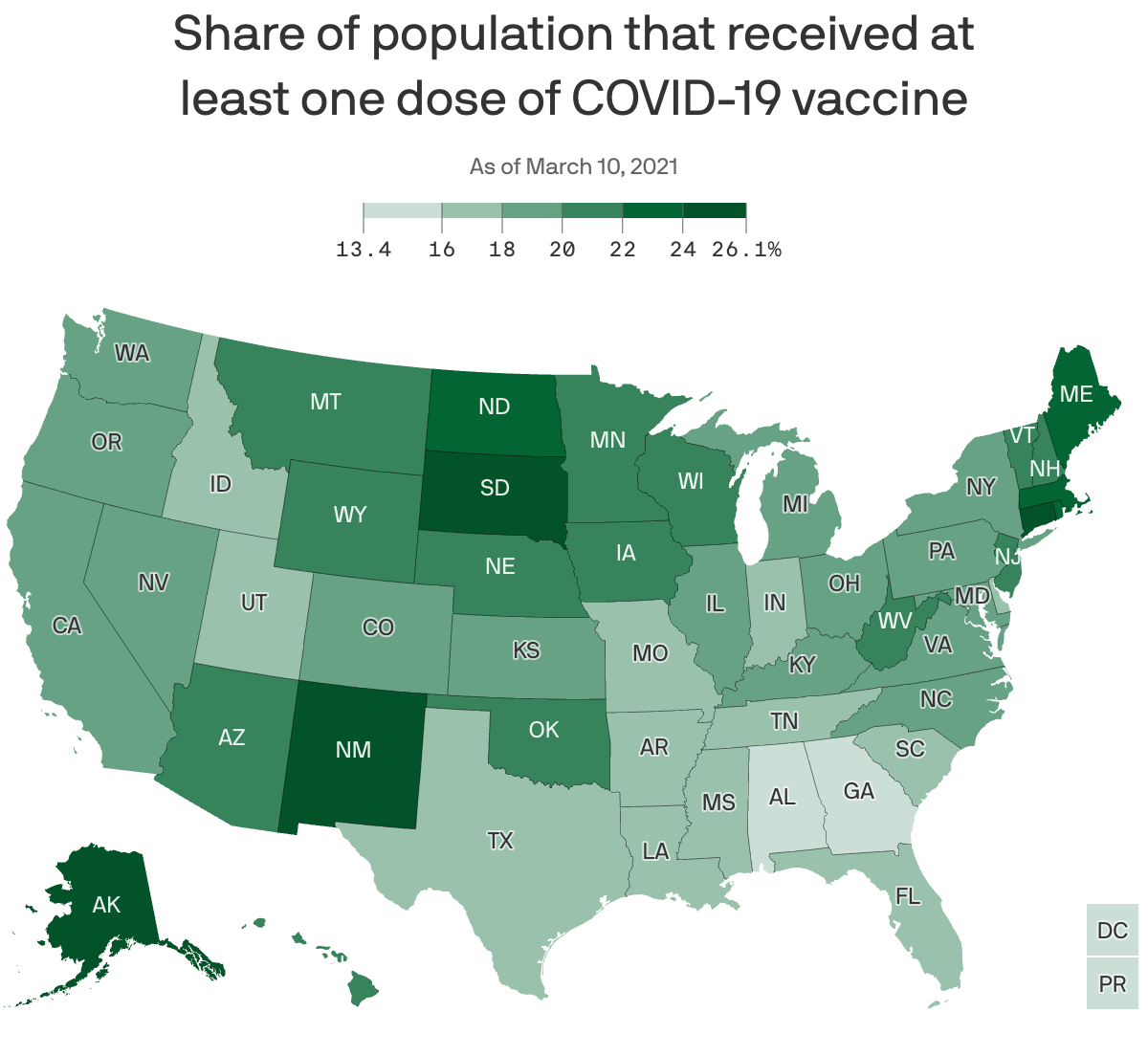
The U.S. is administering over 2 million shots per day, on average. Roughly 25% of the adult population has gotten at least one shot.
The federal government has purchased more doses than this country will be able to use: 300 million from Pfizer, 300 million from Moderna and 200 million from Johnson & Johnson.
The Pfizer and Moderna orders alone would be more than enough to fully vaccinate every American adult. (The vaccines aren’t yet authorized for use in children.)
Yes, millions of Americans are still anxiously awaiting their first shot — and navigating signup websites that are often frustrating and awful.
But the supply of available vaccines is expected to surge this month, and the companies say the bulk of those doses should be available by the end of May.
Cases, hospitalizations and deaths are all falling sharply at the same time vaccinations are ramping up.
The bottom line: Measured in death, loss, isolation and financial ruin, one year has felt like an eternity. Measured as the time between the declaration of a pandemic and vaccinating 60 million Americans, one year is an instant.
The virus hasn’t been defeated, and may never fully go away. Getting back to “normal” will be a moving target. Nothing’s over yet. But the end of the worst of it — the long, brutal nightmare of death and suffering — is getting close.
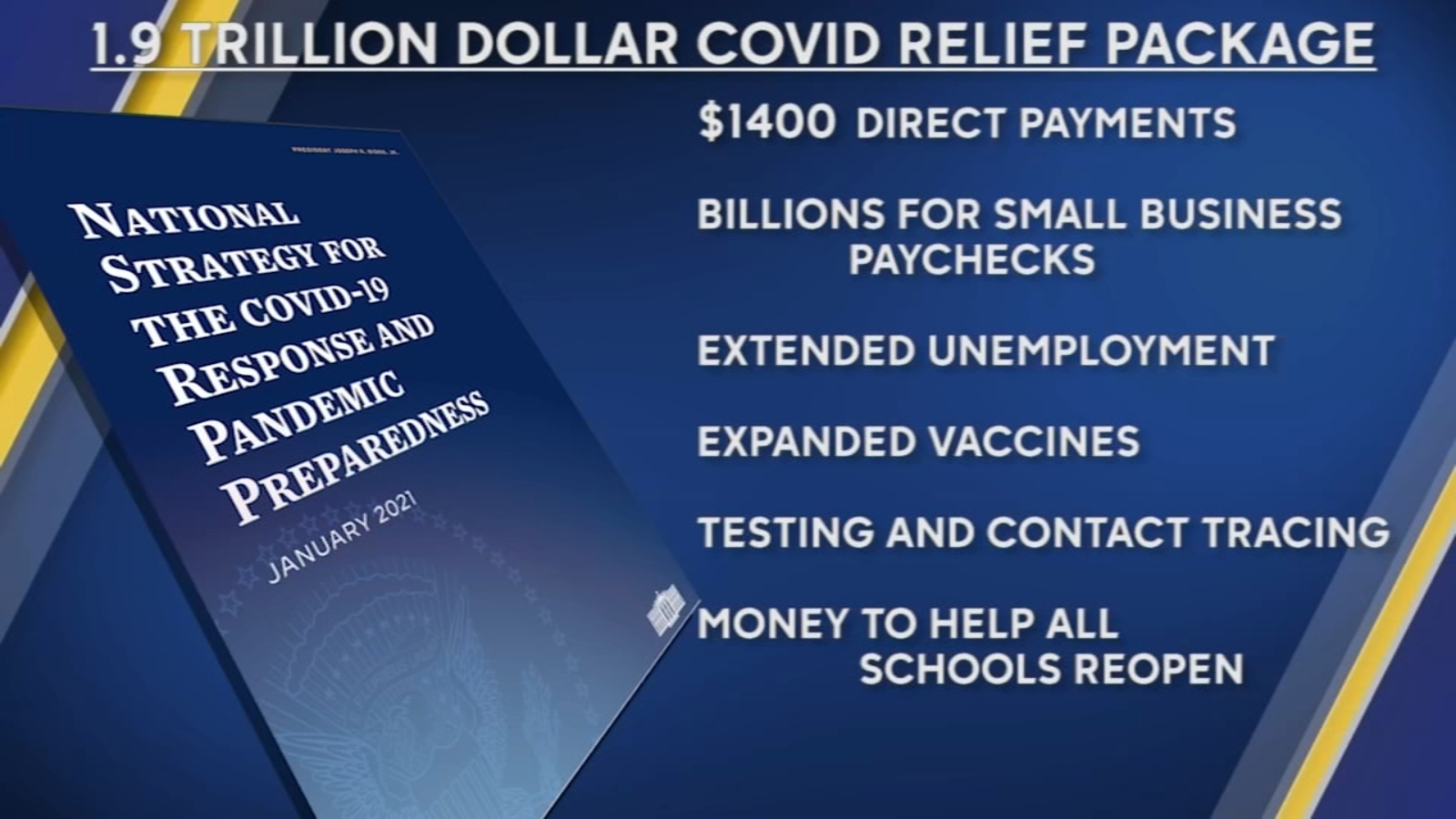
The House on Wednesday passed the mammoth $1.9 trillion COVID-19 relief package, which President Biden is expected to sign Friday.
The House approved the relief package in a starkly partisan 220-211 vote, sending the legislation to the White House and clinching Democrats’ first big legislative victory in the Biden era. No Republicans voted for the package and all but one House Democrat—Rep. Jared Golden of Maine—supported it. The Hill’s Cristina Marcos has more here.
The political split: Unlike the previous relief measures enacted last year, Democrats barely bothered to negotiate with Republicans and pushed the relief package through Congress along party lines using the budget reconciliation process. That allowed them to go as big as they wanted to go without running into a Senate GOP filibuster.
Republicans argue the use of a process dodging the filibuster shows Biden wasn’t serious about bringing unity, and House GOP lawmakers on Wednesday warned of the bill’s total cost.
But Democrats think Republicans will pay for their opposition to the popular bill and argued that they would oppose anything Biden proposed.
What’s in the $1.9T COVID-19 relief package: Along with $1,400 direct payments to households, an extension of expanded unemployment benefits, and aid for state and local governments, the package is loaded with other provisions intended to speed up the recovery from the recession and help struggling families fight the impact of COVID-19.
Tax credits: The bill increases the child tax credit for households below certain income thresholds for 2021 and makes it fully refundable, and also expands the earned income tax credit for the year.
Child care: $15 billion for grants to help low-income families afford child care and increases the child and dependent care tax credit for one year.
Pensions: $86 billion to bailout struggling union pension funds.
Transportation: $30 billion to bolster local subway and bus systems, $8 billion for airports, $1.5 billion for furloughed Amtrak workers, and $3 billion for wages at aerospace companies.
Housing: $27.4 billion in emergency rental assistance, another $10 billion to help homeowners avoid foreclosure, $5 billion in vouchers for public housing, $5 billion to tackle homelessness and $5 billion more to help households cover utility bills.
Small businesses: The American Rescue Plan broadens eligibility guidelines for the Paycheck Protection Program, allowing more nonprofit entities to be eligible, adds $15 billion in emergency grants and also sets aside more than $28 billion in funding for restaurants.
ObamaCare subsidies and Medicaid expansion: The bill increases ObamaCare subsidies through 2022 to make them more generous, a longtime goal for Democrats, and opens up more fully subsidized plans to individuals. It also would provide extra Medicaid funding to states that expand the program and have yet to do so.
The COVID-19 pandemic has accelerated the pace of artificial intelligence adoption, and healthcare leaders are confident AI can help solve some of today’s toughest challenges, including COVID-19 tracking and vaccines.
The majority of healthcare and life sciences executives (82%) want to see their organizations more aggressively adopt AI technology, according to a new survey from KPMG, an audit, tax and advisory services firm.
Healthcare and life sciences (56%) business leaders report that AI initiatives have delivered more value than expected for their organizations. However, life sciences companies seem to be struggling to select the best AI technologies, according to 73% of executives.
As the U.S. continues to navigate the pandemic, life sciences business leaders are overwhelmingly confident in AI’s ability to monitor the spread of COVID-19 cases (94%), help with vaccine development (90%) and aid vaccine distribution (90%).
KPMG’s AI survey is based on feedback from 950 business or IT decision-makers across seven industries, with 100 respondents each from healthcare and life sciences companies.
Despite the optimism about the potential for AI, executives across industries believe more controls are needed and overwhelmingly believe the government has a role to play in regulating AI technology. The majority of life sciences (86%) and healthcare (84%) executives say the government should be involved in regulating AI technology.
And executives across industries are optimistic about the new administration in Washington, D.C., with the majority believing the Biden administration will do more to help advance the adoption of AI in the enterprise.
“We are seeing very high levels of support this year across all industries for more AI regulation. One reason for this may be that, as the technology advances very quickly, insiders want to avoid AI becoming the ‘Wild Wild West.’ Additionally, a more robust regulatory environment may help facilitate commerce. It can help remove unintended barriers that may be the result of other laws or regulations, or due to lack of maturity of legal and technical standards,” said Rob Dwyer, principal, advisory at KPMG, specializing in technology in government.
Healthcare and pharma companies seem to be more bullish on AI than other industries are.
The survey found half of business leaders in industrial manufacturing, retail and tech say AI is moving faster than it should in their industry. Concerns about the speed of AI adoption are particularly pronounced among small companies (63%), business leaders with high AI knowledge (51%) and Gen Z and millennial business leaders (51%).
“Leaders are experiencing COVID-19 whiplash, with AI adoption skyrocketing as a result of the pandemic. But many say it’s moving too fast. That’s probably because of current debate surrounding the ethics, governance and regulation of AI. Many business leaders do not have a view into what their organizations are doing to control and govern AI and may fear risks are developing,” Traci Gusher, principal of artificial intelligence at KPMG, said in a statement.
Future AI investment
Healthcare organizations are ramping up their investments in AI in response to the COVID-19 pandemic. In a Deloitte survey, nearly 3 in 4 healthcare organizations said they expect to increase their AI funding, with executives citing making processes more efficient as the top outcome they are trying to achieve with AI.
Healthcare executives say current AI investments at their organizations have focused on electronic health record (EHR) management and diagnosis.
To date, the technology has proved its value in reducing errors and improving medical outcomes for patients, according to executives. Around 40% of healthcare executives said AI technology has helped with patient engagement and also to improve clinical quality. About a third of executives said AI has improved administrative efficiency. Only 18% said the technology helped uncover new revenue opportunities.
But AI investments will shift over the next two years to prioritize telemedicine (38%), robotic tasks such as process automation (37%) and delivery of patient care (36%), the survey found. Clinical trials and diagnosis rounded out the top five investment areas.
At life sciences companies, AI is primarily deployed during the drug development process to improve record-keeping and the application process, the survey found. Companies also have leveraged AI to help with clinical trial site selection.
Moving forward, pharmaceutical companies will likely focus their AI investments on discovering new revenue opportunities in the next two years, a pivot from their current strategy focusing on increasing profitability of existing products, according to the survey. About half of life sciences executives say their organizations plan to leverage AI to reduce administrative costs, analyze patient data and accelerate clinical trials.
Industry stakeholders are taking steps to advance the use of AI and machine learning in healthcare.
The Consumer Technology Association (CTA) created a working group two years ago to develop some standardization on definitions and characteristics of healthcare AI. Last year, the CTA working group developed a standard that creates a common language so industry stakeholders can better understand AI technologies. A group also recently developed a new standard to advance trust in AI solutions.
On the regulatory front, the U.S. Food and Drug Administration (FDA) last month released its first AI and machine learning action plan, a multistep approach designed to advance the agency’s management of advanced medical software. The action plan aims to force manufacturers to be more rigorous in their evaluations, according to the FDA.
President Biden‘s announcement that there will be enough vaccines for all adults by May is raising hopes for a return to normal soon.
But the next few months in the pandemic are critical. Concern is growing over moves by some states to lift restrictions already, while new variants of the virus are on the rise in the U.S. Experts warn that actions taken now risk delaying getting back to some semblance of normal.
Health officials are urging restrictions to remain in place for the final stretch, saying that it will not be much longer before the situation markedly improves, and it does not make sense to lift all restrictions when widespread vaccinations are in sight.
Biden on Wednesday issued his most forceful comments to date, calling out the governors of Texas and Mississippi for lifting their states’ mask mandates and all capacity limits on businesses.
He noted that vaccinations for all adults are on the horizon.
“The last thing we need is Neanderthal thinking that in the meantime everything’s fine, take off your mask, forget it,” he said. “It still matters.”
Estimates differ on when exactly the country might return to something like “normal,” though many say they expect this summer will be much better.
Former Food and Drug Administration Commissioner Scott Gottlieb said on CNBC on Wednesday that he thinks even as soon as April will be “profoundly better,” given that vaccine supply will have ramped up significantly, allowing vaccine availability to be “wide open” by then.
Centers for Disease Control and Prevention Director Rochelle Walensky on Wednesday put the time frame at three months until the country could be vaccinated.
“The next three months are pivotal,” she said.
Thomas Tsai, a researcher at the Harvard T.H. Chan School of Public Health, said that by summer, “I think we can have a much more, I don’t want to say normal, but at least a ‘new normal’ summer.”
But experts warn that the return to normal could actually be delayed if restrictions are lifted too soon, causing a new spike in cases in the near term.
Tsai likened the current situation to the seventh inning stretch of a baseball game. “Progress has been made; it’s OK to take stock of that,” he said. “How we play the next two innings determines if this is a single game or turns into a doubleheader.”
Maintaining restrictions as people get fatigued and see the end in sight could be a challenge, though, particularly in red states that were skeptical of instituting health restrictions from the start.
Texas Gov. Greg Abbott and Mississippi Gov. Tate Reeves, both Republicans, pointed to the ongoing vaccination campaign in saying that the time has come to end restrictions.
“With the medical advancements of vaccines and antibody therapeutic drugs, Texas now has the tools to protect Texans from the virus,” Abbott said Tuesday. “We must now do more to restore livelihoods and normalcy for Texans by opening Texas 100 percent.”
Responding to Biden’s criticism on Wednesday, Reeves added: “Mississippians don’t need handlers.”
“As numbers drop, they can assess their choices and listen to experts,” he added. “I guess I just think we should trust Americans, not insult them.”
Gottlieb argued for a middle ground, saying that public health officials risk having the public simply ignore all guidance if they do not provide a “realistic glide path to a better future,” though March is “a little bit premature” to lift all restrictions.
“March really is a difficult month,” he said. “It sits between two worlds. February was a raging epidemic, it was very clear we needed to have measures in place. I think April’s going to be profoundly better, and March is sitting in the middle.”
Variants of the virus also pose a threat that adds another degree of uncertainty. The most common variant spreading in the US, known as B117, or the United Kingdom variant, responds well to vaccines, but is more infectious.
“The B117 hyper-transmissible variant looms ready to hijack our successes to date,” Walensky said.
Variants first identified in Brazil and South Africa also pose a risk of reducing the effectiveness of the vaccines, though the extent is not fully clear, and vaccine manufacturers are preparing backup plans to provide booster shots or updated vaccines if necessary.
“We are at a critical nexus in the pandemic,” Walensky said. “So much can turn in the next few weeks.”
After weeks of declines, both cases and deaths are ticking up. According to CDC data, the seven-day average of new cases per day, at 66,000, is up 3.5 percent from the past week, and deaths, at just over 2,000 per day, are up 2.2 percent.
Barbara Alexander, president of the Infectious Diseases Society of America, issued a statement Wednesday calling on people to continue wearing masks, distancing from others, and avoiding large gatherings.
“All of these measures together will bring us closer to ending the pandemic,” she said. “Abandoning them now will postpone the day we can put COVID-19 behind us.”
Still, the declines in past weeks and the increasing pace of vaccinations is offering some hope after a long year.
“I’m more optimistic than I have been in the last year,” Tsai said.






 HENRY KOTULA