We caught up recently with a healthcare leader who had spent time in Atlanta in a previous role, and the conversation turned to last year’s closure of Atlanta Medical Center.
One major impact: the closure immediately left the Atlanta metro region, home to over 6M people, with only one Level 1 trauma center (a second Level 1 center opened an hour north of the city in February). “It’s devastating for the community to lose those services,” he shared, “but I also get why the health system made that choice, given how hard the economy has hit hospitals.” When all health systems are feeling the worst margin pressures in more than a decade, most would be reticent to step in and launch a new trauma program, which despite bringing prestige, is often a money-loser.
The conversation got us thinking about whether healthcare needs a new approach to securing essential services needed by the community which aren’t well supported by the payment system.
Our current model largely relies on nonprofit systems to meet the community need as a tenet of that status. But as one CMO shared, “If there’s more than one system in the market, we toss the responsibility back and forth like a hot potato.”
His solution: there needs to be top-down redesign of urgently needed critical services like trauma and behavioral health, as well as highly specialized services like transplant and pediatric subspecialty care, which he considered oversupplied in his market, with multiple subscale programs.
His hope was that health systems could cross competitive lines and collaborate to think about a rational approach to “regional healthcare master planning”, along with a new funding model.
It’s a tall order, he continued, but if health systems can’t find a solution on their own, they leave themselves open to government intervention that might mandate a solution—or further questions of the value communities are receiving from supporting nonprofit status.
As care continues to shift to lower cost ambulatory surgery centers (ASCs), the graphic above looks at recent growth and consolidation in the ASC market.
From 2012 to 2022, the five largest operators increased their collective ownership of ASC facilities from 17 to 21 percent, and were responsible for over 50 percent of total facility growth in that period.
While physicians still fully own over half of the nation’s ASCs, the national chains tend to run larger, multispecialty facilities responsible for an outsized proportion of procedures and revenue.
The likes of Tenet, Optum, and HCA are betting big on ASCs, banking on projections that the market will grow by over 60 percent in the next seven years.
(Though AmSurg’s parent company, Envision Healthcare, filed for bankruptcy, AmSurg is buying Envision’s remaining ASCs to retain its significant foothold in the market.)
While many high-revenue specialties, notably orthopedics and gastroenterology, have already seen a significant shift to ASCs, cardiology is one of the most promising service lines for ASC growth, with some predicting that a third of cardiology procedures will be performed in ambulatory settings in the next few years.
The shift of surgeries from hospitals to ASCs is daunting for health systems, who stand to lose half or more of the revenue from each case—if they’re able keep the procedure within the system.
In the meantime, low-cost ASC operators will continue to add new facilities that deliver high margins to fuel their growth.
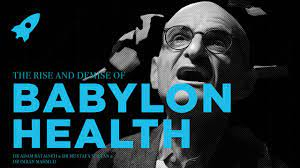
this article traces how the once-darling Babylon Health became an “unmitigated disaster”, for which the UK’s National Health Services (NHS) has paid a significant price.
Babylon used its vision for a privatized NHS with slashed wait times and AI-powered treatment to boost its public offering, via a special-purpose acquisition company, with a $4.2B valuation in June 2021. Many of its promises have been revealed to be overly ambitious, if not doomed from the start, with its AI-powered diagnostics and funding model proving especially flawed.
A pivot to managed care in the US failed to stem a tide of mounting losses, and the company announced plans to go private last week.
The Gist: There are myriad lessons from the demise of Babylon, a marquis example of a “digital-first” healthcare startup that burned through capital and crashed with the end of the era of cheap money:
virtual care isn’t a magic wand to reduce wait times, and healthcare startups (and their investors) should think as much about the path to profitability as they do about rapid growth.
While Babylon did have its finger on the pulse of promising technologies, it applied them irresponsibly: for patients, inaccurate AI diagnoses could be worse than no care at all.
Amid the current AI frenzy, healthcare would benefit from more “slow AI”, developed with clinical and scientific collaboration and rigorous academic study design and testing, over “fast AI”, with pressure to generate returns for private investors pushing entrepreneurs to rapidly develop and deploy technology.
A surge in the uninsured population from Medicaid redetermination could swamp some health systems that struggled to stay afloat during the pandemic. But experts say it could also translate into a financial boost for networks, if enough individuals find new sources of coverage.
Why it matters:
Even the temporary loss of coverage as states unwind their COVID-era Medicaid enrollment requirements means more people will go without checkups and other primary care, increasing the likelihood they’ll wait until they’re sick to seek help.
A key question is how many of the disenrolled will find new arrangements through workplace insurance or subsidized Affordable Care Act plans, both of which pay providers at higher rates than Medicaid.
Driving the news:
More than 170,000 people lost their Medicaid coverage in four states in April, and it’s not clear from state data how many of those people found new arrangements, reapplied successfully for Medicaid or remain uninsured.
An estimated 17 million children and adults could lose Medicaid coverage this year, after pandemic-era protections are rolled back, per a recent KFF survey.
Trinity Health, an 88-hospital health system operating in 26 states, estimates that Medicaid redetermination could result in a loss of $70 million to $90 million if disenrolled people don’t find other arrangements and the system has to provide them with charity care.
“It’s painful to watch; it’s not good for people and for our communities and those who are most vulnerable,” Dan Roth, chief clinical officer at Trinity Health, told Axios.
Emergency departments could fill up quickly if enough people who delay care wait for a health crisis to get help, said Ben Finder, director of policy research and analysis at the American Hospital Association.
He said other patients could cut pills in half or otherwise make medications last longer, “which can create cascading problems for folks.”
What we’re watching:
Redeterminations could change the payer mix in a revenue-positive way if patients go from Medicaid to employer-sponsored or ACA plans.
One Urban Institute report estimates that as many as 10.5 million patients could shift from Medicaid to employer-sponsored coverage or a marketplace plan.
This could boost payments to hospitals significantly, per Duane Wright, a Bloomberg Intelligence analyst, since commercial payment rates for hospital services are on average 223% higher than Medicare payments.
Zoom in:
Providers might be the first ones to inform patients who don’t know that their coverage has been terminated when they come in seeking care.
Health systems can create special teams to proactively reach out to Medicaid patients before they even come to the hospital, said Karen Shields, chief client engagement officer at Gainwell and former deputy director at the Centers for Medicare and Medicaid Services.
“There is a moral and financial imperative for us to be good at this,” Shields told Axios.
The bottom line:
Most health systems have bounced back from a shaky 2022. But redeterminations, combined with inflation, supply chain problems and staffing shortages, could prove too much, especially during the colder months when respiratory viruses proliferate.
“Everyone is holding their breath watching for how this unfolds in each state,” Finder told Axios.
With companies fighting for financial know-how, a spotlight is beginning to shine on leaders who can bring the skill sets and expertise firms need in the moment.
Demand for interim leaders shot up significantly during the past 12 months, a report by Business Talent Group, a Heidrick & Struggles company, found, rising 116% year-over-year. Requests for on-demand finance chiefs in particular saw a considerable spike, increasing by 103% YoY, boosted by both continued economic uncertainty and the growing complexities of the CFO role.
The rising demand for interim CFOs is also partly due to growing awareness of the availability of such short-term expertise, said Sandra Pinnavaia, Chief Innovation Officer for BTG.
“Companies, as they get more comfortable and aware of the fact that there is this on-demand talent world, it allows them to contemplate different kinds of changes and uses than before,” Pinnavaia said. “So I do think there’s an underlying driver here, that is in a sense, supply creates demand.”
The interim CFO’s appeal
For companies, interims can help firms navigate through tricky periods or transitions. Requests for interim CFOs made up half of all interim C-suite requests, according to the BTG report. Companies are specifically searching for financial leadership skilled in financial controls, accounting and audit. Demand for such expertise rose 76% YoY.
For finance leaders, the higher demand coincides with gains in the compensation and benefits that accompany the role, said Jack McCullough, President of the CFO Leadership Council.
There’s better money available for CFOs who do this type of contract or interim work, leading to more executives interested in these types of jobs, McCullough said in an interview. For example, some part-time CFOs have begun to receive stock options, he said, referring to a CFO who received the benefit at three startups.
Taking an interim role can also be a refreshing change for finance leaders who want to apply their skills in new areas, according to Diane Buckley, managing partner of Forte Financial Consulting LLC. Buckley, a veteran of Big Four accounting firm Ernst & Young, was drawn to interim and fractional CFO work because it afforded her the option to share her skills with growing companies and “really be impactful day one,” she said.
“It was like, ‘I can bring value to smaller companies that may not at this point in their growth warrant a full-time CFO, but I can bring that skill set to them,’” she said in an interview.
On the supply side, shifting workforce trends may be prompting more companies to take a second look at what they need from their leadership.
Talent shortages across the accounting and finance space mean companies may be facing a year-long period to find a qualified CFO, making it more necessary to put in an interim “even if it’s not the ideal person,” McCullough said.
Meanwhile, the pandemic has also left a lasting mark: BTG clients have tapped more interims because “they have been forced over the last few years, to redefine their whole way of working,” Pinnavaia said.
“Now obviously we have a huge spectrum — there are companies that are back full-time, in-person every day, and there are companies that have really changed their business model and they’re not in-person at all,” she said. “But I think that has loosened up the aperture for what would be an acceptable solution” when it comes to leadership, she said.
The right talent at the right time
Hiring on-demand talent also allows companies to find a leader who can meet their needs in the moment — and since many interims come into a company to solve a particular problem or meet a specific goal, one’s skills are “kind of by definition matched to what the issues are,” said Reed Malleck, CFO of Ratio Therapeutics.
CFOs often need to operate in “four dimensions,” he said in an interview, including accounting, operational skills, investor relations and the ability to participate in the execution of strategy for the business.
“If you’re a permanent CFO, you have to cover all of those, even though you might be really good at only one of them,” according to Malleck, an experienced interim executive who took on several such roles as an engagement partner with executive talent firm Tatum, a Randstad company. “But as an interim person, it’s more targeted, like, ‘we need a guy who’s really good at operations. We need this thing to be fixed.’”
Being able to slot one’s skills perfectly into the situation can be a huge benefit for CFOs, many of whom are dealing with expanding job creep. While becoming an interim is not necessarily less stressful than a permanent CFO position, “in a way, you get relief when you get to the point where you fix everything, and when you’re in a permanent role that never happens,” Malleck said. “When you’re in a permanent role, there’s always something new that’s a new problem.”
With CFOs taking on more responsibility for areas like digital transformation, keeping up with the books and juggling other operational needs across the organization, “the CFO is blamed for this and blamed for that … increasingly, people get burnt out or there’s a loss of trust,” he said.
“Hundreds of analysts are looking at your stock and your performance, the market and the competitors and the technology and you have to explain things not once a quarter, but like five times a day,” Malleck said.
Succession planning is vital
Another often unexplored benefit of on-demand talent is as a source of expertise for future company leaders. A shortage of talent in the finance and accounting fields is worsening, with potential accountants lured away by shinier fields such as technology.
As a result, building a pipeline for executives with CFO skills is crucial.
Moreover, CFOs who were at the top financial seat the last time the U.S. saw serious inflation in the 1980s have long since retired, McCullough said. Finance leaders today face a “steep learning curve.”
“CFOs, through no fault of their own, they haven’t had to develop the skills” necessary to navigate current economic turmoil, he said.
Many CFOs with decades of experience are also either looking to retire, or seeking promotion rather than lateral opportunities, said Shawn Cole, president of boutique executive search firm Cowen Partners.
The jump from the CFO to the CEO seat is “way more commonplace” today than it was just a few decades ago, Cole said in an interview, opening up more opportunities for finance heads. Promoting internal candidates to an interim chair can be an easier and more affordable way for certain companies — faced with both a dearth of qualified external candidates and shaky succession planning — to fill the seat while they hunt for a long-term replacement, he said.
“For the last decade or so, businesses have been in like a boom or bust kind of scenario,” Cole said. “And so I think there’s just this lack of investment in a future generation.”
Whether an internal or external interim hire, the executive should also be a welcome and engaged part of the search for a long-term candidate, Cole said. It is part of their fiduciary obligations to a company and its shareholders to “do the necessary due diligence to make an informed hire.”
While internal interims can be an affordable choice, there can also be drawbacks: the “most damning issue” being when an internal interim pick is acting both as interim CFO as well as retaining the responsibilities of their original role at the company, Cole said.
“So what they wind up being is CFO in name only and they still are fulfilling the role of financial reporting or something like that,” he said.
Interims and on-demand talent will probably play a greater role in a company as time goes on, Pinnavaia said. She pointed to clients who might think they need an interim CFO, for example, but who are really searching for an expert or CFO who is able to do a specific project with the existing leadership team. In such a scenario, hiring an interim controller or another executive on-demand with the right finance skills would be the best way forward, she said.
“I’m very excited about this as an innovation in how business gets done,” she said. “It is a way of applying … real time alignment of skill and capacity against particular challenges or opportunities in the business.”
While Congressional leaders play chicken with the debt ceiling this week, antipathy toward hospitals is mounting.
To be fair, hospitals are not alone: drug companies and PBMs share the distinction while health insurers, device companies, medical groups and long-term care providers enjoy less attention…for now.
Hospitals are soft targets. They’re also vulnerable.
They operate in a sector that’s labor intense, capital intense and highly regulated by federal, state and local governments. They’re high profile: many advertise regionally/nationally, all claim unparalleled clinical excellence and unfair treatment by health insurers.
Hospitals operate locally, so storylines like these get attention
In Minnesota, Mississippi and Pennsylvania, hospitals are in court alleging under-payments and/or adverse coverage policies by dominant insurers in their markets.
In NC, the state treasurer and others are challenging a unanimous State Senate vote last week granting the UNC Health System a waiver from antitrust concerns as it builds out its system.
In CA, nurses are striking for higher wages, improved work conditions in 5 HCA hospitals.
And in Nashville today, private equity-owned Envision will declare bankruptcy throwing its emergency room staffing contracts with hospitals into limbo.
The future for hospitals is unclear
Inpatient demand is shrinking/shifting. Outpatient, virtual, and in-home services demand is growing. Discontent among workers and employed physicians is palpable. Labor and supply chain costs wipe-out operating margins and price sensitivity among consumers and employers is soaring. Most are trying to survive any way they can. Some won’t.
Per Syntellis’ latest analysis, the tide may be turning:
Total hospital expenses rose for an 11th consecutive month, but growth in labor expenses slowed for the first three months of 2023; Total Expense rose 4.7% YOY for the month while Total Non-Labor Expense rose 5.5% YOY due to higher costs for drugs, supplies, and purchased services. Total Labor Expense was up 1.8% YOY — a slight uptick after YOY labor expense increases eased to less than 1% in January and February.
Hospital margins remained extremely narrow but inched back into the black for the first time in 15 months as revenue growth outpaced expense increases. The median, actual year-to-date Operating Margin was 0.4% for March, up from -1.1% in February.
Surgery expenses increased despite lower volumes, while levels of patient care remained relatively steady.
But no one knows for sure how long a full recovery will take, how debt ceiling negotiations will impact payments by Medicaid or Medicare or how court and antitrust actions by the DOJ will impact hospitals in the future.
What we know with a fair amount of confidence is this:
Bigger organizations in each sector—hospitals, drug & device manufacturers, medical groups, and health insurers—will have advantages others don’t.
Private equity will play a bigger role in the delivery and financing of care through strategic investments that drive low cost, high value alternatives for consumers and employers.
Regulators will enact selective price controls in targeted domains of the health system.
Large self-insured employers will be the primary catalyst for transformative changes.
Inpatient demand will shrink and tertiary services will be centralized in regulated hubs.
Structural remedies—convergence of social services and health systems, integration of financing and delivering care and direct alignment of insurer and provider incentives—will be key features of systemness choices to consumers and purchasing groups.
Most hospital boards of directors, especially not-for-profit organizations, are not prepared to calibrate the pace of these changes nor active in developing scenario possibilities for their future. That’s the place to start.
Post-pandemic recovery is not a technology-empowered 2.0 version of hospital operations: it is a fundamentally different business model based on new assumptions and bold leadership.
The national spotlight this week will be on the debt ceiling stand-off in Congress, the end of Title 42 that enables immigrants’ legal access to the U.S., the April CPI report from the Department of Labor and the aftermath of the nation’s 199th mass shooting this year in Allen TX.
The official end of the Pandemic Health Emergency (PHE) Thursday will also be noted but its impact on the health industry will be immediate and under-estimated.
The US Centers for Disease Control and Prevention (CDC) logged more than 104 million COVID-19 cases in the US as of late April and more than 11% of adults who had COVID-19 currently have symptoms of long COVID. It comes as the CDC say there’s a 20% chance of a Pandemic 2.0 in the next 2-5 years and the current death toll tops 1000/day in the U.S.
The Immediate impact:
The official end of the PHE means much of the cost for treating Covid will shift to private insurers; access to testing, vaccines and treatments with no out-of-pocket costs for the uninsured will continue through 2024. But enrollees in commercial plans, Medicare, Medicaid and the Children’s Health Insurance Program can expect more cost-sharing for tests and antivirals.
That means higher revenues for insurers, increased out of pocket costs for consumers and more bad debt for hospitals and physicians.
At the state level, Medicaid disenrollment efforts will intensify to alleviate state financial obligations for Covid-related health costs. In tandem, state allocations for SNAP benefits used by 1 in 4 long-covid victims will shrink as budget-belts tighten lending to hunger cliff.
That means less access to health programs in many states and more disruption in low-income households seeking care.
The Under-estimated Impact:
The end of the PHE enables politicians to shift “good will” toward direct care workers, home and Veteran’s health services and away from hospitals and specialty medicine who face reimbursement cuts and hostile negotiations with insurers. The April 18, 2023 White House Executive Order which enables increased funding for direct care workers called for prioritization across all federal agencies. Notably, in the PHE, hospitals received emergency funding to treat the Covid-19 patients while utilization and funding for non-urgent services was curtailed. Though the Covid-19 population is still significant, funding for hospitals is unlikely in lieu of in-home and social services programs for at risk populations.
A second unknown is this: As the ranks of the uninsured and under-insured swell, and as affordability looms as a primary concern among voters and employers, provider unpaid medical bills and “bad debt” increases are likely to follow.
Hostility over declining reimbursement between health insurers and local hospitals and medical groups will intensify while the biggest drug manufacturers, hospital systems and health insurers launch fresh social media campaigns and advocacy efforts to advance their interests and demonize their foes.
Loss of confidence in the system and a desire for something better may be sparked by the official end of the PHE. And it’s certain to widen antipathy between insurers and hospitals.
My take:
In this month’s Health Affairs, DePaul University health researchers reported results of their analysis of the association between hospital reimbursement rates and insurer consolidation:
“Our results confirm this prior work and suggest that greater insurer market power is associated with lower prices paid for services nationally. A critical question for policy makers and consumers is whether savings obtained from lower prices are passed on in the form of lower premiums. The relationship to premiums is theoretically ambiguous. It is possible that insurers simply retain the savings in the form of higher profits.”
What’s clear is health insurers are winners and providers—especially hospitals and physicians—are likely losers as the PHE ends. What’s also clear is policymakers are in no mood to provide financial rescue to either.
In the weeks ahead as the debt ceiling is debated, the Federal FY 2024 budget finalized and campaign 2024 launches, the societal value of the entire health system and speculation about its preparedness for the next pandemic will be top of mind.
For some—especially not-for-profit hospitals and insurers who benefit from tax exemptions in favor of community health obligations– it requires rethinking of long-term strategies to serve the public good. And it necessitates their Boards to alter capital and operating priorities toward a more sustainnable future.
The pandemic exposed the disconnect between local health and human services programs and inadequacy of local, state and federal preparedness Given what’s ahead, the end of the Pandemic Health Emergency seems ill-timed and short-sighted: the impact will further destabilize the health industry.
Paul
PS: Saturday, the Allen Premium Outlets, (Allen, TX) was the site of America’s 199th mass shooting this year:
this time, 8 innocents died and 7 remain hospitalized, 4 in critical condition. Sadly, it’s becoming a new normal, marked by public officials who offer “thoughts and prayers” followed by calls for mental health and gun controls. Local law enforcement is deified if prompt or demonized if not. But because it’s a “new normal,” the heroics of EMS, ED and hospitals escapes mention. Medical City Healthcare is where 2 of the 8 drew their last breaths while staff labored to save the other 7. At a time when hospitals are battered by bad press, they deserve recognition for work done like this every day.
Tit for Tat battles in healthcare are nothing new. Last week, they were on full display.
Health insurers and drug manufacturers squared off in national ad campaigns accusing the other of complicity in keeping drug costs high.
The House Energy and Commerce and Ways and Means Committees held hearings challenging non-profit hospital tax exemptions as momentum builds for a new site neutral payment policy opposed by the American Hospital Association. In tandem, Indiana Republican Rep. Victoria Spartz reintroduced “Combatting Hospital Monopolies Act,”– a bill April 20 that would allow the FTC to enforce antitrust rules among the nation’s more than 2,900 nonprofit hospitals.
The intensity of these battles is likely to increase because healthcare affordability is a kitchen-table issue and the public’s paying attention.
Executive compensation in hospitals, drug companies and health insurers is a flashpoint: the disparity between pay packages for healthcare CEOs and their rank-and-file employees is widening. Books and documentaries about healthcare rogue operators like Theranos and Purdue draw wide audiences. And announcements like the Kaiser Permanente-Geisinger deal last week lend to the industry’s growing kinship with BIG BUSINESS.
The corporatization of U.S. healthcare has endangered its future. The time has come to revisit its purpose, refresh its structure and re-organize its finances.
Revisit it’s purpose:
The modern health system has evolved through economic cycles, population growth, scientific explosion and shifting demand. Regulations, roles and money has followed. The integration of artificial intelligence is the next threshold in its evolution unlocking efficiencies heretofore unimagined and capabilities that enable self-care and customization. Might the system’s purpose shift from producing products and services for patients to enabling individuals to care for themselves and others more effectively? Might price and cost transparency in each sector be without pre-condition and barriers? And might the system’s true north be health and wellbeing rather than utilization and revenue growth?
Refresh its structure:
The system’s fundamental flaw is structural: the U.S. operates a health system of caregivers and facilities that serve its majority and a separate system of 3000 public health programs that serve the rest. Though long acknowledged, social determinants of health play second fiddle to specialized services to populations that are insured. The destination for the system must be health + social services, not health or human services, and the fiduciary role of its prominent non-profit institutions to steward the transition. In tandem, the system’s financing (through insurance) and delivery (through services and facilities) must necessarily be integrated so investments in prevention, population health management and care coordination are optimized.
Re-organize its finances:
The health system’s primary financing is derived primarily from direct government appropriations (vis a vis tax collections from individuals and employers) and profits earned by its operators and suppliers. Its capital investing is increasingly dependent on private equity that seeks profits in 5-6 years for its limited partner investors. In systems of the world with better outcomes and lower costs, government financing plays a bigger role balancing prevention and social services with the needs of the sick. The U.S. financing system rewards taking care of health problems after they’re manifest in hospitalization or medication management and insignificant investment elsewhere. Capitalizing innovation across the system is an imperative: otherwise, risk-taking by private investors in the system will default to short-term returns. And the public’s long-term wellbeing is compromised.
Most of the food fights in healthcare like last week’s revolve around each sector’s unique response to the three challenges above. That’s why they exist: to protect the interests of their members and advocate on their behalf. All believe their mission and vision is essential to the greater good and the moral high ground theirs. Some are imperiled more than others: not for profit, rural and safety net hospitals, long-term care operators, direct caregivers and public health programs at the top of this list.
Educating lawmakers is necessary but what’s needed is serious, objective forward-looking definition of the U.S. health system’s future. The tit for tat game will not solve anything. That’s where we are.
Paul
PS: Bipartisanship in Congress is rare.
Hospitals, particularly non-profit hospitals, may be the exception. Bipartisan headwinds are swelling and adversaries organizing. Members of Congress appear keen to assert more influence in how hospitals operate.
Price transparency, cost controls, site-neutral payments, charity care, pay equity and funding for non-patient care activity are on their radar. Hospitals, especially large not-for-profit multi-hospital systems, have joined drug manufacturers and pharmacy benefits managers as targets for reformers seeking lower cost and greater accountability.
As the debt ceiling is debated and FY24 federal budget is crafted, softening support for healthcare will take its toll across the industry and create unintended negative consequences for all.
Last week, 35,000 gathered in Chicago to hear about the future of health information technologies at the HIMSS Global Health Conference & Exhibition where generative AI, smart devices and cybersecurity were prominent themes.
Yesterday, the Annual Meeting of the American Hospital Association convened. Its line-up includes some big names in federal health policy and politics along with some surprising notaries like Chris Wray, Head of the FBI and others. In tandem, a new TV ad campaign launched yesterday by the Coalition to Protect America’s Health Care, of which the AHA is a founding member to pressure Congress to avoid budget cuts to hospitals to “protect care for seniors”.
These events bracket what has been a whip-lash week for the U.S. healthcare industry…
Throughout the week, the fate of medication-abortion mifepristone was in suspense ending with a Supreme Court emergency-stay decision late Friday night that defers prohibitions against its use until court challenges are resolved.
At HIMSS last Monday, EHR juggernaut EPIC and Microsoft announced they are expanding their partnership and integrating Microsoft’s Azure Open AI Service into Epic’s EHR software. Epic’s EHR system will be able to run generative AI solutions through Microsoft’s Open AI Azure Service. Microsoft uses Open Ai’s language model GPT-4 capabilities in its Azure cloud solution.
Thursday HHS posted data online showing who owns 6,000 hospices and 11,000 home health agencies that are reimbursed by Medicare.
Bell-weather companies HCA (investor-owned hospitals), Johnson and Johnson (prescription drugs) and Elevance (health insurers) reported strong 1Q profits and raised their guidance to shareholders for year-end performance.
And Monday, House Speaker Kevin McCarthy told an audience at the New York Stock Exchange that Republicans will agree to increase the $31.4 trillion debt-limit if it is accompanied by spending cuts i.e. a requirement that all “able bodied Americans without children” work to receive benefits like Medicaid, re-setting federal spending to 2022 levels and others.
Each of these is newsworthy. The partisan brinksmanship about the debt ceiling is perhaps the most immediately consequential for healthcare because it will draw attention to 2 themes:
Healthcare is profitable for some. Big companies and others with access to capital are advantaged in the current environment. Healthcare is fast-becoming a land of giants: it’s almost there in health insurance (the Big 7 in the US), prescription drugs (36 major players globally), retail drugstores (the Big 5), PBMs (the Big 4) and even the accountancies who monitor their results (the Big 4).
By contrast, the hospital and long-term care sectors sectors remain fragmented though investor-owned systems now own a quarter of operations in both.
Physicians and other clinical service provider sectors (physical therapy, dentistry, et al) are transitioning toward two options—corporatization via private equity roll-ups or hospital employment.
The 1Q earnings reported by HCA, J&J and Elevance last week give credence to beliefs among budget hawks that healthcare is a business that can be lucrative for some and expensive for all. That view aka “Survival of the Fittest” will figure prominently into the debt ceiling debate.
The regulatory environment in which U.S. healthcare operates is hostile because the public thinks it needs more scrutiny. 82% of U.S. adults think the health system puts its profits above all else. The public’s antipathy toward the system feeds regulatory activism toward healthcare.
At a federal level, the debt ceiling debate in Congress will be intense and healthcare cuts a likely by-product of negotiations between hawks and doves.
In addition, government accountants and lawmakers will increase penalties for fraud and compliance suspecting healthcare’s ripe for ill-gotten gain and/or excess. Federal advocacy in each sector will be strained by increasingly significant structural fault-lines between non-profit and for profits, and public health programs that operate on shoestrings below the radar. Two committees of the House (Ways and Means and Energy and Commerce) and two Senate Committee’s) will hold public hearings on issues including not-for-profit hospitals consolidation, price transparency and others with unprecedented Bipartisan support for changes likely “uncomfortable” for industry insiders.
At a state level, matters are even more complicated: states are the gatekeeper for the healthcare system’s future. States will increasingly control the supply and performance criteria for providers and payers. Ballot referenda will address issues reflective of the state’s cultural and political values—abortion rights, public health funding, gun control, provider and prescription drug price controls, and many more.
My take
The upcoming debt ceiling debate comes at a pivotal time for healthcare because it does not enjoy the good will it has in decades past. The pandemic, dysfunctional political system and the struggling economy have taken a toll on public confidence. Long-term planning for the system’s future is subordinated to the near term imperative to control costs in the context of the debt ceiling debate.
The federal debt will hit its ceiling in June. Speaker McCarthy’s ‘Limit, Save, Grow Act’ would return the government’s discretionary spending to fiscal year 2022 levels, cap annual spending growth at 1% for a decade and raise the debt ceiling until March 31, 2024, or until the national debt increases by $1.5 trillion, whichever comes first.
That means healthcare program cuts. That’s why this debt ceiling expansion is more than perfunctory: it’s an important barometer about the system’s future in the U.S. and how it MIGHT evolve:
In 8-10 years, it MIGHT be dominated by fewer players with heightened regulatory constraints.
It MIGHT be funded by higher taxes in exchange for better performance.
It MIGHT be restructured with acute services as a public utility. It might be a B2C industry in which employers play a lesser role and a national platform powered by generative AI and GPT4 enables self-care and interoperability.
It MIGHT be an industry wherein public health and social services programs are seamlessly integrated with non-profit health systems.
It MIGHT be built on the convergence of financing and delivery into regional systems of health.
It MIGHT bifurcate into two systems—one public for the majority and one private for some who can afford it.
It MIGHT replace the trade-off between community benefits and tax exemption.
It MIGHT re-define distinctions between non-profit hospitals and plans with their predicate investor-owned operators, and so on.
No one knows for sure, but everyone accepts the future will NOT be a repeat of the past. And the resolution of the debt ceiling in the next 60 days will set the stage for healthcare for the next decade.
Given the somewhat frantic pace at which transactions are happening in healthcare these days, with insurers buying up primary care assets, private equity firms rolling up specialty practices, hospital systems looking to consolidate, and everyone circling around digital players, it’s little surprise that we’ve begun to hear some angst among health system executives about their ability to keep pace.
“Some of these disruptors are focused entirely on M&A strategies,” one CEO told us recently. “My team still has to run a complex health system at the same time. It takes us forever to get deals done.”
The concern is legitimate: for many health systems, M&A has been a one-at-a-time proposition. Evaluating and completing an acquisition takes many months, if not a year or more—and the integration of even a relatively small entity into a larger health system often takes longer.
There is a growing sentiment that the pace of single, sequential mergers and acquisitions will not allow health systems to keep pace.
One CFO shared, “We did a large merger a decade ago, and we’re just at the point of feeling like we act as a single system. We’re looking at one or two others, and we can’t delay the next opportunity because we’re still working to integrate the last.”
His strategy: systems aiming to build a super-regional organization should “rapidly build the network and integrate it once you have all the pieces”. It’s a strategy, he said, that is serving vertically integrated payers like CVS and UHG well. To keep pace in a consolidating market, health systems must maintain a pipeline of potential partners that fit with their vision. But we’re also wary of “saving” all the integration until the deals are done.
Rather, health systems looking to rapidly expand must be able to “parallel process” multiple acquisitions and integration. With smaller financial reserves compared to payer behemoths, health systems need mergers to generate value more quickly. And moreover, as providers are held to a higher standard by regulators, new partnerships will benefit from demonstrating value to consumers and communities.










 HENRY KOTULA