The CMS proposed payment increase of 3.2 percent, or $1.6 billion, for fiscal year 2023, is inadequate due to inflation and labor and supply costs, Stacey Hughes, executive vice president of the American Hospital Association, said April 18.
Hospitals would actually see a net decrease in payments from this year to next year because of proposed cuts to Disproportionate Share Hospital payments and other payment cuts, Ms. Hughes said.
“This is simply unacceptable for hospitals and health systems and their caregivers that have been on the front lines of the COVID-19 pandemic for over two years now,” she stated in an April 18 news release. “While we have made great progress in the fight against this virus, our members continue to face a range of challenges that threaten their ability to continue caring for patients and providing essential services for their communities.”
The association is happy with the proposed 5 percent cap on a decrease to a hospital’s wage index, but Ms. Hughes asked that this be used in a “non-budget neutral” way.
CMS released the Inpatient Prospective Payment System proposed rule April 18 and is now accepting comments on it through June 17.
Read the full American Hospital Association statement here.
Changes are coming to Washington’s state charity care law July 1.
Four things to know:
1. The new law establishes mandatory discount standards for patients from 101 percent to 200 percent of the federal poverty level, according to the Washington State Hospital Association.
2. It establishes two tiers of hospitals and establishes mandated free and discounted care for each based on a patient’s family size and income relative to the federal poverty level, according to the association. Tier 1 includes hospitals that are part of larger systems. Tier 2 includes smaller, independent, and rural hospitals.
3. Hospitals must adopt procedures to identify patients eligible for retroactive Medicaid eligibility and assist them in applying for coverage, according to the association. Hospitals are not required to provide charity care to patients who do not make reasonable efforts to comply with the application process.
4. The law establishes a definition of “indigent persons” who may qualify for charity care, according to the Washington State Hospital Association. It specifies that indigent persons are those who meet the federal poverty level thresholds and have exhausted any third-party coverage.
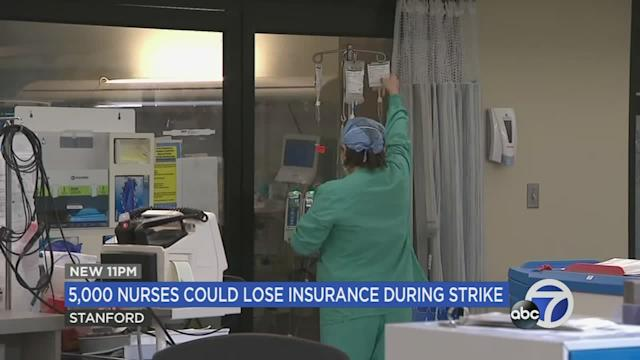
Stanford Health Care and Lucile Packard Children’s Hospital administrators have notified union leaders that its nurse members who strike later in April risk losing pay and health benefits, according to Palo Alto Weekly.
The Committee for Recognition of Nursing Achievement, a union at Stanford Health Care and Stanford Children’s Health that represents about 5,000 nurses, has scheduled a strike to begin April 25. The nurses’ contract expired March 31.
If the strike moves forward, Stanford Health Care and the Lucile Packard Children’s Hospital, both based in Palo Alto, Calif., are prepared to continue to provide safe, quality healthcare, according to a statement from Dale Beatty, DNP, RN, chief nurse executive and vice president of patient care services for Stanford Health Care, and Jesus Cepero, PhD, RN, senior vice president of patient care and chief nursing officer for Stanford Children’s Health.
But the statement, which was shared with Becker’s, said nurses who choose to strike will not be paid for shifts they miss.
“In addition, employer-paid health benefits will cease on May 1 for nurses who go out on strike and remain out through the end of the month in which the strike begins,” Drs. Beatty and Cepero said.
The leaders quoted from Committee for Recognition of Nursing Achievement’s “contingency manual” that the union provided to nurses: “If a strike lasts beyond the end of the month in which it begins and the hospitals discontinue medical coverage, you will have the option to pay for continued coverage.”
Drs. Beatty and Cepero said nurses who strike may pay to continue their health coverage through the Consolidated Omnibus Budget Reconciliation Act.
In a separate statement shared with Becker’s, Committee for Recognition of Nursing Achievement President Colleen Borges called Stanford and Packard management’s move regarding nurses’ health benefits “cruel” and “immoral.”
“Health benefits should not be used against workers, especially against the very healthcare professionals who have made Stanford a world-class health system,” said Ms. Borges, who is also a pediatric oncology nurse at Lucile Packard Children’s Hospital. “We have spent our careers caring for others and putting others first — now more than ever we need solutions that will ensure sustainability, safe staffing and strong benefits to retain nurses. But instead of taking our proposals seriously, hospitals are spending their time and energy weaponizing our medical benefits. We refuse to be intimidated from standing up for the fair contracts that we need in order to continue delivering world-class patient care.”
The union has organized a petition to tell Stanford not to cut off medical benefits for nurses and their families during the strike. As of April 19, the petition had more than 25,150 signatures.
Sacramento-based Sutter Health said nurses who went on strike April 18 will not be allowed to return to work until the morning of April 23, the San Francisco Chronicle reported.
The strike affected nurses and healthcare workers at Sutter Health facilities in Northern California. The nurses are members of the California Nurses Association, and the other workers are members of the Caregivers and Healthcare Employees Union, an affiliate of the California Nurses Association.
More than 8,000 registered nurses and healthcare workers were expected to participate in the strike, according to an April 18 news release from the unions.
In a statement shared with Becker’s, Sutter Health said the organization conducted strike contingency planning, which included “securing staff to replace nurses who have chosen to strike, and those replacement contracts provide the assurance of five days of guaranteed staffing amid the uncertainty of a widespread work stoppage.”
“As always, our top priority remains safe, high-quality patient care and nurses may be reinstated sooner based on operational and patient care needs,” the statement said.
The California Nurses Association described Sutter Health’s decision as retaliatory, as well as “completely unnecessary and vindictive.”
“Nurses who are regularly scheduled to work during this lockout period will lose those days of pay,” the union said in a statement shared with Becker’s. “We urge Sutter to respect the nurses’ strike and let all nurses return to work.”
Sutter Health workers authorized a strike in March, and union officials announced an official strike notice April 8. Union members cited lack of transparency about the stockpile of personal protective equipment supplies and contact tracing as a reason for the strike. They also said they seek a contract that will help retain experienced nurses and provide sufficient staffing and training.
Nurses have been in contract negotiations since June.
Livonia, Mich.-based Trinity Health and Chicago-based CommonSpirit Health have signed an agreement for Trinity to acquire all MercyOne Health System assets and facilities.
Clive, Iowa-based MercyOne has 16 medical centers, 27 affiliate organizations and more than 420 care sites, according to a joint news release. It employs more than 20,000 people.
Trinity and CommonSpirit decided it would be best for MercyOne and the communities it serves for it to have a sole parent company, according to the news release. MercyOne facilities will transition to Trinity’s strategies and operations.
The transaction is expected to be finalized this summer.
“True to our shared Catholic mission, our goal is to provide high-quality, compassionate care with the best patient/member experience possible. We will accomplish that goal through a holistic approach, with a range of health services and technologies that are fully connected and coordinated,” Mike Slubowski, president and CEO of Trinity Health, said in the news release. “This agreement creates a fully integrated MercyOne to care for more people in a unified way.”
Tampa, Fla.-based Shriners Hospitals for Children is transitioning its Springfield, Mass., campus into an outpatient clinic model, NBC/CW affiliate WWLP reported April 20.
Current outpatient services won’t be affected, except that ambulatory surgery will end.
The hospital gave the Massachusetts Department of Public Health a 120-day notice of the plan on March 31, Western Mass News reported April 20.
“The advancement of surgical procedures has resulted in very few patients requiring admission for inpatient pediatric services, which are the cornerstone of a hospital facility,” Shriners said in a letter obtained by Western Mass News. “Accordingly, after evaluating the needs of our patients, we have determined that Shriners Hospitals for Children may best serve our patients and fulfill our charitable mission by transitioning this location from a hospital to an outpatient clinic model.”
Although CFOs often hold the key to resources, acting as gatekeepers, they can also be critical allies in innovation, enabling programs and initiatives, according to an April 12 McKinsey report.
While innovation is often thought of in a traditional sense, with new offerings and services coming to mind, innovation can also mean disruption and change in business models, productivity improvements and new ways to service consumers. The CFO has the perspective to see where fresh ideas are needed in the business from a financial perspective, and the power to make them happen.
Innovation also requires resources and capital, of which the CFO has control and say as to how it gets used. The CFO is an important part of determining which innovations will go ahead and is akin to a venture capitalist, deciding whether to invest in a start-up.
As members of the C-suite, CFOs also have an important role in encouraging a culture of openness and innovation where staff members feel comfortable coming to company leaders with new ideas. By creating an atmosphere of innovation, the company can build a pipeline of innovative talent and concepts, which the CFO can help bring to fruition.
Here are 16 hospitals and health health systems with strong operational metrics and solid financial positions, according to reports from Fitch Ratings, Moody’s Investors Service and S&P Global Ratings.
1. Morristown, N.J.-based Atlantic Health System has an “Aa3” rating and stable outlook with Moody’s. The health system has strong operating performance and liquidity metrics, Moody’s said. The credit rating agency expects Atlantic Health System to sustain strong performance to support capital spending.
2. Children’s Hospital of Akron (Ohio) has an “AA-” rating and stable outlook with Fitch. The hospital has strong operating performance and a leading market position as Akron’s only standalone pediatric hospital, Fitch said. The credit rating agency expects the organization’s strong profitability and limited capital needs to lead to liquidity growth.
3. Milwaukee-based Children’s Wisconsin has an “Aa3” rating and stable outlook with Moody’s. The health system has a leading statewide market share for children’s healthcare services, solid cash flow, strong revenue growth and a robust balance sheet, Moody’s said. The credit rating agency expects Children’s Wisconsin’s balance sheet and debt metrics to remain strong.
4. Greensboro, N.C.-based Cone Health has an “AA” rating and stable outlook with Fitch. The health system has a leading market share and a favorable payer mix, Fitch said. The health system’s broad operating platform and strategic capital investments should enable it to return to stronger operating results, the credit rating agency said.
5. El Camino Health has an “AA-” rating and stable outlook with Fitch. El Camino Health, which includes hospital campuses in Los Gatos, Calif., and Mountain View, Calif., has a solid market share in a competitive market and a stable payer mix, Fitch said. The credit rating agency said El Camino Health’s balance sheet provides moderate financial flexibility.
6. Falls Church, Va.-based Inova Health System has an “Aa2” rating and stable outlook with Moody’s. The health system has a consistently strong operating cash flow margin and ample balance sheet resources, Moody’s said. Inova’s financial excellence will remain undergirded by its favorable regulatory and economic environment, the credit rating agency said.
7. Mass General Brigham has an “Aa3” rating and stable outlook with Moody’s and an “AA-” rating and stable outlook with S&P. The Boston-based health system has an excellent clinical reputation, good financial performance and strong balance sheet metrics, Moody’s said. The credit rating agency said it expects Mass General Brigham to maintain a strong market position and stable financial performance.
8. Rochester, Minn.-based Mayo Clinic has an “Aa2” rating and stable outlook with Moody’s. The credit rating agency said Mayo Clinic’s strong market position and patient demand will drive favorable financial results. The health system “will continue to leverage its excellent reputation and patient demand to continue generating favorable operating performance while maintaining strong balance sheet ratios,” Moody’s said.
9. Memorial Sloan Kettering Cancer Center in New York City has an “AA” rating and stable outlook with Fitch and an “AA-” rating and stable outlook with S&P. Memorial Sloan Kettering Cancer Center’s national and international reputation as a premier cancer hospital will continue to support the organization’s growth, Fitch said. The hospital has a leading and growing market share for its specialty services, according to the credit rating agency.
10. Methodist Health System has an “Aa3” rating and stable outlook with Moody’s. The Dallas-based system has strong operating performance, and investments in facilities have allowed it to continue to capture more market share in the fast-growing Dallas-Fort Worth, Texas, area, Moody’s said. The credit rating agency said it expects Methodist Health System’s strong operating performance and favorable liquidity to continue.
11. Albuquerque, N.M.-based Presbyterian Healthcare Services has an “Aa3” rating and stable outlook with Moody’s and an “AA” rating and stable outlook with Fitch. The health system has a leading statewide market share, strong revenue growth and a healthy balance sheet, Moody’s said. The credit rating agency said it expects Presbyterian Healthcare Services’ operations to continue to improve and its balance sheet and debt metrics to remain strong.
12. Chicago-based Rush Health has an “AA-” rating and stable outlook with Fitch. The health system has a strong financial profile and a broad reach for high-acuity services as a leading academic medical center, Fitch said. The credit rating agency expects Rush’s services to remain profitable over time.
13. Stanford (Calif.) Health Care has an “AA” rating and stable outlook with Fitch. The health system has extensive clinical reach in a competitive market and its financial profile is improving, Fitch said. The health system’s EBITDA margins rebounded in fiscal year 2021 and are expected to remain strong going forward, the crediting rating agency said.
14. St. Clair Hospital in Pittsburgh has an “AA-” rating and stable outlook with Fitch. The hospital has a strong financial profile and a solid market position in the competitive greater Pittsburgh-area healthcare market, Fitch said. The credit rating agency expects the hospital’s margins to remain solid, driven by growth in key service lines.
15. University of Chicago Medical Center has an “AA-” rating and stable outlook with Fitch. The credit rating agency said it expects University of Chicago Medical Center’s capital-related ratios to remain strong, in part because of its broad reach of high-acuity services.
16. University of Iowa Hospitals and Clinics has an “Aa2” rating and stable outlook with Moody’s. The Iowa City-based health system, the only academic medical center in Iowa, has strong patient demand and excellent financial management, Moody’s said. The credit rating agency said it expects the health system to continue to manage the pandemic with improved operating cash flow margins.
Anthem has captured the attention of multiple hospitals and health systems across the U.S. as allegations of underpayment and inappropriate denials accumulate.
The insurer has been forced to pay millions already and continues to face off with providers.
Anthem is facing allegations of $70 million in unpaid claims from Portland-based MaineHealth. The health system said earlier this year that its flagship hospital, Maine Medical Center, would no longer contract with the insurer after its contract expires next year. Jeffrey Barkin, MD, president of the Maine Medical Association, said other providers in the state are leaving Anthem for the same reason.
In Georgia, the state insurance commissioner fined Anthem Blue Cross Blue Shield $5 million in March for failing to pay in a timely manner, delays in loading provider contracts and inaccurate provider directories.
VCU Health in Richmond, Va., said last year that 40 percent of its claims with Anthem were more than 90 days old and the insurer owed $385 million, according to the Richmond Times-Dispatch. The Virginia Hospital and Healthcare Association said Anthem has hundreds of millions of dollars in late and unpaid claims to hospitals across the state.
Eleven Indiana hospitals have also had trouble with Anthem. The hospitals alleged Anthem’s reimbursement system added a $50 triage fee and asked for additional patient records to avoid denial for 60 to 70 percent of thousands of emergency room claims from 2017-20. The hospitals alleged the strategy breached their contract with Anthem because hospitals are required to stabilize all patients requesting emergency services. A federal arbiter recently ordered Anthem to pay $4.5 million to the hospitals and said the insurer cannot use its list of diagnostic codes to downgrade or deny claims.
The Indiana hospitals are still counting the denied claims and said they are owed $12 million from Anthem due to downgraded claims.
The American Hospital Association accused Anthem of asking for prior authorizations for routine surgeries as roadblocks to patient care in a letter sent to the insurer last year.In 2021, 53 percent of Anthem’s medical bills for the second quarter were unpaid, amounting to $2.5 billion, according to the Times-Dispatch report.











 HENRY KOTULA