


Cartoon – 3D Financial Statement







Washington State Hospital Association reported a $929 million net loss due to an increase in operating expenses and nonoperating investment losses, The News Tribune reported July 21.
The review reflected January through March 2022 and showed operating revenue increased by 5 percent; however, operating expenses increased by 11 percent.
“This combined with non-operating investment losses, resulted in a total margin of negative 13 percent,” WSHA said in a briefing of the review July 21.
The losses were mainly seen in urban Washington hospitals, though rural hospitals were also affected.
“All 52 urban hospitals/health systems reported negative margins and account for 86 percent of the losses statewide,” WSHA said. “Of the independent rural hospitals responding, 18 out of 32 had negative margins.”
WSHA said lower Medicaid reimbursements were part of the problem. In the first quarter, Medicaid reimbursements covered 42 percent of the cost of care delivery.
Pandemic pressures also had a negative effect, according to WSHA. It said federal COVID-19 relief funds have been depleted.
Additionally, WSHA said labor costs have continued to rise because of a need to retain staff and a reliance on travel nurses with high wages.
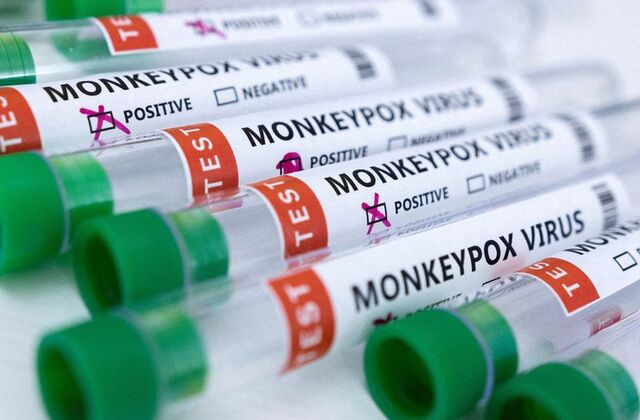
The World Health Organization (WHO) has declared the monkeypox outbreak a global health emergency after the virus reached more than 70 countries around the world.
WHO Director General Tedros Adhanom Ghebreyesus said at a press conference on Saturday that he decided the outbreak represents a “public health emergency of international concern.”
“WHO’s assessment is that the risk of monkeypox is moderate globally and in all regions, except in the European region where we assess the risk as high,” he said.
Tedros said the WHO’s International Health Regulations Emergency Committee came to a consensus at a meeting a month ago that monkeypox did not represent an international public health emergency, but the situation has changed.
He said the WHO had received reports of just more than 3,000 cases from 47 countries at the time, but more than 16,000 cases have now been reported from 75 countries and territories. He said there have been five deaths.
Tedros said the committee was unable to reach a consensus on whether the outbreak should be considered a public health emergency of international concern, but he considered five factors in declaring it an emergency.
He said the first factor is information countries have shared with the WHO, and that data from countries around the world shows that the virus has spread rapidly to many countries that have not seen it before.
He added that the second factor is the definition of a public health emergency and that the three criteria for declaring such an emergency have been met.
A public health emergency of international concern is considered a situation that is serious, sudden, unusual or unexpected, carries implications for public health beyond a country’s borders and may require immediate international action, according to the WHO.
Tedros said the third factor is the advice of the committee, which was divided, and the fourth factor is scientific principles and evidence, which is currently “insufficient” and leaves “many unknowns.”
He said the fifth factor is the risk to human health, international spread and the potential for interfering with international traffic.
He said there is a “clear risk” for international spread, but the risk of interfering with international traffic is currently low.
“So in short, we have an outbreak that has spread around the world rapidly, through new modes of transmission, about which we understand too little and which meets the criteria in the International Health Regulations,” Tedros said.
The Hill has reached out to the WHO for comment.
Monkeypox has spread quickly in the United States since cases were first detected in the country in May. The virus appears to be spreading primarily among men who have sex with men and spreads through extended physical contact.
The virus can cause symptoms like lesions, a rash and swelling of lymph nodes.
Ghebreyesus said he is making recommendations for four categories of countries in managing monkeypox.
For countries that have not seen any cases or not reported a case in 21 days, they should take measures like activating health mechanisms to prepare to respond to monkeypox and raise awareness about transmission, according to a WHO statement.
Countries with recently imported cases of monkeypox and that are experiencing human-to-human transmission — which includes the United States — should implement a coordinated response, work to engage and protect their communities and implement public health measures like isolating cases and using vaccines.
The Biden administration announced earlier this month that it would distribute an additional 144,000 doses of the Jynneos vaccine to address monkeypox after having distributed about 40,000 doses previously.
The third group of countries are those with the “known or suspected” transmission of the virus from animals to humans. They should establish or activate mechanisms for understanding and monitoring the animal-to-human and human-to-animal transmission risk and study transmission patterns.
The fourth group are countries with the manufacturing capacity to create vaccines and other medical countermeasures. The WHO statement calls on these countries to increase production and availability of these measures and work with WHO to ensure necessary supplies are made available based on public health needs at “reasonable cost” to countries that need support the most.
Ghebreyesus said the outbreak is concentrated among men who have sex with men and especially those with multiple sexual partners.
“That means that this is an outbreak that can be stopped with the right strategies in the right groups,” he said.
He added that countries should work with communities of men with male sexual partners to inform them and offer support and to adopt measures that protect the “health, human rights and dignity of affected communities.”
Ghebreyesus said civil society organizations, especially those with experience working with people who are HIV-positive, should work with WHO to fight stigma and discrimination.
The spread of HIV and AIDS in the 1980s led to increased stigma for those who identify as gay as the virus was initially reported to be spreading among gay men.

