5 key strategy trends to watch in 2022

The 5 Biggest Technology Trends In 2022

Another challenging year defined by the continued COVID-19 fight and vaccination drives has created a unique healthcare landscape. Pandemic-induced telehealth booms, continued strain due to understaffing and pressure from big tech disruptors are just some of the issues that have presented themselves this year.

Here are five major trends that hospitals and health systems may see in 2022. While some present challenges, others present significant opportunities for healthcare facilities.

Workforce pressure 

Record numbers of workers have quit their jobs in 2021, with some 4.4 million people quitting in September. That means that 1 in 4 people quit their jobs this year across all industries. Around 1 in 5 healthcare workers have left their positions, creating issues with understaffing and lack of resources in hospitals and health systems. Stress, burnout and lack of balance have all been cited as reasons for staff leaving their roles. An increase in violence toward medical professionals, continued COVID-19 surges and low pay and benefits have contributed to the exodus of healthcare workers. None of those problems seems poised to disappear come 2022, so the new year could bring continued workforce and staffing challenges. 

Pressure from disruptors 

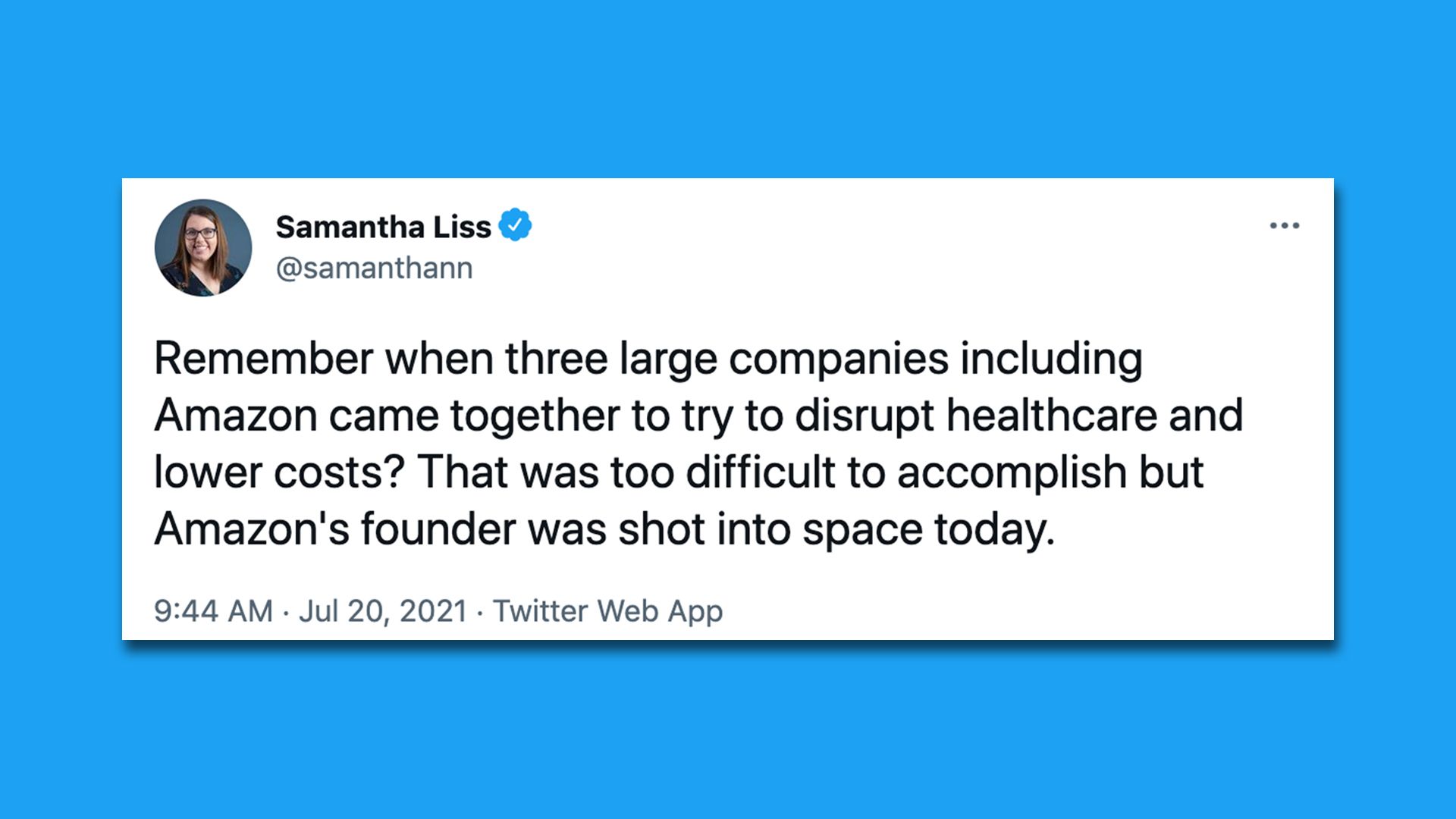
Big tech and retail giants have continued their push into healthcare this year. Companies like Apple, Amazon and Google stepped up their game in the wearables market. Pharmacy and retail chains Walmart and CVS Health both detailed their intended expansions into primary care. The pandemic also encouraged big corporations outside the healthcare sector, like Pepsi and Delta Airlines, to consider hiring CMOs to make sense of public health regulations guide them on their policy. These moves all mean there is a tightening of competition for the top physicians and hospital executives. Going into 2022, health systems may be under pressure to hang onto top talent and keep patients from using other convenient health services offered by retail giants.

Health equity 

The unequal toll of the pandemic on people of color both medically and economically helped shed a light on the rampant inequities in American healthcare and society at large. Indigineous, Black and Hispanic people were much more likely than white or Asian people to suffer severe illness or require hospitalization as a result of COVID-19. Increasing numbers of hospitals, health systems and organizations are starting initiatives to advance health equity and focus on the socioeconomic drivers of health. The American Medical Association launched a language guide to encourage greater awareness about the power of language. Z-code usage has also been encouraged by CMS to increase knowledge and data about the social determinants of health. Next year, the perspective of health as holistic instead of just a part of an individual’s life will continue, with special attention being paid to social drivers.

Telehealth expansion

The pandemic helped the telemedicine industry take off in a big way. Telehealth was often the only healthcare option for many patients during the height of the lockdown measures introduced during the pandemic. Despite a return to in-person visits, telehealth has retained its popularity with patients. Some advocates argue that telehealth can help increase access to healthcare and improve health equity. About 40 percent of patients said that telehealth makes them more engaged and interact more frequently with their providers. However, while Americans see telehealth as the future of healthcare, a majority still prefer in-person visits. Regardless of patient opinion, telehealth will remain a key part of health strategy. In late December, the FCC approved $42.7 million in funding for telehealth for 68 healthcare providers. This suggests that there are investments and subsidies available in the future for health systems to bolster their telehealth services. 

Climate change

At the 2021 UN Climate Conference, Cop26, in Glasgow, Scotland, hospitals and health systems acknowledged the role they have to play in mitigating the effects of climate change. Hospitals and health systems shed light on the health-related effects of climate change, such as illness and disease from events like wildfires and extreme weather. Health systems are also becoming more aware of their own contributions to climate change, with the U.S. healthcare system emitting 27 percent of healthcare emissions worldwide. To that end, HHS created an office of climate change and health equity that will work alongside regulators to reduce carbon emissions from hospitals. More health systems too are taking charge and pledging net neutrality and zero carbon emissions goals, including Kaiser Permanente and UnitedHealth group. It’s expected that more systems will follow suit in the coming year and make more concrete plans to address emissions reduction.
UPMC CFO Edward Karlovich advises peers to ‘look beyond the challenges of today’

David B. Yoffie Quote: “The first rule demands that CEOs and entrepreneurs look  beyond the immediate

Edward Karlovich serves as the executive vice president and CFO for UPMC, a $23 billion provider and insurer based in Pittsburgh. 

Since joining UPMC in 1990, Mr. Karlovich has served in several financial leadership roles. Most recently, he was vice president, CFO and chief of staff for UPMC’s Health Services Division. He became CFO of the entire integrated system with 40 hospitals in October 2020, after serving on an interim basis for about a year. 

Here, Mr. Karlovich shares with Becker’s the skills he thinks CFOs need to succeed today, some key capital projects in the works at UPMC and his organization’s top financial priorities. 

Editor’s note: Responses were lightly edited for length and clarity. 

Question: What is the most pressing issue facing hospital CFOs due to COVID-19?

Edward Karlovich: I would say the most pressing issue for me is disruption. COVID-19 has done many things to disrupt the way we think about our organization and business. Some disruptions we faced in the last year include staffing and supply chain challenges. UPMC did a great job weathering through the supply disruptions and labor challenges. We always had adequate personal protective equipment for our folks here. We also really made a conscientious decision last year to keep our workforce intact; we didn’t lay off workers, and we took care of people who needed time off because of COVID-19. We also made sure employees knew they had the support of our executive leadership team. In summary, COVID-19 has created a disruption, and we must think about how things are different now coming out of the disruption. 

Q: What are some things you are doing to work through the change/disruption?

EK: From an organizational perspective, we embarked on what we call the “UPMC experience” a few years ago. We looked at the way we are doing things to understand the experience of our employees and patients. This prepared us to be more creative in our thinking as to how we address challenges and disruption. We also learned through this the importance of interdependencies. Our business, both provider and insurance side, discussed a need to tackle the disruptions in an integrated way and discussed a need to communicate changes effectively. This year, we provided about 40 news conferences to get the standard message out across all of our regions. We also have a 90,000-plus employee organization which allows you to move around resources to deal with some challenges and disruptions. 

Q: What are UPMC’s top financial priorities for 2022?

EK: From a financial perspective, we want to maintain a positive margin to support our capital investments and employees. To do this, we are focused on a few things. First, supporting our operating employees to ensure they can perform to the best of their ability. They are the ones who make the difference each and every day. Second, we want to make sure we, as a finance team, can provide the things that the organization needs to be successful. This includes, but is not limited to, making sure supply chain folks can get all needed supplies and ensuring we have the cash collections needed to fund our organization. Another priority is making sure we provide the advice and guidance needed to invest our dollars effectively so we can prepare for the next challenge.

Q: What are a few key capital projects UPMC has in the works?

EK: UPMC is a premier provider in our community, and we operate a number of specialty hospitals in the area. We are the primary pediatric, psychiatric, women’s health and oncology provider in the region. Over the past couple of years, we’ve embarked on a journey to provide new facilities in western Pennsylvania for these major programs. We are also investing heavily in a vision and rehabilitation institute, which is a $500 million project that will put our clinicians, researchers and other providers together to drive breakthroughs in vision care and rehabilitation.  

We also are going to embark on a new tower for UPMC Presbyterian Oakland Campus [in Pittsburgh]. It is going to be the largest capital project we’ve embarked on since I’ve been here. This project will be more than $1 billion and is so important to the community. 

The third thing we are looking at is enhancing our oncology services and product at UPMC Shadyside [in Pittsburgh]. What we’ve recognized is that we are the provider and insurer of choice in western Pennsylvania, and we have to invest in this community for the next 50 to 100 years. 

Q: What skills are essential for hospital and health system CFOs to thrive in today’s healthcare landscape?

EK: The technical skills are given as CFO. To get in that leadership position, you have to be able to perform the necessary tasks. However, to make your organization better, I could boil it down to four things. First, you have to be a partner to your other senior leaders. Finance doesn’t exist in a vacuum. You have to be in the room with those folks, helping them manage and drive the business. The second thing is flexibility. If you think about what we experienced as an industry over the last two years, if you weren’t flexible, you were going to be seriously challenged.  Flexibility is such an important attribute because the pace of change is going to accelerate in our industry. Third, I’d say talent recognition is a key skill. It is important to be able to find talent as well as mentor and develop them as employees who can provide a great service to the organization. Fourth, you have to embody integrity. There is no doubt in my mind that integrity is a core value that is essential to everything you do as a finance leader. You have to maintain your integrity at all times. Those are essential skills. If you’re going to be a successful CFO now, you have to have those skills outside of the technical.

Q: What is one piece of advice you would offer to another healthcare CFO, and why?

EK: I’d say, look beyond the challenges of today. It’s not just about what you can actually see and envision in front of you. Try to look at the implications that are not necessarily top of mind. What the future holds is uncertain for all of us in healthcare now. You need to be thinking about what things might be coming down the road that will change our business and commitment to our communities dramatically. Try to brainstorm around that. Trying to think forward and speculate about what might happen is very valuable.

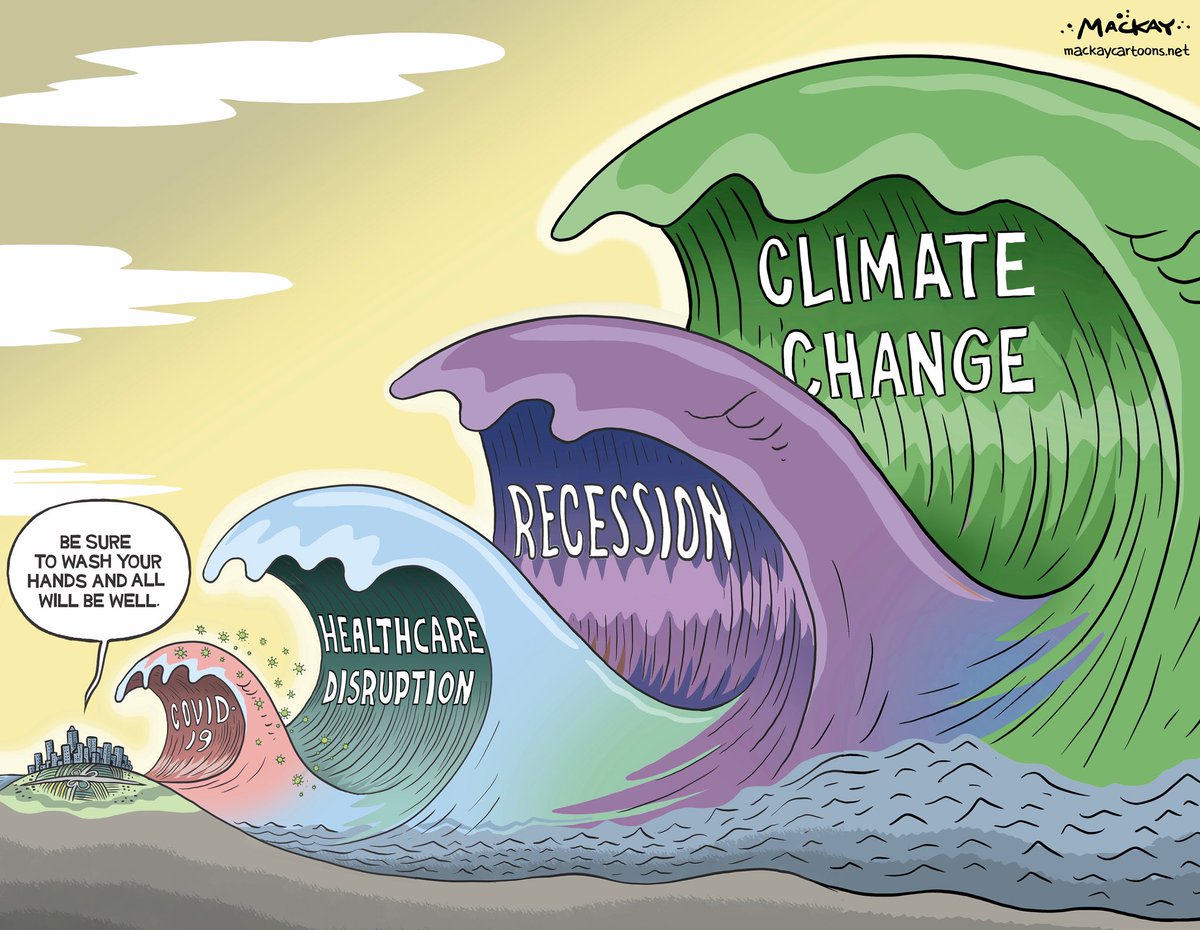
Cartoon – Catch a Wave

Dre Joanne Liu on Twitter: "Acid cartoon humor on the next Waves to come  2020-0311-NATrevised-healthcare.jpg 7 740 × 6 000 pixels… "

Hastening the demise of independent physician practice

https://mailchi.mp/bfba3731d0e6/the-weekly-gist-july-2-2021?e=d1e747d2d8

Physician Practice Sales to Private Equity Doubled in 3 Years

A new report from consulting firm Avalere Health and the nonprofit Physicians Advocacy Institute finds that the pandemic accelerated the rise in physician employment, with nearly 70 percent of doctors now employed by a hospital, insurer or investor-owned entity.

Researchers evaluated shifts to employment in the two-year period between January 2019 and January 2021, finding that 48,400 additional doctors left independent practice to join a health system or other company, with the majority of the change occurring during the pandemic. While 38 percent chose employment by a hospital or health system, the majority of newly employed doctors are now employed by a “corporate entity”, including insurers, disruptors and investor-owned companies.

(Researchers said they were unable to accurately break down corporate employers by entity, and that the study likely undercounts the number of physician practices owned by private equity firms, given the lack of transparency in that segment.) Growth rates in the corporate sector dwarfed health system employment, increasing a whopping 38 percent over the past two years, in comparison to a 5 percent increase for hospitals.

We expect this pace will continue throughout this year and beyond, as practices seek ongoing stability and look to manage the exit of retiring partners, enticed by the outsized offers put on the table by investors and payers.

Rational Exuberance for Medicare Advantage Market Disrupters

Insurers Running Medicare Advantage Plans Overbill Taxpayers By Billions As  Feds Struggle To Stop It | Kaiser Health News

Medicare Advantage (MA) focused companies, like Oak Street
Health (14x revenues), Cano Health (11x revenues), and Iora
Health (announced sale to One Medical at 7x revenues), reflect
valuation multiples that appear irrational to many market observers. Multiples may be
exuberant, but they are not necessarily irrational.


One reason for high valuations across the healthcare sector is the large pools of capital
from institutional public investors, retail investors and private equity that are seeking
returns higher than the low single digit bond yields currently available. Private equity
alone has hundreds of billions in investable funds seeking opportunities in healthcare.
As a result of this abundance of capital chasing deals, there is a premium attached to the
scarcity of available companies with proven business models and strong growth
prospects.


Valuations of companies that rely on Medicare and Medicaid reimbursement have
traditionally been discounted for the risk associated with a change in government
reimbursement policy
. This “bop the mole” risk reflects the market’s assessment that
when a particular healthcare sector becomes “too profitable,” the risk increases that CMS
will adjust policy and reimbursement rates in that sector to drive down profitability.


However, there appears to be consensus among both political parties that MA is the right
policy to help manage the rise in overall Medicare costs and, thus, incentives for MA
growth can be expected to continue.
This factor combined with strong demographic
growth in the overall senior population means investors apply premiums to companies in
the MA space compared to traditional providers.


Large pools of available capital, scarcity value, lower perceived sector risk and overall
growth in the senior population are all factors that drive higher valuations for the MA
disrupters.
However, these factors pale in comparison the underlying economic driver
for these companies. Taking full risk for MA enrollees and dramatically reducing hospital
utilization, while improving health status, is core to their business model.
These
companies target and often achieve reduced hospital utilization by 30% or more for their
assigned MA enrollees.

In 2019, the average Medicare days per 1,000 in the U.S. was 1,190. With about
$14,700 per Medicare discharge and a 4.5 ALOS, the average cost per Medicare day is
approximately $3,200. At the U.S. average 1,190 Medicare hospital days per thousand,
if MA hospital utilization is decreased by 25%, the net hospital revenue per 1,000 MA

enrollees is reduced by about $960,000. If one of the MA disrupters has, for example, 50,000 MA lives in a market, the
decrease in hospital revenues for that MA population would be about $48 million. This does not include the associated
physician fees and other costs in the care continuum. That same $48 million + in the coffers of the risk-taking MA
disrupters allows them deliver comprehensive array of supportive services including addressing social determinants of health. These services then further reduce utilization and improves overall health status, creating a virtuous circle. This is very profitable.


MA is only the beginning. When successful MA businesses expand beyond MA, and they will, disruption across the
healthcare economy will be profound and painful for the incumbents. The market is rationally exuberant about that
prospect.

A “perfect storm” is brewing in the healthcare workforce

https://mailchi.mp/bade80e9bbb7/the-weekly-gist-june-18-2021?e=d1e747d2d8

Plastic Possibilities: Resin Production Meets the Perfect Storm |  plasticstoday.com

A topic that’s come up in almost every discussion we’ve had with health system executive teams and boards recently is workforce strategy. Beyond the immediate political debate about whether temporary unemployment benefits are exacerbating a shortage of workers, there’s a growing recognition that the healthcare workforce is approaching something that looks like a “perfect storm”.

The workforce is mentally and physically exhausted from the pandemic, which has taken a toll both professionally and personally. Many workers are rethinking their work-life balance equations in the wake of a difficult year, during which working conditions and family responsibilities shifted dramatically. That, along with broader economic inflation, is driving demands for higher wages and a more robust set of benefits.

Meanwhile, many health systems are shifting into cost-cutting mode, due to COVID-related shifts in demand patterns and continued downward pressure on reimbursement rates, forcing a renewed focus on workforce productivity.

These combined forces threaten to create a negative spiral, which could lead to even worse shortages and deteriorating workplace engagement. It’s striking how quickly the “hero” narrative has shifted to a “crisis” narrative, and we agree completely with one health system board member who told us recently that workforce strategy is now the number one issue on his agenda.

No easy answers here, but we’ll continue to report on innovative approaches to addressing these difficult challenges.