More than two years after Congress acted to shield patients from surprise medical bills, lawmakers are turning to another source of unexpected medical costs: the fees that hospitals tack on for services provided in clinics they own.
Why it matters:
As health systems push more care outside hospital walls, they’re charging extra “facility fees” for common services like blood tests, X-rays and, in some cases, even telehealth visits.
Critics say the practice drives up health care costs while padding hospital profits and incentivizing more consolidation. But hospitals argue the fees cover the cost of nurses, lab technicians, medical records and equipment — and that limiting them could reduce patient care.
But five states are currently considering laws to curb facility fees for certain services or strengthen existing laws, per the National Academy for State Health Policy, which has proposed model legislation.
Connecticut is updating a 2015 law that required notifications when facility fees were being charged by hospitals.
“Rising costs remain a barrier for far too many people and result in many people putting off care because they can’t afford it,” Deidre Gifford, executive director of the Connecticut Office of Health Strategy, said last month, when Democratic Gov. Ned Lamont proposed a package of reforms.
Colorado lawmakers are targeting the practice, despite mounting hospital resistance, Kaiser Health News reported.
And Texas legislators are weighing prohibitions on off-campus fees — a move the Texas Hospital Association brands “unprecedented and dangerous.”
Lawmakers in Indiana and Massachusetts are eyeing similar moves.
How it works:
Many health services can be provided in both hospital and outpatient settings. But some patients who visit an offsite clinic are billed as if they were treated in the hospital.
Some might receive a facility fee if they haven’t yet met their health plan deductible. Others could see the added cost reflected later in higher premiums and copays.
A 2020 Rand report found facility and related professional charges factored in employers and private insurers paying 224% of what Medicare would have paid for the same services at the same facilities.
Some business groups like the Employers’ Forum of Indiana are advocating for bans or moratoriums on the fees, citing the increased cost of offering competitive benefits.
The other side:
Hospitals maintain that facility fees are needed to cover essential infrastructure like electronic health record systems and other overhead costs. Some refer to them as “people fees,” saying they cover the expenses of nurses, lab technicians, pharmacists and other essential staff.
Texas hospitals are concerned about what they say is the broad definition of a facility fee in pending legislation in the state’s Senate, saying it could eliminate all hospital payments besides those that go to physicians.
“We need to quantify what problem we’re trying to solve,” said Cameron Duncan, vice president of advocacy at the Texas Hospital Association.
The group said the bill as originally filed would result in 69% of Texas hospitals closing their outpatient clinics.
The intrigue:
Insurers that negotiated covered costs with hospitals and health systems have remained largely quiet on the fees.
And the vagaries of hospital pricing means transparency requirements alone may not give patients warning about added fees.
“It’s not clear from data either that the fees are consistent, or that you could decipher that the fee is consistent for each type of procedure,” said Vicki Veltri, senior policy fellow at National Academy for State Health Policy and former leader of the Connecticut Office of Health Strategy.
The bottom line:
Patients increasingly get charged like they’re in a hospital even if they didn’t set foot in one as physicians’ offices are increasingly scooped up by massive health systems.
While those health systems tout access and efficiencies to drive down health care costs, facility fees are driving more lawmakers and regulators to do a reality check.
Editor’s Note: This is Part 2 of a multi-part series on healthcare revolution. This article builds on Part 1, which you can read here.
Based on a 23-year career as a solo-practicing rheumatologist, internist and geriatrician, followed by 18 years as president and CEO of a 715-bed, two-hospital healthcare system, I recently shared thoughts about the current stressed healthcare system including profit margin squeeze, patient’s needs and suggested options of subdividing care into acute, urgent, and elective facilities. The bottom-line quote from the Mayo Brothers, “The Patient’s Needs Come First,” is my declaration to use prevention as the way to focus our attention to those we serve.
Recognizing and Addressing the Challenge
Patients’ healthy life expectancy should be the focus of the healthcare industry, communities, employers and governments. People live longer, happier and healthier lives when productivity improves and costs decrease.
The U.S. life expectancy at birth is at the lowest level since 1996. The 0.9-year drop in life expectancy in 2021 and the 1.8-year drop in 2020 were the biggest two-year declines in life expectancy since 1921-1923. The current decline — 77.0 to 76.1 years — demands a change, whether welcome or not. [1]
Our nation’s metrics are embarrassing compared to other countries. Consider just one. “Average life expectancy in Costa Rica has steadily increased from 55 years in 1950 to 81 years today — far outpacing the U.S. Even more notable: the country has achieved this success while spending far less than the U.S. as a share of income which is already lower than ours.” [2] This Central American country is about the size of West Virginia and has a vast and sparsely populated terrain in addition to a few cities. Older adults, even in rural areas in Costa Rica, do well compared to our nation. Opportunities abound to learn from others. [3]
Physicians, Non-Physician Caregivers and Community Responses
Incumbents never welcome disruption. Currently, volume drives the U.S. health payment system. Profitability is proportional to the number of sick-care encounters. The more visits to a physician or hospital parallels greater demand for pharmaceuticals and devices/implants. Higher volume translates into increased insurance premiums the following year, of which the insurance company receives a percentage.
Prevention is not top of mind and redirecting patients to focused factories would be anathema for local hospitals and physicians — both groups are volume dependent.
Offloading outpatient care to lower-cost caregivers — Walmart, CVS, Walgreens, and others — cuts into the work and profit of primary care physicians in independent and health-system-owned group practices. The same with telemedicine. Nurse practitioners and physician assistants, under the supervision of a physician, can bill Medicare at 85% of a physician’s fee with modest restrictions. This positions them to both help and compete with primary care physicians. [4] New entrants — companies and non-physician caregivers — will lower overall costs. That’s a good thing unless you are the traditional medical office or primary care physician being replaced.
Communities have pride in their local healthcare system, especially since it is typically the largest or second largest employer in town. Rethinking where to find urgent or elective care that would require some travel would be a complete mindset change, like the change in shopping after big box stores and online shopping matured. Some communities with abundant resources may support under-utilized healthcare (and retail) facilities but keeping afloat without adequate volume is challenging.
Conditions change and with the importance of health and well-being, patients’ mindsets can evolve to include some travel for urgent and elective care. For its 1.1 million employees, Walmart and other large national employers instituted a Centers of Excellence Program that directs patients with non-acute episodic needs to health institutions that treat them cost-effectively with positive outcomes.
Patients and a companion have 100% of the cost for surgery plus travel expenses for certain spine, cardiac, organ transplants, hip/knee replacements, weight loss surgery and fertility. Walmart also offers a record review for cancer care at a handful of selected healthcare systems across the nation. [5] Since cancer care requires both an accurate diagnosis and usually prolonged treatment, the selected health system develop protocols for a patient that are implemented conveniently for the sufferer.
Rural healthcare is already struggling financially and faces greater threat. Small rural hospitals are failing. Addressing the three levels of medical need with a centralized system might serve patients better than every community trying to be everything to everyone.
Cities with duplicative and redundant services could provide better centralized care more efficiently for a wider geographic area. Changing the “pride in ownership” will require more pain, namely financial pressure, but the reward for patients will be better objective outcomes. Coopetition will facilitate the transformation.
Something has got to give. With increased transparency, patients have never been better informed, and they are already seeking specialized care with better outcomes. Transportation and virtual audio/visual communication is easier than ever before, accelerating change for complex patients.
Healthcare System Evolution
In my opinion, the local hospital of the future will be an ED, OR and ICU with a birthing center attached. A regional medical center will be within driving distance for urgent and elective care. Highly specialized national centers will serve as focus factories for sophisticated medical and surgical care, each serving patients from larger geographic areas, even from across the nation. Cancer surgery, joint replacements, open heart surgery, and other major non-emergency care and surgery at these focus factories will deliver higher quality more efficiently. As noted in Part 1, outcomes are objectively better at institutions focused on a limited number of conditions. [6]
Although this plan might sound exotic, other nations around the world already benefit with specialized, nonredundant hospitals. [7] And global competition is real. The U.S. won’t dominate high-end specialty care like it did in the 1900s. By the end of this century it will be a tripolar world shared between the U.S., China and India. Redistributing resources in America from less efficient healthcare to education, infrastructure, environment, and other worthwhile endeavors will help everyone. [8]
Outpatient care will continue the migration to virtual. Online shopping initially seemed exotic, but now packages arrive daily delivered to homes by a fleet of small vans. And as much as one pines for the old days with a personal intimate relationship with a caregiver, the power of quick access to accurate care will overcome nostalgia. Dr. Marcus Welby will be a distant memory. Consider the profound change from working five days a week in a physical office to the current geographically agnostic 24/7 virtual business community. Formerly successful commercial real estate owners are repurposing their now half-empty buildings.
When will the economics mandate a change? With a slower evolution, the existing systems have a chance to accommodate. A rapid and severe economic downturn is more likely to stimulate a quicker move. Costs matter, particularly as resources become more limited.
Medically self-insured employers like Walmart are already leading the way. Change is happening with younger patients sorting themselves out by going to walk-in clinics in big box chain stores and older folks seeking specialized care from major national systems. As outcomes improve and receive wider recognition, these positive changes will accelerate, creating a “flywheel effect.”
The End Game
Like it or not, sooner or later as a patient or provider we will transform. Understanding the need to change along with better outcomes for patients, who everyone is trying to serve, should improve provider satisfaction.
Subsequently, costs will drop, productivity will increase, and precious resources redirect to preventing illness and improving quality of life. Helping everyone live a longer, happier, and healthier life is an achievable goal. Healthcare systems can and should lead the transformation.
The film “American Hospitals: Healing a Broken System” premiered in Washington, D.C., on March 29. This documentary exposes the inconvenient truths embedded within the U.S. healthcare system. Here is a dirty dozen of them:
Hospitals are largely unaccountable for poor clinical outcomes.
The cost of commercially insured care is multiples higher than the cost of government-insured care for identical procedures.
Customer service at hospitals is dreadful.
Frontline clinicians are overburdened and leaving the profession in droves.
Healthcare still operates the same way it has for the last one hundred years — delivering hierarchical, fragmented, hospital-centric, disease-centric, physician-centric “sick” care. Accordingly, healthcare business models optimize revenue generation and profitability rather than health outcomes. These factors explain, in part, why U.S. life expectancy has declined four of the five years and maternal deaths are higher today than a generation ago.
It’s hard to imagine that the devil itself could create a more inhumane, ineffective, costly and change-resistant system. Hospitals consume more and more societal resources to maintain an inadequate status quo. They’re a major part of America’s healthcare problem, certainly not its solution. Even so, hospitals have largely avoided scrutiny and the public’s wrath. Until now.
“American Hospitals” is now playing in theaters throughout the nation. It chronicles the pervasive and chronic dysfunction plaguing America’s hospitals. It portrays the devastating emotional, financial and physical toll that hospitals impose on both consumers and caregivers.
Despite its critical lens, “American Hospitals” is not a diatribe against hospitals. Its contributors include some of healthcare’s most prominent and respected industry leaders, including Donald Berwick, Elizabeth Rosenthal, Shannon Brownlee and Stephen Klasko. The film explores payment and regulatory reforms that would deliver higher-value care. It profiles Maryland’s all-payer system as an example of how constructive reforms can constrain healthcare spending and direct resources into more effective, community-based care.
The United States already spends more than enough on healthcare. It doesn’t need to spend more. It needs to spend more wisely. The system must downsize its acute and specialty care footprint and invest more in primary care, behavioral health, chronic disease management and health promotion. It’s really that simple.
My only critique of “American Hospitals” is many of its contributors expect too much from hospitals. They want them to simultaneously improve their care delivery and advance the health of their communities. This is wishful thinking. Health and healthcare are fundamentally different businesses. Rather than pivoting to population health, hospitals must focus all their efforts on delivering the right care at the right time, place and price.
If hospitals can deliver appropriate care more affordably, this will free up enormous resources for society to invest in health promotion and aligned social-care services. In this brave new world, right-sized hospitals deliver only necessary care within healthier, happier and more productive communities.
All Americans deserve access to affordable health insurance that covers necessary healthcare services without bankrupting them and/or the country. Let me restate the obvious. This requires less healthcare spending and more investments in health-creating activities. Less healthcare and more health is the type of transformative reform that the country could rally behind.
At issue is whether America’s hospitals will constructively participate in downsizing and reconfiguring the nation’s healthcare system. If they do so, they can reinvent themselves from the inside out and control their destinies.
Historically, hospitals have preferred to use their political and financial leverage to protect their privileged position rather than advance the nation’s well-being. Like Satan in Milton’s “Paradise Lost,” they have preferred to reign in hell rather than serve in heaven.
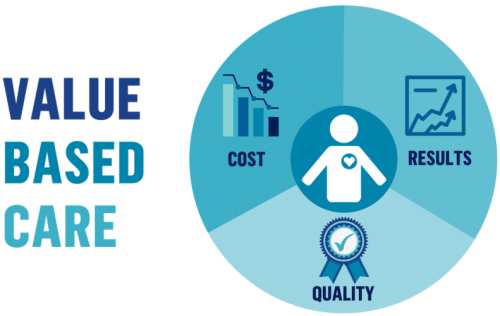
Pride comes before the fall. Woe to those hospitals that fight the nation’s natural evolution toward value-based care and healthier communities. They will experience a customer-led revolution from outside in and lose market relevance. Only by admitting and addressing their structural flaws can hospitals truly serve the American people.
On today’s episode of Gist Healthcare Daily, Kaufman Hall co-founder and Chair Ken Kaufman joins the podcast to discuss his recent blog that examines Ford Motor Company’s decision to stop producing internal-combustion sedans, and talk about whether there are parallels for health system leaders to ponder about whether their traditional strategies are beginning to age out.
Healthcare job growth continued to climb in March with the industry adding 34,000 jobs last month, according to a report released from the Bureau of Labor Statistics on April 7.
The job growth is lower than the six-month average monthly job gain of 54,000 in healthcare. Home health services and hospitals recorded the most gains, adding 15,000 and 11,000 jobs, respectively.
The BLS report comes as demand for temporary nurses declines with median rates of temp staff billing down, according to a report out last week from Jefferies.
Dive Insight:
Labor shortages have been a continuing obstacle for hospitals and health systems, after the coronavirus pandemic spurred industry job reductions and clinicians left the field due to burnout. Temporary nurse staffing agencies swooped in to ease labor shortages, with hospital systems paying higher rates to temp agencies to staff their floors.
But hospitals may be catching a break from labor and temporary staffing pressures. Data from private healthcare staffers, including Aya Healthcare and Fastaff, show that demand for temporary nurses declined by 2.2%, with median bill rates dropping 2.9% week over week, according to the Jefferies report.
The accelerated decline in demand and bill rates could be a sign of labor woes easing, especially for nurse-dependent hospital operators like HCA Healthcare, according to the report.
“As we see order and bill rate data for temp nurses decline, we are gaining optimism that nurse-dependent healthcare providers such as hospitals [HCA Healthcare, Community Health Systems, Tenent Healthcare] and post-acute players [Amedisys, Encompass Health, Enhabit] will begin to see labor headwinds ease, which should help these companies achieve or exceed earnings goals this year,” the report said.
While labor shortages have battered HCA Healthcare and CHS, both operators suggested in recent earnings reports that labor pains could be easing. HCA reported in January that it was decreasing its nursing turnover and CHS reported in October that it had made progress in reducing its contract labor expenses.
Hospitals continue gaining jobs
Reports have showed that labor shortages appear to be easing this year, with a December report from Fitch Ratings noting that staffing shortages at nonprofit hospitals appeared to be incrementally waning.
Value-based care is widely accepted as key to the health system’s transformation. Changing provider incentives from volume to value and engaging provider organizations in risk-sharing models with payers (including Medicare) are means to that end. But implementation vis a vis value-based models has produced mixed results thus far and current financial pressures facing providers (esp. hospitals) have stymied momentum in pursuit of value in healthcare. Last week, CMS indicated it intends to continue its value-based insurance design (VBID) model which targets insurers, and last month announced continued commitment to its bundled payment and ACO models. But they’re considered ‘works in process’ that, to date, have attracted early adopters with mixed results.
Questions:
What’s ahead for the value agenda in healthcare? Is it here to stay or will something replace it? How is your organization adapting?
Key takeaways from Discussion:
‘Not-for-profit hospitals and health systems are fighting to survive: near-term investments in value-based models are unlikely unless they’re associated with meaningful near-term savings that hospitals and physicians realize. Unlike investor-owned systems and private-equity backed providers, NFP systems face unique regulatory constraints, increasingly limited access to capital hostile treatment in media coverage and heavy-handed treatment by health insurers.’
‘Demonstrating value in healthcare remains its most important issue but implementing policies that advance a system-wide definition of value and business models that create a fair return on investment for risk-taking organizations are lacking. The value agenda must be adopted by commercial payers, employers and Medicaid and not limited to/driven by Medicare-alone.’
‘The ACO REACH model is promising but hospitals are hesitant to invest in its implementation unless compelled by direct competitive threats and/or market share leakage. It involves a high level of financial risk and relationship stress with physicians if not implemented effectively.’
‘Health insurers are advantaged over provider organizations in implementing value-strategies: they have data, control of provider networks and premium dollars.’
‘Any and all value models must directly benefit physicians: burnout and frustration are palpable, and concern about income erosion is widespread.’
‘Value in healthcare is a long-term aspirational goal: getting there will be tough.’
My take:
Hospitals, health systems, medical groups and other traditional providers are limited in their abilities to respond to opportunities in AI and value-based models by near-term operating margin pressures and uncertainty about their finances longer-term. Risk avoidance is reality in most settings, so investments in AI-solutions and value-based models must produce near-term ROI: that’s reality. Outsiders that operate in less-regulated environments with unlimited access to capital are advantaged in accessing and deploying AI and value-based model pursuits. Thus, partnerships with these may be necessary for most traditional providers.
AI is tricky for providers:
Integration of AI capabilities in hospitals and medical practices will produce added regulator and media scrutiny about data security and added concern for operational transparency. It will also prompt added tension in the workforce as new operational protocols are implemented and budgets adapted. And cooperation with EHR platforms—EPIC, Meditech, Cerner et al—will be essential to implementation. But many think that unlikely without ‘forced’ compliance.
Value-based models:
Participation in value-based models is a strategic imperative: in the near term, it adds competencies necessary to network design and performance monitoring, care coordination, risk and data management. Longer-term, it enables contracting directly with commercial payers and employers—Medicare alone will not drive the value-imperative in US healthcare successfully. Self-insured employers, private health insurers, and consumers will intensify pressure on providers for appropriate utilization, lower costs, transparent pricing, guaranteed outcome and satisfying user experiences. They’ll force consumerism and value into the system and reward those that respond effectively.
The immediate implications for all traditional provider organizations, especially not-for-profit health systems like the 11 who participated in Chicago last week, are 4:
Education: Boards, managers and affiliated clinicians need ongoing insight about generative AI and value-based models as they gain traction in the industry.
Strategy Development: Strategic planning models must assess the impacts of AI and value-based models in future-state scenario plans.
Capital: Whether through strategic partnerships with solution providers or capital reserves, investing in both of these is necessary in the near-term. A wait-and-see strategy is a recipe for long-term irrelevance.
Stakeholder Communication: Community leaders, regulators, trading partners, health system employees and media will require better messaging that’s supported by verifiable facts (data). Playing victim is not a sustainable communications strategy.
Generative AI and value-based models are the two most compelling changes in U.S. healthcare’s future. They’re not a matter of IF, but how and how soon.
Although Artificial intelligence has been around for 50 years and has experienced several starts and stops, the last 5 to 10 years have seen a considerable uptick in adoption, especially in healthcare. It’s embedded now in machine learning that enables faster and more precise imaging studies, clinical decision support tools in electronic medical records systems and many more. In recent months, its potential to play a bigger role, possibly replacing physician judgement among others, has received added attention.
The November 2022, the announcement of OpenAI’s ChatGPT platform drew widespread attention with speculation it might displace clinicians in diagnosing and treatment planning for patients. On March 22, 2023, tech moguls Elon Musk, Steve Wozniak and Andrew Yang called for a 6-month moratorium on generative AI stating: “Should we develop nonhuman minds that might eventually outnumber, outsmart, obsolete and replace us? Should we risk loss of control of our civilization? We call on all AI labs to immediately pause for at least 6 months the training of AI systems more powerful than GPT-4.” (1) To date, more than 13,000 have signed on to their appeal. Per Lumeris CTO Jean-Claude Saghbini “Putting aside our own opinions as to whether or not a moratorium should be implemented, our recent experience of the last three years in the inability to have effective cross-governmental alignment on policy to fight the COVID pandemic suggests that global alignment on AI policy will be impossible”.
There’s widespread belief generative AI and GPT-4 are game changers in healthcare.
How, what, when and how much ($$$) are the big questions. The near-term issues associated with implementation–data-security, workforce usefulness, regulation, investment costs—are expected to be resolved eventually. Thus, it is highly likely that health systems, medical groups, health insurers and retail and digital health solution providers will operate in a widely-expanded AI-enabled world in the next 3-5 years.
Questions:
What role will AI and ChatGPT play in hospitals/health systems and other provider settings? Will development of AI systems more powerful than GPT-4 be suspended in response to the appeal? How is your organization preparing for the next wave of AI?
Key Takeaways from Discussion:
‘Generative AI will not take the place of clinician judgement anytime soon. The processes of diagnosing and treating patients, especially complex conditions, will not be displaced. However, in primary and preventive health where standardization is more attainable, it will have profound impact perhaps sooner than in other areas.’
‘GPT-4 et al will have profound impact on the delivery of healthcare and hospital operations, but there are many unknowns and risks associated with its use beyond routine tasks that can be standardized based on pattern recognition. ‘
‘Continued development of platform solutions using GPT-4 and others in healthcare and other industries will accelerate. The moratorium will not happen. There’s too much at stake for investors and users.’
‘Non-profit hospitals and health systems are struggling financially as a result of the supply and labor cost increases, declining reimbursement from payers and negative returns on investing activities (non-operating income). Caution is key, so AI-related investing will be conservative in the near-term. An exception would be AI solutions that mitigate workforce shortages or reduce administrative costs for documentation.’
There may be signs of costs coming down when it comes to contract labor in the healthcare world, but such workforce costs, as well as inflationary and supply pressures, continue to cause anxiety for industry administrators, according to the Institute of Supply Management.
“Employment continued to improve, with comments suggesting hospitals have been able to shift from temporary, agency staffing to permanent employees,” said Nancy LeMaster, chair of the ISM.
However, “the pressure on hospital margins from inflationary conditions and labor and supply costs were top-of-mind concerns.”
The March 2023 Hospital ISM Report on Business, published April 7, registered a Hospital Purchase Managers Index of 53.4 percent in March, the 34th straight month of growth. An index reading above 50 percent indicates that the hospital subsector is generally expanding.
Some shortages persist in the supply chain, particularly with products made from resin, while there has been a shift away from personal protective equipment toward complex medical devices on the inventory side. Prices for supplies and pharmaceuticals generally remain elevated, the ISM said.
A number of healthcare and hospital systems detailed their levels of debt when reporting recent financial results. Here is a summary of some of those systems’ reports, including debt totals calculated by ratings agencies:
Augusta, Ga.-based AU Health, which comprises a 478-bed adult hospital and 154-bed children’s hospital and serves as the academic medical center for the Medical College of Georgia, had approximately $327 million of debt in fiscal 2022. The system, which became affiliated with Atlanta-based Wellstar Health System on March 31, was downgraded to “B2” from “Ba3” with a negative outlook, Moody’s said March 23.
Salt Lake City-based Intermountain Health had long-term debt of $3.6 billion as of Dec. 31. Overall income for the 33-hospital system in 2022 totaled $2.6 billion, boosted by the affiliation effective April 1 of SCL Health, which contributed $4 billion.
Credit rating agency Moody’s is revising Springfield Ill.-based Memorial Health System‘s outlook from stable to negative as the health system ended fiscal year 2022 with $343 million in outstanding debt. Moody’s expects Memorial to stabilize in 2023 but not reach historical levels until 2025, according to the March 24 report.
New York City-based NYU Langone Hospitals, which has total debt outstanding of approximately $3.1 billion, had its outlook revised to positive from stable amid a “very good operating performance” that has helped lead to improved days of cash on hand, Moody’s said. NYU Langone consists of five inpatient locations in New York City and on Long Island as well as numerous ambulatory facilities in the five boroughs, Long Island, New Jersey and Florida.
Bellevue, Wash.-based Overlake Hospital Medical Center was downgraded on a series of bonds as the 310-bed hospital faces ongoing labor and inflationary challenges and the possibility of not meeting its debt coverage requirements, Moody’s said March 9. The hospital, which also operates several outpatient clinics and physician offices in its service area, has $295 million of outstanding debt.
Renton, Wash.-based Providence, has about $7.4 billion worth of debt. The 51-hospital system, which reported a fiscal 2022 operating loss of $1.7 billion, was downgraded as it continues to deal with ongoing operational challenges, Fitch Ratings said March 17, the first of three downgrades Providence suffered in the space of weeks. The Fitch downgrade to “A” from “A+” applies both to the system’s default rating and on the $7.4 billion in debt.
Lansing, Mich.-based Sparrow Health had long-term debt of $353.5 million as of Dec. 31, S&P Global said. Sparrow Health has had a series of bonds it holds placed on credit watch amid concern over the eventual outcome of a planned merger with Ann Arbor-based University of Michigan Health, S&P Global said Feb. 16. The $7 billion merger was eventually approved April 3.
St. Louis-based SSM Health, which had approximately $2.6 billion of total debt outstanding at the end of fiscal 2022, reported an operating loss of $248.9 million after its expenses increased 7.6 percent over the previous year. SSM Health had an “AA-” rating affirmed on a series of bonds it holds as the 23-hospital system dipped in operating income in fiscal 2022 after “several years of consistently solid performance,” according to a March 24 report from Fitch Ratings.
Philadelphia-based Temple University Health had $395.6 million long-term debt as of Dec. 31. The system’s outlook was revised to stable from positive following recent results S&P Global described as “very challenged” and “deeply negative.” The referenced results are interim fiscal 2023 figures that contrast significantly with expectations, S&P said March 15. Temple Health is in danger of not meeting debt coverage requirements as a result.
Dallas-based Tenet Healthcarereported $14.9 billion of long-term debt when it revealed net income of $410 million for the year Feb. 9. Tenet had its default rating affirmed at “B+” as the 61-hospital system’s operating income remains resilient in the face of industry pressures and debt levels stay manageable, Fitch Ratings said March 27.
April 1st marked the start date of a one-year window for state Medicaid offices to reassess their beneficiary rolls, as Medicaid’s continuous enrollment policy sunsets. Since the early days of the pandemic, the federal government has boosted state Medicaid funding by 6.2 percent, in exchange for a requirement that current Medicaid beneficiaries maintain eligibility, regardless of changes to their income or other qualifiers. This policy helped grow national Medicaid enrollment to a record 90M, but a projected 15M may now lose coverage through the redetermination process.
The Gist: After the US uninsured rate recently hit a record low, millions of Americans will now lose insurance coverage, at least temporarily.Of those no longer eligible for Medicaid, an estimated 2.7M will qualify for subsidized exchange plans, while around 400K in non-expansion states will have incomes too high for Medicaid and too low for exchange subsidies. The impact will vary in each state, both in terms of how quickly and how many Medicaid beneficiaries are disenrolled.
But in over half of states,at least one-fifth of those who will lose Medicaid coverage are projected to remain uninsured—a significant step backward in the effort to ensure universal coverage.
Communication from Medicaid offices and exchange plan navigators will be key to preventing as many people as possible from becoming uninsured.









 HENRY KOTULA