The majority of hospitals are predicted to have negative margins in 2022, marking the worst year financially for hospitals since the beginning of the Covid-19 pandemic.
In Part 1 of Radio Advisory’s Hospital of the Future series, host Rachel (Rae) Woods invites Advisory Board experts Monica Westhead, Colin Gelbaugh, and Aaron Mauck to discuss why factors like workforce shortages, post-acute financial instability, and growing competition are contributing to this troubling financial landscape and how hospitals are tackling these problems.
As we emerge from the global pandemic, health care is restructuring. What decisions should you be making, and what do you need to know to make them? Explore the state of the health care industry and its outlook for next year by visiting advisory.com/HealthCare2023.
Private equity has piled into healthcare in recent years, but one company’s recent moves have some questioning whether it belongs in the industry.
Los Angeles-based Prospect Medical Holdings has come under fire for shuttering hospitals and service lines across multiple states after paying itself and shareholders $457 million from a $1.1 billion loan in 2018, CBS News reported Dec. 6. The company paid the loan by selling assets to a healthcare real estate trust.
Prospect Medical then turned around and leased the same assets from the trust, resulting in $35 million in annual rent charges.
The company began cutting services earlier in 2022 at the 168-bed Upper Darby, Pa.-based Delaware County Memorial, the report said. The hospital’s emergency department closed in November.
“What they’ve done is extremely evil, in my words,” emergency nurse Angela Neopolitano, who worked at Delaware County Memorial for 41 years, told CBS News. “To gain a dollar, you maybe destroyed lives, maybe even ended lives, because they can’t get the help they need.”
Paramedics in the hospital’s system at one point found that the credit cards used to refuel their ambulances had been disabled because Prospect Medical “didn’t pay their bill,” Ms. Neopolitano told CBS News.
Delaware County officials said Prospect Medical told them labor costs, inflation and strain from the pandemic all fed into its decision to cut services, the report said.
“I had the sense they were not giving us all the information,” county official Monica Taylor told CBS News.
The Pennsylvania Office of the Attorney General has filed a petition seeking to have Prospect Medical held in contempt and fined $100,000 per day for violating a court order prohibiting the hospital’s closure pending further order by the court.
Prospect Medical has said it plans to convert Delaware County Memorial into a 100-bed behavioral health facility, the report said.
Sustained high labor expenses and inflationary pressures will continue to affect the healthcare industry in 2023, keeping the outlook for nonprofit hospital systems negative, Moody’s said in a Dec. 7 report.
In addition to such pressures, persistent COVID-19 surges, supply chain disruptions and the need for continued cybersecurity investments will also increase expenses, the report said. And while operating revenue is expected to modestly improve next year, the ending of federal Coronavirus Aid, Relief and Economic Security Act funding, net Medicare cuts and the end of the public health emergency will negatively affect hospital revenues, Moody’s said.
“This level of operating cash flow production will likely prove insufficient over the long term to enable adequate reinvestment in facilities, maintain investment in programs, or support organizational growth — key considerations that drive our negative outlook,” said Brad Spielman, vice president, senior credit officer for Moody’s.
Some of the less well-funded healthcare systems could even face breaches of covenant amid such a challenging backdrop, Moody’s warned. Such covenants typically refer to issues like days of cash on hand or minimum coverage of debt.
Management in such challenged systems have taken measures to mitigate the danger of such breaches, the report said. These include liquidating investments and drawing on lines of credit as well as refinancing debt, an unfavorable option in the current economic situation.
“The present interest-rate environment, however, currently makes such a move relatively costly,” the report noted.
The Moody’s report follows quickly on the heels of a similar one from Fitch Ratings Dec. 1 that highlighted the “formidable challenge” of high labor expenses and inflationary pressures facing the industry.
S&P Global Ratings raised Cooper University Health Care’s credit rating from “BBB+” to “A-“, the highest rating in the Camden, N.J.-based system’s 135-year history, roj-nj.com reported Nov. 28.
The rating is for bonds issued by Camden County Improvement Authority. S&P praised Cooper for its focus on cost containment, revenue improvement, expanding market share and developing key services to gain more tertiary referrals and limit outpatient migration to Philadelphia academic medical centers, according to the report.
“Today’s credit rating upgrade is validation of Cooper’s financial strength, our prudent growth strategies and the tremendous work by our dedicated team members who tirelessly serve our patients, their families and each other to produce our current and future success,” co-CEO Kevin O’Dowd said.
Cooper is expected to begin construction on a $2 billion expansion of its Camden, N.J., campus in 2023.
Hospitals are nearing the end of an exceptionally difficult year for finances with a slight downturn to their operating margins and smaller likelihood of ending the year in the black.
Kaufman Hall’s November “National Hospital Flash Report” — based on data from more than 900 hospitals — found hospitals’ median operating margin was -0.5 percent through October. Operating margins dropped 2 percent from September and 13 percent from October 2021.
High expenses continued to outpace revenues, particularly labor expenses. Total labor expenses are up 10 percent year to date and up 3 percent from September to October alone. Total non-labor expenses are up 5 percent year to date and held flat from September to October.
Hospitals saw a 3 percent boost in emergency department visits and 2 percent boost in operating room minutes in October, with a 2 percent increase in gross operating revenue from the month prior.
At the same time, hospitals struggled to discharge patients in October due to shortages of labor both internally and in post-acute settings, which resulted in a 3 percent increase in length of stay that did not translate to additional revenue.
Increased ED traffic could strain hospitals’ workers if staff shortages complicate or prevent patient admissions, leading to ED boarding. A dozen medical groups recently alerted President Joe Biden to ED boarding reaching a “crisis point” and becoming a public health emergency.
“Every aspect of patient care — from being admitted, to treatment, to discharge — is affected by the labor shortage and as we head into the virus season and potential new waves of COVID-19 the pressures on hospitals and their staff could mount,” Erik Swanson, senior vice president of data and analytics with Kaufman Hall, said.
In September, Kaufman Hall noted that expense pressures and volume and revenue declines could force hospitals to make “difficult decisions” about service reductions and cuts.
Motley earnings numbers from more than a dozen major nonprofit health systems show third-quarter operating incomes landing on both sides of zero, though issues such as labor shortages, limited volume recovery and worsening payer mix look to be a constant across much of the sector.
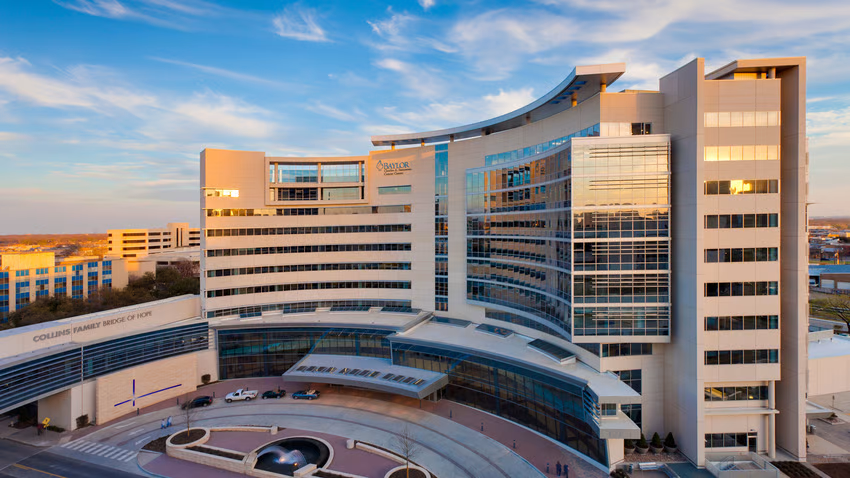
Baylor Scott & White led the pack with a $257 million operating income for the period ended Sept. 30, 2022, though it was closely followed by Sutter Health’s $244 million.
Baylor is among the outlier systems whose financials have been holding strong through the last few years, and the quarter’s 7.7% operating margin represents a slight improvement over the 7.4% of its 2022 fiscal year (ended June 30). It attributed the quarter’s 5.6% year-over-year (YoY) increase in consolidated total operating revenue to a blend of premium revenue increases, higher surgical volumes and favorable service mix that “returned to and/or exceeded pre-COVID levels.”
Sutter’s operations have been back and forth this year with a $91 million Q1 gain and a $51 million Q2 loss before the most recent quarter’s $244 million. Though it’s still well behind its numbers from last year, the organization’s leadership highlighted the quarter’s relatively flat salaries and progress toward long-term financial resiliency.
“Significant challenges remain, including inflationary pressures, supply chain uncertainties, increased labor costs and staffing shortages, and rising drug prices,” a spokesperson said regarding the numbers. “Our priorities include preparing for seismic infrastructure updates, reinvesting in our communities and supporting our clinicians in service to our mission.”
Topping the other end of the spectrum was Bon Secours Mercy Health and Providence’s respective $141 million and $164 million operating losses—though the latter’s could be viewed as an improvement in light of the $934 million it was down during the prior two quarters.
Both of those systems highlighted a continuation of the inflationary and labor trends that had increased their expenses during the year’s earlier quarters.
Providence, for instance, noted an additional $526 million of agency and overtime expenses during the past nine months in comparison to 2021. Bon Secours Mercy said in its filing that the economic pressures offset improvements to patient volumes that had “approached historical pre-pandemic levels.”
Other operating results of note included: UPMC, whose health services division logged a $103 million operating loss but was buoyed by the integrated system’s insurance services division; Intermountain Healthcare, which is fresh off a merger that helped boost its revenue by 28% and its expenses by 35%; and Advocate Aurora Health, which inched closer to its own pending merger with a narrow 0.2% operating margin.
Regardless of how they stuck the landing, virtually every system reported feeling the continued impact of labor shortages. Banner Health was among that list, reporting a 7% Year after Year increase in year-to-date contract labor costs and noting that understaffing in certain locations negatively impacted capacity and patient volumes.
The reports also suggest some heterogeneity across the patient volume metrics of different markets as demand for non-COVID care continued to recover. Several systems noted their surgical or elective volumes have yet to return to pre-pandemic levels, and some highlighted worsened case mixes that limited year-over-year revenue growth.
Similar to earlier quarters, across-the-board non-operating losses weighed heavily on the organizations’ bottom lines. Nearly every system posted a nine-figure investment loss during the quarter, though a nearly $1.7 billion net investment loss at Kaiser Permanente easily took the cake.
The investment losses led to 11 of the 13 nonprofits to notch a negative net income during the three months ended Sept. 30. See below for a breakdown of the numbers (and note that for systems reporting year-to-date results, third quarter numbers represent the difference between nine-month and six-month totals).
Total Operating Revenues
Total Operating Expenses
Operating Income
Net Income
Kaiser Permanente
24,253
24,328
-75
-1,550
CommonSpirit Health
9,011
8,988
23
-397
Providence
6,866
7,031
-164
-612
UPMC
6,376
6,449
114
-260
Mayo Clinic
4,117
3,960
157
-312
Sutter Health
3,985
3,741
244
103
AdventHealth
3,971
3,910
60
-305
Intermountain Healthcare
3,685
3,685
0
-582
Advocate Aurora Health
3,657
3,649
8
-311
Baylor Scott & White
3,335
3,078
257
135
Banner Health
3,069
3,096
-26
-198
Bon Secours Mercy Health
2,768
2,909
-141
-328
SSM Health
2,330
2,403
-73
-93
Nonprofit Health Systems’ Q3 Earnings ($ millions)
Several hospitals and health systems are trimming their workforces or jobs due to financial and operational challenges.
Below are workforce reduction efforts or job eliminations that were announced within the past two months and/or take effect over the next month.
1. West Reading, Pa.-based Tower Health on Nov. 16 laid off 52 corporate employees as the health system shrinks from six hospitals to four. The layoffs, which are expected to save $15 million a year, account for 13 percent of Tower Health’s corporate management staff.
3. Fayetteville, N.C.-based Cape Fear Valley Health is eliminating 200 positions. The decision affects 42 employees in non-direct patient care positions. The other 158 positions were unfilled positions. Employees were informed of the changes Oct. 27.
4. Sioux Falls, S.D.-based Sanford Healthannounced layoffs affecting an undisclosed number of staff on Oct. 19, a decision its CEO said was made “to streamline leadership structure and simplify operations” in certain areas. The layoffs primarily affect nonclinical areas.
5. University Hospitals announced efforts to reduce system expenses by $100 million Oct. 12, including the elimination of 326 vacant jobs and layoffs affecting 117 administrative employees. None of the employees affected by job cuts or layoffs provide direct patient care. The workforce reduction comes as the 21-hospital system faces a net operating loss of $184.6 million from the first eight months of 2022.
6. Ascension is closing Ascension St. Vincent Dunn, a critical access hospital in Bedford, Ind., and nine medical practices in December, a move that will affect 133 employees. Affected employees who do not secure another position within the health system will be offered severance and outplacement services.
7. Quincy, Ill.-based Blessing Health Systemclosed its hospital in Keokuk, Iowa, Sept. 30. The closure affected 151 workers. The layoffs take effect Nov. 4. The employees will do on-site work or be placed on administrative leave until the layoff date, Blessing Health said.
8. St. Vincent Charity Medical Center in Cleveland will lay off 978 workers when it ends many services in November. The hospital, part of Sisters of Charity Health System, is ending inpatient care and most other services in November. After the transition, the facility will offer outpatient behavioral health, urgent care and primary care.
9. Commonwealth Health, part of Franklin, Tenn.-based Community Health Systems, will lay off 245 employees when it closes facilities at the end of October. The health system is closing First Hospital, a psychiatric hospital in Kingston, Pa., and its various outpatient centers on Oct. 30. Affected workers are encouraged to apply for open positions they’re qualified for at other Commonwealth Health facilities, a system spokesperson told Becker’s.
10. Yale New Haven (Conn.) Healtheliminated 155 management positions from its nearly 30,000-person workforce. The health system laid off 72 employees and eliminated 83 vacant positions, a spokesperson told Becker’s Hospital Review in September. The cuts were attributed to financial pressures.
11. Citing financial pressures, BHSH System — now named Corewell Health — cut about 400 positions from its 64,000-member workforce in September. The 22-hospital organization was formed by the February merger of Grand Rapids, Mich.-based Spectrum Health with Southfield, Mich.-based Beaumont Health.
12. Bakersfield (Calif.) Heart Hospital is laying off 114 employees. Affected employees were told in September that they no longer had to report to work, but they will continue to receive full pay and benefits through Nov. 5. The layoffs are an effort to optimize operations and to free up resources for patient care and specialized surgery, the hospital said.
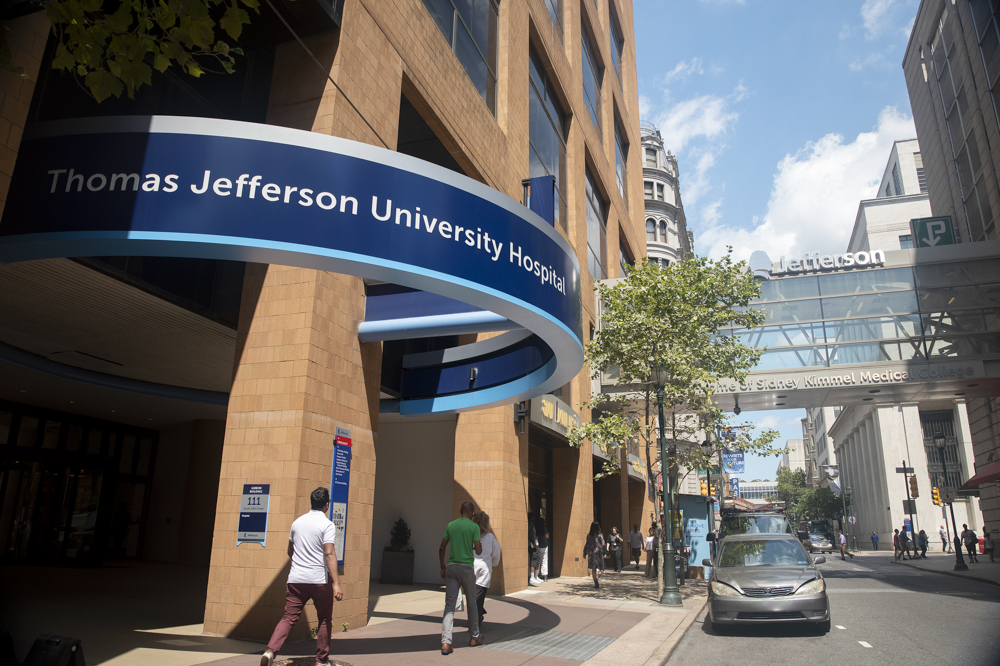
Philadelphia-based Thomas Jefferson University, including Jefferson Health, reported a multimillion-dollar loss in the third quarter ending Sept. 30.
Five things to know:
1. Thomas Jefferson University reported an $83.5 million loss for the quarter, down significantly from a $12.8 million gain in the same period last year.
2. Thomas Jefferson University reported $29.9 million in operating revenue. Clinical operations reported an $87.3 million loss from operations, and the insurance operations reported a $7.1 million gain for the quarter.
3. The organization reported a -3.7 percent operating margin, compared to 0.9 percent for the third quarter last year.
4. Hospital inpatient admissions grew 30.4 percent year over year to 39,463 cases for the quarter. Outpatient observations were also up 21.6 percent to 11,744 cases. Outpatient visits were up 36 percent year over year to 524,200 visits.
5. Days cash on hand for clinical operations dropped by nearly 11 days since the start of the fiscal year to 158.5 days due to nonoperating investment losses and repaying Medicare advance payments.
Providence, a 51-hospital system headquartered in Renton, Wash., ended the first nine months of 2022 with an operating loss of $1.1 billion, according to financial documents released Nov. 14.
The system said in a Nov. 11 news release that its third quarter financial results showed the “ongoing impact of inflation, the national healthcare labor shortage, delayed reimbursement from payers, global supply chain disruptions and financial market weakness.”
For the nine months ended Sept. 30, Providence’s operating revenues were $19.6 billion on a pro forma basis, up from $18.8 billion during the same period last year, according to the report. The pro forma results exclude the operations of Newport Beach, Calif.-based Hoag Hospital. Providence and Hoag ended their affiliation in January.
Operating expenses over the first nine months of the year were $20.7 billion, a 7 percent increase over the same period in 2021 on a pro forma basis. This includes a 9 percent increase in salary and benefits due to the cost of agency staff, overtime and wage increases, according to the release. It also includes a 6 percent increase in supply costs, driven by an 8 percent increase in pharmaceutical spending.
Providence said financial market weakness and volatility drove investment losses of $1.4 billion for the first nine months of 2022, bringing the system’s unrestricted cash and investments to $9.1 billion.
“Healthcare delivery systems across the country face unprecedented challenges, and Providence has not been immune,” Providence President and CEO Rod Hochman, MD, said in the release. “However, just as we have for more than 165 years, we will continue to be here to meet the health care needs of our communities. While we still have a journey ahead of us, we are moving in the right direction and are beginning to see signs of renewal this quarter. My deepest gratitude to the caregivers of Providence for continuing to focus on the Mission and serving those in need, especially those who are most vulnerable, with excellence and compassion.”
Here are 10 health systems with strong operational metrics and solid financial positions, according to reports from Fitch Ratings and Moody’s Investors Service.
1. Advocate Aurora Health has an “AA” rating and a stable outlook with Fitch. The health system, dually headquartered in Milwaukee and Downers Grove, Ill., has a strong financial profile and a leading market position over a broad service area in Illinois and Wisconsin, Fitch said. The health system’s fundamental operating platform is strong, the credit rating agency said.
2. Allina Health System has an “AA-” rating and a stable outlook with Fitch. The Minneapolis-based system is the inpatient market share leader in a highly competitive market and has a strong relation with payers in the market, Fitch said. Alliana’s financial profile is strong, the ratings agency said.
3. Banner Health has an “AA-” rating and stable outlook with Fitch. The Phoenix-based health system’s core hospital delivery system and growth of its insurance division combine to make it a successful, highly integrated delivery system, Fitch said. The credit rating agency said it expects Banner to maintain operating EBITDA margins of about 8 percent on an annual basis, reflecting the growing revenues from the system’s insurance division and large employed physician base.
4. Bon Secours Mercy Health has an “AA-” rating and stable outlook with Fitch. The Cincinnati-based health system has a broad geographic footprint as one of the five largest Catholic health systems in the U.S., a good payer mix and a leading or near-leading market share in eight of its eleven markets in the U.S., Fitch said.
5. Bryan Health has an “AA-” rating and stable outlook with Fitch. The Lincoln, Neb.-based health system has a leading and growing market position, very strong cash flow and a strong financial position, Fitch said. The credit rating agency said Bryan Health has been resilient through the COVID-19 pandemic and is well-positioned to accommodate additional strategic investments.
6. Deaconess Health System has an “AA” rating and stable outlook with Fitch. The Evansville, Ind.-based system has a leading market position in its primary service area and a favorable payer mix, Fitch said. The ratings agency said it expects Deaconess’ operating EBITDA margins to improve and stabilize around 10 percent by 2023, reflecting strong volumes and focus on operating efficiencies.
7. Gundersen Health System has an “AA-” rating and stable outlook with Fitch. The La Crosse, Wis.-based health system has strong balance sheet metrics, a leading market position and an expanding operating platform in its service area, Fitch said. The credit rating agency expects the health system to return to strong operating performance as it emerges from disruption related to the COVID-19 pandemic.
8. Hackensack Meridian Health has an “AA-” rating and stable outlook with Fitch. The Edison, N.J.-based health system has shown consistent year-over-year increases in market share and has a solid liquidity position, Fitch said.
9. Intermountain Healthcare has an “Aa1” rating and stable outlook with Moody’s. The Salt Lake City-based health system has exceptional credit quality, which will continue to benefit from its leading market position in Utah, Moody’s said. The credit rating agency said the health system’s merger with Broomfield, Colo.-based SCL Health will also give Intermountain greater geographic reach.
10. Yale New Haven (Conn.) Health has an “AA-” rating and stable outlook with Fitch. The health system’s turnaround efforts, brand recognition and market presence will help it return to strong operating results, Fitch said.









 HENRY KOTULA