Twenty U.S. hospitals have received consecutive “A” safety grades from The Leapfrog Group since 2012, according to the group’s spring safety grades released May 3.
Since 2012, Leapfrog has assigned letter grades to nearly 3,000 acute-care general hospitals across the nation every fall and spring. The safety grades evaluate hospitals’ performance on up to 22 patient safety measures from CMS, the Leapfrog Hospital survey and other supplemental sources. The safety grades are the only hospital ratings program solely based on hospitals’ ability to protect patients from preventable errors, accidents, injuries and infections.
Twenty hospitals have received 23 consecutive “A” grades since the launch.
Last fall, 22 hospitals achieved consecutive “A” grades. For the spring grades, two hospitals lost their consecutive “A” streak: Sentara Williamsburg Regional Medical Center in Virginia and Sierra Vista Regional Medical Center in San Luis Obispo, Calif., both earned a “B.”
Read more about Leapfrog’s hospital safety grade methodology here.
Here are the 20 hospitals that have achieved 23 consecutive “A” grades:
Arizona
Mayo Clinic Hospital (Phoenix)
California
French Hospital Medical Center (San Luis Obispo)
Kaiser Permanente Orange County-Anaheim Medical Center
Colorado
Rose Medical Center (Denver)
Florida
AdventHealth Daytona Beach
Illinois
Elmhurst Memorial Hospital
University of Chicago Medical Center
Northwestern Medicine Central DuPage Hospital (Winfield)
Massachusetts
Beverly Hospital
Saint Anne’s Hospital (Fall River)
Michigan
University of Michigan Health (Ann Arbor)
Mississippi
Baptist Memorial Hospital Golden Triangle (Columbus)
After 18 years as CEO in Kaiser Permanente, I set my sights on improving the heatlh of the nation, hoping to find a way to achieve the same quality, technology and affordability our medical group delivered to 5 million patients on both coasts.
That quest launched the Fixing Healthcare podcast in 2018, and it inspired interviews with dozens of leaders, thinkers and doers, both in and around medicine. These experts shared innovative ideas and proven solutions for achieving (a) superior quality, (b) improved patient access, (c) lower overall costs, and (d) greater patient and clinician satisfaction.
Which of the hundreds of ideas presented remain most promising?
Why, after five years and so many excellent solutions, has our nation experienced such limited improvements in healthcare?
And finally, how will these great ideas become reality?
To answer the first question, I offer 15 of the best Fixing Healthcare recommendations so far. Some quotes have been modified for clarity with links to all original episodes (and transcripts) included.
Fixing the business of medicine
1. Malcolm Gladwell, journalist and five-time bestselling author: “In other professions, when people break rules and bring greater economic efficiency or value, we reward them. In medicine, we need to demonstrate a consistent pattern of rewarding the person who does things better.”
2. Richard Pollack, CEO of the American Hospital Association (AHA): “I hope in 10 years we have more integrated delivery systems providing care, not bouncing people around from one unconnected facility to the next. I would hope that we’re in a position where there’s a real focus on ensuring that people get care in a very convenient way.”
Eliminating burnout
3. Zubin Damania, aka ZDoggMD, hospitalist and healthcare satirist: “In the culture of medicine, specialists view primary care as the weak medical students, the people who couldn’t get the board scores or rotation honors to become a specialist. Because why would you do primary care? It’s miserable. You don’t get paid enough. It’s drudgery. We must change these perceptions.”
4. Devi Shetty, India’s leading heart surgeon and founder of Narayana Health: “When you strive to work for a purpose, which is not about profiting yourself, the purpose of our action is to help society, mankind on a large scale. When that happens, cosmic forces ensure that all the required components come in place and your dream becomes a reality.”
5. Jonathan Fisher, cardiologist and clinician advocate: “The problem we’re facing in healthcare is that clinicians are all siloed. We may be siloed in our own institution thinking that we’re doing it best. We may be siloed in our own specialty thinking that we’re better than others. All of these divides need to be bridged. We need to begin the bridging.”
Making medicine equitable
6. Jen Gunter, women’s health advocate and “the internet’s OB-GYN”: “Women are not listened to by doctors in the way that men are. They have a harder time navigating the system because of that. Many times, they’re told their pain isn’t that serious or their bleeding isn’t that heavy. We must do better at teaching women’s health in medicine.”
7. Amanda Calhoun, activist, researcher and anti-racism educator: “A 2015 survey showed that white residents and medical students still thought Black people feel less pain, which is wild to me because Black is a race. It’s not biological. This is actually an historical belief that persists. One of the biggest things we can do as the medical system is work on rebuilding trust with the Black community.”
Addressing social determinants of health
8. Don Berwick, former CMS administrator and head of 100,000 Lives campaign: “We know where the money should go if we really want to be a healthy nation: early childhood development, workplaces that thrive, support to the lonely, to elders, to community infrastructures like food security and transportation security and housing security, to anti-racism and criminal-justice reform. But we starve the infrastructures that could produce health to support the massive architecture of intervention.”
9. David T. Feinberg, chairman of Oracle Health: “Twenty percent of whether we live or die, whether we have life in our years and years in our life, is based on going to good doctors and good hospitals. We should put the majority of effort on the stuff that really impacts your health: your genetic code, your zip code, your social environment, your access to clean food, your access to transportation, how much loneliness you have or don’t have.”
Empowering patients
10. Elisabeth Rosenthal, physician, author and editor-in-chief of KHN: “To patients, I say write about your surprise medical bills. Write to a journalist, write to your local newspaper. Hospitals today are very sensitive about their reputations and they do not want to be shamed by some of these charges.”
11. Gordon Chen, ChenMed CMO: “If you think about what leadership really is, it’s influence. Nothing more, nothing less. And the only way to achieve better health in patients is to get them to change their behaviors in a positive way. That behavior change takes influence. It requires primary care physicians to build relationship and earn trust with patients. That is how both doctors and patients can drive better health outcomes.”
Utilizing technology
12. Vinod Khosla, entrepreneur, investor, technologist: “The most expensive part of the U.S. healthcare system is expertise, and expertise can relatively be tamed with technology and AI. We can capture some of that expertise, so each oncologist can do 10 times more patient care than they would on their own without that help.”
13. Rod Rohrich, influential plastic surgeon and social media proponent: “Doctors, use social media to empower your audience, to educate them, and not to overwhelm them. If you approach social media by educating patients about their own health, how they can be better, how can they do things better, how they can find doctors better, that’s a good thing.”
Rethinking medical education
14. Marty Makary, surgeon and public policy researcher: “I would get rid of all the useless sh*t we teach our medical students and residents and fellows. In the 16 years of education that I went through, I learned stuff that has nothing to do with patient care, stuff that nobody needs to memorize.”
15. Eric Topol, cardiologist, scientist and AI expert: “It’s pretty embarrassing. If you go across 150 medical schools, not one has AI as a core curriculum. Patients will get well versed in AI. It’s important that physicians stay ahead, as well.”
Great ideas, but little progress
Since 2018, our nation has spent $20 trillion on medical care, navigated the largest global pandemic in a century and developed an effective mRNA vaccine, nearly from scratch. And yet, despite all this spending and scientific innovation, American medicine has lost ground.
American life expectancy has dropped while maternal mortality rates have worsened. Clinician burnout has accelerated amid a growing shortage of primary care and emergency medicine physicians. And compared to 12 of its wealthiest global peers, the United States spends nearly twice as much per person on medical care, but ranks last in clinical outcomes.
Guests on Fixing Healthcare generally agree on the causes of stagnating national progress.
Healthcare system giants, including those in the drug, insurance and hospital industries, find it easier to drive up prices than to prevent disease or make care-delivery more efficient. Over the past decade, they’ve formed a conglomerate of monopolies that prosper from the existing rules, leaving them little incentive to innovate on behalf of patients. And in this era of deep partisan divide, meaningful healthcare reforms have not (and won’t) come from Congress.
Then who will lead the way?
Industry change never happens because it should. It happens when demand and opportunity collide, creating space for new entrants and outsiders to push past the established incumbents. In healthcare, I see two possibilities:
1. Providers will rally and reform healthcare
Doctors and hospitals are struggling. They’re struggling with declining morale and decreasing revenue. Clinicians are exiting the profession and hospitals are shuttering their doors. As the pain intensifies, medical group leaders may be the ones who decide to begin the process of change.
The first step would be to demand payment reform.
Today’s reimbursement model, fee-for-service, pays doctors and hospitals based on the quantity of care they provide—not the quality of care. This methodology pushes physicians to see more patients, spend less time with them, and perform ever-more administrative (billing) tasks. Physicians liken it to being in a hamster wheel: running faster and faster just to stay in place.
Instead, providers of care could be paid by insurers, the government and self-funded businesses directly, through a model called “capitation.” With capitation, groups of providers receive a fixed amount of money per year. That sum depends on the number of enrollees they care for and the amount of care those individuals are expected to need based on their age and underlying diseases.
This model puts most of the financial risk on providers, encouraging them to deliver high-quality, effective medical care. With capitation, doctors and hospitals have strong financial incentives to prevent illnesses through timely and recommended preventive screenings and a focus on lifestyle-medicine (which includes diet, exercise and stress reduction). They’re rewarded for managing patients’ health and helping them avoid costly complications from chronic diseases, such as heart attacks, strokes and cancer.
Capitation encourages doctors from all specialties to collaborate and work together on behalf of patients, thus reducing the isolation physicians experience while ensuring fewer patients fall through the cracks of our dysfunctional healthcare system. The payment methodology aligns the needs of patients with the interests of providers, which has the power to restore the sense of mission and purpose medicine has lost.
Capitation at the delivery-system level eliminates the need for prior authorization from insurers (a key cause of clinician burnout) and elevates the esteem accorded to primary care doctors (who focus on disease prevention and care coordination). And because the financial benefits are tied to better health outcomes, the capitated model rewards clinicians who eliminate racial and gender disparities in medical care and organizations that take steps to address the social determinants of health.
2. Major retailers will take over
If clinicians don’t lead the way, corporate behemoths like Amazon, CVS and Walmart will disrupt the healthcare system as we know it. These retailers are acquiring the insurance, pharmacy and direct-patient-care pieces needed to squeeze out the incumbents and take over American healthcare.
Each is investing in new ways to empower patients, provide in-home care and radically improve access to both in-person and virtual medicine. Once generative AI solutions like ChatGPT gain enough computing power and users, tech-savvy retailers will apply this tool to monitor patients, enable healthier lifestyles and improve the quality of medical care compared to today.
When Fixing Healthcare debuted five years ago, none of the show’s guests could have foreseen a pandemic that left more than a million dead. But, had our nation embraced their ideas from the outset, many of those lives would have been saved. The pandemic rocked an already unstable and underperforming healthcare system. Our nation’s failure to prevent and control chronic disease resulted in hundreds of thousands of unnecessary deaths from Covid-19. Outdated information technology systems, medical errors and disparities in care caused hundreds of thousands more. As a nation, we could have done much better.
With the cracks in the system widening and the foundation eroding, disruption in healthcare is inevitable. What remains to be seen is whether it will come from inside or outside the U.S. healthcare system.
One of the great things about my job is getting the opportunity to talk with healthcare CEOs around the country on a regular basis.
Lately, every CEO I talk with tells me how hard it is to run a healthcare organization in 2023.
These are people with long experience, people who over time have pushed the right buttons and pulled the right levers to make their organizations successful and to give their communities the care they need.
Hearing these recent comments from CEOs takes us back to the concept of “wicked problems,” which we’ve referred to in the past, and suggests that the current hospital operating environment is overwhelmed by wicked problems.
As a reminder, the wicked problem concept was developed in 1973 by social scientists Horst Rittel and Melvin Webber.
Unlike math problems, wicked problems have no single, correct solution. In fact, a solution that improves one aspect of a wicked problem usually makes another aspect of the problem worse.
Poverty is a common example of a wicked problem.
According to Rittel and Webber, all wicked problems have these five characteristics:
They are hard to define.
It’s hard to know when they are solved.
Potential solutions are not right or wrong, only better or worse.
There is no end to the number of solutions or approaches to a wicked problem.
There is no way to test the solution to a wicked problem—once implemented, solutions are not easily reversable, and those solutions affect many people in profound ways.
Healthcare is one of our nation’s critical wicked problems, and the broad and persistent effects of COVID have made that problem worse.
Like all wicked problems, the wicked problem of healthcare can be defined in many different ways and from many different perspectives.
If we were to frame the wicked problem of healthcare just in the context of hospitals and health systems coming off of their worst financial year in memory, it could look something like this:
Hospitals and health systems need to make a margin in order to carry out their “duty of care”—that is, their responsibility to improve health for communities, which increasingly include public health undertakings.
However, in 2022, more than half of hospitals in America had negative margins due largely to macroeconomic factors related to labor, inflation, utilization, and insufficient revenue growth.
The actions then needed to improve financial performance likely involve reducing labor costs and eliminating unprofitable services.
But these solutions in the hospital world are seen as another wicked problem, and actions taken to improve financial and clinical operations are often cautiously approached in order to protect the organization’s duty of care.
As you can see, the very actions to solve the wicked problem of provider healthcare may likely make aspects of the strategic problem worse.
Everyone reading this blog is dedicated to solving these and other wicked problems related to health and healthcare and the provision of sufficient care to the American community.
Solutions to healthcare’s wicked problems are never clear, and those solutions are not easily tested and eventually can affect many.
And in the wicked problem lexicon, once uncertain solutions have been implemented they are very hard to undo.
And healthcare’s many and varied dissatisfied stakeholders demand rapid solutions and then complain loudly when those solutions fall short, as any one solution inevitably will when the problem is as wicked as the current healthcare environment.
This is the new role of healthcare leaders: solvers of wicked problems.
Published in the April edition of Health Affairs Forefront, this piece unpacks why payers and other corporations have replaced health systems as the top bidders for primary care practices, driving up practice purchase prices from hundreds of dollars to tens of thousands of dollars per patient. While corporate players like UnitedHealth Group, Amazon, and Walgreens have spent an estimated $50B on primary care, it pales in comparison to the potential “$1T opportunity” in value-based care projected by McKinsey and Company.
The authors argue that this tantalizing opportunity exists because the Centers for Medicare and Medicaid Services (CMS) invited corporations to “re-insure” Medicare through capitated arrangements in Medicare Advantage (MA) and its Direct Contracting program.
While CMS intended to promote risk and value-based incentives to improve care quality and costs, the incentive structures baked into these programs have afforded payers record profits, despite neither improving patient outcomes nor reducing government healthcare spending.
The Gist: While the critiques of MA reimbursement structures in this piece are familiar, they are woven together into a convincing rebuke of the “unintended consequences” of CMS’s value-based care policy.
Through poorly designing incentives, CMS paved a runway for corporate America to capture the lion’s share of the financial returns of value-based care, paying prices for primary care that health systems can’t match.
Meanwhile, despite skyrocketing valuations for primary care practices, primary care services remain underfunded and inadequately reimbursed, pushing primary care groups closer to payers with excess profits to invest.
Editor’s Note: This is Part 2 of a multi-part series on healthcare revolution. This article builds on Part 1, which you can read here.
Based on a 23-year career as a solo-practicing rheumatologist, internist and geriatrician, followed by 18 years as president and CEO of a 715-bed, two-hospital healthcare system, I recently shared thoughts about the current stressed healthcare system including profit margin squeeze, patient’s needs and suggested options of subdividing care into acute, urgent, and elective facilities. The bottom-line quote from the Mayo Brothers, “The Patient’s Needs Come First,” is my declaration to use prevention as the way to focus our attention to those we serve.
Recognizing and Addressing the Challenge
Patients’ healthy life expectancy should be the focus of the healthcare industry, communities, employers and governments. People live longer, happier and healthier lives when productivity improves and costs decrease.
The U.S. life expectancy at birth is at the lowest level since 1996. The 0.9-year drop in life expectancy in 2021 and the 1.8-year drop in 2020 were the biggest two-year declines in life expectancy since 1921-1923. The current decline — 77.0 to 76.1 years — demands a change, whether welcome or not. [1]
Our nation’s metrics are embarrassing compared to other countries. Consider just one. “Average life expectancy in Costa Rica has steadily increased from 55 years in 1950 to 81 years today — far outpacing the U.S. Even more notable: the country has achieved this success while spending far less than the U.S. as a share of income which is already lower than ours.” [2] This Central American country is about the size of West Virginia and has a vast and sparsely populated terrain in addition to a few cities. Older adults, even in rural areas in Costa Rica, do well compared to our nation. Opportunities abound to learn from others. [3]
Physicians, Non-Physician Caregivers and Community Responses
Incumbents never welcome disruption. Currently, volume drives the U.S. health payment system. Profitability is proportional to the number of sick-care encounters. The more visits to a physician or hospital parallels greater demand for pharmaceuticals and devices/implants. Higher volume translates into increased insurance premiums the following year, of which the insurance company receives a percentage.
Prevention is not top of mind and redirecting patients to focused factories would be anathema for local hospitals and physicians — both groups are volume dependent.
Offloading outpatient care to lower-cost caregivers — Walmart, CVS, Walgreens, and others — cuts into the work and profit of primary care physicians in independent and health-system-owned group practices. The same with telemedicine. Nurse practitioners and physician assistants, under the supervision of a physician, can bill Medicare at 85% of a physician’s fee with modest restrictions. This positions them to both help and compete with primary care physicians. [4] New entrants — companies and non-physician caregivers — will lower overall costs. That’s a good thing unless you are the traditional medical office or primary care physician being replaced.
Communities have pride in their local healthcare system, especially since it is typically the largest or second largest employer in town. Rethinking where to find urgent or elective care that would require some travel would be a complete mindset change, like the change in shopping after big box stores and online shopping matured. Some communities with abundant resources may support under-utilized healthcare (and retail) facilities but keeping afloat without adequate volume is challenging.
Conditions change and with the importance of health and well-being, patients’ mindsets can evolve to include some travel for urgent and elective care. For its 1.1 million employees, Walmart and other large national employers instituted a Centers of Excellence Program that directs patients with non-acute episodic needs to health institutions that treat them cost-effectively with positive outcomes.
Patients and a companion have 100% of the cost for surgery plus travel expenses for certain spine, cardiac, organ transplants, hip/knee replacements, weight loss surgery and fertility. Walmart also offers a record review for cancer care at a handful of selected healthcare systems across the nation. [5] Since cancer care requires both an accurate diagnosis and usually prolonged treatment, the selected health system develop protocols for a patient that are implemented conveniently for the sufferer.
Rural healthcare is already struggling financially and faces greater threat. Small rural hospitals are failing. Addressing the three levels of medical need with a centralized system might serve patients better than every community trying to be everything to everyone.
Cities with duplicative and redundant services could provide better centralized care more efficiently for a wider geographic area. Changing the “pride in ownership” will require more pain, namely financial pressure, but the reward for patients will be better objective outcomes. Coopetition will facilitate the transformation.
Something has got to give. With increased transparency, patients have never been better informed, and they are already seeking specialized care with better outcomes. Transportation and virtual audio/visual communication is easier than ever before, accelerating change for complex patients.
Healthcare System Evolution
In my opinion, the local hospital of the future will be an ED, OR and ICU with a birthing center attached. A regional medical center will be within driving distance for urgent and elective care. Highly specialized national centers will serve as focus factories for sophisticated medical and surgical care, each serving patients from larger geographic areas, even from across the nation. Cancer surgery, joint replacements, open heart surgery, and other major non-emergency care and surgery at these focus factories will deliver higher quality more efficiently. As noted in Part 1, outcomes are objectively better at institutions focused on a limited number of conditions. [6]
Although this plan might sound exotic, other nations around the world already benefit with specialized, nonredundant hospitals. [7] And global competition is real. The U.S. won’t dominate high-end specialty care like it did in the 1900s. By the end of this century it will be a tripolar world shared between the U.S., China and India. Redistributing resources in America from less efficient healthcare to education, infrastructure, environment, and other worthwhile endeavors will help everyone. [8]
Outpatient care will continue the migration to virtual. Online shopping initially seemed exotic, but now packages arrive daily delivered to homes by a fleet of small vans. And as much as one pines for the old days with a personal intimate relationship with a caregiver, the power of quick access to accurate care will overcome nostalgia. Dr. Marcus Welby will be a distant memory. Consider the profound change from working five days a week in a physical office to the current geographically agnostic 24/7 virtual business community. Formerly successful commercial real estate owners are repurposing their now half-empty buildings.
When will the economics mandate a change? With a slower evolution, the existing systems have a chance to accommodate. A rapid and severe economic downturn is more likely to stimulate a quicker move. Costs matter, particularly as resources become more limited.
Medically self-insured employers like Walmart are already leading the way. Change is happening with younger patients sorting themselves out by going to walk-in clinics in big box chain stores and older folks seeking specialized care from major national systems. As outcomes improve and receive wider recognition, these positive changes will accelerate, creating a “flywheel effect.”
The End Game
Like it or not, sooner or later as a patient or provider we will transform. Understanding the need to change along with better outcomes for patients, who everyone is trying to serve, should improve provider satisfaction.
Subsequently, costs will drop, productivity will increase, and precious resources redirect to preventing illness and improving quality of life. Helping everyone live a longer, happier, and healthier life is an achievable goal. Healthcare systems can and should lead the transformation.
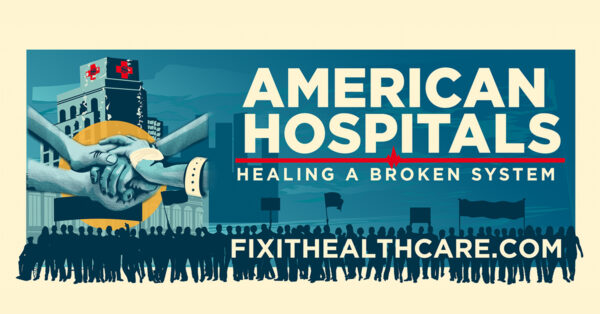
The film “American Hospitals: Healing a Broken System” premiered in Washington, D.C., on March 29. This documentary exposes the inconvenient truths embedded within the U.S. healthcare system. Here is a dirty dozen of them:
Hospitals are largely unaccountable for poor clinical outcomes.
The cost of commercially insured care is multiples higher than the cost of government-insured care for identical procedures.
Customer service at hospitals is dreadful.
Frontline clinicians are overburdened and leaving the profession in droves.
Healthcare still operates the same way it has for the last one hundred years — delivering hierarchical, fragmented, hospital-centric, disease-centric, physician-centric “sick” care. Accordingly, healthcare business models optimize revenue generation and profitability rather than health outcomes. These factors explain, in part, why U.S. life expectancy has declined four of the five years and maternal deaths are higher today than a generation ago.
It’s hard to imagine that the devil itself could create a more inhumane, ineffective, costly and change-resistant system. Hospitals consume more and more societal resources to maintain an inadequate status quo. They’re a major part of America’s healthcare problem, certainly not its solution. Even so, hospitals have largely avoided scrutiny and the public’s wrath. Until now.
“American Hospitals” is now playing in theaters throughout the nation. It chronicles the pervasive and chronic dysfunction plaguing America’s hospitals. It portrays the devastating emotional, financial and physical toll that hospitals impose on both consumers and caregivers.
Despite its critical lens, “American Hospitals” is not a diatribe against hospitals. Its contributors include some of healthcare’s most prominent and respected industry leaders, including Donald Berwick, Elizabeth Rosenthal, Shannon Brownlee and Stephen Klasko. The film explores payment and regulatory reforms that would deliver higher-value care. It profiles Maryland’s all-payer system as an example of how constructive reforms can constrain healthcare spending and direct resources into more effective, community-based care.
The United States already spends more than enough on healthcare. It doesn’t need to spend more. It needs to spend more wisely. The system must downsize its acute and specialty care footprint and invest more in primary care, behavioral health, chronic disease management and health promotion. It’s really that simple.
My only critique of “American Hospitals” is many of its contributors expect too much from hospitals. They want them to simultaneously improve their care delivery and advance the health of their communities. This is wishful thinking. Health and healthcare are fundamentally different businesses. Rather than pivoting to population health, hospitals must focus all their efforts on delivering the right care at the right time, place and price.
If hospitals can deliver appropriate care more affordably, this will free up enormous resources for society to invest in health promotion and aligned social-care services. In this brave new world, right-sized hospitals deliver only necessary care within healthier, happier and more productive communities.
All Americans deserve access to affordable health insurance that covers necessary healthcare services without bankrupting them and/or the country. Let me restate the obvious. This requires less healthcare spending and more investments in health-creating activities. Less healthcare and more health is the type of transformative reform that the country could rally behind.
At issue is whether America’s hospitals will constructively participate in downsizing and reconfiguring the nation’s healthcare system. If they do so, they can reinvent themselves from the inside out and control their destinies.
Historically, hospitals have preferred to use their political and financial leverage to protect their privileged position rather than advance the nation’s well-being. Like Satan in Milton’s “Paradise Lost,” they have preferred to reign in hell rather than serve in heaven.
Pride comes before the fall. Woe to those hospitals that fight the nation’s natural evolution toward value-based care and healthier communities. They will experience a customer-led revolution from outside in and lose market relevance. Only by admitting and addressing their structural flaws can hospitals truly serve the American people.
With input from stakeholders across the industry, Modern Healthcare outlines six challenges health care is likely to face in 2023—and what leaders can do about them.
1. Financial difficulties
In 2023, health systems will likely continue to face financial difficulties due to ongoing staffing problems, reduced patient volumes, and rising inflation.
According to Tina Wheeler, U.S. health care leader at Deloitte, hospitals can expect wage growth to continue to increase even as they try to contain labor costs. They can also expect expenses, including for supplies and pharmaceuticals, to remain elevated.
Health systems are also no longer able to rely on federal Covid-19 relief funding to offset some of these rising costs. Cuts to Medicare reimbursement rates could also negatively impact revenue.
“You’re going to have all these forces that are counterproductive that you’re going to have to navigate,” Wheeler said.
In addition, Erik Swanson, SVP of data and analytics at Kaufman Hall, said the continued shift to outpatient care will likely affect hospitals’ profit margins.
“The reality is … those sites of care in many cases tend to be lower-cost ways of delivering care, so ultimately it could be beneficial to health systems as a whole, but only for those systems that are able to offer those services and have that footprint,” he said.
2. Health system mergers
Although hospital transactions have slowed in the last few years, market watchers say mergers are expected to rebound as health systems aim to spread their growing expenses over larger organizations and increase their bargaining leverage with insurers.
“There is going to be some organizational soul-searching for some health systems that might force them to affiliate, even though they prefer not to,” said Patrick Cross, a partner at Faegre Drinker Biddle & Reath. “Health systems are soliciting partners, not because they are on the verge of bankruptcy, but because they are looking at their crystal ball and not seeing an easy road ahead.”
Financial challenges may also lead more physician practices to join health systems, private-equity groups, larger practices, or insurance companies.
“Many independent physicians are really struggling with their ability to maintain their independence,” said Joshua Kaye, chair of U.S. health care practice at DLA Piper. “There will be a fair amount of deal activity. The question will be more about the size and specialty of the practices that will be part of the next consolidation wave.”
3. Recruiting and retaining staff
According to data from Fitch Ratings, health care job openings reached an all-time high of 9.2% in September 2022—more than double the average rate of 4.2% between 2010 and 2019. With this trend likely to continue, organizations will need to find effective ways to recruit and retain workers.
Currently, some organizations are upgrading their processes and technology to hire people more quickly. They are also creating service-level agreements between recruiting and hiring teams to ensure interviews are scheduled within 48 hours or decisions are made within 24 hours.
Eric Burch, executive principal of operations and workforce services at Vizient, also predicted that there will be a continued need for contract labors, so health systems will need to consider travel nurses in their staffing plans.
“It’s really important to approach contract labor vendors as a strategic partner,” Burch said. “So when you need the staff, it’s a partnership and they’re able to help you get to your goals, versus suddenly reaching out to them and they don’t know your needs when you’re in crisis.”
When it comes to retention, Tochi Iroku-Malize, president of the American Academy of Family Physicians (AAFP), said health systems are adequately compensated for their work and have enough staff to alleviate potential burnout.
AAFP also supports legislation to streamline prior authorization in the Medicare Advantage program and avoid additional cuts to Medicare payments, which will help physicians provide care to patients with less stress.
4. Payer-provider contract disputes
A potential recession, along with the ensuing job cuts that typically follow, would limit insurers’ commercial business, which is their most profitable product line. Instead, many people who lose their jobs will likely sign up for Medicaid plans, which is much less profitable.
Because of increased labor, supply, and infrastructure costs, Brad Ellis, senior director at Fitch Ratings, said providers could pressure insurers into increasing the amount they pay for services. This will lead insurers to passing these increased costs onto members’ premiums.
Currently, Ellis said insurers are keeping an eye on how legislators finalize rules to implement the No Surprise Act’s independent resolution process. Regulators will also begin issuing fines for payers who are not in compliance with the law’s price transparency requirement.
5. Investment in digital health
Much like 2022, investment in digital health is likely to remain strong but subdued in 2023.
“You’ll continue to see layoffs, and startup funding is going to be hard to come by,” said Russell Glass, CEO of Headspace Health.
However, investors and health care leaders say they expect a strong market for digital health technology, such as tools for revenue cycle management and hospital-at-home programs.
According to Julian Pham, founding and managing partner at Third Culture Capital, he expects corporations such as CVS Health to continue to invest in health tech companies and for there to be more digital health mergers and acquisitions overall.
In addition, he predicted that investors, pharmaceutical companies, and insurers will show more interest in digital therapeutics, which are software applications prescribed by clinicians.
“As a physician, I’ve always dreamed of a future where I could prescribe an app,” Pham said. “Is it the right time? Time will tell. A lot needs to happen in digital therapeutics and it’s going to be hard.”
6. Health equity efforts
This year, CMS will continue rolling out new health equity initiatives and quality measurements for providers and insurers who serve marketplace, Medicare, and Medicaid beneficiaries. Some new quality measures include maternal health, opioid related adverse events, and social need/risk factor screenings.
CMS, the Joint Commission, and the National Committee for Quality Assurance are also partnering together to establish standards for health equity and data collection.
In addition, HHS is slated to restore a rule under the Affordable Care Act that prohibits discrimination based on a person’s gender identity or sexual orientation. According to experts, this rule may conflict with recently passed state laws that ban gender-affirming care for minors.
“It’s something that’s going to bear out in the courts and will likely lack clarity. We’ll see differences in what different courts decide,” said Lindsey Dawson, associate director of HIV policy and director of LGBTQ health policy at the Kaiser Family Foundation. “The Supreme Court acknowledged that there was this tension. So it’s an important place to watch and understand better moving forward.”
There is no shortage of challenges to confront in healthcare today, from workforce shortages and burnout to innovation and health equity (and so much more). We’re committed to giving industry leaders a platform for sharing best practices and exchanging ideas that can improve care, operations and patient outcomes.
Check out this podcast interview with Ketul J. Patel, CEO at Virginia Mason Franciscan Health and division president, Pacific Northwest at CommonSpirit Health, for his insights on where healthcare is headed in the future.
In this episode, we are joined by Ketul J. Patel, Division President, Pacific Northwest; Chief Executive Officer, CommonSpirit Health; Virginia Mason Franciscan Health, to discuss his background & what led him to executive healthcare leadership, challenges surrounding workforce shortages, the importance of having a strong workplace culture, and more.
The Taylor Swift ticketing debacle of 2022 left thousands of frustrated ‘Swifties’ without a chance to see their favorite artist in concert. And it also highlighted the trouble that arises when companies like Ticketmaster gain monopolistic control.
In any industry, market consolidation limits competition, choice and access to goods and services, all of which drive up prices.
But there’s another—often overlooked—consequence.
Market leaders that grow too powerful become complacent. And, when that happens, innovation dies. Healthcare offers a prime example.
And industry of monopolies
De facto monopolies abound in almost every healthcare sector: Hospitals and health systems, drug and device manufacturers, and doctors backed by private equity. The result is that U.S. healthcare has become a conglomerate of monopolies.
For two decades, this intense concentration of power has inflicted harm on patients, communities and the health of the nation. For most of the 21st century, medical costs have risen faster than overall inflation, America’s life expectancy (and overall health) has stagnated, and the pace of innovation has slowed to a crawl.
This article, the first in a series about the ominous and omnipresent monopolies of healthcare, focuses on how merged hospitals and powerful health systems have raised the price, lowered the quality and decreased the convenience of American medicine.
Future articles will look at drug companies who wield unfettered pricing power, coalitions of specialist physicians who gain monopolistic leverage, and the payers (businesses, insurers and the government) who tolerate market consolidation. The series will conclude with a look at who stands the best chance of shattering this conglomerate of monopolies and bringing innovation back to healthcare.
How hospitals consolidate power
The hospital industry is now home to a pair of seemingly contradictory trends. On one hand, economic losses in recent years have resulted in record rates of hospital (and hospital service) closures. On the other hand, the overall market size, value and revenue of U.S. hospitals are growing.
This is no incongruity. It’s what happens when hospitals and health systems merge and eliminate competition in communities.
Today, the 40 largest health systems own 2,073 hospitals, roughly one-third of all emergency and acute-care facilities in the United States. The top 10 health systems own a sixth of all hospitals and combine for $226.7 billion in net patient revenues.
Though the Federal Trade Commission and the Antitrust Division of the DOJ are charged with enforcing antitrust laws in healthcare markets and preventing anticompetitive conduct, legal loopholes and intense lobbying continue to spur hospital consolidation. Rarely are hospital M&A requests denied or even challenged.
The ills of hospital consolidation
The rapid and recent increase in hospital consolidation has left hundreds of communities with only one option for inpatient care.
But the lack of choice is only one of the downsides.
Hospital administrators know that state and federal statutes require insurers and self-funded businesses to provide hospital care within 15 miles of (or 30 minutes from) a member’s home or work. And they understand that insurers must accept their pricing demands if they want to sell policies in these consolidated markets. As a result, studies confirm that hospital prices and profits are higher in uncompetitive geographies.
These elevated prices negatively impact the pocketbooks of patients and force local governments (which must balance their budgets) to redirect funds toward hospitals and away from local police, schools and infrastructure projects.
Perhaps most concerning of all is the lack of quality improvement following hospital consolidation. Contrary to what administrators claim, clinical outcomes for patients are no better in consolidated locations than in competitive ones—despite significantly higher costs.
How hospitals could innovate (and why they don’t)
Hospital care in the United States accounts for more than 30% of total medical expenses (about $1.5 trillion). Even though fewer patients are being admitted each year, these costs continue to rise at a feverish pace.
If our nation wants to improve medical outcomes and make healthcare more affordable, a great place to start would be to innovate care-delivery in our country’s hospitals.
To illuminate what’s possible, below are three practical innovations that would simultaneously improve clinical outcomes and lower costs. And yet, despite the massive benefits for patients, few hospital-system administrators appear willing to embrace these changes.
Innovation 1: Leveraging economies of scale
In most industries, bigger is better because size equals cost savings. This advantage is known as economies of scale.
Ostensibly, when bigger hospitals acquire smaller ones, they gain negotiating power—along with plenty of opportunities to eliminate redundancies. These factors could and should result in lower prices for medical care.
Instead, when hospitals merge, the inefficiencies of both the acquirer and the acquired usually persist. Rather than closing small, ineffective clinical services, the newly expanded hospital system keeps them open. That’s because hospital administrators prefer to raise prices and keep people happy rather than undergo the painstaking process of becoming more efficient.
The result isn’t just higher healthcare costs, but also missed opportunities to improve quality.
Following M&A, health systems continue to schedule orthopedic, cardiac and neurosurgical procedures across multiple low-volume hospitals. They’d be better off creating centers of excellence and doing all total joint replacements, heart surgeries and neurosurgical procedures in a single hospital or placing each of the three specialties in a different one. Doing so would increase the case volumes for surgeons and operative teams in that specialty, augmenting their experience and expertise—leading to better outcomes for patients.
But hospital administrators bristle at the idea, fearing pushback from communities where these services close.
Innovation 2: Switching to a seven-day hospital
When patients are admitted on a Friday night, rather than a Monday or Tuesday night, they spend on average an extra day in the hospital.
This delay occurs because hospitals cut back services on weekends and, therefore, frequently postpone non-emergent procedures until Monday. For patients, this extra day in the hospital is costly, inconvenient and risky. The longer the patient stays admitted, the greater the odds of experiencing a hospital acquired infection, medical error or complications from underlying disease.
It would be possible for physicians and staff to spread the work over seven days, thus eliminating delays in care. By having the necessary, qualified staff present seven days a week, inpatients could get essential, but non-emergent treatments on weekends without delay. They could also receive sophisticated diagnostic tests and undergo procedures soon after admission, every day of the week. As a result, patients would get better sooner with fewer total inpatient days and far lower costs.
Hospital administrators don’t make the change because they worry it would upset the doctors and nurses who prefer to work weekdays, not weekends.
Innovation 3: Bringing hospitals into homes
During Covid-19, hospitals quickly ran out of staffed beds. Patients were sent home on intravenous medications with monitoring devices and brief nurse visits when needed.
Clinical outcomes were equivalent to (and often better than) the current inpatient care and costs were markedly less.
Building on this success, hospitals could expand this approach with readily available technologies.
Whereas doctors and nurses today check on hospitalized patients intermittently, a team of clinicians set up in centralized location could monitor hundreds of patients (in their homes) around the clock.
By sending patients home with devices that continuously measure blood pressure, pulse and blood oxygenation—along with digital scales that can calibrate fluctuations in a patient’s weight, indicating either dehydration or excess fluid retention—patients can recuperate from the comforts of home. And when family members have questions or concerns, they can obtain assistance and advice through video.
Despite dozens of advantages, use of the “hospital at home” model is receding now that Covid-19 has waned.
That’s because hospital CEOs and CFOs are paid to fill beds in their brick-and-mortar facilities. And so, unless their facilities are full, they prefer that doctors and nurses treat patients in a hospital bed rather than in people’s own homes.
Opportunities for hospital innovations abound. These three are just a few of many changes that could transform medical care. Instead of taking advantage of them, hospital administrators continue to construct expensive new buildings, add beds and raise prices.
Published this week in the New England Journal of Medicine, this concerning study found that seven percent of all inpatient hospital admissions feature at least one preventable adverse event, and that nearly a quarter of all adverse events are preventable, with drug administration errors the most frequent. While the complexities behind studying adverse events make it difficult to measure progress over time, the authors assert that these episodes are still far too common, and advocate for establishing standard approaches to measure the frequency of adverse events more reliably.
The Gist: Health systems had been making at least some progress in their decades-long effort to reduce adverse events before COVID turned the industry upside down, drawing clinical leaders’ focus to the crisis and upending industry benchmarks.
Today’s short-staffed, traveler-dependent labor force presents yet another challenge to hospitals aiming to achieve quality benchmarks. COVID has also accelerated the outpatient shift, heightening the importance of tracking quality metrics in non-hospital settings.
As more complex procedures are performed in ambulatory surgery centers, and more hospital care is administered at home, there’s also a concern that hospital-based quality measures are not telling the whole story on the state of patient safety.
A rethinking of quality metrics and processes to measure and prevent adverse events across the continuum is long overdue.










 HENRY KOTULA