


Cartoon – Just Two on the Front Lines Who Checkout Hundreds of People a Day
https://www.pwc.com/us/en/library/covid-19/pwc-covid-19-cfo-pulse-survey.html

Business perspectives on what it will take to shift from crisis mode are solidifying. US finance leaders are focused on shoring up financial positions, as US businesses head into a period of even more operational complexity while they orchestrate a safe return to the workplace. Back-to-work playbooks put workforce health first, as companies set course for a phased-in return to the workplace that will not be uniform across the US or internationally, findings from the survey show. Returning employees and customers are going to experience a work environment that will differ in marked ways as a result. Another change likely to endure post-crisis is the strong role corporate leaders have taken within their communities, placing a renewed emphasis on environmental, social and governance (ESG) efforts going forward.
The actions CFOs are taking show how US businesses continue to adjust to very difficult current conditions with an eye toward an evolving post-COVID world. The level of concern related to the crisis is holding steady. It is high but stabilizing, with 72% of respondents reporting that COVID-19 has the potential for “significant impact” to their business operations vs. 74% two weeks ago.
Back-to-work playbooks reshape how jobs performed
49% say remote work is here to stay for some roles, as companies plan to alternate crews and reconfigure worksites.
Protecting people top of mind
77% plan to change safety measures like testing, while 50% expect higher demand for enhanced sick leave and other policy protections.
Substantive impacts expected in 2020 results
Half of all respondents (53%) are projecting a decline of at least 10% in company revenue and/or profit this year.
Cost pressures intensify
A third (32%) expect layoffs to occur, as CFOs continue to target costs, while 70% consider deferring or canceling planned investments.
This survey, our fourth since emergency lockdowns took effect in the US, reflects the views of 305 US finance leaders during the week of April 20. It was a week when oil futures traded below $0 as energy markets confronted downshifting global demand, Congress replenished emergency funding of $480 billion for small firms and healthcare systems, and everyone heard the call to get ready to go back to work as the US and Europe firmed up plans to ease quarantines.
Health and safety are top priorities for leaders as they prepare to bring people back to on-site work. More than three-quarters (77%) are putting new safety measures in place, while others are taking steps to promote physical distancing, such as reconfiguring workspaces (65%). Findings also show where the virus may have longer-lasting impact on ways of working. Half (49%) of companies say they’re planning to make remote work a permanent option for roles that allow. That’s even higher (60%) among financial services organizations.
Among the small percentage of companies that are beginning to bring people back, returning to work will not mean a return to normal. Companies should consider how to help frontline managers lead with empathy, to communicate transparently and make decisions quickly so employees understand where they stand, have access to the resources available to them, and can share feedback to ensure they feel safe and get what they need. Tools such as workforce location tracking and contact tracing can help support employees with suspected or confirmed infections, while also helping to identify the level of risk exposure. Companies looking to make remote work a permanent option will need to enable leaders to manage a blended workforce of on-site and remote workers during the next 12 to 18 months.
Given that many people may be wary of returning to on-site work, there’s an opportunity for companies to create more targeted benefits to help make the transition easier. Paid sick leaves and worker protections, help with childcare, private transportation to and from work, or other benefits could help employees who may need extra flexibility or who want additional support as they prepare to come back.
A majority of respondents (80%) continue to expect a decline in revenues and/or profits in 2020. Projections by sector vary, with consumer markets likely the hardest hit: one-third (32%) of CFOs expect a 25% or greater decline in revenues and/or profits this year, compared to 24% of respondents in all sectors.
Outlooks for financial results have held relatively steady in the survey over the last month, and are probably indicative of actual impact. Companies have had the time to evaluate the effects. CFO projections for declining revenue and profits coincide with a widening realization that the US economy is in recession. Since mid-March, jobless claims have soared past 26 million, and Congress passed relief packages of $2.5 trillion. CFOs are evaluating a wide range of scenarios that cover the health situation, the shape of the economic recovery, the spillover into the financial markets, and the resulting impacts on their business. This crisis is setting a new benchmark standard for “unknowable.”
CFOs are considering additional ways to scale back on planned investment and/or other fixed costs amid volatility in demand. A third (32%) expect layoffs to occur in the next month, up from 26% two weeks ago. Protecting cash and liquidity positions is paramount. Financial impacts of COVID-19, including effects on liquidity and capital resources, remain the top concern of CFOs (71%). Over half (56%) say they are changing company financing plans, up from 46% two weeks ago.
Among other actions, 43% plan to adjust guidance, which is consistent with responses two weeks ago. This figure will likely increase as companies go through the earnings season over the next two to three weeks. Separately, 91% of respondents are planning to include a discussion of COVID-19 in external reporting. Depending on the type of company, this can mean inclusion in financial statements and/or in risk factors and MD&A results of operations, earnings release or MD&A liquidity sections.
Many CFOs have focused on how they can manage their cash pressures to ride out the crisis. Common approaches have included stop-gap measures, such as hiring freezes and tightening controls on discretionary costs to put an end to travel and events, or the use of contractors. Findings show that these types of cost actions are likely to continue, and they remain at the top of the CFO agenda.
Of those who say they’re considering deferring or canceling planned investments, 80% are considering facilities and general capital expenditures. At the same time, investment programs in areas that are considered important to future growth — including digital transformations, customer experience, or cybersecurity and privacy — are less likely to be targeted. CFOs will increasingly look for ways to prioritize costs in these areas, as businesses grow more confident in recovery prospects — even though current demand is subdued.
As companies continue to wade through mitigation efforts and start to think about recovery, many are planning changes to make their supply chains more resilient. Findings show CFOs prioritizing specific actions: 56% cite developing alternate options for sourcing, and 54% say better understanding the financial and operational health of their suppliers.
Findings confirm an emphasis on de-risking supply chains, as companies prioritize the health and reliability of their supplier base among changes they’re planning as a result of COVID-19. In particular, there is a focus on managing risk around supply elements, such as reducing structural vulnerability with other sourcing options.
Some companies are starting to invest in creating data-backed profiles of their supplier base so they know where and when to look for second sources. Others are increasing communication with suppliers to better understand financial health. For many, conducting deeper financial and health reviews of suppliers will become a regular part of their business reviews. Physical supply chain relocations will likely happen only as a last resort, given the costs involved. However, automation of certain elements of the supply chain — to eliminate time-consuming manual tracking efforts and check tariff structures, for example — will likely become more common as companies seek better data to make more informed decisions.
The impact of the outbreak on mergers and acquisitions (M&A) strategies remains mixed. While 40% of respondents say their company’s M&A strategy is not being affected by COVID-19, compared with 34% two weeks ago, one in five say it’s too difficult to assess what changes, if any, will need to be made to strategy. CFOs within the technology, media and telecommunications industry stand out in particular. They are less likely to report decreasing appetite for M&A due to COVID-19, compared with peers in other sectors, and 55% say the crisis hasn’t changed their M&A strategy.
These findings highlight the fundamental strengths of the tech sector and suggest it will be among those driving M&A in the months ahead. Tech giants, in particular, have large cash reserves. Moreover, demand for some tech products and services is strong as businesses return to work — 40% of CFOs say they will accelerate automation and new ways of working as they transition back. Additionally, technologies such as drones, artificial intelligence and robotics, will likely enjoy wider adoption in the post-COVID-19 environment. This leaves tech better-positioned to weather the pandemic’s economic fallout and to execute on inorganic growth strategies. M&A is likely to recover faster than the US economy, with tech among the cash and capital-rich sectors leading the charge. PwC studies show that a combination of factors has been driving a decoupling of deals from the broader economy.
Organizations are realizing the business recovery from the impacts of the virus will take longer. The March measures of manufacturing and services activities show sharp drops. Demand is not only declining, it’s shifting. Moreover, even as some US states start to reopen, difficulties in setting up testing could keep some states in a holding pattern. As a result, for CFOs, the time required to return to “business as usual” the moment that COVID-19 ends continues to lengthen. Currently, 48% believe it will take at least three months to return to normal, up from 39% two weeks ago.
As reality sets in and companies understand the true impacts to their operations, CFO perceptions of the length of time to business recovery has extended. According to our analysis of how companies gauge their response to the crisis in PwC’s COVID-19 Navigator diagnostic tool, the expected impact of COVID-19 on businesses globally remains high, with consumer markets and manufacturing the most susceptible among industries. Put another way, businesses that are less reliant on a large, complex supply chain to deliver products, or are able to work relatively effectively while remote, are also likely to be among the least exposed.
Companies in consumer-facing sectors continue to contend with both sides of the demand equation, as consumers sheltering in place focus single-mindedly on essential products to the exclusion of other offerings. Consumer markets (CM) CFOs are more likely to list a decrease in consumer confidence and spending as a top-three concern than they were two weeks ago (66% vs. 50%). For CM CFOs, consumer confidence trends translate almost directly to revenues, with 32% projecting an adverse impact on revenue and/or profit of at least 25% in 2020, compared with 24% of respondents across all industries.
In response, almost three-quarters of CM CFOs (73%) are considering deferring or canceling planned investments, targeting mostly general capital expenses, such as facilities. They also say technologies that can improve their understanding of changes in customer demand are a top-three priority as they plan changes to their supply chain strategies (41% vs. 30% for all sectors).
CM CFOs are planning workplace safety measures (86% vs. 77% for all sectors) and reconfiguring work sites to promote physical distancing as part of their transition back to on-site work (77% vs. 65% for all sectors). They recognize that consumers want the assurance of a safe physical environment above all else, especially because the majority of CM products and services require a physical component, despite the continuing shift to online.
Consumer-facing companies continue to be among the hardest hit, as the public health crisis keeps the majority of consumers confined to their homes for now. As they grapple with immediate challenges, CM companies are pulling back on capital investments. However, most are still planning to shore up their digital presence in response to accelerated online demand that could last well beyond the recovery period.
What’s on the mind of financial leaders in the health industry? As they plan to bring more of their workforce back on-site, they are more likely than leaders in other industries to be leaning on technology to help them manage staffing uncertainties. Fifty-four percent of healthcare CFO respondents said they plan to accelerate automation and new ways of working, compared with an average of 40% across all industries.
Healthcare organizations are simultaneously solving two critical issues: uncertainty about demand and protecting their workforce. Health organization CFOs (70%) were more likely than executives from other industries (an average of 50%) to report that they expect higher demand for employee protections in the next month. Meanwhile, consumer anxiety over their own safety is driving up uncertainty about demand for healthcare and medical products. Forty-one percent of healthcare finance leaders listed tools to better understand customer demand as a top-three priority area when considering changes to their supply chain strategies, compared to 30% of financial leaders in all sectors. Fifty-one percent of healthcare finance leaders said they are making staffing changes as a result of slowed demand.
A survey conducted by PwC’s Health Research Institute in early April found that some consumers are delaying care and medications amid the pandemic. In this latest PwC survey of CFOs, healthcare leaders report uncertainty about how much of their business will return as the threat of the pandemic ebbs, making staffing decisions difficult.
As the nation continues to grapple with the pandemic, getting back to work is top of mind for US financial leaders overall, but this is an especially pressing issue for health leaders. They must plan for their own workforces, while dealing with an unfolding financial calamity — 81% expect their company’s revenue and/or profits to decline this year as a result of COVID-19. On par with other industries, they expect this decline, even though their organizations play central roles in addressing the human toll of the pandemic. One strategy is to use telehealth technology to virtually care for patients, thereby protecting patients and caregivers during the pandemic.
Financial services (FS) CFOs are bracing for a longer road back to normal. About a third (35%) now think it could take six months to get back to business as usual, up sharply from 15% just two weeks ago. They’re also more optimistic about the bottom line. More than a quarter (27%) of FS survey respondents expect revenue and/or profits to fall by 10% or less. Across all industries, only 18% felt as confident.
Banks are playing a critical role in helping stabilize the economy, as they work on the front lines to distribute CARES Act provisions. Along with insurers and asset managers, they also rely heavily on workers with specialized technical and institutional knowledge. This may explain why FS CFOs expect fewer layoffs (15% vs. 32% overall) or furloughs (17% vs. 44% overall) over the next month. Now, they’re trying to focus on keeping workers healthy and safe.
Conversations are starting to shift toward when and how to transition back to physical offices. For some employees, work may look very different: More FS CFOs are considering making remote work a permanent option for roles that allow it (60% vs. 49% overall). To better protect their employees, they’re also looking to evaluate new tools to support workforce tracking and contact tracing (32% vs. 22% overall) as part of the return-to-work process.
The industrial products (IP) sector is in full-throttle cost-cutting mode. Nearly all IP CFOs (96%) report considering cost containment measures, compared with 87% two weeks ago. Some of this comes in the form of layoffs: 49% of IP CFOs expect layoffs to occur vs. 36% two weeks ago. The longer the crisis lasts, the longer the impact on recovery times for their business. When asked how long it would take for their business to return to business as usual if the COVID-19 crisis were to end today, 15% of IP CFOs said less than one month, down from 25% two weeks ago.
Meanwhile, they’re closely examining challenged supply chains. When asked to list their top-three priority areas when planning changes to supply-chain strategies, 66% of IP CFOs identified understanding the financial and operational health of their suppliers, compared to 54% of CFOs across all industries. A majority (56%) also cited developing additional and alternate sourcing options as a priority. And the extent of the financial damage is sinking in: 65% of IP CFOs estimate 2020 revenues and/or profits will drop at least 10%.
IP CFOs are signaling they’re in the thick of the crisis, as they absorb historical lows in production, with March US industrial output plunging to levels not seen since the end of WWII. Continued cost actions are still in the cards.
IP finance leaders are looking ahead to get back to business, with some already bringing workers back on-site. Some are expecting changes to the workplace. Thirty-nine percent of IP CFOs are considering making remote work a permanent option for roles that allow, and 31% are considering accelerating automation and new ways of working. While these are still early days for US producers in returning to work, bringing millions of workers back into the fold may well usher in more change management than the industry now expects.
Technology, media and telecommunications (TMT) companies are well-positioned for recovery from the initial blow of COVID-19. As they stabilize operations in response to the crisis, the percentage of TMT CFOs anticipating revenue and/or profit declines is down 19 percentage points from two weeks ago to 65%. The data suggest that TMT companies are preparing for a future in which virtual work options gain greater acceptance over traditional office settings. TMT companies are more likely to reduce their real estate footprint as they transition back to on-site work (38% compared to 26% for all sectors), and 55% say they’re planning to make remote work permanent for positions that allow.
Of those who said they’re considering deferring or canceling planned investments, TMT companies are less likely to reduce digital transformation investments (13%) than all sectors (22%). Their increased optimism about digital investment as they strategize for the future is further borne out by the data: Two weeks ago, of those who said they were deferring or canceling planned investment, TMT was on track to reduce digital investments at the same rate as other sectors (25%).
The resilience of TMT companies is evident in their approach to this crisis. Bolstered by robust liquidity, the majority of companies in the sector are looking ahead to a recovery they will power by using both organic growth and M&A. In the wake of a crisis that has accelerated more widespread virtual connectivity, look for new emerging-tech-enabled business models to take shape.
COVID-19 has put businesses under enormous strain to drive new ways of working. When the pandemic began, many companies put their people’s health and safety at the center of their decision-making, and they appear to be doing the same as they prepare to ramp up business. With most firms expecting to bring people back on-site in phases, leaders will need to help employees adjust to a changed environment while still managing the well-being, engagement and productivity of all workers. Purpose-led communication will continue to be critical to keep people informed, and leaders should demonstrate empathy while helping employees adjust to what will likely be an extended transition period.
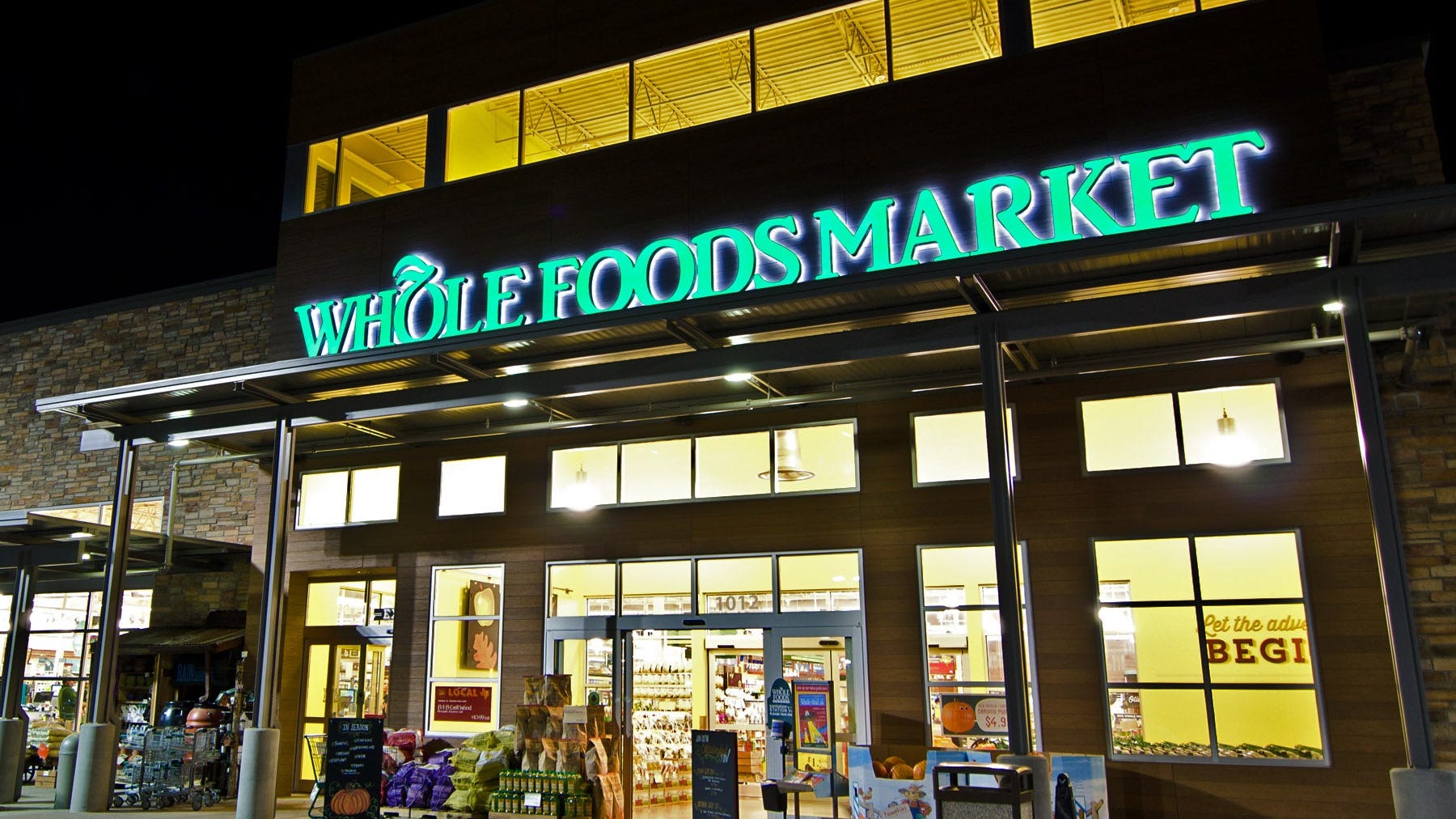
Workers say too little is being done to enforce social distancing in stores, and some are not given masks or training on cleaning.
Whole Foods workers across the US are planning to hold another sickout protest on 1 May, as the number of confirmed cases of coronavirus infections at the supermarket chain continues to rise and workers charge the Amazon-owned company is doing too little to help them.
Workers complain too little is being done to enforce social distancing in stores; it is difficult, and sometimes impossible, to qualify for sick pay; and some are not given masks or training on cleaning. In the meantime, Whole Foods is reportedly recording record sales.
Dan Steinbrook, an employee at Whole Foods in Boston, said: “The bottom line is we don’t think Whole Foods or Amazon is doing nearly enough as they could be to protect both employees and customers at the store in terms of personal safety and public health.”
Steinbrook, who also participated in a sickout protest on 31 March organized by Whole Worker, a worker activism group said: “Grocery stores are one of the only places open to the public so they’ve become a significant public health concern in terms of stopping the spread of this disease. Any transmission we can stop at the grocery stores is extremely important for saving a lot of lives.”
Whole Foods workers have become increasingly concerned over the confirmed cases of coronavirus at Whole Foods stores. Employees have tested positive for coronavirus at Whole Foods locations across the country including West Orange, New Jersey; Sudbury, Massachusetts; Brookline, Massachusetts; Arlington, Massachusetts; Hingham, Massachusetts; Cambridge, Massachusetts; San Francisco, California; New York City, New York; Fort Lauderdale, Florida; New Orleans, Louisiana; and Allentown, Pennsylvania.
The Guardian spoke to several Whole Foods workers across the US about working conditions and the company’s policies. The workers requested to remain anonymous for fear of retaliation.
“I haven’t felt safe going into work because Whole Foods hasn’t really done anything to combat the amount of Amazon shoppers in the stores,” said a Whole Foods employee at Bowery Place in New York City, the center of the coronavirus pandemic in the US. “The store has been closing earlier, but they still want us to stay until 11pm to clean, and we aren’t trained to clean or given masks or anything.”
Whole Foods workers have noted some stores where a worker has tested positive for coronavirus have yet to be publicly reported in the media.
“Team members are being told there was a deep clean overnight and not to worry,” said a Whole Foods worker in West Bloomfield, Michigan. “I’m scared to work. I have three immune sensitive people living in my house and I don’t want to get them sick, but I can’t lose my only income.”
A worker at Whole Foods in Chapel Hill, North Carolina, said there have been two positive cases at their store. “It has been almost impossible to maintain basic social distancing practices. We’ve seen huge sales ever since the outbreak and it’s been all hands on deck. As of 1 April, there were no limits on the number of customers allowed in at a given time,” said the employee.
In Minnesota, a Whole Foods employee is currently on unpaid leave after experiencing coronavirus symptoms when their roommate was advised by their doctor to self-quarantine.
“When I talked to my HR department they told me I would need to take a two week leave as well, but unless I test positive for Covid-19, I do not qualify for the ‘guaranteed two weeks paid time off’ corporate is saying they are offering,” said the worker. “Everyone knows tests are limited and unavailable to most people unless they are showing severe symptoms, and as retail workers, many of us cannot afford to go to the doctor unless we’re in desperate need of medical attention.”
A Whole Foods employee in Massachusetts is also currently taking unpaid leave after experiencing coronavirus symptoms.
“I’m in a situation where I can’t get tested or afford a doctor. At first I was told I wouldn’t be eligible for sick pay without a positive test. Later I was told that I might qualify, that pay was being disbursed on a case by case basis. My case has been pending for over a week with no response and I ran out of paid time off,” said the worker.
“My parents lent me money, so I’ll be able to finish quarantine and still afford groceries. Money was tight before bills were due, and those fears kept me from reaching out to a doctor. My symptoms were mild, but I don’t know what I would have done if they got serious.”
A Whole Foods spokesperson told the Guardian: “The safety of our team members and customers is our top priority and we are diligently following all guidance from local health and food safety authorities. We’ve been working closely with our store Team Members, and are supporting the diagnosed Team Members, who are in quarantine.
“Out of an abundance of caution, each of these stores performed an additional deep cleaning and disinfection, on top of our current enhanced sanitation measures. As we prioritize the health and safety of our customers and Team Members, we will continue to do the following to help contain the spread of Covid-19.”

In recent days, Labor Secretary Eugene Scalia, who has expressed concerns about unemployment insurance being too generous, has used his department’s authority over new laws enacted by Congress to limit who qualifies for joblessness assistance and to make it easier for small businesses not to pay family leave benefits. The new rules make it more difficult for gig workers such as Uber and Lyft drivers to get benefits, while making it easier for some companies to avoid paying their workers coronavirus-related sick and family leave.
“The Labor Department chose the narrowest possible definition of who qualifies for pandemic unemployment assistance,” said Andrew Stettner, a senior fellow at the Century Foundation who has spent two decades working on unemployment programs.
At the same time, frustrations have built among career staff at the Labor Department that the agency hasn’t ordered employers to follow safeguards, including the wearing of masks, recommended by the Centers for Disease Control and Prevention to protect workers. Two draft guidance documents written by officials at the Occupational Safety and Health Administration, part of the Labor Department, to strengthen protections for health-care workers have also not been advanced, according to two people with knowledge of the regulations granted anonymity to discuss the internal deliberations.
Scalia, a longtime corporate lawyer who is the son of the late Supreme Court justice Antonin Scalia, has emerged as a critical player in the government’s economic response to the pandemic. Nearly 17 million Americans have applied for unemployment insurance since President Trump declared a national emergency on March 13, and states are struggling to get their systems working to deliver $260 billion in new aid approved by Congress.
Democrats and some Republicans argue that the Labor Department needs to be more aggressive about disbursing money and technical assistance to states to shore up the unemployment insurance system. The department has released only half of $1 billion in administrative support for states that Congress approved almost a month ago.
Sen. Lindsay O. Graham (R-S.C.) said Thursday in an interview that he has talked to Scalia about the need to speed things up.
“You could have massive civil unrest if these systems cannot get checks out the door. We’re talking about 20 percent unemployment, maybe even more,” Graham said. “The application process is a nightmare. The state systems are failing.”
Graham said that Scalia has been responsive, but, “I don’t see any action being taken.”
Labor Department officials said Scalia is moving rapidly to help U.S. workers in an unprecedented time. They pointed to a poster and guidebook that OSHA released with steps companies “can take” to reduce worker risk of coronavirus exposure.
“Under Secretary Scalia’s leadership, in the last two weeks, the department has quickly released new rules and guidance for states, businesses, and individual Americans to help those in need of relief,” said Patrick Pizzella, deputy labor secretary. “The department has already distributed nearly $500 million in additional administrative funding to 39 states.”
Still, Scalia has made clear he is wary of taking an excessively lax approach to disbursing aid, an argument that he used to help win GOP support for recent legislation. Writing on Fox Business Network’s website on Monday, he warned that he does not want unemployed people to become addicted to government aid.
“We want workers to work, not to become dependent on the unemployment system,” Scalia wrote with Small Business Administration chief Jovita Carranza. “Unemployment is not the preferred outcome when government stay-at-home orders force temporary business shutdowns.”
On the day the $2 trillion package passed the Senate, Scalia spoke with Sens. Rob Portman (R-Ohio), Ben Sasse (R-Neb.) and Tim Scott (R-S.C.), who had raised concerns the law’s new unemployment benefits were too large and would deter workers from returning to jobs.
Scalia told conservative senators that once enacted, his agency would ensure the provisions his agency oversees would not hurt U.S. companies, according to three congressional officials aware of the conversations and granted anonymity to discuss the call.
Narrowing rules
Two recent laws passed by Congress expanded paid and sick leave policies as well as the size and scope of unemployment benefits for Americans. But worker advocates argue that as Scalia begins to implement these measures, his department is being much less generous toward workers than toward companies.
New Labor Department guidance says unemployment benefits apply to gig workers only if they are “forced to suspend operations,” which could dramatically limit options for those workers if their apps are still operating. Other workers also face a high hurdle to qualify for benefits.
The guidance says a worker “may be able to return to his or her place of employment within two weeks” of quarantining, and parents forced to stop work to care for kids after schools closed are not eligible for unemployment after the school year is over. Workers who stay home because they are older or in another high-risk group are also ineligible unless they can prove a medical professional advised them to stop working.
Some states are also having a difficult time figuring out how to verify how much money self-employed workers typically earn. It might require looking at tax documents, which unemployment offices don’t usually have access to.
“Some of the requirements, the standards that we’re being held to, are going to be incredibly difficult to adhere to,” Maine Labor Commissioner Laura Fortman said.
A Labor Department spokesperson said the agency is “providing as much technical assistance and IT support as possible” to states, some of which are using computer systems that are several decades old.
Scalia’s agency is also in charge of overseeing the new paid sick and family leave regulations, which apply to companies with fewer than 500 employees during the pandemic. The law gave the Labor Department authority to exempt businesses with under 50 employees from providing 12 weeks of paid family leave to care for a child out of school if the leave policy threatens to bankrupt the company.
Businesses that deny workers paid leave don’t have to send the government any paperwork justifying why. The Labor Department’s guidance asks companies to “retain such records for its own files,” a contrast with the heavy documentation required from gig workers who must prove they were affected by the coronavirus outbreak to get aid.
A Labor Department spokesperson said its rules on paid sick and family leave follow Congress’ direction.
“The department’s new rule balances allowing workers to take paid leave to care for their children with keeping small businesses open — as instructed by Congress,” a spokesperson said.
Tension at OSHA
Some Labor Department staffers and outside critics have also faulted Scalia for his handling of OSHA, which falls under his jurisdiction.
The CDC has issued recommendations for the public and businesses to follow practices such as social distancing and sanitizing workstations. OSHA could make those guidelines mandatory for all employers or for all essential employees but has not done so.
“Some of the OSHA staff is frustrated they can’t do more to protect workers. They want an emergency standard that would require employers to follow CDC guidelines,” said David Michaels, a George Washington University School of Public Health professor who served as assistant secretary of labor for occupational safety and health in the Obama administration.
Under Scalia, OSHA has also decided against issuing safety requirements to protect hospital and health-care workers, including rules that would mandate nurses and other providers be given masks and protective gear recommended by the CDC when at risk of exposure.
The union National Nurses United petitioned Scalia to increase the requirements during the pandemic, but a union spokeswoman said the Labor Department has not even acknowledged receipt of the letter.
Hospitals have resisted these rules for years. Tom Nickels, the chief lobbyist for the American Hospital Association, said that he hadn’t spoken to Scalia but that his group has opposed these actions in conversations with OSHA staff because widening the use of N95 respirator masks would be impractical. “The equipment is in short supply,” he said. “We can’t get it.”
OSHA also has not taken significant action to protect workers from retaliation when they speak out about dangerous conditions that expose them to coronavirus, Michaels said.
When workers at a manufacturing plant in northern Illinois tried alerting government officials about their concerns about working shoulder to shoulder, the regional OSHA official responded that “all OSHA can do is contact an employer and send an advisory letter outlining the recommended protective measures,” according to an email reviewed by The Washington Post. “This isn’t very helpful for you or your labor group, but it is the best I have to offer,” the email said.
On Wednesday, OSHA sent out a news release reminding companies that it is “illegal to retaliate against workers because they report unsafe and unhealthful working conditions during the coronavirus pandemic.”
“OSHA has completely abandoned their responsibility to protect workers on the job,” said Debbie Berkowitz, who worked at OSHA in the Obama administration and is now director of the worker safety and health program at the National Employment Law Project. “I have never felt this way, that every worker is at the mercy at their boss of whether they get protected. People are going to get sick and die, and they don’t have to.”
This week, Scalia said OSHA would take all worker safety concerns seriously.
“We are fielding calls from workers worried about their health and from workers who believe they have been illegally disciplined by their employer for expressing health concerns,” he said. “We will not tolerate retaliation.”

As I was writing the draft of this article, I was checking my symptoms and awaiting the results of a test I underwent for Covid-19. This virus has upended my life, as it has for every last one of us, no matter where we fall on the socio-economic scale.
But the consequences fall more heavily on those at the bottom end of the wage distribution. That includes those risking their health as they sell us groceries, check our vitals, and sanitize our hospitals. Easily lost amid the chaos, however, is how this crisis may be an opportunity to improve employee protections — and not temporarily but permanently.
During bull markets, employers and policymakers often paint the hardships befalling low-wage workers as stemming from those workers’ personal failures. But when markets crash, we learn how these workers’ troubles were indicative of persistent, system-wide weaknesses.
As Warren Buffett wrote of the insurance failures exposed by 1993’s Hurricane Andrew, “It’s only when the tide goes out that you learn who’s been swimming naked.” Pundits cite Buffet to refer to firms that appear healthy during bull markets, only to get eaten alive during downturns. This month, however, the markets exposed a new group of skinny dippers: a government and an economic system that fail workers, and employers who haven’t or can’t fill this gap in public policy.
In response to the novel coronavirus, the stock market has been mostly in a free fall since late February. The low-wage service sector is facing widespread layoffs. And the tumbling markets have uncovered other deep inequalities among workers, who fall into two groups: those with access to employment protections like affordable healthcare, remote work accommodations, paid time off, and job security — and those without.
This second group, which includes the working class, often lack healthcare or face high out-of-pocket expenses. There are nearly 24 million uninsured working-age adults in the United States. Those with only a high school diploma or who did not complete high school are the least likely to be insured. Moreover, racial and ethnic minority groups face significant barriers to “good jobs.” They form 60% of the uninsured population but only 40% of the total population.
A quarter of all U.S. workers have no access to paid sick leave. Work-from-home options are slim, but many can’t afford not to work. Among workers at the bottom 10th of the earnings distribution, only 31% have paid sick leave. For comparison, 94% of the top 10% of earners have paid sick leave.
While many professionals enjoy protections that can help them ride out the pandemic with their livelihoods and family’s health intact, workers in the low-wage service sector have few options or resources to stay home to care for themselves, let alone their loved ones. And that burden to provide care largely falls on women. The workers lacking healthcare and paid sick leave are also the most vulnerable to layoffs and lost hours. The fate of service workers in travel and food services indicate what’s to come. Similarly, gig economy workers, migrant laborers, and those in the informal economy are particularly vulnerable.
How did we get here? Since the late 1970s, executives have prioritized boosting dividends for shareholders over protecting their employees, whose work has been outsourced, digitized, and downsized. In our book, Divested: Inequality in the Age of Finance, Ken-Hou Lin and I show how this shift in corporate governance undermined workers’ bargaining power. Although insurance coverage increased from the Affordable Care Act, overall working conditions, protections, and pay have diminished.
A more robust safety net would help to mitigate the consequences for workers today as it shores up the economy against future downturns. For years, U.S. policymakers have considered universal healthcare impractical because of its large scope and high startup costs. But as new unemployment claims surge to historical levels and Americans face the medical precarity of a pandemic, this crisis has laid bare the underlying problem of linking healthcare to employment.
Sick leave and universal healthcare would ease the stressors workers face and ensure the sick have time to recover, making them more productive when they return to work. Without the costs of insuring workers, employers could pay more. An income boost would generate more spending and stimulate the economy.
Broader protections would also support the self-employed, contract workers, and prospective entrepreneurs. The United States has lower rates of self-employment (6.3%) than countries with universal healthcare (e.g., Spain has 16%), and a lower share of employment at small businesses than any OECD country except Russia. Reducing the reliance on big businesses would free workers to find jobs that better fit their skills, creating a more nimble and innovative economy.
The current moment provides an opportunity to make lasting changes to the status quo and improve conditions for all workers. As sociologists have theorized, crises and crashes expose cracks in the systems upholding inequality. And history provides a clue for how crises can provide opportunities to transform society in ways that reduce inequality. After the Great Crash of 1929, unemployment spiked, reaching 25% by 1933. In less than three years, Franklin D. Roosevelt’s New Deal reduced unemployment to 9%.The New Deal achieved this feat through a vast and broad range of public works and conservation projects.
The New Deal transformed American society — from erecting iconic buildings and statues, to saving the whooping crane, to developing the rural United States, to planting a billion trees. New Deal workers built and renovated 2,500 hospitals, 45,000 schools, and 700,000 miles of roads. The New Deal hired 60% of the unemployed, including 50,000 teachers and 3,000 writers and artists, such as Jackson Pollock and Willem de Kooning. The New Deal modernized, preserved, and employed the country, while reducing inequality between the haves and have-nots.
Facing a similar economic threat in the wake of the pandemic, we have a comparable once-in-a-century opportunity to make lasting changes that address the pressing problems of today, from inequality to climate change.
In today’s crisis, we could double down on the “trickle-down” approach of the 2008 financial crisis: stimulus to the banks, corporations, and their investors combined with tax cuts and temporary wage support as a short-term Band-Aid for immiserated workers. But Lin and I find that this approach left many workers flailing and worsened inequality, because the banks deposited, rather than invested, the stimulus funding and corporations borrowed the money to buy back their stocks, enriching top executives and shareholders.
Last week, the president signed into law a sweeping $2 trillion plan that combines money for states, loans for distressed businesses, and tax relief, paid leave, unemployment benefits, and cash for most citizens. But this plan only gives workers temporary benefits. Although the bill has stricter oversight and restricts buybacks, it is unlikely to reduce inequality unless it addresses the structural conditions making some workers more vulnerable.
While a New Deal approach may be infeasible amid a contagious virus, we can and should enact permanent policies protecting all workers. Sick leave and healthcare should be universal rights. We could adopt a “flexicurity” labor policy modeled on the Danish one. The Danes provide both flexibility for employers to hire and fire workers as needed and security for workers through generous benefits and retraining opportunities during unemployment.
Meanwhile, in my household, after 2.5 weeks of symptoms—from a dry cough to a tight chest to a low fever—my test results came back negative. Thanks to the healthcare and insurance provided by my employer, I will continue to do the work I care about.
While I am on the mend, the workers who sell our groceries, serve us food, clean our workplaces, and drive us to the doctor also need to take care. In this pandemic, they are risking their health and lives. And they deserve the same level of care as the people they serve: access to both preventative medicine and comprehensive treatment, and time to take a break, recover, and care for their loved ones. The coronavirus is our chance to extend these protections during times of crisis and far into the future.
https://www.yahoo.com/huffpost/amazon-fires-worker-chris-smalls-033240313.html
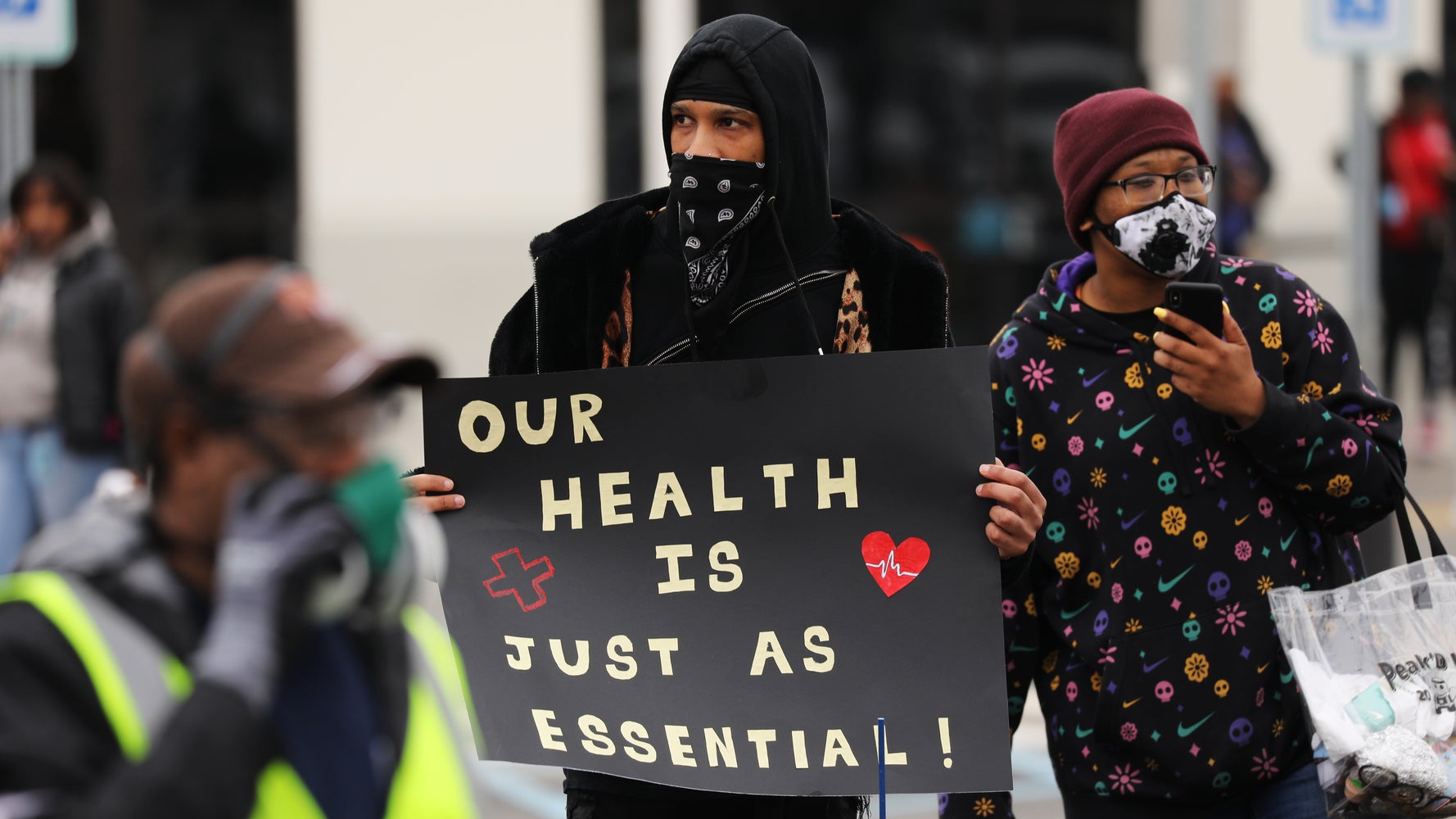
Amazon fired an employee who helped organize a walkout at one of its fulfillment centers over the company’s response to the ongoing coronavirus pandemic on Monday.
Chris Smalls, the employee who helped organize the demonstration, said he felt Amazon had failed to enact adequate measures to protect workers at the facility as many Americans turn to online shopping as stay-at-home mandates expand around the country. Smalls was one of a small group who walked out at a fulfillment center on Staten Island, demanding the company close the site and sanitize it before reopening. He said Amazon had notified employees at the warehouse of one confirmed case of the virus but claimed there were several others that hadn’t yet been reported.
Shortly after the strike, Smalls was terminated after working at Amazon for five years.
“Amazon would rather fire workers than face up to its total failure to do what it should to keep us, our families, and our communities safe,” Smalls said in a statement obtained by HuffPost. “I am outraged and disappointed, but I’m not shocked. As usual, Amazon would rather sweep a problem under the rug than act to keep workers and working communities safe.”
Amazon disputed Smalls’ account in a statement on Monday, saying he had been warned several times for “violating social distancing guidelines” and had been fired after failing to stay home. The company said Smalls’ claims were “simply unfounded.”
“He was also found to have had close contact with a diagnosed associate with a confirmed case of COVID-19 and was asked to remain home with pay for 14 days, which is a measure we’re taking at sites around the world,” a company spokesperson told HuffPost. “Despite that instruction to stay home with pay, he came onsite today, March 30, further putting the teams at risk. This is unacceptable and we have terminated his employment as a result of these multiple safety issues.”
The company also said just 15 employees out of 5,000 at its Staten Island location had participated in the demonstration.
“Our employees are heroes fighting for their communities and helping people get critical items they need in this crisis,” the spokesperson said. “Like all businesses grappling with the ongoing coronavirus pandemic, we are working hard to keep employees safe while serving communities and the most vulnerable.”
The Washington Post notes workers in at least 21 Amazon warehouses and shipping facilities in the U.S. have tested positive for the virus.
Employees at several other major companies staged walkouts on Monday. Workers at Instacart, the grocery delivery company, went on strike nationwide to demand better protections, including hazard pay and expanded paid sick leave. And employees at Whole Foods, owned by Amazon, said they planned to hold a nationwide “sick out” on Tuesday.
Workers at the Staten Island warehouse were first told last week that an employee had tested positive for the novel coronavirus, but they told HuffPost’s Emily Peck that business was “normal” and “running just as it had been” after the declaration. Others said they were afraid of getting sick at work, saying there wasn’t enough protection equipment on site, such as hand sanitizer or masks.
Amazon said it has extended a range of benefits to help protect workers during the pandemic, including extended paid leave options for some employees and increased health and safety measures. Employees diagnosed with COVID-19 are entitled to up to two weeks of paid leave, and Amazon says it notifies workers at sites with infected individuals.
The ongoing efforts by warehouse workers throughout the coronavirus pandemic have garnered support from several lawmakers. Rep. Alexandria Ocasio-Cortez (D-N.Y.) wrote Monday that the employees were simply “demanding dignity.”
“When people work an hourly job, it’s suggested in many ways that you‘re unimportant or expendable,” she wrote on Twitter. “Except you aren’t. Everyone deserves safe work, paid leave, & a living wage.”

Amazon warehouse workers in Staten Island, N.Y., and Instacart’s grocery delivery workers nationwide plan to walk off their jobs on Monday. They are demanding stepped-up protection and pay as they continue to work while much of the country is asked to isolate as a safeguard against the coronavirus.
The strikes come as both Amazon and Instacart have said they plan to hire tens of thousands of new workers. Online shopping and grocery home delivery are skyrocketing as much of the nation hunkers down and people stay at home, following orders and recommendations from the federal and local governments.
This has put a spotlight on workers who shop, pack and deliver these high-demand supplies. Companies refer to the workers as “heroes,” but workers say their employers aren’t doing enough to keep them safe.
The workers are asking for a variety of changes:
Workers at Amazon’s Staten Island facility have said that multiple people at the warehouse have been diagnosed with COVID-19. Some of them plan to walk off the job on Monday to pressure the company to close the warehouse for an extended deep cleaning.
At Amazon, which employs some 800,000 people, workers have diagnosed positively for COVID-19 in at least 11 warehouses, forcing a prolonged closure of at least one warehouse in Kentucky. The company says it has “taken extreme measures to keep people safe,” including allowing unlimited unpaid leave time for employees who feel uncomfortable working.
Amazon says its decision on whether to close a warehouse for cleaning or for how long depends on where the sick workers were in the building, for how long, how long ago and other assessments. The company has also temporarily raised its pay by $2 an hour through April.
Instacart’s army of grocery delivery workers are not employees, but independent contractors. They say the company has not provided them with proper protective items like disinfectants, hazard pay of an extra $5 per order and a higher default tip in the settings of the app.
Instacart on Sunday said it would distribute supplies, including hand sanitizer, to more workers and that it would change some tipping settings, but did not address paid sick leave for its contractors.
“Actions speak louder than words,” Instacart worker Sarah Polito told NPR. “You can tell us that we’re these household heroes and that you appreciate us. But you’re not actually, they’re not showing it. They’re not taking these steps to give us the precautions. They’re not giving us hazard pay.”
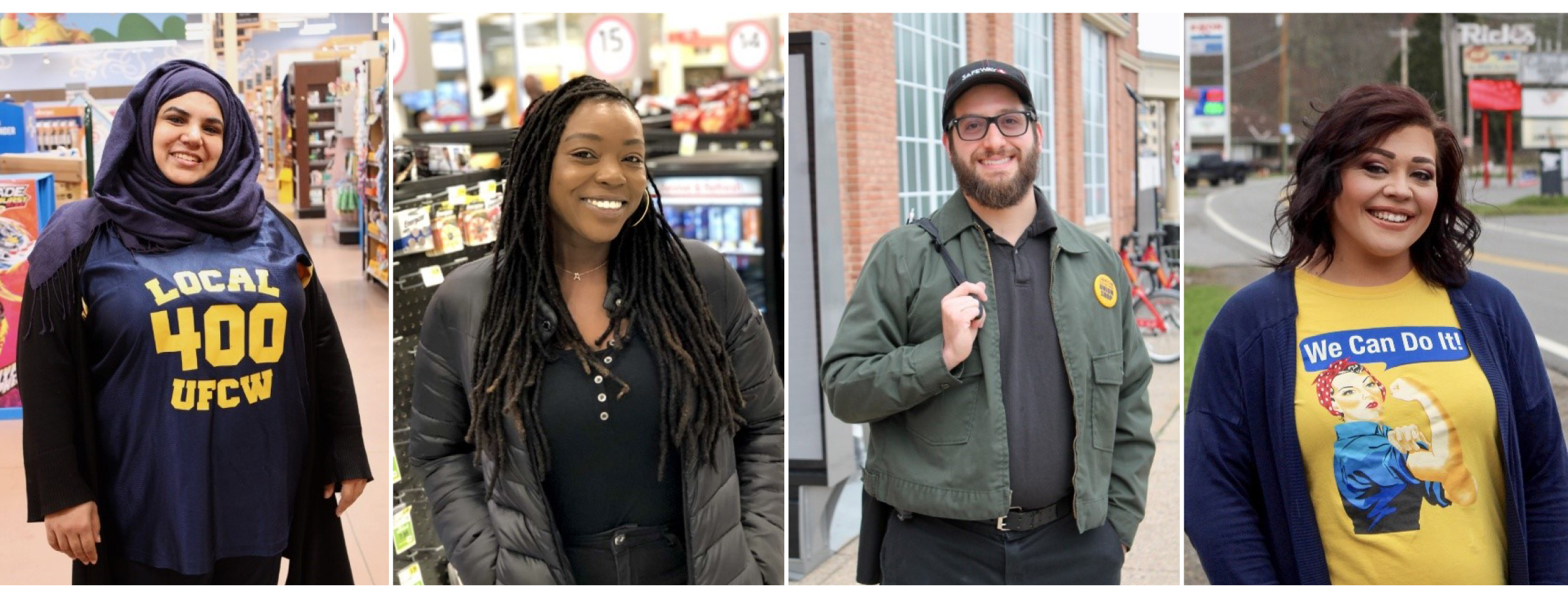
As worried Americans pack supermarket aisles in anticipation of quarantines and shelter-in-place orders, grocery workers like Courtney Meadows are working at a frantic pace to keep Americans fed and alive, and risking their own health in the process.
Meadows, a cashier at Kroger in Beckley, W.Va., said her store is the busiest she has seen it in 10 years on the job. “I have worked through snow scares, a blizzard, two derechos, holidays, anything that can impact a grocery store,” she told me. “This is the absolute worst I have seen it. It is a sea of people everywhere.”
Over the last week, I traveled to supermarkets across the Washington, D.C. region and interviewed workers from Virginia, Maryland, West Virginia and the District to hear—in their words—how COVID-19 is impacting them. These crowded stores I visited had few visible safeguards or protections for workers.
“We aren’t staying six feet away from the customers,” said Michelle Lee, a Safeway cashier in Alexandria, Va. “When we ring them up, they are like two feet away from us. We check out 200 customers a day. A doctor can wear a mask and protective gear. We don’t have all of that.”
Amber Stevens, a cashier at Shoppers in Prince George’s County, Md., expressed concern over social distancing as well. “I do still have a job to go to, but it isn’t helping me with social distancing because I am hands-on with customers,” she told me. “That is the scary part. Dealing with money, having to be so close to people.”
More than their own health, the grocery store employees I interviewed expressed the most concern about the safety of those around them: their loved ones at home, their elderly customers, their colleagues with underlying health conditions, and their neighbors in crowded apartment buildings. Several workers welled up with emotion as they described how hard it is to be unable to care for older relatives during the pandemic.
“All of that worry plus the stress of double the number of customers we normally have,” said Lisa Harris, a cashier at Kroger in Richmond, Va. “This isn’t just for one day. It is for weeks.”
As grocery workers put their lives on the line—often for low wages and few benefits—it is imperative that employers, policymakers, and even customers act with urgency to protect, support, and compensate them.
Employers need to implement immediate steps to reduce grocery workers’ exposure to COVID-19. First, employers should expand access to personal protective equipment (PPE) such as masks and gloves and end any restrictions on workers wearing them. While supplies of protective masks and gloves are extremely limited across the country, employers and policymakers should prioritize PPE for grocery workers as they become available. Employers should provide adequate cleaning supplies and hand sanitizer, regular opportunities for workers to wash their hands, and frequent equipment cleaning.
Second, stores should shorten hours and limit the number of customers at any given time. While several stores—including Trader Joe’s, Walmart, and Safeway—have limited store hours and introduced “senior only” hours, most stores are not following the CDC’s guidance of limiting gatherings to 50 people. Even tighter restrictions may be needed to keep workers safe as the virus spreads; for instance, some stores in China are checking customers’ temperatures before they enter the store.
Third, grocery stores should implement additional measures to protect workers and enforce safe spacing of customers. Albertsons, which owns Safeway and 19 other grocery chains, was the first major company to announce they will install plexiglass “sneeze-guard” barriers at checkouts in its 2,200 stores over the next two weeks. Walmart and Kroger have made similar commitments, and other grocery stores should follow.
Even in the absence of specific CDC guidelines for grocery workers, employers should act boldly and creatively to modify stores to keep workers safe, continuously adapt to evolving best practices, and respond to safety priorities identified by unions like the United Food and Commercial Workers International Union (UFCW), which represents over 1.2 million workers.
The coronavirus pandemic has put a harsh spotlight on the low wages that grocery workers earn for their life-saving work. At Kroger, the country’s second-largest grocery chain with 453,000 workers, the average hourly wage of cashiers is just $9.94 per hour, according to estimates on Indeed.com.
Lisa Harris, a Kroger cashier, described the financial hardships she and her low-wage colleagues face: “I have coworkers who stand all day serving people, and then have to go pay for their own groceries with food stamps. I am very lucky that my boyfriend works in pizza because that is our survival food. If we can’t afford to buy food, he brings home a pizza.”
Even in “normal” times, grocery workers—like other service and low-wage workers—deserve better wages. In these extreme times, adequately compensating them is even more imperative. As grocery sales soar and their stock prices rise, employers should provide additional compensation and hazard pay to their workers on the front line.
“I think that some pay increase would be wonderful,” Kroger cashier Courtney Meadows told me. “I don’t think they understand the toll that comes through in our lives. They don’t see it. They don’t see the panic on people’s faces.”
In response to the pandemic, the two largest grocery employers, Kroger and Walmart, have offered workers one-time bonuses of $300. Responding to pressure from the UFCW, Safeway and Shoppers are now offering an additional $2 per hour of hazard pay, while Whole Foods and Target are also raising pay $2 per hour.
These pay increases are an important start, but they don’t go far enough. The raises should be permanent, and enough to provide a family-sustaining wage to workers.
Now more than ever, paid sick leave and health insurance are critical for grocery workers. Well before the COVID-19 pandemic, hundreds of thousands of grocery workers didn’t receive paid sick leave from their employers. Responding to public outrage and pressure from employees and unions, most large employers now have updated their sick leave policy to respond to COVID-19. However, their policies don’t go far enough: They are temporary, focus narrowly on COVID-19, and are insufficient to meet the needs of workers.
Companies including Safeway, Kroger, and Walmart are now offering 14 days paid sick leave for workers with a confirmed COVID-19 diagnosis. But COVID-19 tests are in extremely short supply and many workers with suspected cases will be unable to get tested. Employers should modify paid leave policies to allow flexibility for ill workers to access the benefits even without a confirmed test, at least until testing is more widely available.
Policies should cover paid leave for grocery workers to care for their immediate family members or people they live with if they become ill. Employers should also compensate workers for any coronavirus-related medical bills that are not covered by their health insurance.
Employers should provide extra support to grocery workers who are especially high-risk, such as older workers and the immunocompromised. The most vulnerable workers may need to simply stay home during the pandemic and not work for weeks or months. Employers should do their part to ensure those workers have extended paid leave or other forms of adequate compensation and benefits, including health insurance.
A major concern for the workers I interviewed was the actions of individual customers that could jeopardize their health. Many workers noted that customers continue to come to their store even when they are sick.
“Some customers will come through the line and cough or sneeze in their hand,” said Safeway cashier Michelle Lee. “If you are sick, you should stay home or cough in their elbow.”
Customers should do their part by keeping a safe distance from workers at checkout and throughout the store, practicing proper hygiene when coughing or sneezing, and staying home when ill.
On March 15, Minnesota Governor Tim Walz made grocery store employees and food distribution personnel eligible for free child care by designating them as emergency workers. Four days later, Vermont’s Department of Public Safety added grocery workers to its list of essential personnel, giving them free child care at school-based centers set up by the state.
Other states should follow the lead of Minnesota and Vermont and designate grocery workers as emergency personnel, granting them the same protections and benefits as first responders and health workers.
“If we had an opportunity to get free child care, people like me could go in,” Matt Milzman, a 29-year-old Safeway cashier in Washington, D.C. and father of two small children, told me. “They need all the people they can. I am low risk and healthy. I would much rather me work than someone who is older with a million health problems.”
Grocery workers are among the true heroes of the pandemic, providing basic necessities to keep Americans alive, but also human comfort for their customers during an anxious time.
“I choose to be happy and positive,” cashier Courtney Meadows told me. “If you can talk and make someone laugh, that might be the only positive thing in their life that day. That is what I choose to do.”
We owe them not only our gratitude, but the protection, support, and compensation they deserve.
As the coronavirus pandemic exerts a tighter grip on the nation, critics of the Trump administration have repeatedly highlighted the administration’s changes to the nation’s pandemic response team in 2018 as a major contributor to the current crisis. This combines with a hiring freeze at the Centers for Disease Control and Prevention, leaving hundreds of positions unfilled. The administration also has repeatedly sought to reduce CDC funding by billions of dollars. Experts agree that the slow and uncoordinated response has been inadequate and has likely failed to mitigate the coming widespread outbreak in the U.S.
As a health policy expert, I agree with this assessment. However, it is also important to acknowledge that we have underfunded our public health system for decades, perpetuated a poorly working health care system and failed to bring our social safety nets in line with other developed nations. As a result, I expect significant repercussions for the country, much of which will disproportionately fall on those who can least afford it.
Spending on public health has historically proven to be one of humanity’s best investments. Indeed, some of the largest increases in life expectancy have come as the direct result of public health interventions, such as sanitation improvements and vaccinations.
Even today, return on investments for public health spending is substantial and tends to significantly outweigh many medical interventions. For example, one study found that every US$10 per person spent by local health departments reduces infectious disease morbidity by 7.4%.
However, despite their importance to national well-being, public health expenditures have been neglected at all levels. Since 2008, for example, local health departments have lost more than 55,000 staff. By 2016, only about 133,000 full-time equivalent staff remained. State funding for public health was lower in 2016-2017 than in 2008-2009. And the CDC’s prevention and public health budget has been flat and significantly underfunded for years. Overall, of the more than $3.5 trillion the U.S. spends annually on health care, a meager 2.5% goes to public health.
Not surprisingly, the nation has experienced a number of outbreaks of easily preventable diseases. Currently, we are in the middle of significant outbreaks of hepatitis A (more than 31,000 cases), syphilis (more than 35,000 cases), gonorrhea (more than 580,000 cases) and chlamydia (more than 1,750,000 cases). Our failure to contain known diseases bodes ill for our ability to rein in the emerging coronavirus pandemic.
Yet while we have underinvested in public health, we have been spending massive and growing amounts of money on our medical care system. Indeed, we are spending more than any other country for a system that is significantly underperforming.
To make things worse, it is also highly inequitable. Yet, the system is highly profitable for all players involved. And to maximize income, both for- and nonprofits have consistently pushed for greater privatization and the elimination of competitors.
As a result, thousands of public and private hospitals deemed “inefficient” because of unfilled beds have closed. This eliminated a significant cushion in the system to buffer spikes in demand.
At any given time, this decrease in capacity does not pose much of a problem for the nation. Yet in the middle of a global pandemic, communities will face significant challenges without this surge capacity. If the outbreak mirrors anything close to what we have seen in other countries, “there could be almost six seriously ill patients for every existing hospital bed.” A worst-case scenario from the same study puts the number at 17 to 1. To make things worse, there will likely be a particular shortage of unoccupied intensive care beds.
Of course, the lack of overall hospitals beds is not the most pressing issue. Hospitals also lack the levels of staffing and supplies needed to cope with a mass influx of patients. However, the lack of ventilators might prove the most daunting challenge.
While the U.S. spends trillions of dollars each year on medical care, our social safety net has increasingly come under strain. Even after the Affordable Care Act, almost 30 million Americans do not have health insurance coverage. Many others are struggling with high out-of-pocket payments.
To make things worse, spending on social programs, outside of those protecting the elderly, has been shrinking, and is significantly smaller than in other developed nations. Moreover, public assistance is highly uneven and differs significantly from state to state.
And of course, the U.S. heavily relies on private entities, mostly employers, to offer benefits taken for granted in other developed countries, including paid sick leave and child care. This arrangement leaves 1 in 4 American workers without paid sick leave, resulting in highly inequitable coverage. As a result, many low-income families struggle to make ends meet even when times are good.
I believe that the limitations of the U.S. public health response and a potentially overwhelmed medical care system are likely going to be exacerbated by the blatant limitations of the U.S. welfare state. However, after weathering the current storm, I expect us to go back to business as usual relatively quickly. After all, that’s what happened after every previous pandemic, such as H1N1 in 2009 or even the 1918 flu epidemic.
The problems are in the incentive structure for elected officials. I expect that policymakers will remain hesitant to invest in public health, let alone revamp our safety net. While the costs are high, particularly for the latter, there are no buildings to be named, and no quick victories to be had. The few advocates for greater investments lack resources compared to the trillion-dollar interests from the medical sector.
Yet, if altruism is not enough, we should keep reminding policymakers that outbreaks of communicable diseases pose tremendous challenges for local health care systems and communities. They also create remarkable societal costs. The coronavirus serves as a stark reminder.
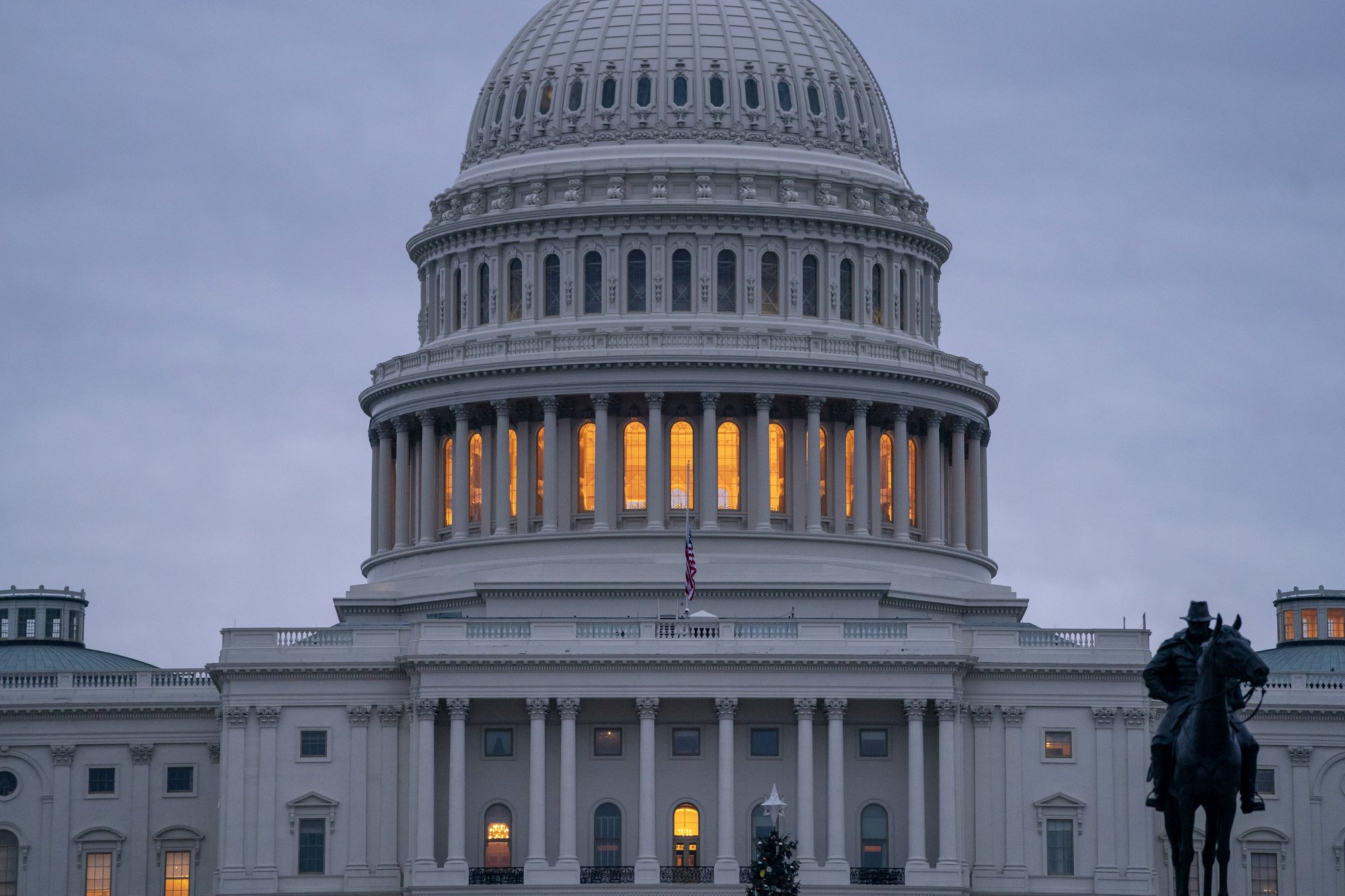
Speaker Nancy Pelosi (D-Calif.) and President Trump have struck a deal on a multibillion-dollar stimulus package aimed at assisting millions of Americans directly hurt by the coronavirus outbreak.
Pelosi announced the deal on Friday evening after days of roller-coaster negotiations that put the outcome in doubt, as the nation’s leaders raced to ease public anxiety and stabilize volatile markets. Trump said on Twitter that he looked forward to signing the legislation.
“I have directed the Secretary of the Treasury and the Secretary of Labor to issue regulations that will provide flexibility so that in no way will Small Businesses be hurt. I encourage all Republicans and Democrats to come together and VOTE YES!” Trump wrote in a series of tweets.
Just hours before the deal was announced, Trump said in a Rose Garden address that he wasn’t on board, suggesting a bipartisan deal was out of reach even as the number of cases in the U.S. approached 2,000.
And even after Pelosi’s announcement, there was widespread confusion across the Capitol about whether Trump had endorsed the package. Several GOP lawmakers said no agreement had been secured, and even House Majority Leader Steny Hoyer (D-Md.) suggested Friday evening that the talks were still in flux.
Yet Treasury Secretary Steven Mnuchin, who has been leading the negotiations with Pelosi, seemed to put the confusion to rest just before 8 p.m. when he told Fox Business that there was, in fact, a deal.
“We have an agreement that reflects what the president talked about in his speech the other night. He’s very focused on making sure that we can deal with the coronavirus,” he said.
The frantic, eleventh-hour talks that brought the sides together highlight the urgency facing leaders from both parties to take aggressive actions to contain the fast-moving virus, for reasons of both public health and national morale.
“As Members of Congress, we have a solemn and urgent responsibility to take strong, serious action to confront and control this crisis and to put Families First and stimulate the economy,” Pelosi wrote in a letter to Democratic members announcing the deal.
The deadly pandemic has roiled the stock market, upended small businesses and large industries alike, and cancelled major sporting and political events around the country. Millions of Americans could lose income — or their jobs entirely — due to mass public closures, work-from-home orders and the economic downturn sure to follow.
The agreement announced Friday aims to ease some of the economic stress by providing financial assistance to those most directly affected by the crisis, including unemployment and paid leave benefits. Perhaps more importantly, the deal aims to calm some of the public trepidation and market turmoil of recent weeks by demonstrating that Washington policymakers can put aside partisan differences and unite quickly behind an emergency response befitting — at least in rhetoric — the severity of the crisis.
On Friday, Pelosi and Mnuchin spoke no fewer than 13 times by phone as they neared an agreement, aides said.
To get there, they had to iron out a small handful of stubborn wrinkles that threatened to sink the entire package — disagreements that were finally resolved late Friday evening.
Republicans, for instance, had insisted on the inclusion of language, known as the Hyde Amendment, explicitly barring the use of federal funds for abortions. Democrats conceded and threw it in.
Republicans also balked at Democrats’ initial paid leave provision, which would have required employers to provide the benefit not only for the coronavirus, but for all future public health emergencies. The final compromise bill removed the permanent language, limiting the benefit to the current outbreak.
In addition, Republicans were concerned about the effects of the paid-leave expansion on small businesses. The final bill provides subsidies to businesses with 500 employees or fewer, Mnuchin said.
“Obviously, we expect the bigger corporations to pick up these costs,” he told Fox.
The deal comes on the heels of an initial $8.3 billion package, signed by Trump last week, that focused largely on the most immediate health concerns surrounding the crisis, including a boost in the nation’s efforts to locate victims, treat them and stop the spread of the deadly epidemic.
The second round of relief focuses more squarely on mitigating the economic fallout of the coronavirus, giving priority to those most directly affected by the outbreak.
House lawmakers are now set to vote on the bipartisan package late Friday night, before heading home for a 10-day break. The Senate has canceled its recess plans for next week and will take up the House-passed measure then.
The fast-moving events reflect the heightened urgency facing lawmakers as they try to assess the scope of the coronavirus and contain its economic fallout around the country and the world.
Early in the week, House leaders signaled they would pass a Democratic bill on Thursday and then leave town for their pre-scheduled 10-day recess, pushing the bipartisan negotiations to the week of March 23.
But leaders sped up their timeline for talks amid a chaotic 48-hour stretch that saw broad changes in American society.
Trump put sharp restrictions on travel from parts of Europe. The NBA and NHL suspended their seasons. The NCAA nixed March Madness. Disneyland shuttered its doors. Officials closed the U.S. Capitol to the public after a Hill staffer tested positive. One of America’s most beloved actors, Tom Hanks, and his wife Rita Wilson, announced they had tested positive for the virus. And the Dow Jones Industrial Average plunged roughly 15 percent over the course of two days, including Thursday’s 2,300-point drop, which marked its worst day in more than 30 years.
Also on Thursday, lawmakers in both chambers had been briefed behind closed doors by public health experts and other administration officials leading the coronavirus response. Many lawmakers emerged from those meetings exasperated that, weeks after the first case was diagnosed in the U.S., test kits have been slow to be analyzed and the number of cases remains anyone’s guess.
“There’s too many basic numbers that they don’t have,” said a frustrated Rep. Pramila Jayapal (D-Wash.), who represents much of hard-hit Seattle. “Lab capacity. It doesn’t matter how many kits are out there; if you don’t have the lab capacity to process those tests, then it means nothing.”
The crush of calamities put pressure on leaders of both chambers to roll up their sleeves and secure an agreement, prodded by vulnerable lawmakers wary of facing voters in their districts without doing so first.
While House and Senate Republicans had objected to the Democrats’ initial bill, Trump’s support for the revised package is likely to convince many Republicans in both chambers to get on board.
Central to the package are provisions to provide paid sick leave for affected workers; bolster unemployment insurance for those who lose their jobs as a result of the crisis; expand federal food aid for low-income families and children; and ensure free coronavirus testing.
Pelosi said Friday that it’s the last provision that’s the most crucial.
“We can only defeat this outbreak if we have an accurate determination of its scale and scope, so that we can pursue the precise, science-based response that is necessary,” she said.
 HENRY KOTULA