Employers seeking a “source of truth” for coronavirus guidance

https://mailchi.mp/f2774a4ad1ea/the-weekly-gist-may-22-2020?e=d1e747d2d8

What Is Truth? | Psychology Today

As states begin to reopen, employers need guidance to ensure safe, COVID-free operations, and are beginning to call local health systems for advice on how to manage this daunting task. Providing this support is uncharted territory for most systems, and they’re learning on the fly as they bring back shuttered outpatient services and surgery centers themselves. This week we convened leaders from across our Gist Healthcare membership to share ideas on how to assist employers in bringing businesses safely back online—and to discuss whether the pandemic might create broader opportunities for working with the employer community.

It’s no surprise some companies are hoping that providers can step in to test their full workforce, but as several systems shared, “Even if we thought that was the right plan, testing supplies and PPE are still too limited for us to deliver on it now.” Better to support businesses in creating comprehensive screening strategies (with some offering their own app-based solutions), coupled with a testing plan for symptomatic employees.

Health systems have been surprised by the hunger for information on COVID-19 among the business community. Hundreds of companies have registered for informational webinars, hosted by systems through their local chambers of commerce. They’re excited to receive distilled information on local COVID-19 impact and response. As one leader said, the system isn’t really creating new educational content, but rather summarizing and synthesizing CDC, state and local guidance.

Business leaders are looking for “a source of truth” from their local health system amid conflicting guidelines and media reports. Case in point: employers are asking about the need for antibody testing, having been approached by testing vendors and feeling pressure from employees. Guidance from system doctors provides a plain-spoken interpretation on testing utility (great for looking at a population, meaningless right now for an individual), and helps them make smarter decisions and educate their workforce.

Health systems are hopeful that helping employers through the coronavirus crisis will lay the foundation for longer-term partnerships with employers, allowing them to continue to provide benefits through lower cost, coordinated care and network options. 

Timing is critical, and it may be smaller businesses that have the ability to change more quickly. Large companies have mostly locked in their benefits for 2021, whereas many mid-market businesses are looking for alternative options now.

Worksite health, telemedicine, and direct primary care arrangements are all on the table. One system surveyed local brokers and employers and found that 20 percent of mid-market employers are open to narrow-network partnerships. “The number seems low,” they reported, “but it’s up from five percent last year, a huge jump.” For systems seeking direct partnerships with employers, there’s a window of opportunity right now to find those businesses committed to continuing to offer benefits, who are looking for a creative, local alternative—and to get that first Zoom meeting on the calendar.


Mask shortage for most health-care workers extended into May, Post-Ipsos poll shows

https://www.washingtonpost.com/health/mask-shortage-for-most-health-care-workers-extended-into-may-post-ipsos-poll-shows/2020/05/20/1ddbe588-9a21-11ea-ac72-3841fcc9b35f_story.html?fbclid=IwAR3rcjsPTuDjJODTBeJTRCqqJ4RbMTmWTih5jP91Vy9pn_S4NzWcVErobbY&utm_campaign=wp_main&utm_medium=social&utm_source=facebook

Feds uncover an alleged scheme to fraudulently sell 39 million N95 ...

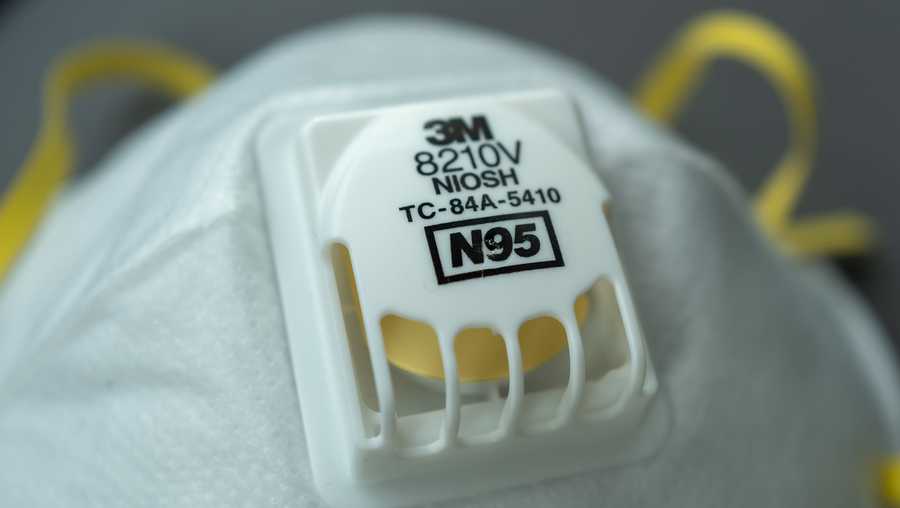
Front-line health-care workers still experienced shortages of critical equipment needed for protection from the coronavirus into early May — including nearly two-thirds who cited insufficient supplies of the face masks that filter out most airborne particles, according to a Washington Post-Ipsos poll.

More than 4 in 10 also saw shortages of less protective surgical masks and 36 percent said their supply of hand sanitizer was running low, according to the poll. Roughly 8 in 10 reported wearing one mask for an entire shift, and more than 7 in 10 had to wear the same mask more than once.

The dire shortage of personal protective equipment for health-care workers emerged in March as one of the earliest signals of the country’s lack of preparation for the coronavirus pandemic. Nurses and others have said they were forced to put their own health at risk caring for highly infectious patients because they lacked adequate supplies, in particular N95 masks, which filter out 95 percent of airborne particles.

Image without a caption

State governments and medical facilities went to extraordinary lengths to obtain, preserve, sanitize and reuse masks designed to be disposed after a single use if necessary. Health authorities asked a frightened public not to worsen the shortage by snapping them up.

The Post-Ipsos poll may provide the clearest nationwide measure to date of the shortages during those weeks, when the virus surged through parts of the country, overwhelming some hospitals in New York City and placing others across the nation under tremendous strain. The survey interviewed a national sample of 8,086 U.S. adults, including 278 people who work with patients in health-care settings, such as doctors’ offices, clinics, hospitals and nursing homes. The poll was conducted from April 27 to May 4; results among health workers have a 6.5-point margin of sampling error.

“Covid hit like a tidal wave. We went from nothing to insanity,” said Ronnie Dubrowin, a certified nurse midwife from Connecticut who responded to the poll. “It was like one week no one had heard of this disease and the next week everybody had it.”

Dubrowin, who sees obstetric patients in two hospitals and one office setting, said masks were in such short supply during the early days of the outbreak that she resorted to heating hers in an oven to kill the virus.

“Getting protective gear was difficult for everybody,” Dubrowin said. “It became a mission of so many people in hospital settings to get protective gear for their employees.”

Despite shortages, 75 percent of the health-care workers said their employer was doing enough to ensure their safety. They also gave high marks to state officials, with 71 percent approving of their governor’s handling of the crisis.

They had much less confidence in President Trump. A 59 percent majority disapproved of his handling of the coronavirus pandemic, while 41 percent approved.

Nearly a third of health workers said they believe restrictions were being lifted too quickly in late April and early May. A slim majority, 53 percent, said state governments are handling the pandemic about right, and 15 percent felt restrictions are not being lifted quickly enough. Those views are roughly similar to those of the general public, as are the ratings of Trump and governors.

Long Vinh, a pediatrician who works in the neonatal intensive care units at two San Francisco-area hospitals, said at the beginning of the outbreak some steps were taken to preserve masks, out of fear there might be a shortage. Now, he says there are no shortages of masks, gowns or other protective equipment at those hospitals: California Pacific Medical Center and Mills-Peninsula Medical Center.

“I really feel that being in the Bay Area, we were blessed and fortunate to have both a wealth of hospital capacity and resources and political leadership that took the crisis seriously,” he said.

Vinh said that while he had some concerns of an overall shortage early on, “I never felt like I was put into a situation where I might have a covid exposure where I wouldn’t have all the protection I need.”

The survey showed that more than 7 in 10 health-care workers expressed concern about exposing members of their household to the virus after coming in contact with it at work, and roughly half were regularly changing out of clothing before entering their homes. About a third said someone at their workplace has been infected by the coronavirus. A 58 percent majority said it is likely they have been exposed at work.

One woman, who works in a small, residential mental-health treatment center in Minnesota, said she and other workers are not provided masks, though they are seeing adults who come from hospitals and elsewhere and who could be infected.

The woman, a counselor who spoke on the condition of anonymity to discuss decisions made by her employer, said she is concerned about bringing the virus home to her young child.

“We have some capacity to social-distance . . . but with the size of our facility and the office space availability, I’d say 80 percent of the time that’s not possible,” she said.

More than three-quarters of health workers felt that people appreciated their efforts, and a similar proportion said someone has thanked them for their work since the outbreak began.

Just over 1 in 10, or 12 percent, of health-care workers said they do not have health insurance themselves. More than 6 in 10 have paid sick leave, though over 3 in 10 do not and the rest were not sure.

And the financial outlook for many is shaky. Nearly half of health-care workers, 48 percent, were at least somewhat concerned about paying their bills.

The Post-Ipsos poll was conducted through Ipsos’s KnowledgePanel, a large online survey panel recruited through random sampling of U.S. households.


Trump faces criticism over lack of national plan on coronavirus

Trump faces criticism over lack of national plan on coronavirus
COVID-19 National Health Plan – Primary Care – Central Patient ...

The Trump administration is facing intense criticism for the lack of a national plan to handle the coronavirus pandemic as some states begin to reopen.

Public health experts, business leaders and current administration officials say the scattershot approach puts states at risk and leaves the U.S. vulnerable to a potentially open-ended wave of infections this fall.

The White House has in recent days sought to cast itself as in control of the pandemic response, with President Trump touring a distribution center to tout the availability of personal protective equipment and press secretary Kayleigh McEnany detailing for the first time that the administration did have its own pandemic preparedness plan.

Still, the White House lacks a national testing strategy that experts say will be key to preventing future outbreaks and has largely left states to their own devices on how to loosen restrictions meant to slow the spread of the virus. Trump this week even suggested widespread testing may be “overrated” as he encouraged states to reopen businesses.

The Centers for Disease Control and Prevention (CDC) on Thursday night issued long-awaited guidance intended to aid restaurants, bars and workplaces as they allow employees and customers to return, but they appeared watered down compared to previously leaked versions.

Some experts said the lack of clear federal guidance on reopening could hamper the economic recovery. 

“A necessary condition for a healthy economy is a healthy population. This kind of piecemeal reopening with everyone using different criteria for opening, we’re taking a big risk,” said Mark Zandi, chief economist at Moody’s Analytics.

The lack of coherent direction from the White House was driven home this week by damaging testimony by a former top U.S. vaccine official who claims he was ousted from his post improperly.

“We don’t have a single point of leadership right now for this response, and we don’t have a master plan for this response. So those two things are absolutely critical,” said Rick Bright, who led the Biomedical Advanced Research and Development Authority until he was demoted in late April.

The U.S. faces the “darkest winter in modern history” if it does not develop a more coordinated national response, Bright said. “Our window of opportunity is closing.”

From the start, the White House has let states chart their own responses to the pandemic.

The administration did not issue a nationwide stay-at-home order, resulting in a hodgepodge of state orders at different times, with varying levels of restrictions.

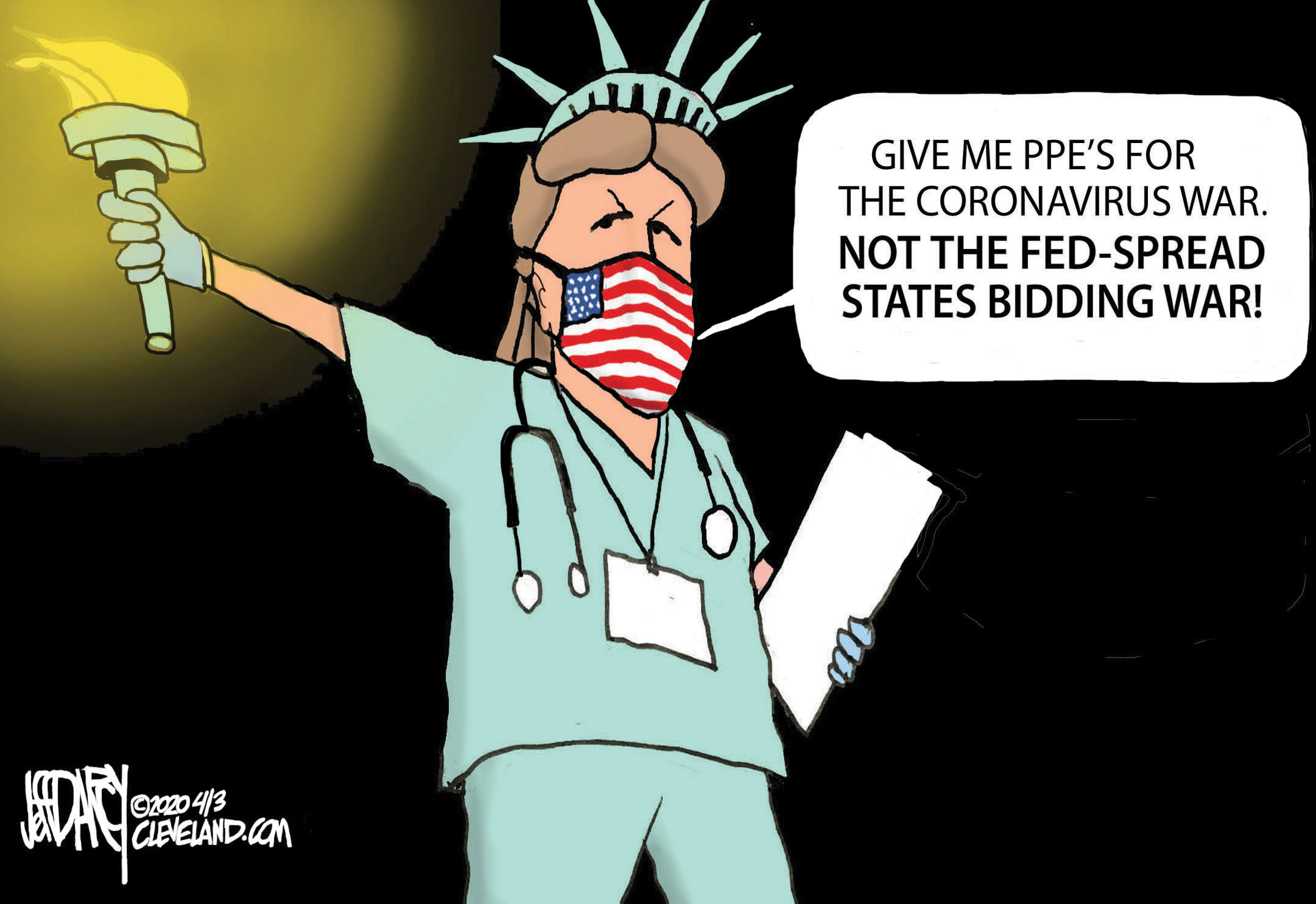
Facing a widespread shortage, states were left to procure their own personal protective equipment, ventilators and testing supplies. Trump resisted using federal authority to force companies to manufacture and sell equipment to the U.S. government.

Without clear federal guidance, state officials were competing against each other and the federal government, turning the medical supply chain into a free-for-all as they sought scarce and expensive supplies from private vendors on the commercial market.

“The fact that we had questions about our ability to have enough mechanical ventilators, and you had states basically bidding against each other, trying to secure personal protective equipment …  it shouldn’t be happening during a pandemic,” said Amesh Adalja, a senior scholar at the Johns Hopkins University Center for Health Security.

Internally, the administration struggled to mount a unified front as various agencies jockeyed for control. Multiple agencies have been providing contradictory instructions.

At first, Department of Health and Human Services (HHS) Secretary Alex Azar led the White House coronavirus task force.

Roughly a month, later he was replaced by Vice President Pence. The Federal Emergency Management Agency (FEMA) was later tasked with leading the response to get supplies to states, while senior White House adviser Jared Kushner led what has been dubbed a “shadow task force” to engage the private sector. Now, FEMA is reportedly winding down its role, and turning its mission back over to HHS.

The CDC has been largely absent throughout the pandemic. Director Robert Redfield has drawn the ire of President Trump as well as outside experts, and he has been seen infrequently at White House briefings.

“I think seeing the nation’s public health agency hobbled at a time like this and looking over its shoulder at its political bosses is something I hoped I would never see, and I’ve been working with the CDC for over 30 years,” said Lawrence Gostin, a professor of public health at Georgetown University.

“I think that people will die because the public health agency has lost its visibility and its credibility and that it’s being politically interfered with,” he added.

The administration recently has taken some steps to improve on the initial response to the pandemic.

Ventilator production has increased, and the U.S. is no longer seeing a shortage of the devices. 

Testing has improved dramatically as well, though experts think the U.S. needs to be testing thousands of more people per day before the country can reopen.

The administration also unveiled plans to expand the Strategic National Stockpile’s supply of gowns, respirators, testing supplies and other equipment, after running out of supplies early in the pandemic.

Adalja said the administration’s positive steps are coming way too late. 

“It’s May 15, we should have been in this position January 15,” he said.

McEnany on Friday for the first time detailed the White House’s preparedness plan that replaced the Obama-era pandemic playbook, an acknowledgement that Trump’s predecessor did leave a road map, despite claims to the contrary from some of the president’s allies.

She did not give many specifics on the previously unknown plan. Instead, McEnany declared the Trump administration’s handling of the virus had been “one of the best responses we’ve seen in our country’s history.”

Yet as states look to reopen businesses and get people back to work, the White House is taking a back seat as governors set their own guidelines for easing stay-at-home orders and restrictions on social activities.

The White House in April issued a three-step plan for states to reopen their economies, but it has largely been ignored by states and by the president.

Dozens of governors have begun easing restrictions on businesses and social activities without meeting the White House guidelines. Trump has been urging them to move even faster, backing anti-lockdown protesters in Michigan, Virginia, Minnesota and Pennsylvania.

Even scaled-down guidance from federal agencies is critical for providing a road map for state and local leaders, and for businesses considering how best to resume operations, said Neil Bradley, chief policy officer with the U.S. Chamber of Commerce.

“We need guidance because it helps instill confidence about the right types of approaches to take, but when you begin to move away from guidance and into either regulations or very strict approach, then that’s increasingly going to be unworkable in lots of different locations,” Bradley said.


Rick Bright, ousted director of vaccine agency, warns that administration lacks ‘centralized, coordinated plan’

https://www.cnn.com/2020/05/14/politics/coronavirus-whistleblower-testimony/index.html?fbclid=IwAR0KfVp-njw8vqKFdaLbBC4r4NAx3KeS4rFg2vmFbSneW7PcqOwVYult9rc

Virus whistleblower tells lawmakers US lacks vaccine plan | Where ...

Rick Bright, the ousted director of a crucial federal office charged with developing countermeasures to infectious diseases, testified before Congress on Thursday that the US will face an even worse crisis without additional preparations to curb the coronavirus pandemic.

“Our window of opportunity is closing,” Bright said. “Without better planning, 2020 could be the darkest winter in modern history.”
Bright criticized the Trump administration for failing to implement a “standard, centralized, coordinated plan” to combat the virus and questioned its timeline for a vaccine. His testimony came a week after filing a whistleblower complaint alleging he was fired from his job leading the Biomedical Advanced Research and Development Authority for opposing the use of a drug frequently touted by President Donald Trump as a potential coronavirus treatment.
About an hour before Bright’s hearing, Trump tweeted that he had “never met” or “even heard of” Bright, but considers the NIH senior adviser a “disgruntled employee, not liked or respected by people I spoke to and who, with his attitude, should no longer be working for our government!”
Before the House Committee on Energy and Commerce’s health subcommittee, Bright urged the Trump administration to consider a number of actions, including increasing production of essential equipment and establishing both a national test strategy and a national standard of procurement of supplies. He calls on top officials to “lead” through example and wear face coverings and social distance.
Bright claimed that the administration missed “early warning signals” to prevent the spread of the virus. He said that he would “never forget” an email from Mike Bowen, the hearing’s other witness and the vice president of the medical supply company Prestige Ameritech, indicating that the US supply of N95, the respirator masks used by health care professionals, was at a perilous level.
“He said, ‘We’re in deep shit,'” testified Bright. “‘The world is.'”
Bright said he “pushed” that warning “to the highest levels” he could at Health and Human Services but received “no response.”
“From that moment, I knew that we were going to have a crisis for health care workers because we were not taking action,” said Bright. “We were already behind the ball.”
In his written statement, Bright blamed the leadership of HHS for being “dismissive” of his “dire predictions.” Bright wrote that he knew the US had a “critical shortage of necessary supplies” and personal protective equipment during the first three months of the year and prodded HHS to boost production of masks, respirators, syringes and swabs to no avail. He alleged that he faced “hostility and marginalization” from HHS officials after he briefed White House trade adviser Peter Navarro and members of Congress “who better understood the urgency to act.”
And he charged that he was removed from his post at BARDA and transferred to “a more limited and less impactful position” at NIH after he “resisted efforts to promote” the “unproven” drug chloroquine.
A Department of Health and Human Services spokesperson responded that it was “a personnel matter that is currently under review” but said it “strongly disagrees with the allegations and characterizations.”
Bright is seeking to be reinstated to his position as the head of BARDA. The Office of Special Counsel, which is reviewing Bright’s complaint, has determined that was a “substantial likelihood of wrongdoing” in removing him from his post, according to Bright’s attorneys.
Rep. Anna Eshoo, a California Democrat and the panel’s chairwoman, said Bright “was the right person, with the right judgment, at the right time.”
“We can’t have a system where the government fires those who get it right and reward those who get it completely wrong,” added Eshoo.
In his testimony, Bright also cast doubt on the Trump administration’s goal of manufacturing a vaccine in 12 to 18 months as overly optimistic, calling it “an aggressive schedule” and noting that it usually takes up to 10 years to make a vaccine.
“My concern is if we rush too quickly, and consider cutting out critical steps, we may not have a full assessment of the safety of that vaccine,” Bright said. “So, it’s still going to take some time.”
Some Republicans on the subcommittee said that the hearing shouldn’t have been held at all.
Rep. Michael Burgess of Texas, the top Republican on the panel, said “every whistleblower needs to be heard,” but added the hearing was “premature” and a “disservice” to the Special Counsel’s investigation since Bright’s complaint was filed only a week ago.
And Republican Rep. Richard Hudson of North Carolina claimed that the hearing was not about the whistleblower complaint but “undermining the Administration during a national and global crisis.”
Thursday’s subcommittee meeting comes two days after a blockbuster hearing in the Senate that featured Dr. Anthony Fauci, who leads the National Institute of Allergy and Infectious Diseases. Fauci said that access to a vaccine in time for the fall school year would be “a bit of a bridge too far” and warning against some schools opening too soon, which Trump later called “not an acceptable answer.”
Fauci testified from his modified quarantine at home since he had made contact with a White House staffer who tested positive. But Bright appeared masked and in-person for his hearing on Capitol Hill, as did the lawmakers who questioned him. Many members of the House have steered clear of Capitol Hill since the onset of the outbreak, although they are expected to return on Friday to vote on a multi-trillion dollar Democratic bill responding to the crisis.


Cartoon – Current State of the Union

This Week's Cartoons: Coronavirus, Social Media, and Social ...

Cartoon – The Coronavirus War

Coronavirus first responders now the frontline in two wars: Darcy ...

Trump Moves to Replace Watchdog Who Identified Critical Medical Shortages

Trump Moves to Replace Watchdog Who Identified Critical Medical ...

The president announced the nomination of an inspector general for the Department of Health and Human Services, who, if confirmed, would replace an acting official whose report embarrassed Mr. Trump.

President Trump moved on Friday night to replace a top official at the Department of Health and Human Services who angered him with a report last month highlighting supply shortages and testing delays at hospitals during the coronavirus pandemic.

The White House waited until after business hours to announce the nomination of a new inspector general for the department who, if confirmed, would take over for Christi A. Grimm, the principal deputy inspector general who was publicly assailed by the president at a news briefing three weeks ago.

The nomination was the latest effort by Mr. Trump against watchdog offices around his administration that have defied him. In recent weeks, he fired an inspector general involved in the inquiry that led to the president’s impeachment, nominated a White House aide to another key inspector general post overseeing virus relief spending and moved to block still another inspector general from taking over as chairman of a pandemic spending oversight panel.

Mr. Trump has sought to assert more authority over his administration and clear out officials deemed insufficiently loyal in the three months since his Senate impeachment trial on charges of abuse of power and obstruction of Congress ended in acquittal largely along party lines. While inspectors general are appointed by the president, they are meant to be semiautonomous watchdogs ferreting out waste, fraud and corruption in executive agencies.

The purge has continued unabated even during the coronavirus pandemic that has claimed about 65,000 lives in the United States. Ms. Grimm’s case in effect merged the conflict over Mr. Trump’s response to the outbreak with his determination to sweep out those he perceives to be speaking out against him.

Her report, released last month and based on extensive interviews with hospitals around the country, identified critical shortages of supplies, revealing that hundreds of medical centers were struggling to obtain test kits, protective gear for staff members and ventilators. Mr. Trump was embarrassed by the report at a time he was already under fire for playing down the threat of the virus and not acting quickly enough to ramp up testing and provide equipment to doctors and nurses.

“It’s just wrong,” the president said when asked about the report on April 6. “Did I hear the word ‘inspector general’? Really? It’s wrong. And they’ll talk to you about it. It’s wrong.” He then sought to find out who wrote the report. “Where did he come from, the inspector general? What’s his name? No, what’s his name? What’s his name?”

When the reporter did not know, Mr. Trump insisted. “Well, find me his name,” the president said. “Let me know.” He expressed no interest in the report’s findings except to categorically reject them sight unseen.

After learning that Ms. Grimm had worked during President Barack Obama’s administration, Mr. Trump asserted that the report was politically biased. In fact, Ms. Grimm is not a political appointee but a career official who began working in the inspector general office late in President Bill Clinton’s administration and served under President George W. Bush as well as Mr. Obama. She took over the office in an acting capacity when the previous inspector general stepped down.

Mr. Trump was undaunted and attacked her on Twitter. “Why didn’t the I.G., who spent 8 years with the Obama Administration (Did she Report on the failed H1N1 Swine Flu debacle where 17,000 people died?), want to talk to the Admirals, Generals, V.P. & others in charge, before doing her report,” he wrote, mischaracterizing the government’s generally praised response the 2009 epidemic that actually killed about 12,000 in the United States. “Another Fake Dossier!”

To take over as inspector general, Mr. Trump on Friday night named Jason C. Weida, an assistant United States attorney in Boston. The White House said in its announcement that he had “overseen numerous complex investigations in health care and other sectors.” He must be confirmed by the Senate before assuming the position.

Among several other nominations announced on Friday was the president’s choice for a new ambassador to Ukraine, filling a position last occupied by Marie L. Yovanovitch.

Ms. Yovanovitch was ousted a year ago because she was seen as an obstacle by the president’s advisers as they tried to pressure the government in Kyiv to incriminate Mr. Trump’s Democratic rivals. That effort to solicit political benefit from Ukraine, while withholding security aid, led to Mr. Trump’s impeachment largely along party lines in December.

Mr. Trump selected Lt. Gen. Keith W. Dayton, a retired 40-year Army officer now serving as the director of the George C. Marshall European Center for Security Studies in Germany. Mr. Dayton speaks Russian and served as defense attaché in Moscow. More recently, he served as a senior United States defense adviser in Ukraine appointed by Jim Mattis, Mr. Trump’s first defense secretary.


Healthcare CFOs weigh-in on the challenges ahead

https://www.pwc.com/us/en/library/covid-19/pwc-covid-19-cfo-pulse-survey.html

What CFOs think about the economic impact of COVID-19

How finance leaders see a return to work

Business perspectives on what it will take to shift from crisis mode are solidifying. US finance leaders are focused on shoring up financial positions, as US businesses head into a period of even more operational complexity while they orchestrate a safe return to the workplace. Back-to-work playbooks put workforce health first, as companies set course for a phased-in return to the workplace that will not be uniform across the US or internationally, findings from the survey show. Returning employees and customers are going to experience a work environment that will differ in marked ways as a result. Another change likely to endure post-crisis is the strong role corporate leaders have taken within their communities, placing a renewed emphasis on environmental, social and governance (ESG) efforts going forward.

The actions CFOs are taking show how US businesses continue to adjust to very difficult current conditions with an eye toward an evolving post-COVID world. The level of concern related to the crisis is holding steady. It is high but stabilizing, with 72% of respondents reporting that COVID-19 has the potential for “significant impact” to their business operations vs. 74% two weeks ago.

Key findings

Back-to-work playbooks reshape how jobs performed
49% say remote work is here to stay for some roles, as companies plan to alternate crews and reconfigure worksites.

Protecting people top of mind
77% plan to change safety measures like testing, while 50% expect higher demand for enhanced sick leave and other policy protections.

Substantive impacts expected in 2020 results
Half of all respondents (53%) are projecting a decline of at least 10% in company revenue and/or profit this year.

Cost pressures intensify
A third (32%) expect layoffs to occur, as CFOs continue to target costs, while 70% consider deferring or canceling planned investments.

Economic events shaping CFO response last week

This survey, our fourth since emergency lockdowns took effect in the US, reflects the views of 305 US finance leaders during the week of April 20. It was a week when oil futures traded below $0 as energy markets confronted downshifting global demand, Congress replenished emergency funding of $480 billion for small firms and healthcare systems, and everyone heard the call to get ready to go back to work as the US and Europe firmed up plans to ease quarantines.

Post-crisis world taking shape in plans to reboot the workplace

Health and safety are top priorities for leaders as they prepare to bring people back to on-site work. More than three-quarters (77%) are putting new safety measures in place, while others are taking steps to promote physical distancing, such as reconfiguring workspaces (65%). Findings also show where the virus may have longer-lasting impact on ways of working. Half (49%) of companies say they’re planning to make remote work a permanent option for roles that allow. That’s even higher (60%) among financial services organizations.

Takeaways

Among the small percentage of companies that are beginning to bring people back, returning to work will not mean a return to normal. Companies should consider how to help frontline managers lead with empathy, to communicate transparently and make decisions quickly so employees understand where they stand, have access to the resources available to them, and can share feedback to ensure they feel safe and get what they need. Tools such as workforce location tracking and contact tracing can help support employees with suspected or confirmed infections, while also helping to identify the level of risk exposure. Companies looking to make remote work a permanent option will need to enable leaders to manage a blended workforce of on-site and remote workers during the next 12 to 18 months.

Given that many people may be wary of returning to on-site work, there’s an opportunity for companies to create more targeted benefits to help make the transition easier. Paid sick leaves and worker protections, help with childcare, private transportation to and from work, or other benefits could help employees who may need extra flexibility or who want additional support as they prepare to come back.

Forecasting substantive impacts on 2020 performance

A majority of respondents (80%) continue to expect a decline in revenues and/or profits in 2020. Projections by sector vary, with consumer markets likely the hardest hit: one-third (32%) of CFOs expect a 25% or greater decline in revenues and/or profits this year, compared to 24% of respondents in all sectors.

Takeaways

Outlooks for financial results have held relatively steady in the survey over the last month, and are probably indicative of actual impact. Companies have had the time to evaluate the effects. CFO projections for declining revenue and profits coincide with a widening realization that the US economy is in recession. Since mid-March, jobless claims have soared past 26 million, and Congress passed relief packages of $2.5 trillion. CFOs are evaluating a wide range of scenarios that cover the health situation, the shape of the economic recovery, the spillover into the financial markets, and the resulting impacts on their business. This crisis is setting a new benchmark standard for “unknowable.”

Cost pressures intensifying

CFOs are considering additional ways to scale back on planned investment and/or other fixed costs amid volatility in demand. A third (32%) expect layoffs to occur in the next month, up from 26% two weeks ago. Protecting cash and liquidity positions is paramount. Financial impacts of COVID-19, including effects on liquidity and capital resources, remain the top concern of CFOs (71%). Over half (56%) say they are changing company financing plans, up from 46% two weeks ago.

Among other actions, 43% plan to adjust guidance, which is consistent with responses two weeks ago. This figure will likely increase as companies go through the earnings season over the next two to three weeks. Separately, 91% of respondents are planning to include a discussion of COVID-19 in external reporting. Depending on the type of company, this can mean inclusion in financial statements and/or in risk factors and MD&A results of operations, earnings release or MD&A liquidity sections.

Takeaways

Many CFOs have focused on how they can manage their cash pressures to ride out the crisis. Common approaches have included stop-gap measures, such as hiring freezes and tightening controls on discretionary costs to put an end to travel and events, or the use of contractors. Findings show that these types of cost actions are likely to continue, and they remain at the top of the CFO agenda.

Of those who say they’re considering deferring or canceling planned investments, 80% are considering facilities and general capital expenditures. At the same time, investment programs in areas that are considered important to future growth — including digital transformations, customer experience, or cybersecurity and privacy — are less likely to be targeted. CFOs will increasingly look for ways to prioritize costs in these areas, as businesses grow more confident in recovery prospects — even though current demand is subdued.

Priorities to de-risk supply chains

As companies continue to wade through mitigation efforts and start to think about recovery, many are planning changes to make their supply chains more resilient. Findings show CFOs prioritizing specific actions: 56% cite developing alternate options for sourcing, and 54% say better understanding the financial and operational health of their suppliers.

Takeaways

Findings confirm an emphasis on de-risking supply chains, as companies prioritize the health and reliability of their supplier base among changes they’re planning as a result of COVID-19. In particular, there is a focus on managing risk around supply elements, such as reducing structural vulnerability with other sourcing options.

Some companies are starting to invest in creating data-backed profiles of their supplier base so they know where and when to look for second sources. Others are increasing communication with suppliers to better understand financial health. For many, conducting deeper financial and health reviews of suppliers will become a regular part of their business reviews. Physical supply chain relocations will likely happen only as a last resort, given the costs involved. However, automation of certain elements of the supply chain — to eliminate time-consuming manual tracking efforts and check tariff structures, for example — will likely become more common as companies seek better data to make more informed decisions.

Strategies yet to change, but tech likely to drive M&A

The impact of the outbreak on mergers and acquisitions (M&A) strategies remains mixed. While 40% of respondents say their company’s M&A strategy is not being affected by COVID-19, compared with 34% two weeks ago, one in five say it’s too difficult to assess what changes, if any, will need to be made to strategy. CFOs within the technology, media and telecommunications industry stand out in particular. They are less likely to report decreasing appetite for M&A due to COVID-19, compared with peers in other sectors, and 55% say the crisis hasn’t changed their M&A strategy.

Takeaways

These findings highlight the fundamental strengths of the tech sector and suggest it will be among those driving M&A in the months ahead.  Tech giants, in particular, have large cash reserves. Moreover, demand for some tech products and services is strong as businesses return to work — 40% of CFOs say they will accelerate automation and new ways of working as they transition back. Additionally, technologies such as drones, artificial intelligence and robotics, will likely enjoy wider adoption in the post-COVID-19 environment. This leaves tech better-positioned to weather the pandemic’s economic fallout and to execute on inorganic growth strategies. M&A is likely to recover faster than the US economy, with tech among the cash and capital-rich sectors leading the charge. PwC studies show that a combination of factors has been driving a decoupling of deals from the broader economy.

Business recovery timeframes have extended

Organizations are realizing the business recovery from the impacts of the virus will take longer. The March measures of manufacturing and services activities show sharp drops. Demand is not only declining, it’s shifting. Moreover, even as some US states start to reopen, difficulties in setting up testing could keep some states in a holding pattern. As a result, for CFOs, the time required to return to “business as usual” the moment that COVID-19 ends continues to lengthen. Currently, 48% believe it will take at least three months to return to normal, up from 39% two weeks ago.

Takeaways

As reality sets in and companies understand the true impacts to their operations, CFO perceptions of the length of time to business recovery has extended. According to our analysis of how companies gauge their response to the crisis in PwC’s COVID-19 Navigator diagnostic tool, the expected impact of COVID-19 on businesses globally remains high, with consumer markets and manufacturing the most susceptible among industries. Put another way, businesses that are less reliant on a large, complex supply chain to deliver products, or are able to work relatively effectively while remote, are also likely to be among the least exposed.

Consumer-facing companies reconfigure physical sites as shutdowns start to lift

Companies in consumer-facing sectors continue to contend with both sides of the demand equation, as consumers sheltering in place focus single-mindedly on essential products to the exclusion of other offerings. Consumer markets (CM) CFOs are more likely to list a decrease in consumer confidence and spending as a top-three concern than they were two weeks ago (66% vs. 50%). For CM CFOs, consumer confidence trends translate almost directly to revenues, with 32% projecting an adverse impact on revenue and/or profit of at least 25% in 2020, compared with 24% of respondents across all industries.

In response, almost three-quarters of CM CFOs (73%) are considering deferring or canceling planned investments, targeting mostly general capital expenses, such as facilities. They also say technologies that can improve their understanding of changes in customer demand are a top-three priority as they plan changes to their supply chain strategies (41% vs. 30% for all sectors).

CM CFOs are planning workplace safety measures (86% vs. 77% for all sectors) and reconfiguring work sites to promote physical distancing as part of their transition back to on-site work (77% vs. 65% for all sectors). They recognize that consumers want the assurance of a safe physical environment above all else, especially because the majority of CM products and services require a physical component, despite the continuing shift to online.

Takeaways

Consumer-facing companies continue to be among the hardest hit, as the public health crisis keeps the majority of consumers confined to their homes for now. As they grapple with immediate challenges, CM companies are pulling back on capital investments. However, most are still planning to shore up their digital presence in response to accelerated online demand that could last well beyond the recovery period.

Health system pivots to new ways of working

What’s on the mind of financial leaders in the health industry? As they plan to bring more of their workforce back on-site, they are more likely than leaders in other industries to be leaning on technology to help them manage staffing uncertainties. Fifty-four percent of healthcare CFO respondents said they plan to accelerate automation and new ways of working, compared with an average of 40% across all industries.

Healthcare organizations are simultaneously solving two critical issues: uncertainty about demand and protecting their workforce. Health organization CFOs (70%) were more likely than executives from other industries (an average of 50%) to report that they expect higher demand for employee protections in the next month. Meanwhile, consumer anxiety over their own safety is driving up uncertainty about demand for healthcare and medical products. Forty-one percent of healthcare finance leaders listed tools to better understand customer demand as a top-three priority area when considering changes to their supply chain strategies, compared to 30% of financial leaders in all sectors. Fifty-one percent of healthcare finance leaders said they are making staffing changes as a result of slowed demand.

Takeaways

survey conducted by PwC’s Health Research Institute in early April found that some consumers are delaying care and medications amid the pandemic. In this latest PwC survey of CFOs, healthcare leaders report uncertainty about how much of their business will return as the threat of the pandemic ebbs, making staffing decisions difficult.

As the nation continues to grapple with the pandemic, getting back to work is top of mind for US financial leaders overall, but this is an especially pressing issue for health leaders. They must plan for their own workforces, while dealing with an unfolding financial calamity — 81% expect their company’s revenue and/or profits to decline this year as a result of COVID-19. On par with other industries, they expect this decline, even though their organizations play central roles in addressing the human toll of the pandemic. One strategy is to use telehealth technology to virtually care for patients, thereby protecting patients and caregivers during the pandemic.

Financial firms see fewer layoffs, but slower recovery

Financial services (FS) CFOs are bracing for a longer road back to normal. About a third (35%) now think it could take six months to get back to business as usual, up sharply from 15% just two weeks ago. They’re also more optimistic about the bottom line. More than a quarter (27%) of FS survey respondents expect revenue and/or profits to fall by 10% or less. Across all industries, only 18% felt as confident.

Takeaways

Banks are playing a critical role in helping stabilize the economy, as they work on the front lines to distribute CARES Act provisions. Along with insurers and asset managers, they also rely heavily on workers with specialized technical and institutional knowledge. This may explain why FS CFOs expect fewer layoffs (15% vs. 32% overall) or furloughs (17% vs. 44% overall) over the next month. Now, they’re trying to focus on keeping workers healthy and safe.

Conversations are starting to shift toward when and how to transition back to physical offices. For some employees, work may look very different: More FS CFOs are considering making remote work a permanent option for roles that allow it (60% vs. 49% overall). To better protect their employees, they’re also looking to evaluate new tools to support workforce tracking and contact tracing (32% vs. 22% overall) as part of the return-to-work process.

Deeper insight into health of suppliers is top priority for industrial products

The industrial products (IP) sector is in full-throttle cost-cutting mode. Nearly all IP CFOs (96%) report considering cost containment measures, compared with 87% two weeks ago. Some of this comes in the form of layoffs: 49% of IP CFOs expect layoffs to occur vs. 36% two weeks ago. The longer the crisis lasts, the longer the impact on recovery times for their business. When asked how long it would take for their business to return to business as usual if the COVID-19 crisis were to end today, 15% of IP CFOs said less than one month, down from 25% two weeks ago.

Meanwhile, they’re closely examining challenged supply chains. When asked to list their top-three priority areas when planning changes to supply-chain strategies, 66% of IP CFOs identified understanding the financial and operational health of their suppliers, compared to 54% of CFOs across all industries. A majority (56%) also cited developing additional and alternate sourcing options as a priority. And the extent of the financial damage is sinking in: 65% of IP CFOs estimate 2020 revenues and/or profits will drop at least 10%.

Takeaways

IP CFOs are signaling they’re in the thick of the crisis, as they absorb historical lows in production, with March US industrial output plunging to levels not seen since the end of WWII. Continued cost actions are still in the cards.

IP finance leaders are looking ahead to get back to business, with some already bringing workers back on-site. Some are expecting changes to the workplace. Thirty-nine percent of IP CFOs are considering making remote work a permanent option for roles that allow, and 31% are considering accelerating automation and new ways of working. While these are still early days for US producers in returning to work, bringing millions of workers back into the fold may well usher in more change management than the industry now expects.

Tech, media and telecom well-positioned to power the recovery

Technology, media and telecommunications (TMT) companies are well-positioned for recovery from the initial blow of COVID-19. As they stabilize operations in response to the crisis, the percentage of TMT CFOs anticipating revenue and/or profit declines is down 19 percentage points from two weeks ago to 65%. The data suggest that TMT companies are preparing for a future in which virtual work options gain greater acceptance over traditional office settings. TMT companies are more likely to reduce their real estate footprint as they transition back to on-site work (38% compared to 26% for all sectors), and 55% say they’re planning to make remote work permanent for positions that allow.

Of those who said they’re considering deferring or canceling planned investments, TMT companies are less likely to reduce digital transformation investments (13%) than all sectors (22%). Their increased optimism about digital investment as they strategize for the future is further borne out by the data: Two weeks ago, of those who said they were deferring or canceling planned investment, TMT was on track to reduce digital investments at the same rate as other sectors (25%).

Takeaways

The resilience of TMT companies is evident in their approach to this crisis. Bolstered by robust liquidity, the majority of companies in the sector are looking ahead to a recovery they will power by using both organic growth and M&A. In the wake of a crisis that has accelerated more widespread virtual connectivity, look for new emerging-tech-enabled business models to take shape.

Where to focus next

COVID-19 has put businesses under enormous strain to drive new ways of working. When the pandemic began, many companies put their people’s health and safety at the center of their decision-making, and they appear to be doing the same as they prepare to ramp up business. With most firms expecting to bring people back on-site in phases, leaders will need to help employees adjust to a changed environment while still managing the well-being, engagement and productivity of all workers. Purpose-led communication will continue to be critical to keep people informed, and leaders should demonstrate empathy while helping employees adjust to what will likely be an extended transition period. 


CMS suspends advance payments to providers, is reevaluating accelerated payments for hospitals

https://www.fiercehealthcare.com/hospitals-health-systems/cms-suspends-accelerated-payment-program?mkt_tok=eyJpIjoiWXpNMlpXUTVaakpoTmpJMSIsInQiOiJzU3ViK3ZwV0oyMUxOS3N5T0tXY3h1anlUSW5ndTJ0MDlEMkE1S3BGRDg1Mlc1eDdpY3hGaHRCV0U1eUpFbWxhR3ZoSVlRdlU5M1NCek5FamxZZ0NLMEhxQ25teFwvNVwvSFEzYnlETEpuMnlZM0FJYThWeEhTcUFodElZUEcwS1RlIn0%3D&mrkid=959610

CMS suspends advance payments to providers, is reevaluating ...

The Trump administration is suspending a program that offered advanced payments to providers and reevaluating another program that offered accelerated payments to health systems after doling out about $100 billion. 

The Centers for Medicare & Medicaid Services (CMS) announced over the weekend it is immediately suspending its Advance Payment Program to Medicare Part B suppliers such as doctors, non-physician practitioners and durable medical equipment suppliers.

The agency is reevaluating the amounts that will be paid under its Accelerated Payment Program, which have been made available to fee-for-service Medicare providers such as hospitals in light of the $100 billion already sent to providers through the program.

CMS had expanded the loan programs to ensure providers and suppliers had resources needed to combat COVID-19 as many began furloughing or laying off workers due to sharp revenue drops from elective care amid the COVID-19 response.

CMS approved more than 24,000 applications under the program and advanced more than $40 billion to Part B suppliers in the last several weeks. It approved 21,000 applications for accelerated payments, totaling nearly $60 billion in payments to hospitals.

Prior to COVID-19, the agency had only approved just over 100 of such requests.

The advanced and accelerated payments are not grants, but instead payments that are required to be paid back within one year, officials said.  

In a release, CMS officials said the actions are also being taken “in light of the $175 billion recently appropriated for healthcare provider relief payments,” the agency said, referring to $100 billion allocated in the CARES Act as well as $75 billion allocated to providers through the Paycheck Protection Program and Health Care Enhancement Act.

The Department of Health and Human Services is distributing that money through the Provider Relief Fund. Those funds will be used to support healthcare-related expenses or lost revenue attributable to the COVID-19 pandemic and to ensure uninsured Americans can get treatment for COVID-19, officials said.

Among the recipients of the funding, HCA Healthcare said it benefited from about $4 billion in accelerated Medicare payments provided under the CARES Act, saying that money will be repaid over an eight-month period beginning in August. HCA also received about $700 million of funds from the first phase of the public health and social services emergency fund.

Those two pieces of economic assistance have had the greatest impact in stabilizing the health system’s financials amid challenges presented by COVID-19, HCA officials said during a recent conference call with analysts.


Cartoon – At last a Sport We can Watch

KAL's cartoon | The world this week | The Economist