Kaiser Permanente: 8 key capabilities for a sustained response to COVID-19

https://www.fiercehealthcare.com/hospitals/kaiser-permanente-8-key-capabilities-for-a-sustained-response-to-covid-19?mkt_tok=eyJpIjoiT1dRNE5UVmhOR014WVRBNSIsInQiOiJMbGJHalA3UVBpNnpFb1dmMlozajNmSmJ1ZFZMYjgxUWJqdER6dmdteENYZnVYVlg0ZFdpRDIwVTh6ZW56MjNVTTVHbm9mWHFtTVlPcllUN1JjbHpiUGw5MFJxVnpHN3JaRFhMdGZSdUdlSHdQRjBqbnY1Ym9pUTErbDdEdThOZSJ9&mrkid=959610

Kaiser Permanente: 8 key capabilities for a sustained response to ...

As the industry braces for the next phase of COVID-19, experts at Kaiser Permanente are sharing several key capabilities that will be critical to prepare for another potential surge.

In an article for NEJM Catalyst, leaders at the healthcare giant highlight eight focus areas health systems must consider as the country reopens and offer a look at how Kaiser Permanente tackled those challenges.

A critical starting point, they write, is a robust testing program that feeds into essential contact tracing and monitoring of any spikes in cases. As of May 18, Kaiser Permanente has performed more than 233,706 diagnostic tests and is also tracking the spread telephonically through its call centers as well as secure emails between patients and doctors.

The Oakland, California-based system is also mulling greater use of patient symptom surveying and harnessing data within electronic health records to further enhance the testing effort, according to the article.

Stephen Parodi, M.D., executive vice president at The Permanente Federation and Kaiser Permanente’s national infectious disease leader, told Fierce Healthcare that the goal of the paper is to spotlight how crucial it is to consider all fronts in preventing the spread of COVID-19.

“I think one of the biggest takeaways here is that we need a complete and comprehensive approach to suppress the virus,” Parodi, one of the report’s lead authors, said.

Bechara Choucair, M.D., senior vice president and chief health officer at Kaiser Permanente, is also one of the paper’s lead authors.

The other capabilities included in the report are:

  • Enhanced contact tracing and isolation efforts
  • Robust community health efforts
  • Home health care options
  • Ability to maintain surge capacity
  • Targeted and safe strategies to reopen
  • Ongoing research on the virus
  • Effective communication with patients

Parodi said two of the biggest challenges Kaiser Permanente faced in working through this checklist of capabilities were a lack of supplies and the need to work alongside other organizations.

He said that didn’t only mean strengthening and reinforcing existing relationships with community groups but also reaching out to other health systems and providers to coordinate plans and work together.

It also required coordination between officials and policymakers at all levels of government, he said.

“Having the leaders at individual medical centers working with the county level folks is really key to making sure that we’re aware of each other’s work and response, then actually syncing them together,” Parodi said.

Parodi also said that Kaiser Permanente went “wholesale” into using telehealth during the initial surge of COVID-19 cases, and now the system and its physicians will be working together to determine where virtual care is most appropriate and effective, as the interest in and growth of those services isn’t going away anytime soon.

He added that moving into the reopening phase poses its own set of challenges, because it’s an “unprecedented” situation to navigate.

Kaiser Permanente is aiming to center shared decision-making and patient education in the response to reopening, he said, while also providing guidance to support providers. That way, decisions are ultimately made by the doctor and patient, but they’re informed and guided decisions, he said.

“There is no set playbook for how to do it right,” Parodi said.


Telehealth could grow to a $250B revenue opportunity post-COVID-19: analysis

https://www.fiercehealthcare.com/tech/telehealth-could-grow-to-a-250b-revenue-opportunity-post-covid-mckinsey-reports

virtual visit

With the acceleration of consumer and provider adoption of telehealth, a quarter of a trillion dollars in current U.S. healthcare spend could be done virtually, according to a new report.

During the COVID-19 pandemic, consumer adoption of telehealth has skyrocketed, from 11% of U.S. consumers using telehealth in 2019 to 46% of consumers now using telehealth to replace canceled healthcare visit, according to consulting firm McKinsey & Company’s COVID-19 consumer survey conducted in April.

McKinsey’s survey also found that about 76% of consumers say they are highly or moderately likely to use telehealth in the future. Seventy-four percent of people who had used telehealth reported high satisfaction.

Health systems, independent practices, behavioral health providers, and other healthcare organizations rapidly scaled telehealth offerings to fill the gap between need and canceled in-person care. Providers are ready for the shift to virtual care: 57% view telehealth more favorably than they did before COVID-19 and 64% are more comfortable using it, according to McKinsey’s recent provider surveys.

Pre-COVID-19, the total annual revenues of U.S. telehealth players were an estimated $3 billion, with the largest vendors focused on virtual urgent care.

Telehealth is now poised to take a bigger share of the healthcare market as McKinsey estimates that up to $250 billion, or 20% of all Medicare, Medicaid, and commercial outpatient, office, and home health spend could be done virtually.

The consulting firm looked at anonymized claims data representative of commercial, Medicare, and Medicaid utilization.

The company’s claims-based analysis suggests that approximately 20% of all emergency room visits could potentially be avoided via virtual urgent care offerings, 24% of healthcare office visits and outpatient volume could be delivered virtually, and an additional 9% “near-virtually.”

Up to 35% of regular home health attendant services could be virtualized, and 2% of all outpatient volume could be shifted to the home setting, with tech-enabled medication administration.

Many of the dynamics that have helped to expand telehealth adoption are likely to be in place for at least the next 12 to 18 months, as concerns about COVID-19 remain until a vaccine is widely available.

Going forward, telehealth can increase access to necessary care in areas with shortages, such as behavioral health, improve the patient experience, and improve health outcomes, McKinsey reported.

Providers and patients are concerned that recent federal and state policies expanding access to telehealth will be rolled back once the emergency period ends.

Industry groups, including the College of Healthcare Information Management Executives (CHIME), are calling on lawmakers to ensure the changes enacted by Congress and the administration become permanent.

McKinsey’s research indicates providers’ concerns about telehealth include security, workflow integration, effectiveness compared with in-person visits, and the future for reimbursement.

“We call on Medicare and all other insurers to continue to fund telehealth programs and work collaboratively on coverage and coding to lessen provider burden. We cannot go back to pre-COVID telehealth; instead, we must go forward. Patients will demand it and providers will expect it,” CHIME CEO and President Russell Branzell said in a recent statement.

Telehealth also is drawing bipartisan support. Senator Marsha Blackburn, R-Tenn., urged Congress to “continue to support this expansion and codify the administration’s changes to support the health needs of the American people,” in a recent news release.

Rep. Robin Kelly, D-Illinois, is introducing a bill directing HHS Secretary Alex Azar to oversee a telehealth study looking at the technology’s impact on health and costs, Politico reported in its newsletter today.


Taking advantage of the telehealth opportunity

Healthcare providers and payers will need to take action to ensure the full potential of telehealth is realized after the crisis has passed, according to McKinsey.

There continue to be challenges as providers cite concerns about telehealth include security, workflow integration, effectiveness compared with in-person visits, and the future for reimbursement. There also is a gap between consumers’ interest in telehealth (76%) and actual usage (46%). Factors such as lack of awareness of telehealth offerings and understanding of insurance coverage are some of the drivers of this gap.

“The current crisis has demonstrated the relevance of telehealth and created an opening to modernize the care delivery system,” McKinsey consultants wrote. “Healthcare systems that come out ahead will be those who act decisively, invest to build capabilities at scale, work hard to rewire the care delivery model, and deliver distinctive high-quality care to consumers.”

McKinsey outlined steps industry stakeholders should take to drive the growth of telehealth.


Payers: Health plans should look to optimize provider networks and accelerate value-based contracting to incentivize telehealth. Align incentives for using telehealth, particularly for chronic patients, with the shift to risk-based payment models.

Payers also should build virtual health into new product designs to meet changing consumer preferences, This new design may include virtual-first networks, digital front-door features (for example, e-triage), seamless “plug-and-play” capabilities to offer innovative digital solutions, and benefit coverage for at-home diagnostic kits.


Health systems: Hospitals and health systems should accelerate the development of an overall consumer-integrated “front door.” Consider what the integrated product will initially cover beyond what currently exists and integrate with what may have been put in place in response to COVID-19, for example, e-triage, scheduling, clinic visits, record access.

Providers also should build the capabilities and incentives of the provider workforce to support virtual care, including, workflow design, centralized scheduling, and continuing education. And, health systems need to take steps to measure the value of virtual care by quantifying clinical outcomes, access improvement, and patient/provider satisfaction. Include the potential value from telehealth when contracting with payers for risk models to manage chronic patients, McKinsey said.


Investors and health technology firms: These players also can support the new reality of expanded telehealth services. Technology firms should consider developing scenarios on how virtual health will evolve and when, including how usage evolved post-COVID-19, based on expected consumer preferences, reimbursement, CMS and other regulations.

Investors also should develop potential options and define investment strategies based on the expected virtual health future. For example, combinations of existing players/platforms, linkages between in-person and virtual care offerings and create sustainable value. Investors and technology companies also can identify the assets and capabilities to implement these options, including specific assets or capabilities to best enable the play, and business models that will deliver attractive returns.


Amwell CEOs on the telehealth boom and why it will ‘democratize’ healthcare

https://www.fiercehealthcare.com/tech/amwell-ceos-telehealth-boom-will-democratize-healthcare?mkt_tok=eyJpIjoiWmpobE5XVmlaRGd6T0dFdyIsInQiOiJsQmxnbVNxNVlISVNkczJIZkJXb3ZFZG9tVlpMblZ1XC9oVVB6SlRINzNhOXE4MWQzNk1cL3JTaDlcL2l0MGdhSnk0NUtqY1RzdThCN1wvZ1ZoVUxqOHJwZFJcL1wvK3FtS0o5NFwvSHA0WHhTUnhVNnY3bk5RNmhRQTdxYzYwclhYN3JTRW8ifQ%3D%3D&mrkid=959610

Amwell CEOs on the telehealth boom and why it will 'democratize ...

The COVID-19 pandemic has catapulted the telehealth industry forward by decades in a matter of months, according to Amwell’s Roy Schoenberg.

That not only benefits the Amwell’s business, but it’s a win for patients, said Schoenberg, who serves as the company’s president and co-CEO.

“We are going to see an enormous amount of change, nothing short of a revolution, going forward,” he told Fierce Healthcare.

Roy and his brother Ido Schoenberg have been telehealth advocates for more than a decade since launching Amwell, formerly American Well, in 2006. The Boston-based telehealth company works with more than 240 health systems comprised of 2,000 hospitals and 55 health plan partners with over 36,000 employers, reaching over 150 million lives.

Like other virtual care companies, Amwell has seen skyrocketing demand for its services during the COVID-19 pandemic as stay-at-home orders and social distancing guidelines prevented many patients from visiting doctors in person. Shares in public digital health companies like Teladoc and Livongo have grown by double digits during the health crisis.

The momentum around telehealth also has attracted investors. The company recently raised $194 million in a series C funding round.

Amwell also is gearing up to go public later this year, according to CNBC’s Christina Farr and Ari Levy. The company confidentially filed for an IPO earlier this week and has hired Goldman Sachs and Morgan Stanley to lead the deal, Farr and Levy reported last week, citing people who asked not to be named because the plans have not been announced.

The company declined to comment on the CNBC report.

Before the COVID-19 pandemic began, Amwell was providing an average of 5,000 telehealth visits a day. That has jumped to 45,000 to 50,000 virtual visits a day due to the coronavirus, said Ido Schoenberg, who serves as chairman and co-CEO. 

“We saw 30 times, 40 times higher volumes and we have clients that had 2% to 3% of their patient volume online that now have 75% of visits online,” he said. “It’s truly incredible. The number of active providers on our platform grew seven times over in two months.”

As visits surged, technology companies struggled to keep up with demand, and patients reported long wait times for virtual visits on some platforms.

Roy Schoenberg acknowledged Amwell also faced challenges rapidly scaling its technology and services almost overnight as it was “thrown into the center stage of trying to save the world.”

The company leverages automation for processes such as onboarding physicians, credentialing, licensing, and working with health plans and that capability proved critical to scaling its services, the executives said.

“We needed to allow 40,000 to 50,000 physicians to come on to our system and begin to use it. If this was a manual process, it would have been broken,” Roy Schoenberg said.

Regulatory barriers to telehealth also quickly fell away, at least temporarily. The Centers for Medicare and Medicaid Services and commercial health plans have expanded access to telehealth by offering payment parity for many telehealth services for the first time.

While questions remain about what regulatory flexibilities will remain in place to support the ongoing demand for telehealth, Amwell executives believe virtual care has proven its value to providers, payers and patients.

CMS will likely tighten up some of the relaxed requirements around telehealth which is a “fiscally responsible approach,” Roy Schoenberg said.

“At the end of the day, even though the government tends to be a little bit slow, it gravitates to where the value is. How long will it take for the payment structure to retract and then expand, that’s anyone’s guess. We have an election year coming in. Who knows what that is going to do? There may be some changes, but I think overall, the genie is out of the bottle, the toothpaste is out of the tube, or whatever phrase you want to use,” he said.

The executives never doubted that telehealth would, at some point, reach the mainstream. Now that it’s happened, health systems and patients have become advocates for the technology and that will also put pressure on CMS and commercial payers to continue to support it, they said.

The executives now see an opportunity for Amwell to use its platform to expand the reach of healthcare to more patients. There is a growing industry of telehealth providers, device makers, and technology-enabled disease management companies that will enable digital home healthcare services, they said.

“What we built is something way bigger than a video conference between doctor and patient, which you can easily do using Zoom or FaceTime,” Ido Schoenberg said.

Digital connectivity will enable providers to gather health data on patients from wearables and devices to better understand gaps in care, get an overall picture of patients’ health and then provide more effective interventions, all without patients leaving their living rooms. The combination of telehealth and remote devices will enable elderly, frail patients to receive care at home, where they want to be, rather than being moved to a skilled nursing facility, they said.

“It’s about the ability to democratize healthcare and make great care available to many more people that today don’t always have access to it,” Ido Schoenberg said.

Roy Schoenberg added, “These are the opportunities opening fast and furious in front of us and the promise is to make healthcare less painful as an individual experience. That’s the value proposition.”


How Many More Will Die From Fear of the Coronavirus?

Fear of contracting the coronavirus has resulted in many people missing necessary screenings for serious illnesses, like cancer and heart disease.

Seriously ill people avoided hospitals and doctors’ offices. Patients need to return. It’s safe now.

More than 100,000 Americans have died from Covid-19. Beyond those deaths are other casualties of the pandemic — Americans seriously ill with other ailments who avoided care because they feared contracting the coronavirus at hospitals and clinics.

The toll from their deaths may be close to the toll from Covid-19. The trends are clear and concerning. Government orders to shelter in place and health care leaders’ decisions to defer nonessential care successfully prevented the spread of the virus. But these policies — complicated by the loss of employer-provided health insurance as people lost their jobs — have had the unintended effect of delaying care for some of our sickest patients.

To prevent further harm, people with serious, complex and acute illnesses must now return to the doctor for care.

Across the country, we have seen sizable decreases in new cancer diagnoses (45 percent) and reports of heart attacks (38 percent) and strokes (30 percent). Visits to hospital emergency departments are down by as much as 40 percent, but measures of how sick emergency department patients are have risen by 20 percent, according to a Mayo Clinic study, suggesting how harmful the delay can be. Meanwhile, non-Covid-19 out-of-hospital deaths have increased, while in-hospital mortality has declined.

These statistics demonstrate that people with cancer are missing necessary screenings, and those with heart attack or stroke symptoms are staying home during the precious window of time when the damage is reversible. In fact, a recent poll by the American College of Emergency Physicians and Morning Consult found that 80 percent of Americans say they are concerned about contracting the coronavirus from visiting the emergency room.

Unfortunately, we’ve witnessed grievous outcomes as a result of these delays. Recently, a middle-aged patient with abdominal pain waited five days to come to a Mayo Clinic emergency department for help, before dying of a bowel obstruction. Similarly, a young woman delayed care for weeks out of a fear of Covid-19 before she was transferred to a Cleveland Clinic intensive care unit with undiagnosed leukemia. She died within weeks of her symptoms appearing. Both deaths were preventable.

The true cost of this epidemic will not be measured in dollars; it will be measured in human lives and human suffering. In the case of cancer alone, our calculations show we can expect a quarter of a million additional preventable deaths annually if normal care does not resume. Outcomes will be similar for those who forgo treatment for heart attacks and strokes.

Over the past 12 weeks, hospitals deferred nonessential care to prevent viral spread, conserve much-needed personal protective equipment and create capacity for an expected surge of Covid-19 patients. During that time, we also have adopted methods to care for all patients safely, including standard daily screenings for the staff and masking protocols for patients and the staff in the hospital and clinic. At this point, we are gradually returning to normal activities while also mitigating risk for both patients and staff members.

The Covid-19 crisis has changed the practice of medicine in fundamental ways in just a matter of months. Telemedicine, for instance, allowed us to pivot quickly from in-person care to virtual care. We have continued to provide necessary care to our patients while promoting social distancing, reducing the risk of viral spread and recognizing patients’ fears.

Both Cleveland Clinic and Mayo Clinic have gone from providing thousands of virtual visits per month before the pandemic to hundreds of thousands now across a broad range of demographics and conditions. At Cleveland Clinic, 94 percent of diabetes patients were cared for virtually in April.

While virtual visits are here to stay, there are obvious limitations. There is no substitute for in-person care for those who are severely ill or require early interventions for life-threatening conditions. Those are the ones who — even in the midst of this pandemic — must seek the care they need.

Patients who need care at a clinic or hospital or doctor’s office should know they have reduced the risk of Covid-19 through proven infection-control precautions under guidelines from the Centers for Disease Control and Prevention. We’re taking unprecedented actions, such as restricting visiting hours, screening patient and caregiver temperatures at entrances, encouraging employees to work from home whenever possible, providing spaces that allow for social distancing, and requiring proper hand hygiene, cough etiquette and masking.

All of these strategies are intended to significantly reduce risk while allowing for vital, high-quality care for our patients.

The novel coronavirus will not go away soon, but its systemic side effects of fear and deferred care must.

We will continue to give vigilant attention to Covid-19 while urgently addressing the other deadly diseases that haven’t taken a pause during the pandemic. For patients with medical conditions that require in-person care, please allow us to safely care for you — do not delay. Lives depend on it.


66% of counties with most COVID-19 cases lack infectious disease physician

https://www.beckershospitalreview.com/infection-control/66-of-counties-with-most-covid-19-cases-lack-infectious-disease-physician.html?utm_medium=email

About 208 million Americans are living in counties with no or very few infectious disease physicians, and many of these areas have been hit hardest by COVID-19, according to a study published in Annals of Internal Medicine.

Researchers determined the density of infectious disease physicians in every U.S. county using 2017 Medicare Provider Utilization and Payment Data. They also used aggregated data from the CDC and local public health agencies to plot the rate of confirmed COVID-19 cases in each county as of May 12.

Four study findings:

1. Of the 3,142 total counties in the U.S., 79.5 percent did not have a single infectious disease physician.

2. Among 785 counties with the highest burden of COVID-19 cases, 66 percent did not have an infectious disease physician working in the county.

3. About 9.9 percent of counties had an infectious disease physician density below the national average of 1.76 physicians per 100,000 population.

4. Only 10.5 percent of counties had an infectious disease physician density above the national average.

“The deficits in our [infectious disease] physician workforce today have left us poorly prepared for the unprecedented demand ahead,” study authors said, highlighting telemedicine as a key strategy for expanding access to this speciality.

To view the full study, click here.


The Value of Home Health Care

https://morningconsult.com/opinions/the-value-of-home-health-care/?utm_source=ActiveCampaign&utm_medium=email&utm_content=Does+the+US+Spend+Too+Much+on+Police%3F&utm_campaign=TFT+Newsletter+06042020

5 Truths About Home Health Care

For the first time in our modern history, staying at home has become a “new” normal. And with more than 1.5 million Americans now infected with COVID-19, never before in our lifetime has accessing care in a person’s home been so important.

Smartly, our federal and state policymakers quickly expanded reimbursement for telehealth and removed barriers that have now allowed more providers to care for patients virtually via video and phone, eliminating the risk of COVID-19 exposure during provider visits. But not all care can be provided through telehealth – and we would be shortsighted to not also address the growing need for home-based care.

Long before the COVID-19 emergency, health care policy experts have increasingly recognized the value of home-based health care. A recent AARP survey found that three in four adults 50 years and older would prefer to age in their homes and communities. And a growing body of evidence suggests it is less expensive to deliver care in the home. Indeed, for years we’ve seen hospitalized patients more quickly returning to their homes and communities to heal and recover safely, reducing costs for themselves and the health care system.

Home-based care addresses some of the negative health effects of social isolation and loneliness, which drive poorer health outcomes that annually cost billions of excess health care dollars. According to one study, those experiencing loneliness and social isolation had a more than 60 percent higher risk of developing dementia and a fourfold increase in hospital readmission rates within a year of discharge.

Despite its demonstrated value, our country has yet to fully integrate the support needed for home-based care. Instead, we have a collage of different reimbursement frameworks across state, federal, and private payers.

Traditionally, Medicare has paid only for home caregivers in very limited circumstances. But we’re now seeing small and promising changes. The Medicare Advantage program, for example, now allows plans to offer non-medical care services in the home as supplemental benefits. These benefits can include day care services, in-home support services including meals and support for caregivers.

We have also seen a surge of technologies to enable home-based care. From those receiving home infusion therapies, to home dialysis, to remote patient monitoring, the private sector has stepped up to meet the needs of those wanting to or needing to receive care at home.

Now is the time to expand on these promising changes with a more comprehensive approach to paying for home-based care delivery. With more thoughtful integration of caregiving services and improved care coordination across care settings, including the home, such models can drive down health care costs for patients and the system overall.

Whether caring for those impacted by our current public health crisis, or those who are medically homebound, or those who simply choose to age in place, policymakers should think beyond essential medical services and consider the non-medical drivers of health that are often as essential to good health outcomes. For example, many individuals needing to stay at home are ill-equipped to carry out their own basic needs. Daily tasks — such as getting in and out of a chair or bed, moving about the house, shopping and preparing meals, taking medications properly, bathing and dressing, and cleaning and laundry — can be a struggle for the elderly and those with serious health conditions.

Fortunately, we have millions of home health nurses and caregivers working on the front lines to care for vulnerable adults who should safely remain in their homes during this pandemic and beyond.

These workers are the foot soldiers who perform tasks such as shopping, meal preparation and assisting with mobility and personal care. Well-trained caregivers and nurses, sensitive to the time and place where patients actually live, can more readily identify and address issues that can exacerbate a person’s chronic, complex illness that may not otherwise be visible in a single visit to a traditional health care setting.

As we face record unemployment, federal, state and local policymakers should consider how best to utilize this untapped resource both now and in the future. With the appropriate testing, training, and reimbursement, individuals can have a choice in where they age and receive care.

While keeping people safe and healthy in their homes has always been appealing, now it is imperative. For our most vulnerable individuals — the elderly and those with chronic health conditions – home-based care can save their lives.


3 Ways The Pandemic Has Permanently Changed The Minds Of Consumers

https://www.forbes.com/sites/traversmark/2020/05/29/3-ways-the-pandemic-has-permanently-changed-the-minds-of-consumers/#16b023d41eec

3 Ways The Pandemic Has Permanently Changed The Minds Of Consumers

For most people, the effect of Covid-19 on the body is temporary. A dry cough. Fever. Shortness of breath. Then recovery.

But the way the pandemic has altered the behavior of consumers may turn out to be a more permanent shift.

A recent article in the Wall Street Journal reported that the global cosmetics market is down 8%, with less people venturing out of their homes. Demand for at-home cooking products such as Hellman’s Mayonnaise, Knorr soup cubes, and frozen dinners are on the rise. Consumers are ordering more online, embracing food-delivery services, and buying cleaning and hygiene products in droves.

And this is just the tip of the iceberg.

Here are three ways the pandemic has shifted consumers’ mindsets and purchasing behavior, with the data to prove it.

1) Live entertainment in the age of coronavirus

The live entertainment industry has experienced significant disruption since Covid-19 began spreading globally in January. The NBA suspended its season in early March. The International Olympic Committee postponed this summer’s Olympic Games in Tokyo until next year. Concert venues have been shuttered as many countries have limited social gatherings to 50, 10, or even 2 people.

What does the future hold for live entertainment? Data suggests that consumers’ fear of Covid-19 might keep them from returning to arenas, concert halls, and other venues even after the industry kicks back into gear. A recent global survey by Dynata, the world’s largest first-party survey platform, found that over half of people expressed significant concern about returning to live events.

“Our findings suggest a mood of caution as people think about a return to live experiences,” state the researchers at Dynata. “Sixty-five percent overall say they will return to live concerts quite slowly or not at all; 55% say the same for movies, 57% for sporting events and 64% for live theater.”

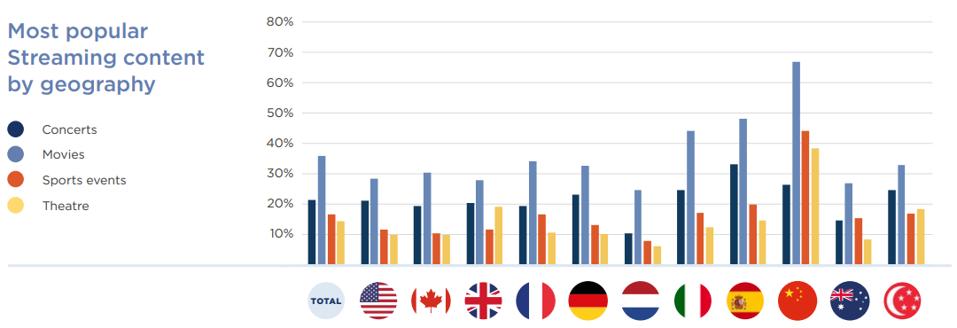
The team at Dynata also found that, since the pandemic started, more than half of those surveyed have live-streamed a concert, movie, sports event, or theatrical production, with movies being the most popular choice of entertainment. Live-streaming events is most common in China, where close to 70% of Chinese people have live-streamed at least one movie since the pandemic began.

Consumers aren’t nearly as shy about returning to restaurants. A recent survey by the Cincinnati-based experiential marketing firm AGAR found that consumers were more likely to indicate a desire to return to restaurants than sporting events, concerts, and cultural holidays and fairs.

Moreover, consumers are voicing a growing interest in health-conscious event planning. Asking consumers what event features they would most desire in the future, the team at AGAR found that hand sanitizing kiosks, social distancing ground stickers, and spaced-apart seating were on the top of the list. Interestingly, over a third of people expressed a willingness to pay a premium to attend smaller events with limited capacities.

“The results of the study clearly show us the path forward, what must be done to bring people back and to make them comfortable,” said AGAR founder, Josh Heuser. “It’s vital that we ensure people feel supported, safe and cared for while attending events.”

2) Contactless payment is becoming the rule not the exception

Covid-19 may have finally given contactless payment the nudge it needs to become the go-to mode of payment. The team at AGAR found that consumers view contactless payment as a necessary feature at live events moving forward.

Prior to the pandemic, approximately 22% of the more than 11,000 global respondents surveyed by Dynata expressed a preference for cash. This has now fallen to 15%. The countries most prepared to make the shift to contactless payment are China, Singapore, and the United Kingdom.

“The past few months have seen an increase in the availability of contactless methods,” according to researchers at Dynata. “The biggest growth has been seen in the USA, moving from 38% to 46% ownership of a contactless method of payment.”

3) Adjusting to telemedicine

According to the researchers at Dynata, 84% of people using telemedicine services during the pandemic were doing so for the first time. And the data show that it is here to stay; 55% of people using telemedicine found the experience to be extremely or very satisfactory. Interestingly, people in the United Kingdom, United States, and Canada were most satisfied with the experience, perhaps because there is a relatively low number of doctors per capita in these countries.

Beyond telemedicine, consumers are increasingly interested in products that provide protection against environmental contaminants and pathogens. Wesley LaPorte, co-founder and CEO of PhoneSoap, a company that makes UV light phone sanitizers, notes a significant uptick (+500%) in PhoneSoap web traffic.

“As awareness of the spread of COVID-19 began to grow in the country, PhoneSoap quickly sold out of UV-C light sanitizers,” said LaPorte. “After the spike in March, web traffic is still significantly higher than last year, with consumers continuing to place pre-orders at unprecedented levels.”

Conclusion: Sigmund Freud was famous for popularizing the idea that human behavior is largely guided by sex, attraction, and the pleasure principle. Covid-19 provides a compelling counterpoint to Freud’s theory — that, especially during times of heightened panic and threat, it is the survival instinct that trumps all other motivations.


Providence, 1st to treat COVID-19 patient, posts $1.1B loss

https://www.healthcaredive.com/news/providence-1st-to-treat-covid-19-patient-posts-11b-loss/578585/

Dr. Ryan Keay: Medicaid Plays a Crucial Role in Alleviating the ...

Dive Brief:

  • Providence posted a net loss of $1.1 billion and operating loss of $276 million for the first quarter of 2020, drastically down from a net gain of $543 million and operating loss of $4 million in the first quarter of 2019 as the COVID-19 pandemic has slashed financial operations for providers across the country.
  • The Catholic nonprofit system saw investment losses of $763 million as stock market volatility followed stay-at-home orders in March and April for much of the United States. That compared to a $582 million investment gain in the prior-year period.
  • Patient volumes dropped as Providence suspended non-emergency procedures amid the pandemic. Surgeries declined 8%, total outpatient visits dropped 3% and acute patient days were down 5%, according to a financial report filed late last week.

Dive Insight:

Providence Regional Medical Center in Everett, Washington, was the first to knowingly treat a COVID-19 patient in the United States — on Jan. 20. Since then, cases have plateaued, with the rate becoming “more manageable” throughout the communities Providence serves.

The system suspended elective procedures the week of March 16 and saw telehealth appointments skyrocket from an average of 50 visits per day to more than 12,000. “Now, the critical path forward is reopening services safely so that we can get back to patients who have delayed their care,” Providence CFO Venkat Bhamidipati said in a statement.

Providence reported receiving $509 million from the Coronavirus Aid, Relief, and Economic Security Act and $1.6 billion in accelerated Medicare payments. The system tapped $800 million in private credit lines as well. As of the end of the first quarter, Providence had 182 days cash on hand, down slightly from the prior-year period.

The hospital operator is far from alone in reporting steep first-quarter losses, and ratings agencies predict the second quarter will not be kind to nonprofits either.

So far, the system has not imposed layoffs but has cut overtime and seen voluntary furloughs and executive pay cuts. “If patient census and revenue does not return to anticipated levels, we would also consider involuntary options,” according to the filing.

Providence’s operating EBIDTA margin was down to 0.9% in the first quarter of this year from 5.5% in the first quarter of 2019.

Operating expenses increased 10% to $6.6 billion, driven by increases in labor costs and supplies. The system noted paying “significantly higher” premiums to obtain personal protective equipment and increased costs for ICU medications amid the pandemic.

The filing discloses a complaint under the California Corporations Code from earlier this month. It was filed by two of the three corporate members of Hoag Hospital, seeking to dissolve the third member and remove Hoag as an obligated group member. Providence states it “believes that the complaint is without merit, and believes the legal process will vindicate this position.”

The 51-hospital system created by the 2016 merger of Washington-based Providence and California-based St. Joseph is coming off a 2019 surplus of $1.36 billion, swinging to the black from 2018’s deficit of $445 million.


Charting the rebound of physician office visits

https://mailchi.mp/f2774a4ad1ea/the-weekly-gist-may-22-2020?e=d1e747d2d8

MultiBrief: Telehealth is keeping doctors, patients connected in ...

As patients begin to return to doctors’ offices, we were intrigued to read an analysis out this week from the Commonwealth Fund that provides a first glimpse into the pace of the recovery. Researchers from Harvard University and healthcare technology company Phreesia analyzed data from 12M visits at over 50,000 physician practices, finding that in-person visits had declined nearly 70 percent by mid-April, compared to pre-pandemic levels.

Behavioral health providers, medical specialists and primary care practices maintained the most volume, and procedural specialists were the hardest hit. Many practices deployed telemedicine quickly, but even with those added encounters, total visits were still down by nearly 60 percent. While visits are starting to return, it’s likely that physician practices are in for a long, slow rebound. Telemedicine as a percentage of all visits peaked in late April, and by mid-May, in-person visits had reached 55 percent of pre-pandemic levels.

Even if virtual volumes pull back from their COVID high, we’re likely to see telemedicine play a much more expansive role moving forward. Dr. Rushika Fernandopulle, CEO of Iora Health, shared his company’s learnings from their COVID-19 response, predicting that ultimately 70-80 percent of physician encounters could be virtual, necessitating a need to reorganize care delivery around populations, instead of practices.

Expect the next year to be a reckoning as changes in payment and regulations, combined with a heated marketplace for virtual care, continue to shift the balance between in-person and virtual care.


Is it time for hospital at home?

https://mailchi.mp/f2774a4ad1ea/the-weekly-gist-may-22-2020?e=d1e747d2d8

JAMA - The John A. Hartford Foundation

We’ve long been intrigued by “hospital at home” care models, which deliver hospital-level care for acute conditions, supported by caregivers and technology, in a patient’s home. Stymied by the lack of payment, however, few health systems have pursued the approach. But as COVID-19 has made patients fearful of entering hospitals, we’ve had a flurry of health system leaders ask us whether they should consider launching a program now.

We think the answer is yes—with some caveats. A growing body of evidence supports its use. Cost of care is lower compared to a traditional inpatient stay. Patient satisfaction with care is high. And from a clinical perspective, hospital at home is well-established, capable of managing a number of mild- and moderate-acuity medical conditions, including exacerbations of chronic diseases like heart failure and diabetes, as well as infections like pneumonia and cellulitis, often better than a traditional hospital stay. Some programs are now using hospital at home for management of COVID-19 patients as well. Physician leaders we’ve spoken with are also interested in using the approach to manage post-operative recovery.

“Over half of our joint replacement patients spend time in skilled nursing or inpatient rehab,” one doctor told us. “People think those places are death traps now, and those cases aren’t coming back until we can find another way for them to recover.”

For patients averse to facility-based care, and systems wanting to offer an alternative, hospital at home sounds like a panacea. But experts recommend approaching it with a clear eye to the economics and ramp-up time, which can easily take 12 to 18 months. With emergency regulations released last month, Medicare will now provide payment for hospital care provided in an alternate setting, including the patient’s home—although it’s unclear whether that will continue once the COVID emergency ends. Commercial payer coverage usually requires a separate negotiation.

According to one leader, “Grass roots support of doctors is not enough. The CEO and CFO have to be on board with changing the care and payment model if it’s ever going to be more than a pilot.” But with patients and doctors becoming more comfortable with virtual care and open to new options, there is a a window of opportunity for expanding home-based care—and the longer the COVID-19 crisis lasts, the more hospital at home could provide a competitive advantage over being admitted to a busy, crowded inpatient hospital.