Beginning the long, winding journey back from coronavirus

https://mailchi.mp/39947afa50d2/the-weekly-gist-april-17-2020?e=d1e747d2d8

45cat - The Beatles - The Long And Winding Road / For You Blue ...

It was another brutal week in the coronavirus pandemic, with more than 2.1M cases and nearly 150,000 deaths worldwide. The US continued to be the hardest-hit country, reaching a daily record 4,591 deaths from COVID-19 on Thursday. The national death toll is now more than 35,000, though there are signs that the number of new cases in the US has begun to plateau, raising hopes that the worst days may be drawing to a close. Meanwhile, with strict stay-at-home measures continuing in most places across the country, the economic toll of the virus mounted. New unemployment claims rose by another 5.2M, bringing the estimated number of American jobs claimed by the virus to 22M, eliminating a decade’s worth of job growth, and raising the unemployment rate to an estimated 17 percent.

As the growth in new cases flattened, attention turned this week to plans to “reopen” the American economy. Despite insisting early in the week that he alone would decide when and how to reopen the country, President Trump yesterday unveiled a set of non-binding, “Opening Up America Again” guidelines for state and local officials to use in judging when to loosen restrictions. The guidelines suggest a three-stage, gated approach, gradually allowing individuals and employers to return to normal activities based on criteria including disease trends, hospital capacity, and the availability of robust testing. Progressing from one stage to the next is predicated on maintaining a downward trajectory in new cases—with any signs of a resurgence indicating a need to reimpose restrictions.

Missing from the White House plan are specific details about how states, cities, and healthcare providers are to procure and pay for the many millions of tests and extensive contact tracing that will need to be available to allow businesses, public transport systems, and other essential services to resume activity. By week’s end, about 3.5M coronavirus tests had been conducted nationally, but the daily number of tests conducted has plateaued, and the test-positivity rate is still troublingly high. Public health experts continue to warn that testing must ramp up significantly before any steps toward reopening can be considered, a difficult challenge given widespread reports of shortages of testing supplies and trained lab technicians. To bolster testing capacity, the Centers for Medicare and Medicaid Services (CMS) this week nearly doubled the amount it will pay laboratories to analyze tests using high-throughput equipment.

Three coalitions of states—in the Northeast, Midwest, and West Coast—were formed this week to coordinate regional efforts to reopen the economy. Among the issues they’ll need to address: interstate travel restrictions, coordinated purchasing of critical supplies, investments in contact tracing capabilities, and ongoing surveillance of the virus’ spread. With federal agencies taking a back seat to states (“You are going to call your own shots,” the President told governors on a call this week), it became clear that the road back from the coronavirus pandemic will be circuitous, with a patchwork of different timelines and approaches in different locations based on local conditions and resources.

In the words of William Gibson, “The future is here—it’s just not very evenly distributed.”


Whole Foods staff protest against conditions as coronavirus cases rise

https://www.theguardian.com/business/2020/apr/15/whole-food-protests-coronavirus-working-conditions-sickout

Coronavirus workplace conditions spur protests at Whole Foods, Amazon

Workers say too little is being done to enforce social distancing in stores, and some are not given masks or training on cleaning.

Whole Foods workers across the US are planning to hold another sickout protest on 1 May, as the number of confirmed cases of coronavirus infections at the supermarket chain continues to rise and workers charge the Amazon-owned company is doing too little to help them.

Workers complain too little is being done to enforce social distancing in stores; it is difficult, and sometimes impossible, to qualify for sick pay; and some are not given masks or training on cleaning. In the meantime, Whole Foods is reportedly recording record sales.

Dan Steinbrook, an employee at Whole Foods in Boston, said: “The bottom line is we don’t think Whole Foods or Amazon is doing nearly enough as they could be to protect both employees and customers at the store in terms of personal safety and public health.”

Steinbrook, who also participated in a sickout protest on 31 March organized by Whole Worker, a worker activism group said: “Grocery stores are one of the only places open to the public so they’ve become a significant public health concern in terms of stopping the spread of this disease. Any transmission we can stop at the grocery stores is extremely important for saving a lot of lives.”

Whole Foods workers have become increasingly concerned over the confirmed cases of coronavirus at Whole Foods stores. Employees have tested positive for coronavirus at Whole Foods locations across the country including West Orange, New JerseySudbury, MassachusettsBrookline, MassachusettsArlington, MassachusettsHingham, MassachusettsCambridge, MassachusettsSan Francisco, CaliforniaNew York City, New YorkFort Lauderdale, FloridaNew Orleans, Louisiana; and Allentown, Pennsylvania.

The Guardian spoke to several Whole Foods workers across the US about working conditions and the company’s policies. The workers requested to remain anonymous for fear of retaliation.

“I haven’t felt safe going into work because Whole Foods hasn’t really done anything to combat the amount of Amazon shoppers in the stores,” said a Whole Foods employee at Bowery Place in New York City, the center of the coronavirus pandemic in the US. “The store has been closing earlier, but they still want us to stay until 11pm to clean, and we aren’t trained to clean or given masks or anything.”

Whole Foods workers have noted some stores where a worker has tested positive for coronavirus have yet to be publicly reported in the media.

“Team members are being told there was a deep clean overnight and not to worry,” said a Whole Foods worker in West Bloomfield, Michigan. “I’m scared to work. I have three immune sensitive people living in my house and I don’t want to get them sick, but I can’t lose my only income.”

A worker at Whole Foods in Chapel Hill, North Carolina, said there have been two positive cases at their store. “It has been almost impossible to maintain basic social distancing practices. We’ve seen huge sales ever since the outbreak and it’s been all hands on deck. As of 1 April, there were no limits on the number of customers allowed in at a given time,” said the employee.

In Minnesota, a Whole Foods employee is currently on unpaid leave after experiencing coronavirus symptoms when their roommate was advised by their doctor to self-quarantine.

“When I talked to my HR department they told me I would need to take a two week leave as well, but unless I test positive for Covid-19, I do not qualify for the ‘guaranteed two weeks paid time off’ corporate is saying they are offering,” said the worker. “Everyone knows tests are limited and unavailable to most people unless they are showing severe symptoms, and as retail workers, many of us cannot afford to go to the doctor unless we’re in desperate need of medical attention.”

A Whole Foods employee in Massachusetts is also currently taking unpaid leave after experiencing coronavirus symptoms.

“I’m in a situation where I can’t get tested or afford a doctor. At first I was told I wouldn’t be eligible for sick pay without a positive test. Later I was told that I might qualify, that pay was being disbursed on a case by case basis. My case has been pending for over a week with no response and I ran out of paid time off,” said the worker.

“My parents lent me money, so I’ll be able to finish quarantine and still afford groceries. Money was tight before bills were due, and those fears kept me from reaching out to a doctor. My symptoms were mild, but I don’t know what I would have done if they got serious.”

A Whole Foods spokesperson told the Guardian: “The safety of our team members and customers is our top priority and we are diligently following all guidance from local health and food safety authorities. We’ve been working closely with our store Team Members, and are supporting the diagnosed Team Members, who are in quarantine.

“Out of an abundance of caution, each of these stores performed an additional deep cleaning and disinfection, on top of our current enhanced sanitation measures. As we prioritize the health and safety of our customers and Team Members, we will continue to do the following to help contain the spread of Covid-19.”


Cartoon – Unemployment Today

Social distancing in the unemployment line: Political Cartoons ...

Another 5.2 million jobless claims filed last week amid coronavirus crisis

https://www.axios.com/coronavirus-unemployment-filings-caded026-fce4-43cc-8dc0-5f0037747b69.html?stream=top&utm_source=alert&utm_medium=email&utm_campaign=alerts_all

Arrow

Another 5.2 million Americans filed for unemployment last week, the Labor Department announced Thursday.

Why it matters: With the more than 16 million jobless claims filed over the past three weeks, more jobs have now been lost in the last month than were gained since the Great Recession.

The big picture: The weekly unemployment filings report has become a must-watch for Wall Street and economists. It offers the timeliest glimpse into how efforts to contain the coronavirus outbreak are ravaging the job market.

  • And economists say that as bad as these weekly numbers look on the surface, they’re likely even higher. There are widespread complaints that state labor departments are having trouble processing the never-before-seen wave of jobless filings.

The bottom line: In just one month, the coronavirus economic shutdown has caused a staggering 22 million Americans to lose their jobs.


Newly uninsured can turn to stable ACA market

https://www.axios.com/newsletters/axios-vitals-fb6b1c68-afc1-4b2b-9096-de20fd0b10a7.html?utm_source=newsletter&utm_medium=email&utm_campaign=newsletter_axiosvitals&stream=top

Stable costs but more uninsured as 'Obamacare' sign-ups open

People losing their employer-based health insurance in the coronavirus economy would find a pretty stable Affordable Care Act market if they need it — not that the Trump administration is advertising that fact, Bob writes.

Why it matters: ACA plans will be an important backstop for some newly uninsured people, many of whom could likely find affordable coverage on the law’s insurance marketplaces.

Where it stands: The average monthly premium for ACA coverage was down 3% in this year’s enrollment period, compared with 2019, according to a federal report that was released earlier this month but not publicly promoted.

  • That average monthly premium is $595, but the overwhelming majority of enrollees get a subsidy to help cover those costs — and people who have just lost a job could be eligible for those.
  • Some people “could get paid to buy ACA plans” right now because of looming insurance company rebates, according to Duke University health insurance researcher David Anderson.

Yes, but: You won’t hear much about those options from the Trump administration, which has been consistently hostile to the ACA and has declined to open up a special enrollment window that would let anyone who has been disrupted by the economic shutdown to buy coverage.


We can’t just flip the switch on the coronavirus

https://www.axios.com/coronavirus-slow-recovery-econony-deaths-27e8d258-754e-4883-bebe-a2e95564e3b6.html

The end of the coronavirus lockdown won't be like flipping a ...

It feels like some big, terrible switch got flipped when the coronavirus upended our lives — so it’s natural to want to simply flip it back. But that is not how the return to normalcy will go.

The big picture: Even as the number of illnesses and deaths in the U.S. start to fall, and we start to think about leaving the house again, the way forward will likely be slow and uneven. This may feel like it all happened suddenly, but it won’t end that way.

What’s next: Nationally, the number of coronavirus deaths in the U.S. is projected to hit its peak within the next few days. But many big cities will see their own peaks significantly later — for them, the worst is yet to come.

  • The White House is eyeing May 1 as the time to begin gradually reopening the economy. But that also will not be a single nationwide undertaking, and it will be a halting process even in the places where it can start to happen soon.
  • “In principle it sounds very nice, and everyone wants to return to normalcy. I think in reality it has to be incredibly carefully managed,” said Claire Standley, an infectious-disease expert at Georgetown University.

The future will come in waves — waves of recovery, waves of more bad news, and waves of returning to some semblance of normal life.

  • “It’s going to be a gradual evolution back to something that approximates our normal lives,” former Food and Drug Administration Commissioner Scott Gottlieb said.

What the post-lockdown world will look like:

  • Some types of businesses will likely be able to open before others, and only at partial capacity.
  • Stores may continue to only allow a certain number of customers through the door at once, or restaurants may be able to reopen but with far fewer tables available at once.
  • Some workplaces will likely bring employees back into the office only a few days a week and will stagger shifts to segregate groups of workers from each other, so that one new infection won’t get the whole company sick.
  • Large gatherings may need to stay on ice.

And there will be more waves of infection, even in areas that have passed their peaks.

  • “Everything doesn’t just go down to zero” once a city or region gets through its initial crush of cases, said Janet Baseman, a professor of epidemiology at the University of Washington.
  • This is happening now in Singapore, which controlled its initial outbreak more effectively than almost any other country in the world but is now seeing the daily number of new cases climb back up.

This is all but inevitable in the U.S., too, especially as travel begins to pick back up. Some places may need to shut down again, or at least tighten back up, if these new flare-ups are bad enough.

  • Part of the reason to lock down schools, businesses and workplaces is to prevent an outbreak from overwhelming the local health care system. If new cases start to pile up too quickly, leaders may need to pump the brakes.
  • “If you go back to normal too fast, then cases start to go up quickly, and then we end up back where we started,” Baseman said.
  • The good news, though, is that hospitals should have far more supplies by the fall, thanks to the coming surge in manufacturing for items like masks and ventilators.

What we’re watching: We’ll still need a lot more diagnostic testing to make this process work. Public health officials need to be able to identify people who might be spreading the virus before they begin to feel sick, and then identify the people they may have infected.

  • Most of the U.S. does not seem prepared for that undertaking, at least on any significant scale.
  • Another kind of test — serology tests, which identify people who have already had the virus and may be immune to it — will also help. We can’t test everyone, but identifying potential immunity could be important in knowing who can safely return to work in high-risk fields like health care.

The real turning point won’t come until there’s a proven, widely available treatment or, even better, a widely available vaccine.

  • A vaccine is still about a year away, even at a breakneck pace and if everything goes right. A treatment isn’t likely to be available until the fall, at the earliest.
  • In the meantime, all we can do is try to manage a slow recovery, using a less aggressive version of the same tools that are in place today.

The bottom line: “I’m not going back to Disneyland, I’m not going to take a cruise again, until we have a very aggressive testing system or we have very effective therapeutics or a vaccine,” Gottlieb said.


Trump reportedly squandered 3 crucial weeks to mitigate the coronavirus outbreak after a CDC official’s blunt warnings spooked the stock market

https://www.businessinsider.com/trump-wasted-3-weeks-coronavirus-mitigation-time-february-march-nyt-2020-4

Dow closes with decline of 950 points as coronavirus continues to ...

  • President Donald Trump’s administration wasted three key weeks between February and March that could have been spent enacting mitigatory measures against COVID-19, The New York Times reported on Saturday.
  • By the end of February, top officials knew that time was running out to stem the virus spread, and wanted to present Trump with a plan to enact aggressive social distancing and stay-at-home measures.
  • But on February 26, a top CDC official issued stark warnings about the virus’ spread right before the stock market plummeted, which angered Trump for being, in his view, too alarmist. 
  • The Times reported that the entire episode killed off the efforts to persuade Trump to take aggressive, action to mitigate the virus’ spread. In the end, Trump didn’t issue stay-at-home guidance until March 16. 

President Donald Trump’s administration stalled three key weeks in February that could have been spent enacting mitigatory measures against COVID-19 after Trump was angered by a public health official issuing a dire warning about the virus, The New York Times reported on Saturday.

On Saturday,The Times published a lengthy investigation of all the instances Trump brushed aside warnings of the severity of the coronavirus crisis, failed to act, and was delayed by significant infighting and mixed messages from the White House over what action to take and when. 

The Times wrote: “These final days of February, perhaps more than any other moment during his tenure in the White House, illustrated Mr. Trump’s inability or unwillingness to absorb warnings coming at him.”

The Times conducted dozens of interviews with current and former officials and obtained 80 pages of emails from a number of public health experts both within and outside of the federal government who sounded the alarm about the severity of the crisis on an email chain they called “Red Dawn.”

One of the members of the email group, Health & Human Service disaster preparedness official Dr. Robert Kadlec, became particularly concerned about how rapidly the virus could spread when Dr. Eva Lee, a Georgia Tech researcher, shared a study with the group about a 20-year-old woman in China who spread the virus to five of her family members despite showing no symptoms.

“Eva is this true?! If so we have a huge [hole] on our screening and quarantine effort,” he replied on February 23. 

At that point, researchers and top officials in the federal government determined that since it was way too late to try to keep the virus out of the United States, the best course of action was to introduce mitigatory, non-pharmaceutical interventions (NPIs) like social distancing and prohibiting large gatherings.

As officials sounded the alarm that they didn’t have any time to waste before enacting aggressive measures to contain the virus, top public health officials including Dr. Robert Kadlec concluded that it was time to present Trump with a plan to curb the virus called “Four Steps to Mitigation.”

The plan, according to The Times, included canceling large gatherings, concerts, and sporting events, closing down schools, and both governments and private businesses alike ordering employees to work from home and stay at home as much as possible, in addition to quarantine and isolating the sick.

But their entire plan was derailed by a series of events that ended up delaying the White House’s response by several weeks, wasting precious time in the process.

Trump was on a state visit to India when Dr. Kadlec and other experts wanted to present him with the plan, so they decided to wait until he came back.

But less than a day later, Dr. Nancy Messonnier, the director of the National Center for Immunization and Respiratory Diseases at the CDC, publicly sounded the alarm about the severity of the coronavirus outbreak in a February 26 press conference, warning that the outbreak would soon become a pandemic.

“It’s not so much a question of if this will happen anymore but rather more a question of exactly when this will happen and how many people in this country will have severe illness,” Messonnier said, bluntly warning that community transmission of the virus would be inevitable.

The Times reported that Trump spent the plane ride stewing in anger both over Messonnier’s comments and the resulting plummet of the stock market they caused, calling Secretary of Health & Human Services Alex Azar “raging that Dr. Messonnier had scared people unnecessarily,” The Times said. 

The Times reported that the entire episode effectively killed off any efforts to persuade Trump to take aggressive, decisive action to mitigate the virus’ spread and led to Azar being sidelined, writing, ” With Mr. Pence and his staff in charge, the focus was clear: no more alarmist messages.” 

In the end, Dr. Kadlec’s team never made their presentation. Trump did not issue nationwide social distancing and stay-at-home guidelines until March 16, three weeks after Messonnier warned that the US had limited time to mitigate community transmission of the virus, and several weeks after top experts started calling for US officials to implement such measures.

In those nearly three weeks between February 26 and March 16, the number of confirmed COVID-19 cases rose from just 15 to 4,226, The Times said. As of April 12, there are over half a million confirmed cases in the United States with over 21,000 deaths.


Cartoon – Society Going Cashless

Today's cartoons: Getting used to a cashless society – Orange ...

Trump suggests doctors complain about lack of coronavirus equipment in order to get on TV

https://www.yahoo.com/news/trump-suggests-doctors-complain-lack-141500695.html

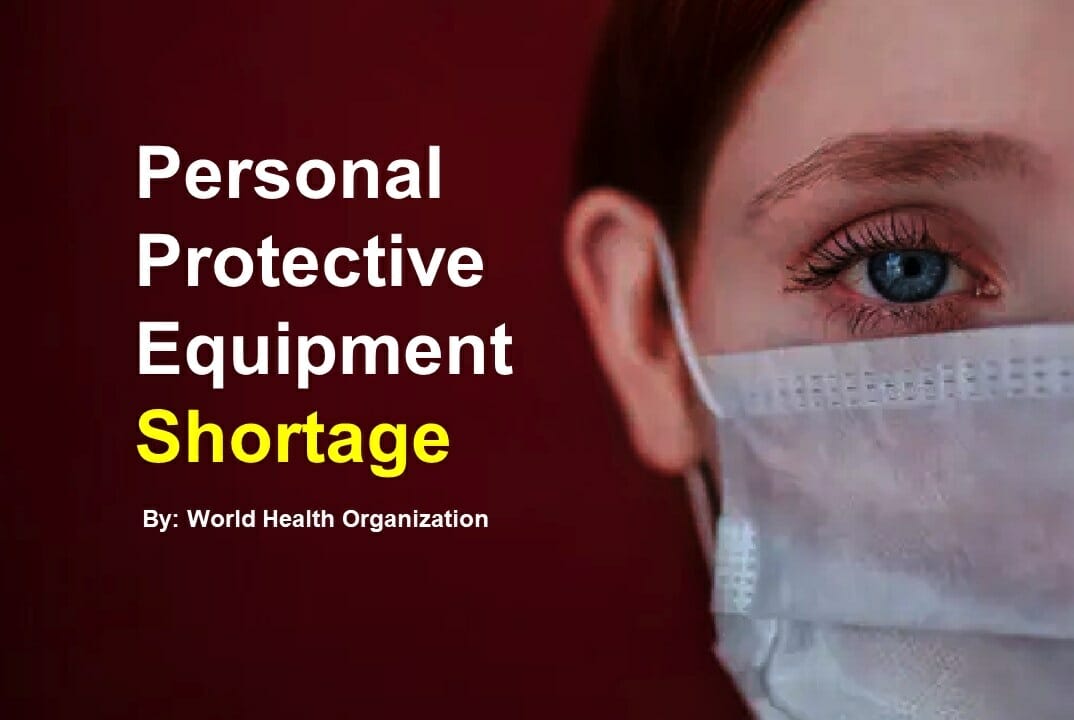
PPE Shortage Endangering Health Workers Worldwide - GineersNow

Donald Trump has implied doctors and elected officials say they do not have enough personal protective equipment (PPE) and other materials to get on television amid the coronavirus crisis.

The US president had a row with Jim Acosta, CNN’s chief White House correspondent, over the shortage of PPE, which includes essential gear such as hand sanitiser, gloves, aprons, and face masks, during his coronavirus press briefing.

Acosta said: “We hear from a lot of people who see these briefings as sort of ‘happy talk’ briefings. And some of the officials don’t paint as rosy a picture of what is happening around the country. If you look at some of these questions – do we have enough masks? No. Do we have enough tests? No. Do we have enough PPE? No.”

Mr Trump interjected: “Why would you say that? The answer is yes. I think the answer is yes.”

Acosta referred to doctors and other medical officials who have vented their frustrations about the dearth of essential equipment on CNN.

The president hit back: “A lot of it is fake news.”

Acosta said: “Doctors and medical officers come on our air and say ‘we don’t have enough tests, we don’t have enough masks’.”

Mr Trump chipped in: “Well yeah, depending on your air they are always going to say that because otherwise, you are not going to put them on.”

The spat comes as doctors and healthcare workers across America are battling against a shortage of face masks which safeguard them against coronavirus – sparking fears doctors will not be able to provide life-saving care if they fall ill.

America has become the first country in the world to record more than 2,000 people dying from coronavirus in one day alone, according to Johns Hopkins University figures.

People who contract coronavirus in the US are at greater risk than those in the UK or Canada due to America not having a national health service.

Americans are at risk of running up bills for coronavirus treatment which force them to fork out tens of thousands of dollars. The situation is exacerbated by the fact many have lost their healthcare insurance due to job losses linked to the pandemic.


When the coronavirus lockdowns end, we will live in a shrunken world

https://www.yahoo.com/news/coronavirus-lockdowns-end-live-shrunken-122800321.html

Flipboard: When the coronavirus lockdowns end, we will live in a ...

  • A projection from the Department of Homeland Security, published by the New York Times, shows coronavirus cases spiking again at the end of summer.
  • It’s a stark reminder that American life after lockdown will still be one of limited human interaction. And that means we’ll have to live with a smaller economy too. 
  • The economy will be packed with uncertainty given the possibility of another shelter-in-place order.
  • Until we can all hang out again with confidence, the US economy is going to be a shell of its former self.

When the US emerges from its various shades of shelter-in-place orders, it will emerge to a shrunken global economy. One that will not easily be inflated living within parameters the coronavirus demands.

Financial transactions are a form of human interaction, and even after strict orders to stay at home are lifted, Americans will need to limit human interaction to mitigate the spread of coronavirus. One projection from the Department of Homeland Security, first reported by the New York Times, imagines a world where schools remain closed, 25% of Americans work from home, and social distancing remains in place through the summer.

And people will still be scared. They will know that there is an deadly virus infecting people who interact with other people.

In this scenario, back to work doesn’t mean back to growth because people won’t be spending money the way they did before. Back to work simply means finding a more sane, stable way to maintain society until we get a vaccine. There will be no V-shaped recovery. This is a marathon, and if we’re lucky, we will limp across the finish line.

As incomplete as it is, China is the best picture we have for understanding what a life after lockdown looks like, and it doesn’t look like a booming economy. 460,000 businesses closed permanently in China during the first quarter.

One Chinese county has gone back into lockdown already. In Beijing — where state media says epidemic prevention and control will “probably” become “long-term normal” — restaurants have been ordered to maintain social distance by cutting seating in half and limiting tables to three people. Customers have been slow to come back anyway.

All of this is to say that even if we’re out of lockdown, this saga isn’t remotely over.

Deflation strikes back

What China’s economy is telling us is that once this weird supply funk brought on by everyone staying home is over, and some people are able to go back to work, we’ll still have a demand crisis. Even though the virus has been contained analysts at Oxford Economics told clients it expects to see “basically no growth” in China this year. With other global economies weakened it will sell fewer exports. 

Zhu Jun, director of the international department of the People’s Bank of China, said that there’s a small chance the world risks another Great Depression. Cheery, I know, but until there’s a vaccine, optimism will be in short supply.

Here in the US, just as in China, people will be broke and businesses will be broken. Money will be scarce. Demand will be depressed not just because of a lack of funds, but because people will have changed their behavior to avoid getting sick. 

Wall Street it seems, hasn’t processed this bad news yet. It’s taking this pandemic day-by-day, not looking at life after lockdown. This week the market rallied on news that all over the US, even New York City, the curve is flattening. It was a silly rally.

It’s silly for the market to declare victory before we’ve even seen how much damage has been done (that will take months at least). It’s silly to expect any kind of stability until we know what kind of demand a post-shelter-in-place, pre-vaccine American economy will have.

Finally, we don’t know how long Washington will be in a giving mood. So far the Federal Reserve has pulled out all the stops, and Congress has approved trillions in aid. But will Washington keep sending checks to unemployed Americans until we have a vaccine? 

US employment by industry who can work from home

We thought we knew uncertainty

I think back to all the times I’ve heard CEOs and Wall Street types talk about uncertainty around regulations, or elections, or literally anything else that has happened in my life time, and I have to laugh. All of it seems silly compared to the uncertainty before us right now.

It is quite possible that sometime this summer scientists will develop a treatment for COVID-19 that makes the symptoms much more mild — something more like a standard, week-long flu. That discovery could make things a lot easier, and really bolster confidence enough to bring the economy back until we have a vaccine. But government officials obviously can’t plan with that in mind. Neither can businesses.

And so, those charged with imagining the worst case scenario must imagine a world where Americans are again forced to shelter-in-place to flatten the curve. Homeland Security’s projections put a resurgence of the virus somewhere around the end of summer to the beginning of fall. It’s not unreasonable to think certain populations may have to go back into shelter-in-place then.

Singapore has a robust system of testing for and tracking the coronavirus and its citizens went back into shelter-in-place this week. Here in the US we don’t have such a system. Last week the White House ended federal funding for its drive-thru testing site program.

On Friday New York Governor Andrew Cuomo urged the President to invoke the Defense Production Act to ramp up production of antibody tests that can show who has been infected with the coronavirus and built up immunity. That would allow people to go back to work, but the federal government will only be able to produce 2,000 a day in the next two weeks. 

As a nation, we need to be doing everything we can to ensure that when this lockdown is over, those who can go out can do so with as much confidence as possible. We need to inject as much certainty into this situation as possible Without testing, that’s not happening.

In an interview with CNBC, Bill Gates — the Microsoft founder and billionaire philanthropist who has dedicated a significant chunk of his charitable efforts to studying pandemics — said the federal government simply doesn’t seem interested in a unified testing system. This is one of the few variables in this pandemic the government can control, and it’s blowing it.

Testing is one of the only things that will make our beleaguered, shrunken coronavirus economy a little bit bigger. It’s one of the only ways we can impact the ugly twist of this economic downturn, behavior.

Even then, though, the possibility of an outbreak in a workplace, city, or state will change the way our economy works in ways that will make money scarce. We need to be ready for that.