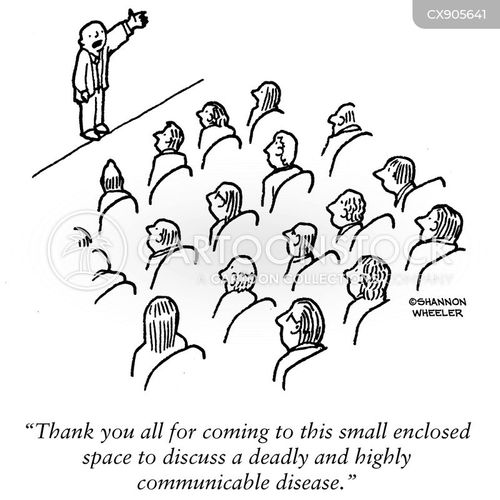
Cartoon – The Key to Leadership


The Department of Health and Human Services told hospitals in April that reporting to the vendor, TeleTracking Technologies, was a “prerequisite to payment.”
The Trump administration tied billions of dollars in badly needed coronavirus medical funding this spring to hospitals’ cooperation with a private vendor collecting data for a new Covid-19 database that bypassed the Centers for Disease Control and Prevention.
The highly unusual demand, aimed at hospitals in coronavirus hot spots using funds passed by Congress with no preconditions, alarmed some hospital administrators and even some federal health officials.
The office of the health secretary, Alex M. Azar II, laid out the requirement in an April 21 email obtained by The New York Times that instructed hospitals to make a one-time report of their Covid-19 admissions and intensive care unit beds to TeleTracking Technologies, a company in Pittsburgh whose $10.2 million, five-month government contract has drawn scrutiny on Capitol Hill.
“Please be aware that submitting this data will inform the decision-making on targeted Relief Fund payments and is a prerequisite to payment,” the message read.
The financial condition, which has not been previously reported, applied to money from a $100 billion “coronavirus provider relief fund” established by Congress as part of the $2.2 trillion Coronavirus Aid, Relief and Economic Security Act, or CARES Act, signed by President Trump on March 27. Two days later, the administration instructed hospitals to make daily reports to the C.D.C., only to change course.
“Another data reporting ask,” a regional official in the health department informed colleagues in an email exchange obtained by The Times, adding: “It comes with $$ incentive. We really need a consolidated message on the reporting/data requests, this is past ridiculous.”
A colleague replied, “Another wrinkle. What a mess.”
The disclosure of the demand in April is the most striking example to surface of the department’s efforts to expand the role of private companies in health data collection, a practice that critics say infringes on what has long been a central mission of the C.D.C. Last month, the federal health department moved beyond financial incentives and abruptly ordered hospitals to send daily coronavirus reports to TeleTracking, not the C.D.C., raising concerns about transparency and reliability of the data.
Officials at the Department of Health and Human Services say that the moves were necessary to improve and streamline data collection in a crisis, and that the one-time reports collected in April by TeleTracking were not available from any other source.
“The national health system has not been challenged in this way in any time in recent history,” Caitlin Oakley, a department spokeswoman, said in a statement, adding that TeleTracking offered a “standardized national hospital capacity tracking system which provided more real-time, better informed data to make decisions from.”
But critics remain alarmed.
“In the middle of a pandemic, the Trump administration is using funds meant to support hospitals as a tool to coerce them to use an unproven, untrusted and deeply flawed system that sidelines public health experts,” Senator Patty Murray of Washington, the ranking Democrat on the Senate Health Committee, said in a statement.
In a statement, TeleTracking said it has three decades of experience providing health care systems “with actionable data and unprecedented visibility to make better, faster decisions.”
Still, public health experts and hospital executives are puzzled as to why the health agency chose such a difficult time to employ an untested private vendor rather than improve the C.D.C.’s National Healthcare Safety Network, a decades-old disease tracking system that was deeply familiar to hospitals and state health departments.
The N.H.S.N., as it is known, had built up trust over decades of working with hospitals and state health departments. Administrators were reluctant to make the switch.
“People — especially in public health and clinical health — are very protective of their data, so that trust factor is certainly an issue,” said Patina Zarcone, the director of informatics for the Association of Public Health Laboratories. “The fear of having their data leaked or misused or used for a purpose that they weren’t aware of or agreed to — I think that’s the biggest rub.”
Ms. Oakley said the C.D.C.’s system was “not designed for use in a disaster response” and could not adapt quickly in a crisis. Allies of the C.D.C. say withholding taxpayer dollars from the CARES Act in lieu of cooperation was an inappropriate effort to push hospitals into a system they were reluctant to use.
“It’s an absolutely enormous lever,” said William Schaffner, an infectious disease expert at Vanderbilt University. “It’s a compulsion to oblige institutions to report to this TeleTracking system because they knew if it weren’t tied to money, it wouldn’t happen.”
The Pittsburgh company has no obvious ties to the Trump administration. Rather, the push appears to be part of a broader privatization. The Health and Human Services Department has also asked the Minnesota-based manufacturer 3M “to create, and continuously update, a nationwide clinical data set on Covid-19 treatment,” according to documents obtained by The Times.
The effort is separate from the TeleTracking data collection. Tim Post, a company spokesman, said that because 3M already operates hospital information systems, it is “uniquely positioned,” with the permission of its clients, to submit information to the health department to help officials study disease patterns and recommend treatment options.
Some experts say this kind of cooperation with the private sector is long overdue. But the push also appears to be driven at least in part by an intensifying rift between the C.D.C., based in Atlanta, and officials at the White House and Department of Health and Human Services, the parent agency of the disease control centers.
Dr. Deborah L. Birx, the White House coronavirus response coordinator, and Mark Meadows, the president’s chief of staff, have taken a dim view of the C.D.C. and believe its reporting systems were inadequate. In a recent interview, Michael Caputo, the spokesman for Mr. Azar, accused the C.D.C. of having “a tantrum.”
Accurate hospital data — including information about coronavirus caseloads, deaths, bed capacity and personal protective equipment — is essential to tracking the pandemic and guiding government decisions about how to distribute scarce resources, like ventilators and the drug remdesivir, the only approved treatment for hospitalized Covid-19 patients.
The health agency has set up a new database, H.H.S. Protect, to collect and analyze Covid-19 data from a range of sources. TeleTracking feeds hospital data to that system.
But the public rollout of H.H.S. Protect has been rocky. The nonpartisan Covid Tracking Project identified big disparities between hospital data reported by states and the federal government and deemed the federal data “unreliable.”
The tension dates to March, when the novel coronavirus was making its first surge in the United States
On March 29, Vice President Mike Pence, charged by Mr. Trump with overseeing the federal response, informed hospital administrators that the C.D.C. was setting up a “Covid-19 Module,” and asked them to file daily reports which, he said, were “necessary in monitoring the spread of severe Covid-19 illness and death as well as the impact to hospitals.”
But around that time, TeleTracking submitted a proposal for data collection to the Trump administration, through an initiative, ASPR Next, created to promote innovation. On April 10, TeleTracking was awarded its contract.
The health department’s spokeswoman said the intent was to complement the C.D.C., not compete with it. Like the C.D.C.’s network, TeleTracking’s system requires manual reporting on a daily basis. But in June, Ms. Murray demanded the administration provide more information about what she called a “multimillion-dollar contract” for a “duplicative health data system.”
Some hospital officials also objected to the change.
“We have been directing our hospitals to N.H.S.N.,” Jackie Gatz, a vice president of the Missouri Hospital Association, wrote to a regional health and human services official in an email obtained by The Times, “and now this email with a much greater carrot — CARES Act distributions — is routing them to TeleTracking.”
When the order was delivered, flaws had already emerged in the new system.
“H.H.S. has acknowledged long wait times for those calling for technical support, and indicated that TeleTracking recently added 100 staff to respond to call center requests,” the American Hospital Association wrote to its members in a “special bulletin” on April 23. “They also are directing hospitals to leave a message if they are unable to reach someone live.”
At the time, hospitals had the option of making their daily coronavirus reports to TeleTracking or the C.D.C. Few were using the new database.
In June, the administration again used a stick to demand that hospitals report to TeleTracking, this time in order to obtain remdesivir. By July, with Dr. Birx pushing to bolster hospital compliance, the administration instructed hospitals to stop filing daily reports to the C.D.C. and to send them to TeleTracking instead.
One official at a major academic hospital, who spoke on the condition of anonymity for fear of angering officials in Washington, said the switch left her “unable to sleep at night.”
“Ethically, it felt like they had taken a very trusted institution in the C.D.C. and all of that trust built up with many public health people,” she said, then “moved it onto a politically and financially motivated portion of this response.”
Health and human services officials say the government now has a much more complete picture of hospital bed capacity, with more than 90 percent of hospitals reporting. But Dr. Janis M. Orlowski, the chief health officer for the Association of American Medical Colleges, who worked with Dr. Birx and the administration to bolster hospital reporting, said that she was “stunned” by the switch and that the increase in reporting came because of efforts by her group and others, not the TeleTracking system.
Dr. Orlowski said the data and maps now published on the administration’s H.H.S. Protect data hub are “just not as sophisticated as the C.D.C.”
The switch also generated pushback inside the C.D.C., where officials have refused to analyze and publish TeleTracking data, saying they could not be assured of its quality and had continuing questions about its accuracy, according to a senior federal health official.
Administration officials say the C.D.C. is working with a little-known office in the executive branch — the United States Digital Service — to build a “modernized automation process” in which data will continue to flow directly to the Department of Health and Human Services. But the project is in its infancy, one senior federal health official said.
Critics say that if the department believed the C.D.C.’s health network had problems, those should have been fixed.
“We have a public health system that depends upon communication from hospitals to state health departments to the C.D.C.,” said Dr. Schaffner, the Vanderbilt University infectious disease expert. “It’s very well established. Can it be improved? Of course. But to cut out the public health infrastructure and report to a private firm essential public health data is misguided in the extreme.”

Drugmakers are getting bolder in their bid to restrict access to drugs discounted under the 340B program as legal experts say a lack of enforcement has created a regulatory void.
Hospitals are imploring the Department of Health and Human Services (HHS) to clamp down on several moves by drug companies, including Novartis and AstraZeneca, to limit distribution of certain 340B drugs. But experts say an administration-wide change in what agencies can enforce is likely behind drugmakers’ aggressive moves.
“It is an outrage that these actions are being taken at a time when hospitals are in the midst of their response to the COVID-19 public health emergency, which has further demonstrated the fractured, inadequate state of the prescription drug supply chain,” the American Hospital Association said in a release last week.
Hospitals and 340B advocates are furious that AstraZeneca announced last Friday that starting Oct. 1 it will not offer any discounted drugs to contract pharmacies, which are third-party entities that dispense drugs acquired under the program.
It is the most aggressive move in a fight sparked last month between drug companies against contract pharmacies, which are a popular tool among 340B hospitals.
In exchange for participating in Medicaid, a drug manufacturer is required to offer discounts to safety-net hospitals that participate in 340B. But the program has been beset with controversy in recent years as drug companies claim the program has gotten too large and patients aren’t benefiting from the discounts.
Eli Lilly decided last month to restrict sales to contract pharmacies of certain formulations of erectile dysfunction drug Cialis. Merck and Novartis also said contract pharmacies would need to submit claims data to avoid duplicate discounts.
We’ve reached out to pharmaceutical companies for comment and will update when we hear back.
Industry advocacy organization Pharmaceutical Research and Manufacturers of America (PhRMA) has previously called for reforms to the 340B program, including to the ability for covered entities to contract with multiple outside pharmacies to dispense drugs that receive 340B discounts. Even though the number of Americans who are insured has risen, 340B is growing exponentially, they said. “Not all 340B hospitals are good stewards of the program,” PhRMA said.
Hospital groups and 340B allies charge that the moves blatantly violate a 2010 guidance released by the Health Resources and Services Administration (HRSA), which oversees the 340B program.
The guidance permits a hospital participating in 340B to voluntarily use a contract pharmacy and outlines the requirements to do so. The guidance also says a manufacturer must still sell a drug at a price not to exceed the statutory 340B price.
But an October 2019 executive order said federal agencies cannot enforce guidance documents unless they are part of a contract amid other exceptions.
HRSA has said that it doesn’t have the authority under the 340B statute to take enforcement action on “requirements that have been established under guidance,” said Emily Cook, a partner with law firm McDermott Will & Emery.
The agency’s current position is that it can only take enforcement actions on clear violations of the 340B statute, she added.
HRSA told Fierce Healthcare in a statement it is considering the issues raised by the manufacturers and “evaluating our next steps.”
Hospitals are hoping HHS steps in and clears up the issue.
If not, then hospitals could either take drug companies to court or lobby Congress to give HRSA more authority over the program.
The advocacy group 340B Health said last week that if the administration refuses to step in then it will “pursue all legislative and legal avenues available to us to defend the safety net.”
Hospitals need to re-examine their 340B contract pharmacy deals to exclude AstraZeneca drugs, according to an article from Brenda Maloney Shafer and Richard Davis of law firm Quarles & Brady.
If they fail to do this, then the contract pharmacy could pay for dispensing and administrative fees for drugs that won’t get a 340B discount.
This is the latest spat over the controversial program. Hospitals took the administration to court after it tried to cut payments under the program by nearly 30%.
An appeals court recently ruled that HHS does have the authority to institute the cuts.
Health policy scholars critiqued the Trump campaign’s broad strokes healthcare agenda for his potential second term. While some found it overly vague, even dishonest, one suggested it was precisely what voters want.
Released Sunday night as a list of bullet points, the “Fighting for You” agenda will apparently serve as the Republican platform for the 2020 election. The GOP’s platform committee voted over the weekend to dispense with the customary detailed policy document for this cycle, in favor of simply backing President Trump’s agenda.
That agenda, which the Trump campaign promised would be fleshed out in future speeches and statements, included the following points relevant to healthcare:
Eradicate COVID-19
Healthcare
Reliance on China
Joseph Antos, PhD, a resident scholar in healthcare and retirement policy at the American Enterprise Institute, characterized Trump’s strategy as “Don’t explain it. Just say what your goals are.”
He applauded the brevity of the document, 6 pages in total, covering 10 different policy areas from jobs to healthcare to immigration, as a “smart strategy.”
Voters don’t want to read lengthy policy briefs and gave the “Biden-Sanders Unity Task Force Recommendations” which were over 100 pages long and “unbelievably complicated stuff” as an example of how not to reach voters.
“I think [Trump] got it right. He’s not running a think tank…. He’s running for office. He does have a keen eye for what the average voter could stand to listen to.”
Gail Wilensky, PhD, an economist and senior fellow at Project Hope in Bethesda, Maryland, and CMS administrator under President George H.W. Bush, agreed that a platform packed with policy details doesn’t sway many voters.
This election, she said, is about one thing only: “Trump or not Trump.”
Whither the ACA?
Nevertheless, the Trump campaign’s goals merit attention, often for what they don’t include as well as what they do.
As for the substance of the agenda, the key difference between the Trump administration’s proposed agenda and that of the Democratic nominee, former Vice President Joe Biden, is that the latter aims to expand access to health insurance using the Affordable Care Act’s (ACA) framework, said Wilensky.
While Trump’s 2016 healthcare agenda centered around repealing the ACA, his second-term agenda doesn’t mention the law by name.
Wilensky said she’s glad that Trump did not include ACA repeal among his goals, given that “there’s no historical precedence” for eliminating the core benefits of such far-reaching legislation, now on the books for 10 years and fully implemented for 6.
Kavita Patel, MD, a primary care physician and Brookings Institution scholar in Washington, D.C., who was an advisor on the Democrats’ platform, said, “This is all just posturing and politics and almost a continuation of things [Trump’s] been saying without any real details behind it.”
Many of these items — such as ending surprise billing, lowering health insurance premiums, and cutting prescription drug prices — would have Democrats’ support “but they would get there in a different way,” Patel said.
One thing she was surprised not to see in the agenda were references to abortion or other reproductive health issues, she noted.
Insurance Coverage Neglected
Rosemarie Day, founder and CEO of Day Health Strategies and author of Marching Toward Coverage: How Women can Lead the Fight for Universal Healthcare, was dumbfounded by the overall lack of substance in the agenda, and particularly by the absence of a plan to deal with rising rates of uninsurance related to the pandemic.
Day thought the Trump campaign could have at least included a plan for returning to the “baseline” on the number of uninsured. Another administration might have chosen to promote Medicaid coverage or encourage unemployed workers to enroll on the health insurance exchanges, but not this administration, she said.
“So, they’re really just leaving people out in the cold,” Day said.
Wilensky, too, suggested it would have been “useful” for the Trump campaign to have “talked about how they envision getting more people covered.”
Paul Ginsburg, PhD, director of the USC-Brookings Schaeffer Initiative for Health Policy, said much of the agenda is “just aspirations.”
“‘Put patients and doctors in charge of our healthcare system’? … I don’t know what the policy is, [but] who’s going to quarrel with that?”
Lowering healthcare premiums also sounds “nice” but how that would be achieved is unclear, he said.
One agenda item in the document that really really irked Day was the Trump administration’s pledge to protect people who have pre-existing conditions.
“I consider the ‘covering all pre-existing conditions’ an outright lie,” she said. “I find it incredibly upsetting that [Trump] continues to say that” because he spent his first term attacking the ACA, which does protect pre-existing condition coverage.
Day also noted that the administration has repeatedly promised an ACA replacement without ever delivering an actual proposal.
Responding to the Pandemic
The Trump campaign agenda lists “eradicate COVID-19” on its bullet list, but Patel said it’s “probably not an achievable goal.” A more realistic target is to control it better.
“We have deaths every year and hospitalizations from influenza, but we have a vaccine and we have … strategies to protect people like seniors and young children,” Patel said. “That’s exactly the kind of attitude we have to take” with regard to COVID-19.
For both Patel and Ginsburg, “return to normal” is another aspiration that’s beyond the government’s power to deliver.
“So much depends on a vaccine and its acceptance and how quickly it can be produced,” Ginsburg said.
As for making all critical medicines and supplies for healthcare workers in the United States, Ginsburg acknowledged that it’s theoretically doable, but still unrealistic because it would be “way too expensive.”
“Brand name drugs are routinely produced in other countries as well as the U.S.; I wouldn’t want to upset that supply chain, especially for drugs that are in shortage,” he said.

Hospital groups are unlikely to be pleased with the delay. The American Hospital Association earlier this month sent the Office of Management and Budget a letter urging them to expedite the review and release of the final Stark and AKS regulations.
“These rules take on even more significance in light of the COVID-19 pandemic,” AHA EVP Thomas Nickels wrote in the letter dated Aug. 19. “These rules will remove unnecessary regulatory burden from hospitals and health systems, allow for enhanced care coordination for patients, improve quality, and reduce waste in the Medicare and Medicaid programs.”
AHA did not respond to a request for comment by time of publication.
Healthcare organizations have said the Stark Law and Anti-Kickback Statute, passed decades ago in an attempt to deter physicians from referring patients to other locations or for services that would financially benefit them, are outdated and burdensome. Providers say the proposed changes are long overdue, citing longstanding concerns the laws hinder efforts to coordinate patient care across different sites and episodes.
The proposed rule, if finalized, would sharply ease federal anti-kickback regulations in a bid to help providers use value-based payment arrangements, reflecting the growing shift away from fee-for-service reimbursement and siloed care models.
The rule clarified exemptions from the physician self-referral law for certain value-based payment arrangements among physicians, providers and suppliers. Specifically, it applies to models with a specific patient population, where one of the entities takes on full financial risk for providing Medicare Part A and Part B for the first six months. The payments can either be capitated or global.
Doctors would be required to pay back a fourth of payments if they don’t meet financial goals.
The proposed rule also introduced a new exemption for certain arrangements under which a doctor receives limited payment for items and services that he or she provides, and another that would allow hospitals and medical device manufacturers to donate cybersecurity tools and other related software to doctors without fear of retribution.
Comments on the proposed rule from the hospital and physician community were generally supportive of the changes, though some organizations, including the American Hospital Association and Walmart, thought the feds didn’t go far enough. Hospital groups argued the exceptions should be expanded to include private payers, along with Medicare and Medicaid and the definition of value-based arrangements should be broadened, along with some other clarifications.
Per the Social Security Act, agencies have to maintain a regular timeline for publishing final regulations, normally within three years of the draft. However, they are allowed to extend the original deadline, if they justify the change.

If you’re looking for the right to vote, you won’t find it in the United States Constitution or the Bill of Rights.
The Bill of Rights recognizes the core rights of citizens in a democracy, including freedom of religion, speech, press and assembly. It then recognizes several insurance policies against an abusive government that would attempt to limit these liberties: weapons; the privacy of houses and personal information; protections against false criminal prosecution or repressive civil trials; and limits on excessive punishments by the government.
But the framers of the Constitution never mentioned a right to vote. They didn’t forget – they intentionally left it out. To put it most simply, the founders didn’t trust ordinary citizens to endorse the rights of others.
They were creating a radical experiment in self-government paired with the protection of individual rights that are often resented by the majority. As a result, they did not lay out an inherent right to vote because they feared rule by the masses would mean the destruction of – not better protection for – all the other rights the Constitution and Bill of Rights uphold. Instead, they highlighted other core rights over the vote, creating a tension that remains today.

James Madison of Virginia. White House Historical Association/Wikimedia Commons
Many of the rights the founders enumerated protect small groups from the power of the majority – for instance, those who would say or publish unpopular statements, or practice unpopular religions, or hold more property than others. James Madison, a principal architect of the U.S. Constitution and the drafter of the Bill of Rights, was an intellectual and landowner who saw the two as strongly linked.
At the Constitutional Convention in 1787, Madison expressed the prevailing view that “the freeholders of the country would be the safest depositories of republican liberty,” meaning only people who owned land debt-free, without mortgages, would be able to vote. The Constitution left voting rules to individual states, which had long-standing laws limiting the vote to those freeholders.
In the debates over the ratification of the Constitution, Madison trumpeted a benefit of the new system: the “total exclusion of the people in their collective capacity.” Even as the nation shifted toward broader inclusion in politics, Madison maintained his view that rights were fragile and ordinary people untrustworthy. In his 70s, he opposed the expansion of the franchise to nonlanded citizens when it was considered at Virginia’s Constitutional Convention in 1829, emphasizing that “the great danger is that the majority may not sufficiently respect the rights of the Minority.”
The founders believed that freedoms and rights would require the protection of an educated elite group of citizens, against an intolerant majority. They understood that protected rights and mass voting could be contradictory.
Scholarship in political science backs up many of the founders’ assessments. One of the field’s clear findings is that elites support the protection of minority rights far more than ordinary citizens do. Research has also shown that ordinary Americans are remarkably ignorant of public policies and politicians, lacking even basic political knowledge.
What Americans think of as the right to vote doesn’t reside in the Constitution, but results from broad shifts in American public beliefs during the early 1800s. The new states that entered the union after the original 13 – beginning with Vermont, Kentucky and Tennessee – did not limit voting to property owners. Many of the new state constitutions also explicitly recognized voting rights.
As the nation grew, the idea of universal white male suffrage – championed by the commoner-President Andrew Jackson – became an article of popular faith, if not a constitutional right.
After the Civil War, the 15th Amendment, ratified in 1870, guaranteed that the right to vote would not be denied on account of race: If some white people could vote, so could similarly qualified nonwhite people. But that still didn’t recognize a right to vote – only the right of equal treatment. Similarly, the 19th Amendment, now 100 years old, banned voting discrimination on the basis of sex, but did not recognize an inherent right to vote.
Andrew Jackson of Tennessee. Ralph Eleaser Whiteside Earl/Wikimedia Commons
Today, the country remains engaged in a long-running debate about what counts as voter suppression versus what are legitimate limits or regulations on voting – like requiring voters to provide identification, barring felons from voting or removing infrequent voters from the rolls.
These disputes often invoke an incorrect assumption – that voting is a constitutional right protected from the nation’s birth. The national debate over representation and rights is the product of a long-run movement toward mass voting paired with the longstanding fear of its results.
The nation has evolved from being led by an elitist set of beliefs toward a much more universal and inclusive set of assumptions. But the founders’ fears are still coming true: Levels of support for the rights of opposing parties or people of other religions are strikingly weak in the U.S. as well as around the world.
Many Americans support their own rights to free speech but want to suppress the speech of those with whom they disagree.
Americans may have come to believe in a universal vote, but that value does not come from the Constitution, which saw a different path to the protection of rights.